 Assessing thiamethoxam environmental distribution in successively cultivated corn: insights from drainage lysimeter and laboratory studies
ABSTRACT
The insecticide thiamethoxam (TIA) is commonly used in soybean and corn rotation systems, raising concerns about its environmental impact amid climate change. This study evaluated TIA mobility in Oxisol using percolation lysimeter, focusing on the transport by runoff and percolation, as well as the retention and dissipation in the soil. Simulated precipitation (150 mm h−1) was applied 24 and 48 hours post-application at a recommended dose of 0.25 L ha−1 during the 2020/2021 season. Laboratory analyses assessed TIA sorption and dissipation, using UPLC-DAD for quantification and categorizing soil samples into calcined and uncalcined treatments. Freundlich isotherms indicated irreversible sorption in calcined samples and cooperative adsorption in uncalcined ones. Thermodynamic analysis showed endothermic adsorption in uncalcined samples and exothermic processes in calcined ones, with spontaneous adsorption behavior. Notably, no TIA was detected in water or soil residues, likely due to low organic matter and dilution from rainfall. However, substantial TIA levels were found in foliar tissues, indicating efficient plant absorption. These findings highlight the rapid uptake of TIA by plants and the potential risks from intense rainfall that could lead to soil erosion and water contamination. Further research is needed to evaluate TIA's environmental impacts, particularly concerning its metabolites.
Keywords:
Neonicotinoids; Environmental contamination; Pesticide transportation
RESUMO
O inseticida tiametoxam (TIA) é comumente utilizado em sistemas de rotação de soja e milho, levantando preocupações sobre seu impacto ambiental em meio às mudanças climáticas. Este estudo avaliou a mobilidade do TIA em Latossolo Vermelho utilizando um lisímetro de percolação, com foco no transporte por escoamento e percolação, bem como na retenção e dissipação no solo. Precipitação simulada (150 mm h−1) foi aplicada 24 e 48 horas após a aplicação, na dose recomendada de 0,25 L ha−1 durante a safra de 2020/2021. Análises laboratoriais avaliaram a sorção e dissipação do TIA, utilizando UPLC-DAD para quantificação e categorizando as amostras de solo em tratamentos calcinados e não calcinados. Isotermas de Freundlich indicaram sorção irreversível nas amostras calcinadas e adsorção cooperativa nas não calcinadas. A análise termodinâmica mostrou adsorção endotérmica nas amostras não calcinadas e processos exotérmicos nas calcinadas, com comportamento de adsorção espontânea. Notavelmente, nenhum TIA foi detectado em resíduos de água ou solo, provavelmente devido à baixa matéria orgânica e diluição pela chuva. No entanto, níveis substanciais de TIA foram encontrados em tecidos foliares, indicando uma absorção eficiente pelas plantas. Esses achados destacam a rápida absorção de TIA pelas plantas e os potenciais riscos de chuvas intensas que podem levar à erosão do solo e contaminação da água. Mais pesquisas são necessárias para avaliar os impactos ambientais do TIA, particularmente no que diz respeito aos seus metabólitos.
Palavras-chave:
Neonicotinóides; Contaminação ambiental; Transporte de pesticida
INTRODUCTION
Pesticides are crucial for crop protection (Carvalho, 2017), but their extensive use significantly contributes to environmental contamination, affecting ecosystems and non-target species, including humans (Chen et al., 2015; Zikankuba et al., 2019). As population growth increases food demand (Sadowski & Baer-Nawrocka, 2018), pesticide use is expected to continue in modern agriculture. Climate change complicates this, with varying global effects necessitating more frequent applications (Delcour et al., 2015). For instance, southern Brazil experiences increasing storms and intense rainfall (Alves et al., 2021), challenging sustainable agriculture and necessitating a better understanding of pesticide dynamics, especially in tropical regions (Gonçalves Junior et al., 2023).
Souza et al. (2020) reported that around 66% of insecticides in surface waters are organophosphates, and 27% are neonicotinoids (NEO), found in over 90% of samples. Thiamethoxam (TIA), a NEO pesticide, controls pests in corn, sorghum, beans, soybeans, and wheat (Brasil, 2016; Tooker et al., 2017).
NEOs are increasingly replacing older insecticides due to lower acute mammalian toxicity, resistance development, and safety restrictions (Ospina et al., 2019). However, their widespread use raises concerns about environmental and human health impacts (Lopes-Ferreira et al., 2022), particularly on non-target organisms like pollinators. Tesovnik et al. (2020) found that TIA exposure could worsen Nosema infection in honey bees; Gauthier et al. (2018) noted that chronic TIA exposure causes oxidative damage in bees. Tsegay et al. (2024) reported that 33% of Yangtze River Basin water samples exceeded acute ecological risk limits, with NEO levels surpassing toxicity thresholds for aquatic species.
NEO pesticides, first introduced in the 1990s with imidacloprid as the pioneering molecule, have raised significant concerns due to their potentially harmful effects (Qamar et al., 2023). Imidacloprid has been extensively studied, revealing its toxicity across various models. For instance, it has been linked to altered lung morphology in mice (Pandit et al., 2016), hyperglycemia, and pancreatic damage in rats (Khalil et al., 2017). Additionally, imidacloprid exposure has shown genotoxic effects in rabbits (Stivaktakis et al., 2016) and endocrine disruptions in birds (Pandey & Mohanty, 2015). These findings underscore the need for further research on imidacloprid and other NEO pesticides such as TIA.
Recent studies have begun to focus on TIA, revealing its suite of toxic effects. Elhamalawy et al. (2022) reported significant hematological changes and organ damage in mice exposed to sublethal doses of TIA. In bumblebees, TIA exposure resulted in brain morphology disruptions (Çakıcı et al., 2023). Rats treated with TIA showed altered lipid profiles and neurotoxic effects (Abd Elkader et al., 2024), while female rats experienced reproductive health deterioration (El-Din et al., 2023). These studies highlight the growing body of evidence regarding the developmental and reproductive toxicity of TIA.
In response to the limited research on NEO´s developmental toxicity, the Environmental Protection Agency (EPA) conducted studies on rats exposed to TIA during gestation and lactation (U.S. Environmental Protection Agency, 1998). Results demonstrated significant reductions in brain morphometric measurements and weight in offspring (Sheets et al., 2016). This growing body of evidence emphasizes the urgent need for comprehensive studies on the chronic effects of NEO pesticides on human and environmental health.
Thiamethoxam (TIA) is the most water-soluble NEO at 4,100 mg L−1, with a low soil sorption coefficient (Koc 104-2877 L Kg−1) and soil half-life of 6.3-301.0 days, depending on conditions (Weber et al., 2009; Carbo et al., 2007; El-Aswad et al., 2024). This low adsorption potential increases the risk of water contamination through leaching, influenced by edaphoclimatic conditions (Kurwadkar et al., 2014; Basley & Goulson, 2018).
Brazil has been affected by “La Niña”, altering rainfall patterns and increasing extreme weather events (Mondal et al., 2016; Wahiduzzaman et al., 2022; Fernandes & Grimm, 2023). These changes, especially in tropical regions, demand studies on pesticide behavior under such conditions (Alves et al., 2021; Hegerl et al., 2004). Soybeans and corn dominate Brazilian agriculture, with no-tillage systems widely adopted (Briedis et al., 2021; Fuentes-Llanillo et al., 2021; Kuchler Calvano et al., 2022). Crop succession affects soil characteristics and pesticide dynamics (Amadori et al., 2022; Wenneck et al., 2021; Gonçalves Junior et al., 2023).
While pesticide contamination has been studied through physicochemical modeling (Gustafson , 1989; Goss, 2020), lysimeters offer insights into nutrient and pesticide mobility, particularly for herbicides (Bergström, 1990; Winton & Weber, 1996; Queiroz et al., 2011; Milan et al., 2022; Torrentó et al., 2015; Gonçalves Junior et al., 2023). However, studies on insecticides like TIA under extreme weather are limited.
Campbell et al. (2005) and Carbo et al. (2007) provide the most recent insights into TIA dynamics in Oxisols soil samples. Their studies indicate that TIA remains available in the soil solution for over 90 days post-application. Specifically, the Freundlich constant (KFreundlich) and empirical value (n) for TIA sorption on Lihue soil were 0.007391 mmol(1-1/n)L1/ng-1 and 1.1377, respectively. In Wahiawa soil from the Hawaiian Islands, these values were 0.007844 mmol(1-1/n)L1/ng-1 for KFreundlich and 0.8473 for n. Carbo et al. (2007) further investigated TIA adsorption in Oxisols from Mato Grosso State, Brazil, reporting a Koc range of 104 to 2877 mL g-1, with no significant correlation found between TIA adsorption and organic carbon (OC) content. Among the pesticides evaluated, TIA exhibited one of the lowest sorption coefficients, indicating a heightened risk of contamination of surface and groundwater. Apart from the above, very little is known concerning the possible relationship between the adsorption of TIA and the organic matter in Oxisol. Also, very little is known about the effect of intense rainfall conditions on the TIA distribution on agricultural soil.
In this way, the present study aimed to I) provide further insights on the role of soil organic matter in the retention of TIA in an Oxisol; II) evaluate the environmental distribution of TIA after spraying according to technical recommendations and simulations of heavy rain in corn grown in succession; III) make predictions based on our results for possible scenarios of extreme intensity rains on corn crops, evaluating physical and chemical parameters associated with TIA loss; and IV) study the possible relationships between the management used and the mobility of TIA in runoff and leached water, aiming to improve agronomic recommendations.
MATERIAL AND METHODS
Description of the field assay
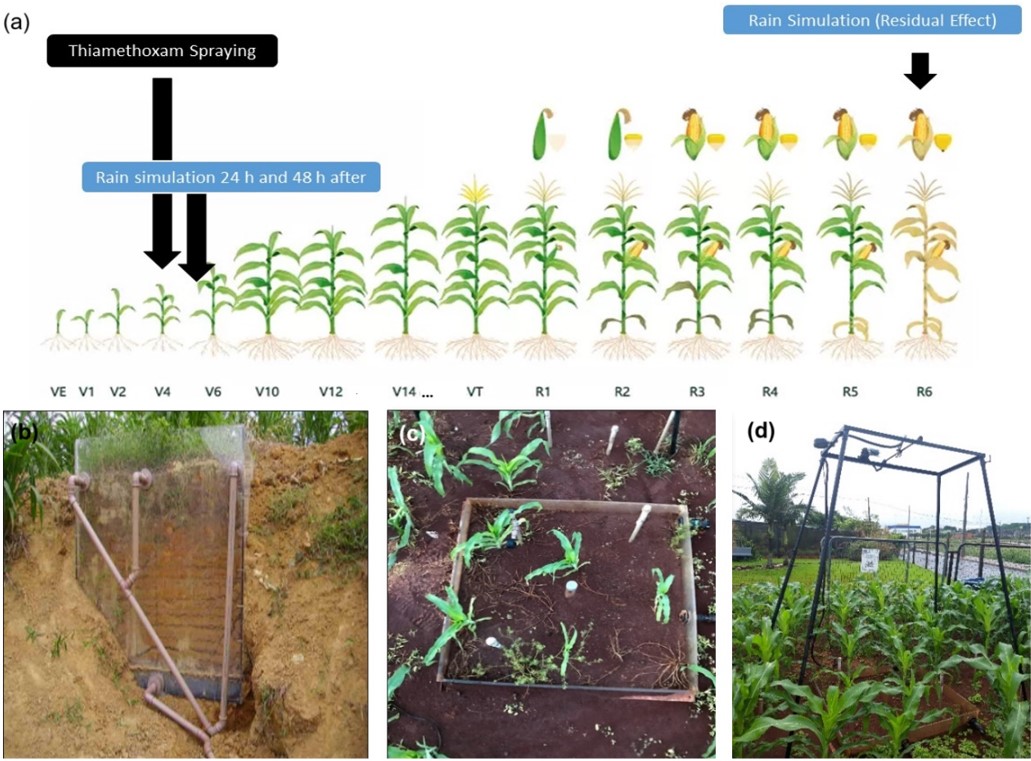
The field analysis was developed using a percolation lysimeter, installed in the city of Marechal Cândido Rondon, state of Paraná, under the geographic coordinates: latitude 24.558086° S, longitude 54.045745° W, and altitude of 471m in an Oxisol. Meteorological data for the study period were obtained from the city's automatic surface observation meteorological station under the geographic coordinates: latitude 24.53303° S, longitude 54.019248° W, and altitude of 392 meters. The lysimeter, made of 8 mm thick acrylic material and 1 m2 base, contains an undisturbed soil sample measuring 1 m3. The sample is isolated on the sides and at the bottom, not allowing exchanges with the soil that gave rise to it. On the downstream wall of the lysimeter, close to the soil surface, two holes are connected through flanges that sample runoff water and a hole close to the base (1m deep) that sample leaching (or percolated) water samples. A rain simulator was installed on the lysimeter, which allowed for control of the intensity of precipitation (Figure 1).
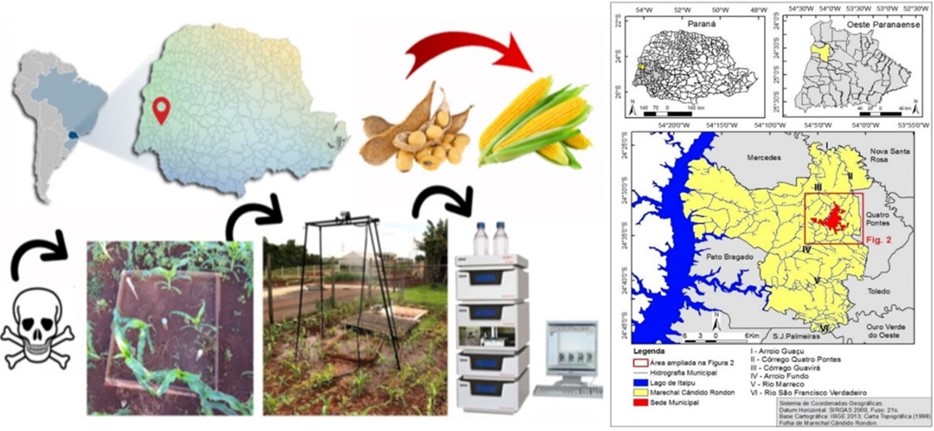
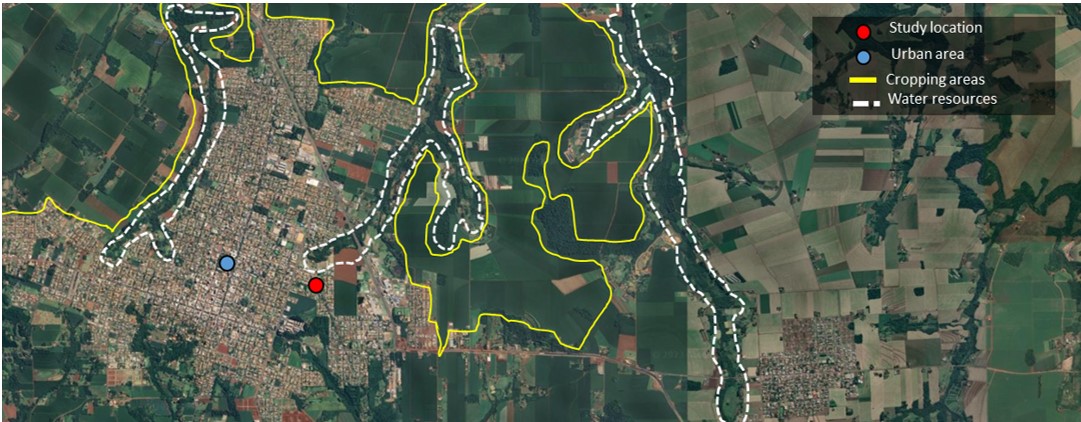
The study and location of the area are represented and inserted in the Paraná III hydrographic basin at Marechal Cândido Rondon, State of Paraná, Brazil.
Composite soil sampling was conducted randomly using a Dutch auger at depths of 0-20 cm and 20-40 cm to assess the chemical and physical characteristics of the lysimeter area. The soil parameters evaluated included density, total porosity (Teixeira et al., 2017), pH, organic matter content, and concentrations of phosphorus (Melich-1), potassium (K+), calcium (Ca2+), magnesium (Mg2+), as well as the sum of bases (SB), cation exchange capacity (CEC), and various nutrient and metal concentrations. Specifically, we measured the percentage of base saturation (V%), aluminum (Al%), and micronutrients including copper (Cu2+), zinc (Zn2+), manganese (Mn2+), and iron (Fe2+). Additionally, we assessed the total content of cadmium (Cd), lead (Pb), and chromium (Cr), along with the soil density and the proportions of clay, silt, and sand. The use of fertilizers was conducted according to the granulometric and chemical composition of the soil with the expectation of maximum crop productivity, following the Fertilization and Liming Manual of the State of Paraná (Sociedade Brasileira de Ciência do Solo, 2017).
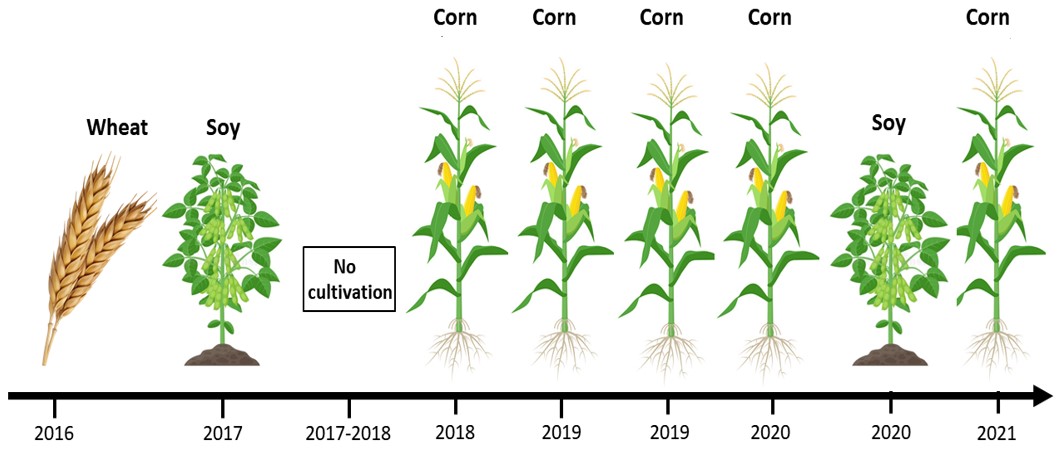
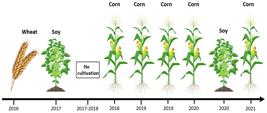
The field evaluations were conducted during an agricultural year (2020/2021), with a corn harvest grown after soybean cultivation inserted in the crop succession system. The short-season corn single hybrid, NS 50 PRO2, was employed. Seeds were sown at a depth of 3-5 cm, with rows spaced at 50 cm and a planting density of 65,000 plants per hectare. The study was conducted from February 19, 2021, to June 21, 2021, utilizing the no-tillage system in a 37 m2 plot. Figure 2 shows the historical sequence of studies with different crops and seasons performed in the lysimeter area.
Thiamethoxam characteristics
The pesticide spraying followed the agronomic recommendations of Engeo Pleno™ (commercial pesticide product); therefore, 0.25 L ha-1 was sprayed, which contains 14.1% (m v-1) of the active ingredient TIA. The physical and chemical characteristics of TIA are presented in Table 1.
Thiamethoxam application in corn
After the crop emerged, a uniform application was performed across the entire area (37m2) using a manual knapsack sprayer without a CO2 cylinder. A dosage of 0.25 L per hectare of the commercial product was applied following the recommended usage for this crop. This application took place 17 days after corn emergence (DAE), as illustrated in Figure 3 and detailed in Table 2.
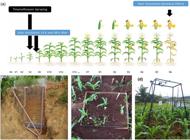
(a) Visualization of thiamethoxam (TIA) spraying and rain simulations; (b) lysimeter construction; (c) picture of the lysimeter in stage V2; (d) rain simulator apparatus. Note: Rain simulations lasted 60 minutes, and samples of runoff and percolation were obtained at 5-minute intervals. This figure represents TIA spraying on the corn crop and rainfall simulations from February 2021 to June 2021.
Rainfall simulations, soil, plant, and water sampling
Three rain simulations were conducted: the first 24 h, the second 48 h after pesticide spraying (18 and 19 DAE), and the third and final 76 days after spraying (93 DAE). This last rainfall simulation was performed to detect possible residual TIA concentrations. All three rainfall simulations correspond to very high-intensity rainfall events (150 mm h-1), whose frequency of occurrence is very low, according to meteorological data from the study site, but apparently with increasing occurrence due to climate change (Gonçalves Junior et al., 2023). Each rain simulation lasted 60 min. Runoff and percolated samples were collected at 5-minute intervals. These were stored in polyethylene bottles, placed in thermal insulation boxes, and transported to the laboratory, where they were immediately analyzed, as described by Queiroz et al. (2011) and Pinheiro et al. (2013).
The rainfall simulations were conducted using a rain simulator similar to the one described by Meyer & Harmon (1979). The simulator was positioned 2 meters above the ground and supplied water through a submersible pump, maintaining a constant pressure. The water for the rain simulation was sourced from a nearby potable water supply at the test site. A Veejet 80-100 type sprinkler nozzle was employed to replicate rainfall with characteristics resembling extreme weather conditions, resulting in an average rainfall intensity of 150 mm h-1. The pressure was carefully monitored and controlled using a pressure gauge during the simulations. Even with the precautions taken, the simulator was recalibrated before each new simulation. Rainfall intensity was calibrated with a zinc box featuring a 1.21 m2 surface collection area and a height of 0.10 meters.
Soil sampling was conducted right before and after the TIA application (BA and AA – Before Application and After Application) and right before and after the first and second rainfall simulation (24 and 48 h after spray) (24 h or 48 h, BRS and ARS– Before Rain Simulation and After Rain Simulation). The soil was randomly sampled using a Dutch auger around the lysimeter (37 m2) to minimize soil disturbance within the equipment (1 m2). For plant samples, leaves from the middle third of the plant were randomly collected from outside the lysimeter (37 m2). Like soil sampling, foliar tissue was sampled right before and after the TIA application (BA and AA) and right before and after the first and second rainfall simulation (24 and 48 h after spray) (24 h or 48 h BRS and ARS).
After the last rain simulation at 93 DAE, soil, leaves, steam, and grains were sampled to determine possible TIA residues. For plant sampling, leaves, steam, and corn cobs were randomly selected from the studied area. Leaves were selected from the middle third of the plants outside the lysimeter (37 m2). All collected samples were immediately frozen, and pesticide extraction and determination in soil and plant matrices were subsequently carried out.
Laboratory analysis
Soil characterization
The soil samples were characterized through chemical and physical analyses at the Environmental and Instrumental Chemistry Laboratory. Particle size analysis of soil samples for textural classification was done using the pipette method (Claessen, 1997). The chemical analysis of soil fertility attributes followed the soil chemical analysis manual recommended for the state of Paraná (Pavan, 1992). Soil density was obtained using the volumetric cylinder method (Teixeira et al., 2017). The Richards pressure chamber method obtained the water retention curve at depths 0-5, 10-15, 15-20, 20-40, and 60-80 cm (Richards, 1941; Richards & Fireman, 1943).
Thiamethoxam adsorption capacity in Oxisol
Sorption studies were conducted in the laboratory to estimate the potential for TIA retention in the studied soil and the influence of temperature and soil organic matter (SOM). To this end, two treatments were established: 1) Oxisol soil sample with a natural SOM content of 39.64 g dm-3 (uncalcined soil) and 2) Oxisol soil sample calcined at 500 ºC, i.e., without SOM. For this, the soil previously sampled in the lysimeter area was dried in an oven with forced air circulation at 105 ºC for 48 hours, followed by standardization of particle size on 14 and 65 mesh. After this step, the subsamples were calcined at 500 ºC for 5 hours in a muffle furnace to obtain the treatment without SOM (Yu et al., 2020).
The above treatments were evaluated side by side to balance TIA sorption and thermodynamics. To this end, 125 mL Erlenmeyer flasks containing 1 g of soil samples (calcined and uncalcined treatments) were placed in contact with 50 mL of TIA in increasing concentrations of 10, 15, 20, 25, 30, 35, and 40 mg L-1, and pH adjusted to 5.0. Then, the vials were shaken at 200 rpm for 2 hours in a Dubnoff system (Yu et al., 2020). Lately, aliquots were removed, centrifuged, and filtered, and residual TIA in solution (Ce) was obtained by ultra-performance liquid chromatography with a diode array detector (UPLC-DAD). The values of Ce (mg/L) were used to calculate the TIA adsorbed amount (qe), which was obtained by the difference between the initial and final concentration of pesticide, divided by the soil mass, and multiplied by the volume of the solution. Finally, Ce and qe values were adjusted by the nonlinear empirical models of Langmuir (1918), Freundlich (1996), and Sips (1948), presented in Equations 1, 2, 3, and 4. Furthermore, to estimate the thermodynamic parameters of the TIA sorption process, the isotherms described above were constructed at 15, 20, 25, 30, and 35 °C. These were used to estimate the thermodynamic parameters ∆Hº, ∆Gº, and ∆Sº, according to the method proposed by Lima et al. (2019), presented in Equations 5 and 6.
where: Ce (mg L-1): equilibrium concentration; qe (mg g-1): amount absorbed at equilibrium per unit mass of adsorbent; qLangmuir (mg g-1): maximum adsorption capacity of the adsorbent predicted by Langmuir; KLangmuir (L mg-1): interaction forces between adsorbent and adsorbate; RLangmuir (dimensionless): relative to the favorability of the isotherm, if RLangmuir = 0, irreversible process; 0 < RLangmuir < 1, favorable adsorption; RLangmuir = 1, linear adsorption; RLangmuir > 1, unfavorable adsorption (impossible situation, as KLangmuir is never < 0); a: angular coefficient of the linear graph Ce/qe versus Ce; Co = initial concentration.
where: Ce (mg L-1): equilibrium concentration; qe (mg g-1): amount absorbed at equilibrium per unit mass of adsorbent; KFreundlich [mg g-1 (mg L-1)-1/n] is a distribution coefficient, predicting the adsorption intensity and energy distribution and heterogeneity of adsorbate sites; nFreundlich (dimensionless): Freundlich exponent relative to the relationship between the concentration of a solute in a solid phase and its concentration in a liquid phase. If nFreundlich = 1, it indicates a linear relationship (linear adsorption); therefore, the Freundlich equation is close to Langmuir's. If nFreundlich < 1, it suggests favorable adsorption, as the adsorption intensity decreases as n decreases; If nFreundlich > 1, it implies cooperative adsorption, where adsorption intensity increases with concentration.
where: qe (mg g-1): the amount absorbed at equilibrium per unit mass of the adsorbent; qSips (mg g-1): maximum adsorption capacity of the adsorbent predicted by Sips; nSips (dimensionless): related to the heterogeneity of the adsorbent material; KSips (L mg-1): adsorption affinity constant.
where: Using the graph Ln(Ke°) versus 1/T, the intercept is used to calculate the entropy change (ΔS°), and from the slope, it is possible to calculate the enthalpy change (ΔH°). The Ke value is calculated according to (Lima et al., 2019) using the KLiu or KFreundlich value, expressed in L mg-1 multiplied by 1,000,000 to convert the units into L g-1 and then multiplied by the molecular weight of TIA to transform Kg into L moL-1, to use Kelvin in thermodynamic calculations. Considering the activity coefficient of adsorbate one and the unit activity of pure adsorbate 1 mol L-1, the equilibrium constant becomes dimensionless (Lima et al., 2019).
Thiamethoxam dissipation curve in Oxisol
An initial solution of 20 mg L-1 of TIA was used to evaluate the dissipation studies in the studied Oxisol. For that, using 125 mL Erlenmeyer flasks, 3 g of soil sample (from uncalcined soil treatments) were added and mixed with 3 mL of 20 mg L-1 of TIA solution (pH previously adjusted to 5.0), with and stirring at 200 rpm. Supernatant subsamples were taken at time intervals 0 (immediately after the process above), 24, 48, 72, 96, 120, 144, and 168 hours after application of TIA. The QuEChERS extraction method separated TIA from soil colloids, with its residual concentration in the liquid phase determined by UPLC-DAD (Okada et al., 2019). The results obtained were adjusted by the first-order decay equation (Equation 7), which was used to calculate the half-life (t1/2) of TIA under the given conditions (Equation 8). In order to avoid possible mistakes in the interpretation of experimental results, the matrix effect was also evaluated, i.e., the behavior of the chromatogram in uncontaminated soil samples. To this end, in a 125 mL Erlenmeyer flask, 3 mL of ultrapure water was added to 3 g of soil. These samples were shaken for 1 min and subsequently incubated in a dark environment (simulating conditions below the soil surface), under aerobic conditions, and at 20 °C.
where: Ct is the pesticide concentration at a certain period; C0 is the initial concentration of pesticide applied to the sample; k is the constant rate of exponential decay; t is the time; t1/2 is the half-life.
Extraction of thiamethoxam from the studied matrices
Water flow through runoff and leaching tubulations was closely monitored from the start of rainfall simulations. We collected approximately 300 mL samples every 5 minutes, alongside recording flow data using a pluviograph connected to a data logger. These samples served two purposes: calculating water flow and determining TIA concentrations. Flow was calculated by measuring the water volume over 5-minute intervals, providing a rate in liters per minute (L min−1). Samples were filtered with Whatman® cellulose paper and analyzed for TIA concentrations using UPLC-DAD.
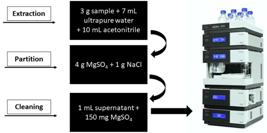
The pesticide extraction from soil and plant tissue was made using an adaptation of the QuEChERS method for multi-residue Extraction. 3 g of the previously macerated matrix was used with 7 mL of ultrapure water. After homogenizing the sample, 10 mL of acetonitrile (HPLC grade) was added to the Erlenmeyer flask, which was stirred for 1 min. Then, 4 g of MgSO4 + 1 g NaCl was added to the flask and homogenized for 1 min, followed by centrifugation for 5 min at 4000 rpm. After this, a 1 mL aliquot of the supernatant was removed, 150 mg of MgSO4 was added, agitation was carried out for 1 min, and then centrifuged for 5 min at 4,000 rpm. Finally, aliquots were stored and determined by chromatography (UPLC-DAD) for quantification of residual TIA concentration (Cunha et al., 2007) (Figure 4).
Chromatographic conditions
In order to quantify insecticide concentrations, an ultra-performance liquid chromatograph with a diode array detector was used (UPLC-DAD, Thermo Scientific UltiMate 3000), equipped with an ACE 5 C18 capillary column formed by ultra-inert silica, belonging to the octadecyl group, with end-capped technology, detection of 5 mm particles, pore size of 100 Å, 15.5% carbon, pH between 1.5 and 10.0, 25 cm long x 4.6 mm internal diameter. The chromatographic analysis conditions were: 20 µL sample volume injected, mobile phase in the ratio 30:70 (v:v) by isocratic mode using UPLC grade acetonitrile (C2H3N) and ultrapure water (type I, Permutation Puritech®), time 6 min run with flow rate of 1.0 mL min-1 and oven and column temperature of 40 ºC. For UPLC-DAD analysis, a detector wavelength of 252 nm was used. All data obtained by analytical experiments carried out at UPLC-DAD were quantified using Chromeleon® 7.2 software (Thermo Scientific, 2017).
Further details on the TIA validation method are provided in the Supplementary Material (Tables S1-S4 and Figures S1-S4), covering the study of linearity, precision, accuracy, limit of detection (LOD), limit of quantification (LOQ), and robustness.
Standards and reagents used in laboratory studies
The contaminant solutions used for sorption and dissipation studies were obtained from the TIA standard (PESTANAL® 100 mg, Sigma-Aldrich; C8H10ClN5O3S; Lot #BCBT8326) directly diluted in ultrapure water (type I).
Estimations of soil erosion, thiamethoxam runoff, and leaching
The potential for TIA leaching to groundwater was evaluated using the GUS index (Groundwater Ubiquity Score, see Equation 9), which considered the experimental determination of the TIA adsorption coefficient (KOC) (Equation 10) and its half-life in soil (t1/2) in Oxisol samples. Furthermore, we compared the results obtained from field and laboratory studies with theoretical indices and findings from similar studies (Gustafson, 1989). Additionally, the GOSS index (Goss, 1992 ) was employed to assess the potential transportation of TIA, whether associated with sediments or dissolved in water, and its potential for contaminating surface water and groundwater (Table S5). Also, the KOC was employed in interpreting the mobility of TIA in soil, according to Food and Agriculture Organization of the United Nations (2022) classification presented in Table S6.
where: GUS is the Groundwater Ubiquity Score; t1/2 is the half-life of TIA; and KOC is the soil adsorption coefficient adjusted by the organic carbon content (L Kg-1).
where: Kd is the soil adsorption coefficient; foc is the % of organic carbon in the soil.
Moreover, we conducted a comparative analysis to establish a correlation between the observed transport of TIA in runoff and leaching samples, analyze the physicochemical characteristics of the molecule, and assess the potential contamination risk arising from extreme weather events that can initiate TIA transport. Our estimations obtained from the field assay were compared to theoretical calculations using the 'Universal Soil Loss Equation' (USLE), employing the equation's parameter values sourced from existing literature. We tailored the coefficients of the USLE to suit the conditions in southern Brazil, considering specific factors: 1) The entire cultivated area, encompassing 100% of the corn crop, was assessed. 2) We accounted for the use of terraces, a practice reflecting the regional landscape. 3) The slope and ramp length within the study area (lysimeter) were considered. The USLE coefficients utilized in this estimation were approximated based on prior studies by Waltrick et al. (2018), Hudson (1982), Bertoni & Lombardi Neto (1990), and Stone & Hilborn (2015) (Table 3).
RESULTS AND DISCUSSION
Meteorological monitoring during the study
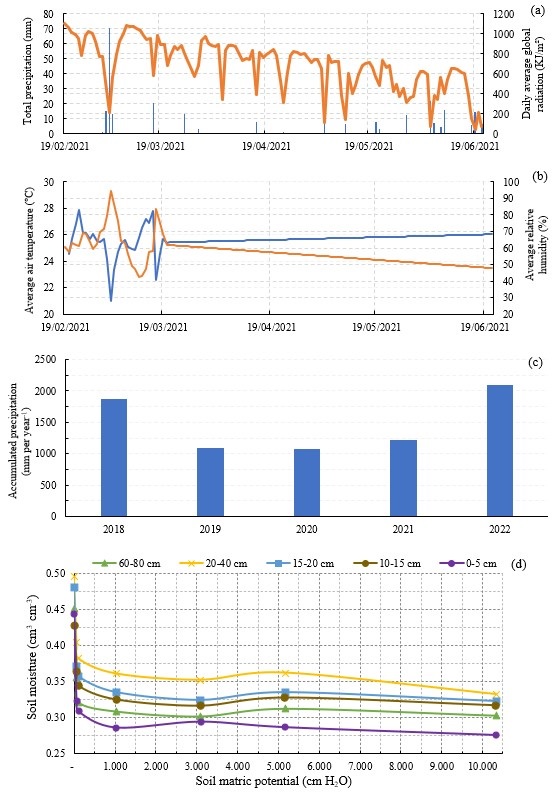
In Figure 5a-c, the meteorological data are presented. The average temperature during the study period was below 30 °C. Natural precipitation was low in volume and frequency, with higher volumes of rain observed at the beginning of the crop's development, followed by a reduction in volume until the end of the cycle. The same is observed for the relative humidity since both phenomena are related, and these conditions are abnormal when compared to the region's history. This study was performed during summer and fall, which explains the reduction in global solar radiation between the beginning and end of crop development (Ferreira, 2006). In such scenarios, pesticide degradation, encompassing chemical, photochemical, and biological decay, alongside sorption and transport processes, can be significantly influenced, thereby directly affecting the fate of the molecule (Gonçalves Jr. et al., 2020).
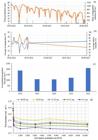
(a and b) Meteorological data from February to June 2021; (c) recent accumulated annual precipitation; and (d) water retention curve for the studied Oxisol (uncalcined samples).
Soil characterization
Table 4 displays pertinent soil characteristics for the study of soil dynamics and distribution. In the 0-20 cm layer, the soil exhibits a predominantly clayey texture (47%), notably low pH levels and a substantial organic matter content (Sociedade Brasileira de Ciência do Solo, 2017). In the 20-40 cm layer, the soil maintains a substantial clay component, categorized as having a clayey texture (53%). Concerning its chemical attributes, besides a moderate organic matter content, this layer displays higher pH levels than the layer above (Sociedade Brasileira de Ciência do Solo, 2017). This high organic matter content suggests the likelihood of microorganism presence and microbial activity (Tandon & Singh, 2015).
The soil density is 1.90 g cm-3 in the 0-20 cm layer and 1.73 g cm-3 in the 20-40 cm layer, both values above the critical limit of 1.25 to 1, 45 g m-3, limiting the development of the root system of most plants (Reichert et al., 2003). This factor also interferes with the distribution of insecticides in the soil profile since a smaller root volume will interact with a smaller soil area. TIA is a systemic insecticide that can be absorbed by roots and translocated to aerial parts of plants, as it is not unusual to see an accumulation of TIA in younger leaves, as reported by Wang et al. (2022) in leek plants. According to Ge et al. (2017), TIA and its metabolites were present in concentrations up to 14 times higher in leaves than in the concentrations obtained in the root system.
According to Pietrzak et al. (2020), the solubility in water is one of the main characteristics of NEOs, given that this is essential for their proper functioning as systemic pesticides, which need to be absorbed by plants, with TIA being the most water-soluble (4,100 mg L-1) and thiacloprid being the less soluble (185 mg L-1).
Figure 5d illustrates the water retention curve for the soil under examination. Given the clayey nature of this soil, as evident from both its chemical and physical properties, the relationship between soil moisture (measured in cm3 cm−3) and matric potential (measured in cm H2O) exhibits remarkable consistency across different soil layers (0 to 80 cm). This uniformity is characteristic of Oxisols, a soil type known for its depth and the homogeneity of its textural attributes throughout the soil profile, a trait highlighted in the work of Santos et al. (2013). These characteristics wield a substantial influence over the soil's hydraulic conductivity, as emphasized by Lammoglia et al. (2018), and they may also exert a significant impact on the mobility processes and ultimate fate of pesticide molecules, as discussed by Gupta & Milatovic (2012) and Kraemer et al. (2022).
Sorption capacity of TIA in Oxisol – Laboratory studies
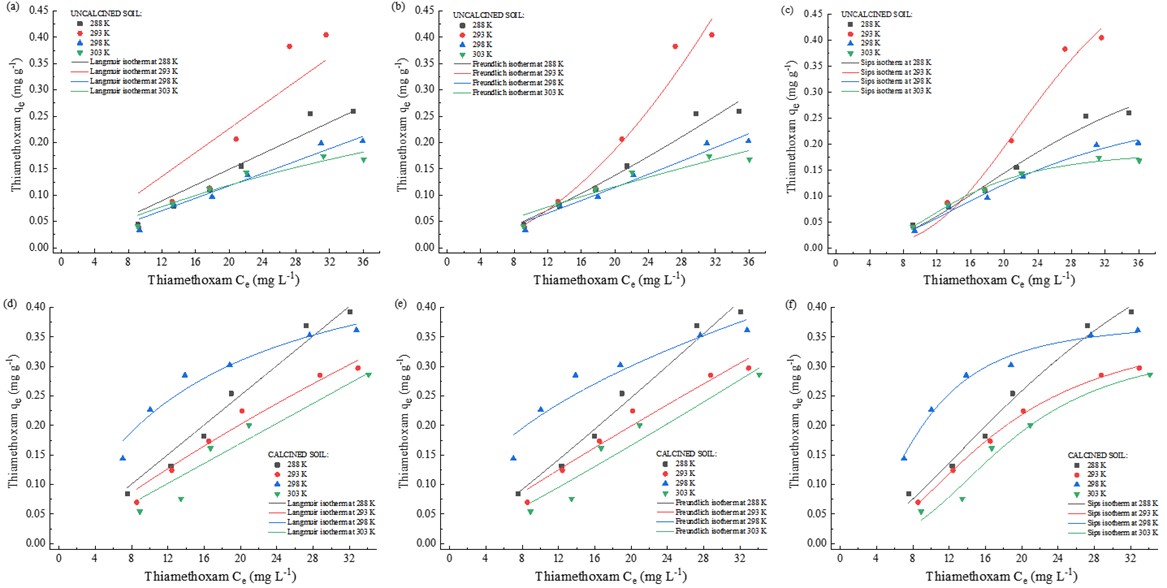
The nonlinear Langmuir, Freundlich, and Sips isotherms presented in Figure 6, generated for the sorption of TIA in Oxisol across a range of temperatures (288 K, 293 K, 298 K, and 303 K), underscore the impact of temperature on the retention of this agricultural pesticide within soil colloids. Moreover, evident disparities between the uncalcined and calcined soil samples underscore the significant influence of soil organic matter on the sorption of pesticides by soil colloids. Equilibrium studies of TIA sorption reveal robust fits to nonlinear empirical models, including Langmuir, Freundlich, and Sips (Table 5), as evidenced by the models' high R2 and Adjusted R2 values, which approach 1.0. Nevertheless, when comparing the maximum adsorption capacity estimated by Langmuir and Sips (qLangmuir and qSips) with the experimentally obtained average qe values (average exp. qe), we observe an overestimation by the Langmuir and Sips models. The most favorable fit to the nonlinear Freundlich model implies the formation of TIA multilayers at the interface of soil colloids.

Adsorption isotherms of thiamethoxam (TIA) in uncalcined (a, b, and c) and calcined (d, e, and f) soil samples, with its isotherms adjusted by the nonlinear models of Langmuir (a, d), Freundlich (b, e), and Sips (c, f). Experimental conditions: C0 ranges: 10 to 40 mg L-1; Temperature: 288, 293, 298 and 303 K; Stirring time: 60 min.
Sorption parameters of the nonlinear isotherms of Langmuir, Freundlich Sips, and thermodynamic parameters obtained for the sorption of thiamethoxam in uncalcined (SOM = 39.64 g dm-3) and calcined Oxisol samples.
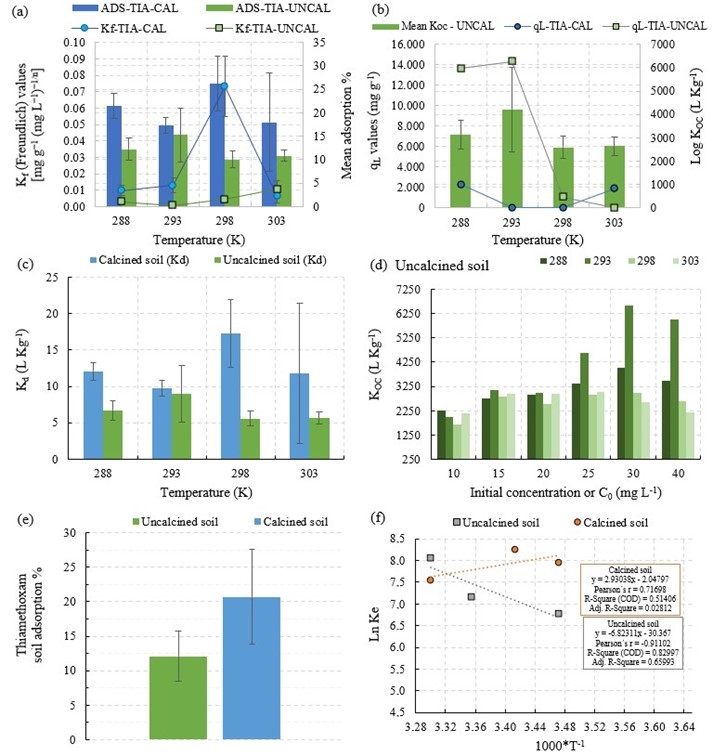
Figure 7 summarizes the TIA sorption study results for Oxisol soil samples in uncalcined (with SOM at 39.64 g dm-3) and calcined (without organic matter) conditions. Specifically, in Figure 7a, we can observe an initial rise in KFreundlich values attributed to the increase in system temperature, followed by a subsequent decrease in calcined samples. In uncalcined soil samples, we can observe a reduction of KFreundlich at 293 K and, after that, an increase in KFreundlich values. Additionally, there was a decline in the average percentage of TIA retained in the soil as the temperature increased in uncalcined samples. In calcined samples, it is not possible to identify a clear trend in TIA retention. However, it is noteworthy that despite these temperature variations, no significant differences were discerned between calcined and uncalcined soil regarding the average % adsorbed and the KFreundlich values. Furthermore, TIA sorption can be considered irreversible at 298 (1/n = 1.085) for uncalcined soil. In calcined soil, TIA sorption is irreversible at 288 (1/n = 1.082) and 303 K (1/n = 1.089). In uncalcined samples at 288 K (1/n = 1.276) and 293 K (1/n = 1.860), the (1/n) values exceed unity, indicating less favorable adsorption. This result suggests cooperative adsorption, where molecular interactions increase the likelihood of further adsorption. In contrast, for calcined samples at 293 K and 298 K, as well as for uncalcined soil samples at 303 K, (1/n) is less than one, indicating system favorability and stronger adsorption interactions. This behavior aligns with the findings of Banerjee et al. (2008) in three types of Indian soils: Typic Ustropept, Vertic Ustropept, and Typic Ustochrepts, where (1/n) values close to or less than one indicates higher affinity for adsorbing sites at low concentrations.

(a) Percentage of Adsorption (ADS) of Thiamethoxam (TIA) in Oxisol samples with and without Soil Organic Matter (SOM = 39.64 g dm−3), represented as uncalcined (UNCAL) and calcined (CAL) samples, along with corresponding KFreundlich values; (b) Mean values of KOC and qLangmuir (qL); (c) Mean Kd values for UNCAL and CAL soil samples; (d) Estimated KOC values for UNCAL soil samples; (e) TIA adsorption by UNCAL and CAL soil samples; (f) Plot 1000 T-1 versus Ln Ke. Experimental conditions: C0 ranges: 10 to 40 mg L-1; Temperature: 288, 293, 298 and 303 K; Stirring time: 60 min.
The positive values of ∆H° for uncalcined soil samples indicate an endothermic process, where the adsorption of thiamethoxam (TIA) by Oxisol particles is driven by energy absorption from the surroundings. Conversely, the negative ∆H° values for calcined samples suggest an exothermic process characterized by energy release to the surroundings. The notably high negative entropy values (∆S° = -252.47 KJ mol-1 and -17.03 KJ mol-1) for both uncalcined and calcined treatments suggest that TIA adsorption is associated with a decrease in entropy, which aligns with the characteristics of chemical adsorption processes.
The negative ∆G° values for both treatments indicate that the adsorption process is spontaneous and thermodynamically favorable under the given conditions. Notably, the lower ∆H° and ∆G° values in the uncalcined treatment suggest that SOM may contribute to reducing disorder during the TIA retention process. Furthermore, the positive ∆H° values for uncalcined samples could indicate a combination of physical and chemical adsorption mechanisms. While the increased entropy points to physical adsorption due to a more significant disorder, the positive enthalpy suggests potential chemical interactions.
Considering the soil's inherent heterogeneity and complexity, it is reasonable to conclude that TIA retention by soil colloids likely occurs through a mixed-mode adsorption mechanism involving both physical and chemical processes. This interpretation accounts for the diverse factors at play within the soil matrix.
The observed KFreundlich values ranged from 7.07 x 10⁻⁴ to 0.073 mg g−1 (mg L−1)−1/n, which are considerably lower than those reported in the literature for TIA sorption in different soil classes, typically varying from 0.587 to 1.385 mg g−1 (mg L−1)−1/n. For instance, Carbo et al. (2007) studied pesticide sorption in Brazilian tropical soils and reported that the sorptive capacity of TIA in Oxisol horizons (pH 4.70–5.10; clay content 33–35%; organic carbon 1.56–0.32%) from 0 to 1.78 m depth ranged from 0.86 to 3.16 mg g−1 (mg L−1)−1/n. Despite higher KFreundlich values, they concluded that TIA exhibited low retention in the Oxisol, with no correlation between sorption coefficients and soil attributes. Banerjee et al. (2008) investigated the adsorption of TIA in three Indian soil types—Typic Ustropept, Vertic Ustropept, and Typic Ustochrepts—reporting KFreundlich values between 0.88 and 1.80 mg g−1 (mg L−1)−1/n. Their findings showed that sandy soil (clay: 17%; organic carbon: 1.07%) exhibited higher sorptive capacity than clay soil (clay: 70%; organic carbon: 0.81%). They concluded that TIA sorption is primarily physical and depends on the organic fraction content. Similarly, Li et al. (2018) found that TIA sorption potential correlates with soil organic carbon content and pH, increasing with higher organic carbon or pH levels. Han et al. (2019) conducted a study on five different agricultural soils, finding that sorption isotherms were best described by the Freundlich model, with KFreundlich values ranging from 1.19 to 4.03 mg g−1 (mg L−1)−1/n. Their results indicated that TIA sorption capacity was highly dependent on organic matter content. Schmidt et al. (2015) observed low TIA retention in Oxisol sampled from the 0–30 cm soil layer under different agricultural management practices, reporting KFreundlich values between 0.87 and 4.30 mg g−1 (mg L−1)−1/n.
Banerjee et al. (2008) investigated the adsorption of TIA in three Indian soil types (Typic Ustropept, Vertic Ustropept, and Typic Ustochrepts) and obtained KFreundlich values between 0.88 and 1.80 mg g−1 (mg L−1)−1/n. In their study, sandy soil (Clay: 17%; Organic carbon: 1.07%) had a higher sorptivity capacity than clay soil (Clay: 70%; Organic carbon: 0.81%). According to the authors, the TIA sorption mechanism in the soil is physical and dependent on the content of the same organic fraction. Similarly, Li et al. (2018) also state that the sorption potential of TIA is correlated with the soil's organic carbon content and pH, which is more significant with the increase in organic carbon content or pH.
Han et al. (2019) developed a study on five different agricultural soils. Similar to the present study, the sorption isotherms obtained were better adjusted by the Freundlich model, with KFreundlich values between 1.19 and 4.03 mg g−1 (mg L−1)−1/n. According to their results, the sorting capacity of TIA for the five soil types was highly dependent on the organic matter content. Schmidt et al. (2015) observed low TIA retention in Oxisol sampled from the 0-30 cm layer of soil under different agricultural management. Their results indicate KFreundlich values between 0.87 and 4.30 L kg-1. According to the results, it is possible to note that the increase in temperature has little effect on the retention of TIA in the soil in its natural condition (uncalcined samples).
The percentage of adsorption and KFreundlich values in calcined samples (lacking organic matter) are higher than in uncalcined samples, suggesting that the mineral fraction, primarily clay, is responsible for the retention, followed by SOM. The high clay content in the studied soil contributes significantly to TIA sorption due to the large specific surface area of these minerals (Carvalho et al., 2013). Oxisols are known for containing iron and aluminum oxides and hydroxides (Urzedo et al., 2006). These compounds exhibit amphoteric behavior, carrying positive or negative charges depending on the pH of the environment. When the pH is greater than the point of zero charge pHPZC, these compounds exhibit a negative charge, and when the pH is less than the pHPZC, they exhibit a positive charge.
In this context, the pHCaCl2 0.01 mol L-1 in the 0–20 cm layer is 4.25, indicating a predominance of positive charges in the clay minerals, which could neutralize the negative charges of the soil's organic fraction, thus reducing the role of the organic fraction in TIA sorption. This outcome is particularly relevant given TIA's slightly polar nature (log Kow = -0.13), as also observed by Urzedo et al. (2006).
The retention of TIA in soil is generally irreversible, primarily due to the formation of covalent bonds between agricultural pesticides and the organic components of the soil, especially humic substances. As noted by Lavorenti et al. (2003) and VanLoon & Duffy (2005), these covalent bonds result from the sharing of electron pairs and exhibit strong resistance to dissociation, underscoring the persistent nature of the soil-pesticide interaction. Additionally, the presence of chlorine (Cl) in the TIA molecule may further enhance this phenomenon, which explains the absence of detectable insecticides in runoff or percolated water samples.
Thiamethoxam dissipation curve in Oxisol – Laboratory assay
Figure 8 illustrates the dissipation curve for TIA in Oxisol (0-20 cm) as determined in the laboratory. The calculated half-life (t1/2) was found to be 7.51 days, which refers to the time required for the concentration of the pesticide to decrease by half (Hanson et al., 2015). This result aligns with findings from other studies, indicating that TIA in surface layers of soil dissipates rapidly.
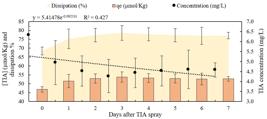
Dissipation curve for TIA in Oxisol (uncalcined samples) adjusted by the first-order decay equation (Ct=C0 e-Kt), the retention % of TIA, concentration, and adsorbed quantity of TIA at a given time (Retention %, Ct and qt respectively). Results: t1/2 Thiamethoxam = 180.24 h or 7.51 days; KThiamethoxam = 0.09231 d-1. Experimental conditions: 20 °C; absence of light; aerobic environment.
Ge et al. (2017) evaluated the absorption, translocation, and dissipation of two NEO insecticides (imidacloprid and TIA) and a triazole fungicide (difenoconazole) in rice crops. The results obtained suggest a first-order decay process, with t1/2 in soil ranging from 19.3 to 20.4 days for imidacloprid, 25.7 to 30.1 days for TIA, and 36.5 to 40.8 days for difenoconazole, with 89% of the initial TIA concentration dissipated after 90 days. Other studies report t1/2 o f TIA in soil in rice cultivation ranging from 5.2 to 5.8 days under field conditions (Barik et al., 2010).
On clay loam soil (sand 57.7%, silt 23.5%, clay 18.8%, organic matter content 2.19%, and pH 4.66), Wang et al. (2013) got t1/2 from 12.0 to 19.1 days. Kumar et al. (2014) studied the dissipation of TIA insecticide in two different soils and its residue in potato crops. The results of the study suggest the occurrence of a first-order kinetic process and t1/2 from 15,0 to 18,8 days on silty clay loam soil and from 20.1 to 21.5 days in clayey soil without detectable residues (< 0,05 µg g-1) of TIA in soil and potatoes after 90 days. Li et al. (2019) conducted a study with soils from four locations in China, obtaining t1/2 ranging from 2.04 to 4.25 days.
He et al. (2016) studied t1/2 of TIA and chlorantraniliprole (anthranilic diamide) in corn straw and soil in Chinese agricultural areas. The half-lives of chlorantraniliprole in corn husk and soil were 9.0 to 10.8 and 9.5 to 21.7 days, respectively. The t1/2 of TIA in corn husk and soil were 8.4 to 9.8 and 4.3 to 11.7 days, respectively.
Some studies also indicated that dissipation was faster in cultivated and covered soil than in uncovered or uncultivated soil (Bonmatin et al., 2015; Wang et al., 2012). This result suggests that plants play an essential role in dissipating pesticides from the soil, absorbing contaminants, and accelerating the degradation of these contaminants (Ge et al., 2017).
Thiamethoxam residues in water, soil, and plant
In the evaluated conditions, TIA concentrations were not observed in water and soil matrices above the Limit of Detection (LOD): 0.042 mg L-1 and Limit of Quantification (LOQ): 0.141 mg L-1 in none of the rain simulations carried out. In Brazil, Consolidation Ordinance No. 888, issued by the Ministry of Health on May 4, 2021, establishes a maximum permitted value (MPV) for TIA at 36 µg L−1 in drinking water (Brasil, 2021). While the Environmental Protection Agency (EPA) has not yet set guidelines for TIA residues in drinking water, the Minnesota Department of Health has established a maximum limit of 200 µg L−1 (Minnesota, 2024). According to information from the MDA, individuals consuming water at or below this limit face little to no health risk. Additionally, the European Commission (European Union, 1998) has set generic sum thresholds for pesticides in surface waters and groundwater, with a limit of 0.5 µg/L for the total of all pesticides. This threshold may encompass five neonicotinoid insecticides: acetamiprid, clothianidin, imidacloprid, thiacloprid, and TIA. Therefore, in studies focused on detecting and quantifying TIA in water sources to ensure compliance with potability standards, it is advisable to utilize detection methods capable of measuring concentrations at the microgram level. In our study, however, we concentrated on the potential accumulation of TIA in environmental matrices, including soil, plants, surface water, and groundwater contaminated by pesticide application, which exhibit a different range of concentration levels.
In plant samples, the presence of TIA was detected in the corn crop in the sampling carried out immediately after spraying (AA of TIA = 19.76 mg Kg-1) and before the rain simulation 24 hours after TIA application (24 h BRS = 13.41 mg Kg-1) (Figure 9). As per Antunes-Kenyon & Kennedy (2001), approximately 15% to 40% of the TIA insecticide is typically absorbed and concentrated in the leaves shortly after application. Also, it is essential to note that the TIA spray is directed to leaves, not soil or other plant tissue. Therefore, it is most likely to find its residues predominantly in the plant parts rather than in soil or other compartments.
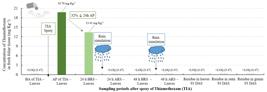
Thiamethoxam distribution in corn leaves: Before Application (BA), After Application (AA), 24 hours Before Rainfall Simulation (24 h BRS), 48 hours Before Rainfall Simulation (48 h BRS), 48 hours After Rainfall Simulation (48 h ARS), and residues in leaves, stems, and grains 93 Days After Sowing (DAS). Note: The spray can icons represent the thiamethoxam application in the timeline; The cloud and raindrop symbols represent the rainfall simulations.
One factor contributing to the non-quantification of TIA in soil, percolated water, and runoff samples from the field study is the amount applied (recommended dose). In the study area, the dose of 0.25 L ha-1 of the commercial product Engeo Pleno™ (concentration of 141 g L-1 of active ingredient) was applied at 17 DAE, which corresponded to 3.525 mg of TIA per m-2 (drainage lysimeter area). According to Schreiber et al. (2018), only 1% of the total applied product reaches the desired target (in this case, 0.03525 mg supposably reaches the insect), while 45% reaches the crop leaves (1.586 mg), 30% (1.057 mg) is lost due to drift, 10% (0.35 mg) by transport processes (leaching, volatilization and runoff), while 15% reach the soil (0.528 mg), and upon reaching each matrix, the pesticide is immediately subject to transformation, transport and retention processes (Gonçalves Jr. et al., 2020).
The presence of TIA was detected in the plant leaves immediately after spraying (19.76 mg Kg-1) and before the first rain simulation (13.41 mg Kg-1) (24 hours after spraying). Table 6 shows that the concentration of TIA in the plant structure was reduced 24 hours after spraying, and after that, it was no longer detected at concentrations above LOD and LOQ. After being degraded, TIA gives rise to its metabolite clothianidin (CLO), an insecticidal active ingredient (Reemtsma et al., 2013). However, the CLO determination was not carried out in our experiments. Another relevant aspect is the excellent mobility of NEO insecticides in plants; since they are systemic agricultural pesticides mainly used to control sucking insects, they translocate to different parts of the plant and therefore redistribute themselves in lower concentrations, interfering with their detection and quantification.
During the corn crop, residual thiamethoxam (TIA) concentrations in soil (uncalcined samples), plant, and water matrices.
As shown in Figure 8, the (t1/2) obtained under the conditions of this study was 7.51 days, similar to that observed in other studies. Bhattacherjee & Dikshit (2016) analyzed the persistence of TIA in the plant tissue of mango fruits. According to the results, the dissipation rate suggests a first-order kinetic process, with a t1/2 of 4.0 to 4.5 days. Similarly, Wang et al. (2013) obtained a t1/2 of 3.9 to 4.4 days in tobacco leaves, with dissipation rates also described by first-order kinetics. Liu et al. (2018) evaluated the dissipation of TIA in strawberries, obtaining t1/2 of 9 days.
The absence of TIA in soil and water samples from runoff and percolation is linked to numerous factors. In most soil samples (calcined and uncalcined soil), values of 1/n are observed below unity, however, close to 1, indicating the irreversible nature of TIA retention in the soil, similar to that studied by Banerjee et al. (2008) in three types of soils from India. Furthermore, according to Carvalho et al. (2013), organic acids in the soil decrease TIA desorption. In this way, the high organic matter content in the study area can also favor the process of fixing the insecticide to the soil.
Thus, despite the reduced sorption capacity of TIA to the soil found at 298 K (25 °C) by Freundlich [0.004 mg g−1 (mg L−1)−1/n], once retained, TIA becomes unavailable to be transported in the soil profile or absorbed by plants, being capable of transport-associated with sediments. According to the classification of GUS and GOSS indices based on the physical and chemical properties of the molecule, TIA is poorly leachable and has a low transport potential dissolved in water or associated with sediments.
Gupta et al. (2008) observed the persistence and leaching of TIA in soil under laboratory conditions by leaching the soil column with water. The experiment showed that with 65 mm of rain, 66 to 79% of the applied TIA was recovered in the percolated water volumes, while no residue was detected in the soil. These results suggest that TIA has the potential to leach under lower-intensity precipitation conditions, conditions different from those of the present study.
Frame et al. (2021) studied corn-grown lysimeters (Zea mays L.) using TIA-coated seeds in agricultural areas of Pennsylvania in the United States. According to the work, in runoff and subsurface transport samples, the insecticide was detected in higher concentrations during the first rain events after seeding and generally decreased throughout the study. However, the CLO metabolite persisted throughout the evaluated period. The mass of TIA and CLO exported during the studied period represented 1.09% of the applied mass, of which more than 90% was transported in percolate (groundwater) and less than 10% in runoff. These results suggest that only a tiny fraction of the initially applied amount is recovered, while the remainder is dissipated into the environment, which corroborates the absence of detections with values >LOQ under the conditions of this study.
Morrison et al. (2022) studied the influence of soil organic matter on the leaching process of TIA and CLO under field conditions using soybean seeds coated with the insecticide. The results highlight that the highest levels of organic matter were associated with the lowest concentrations of CLO detected in the leachate volumes, with a similar trend observed for TIA. Nonetheless, no significant statistical difference was observed.
In a study performed by Gong et al. (2020), it was observed that even when twice the recommended dose of TIA was used, the CLO metabolite remained in concentrations higher than the maximum residue limit (MRL). Although the residual concentration of TIA is lower than the MRL, it indicates that TIA is more quickly dissipated in the environment when compared to its metabolite.
In the rain simulation and new soil and plant sampling carried out at the end of the crop cycle (93 days after TIA spraying), the presence of TIA in soil, plants, runoff, or percolate was also not detected.
Therefore, according to the results, the presence of TIA in concentrations higher than LOQ (0.141 mg L-1) was not observed under the studied conditions; however, lower concentrations may have been transported. Furthermore, it is impossible to say whether there is a risk of contamination by the CLO metabolite. These results reinforce the importance of using technically recommended doses since this action can reduce the possibility of transporting high loads of TIA, especially at depth in rain events in a time interval close to its spraying.
Parameters associated with soil erosion and TIA leaching
In our study, the lysimeter can be considered a unitary sample of the hydrographic basin (Figure 10). According to our USLE estimates, 0.216 t ha-1 year-1 can be lost to erosion under the study site conditions. According to Stone & Hilborn (2015), soil losses of less than 6.7 t ha-1 year-1 are classified as very low or tolerable for crop production systems.
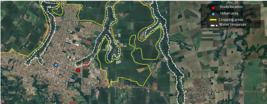
Figure 11 exhibits the results obtained for the concentration (a) and percentage (%) of Total Solids (TS), Fixed Solids (FS), and Volatile Solids (VS) in runoff and percolated samples during the rain simulation. According to Hasan et al. (2019), VS represents the organic fraction of a sample's biodegradable matter, while FS relates to the inorganic or mineral part. The results indicate a more substantial loss of TS through runoff and leaching during the second rain simulation (48 h after TIA spray) (Figure 11a). This observation suggests that the disintegration and transportation of soil particles may be enhanced due to the elevated soil moisture resulting from the initial rain simulation conducted 24 hours prior.
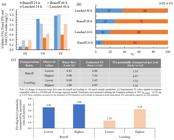
(a) Concentration of Fixed Solids (FS), Volatile Solids (VS), and Total Solids (TS) in runoff and percolated samples during rainfall simulation at 24 Hours and 48 hours after thiamethoxam application; (b) Percentage of Fixed Solids (FS) and Volatile Solids (VS) in runoff and leached water samples 24 hours and 48 hours after thiamethoxam spray; (c) Potential transport of TIA through runoff and leaching in a worst-case scenario estimation.
Figure 11b illustrates a notable increase in the VS ratio to FS. It is crucial to emphasize that this heightened VS proportion becomes more pronounced as the samples are closer to the rainfall simulation. Moreover, when comparing runoff and leached samples taken at the same time intervals (either 24 or 48 hours), the runoff samples consistently exhibit a higher VS-to-FS ratio than the leached samples. Hence, rainfall events of greater intensity, such as 150 mm h-1, can lead to a substantial loss of organic suspended materials through runoff and, to a lesser extent, leaching.
Figure 11c shows the water flow in runoff and percolation for 24 and 48 hours, with flow rates ranging from 0.69 to 1.0 L min-1. Consequently, the estimated transport of Total Suspended Solids (TS) varies from 2.45 to 6.60 Kg ha-1 per mL of rainfall, translating to a potential range of 2.02 to 6.24 Kg yr-1 of TIA transported under worst-case scenario assumptions. It is important to note that this prediction hinges on the following conditions: 1) Assuming that all annual precipitation in the region (1,470,840 mL yr-1, see Figure 5) matches the intensity of the rainfall simulation (150 mm/h, an extreme weather condition), resulting in the measured TS concentrations in both leaching and runoff samples; 2) Assuming that soil particles lost due to runoff or leaching are thoroughly saturated with TIA molecules, as estimated by the Freundlich constant at 298 K (25 °C) (0.004 mg g-1). These conditions are employed to model a worst-case scenario presented in Figure 11c.
However, it is worth highlighting that in the actual experimental conditions, which encompass the specific soil, plant, and weather factors, TIA concentrations were not detected in water samples (runoff or leaching). This result is primarily because the insecticide was directly applied to the leaves to control insects in the aerial part of corn. Therefore, residues were only found on the leaves. Furthermore, the applied TIA dose adhered to label instructions (0.25 L of Engeo Pleno per hectare, which contains 14.1% m v-1 of TIA), resulting in approximately 3.5 mg m-2 being applied directly to corn leaves. After 48 hours, 300 mm of rainfall diluted any TIA residues not absorbed by the leaves or adsorbed by soil particles. As a result, TIA concentrations remained below the limit of quantification (LOQ) of 0.141 mg L-1, explaining the absence of the insecticide in water samples using the current testing method.
Also, our results suggest a soil loss from 2.45 to 6.60 Kg ha-1 yr-1, differing from the result obtained by the USLE (216 Kg ha-1 yr-1). This discrepancy is most probably due to the conditions evaluated in our lysimeter station, which are made in a flat terrain with very little rugosity. At the same time, the USLE, among other parameters, considers the heterogeneity of conditions presented in a hydrographic basin.
Although TIA was not detected in concentrations higher than LOQ in soil samples, including 93 DAE of the crop, 76 days after its spraying, according to the values of KFreundlich, TIA has a soil sorption capacity of 0.004 mg g-1. In this way, even if in reduced concentration, part of the applied TIA can be transported along with the organic and inorganic fractions of the soil that are carried in the form of sediments to groundwater or surface waters, and the most significant possibility of transport in this condition is related to transport in runoff (TS 24h =1.368 mg L-1 and TS 48h = 1.428 mg L-1), corroborating the result obtained by USLE. Figure 10 highlights the location of the lysimeter, land occupation, and water resources present in the region.
CONCLUSION
The presence of organic matter had a limited impact on thiamethoxam adsorption in the Oxisol samples, primarily due to the notably low soil organic matter content (3.96%) in the examined soil. No thiamethoxam was detected in the water samples (runoff or leaching), and no residues were found in the soil samples; however, residues were likely present at levels below the limit of detection of our method (LOD = 0.042 mg L−1).
In contrast, substantial levels of thiamethoxam were observed in foliar tissue 24 and 48 hours after application. This outcome can be attributed mainly to the direct application of thiamethoxam to the corn leaves rather than to the soil, as well as the insecticide's efficient absorption and translocation within the plant, which contributed to its accumulation in plant tissues. Additionally, the low application rate at the recommended dose (3.5 mg m-2) likely resulted in dilution due to the 300 mm of simulated rainfall, reducing the likelihood of detection in the water samples, which did not undergo a pre-concentration step prior to analysis.
Intense rainfall events can trigger rapid erosive processes, increasing soil loss and transport of its constituents through runoff or leaching. However, our findings suggest that thiamethoxam's physicochemical characteristics (log KOW of -0.13 and pKa of 1.5) facilitate its rapid foliar absorption and translocation, making it less susceptible to losses from rainfall within 24 or 48 hours of application.
Our estimates, particularly under worst-case scenarios such as extreme weather events, highlight the importance of adopting conservation agronomic practices. Soil losses containing adsorbed thiamethoxam could potentially be transported to lower elevations, such as riverbeds, posing a risk to water resources. It is crucial to note that our conclusions are based on an experiment examining a single application of thiamethoxam. In typical field conditions in tropical regions of Brazil, multiple applications may occur, increasing the risk of environmental contamination.
Furthermore, our results underscore the need for additional studies under field conditions to evaluate the potential contamination of water resources by the molecule's metabolites. This study diverges from existing literature, which typically examines the dynamics of thiamethoxam when applied as a seed coating; our focus was explicitly on its foliar application.
DATA AVAILABILITY STATEMENT
The datasets used or analyzed during the current study are available from the corresponding author upon reasonable request.
Supplementary Material
Supplementary material accompanies this paper.
Supplementary material S1
Table S1
Table S2
Table S3
Table S4
Table S5
Table S6
Figure S1
Figure S2
Figure S3
Figure S4
This material is available as part of the online article from https://doi.org/10.1590/2318-0331.292420240049
ACKNOWLEDGEMENTS
This study was partly financed by the National Council for Scientific and Technological Development (CNPq) in Brazil - Finance Code 001.
The authors recognize the support of the National Council for Scientific and Technological Development – CNPq.
This study received support from the National Council for Scientific and Technological Development (CNPq) in Brazil. Elio Conradi Junior acknowledges the CNPq for the doctoral scholarship and Affonso Celso Gonçalves Jr. for the productivity scholarship.
REFERENCES
-
Abd Elkader, H. T. A. E., Hussein, M. M., Mohammed, N. A., & Abdou, H. M. (2024). The protective role of l-carnitine on oxidative stress, neurotransmitter perturbations, astrogliosis, and apoptosis induced by thiamethoxam in the brains of male rats. Naunyn-Schmiedeberg’s Archives of Pharmacology, 397(6), 4365-4379. http://doi.org/10.1007/s00210-023-02887-7
» http://doi.org/10.1007/s00210-023-02887-7 -
Alves, L. M., Chadwick, R., Moise, A., Brown, J., & Marengo, J. A. (2021). Assessment of rainfall variability and future change in Brazil across multiple timescales. International Journal of Climatology, 41(S1), E1875-E1888. http://doi.org/10.1002/joc.6818
» http://doi.org/10.1002/joc.6818 -
Amadori, C., Conceição, P. C., Casali, C. A., Canalli, L. B. D. S., Calegari, A., & Dieckow, J. (2022). Soil organic matter fractions in an Oxisol under tillage systems and winter cover crops for 26 years in the Brazilian subtropics. Bragantia, 81, e3622. http://doi.org/10.1590/1678-4499.20210352
» http://doi.org/10.1590/1678-4499.20210352 - Antunes-Kenyon, S., & Kennedy, G. (2001). Thiamethoxam: a new active ingredient review. Massachusetts: Massachusetts Pesticide Bureau.
-
Banerjee, K., Patil, S. H., Dasgupta, S., Oulkar, D. P., & Adsule, P. G. (2008). Sorption of thiamethoxam in three Indian soils. Journal of Environmental Science and Health. Part B, Pesticides, Food Contaminants, and Agricultural Wastes, 43(2), 151-156. http://doi.org/10.1080/03601230701795130
» http://doi.org/10.1080/03601230701795130 -
Barik, S. R., Ganguly, P., Kunda, S. K., Kole, R. K., & Bhattacharyya, A. (2010). Persistence behaviour of thiamethoxam and lambda cyhalothrin in transplanted paddy. Bulletin of Environmental Contamination and Toxicology, 85(4), 419-422. http://doi.org/10.1007/s00128-010-0101-2
» http://doi.org/10.1007/s00128-010-0101-2 -
Basley, K., & Goulson, D. (2018). Neonicotinoids thiamethoxam and clothianidin adversely affect the colonisation of invertebrate populations in aquatic microcosms. Environmental Science and Pollution Research International, 25(10), 9593-9599. http://doi.org/10.1007/s11356-017-1125-5
» http://doi.org/10.1007/s11356-017-1125-5 -
Bergström, L. (1990). Use of lysimeters to estimate leaching of pesticides in agricultural soils. Environmental Pollution, 67(4), 325-347. http://doi.org/10.1016/0269-7491(90)90070-S
» http://doi.org/10.1016/0269-7491(90)90070-S - Bertoni, J., & Lombardi Neto, F. (1990). Conservação do solo São Paulo: Ícone.
-
Bhattacherjee, A. K., & Dikshit, A. (2016). Dissipation kinetics and risk assessment of thiamethoxam and dimethoate in mango. Environmental Monitoring and Assessment, 188(3), 165. http://doi.org/10.1007/s10661-016-5160-3
» http://doi.org/10.1007/s10661-016-5160-3 -
Bonmatin, J. M., Giorio, C., Girolami, V., Goulson, D., Kreutzweiser, D. P., Krupke, C., Liess, M., Long, E., Marzaro, M., Mitchell, E. A. D., Noome, D. A., Simon-Delso, N., & Tapparo, A. (2015). Environmental fate and exposure; neonicotinoids and fipronil. Environmental Science and Pollution Research International, 22(1), 35-67. http://doi.org/10.1007/s11356-014-3332-7
» http://doi.org/10.1007/s11356-014-3332-7 -
Brasil. Ministério da Agricultura, Pecuária e Abastecimento – MAPA. (2016). Sistema de Pesticidas Fitossanitários (AGROFIT). Retrieved in 2023, January 7, from http://agrofit.agricultura.gov.br/agrofitcons/principalagrofitcons
» http://agrofit.agricultura.gov.br/agrofitcons/principalagrofitcons -
Brasil. Ministério da Saúde. (2021). Portaria GM/MS Nº 888, de 4 de maio de 2021. Altera o Anexo XX da Portaria de Consolidação nº 5/GM/MS, de 28 de setembro de 2017, para dispor sobre os procedimentos de controle e de vigilância da qualidade da água para consumo humano e seu padrão de potabilidade. Diário Oficial [da] República Federativa do Brasil, Brasília. Retrieved in 2023, January 7, from https://bvsms.saude.gov.br/bvs/saudelegis/gm/2021/prt0888_24_05_2021_rep.html
» https://bvsms.saude.gov.br/bvs/saudelegis/gm/2021/prt0888_24_05_2021_rep.html -
Briedis, C., Baldock, J., Moraes, S. J. C., Santos, J. B., McGowan, J., & Milori, D. M. B. P. (2021). Organic carbon pools and organic matter chemical composition in response to different land uses in southern Brazil. European Journal of Soil Science, 72(3), 1083-1100. http://doi.org/10.1111/ejss.12972
» http://doi.org/10.1111/ejss.12972 -
Çakıcı, Ö., Uysal, M., Demirözer, O., & Gösterit, A. (2023). Effects of thiamethoxam on brain structure of Bombus terrestris (Hymenoptera: Apidae) workers. Chemosphere, 338, 139595. http://doi.org/10.1016/j.chemosphere.2023.139595
» http://doi.org/10.1016/j.chemosphere.2023.139595 -
Campbell, S., Chen, L., Yu, J., & Li, Q. X. (2005). Adsorption and analysis of the insectivides thiamethoxam and indoxacarb in Hawaiian soils. Journal of Agricultural and Food Chemistry, 53(13), 5373-5376. http://doi.org/10.1021/jf050272r
» http://doi.org/10.1021/jf050272r -
Carbo, L., Martins, E. L., Dores, E. F., Spadotto, C. A., Weber, O. L., & De-Lamonica-Freire, E. M. (2007). Acetamiprid, carbendazim, diuron and thiamethoxam sorption in two Brazilian tropical soils. Journal of Environmental Science and Health. Part B, Pesticides, Food Contaminants, and Agricultural Wastes, 42(5), 499-507. http://doi.org/10.1080/03601230701389439
» http://doi.org/10.1080/03601230701389439 -
Carvalho, F. P. (2017). Pesticides, environment, and food safety. Food and Energy Security, 6(2), 48-60. http://doi.org/10.1002/fes3.108
» http://doi.org/10.1002/fes3.108 -
Carvalho, S. A., Lima, J. M. D., Curi, N., Silva, C. A., Toledo, J. P. V. F., & Soares, F. V. (2013). Coeficiente de distribuição do inseticida tiametoxam na fração mineral de solos sob efeito de ácidos orgânicos mono, di e tricarboxílicos. Quimica Nova, 36(9), 1323-1331. http://doi.org/10.1590/S0100-40422013000900008
» http://doi.org/10.1590/S0100-40422013000900008 -
Chen, M., Chang, C. H., Tao, L., & Lu, C. (2015). Residential exposure to pesticide during childhood and childhood cancers: a meta-analysis. Pediatrics, 136(4), 719-729. http://doi.org/10.1542/peds.2015-0006
» http://doi.org/10.1542/peds.2015-0006 - Claessen, M. E. C. (1997). Manual de métodos de análise de solo (2ª ed.). Rio de Janeiro: EMBRAPA-CNPS.
-
Cunha, S. C., Lehotay, S. J., Mastovska, K., Fernandes, J. O., Beatriz, M., & Oliveira, P. P. (2007). Evaluation of the QuEChERS sample preparation approach for the analysis of pesticide residues in olives. Journal of Separation Science, 30(4), 620-632. http://doi.org/10.1002/jssc.200600410
» http://doi.org/10.1002/jssc.200600410 -
Delcour, I., Spanoghe, P., & Uyttendaele, M. (2015). Literature review: impact of climate change on pesticide use. Food Research International, 68, 7-15. http://doi.org/10.1016/j.foodres.2014.09.030
» http://doi.org/10.1016/j.foodres.2014.09.030 -
El-Aswad, A. F., Mohamed, A. E., & Fouad, M. R. (2024). Investigation of dissipation kinetics and half-lives of fipronil and thiamethoxam in soil under various conditions using experimental modeling design by Minitab software. Scientific Reports, 14(1), 5717. http://doi.org/10.1038/s41598-024-56083-5
» http://doi.org/10.1038/s41598-024-56083-5 -
El-Din, M. A. E. S., Ghareeb, A. E. W. E., El-Garawani, I. M., & El-Rahman, H. A. A. (2023). Induction of apoptosis, oxidative stress, hormonal, and histological alterations in the reproductive system of thiamethoxam-exposed female rats. Environmental Science and Pollution Research International, 30(31), 77917-77930. http://doi.org/10.1007/s11356-023-27743-2
» http://doi.org/10.1007/s11356-023-27743-2 -
Elhamalawy, O. H., Al-Anany, F. S., & El Makawy, A. I. (2022). Thiamethoxam-induced hematological, biochemical, and genetic alterations and the ameliorated effect of Moringa oleifera in male mice. Toxicology Reports, 9, 94-101. http://doi.org/10.1016/j.toxrep.2021.12.012
» http://doi.org/10.1016/j.toxrep.2021.12.012 -
European Union - EC. (1998). Council Directive 98/83/EC of November 3, 1998, on the quality of water intended for human consumption. Official Journal of the European Union Retrieved in 2023, January 7, from https://eur-lex.europa.eu/legal-content/en/txt/?uri=celex:31998l0083
» https://eur-lex.europa.eu/legal-content/en/txt/?uri=celex:31998l0083 -
Fernandes, L. G., & Grimm, A. M. (2023). Global ENSO modulation of MJO and its impacts on South America. Research Square, 1-48. In press. http://doi.org/10.21203/rs.3.rs-908939/v1
» http://doi.org/10.21203/rs.3.rs-908939/v1 - Ferreira, W. P. M. (2006). Radiação solar em Sete Lagoas. Belo Horizonte: Embrapa Milho e Sorgo.
-
Food and Agriculture Organization of the United Nations – FAO. (2022). FAOSTAT. Retrieved in 2023, January 7, from http://www.fao.org/faostat/en/#data
» http://www.fao.org/faostat/en/#data -
Frame, S. T., Pearsons, K. A., Elkin, K. R., Saporito, L. S., Preisendanz, H. E., Karsten, H. D., & Tooker, J. F. (2021). Assessing surface and subsurface transport of neonicotinoid insecticides from no‐till crop fields. Journal of Environmental Quality, 50(2), 476-484. http://doi.org/10.1002/jeq2.20185
» http://doi.org/10.1002/jeq2.20185 - Freundlich, H. M. F. (1996). Over the adsorption in solution. Journal of Physical Chemistry, 57, 385-471.
-
Fuentes-Llanillo, R., Telles, T., Soares Junior, D., Melo, T., Friedrich, T., & Kassam, A. (2021). Expansion of no-tillage practice in conservation agriculture in Brazil. Soil & Tillage Research, 208, 104877. http://doi.org/10.1016/j.still.2020.104877
» http://doi.org/10.1016/j.still.2020.104877 -
Gauthier, M., Aras, P., Paquin, J., & Boily, M. (2018). Chronic exposure to imidacloprid or thiamethoxam neonicotinoid causes oxidative damages and alters carotenoid-retinoid levels in caged honey bees (Apis mellifera). Scientific Reports, 8(1), 16274. http://doi.org/10.1038/s41598-018-34625-y
» http://doi.org/10.1038/s41598-018-34625-y -
Ge, J., Cui, K., Yan, H., Li, Y., Chai, Y., Liu, X., Cheng, J., & Yu, X. (2017). Uptake and translocation of imidacloprid, thiamethoxam and difenoconazole in rice plants. Environmental Pollution, 226, 479-485. http://doi.org/10.1016/j.envpol.2017.04.043
» http://doi.org/10.1016/j.envpol.2017.04.043 -
Gonçalves Junior, A. C., Conradi Junior, E., Schwantes, D., Kaufmann, V., Braccini, A. L., Zenni, C. D., Aranda, M., & Zimmermann, J. (2023). Atrazine fate in Rhodic Ferralsol grown with corn under high-intensity rainfall conditions. Agricultural Water Management, 276, 108065. http://doi.org/10.1016/j.agwat.2022.108065
» http://doi.org/10.1016/j.agwat.2022.108065 -
Gong, W., Jiang, M., Zhang, T., Zhang, W., Liang, G., Li, B., Hu, B., & Han, P. (2020). Uptake and dissipation of metalaxyl-M, fludioxonil, cyantraniliprole and thiamethoxam in greenhouse chrysanthemum. Environmental Pollution, 257, 113499. http://doi.org/10.1016/j.envpol.2019.113499
» http://doi.org/10.1016/j.envpol.2019.113499 -
Goss, D. W. (1992). Screening procedure for soils and pesticides for potential water quality impacts. Weed Technology, 6(3), 701-708. http://doi.org/10.1017/S0890037X00036083
» http://doi.org/10.1017/S0890037X00036083 -
Goss, D. W. (2020). Screening procedure for soils and pesticides for potential water quality impacts. Weed Technology, 6(3), 701-708. http://doi.org/10.1017/S0890037X00036083
» http://doi.org/10.1017/S0890037X00036083 -
Gupta, R. C., & Milatovic, D. (2012). Toxicology of organophosphates and carbamates. In T. C. Marrs (Ed.), Mammalian toxicology of insecticides (pp. 104-136). Cambridge: RSC Publishing. http://doi.org/10.1039/9781849733007-00104
» http://doi.org/10.1039/9781849733007-00104 -
Gupta, S., Gajbhiye, V. T., & Gupta, R. K. (2008). Soil dissipation and leaching behavior of a neonicotinoid insecticide thiamethoxam. Bulletin of Environmental Contamination and Toxicology, 80(5), 431-437. http://doi.org/10.1007/s00128-008-9420-y
» http://doi.org/10.1007/s00128-008-9420-y -
Gustafson, D. I. (1989). Groundwater Ubiquity score: a simple method for assessing pesticide leachability. Environmental Toxicology and Chemistry, 8(4), 339-357. http://doi.org/10.1002/etc.5620080411
» http://doi.org/10.1002/etc.5620080411 -
Han, L., Ge, Q., Mei, J., Cui, Y., Xue, Y., Yu, Y., & Fang, H. (2019). Adsorption and desorption of carbendazim and thiamethoxam in five different agricultural soils. Bulletin of Environmental Contamination and Toxicology, 102(4), 550-554. http://doi.org/10.1007/s00128-019-02568-3
» http://doi.org/10.1007/s00128-019-02568-3 - Hanson, B., Bond, C., Buhl, K., & Stone, D. (2015). Pesticide half-life fact sheet. Corvallis: National Pesticide Information Center, Oregon State University Extension Services.
-
Hasan, C., Feitosa, A. K., & Almeida, M. C. (2019). Produção de biogás a partir de resíduos agroindustriais: análise dos teores de sólidos totais, voláteis e fixos em amostras pré e pós digestão anaeróbia. Revista Brasileira de Energias Renováveis, 8(1), 257-273. http://doi.org/10.5380/rber.v8i1.56321
» http://doi.org/10.5380/rber.v8i1.56321 -
He, M., Song, D., Jia, H. C., & Zheng, Y. (2016). Concentration and dissipation of chlorantraniliprole and thiamethoxam residues in maize straw, maize, and soil. Journal of Environmental Science and Health. Part B, Pesticides, Food Contaminants, and Agricultural Wastes, 51(9), 594-601. http://doi.org/10.1080/03601234.2016.1181903
» http://doi.org/10.1080/03601234.2016.1181903 -
Hegerl, G. C., Zwiers, F. W., Stott, P. A., & Kharin, V. V. (2004). Detectabilidade de mudanças antropogênicas em temperaturas anuais e extremos de precipitação. Journal of Climate, 17(19), 3683-3700. http://doi.org/10.1175/1520-0442(2004)017<3683:DOACIA>2.0.CO;2
» http://doi.org/10.1175/1520-0442(2004)017<3683:DOACIA>2.0.CO;2 - Hudson, N. (1982). Conservacion del suelo Barcelona: Reverte.
-
Khalil, S. R., Awad, A., Mohammed, H. H., & Nassan, M. A. (2017). Imidacloprid insecticide exposure induces stress and disrupts glucose homeostasis in male rats. Environmental Toxicology and Pharmacology, 55, 165-174. http://doi.org/10.1016/j.etap.2017.08.017
» http://doi.org/10.1016/j.etap.2017.08.017 -
Kraemer, F. B., Castiglioni, M. G., Chagas, C. I., De Paula, R., Sainz, D. S., De Gerónimo, E., Aparicio, V., & Ferraro, D. O. (2022). Pesticide dynamics in agroecosystems: assessing climatic and hydro-physical effects in a soybean cycle under no-tillage. Soil & Tillage Research, 223, 105489. http://doi.org/10.1016/j.still.2022.105489
» http://doi.org/10.1016/j.still.2022.105489 - Kuchler Calvano, P., Simões, M., Ferraz, R. P., Arvor, D., Machado, P. L. O. A., Rosa, M. R., & Bégué, A. (2022). Monitoring complex integrated crop-livestock systems at regional scale in Brazil: a big earth observation data approach. Remote Sensing, 14(7), 1648. http://doi.org/10.3390/rs14071648.
-
Kumar, N., Srivastava, A., Chauhan, S. S., & Srivastava, P. C. (2014). Studies on dissipation of thiamethoxam insecticide in two different soils and its residue in potato crop. Plant, Soil and Environment, 60(7), 332-335. http://doi.org/10.17221/106/2014-PSE
» http://doi.org/10.17221/106/2014-PSE -
Kurwadkar, S., Wheat, R., McGahan, D. G., & Mitchell, F. (2014). Evaluation of leaching potential of three systemic neonicotinoid insecticides in vineyard soil. Journal of Contaminant Hydrology, 170, 86-94. http://doi.org/10.1016/j.jconhyd.2014.09.009
» http://doi.org/10.1016/j.jconhyd.2014.09.009 -
Lammoglia, S. K., Brun, F., Quemar, T., Moeys, J., Barriuso, E., Gabrielle, B., & Mamy, L. (2018). Modelling pesticides leaching in cropping systems: effect of uncertainties in climate, agricultural practices, soil and pesticide properties. Environmental Modelling & Software, 109, 342-352. http://doi.org/10.1016/j.envsoft.2018.08.007
» http://doi.org/10.1016/j.envsoft.2018.08.007 -
Langmuir, I. (1918). The adsorption of gases on plane surfaces of glass, mica and platinum. Journal of the American Chemical Society, 40(9), 1361-1403. http://doi.org/10.1021/ja02242a004
» http://doi.org/10.1021/ja02242a004 - Lavorenti, A., Prata, F., & Regitano, J. (2003). Comportamento de pesticidas em solos: fundamentos. In N. Curi, J. J. Marques, L. R. G. Guilherme, J. M. Lima, A. S. Lopes & V. V. H. Alvarez (Eds.), Tópicos ciência em fazer carreira solo (Vol. 3, pp. 346-348). Viçosa: Sociedade Brasileira de Ciência do Solo.
-
Li, W., Shen, S., Chen, H., & Guo, Q. (2019). Simultaneous determination of thiamethoxam and its metabolite clothianidin by LC-MS/MS in goji berry and soil. International Journal of Environmental Analytical Chemistry, 99(8), 767-775. http://doi.org/10.1080/03067319.2019.1609463
» http://doi.org/10.1080/03067319.2019.1609463 -
Li, Y., Su, P., Li, Y., Wen, K., Bi, G., & Cox, M. (2018). Adsorption-desorption and degradation of insecticides clothianidin and thiamethoxam in agricultural soils. Chemosphere, 207, 708-714. http://doi.org/10.1016/j.chemosphere.2018.05.139
» http://doi.org/10.1016/j.chemosphere.2018.05.139 -
Lima, E. C., Hosseini-Bandegharaei, A., Moreno-Piraján, J. C., & Anastopoulos, I. (2019). A critical review of the estimation of the thermodynamic parameters on adsorption equilibria: wrong use of equilibrium constant in the van’t Hoof equation for calculation of thermodynamic parameters of adsorption. Journal of Molecular Liquids, 273, 425-434. http://doi.org/10.1016/j.molliq.2018.10.048
» http://doi.org/10.1016/j.molliq.2018.10.048 -
Liu, N., Pan, X., Yang, Q., Ji, M., & Zhang, Z. (2018). The dissipation of thiamethoxam and its main metabolite clothianidin during strawberry growth and jam-making process. Scientific Reports, 8(1), 15242. http://doi.org/10.1038/s41598-018-33334-w
» http://doi.org/10.1038/s41598-018-33334-w -
Lopes-Ferreira, M., Maleski, A. L. A., Balan-Lima, L., Bernardo, J. T. G., Hipolito, L. M., Seni-Silva, A. C., Batista-Filho, J., Falcão, M. A. P., & Lima, C. (2022). Impact of pesticides on human health in the last six years in Brazil. International Journal of Environmental Research and Public Health, 19(6), 3198. http://doi.org/10.3390/ijerph19063198
» http://doi.org/10.3390/ijerph19063198 - MacBean, C. (Ed.). (2010). The e-pesticide manual. Version 5.0.1 (15th ed.). Cambridge: British Crop Protection Council.
-
Meyer, L. D., & Harmon, W. C. (1979). Multiple-intensity rainfall simulator for erosion research on row sideslopes. Transactions of the ASAE. American Society of Agricultural Engineers, 22(1), 100-103. http://doi.org/10.13031/2013.34973
» http://doi.org/10.13031/2013.34973 -
Milan, M., Vidotto, F., & Fogliatto, S. (2022). Leaching of glyphosate and AMPA from field lysimeters. Agronomy, 12(2), 328. http://doi.org/10.3390/agronomy12020328
» http://doi.org/10.3390/agronomy12020328 -
Minnesota. Department of Health. (2024). Thiamethoxam and drinking water. Retrieved in 2023, January 7, from https://www.health.state.mn.us/communities/environment/risk/docs/guidance/gw/thiamethinfo.pdf
» https://www.health.state.mn.us/communities/environment/risk/docs/guidance/gw/thiamethinfo.pdf -
Mondal, A., Khare, D., & Kundu, S. (2016). Change in rainfall erosivity in the past and future due to climate change in the central part of Indiaa. International Soil and Water Conservation Research, 4(3), 186-194. http://doi.org/10.1016/j.iswcr.2016.08.004
» http://doi.org/10.1016/j.iswcr.2016.08.004 -
Morrison, B. A., Xia, K., & Stewart, R. D. (2022). Soil organic matter can delay - but not eliminate - leaching of neonicotinoid insecticides. Journal of Environmental Quality, 51(6), 1270-1281. http://doi.org/10.1002/jeq2.20402
» http://doi.org/10.1002/jeq2.20402 -
Okada, E., Costa, J., & Bedmar, F. (2019). Dissipação do glyphosate em diferentes solos sob plantio direto e convencional. Pedosphere, 29(6), 773-783. http://doi.org/10.1016/S1002-0160(17)60430-2
» http://doi.org/10.1016/S1002-0160(17)60430-2 -
Ospina, M., Wong, L.-Y., Baker, S. E., Serafim, A. B., Morales-Agudelo, P., & Calafat, A. M. (2019). Exposure to neonicotinoid insecticides in the U.S. general population: data from the 2015–2016 national health and nutrition examination survey. Environmental Research, 176, 108555. http://doi.org/10.1016/j.envres.2019.108555
» http://doi.org/10.1016/j.envres.2019.108555 -
Pandey, S. P., & Mohanty, B. (2015). The neonicotinoid pesticide imidacloprid and the dithiocarbamate fungicide mancozeb disrupt the pituitary-thyroid axis of a wildlife bird. Chemosphere, 122, 227-234. http://doi.org/10.1016/j.chemosphere.2014.11.061
» http://doi.org/10.1016/j.chemosphere.2014.11.061 -
Pandit, A. A., Choudhary, S., Ramneek, Singh, R. B., & Sethi, et (2016). Imidacloprid induced histomorphological changes and expression of TLR-4 and TNFa in lung. Pesticide Biochemistry and Physiology, 131, 9-17. http://doi.org/10.1016/j.pestbp.2016.02.004
» http://doi.org/10.1016/j.pestbp.2016.02.004 - Pavan, M. A. (1992). Manual de análise química de solo e controle de qualidade (1ª ed., 38 p.). Londrina: IAPAR.
-
Pietrzak, D., Kania, J., Kmiecik, E., Malina, G., & Wątor, K. (2020). Fate of selected neonicotinoid insecticides in soil-water systems: current state of the art and knowledge gaps. Chemosphere, 255, 126981. http://doi.org/10.1016/j.chemosphere.2020.126981
» http://doi.org/10.1016/j.chemosphere.2020.126981 -
Pinheiro, A., Kaufmann, V., Schneiders, D., & Gotardo, R. (2013). Transport of sediments, carbon, and nutrients in areas of reforestation and grassland based on simulated rainfall. Revista Ambiente & Água, 8(2), 109-123. http://doi.org/10.4136/ambi-agua.1106
» http://doi.org/10.4136/ambi-agua.1106 -
Qamar, W., Shahid, M. U., Irfan, M., Abbas, R. Z., Faraz, A., Hussain, R., & Alvi, M. A. (2023). Thiamethoxam toxicity: a review in one-health perspective. Kafkas Üniversitesi Veteriner Fakültesi Dergisi, 29(5), 557-570. http://doi.org/10.9775/kvfd.2023.30161
» http://doi.org/10.9775/kvfd.2023.30161 -
Queiroz, G. M. P., Silva, M. R., Bianco, J. F., Pinheiro, A., & Kaufmann, V. (2011). Transporte de glifosato pelo escoamento superficial e por lixiviação em um solo agrícola. Quimica Nova, 34(2), 190-195. http://doi.org/10.1590/S0100-40422011000200004
» http://doi.org/10.1590/S0100-40422011000200004 -
Reemtsma, T., Alder, L., & Banasiak, U. (2013). Emerging pesticide metabolites in groundwater and surface water as determined by the application of a multimethod for 150 pesticide metabolites. Water Research, 47(15), 5535-5545. http://doi.org/10.1016/j.watres.2013.06.031
» http://doi.org/10.1016/j.watres.2013.06.031 - Reichert, J. M., Reichert, D. J., & Braida, J. A. (2003). Qualidade dos solos e sustentabilidade de sistemas agrícolas. Ciência & Ambiente, 14(27), 29-48.
-
Richards, L. (1941). Um aparelho de extração de membrana de pressão para solução de solo. Soil Science, 51, 377-386. http://doi.org/10.1097/00010694-194105000-00005
» http://doi.org/10.1097/00010694-194105000-00005 -
Richards, L., & Fireman, M. (1943). Aparelhos de placa de pressão para medir a absorção e transmissão de umidade pelos solos. Soil Science, 56(6), 395-404. http://doi.org/10.1097/00010694-194312000-00001
» http://doi.org/10.1097/00010694-194312000-00001 -
Sadowski, A., & Baer-Nawrocka, A. (2018). Food and environmental function in world agriculture-interdependence or competition? Land Use Policy, 71, 578-583. http://doi.org/10.1016/j.landusepol.2017.11.005
» http://doi.org/10.1016/j.landusepol.2017.11.005 - Santos, H. G., Jacomine, P. K. T., Anjos, L. H. C., Oliveira, V. A., Lumbreras, J. F., Coelho, M. R., Almeida, J. A., Araujo Filho, J. C., Oliveira, J. B., & Cunha, T. J. F. (2013). Sistema Brasileiro de Classificação de Solos (3ª ed.). Brasília: Embrapa.
-
Schmidt, T. D., Salton, J. C., & Scorza, P. S. (2015). Sorption and desorption of thiamethoxam and atrazine in soil under different management systems. Revista Brasileira de Engenharia Agrícola e Ambiental, 19(6), 613-618. http://doi.org/10.1590/1807-1929/agriambi.v19n6p613-618
» http://doi.org/10.1590/1807-1929/agriambi.v19n6p613-618 -
Schreiber, F., Scherner, A., Andres, A., Concenco, G., Ceolin, W. C., & Martins, M. B. (2018). Experimental methods to evaluate herbicides’ behavior in soil. Revista Brasileira de Herbicidas, 17(1), 71-85. http://doi.org/10.7824/rbh.v17i1.540
» http://doi.org/10.7824/rbh.v17i1.540 -
Sheets, L. P., Li, A. A., Minnema, D. J., Collier, R. H., Creek, M. R., & Peffer, R. C. (2016). A critical review of neonicotinoid insecticides for developmental neurotoxicity. Critical Reviews in Toxicology, 46(2), 153-190. http://doi.org/10.3109/10408444.2015.1090948
» http://doi.org/10.3109/10408444.2015.1090948 -
Sips, R. (1948). Combined form of Langmuir and Freundlich equations. The Journal of Chemical Physics, 16, 490-495. http://doi.org/10.1063/1.1746922
» http://doi.org/10.1063/1.1746922 - Sociedade Brasileira de Ciência do Solo – SBCS. (2017). Manual de adubação e calagem para o Estado do Paraná (1ª ed.). Curitiba: SBCS/NEPAR.
-
Souza, R., Seibert, D., Quesada, H., Bassetti, F. J., Fagundes-Klen, M., & Bergamasco, R. (2020). Ocorrência, impactos e aspectos gerais de agrotóxicos em águas superficiais: uma revisão. Segurança de Processo e Proteção Ambiental, 135, 22-37. http://doi.org/10.1016/j.psep.2019.12.035
» http://doi.org/10.1016/j.psep.2019.12.035 -
Stivaktakis, P. D., Kavvalakis, M. P., Tzatzarakis, M. N., Alegakis, A. K., Panagiotakis, M. N., Fragkiadaki, P., Vakonaki, E., Ozcagli, E., Hayes, W. A., Rakitskii, V. N., & Tsatsakis, A. M. (2016). Long-term exposure of rabbits to imidacloprid as quantified in blood induces genotoxic effect. Chemosphere, 149, 108-113. http://doi.org/10.1016/j.chemosphere.2016.01.040
» http://doi.org/10.1016/j.chemosphere.2016.01.040 - Stone, R. P., & Hilborn, D. (2015). Universal Soil Loss Equation (USLE) Ontario: Ontario Ministry of Agriculture, Food and Rural Affairs.
-
Tandon, S., & Singh, A. (2015). Field dissipation kinetics of atrazine in soil and post-harvest residues in winter maize crop under subtropical conditions. Chemistry and Ecology, 31(3), 273-284. http://doi.org/10.1080/02757540.2014.950567
» http://doi.org/10.1080/02757540.2014.950567 - Teixeira, P. C., Donagemma, G. K., Fontana, A., & Teixeira, W. G. (2017). Manual de métodos de análise de solo (3ª ed.). Brasília: Embrapa.
-
Tesovnik, T., Zorc, M., Ristanić, M., Glavinić, U., Stevanović, J., Narat, M., & Stanimirović, Z. (2020). Exposure of honey bee larvae to thiamethoxam and its interaction with Nosema ceranae infection in adult honey bees. Environmental Pollution, 256, 113443. http://doi.org/10.1016/j.envpol.2019.113443
» http://doi.org/10.1016/j.envpol.2019.113443 - Thermo Scientific. (2017). Chromeleon 7.2 chromatography data system Waltham: Thermo Fisher Scientific Inc.
-
Tooker, J. F., Douglas, M. R., & Krupke, C. H. (2017). Neonicotinoid seed treatments: limitations and compatibility with integrated pest management. Agricultural & Environmental Letters, 2(1), 1. http://doi.org/10.2134/ael2017.08.0026
» http://doi.org/10.2134/ael2017.08.0026 -
Torrentó, C., Bakkour, R., Ryabenko, E., Ponsin, V., Prasuhn, V., Hofstetter, T. B., Elsner, M., & Hunkeler, D. (2015). Fate of four herbicides in an irrigated field cropped with corn: lysimeter experiments. Procedia Earth and Planetary Science, 13, 158-161. http://doi.org/10.1016/j.proeps.2015.07.037
» http://doi.org/10.1016/j.proeps.2015.07.037 -
Tsegay, G., Lartey-Young, G., Mariye, M., Gao, Y., & Meng, X.-Z. (2024). Assessing neonicotinoid accumulation and ecological risks in the aquatic environment of Yangtze River Basin, China. Chemosphere, 351, 141254. http://doi.org/10.1016/j.chemosphere.2024.141254
» http://doi.org/10.1016/j.chemosphere.2024.141254 -
U.S. Environmental Protection Agency – US EPA. (1998). Health effects test guidelines; OPPTS 870.6300; developmental neurotoxicity study. Washington, D.C. Retrieved in 2023, January 7, from https://nepis.epa.gov/Exe/ZyPDF.cgi/P100IRWO.PDF?Dockey=P100IRWO.PDF
» https://nepis.epa.gov/Exe/ZyPDF.cgi/P100IRWO.PDF?Dockey=P100IRWO.PDF -
U.S. Environmental Protection Agency – US EPA. (2024). Final national level listed species biological evaluation for thiamethoxam. Chapter 3: Thiamethoxam exposure characterization. Washington, D.C. Retrieved in 2023, January 7, from https://www.epa.gov/endangered-species/final-national-level-listed-species-biological-evaluation-thiamethoxam
» https://www.epa.gov/endangered-species/final-national-level-listed-species-biological-evaluation-thiamethoxam -
University of Hertfordshire. Pesticide Properties DataBase – PPDB. (2023). Thiamethoxam (Ref: CGA 293343). Retrieved in 2023, January 7, from https://sitem.herts.ac.uk/aeru/ppdb/en/Reports/631.htm
» https://sitem.herts.ac.uk/aeru/ppdb/en/Reports/631.htm -
Urzedo, A., Rigitano, R. L. O., Lima, J., & Castro, N. R. A. (2006). Sorção do inseticida tiametoxam em amostras de solos da região de Lavras-MG. Pesticidas. Pesticidas, 16, 71-80. http://doi.org/10.5380/pes.v16i0.7481
» http://doi.org/10.5380/pes.v16i0.7481 - VanLoon, G., & Duffy, S. (2005). Environmental chemistry: a global perspective (2nd ed.). New York: Oxford University Press.
-
Wahiduzzaman, M., Cheung, K., Tang, S., & Luo, J. J. (2022). Influence of El Niño-Southern Oscillation on the long-term record of floods over Bangladesh. Theoretical and Applied Climatology, 147(1-2), 173-184. http://doi.org/10.1007/s00704-021-03814-7
» http://doi.org/10.1007/s00704-021-03814-7 -
Waltrick, P. C., Machado, M. A. M., Dieckow, J., & Oliveira, D. (2018). Estimate of rainfall erosivity in Parana, Brazil, by the pluviometry method: updating with data from 1986 to 2008. Revista Brasileira de Ciência do Solo, 39(1), 256-267. http://doi.org/10.1590/01000683rbcs20150147
» http://doi.org/10.1590/01000683rbcs20150147 -
Wang, K., Wu, J. X., & Zhang, H. Y. (2012). Dissipation of difenoconazole in rice, paddy soil, and paddy water under field conditions. Ecotoxicology and Environmental Safety, 86, 111-115. http://doi.org/10.1016/j.ecoenv.2012.08.026
» http://doi.org/10.1016/j.ecoenv.2012.08.026 -
Wang, X., Xiang, Z., Yan, X., Sun, H., Li, Y., & Pan, C. (2013). Dissipation rate and residual fate of thiamethoxam in tobacco leaves and soil exposed to field treatments. Bulletin of Environmental Contamination and Toxicology, 91(2), 246-250. http://doi.org/10.1007/s00128-013-1043-2
» http://doi.org/10.1007/s00128-013-1043-2 -
Wang, Y., Li, X., Shen, J., Lang, H., Dong, S., Zhang, L., Fang, H., & Yu, Y. (2022). Uptake, translocation, and metabolism of thiamethoxam in soil by leek plants. Environmental Research, 211, 113084. http://doi.org/10.1016/j.envres.2022.113084
» http://doi.org/10.1016/j.envres.2022.113084 -
Weber, O. L. S., Martins, E. L., Dores, E. F. G. C., & Curado, L. D. A. (2009). Sorção do inseticida tiametoxam nas frações orgânica e mineral de um Latossolo Amarelo. Quimica Nova, 32(9), 2259-2262. http://doi.org/10.1590/S0100-40422009000900003
» http://doi.org/10.1590/S0100-40422009000900003 -
Wenneck, G., Saath, R., Rezende, R., Andrade Gonçalves, A., & Lourenço de Freitas, P. (2021). Estado nutricional da soja em diferentes sistemas de sucessão agrícola no Centro-Oeste do Paraná, Brasil. Jornal De Nutrição De Plantas, 1, 1-9. http://doi.org/10.1080/01904167.2022.2058544
» http://doi.org/10.1080/01904167.2022.2058544 -
Winton, K., & Weber, J. (1996). A review of field lysimeter studies to describe the environmental fate of pesticides. Weed Technology, 10(1), 202-209. http://doi.org/10.1017/S0890037X00045929
» http://doi.org/10.1017/S0890037X00045929 -
Yu, H., Liu, Y., Shu, X., Fang, H., Sun, X., Pan, Y., & Ma, L. (2020). Equilibrium, kinetic and thermodynamic studies on the adsorption of atrazine in soils of the water fluctuation zone in the Three-Gorges reservoir. Environmental Sciences Europe, 32(1), 27. http://doi.org/10.1186/s12302-020-00303-y
» http://doi.org/10.1186/s12302-020-00303-y -
Zikankuba, V. L., Mwanyika, G., Ntwenya, J. E., & James, A. (2019). Pesticide regulations and their malpractice implications on food and environment safety. Cogent Food & Agriculture, 5(1), 1601544. http://doi.org/10.1080/23311932.2019.1601544
» http://doi.org/10.1080/23311932.2019.1601544 -
Don W. Goss. (1992). Screening Procedure for Soils and Pesticides for Potential Water Quality Impacts. Weed Technology, 6(3), 701–708. http://www.jstor.org/stable/3987238
» http://www.jstor.org/stable/3987238
Edited by
-
Editor-in-Chief:
Adilson Pinheiro
-
Associated Editor:
Edson Cezar Wendland