
 Virtual water in soybean production and its impact in MATOPIBA, Northeast Brazil
ABSTRACT
Agricultural production plays a key role in the export of virtual water, which refers to the volume of water embedded in the production of goods. This concept highlights the strong links between water resources, global trade, and sustainability. When agricultural commodities are exported, the water used throughout their production is effectively transferred to importing countries, creating a net water loss for the exporting region. This study evaluated the virtual water demand associated with soybean grain production in the MATOPIBA, focusing on the state of Maranhão, Brazil, from 2000 to 2020. Using the methodology of Mekonnen and Hoekstra (2011), the analysis showed a significant expansion of soybean cultivation: from 19 municipalities in 2000 to 64 in 2020. The water footprint also increased sharply, rising from 17.1 m3/ton−1 to 68.1 m3/ton−1, an increase of approximately 298.5%. While there were no relevant soybean export records in 2000, by 2020 ten municipalities exported a combined 3 million tons of soybeans, corresponding to 121 thousand m3/ton of virtual water exported. These findings reveal growing pressure on regional water resources and emphasize that factors such as water availability and low land prices alone do not explain the conversion of native forests into pastures or large-scale monocultures.
Keywords:
Maranhão; Soybean grain; Water demand; Water footprint; Water management
RESUMO
A produção agrícola desempenha um papel fundamental na exportação de água virtual, que se refere ao volume de água incorporado na produção de bens. Esse conceito evidencia as fortes conexões entre recursos hídricos, comércio global e sustentabilidade. Quando commodities agrícolas são exportadas, a água utilizada em todo o processo produtivo é efetivamente transferida para os países importadores, gerando uma perda líquida de água para a região exportadora. Este estudo avaliou a demanda de água virtual associada à produção de soja em grão no MATOPIBA, com foco no estado do Maranhão, Brasil, entre 2000 e 2020. Utilizando a metodologia de Mekonnen e Hoekstra (2011), a análise mostrou uma expansão significativa do cultivo de soja: de 19 municípios em 2000 para 64 em 2020. A pegada hídrica também aumentou acentuadamente, passando de 17,1 m3/ton−1 para 68,1 m3/ton−1, um crescimento de aproximadamente 298,5%. Enquanto em 2000 não havia registros relevantes de exportação de soja, em 2020 dez municípios exportaram um total combinado de 3 milhões de toneladas, correspondendo a 121 mil m3/ton de água virtual exportada. Esses resultados revelam a crescente pressão sobre os recursos hídricos regionais e destacam que fatores como disponibilidade de água e baixo preço da terra, isoladamente, não explicam a conversão de florestas nativas em pastagens ou monoculturas em larga escala
Palavras-chave:
Maranhão; Grão de soja; Demanda de água; Pegada hídrica; Gestão da água
INTRODUCTION
Water demand in Brazil has been steadily increasing over the years, primarily due to urban supply, industrial use, and, most notably, irrigated agriculture, which is estimated to require 1,027.03 m3/s nationwide (Brasil, 2023a). Compounding this is the fact that Brazil is the world’s second-largest exporter of commodities, albeit at considerable socio-environmental costs (Pignati et al., 2022). The expansion of commodity production and export, particularly the soybean crop, has not always been accompanied by improved water use efficiency. Consequently, agriculture remains the largest consumer of water in the country (Carmo et al., 2007).
It is important to emphasize that agricultural systems are composed of interrelated and interdependent components operating within defined boundaries to achieve specific agricultural objectives across social, ecological, and economic dimensions (Maleksaeidi & Karami, 2013). Agribusiness plays a significant role in the development of emerging economies such as Brazil, where the sector contributed 23.5% to the national Gross Domestic Product (GDP) in 2024 (Centro de Estudos Avançados em Economia Aplicada, 2025).
However, one often overlooked issue in agricultural production is the export of water embedded in commodities, a phenomenon known as virtual water. Virtual water is defined as the total volume of water used in the agricultural or industrial production process (Hoekstra & Hung, 2002). It encompasses not only the water physically contained in the products but also the water used during production, processing, and transportation (Bleninger & Kotsuka, 2015). The concept emerged in the mid-1990s, driven by growing environmental concerns among policymakers, the scientific community, and the general public (Yang & Zehnder, 2007).
The calculation of virtual water follows the methodology of the Water Footprint Network (Hoekstra et al., 2011), which takes into account three primary components: green, blue, and grey water. The value of virtual water comprises the sum of blue water (surface and groundwater), green water (rainwater), and grey water (the volume of clean water required to dilute polluted water). Virtual water reflects the volume of water consumed for production in the region of consumption and the volume effectively saved through the export of goods. The concept of virtual water is closely related to the notion of the ecological footprint, as it requires tracking each stage of the production process while assessing the impacts and resource use involved, from raw material extraction to energy consumption (Carmo et al., 2007; Herrera et al., 2019). If managed responsibly, the virtual water trade presents significant business opportunities for Brazil, a country with abundant water resources and a net virtual water exporter (Montoya, 2020).
In this context, it is essential to understand that production processes go beyond the final product. It is necessary to regulate water use by accounting for withdrawal, consumption, and return flows throughout all stages of production, especially concerning the reintegration of water into natural systems. Brazilian agribusiness has become increasingly competitive, generating trade surpluses that position commodity production as a national economic priority, often disregarding the resulting socio-environmental externalities. The increasing demand across multiple water-use sectors raises the urgency of integrating virtual water exports into national agricultural production strategies. This understanding can serve as a vital tool for water resource management (Bleninger & Kotsuka, 2015), particularly in Maranhão state, where the expansion of soybean cultivation has established the state as part of the "newest agricultural frontier" (Silva, 2022).
In Brazil, the MATOPIBA region, which includes the Cerrado biome areas of the states of Maranhão, Tocantins, Piauí, and Bahia, has become a key focus of this expansion. The Cerrado, the second-largest ecoregion in South America, spans approximately 2 million km2 and is the world’s most biodiverse savanna, containing 5% of global plant and animal biodiversity, including numerous endemic species (Rabeschini et al., 2025).
Agribusiness exploitation in MATOPIBA began in the 1970s under the Cerrado Agricultural Development Program, when farmers from southern Brazil migrated to the region, attracted by low land prices (Pereira et al., 2018a). Since the 1980s, MATOPIBA has undergone rapid agricultural expansion, particularly in grain production. While the region produces a wide variety of crops, from tubers to fruits and livestock, it is best known for cultivating grains and fibers, especially soybeans, corn, and cotton crops (Empresa Brasileira de Pesquisa Agropecuária, 2022; Gelain et al., 2018).
In Maranhão state, the MATOPIBA region accounts for approximately 33% of the state’s territory, comprising 15 microregions and 135 municipalities. The region was selected for this study due to its prominence in expanding the agricultural frontier, largely driven by irrigation technologies and high-yield grain production, particularly soybeans. This crop is Brazil’s most economically significant agricultural product, accounting for US$ 0.18 of every US$ 0.65 in the sector’s output (Confederação da Agricultura e Pecuária do Brasil, 2022). Furthermore, the area is characterized by a range of socio-environmental challenges, including deforestation, wildfires, and lack of basic sanitation, all of which intensify water demand in Maranhão.
Agricultural activity in MATOPIBA region is predominantly based on large-scale landholdings, controlled by two primary economic actors, namely multinational agribusiness corporations and large landowners (Pereira et al., 2018a). Globally, 50% of the population, i.e., approximately 4 billion people, experience water scarcity for at least one month each year (Bernhardt & Kopansky, 2024). Thus, beyond being an ecological concern, water resource use has become an economic challenge. In Maranhão state, as of 2019, only 48.4% of the population had access to treated water, and a mere 11.5% had access to domestic sewage collection services (Freitas & Magnabosco, 2021).
This study aims to estimate the virtual water demand associated with soybean grain production in the MATOPIBA region of Maranhão state between 2000 and 2020. The region was chosen due to its significant role in expanding commodity production based on high-yield and irrigated agriculture using both surface and groundwater resources. It is expected that the findings of this analysis will inform surface water management strategies, fostering sustainable production and economic development while contributing to the conservation of water resources in Maranhão’s municipalities. Studies on virtual water are anticipated to gain increasing relevance in the pursuit of more effective water management strategies, especially in regions likely to face intensified water scarcity in the future.
MATERIALS AND METHODS
Methodology
This study utilized data from the Instituto Brasileiro de Geografia e Estatística (IBGE) referring to Municipal Agricultural Production for the years 2000 and 2020. In order to estimate the virtual water flows between Brazil and other countries, the water footprints of soybeans cultivated in the state of Maranhão were used as a simplified proxy. Based on the results obtained regarding soybean virtual water flows, thematic maps were produced using the QGIS 3.14 software.
Study area
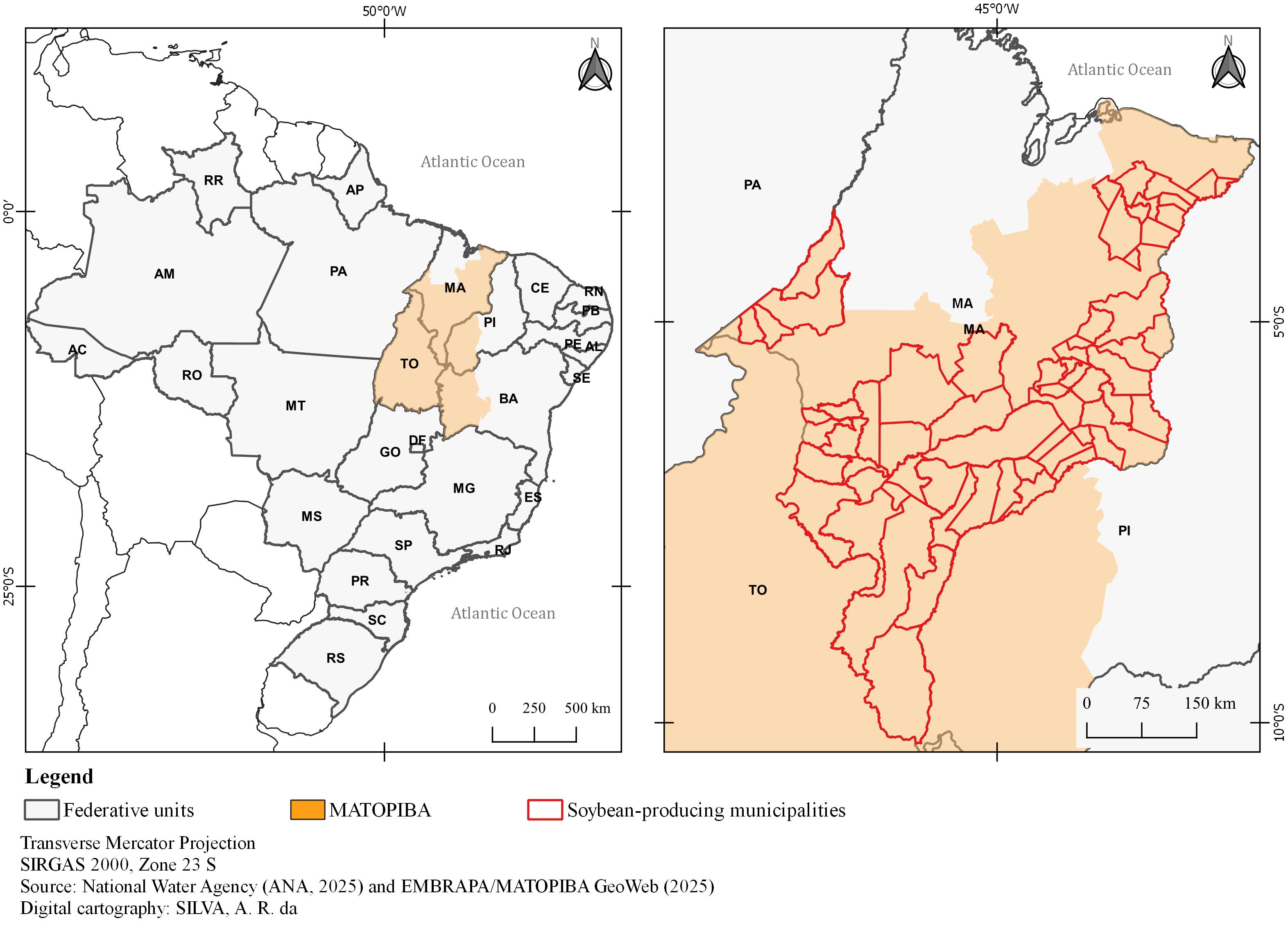
MATOPIBA is a region in Brazil that encompasses portions of the states of Maranhão, Tocantins, Piauí, and Bahia. Its geographical boundaries were defined by the Grupo de Inteligência Territorial Estratégica (GITE) of Embrapa and include 337 municipalities, distributed across 10 mesoregions and 31 homogeneous microregions. The total area of MATOPIBA is 73,173,485 hectares, with 33% located in Maranhão, 38% in Tocantins, 11% in Piauí, and 18% in Bahia (Magalhães & Miranda, 2014). The MATOPIBA region is characterized by similar patterns of land use and occupation, as well as a shared socioeconomic profile, with agricultural production predominantly oriented toward export (Figure 1).

Location of the MATOPIBA Region in Brazil (left) and in the State of Maranhão (right), with the main soybean‑producing municipalities.
In Maranhão state, soybean production extends across the southern, central, western, and eastern regions of the state. More than 60% of the municipalities in Maranhão are part of this area, totaling 135 municipalities. Among them are Açailândia, Balsas, Imperatriz, Chapadinha, and Carolina, which are known for producing grains such as soybeans, corn, rice, and pulp, as well as cotton and fruit crops.
Water footprint
Soybean production data were obtained from the Municipal Agricultural Production database of Instituto Brasileiro de Geografia e Estatística (2012). This study adopted the methodology proposed by Hoekstra et al. (2011) and Silva et al. (2020) to determine the water footprint of soybeans (WFsoy), expressed in cubic meters per ton (m3·ton−1). The calculation of the crop’s water footprint (Equation 1), i.e., the volume of water involved in soybean production, was based on the sum of green (WFgreen), blue (WFblue), and grey (WFgrey) water components during the crop growth cycle, as outlined by Hoekstra & Chapagain (2008) and Hoekstra et al. (2011).
where:
WFsoy = Water footprint of soybean cultivation (m3/ t-1);
WFgreen = Green water footprint of soybean cultivation (m3 /t-1);
WFblue = Blue water footprint of soybean cultivation (m3/ t-1);
WFgrey = Grey water footprint of soybean cultivation (m3/ t-1).
The WFblue refers to the volume of surface or groundwater used in soybean cultivation. It is calculated as the ratio between the blue water requirement of the soybean crop (WRblue) and its yield, as shown in Equation 2. In this study, the average monthly precipitation for each municipality was calculated using rainfall data from the Meteorological Database of the National Institute of Meteorology (INMET) for the years 2000 and 2020. Historical records from automatic meteorological stations located in Maranhão State, Brazil, were analyzed. The selected stations include Barra do Corda (Station ID 82571), Carolina (Station ID 82765), Caxias (Station ID 82476), and Imperatriz (Station ID 82564). These datasets were obtained through the BDMEP system of INMET, which provides standardized and quality-controlled meteorological records suitable for scientific research.
The WRblue was calculated as the sum of the daily volumes of blue water evapotranspired by the crop (ETblue, in m3 or L), from the first day of planting (d = 1) until the end of the harvest (d = h). The blue water requirement of the soybean crop (in m3) includes a conversion factor of 10, which is used to convert the irrigated water depth from millimeters into cubic meters per hectare. ETblue is calculated as the maximum between the difference of total crop evapotranspiration (ETc) obtained by multiplying the reference evapotranspiration (ETo) by the crop coefficient (Kc) and effective precipitation (EP).
The WFgreen refers to the consumption of soil moisture originating from precipitation, i.e., water that infiltrates the soil and remains available for short periods. WFgreen was estimated based on climate data, precipitation levels, and the soybean sowing period. In this study, daily green evapotranspiration (ETgreen) was calculated as the minimum between EP and ETc. The green water footprint for soybean production in Maranhão was calculated using the following equation:
where:
WFgreen = Green water footprint of soybean cultivation (m3 t-1);
WRgreen = Green water requirement of the soybean crop (m3 ha-1);
Yield = t ha-1.
ETc for soybeans was obtained by multiplying the ETo by the Kc, which was set at 2.955 mm, based on the average value reported by Santana et al. (2018). In Maranhão, ETo ranged from 3.99 mm·day−1 to 4.17 mm·day−1, according to data obtained from the CROPWAT 8.0 (Food and Agriculture Organization, 2025a) and the CLIMWAT 2.0 database (Food and Agriculture Organization, 2025b).
The factor 10 is used to convert daily ETgreen values from millimeters to water volume per land surface area (m3·ha−1). The summation is performed from the first day of sowing (d = 1) to the end of the crop cycle (d = h), which corresponds to the total duration of the soybean development period. In this study, a crop cycle of 85 days was adopted, based on estimates obtained using CROPWAT 8.0 software.
The WFgrey was determined based on the primary source of agricultural pollution, e.g., the use of nitrogen fertilizers. The recommended nitrogen application rate was 22 kg·ha−1. According to the standards established by Conama Resolution No. 357/2005 (Brasil, 2005), the threshold concentration for nitrogen in Class 2 freshwater bodies is 10 mg·L−1. Therefore, the natural background concentration of nitrogen in the receiving water body was assumed to be zero. A leaching fraction of 10% was adopted, as proposed by Silva et al. (2020).
Virtual water
The methodology used to estimate the virtual water of soybean cultivation (Equation 4) in Maranhão state followed the approach proposed by Mekonnen & Hoekstra (2011), as defined in their study.
where:
VWexp= Exported Virtual Water (m3);
WFsoy = Water footprint of soybean cultivation (m3 t-1);
Wexp = weight of exported soybeans, in metric tons (t).
RESULTS AND DISCUSSIONS
Commodity production (soybean grains)
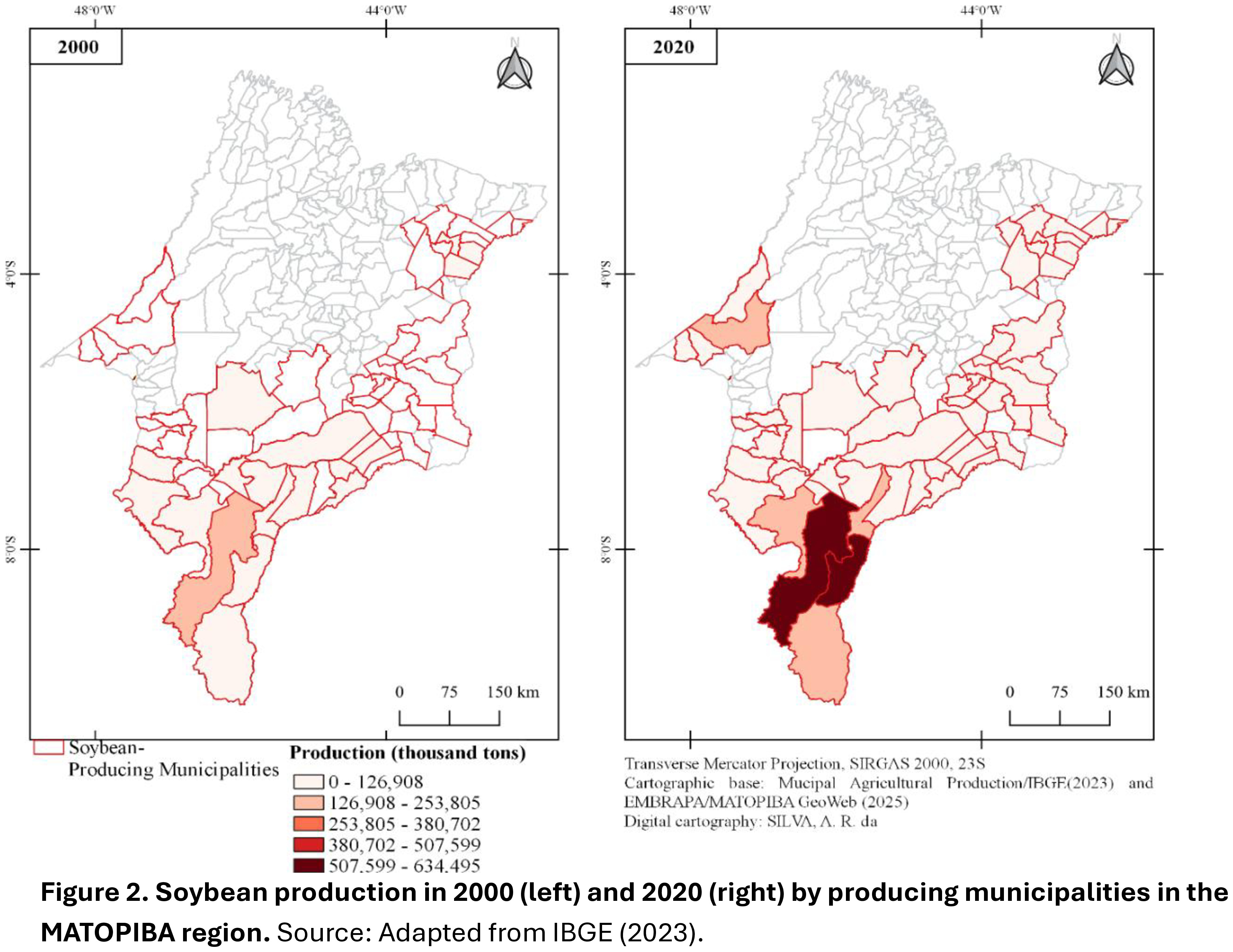
In Maranhão state, the volume of water used for rural supply and irrigation reached 7.18 m3 s-1 in 2019, increasing to 13.74 m3 s-1 by 2022. Similarly, water consumption rose from 5.42 m3 s-1 to 9.74 m3 s-1 over the same period (Brasil, 2025b). In the year 2000, only 19 municipalities in Maranhão cultivated soybean grains; by 2020, this number had increased to 64 (Figure 2). In 2013, the state produced 1.6 million tons of soybean grains, rising to 3.9 million tons by 2023 (Brasil, 2023b). Additional data from the Maranhão Association of Soybean and Corn Producers (Associação Brasileira dos Produtores de Soja, 2020) and the National Supply Company (CONAB) indicate that productivity in the 2018/2019 growing season was 2,940 kg ha-1, increasing to 3,029 kg ha-1 in 2019/2020, a 3% increase in yield.
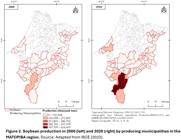
Soybean production in 2000 (left) and 2020 (right) by producing municipalities in the MATOPIBA region.
According to the 5th Crop Survey for the 2022/2023 season published by CONAB, soybean production was projected to grow by 5.5%, reaching 3.8 million tons. This growth was attributed to technological advances such as improved irrigation systems, better seed quality, the use of fertilizers, and enhanced storage infrastructure. The expansion of soybean cultivation primarily occurred in areas previously used for subsistence crops such as rice, beans, cassava and corn (Feitosa et al., 2023).
The year 2020, which serves as the base year for this study, coincided with the peak of the COVID-19 pandemic. Despite this, soybean consumption increased, along with export volumes, particularly to China, the main destination for Brazilian soybean exports (Biscaia & Bertaci, 2022). In 2000, the leading soybean-producing municipality in Maranhão was Balsas, with a production of 15,000 tons, followed by Tasso Fragoso with 12,000 tons. By 2020, both municipalities had surpassed 61,000 tons each (Figure 2). Balsas has emerged as a regional hub for the soybean production chain in southern Maranhão state, due to a combination of natural, economic, political, and cultural factors (Cunha & Espíndola, 2019). In 2023 alone, Balsas exported US$ 1,751,695,585 in soybeans (Brasil, 2025a).
The Southern Mesoregion of Maranhão has established itself as a major soybean-producing area since the 1990s, with Balsas standing out thanks to both public and private sector initiatives (Castillo et al., 2021). Beginning in the 1990s, large national and international corporations, driven by technological innovations, mechanization, modern agricultural inputs, competitive business strategies, and industrial policies, began operating in southern Maranhão, contributing significantly to the growth in monoculture production and productivity (Cunha & Espíndola, 2019). However, these enterprises, while leveraging abundant natural resources, have also caused soil and water degradation and generated adverse impacts on local communities (Xavier, 2019).
In Brazil, trade flows between importers and exporters are primarily concentrated in Europe and Asia, particularly China. North America’s main export markets include Europe, Asia, Africa, and, to a lesser extent, Central America (Carmo et al., 2007). Maranhão is recognized as a major exporter of soybean grains to international markets, with export values and destinations directed toward key economic blocs (Table 1). An increase in soybean exports has been observed toward Africa, Central America and the Caribbean, North America, Asia, the Association of Southeast Asian Nations (ASEAN), and Europe. Conversely, there has been a decline in exports to the Andean Community of Nations (CAN), along with emerging access to markets in Oceania and the Middle East.
Soybean grain exports from Maranhão state to major continents and economic blocs (2020–2000), in metric tons.
The Port of Itaqui, located in São Luís, stands out as a strategic hub for the export of soybeans produced in the state of Maranhão to international markets, with China being the primary destination. According to the Government of the State of Maranhão, over 2 million tons of soybeans were handled at the Port of Itaqui in June 2023 alone, and the total volume for the 2022/2023 period reached 3.4 million tons (Maranhão, 2023). The Ponta da Madeira Port, owned by Vale, along with private terminals within the Port of Itaqui, are nationally significant. With regard to soybean exports specifically, these ports have shown notable growth in recent years. Current trends suggest the consolidation of the Port of Itaqui as the leading grain export terminal in the Arco Norte region (Observatório Portuário, 2022).
The volume of soybeans exported is also reflected in water demand in Maranhão, particularly in terms of virtual water. Within the MATOPIBA region, Maranhão maintains a competitive advantage in soybean exports due to several factors: strong integration with consumer markets such as China, lower land acquisition costs for cultivation, and geographic proximity to the Port of Itaqui, which facilitates the efficient transportation of agricultural production (Correia & Lima, 2020).
Water footprint of soybean grain production in Maranhão
In the soybean-producing municipalities of Maranhão, the water footprint (WFsoy) in 2000 was 59,645 m3 per ton. By 2020, this value had risen to 258,557 m3 per ton, an increase of 333%. During periods of water scarcity, irrigation techniques relying on groundwater are employed, which contributes to increased competition for freshwater resources (Costa et al., 2021). In Maranhão, the irrigated area expanded from 3,258 hectares in 2000 to 5,766 hectares in 2019 (Brasil, 2025b, 2025c). Among the municipalities, Brejo registered the highest WFsoy in 2000, with 13.97 m3/tons, resulting from an average precipitation of 1,323 mm and yielding 2.91 m3/ ton of blue water. In 2020, São João do Paraíso recorded the highest WFsoy at 111.01 m3/ ton, with an average precipitation of 1,590 mm.
This study found that green water use predominated in soybean-producing municipalities, accounting for 80.1% of the total WFsoy in 2000 and 70.7% in 2020. Soybean cultivation primarily relies on green water, which refers to rainwater stored in the soil and used by plants during the growing season. The water footprint of soybean production in the municipalities of Maranhão was estimated at 42.56 m3/tons, increasing significantly to 171.30 m3/tons in 2020. This sharp rise highlights the growing pressure on local water resources associated with the expansion of soybean cultivation in the region.
In contrast, WFblue use increased from 67.5% in 2000 to 72.3% in 2020. In this study, a significant reduction in precipitation was identified in Eastern Maranhão, with a decrease of approximately 271 mm between 2000 and 2020. In contrast, the western region of the state experienced a substantial increase of more than 1400 mm, highlighting a strong positive variation. Similarly, in the southern portion of Maranhão, the municipality of southern region recorded a notable rise of nearly 700 mm during the same period (Figure 3). In Maranhão, part of the MATOPIBA frontier, soybean expansion between 2000 and 2020 occurred despite decreasing precipitation trends and rising temperatures (Araújo et al., 2024). The study area is strongly influenced by the Intertropical Convergence Zone (ITCZ), which plays a key role in shaping the local rainfall regime (Lima et al., 2025). Over the two decades between 2000 and 2020, Maranhão transitioned from relatively stable rainfall regimes to increasingly variable and irregular precipitation patterns, a shift that mirrors broader climate change trends observed across the MATOPIBA region (Pinheiro & Santos, 2025).
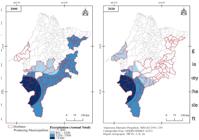
Annual total precipitation (mm) in 2000 (left) and 2020 (right) across soybean-producing municipalities in Maranhão.
The projected increase in blue water use for soybean cultivation, driven by climate change, is expected to lead to greater reliance on irrigation to maintain productivity levels, thereby intensifying pressure on water resources in the MATOPIBA region (Silva et al., 2020). Globally, the average water footprint for soybeans is estimated at 2,145 m3 per ton, which is 44% lower than the global average for soybean crops (Carvalho et al., 2023).
It is worth noting that in 1980, only the municipality of Balsas, located in the Southern Mesoregion of Maranhão, had harvested soybean areas. By 2020, the expansion of soybean cultivation had become evident, with significant intensification in southern Maranhão and gradual expansion toward the western and eastern regions of the state (Feitosa et al., 2023). In this municipality, achieving high soybean productivity requires around 2,036.6 liters of water to produce 1 kg of grain, with 47.6% attributed to green water (from precipitation), 49.5% to blue water (surface and groundwater), and 3.6% to grey water (polluted water) (Silva et al., 2020).
With regard to irrigation, Balsas had 2.2 thousand hectares irrigated by central pivot systems in 2015. Projections indicate that this area will increase to 3,195 hectares by 2030 (Brasil, 2017). However, the water availability in the Balsas River, the main watercourse draining the municipality, is 57.39 m3/ s-1, while the Parnaíba River, which drains the municipality of Tasso Fragoso, has a flow of 128.73 m3/ s-1 (Brasil, 2022). In Maranhão changes in management practices and cropping systems can indeed contribute to reducing the green and blue water footprints associated with soybean production. The adoption of cultivars better adapted to local edaphoclimatic conditions, considering the increasing variability in rainfall patterns driven by climate change, the use of drought‑tolerant cultivars, improved soil conservation practices, and strategies that enhance soil water retention become even more critical for mitigating both green and blue water footprints under future climatic scenarios.
In the municipalities analyzed, the total WFgrey was estimated at 0.22 m3·ton−1 due to the lack of more detailed data. It is important to note that this study only considered nitrogen‑based fertilizers and assumed constant input values. Studies conducted at universities and research centers in Maranhão, focus on the efficiency of biological nitrogen fixation and the management of other nutrients (Hungria et al., 2007). Biological nitrogen fixation in soybean cultivation, with rhizobium inoculation under no‑tillage systems, promotes high grain productivity and a positive nitrogen balance for the production system (Alves et al., 2006).
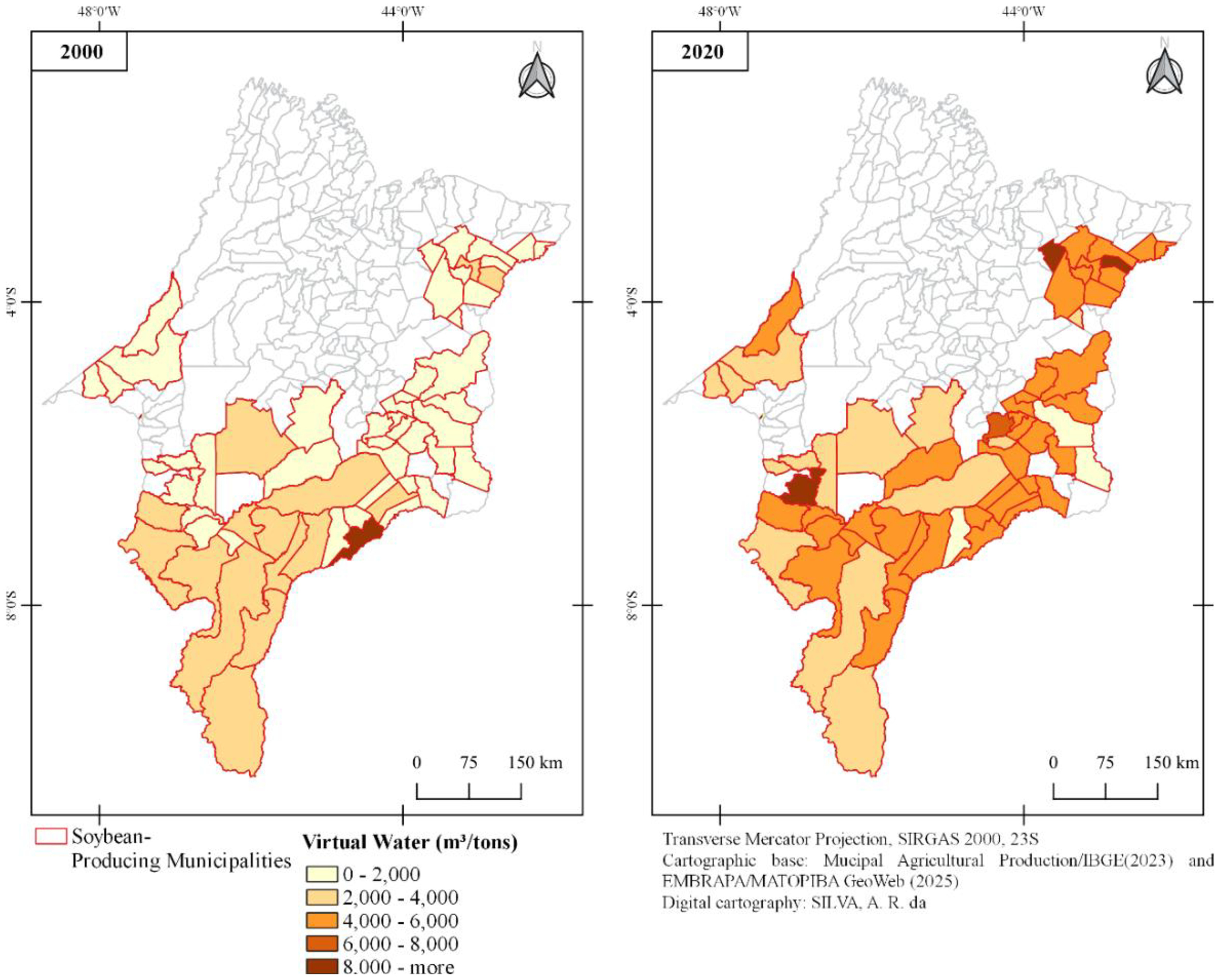
In this study, the virtual water associated with soybean cultivation was estimated at 59,645.75 m3/ ton in the year 2000, of which 49 m3/tons were allocated in soybean grain production (Figure 4). By 2020, the value had risen sharply to 520,714 m3/tons, with 123 m3/tons destined for export. These findings reveal a significant increase in the water footprint of soybean production over two decades, underscoring the growing impact of export-oriented flows on regional water resources.
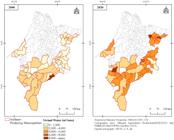
Virtual water from soybean production in the years 2000 (left) and 2020 (right) by producing municipalities in the Maranhão portion of the MATOPIBA region.
According to Comex Stat (Brasil, 2025a), in the year 2000, export data indicated that only the municipalities of Açailândia and Itinga participated in soybean grain exports, totaling 867,640 tons. However, by 2020, the municipalities of Açailândia, Alto Parnaíba, Anapurus, Balsas, Loreto, Riachão, Sambaíba, São Bernardo, São Domingos do Azeitão, and Tasso Fragoso together reached an export volume of 3 millions tons. The expansion of soybean cultivation in Maranhão's municipalities within the MATOPIBA region has led to the displacement of areas previously occupied by smallholder farmers engaged in traditional, low-technology subsistence agriculture. This shift has largely been driven by favorable commodity prices, with soybeans primarily destined for international markets (Feitosa et al., 2023).
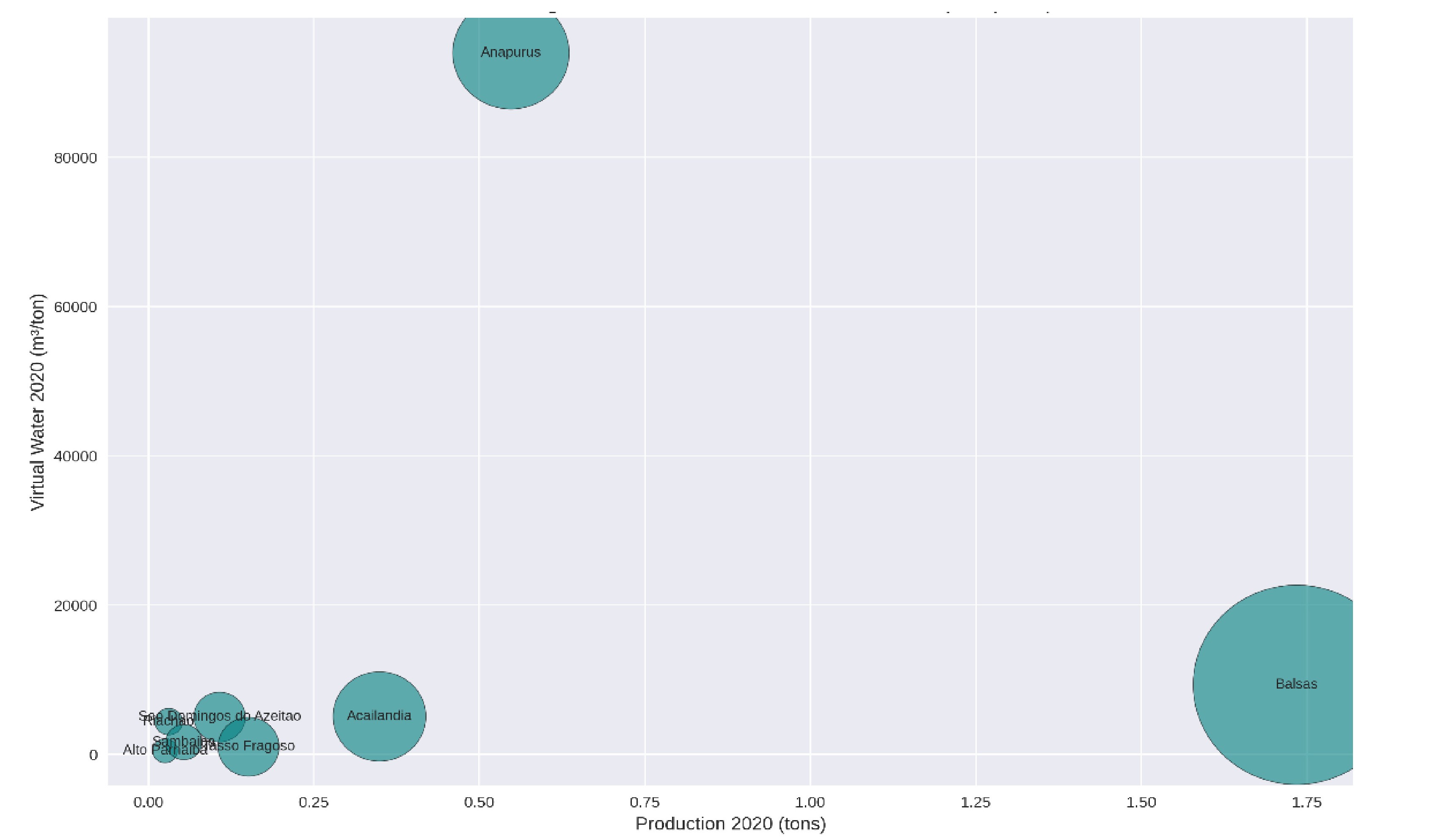
While all municipalities reported zero production in 2000, the 2020 scenario shows a significant expansion accompanied by substantial volumes of virtual water embedded in agricultural outputs (Figure 5). Balsas and Açailândia exhibit high production levels with moderate virtual water per ton, indicating relatively efficient water use, likely associated with improved management practices or consolidated production systems. In contrast, Alto Parnaíba, Sambaíba, and Tasso Fragoso show low production and low virtual water export, reflecting minimal indirect hydrological pressure. Anapurus emerges as a clear outlier, presenting extremely high virtual water per ton despite moderate production, suggesting water‑intensive crops or low water‑use efficiency. Overall, the distribution demonstrates that hydrological pressure is driven not only by production volume but by the specific relationship between output and water consumption. The municipality of Anapurus accounted for approximately 37,771 m3/tons of this total, followed by Balsas with 3,359 m3/tons. Anapurus is located within the Munim River basin, as it is drained by the Preto River, a tributary of the Munim. According to a report by the Geological Survey of Brazil (Correia Filho, 2011), the groundwater in Anapurus contains an excessively high concentration of dissolved salts, rendering it unsuitable for certain uses.

Bubble plot of soybean production (tons) and virtual water (m3/ton) indicators for selected municipalities in 2020.
The soybean‑producing municipalities of Maranhão exported a total of 121 mil m3/ton of virtual water. From 2002 to 2016, the total volume of virtual water exported from the MATOPIBA region through soybean exports was estimated at 73 million m3 (Gelain et al., 2018). Between 1997 and 2013, Brazil as a whole exported 420.697 billion m3 of virtual water (Gelain & Istake, 2015). It is important to emphasize that water demand for soybean production varies depending on the cultivation site, as it is influenced by climatic conditions and productivity levels, which are closely linked to the specific practices and characteristics of crop management in each region (Carmo et al., 2007).
Although water availability still exists in the main soybean-producing municipalities, the Urban Water Supply Security Index (UWSSI), developed by National Water Agency (Brasil, 2022), classified the municipalities of Balsas and Tasso Fragoso as having medium water security, which serves as a warning signal for the management of these hydrographic basins. In the southwestern and southern regions of Maranhão, higher ETo values are observed between May and September, marking the peak of the dry season, while in the northern and eastern regions this period extends from October to February (Santana et al., 2018). Improved water productivity may also allow importing countries to produce more food with the same amount of water (Yang & Zehnder, 2007). Although this study's virtual water estimates consider only rainfall and surface water, soybean monoculture can deplete groundwater resources and introduce environmental vulnerabilities and risk, particularly under the influence of climate change (Liao et al., 2024).
The water balance of the basins located in the Maranhão portion of the MATOPIBA region is generally satisfactory. However, some sub-regions showed concerning quantitative conditions. According to the Agência Nacional de Águas e Saneamento Básico (Brasil, 2021), 86% (3,623) of the hydrographic basins in this region presented a satisfactory water balance; 10% (421) faced issues related to water quantity; 2.7% (112) had problems with water quality; and 1.3% (112) had both qualitative and quantitative deficiencies. Pignati et al. (2022) offer a critical perspective on the concept of “potability” of water, especially considering that Brazilian regulations require biannual testing of drinking water for 27 types of pesticides (e.g., glyphosate, 2,4-D, pyrethroids), 15 heavy metals (e.g., lead, mercury, copper), 15 solvents (e.g., benzene, toluene), and 7 household disinfectants (e.g., soap and wax derivatives). The application of thiamethoxam in soybean and corn becomes environmentally relevant under intense rainfall, which intensifies erosion and increases the risk of water contamination (Gonçalves Junior et al., 2024).
In Maranhão, environmental concerns are particularly concentrated in the western region, especially within the Pindaré River basin, the central Mearim River basin, and the Parnaíba River basin, areas that have witnessed significant expansion of soybean monoculture. Despite ongoing deforestation along its margins, the Pindaré River still shows good environmental quality, though this could be at risk due to the basin’s increasing vulnerability (Silva et al., 2017). On the other hand, 40% of the pesticides used in local soybean crops such as aminopyralid, fluroxypyr, picloram, and triclopyr were detected in this same river basin (Costa et al., 2021). Similar degradation was observed in the Mearim River, with reports of pesticide discharge (Gaspar et al., 2005), fecal waste, and heavy metal contamination in the fish population (Pereira et al., 2020). In the Parnaíba River, the main concern is related to water quantity due to a prolonged dry period since 2016, although conditions are comparatively less severe (Companhia de Pesquisa de Recursos Minerais, 2017).
The agricultural stages most associated with environmental degradation, occupational hazards, and negative impacts on human and animal health are also those most actively defended by agribusiness interests, which frequently attempt to delegitimize scientific research and promote themselves in mainstream media as “saviors of the nation” under slogans like “Agro is everything” (Pignati et al., 2022). In this region, land concentration leads to social inequalities and limits access to land, often resulting in the displacement of rural populations (Santos et al., 2021). Additionally, environmental problems such as the excessive use of chemical pesticides and freshwater for irrigation are common in large-scale commercial agriculture. The effects of virtual water trade on global water resources are complex and depend on multiple factors. Although it can benefit water-scarce regions and promote overall water savings, it may also intensify water stress in water-abundant areas and generate environmental challenges, including nitrogen pollution (Liao et al., 2024).
Siqueira-Neto et al. (2022) reported that native vegetation maintained the highest soil nitrogen (N) stocks, whereas soybean cultivation led to a 20% decline after the first year. An initially higher C:N ratio in soybean fields was attributed to the decomposition of fine roots from native vegetation, but both C:N ratio and N stocks decreased over time, indicating reduced soil fertility and carbon sequestration potential. Notably, the study did not provide data on nitrogen fertilization in soybean systems. Excessive agricultural inputs of nitrogen (N) and phosphorus (P) have long been recognized as major contributors to eutrophication and algal blooms (Le Moal et al., 2019; Hagedorn et al., 2022). This may increase the use of manure or synthetic fertilizers, intensifying NO3− contamination in surface and groundwater and enhancing N2O emissions, which in turn reinforce climate change.
In the MATOPIBA region, the gains achieved in commodity production over the years have led to uneven regional development. This is due to the capital-intensive nature of agribusiness, which involves heavy use of machinery, harvesters, chemical inputs, and advanced technologies, with limited reliance on human labor, thus reducing income distribution among rural workers (Pereira et al., 2018b). In Maranhão, environmental and economic factors, such as water availability and affordable land prices, should not be the sole determinants for converting forests into pasture or extensive agricultural plantations.
The expansion of soybean cultivation in Maranhão shows a tendency to advance into areas of greater hydrological and environmental fragility, especially in municipalities with soils susceptible to erosion and limited water availability. In this context, the state’s Ecological-Economic Zoning (ZEE) constitutes an essential instrument for guiding land use, prioritizing less vulnerable areas and restricting the conversion of environmentally sensitive zones (Maranhão, 2024). Integrating the results of this study into the ZEE can enhance territorial decision-making and help mitigate conflicts between agricultural production and environmental conservation.
At the same time, initiatives such as the PSA Soja Brasil project, implemented in the southern region of the state, demonstrate the potential of economic mechanisms to encourage the preservation of native vegetation and the adoption of conservation practices related to water, biodiversity, and carbon (Tropical Forest Alliance, 2023). Such actions contribute to reducing the WFgrey and diffuse pollution associated with the use of fertilizers and pesticides, reinforcing the importance of integrated policies for the hydrological and environmental sustainability of soybean production.
CONCLUSIONS
Agribusiness, particularly in the MATOPIBA region of the state of Maranhão, plays a crucial role in the Brazilian economy but also raises significant socio-environmental concerns, such as the export of virtual water. Understanding virtual water and managing it efficiently are essential to ensuring the sustainable development of the agricultural sector and the preservation of Maranhão’s water resources.
Soybean expansion in Maranhão between 2000 and 2020 substantially increased pressure on local water resources. Water use for irrigation rose sharply, soybean production expanded across the state, and the water footprint of soybean grain increased by nearly 300%, reflecting greater dependence on both green and blue water. Virtual water exports also grew significantly, driven by the intensification of export‑oriented agriculture. Spatial shifts in precipitation and rising climatic variability further amplified hydrological stress. The contrasting efficiency among municipalities—ranging from relatively optimized systems to critical hotspots such as Anapurus—highlights the uneven distribution of water pressures. Overall, the findings underscore the need for integrated water management and sustainable land‑use strategies to mitigate the growing environmental impacts of soybean expansion in Maranhão.
Intensive agricultural exploitation, especially for soybean production, brings socio-environmental challenges such as pesticide contamination and the degradation of hydrographic basins. Moreover, capital-intensive agricultural practices in the MATOPIBA region have contributed to uneven economic development, disproportionately benefiting large landowners and multinational corporations over local laborers.
The analysis of virtual water highlights the importance of both public and private policies in promoting the growth of the agricultural sector and consolidating Maranhão as a major soybean producer at the national level. It is essential that public policies and natural resource management strategies be improved to ensure a balance between economic development and environmental preservation. The sustainability of hydrographic basins is vital not only for maintaining agricultural productivity but also for safeguarding the health and well-being of local communities.
DATA AVAILABILITY STATEMENT
Research data is available in a repository (http://repositorioigam.meioambiente.mg.gov.br/).
ACKNOWLEDGEMENTS
The authors express their gratitude to Prof. Dr. Weverton Pereira Rodrigues for his careful reading and constructive review of the manuscript.
REFERENCES
-
Alves, B. J. R., Zotarelli, L., Fernandes, F. M., Heckler, J. C., Macedo, R. A. T., Boddey, R. M., Jantalia, C. P., & Urquiaga, S. (2006). Fixação biológica de nitrogênio e fertilizantes nitrogenados no balanço de nitrogênio em soja, milho e algodão. Pesquisa Agropecuária Brasileira, 41(3), 446-456. https://doi.org/10.1590/S0100-204X2006000300011
» https://doi.org/10.1590/S0100-204X2006000300011 -
Araújo, M. L. S., Rufino, I. A. A., Silva, F. B., Brito, H. C., & Santos, J. R. N. (2024). The relationship between climate, agriculture and land cover in Matopiba, Brazil (1985–2020). Sustainability, 16(7), 2670. https://doi.org/10.3390/su16072670
» https://doi.org/10.3390/su16072670 -
Associação Brasileira dos Produtores de Soja. (2020). Levantamento de safra Retrieved in 2025, August 31, from https://aprosojabrasil.com.br/estatisticas-da-soja/levantamento-de-safra/
» https://aprosojabrasil.com.br/estatisticas-da-soja/levantamento-de-safra/ -
Bernhardt, L. M., & Kopansky, D. (2024, March 21). A escassez global de água está se aproximando. Aqui está o que pode ser feito a respeito Programa das Nações Unidas para o Meio Ambiente. Retrieved in 2025, August 31, from https://www.unep.org/pt-br/noticias-e-reportagens/reportagem/escassez-global-de-agua-esta-se-aproximando-aqui-esta-o-que-pode
» https://www.unep.org/pt-br/noticias-e-reportagens/reportagem/escassez-global-de-agua-esta-se-aproximando-aqui-esta-o-que-pode -
Biscaia, W. F., & Bertaci, M. J. (2022). O mercado da soja no Brasil pós-pandemia da COVID-19. Interface Tecnológica, 19(2), 641-652. https://doi.org/10.31510/infa.v19i2.1472
» https://doi.org/10.31510/infa.v19i2.1472 -
Bleninger, T., & Kotsuka, L. K. (2015). Conceitos de água virtual e pegada hídrica: estudo de caso da soja e óleo de soja no Brasil. Revista Recursos Hídricos, 36(1), 15-24. https://doi.org/10.5894/rh36n1-2
» https://doi.org/10.5894/rh36n1-2 -
Brasil. Ministério do Meio Ambiente. Conselho Nacional do Meio Ambiente – CONAMA. (2005). Resolução nº 357, de 17 de março de 2005: Dispõe sobre a classificação dos corpos de água e diretrizes ambientais para o seu enquadramento, bem como estabelece as condições e padrões de lançamento de efluentes. Diário Oficial [da] República Federativa do Brasil, Brasília. Retrieved in 2025, August 31, from https://www.mma.gov.br/port/conama/legiabre.cfm?codlegi=459
» https://www.mma.gov.br/port/conama/legiabre.cfm?codlegi=459 -
Brasil. Agência Nacional de Águas e Saneamento Básico – ANA. (2017). Atlas Irrigação: uso da água na agricultura irrigada Retrieved in 2025, August 31, from www.ana.gov.br/atlasirrigacao/
» www.ana.gov.br/atlasirrigacao/ -
Brasil. Agência Nacional de Águas e Saneamento Básico – ANA. (2021). Atlas Águas 2021 Retrieved in 2025, August 31, from http://atlas.ana.gov.br
» http://atlas.ana.gov.br -
Brasil. Agência Nacional de Águas e Saneamento Básico – ANA. (2022). Usos consuntivos da água no Brasil (1931-2040) Retrieved in 2025, August 31, from https://metadados.snirh.gov.br/geonetwork/srv/por/catalog.search#/metadata/5146c9ec-5589-4af1-bd64-d34848f484fd
» https://metadados.snirh.gov.br/geonetwork/srv/por/catalog.search#/metadata/5146c9ec-5589-4af1-bd64-d34848f484fd -
Brasil. Agência Nacional de Águas e Saneamento Básico – ANA. (2023a). Conjuntura dos Recursos Hídricos no Brasil de 2023 Retrieved in 2025, August 31, from https://www.snirh.gov.br/portal/centrais-de-conteudos/conjuntura-dos-recursos-hidricos/conjunturainforme2023.pdf/view
» https://www.snirh.gov.br/portal/centrais-de-conteudos/conjuntura-dos-recursos-hidricos/conjunturainforme2023.pdf/view -
Brasil. Companhia Nacional de Abastecimento – CONAB. (2023b). Acompanhamento da safra brasileira de grãos: safra 2022/2023. Retrieved in 2025, August 31, from https://www.conab.gov.br
» https://www.conab.gov.br -
Brasil. Ministério do Desenvolvimento, Indústria, Comércio e Serviços. Secretaria de Comércio Exterior. (2025a). Comex Stat Retrieved in 2025, August 31, from http://comexstat.mdic.gov.br/pt/geral
» http://comexstat.mdic.gov.br/pt/geral -
Brasil. Agência Nacional de Águas e Saneamento Básico – ANA. (2025b). Uso da água no estado do Maranhão: dados de captação e consumo entre 2019 e 2022. Retrieved in 2025, August 31, from https://www.gov.br/ana
» https://www.gov.br/ana -
Brasil. Agência Nacional de Águas e Saneamento Básico – ANA. (2025c). Uso da água para irrigação no estado do Maranhão: série histórica 2000-2019. Retrieved in 2025, August 31, from https://www.gov.br/ana
» https://www.gov.br/ana -
Carmo, R. L., Ojima, A. L. R., Ojima, R., & Nascimento, T. T. (2007). Água virtual, escassez e gestão: o Brasil como grande “exportador” de água. Ambiente & Sociedade, 10(1), 83-96. https://doi.org/10.1590/S1414-753X2007000200006
» https://doi.org/10.1590/S1414-753X2007000200006 -
Carvalho, V. L., Sousa, E. V., Oliveira, L. L., Rodrigues Júnior, U. J., & Nagata, K. M. R. (2023). Água virtual e pegada hídrica da soja: aumento das exportações nos portos da Amazônia brasileira versus riscos ambientais e hídricos. Research, Society and Development, 12(2), 1-10. https://doi.org/10.33448/rsd-v12i2.38189
» https://doi.org/10.33448/rsd-v12i2.38189 -
Castillo, R., Botelho, A. C., & Busca, M. D. (2021). Agronegócio globalizado no MATOPIBA maranhense: análise da especialização regional produtiva da soja. Espaço e Economia, 10(21), 1-20. https://doi.org/10.4000/espacoeconomia.19325
» https://doi.org/10.4000/espacoeconomia.19325 -
Centro de Estudos Avançados em Economia Aplicada – CEPEA. (2025, June 17). PIB do agronegócio brasileiro Retrieved in 2025, August 31, from https://www.cepea.esalq.usp.br/br/pib-do-agronegocio-brasileiro.aspx
» https://www.cepea.esalq.usp.br/br/pib-do-agronegocio-brasileiro.aspx -
Companhia de Pesquisa de Recursos Minerais – CPRM. (2017). Relatório situacional dos recursos hídricos superficiais da bacia hidrográfica do Rio Parnaíba Retrieved in 2025, August 31, from http://www.cprm.gov.br/sace/boletins/Parnaiba/20171116_10-20171116%20-%20103332.pdf
» http://www.cprm.gov.br/sace/boletins/Parnaiba/20171116_10-20171116%20-%20103332.pdf -
Confederação da Agricultura e Pecuária do Brasil – CNA. (2022). Panorama do Agro Retrieved in 2025, August 31, from https://www.cnabrasil.org.br/cna/panorama-do-agro
» https://www.cnabrasil.org.br/cna/panorama-do-agro -
Correia Filho, F. L. (2011). Relatório diagnóstico do município de Anapurus CPRM. Retrieved in 2025, August 31, from https://rigeo.sgb.gov.br/jspui/bitstream/doc/15356/1/rel-anapurus.pdf
» https://rigeo.sgb.gov.br/jspui/bitstream/doc/15356/1/rel-anapurus.pdf -
Correia, L. S., & Lima, S. S. (2020). Análise da elasticidade de transmissão de preços externos no mercado doméstico da soja maranhense. Desenvolvimento em Debate, 8(2), 141-163. https://doi.org/10.51861/ded.dmv.2.011
» https://doi.org/10.51861/ded.dmv.2.011 -
Costa, S. O., Souza, C. N., & Orlanda, J. F. F. (2021). Estudo da vulnerabilidade dos recursos hídricos por agrotóxicos na bacia hidrográfica do Rio Pindaré, João Lisboa, Maranhão, Brasil. Research. Social Development, 10(12), 1-10. https://doi.org/10.33448/rsd-v10i12.20598
» https://doi.org/10.33448/rsd-v10i12.20598 -
Cunha, R. C. C., & Espíndola, C. J. (2019). Da pecuária à soja: uma leitura de Balsas (MA) – Brasil – com base em Vidal de La Blache. Revista Espaço e Geografia, 22(1), 91-118. https://doi.org/10.26512/2236-56562019e40156
» https://doi.org/10.26512/2236-56562019e40156 -
Empresa Brasileira de Pesquisa Agropecuária – Embrapa. (2022). MATOPIBA Retrieved in 2025, August 31, from https://www.embrapa.br/tema-matopiba/sobre-o-tema
» https://www.embrapa.br/tema-matopiba/sobre-o-tema -
Feitosa, M. M., Sousa, E. C., Nascimento, L., & Lemos, J. (2023). A soja no estado do Maranhão, Brasil: uma análise temporal da expansão e substituição das culturas alimentares. Geografares, 3(37), 1-17. https://doi.org/10.47456/geo.v3i37.40394
» https://doi.org/10.47456/geo.v3i37.40394 -
Freitas, F. G., & Magnabosco, A. L. (2021). Benefícios econômicos da expansão do saneamento no Estado do Maranhão Instituto Trata Brasil. Retrieved in 2025, August 31, from https://tratabrasil.org.br/wp-content/uploads/2022/09/Relatorio_Completo-1.pdf
» https://tratabrasil.org.br/wp-content/uploads/2022/09/Relatorio_Completo-1.pdf -
Food and Agriculture Organization – FAO. (2025a). CropWat 8.0 Retrieved in 2025, August 31, from https://www.fao.org/land-water/databases-and-software/cropwat/en/
» https://www.fao.org/land-water/databases-and-software/cropwat/en/ -
Food and Agriculture Organization – FAO. (2025b). CLIMWAT 2.0 database Retrieved in 2025, August 31, from https://www.fao.org/land-water/databases-and-software/climwat-for-cropwat/en/
» https://www.fao.org/land-water/databases-and-software/climwat-for-cropwat/en/ -
Gaspar, S. M. F. S., Nunes, G. S., Pinheiro, C. U. B., & Amarante Júnior, O. P. (2005). Avaliação de risco de pesticidas aplicados no município de Arari, Maranhão, Brasil: base para programa de controle ambiental do Rio Mearim. Pesticidas, 15, 43-54. https://doi.org/10.5380/pes.v15i0.4500
» https://doi.org/10.5380/pes.v15i0.4500 -
Gelain, J. G., & Istake, M. (2015). Exportação líquida de água virtual brasileira e estadual. Revista Brasileira de Estudos Regionais e Urbanos, 9(2), 150-168. Retrieved in 2025, August 31, from https://www.revistaaber.org.br/rberu/article/view/101
» https://www.revistaaber.org.br/rberu/article/view/101 -
Gelain, J. G., Licks, E. B., Almeida, A. N., & Istake, M. (2018). Volume e valor da água virtual exportada por meio da soja na região de MATOPIBA. Revista Econômica do Nordeste, 49(3), 93-112. https://doi.org/10.61673/ren.2018.769
» https://doi.org/10.61673/ren.2018.769 -
Gonçalves Junior, A. C., Conradi Junior, E., Schwantes, D., Piccioli, A. F. B., & Secco, D. (2024). Assessing thiamethoxam environmental distribution in successively cultivated corn: insights from drainage lysimeter and laboratory studies. RBRH, 29, e49. https://doi.org/10.1590/2318-0331.292420240049
» https://doi.org/10.1590/2318-0331.292420240049 -
Hagedorn, J. G., Davidson, E. A., Fisher, T. R., Fox, R. J., Zhu, Q., Gustafson, A. B., Koontz, E., Castro, M. S., & Lewis, J. (2022). Effects of drainage water management in a corn–soy rotation on soil N2O and CH4fluxes. Nitrogen, 3(1), 128-148. https://doi.org/10.3390/nitrogen3010010
» https://doi.org/10.3390/nitrogen3010010 -
Herrera, M. V. S., Marangoni, T. T., Oliveira, J. N., & Libânio, M. (2019). Estimativa do dispêndio de água virtual nas exportações brasileiras no período de 2003 a 2014. Engenharia Sanitária e Ambiental, 24(6), 1229-1238. https://doi.org/10.1590/s1413-41522019178447
» https://doi.org/10.1590/s1413-41522019178447 -
Hoekstra, A. Y., & Chapagain, A. K. (2008).Globalization of water: Sharing the planet’s freshwater resources Hoboken: John Wiley & Sons. https://doi.org/10.1002/9780470696224.ch2
» https://doi.org/10.1002/9780470696224.ch2 -
Hoekstra, A. Y., & Hung, P. Q. (2002). Virtual water Trade: a quantification of virtual water flows between nations in relation to international crop trade (Research Report Series, No. 11). IHE Delft. Retrieved in 2025, August 31, from www.waterfootprint.org/resources/Report11.pdf
» www.waterfootprint.org/resources/Report11.pdf -
Hoekstra, A., Chapagain, A., Aldaya, M., & Mekonnen, M. (2011). The Water Footprint Assessment Manual: Setting the Global Standard Retrieved in 2025, February 20, from https://www.waterfootprint.org/resources/TheWaterFootprintAssessmentManual_English.pdf
» https://www.waterfootprint.org/resources/TheWaterFootprintAssessmentManual_English.pdf - Hungria, M., Campo, R. J., & Mendes, I. C. (2007). A importância do processo de fixação biológica do nitrogênio para a cultura da soja: componente essencial para a competitividade do produto brasileiro (Documentos Embrapa Soja, No. 283). Londrina: Embrapa Soja.
-
Instituto Brasileiro de Geografia e Estatística – IBGE. Sistema IBGE de Recuperação Automática – SIDRA. (2012). Tabela 1612: produção agrícola municipal Retrieved in 2025, August 10, from https://sidra.ibge.gov.br/tabela/1612
» https://sidra.ibge.gov.br/tabela/1612 -
Instituto Brasileiro de Geografia e Estatística – IBGE. (2023). Produção Agrícola Municipal – PAM Retrieved in 2025, August 31, from www.ibge.gov.br/estatisticas/economicas/agricultura-e-pecuaria/9117-producao-agricola-municipal-culturas-temporarias-e-permanentes.html
» www.ibge.gov.br/estatisticas/economicas/agricultura-e-pecuaria/9117-producao-agricola-municipal-culturas-temporarias-e-permanentes.html -
Instituto Nacional de Meteorologia – INMET. (2023). BDMPE: Banco de Dados Meteorológicos para Ensino e Pesquisa. Retrieved in 2025, August 31, from https://bdmep.inmet.gov.br/
» https://bdmep.inmet.gov.br/ -
Le Moal, M., Gascuel-Odoux, C., Ménesguen, A., Souchon, Y., Étrillard, C., Levain, A., Moatar, F., Pannard, A., Souchu, P., Lefebvre, A., & Pinay, G. (2019). Eutrophication: a new wine in an old bottle? The Science of the Total Environment, 651(1), 1-11. https://doi.org/10.1016/j.scitotenv.2018.09.139
» https://doi.org/10.1016/j.scitotenv.2018.09.139 -
Liao, X., Liu, A., & Chai, L. (2024). Virtual water flows in a real world. PLOS Water, 3(8), e0000275. https://doi.org/10.1371/journal.pwat.0000275
» https://doi.org/10.1371/journal.pwat.0000275 -
Lima, C. E. S., Souza Filho, F. A., & Rocha, R. V. (2025). Homogeneous climate risk zones in Brazil: zonas de risco climático homogêneo no Brasil. RBRH, 30, 1-17. https://doi.org/10.1590/2318-0331.302520240102
» https://doi.org/10.1590/2318-0331.302520240102 - Magalhães, L. A., & Miranda, E. E. (2014). MATOPIBA: quadro natural Campinas: Embrapa.
-
Maleksaeidi, H., & Karami, E. (2013). Social-ecological resilience and sustainable agriculture under water scarcity. Agroecology and Sustainable Food Systems, 37(3), 262-290. https://doi.org/10.1080/10440046.2012.746767
» https://doi.org/10.1080/10440046.2012.746767 -
Maranhão. Agência de Notícias. (2023, July 17). Soja bate recorde em junho no Porto do Itaqui Retrieved in 2025, August 31, from https://www.ma.gov.br/noticias/soja-bate-recorde-em-junho-no-porto-do-itaqui
» https://www.ma.gov.br/noticias/soja-bate-recorde-em-junho-no-porto-do-itaqui -
Maranhão. Secretaria de Estado de Meio Ambiente e Recursos Naturais. (2024). Zoneamento Ecológico-Econômico do Maranhão (ZEE-MA) Retrieved in 2025, August 31, from https://zee.ma.gov.br
» https://zee.ma.gov.br -
Mekonnen, M. M., & Hoekstra, A. Y. (2011). The green, blue and grey water footprint of crops and derived crop products. Hydrology and Earth System Sciences, 15(5), 1577-1600. https://doi.org/10.5194/hess-15-1577-2011
» https://doi.org/10.5194/hess-15-1577-2011 -
Montoya, M. A. (2020). A pegada hídrica e economia brasileira e a balança comercial de água virtual: uma análise insumo-produto. Economia Aplicada, 24(2), 215-248. https://doi.org/10.11606/1980-5330/ea167721
» https://doi.org/10.11606/1980-5330/ea167721 -
Observatório Portuário. (2022). Produção do Comércio Exterior Maranhense (Ano 1, No. 1). Retrieved in 2025, August 31, from https://observatorioportuario.com.br/wp-content/uploads/2025/02/Producao-do-Comercio-Exterior-Maranhense-2022-1-1.pdf
» https://observatorioportuario.com.br/wp-content/uploads/2025/02/Producao-do-Comercio-Exterior-Maranhense-2022-1-1.pdf -
Pereira, C. N., Castro, C. N., & Porcionato, G. L. (2018a). Expansão da agricultura no MATOPIBA e impactos na infraestrutura regional. Revista de Economia Agrícola, 65(1), 15-33. https://doi.org/10.56468/1983-7747.erea032018
» https://doi.org/10.56468/1983-7747.erea032018 -
Pereira, C. N., Porcionato, G. L., & de Castro, C. N. (2018b). Aspectos socioeconômicos da região do Matopiba. Boletim Regional, Urbano e Ambiental, 18, 47-59. Retrieved in 2025, August 31, from http://repositorio.ipea.gov.br/handle/11058/8462
» http://repositorio.ipea.gov.br/handle/11058/8462 -
Pereira, N. J., Santos, M. M., Maião, J. P. L. S., Campos, J. S P., Silva, N. D., Mendes, D. C. S., Lenz, T. M., & Santos, D. M. S. (2020). Biomarcadores histológicos em brânquias de peixes na avaliação da contaminação ambiental do Rio Mearim, Nordeste brasileiro. Brazilian Journal of Development, 6(9), 68063-68079. https://doi.org/10.34117/bjdv6n9-297
» https://doi.org/10.34117/bjdv6n9-297 -
Pignati, W. A., Soares, M. R., Corrêa, M. L. M., & Leão, L. H. D. C. (2022). O caráter pandêmico dos desastres socioambientais e sanitários do agronegócio. Saúde em Debate, 46(spe2), 467-481. https://doi.org/10.1590/0103-11042022e231
» https://doi.org/10.1590/0103-11042022e231 -
Pinheiro, J. M., & Santos, I. P. F. (2025). Mudanças climáticas no Maranhão: evolução, tendências e projeções futuras. Revista Brasileira de Climatologia, 37(21), 21-47. https://doi.org/10.55761/abclima.v37i21.19596
» https://doi.org/10.55761/abclima.v37i21.19596 -
Rabeschini, G., Persson, U. M., West, C., & Kastner, T. (2025). Choosing fit-for-purpose biodiversity impact indicators for agriculture in the Brazilian Cerrado ecoregion. Nature Communications, 16(1), 1799. https://doi.org/10.1038/s41467-025-57037-9
» https://doi.org/10.1038/s41467-025-57037-9 -
Santana, J. S., Silva, W. A. da S., Lima, E. F. L., & Oliveira, G. C. (2018). Análise espaço-temporal da evapotranspiração de referência para o estado do Maranhão. Revista Brasileira de Agricultura Irrigada, 12(5), 2866-2876. https://doi.org/10.7127/rbai.v12n500847
» https://doi.org/10.7127/rbai.v12n500847 -
Santos, F. L. M., Nogueira, J., Souza, R. A. F., Falleiro, R. M., Schmidt, I. B., & Libonati, R. (2021). Prescribed burning reduces large, high- intensity wildfires and emissions in the Brazilian savanna. Fire (Basel, Switzerland), 4(3), 1-21. https://doi.org/10.3390/fire4030056
» https://doi.org/10.3390/fire4030056 - Silva, L. F. A. (2022). Práxis territorial e contra-hegemônica: uma experiência em investigação-ação-participativa no Quilombo Bom Sucesso – Mata Roma-MA (Tese de doutorado). Universidade Estadual do Centro-Oeste, Guarapuava.
-
Silva, M. R. C. S., Silva, L. V., Barreto, L. N., Rodrigues, E. H. C., Miranda, R. C. M., Bezerra, D. S., & Pereira, D. C. A. (2017). Qualidade da água da bacia do rio Pindaré, nos trechos correspondentes aos municípios de Pindaré-Mirim, Tufilândia e Alto Alegre no estado do Maranhão. Águas Subterrâneas, 31(4), 347-354. https://doi.org/10.14295/ras.v31i4.28929
» https://doi.org/10.14295/ras.v31i4.28929 -
Silva, R. A., Silva, V. P. R., Nunes, A. C., Silva, P. H. C., Naoe, A. M. L., & Maciel, G. F. (2020). Quantificação da pegada hídrica da soja na região do Matopiba: cenário atual e mudanças climáticas. Revija za Geografijo, 37(3), 26-46. https://doi.org/10.51359/2238-6211.2020.244280
» https://doi.org/10.51359/2238-6211.2020.244280 -
Siqueira-Neto, M., Popin, G. V., Ferrão, G. E., Santos, A. K. B., Cerri, C. E. P., & Ferreira, T. O. (2022). Soybean expansion impacts on soil organic matter in the eastern region of the Maranhão State (Northeastern Brazil). Soil Use and Management, 38(2), 1203-1216. https://doi.org/10.1111/sum.12785
» https://doi.org/10.1111/sum.12785 -
Tropical Forest Alliance. (2023). PSA Soja Brasil: Pagamentos por Serviços Ambientais para produtores de soja no Maranhão World Economic Forum. Retrieved in 2025, August 31, from https://www.tropicalforestalliance.org
» https://www.tropicalforestalliance.org -
Xavier, G. L. (2019). MATOPIBA: a ocupação da nova fronteira agrícola nos quadros do padrão exportador de especialização produtiva. Confins, 39, https://doi.org/10.4000/confins.17590
» https://doi.org/10.4000/confins.17590 -
Yang, H., & Zehnder, A. (2007). “Virtual water”: an unfolding concept in integrated water resources management. Water Resources Research, 43(12), W12301. https://doi.org/10.1029/2007WR006048
» https://doi.org/10.1029/2007WR006048
Editor-in-Chief:
Associated Editor:

 Source: Authors (2025).
 Source: Adapted from
  Source: Adapted from BDMPE/INMET (
 Source: Adapted from
  Source: Adapted from