
 Between distrust and strategic opportunity: Chinese scholars discuss the U.S. impact in Sino-Latin American relations
Abstract
This study examines how academic publications in China have interpreted the U.S. impact on Sino-Latin American relations between 2009 and 2024. This period encompasses three different U.S. presidents: Barack Obama, Donald Trump (first presidency), and Joe Biden. The findings indicate that, strikingly, distrust toward the U.S. was already present well before U.S.-China tensions erupted during Trump’s presidency, and that publications consulted perceived this administration as a strategic opportunity for China to expand its presence in the region. Under Biden, distrust toward the United States remained, and his presidency was not seen as much of a strategic opportunity. The study also highlights the consistent recommendation among Chinese scholars for Beijing to adopt a conciliatory approach toward Washington.
Keywords
Sino-Latin American relations; U.S.-China rivalry; Chinese academic perceptions; Donald Trump; Monroe Doctrine; Belt and Road Initiative (BRI
Introduction
China’s relationship with Latin America and the Caribbean (LAC) has developed significantly over the first two decades of the 21st century, initially in the economic dimension and later in political terms. This transformation has been driven by China’s policy of opening-up to the world and the increasing commercial exchanges between both sides. While this trend is not unique—China’s global ties have expanded dramatically during the same period, making it the largest trading partner of more than 120 countries (Green 2023)—LAC stands out due to one distinctive feature: it has historically been the primary sphere of influence of the United States.
As China’s relationship with LAC deepened over the past 25 years, its ties with the United States followed a very different trajectory. While U.S.-China relations remained relatively stable during Barack Obama’s presidency, they deteriorated significantly under Donald Trump (2017–2021), reaching a state of systemic rivalry that persists to this day. Notably, U.S. Secretary of State Marco Rubio’s first foreign visit was to Panama, where he emphasized the need to “counter the influence of the Chinese Communist Party in the hemisphere” (Bruce 2025) and succeeded in persuading the country to withdraw from the Belt and Road Initiative (BRI). This suggests that tensions between the two global powers are unlikely to ease under Trump’s second presidency.
The competition between Washington and Beijing is already having tangible effects on LAC. Beyond the Panama case, several other instances illustrate this trend. In Chile, U.S. pressure in 2021 prevented the Chinese company Aisino from taking over passport production and blocked Huawei’s involvement in the Humboldt submarine cable project. In Peru, the U.S. government unsuccessfully sought to prevent the Chinese state-owned company COSCO from constructing the mega-port of Chancay. In response, the U.S. has proposed a 60% tariff on Chinese products entering its market through this port (“Chancay port: Trump advisor proposes imposing 60% tariffs.” 2024).
The deterioration of U.S.-China relations and Washington’s increasing pressure on LAC countries pose potential disruptions to the steady development of Sino-Latin American ties. This study, therefore, seeks to analyze how academic papers published in Chinese journals have interpreted the U.S. impact on Sino-Latin American relations between 2009 and 2024. This period encompasses the presidencies of three markedly different U.S. leaders: Barack Obama, Donald Trump, and Joe Biden.
By examining 245 Chinese academic papers on Sino-Latin American relations indexed in the China National Knowledge Infrastructure (CNKI, 中国知网), this manuscript traces the evolution of the perceptions of academic papers published in Chinese journals about U.S. influence in the region. The study also analyzes trends in the frequency of specific keywords, including “United States” (美国), “backyard” (后院), “Monroe Doctrine” (门罗主义), “Obama” (奥巴马), “Trump” (特朗普), and “Biden” (拜登).
Surprisingly, the findings indicate that the academic production published in the country was already wary of U.S. influence in LAC before the sharp deterioration of bilateral relations under Trump’s first presidency. Indeed, by the end of Barack Obama’s first presidency, the publications reviewed began to suggest that the United States was attempting to contain the development of Sino–Latin American relations. However, distrust peaked during Trump’s first presidency, even though, paradoxically, his unpredictable and assertive policies were also viewed as an opportunity for China to expand its presence in the region. On the other hand, Biden’s presidency did not lead to more favorable perceptions of the United States among Chinese scholars.
This study is particularly relevant given the gap in the literature concerning Chinese academic perspectives on the Sino-Latin American relationship, especially regarding the “U.S. factor.” While several studies have analyzed how Latin American scholars perceive China’s role in the region—focusing on historical developments (Guo 2020), research centers and networks (Stallings and Sanborn 2023), dominant perspectives (Gremaud and Gomes 2021), and think tank analyses (F. Wang 2018)—few have examined the Chinese perspective in detail.
Outside of China, studies on how Chinese scholars view Sino-Latin American relations remain scarce. Johnson and Lin (2015) made an early analysis of Chinese researchers’ perceptions of the Sino-Latin American relationship, albeit without paying attention to how they address the U.S. factor. Andrés Serbin (2022, 15-17) briefly discussed these academic contributions and highlighted the role of key Chinese scholars such as Jiang Shixue, Niu Haibin, and He Shuangrong, but without an in-depth examination of their work and their perspectives in Chinese journals.
The primary explanation for this gap lies in the language barrier and the difficulties of accessing Chinese academic publications beyond the country’s borders, which renders much of this material inaccessible to international audiences. The distinctive value of this manuscript is that it sheds light on a body of scholarship on China–Latin America relations that remains largely unavailable to non-Chinese readers and to foreign researchers unfamiliar with CNKI. Almost all of the articles examined for this study are written in Mandarin. Consequently, one of the central aims of this research is to make these perspectives—often overlooked outside China—visible and open to critical examination. In doing so, the study addresses a significant gap in the literature, particularly given that no comparable analysis has been undertaken even within Chinese academia.
In China, more detailed studies exist on how Chinese scholars view LAC, though they tend not to focus on Sino-Latin American relations as a whole, let alone on the specific impact of the United States (Guo et al. 2020; Wang 2021). The only publication with a similar scope is a book chapter by Professor Niu (2020) from the Shanghai Institutes for International Studies, which explores both academic and political perspectives on Sino-Latin American relations. Niu highlights that the region is not only seen in terms of its economic dependence on China and its growing political significance but also as a potential “backyard” of the United States. This manuscript expands on that approach by offering a more detailed analysis of how Chinese scholars perceive both Washington’s presence in the region and its broader implications for Sino-Latin American relations.
The paper proceeds as follows. The next section outlines the methodology used in this study. Following that, the results will be presented and discussed, focusing on both Chinese academic views of the “U.S. factor” in Sino-Latin American relations and trends in keyword frequency over time. Finally, the conclusion will summarize the main findings of the manuscript.
Methodology
The articles analyzed in this manuscript were sourced from CNKI, the most comprehensive repository of academic publications in China. The present study deliberately relies on this database rather than on international platforms such as Scopus or Web of Science. As outlined above, the central contribution of this manuscript is to examine the perspectives articulated in articles published in Chinese academic journals. These publications, despite their relevance for understanding how China frames its relations with Latin America, remain largely inaccessible to external audiences due to both the language barrier and restrictions to access. By focusing on this body of work, the study seeks to foreground insights that would otherwise remain overlooked in the broader international scholarship. An additional reason for this decision lies in the fact that academic publications published in China can play a role in shaping the country’s policymaking. As Feng and Hai (2019) argue, grasping the perspectives conveyed in these publications is therefore essential for the understanding of China and the design of effective policies toward the country.
The primary keyword used for the search was 中拉关系 (“China-LAC relations”). However, recognizing that some articles discussing the role of the United States in this relationship might not have appeared in the initial search results, a second search was conducted using the term 中美拉 (“China-US-LAC”).
The selected time frame for this study spans from 2009 to 2024. This 16-year period was chosen primarily because it aligns with three distinct U.S. presidents: Barack Obama, Donald Trump (first presidency), and Joe Biden. Analyzing this timeframe allows for an in-depth examination of how publications in Chinese journals have perceived the U.S. role in Sino-Latin American relations and how these perceptions have evolved depending on the U.S. administration in power. Additionally, throughout this period, several highly significant developments took place that extended beyond the scope of individual U.S. presidencies. In particular, Sino–Latin American ties expanded to unprecedented levels, and Sino–U.S. relations reached historic lows, especially during the latter half of the timeframe. This is particularly relevant given that the chosen period provides perspectives both before and after U.S.–China tensions intensified during Donald Trump’s first presidency. The selected period therefore offers an opportunity to examine both the perspectives of the Chinese authors consulted and the ways in which these perspectives evolved during a decisive stage in the triangular relationship between the United States, China, and Latin America.
The first search term (“China-LAC relations”; 中拉关系) yielded 302 documents, of which 244 were deemed valid, while 58 were excluded because they were either not academic papers, lacked a Chinese author, or were unrelated to contemporary Sino-Latin American relations. This approach prevented the inclusion of irrelevant papers and ensured that the search was not distorted by terms with multiple meanings, as such articles were filtered out in advance. The second search term (“China-US-LAC”; 中美拉) produced an additional 10 documents not found in the initial search, though only one of these met the study’s criteria. In total, 245 Chinese academic papers were analyzed for this research.
This study has chosen not to limit its scope exclusively to the limited number of high-quality journals, but instead to consider the broader set of academic journals indexed in CNKI. The rationale behind this decision is that the main objective of the manuscript is to capture the diversity of strategic perspectives articulated by Chinese academics. By including the full range of journals recognized within the Chinese academic system, the analysis provides a more comprehensive picture of how these perceptions are framed and circulated in their original scholarly context.
As illustrated in Graph 1, the number of published articles varied from year to year rather than remaining constant. Consequently, to ensure an accurate assessment of annual fluctuations in keyword occurrences, the absolute value of their occurrence each year was not considered. Instead, keyword frequencies were analyzed in relation to the number of articles published each year. This approach prevents potential distortions that could arise from variations in annual publication volume.
Six key terms were examined in this study. First, the names 奥巴马 (“Obama”), 特朗普 (“Trump”), and 拜登 (“Biden”) were analyzed to determine how references to the last three U.S. presidents fluctuated over time. This analysis not only sheds light on shifts in Chinese scholarly perspectives regarding the United States but also reveals whether certain U.S. presidents attracted disproportionate attention. Additionally, the term 美国 (“United States”) was included to track the overall prominence of the U.S. as a factor in Sino-Latin American relations.
Beyond these, two politically significant terms were also examined: 门罗主义 (“Monroe Doctrine”) and 后院 (“backyard”). These concepts remain embedded in Chinese academic discourse when analyzing U.S. influence in Latin America, and they are frequently employed to underscore the asymmetries in the region’s relationship with Washington. In this sense, their inclusion makes it possible to identify moments when, from the perspective of the scholars consulted, U.S. interference in Latin America is perceived as more pronounced. In this regard, variations in the frequency of these terms were analyzed not only on a year-to-year basis but also across the U.S. presidencies covered in the study. On the other hand, it should be noted that a quantitative analysis of keyword trends alone is not sufficient to fully capture the content of the academic articles under review or the nuances they may contain. Accordingly, the quantitative analysis is complemented by a qualitative examination of how these articles perceive the impact of the United States in Sino–Latin American relations, as well as the opportunities and challenges posed for China by the presidencies of three very different political leaders: Barack Obama, Donald Trump (first term), and Joe Biden.
Taken together, this quantitative keyword analysis, alongside a qualitative examination of Chinese scholarly perspectives, provides a comprehensive understanding of how Chinese academics have interpreted the U.S. role in Sino-Latin American relations between 2009 and 2024.
Results
The papers analyzed present differentiated perceptions of the impact of the United States on the Sino-Latin American relationship during each of the US presidencies to which the period of analysis corresponds. In the following, this manuscript will explain what these perceptions consist of, as well as an explanation of the evolution of the presence of the selected keywords.
Barack Obama (2009-2017)
The years 2009–2017 correspond to Barack Obama’s two presidencies, a period during which Sino-U.S. relations had not yet reached the level of systemic rivalry and ongoing tensions that would later characterize them under Donald Trump. Yet, even at this earlier stage, Chinese scholars already viewed the United States with suspicion and raised concerns about its intentions toward both China and Sino–Latin American relations. While Obama’s first presidency (2009–2013) was not generally seen as a time of major containment measures, it was nonetheless interpreted as a moment in which U.S. unease with China’s growing presence in Latin America became increasingly visible, laying the foundations for what would be described during his second term (2013–2017) as more explicit efforts at strategic obstruction. At the same time, the authors consulted also emphasized the common interests shared by China and the United States in Latin America, as well as the possibility that both countries could pursue cooperation rather than competition.
During Obama’s first term (2009–2013), the academic publications consulted perceived that Washington was not pursuing aggressive measures to undermine Sino–Latin American relations, but that a climate of suspicion had begun to take shape. As early as 2009, Wu Hongying noted that there were already perceptions in the United States that portrayed China as encroaching on Washington’s “backyard,” or even turning Latin America into its own. This discourse, emerging amid the post-9/11 decline in U.S. attention to the region, and unfounded in his view, was seen as preparing the ground for renewed U.S. engagement in the region, aimed at countering the rise of external actors such as China and Russia. Indeed, while George W. Bush’s presidency was seen as fostering mutual understanding with Beijing over Latin America, Obama’s was interpreted as a recalibration aimed at safeguarding U.S. interests, and thus turning the United States into a major challenge to Sino–Latin American relations (Cheng and Yu 2010, 17). Sun (2009) similarly observed that U.S. anxieties extended beyond politics into academia, where debates about the possible role of ideology in strengthening Sino–Latin American relations, the potential threat these ties posed to U.S. influence in the Western Hemisphere, the possibility that China might leverage Latin America to construct a new international system, and the prospect that military cooperation between the two sides could help balance against the United States began to circulate.
By the end of Obama’s first term, Chinese academic publications began identifying specific U.S. measures allegedly aimed at undermining Sino–Latin American relations. These included promoting the “China threat” narrative to discourage regional engagement with Beijing, intensifying interference over Taiwan, and containing left-leaning governments. Yet it was argued that such actions remained limited, as Washington did not appear fully convinced that Sino–Latin American ties threatened its core interests. Accordingly, they urged Beijing to engage in dialogue to demonstrate that this development was not antagonistic to U.S. concerns (Huang 2012, 41). At the same time, it was suggested that U.S. efforts to restore regional hegemony would focus on weakening the economic dimension of China–LAC relations, while paying less attention to security and cultural domains, which remained underdeveloped (Zhao 2012, 216).
Despite these concerns, Chinese scholars throughout this period stressed that China and the United States shared an interest in Latin America’s development and stability, making trilateral cooperation both possible and desirable (Cheng and Yu 2010; Huang 2012; Sun 2009; Wu 2009). Zhu (2010) similarly endorsed fostering cooperation and mutual understanding, including multilateral mechanisms with Latin America. While acknowledging U.S. anxieties about the growth of Sino–Latin American relations, he argued that such developments did not threaten Washington’s interests. As will be shown, these conciliatory recommendations were reiterated not only during Obama’s second term but across the entire period under review.
Perceptions about U.S. interference in Sino-Latin American relations increased during Obama´s second presidency. From 2013 onward, the perception of U.S. containment became more explicit, with the perception that the country was determined to prevent the consolidation of Sino–Latin American ties. In this regard, as early as that year, some Chinese scholars explicitly argued that the United States pursued a strategy of containment against China (Gao 2013, 179). This suggests that Chinese academics were already not particularly optimistic at this moment about the future of relations between the two global powers. Furthermore, numerous publications pointed out again that Washington, driven by hegemonic interests and its traditional perception of LAC as its “backyard,” was uneasy about the rapid growth of Sino-Latin American ties, viewing this development as contrary to U.S. strategic interests (Yuan 2013, 57; Yang et al. 2016, 46; Zuo 2015, 154-155).
Chinese scholars also identified multiple dimensions of U.S. concerns regarding China’s expanding presence in LAC during Obama’s second presidency. According to Dong (2013, 147-151), then an associate professor at Nankai University’s School of History and now director of its Center for Latin American Studies, Washington feared that China’s growing influence in the region could weaken democratic institutions, reduce transparency, and increase military cooperation between China and Latin American countries. Additionally, the United States was worried about rising competition with China in sectors such as oil investments and the import of natural gas and minerals from LAC. These concerns were further amplified by China’s efforts to reduce Taiwan’s diplomatic presence in the region, which was perceived in Washington as a direct challenge (Gao 2015, 137). From an economic standpoint, scholars also noted that, as the U.S. economy recovered from the 2008 global financial crisis, competition between Washington and Beijing for the Latin American market was expected to intensify (Lou 2013, 56).
Perhaps most notably, Chinese scholars believed that the United States would not passively observe the deepening Sino-Latin American relationship but would actively attempt to obstruct it (Lou 2015, 66, 73). Some scholars argued that Washington sought to sow discord between China and Latin America by strengthening its own ties with LAC countries and promoting narratives such as the “China threat” (Yuan 2013, 57) or “new Chinese colonialism” (Zhang 2016, 66). Others pointed to U.S. efforts to counter China through institutional mechanisms, such as its support for the creation of the Pacific Alliance (Wang 2014, 111-113) and its promotion of the Trans-Pacific Partnership (TPP), both seen as strategies to contain China’s influence in the region (Chen and Feng 2016, 69). Some scholars even predicted that while the U.S. might not adopt a more aggressive approach toward LAC in the short term—given its strategic focus on the Asia-Pacific and ongoing global retrenchment—it could still expand its public diplomacy efforts in the region to reinforce its soft power vis-à-vis China (Huang 2015, 63-64). This prediction, however, did not materialize, as the Trump administration would later take a more assertive stance against China’s presence in LAC.
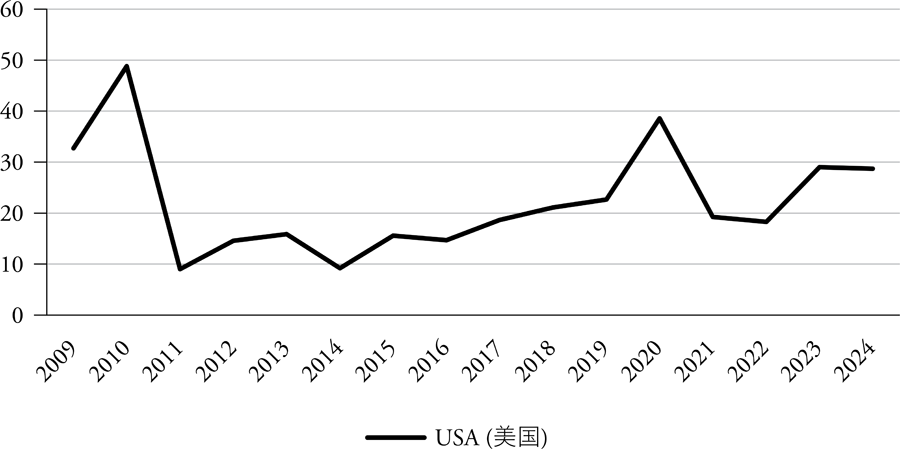
With Barack Obama’s arrival to power in 2009, the “U.S. factor” in Sino–Latin American relations initially attracted considerable attention, despite the lack of perceptions about major containment efforts during his first term. Interest then declined over the course of his second presidency, only to rise again under Donald Trump. This counterintuitive trend reflects the fact that, although Chinese scholars began to note U.S. attempts to contain Sino–Latin American ties during Obama’s second term, such efforts remained limited. Consequently, while the United States was seen as relevant, it was not yet considered central to the evolution of China–LAC relations. This is evidenced by the lower frequency of references to the United States (美国) per article during Obama’s second presidency compared with the two that followed (see Figure 1).

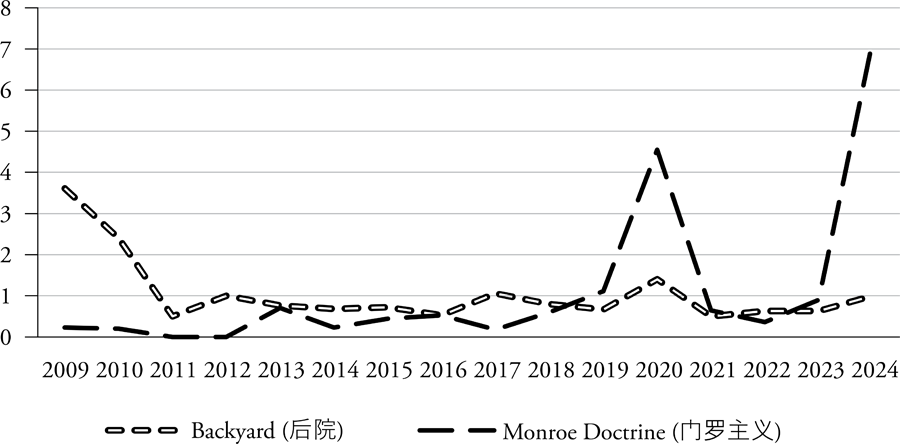
An interesting pattern emerges in the case of the term “backyard” (后院). The frequent references to it during Barack Obama’s first presidency stemmed less from any perceived serious U.S. effort to reassert its traditional influence in Latin America and more from the need to dismiss the notion—circulating in the early years of his administration—that LAC might become China’s new backyard. Once this theory faded during Obama’s second term, references to the term declined sharply, remaining less frequent than under his two successors—likely reflecting Washington’s comparatively less confrontational stance toward Beijing during the Obama years. Likewise, both of Obama’s presidencies featured only limited references to the “Monroe Doctrine” (门罗主义) (see Figure 2), which is unsurprising given that Obama himself declared the doctrine obsolete in 2013.

– Average number of mentions per paper of “backyard” (后院) and Monroe Doctrine (门罗主义), 2009–2024
Another notable aspect of Obama’s administration is that, on a personal level, he was not portrayed as a disruptive figure in Sino-Latin American relations. This is evident from the relatively low number of direct mentions he received in the analyzed articles (see Figure 3). The only exception is 2010, whose spike can be explained by the small number of valid articles published that year (five). In two of them, frequent references to the president produced unusually high average levels that are not observed in any other year of his presidency. This suggests that Chinese scholars viewed U.S. actions in the region as part of broader systemic trends rather than as the result of the president’s individual decisions. This perception stands in stark contrast to that of Donald Trump, whose mentions would increase significantly throughout his presidency—so much so that during two of Joe Biden’s four years in office, Trump was still mentioned more frequently than him.

– Average number of mentions per paper of Barack Obama (奥巴马), Donald Trump (特朗普) and Joe Biden (拜登), 2009–2024.
While Obama’s presidency was regarded with a degree of suspicion, it was also perceived as an opportunity for China, especially during his second term. In this regard, scholars argued that Washington was not paying sufficient attention to LAC, creating a window for Beijing to expand its influence in the region (Zhou 2013, 27; Zhao 2015, 58). Some even suggested that this strategic opportunity could extend for another decade, as the United States remained preoccupied with the Middle East, Asia-Pacific, and Europe (Niu 2013, 51-52). However, as the analysis will later demonstrate, it was Donald Trump’s presidency—characterized by unpredictability and assertiveness—that was perceived as a far greater strategic opportunity for China in LAC.
In response to U.S. concerns about China’s growing presence in the region, and in a similar position than during Obama’s first term, Chinese scholars generally advised Beijing to adopt a cautious and conciliatory approach during his second presidency. They recommended that China avoid direct confrontations with U.S. interests in LAC (Zhao 2015, 12) and that while it should continue strengthening its ties with the region, it should be mindful of military cooperation to prevent political misinterpretations by Washington (Gao 2015, 142). Additionally, scholars suggested that China engage in diplomatic dialogue with the United States to reassure it that Beijing was not seeking to challenge its position in LAC (Gao 2013, 179; Ran 2014, 39; Zuo 2015, 154-155). Some even proposed that China and the United States could collaborate in Latin America through joint ventures (Jiang 2013, 9) or in the field of public diplomacy (Huang 2015, 66). Notably, these calls for restraint and diplomatic engagement would persist in Chinese academic discourse even as U.S.-China tensions escalated during the presidencies of Trump and Biden.
Donald Trump (2017-2021)
During Donald Trump’s presidency, tensions between Washington and Beijing escalated to levels unseen in half a century. This growing friction heightened concerns among Chinese scholars about the U.S. role in Sino-Latin American relations, leading to a significant increase in the attention paid to the United States, which was increasingly perceived as a hostile actor. However, Trump’s presidency was also viewed as a period of strategic opportunity for China—more so than under Barack Obama or Joe Biden—due to his unpredictability and disruptive approach to foreign policy.
As had been the case during Obama’s presidency, scholars frequently noted that the United States was concerned about China’s expanding presence in LAC, fearing that it could lead to a decline in U.S. influence in the region (Luo and Xu 2018, 139; Ding 2020, 39; Li and Qiu 2020, 49-50). However, with Trump’s arrival in office, scholars identified a worsening of the situation, describing Secretary of State Rex Tillerson’s 2018 visit to the region as “full of provocations” (Sun 2018, 59) and acknowledging the potential of U.S. actions to undermine the Sino-Latin American relationship (Cui 2019, 101-102).
Chinese scholars also examined the specific ways in which Trump’s administration sought to counter China’s influence in LAC. Among the measures they highlighted were direct pressure on Latin American governments to limit their engagement with Beijing (Zhou 2020, 16), making China a central topic at the VIII Summit of the Americas (Li and Yuan 2018, 44), strengthening ties with right-wing governments in the region (Xu 2017, 92), and pressuring countries that had recently severed diplomatic relations with Taiwan (Cao 2020, 86-87). Additional measures included inserting a so-called “poisonous clause” in the renegotiation of the North American Free Trade Agreement (NAFTA) to discourage trade with China (Sun 2018b, 30) and efforts to obstruct the internationalization of the yuan by preserving the dollar’s dominance in LAC (Lu 2019, 49-50). Beyond economic measures, Trump’s administration was also perceived as taking more aggressive steps in the security and political domains. Chinese scholars noted an increase in military cooperation between Washington and its regional allies, along with allegations of coercive tactics and even support for coups d’état (Lu 2019, 57). The United States was also accused of using rhetoric to discredit China’s role in LAC and pressuring governments to adopt an exclusive relationship with Washington (He 2019, 18-19).
Another significant aspect of Trump’s first presidency was his administration’s perceived targeting of China’s two major regional initiatives: the China-Latin America Community of Shared Destiny and the BRI. Regarding the former, scholars suggested that the U.S. actively sought to discredit the initiative due to its growing unease over the Sino-Latin American relationship (Jiang 2018, 36-37), a strategy that they believed had already negatively impacted bilateral ties (Fan and Tao 2020, 16-18). Concerning the latter, Trump’s administration not only made direct anti-China statements but also revived the Monroe Doctrine and attempted to counter the BRI with its own initiative, “Growth in the Americas” (Cao et al. 2020, 88-89). Some scholars speculated that Washington could introduce fiscal and financial restrictions to deter U.S. companies from participating in the BRI and, therefore, to further weaken China’s influence in the region (Yang et al. 2018, 17-18).
In this regard, Cao Ting, a researcher at the Center for Latin American Studies at Fudan University’s Institute of International Studies, argued in the final year of Trump’s presidency that his interventionist policies had already begun to negatively impact Sino-Latin American relations. She pointed to examples such as Panama and El Salvador, which had backtracked on their earlier pro-China stances, and Brazil and Argentina, which had adopted tougher positions against Beijing. As a result, she concluded that while the United States was in an offensive position in the region, China was being forced into a defensive stance (Cao 2020, 91).
The growing concern among Chinese scholars regarding the United States during this period was also evident in keyword frequency trends. Mentions of “United States” (美国) per article increased each year of Trump’s presidency, reaching a peak in 2020 at more than 2.5 times the 2016 level (see Figure 1). Even during Biden’s presidency, these levels were not surpassed, despite the fact that there was no significant improvement in U.S.-China relations. Similarly, references to LAC as the United States’ “backyard” (后院) and to the Monroe Doctrine (门罗主义) also rose during Trump’s tenure (see Figure 2), reflecting a perception that Washington was becoming increasingly assertive in its efforts to reassert its influence in the region.
Unsurprisingly, Trump was regarded as the most disruptive of the three U.S. presidents analyzed. Not only was he mentioned more frequently in Chinese academic articles than Obama had been in terms of average mentions by presidency, but even after leaving office, his name appeared more often than Biden’s in two of the latter’s four years in office (see Figure 3). Given Trump’s return to the presidency in January 2025, it is likely that Chinese scholars will once again closely monitor his actions in LAC over the next four years.
However, despite the tensions between Beijing and Washington during this period, Trump’s presidency was also seen as a strategic opportunity for China. At a broader level, it allowed China to position itself as a defender of free trade, attracting support from countries that opposed U.S. protectionist policies (Yang 2018, 90-91). This opportunity extended to deepening Sino-Latin American ties, particularly within the framework of the BRI (Yang et al. 2018, 5-6) and cooperation in the energy sector (Ding 2018, 60). To which was also added the own worsening of the image of the United States in the region as a result of the passive response of the Donald Trump administration against the Covid-19 pandemic (Sun 2020, 71).
Beyond the pandemic, what specific aspects of Trump’s policies contributed to this perceived strategic opportunity? Chinese scholars highlighted several factors. First, Trump’s erratic behavior reinforced the perception that the United States was not a reliable partner (Sun 2017, 34). His trade policies were also seen as detrimental to LAC’s development and industrialization, whereas China, through the BRI, was viewed as promoting a more open and cooperative approach to globalization (Liu 2018, 3). Additionally, scholars argued that Trump’s “America First” policy made it clear that Washington was unable and unwilling to assist LAC countries, which were going through a period of economic fluctuation (Sun 2018a, 58; Jiang 2018, 33; Zhou 2018, 33-34).
Chinese scholars also noted that Trump’s policies had tangible effects on LAC’s economic strategy. On the one hand, they observed an increased willingness among regional actors to participate in the internationalization of the yuan as a means of diversifying their economic ties and reducing dependence on the U.S. dollar (Y. Lu 2019, 48). On the other hand, they identified a rise in anti-U.S. sentiment in LAC, which in turn strengthened calls for a more diversified diplomatic approach (Y. Lu 2019, 51-52). In this regard, Yang Jianmin, a researcher at the Institute of Latin American Studies at the Chinese Academy of Social Sciences, described Trump’s foreign policy as reflecting both the United States’ hegemonic ambitions and the weakness of its international leadership (Yang 2018, 90).
Despite the sharp deterioration in Sino-U.S. relations during Trump’s presidency, the recommendations Chinese scholars made to Beijing remained relatively consistent with those from the Obama era. They advised China to prepare for increased tensions but not to yield to U.S. pressure (Cao 2020, 96), to avoid actions that could be perceived as direct threats to U.S. interests in LAC (Zou et al. 2019, 14), and to maintain diplomatic communication to prevent misunderstandings regarding China’s role in the region (Luo and Xu 2018, 139; Jiang 2019, 34). Additionally, scholars continued to advocate for formal dialogue mechanisms between Beijing and Washington to mitigate tensions in LAC (Fan 2017, 69; Cao 2020, 95). This measured and restrained approach is particularly notable given the increasingly assertive stance the United States took toward China during this period.
Joe Biden (2021-2025)
Joe Biden is the third and final U.S. president analyzed in this study. During his presidency, tensions between the United States and China persisted, though they were less strident than during Donald Trump’s tenure. This new situation was reflected in the perceptions of Chinese scholars, who continued to view the United States as a disruptive force in Sino-Latin American relations but, unlike during Trump’s presidency, Biden’s actions were not perceived as creating a strategic opportunity for China.
In this context, Biden has been seen as largely continuing Trump’s approach in terms of seeking to contain China’s influence in LAC (Lou 2022, 4) and framing bilateral relations as a competition within a zero-sum paradigm (Song and Fu 2021, 80). This stance has also been considered a political risk for Chinese companies operating in the region (Song and Tian 2022, 100). At the same time, Biden has been accused of increasing U.S. interference in Sino-Latin American relations, albeit in a more indirect and strategic manner than his predecessor (Wang and Chen 2023, 88; Song and Fu 2021, 76). In this regard, Zhang Jieyu, a researcher at the China Institute of International Studies, described Biden’s strategy as “more subtle and ingenious, displaying some moderation and rationality,” pointing to his use of “values diplomacy” as a means to highlight ideological differences between China and LAC (Zhang 2024, 44-45).
Chinese scholars have identified several key ways in which the Biden administration sought to counter China’s presence in LAC, which can be categorized into three main strategies: diplomatic engagement with regional governments, interference in domestic politics, and increased rivalry in key strategic dimensions.
Regarding diplomatic engagement, the Biden administration attempted to repair the damage done to U.S.-LAC relations under Trump by improving ties with regional governments. A key example of this effort was Biden’s approach during the IX Summit of the Americas (Wang 2024, 111). Additionally, Washington launched initiatives aimed at countering China’s influence, including the Build Back Better World initiative—intended to restore U.S. credibility in the region after the previous administration’s neglect (Song and Fu 2021, 74-76)—and the Americas Partnership for Economic Prosperity (APEP), which sought to help LAC recover from the economic effects of COVID-19 while simultaneously serving as a counterweight to China (Wang and Chen 2023, 87).
Beyond diplomatic engagement, Chinese scholars highlighted various forms of interference attributed to the Biden administration. First, they pointed to U.S. pressure on LAC countries to limit their cooperation with China, particularly in forums such as the China-CELAC Forum (Wang 2022, 71) and in areas of technological collaboration (Huang 2022, 92-93). The latter aligns with broader U.S. efforts to curtail Huawei’s 5G expansion worldwide, an issue that had also been a priority for the Trump administration. Additionally, some scholars noted U.S. interference in the internal politics of LAC nations, citing Washington’s financial backing of pro-U.S. candidate Guillermo Lasso in Ecuador as an example (Zhang 2024, 79).
Lastly, increased competition between the United States and China in strategic dimensions—such as energy and Taiwan-related issues—was also emphasized. In the energy sector, scholars noted heightened U.S.-China rivalry in Central America’s liquefied natural gas market, raising concerns that Panama could become more dependent on the United States for clean energy, potentially undermining green energy cooperation between Beijing and Washington (Xing 2022, 108-110). Additionally, the U.S. sought to persuade mineral-rich Latin American countries to adopt policies that would reduce their economic reliance on China (Zhang 2024, 67-68). With respect to Taiwan, scholars highlighted Biden’s use of “values diplomacy” to strengthen ties between LAC countries and Taiwan’s Democratic Progressive Party, particularly on issues related to democracy and human rights. However, they argued that Washington was unlikely to reverse the long-term trend of Latin American countries severing diplomatic relations with Taiwan (Liu and Chen 2024, 146). More broadly, some scholars suggested that U.S. pressure could make certain LAC countries more hesitant to deepen ties with China, ultimately working against their own economic interests (Wang and Chen 2023, 89). Others considered that, during the rest of his administration, the Biden’s administration would continue with his intention to exclude China from the region, accusing the United States of following the Monroe Doctrine with a xenophobic purpose (Zhang 2024, 45).
Despite these negative assessments, Biden’s presidency attracted less academic scrutiny than Trump’s. Mentions of “United States” (美国) in Chinese scholarly articles during Biden’s four years were lower than during Trump’s presidency (see Figure 1). While Washington remained an important factor in Sino-Latin American relations, it was not perceived as having the same disruptive impact as during the previous administration.
Similarly, references to LAC as the United States’ “backyard” (后院) decreased during Biden’s presidency, suggesting that Chinese scholars saw Washington as slightly less interventionist in the region. However, mentions of the Monroe Doctrine (门罗主义) increased significantly in 2024, reaching their highest level in the entire period of analysis (see Figure 2). This spike, however, is the result of a single manuscript (Zhang 2024), which disproportionately influenced the overall frequency count due to the limited number of publications that year and generated a distortion that has not occurred either in the other concepts or in the other years analyzed.
Another striking aspect of Biden’s presidency is that in two of the four years he was in office (2022 and 2023), Donald Trump was mentioned more frequently than Biden himself (see Figure 3). This suggests that Trump’s impact on Chinese academia was significant and long-lasting. It also indicates that, during the Joe Biden administration, U.S. actions in LAC were increasingly viewed as systemic rather than as the individual whim of a specific person —a notable shift from the Trump era.
Unlike the Trump presidency, Biden’s tenure was not perceived as a period of significant strategic opportunity for China. The only exception noted by scholars was Biden’s relatively conciliatory stance toward leftist governments in LAC, which reduced U.S. pressure on these administrations. Given that leftist governments in the region have historically been more inclined to strengthen ties with China and adopt elements of its development model, this was seen as a favorable factor for Beijing (Han 2023, 82-83). Another noteworthy observation is that as early as 2021, Chinese scholars expressed doubts about Biden’s ability to secure re-election, raising the possibility that Trump could return to office in the next presidential election—an outcome that would bring new uncertainties for Sino-Latin American relations (Song and Fu 2021, 80). This prediction proved accurate, as Trump returned to the U.S. presidency in January 2025.
How should China navigate U.S. influence in LAC under Biden? As with the previous two administrations, Chinese scholars largely advocated for a conciliatory approach. They proposed establishing consultation mechanisms with the United States on Latin American affairs (Song and Fu 2021, 82) and fostering negotiations with U.S. businesses and regional governments to create a more cooperative climate (Xing 2022, 115). Some even suggested that China should welcome U.S. participation in the BRI, potentially integrating Washington into the initiative to foster mutual economic interests and align it with the U.S.-led Growth in the Americas program (Song and Wang 2021, 105). This recommendation contrasts sharply with the more confrontational U.S. stance toward China’s presence in LAC. It remains to be seen whether Chinese scholars will maintain this conciliatory perspective under Trump’s second presidency, particularly if U.S.-China rivalry in the region intensifies once again.
Conclusion
This analysis of how Chinese scholars perceive the impact of the United States on the Sino-Latin American relationship between 2009 and 2024 reveals a significant evolution in their views. Chinese scholars saw Obama’s presidency (2009–2017) as a turning point: what began in his first term as suspicion and unease in Washington over Sino–Latin American ties hardened, in his second, into a perception that the United States was actively determined to obstruct their development. This perception intensified even more over the following two presidencies, reflecting the gradual deterioration of U.S.-China relations and the increasing attention scholars devoted to Washington as an important element in the Sino-Latin American relationship.
The most notable shift occurred during Donald Trump’s first presidency (2017-2021), when U.S. actions were not only seen as more disruptive but also as a strategic opportunity for Beijing. During this period, mentions of terms such as “backyard” and “Monroe Doctrine” increased significantly, reflecting the perception that the White House was adopting a more interventionist approach in the region. At the same time, Trump’s erratic and confrontational policies were seen as creating openings for China to strengthen its ties with Latin American countries.
With Joe Biden’s arrival in office (2021-2025), Chinese scholars continued to view Washington as attempting to limit Beijing’s influence in LAC, albeit through a more subtle and multilateral strategy. Unlike the Trump years, Biden’s presidency was not perceived as a major opportunity for China but rather as a period of sustained competition. The decrease in references to LAC as the “backyard” of the United States suggests that, while Washington remained an important factor, its role was not seen as being as aggressively interventionist as it had been under Trump. On the other hand, it is noteworthy that, despite variations in the impact of the United States on the Sino-Latin American relationship during the three U.S. presidencies analyzed, Chinese scholars have always recommended that Beijing adopt a conciliatory and cooperative policy toward Washington in the region.
Looking ahead, and considering Donald Trump’s return to power in 2025, it is likely that Chinese academia will once again perceive the current U.S. administration not only as a challenge, but also as a strategic opportunity for the Asian country. The degree to which Donald Trump’s second presidency will be seen as a challenge or rather as an opportunity will depend to a large extent on the strategy Washington implements towards China and the region over the next four years.
References
-
Bruce, T. "Secretary Rubio's meeting with salvadoran president Nayib Bukele." US Department of State, February 3, 2025. https://www.state.gov/secretary-rubios-meeting-with-salvadoran-president-nayib-bukele/
» https://www.state.gov/secretary-rubios-meeting-with-salvadoran-president-nayib-bukele/ - Cao, T. "中国与拉美国家关系中的美国因素 [The American Factor in China - Latin America Relationship]." Peace and Development, no. 1 (2020): 80-96.
- Cao, T., Y. Lu, X. Chen, J. Yan, and W. Liu. "中拉“一带一路”合作:挑战与深化路径[China-Latin America Cooperation under the Belt and Road Initiative: Challenges and Pathways for its Deepening]." Studies on International Issues, no. 2 (2020), 79-92.
-
"Chancay port: Trump advisor proposes imposing 60% tariffs." América Economía November 18, 2024. https://www.americaeconomia.com/en/node/289502
» https://www.americaeconomia.com/en/node/289502 - Chen, Y., and F. Feng. "拉美三国加入TPP的地缘政治解读 [A Geopolitical Interpretation of the Accession of Three Latin American Countries to the TPP]." Contemporary World, no. 4 (2016), 66-69.
- Cheng, H., and Y. Yu. “试述中拉关系中的美国因素(2001~2010年) [The U.S. Factor in Sino - Latin American Relations](2001~2010 nián)". Journal of Latin American Studies 32, no. 4 (2010): 12-19.
- Cui, S. "中国和拉美关系转型的特征、动因与挑战 [The Characteristics, Drivers and Challenges of the Transitional Relation of China and Latin America]." Journal of Renmin University of China, no. 3 (2019): 95-103.
- Ding, D. "2019年拉美地区形势:政局变乱交织、经济低迷徘徊 [The Situation in Latin America in 2019: Political Turmoil and Economic Stagnation]." Contemporary World, no. 1 (2020): 35-39.
-
Ding, N. "特朗普政府的美国能源政策动向:中拉能源合作的新机遇 [The Tendency of Trump Administration's Energy Policy: New Opportunities for Sino-Latin America Energy Cooperation]." Pacific Journal 26, no. 10 (2018): 52-66. https://doi.org/10.16619/j.cnki.rmltxsqy.2017.12.008
» https://doi.org/10.16619/j.cnki.rmltxsqy.2017.12.008 - Dong, G. “论美国对中拉关系发展的“忧虑” [U.S. Concerns over the Development of Sino - Latin American Relations]." Journal of Fujian Normal University (Philosophy and Social Sciences Edition), no. 5 (2013): 147-153.
- Fan, H. "中美拉三边动态平衡关系及深层博弈 [The Sino-US-Latam Trilateral Relationship of Dynamic Balance and Competition]." Frontiers, no. 12 (2017): 64-72.
- Fan, H., and D. Tao. "论中拉命运共同体的构建[On the Construction of A Community of Shared Future for China and Latin America]." International Review, no. 2 (2020): 1-26.
- Feng, H., and K. He. "Why do Chinese IR scholars matter?" In Chinese scholars and foreign policy: debating International relations, edited by H. Feng, K. He, and X. Yan, 3-20. New York: Routledge, 2019.
- Gao, J. "浅析当前中国与拉美国家关系 [A Brief Analysis of Current Relations Between China and Latin American Countries]." The Elite of Political and Law, 179 (2013).
- Gao, Q. "中美拉三边关系的影响因素及其战略应对 [Influencing Factors of China-U.S.-Latin America Trilateral Relations and Their Strategic Responses]." International Review, no. 5 (2015): 132-44.
-
Green, M. A. "China is the top trading partner to more than 120 countries." Stubborn Things, January 17, 2023. https://www.wilsoncenter.org/blog-post/china-top-trading-partner-more-120-countries
» https://www.wilsoncenter.org/blog-post/china-top-trading-partner-more-120-countries -
Gremaud, A. P., and G. G. Gomes. "Revisão Bibliográfica Sistemática Das Pesquisas Sobre China Na América Latina." Estudios Internacionales 53, no. 199 (2021): 115-135. https://doi.org/10.5354/0719-3769.2021.57930
» https://doi.org/10.5354/0719-3769.2021.57930 - Guo, C. "拉丁美洲的中国研究:回顾与展望 [Chinese Studies in Latin America: Review and Prospect]." Journal of Southwest University of Science and Technology, 37, no. 5 (2020): 1-6.
- Guo, C., Y. Zhang, X. Zhou, and H. Xiao. 中国“拉丁美洲研究”发展趋势——基于CNKI 文献大数据的分析(1979-2019 [Developmental Trends in Latin American Studies in China: An Analysis of CNKI Documentation Big Data (1979-2019)]CNKI wénxiàn dà shùjù de fenxi (1979-2019)." Social Sciences in China Review, no. 3 (2020): 127-56.
- Han, Q. "拉美国家左翼政府回归的原因及可能影响 [Causes and Possible Impacts of the Return of Left-Wing Governments in Latin American Countries]." People´s Tribune, no. 6 (2023): 80-85.
- He, S. "新时代中国对拉美的战略及其影响因素 [China's Strategy Toward Latin America in the New Era and the Influencing Factors]." Journal of Latin American Studies 41, no. 6 (2019): 1-21.
- Huang, H. "新世纪对发展中拉关系的思考 [Reflections on Developing China-Latin America Relations in the New Century]." Contemporary World, no. 3 (2012): 38-41.
- Huang, L. "中美竞争背景下中拉命运共同体的构建——国际政治经济学的视角 [The China - U.S. Competition and the Construction of China - Latin America Community with a Shared Future through the IPE Perspective]." Journal of Latin American Studies 44, no. 4 (2022): 75-94.
- Huang, Z. "新形势下中国对拉美国家的公共外交 [China's Public Diplomacy Toward Latin American Countries Under the New Situation]." Journal of Latin American Studies 37, no. 2 (2015): 60-66.
- Jiang, S. "中拉关系五问[Five Issues to Understand the Chinese - Latin American Relations]." Journal of Latin American Studies 35, no. 5 (2013): 3-9.
- Jiang, S. "构建中国与拉美命运共同体路径思考 [Approaches to Building the China - Latin America Community with a Shared Future]." China International Studies 2 (2018): 30-42.
-
Jiang, S. "中国特色大国外交中的中国与拉美国家关系 [China-Latin America Relations in the Context of Major-Country Diplomacy with Chinese Characteristics]." International Forum, no. 2 (2019): 30-35. doi: https://doi.org/10.13549/j.cnki.cn11-3959/d.2019.02.006
» https://doi.org/10.13549/j.cnki.cn11-3959/d.2019.02.006 -
Johnson, G., and Z. Lin. "Sino-Latin American relations: a comparison of expertand educated youth views of Latin America." Journal of China and International Relations 3, no. 1 (2015): 26-52. doi: https://doi.org/10.5278/ojs.jcir.v3i1.1145
» https://doi.org/10.5278/ojs.jcir.v3i1.1145 -
Li, H., and D. Yuan. "美洲国家峰会难解拉美国家分歧和美拉关系困局 [The summit of the Americas is unlikely to resolve differences among Latin American countries and the impasse in US-Latin America relations]." Contemporary World no. 5 (2018): 42-45. https://doi.org/10.19422/j.cnki.ddsj.2018.05.012
» https://doi.org/10.19422/j.cnki.ddsj.2018.05.012 - Li, Q., and L. Qiu. "美国“新门罗主义”. 拉美政策及面临的挑战 [The U.S. "New Monroe Doctrine" Policy Towards Latin America and its Challenges]." Journal of Latin American Studies 42, no. 2 (2020): 40-59.
- Liu, H., and G. Chen. "2016年以来民进党当局拉美政策述论 [An Analysis of the Latin America Policy of the DPP Authorities Since 2016]." Journal of Fujian Normal University, no. 6 (2024): 142-46.
- Liu, M. "拉美国家融入“一带一路”的必要性、可行性与路径选择 [Necessity, Feasibility and Path Choice of Latin American Integration into "the Belt and Road"]." Journal of Southwest University of Science and Technology 35, no. 1 (2018): 1-7.
- Lou, X. "复合相互依赖视角下中拉关系的现状与特征 [The Current Situation and Characteristics of China-Latin America Relations from the Perspective of Complex Interdependence]." Journal of Latin American Studies 35, no. 3 (2013): 53-56.
- Lou, X. "中拉机制化整体合作的进程及特点解析— 以地区间主义为视角 [Institutionalized China - Latin America Overall Cooperation: An Analysis Based on Interregionalism]." Journal of Latin American Studies 37, no. 6 (2015): 62-66.
- Lou, X. "新形势下构建中拉命运共同体话语体系研究 [A Study on Constructing the Discourse System of a China-Latin America Community with a Shared Future Under the New Situation]." Journal of Latin American Studies (2022): 1-10.
- Lu, S. "美国复兴“门罗主义”,搅动中拉关系 [The U.S. Revival of the Monroe Doctrine and Its Disruption of China-Latin America Relations]." World Affairs, no. 16 (2019): 56-57.
- Lu, Y. "人民币国际化在拉美推进现状与前景 [The Progress and Prospects of RMB Internationalization in Latin America]." Contemporary International Relations, no. 1 (2019): 46-53.
-
Luo, H., and M. Xu. "中拉关系的新发展及其对中美关系的影响 [New developments in China-Latin America relations and their impact on China-US relations]." Journal of Xiangtan University (Philosophy and Social Sciences 42, no. 1 (2018): 136-140. https://doi.org/10.13715/j.cnki.jxupss.2018.01.025
» https://doi.org/10.13715/j.cnki.jxupss.2018.01.025 - Niu, H. "试论新时期中拉关系的战略性 [On the Strategic Nature of China-Latin America Relations in the New Era]." Journal of Latin American Studies 35, no. 3 (2013): 49-52.
- Niu, H. "Intereses y percepciones de China en relación con América Latina." In Los Actores Globales y El (Re) Descubrimiento de América Latina, edited by W. Grabendorff, and A. Serbin. Barcelona: Icaria, 2020.
- Ran, J. "中国在拉丁美洲的软实力建设 [China's Soft Power Building in Latin America]." Journal of Latin American Studies 36, no. 55 (2014): 35-39.
- Serbin, A. "Latin America-China relations: a review of recent literature (2010-2020)." CLALS Working Paper Series, no. 32 (2022): 1-29.
- Song, B., and Y. Tian. "中国企业参与拉美经贸活动的经验与启示——基于双边政府关系 视角[Experience and Enlightenment of Chinese Enterprises' Participation in Economic and Trade Movement in Latin American Countries]." Journal of Contemporary Financial Research, no. 6 (2022): 91-101.
- Song, H., and M. Wang. “‘“美洲增长”倡议对中拉共建“一带一路”的经济影响 [The Economic Impact of the "Growth in the Americas" Initiative on Sino - LAC Cooperation in "Belt and Road" Initiative]." Journal of Latin American Studies 43, no. 6 (2021): 88-106.
- Song, J., and L. Fu. "构建“均衡、稳定、协调、合作”的中美拉三边关系 [Building a Balanced, Stable, Coordinated, and Cooperative China-U.S.-Latin America Trilateral Relationship]." Studies on International Issues, no. 6 (2021): 70-83.
-
Stallings, B., and C. Sanborn. "Latin American Scholars Home In on Relations with China." Global Perspectives 4, no. 1 (2023): 1-11. https://doi.org/10.1525/gp.2023.85128
» https://doi.org/10.1525/gp.2023.85128 - Sun, H. "美国对中拉关系的判断及其疑虑[The U.S. Assessment of China-Latin America Relations and Its Concerns]." Journal of Jianghan University (Social Sciences) 26, no. 2 (2009): 5-10.
-
Sun, H. "拉美地区局部动荡:表现、根源及前景 [Local Turmoil in Latin America: Manifestations, Causes, and Prospects]." Contemporary World, no. 8 (2020): 66-73. doi: https://doi.org/10.19422/j.cnki.ddsj.2020.08.010
» https://doi.org/10.19422/j.cnki.ddsj.2020.08.010 - Sun, Y. "拉美政治左右斗争持续,经济触底回升 [The Continued Political Struggle Between the Left and Right in Latin America and the Economic Rebound After Hitting Bottom]." World Affairs, no. 24 (2017): 33-34.
- Sun, Y. "中国—拉美关系:开启合作新时代[China-Latin America Relations: Opening a New Era of Cooperation]." World Affairs (2018a): 58-59.
- Sun, Y. "拉美是否会面临又一个“失去的十年? [Will Latin America Face Another 'Lost Decade'?]." World Affairs, no. 24 (2018b): 29-30.
- Wang, F. "拉美智库对新时代中国特色大国外交的认知述评——基于“一带一路”倡议和 人类命运共同体的研究分析 [An Analysis of Latin American Think Tanks' Perceptions of Major-Country Diplomacy with Chinese Characteristics in the New Era: A Study Based on the Belt and Road Initiative and the Community of Shared Future for Mankind]." Social Sciences Abroad, no. 5 (2018): 127-135.
- Wang, F., and L. Chen. "美国介入中国与拉美经济合作:动因、方式及影响 [Motivations, Methods and Influences of US' Intervention in China - Latin America and Caribbean Economic Cooperation]." Journal of International Economic Cooperation, no. 4 (2023): 78-90.
-
Wang, H. "中国—拉共体论坛:进展、挑战及优化路径 [China-CELAC Forum: progress, challenges and optimization paths]." Pacific Journal 3, no. 6 (2022): 64-74. doi: https://doi.org/10.14015/j.cnki.1004-8049.2022.06.006
» https://doi.org/10.14015/j.cnki.1004-8049.2022.06.006 - Wang, L. "当代拉美左翼运动和拉美现代化道路——徐世澄研究员访谈 [Contemporary Latin American Leftist Movements and the Path to Modernization in Latin America: An Interview with Researcher Xu Shicheng]." Marxism & Reality, no. 1 (2024): 105-13.
- Wang, X. "中国拉丁美洲研究的回顾与思考 [The Retrospect and Reflection on Latin American Studies in China]." Journal of Latin American Studies 43, no. 1 (2021): 1-35.
- Wang, Y. "构建中拉整体合作机制:机遇、挑战及思路 [Building a Comprehensive Cooperative Mechanism Between China and Latin America: Opportunities, Challenges and Ideas]." Studies on International Issues, no. 3 (2014): 105-117.
- Wu, H. "'"拉美成为中国后院论”辨析 [An Analysis of the Argument that Latin America Has Become China's Backyard]." Xiandai Guoji Guanxi, no. 3 (2009): 36-42.
- Xing, W. "正确义利观视角下的中拉绿色合作:进展、挑战及前景 [China - Latin America Green Cooperation from the Perspective of the Correct Concept of Justice and Interests: Progresses, Challenges and Prospects]." Journal of Latin American Studies 44, no. 4 (2022): 95-116.
- Xu, S. "美国拉美政策的变化及其影响 [Changes in U.S. Policy Toward Latin America and Their Impact]." Reality Only, no. 8 (2017): 88-92.
- Yang, J. "当前拉美形势和中拉关系 [The Current Situation in Latin America and China-Latin America Relations]." China State-Owned Enterprise Management, no. 6 (2018): 90-91.
- Yang, S., Y. Sun, T. Cao, C. Xiaoyang, J. Yan, and L. Yang. "'"一带一路”视角下提升中拉合作的战略思考 [Strategic Thinking on Promoting China - Latin American Cooperation from the Perspective of the "Belt and Road" Initiative]. "Journal of Latin American Studies 40, no. 3 (2018): 1-19.
- Yang, W., H. Zhang, and J. Wu. "构建中拉整体合作机制 [Building a Comprehensive Cooperation Mechanism Between China and Latin America]." International Project Contracting & Labour Service, no. 5 (2016): 45-46.
-
Yuan, D. "拉美政治经济格局变动对中拉关系的影响 [The impact of changes in Latin America's political and economic landscape on China-Latin America relations]." China's National Conditions and National Strength, no. 4 (2013): 55-57. https://doi.org/10.13561/j.cnki.zggqgl.2013.04.005
» https://doi.org/10.13561/j.cnki.zggqgl.2013.04.005 -
Zhang, H. "当前拉美一体化进程新变化及对中拉关系的影响刍议 [A brief discussion on the new changes in the current Latin American integration process and their impact on China-Latin America relations]." Pacific Journal 24, no. 10 (2016): 58-69. doi: https://doi.org/10.14015/j.cnki.1004-8049.2016.10.007
» https://doi.org/10.14015/j.cnki.1004-8049.2016.10.007 - Zhang, J. "对美国“门罗主义”两百周年的再思考:缘起、发展和反思 [Rethinking the Bicentenary of the Monroe Doctrine: Origins, Development, and Reflection]." Journal of Hangzhou Dianzi University (Social Sciences) 20, no. 1 (2024): 41-47.
- Zhang, X. "拉美国家对中美战略竞争的认知与回应 [Latin American Countries' Perceptions and Responses to Sino-U.S. Strategic Competition]." Journal of International Relations, no. 4 (2024): 64-82.
- Zhao, J. " 美国因素对中拉关系的影响 [The Impact of the U.S. Factor on China-Latin America Relations]." Building and Development, no. 8 (2012): 216.
- Zhao, H. "大变局时代下的中拉整体合作前景探析 [An Analysis of the Prospects for Overall China-Latin America Cooperation in an Era of Great Changes]." China Economic & Trade Herald, no. 6 (2015): 56-58.
- Zhou, Z. "中拉外交与经贸关系引发的思考 [Reflections on China-Latin America Diplomatic and Economic Relations]." Maritime China, no. 7 (2013): 26-27.
- Zhou, Z. "如何看待中美拉三角关系中的两组结构性矛盾 [Understanding the Two Sets of Structural Contradictions in China-U.S.-Latin America Triangular Relations]." Contemporary World 4, no. 1 (2018): 31-34.
-
Zhou, Z. "拉美地区变局下的中拉“一带一路”合作[China-Latin America 'Belt and Road' Cooperation Amid Regional Changes in Latin America]." Contemporary World, no. 10 (2020): 24-29. doi: https://doi.org/10.19422/j.cnki.ddsj.2020.10.004
» https://doi.org/10.19422/j.cnki.ddsj.2020.10.004 - Zhu, H. "中、美、拉三边关系互动与中国的拉美政策 [The Interaction of China-U.S.-Latin America Trilateral Relations and China's Policy Toward Latin America]." Journal of Latin American Studies 32, no. 4 (2010): 59-64.
- Zou, Z., X. Zheng, J. Song, and Y. Zhang. "中国与拉美和加勒比地区体育交流对策分析 [Study of Sino - Latin American and Caribbean Sports Exchanges]." Journal of Southwest University of Science and Technology 36, 4 (2019): 8-14.
- Zuo, P. "关于“一带一路”建设与中拉合作 深化的若干思考 [Some Reflections on the Belt and Road Initiative and the Deepening of China-Latin America Cooperation]." International Review, no. 5 (2015): 145-157.
-
Data Availability Statement:
The dataset supporting the findings of this study is publicly available in the Harvard Dataverse repository at: https://dataverse.harvard.edu/dataset.xhtml?persistentId=doi:10.7910/DVN/KW52VV
The dataset supporting the findings of this study is publicly available in the Harvard Dataverse repository at: https://dataverse.harvard.edu/dataset.xhtml?persistentId=doi:10.7910/DVN/KW52VV

 Source: Author’s own elaboration.
 Source: Author’s own elaboration.
 Source: Author’s own elaboration.