
 A case report of sertraline-induced agranulocytosis
Agranulocytosis is a potentially life-threatening condition characterized by an absolute neutrophil count < 0.5 × 10⁹/L. It is most frequently drug-induced. While sertraline, a first-line antidepressant, is generally considered safe and well-tolerated, rare hematologic complications such agranulocytosis have been occasionally reported.1,2 We present the case of a patient who developed agranulocytosis following the initiation of sertraline for the treatment of a unipolar major depressive episode in a psychiatric ward. We used the CARE checklist when writing this report.3
Mr. B., a 72-year-old man, had no prior history of psychiatric disorders or use of psychotropic medications. His medical history included atrial fibrillation requiring pacemaker implantation, two episodes of cardiogenic shock, chronic venous insufficiency, obstructive sleep apnea managed with continuous positive airway pressure (CPAP), class III obesity, chronic obstructive pulmonary disease with emphysema, lumbar disc arthrosis, an infrarenal abdominal aortic aneurysm, left sciatica, left inguinal hernia, erysipelas of the right leg, colonic polypectomy, arterial hypertension, and a history of heavy smoking (100 pack-years), with cessation in 2018. He had no known allergies.
On November 22, 2023, 54 days prior to the onset of agranulocytosis, the patient was admitted to the intensive care unit following cardiac decompensation resulting from voluntary discontinuation of furosemide in the context of suicidal intent (Figure 1). After a 30-day medical stay, his medication regimen at the time of admission to the psychiatry unit included apixaban 10 mg daily (initiated 30 days prior to the event), lansoprazole 30 mg daily (initiated 40 days prior to the event), and the remainder of his usual treatment, which comprised furosemide 40 mg daily, amiodarone 200 mg daily, and budesonide/formoterol 400/12 µg daily. His psychotropic medications included hydroxyzine 25 mg daily (initiated 39 days prior to the event) and paroxetine 20 mg daily (initiated 42 days prior to the event). Medications were administered at the patient’s bedside, and compliance was confirmed to be adequate. He was repeatedly assessed by the liaison psychiatry team, which diagnosed major depression and recommended psychiatric admission.
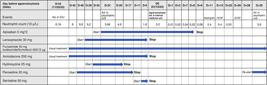
Timeline of clinical events. Day 0 corresponds to agranulocytosis. Not all days are shown for clarity. Key events include psychiatric admission, drug changes, onset of agranulocytosis, fever, antibiotic initiation, GCSF injections, and hematologic recovery. Ad. = admission; D = day; ICU = intensive care unit; GCSF = granulocyte colony-stimulating factor.
On December 22, 2023, 24 days prior to the event, the patient was admitted to the psychiatric unit for the management of a major depressive episode. Upon admission, laboratory results showed a normal hemoglobin level of 12.4 g/dL, a normal white blood cell count of 5.4 × 10⁹/L, a normal neutrophil count of 3.66 × 10⁹/L, and a subnormal lymphocyte count of 0.95 × 10⁹/L. His glomerular filtration rate was decreased at 28 mL/min/1.73m2, consistent with acute renal failure, subsequently improving to 54 mL/min/1.73m2.
Seventeen days prior to the event, hydroxyzine was discontinued due to a disabling tremor. Six days later, as the tremor persisted, paroxetine was replaced with sertraline 50 mg daily. Five days after the introduction of sertraline, the white blood cell count began to decline, with leukocytes and neutrophils decreasing to 3.2 × 10⁹/L and 1.80 × 10⁹/L, respectively, still within normal values, and lymphocytes at a similar subnormal value of 0.93 × 10⁹/L. On January 15, 2024, nine days after the initiation of sertraline, a routine anemia check revealed severe neutropenia (0.2 × 10⁹/L), with no signs of infection or fever. Lymphocytes had decreased to 0.61 × 10⁹/L, leukocytes to 1.5 × 10⁹/L, and the hemoglobin level to 11.6 g/dL. Both sertraline and lansoprazole were discontinued on the same day, and the patient was transferred to the internal medicine unit.
The following day, the white blood cell count was rechecked at 1.5 × 10⁹/L, lymphocytes were 0.54 × 10⁹/L, and neutrophils had dropped to 0.01 × 10⁹/L. A fever of 38.7°C was noted. On January 18, blood cultures returned positive for Streptococcus oralis/mitis, Staphylococcus epidermidis, and MRSA, linked to catheter-related cellulitis of the right forearm. They became negative on January 20. Eleven days after the onset of agranulocytosis (and 21 days after the introduction of sertraline), the neutrophil count remained < 0.5 × 10⁹/L, prompting a myelogram, which revealed impaired maturation of the white blood cell line without abnormal cells, suggesting drug-induced toxicity. The patient received two infusions of filgrastim 5 mcg/kg, a granulocyte colony-stimulating factor (GCSF), on days 15 and 26. On day 25, the neutrophil count had increased to 0.53 × 10⁹/L. The patient emerged from aplasia on day 28, and paroxetine 20 mg daily was successfully reintroduced under blood count monitoring. He was discharged from the internal medicine unit 30 days after the event with a neutrophil count of 5.6 × 10⁹/L and returned to the psychiatric unit for further treatment. No recurrence was noted thereafter.
To further support causal inference, we retrospectively applied the Naranjo Adverse Drug Reaction Probability Scale and the WHO-UMC criteria. The Naranjo score was 7, indicating a “probable” adverse drug reaction. According to the WHO-UMC criteria, the association was classified as “probable/likely.”
A drug investigation carried out by our pharmacology department concluded that sertraline was most likely responsible, although the 5-day delay between its introduction and the drop in white blood cells seemed short. This finding was supported by the abnormal myelogram.
The summary of product characteristics and Drugdex and Martindale entries for apixaban do not list agranulocytosis or neutropenia as known side effects of the drug. The literature includes a single case report of an 89-year-old woman who developed agranulocytosis 15 days after initiating treatment, with normalization occurring 15 days after discontinuation.4 In our case, neutropenia occurred 26 days after apixaban introduction.
Hydroxyzine is not known to cause neutropenia, as evidenced by a lack of reports in PubMed, the product monograph, or Drugdex.
To the best of our knowledge, there are no specific articles addressing lansoprazole in relation to neutropenia. However, a few case reports have mentioned neutropenia associated with omeprazole5 and pantoprazole.6 These reports described only moderate neutropenia, with prompt recovery upon discontinuation. In contrast, our patient developed neutropenia 36 days after starting lansoprazole, progressing 40 days later to agranulocytosis that persisted for a month. Lansoprazole has a short half-life (1-3 hours), whereas sertraline and its metabolite persist longer (22-104 hours).7 Considering that it takes at least five half-lives for a xenobiotic to be eliminated from the body, these values align with the persistence of bone-marrow suppression despite the discontinuation of sertraline.
The exact mechanism underlying sertraline-induced agranulocytosis remains uncertain. We consulted the Vidal drug interaction database, which did not report pharmacokinetic or pharmacodynamic interactions between sertraline and the co-administered medications that could account for agranulocytosis. However, we acknowledge that a cumulative effect in the setting of polypharmacy cannot be excluded.
We acknowledge that the lack of serum sertraline levels represents a limitation in our ability to fully confirm a dose-dependent toxic mechanism. This would have allowed us to both identify a potential overdose and monitor the drug’s decay in the blood. However, the progressive onset of neutropenia and the involvement of other hematological elements, such as hemoglobin and lymphocytes, may suggest a toxic mechanism.8 Conversely, an immune-mediated origin would have been characterized by a very rapid onset of neutropenia, along with signs of hypersensitivity such as rash, eosinophilia, and a more selective neutropenia. In addition, the successful reintroduction of paroxetine (another SSRI previously well tolerated by this patient) without recurrence of agranulocytosis does not support a class effect.
In 2020, Duwez et al. published a review of drug-induced agranulocytosis.9 This condition is associated with a medication in 70% of cases, with an estimated incidence between 1 in 10,000 and 1 in 100,000 patients, and an average mortality rate of 5% for idiosyncratic agranulocytosis. Two main mechanisms are distinguished: the immunoallergic mechanism and the toxic mechanism. Drug-induced agranulocytosis typically occurs within 2 to 60 days of treatment and resolves in 1 to 2 weeks after withdrawal, with GCSF shortening recovery time. The risk factors associated with this type of agranulocytosis include age over 50 years and polypharmacy, both of which were present in our patient.9
Duwez et al. highlight that, in cases of drug-induced agranulocytosis, bone-marrow examination typically shows either a reduced granulocytic lineage with a few immature elements or a blockade of granulocyte maturation, findings consistent with our clinical case. In their study of 41 cases, it is noteworthy that an antidepressant was implicated in only one. The successful reintroduction of paroxetine without recurrence of neutropenia supports the hypothesis of a sertraline-specific effect rather than a class-wide SSRI effect in our patient. While rare hematologic adverse events have been reported with other SSRIs, these appear to be molecule-specific and not generalizable across the class. Finally, Duwez et al. note that only 5-10% of drug-induced agranulocytosis cases are reported, which may explain the rarity of documented SSRI-related cases.
This case report highlights a prolonged agranulocytosis associated with the introduction of sertraline. Given the patient’s advanced age, polypharmacy, and multiple comorbidities, we recommend obtaining a baseline complete blood count prior to initiating sertraline in similar clinical contexts. In patients with multiple comorbidities, periodic monitoring during the first month may help detect hematologic abnormalities early on and prevent severe complications. Future research should aim to elucidate the mechanisms underlying sertraline-induced agranulocytosis and investigate whether similar effects occur with other SSRIs. In addition, such cases of agranulocytosis should be more frequently reported to pharmacovigilance authorities and in the literature.
Data availability statement
Not applicable.
References
- 1 Ozcanli T, Unsalver B, Ozdemir S, Ozmen M. Sertraline- and mirtazapine-induced severe neutropenia. Am J Psychiatry. 2005;162:1386.
- 2 Trescoli-Serrano C, Smith NK. Sertraline-induced agranulocytosis. Postgrad Med J. 1996;72:446.
- 3 Gagnier JJ, Kienle G, Altman DG, Moher D, Sox H, Riley D, et al. The CARE guidelines: consensus-based clinical case reporting guideline development. Headache. 2013;53:1541-7.
- 4 Chen P, Zamy M, Nili-Asgari R, Cymbalista F, Dhôte R, Abad S. Possible apixaban-induced agranulocytosis: a life-threatening adverse drug reaction caused by a widely prescribed drug. Therapie. 2021;76:499-500.
- 5 Gouraud A, Vochelle V, Descotes J, Vial T. Proton pump inhibitor-induced neutropenia: possible cross-reactivity between omeprazole and pantoprazole. Clin Drug Investig. 2010;30:559-63.
- 6 Yu Z, Hu J, Hu Y. Neutropenia and thrombocytopenia induced by proton pump inhibitors: a case report.Drug Saf Case Rep. 2018;5:28.
- 7 Hiemke C, Härtter S. Pharmacokinetics of selective serotonin reuptake inhibitors. Pharmacol Ther. 2000;85:11-28.
- 8 Hoffbrand AV,Veys PA,Wilkes S. Investigation of psychotropic drug-induced blood agranulocytosis. J Psychopharmacol. 1992;6:222-4.
- 9 Duwez M, Szymanski G, Carre M, Mallaret M, Lepelley M. Agranulocytoses médicamenteuses idiosyncrasiques: analyse de 7 ans dans un hôpital universitaire français. Ann Pharm Fr. 2020;78:230-41.
-
How to cite this article:
Scheer V, Fayad M, Perriere C, Tennenbaum J, Beller C, Rivet N, et al. A case report of sertraline-induced agranulocytosis. Braz J Psychiatry. 2025;47:e20254327. Epub 2025 Sep 29. http://doi.org/10.47626/1516-4446-2025-4327
Edited by
-
Handling Editor:
Rodolfo Damiano

