 Promoting holistic well-being in addiction treatment: effects of the flourishing intervention in hospitalized patients
Abstract
Objective: To investigate the effects of the flourishing intervention (FI) vs. usual care (UC) on craving symptoms, mental health, and quality of life among hospitalized crack/cocaine users.
Methods: A quasi-experimental mixed-methods study was conducted in a Brazilian psychiatric hospital. Participants were inpatients (n=119) undergoing detoxification and met ICD-10 criteria for crack/cocaine use disorders. The FI included 12 meetings (10 group sessions) on virtues and human values. Outcomes included crack/cocaine craving (primary), personal flourishing, depression, anxiety, impulsivity, quality of life, readiness to change, religiosity, and spirituality. Qualitative data were collected via semi-structured interviews.
Results: Post-treatment, the FI group (n=79) had slightly lower scores on the Cocaine Craving Questionnaire-Brief (CCQ) measure (d = -0.21) compared to the UC group (n=40); the difference between the two groups on a Visual Analog Scale (VAS) of crack/cocaine craving (d = -0.03) was negligible. Within-group analyses for the FI group supported post-intervention improvements in craving (CCQ: d = -0.51; VAS: d = -0.61) and several secondary outcomes. Qualitative findings (n=30) highlighted the value of group therapy, motivation to quit drugs and to reach personal goals, positive emotions, and strengthening protective factors.
Conclusion: This study provided preliminary evidence suggesting that the FI may be beneficial in reducing craving symptoms and promoting personal flourishing.
Keywords:
Crack; cocaine; flourishing; addiction treatment; mental health; quality of life
Introduction
Crack/cocaine abuse remains a significant global public health issue, affecting millions.1 In 2020, 1.9 million Americans reported using crack/cocaine, burdening healthcare and social services,2 while European urban marginalized populations are experiencing an increase in crack/cocaine-related health issues.3
In developing countries like Brazil, where public health resources tend to be more limited, open drug scenes in major cities (e.g., São Paulo) have become emergent problems. Ribeiro et al.4 describe Brazil’s open drug scene (cracolândias) as areas with a high prevalence of crack users and serious public health challenges, including infectious disease transmission and violence. Moreover, social stigma and marginalization of cracolândias hinder implementation of effective drug policies and interventions.5,6
Cracolândias demand comprehensive strategies to address addiction and socio-economic factors.7 Solutions to foster recovery and reintegration must bring together healthcare, social support, and law enforcement.8,9 Despite past efforts, cracolândias remain characterized by high drug use and social issues.5
Although medications are available for cocaine use disorder, none is yet approved by regulatory agencies for this purpose, leaving psychosocial interventions as the primary treatment.10 A systematic review of 64 clinical trials (n=8,241 participants) found that psychosocial interventions (e.g., cognitive-behavioral therapy, contingency management, motivational interviewing, psychodynamic therapy) reduced dropout rates and improved abstinence, but therapeutic gains were often not sustained at follow-up.11 Most of these interventions require licensed mental health professionals, which can be financially burdensome and challenging for people to access.
In recent decades, psychosocial and positive psychology interventions for substance abuse have risen in popularity, with some evidence supporting meaningful reductions in depressive and anxiety symptoms,12,13 suicide rates,14,15 and improved well-being.16,17 One randomized trial investigated a multicomponent positive psychology intervention, as compared to a waiting-list control group, and found significant reductions in tobacco, alcohol, and cannabis use over a 12-month period.18 Another trial compared two different types of positive psychology interventions (the “savoring intervention” and the “three good things intervention”) against a control group.19 The study found no significant differences between the experimental conditions when comparing alcohol use, but participants in the savoring intervention experienced a reduction in alcohol-related consequences.
The concept of flourishing has gained attention for its potential to offer a holistic view of the individual that extends beyond the narrower emphasis of traditional positive psychology interventions.20 This concept, which can be traced to Aristotle, has been defined as the “relative attainment of a state in which all aspects of a person’s life are good, including the contexts in which that person lives.”21 This suggests considering that there are different pillars to complete well-being, which encompass physical, mental, social, and spiritual dimensions of human existence.21
Drawing on this multidimensional conception, we developed an intervention to promote individual flourishing.22 The flourishing intervention (FI) is a 12- meeting approach (10 group sessions) discussing topics such as gratitude, kindness, happiness, meaning in life, resilience, and spirituality (among others), supported by existing literature.12,18,19 Preliminary evidence suggests the FI has the potential to be an effective approach for adults with depressive symptoms.23 This holistic and multicomponent approach may also benefit substance users by focusing more on virtues and values than substance-related behaviors. To our knowledge, interventions based on this expanded model have not yet been examined among individuals who have been hospitalized for severe substance abuse. This study aims to evaluate the effects of the FI combined with usual care (UC), as compared with UC alone, on craving symptoms among patients undergoing inpatient detoxification for crack/cocaine. Secondary outcomes, such as mental health, quality of life, social support, and religiosity/spirituality, were also assessed.
Methods
Study design
This quasi-experimental (non-randomized pre-post) study was pre-registered in the Registro Brasileiro de Ensaios Clínicos (ReBEC) with accession number U1111-1285-5624 (https://ensaiosclinicos.gov.br/rg/RBR-7437tk4).
Quantitative study
Participant eligibility
The PICO strategy, a widely adopted framework for formulating research questions,24 was used to define eligibility, inclusion, and exclusion criteria (Supplementary Box S1). Patients were eligible if they were aged 18 years or older, hospitalized for substance use recovery, diagnosed with crack/cocaine abuse disorders (ICD-10 criteria: F14 – Behavioral disorders due to use of cocaine or F19 – Behavioral disorders due to use of multiple drugs), identified crack/cocaine as their primary drug of choice on the Alcohol, Smoking and Substance Involvement Screening Test (ASSIST),25 and were clinically stable within 5 days of admission to complete the baseline interview.
Patients were excluded if they: i) were discharged before completing the baseline or the post-intervention assessment; ii) were discharged before completing at least 70% of sessions; or iii) scored below 40 on the Global Assessment of Functioning (GAF) scale, routinely conducted by hospital staff. Scores under 40 (0-100) indicate severe cognitive impairment, inability to discern reality, or an impaired capacity for self-care.26
Setting and recruitment
The study was conducted in 2023 at a psychiatric hospital specializing in addiction in São Paulo, Brazil. Data collection for the two groups occurred at separate times. During the period in which the intervention was being offered, the research team invited eligible patients to participate in the study. Patients who were clinically unstable (GAF < 40) or refused contact were reapproached daily for up to 5 days after admission, which was the cutoff point for inclusion in the study. Consenting patients completed the ASSIST scale and, if eligible, completed the baseline interview containing all instruments described below.
Research groups
-
Usual care (control group). Individuals in the control group received the UC provided by the psychiatric hospital, including medical appointments, nursing support, prescribed medications, and social worker consultations. Participants could also engage in daily activities, such as physical exercise, occupational therapy, and individual or group psychotherapy. Patients could receive weekly family visits and had access to voluntary religious activities led by religious leaders. Patients were encouraged to participate in all hospital-provided activities.
-
Flourishing intervention group. The intervention group received the UC described above, along with the FI at the hospital. The FI included 12 meetings: i) an initial individual session with a research team member for the baseline interview (quantitative data) and explanation of the intervention; ii) 10 group sessions with other patients and the FI healthcare provider; and iii) a final individual session for the post-intervention questionnaire (quantitative data) and intervention closure (Supplementary Box S2).
Each group session covered a different topic: i) physical and mental health, virtues, and strength of character; ii) love and gratitude; iii) acts of kindness and volunteering; iv) happiness; v) family, friends, and community; vi) compassion and forgiveness; vii) resilience; viii) spirituality and connection; ix) purpose and meaning in life; and x) flourishing. Sessions used diverse methods, including videos, reflective questions, individual writing, music, guided meditation, and discussions. More details on session development and scope are documented elsewhere.22 Groups consisted of six to 13 individuals, with each session lasting approximately 60 minutes.
The FI sessions were facilitated by healthcare professionals with experience providing mental health services, including three psychologists, two social workers, and one occupational therapist. They received 10 hours of training covering three pillars: i) the conceptual framework of flourishing and positive psychology; ii) addiction-related issues, including comorbidities and treatment; and iii) group dynamics. The research team supervised role-play FI sessions for each professional.
Procedures
Outcomes were assessed at baseline and post-intervention through individual 60-minute structured interviews conducted on-site. All items were read aloud, and responses were noted on an electronic tablet for both pre- and post-intervention interviews. Participants started FI on the same day or the day immediately following completion of the baseline interview. Given the continual admission and discharge of patients at the hospital, participants were permitted to enter the FI at varying points in sequence. For example, a patient who was admitted to the hospital after a group had completed session 3 of the FI could begin at session 4, proceed through to session 10, and then subsequently complete sessions 1 to 3 with a different group.
Seven interviewers participated in data collection: five psychologists, one social worker, one physical therapist, and one biologist. They were recruited specifically for this study and were not involved in hospital care or intervention delivery. They received 6 hours of training, which covered a theoretical section on flourishing, positive psychology, and substance use treatment followed by supervised role-play interviews.
Instruments
The variables assessed in this study are listed below. Further details about the instruments that were used are presented in Supplementary Material S1.
Primary outcome
a) The Cocaine Craving Questionnaire-Brief (CCQ) was used to measure craving; the Portuguese version has demonstrated reliability and validity in the Brazilian population.27 The CCQ contains 10 items assessing the frequency, urgency, and desire to consume crack or cocaine, each of which is rated using a 7-point response scale ranging from totally disagree (1) to totally agree (7). b) Craving was also measured with a Visual Analog Scale (VAS) item: “From 0 to 10, what is your craving for cocaine/crack at the moment?” Responses were scored on a rating scale ranging from no desire (0) to extreme desire (10).28
Secondary outcomes
The secondary outcomes evaluated were: a) personal flourishing (Secure Flourishing Index [SFI]); b) depression (Patient Health Questionnaire [PHQ-9]); c) anxiety (Generalized Anxiety Disorder [GAD-7]); d) impulsivity (Barratt Impulsiveness Scale [BIS-11]); e) quality of life (12-Item Health Survey [SF-12]); f) readiness to change (University of Rhode Island Change Assessment [URICA]); g) religiosity (Duke University Religion Index [Durel]); h) religious coping (Brief Religious and Spiritual Coping Scale [Brief RCOPE]); i) spirituality (Attitudes Related to Spirituality [ARES]); and j) social support (Multidimensional Scale of Perceived Social Support [MSPSS]).
Other variables
Severity of addiction (ASSIST) and sociodemographic characteristics (age, gender, education, religion, race, marital status, family income) were also evaluated.
Sample size
Most prior studies have evaluated pharmacological therapies vs. placebo/UC for cocaine craving, with limited evidence for non-pharmacological therapies. To calculate our sample size, we used a previous study comparing integrative meditation and UC for cocaine craving in outpatients addicted to cocaine/multiple drugs.29 According to Chen et al.,29 after 4 weeks, integrative meditation patients had a CCQ (full version) score of 18.5 (SD = 8.8) while the UC group scored 25.9 points (SD = 13.2), yielding an effect size of d = 0.65. Assuming a 1-beta of 0.90, alpha of 0.05, two-tailed test, allocation ratio of 2:1, and an effect size of d = 0.65, the minimum required sample size was 76 participants for the intervention group and 38 for the control group, totaling a minimum sample of 114 participants.
Statistical analyses
All statistical analyses were conducted using STATA 13.0. Descriptive statistics were reported as absolute numbers and percentages for categorical variables, and as means and SDs for continuous variables. Inferential analyses involved chi-square tests for categorical variables and t-tests and Pearson correlation coefficients for continuous variables.
Independent-samples t-tests were used for the between-groups analyses, and effect sizes (Cohen’s d) were calculated. Assuming significant differences in the groups at baseline, linear regression models for the post-pre differences were constructed, adjusting for those variables with a p < 0.10. Within-subjects analyses (pre-to-post-intervention differences for each group) were conducted using paired samples t-tests, with corresponding effect sizes (Cohen’s d) calculated. P-values < 0.05 were considered significant.
Qualitative analysis
Design
Thematic analysis was used to explore patients’ experiences, including the intervention’s strengths and weaknesses and the outcomes associated with the sessions. These analyses were conducted immediately after the collection of measures from the quasi-experimental study.
Participant recruitment and final sample
Purposive sampling from those in the FI condition ensured the inclusion of participants with a range of ages. Recruitment for participation in the interviews stopped once data saturation was reached, indicating a clear understanding of the phenomenon and the stability of the compiled codes.30
Data collection
After completing the post-intervention questionnaire, some inpatients were invited to participate in the qualitative study. Semi-structured individual interviews (Supplementary Box S3), lasting 20-85 minutes, were conducted in a private room in the hospital. These interviews were audio-recorded and transcribed verbatim. The trained interviewer members of the research team, who were not part of the hospital staff and who did not deliver the intervention during the study, conducted the interviews.
Data analyses
Qualitative interview data were analyzed using inductive thematic analysis to identify and report patterns.31 Three researchers thoroughly reviewed transcripts to determine key emerging concepts. They collaboratively developed a codebook and grouped similar codes into themes. This continued until no new themes emerged. Themes were assessed for coherence to illustrate the impact of the FI and refine the intervention for broader future study, with exemplary quotations presented for each theme.
Trustworthiness and credibility were ensured through independent and team analysis, systematic research documentation using field notes, and a comprehensive presentation of participants’ diverse perspectives. A commitment to reflectivity addressed how the researchers’ professional backgrounds (psychologist, physiotherapist, and nurse) could influence findings, particularly during coding and data interpretation.32
The Standards for Reporting Qualitative Research (SRQR) guided this qualitative research report.33
Ethics statement
The protocol received approval from the Research Ethics Committee of the Faculdade de Medicina, Universidade de São Paulo, Brazil (Certificate of Submission for Ethical Approval [CAAE]: 59928422.1.0000.0068/CAPPesq). All participants provided written informed consent.
Results
Quantitative analysis
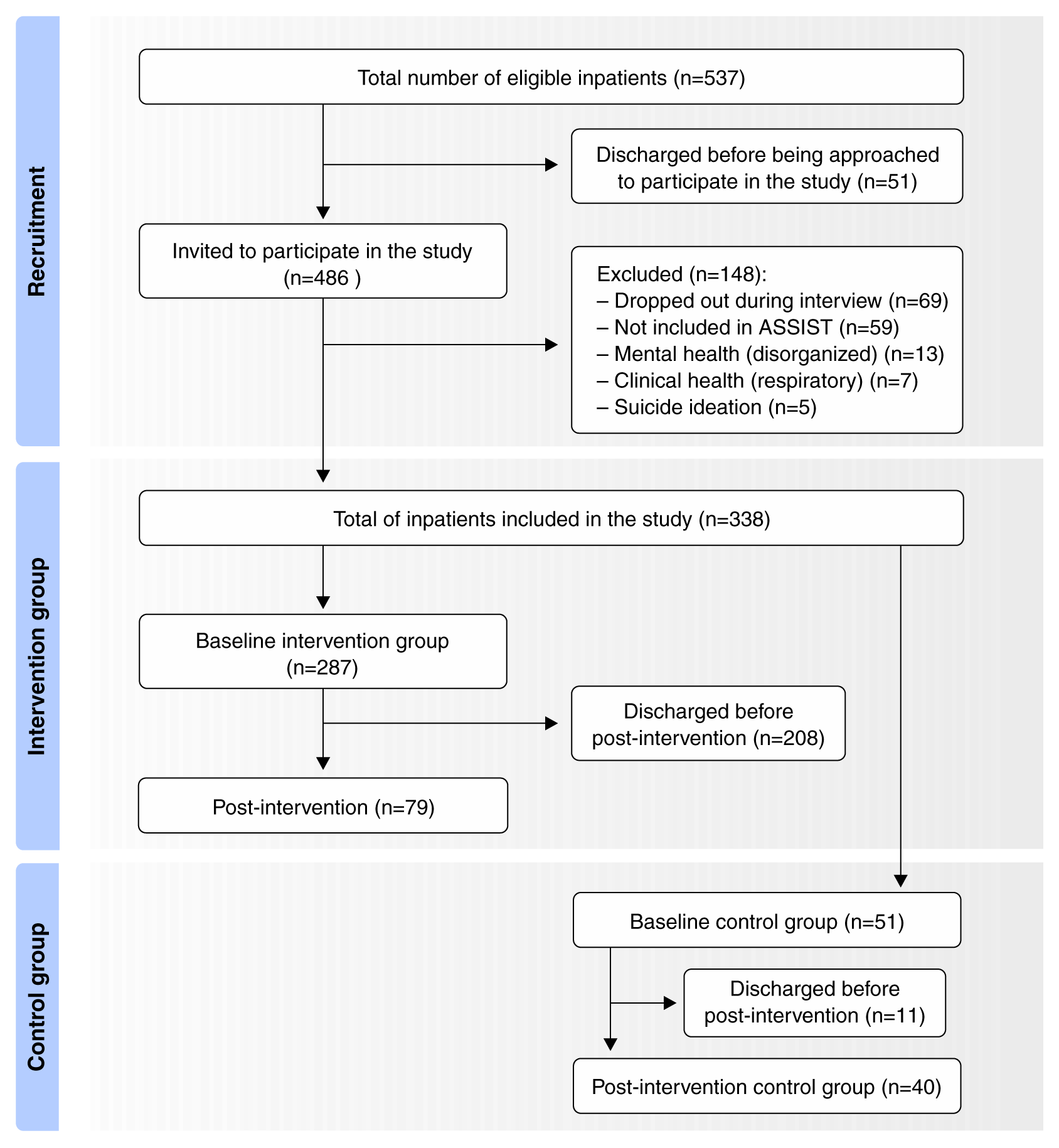
Figure 1 presents a flowchart of participation in the study and reasons for exclusion. The total number of patients hospitalized for crack/cocaine detoxification during the study period was 537. The final sample comprised 79 participants in the intervention group and 40 in the control group.

Flowchart of study participation and dropout rates. ASSIST = Alcohol, Smoking, and Substance Involvement Screening Test.
Most participants were males (91.6%), single or separated (89.9%), non-White (73.1%), had low income (72.3%), and were middle-aged (mean = 39.7 years, SD = 9.2). No significant sociodemographic differences were noted, except for a higher proportion of White individuals (p = 0.037) and more highly educated individuals (p = 0.017) in the intervention group (Supplementary Table S1). No significant between-group differences were found regarding the primary and secondary outcomes (Supplementary Table S2).
Table 1 compares the primary and secondary outcomes between the groups at post-intervention. There were no significant differences for the primary outcome of craving assessed using the VAS (d = -0.03) and CCQ (d = -0.21). Although secondary outcomes were also nonsignificant (d = -0.01 to d = 0.33), moderate effect sizes favoring the FI group appeared for family social support (d = 0.30), personal flourishing (d = 0.28), and mental quality of life (d = 0.33). Results were similar after adjusting for relevant covariates (Table 2).
The within-subjects post-pre comparisons for each group are presented in Table 3. In the FI group, craving scores on the VAS (p < 0.001, d = -0.61) and CCQ (p < 0.001, d = -0.51) were significantly lower after the intervention. Secondary outcomes also improved, except for social support from friends, which showed a negligible difference. The most improved secondary outcomes in the intervention group were depression (d = -1.66) and anxiety (d = -1.22). Post-intervention changes in primary outcomes in the control group (craving VAS: p < 0.001, d = -0.64; CCQ: p = 0.030, d = -0.35) were similar to those seen in the FI group. Compared to the intervention group, the control group showed fewer improvements in secondary outcomes, with no evidence of pre-post differences in spirituality, intrinsic religiosity, religious coping, or social support variables. The most improved secondary outcomes in the control group were depression (d = -1.31) and anxiety (d = -1.01).
Qualitative analysis
A total of 30 participants (29 men, 1 other), with a mean age of 39.4 (SD = 8.6) years, participated in post-intervention semi-structured interviews. Five themes were identified as reflecting their experience of the FI: valuing group therapy, feeling motivated to quit drugs, feeling supported in meeting their goals, experiencing positive emotions, and enhancing protective factors. Sample quotes appear in Table 4.
Valuing group therapy
The primary reason participants gave for joining the FI was seeking additional support to manage cravings (n=18). The opportunity to share experiences and feelings among peers in a healthcare-led group motivated their participation and engagement. Using idle time during hospitalization to distract from cravings and deriving satisfaction from peer interactions were additional factors influencing their decision to remain in the FI.
Most participants (n=19) had their expectations met or exceeded. They found the FI format distinctive, noting similarities to Alcoholics Anonymous (AA) and Narcotics Anonymous (NA) groups. Participants highlighted empathy, respect, freedom, equality, privacy, and clear communication as significant characteristics within the group and among the healthcare providers.
Participants expressed satisfaction with session duration, dynamism, and audiovisual resources, with particular interest in Family, Friends, and Community (n=6); Spirituality (n=5); Physical and Mental Health, Character Strengths, and Virtues (n=4); Flourishing (n=4); Acts of Kindness and Volunteering (n=3); Meaning and Purpose in Life (n=3); Forgiveness (n=3); Happiness (n=2); Resilience (n=2); and Love and Compassion (n=1) sessions. They felt connected to the group and comfortable from the start. However, four participants felt the continuous influx of new participants hindered connection.
Feeling motivated to quit drugs
Participants reported strengthened motivation to cease drug use through group participation. The FI was perceived as a supportive element in their treatment. Fifteen participants noted alleviated cravings despite experiencing withdrawal symptoms. The FI facilitated the adoption of alternative behaviors to counter addiction and mitigate cravings, including changing environments, building new social networks, adopting healthy habits, and engaging in distracting activities.
Feeling supported in meeting their goals
Participants observed changes in their outlook on life and coping mechanisms. Sixteen reported improved thought patterns, increased self-esteem, and a greater willingness to engage in future projects. They also indicated becoming more patient, supportive, and compassionate. The FI motivated them to contemplate the future and plan pathways to achieve their goals. New personal goals to maintain abstinence included reconciling with family, reintegrating into society, securing housing, obtaining employment, resuming studies, and continuing health treatment post-discharge. They felt more hopeful about achieving life goals, as the FI “taught that life without drugs is possible” (P25).
Experiencing positive emotions
Participants (n=17) reported that sessions helped them express and manage their feelings. Outcomes of the FI included forgiving oneself, resilience, patience, perseverance, and feelings of peace, joy, and happiness. Participants also mentioned reduced impulsivity and anxiety, as well as an increased sense of well-being and satisfaction after the FI.
Enhancing protective factors
Many participants acknowledged difficulties in coping with life’s realities before the FI, often using drugs as an escape. Post-intervention, participants reported strengthened protective factors against drug use. Emphasis on religious/spiritual factors (n=13) and encouragement of religious practices (n=7) were highlighted as emotional supports to prevent relapse. Participants became more aware of how they relate to themselves, including self-care and self-compassion (n=10), relationships with others (n=15), and family (n=15).
The FI facilitated improved communication and development of social skills (n=17), such as dialogue, listening, emotional self-control, and forgiveness. Participants also reported taking responsibility for their recovery (n=10). Reflections prompted by the FI included distancing from former social circles, adhering to medication and therapies, focusing on new life projects, and avoiding drugs when facing challenges.
Discussion
This study furthers our understanding of the potential role that a holistic well-being intervention can play in inpatient detoxification treatment. Although previous literature showed that interventions such as cognitive-behavioral therapy,34 motivational interviewing,35 and the 12-step AA or NA36 could effectively treat substance users, most studies focused on outpatients with milder conditions and symptoms.35,37 Our study advances research by proposing an FI that stimulates an individual’s virtues and values during acute detoxification stages. In addition, unlike psychosocial interventions that focus more directly on substance use, the FI emphasizes self-awareness, health promotion, and reinforcement of protective factors.
The positive mental health outcomes observed in an earlier mixed-methods quasi-experimental investigation of the FI among individuals with moderate to moderately severe depressive symptoms are comparable to those observed here.23 Braghetta et al.23 reported pre-post intervention improvements in depressive and anxiety symptoms, with effect sizes of d = -1.14 and d = -1.22; in the present study, the corresponding effect sizes were d = -1.66 and d = -0.60. Although there were some differences between the two sets of findings, evidence of similar improvements in personal flourishing across both studies points to the potential value of enhancing a global multidimensional outcome to impact different areas of a person’s life. These parallel findings suggest that the FI may offer a transdiagnostic benefit by promoting well-being across distinct clinical populations, including those with complex psychiatric and psychosocial needs.
Likewise, although other positive psychology interventions for substance abusers exist,38-40 none – to our knowledge – have explicitly included religious/spiritual components. There is growing evidence supporting religious/spiritual aspects in substance use treatment, including the well-known AA model that fosters a sense of community through group meetings, spiritual principles, and shared experiences.41 One of the key elements of the 12-step AA program is spirituality, a significant dimension of human life42 that is often considered an essential ingredient in the process of recovering from addiction.37 Frequent attendance at meetings can enhance long-term abstinence,43 reduce symptom severity, and improve quality of life.44 The FI draws on the values and virtues addressed in positive psychology interventions but also includes existential and spiritual aspects to promote health and well-being.
Although we did not observe significant differences between the two groups at post-treatment, there were moderate effect sizes favoring the FI group for social support, personal flourishing, and mental quality of life. When comparing pre- to post-intervention changes in each group, changes were somewhat larger for the FI group on the mental quality of life, spirituality, intrinsic religiosity, and social support outcomes, a pattern that was supported by the qualitative findings. One possible explanation for the aforementioned improvements in outcomes in the FI group is the multifaceted benefit illustrated in the qualitative data. For instance, “feeling motivated to quit drugs” has been identified as a mediating pathway between post-discharge efficacy and abstinence, in which its role can overcome reports of low confidence.45 “Feeling supported” from healthcare professionals has been associated with boosting self-esteem,46 and “feeling supported” by relatives has also been described as a crucial catalyst for maintaining participation in treatment.47 Higher levels of well-being and “experiencing positive emotions” have been shown to be associated with better mental health outcomes,48,49 greater engagement in community activities, and stronger social networks.50 Finally, “enhancing protective factors,” such as spirituality,43 resilience,51 forgiveness,52 and character strengths,53,54 are linked to better emotional regulation and personal growth among substance abusers. The combination of benefits to which the qualitative data alludes may reflect overlapping and reinforcing mechanisms supporting positive changes.
There may be several potential reasons for the nonsignificant between-group differences in the primary outcome variables. First, cracolândias are characterized by a unique scenario involving marginalized individuals who live in an area usually controlled by drug dealers, and where illegal drug trade and prostitution are common.4 Individuals who live there are typically unemployed and struggle with their basic needs. Maslow’s theory outlines human motivation in a hierarchy of five levels of needs, with physiological and safety needs considered foundational.55 Substance-dependent individuals often worry about achieving basic needs such as food, safety, and avoiding harm. Thus, interventions with a more ambitious target of flourishing may seem less relevant to those struggling with substance dependence around the time they are hospitalized.
Second, usual treatment, particularly for acute detoxification, involves quality care that focuses on alleviating cravings, improving mental health outcomes, and can enhance well-being, which also corroborates the clinical improvements experienced by both groups in our study. Substance abusers usually lack addiction education and self-awareness about the consequences of their condition.56 In this vulnerable population, addressing these areas can be especially beneficial, even without delving into the deeper topics represented in the FI. Within this hospital treatment setting, the benefits of the FI may not produce changes beyond those ordinarily achieved through UC. However, it is worth noting that the FI group showed evidence of improvements in a number of outcomes not observed in the control group (e.g., impulsivity, spirituality, intrinsic religiosity, and social support), and the impact of certain aspects of the FI on certain outcomes (e.g., religion/spirituality, social connectedness) might develop over time after discharge.
Third, our instruments and scales may not have captured the nuanced experiences of participants.57 For example, Tiffany & Wray57 argued that craving is a subjective experience and complex to measure. Our findings seem to support this, as notable differences between craving assessments emerged, with a negligible between-group difference found using the VAS and a medium-sized between-group difference observed using the CCQ scale. Self-report instruments rely on individuals’ introspective abilities, which can be influenced by cognitive and emotional factors. Future studies could combine objective professional assessments with subjective self-reports for more comprehensive evaluation.
Although these caveats are important to consider, the effect sizes observed in this study suggest that using a holistic approach such as the FI may be promising for treating individuals with substance use disorders. A key advantage is that the intervention can be delivered by different healthcare professionals, including doctors, nurses, physical educators, and occupational therapists. Particularly for hospitals specializing in substance abuse and mental disorders, which are usually fewer in number compared to general clinical hospitals and often have higher per-patient treatment costs, interventions that can be implemented by a range of providers following low-cost training represent a feasible clinical option.58,59
This study has limitations. The use of a non-randomized design limits the ability to draw causal conclusions and increases the risk of selection bias. Although we attempted to minimize these potential drawbacks by adjusting for sociodemographic variables in some of our main analyses and incorporating qualitative data to provide an in-depth perspective on experiences of participants with the FI intervention,60 future studies might improve the evidence on the effectiveness of the FI in substance-abusing populations by adopting randomized designs. The sample included in the present study was overwhelmingly male. While this may limit the generalizability of the findings, the gender composition of our sample aligns with prior research suggesting that severe substance abuse tends to be more prevalent in males.61 The severity of crack/cocaine use and the specific sociodemographic profile of our sample may not be representative of other substance-abusing populations, warranting caution in transposing these findings to such populations. We sought to standardize the delivery of the intervention by providing healthcare professionals who facilitated the FI with a 10-hour training that combined theoretical instruction with role-play exercises. However, we did not formally assess facilitator competencies or account for the potential effect of variation in facilitators on the outcomes. Finally, post-intervention assessments were conducted immediately after the FI session had concluded, limiting insights into the long-term effects on outcomes. Notably, the unique characteristics of individuals who have ties to cracolândias (e.g., difficulties recontacting them if they return to those locations after discharge) pose a key challenge for conducting follow-ups.4
This study provided preliminary evidence on the effects of the FI combined with UC on individuals with crack/cocaine abuse disorders during detoxification. Although both the FI and UC groups showed improvements in cravings, mental health symptoms, and quality of life, post-treatment differences generally favored the FI group. Several outcomes that improved in the FI group showed little evidence of improvement in the control group (e.g., spirituality, religious coping, and social support). Although rigorous follow-up studies are needed to replicate and build on this study’s findings, the holistic framework of the FI may support long-term recovery among substance-abusing populations.
Acknowledgements
This work was sponsored by Instituto Homero Pinto Vallada. JPBG has received a scholarship from Fundação de Amparo à Pesquisa do Estado de São Paulo (FAPESP) (2023/11234-4). GL and HV are research productivity grantees of the Conselho Nacional de Desenvolvimento Científico e Tecnológico (CNPq).
We are grateful to Gustavo Machado Barros for his insightful contributions to the methodological framework of this study. We are also grateful to all the hospital staff for their assistance during the intervention period.
Data availability statement
The data that support this study are available from the authors upon request.
References
-
1 UN Office on Drugs and Crime. World drug report 2021 [Internet]. [cited 2025 Oct 02]. www.unodc.org/unodc/data-and-analysis/wdr2021.html
» www.unodc.org/unodc/data-and-analysis/wdr2021.html - 2 Volkow ND, Han B, Einstein EB, Compton WM. Prevalence of substance use disorders by time since first substance use among young people in the US. JAMA Pediatr. 2021;175:640-3.
-
3 European Union Drugs Agency (EUDA). European drug report 2021 [Internet]. 2021 [cited 2025 Oct 02]. www.euda.europa.eu/publications/edr/trends-developments/2021_en
» www.euda.europa.eu/publications/edr/trends-developments/2021_en - 4 Ribeiro M, Duailibi S, Frajzinger R, Alonso ALS, Marchetti L, Williams AV, et al. The Brazilian “Cracolândia” open drug scene and the challenge of implementing a comprehensive and effective drug policy. Addiction. 2016;111:571-3.
- 5 Madruga CS, Cordeiro Q, da Silva CJ, de Araujo AC, Seabra DS, Laranjeira RR. Over a third of treatment-seekers from São Paulo’s Crackland report recent use of synthetic cannabinoids. Braz J Psychiatry. 2024;46:e20233234.
- 6 Saberi Zafarghandi MB, Eshrati S, Rashedi V, Vameghi M, Arezoomandan R, Clausen T, et al. Indicators of drug-related community impacts of open drug scenes: a scoping review. Eur Addict Res. 2022;28:87-102.
- 7 Waal H, Clausen T, Gjersing L, Gossop M. Open drug scenes: responses of five European cities. BMC Public Health. 2014;14:853.
- 8 El-Akkad SED, Hayashi K, Dong H, Day A, McKendry R, Kaur G, et al. Migration patterns from an open illicit drug scene and emergency department visits among people who use illicit drugs in Vancouver, Canada. Subst Use Misuse. 2021;56:1837-45.
- 9 Feltmann K, Gripenberg J, Strandberg AK, Elgán TH, Kvillemo P. Drug dealing and drug use prevention – a qualitative interview study of authorities’ perspectives on two open drug scenes in Stockholm. Subst Abuse Treat Prev Policy. 2021;16:37.
- 10 Kampman KM. The treatment of cocaine use disorder. Sci Adv. 2019;5:eaax1532.
- 11 Leurent M, Ducasse D, Courtet P, Olié E. Efficacy of 12-step mutual-help groups other than Alcoholics Anonymous: a systematic review and meta-analysis. Eur Arch Psychiatry Clin Neurosci. 2024;274:375-422.
- 12 Lim WL, Tierney S. The effectiveness of positive psychology interventions for promoting well-being of adults experiencing depression compared to other active psychological treatments: a systematic review and meta-analysis. J Happiness Stud. 2023;24:249-73.
- 13 Pan S, Ali K, Kahathuduwa C, Baronia R, Ibrahim Y. Meta-analysis of positive psychology interventions on the treatment of depression. Cureus. 2022;14:e21933.
- 14 Celano CM, Beale EE, Mastromauro CA, Stewart JG, Millstein RA, Auerbach RP, et al. Psychological interventions to reduce suicidality in high-risk patients with major depression: a randomized controlled trial. Psychol Med. 2017;47:810-21.
- 15 Rastad Z, Golmohammadian M, Jalali A, Kaboudi B, Kaboudi M. The effect of positive psychology intervention on quality of life among women with unintended pregnancy. J Educ Health Promot. 2021;10:165.
- 16 Chakhssi F, Kraiss JT, Sommers-Spijkerman M, Bohlmeijer ET. The effect of positive psychology interventions on well-being and distress in clinical samples with psychiatric or somatic disorders: a systematic review and meta-analysis. BMC Psychiatry. 2018;18:211.
- 17 Benoit V, Gabola P. Effects of positive psychology interventions on the well-being of young children: a systematic literature review. Int J Environ Res Public Health. 2021;18:12065.
- 18 Kor A, Shoshani A. Moderating the impact of the COVID-19 pandemic on children’s and adolescents’ substance use, digital media use, and mental health: a randomized positive psychology addiction prevention program. Addict Behav. 2023;141:107660.
- 19 Trinh CD, Girard R, Schick MR, Spillane NS. Positive psychological interventions on alcohol use and consequences: pilot randomized trial in a young adult cannabis-using sample. J Subst Use Addict Treat. 2024;158:209241.
- 20 Cowden RG, Skinstad D, Lomas T, Johnson BR, VanderWeele TJ. Measuring wellbeing in the global flourishing study: insights from a cross-national analysis of cognitive interviews from 22 countries. Qual Quant. 2025;59:575-97.
- 21 VanderWeele TJ, Lomas T. Terminology and the well-being literature. Affect Sci. 2023;4:36-40.
- 22 Gonçalves JPB, Braghetta CC, Alvarenga WA, Gorenstein C, Lucchetti G, Vallada H. Development of a comprehensive flourishing intervention to promote mental health using an e-Delphi technique. Front Psychiatry. 2023;14:1064137.
- 23 Braghetta CC, Gonçalves JPB, Alvarenga WA, Cowden RG, Gorenstein C, Lucchetti G, et al. Promoting the wellbeing of the whole person: a within-subjects mixed-methods study exploring the effects of the flourishing intervention among individuals with depressive symptoms. Front Psychiatry. 2025;16:1532843.
- 24 Hosseini M-S, Jahanshahlou F, Akbarzadeh MA, Zarei M, Vaez-Gharamaleki Y. Formulating research questions for evidence-based studies. J Med Surg Public Health. 2024;2:100046.
- 25 Henrique IFS, De Micheli D, de Lacerda RB, de Lacerda LA, Formigoni MLOS. Validação da versão brasileira do teste de triagem do envolvimento com álcool, cigarro e outras substâncias (ASSIST). Rev Assoc Med Bras. 2004;50:199-206.
- 26 Aas IH. Guidelines for rating Global Assessment of Functioning (GAF). Ann Gen Psychiatry. 2011;10:2.
- 27 Araujo RB, de Castro MGT de, Pedroso RS, dos Santos PL, Leite L, da Rocha MR, et al. Validação psicométrica do Cocaine Craving Questionnaire-Brief – Versão Brasileira Adaptada para o Crack para dependentes hospitalizados. J Bras Psiquiatr. 2011;60:233-9.
- 28 Araujo RB, Oliveira MS, Moraes JFD, Pedroso RS, Port F, de Castro MGT. Validação da versão brasileira do Questionnaire of Smoking Urges-Brief. Arch Clin Psychiatry (São Paulo). 2007;34:166-75.
- 29 Chen KW, Berger CC, Gandhi D, Weintraub E, Lejuez CW. Adding integrative meditation with ear acupressure to outpatient treatment of cocaine addiction: a randomized controlled pilot study. J Altern Complement Med. 2013;19:204-10.
- 30 Hennink MM, Kaiser BN, Marconi VC. Code saturation versus meaning saturation: how many interviews are enough? Qual Health Res. 2016;27:591-608.
- 31 Braun V, Clarke V. Using thematic analysis in psychology. Qual Res Psychol. 2006;3:77-101.
- 32 Velloso ISC, Tizzoni JS. Critérios e estratégias de qualidade e rigor na pesquisa qualitativa. Cien Enferm. 2020;26:1-10.
- 33 O’Brien BC, Harris IB, Beckman TJ, Reed DA, Cook DA. Standards for reporting qualitative research: a synthesis of recommendations. Acad Med. 2014;89:1245-51.
- 34 McHugh RK, Hearon BA, Otto MW. Cognitive behavioral therapy for substance use disorders. Psychiatr Clin North Am. 2010;33:511-25.
- 35 Smedslund G, Berg RC, Hammerstrøm KT, Steiro A, Leiknes KA, Dahl HM, et al. Motivational interviewing for substance abuse. Cochrane Database Syst Rev. 2011;2011:CD008063.
- 36 Terplan M, Ramanadhan S, Locke A, Longinaker N, Lui S. Psychosocial interventions for pregnant women in outpatient illicit drug treatment programs compared to other interventions. Cochrane Database Syst Rev. 2015;2015:CD006037.
- 37 Kelly JF. Is Alcoholics Anonymous religious, spiritual, neither? Findings from 25 years of mechanisms of behavior change research. Addiction. 2017;112:929-36.
- 38 Weiss RD, Griffin ML, Gallop RJ, Najavits LM, Frank A, Crits-Christoph P, et al. The effect of 12-step self-help group attendance and participation on drug use outcomes among cocaine-dependent patients. Drug Alcohol Depend. 2005;77:177-84.
- 39 Krentzman AR, Hoeppner SS, Hoeppner BB, Barnett NP. A randomized feasibility study of a positive psychology journaling intervention to support recovery from substance-use disorders. J Subst Use Addict Treat. 2024;164:209410.
- 40 Kramer MM, Londgren J. Recovery’s got talent: a positive-psychology intervention for people living in recovery. Health Promot Pract. 2020;21:862-4.
- 41 Kelly JF, Hoeppner B, Stout RL, Pagano M. Determining the relative importance of the mechanisms of behavior change within Alcoholics Anonymous: a multiple mediator analysis. Addiction. 2012;107:289-99.
- 42 Cowden RG, Davoodi T, Diego-Rosell P, Lomas T, Lai AY. Religious/spiritual connection and subjective wellbeing around the world: a cross-sectional analysis with nationally representative samples from 121 countries. J Relig Health. 2025;64:3291-312.
- 43 Gossop M, Stewart D, Marsden J. Attendance at Narcotics Anonymous and Alcoholics Anonymous meetings, frequency of attendance and substance use outcomes after residential treatment for drug dependence: a 5-year follow-up study. Addiction. 2008;103:119-25.
- 44 Leurent M, Ducasse D, Courtet P, Olié E. Efficacy of 12-step mutual-help groups other than Alcoholics Anonymous: a systematic review and meta-analysis. Eur Arch Psychiatry Clin Neurosci. 2024;274:375-422.
- 45 Kelly JF, Greene MC. Where there’s a will there’s a way: a longitudinal investigation of the interplay between recovery motivation and self-efficacy in predicting treatment outcome. Psychol Addict Behav. 2014;28:928-34.
- 46 Svendsen TS, Bjornestad J, Slyngstad TE, McKay JR, Skaalevik AW, Veseth M, et al. “Becoming myself”: how participants in a longitudinal substance use disorder recovery study experienced receiving continuous feedback on their results. Subst Abuse Treat Prev Policy. 2020;15:8.
-
47 Lee H, Thulien M, Eekhoudt CR, Friesen D, Manson D, Bagley S, et al. Building social support into mental health and substance use treatment trajectories: insights from a longitudinal qualitative and ethnographic study with young people experiencing unstable housing and homelessness. Child Youth Serv. 2025 Feb 21:10.1080/0145935x.2025.2468177 doi: 10.1080/0145935x.2025.2468177 Online ahead of print.
» 10.1080/0145935x.2025.2468177 - 48 Scott N, Carrotte ER, Higgs P, Stoové MA, Aitken CK, Dietze PM. Longitudinal changes in personal wellbeing in a cohort of people who inject drugs. PLoS One. 2017;12:e0178474.
- 49 Schulenberg JE, Patrick ME, Kloska DD, Maslowsky J, Maggs JL, O’Malley PM. Substance use disorder in early midlife: a national prospective study on health and well-being correlates and long-term predictors. Subst Abuse. 2015;9:41-57.
- 50 Best D, Honor S, Karpusheff J, Loudon L, Hall R, Groshkova T, et al. Well-Being and recovery functioning among substance users engaged in posttreatment recovery support groups. Alcohol Treat Q. 2012;30:397-406.
- 51 Roustaei A, Bakhshipoor B, Doostian Y, Goodiny AA, Koohikar M, Massah O. Effectiveness of resilience training on ego-control and hardiness of illicit drug users. Addict Health. 2017;9:24-31.
- 52 Webb JR, Toussaint LL. Self-forgiveness as a critical factor in addiction and recovery: a 12-step model perspective. Alcohol Treat Q. 2018;36:15-31.
- 53 Karlou I, Karakasidou E. The predictive and mediating role of self-compassion in substance use disorders. Eur J Couns Psychol. 2025:1-18.
- 54 Shreffler J, Thomas JJ, McGee S, Ferguson B, Kelley J, Cales R, et al. Self-compassion in individuals with substance use disorder: the association with personal growth and well-being. J Addict Dis. 2022;40:366-72.
- 55 Maslow AH. A theory of human motivation. Psychol Rev. 1943;50:370-96.
- 56 Eslami JM, Keshvardoost S, Ershad SR, Bahaadinbeigy K. Information needs of addicted individuals: a qualitative case study. Addict Health. 2021;13:138-47.
- 57 Tiffany ST, Wray JM. The clinical significance of drug craving. Ann N Y Acad Sci. 2012;1248:1-17.
- 58 Peterson C, Li M, Xu L, Mikosz CA, Luo F. Assessment of annual cost of substance use disorder in us hospitals. JAMA Netw Open. 2021;4:e210242.
- 59 Vossius C, Testad I, Skjæveland R, Nesvåg S. The use and costs of health and social services in patients with longstanding substance abuse. BMC Health Serv Res. 2013;13:185.
- 60 Ivankova N, Wingo N. Applying mixed methods in action research: methodological potentials and advantages. Am Behav Sci. 2018;62:978-97.
- 61 Lind KE, Gutierrez EJ, Yamamoto DJ, Regner MF, McKee SA, Tanabe J. Sex disparities in substance abuse research: evaluating 23 years of structural neuroimaging studies. Drug Alcohol Depend. 2017;173.
-
How to cite this article:
Gonçalves JPB, Alvarenga WA, Cowden RG, Gorenstein C, Lucchetti G, Vallada H. Promoting holistic well-being in addiction treatment: effects of the flourishing intervention in hospitalized patients. Braz J Psychiatry. 2026;48:e20254380. Epub 2025 Oct 5. http://doi.org/10.47626/1516-4446-2025-4380
Edited by
-
Handling Editor:
João Castaldelli-Maia