Scleral contact lenses in normal corneas: is it possible to improve visual performance?
ABSTRACT
Objective: To analyze visual performance in digitally active volunteers using ScCLs.
Methods: ScCLs were fit in seven participants and evaluated during four visits over 45 consecutive days. Reading speed tests were performed with MNREAD-P charts and texts developed by the Department of Speech Therapy of the authors’ institution. Post-study, participants were interviewed and completed the 8-item Contact Lens Dry Eye Questionnaire (CLDEQ-8).
Results: During ScCL wear, 85.7% showed increased reading speed on MNREAD-P charts, with similar results on the texts of the authors’ institution. Interviews highlighted initial ScCL handling difficulty, improved comfort, and preference over soft lenses for physical activities.
Conclusion: This study underscores the need to explore new contexts impacting digital tasks requiring optimal visual performance, suggesting ScCLs as beneficial. Further research is necessary to elucidate these aspects.
Keywords:
Cornea; Contact lenses; Dry eye syndromes; Visual acuity
RESUMO
Objetivo: Analisar o desempenho visual de voluntários digitalmente ativos usando lentes de contato esclerais.
Métodos: Lentes de contato esclerais foram adaptadas em sete participantes e avaliadas ao longo de 45 dias consecutivos. Testes de velocidade de leitura foram realizados com tabelas Minnesota Low Vision Reading Test, e foram desenvolvidos textos por um Departamento de Fonoaudiologia. Após o estudo, os participantes foram entrevistados e preencheram o Contact Lens Dry Eye Questionnaire.
Resultados: Durante o uso de lentes de contato esclerais, 85,7% apresentaram aumento na velocidade de leitura nas tabelas Minnesota Low Vision Reading Test, com resultados semelhantes nos textos desenvolvidos para o teste. As entrevistas destacaram dificuldade inicial no manuseio, conforto durante o uso e preferência sobre lentes de contato gelatinosas.
Conclusão: Este estudo ressalta a necessidade de explorar novos contextos que impactam tarefas digitais que requerem desempenho visual ótimo, sugerindo as Lentes de contato esclerais como benéficas. Mais pesquisas são necessárias para esclarecer esses aspectos.
Descritores:
Córnea; Lentes de contato; Síndromes do olho seco; Acuidade visual
INTRODUCTION
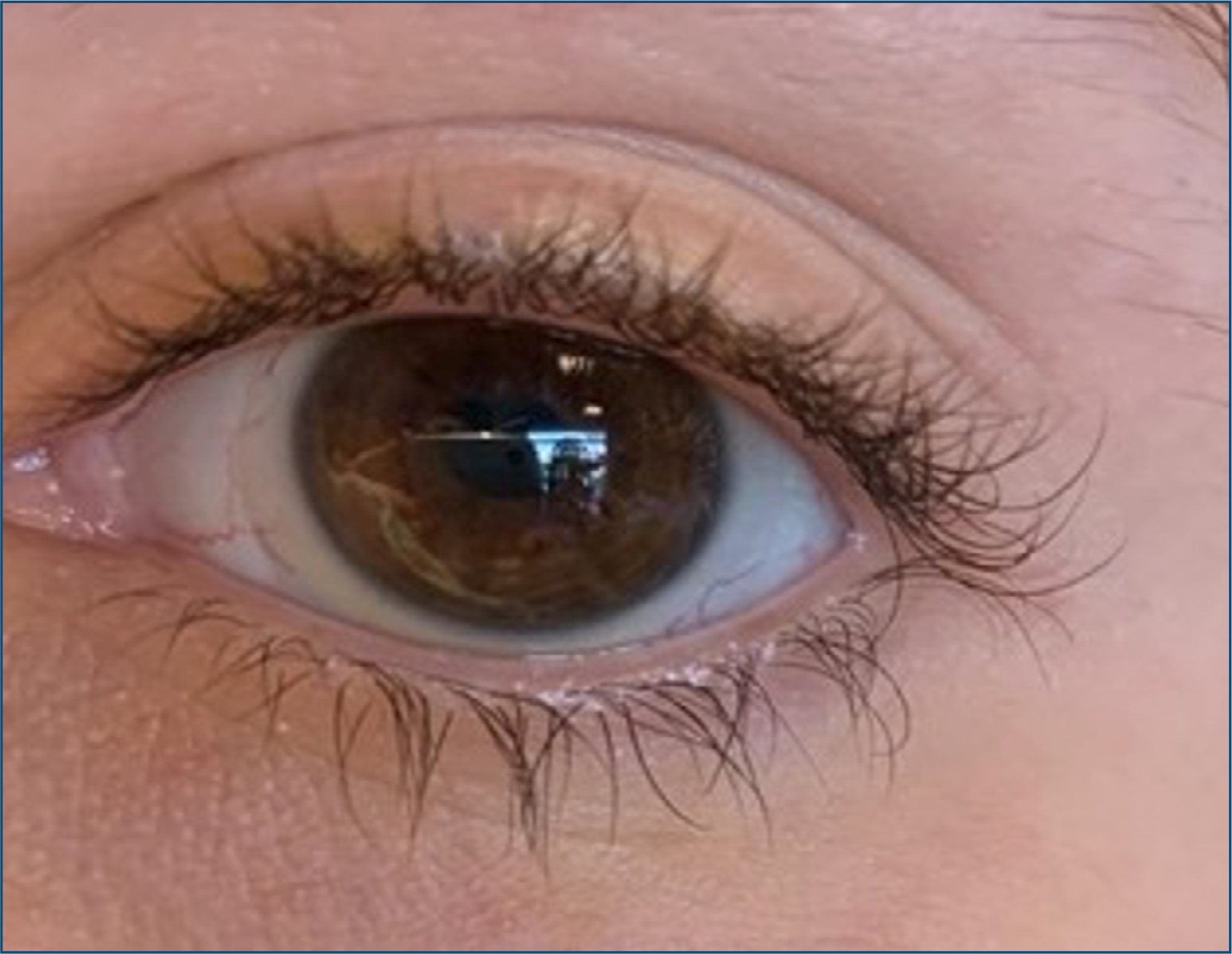
Humans used prostheses and substances to improve their performance in the early days of their existence. For instance, contact shells made of ground glass to improve visual acuity gave rise to the first contact lenses, as reported in the medical literature of the 19th century.(1,2) Since then, important technological advances in lens manufacturing processes, materials, and designs have innovated the sector. Scleral contact lenses (ScCLs) are a part of the current contact lens portfolio and have been disruptively expanding concepts related to visual performance. Although ScCLs have been produced worldwide since the mid-20th century, gas-permeable materials, which are much healthier as they allow better oxygen exchange with the environment, emerged only in the 1980s.(3) ScCLs are currently manufactured with materials with high oxygen transmissibility and fine control of edges, thickness, and toricity, thus contributing to the maintenance of physiological metabolism and corneal tissue stability while providing greater comfort and visual quality. Traditional indications for use include correction of corneal irregularity, a common occurrence in patients with high astigmatism and corneal ectasia.(4–8) In these cases, the fluid reservoir accumulated between the anterior surface of the cornea and the posterior surface of the lens, in addition to the toric design of these types of lenses, can effectively neutralize most of the existing corneal astigmatism and improve the quality of vision (Figure 1). Scleral contact lenses are also widely used in selected cases of ocular surface abnormalities such as dry eye syndrome.(9–13)
Scleral anchorage, which allows non-contact with the cornea and the possibility of keeping the eyes moist, is associated with comfort and discretion, making ScCLs an interesting tool for keeping the ocular surface moist and correcting irregularities. IMT Atlantique, the leading engineering school in France, has developed an ScCL prototype with a flexible microbattery and encapsulated photodetectors that can turn it into an eye tracker physically attached to the eye.(14,15) A research team at POSTECH has recently developed a wireless theranostic smart contact lens that combines an intraocular pressure (IOP) sensor and a flexible drug delivery system to control IOP measurement and drug administration in glaucoma.(16) These initiatives have in common the goal of elevating human visual performance to a level never before realized. Visual performance measurements can be interpreted in different ways. Traditionally, it is measured using the visual acuity, contrast sensitivity, stereoacuity, and glare tests. The present study goes beyond traditional approaches by quantitatively evaluating reading speed, in addition to evaluating ocular comfort through interviews and questionnaires.
The population selected for the study was healthy and extremely active digitally, reflecting the current society, which usually spends many hours a day in front of the screen. A study showed that visual complaints were reported by 75% of workers who worked more than 6 hours a day in front of the screen, against 50% of other workers.(17) Digital asthenopia, known as eyestrain caused by overuse of electronic devices with light-emitting screens, is characterized by transient symptoms of dry eye sensation, eye pain, conjunctival hyperemia, and reduced visual acuity, among others.(18) The harms of a compromised visual performance are indisputable, regardless of the conceptual criteria used. How much it could affect the efficiency and effectiveness of workers or student is even speculated. In this context, the present pilot study aimed to analyze visual performance data in digitally active healthy volunteers without eye disease during ScCL wear. ScCL wear is believed to increase reading speed and reduce symptoms of ocular discomfort in this population.
The objective of this study was to analyze visual performance in digitally active volunteers using ScCLs.
METHODS
This prospective, descriptive, cross-sectional pilot study followed the tenets of the Declaration of Helsinki and was approved by the institutional review board. Written informed consent was obtained from all the participants. The study was conducted in a university-affiliated ophthalmology clinic and in the private offices of the main investigators. The sample included seven individuals aged 18 years or over who worked in front of the screen, such as a computer or smartphone, for at least eight hours a day. To ensure the confidentiality of the participants’ data, the seven participants were referred to as P1, P2, P3, P4, P5, P6, and P7.
The contact lenses used in this study, Optimum XC and Esclera SG, were generously supplied by Mediphacos (Belo Horizonte, MG, Brazil) and are approved by the Agência Nacional de Vigilância Sanitária (ANVISA). According to the manufacturer's declaration, the Optimum XC is a It is even speculated, gas-permeable contact lens designed for regular corneas, crafted from fluorosilicone acrylate with an oxygen permeability (Dk) of 125. These mini-scleral lenses have a larger diameter than conventional corneal lenses, resting entirely on the sclera and creating a tear reservoir between the cornea and the lens. The Esclera SG is also a gas-permeable contact lens made from a novel fluorosilicone acrylate polymer with a higher oxygen permeability (Dk) of 141 and a scleral landing zone. Similar to the Optimum XC, the Esclera SG is designed to rest entirely on the sclera, vaulting the cornea to provide optimal comfort and vision correction. Both lenses share a multifocal asymmetry design.
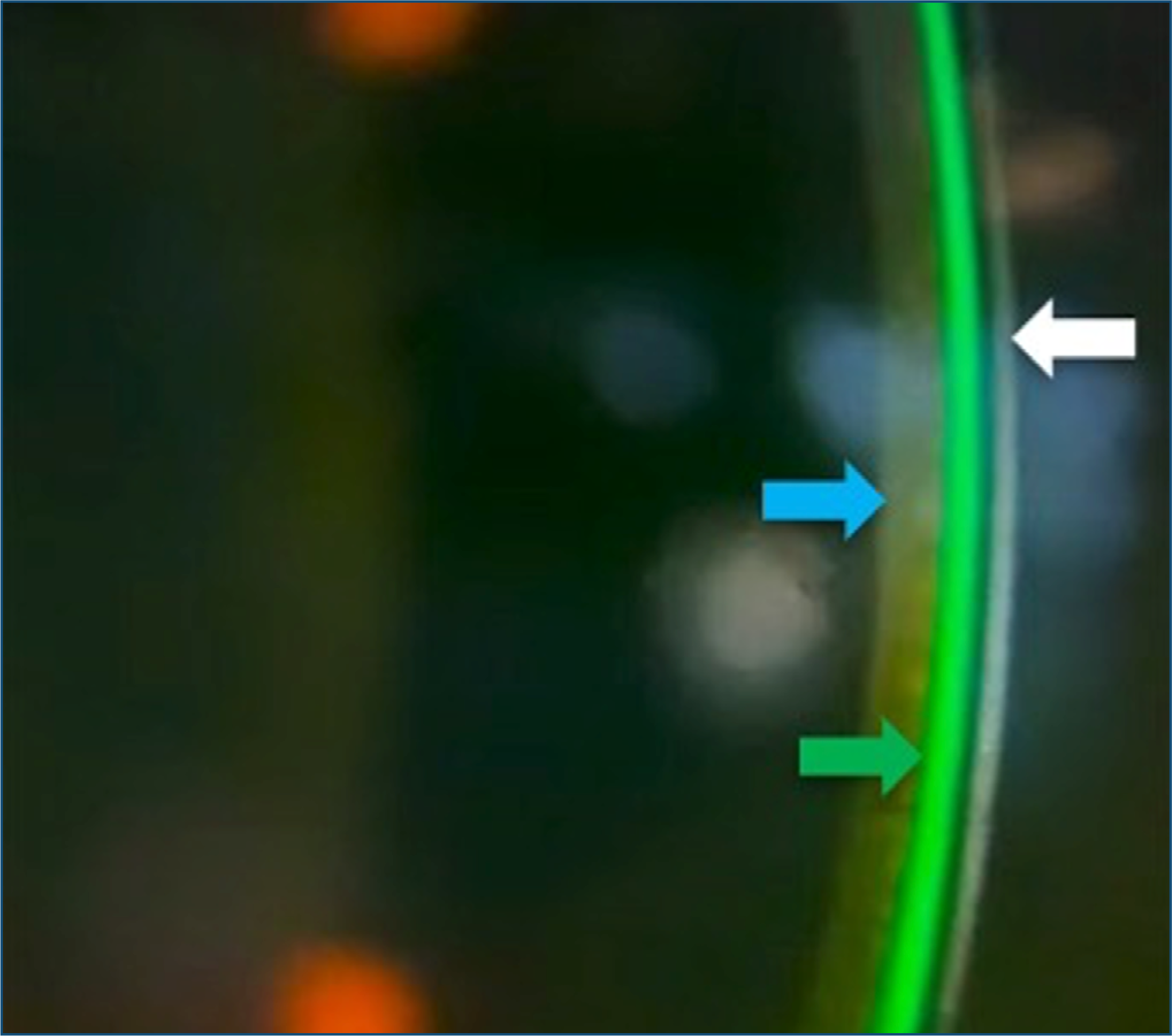
Participants were evaluated in four visits over 45 days, where the following tests and examinations were performed: corrected and uncorrected visual acuity measurements; dynamic refraction; corneal topography using an Eyetec CT2000SL topographer (Eyetec, São Carlos, SP, Brazil); biomicroscopy of the anterior and posterior segments; ScCL fitting according to the fitting protocol established by the Refraction and Contact Lens Unit of the Department of Ophthalmology and Visual Sciences of the authors’ institution and by the supplier (Figure 2); reading speed test with the digital version of the internationally validated MNREAD charts (MNREAD iPad App 2017 https://itunes.apple.com/us/app/mnread/id1196638274?ls=1&mt=8); and reading of validated texts developed by the Department of Speech Therapy of the authors’ institution, which simulates everyday reading (Suplementary material - Figure 1S).
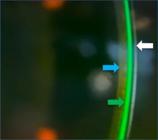
Biomicroscopy of the anterior segment showing the relationship between the cornea and the scleral contact lens. White arrow indicates the scleral contact lens; green arrow indicates the clearance between the cornea and lens; blue arrow indicates the cornea.
MNREAD acuity charts were developed to measure reading performance (Supplementary Material 1). Typically, four measures are obtained with the test: reading acuity (the smallest font size that one can read without making significant errors), critical print size (the smallest font size that one can read at maximum speed), maximum reading speed (one's reading speed when reading is not limited by font size), and reading accessibility index (a single-valued measure representing one's visual access to commonly encountered printed material, in which zero means no access to print and one represents average normal access).(19) In the present study, two blocks of different charts were used in a randomized manner (one to be read without using the lenses and the other with the use of the lenses). The results were used to analyze reading performance with and without the use of SsCLs, focusing on reading speed, and to customize the font size of the texts that simulated everyday reading. The selected font sizes were determined by the critical print size (smallest font size) and the maximum reading speed (largest font size) performed without SsCLs. Two different texts were used, one for each font size. (Supplementary Material 1).
The four visits consisted of (1) complete ophthalmic examination and ScCL fitting test; (2) delivery of custom lens designs, as well as reading speed tests using the Portuguese version of the MNREAD (MNREAD-P) charts and timed reading of two long texts performed without lenses but with proper ametropia correction (if necessary). During this meeting, patients received all instructions for proper use of lenses: (3) and (4) reading speed tests (MNREAD-P charts) and timed reading of two complex texts while wearing ScCLs. Visits 3 and 4 were held at intervals of 30 days, during which the participants were instructed to wear the ScCLs routinely. The Portuguese version of the 8-item Contact Lens Dry Eye Questionnaire (CLDEQ-8),(20) which consists of questions aimed at relating dry eye symptoms to contact lens wear, was administered at the end of fourth visit. At visit four, the principal investigators conducted brief individual interviews with each participant regarding ScCL handling, signs and symptoms, and self-perceived visual performance. The questions were open-ended and unstructured to allow free reporting. The interviews were recorded with the participants’ permission and transcribed (Supplementary Material 2).
Data analysis
For descriptive analysis, categorical variables were described as frequencies and percentages and continuous variables were expressed as mean (standard deviation or range). Group comparisons were performed using the Wilcoxon signed rank test. The qualitative data obtained from the interviews were not categorized or coded. All analyses were performed using Stata v.17 (College Station, TX), and p-values less than 0.05 were considered statistically significant.
RESULTS
Seven individuals participated in this pilot study, being five women (71.4%). The mean age was 32.8 years (range: 29 to 35 years). Of the fit ScCL options, Optimum XC was chosen by 71.4% (10 of 14 eyes) (Supplementary Material 4).
During history taking at visit 1, all seven participants denied a history of systemic or ophthalmologic diseases, but five (71.4%) complained of frequent ocular discomfort such as dry eye sensation (42%), pruritus (14%), conjunctival hyperemia (14%), and eyestrain at night (14%). The mean daily time spent in front of the screen was 12 hours (standard deviation [SD]: 2.38) (range: 9 to 14 hours) on working days and 2.92 (SD: 0.60) (range: 2 to 5 hours) on non-working days. The mean weekly wear of ScCLs was 3 days/week (range: 2 to 4 days/week), with a mean daily ScCL wear of 5 hours/day (range: 4 to 6 hours/day) (Table 1S).
On ophthalmic examination at visit 1, all 7 participants achieved visual acuity of 0.0 logMAR (20/20) after correction of refractive error. Three participants (42.8%) had ametropia (2 with myopia and 1 with compound hyperopic astigmatism). Two participants (28.5%) wore soft contact lenses sporadically (daily disposable soft contact lenses and monthly replacement toric contact lenses). Biomicroscopic examination of the anterior and posterior segments, as well as corneal topography, revealed no relevant findings or abnormalities.
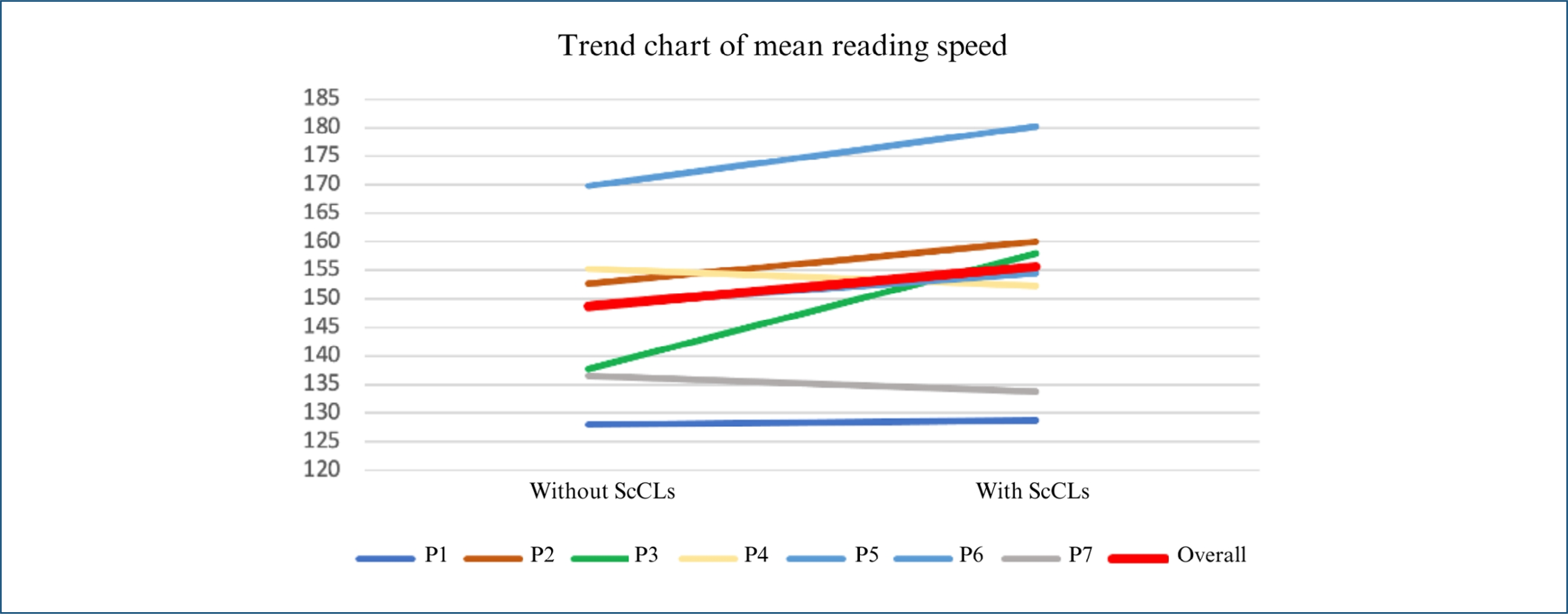
Using the MNREAD-P charts, reading speed was measured in words per minute (wpm), with an overall mean of 150.14 (15.11) wpm without ScCLs and 155.11 (19.45) wpm with ScCLs (p = 0.236). Individual analysis showed that 1 participant had a mean reading speed of 137.74 (20.8) wpm without ScCLs and 157.92 (27.2) wpm with ScCLs. Only 1 participant showed a reduction in mean reading speed with ScCL wear: from 136.46 (24.1) wpm without lenses to 133.77 (19.8) wpm with lenses. Table 1 shows the reading speed based on font size. Except for font sizes 1 and 7, most participants increased their reading speed after fitting contact lenses.
Comparison of reading speed (words per minute) with and without contact lenses according to font size
The reading of validated texts developed by the Department of Speech Therapy of the authors’ institution revealed an overall mean (standard deviation) of 161.19 (5.4) wpm without ScCLs and 171.0 (21.9) wpm with ScCLs in texts with larger font sizes (p = 0.128). In texts with smaller font sizes, the overall mean was 108.60 (31.4) wpm and 115.52 (34.6) wpm without and with ScCLs, respectively (p = 0.398). The mean reading speed was higher during ScCL wear in 71.4% of participants while reading texts with larger font sizes and in 57.0% while reading texts with smaller font sizes (Table 2). The CLDEQ-8 provided qualitative data related to lens wear over a 30-day period. The mean CLDEQ-8 score was 15 (3.36), ranging from 11 to 19 points.
During the interview, when asked to freely report their experiences, the participants reported having initial difficulties in handling the lenses but also improved dry eye sensation and visual quality. When asked specifically about handling the lenses, all participants reported having difficulties at the beginning of the 30-day period, with improvement over the weeks to follow up. Regarding symptoms while wearing the ScCLs, participants reported good tolerance most of the time. Some participants highlighted that the worst symptoms occurred at the beginning of the 30-day period, whereas others reported blurred vision and irritation after lens removal at the end of the day. Others reported improved dry eyes and visual acuity that may have contributed to improved visual performance during the working day, whereas others did not find such an association. In addition, two participants compared their experiences of wearing scleral and soft contact lenses.
DISCUSSION
Screens and monitors are tools that enable digital evolution. It is common today to work in front of the screen for most of the day, which is the reality of the patients in this study. Humans are not physiologically adapted to such a routine, leading to an increase in signs, symptoms, and associated comorbidities, with ophthalmic complaints being a major concern. Digital asthenopia has several symptoms that may be associated with accommodative dysfunction and/or ocular surface dryness.(21)
In the present study, more than 70% of participants complained of ocular discomfort during the workday. Dry eye sensation was the main complaint (42%), followed by eye strain (14%). Participants reported working for an average of 12 hours a day in front of their screens. Comério et al.(22) found a significantly higher frequency of asthenopic symptoms in bank employees who reported using computers for more than 6 hours a day. Kanitkar et al.(23) observed that longer durations of computer exposure tended to cause long-standing asthenopic symptoms, even after discontinuation of exposure. Several studies have established a relationship between prolonged screen exposure and the development of dry eye in both adults and children.(24–26) Inomata et al.(26) found an association between symptomatic dry eye and more than 8 hours (versus less than 4 hours) of screen exposure per day.
All participants completed the CLDEQ-8, considered by the Tear Film & Ocular Surface Society (TFOS) as the best tool to identify dry eye-related discomfort in contact lens wearers.(27) Although not designed to be administered solely to soft contact lens wearers, the literature on its administration in ScCL wearers is scarce. According to Nichols et al.,(28) a score of ≥12 on the CLDEQ-8 indicates intense or frequent contact lens-related dry eye symptoms that require treatment. A Brazilian study that translated and validated the CLDEQ-8 for Portuguese reported high scores among soft contact lens wearers.(20) In contrast, studies assessing satisfaction among ScCL wearers have shown that ScCLs are well accepted by patients because of comfort and relief from dry eye symptoms these lenses provide, compared with other lens designs.(29,30) These studies are essentially about ScCL wearers with corneal abnormalities, and further research focused on ScCL wearers with normal corneas is required.
Our reading speed results suggested that ScCLs may have a positive effect on visual performance, as shown in the trend chart (Figure 3). The mean reading speed in the MNREAD-P test increased by 4.97 wpm when participants wore ScCLs. In more complex texts, participants had a mean increase of 9.81 wpm when reading texts with larger font sizes and of 6.92 ppm with smaller font sizes while wearing ScCLs. This is the first time that the reading speed has been evaluated with such precision in ScCL wearers. Despite the low statistical relevance of numerical findings, probably due to the limited number of participants, a new way of thinking about contact lenses emerges as a tool potentially capable of improving visual performance, herein related to reading speed, in individuals exposed to current, extreme digital work reality.
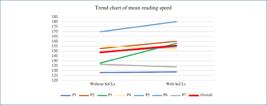
Trend chart of mean reading speed without and with scleral contact lenses. Participants are represented by the letter P.
Qualitative research is an interesting strategy that aims to analyze phenomena more thoroughly regarding the incorporation of tools and technologies into an individual's daily routine. Listening to the participants and transcribing their reports and responses at the end of the experiment allowed us to better understand the interaction between individuals and the visual tool. Several responses raised important concerns, including initial difficulty in handling ScCLs (which could cause poor adhesion during initial use), improved handling over the weeks, fear of causing harm to the eyes, comfort and improvement of dry eye sensation at the end of the day, satisfactory visual acuity, reduced ocular itching, and preference for ScCLs over soft contact lenses during physical activity. However, these issues raise additional questions that warrant further qualitative research on this topic. In this study, we only described the responses and free reports provided by the participants, without categorizing or coding the qualitative data. This would possibly provide more credibility to our work and will be implemented in the non-pilot phase of our research.
This study presents some limitations that should be considered when interpreting the results. The use of different scleral lens models (Optimum XC and Esclera SG) was necessary to address the individual characteristics of each participant and optimize lens fitting. However, this approach may have introduced an additional variable, potentially leading to selection bias if the choice of lens model was influenced by specific characteristics of the participants. Furthermore, the improvement in phoria and aniseikonia, which is expected in contact lens wearers, may have influenced the visual performance of participants who were already using visual correction. Future studies should include a control group of participants who do not use visual correction to evaluate the isolated impact of scleral lenses on visual performance, and an objective assessment of phoria and aniseikonia, before and after scleral lens fitting, may provide valuable insights into the role of these factors in the observed results.
CONCLUSION
This study underscores the need to explore new contexts impacting digital tasks requiring optimal visual performance. The health paradigm has been constantly changing. We believe that it is necessary to integrate biological, physical, and digital ecosystems in search of paths to circumvent the slow evolution of human physiological processes.(31) High-performance tasks require satisfactory visual performance, and ScCLs can be useful in this context. Further research is required to clarify their importance.
Financial support:
Institution:
ACKNOWLEDGMENT
The authors would like to thank Mediphacos for generously donating the contact lenses used in this study, without which this research would not have been possible. We would also like to thank everyone who, in some way, contributed significantly to the completion of this project.
Data Availability Statement:
The datasets generated and/or analyzed during the current study are included in the manuscript.
SUPPLEMENTARY MATERIAL
SUPPLEMENTARY MATERIAL
SUPPLEMENTARY MATERIAL
SUPPLEMENTARY MATERIAL
REFERENCES
- 1 Pearson RM. Kalt, keratoconus, and the contact lens. Optom Vis Sci. 1989;66(9):643-6.
- 2 Schein OD, Rosenthal P, Ducharme C. A gas-permeable scleral contact lens for visual rehabilitation. Am J Ophthalmol. 1990;109(3):318-22.
- 3 Ezekiel D. Gas permeable haptic lenses. J Br Contact Lens Assoc. 1983;6(4):158, 160-161.
- 4 Lee JC, Chiu GB, Bach D, Bababeygy SR, Irvine J, Heur M. Functional and visual improvement with prosthetic replacement of the ocular surface ecosystem scleral lenses for irregular corneas. Cornea. 2013;32(12):1540-3.
- 5 Severinsky B, Behrman S, Frucht-Pery J, Solomon A. Scleral contact lenses for visual rehabilitation after penetrating keratoplasty: long term outcomes. Cont Lens Anterior Eye. 2014;37(3):196-202.
- 6 Koppen C, Kreps EO, Anthonissen L, Van Hoey M, Dhubhghaill SN, Vermeulen L. Scleral lenses reduce the need for corneal transplants in severe keratoconus. Am J Ophthalmol. 2018;185:43-7.
- 7 Shorter E, Harthan J, Nau CB, Nau A, Barr JT, Hodge DO, et al. Scleral lenses in the management of corneal irregularity and ocular surface disease. Eye Contact Lens. 2018;44(6):372-8.
- 8 Ling JJ, Mian SI, Stein JD, Rahman M, Poliskey J, Woodward MA. Impact of scleral contact lens use on the rate of corneal transplantation for keratoconus. Cornea. 2021;40(1):39-42.
- 9 Shah-Desai SD, Aslam SA, Pullum K, Beaconsfield M, Rose GE. Scleral contact lens usage in patients with complex blepharoptosis. Ophthalmic Plast Reconstr Surg. 2011;27(2):95-8.
- 10 Schornack MM. Limbal stem cell disease: management with scleral lenses. Clin Exp Optom. 2011;94(6):592-4.
- 11 Kalwerisky K, Davies B, Mihora L, Czyz CN, Foster JA, DeMartelaere S. Use of the Boston Ocular Surface Prosthesis in the management of severe periorbital thermal injuries: a case series of 10 patients. Ophthalmology. 2012;119(3):516-21.
- 12 Alipour F, Kheirkhah A, Jabarvand Behrouz M. Use of mini scleral contact lenses in moderate to severe dry eye. Cont Lens Anterior Eye. 2012;35(6):272-6.
- 13 Schornack MM, Pyle J, Patel SV. Scleral lenses in the management of ocular surface disease. Ophthalmology. 2014;121(7):1398-405.
- 14 Nasreldin M, Delattre R, Ramuz M, Lahuec C, Djenizian T, de Bougrenet de la Tocnaye JL. Flexible micro-battery for powering smart contact lens. Sensors (Basel). 2019;19(9):2062.
- 15 Massin L, Nourrit V, Lahuec C, Seguin F, Adam L, Daniel E, et al. Development of a new scleral contact lens with encapsulated photodetectors for eye tracking. Opt Express. 2020;28(19):28635-47.
- 16 Kim TY, Mok JW, Hong SH, Jeong SH, Choi H, Shin S, et al. Wireless theranostic smart contact lens for monitoring and control of intraocular pressure in glaucoma. Nat Commun. 2022;13(1):6801.
- 17 Mutti DO, Zadnik K. Is computer use a risk factor for myopia? J Am Optom Assoc. 1996;67(9):521-30.
- 18 Blehm C, Vishnu S, Khattak A, Mitra S, Yee RW. Computer vision syndrome: a review. Surv Ophthalmol. 2005;50(3):253-62.
- 19 Calabrèse A, Owsley C, McGwin G, Legge GE. Development of a Reading Accessibility Index Using the MNREAD Acuity Chart. JAMA Ophthalmol. 2016;134(4):398-405.
- 20 Ribeiro M, Vieira MS, Gorgone G, Barbosa LY, Martini AR, David MA, et al. The contact lens dry eyes questionnaire (CLDEQ-8) validation and ocular surface dysfunction among soft contact lens wearers. Arq Bras Oftalmol. 2022;85(1):68-76.
- 21 Sheppard AL, Wolffsohn JS. Digital eye strain: prevalence, measurement and amelioration. BMJ Open Ophthalmol. 2018;3(1):e000146.
- 22 Comério RS, Saraiva PG, Martins PS, Rodrigues MZ, Saager SB, Saraiva FP. Astenopia em bancários: identificação e análise dos fatores de risco. Rev Bras Oftalmol. 2017;76(2):70-3.
- 23 Kanitkar K, Carlson AN, Richard Y. Ocular problems associated with computer use: The ever-increasing hours spent in front of video display terminals have led to a corresponding increase in visual and physical ills. Rev Ophthalmol. 2005;12:4.
- 24 Moon JH, Kim KW, Moon NJ. Smartphone use is a risk factor for pediatric dry eye disease according to region and age: a case control study. BMC Ophthalmol. 2016;16(1):188.
- 25 Hanyuda A, Sawada N, Uchino M, Kawashima M, Yuki K, Tsubota K, et al.; JPHC-NEXT Study Group. Physical inactivity, prolonged sedentary behaviors, and use of visual display terminals as potential risk factors for dry eye disease: JPHC-NEXT study. Ocul Surf. 2020;18(1):56-63.
- 26 Inomata T, Iwagami M, Nakamura M, Shiang T, Yoshimura Y, Fujimoto K, et al. Characteristics and risk factors associated with diagnosed and undiagnosed symptomatic dry eye using a smartphone application. JAMA Ophthalmol. 2020;138(1):58-68.
- 27 Foulks G, Chalmers R, Keir N, Woods CA, Simpson T, Lippman R, et al.; members of the TFOS International Workshop on Contact Lens Discomfort. The TFOS International Workshop on Contact Lens Discomfort: report of the subcommittee on clinical trial design and outcomes. Invest Ophthalmol Vis Sci. 2013;54(11):TFOS157-83.
- 28 Nichols JJ, Mitchell GL, Nichols KK, Chalmers R, Begley C. The performance of the contact lens dry eye questionnaire as a screening survey for contact lens-related dry eye. Cornea. 2002;21(5):469-75.
- 29 Visser ES, Visser R, van Lier HJ, Otten HM. Modern scleral lenses part II: patient satisfaction. Eye Contact Lens. 2007 Jan;33(1):21-5.
- 30 Bergmanson JP, Walker MK, Johnson LA. Assessing scleral contact lens satisfaction in a keratoconus population. Optom Vis Sci. 2016;93(8):855-60.
- 31 Cagliari C, Schor P. (Non) contact lenses. Rev Bras Oftalmol. 2020;79(2):89-90.