
 Brazilian aeronautical supply chain: why has it lagged behind? Defense programs impacts on SMES (1980s – 2016)
ABSTRACT
Recent studies show that the development of the main Brazilian aeronautic firm, Embraer, as a global aircraft manufacturer leader, has been supported overtime by a sequence of public defense programs. Also, public efforts were made overtime to create a sectorial innovation system for supporting the technological capabilities accumulation path of Embraer. Meanwhile, it could be argued that most of the lower tiers’ small and medium sized firms (SMEs) of the Brazilian supply chain did not receive enough attention from public policies along the whole period of 1980s until 2016, and as a result could not catch up in terms of technological capabilities, in a proportional way such as Embraer. In face of such argument, it becomes of relevance to evaluate the impact of Defense Programs on technological capabilities accumulation of SMEs. Therefore, a specific Evaluation Matrix is fully constructed and applied to a sample of SMEs. Results show that defense programs have not propitiated the catching up in the lower tiers of local supply chain, at least until the year 2016.
KEYWORDS:
Brazilian Defense Programs; Public Procurement for Innovation; Technological capabilities; Embraer; Small and medium-sized firms; Aerospace cluster
1. Introduction
Recent studies have showed that the development of the main Brazilian aeronautic firm, Embraer, as a global aircraft manufacturer leader, has been supported overtime by a sequence of public defense acquisition programs promoted by the Brazilian Air Force (FAB). In the last 50 years, FAB’s acquisitions have supported the development and production of new military aircraft that incorporate selected advanced technologies, and the modernization of older military aircraft, integrating new technologies to improve their performance and mission readiness. Of these acquisitions, the development and production of new aircraft has been considered a fundamental lever to promote the evolution of Embraer’s technological capabilities and its conditions to make innovative leaps. (CHAGAS JUNIOR; FRANCELINO, 2024; FRANCELINO et al., 2019; FRANCELINO, 2016; VÉRTESY, 2017; FERREIRA, 2009; NIOSI; ZHEGU, 2005).Defense Programs have been specially designed to support the ability of Embraer to compete in global markets, providing conditions for the firm to gain capabilities and evolve technologically, to overcome the barriers that arise at times of technology changes (FRANCELINO et al., 2019; FRANCELINO, 2016). They are classified in the academic literature (RIBEIRO, 2017; CORRÊA et al., 2021) as programs that belong to the Brazilian demand side innovation policy, also called Public Procurement for Innovation (PPI) (ASCHHOFF; SOFKA, 2008; EDLER; GEORGHIOU, 2007; EDQUIST; HOMMEN; TSIPOURI, 2000; EDQUIST et al., 2015; KIPER, 2012).
Over time, the FAB, through its PPIs, has placed orders for the acquisition of development and production of new military aircraft or the modernization of part of its fleet. These PPIs were designed to meet the new challenges imposed by the emergence of new technologies essential to the technological capacity of military aircraft, as well as to maintain the competitiveness of the Brazilian aeronautical industry. Thus, several public programs have been implemented, such as the AM-X Program in the 1980s, a consortium between the firms Embraer, Aermacchi and Aeritalia. The Italian firms would be responsible for around 70% of the program and Embraer for the remaining 30%.
In this consortium, Embraer was in charge of the development and manufacture of the wings, to absorb advanced technologies in the areas of jet propulsion, transonic aerodynamics, fly-by-wire flight control system, advanced digital avionics systems for navigation, embedded software development and digital data systems. Furthermore, by participating in the consortium, Embraer learned know-how about the integrated management of product development and operation carried out by partner networks. (CABRAL, 1987; BERNARDES, 2000; FURTADO; COSTA FILHO, 2009; FRANCELINO, 2016; FRANCELINO et al., 2019; FERREIRA, 2009; CAMARGO, 2021).
In the 1990s, the FAB contracted Embraer, through the ALX Program, to develop an evolution of the Tucano, the EMB-314 Super Tucano aircraft, which would be a turboprop designed for light attack, advanced training, and air control. This aircraft would also incorporate the latest advances in avionics and armaments. It could also operate in the Brazilian Amazon. In 1997, Embraer was also contracted for the modernization of F5 aircrafts acquired abroad in 1974, 1988 and in 2007, which were later inserted into the process.
In 2003, Embraer was contracted for the modernization of AM-X aircraft. The focus of the modernization of FAB’s aircrafts to promote the ability to develop requirements based on AM-X, AL-X and in the F5-BR's integration, as well as in the planning of integrated logistics support. All the external purchases were centralized at Embraer. It was also necessary to complement the logistical support structure that was already contracted for the F-5BR aircraft.
In 2009, Embraer was contracted for the development of KC-390. The demand for the KC-390 arose from the need to replace the fleet of Hercules aircraft, the C-130. The objective was to combine in a single aircraft the capacity to perform numerous missions such as search and rescue, transport, refueling, cargo and paratrooper drops, medical evacuation, fighting forest fires, among others. In 2014, a production contract of 28 aircrafts was signed, with two more prototypes units added. The KC-390 Program is a part of the Brazilian Air Force Re-equipment Program for the strengthening of the national industry. The non-competitive bidding process (inexigibilidade de licitação) was used, as there were no other firm in Brazil capable of placing such an order. This is the type of procedure used in all programs between FAB and Embraer.
Even though these Defense Programs were successful as mission-oriented programs for the case of Embraer (FRANCELINO et al., 2019; CABRAL, 1987), it must be highlighted that, over the last 50 years of history of aeronautics industry in Brazil, only a few local suppliers were benefited with the boost provided by AM-X, F5-BR, AL-X, KC-390, even considering the case of F-X2 (Gripen). For F-X2 Program, Embraer was not the prime contractor, which limits the spin-off of the contract for the firm, and few local suppliers were selected to participate the program, because their specific technological background, especially subsidiaries firms in Brazil (CORRÊA, 2023; CALIARI; FERREIRA, 2023).
Thus, while Embraer has been an enormous success story for the Brazilian economy, the rest of its aerospace industry has lagged behind. Compared with the aerospace clusters in Canada, United States of America (EUA) and Europe (NIOSI; ZHEGU 2005), Brazil lacks a supply chain of sizeable small and medium-size firms. Embraer has tended to use local firms only for simple, build-to-print manufacturing, turning to international risk-sharing partners the major systems and sub-systems development.
Although there is consensus that Brazilian Defense Programs were fundamental pillars for the development of Embraer as a major player in the regional aircraft sector, there is no unanimous concordance about the impacts that such Defense Programs have had on the development of technological capabilities of small and medium-sized (SME) aircraft part manufacturers, located in Brazil, along the whole period of 1980s until 2016, the period of the study. Therefore, it was conducted an extensive academic literature review looking for an adequate methodological approach that allows to answer questions about the impacts of those programs on Brazilian aeronautics industry. Thus, it was observed that academic approaches for evaluating public programs are diversified. There are methodological frameworks that measure the impacts of programs in terms of different types of repercussions, such as economic, non-economic, technological, marketing, organizational, collaborative networks impacts, among others (BACH; LAMBERT; LEDOUX, 1992; FTEVAL, 2012; LINK; VONORTAS, 2013).
Mainly, it must be pointed out that most academic approaches for evaluating public programs offer an aggregated perspective, which does not address impacts at firm level, on the technological capabilities’ accumulation of local suppliers. Then, it was perceived the opportunity to develop a methodological approach uniting two research “avenues”, the Theory of Technological Capabilities Accumulation (BELL; PAVITT, 1992, 1993; FIGUEIREDO, 2001, 2002; LALL, 1992) and the Theory of Evaluation Public Innovation Programs inspired in BETA Methodology – Bureau d’Economie et Theórique Apliquée of Strasbourg University (BACH; LAMBERT; LEDOUX, 1992; BACH, 2012).
Consequently, it is possible to carry out the evaluation of the impacts of technological programs through the identification of gains on technological capabilities, in a micro level approach (CORRÊA et al., 2024). This paper is based on part of the results of a PhD Thesis developed by Francelino (2016), as well as in a extensive documentary research and fieldwork performed along the years 2011 to 2016.
The methodological approach that we present here allows the evaluation of the process of technological capabilities accumulation, in routine and innovation levels (BELL et al., 1995), as well as the impacts suffered in firm’s path as a result of purchasing policy like Public Procurement for Innovation. Thus, we apply the methodology by conducting documentary research, interviews, and dynamic analysis. Results show that we contribute to increase the understanding of impacts of sectorial Public Policy on the reality of the firm. More specifically, in the second section, there is an exposition of the theoretical background, and the framework used. The third section shows the research design and method. The fourth section presents our findings: the architecture of the Model, and the application in a relevant sample of SMEs of aeronautics machining. The fifth section discusses some insights. Finally, some conclusions are presented.
2. Background and literature review
The review of the literature of program evaluation (BACH; LAMBERT; LEDOUX, 1992; FTEVAL, 2012; LINK; VONORTAS, 2013) points out wide range of methods and methodologies to measure the impacts. It also points many conditions that need to be respected such as robustness, repeatability, appropriability, transparency, independence of the evaluators, confidentiality, sampling, etc (BACH, 2012). According to Link and Vonortas (2013), the mainstream evaluation techniques include surveys, statistical and econometric estimation, patent analysis, blibliometrics, scientometrics, network analysis, cases studies, historical tracing, and expert judgment. In general, most of them offer an aggregated perspective, without proposing methods that could allow evaluation on the process of technological capabilities accumulation at firm level.
From the review of the Economic Evolutionary literature (Neoshumpeterian), there are two other ways of analyzing the issues of Public Procurement Evaluation. The first approach seeks to identify the indirect effects of government procurement, through BETA Methodology developed by team from the Bureau d’Economie et Theórique Apliquée of the University of Strasbourg (BACH; LAMBERT; LEDOUX, 1992; BACH, 2012). It was initially developed to capture the indirect effects resulting from large investments in the European aerospace industry (BACH et al., 1992). BETA Approach provides a wide range of variables that can be analyzed to assess the effects of large programs, in terms of technological, commercial, competitive, and organizational effects, and effects on human resources. In Brazil, BETA approach has used for capturing the effects of investments in specific development projects, such as oil industry (FURTADO et al., 1999), civil aviation (FURTADO; COSTA FILHO, 2009), and aerospace sector (ROCHA, 2014).
It was also used in the evaluation of R&D projects, such as the PROCANA genetic improvement program (HASEGAWA, 2005) and the PROSAB research, a basic sanitation program (FURTADO et al., 2008). Even though, for our purposes, it is important to emphasize that BETA measures economic and social impacts. Economic impacts are usually translated in terms of sales and cost changes. The social impacts are usually translated in terms of jobs and qualification of the worker. It does not focus on the development of technological capabilities at firm level.
Hasegawa and Furtado (2002) and Hasegawa (2005) developed a methodological approach that combines BETA with a model, proposed by them, that allows the identification and measuring of the capabilities generated by R&D programs. They shift attention to the intermediate results that are created by the program. It is assumed that intermediate results generate capabilities that make spinoffs (the indirect effects) possible. They were pioneers in identifying the capabilities that could create indirect effects. Hasegawa and Furtado (2002), Furtado et al. (2008), Urbina and Lima (2009) help to understand that it is possible to evaluate programs through their impacts, which are manifested in the strengthening technical and organizational technological capabilities. In the case of highly complex programs, the technological capabilities developed by the program are key aspects for evaluating the investments made. However, Hasegawa and Furtado (2002) and Hasegawa (2005) do not differentiate between routine and innovative capabilities, as the evolutionary literature of Bell et al. (1995) and his followers proposes, making difficult to apply their approach to the case of aeronautics industry.
The second alternative approach of evaluation presents the perspective of the firm of the Theory of Technological Capabilities Accumulation. Through the analysis of the trajectory of the firm, it is possible to observe the process of technological capabilities accumulation in terms of the routine activities and innovative activities, which ultimately define what the firm has become in terms of technical and organizational choices of the past (FRANCELINO, 2016; CORRÊA et al., 2024). It is a way of categorizing technological capabilities of firms according to specific functions, and to indicative degrees of complexity (LALL, 1992). It allows to perceive what happens at firm’s level, in terms of innovation activities, in the sense to promote the evolution of technological maturity of firms of late industrialized countries looking forward to overcoming technological underdevelopment.
A fundamental pillar of the Theory is the concept of technological capabilities, which are defined as firm’s organizational resources to create, adapt, manage, and generate technical change (BELL; PAVITT, 1993). According to Figueiredo (2004), whose implemented several studies cases, they are accumulated in four basic blocks of capabilities: 1) physical technical systems: machinery, equipment, systems based on information technology, software, manufacturing plants; 2) knowledge and qualification of people: tacit knowledge, experiences, skills that are acquired over time and formal qualification; 3) organizational system: knowledge accumulated in organizational and managerial routines of the firm, in procedures, instructions, documentation, management techniques, production flows, ways of doing; 4) products and services: the most visible part of the technological capabilities, they reflect the tacit knowledge of the people and the organization and their physical and organizational systems, such as design, development, prototyping, testing, production and part of the commercialization. It´s a practical way of dealing with Penrose’s firm resources (PENROSE, 1959).
2.1 Brazilian aerospace industry briefly overview
The aerospace sector is driven by a set of leading firms that play significant roles in the innovation, production, and continuous advancement of the industry. These firms are dispersed all over the word, and in its location, they are surrounded by many small and medium sized firms.
As we seen in a pioneering work until nowadays, Niosi and Zhegu (2005, p. 7) presents the industry hierarchically organized into tiers (Figure 1).

At the top of the pyramid one finds the airframe assemblers (prime contractors or OEMs) such as Airbus, Bell Helicopter Textron, Boeing, Bombardier, Embraer and Eurocopter. These companies design planes and helicopters, prospect markets and order subassemblies from the second tier. At this second level, we find manufacturers of propulsion systems such as General Electric, Pratt & Whitney or Rolls-Royce. Producers of on-board avionics, such as Honeywell in the USA and Sextant Avionique in France, also belong to this category. Tier 2 also includes manufacturers of airframe structures and subassemblies such as landing gear, nacelles and hydraulic systems. Messier-Dowty (France) and He´roux-Devtek (Canada), both producers of landing gear, belong to this category. Tier 3, producers of electronic subassemblies, hydraulic systems, and fuselage parts, is also a very concentrated group of producers at the global level with a handful of firms dominating each segment. (…) Knowledge usually flows from the top down, but some information moves up, mostly from tier 2 firms to tier 1 firms. One other group of firms is usually added to the pyramid. Aerospace clusters always include hundreds of small and medium manufacturers offering parts and components assembled by tier 2, 3 and sometimes by tier 1 firms. Even if these firms often get most of their revenues from the aerospace industry, they are also offering their products and services to a large range of other industries.
Niosi and Zhegu (2005, p. 9) continue:
In aerospace clusters, knowledge spillovers are technology based and centred on supply chain management linking the OEMs and their suppliers. Unlike biotechnology, in the study of aerospace spillovers, citations to patents and licensing are useless as measurement methods: these companies do not usually publish scientific papers, or license technology, and their processes are most often protected through secrecy rather than patents. Supply chain management is the vehicle of knowledge spillovers in this industry. This chain is basically international.
Aerospace regions are specialized (aircraft, fuselages, wings, engines, avionics, landing gear) and they are a long-term phenomenon, as regional agglomerations do not disappear but get more specialized. These is the history of EUA, Canada, and Europe. (NIOSI; ZHEGU, 2005)
In this sense, the Brazilian case differs along the classic cases of leading countries. In general, and with the necessary updates, the model remains the same of the Figure 2, based on a mapping carried out in 2009 by a group of Brazilian researchers (QUADROS et al., 2009).

At least, until 2016, this is a very different type of insertion in the chain and interaction with Embraer. The trade flow with national suppliers is a small fraction of the value created in relationships with the risk partners and other international suppliers of subsystems and components. In general, Embraer has tended to use local firms, especially in the machining segment, only for simple and build-to-print manufacturing. Even though Embraer played a significant role in the qualification of national suppliers of goods, processes, and tooling.
The local subcontracted firms of Embraer are centered in the machining segment, special processes, and project engineer services, such as Akaer. The Table 1 summarized the types of relations with Embraer.
It is important to mention the Aeronautical Supply Chain Development Program (PDCA) in 2014 (it was in operation in the years of this research), it was a result of a partnership between Brazilian Agency for Industrial Development (ABDI), Embraer and São José dos Campos’ Technological Park. The public support to the machining segment provided incentives to strengthening small domestic aeronautics suppliers. It was an important reinforcement to Embraer’s Supplier Development Program initiated in 2011. It promoted significant improvements in terms of service, costs, quality, and waste reduction, it also includes lean management and guidance on kaizen practices (continuous improvement in performance). Ladeira (2019) found interesting results regarding Embraer’s role in promoting the internationalization of small firms of the cluster, which reinforces the highlights of this present study.
Finally, we want to present the analysis of data of National Classification of Economic Activities (CNAE 2.0) from 2003 to 2011, based on Ferreira (2016). Military aeronautical platform segment encompasses a broad and diverse set of economic activities (139 types of activities), despite the high variety, Ferreira (2016) listed the ten main activities that accounted for 50.6% of the frequencies in 2011 and remain for the entire period (2003-2011). It demonstrates a relative rigidity in the productive structure of aeronautics industry. The second activity of the top ten is the machining segment (Table 2). In other terms, it reinforces the importance of this industrial segment for aeronautics industry located in Brazil.
Despite Embraer’s successful strategy, which is closely related to Global Value Chain trends, the insertion of Brazilian firms operating at tiers 2 or 3 is weak. At level 1, it is even worse since no Brazilian firm is a risk partner of Embraer or any global aeronautical automaker. This reflects the fact that the productive and innovative capabilities of the Brazilian industrial complex is concentrated in its leading firm (CALIARI; FERREIRA, 2023).
2.1.1 The development of Brazilian aerospace industry through military aircraft programs and Offset agreements
Although Brazil does not have a robust and globally recognized presence in the aerospace subsystems and components scenario and prevails the dependence on the external market, there are firms that demonstrate significant potential for the development and engagement in high-technology and complex projects. It highlights the importance of national policies that promote technological autonomy and the diversification of the local production base. (SOUZA, 2024)
Brazilian Air Force (FAB) have been stimulating the development of national firms through its platform acquisitions, but the way is changed over the years. According to Francelino (2016), who analyzed the contracts of AM-X fighter aircraft Program (1981-2011), the Brazil-Italy Memoranda of Understanding (1981 to 1995), the contracts of a Complementary Industrialization Program (PIC – Programa de Industrializacão Complementar – PIC, 1987), and their technology licensing agreements, and finally the AM-X Modernization contracts (2003-2016), in the Brazilian Air Force Project Office (Coordinating Commission of Combat Aircraft – Comissão Coordenadora do Programa Aeronave de Combate – COPAC, in Brasília, in 2011); the AM-X Program was orchestrated in a special form to induce the initial of aeronautics industry.
Embraer was the coordinator of the Complementary Industrialization Program (PIC), an industrial capability program to promote the industrial capability of selected Brazilian aeronautical firms for the development of AM-X fighter, to generate alternative sources of supply in the future. The PIC led the development of Eleb (Embraer’s landing gear segment), Aeroelectronics (AEL Systems — avionics segment) and Celma (GE) Aviation — engines segment). The fact that AEL Systems and Celma were acquired by multinational firms does not invalidate the process of technological capabilities accumulation generated by the State in the AM-X Programs (FRANCELINO et al., 2019). The following figure 3 presents the division of parts of the AM-X aircraft by firms.

The Offset Policy (BRASIL, 2005 – the first version; the latest version was 2025) was developed and deepened in the programs after AM-X, the AL-X Aircraft Program contracts (1995-2007), the F5 Aircraft Modernization Program contracts (1974-2011), and KC-390 Program (only initial years, 2009-2016). The concept of Offset significantly altered the rationality of defense acquisitions abroad. Issues related to the transfer of technology from an external supplier to a firm or institution of science and technology located in Brazil have determined which firm will be chosen for the external purchase. Much more than the product itself, Brazil is interested in absorbing technology. In these initial years, Embraer was the prime contractor of the major contracts. Figures 4 and 5 present the photos of the aircrafts.


In F5 Aircraft Modernization Program (1974-2011), Aeroeletronica was acquired by Elbit Systems by an Offset agreement and became known as AEL Systems. In 1997, Embraer was contracted to provide specialized technical support to FAB in the process of selecting firms to supply modernized equipment and avionics software. In 1998, offers were received from Elbit (Israel), GEC-Marconi (Great Britain), IAI (Israel), and SAGEM (France). Elbit’s proposal was considered. Thus, Elbit became responsible for supplying modernized equipment, materials and logistics support services, equipment for testing F5 aircraft and others with similar or compatible systems.
To compensate the agreement, Elbit acquired Aeroeletrônica – Indústria de Componentes Aviônicos S. A., located in the city of Porto Alegre. The initial intention was to acquire approximately 60% of the firm, however, it decided to acquire 100%, with the justification of allowing the firm to survive and grow. It seemed to be a reverse Offset. The Offset policy of Brazilian Air Force sees foreign investment in Brazil as something positive, it places higher offset multipliers for foreign investments in Brazil (CORRÊA, 2023). In practice, this is not considered an exclusive problem of Offset, but one that is related to an entire defense industrial policy. In Brazil, within the scope of defense industrial policies, there is no search for national development independent of international capital. Corrêa (2023) reinforces that this investment is associated with the denationalization of the defense industry.
For the recent years, Corrêa (2023) observed that the technology transferred through the F-X2 Project (Gripen’s Offsets) tends to contribute to increased technological capabilities in a broad spectrum of engineering practices in Brazilian firms. Even though it is crucial to recognize the limitations of Brazil’s position in Gripen development. The subcontracted position, mainly related to subsystems, is largely focused on solving specific problems, and does not embrace engineering problems and challenges related to Gripen development, which are SAAB’s responsibility. SAAB has Gripen’s design authority, which closing the “black box” of innovation resources for Brazilian participants. Figure 6 presents Overview of the general systems of F-X2

It is interesting to note how the F-X2 Project places Embraer in a subcontractor position, which is an unusual position for the firm. According to Corrêa (2023), Embraer did not directly privilege itself from the agreements, because the technology transferred does not find immediate application in its established practices, the opposite of what happened with AKAER and AEL Systems. The Graphic 1 shows the level of increasing on technological capabilities of Brazilian firms participating in the F-X2 Project.

The level of increasing on 244 technological capabilities of firms participating in the F-X2 Project.
In this sense, according to Corrêa (2023), Gripen’s Offset Agreement has more impacts in the denationalization of the Brazilian aerospace chain, approximately 40% of the shareholding of the firm Akaer was sold to SAAB, and the acquisition of the firm Atmos by SAAB. Furthermore, regarding the implementation of a Gripen’s factory in São Bernardo do Campo, the initial initiative of a consortium of Brazilian firms was replaced by the establishment of a subsidiary of SAAB, SAAB Aeronáutica e Montagens (SAM). There was also a strengthening of the presence of the Elbit group in Brazil, through its subsidiary AEL.
Melo Lima (2022) also analyzed 8 Offset agreements that included 5 beneficiary firms located in Brazil, he identified critical factors contributing to the sustaining of technological capabilities accumulated by beneficiary firms. The flow of technology knowledge remains from the headquarters abroad to their subsidiaries, Embraer remains the exception. In this matter, Caliari et al. (2023) have a relevant observation: “(…) the technology transfer is processed at the firms’ borders, and the technological domain may be maintained. (…) Nevertheless, the Offset Agreement policies for subsidiaries of transnational firms focused on supplying Embraer need revision, in order to promote not only the transfer of technology to the company but also to guarantee the spread of significant spillovers on the sectoral innovation systems.”
3. Research design and method
Between the years 2005 to 2009 was carried out the study about the Brazilian aeronautical productive chain, a technical report contracted by the Brazilian Development Bank (BNDES) focus on the challenges and opportunities for strengthening the production chain around Embraer. The studied started in 2005. The University of Campinas led of the studied by recognized experts, such as André Tosi Furtado and Roberto Carlos Bernardes. The study focuses on the socioeconomic impacts arising from Embraer’s programs, which was carried out based on an international methodology for evaluating programs with high technological content. This methodology was developed by a team from the Bureau d’Economie et Theórique Apliquée of the University of Strasbourg – BETA Methodology – (BACH; LAMBERT; LEDOUX, 1992; BACH, 2012). It was based on the measurement of a varied set of economic impacts, in several dimensions.
Between the years 2011 to 2023, Aeronautics Institute of Technology (ITA), located in the cradle of aeronautics industry in Brazil (São José dos Campos), led by Ligia Maria Soto Urbina based on her expertise of knowledge management, core competencies, dynamic capabilities, and technological capabilities, developed a new research stream of evaluation defense programs. Since then, she has supervised PhD thesis and dissertations that evaluate defense programs in great depth across the chain (macro and micro level approach), especially in the development of its innovative capabilities.
Between the years 2014 to 2016, a mapping of the defense industrial base was carried out organized by the Brazilian Agency for Industrial Development (ABDI) and the Institute of Economics and Applied Research (IPEA). The work adopted a segmented perspective across the various subsectors of defense industry and presented the heterogeneity that exists between them. The military aeronautical platform was one of the subsectors studied.
All the studies about aerospace industry emphasized the vulnerability of small and medium-sized firms that gravitate around Embraer, but they did not go into depth to demonstrate which technological capabilities were developed through participation in defense programs. Thus, from merging the Theory of Technological Capabilities Accumulation (BELL; PAVITT 1992, 1993, 1995; FIGUEIREDO, 2002; LALL, 1992) and the Theory of Evaluation Public Innovation Programs inspired in BETA Methodology (BACH, 2012; BACH et al., 1992), a new use of technological matrices was developed. It is possible to evaluate the impacts of public procurement programs through the identification of gains on firms’ technological capabilities at the micro-level. It made a wide range of contributions and important advances in areas of public procurement policies, program evaluation and R&D, and technological capabilities. It is a continuation of a series of studies that sought to better understand how defense programs contributed to the development of technological capabilities of countries like Brazil. The work filled a huge gap, based on few studies on defense policy.
We presented the most valuable evaluations and mappings carried out by researchers in Brazil and demonstrated how the Brazilian aerospace industry has developed over the years until nowadays. The study carried out by the authors occurred in the same period of convergence as the others and brought knowledge about the reality of the machining firm. Following what Leal and Figueiredo (2021) emphasized, we seek to identify the process of accumulation innovative technological capabilities in the context of firms and industries to guide the debate and actions of innovation policies in Brazil.
So, the research presented here is based on comparative in-depth ten case studies to explore the nature of technological impacts suffered by small and medium-sized machining firms, for the defense programs started in the 1980s until 2016. The Figure 7 presents all the military programs that have Embraer as prime contractor: in the 1980s, AM-X Program; in the 1990s, Tucano Program, Super Tucano Program (AL- X) and F5-BR Program; and KC-390 Program. These programs created the preconditions for innovations in Embraer as a whole.

The machining segment represent a sample of around 50 small and medium-sized in the year of 2016, with a very significant demand for Embraer services. Ten representative firms were selected for the research.
The following research questions were investigated:
-
A: How Defense Programs impacts can be evaluated in terms of technological capabilities generated in SME?
-
B: What are the appropriate methods for evaluating impact in a micro level approach?
-
C: What data should be collected to evaluated technological capabilities impacts?
It was analyzed all the Military Aircraft Programs since the years of 1980 until 2016, such as Programs AM-X, AL-X (Super Tucano), F5-BR and KC-390 (early years). The Program. Embraer was the prime contractor of all these programs for the development and production in Brazil. Almost 340 hours of interviews were conducted, including a research internship at Coordinating Commission of Combat Aircraft – Comissão Coordenadora do Programa Aeronave de Combate – COPAC, the project office of Brazilian Air Force (FAB), and at the Industrial Coordinating body of FAB (Institute for Industrial Development and Coordination – Instituto de Fomento e Coordenação Industrial – IFI), to collect data about programs and firms have been contracting. At COPAC, it was analyzed the AM-X Program Memorandums of Understanding between Brazil and Italy, and the main contracts of AM-X, AL-X and F5-BR Modernization Programs, as well as AM-X Modernization and the Program of Complementary Industrialization (PIC). At IFI the Business Analysis Questionnaire (Questionário de Análise Empresarial – QAE) was analyzed, which contains more detailed information of aeronautical suppliers.
It was operationalized qualitative research focused on understanding complex changes at firm level and cause-effect relationships promoted by aeronautics public procurement. The qualitative data collection included semi-structure and structured interviews, and observations at the production area. The research tools are used to identify the relevant functions, the levels of technological complexity of the segment, as well as the inherent capabilities at each level of technological complexity. Ten case studies were operationalized. In the first programs, that is, AM-X, AL-X, F5-BR, an ex-post evaluation was conducted looking for the indirect impacts or effects on SMEs. In the KC-390 Program, an interim evaluation was performed since the intervention is ongoing. It´s important to notice that this research does not evaluate all the phases of KC-390, only the initial years.
Semi-structured interviews were conducted with organizations of groups 1, 2, 3, 4, as well as structured interviews about the technological functions of the Evaluation Matrix of the Impacts on Technological Capabilities (EMITeC) with the firms of group 5, from 2011 to 2017.
-
Group 1. Military organizations: Coordinating Commission of Combat Aircraft – Comissão Coordenadora do Programa Aeronave de Combate – COPAC (2011 to 2012) and Institute for Industrial Development and Coordination (Instituto de Fomento e Coordenação Industrial – IFI (2013 to 2016).
-
Group 2. Academic Specialists: Aeronautics Institute of Technology (ITA, 2013 to 2016); Brazilian School of Public and Business Administration (EBAPE-FGV, 2013); University of Strasbourg (Methodology BETA, 2014 and 2015); The United Nations University – Maastricht Economic and Social Research Institute on Innovation and Technology (UNU-MERIT, 2014); Polytechnic of University of São Paulo (POLI-USP, 2013); University of Brasília (UNB, 2013 and 2014), National Institute for Space Research (INPE, 2015 and 2016).
-
Group 3. Executive Specialists: Ozires Silva, the founder of Embraer (2014), Embraer (2015 to 2016), Eleb (2015), AEL Systems (2015).
-
Group 4. Specialists of some aeronautics firms: Eaton, Airmod Consulting, Alltec, Digicon, LHColus, Eurobrás, ThyssenKrupp Autômata (2014 to 2016).
-
Group 5. SMEs of machining segment: Pan Metal, ThyssenKrupp Autômata, Mirage, Utec, Globo Usinagem, Finetornos, Magnaghi Friulli Aerospace, Lanmar, Planifer, Usimaza (2015 to 2016).
The following Figure 8 presents macro activities of the fieldwork.

The analysis of empirical pieces of evidence of the group 5 started during the fieldwork, and it was based both on questionnaire answers, which were recorded and transcribed, and on annotations that were obtained at the time of the interviews. The interviewees’ responses were plotted in spreadsheets for content analysis. The initial questions of the questionnaire focused on the general characteristics of the firms, to capture the level of technological complexity of the parts produced, which can be low, medium, or high-complexity machining, as perceived by interviewees. In addition, the questions identified the Defense Programs in which firms participated and their main characteristics. A large group of questions was separated according with the technological functions of the model developed, looking to apprehend the technological structure that supported each function.
At the end of the questionnaire of each technological function, it was asked if the participation in Defense Programs (AM-X, AL-X, F5-BR and KC-390) boosted the development of technical, sustaining, and organizational technological capabilities. The questions applied by function and a brief description of firm's answers will also be presented. A 5-point Likert Scale was created for the firms to express their opinion about the level of impacts of the Programs: no impact (1); very weak impact (2); weak impact (3); strong impact (4); very strong impact (5). The scale was used to size what could in fact be linked with the direct participation in Defense Programs. The sample is small and intentional, implying that it is not probabilistic, which limited the statistical analysis.
3.1 The sample of machining firms
The aeronautics machining segment was chosen because it represents, in terms of number of firms, the largest share of Embraer’s subcontractors that remain in Brazil, and because they are relevant to Embraer’s demand in the country. Most of the firms were founded in the 70s and 80s (table 3). The industrial plants are established and operate with a technical level of service in accordance with Embraer’s standards. Most of the firms is national capital firms and has a significant dependence on Embraer.
These firms also present financial fragility and preponderance in routine production activities, with insufficiency of product development activities (CASSIOLATO et al., 2002; MARQUES; OLIVEIRA, 2009). The machining segment, in 2016, consists of about 50 firms. The ten representative firms were chosen as a sample: Pan Metal, ThyssenKrupp Autômata, Mirage, Utec, Globo Usinagem, Finetornos, Magnaghi Friulli Aerospace, Lanmar, Planifer, Usimaza. The firms will be designated by letters: A, B, C, D, E, F, G, H, I, J.
The Graphic 2 present the number of machining centers in the firms. The type of machine determines the level of complexity of the geometry of the parts. Multitasking machines and 5axis machining centers represent a change in technological level compared to 4 and 3 axis machining centers, the firms can supply the Brazilian and international aeronautical market. Only three firms presented multitasking equipment, which shows great potential for increasing the level of complexity of machined parts (A, E, H).

The Graphic 3 presents the production category of machining parts produced by the firms according with the equipment used. Fims A, E and H produced parts whit high and medium level of complexity. The other firms produced part with low level of complexity.

The next three Graphics 4, 5 and 6 show the size of the firms according to the number of employees and estimated gross revenue for the year 2016 (with taxes). Three firms have 210, 220 and 280 employees respectively (A, G, H). Only one firm has more than 300 employees (E). Only two firms have 13% and 10% engineers on their staff (B, I).


Only two companies have 13% and 10% engineers in their workforce. Five companies have up to 5% engineers in their total of employees. Three companies have between 7% and 9% engineers in their total of employees.
Only one firm has an estimated gross revenue less than R$5,000,000.00, at current prices for the year 2016 (D).
Only 3 firms have 70% of their gross revenue coming from the aeronautical sector (F, H and I) – Graphic 7. These firms have a greater degree of diversification of their production, especially for the automotive and tooling markets. The other firms have over 80% of their revenue coming from the aeronautical sector. EMBRAER is the main customer of all selected firms.

4. Results
4.1 The Model for Evaluating Impacts on Technological Capabilities – Evaluation Matrix of the Impacts on Technological Capabilities – EMITeC
It was observed the opportunity to adapt the use of the Matrix of Technological Capabilities Accumulation as an instrument for evaluating the impacts of the Acquisition Programs. The Model is based essentially on evolutionary literature and the Matrices of Technological Accumulation. In the columns of the Model, there are the main functions that firms are required to master to perform their commercial function successfully. Nine main functions have been listed; they are grouped according to their intrinsic nature (Table 4):
-
Technical Functions: Product Development; Manufacturing Engineering (Processes and Equipment).
-
Sustaining Functions: Technological Capabilities Accumulation Management; Diversification – Capabilities for Global Operation and in Other Markets; Formal Networks of Development.
-
Organizational Functions: Production Management; Project Management; Innovation Management; Supply Chain Management.
The Technical Functions cover technical activities related to the firms’ main activity. The firms should concentrate mastery in these technical functions. The Manufacturing Engineering Function relates to the activities of process engineering of a machining firm (cutting, milling, turning, mechanical assembly, grinding, mechanical adjustment, etc.) and the particularities of the equipment used (lathes, milling machines 2, 3 4, 5 axes, multitasking). The Product Development Function includes activities of development of new products or services. This area is responsible for generating capabilities in the internal environment of the firm that allow incremental or radical innovation in medium or long term.
The Sustaining Functions include activities considered vital to the technological development of firms, in terms of innovative technological capabilities accumulation. They are dynamics capabilities in the sense to plan and coordinate the path evolution of the firm (TEECE; PISANO; SHUEN, 1997; TEECE, 2007). The Management Technological Capabilities Accumulation Function allows the firm to create mechanisms for the acquisition of internal knowledge, acquisition of external knowledge, socialization, and knowledge codification. It was inspired by Figueiredo (2001); however, he did not bring it into the matrix as a function that the firm should focus efforts on improving. This function is based on Yoruk and Yoruk (2012) which modeled a variable that summarized the main channels of technology acquisition of firms from developing countries: Arms’ Length Relations (as a way of accessing the supplier´s encoded external knowledge); collaboration agreements (as a way of accessing tacit external knowledge of specific agents); endogenous activities, i. e. the effort to develop the firm own capability for technological evolution (activities for problem solving, research and development); and, the level of qualification and experience of the firm’s employees. Yoruk and Yoruk (2012) reinforced what evolutionary literature draws attention to, according to Lee (2005): the constant effort of the firm to solve its daily problems as an engine of technological evolution.
The Formal Networks of Development Function is aligned with the previous function, however it focuses on the formal instruments, and not on the wide range of daily and intermittent activities, that allow the firms’ relationship with external organizations, such as other firms, research institutions and the government. It goes beyond the function Linkage with the Economy developed by Lall (1992) and the Linkage Activities Function developed by Bell et al. (1995). It was expanded from the activities described by Oliveira’s (2005) Technical Matrixes that emphasized the importance of creating knowledge flows for technological development. The Diversification Function emphasizes the firm’s ability to diversify in other markets, especially in global operation, and in other related industries in the country, with the same base of resources. It is what ultimately enables an uninterrupted process of financial accumulation, which reflects the growing of the firm.
The Organizational Functions encompass activities that enable the efficient use of resources. The Production Management Function is related to the activities of coordination and production management, quality control and continuous process of improvement (Lean). It refers to the need for efficient production management, i. e. the firm’s capability in the productive area, through the rationalization and optimization of production processes with a view of elimination of waste towards cost reduction and firm’s preparation to operate at a higher maturity level. Here, it was stressed the separation between engineering production activities, engineering process activities and industrial engineering activities, which reinforces a well-done fieldwork. The Project Management Function deals with project routines to meet deadlines, customer requests, procedures, with a view to improving the coordination of projects inside the organization. The Innovation Management Function has an explicit relevance to enable the firm to be innovative and sustainable in the long term. This last function is suggested by the literature but was not modeled into a Matrix yet. It creates an environment for innovation inside the firm. The Supply Chain Management Function was suggested, during the Matrix validation, by a tier 1 supplier development specialist. It focuses on the special processes that require specific certification.
Basic Levels 1, 2, 3 and Pre-Intermediate Level are categorized as routine capabilities. Intermediate and Advanced Levels are categorized as innovative capabilities. The use of 5-axis and multi-tasking machining centers for machining parts of medium and high complexity, existence of formal structure of product development, and existence of formal partnership for development are the main factors to differentiate the classes of capabilities into innovative.
It is expected that the strategic and systematic management of Sustaining Functions support the process of technological capabilities accumulation, which could be reinforced by the participation in Defense Programs. It could provide guidelines for the evolution of the technological maturity of the firms. They prioritize a) internal activities for external and internal acquisition of knowledge, socialization, and codification of knowledge; b) internal activities oriented for systematic searching for new markets and technological opportunities; c) formal relations with public or private organizations, i. e. firms, research institutions, laboratories, universities, development activities, projects, pre-competitive activities, with explicit intention of enabling for development. It is also reinforced that the firm needs to be strategically focused on product development activities, the origin of technological evolution.
The following Table 4 presents a brief description of the model – Evaluation Matrix of the Impacts on Technological Capabilities – EMITeC, adapted to the SMEs aeronautics machining segment with the main characteristics of technological functions by level of complexity.
4.2 Evaluating the public defense impacts on SMEs
The AM-X Program (1982-1994) was an important acquisition program, developed with the specific goal of improving the development of the Brazilian aeronautics industry. This program was performed in partnership with the Italian Ministry of Aeronautics and its aviation industry (Aeritalia and Aermacchi). This program allows Embraer to make a fundamental technological leap for its further evolution. It also strengthened some suppliers in the national aeronautics chain. The Super Tucano (AL-X) Program was developed by Embraer in 1990s following the requirements of the Brazilian Air Force (FAB), and it remains an amazing case of sales success all over the world until nowadays.
Embraer was also contracted by FAB for the F5 Aircraft (1997-2010) and AM-X (2003-2016) Modernization Programs. The modernization of these aircrafts required the incorporation of current technology for avionics, armament, and sensors. The KC-390 (the contract was signed in 2009) is a large size high-wing aircraft conceived with cutting-edge technological knowledge from many areas. After AMX, KC-390 is the most technologically and financially important program because it involved the development of a complete aircraft with high technology and complex technological challenges.
The analysis of the defense impacts results, as summarized in Tables 5 and 6, shows that the first Defense Programs, AM-X and AL-X, contributed to the upgrading of machinery of SMEs. They acquired the first numerical control machines, leaving the production based on conventional lathes of 2-axis, adopting 3 and 4-axis of numerical control machines. They also acquired ERP production management software and programming software, which considerably increased the firms’ managerial capability over the production. These impacts were categorized in the Manufacturing Engineering and Production Management Functions. In the 1980s and 1990s, most of the firms were beginning their operations with Embraer and they needed to adjust their equipment and their operation to Embraer’s demand.
The adapted EMITeC Matrix application did not identify impacts on modernization programs, such as the Modernization of F5 (1997-2010) and AM-X Fighters (2003-2016), because they focused on avionics improvements. In the context of KC-390 Program, results show that Defense Programs had the most relevant impacts, as shown in Tables 5 and 6. Due to the size of the program, both the firm and the supply chain were challenged to change and evolve. In fact, the firms pointed out that such program induced continuous efforts for improving and optimizing processes, as well as practical management of optimization of the machines, reduction of timing production and increase of overall production efficiency. Since the KC-390 Program is the largest Defense Program, issues of efficiency, timing and cost become very evident. The parts of the KC-390 cargo are very large, which increased the firm’s responsibility for the management of the use of the material provided by Embraer. Any production error implies a big loss for the firm. The deadlines of the program have also been quite tight for the firms, leading them to optimize their production processes. Such improvements in the production environment have overflowed to other areas of the firm.
The firms also emphasized that the size of the part, its geometry and the type of material used (steel and titanium) were elements of technical training. The firms were forced to solve manufacturing issues. The interviews also show that some firms have acquired 5-axis machining centers and multi-tasking equipment, which open new opportunities to access other markets, such as the oil and gas sector, and submarine components. Also, firms report increased visibility at international fairs due to their participation in the KC-390 Program, even though there were no formal contracts for new sales. All these impacts were categorized in the Production Management, Manufacturing Engineering, and Diversification Functions. However, it must be acknowledged that firms that provided low complexity parts, using only machines with 3 and 4-axis, were not beneficiaries of KC-390 Program impacts.
In a specific way, looking for technical innovation outcomes, the study finds out one example of a firm that captured the benefits brought by Defense Programs. Thus, a firm “I” was identified as a relevant example of what can be expected from technological overflows of a Defense Program. Embraer was interested in nationalizing a deep, high-precision type of drilling (Gun Drilling), with holes of approximately 8 mm in diameter and 2,500 mm long, on the floor of the KC-390. This type of drilling could only be manufactured abroad. Embraer developed the project specifications. The firm “I” had technical capability in the tooling area. Thus, it was possible to nationalize a type of drilling that had never been manufactured in Brazil. This case was an exception, and the best example of technological impact of Defense Programs on the process of technological capabilities accumulation of Brazilian machining firms until the year 2016. The firm acquired a specific knowledge with the partnership with Embraer, going further in the common relationships already established. It should be noted that this case was the result of an explicit private decision of Embraer.
The firm “I” also mentioned about the development of a vacuum device to fix the part, thus decreasing of the thickness of the parts. The firm “E” mentioned a project from the Space segment, for the development of new welding processes in Brazil, but this impact is out of the scope of Defense Programs. All the impacts were observed on the Manufacturing Engineering and Formal Networks of Development Functions.
The following Tables 5 and 6 presents the questions about Defense Programs impacts by EMITeC Technological Functions and the main elements of firms’ answers. The questions presented in these tables do not represent all the questions presented to the firms, which include specific questions of each function of the Matrix. It must be pointed out that the levels of complexity are in the lines of EMITeC model, even though the links between the impacts on functions and the levels of complexity are difficult to unveil through interviews.
The following Tables 7 and 8 presents the results of firms’ answers according to their score values on the Likert Scale. There are major discrepancies in firms’ answers to questions, i.e. their score values vary from 1 to 5. To explain such results, we could argue that lower score values could be associated to firms that are categorized as low complexity and could not benefit from the opportunities offered by major technological programs.
The results of firms’ answers according to their score values on the Likert Scale for Technical and Sustaining Functions
The results of firms’ answers according to their score values on the Likert Scale for Organizational Functions
5. Discussion and lessons learned
Defense Programs Acquisitions have driven the development of relevant technological capabilities at Embraer over the last 40 years. However, these impacts are not perceived with the same intensity on the development of technological capabilities of SMEs. The results show that Defense Programs concentrated their impacts on Manufacturing Engineering and Production Management Functions in a concrete way, promoting the development and improvement of machining processes, as well as the acquisition of new machinery and production management software, for a restrictive number of firms, as it can be seen in Tables 5, 6, 7 and 8. Others results were mentioned by the interviewees, such as international visibility at fairs and good reputation. However, they did not bring concrete elements for the evaluation, as it would be, for instance, the occurrence of new contracts abroad for the firms.
Only one case captured the benefits brought by the Defense Programs until 2016, in the way we expected: Gun Drilling Process carried out by Firm “I” in partnership with Embraer. In this sense, the Defense Programs analyzed in the study had low impact on the process of technological capabilities accumulation of Brazilian machining segment, especially in terms of Sustaining Functions and Product Development Function. Defense Programs have been limited and restricted to lead the development of new capabilities in this segment. They did not contribute to the evolution of maturity of the firms, as happened at Embraer, probably because FAB, as a client, was interested in supporting Embraer’s aircraft technological leaps, to reinforce National Defense Capabilities, but it was not its role to promote the industry chain.
Despite that, public support was provided to the machining segment through Brazilian institutions, such as ABDI (Brazilian Agency for Industrial Development), that provided incentives to strengthening small domestic suppliers. Also, Embraer, despite the costs involved, has been concerned with strengthening small domestic suppliers through a supplier support program for local firms, to guarantee the expected quality of all parts provided locally.
We could argue that the lower impact of these programs on the machining segment reflect the fact that Defense Acquisition Programs were not part of a national policy, oriented by the mission to strengthen national aeronautic industry, contrary to what is argued, and the numerous official documents. In the sense to consider industries as chain of technological capabilities that should be prospected and analyzed by national policymakers, to select specific sets of capabilities that should be promoted by Public Acquisition Programs. Within this holistic view, the idea would be to strengthen capabilities of both, main contractor, and suppliers, located in the local economy, considering technological innovation or employment reasons, for instance.
Some researchers and policymakers may argue that this is not the responsibility of the Brazilian Air Force, much less of Embraer, but it is worth emphasizing that the Brazilian Ministry of Defense is still politically weak and the Secretariat of Defense Products (SEPROD – Secretaria de Produtos de Defesa) does not yet focus on funding efforts on the development of critical technologies that are important for the development of complex systems. In this sense, currently, the FAB and Embraer are the most relevant actors capable of impacting the development of the Brazilian aeronautical industry.
The lack of a national policy for the local aeronautic supply chain was revealed by the interviewees, as they pointed out that public actors had no knowledge of the potential of the machining segment. According to Embraer, Brazilian machining suppliers are technically qualified and could be compared with any firms abroad. The top list of problems quoted by firms is related to the managerial issues of the Organizational (Production Management, Project Management, Innovation Management and Supply Chain Management) and Sustaining Functions (Technological Capabilities Accumulation Management, Diversification and Formal Networks of Development).
Brazilian Air Force (FAB) relayed to Embraer a complete autonomy in the choice of its domestic and international suppliers. However, the practical result of this relationship was the neglectfulness of aeronautics machining SMEs, in terms of promoting, in an orchestrated way, the technological capabilities accumulation. This situation is also reflected on the Brazilian Aeronautics Sectoral System of Innovation, which gravitates around Embraer (MARQUES, 2011; VÉRTESY, 2011) since its inception and needs to be reformulated to support the development of technological capabilities of SMEs local firms that have potential to reach other markets.
Thus, results suggest an incipient relationship between FAB and the aeronautics machining SMEs. The firms presented a truncated process of technological capabilities accumulation, which translates profiles of great heterogeneity of capabilities, without logic of accumulation for the segment, like Dutrénit (2000) results for the Mexican industry. This reinforces the need for a coordinated industrial policy for the development of the sector. Public Procurement for Innovation (PPI) requires collaborative interactions between public procurers and suppliers (EDLER et al., 2005). The lack of public procurer-supplier interactions may explain the reason why the rolling out of PPI is lagging (CHICOT, 2017).
The low impact of Defense Programs on the machining segment may be due to the lack of knowledge of the possibilities of machining processes nationalization. The firms do not have advance information of the programs until they are contracted directly by Embraer. The firms do not participate in the co-design activities with Embraer. There is no exchange of information and dialogue with suppliers before the contracting, within a reasonable time for a national solution to be offered. The contractor’s efforts on the possibilities of nationalization concentrate on high added-value activities that cannot be found in Brazil, so Offset Agreements for technology transfer are initiated. The State could induce Embraer to involve national suppliers in the early stages of development contracts.
In relation to the certification, the biggest challenge for suppliers refers to NADCAP certification (National Aerospace and Defense Contractors Accreditation Program, a global cooperative accreditation program for aerospace engineering, defense and related industries), which enables firms to reach the international market. This is the main certification required by external buyers, and Embraer started to require it (in the year 2017), which certainly have been impacting the firms in subsequent years.
The firms still have presented a heterogeneous profile of technological capabilities, with numerous shortcomings in Technical, Organizational and Sustaining Functions, which demand a specific policy oriented to promote and strengthen networking at local and regional levels between firms and local institutions. The technological capabilities need to grow in a coordinated way for the firms to be able to raise their level of technological maturity.
Some specific initiatives could move in this direction: 1) consolidate and strengthen the machining firms as a group capable of working together; 2) hire consultancies to solve problems related to production management, ERP customization, Lean, Mapping Stream Value, to increase the productive efficiency, NADCAP; 3) identify areas of research that interest to the SMEs, establish partnerships with universities and research institutions; 5) promote the exchange of information and lessons learned between firms; 6) guide and facilitate export processes; 7) build a support system to purchase raw materials; 7) intensify the dialogue with FAB and Embraer about the possibilities of nationalization of complexity machining services. These actions may contribute to reducing the asymmetries between firms, facilitating communication and cooperation between agents, and boosting the capability building process at firm level.
Lall (1992) also emphasizes that an active and selective intervention of the government may contribute to fostering the acquisition of national technological capability. The nature and the extent of government intervention depend on the strategic objectives in terms of the new technologies that the country would like to master, the level of technological capability that domestic firms have, and the depth of local capability desired to be built. According to Dutrénit (2004), those policies will provide firms in the transition process with better conditions to accelerate their building of embryonic strategic capabilities, and then employ strategic capabilities. The results presented here provide information and orientation of how policies can really affect SMEs in the Brazilian machining segment.
6. Conclusion
The Evaluation Matrix of the Impacts on Technological Capabilities (EMITeC Model) was applied to a sample of SMEs of aeronautics machining segment located in Brazil. The results obtained in the fieldwork showed that Defense Programs had a low impact on Embraer’s local suppliers until the year 2016. The analysis allowed verifying the existence of an incipient relationship between FAB and the machining SMEs. Thus, the results pointed to a low impact of Defense Programs on the process of technological capabilities accumulation of the sample of firms. It reinforces the need for a coordinated industrial policy for the development of the sector. An intense dialogue with FAB and Embraer about the possibilities of nationalization of complexity machining services in pre-acquisition phase may open new opportunities for the segment.
Defense programs also had no impact on the Sustaining Functions, demonstrating a lack of coordination of FAB’s Procurement Policy for the development of SMEs. Most part of the firms has evolved and developed enough capabilities to become low complexity suppliers of the aeronautics market, and of others markets that demand similar machining process. Few exceptions were identified; nonetheless, the capabilities accumulation of these firms was concentrated on few technical functions, so that they did not present a buildup of their equilibrated and harmonious functions.
Therefore, EMITeC Model is a diagnosis tool that could subsidize Public Procurement for Innovation in the Brazilian aerospace sector.
Acknowledgements
The author is deeply grateful to Ph.D. Professor Ligia Maria Soto Urbina from the Aeronautics Institute of Technology (ITA) and to Ph.D. Professor André Tosi Furtado from the State University of Campinas (UNICAMP) for their guidance during her doctorate work. The author is grateful to the Brazilian Aeronautics Command (COMAER), Coordinating Commission of the Combat Aircraft Program (COPAC), Institute for Industrial Development and Coordination (IFI), firms and their professionals who participated in the fieldwork—Embraer, Eleb, Globo Usinagem, Magnaghi Friulli Aerospace, ThyssenKrupp Autômata, Eaton, Planifer, Pan Metal, Mirage, Utec, Finetornos, Lanmar, Usimaza, Ael Systems, Digicon, Airmod Consulting, Alltec, Aerobrás, HColus, and the founder of Embraer, Ozires Silva. I would also to thank the reviewers who contributed to expanding the debate, and the specialist Ph.D. Gilberto Mhor Corrêa for the updated Offset discussions. And to God Who allowed everything.
Data Availability Statement
The data supporting the findings of this study are not publicly available due to ethical restrictions regarding participant privacy and confidentiality.
-
Source of funding:
this research was funded by the Foundation for Research Support of the State of São Paulo (Fundação de Amparo à Pesquisa do Estado de São Paulo) – FAPESP. Grant 2013/19274-3. The author is deeply grateful to FAPESP.
References
-
ASCHHOFF, B.; SOFKA, W. Innovation on Demand – Can Public Procurement Drive Market Success of Innovations 2008 (Discussion Paper, 08-052). Available from: <http://ftp.zew.de/pub/zew-docs/dp/dp08052.pdf>. Access in: 16 Feb 2018.
» http://ftp.zew.de/pub/zew-docs/dp/dp08052.pdf - BACH, L. P. C.; LAMBERT, G.; LEDOUX, M. J. Mesuring and managing spinoffs: the case of the spinoffs generated by ESA Programs. In: GREENBERG, J. S., HERTZFELD, H. R. (Ed.). Space economics Washington: AIAA, 1992 (Progress in Astronautics and Aeronautics, 144).
- BACH, L. The frontiers of evaluation: some considerations on the European case. Revista Brasileira de Inovação, Campinas, v. 11, n. esp., p. 67-84, 2012.
- BELL, M. et al. Aiming for 2020: a demand driven perspective on industrial technology policy in Malay. Brighton: Science Policy Research Unit, 1995.
- BELL, M.; PAVITT, K. Accumulating technological capability in developing countries. The World Bank Economic Review, Washington, v. 6, p. 257-281, 1992. Supplement 1. https://doi.org/10.1093/wber/6.suppl_1.257.
-
BELL, M.; PAVITT, K. Technological accumulation and industrial growth: contrasts between developed and developing countries. Industrial and Corporate Change, Oxford, v. 2, n. 2, p. 157-210, 1993. https://doi.org/10.1093/icc/2.2.157
» https://doi.org/10.1093/icc/2.2.157 - BELL, M.; PAVITT, K. The development of technological capabilities. In: HAQUE, I. Trade, technology and international competitiveness Washington, DC: World Bank, 1995. p. 69–101.
- BERNARDES, R. Embraer elos entre estado e mercado São Paulo: Ed. Hucitec, 2000.
- BRASIL. Ministério da Defesa. Comando da Aeronáutica. Estado Maior da Aeronáutica. Política e estratégia de compensação comercial, industrial e tecnológica da aeronáutica Brasília, Distrito Federal, 2005 (DCA 360-1).
- CABRAL, A. S. Análise do desempenho tecnológico da indústria Aeronáutica Brasileira. 1987. Tese (Doutorado) Instituto Tecnológico de Aeronáutica, São José dos Campos, 1987.
-
CALIARI, T. et al. Brazilian Air Force acquisition policies: observing absorptive capacity and contingent factors in aeronautical beneficiary companies. Science & Public Policy, Oxford, v. 50, n. 5, p. 917-934, 2023. https://doi.org/10.1093/scipol/scad035
» https://doi.org/10.1093/scipol/scad035 -
CALIARI, T.; FERREIRA, M. J. B. The historical evolution of the Brazilian aeronautical sector: a combined approach based on mission-oriented innovation policy (MOIP) and sectoral innovation system (SIS). Economics of Innovation and New Technology, Abingdon, v. 31, n. 5, p. 917-934, 2023. https://doi.org/10.1080/10438599.2021.2011258
» https://doi.org/10.1080/10438599.2021.2011258 - CAMARGO, G. M. Modelo Colaborativo para Desenvolvimento de Tecnologia e Inovação na Indústria Aeronautica Nacional de Pequeno Porte 2021. Tese (Doutorado) - Universidade Federal de São Carlos, São Carlos, 2021.
- CASSIOLATO, J. E.; BERNARDES, R.; LASTRES, H. M. M. Transfer of Technology for Successful Integration into the Global Economy - A case study of Embraer in Brazil. Genebra: United Nations - UNCTAD, 2002. 61 p.
-
CHAGAS Jr., M. F.; FRANCELINO, J. A. The dynamics of innovation in CoPS industries: evidence from the Brazilian aerospace industry. Technology Analysis and Strategic Management, London, v. 36, n. 12, p. 4455-4470. 2024. https://doi.org/10.1080/09537325.2023.2258423
» https://doi.org/10.1080/09537325.2023.2258423 - CHICOT, J. Strategic use of public procurement for innovation: rationales, instruments and practices. COMUE Université Grenoble Alpes, 2017.
-
CORRÊA, G. M.; URBINA, L. M. S.; CALIARI, T. Compras públicas para a inovação em países em desenvolvimento: a experiência com os offsets no setor aeronáutico brasileiro. In: ENCONTRO NACIONAL DE ECONOMIA INDUSTRIAL E INOVAÇÃO, 5., 2021, Belo Horizonte. Anais… São Paulo: Editora Blucher, 2021. p. 1398. https://doi.org/10.5151/v-enei-713
» https://doi.org/10.5151/v-enei-713 -
CORRÊA, G. M. Comprando a transferência de tecnologia: uma explicação dos efeitos tecnológicos do Projeto F-X2. 2023. Tese (Doutorado) - Programa de Pós-Graduação em Ciências e Tecnologias Espaciais, Instituto Tecnologico de Aeronautica, São José dos Campos, 2023. Available from: <http://www.bdita.bibl.ita.br/tesesdigitais/lista_resumo.php?num_tese=79201>. Access in: 16 Feb 2018.
» http://www.bdita.bibl.ita.br/tesesdigitais/lista_resumo.php?num_tese=79201 - CORRÊA, G. M., FRANCELINO, J. A., CALIARI, T., URBINA, L. M. S. Programas estratégicos de defesa e capacitação tecnológica. In: SANTOS, T., LESKE, A. D. (Org.). Economia de defesa - aportes teóricos, novos temas e o caso Brasil Curitiba, Ed. Appris, 2024. 275 p.
-
DUTRÉNIT, G. Building technological capabilities in latecomer firms: a review essay. Science, Technology & Society, Thousand Oaks, v. 9, n. 2, p. 209-241, 2004. https://doi.org/10.1177/097172180400900202
» https://doi.org/10.1177/097172180400900202 -
DUTRÉNIT, G. Learning and knowledge management in the firm: from knowledge accumulation to strategic capabilities. United Kingdom: Edward Elgar, 2000. https://doi.org/10.4337/9781782543930
» https://doi.org/10.4337/9781782543930 -
EDLER, J. et al. (2005). Innovation and Public Procurement. Review of Issues at Stake. Study for the European Commssion Available from: <ftp://ftp.cordis.europa.eu/pub/innovation-policy/studies/full_study.pdf>. Access in: 16 Feb 2018.
» ftp://ftp.cordis.europa.eu/pub/innovation-policy/studies/full_study.pdf -
EDLER, J.; GEORGHIOU, L. Public procurement and innovation-Resurrecting the demand side. Research Policy, Amsterdam, v. 36, n. 7, p. 949-963, 2007. https://doi.org/10.1016/j.respol.2007.03.003
» https://doi.org/10.1016/j.respol.2007.03.003 -
EDQUIST, C. et al. (Ed.). Public procurement for innovation Cheltenham, UK: Edward Elgar, 2015. https://doi.org/10.4337/9781783471898
» https://doi.org/10.4337/9781783471898 -
EDQUIST, C.; HOMMEN, L.; TSIPOURI, L. Public technology procurement and innovation USA: Springer, 2000. https://doi.org/10.1007/978-1-4615-4611-5
» https://doi.org/10.1007/978-1-4615-4611-5 -
FERREIRA, J. B. F. Dinâmica da inovação e mudanças estruturais: um estudo de caso da indústria aeronáutica mundial e a inserção brasileira. 2009. Tese (Doutorado). Departamento de Economia, UNICAMP, Campinas, 2009. Available from: <http://repositorio.unicamp.br/handle/REPOSIP/285652>. Access in: 16 Feb 2018.
» http://repositorio.unicamp.br/handle/REPOSIP/285652 - FERREIRA, M. J. B. Plataforma aeronáutica militar Brasília, DF: ABDI/IPEA, 2016.
-
FIGUEIREDO, P. N. Aprendizagem tecnológica e inovação industrial em economias emergentes: uma breve contribuição para o desenho e implementação de estudos empíricos e estratégias no Brasil. RBI - Revista Brasileira de Inovação, Campinas, v. 3, n. 2, p. 323-361, 2004. Available from: https://periodicos.sbu.unicamp.br/ojs/index.php/rbi/article/view/8648901> Access in: 16 Feb 2018.
» https://periodicos.sbu.unicamp.br/ojs/index.php/rbi/article/view/8648901> -
FIGUEIREDO, P. N. Learning processes features and technological capability-accumulation: Explaining inter-firm differences. Technovation, Amsterdam, v. 22, n. 11, p. 685-698, 2002. https://doi.org/10.1016/S0166-4972(01)00068-2
» https://doi.org/10.1016/S0166-4972(01)00068-2 - FIGUEIREDO, P. N. Technological learning and competitive performance Brighton: University of Sussex, 2001.
-
FRANCELINO, J. A. The technological impacts of acquisition programs of military aircraft on the capability level of the brazilian aeronautics industry 2016. Tese (Doutorado) - Aeronautics Institute of Technology, São José dos Campos, 2016. Available from: <http://www.bdita.bibl.ita.br/tesesdigitais/72754.pdf>. Access in: 16 Feb 2018.
» http://www.bdita.bibl.ita.br/tesesdigitais/72754.pdf -
FRANCELINO, J. A., URBINA, L. M. S., FURTADO, A. T., CHAGAS, M. D. F. How public policies have shaped the technological progress in the Brazilian aeronautics industry: Embraer case. Science & Public Policy, v. 46, n. 6, p. 787-804, 2019. https://doi.org/10.1093/scipol/scz030
» https://doi.org/10.1093/scipol/scz030 - FTEVAL. Research and Technology Policy Evaluation - Evaluation Standards in Research and Technology Policy Viena: Centre for Social Innovation, 2012.
-
FURTADO, A. T. et al. Avaliação de resultados e impactos da pesquisa e desenvolvimento: avanços e desafios metodológicos a partir de estudo de caso. Gestão & Produção, São Carlos, v. 15, n. 2, p. 381-392, 2008. https://doi.org/10.1590/S0104-530X2008000200013
» https://doi.org/10.1590/S0104-530X2008000200013 -
FURTADO, A. T. et al. Large programmes - Assessment of direct and indirect effects of large technological programmes: Petrobrás Deepwater Programme in Brazil. Research Evaluation, Oxford, v. 8, n. 3, p. 155-163, 1999. https://doi.org/10.3152/147154499781777496
» https://doi.org/10.3152/147154499781777496 - FURTADO, A. T.; COSTA FILHO, E. J., Avaliação dos impactos econômicos dos programas ERJ 145 e EMBRAER 170/190. In: MONTORO, G. C., MIGON, M. N. (Ed.). Cadeia produtiva aeronáutica brasileira: oportunidades e desafios Rio de Janeiro: BNDES, 2009.
- HASEGAWA, M. Avaliação das capacitações e dos spinoffs gerados por programas de P&D: o Programa Cana do IAC 2005. Tese (Doutorado). Universidade de Campinas, Campinas, 2005..
- HASEGAWA, M.; FURTADO, A. T. Toward a model of identification and measurement of capabilities generated by R&D programs. In: SYMPOSIUM ON MANAGEMENT OF TECHNOLOGICAL INNOVATION, 2002, Salvador. Proceedings… [S.l.: s.n.], 2002.
-
KIPER, M. Technology transfer and the knowledge economy. In: YÜLEK, M., TAYLOR, T. (Ed.). Designing public procurement policy in developing countries New York: Springer, 2012. https://doi.org/10.1007/978-1-4614-1442-1_5
» https://doi.org/10.1007/978-1-4614-1442-1_5 - LADEIRA, P. C. O processo de internacionalização de empresas de um cluster industrial, sob a perspectiva das networks 2019. Tese (Doutorado) - Universidade Federal do Rio de Janeiro (UFRJ), Rio de Janeiro, 2019.
-
LALL, S. Technological capabilities and industrialization. World Development, v. 20, n. 2, p. 165-186, 1992. https://doi.org/10.1016/0305-750X(92)90097-F
» https://doi.org/10.1016/0305-750X(92)90097-F -
LEAL, C. I. S.; FIGUEIREDO, P. N. Inovação tecnológica no Brasil: desafios e insumos para políticas públicas. Revista de Administração Pública, Rio de Janeiro, v. 55, n. 3, p. 512-537, 2021. https://doi.org/10.1590/0034-761220200583
» https://doi.org/10.1590/0034-761220200583 - LEE, K. R. O aprendizado tecnológico e o ingresso de empresas usuárias de bens de capital na Coreia do Sul. In: KIM, L.; NELSON, R. R. (Org.). Tecnologia, aprendizado e inovação: as experiências das economias de industrialização recente. Campinas: UNICAMP, 2005.
- LIMA, J.C.C.O. et al. A cadeia aeronáutica brasileira e o desafio da inovação. BNDES Setorial, Rio de Janeiro, n. 21, p. 31-55, mar. 2005.
- LIMA, M.A. Avaliação da sustentação das Capacidades Tecnológicas transferidas por meio de Compensação Industrial e Tecnológica (Offset) no Comando da Aeronáutica. 2022. Dissertação (Mestrado). Programa de Pós-graduação em Ciências Aeroespaciais, Universidade da Força Aérea, Rio de Janeiro, 2022.
-
LINK, A. N.; VONORTAS, N. S. (Ed.). Handbook on the theory and practice of program evaluation Cheltenham, UK: Edward Elgar, 2013. https://doi.org/10.4337/9780857932402
» https://doi.org/10.4337/9780857932402 -
MARQUES, R. A. O desenvolvimento da capacidade para inovação: as pequenas e médias empresas do setor aeronáutico brasileiro. 2011. Tese (Doutorado). Universidade Federal da Bahia, Salvador, 2011. Available from: <https://repositorio.ufba.br/ri/bitstream/ri/24541/1/ROSANE ARGOU.pdf>. Access in: 16 Feb 2018.
» https://repositorio.ufba.br/ri/bitstream/ri/24541/1/ROSANE - MARQUES, R. A.; OLIVEIRA, L. G. Sectoral system of innovation in Brazil: reflections about the accumulation of technological capabilities in the aeronautic sector (1990-2002). In: MALERBA, F.; MANI, S. (Ed.). Sectoral systems of innovation and production in developing countries Cheltenham: Edward Elgar Publishing, 2009. cap. 6.
-
NIOSI, J.; ZHEGU, M. Aerospace clusters: local or global knowledge spillovers?. Industry and Innovation, London, v. 12, n. 1, p. 1-25, 2005. https://doi.org/10.1080/1366271042000339049
» https://doi.org/10.1080/1366271042000339049 -
OLIVEIRA, L. G. A Cadeia de Produção Aeronáutica no Brasil: uma análise sobre os fornecedores da Embraer, 221 2005. Available from: <http://repositorio.unicamp.br/bitstream/REPOSIP/286709/1/Oliveira_LuizGuilhermede_D.pdf>. Access in: 16 Feb 2018.
» http://repositorio.unicamp.br/bitstream/REPOSIP/286709/1/Oliveira_LuizGuilhermede_D.pdf - PENROSE, E. The Theory of the Growth of the Firm Oxford: Basil Blackwell, 1959.
- QUADROS, R. et al. Mapeamento da cadeia produtiva Aeronáutica Brasileira. In: MONTORO, G. C. F.; MIGON, M. N. (Org.). Cadeia produtiva Aeronáutica Brasileira: oportunidades e desafios Rio de Janeiro: BNDES, 2009. p. 71-196.
- RIBEIRO, C. G. Encomendas tecnológicas no Brasil: o caso KC-390. In: RAUEN, A. T. (Ed.). Políticas de Inovação pelo Lado da Demanda no Brasil Brasília: Instituto de Pesquisa Econômica Aplicada, 2017. p. 235-288.
-
ROCHA, M. E. A Política de compras do Programa Espacial Brasileiro como instrumento de capacitação industrial 2014. Tese (Doutorado). Instituto Nacional de Pesquisas Espaciais, São José dos Campos, 2014. Available from: <http://mtc-m16d.sid.inpe.br/col/sid.inpe.br/mtc-m19/2014/02.03.19.36/doc/publicacao.pdf>. Access in: 16 Feb 2018.
» http://mtc-m16d.sid.inpe.br/col/sid.inpe.br/mtc-m19/2014/02.03.19.36/doc/publicacao.pdf -
SOUZA, C. A. Análise da Topologia da Rede Global de Produção e Comércio da Indústria Aeroespacial. 2024. Tese (Doutorado). Programa de Pós-Graduação em Ciências e Tecnologias Espaciais, Instituto Tecnológico de Aeronáutica, São José dos Campos, 2024. Available from: <http://www.bdita.bibl.ita.br/tesesdigitais/lista_resumo.php?num_tese=79848>. Access in: 16 Feb 2018.
» http://www.bdita.bibl.ita.br/tesesdigitais/lista_resumo.php?num_tese=79848 -
TEECE, D. J. Explicating dynamic capabilities: the nature and microfoundations of (sustainable) enterprise performance. Strategic Management Journal, Hoboken, v. 28, n. 13, p. 1319-1350, 2007. https://doi.org/10.1002/smj.640
» https://doi.org/10.1002/smj.640 -
TEECE, D. J.; PISANO, G.; SHUEN, A. Dynamic capabilities and strategic management. Strategic Management Journal, Chichester, v. 18, n. 7, p. 509-533, 1997. https://doi.org/10.1002/(SICI)1097-0266(199708)18:7<509::AID-SMJ882>3.0.CO;2-Z
» https://doi.org/10.1002/(SICI)1097-0266(199708)18:7<509::AID-SMJ882>3.0.CO;2-Z -
URBINA, L. M. S.; LIMA, C. S. Modelo de avaliação da capacitação em gestão de projetos para uma empresa do setor aeroespacial. Gestão & Produção, São Carlos, v. 16, n. 4, p. 639-653, 2009. https://doi.org/10.1590/S0104-530X2009000400012
» https://doi.org/10.1590/S0104-530X2009000400012 - VÉRTESY, D. Interrupted innovation: emerging economies in the structure of the global aerospace industry. Maastricht: University of Maastricht, 2011.
-
VÉRTESY, D. Preconditions, windows of opportunity and innovation strategies: Successive leadership changes in the regional jet industry. Research Policy, Amsterdam, v. 46, n. 2, p. 388-403, 2017. https://doi.org/10.1016/j.respol.2016.09.011
» https://doi.org/10.1016/j.respol.2016.09.011 -
YORUK, E.; YORUK, D. Determinants of innovation in emerging market SMEs: thirty-five years’ evidence from advanced materials in Turkey. In: INTERNATIONAL ICE CONFERENCE ON ENGINEERING, TECHNOLOGY AND INNOVATION, 18., 2012, Munich, Germany. Proceedings… USA: IEEE, p. 1-30, 2012. https://doi.org/10.1109/ICE.2012.6297649
» https://doi.org/10.1109/ICE.2012.6297649
-
Declaration of Editor Responsible for the Evaluation Process
The editors Wilson Suzigan (Editor-in-Chief) and Renato de Castro Garcia (Associate Editor), together with the Guest Editors of the special issue “Innovation in the Defense Industry”, Marcos Barbieri Ferreira and Peterson Ferreira da Silva, managed the peer-review process and supervised the article's progress through to final approval.

 Source:
  Source:
 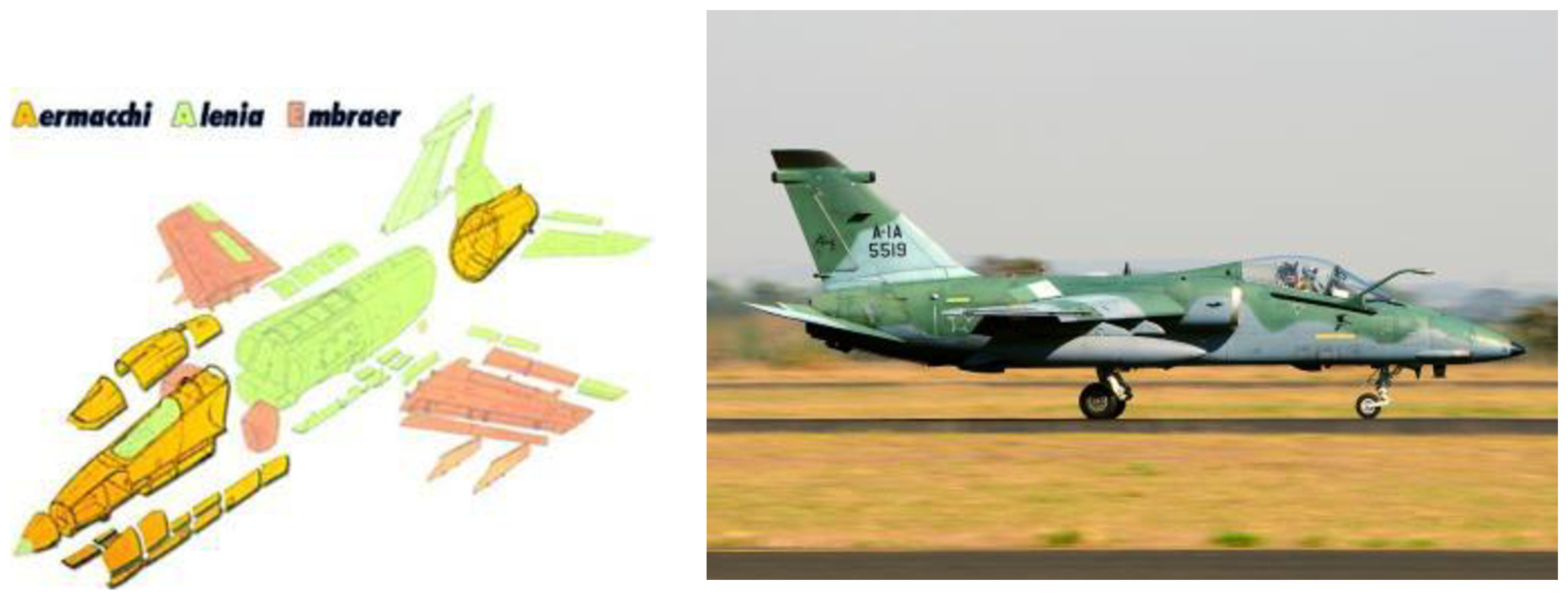 Source:
  Source:
  Source:
  Source:
  Source:
  Source:
 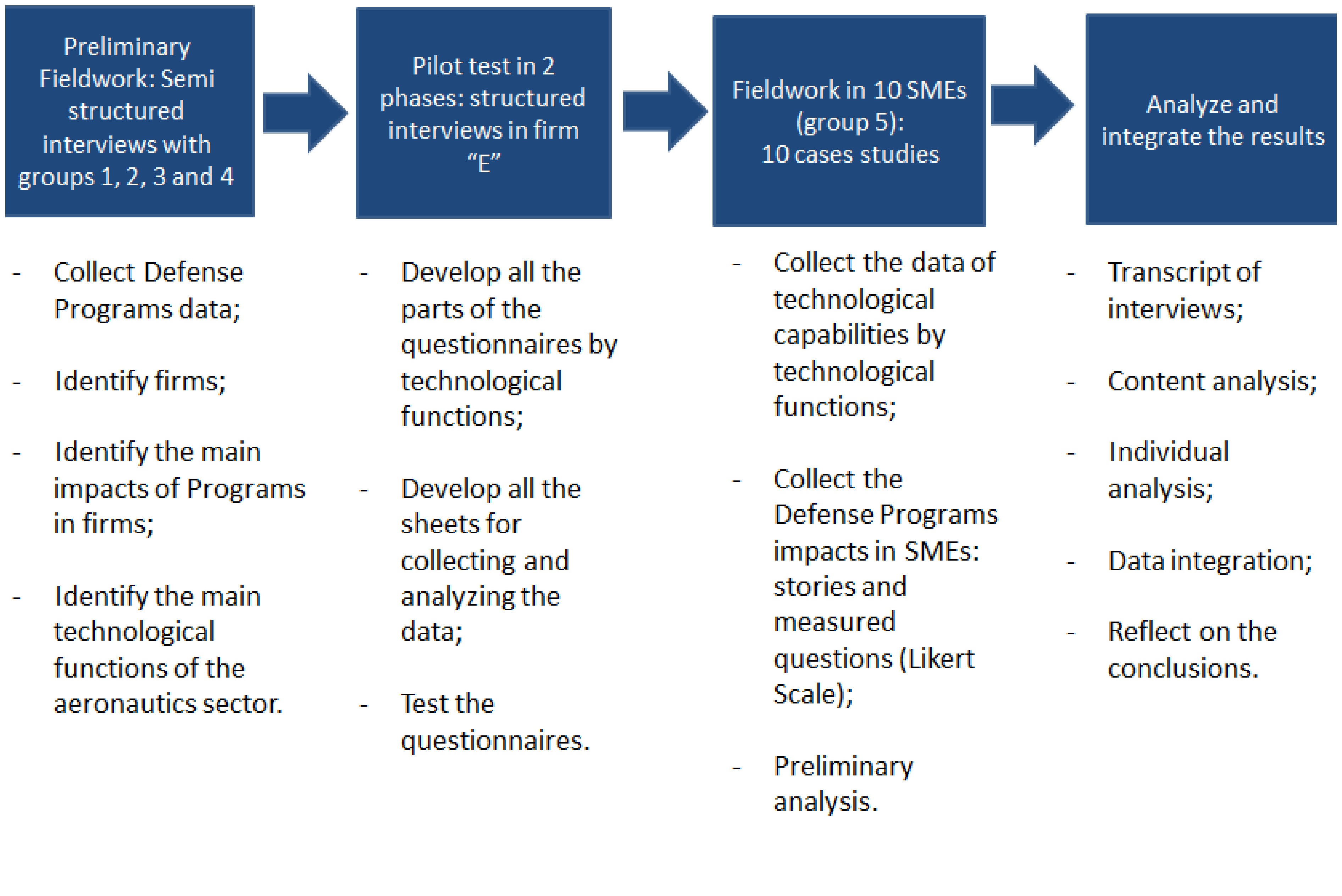 Source:
  Source: Fieldwork research.
 Source: Fieldwork research.
 Source: Fieldwork research.
 Source: Fieldwork research.
 Source: Fieldwork research.
 Source: Fieldwork research.