
 The moderating role of national culture on work-from-home support and remote workers’ job satisfaction: cross-country evidence
Abstract
Purpose This study examines how national cultural dimensions moderate the relationship between perceived work-from-home-support (WFHS) and job satisfaction (JSAT).
Theoretical framework It draws on self-determination and social exchange theories to explain how WFHS helps create optimal conditions for employees’ sense of productivity, which in turn motivates and enhances JSAT.
Design/methodology/approach We surveyed a convenience sample of 241 employees from a multinational company with subsidiaries in four countries and collected cultural dimension scores from “Hofstede’s Globe” to test each hypothesis separately using PROCESS v3.5.3 for SPSS.
Findings The results show that WFHS enhances JSAT in remote work settings, with culture serving as a significant moderator. Feminine and uncertainty-avoidant societies benefit most from WFHS, while individualistic and long-term oriented societies show no significant effects.
Practical & social implications of research The study bridges the gap between cultural dimensions and organizational support in remote work settings, showing that WFHS affects JSAT differently across cultures. Adapting remote work support to cultural expectations can enhance well-being and optimize organizational outcomes. It guides organizations in designing policies that balance autonomy in individualistic settings with structure and recognition in uncertainty-avoidant ones.
Originality/value This research deepens the understanding of remote work by integrating cultural factors and showing how different national cultures affect the influence of WFHS on JSAT.
Keywords:
Work-from-home support; job satisfaction; cultural dimensions; national culture; remote work
1 Introduction
The Covid-19 pandemic intensified work-from-home (WFH) practices, replacing face-to-face interactions with virtual communication and fostering new approaches to work and knowledge sharing (Jackowska & Lauring, 2021). Currently, 81% of companies in Latin America operate under hybrid or fully remote work models, surpassing the United States and Canada (Latinometrics Internet News, 2024). As remote work becomes more widespread, it is essential to understand the dynamics that shape remote work experiences in order to grasp the global transformation in labor relations, which requires new management approaches. This study uses Self-Determination Theory (SDT) and Social Exchange Theory (SET) to explore how work-from-home support (WFHS) influences job satisfaction (JSAT) under varying national cultural dimensions.
SDT emphasizes autonomy, competence, and relatedness as key drivers of motivation and satisfaction (Deci & Ryan, 2000), while SET emphasizes reciprocal relationships when employees perceive organizational support (Emerson, 1976). Following Irawanto et al. (2021), WFHS is defined as a practice in which organizations provide support (e.g. technological support, clear goals, greater autonomy) to minimize the effect of key barriers and enhance remote workers’ sense of productivity and satisfaction. WFHS is important because of the impact of WFH barriers on employees (e.g., Urien & Erro-Garcés, 2024; Himawan et al., 2022).
JSAT is an emotional response shaped by rational, emotional, and behavioral factors that may stem from a sense of accomplishment (Judge et al., 2017). However, the blending of personal and professional life that occurs with remote work can cause stress and work overload, reducing satisfaction (Liu & Lo, 2018).
We examine four Hofstede dimensions linking WFHS and JSAT: 1) Individualism-collectivism: Autonomy enhances satisfaction in individualist contexts, but reduced interaction lowers it in collectivist ones (Adamovic, 2022; Gu et al., 2022; Shahriar et al., 2024; Himawan et al., 2022); 2) Masculinity-femininity: Feminine cultures align better with the quality-of-life benefits of WFH; 3) Uncertainty avoidance: Clear rules sustain satisfaction (Lakshmi & Jindal, 2024; Prasad et al., 2023; Butlewski et al., 2024); 4) Short/long-term orientation: Immediate flexibility contrasts with planning needs (Van der Lippe & Lippényi, 2020; Minkov & Kaasa, 2022). The power distance (Hussain & Sia, 2017; Abbate et al., 2025) and indulgence (Spruk & Kešeljević, 2016) dimensions were excluded due to inconclusive evidence.
Despite alternative cultural models, such as the GLOBE Project (Javidan et al., 2005) and Schwartz’s Theory of Cultural Values (Schwartz, 2006), Hofstede’s (2001) framework offers several advantages for this study. It provides robust cultural scores and clear definitions that are widely applied in cross-cultural workplace studies. Recent literature reaffirms Hofstede’s relevance.
The relationship between WFHS and JSAT in remote work settings may vary according to different cultures (Himawan et al., 2022) and is not yet fully understood (Adamovic, 2022). This is due to the influence of biological and sociocultural factors on human behavior, as well as the potential for cultural resistance to limit the implementation of changes (Choudhury et al., 2021). There are existing studies on WFH and JSAT (e.g., Sandoval-Reyes et al., 2021), and also considering employees’ cultural backgrounds (e.g., Lakshmi & Jindal, 2024; Gu et al., 2022; Himawan et al., 2022; Shahriar et al., 2024).
Most studies examine the direct or moderating effects of cultural variables (e.g., uncertainty avoidance, masculinity versus femininity) on remote work implementation. However, few assess national culture’s moderating role between WFHS (Irawanto et al., 2021) and remote workers’ JSAT. Therefore, we demonstrate how national cultures depend more on WFHS to minimize negative (or intensify positive) effects on JSAT.
Therefore, this study aims to examine how the four Hofstede cultural dimensions (individualism versus collectivism, uncertainty avoidance, masculinity versus femininity, and long versus short-term orientation) moderate the relationship between WFHS and JSAT in a multinational organization in Argentina, Brazil, Colombia, and Peru. Its objectives are: (1) to analyze the relationship between perceptions of WFHS and remote workers’ JSAT, and (2) to analyze the moderating role of national culture on the WFHS-JSAT relationship.
To achieve these objectives, we used survey data from a multinational company located in four countries – Argentina, Brazil, Colombia, and Peru – as well as Hofstede’s Globe scores. The remainder of the paper is organized into the following sections: literature review, methodology, results, and discussion and conclusion.
2 Theoretical framework
2.1 Job satisfaction and work-from-home support
Job satisfaction (JSAT) is a multidimensional construct shaped by rational, affective, and behavioral factors. It is closely linked to productivity, as employees who feel effective report higher satisfaction (Judge et al., 2017). To explain the link between work-from-home-support (WFHS) and JSAT, this study draws on Self-Determination Theory (SDT) and Social Exchange Theory (SET). SDT highlights that autonomy, competence, and relatedness are essential for motivation and well-being (Deci & Ryan, 2000). However, WFH may undermine competence and relatedness by causing isolation. SET emphasizes reciprocity; when employees perceive organizational support, fairness, and communication, their satisfaction and commitment increase. Lack of support leads to disengagement (Emerson, 1976). Together, these theories suggest that WFHS enhances JSAT (Irawanto et al., 2021).
Although SDT and SET were not originally designed for WFH, both are widely applied in organizational research (Deci & Ryan, 2000). SDT explains how fulfilling needs drives motivation, and SET frames satisfaction as a form of reciprocal exchange (Rhoades & Eisenberger, 2002). Trust and organizational investment are decisive in flexible contexts (Hur, 2022; Parent-Lamarche & Marchand, 2023). Together, SDT addresses the psychological mechanisms and SET addresses the social processes through which support is interpreted.
The Covid-19 pandemic intensified concerns about isolation, effectiveness, and well-being. Productivity, which is measured by task completion, efficiency, and quality, is both an outcome and driver of satisfaction (Gajendran & Harrison, 2007). According to Irawanto et al. (2021), strong support in the form of technology, clear goals, and autonomy minimizes barriers and enhances satisfaction in the WFHS model.
However, WFH can blur personal and professional boundaries, causing stress and imbalance. While technology can improve efficiency (Afrianty et al., 2022; Maurer et al., 2022), it can also increase pressure and burnout (Bolisani et al., 2020; Liu & Lo, 2018; Chowhan & Pike, 2023). Empirical evidence confirms that WFHS improves performance and reduces turnover (Fonner & Roloff, 2010; Anderson et al., 2014). Organizational factors, such as infrastructure, training, and leadership, shape satisfaction (Margheritti et al., 2023; Rietveld et al., 2022). Nonetheless, diminished motivation and meaningfulness (Rietveld et al., 2022; Afota et al., 2024) show the central role of WFHS in mitigating negative impacts.
2.2 National culture, remote work, and job satisfaction
Culture is a collective phenomenon shaped by shared values, behaviors, and beliefs that give meaning to social life (Hofstede, 2001). In organizations, it influences how employees perceive their environment, interact with each other, and interpret managerial practices, including WFH. Assimilation occurs gradually through the learning of values, rituals, and symbols (Mangla, 2021). Resistance to WFH is often cultural rather than technological. Thus, cultural dimensions shape how individuals experience WFH (Lakshmi & Jindal, 2024; Gu et al., 2022; Himawan et al., 2022; Shahriar et al., 2024).
Hofstede (2001) argues that cultural programming guides cognition, emotion, and behavior, influencing how autonomy, productivity, and satisfaction are interpreted. Thus, WFH practices acquire different meanings across countries depending on cultural values (Himawan et al., 2022; Adamovic, 2022; Lakshmi & Jindal, 2024; Prasad et al., 2023; Sterjo, 2023; Butlewski et al., 2024). Values embedded in family, education, and institutions create collective programming that shapes leadership and coordination (Hofstede et al., 2010), while fairness, autonomy, control, and recognition vary across cultures (Taras et al., 2011).
Of Hofstede’s six dimensions, four are most relevant to WFH and JSAT: individualism versus collectivism, masculinity versus femininity, uncertainty avoidance, and long- versus short-term orientation (Himawan et al., 2022; Adamovic, 2022; Lakshmi & Jindal, 2024). The remaining two dimensions, power distance and indulgence versus restraint, have inconsistent or indirect effects, making them less suitable for our hypotheses.
Although studies confirm that WFH can affect satisfaction differently in various contexts (e.g., Sandoval-Reyes et al., 2021, found that WFH increased stress and reduced satisfaction in Latin America despite productivity gains), we focus on optimal WFHS (organizational support, such as technology, clear goals, and autonomy) that minimizes negative effects of WFH (Irawanto et al., 2021).
2.2.1 Individualism versus collectivism
The individualism–collectivism dimension strongly influences organizational behavior (Hofstede, 2001). Individualistic cultures, like those in the U.S. and Australia, value autonomy and self-achievement. In contrast, collectivist cultures, like those in Brazil and Japan, emphasize loyalty and group norms (Taras et al., 2011). These cultural differences shape how employees interpret autonomy and isolation in WFH situations.
In individualist societies, WFH aligns with a preference for freedom and enhances satisfaction. Employees with higher individualism scores perceive WFH as effective (Adamovic, 2022), and studies confirm its positive impact on satisfaction (Gu et al., 2022; Shahriar et al., 2024). In collectivist contexts, a lack of daily interaction reduces engagement and satisfaction (Himawan et al., 2022). Lakshmi and Jindal (2024) highlight that collectivists need strong organizational practices to sustain a sense of belonging. Communication also differs: individualists prefer direct exchanges, while collectivists value cohesion and non-verbal cues, which influence connectedness (Dziuba et al., 2021).
According to SDT (Deci & Ryan, 2000), autonomy, competence, and relatedness are basic needs. WFH promotes autonomy and competence, but it challenges relatedness. In individualist cultures, autonomy increases satisfaction; however, collectivists require organizational support to maintain relatedness (Jackowska & Lauring, 2021). Thus, employees who are highly individualistic view WFH positively (Adamovic, 2022; Gu et al., 2022; Shahriar et al., 2024), whereas collectivists depend more on WFHS (Himawan et al., 2022; Lakshmi & Jindal, 2024). Consistent with SET (Cook et al., 2013), perceived support fosters reciprocity. Collectivists rely on mutual obligation and may depend more on better organizational support, or higher perceived WFHS when working from home. In contrast, individualists manage their needs independently. Hence:
-
Hypothesis 1 (H1): The degree of individualism versus collectivism in a society moderates the relationship between WFHS and remote workers’ satisfaction. Collectivist cultures depend on optimal remote work support to achieve higher satisfaction.
2.2.2 Masculinity versus femininity
In masculinity-oriented societies, competition, achievement, and material success are valued, and recognition is often tied to promotions and office presence. In such contexts, WFH may reduce admiration and prestige, thereby undermining JSAT (Himawan et al., 2022). Although leadership in performance-driven cultures can support teleworker satisfaction (Kwon & Jeon, 2020), values of success and personal gain dominate. Masculinity emphasizes competitiveness, while femininity values cooperation (Eagly & Wood, 2012).
On the other hand, feminine societies emphasize cooperation, quality of life, and work-life balance, which aligns with the flexibility and autonomy of WFH (Kerksieck et al., 2022). The psychological needs for competence and relatedness (Deci & Ryan, 2000) are fulfilled through supportive relationships. Women may feel empowered by the autonomy and competence that WFH offers, which fosters satisfaction. However, masculine expectations can reduce satisfaction through unequal power dynamics, as shown among Filipino nurses (Brunton et al., 2020). Feminine contexts emphasizing equity and collaboration (Van der Lippe & Lippényi, 2020) make remote work a more natural fit.
Gender dynamics also shape WFH experiences. Women are more sensitive to peer presence and rely on supportive reciprocity (Van der Lippe & Lippényi, 2020; Emerson, 1976). While men prioritize career goals, women are more vulnerable to blurred boundaries with family roles (Van der Lippe et al., 2006). According to SDT (Deci & Ryan, 2000), WFH reinforces autonomy and competence, thereby enhancing satisfaction. SET (Emerson, 1976; Cook et al., 2013), on the other hand, posits that perceived organizational support strengthens reciprocal commitment and cooperation. Thus, strong WFHS is essential in feminine cultures, where collaboration and relational balance drive satisfaction.
-
Hypothesis 2 (H2): The degree of masculinity versus femininity in a society moderates the relationship between WFHS and remote workers’ satisfaction. More feminine cultures depend on optimal remote work support to achieve higher satisfaction.
2.2.3 Uncertainty avoidance
Uncertainty avoidance is how societies manage ambiguity and risk by preferring stability and rules (Hofstede, 2001). High uncertainty-avoidance cultures rely on rigid structures, while low ones tolerate change.
WFH introduces blurred boundaries, flexible schedules, and less supervision. Workers with high uncertainty avoidance often experience stress and lower satisfaction (Himawan et al., 2022). Studies confirm weaker satisfaction outcomes in such cultures (Lakshmi & Jindal, 2024; Prasad et al., 2023; Butlewski et al., 2024), whereas low uncertainty-avoidance societies adapt more easily and report greater well-being. For instance, in conservative Asian contexts, effectiveness seems to be linked to physical presence and face-to-face communication (Raghuram & Fang, 2014).
Some argue that WFH may foster competence in those who are averse to uncertainty (Deci & Ryan, 2000). However, without strong WFHS, its flexibility is seen as destabilizing, especially in societies driven by rigid codes and laws (Hofstede, 2011; Himawan et al., 2022). Conversely, uncertainty-averse individuals benefit from clear rules and goals, as these minimize risk perception (Himawan et al., 2022). Consistent with SET (Cook et al., 2013), organizational support fosters fairness, trust, and reliability, reducing stress and enhancing satisfaction. This supports the third hypothesis:
-
Hypothesis 3 (H3): The degree of uncertainty avoidance existing in a society moderates the relationship between WFHS and remote workers’ satisfaction. In cultures with greater uncertainty avoidance, optimal remote work support is necessary to achieve higher satisfaction.
2.2.4 Short-term versus long-term orientation
This dimension distinguishes between societies that are short-term oriented, valuing traditions and quick results, and those that are long-term oriented, emphasizing perseverance and future rewards (Schwartz, 1992; Minkov & Kaasa, 2022).
In short-term oriented cultures, employees value immediate WFH benefits, such as flexibility and productivity gains. However, satisfaction depends on organizational support and performance perceptions. Those with an immediate orientation view concessions as weakness (Think Insights Online, 2024). In contrast, long-term oriented cultures stress structured careers and institutional continuity, rending short-term gains less decisive.
Van der Lippe and Lippényi (2020) show that cultures that value long working hours experience greater conflict under WFH. In contrast, immediate orientations align more naturally with flexible arrangements. In these cultures, work rewards are expected to be tangible and immediate, such as promotions, bonuses, or the instant accomplishment of completed tasks.
Consistent with SET (Cook et al., 2013), strong WFHS is essential to sustaining satisfaction since organizational support fosters reciprocal commitment and provides the structure needed for employees with an immediate orientation to secure quick and visible outcomes. Therefore, we propose the following hypothesis:
-
Hypothesis 4 (H4): The degree of immediacy versus long-term vision in a society moderates the relationship between WFHS and remote workers’ satisfaction. Cultures that value immediacy depend on optimal remote work support to achieve higher satisfaction.
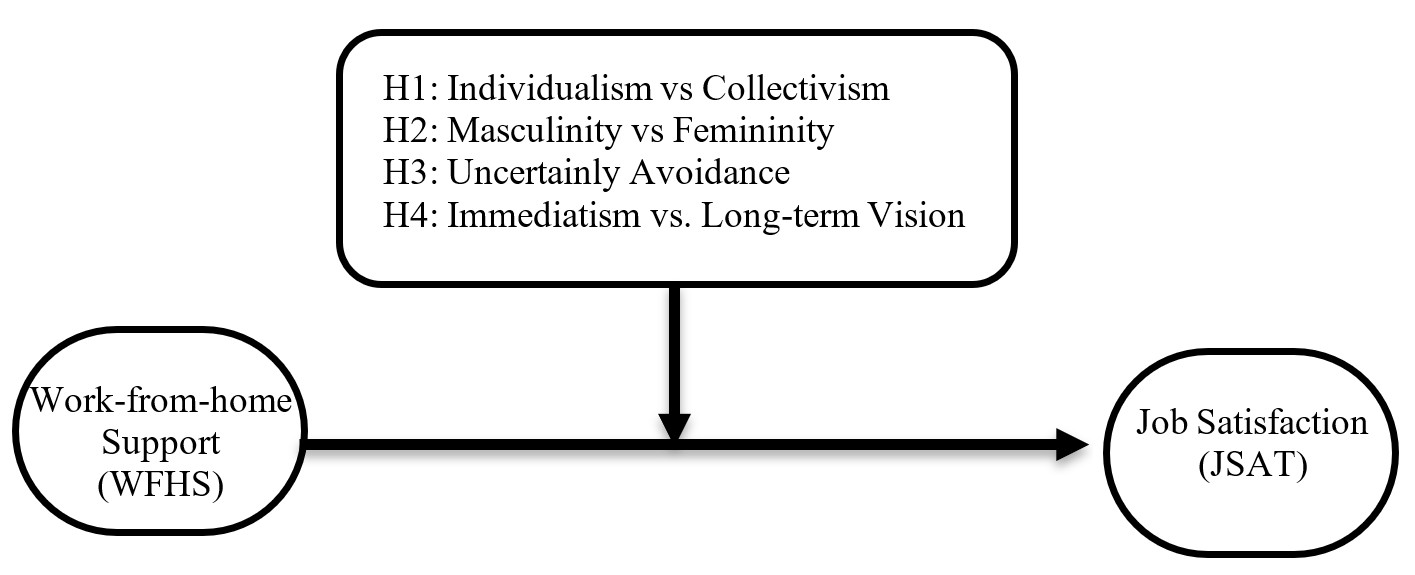
Figure 1 illustrates the positive effect of WFHS on JSAT, which is moderated by the cultural dimensions outlined in the hypotheses.

3 Methodology
3.1 Study context
This study examined WFHS and JSAT in a multinational corporation post-COVID-19. A questionnaire containing validated WFHS and JSAT scales was emailed to employees of subsidiaries in four Latin American countries. Hofstede’s national scores were used. Since the data derive from a single organization, the findings reflect its culture, policies, leadership, and technology. However, since data collection occurred after the shift to remote work, employees were still adapting and facing uncertainty, technical issues, and domestic interruptions, which may have distorted their perceptions.
3.2 Sample and dataset
We surveyed employees from Alpha Corporation, a global leader in medical and specialty gases. It was founded 120 years ago and is headquartered in Maryland. It has 9,000 employees and operates worldwide. The study analyzed WFHS and JSAT after COVID-19. The researchers designed a short, authorized questionnaire to increase response rates while ensuring anonymity and excluding identifiable data. The subsidiaries in Argentina, Brazil, Colombia, and Peru comprised 1,233 employees, 281 of whom worked fully remotely. A validated sample of 241 responses (19.54%) (Supplementary Data 1 –Database) was obtained through a structured survey (Supplementary Material, Supplementary Data 6 – Appendix A – Questionnaire) sent via email between July 7 and August 5, 2022.
3.3 Ethics
Ethics approval for this study was obtained from the MPA (Professional Master’s in Administration) Ethics Committee. All survey and research protocols were conducted in accordance with their guidelines and regulations. Participants provided informed consent prior to participating in the study.
3.4 Instrument
The questionnaire was based on Irawanto et al. (2021) and included sections on the independent variable, WFHS (optimal “work-from-home-support” scenario), which was adapted from Neufeld and Fang (2005). The questionnaire assessed sense of productivity and organizational support with 10 items and the dependent variable, JSAT, which was adapted from Schriesheim and Tsui (1980), with five items (Supplementary Data 6 – Appendix A – Questionnaire). Both constructs were previously validated and used a 5-point Likert scale ranging from 1(Strongly Disagree) to 5 (Totally Agree). Sociodemographic data included gender, age, marital status, length of service, and country to profile respondents and control for confounding factors. The moderating variable, national culture, was defined as the collective mindset distinguishing one group from another (Hofstede, 2001). Aggregate-level constructs were measured using Hofstede’s country scores (Taras et al., 2010), which were obtained from Hofstede’s Globe (2024), using only validated scores, ranging from 1 to 100 (Table 1).
Table 1 has one limitation: the convenience sample only covers four countries. Two dimensions have low-to-medium scores (individualism and long-term orientation), one is in the mid-range (masculinity), and one has high scores with little variation (uncertainty avoidance). Therefore, the results must be analyzed with caution. However, even small or moderate differences can affect behavior. Hofstede’s scores (0–100) should be interpreted in relative comparison between countries (Hofstede, 2001; Hofstede, 2011). A 10–20 point gap highlights relative cultural distinctions that may influence attitudes and behavior. Such differences indicate that one society leans more strongly toward a cultural pole (e.g., individualism), which has tangible consequences (Taras et al., 2011).
These gaps serve as signals that countries differ sufficiently on a given dimension to warrant consideration since they often correlate with observable societal patterns. The quantitative representation of these differences provides strong evidence that numerical distinctions are associated with statistically significant effects (Kirkman et al., 2006). Thus, a management style that is effective in one country may be ineffective in another, and a campaign may be received differently. These scores mark the cultural distance that shapes global strategies (Hofstede et al., 2010).
3.5 Data analysis
First, we tested the scales for convergent and discriminant validity using confirmatory factor analysis (CFA) with AMOS for SPSS v.20. Then, to test the hypotheses, we used PROCESS v3.5.3 for SPSS v.20, which automatically generates the necessary output, estimates the model, and conducts moderation tests (Hayes, 2018). We tested Model 1 (simple moderation analysis) with 10,000 bootstrap samples, analyzing each hypothesis individually. Additionally, as the results may be related to the country itself (because there were few) rather than the dimension score, we controlled for the influence of the country on JSAT using origin categorical variables (e.g. Argentina; yes = 1 vs. 0 = others) as fixed effects.
3.6 Results
3.6.1 Preliminary analyses
The results of the first CFA indicated that the items WFHS8 and WFHS9 (work-from-home-support) and JSAT4 and JSAT5 (job satisfaction) had factor loadings lower than 0.5, so they were removed (Supplementary Data 2 – AMOS CFA1).Satisfactory results were obtained from the remodeling (chi-square /df = 2.061. RMSEA = 0.066, SRMR = 0.0426, CFI = 0.974, GFI = 0.938, AGFI = 0.894) (Hair et al., 2009) (Supplementary Data 3 – AMOS CFA2).
Following Hair et al. (2009), all AVEs (average variance extracted) were greater than 0.5, and CR (composite reliability) was greater than 0.70. All were within the standards considered reliable (Table 2). An additional analysis of discriminant validity indicated a moderate correlation (r = 0.352) between constructs and that the quadratic correlation (r2 = 0.124) of the factors was lower than the AVEs (AVE WFHS = 0.598; AVE JSAT = 0.564).
Furthermore, the correlation between the dimensions was less than 0.90, which rejects multicollinearity (Hair et al., 2009).
Since our data were cross-sectional, we assessed common method bias (CMB) using procedural and statistical means (Podsakoff et al., 2003) before hypothesis testing. Following Hair et al. (2009), we provided respondents with an explanatory cover sheet explaining the benefits and how the information would be used. We also physically separated the dependent and independent variables (Podsakoff et al., 2003).
Two different statistical approaches were used to test for CMB. First, Harman’s single‐factor EFA revealed 42.02% cumulative variance (below the 50% threshold according to Fuller et al., 2016). Next, we added a latent common method variance (CMV) factor to the measurement model. This accounted for 3.24% of the variance, and the average difference in factor loadings was 0.015 (minimum 0.005, maximum 0.033). This indicates negligible bias (Podsakoff et al., 2003).
Respondents reported satisfaction with remote work (M = 4.35, SD = 0.63) and a positive perception of WFHS (M = 4.43, SD = 0.62). Because Shapiro–Wilk tests indicated non-normality (p < 0.001), we used bootstrapping via PROCESS to make inferences (e.g., confidence intervals and p-values) without assuming normality (Hayes, 2018), resulting in a more powerful test than traditional theoretical approaches (p. 98).
Because the independent and dependent variables were at the individual level and the cultural scores were at the country level, we employed multilevel modeling (Nezlek, 2010), similar to the approach taken by Gu et al. (2021, 2022), Lamot and Kirbiš (2024), and Masood et al. (2019). According to the authors, this technique is particularly suitable for analyzing cross-national data in which individual respondents are nested within countries.
For all country-level measures, individuals working for the company in the same country were assigned the same value for the purposes of the analysis (Donaldson et al., 2017). Following this approach, we tested a series of concurrent models. The first level incorporated only the direct WFHS > JSAT relationship (Model 1), while the others incorporated origin country (Model 2), sociodemographic variables (Model 3), and cultural score moderation (Model 4). Unlike other studies, for the last model, we opted to test each hypothesis separately due to limitations in sample size and score variation.
3.7 Hypothesis tests
We used PROCESS v3.5.3 (Hayes, 2018), Model 1, with bootstrapping of 10,000 for hypothesis testing (Supplementary Data 4 – SPSS output). WFHS was the independent variable, JSAT was the dependent variable, and the cultural dimensions served as moderators. Since none of the sociodemographic variables had a significant or marginal effect (see Supplementary Data 7 – Appendix B – Preliminary model tests), we chose to continue testing the moderation hypotheses without them. This avoids adding irrelevant variables and generating inaccurate results (Hair et al., 2009). The moderator was used according to each hypothesis. To avoid potential direct country bias, we used country origin (Argentina, Brazil, and Colombia) to control for the effect of fixed factors.
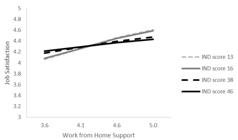
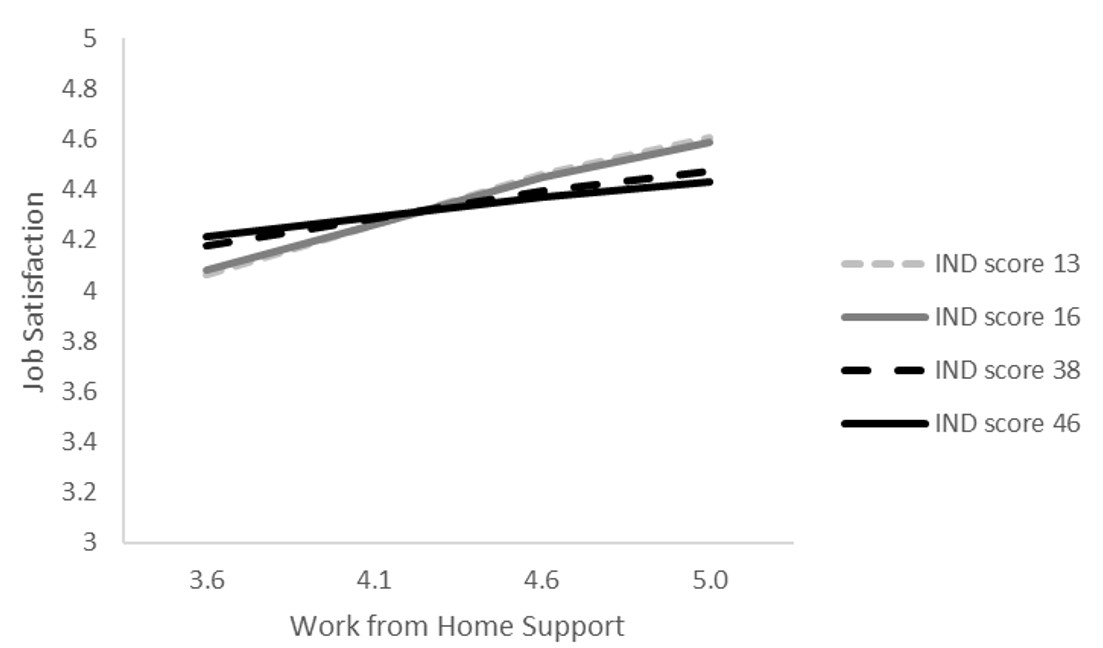
To test Hypothesis 1 (H1), the “individualism” score was used as a moderator. Hypothesis 1 test: The results indicated that the model including individualism scores and the interaction with WFHS had a higher R2 than the base model (Model 2 – Supplementary Data 7 – Appendix B – Preliminary model tests), which better explained the JSAT variance (F(6,234) = 5.5522, R2 = .1246) (Supplementary Data 7 – Appendix B – Preliminary model tests: Table 3 – full results). The results demonstrated that a higher WFHS significantly increased JSAT (coefficient = .4815, p = .0009) (bootstrapp 95% CI: .2285 to .8153). However, although previous studies have directly associated higher individualism with positive remote work JSAT (Adamovic, 2022; Himawan et al., 2022), the individualism score alone did not significantly affect JSAT (coefficient = -.0721, p = .7247) (bootstrapp 95% CI: -.1447 to .0289), and moderation was only close to marginally significant (coefficient = -.0068, p = .1480) (bootstrapp 95% CI: -.0184 to .0013).
The conditional effects results indicated that countries with lower individualism scores had higher WFHS effects on JSAT (Supplementary Data 7 – Appendix B – Preliminary model tests: Table 3 – conditional effects). Accordingly, H1 indicates that countries with collectivist cultures (lower individualism scores) depend more on WFHS policies. Figure 2 demonstrates that individuals from Colombia (score 13: coefficient = .3933, p = .0001) and Peru (score 16: coefficient = .3729, p = .0001) with lower perceived WFHS had significantly lower JSAT scores. Conversely, individuals from Brazil (score 38: coefficient = .2236, p = .0049) and Argentina (score 46: coefficient = .1693, p = .1109) experienced minimal effects of WFHS on JSAT. Although the results are in the expected direction, H1 was rejected because interaction was not significant. Nevertheless, a variation in average scores from 13 (low) to 46 (moderate) was enough to reduce the effect of WFHS on JSAT.
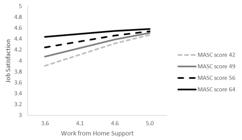
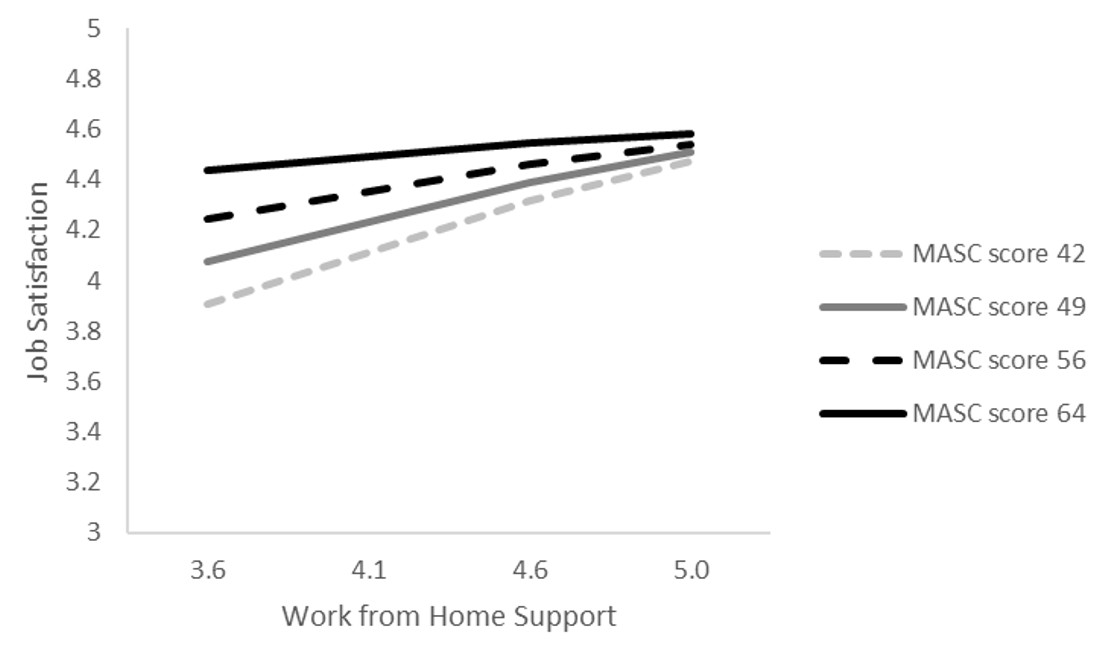
To test Hypothesis 2 (H2), the “masculinity” score was used as a moderator. The results indicated that the model including masculinity scores and the interaction with WFHS had a higher R2 than the base model (Model 2 – Supplementary Data 7 – Appendix B – Preliminary model tests), which better explained the variance of JSAT (F(6,234) = 5.7485, R2 = .1285) (Supplementary Data 7 – Appendix B – Preliminary model tests: Table 4 – full results). The results showed that a higher WFHS score increased JSAT (coefficient = .9984, p = .0137) (bootstrapp 95% CI: .2767 to 1.9982). The masculinity score had a marginally significant effect on JSAT (coefficient = .0748, p = .0859) (bootstrapp 95% CI: .0151 to .1569), indicating that higher masculinity scores were associated with increased JSAT.
Although moderation was marginally significant (coefficient = -.0140, p = .0774) (bootstrapp 95% CI: -.0329 to 0.0001), the results of the conditional effects indicated that countries with lower masculinity scores had significantly higher WFHS effects on JSAT (Supplementary Data 7 – Appendix B – Preliminary model tests: Table 4 – conditional effects). Consistent with H2, Figure 3 indicates that countries with feminine cultures (lower masculinity scores) depend more on WFHS policies. Unlike Colombia (score 64: coefficient = .1054, p = .3921), employees in Peru (score 42: coefficient = .4213, p = .0001), Brazil (score 49: coefficient = .3147, p = .0001), and Argentina (score 56: coefficient = .2170, p = .0044) with lower WFHS scores had significantly lower JSAT scores. Thus, cultures with higher masculinity scores directly reflect greater JSAT, while more feminine cultures depend more on optimal WFHS conditions for satisfaction.
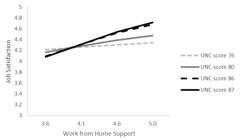
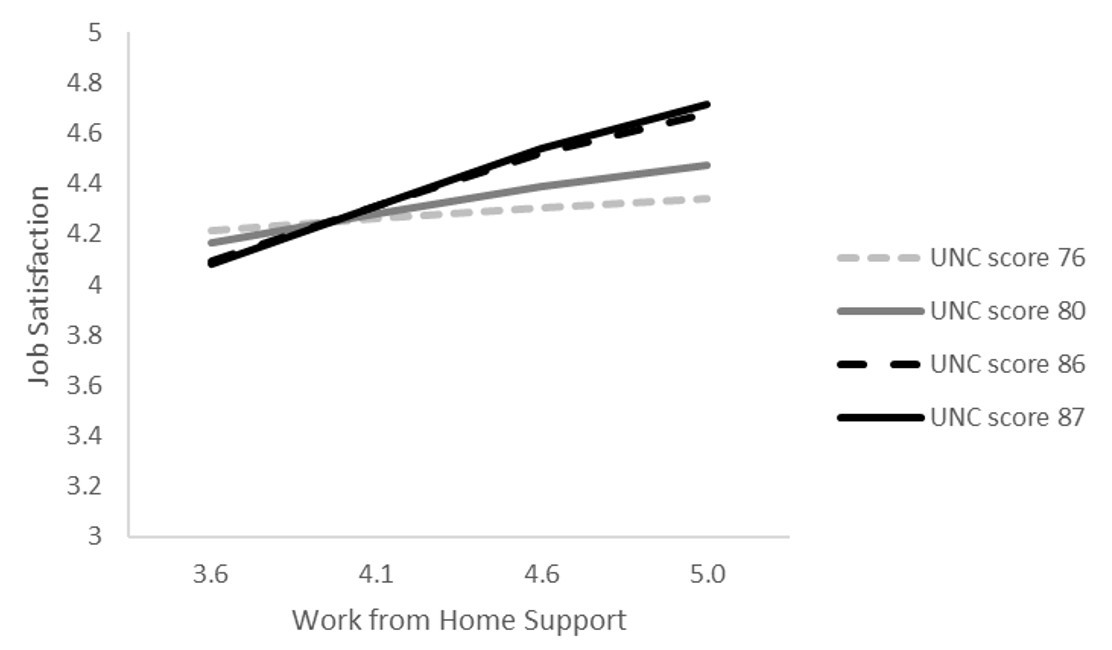
To test Hypothesis 3 (H3), the “uncertainty avoidance” score was used as a moderator. The results indicated that the model including uncertainty scores and the interaction with WFHS had a higher R2 than the base model (Model 2 – Supplementary Data 7 – Appendix B – Preliminary model tests), which better explained the variance of JSAT (F(6,234) = 6.2275, R2 = .377) (Supplementary Data 7 – Appendix B – Preliminary model tests: Table 5 – full results). The results showed that higher WFHS scores increased JSAT (coefficient = 2.2183, p = .0366) (bootstrapp 95% CI: .2993 to 4.5158), while higher uncertainty avoidance scores marginally increased JSAT (coefficient = 0.1747, p = .0855) (bootstrapp 95% CI: .0774 to .2897). Figure 4 indicates that this could be the result of an optimal WHFS perception, in which individuals perceive lower risks, which aligns with their intrinsic needs.
-
Consistent with H3, significant moderation effects were observed (coefficient = -.0306, p = .0179) (bootstrapp 95% CI: -.0582 to -.0073), indicating that groups with higher uncertainty avoidance scores had a stronger WFHS-JSAT relationship (Supplementary Data 7 – Appendix B – Preliminary model tests: Table 5 – conditional effects). Thus, cultures with higher uncertainty avoidance, such as Peru (score 87: coefficient = .4410, p = .0001) and Argentina (score 86: coefficient = .4104, p = .0001), may depend more on optimal WFHS conditions for job satisfaction than cultures like Brazil (score 76: coefficient = .1048, p = .2976) (Figure 4).
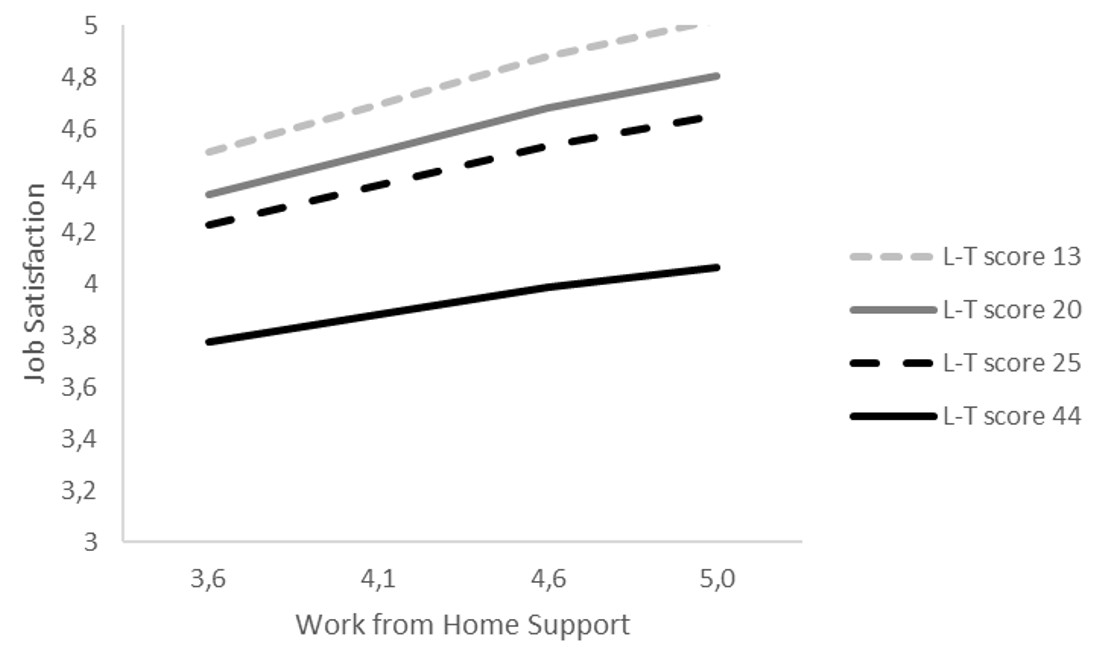
To test Hypothesis 4 (H4), the “long-term orientation” (LTO) score was used as a moderator. The results (F(6,234) = 5.3348, R2 = .1203) (Supplementary Data 7 – Appendix B – Preliminary model tests: Table 6 – full results) indicated an increase in R2 compared to the base model (Model 2 – Supplementary Data 7 – Appendix B – Preliminary model tests). Higher WFHS scores increased JSAT (coefficient = .4408, p = 0.0074) (bootstrapp 95% CI: .1204 to .7679). Consistent with prior studies showing no significant relationship between LTO and remote work (Lakshmi & Jindal, 2024; Sterjo, 2023), no significant effects were found for LTO (coefficient = -.0053, p = .9368) (bootstrapp 95% CI: .0568 to .0539). Although conditional effects (Supplementary Data 7 – Appendix B – Preliminary model tests: Table 6 – conditional effects) suggest that groups focused on short-term outcomes (immediatism, lower LTO score, e.g. Colombia, with a score of 13, coefficient = .3723, p = .0003) experience greater satisfaction with optimal WFHS conditions, H4 was rejected because there were no significant interaction effects (coefficient = -0.0053, p = 0.3296) (bootstrapp 95% CI: -.0172 to .0058) (Figure 5).

4 Discussion
It is important to note at the beginning of the discussion that other studies have explored how cultural dimensions influence JSAT under WFH. The objective here was to verify how cultural dimensions affect perceived WFHS and how they jointly shape JSAT. For example, while studies such as Gu et al. (2021) show that individualism positively moderates satisfaction, our hypotheses sought to test whether stronger organizational support could increase satisfaction in collectivist cultures (Supplementary Data 8 – Appendix C – Supplementary tables from hypothesis tests).
-
Hypothesis 1 was rejected. Although the conditional effects were in line with the assumptions, contrary to expectations, the moderation effect of individualism versus collectivism on the WFHS–JSAT relationship was not significant. Nevertheless, collectivist countries such as Colombia and Peru, where social ties and organizational support are valued (Rhoades & Eisenberger, 2002), reported higher satisfaction with WFHS, prioritizing security over autonomy (Hofstede, 2001). This aligns with SET (Emerson, 1976), as collectivist cultures value support and reciprocity, which can enhance satisfaction. Thus, firms in these contexts may need to adapt their policies, leadership, and recognition systems to align with cultural expectations, thereby encouraging collaboration and knowledge sharing (Parent-Lamarche & Marchand, 2023; Bilderback & Kilpatrick, 2024).
Past studies have directly linked individualism to positive WFH satisfaction (Gu et al., 2021; 2022; Adamovic, 2022; Himawan et al., 2022; Lakshmi & Jindal, 2024; Al, 2023), due to greater freedom (Michinov et al., 2022), autonomy, and work-life balance (Hur, 2022; Parent-Lamarche & Marchand, 2023), though sometimes this is paired with isolation (Taras et al., 2011). SDT (Deci & Ryan, 2000) supports this by identifying autonomy, competence, and relatedness as drivers of satisfaction. However, our study did not replicate these findings, likely because WFHS scores were already moderate to high (3.6–5.0), and our sample included mostly collectivist cultures, not including highly individualistic ones, such as the U.S. (91) and the U.K. (89). In such contexts, high WFHS may even be perceived as intrusive and undermine autonomy.
-
Hypothesis 2 was supported. The results confirmed that masculinity versus femininity moderates the WFHS–JSAT relationship. Feminine cultures, which value quality of life and balance, depended more on WFHS policies for satisfaction. This aligns with the benefits of WFH (Kerksieck et al., 2022), but due to blurred family–work boundaries (Van der Lippe & Lippényi, 2020), it requires stronger organizational support.
However, this diverges from studies suggesting that masculine cultures perceive lower WFH satisfaction due to lost prestige and competition opportunities (Himawan et al., 2022). Other research has reported mixed results (Lakshmi & Jindal, 2024; Sterjo, 2023; Gu et al., 2021; Wulandari, 2025; Hur, 2022). Our data even showed a positive masculinity effect, which is inconsistent with the assumption of reduced recognition for competence (Deci & Ryan, 2000). In contexts with higher masculinity (e.g., Colombia, with a score of 64), WFHS had no significant impact, possibly because men receive recognition for being providers at home while women face stronger pressures regarding their family roles (Van der Lippe & Lippényi, 2020). Overall, the evidence suggests that feminine contexts depend more on WFHS policies for satisfaction.
-
Hypothesis 3 was supported. The results confirmed that cultures with higher uncertainty avoidance rely more on WFHS to achieve JSAT. These individuals prefer structured conditions, stability, and predictability (Himawan et al., 2022), so organizational support is essential for them. Higher WFHS scores were associated with greater satisfaction, particularly in cultures with high uncertainty avoidance, which is consistent with SET’s reciprocity logic (Cook et al., 2013). However, this finding contrasts with studies showing that high uncertainty avoidance leads to stress and lower satisfaction under WFH (Lakshmi & Jindal, 2024; Prasad et al., 2023; Butlewski et al., 2024; Gu et al., 2021). Hofstede (2001) noted that Argentina, Brazil, Colombia, and Peru rely on regulations for security. Structured WFH policies enhance competence and satisfaction by providing predictability (Deci & Ryan, 2000; Minkov & Kaasa, 2022).
Our marginally significant positive result may reflect WFHS scores that align with recommendations to tailor practices to cultural profiles (Hur, 2022; Al, 2023). Moreover, involvement and clear goals can mitigate negative effects (Oleksa-Marewska & Tokar, 2023), whereas poorly managed uncertainty avoidance can hinder collaboration (Sterjo, 2023). Finally, WFHS was most effective at very high uncertainty avoidance levels (>80), while moderate scores (e.g., Brazil: 76) showed no effect. This is consistent with research on hierarchical barriers (Butlewski et al., 2024; Parent-Lamarche & Marchand, 2023; Prasad et al., 2023).
-
Hypothesis 4 was rejected. The results did not support the idea that long-term versus short-term orientation moderates the WFHS–JSAT relationship. Although theory suggests that cultures with an immediate orientation value quick results and may adapt more positively to WFH (Schwartz, 1992; Minkov & Kaasa, 2022; Van der Lippe & Lippényi, 2020), no significant effects were found.
This finding aligns with other studies reporting inconclusive or non-significant links between long-term orientation and remote work satisfaction (Lakshmi & Jindal, 2024; Sterjo, 2023; Parent-Lamarche & Marchand, 2023; Hur, 2022; Lukasik-Stachowiak, 2022). In our sample, Argentina (20), Brazil (44), Colombia (13), and Peru (25) scored low in long-term orientation, reflecting a general preference for immediacy. Satisfaction was mainly driven by present organizational support, with little variation in its influence. Thus, H4 was rejected.
According to SDT (Deci & Ryan, 2000), WFHS enhances satisfaction by reinforcing autonomy, competence, and relatedness. In collectivist and uncertainty-avoidant contexts, WFHS reduces anxiety by providing structure (Minkov & Kaasa, 2022; Himawan et al., 2022). SET (Rhoades & Eisenberger, 2002; Parent-Lamarche & Marchand, 2023) further explains that WFHS signals organizational care and fairness, which encourages reciprocal commitment and higher satisfaction.
5 Conclusion and implications
5.1 Theoretical implications
The WFH model, initially implemented as an emergency response, has become a permanent organizational design feature. To assess its effects on JSAT, this study combines Hofstede’s cultural dimensions with SDT and SET.
Hofstede’s framework clarifies why employees interpret WFHS differently. Individualism–collectivism shapes the balance between autonomy and belonging. Masculinity–femininity relates to quality of life and collaboration. Uncertainty avoidance relates to the preference for structure and rules. Short- versus long-term orientation relates to immediacy versus planning. SDT explains how WFHS raises satisfaction by supporting autonomy (flexible arrangements and self-authority), competence (technology, clear goals, and feedback), and relatedness (communication and team routines). SET explains why employees reciprocate. WFHS signals fairness, care, and organizational investment, thereby strengthening commitment and satisfaction.
This multilevel approach moves beyond isolated views of remote work, showing that the effectiveness of WFHS is contingent on cultural orientations that shape need fulfillment and reciprocity. Empirically, H2 and H3 were supported, while H1 and H4 were rejected. In collectivist and uncertainty-avoidant contexts, WFHS was relied on more, whereas in more individualist settings, autonomy did not amplify satisfaction. This suggests that remote work is not inherently individualistic and that companies can reduce isolation by fostering collaboration.
5.2 Practical implications
Organizations should tailor WFHS to their culture. In individualistic contexts, trust employees with autonomy and flexible schedules to raise satisfaction. In uncertainty-avoidant contexts, reduce anxiety by providing structured guidance, clear goals, and regular feedback. In feminine contexts, WFHS is essential; policies that prevent blurred boundaries, such as clear goals, meetings aligned with home routines, psychological support, and routine-adaptation training, enhance balance (Irawanto et al., 2021). In masculine contexts, higher WFH satisfaction likely reflects gender norms. Women report more satisfaction when they feel productive (Van der Lippe & Lippényi, 2020). Long- versus short-term orientation showed no effect; immediate support and an optimal WFH environment mattered more.
5.3 Limitations and future research
One key limitation was the use of country-level cultural scores, which assume stability in values and may reduce variability. Since culture changes over time, future studies could use self-reported measures (Taras et al., 2010) or the scale developed by Yoo et al. (2011) to increase predictive power. Another limitation was the small number of countries and, in some cases, the low variability in dimension scores. Comparisons between more distinct contexts (e.g., Asian interdependence versus American independence, Escalas & Bettman, 2005) or samples with higher score variability (Gu et al., 2021, 2022; Lamot & Kirbiš, 2024; Masood et al., 2019) could provide richer insights.
The results may also reflect the above-average WFHS scores of Alpha, the only company studied. Broader datasets across countries and organizations would improve generalizability. Following Koprowski et al. (2021), future research could adopt multi-country, macro-level analyses using multilevel modeling to address nested data structures (Kadic-Maglajlic et al., 2017). Longitudinal studies could track changes in satisfaction over time or assess leadership styles in diverse remote teams. Finally, analyzing which specific WFHS items and management practices most affect JSAT across cultural contexts remains a critical area of research.
5.4 Conclusion
In sum, this study shows that cultural dimensions shape how WFHS affects JSAT. While individualism and long-term orientation did not significantly moderate the link between WFHS and JSAT, feminine and uncertainty-avoidant societies benefited most from stronger support. Organizations should tailor their policies accordingly: offering autonomy and flexibility in individualistic contexts and providing structure and clear support in collectivist, feminine, and uncertainty-avoidant cultures.
Theoretically, the findings connect Hofstede’s cultural framework with SDT and SET, showing that JSAT is culturally contingent. Despite limitations, the results align with prior studies. Future research should expand samples, use individual-level values, and adopt longitudinal designs. WFHS is not one-size-fits-all; its impact depends on culture, needs, and perceptions.
SUPPLEMENTARY MATERIAL
Supplementary material accompanies this paper.
Supplementary Data 1 – Database
Supplementary Data 2 – AMOS CFA1
Supplementary Data 3 – AMOS CFA2
Supplementary Data 4 – SPSS output
Supplementary Data 5 – SPSS scripts
Supplementary Data 6 – Appendix A – Questionnaire
Supplementary Data 7 – Appendix B – Preliminary model tests
Supplementary Data 8 – Appendix C – Supplementary tables from hypothesis tests
Supplementary data for this article can be found online at https://doi.org/10.7910/DVN/1TQJOV
-
Evaluation process:
Double Blind Review
-
This article is open data
-
How to cite:
Ploszaj, H. H. B., Fernandes, B. H. R., & Viacava, J. J. C. (2025). The moderating role of national culture on work-from-home support and remote workers’ job satisfaction: cross-country evidence. Revista Brasileira de Gestão de Negócios, 27(4), e20250002. https://doi.org/10.7819/rbgn.v27i4.4320
-
Financial support:
The authors declare that no financial support was received.
-
Research data availability statement - Open science:
The full data supporting the findings of this study has been made available at https://doi.org/10.7910/DVN/1TQJOV.Berger Ploszaj, Heloise Helena; Rocha Fernandes, Bruno Henrique; Viacava, Juan José Camou, 2025, "The moderating role of national culture on work-from-home support and remote workers’ job satisfaction: A cross-country evidence", https://doi.org/10.7910/DVN/1TQJOV, Harvard Dataverse, V1
-
Plagiarism analysis:
RBGN performs plagiarism analyses on all articles at the time of submission and after approval using the iThenticate tool.
-
Disclaimer on the Use of Artificial IntelligenceThe authors declare that they utilized artificial intelligence (AI) platforms in various stages of this research to enhance accuracy, efficiency, and overall quality. The specific contributions of AI to this work include:(X) Enhancing readability, proofreading, formatting, and reference standardization - ChatGPT;(X) Interactive online search- Scispace.The authors declare that, after using these tools/services, they reviewed and edited the content as needed and take full responsibility for the content of the publication..
References
-
Abbate, C. S., Bonfanti, R. C., Misuraca, R., & Ruggieri, S. (2025). Power distance in the workplace and its effect on prosocial behavioral intentions. Acta Psychologica, 253(March), 104695. https://doi.org/10.1016/j.actpsy.2025.104695 PMid:39813943.
» https://doi.org/10.1016/j.actpsy.2025.104695 -
Al, B. (2023). Culture, motivation, and performance: Remote and workplace dynamics in organizations. OPUS Journal of Society Research, 20, 727-750. https://doi.org/10.26466/opusjsr.1343604
» https://doi.org/10.26466/opusjsr.1343604 -
Adamovic, M. (2022). How does employee cultural background influence the effects of telework on job stress? The roles of power distance, individualism, and beliefs about telework. International Journal of Information Management, 62, 102437. https://doi.org/10.1016/j.ijinfomgt.2021.102437
» https://doi.org/10.1016/j.ijinfomgt.2021.102437 -
Afota, M. C., Savard, Y. P., Léon, E., & Ollier-Malaterre, A. (2024). Changes in belongingness, meaningful work, and emotional exhaustion among new high-intensity telecommuters: Insights from pandemic remote workers. Journal of Occupational and Organizational Psychology, 97(3), 817-840. https://doi.org/10.1111/joop.12494
» https://doi.org/10.1111/joop.12494 -
Afrianty, T. W., Artatanaya, I. G., & Burgess, J. (2022). Working from home effectiveness during Covid-19: Evidence from university staff in Indonesia. Asia Pacific Management Review, 27(1), 50-57. https://doi.org/10.1016/j.apmrv.2021.05.002
» https://doi.org/10.1016/j.apmrv.2021.05.002 -
Anderson, A. J., Kaplan, S. A., & Vega, R. P. (2014). The impact of telework on emotional experience: When, and for whom, does telework improve daily affective well-being? European Journal of Work and Organizational Psychology, 24(6), 882-897. https://doi.org/10.1080/1359432X.2014.966086
» https://doi.org/10.1080/1359432X.2014.966086 -
Bilderback, S., & Kilpatrick, M. D. (2024). Global perspectives on redefining workplace presence: The impact of remote work on organizational culture. Journal of Ethics in Entrepreneurship and Technology, 4(1), 62-72. https://doi.org/10.1108/JEET-08-2024-0023
» https://doi.org/10.1108/JEET-08-2024-0023 -
Bolisani, E., Scarso, E., Ipsen, C., Kirchner, K., & Hansen, J. P. (2020). Working from home during COVID-19 pandemic: Lessons learned and issues. Management and Marketing, 15(s1), 458-476. https://doi.org/10.2478/mmcks-2020-0027
» https://doi.org/10.2478/mmcks-2020-0027 -
Brunton, M., Cook, C., Walker, L., Clendon, J., & Atefi, N. (2020). Home and away: A national mixed-methods questionnaire survey of host and migrant Registered Nurses in New Zealand. Collegian : Journal of the Royal College of Nursing, Australia, 27(2), 164-173. https://doi.org/10.1016/j.colegn.2019.08.004
» https://doi.org/10.1016/j.colegn.2019.08.004 -
Butlewski, M., Czernecka, W., Janiszewski, P., Bogajewska-Danek, J., Gajšek, B., Suszyński, M., & Parikh, J. (2024). Does organizational support really influencesatisfaction and well-being during enforced working from home? AnnalesUniversitatis Mariae Curie-Skłodowska, 58(3), 203-215. https://doi.org/10.17951/h.2024.58.3.203-215
» https://doi.org/10.17951/h.2024.58.3.203-215 -
Choudhury, P., Foroughi, C., & Larson, B. (2021). Work-from-anywhere: The productivity effects of geographic flexibility. Strategic Management Journal, 42(4), 655-683. https://doi.org/10.1002/smj.3251
» https://doi.org/10.1002/smj.3251 -
Chowhan, J., & Pike, K. (2023). Workload, work-life interface, stress, job satisfaction, and job performance: A job demand–resource model study during COVID-19. International Journal of Manpower, 44(4), 653-670. https://doi.org/10.1108/IJM-05-2022-0254
» https://doi.org/10.1108/IJM-05-2022-0254 -
Cook, K. S., Cheshire, C., Rice, E. R. W., & Nakagawa, S. (2013). Social Exchange Theory. In: J. DeLamater & A. Ward (Eds.), Handbook of social psychology (pp. 61-88). Springer. https://doi.org/10.1007/978-94-007-6772-0_3
» https://doi.org/10.1007/978-94-007-6772-0_3 -
Deci, E. L., & Ryan, R. M. (2000). The" what" and" why" of goal pursuits: Human needs and the self-determination of behavior. Psychological Inquiry, 11(4), 227-268. https://doi.org/10.1207/S15327965PLI1104_01
» https://doi.org/10.1207/S15327965PLI1104_01 -
Donaldson, C. D., Handren, L. M., & Lac, A. (2017). Applying multilevel modeling to understand individual and cross-cultural variations in attitudes toward homosexual people across 28 European countries. Journal of Cross-Cultural Psychology, 48(1), 93-112. https://doi.org/10.1177/0022022116672488
» https://doi.org/10.1177/0022022116672488 -
Dziuba, A., Tienari, J., & Välikangas, L. (2021). Idea work online: Shelters and crutches in remote collaborative autoethnography. Journal of Organizational Ethnography, 10(3), 303-316. https://doi.org/10.1108/JOE-01-2021-0007
» https://doi.org/10.1108/JOE-01-2021-0007 - Eagly, A. H., & Wood, W. (2012). Social role theory of sex differences. In P. Van Lange, A. Kruglanski & E. Higgins (Eds.), Handbook of theories of social psychology Sage Publications. https://doi.org/10.4135/9781446249222.n49.
-
Emerson, R. M. (1976). Social exchange theory. Annual Review of Sociology, 2(1), 335-362. https://doi.org/10.1146/annurev.so.02.080176.002003
» https://doi.org/10.1146/annurev.so.02.080176.002003 -
Escalas, J. E., & Bettman, J. R. (2005). Self-construal, reference groups, and brand meaning. The Journal of Consumer Research, 32(3), 378-389. https://doi.org/10.1086/497549
» https://doi.org/10.1086/497549 -
Fonner, K. L., & Roloff, M. E. (2010). Why teleworkers are more satisfied with their jobs than are office-based workers: When less contact is beneficial. Journal of Applied Communication Research, 38(4), 336-361. https://doi.org/10.1080/00909882.2010.513998
» https://doi.org/10.1080/00909882.2010.513998 -
Fuller, C. M., Simmering, M. J., Atinc, G., Atinc, Y., & Babin, B. J. (2016). Common methods variance detection in business research. Journal of Business Research, 69(8), 3192-3198. https://doi.org/10.1016/j.jbusres.2015.12.008
» https://doi.org/10.1016/j.jbusres.2015.12.008 -
Gajendran, R. S., & Harrison, D. A. (2007). The good, the bad, and the unknown about telecommuting: Meta-analysis of psychological mediators and individual consequences. The Journal of Applied Psychology, 92(6), 1524-1541. https://doi.org/10.1037/0021-9010.92.6.1524 PMid:18020794.
» https://doi.org/10.1037/0021-9010.92.6.1524 -
Gu, M. L., Tan, C. M., Ho, Y. S., & Liu, L. C. (2022). Work–family conflict and happiness: The moderating role of national culture. Evidence-based HRM, 10(3), 293-311. https://doi.org/10.1108/EBHRM-01-2021-0001
» https://doi.org/10.1108/EBHRM-01-2021-0001 -
Gu, M., Li Tan, J. H., Amin, M., Mostafiz, M. I., & Yeoh, K. K. (2021). Revisiting the moderating role of culture between job characteristics and job satisfaction: A multilevel analysis of 33 countries. Employee Relations, 44(1), 70-93. https://doi.org/10.1108/ER-03-2020-0099
» https://doi.org/10.1108/ER-03-2020-0099 - Hair, J. F., Black, W. C., Babin, B. J., Anderson, R. E., & Tatham, R. L. (2009) Multivariate data analysis Bookman.
- Hayes, A. F. (2018) Introduction to mediation, moderation, and conditional process analysis: A regression-based approach (2nd ed.). The Guilford Press.
-
Himawan, K. K., Helmi, J., & Fanggidae, J. P. (2022). The sociocultural barriers of work-from-home arrangement due to COVID-19 pandemic in Asia: Implications and future implementation. Knowledge and Process Management, 29(2), 185-193. https://doi.org/10.1002/kpm.1708
» https://doi.org/10.1002/kpm.1708 -
Hofstede’s Globe. (2024, January 30). Hofstede’s globe https://geerthofstede.com/hofstedes-globe/
» https://geerthofstede.com/hofstedes-globe/ - Hofstede, G., Hofstede, G. J., & Minkov, M. (2010) Cultures and organizations: Software of the mind: Intercultural cooperation and its importance for survival (2nd ed.). McGraw-Hill.
- Hofstede, G. Culture’s consequences: Comparing values, behaviors, institutions, and organizations across nations Sage Publications, 2001.
-
Hofstede, G. (2011). Dimensionalizing cultures: The hofstede model in context. Online Readings in Psychology and Culture, 2(1). https://doi.org/10.9707/2307-0919.1014
» https://doi.org/10.9707/2307-0919.1014 -
Hur, S. (2022). Telework, organizational culture, and job satisfaction: Focused on themoderating effects of organizational culture. Korean Policy Sciences Review, 26(1), 89-109. https://doi.org/10.31553/kpsr.2022.3.26.1.89
» https://doi.org/10.31553/kpsr.2022.3.26.1.89 -
Hussain, I., & Sia, S. K. (2017). Power distance orientation dilutes the effect of abusive supervision on workplace deviance. Management and Labour Studies, 42(4), 293-305. https://doi.org/10.1177/0258042X17731981
» https://doi.org/10.1177/0258042X17731981 -
Irawanto, D., Novianti, K., & Roz, K. (2021). Work from home: Measuring satisfaction between work-life balance and work stress during the COVID-19 pandemic in Indonesia. Economies, 9(3), 96. https://doi.org/10.3390/economies9030096
» https://doi.org/10.3390/economies9030096 -
Javidan, M., Stahl, G. K., Brodbeck, F., & Wilderom, C. P. M. (2005). Cross-border transfer of knowledge: Cultural lessons from project GLOBE. The Academy of Management Perspectives, 19(2), 59-76. https://doi.org/10.5465/ame.2005.16962801
» https://doi.org/10.5465/ame.2005.16962801 -
Jackowska, M., & Lauring, J. (2021). What are the effects of working away from the workplace compared to using technology while being at the workplace? Assessing work context and personal context in a global virtual setting. Journal of International Management, 27(1), e100826. https://doi.org/10.1016/j.intman.2021.100826
» https://doi.org/10.1016/j.intman.2021.100826 -
Judge, T. A., Weiss, H. M., Kammeyer-Mueller, J. D., & Hulin, C. L. (2017). Job attitudes, job satisfaction, and job affect: A century of continuity and of change. The Journal of Applied Psychology, 102(3), 356-374. https://doi.org/10.1037/apl0000181 PMid:28125260.
» https://doi.org/10.1037/apl0000181 -
Kadic-Maglajlic, S., Micevski, M., Arslanagic-Kalajdzic, M., & Lee, N. (2017). Customer and selling orientations of retail salespeople and the sales manager’s ability-to-perceive-emotions: A multi-level approach. Journal of Business Research, 80, 53-62. https://doi.org/10.1016/j.jbusres.2017.06.023
» https://doi.org/10.1016/j.jbusres.2017.06.023 -
Kerksieck, P., Brauchli, R., de Bloom, J., Shimazu, A., Kujanpää, M., Lanz, M., & Bauer, G. F. (2022). Crafting work-nonwork balance involving life domain boundaries: Development and validation of a novel scale across five countries. Frontiers in Psychology, 13, 892120. https://doi.org/10.3389/fpsyg.2022.892120 PMid:36186286.
» https://doi.org/10.3389/fpsyg.2022.892120 -
Kirkman, B. L., Lowe, K. B., & Gibson, C. B. (2006). A quarter century of “Culture’s Consequences”: A review of empirical research incorporating hofstede’s cultural dimensions. Journal of International Business Studies, 37(3), 285-320. https://doi.org/10.1057/palgrave.jibs.8400202
» https://doi.org/10.1057/palgrave.jibs.8400202 -
Koprowski, S., Mazzioni, S., Dal Magro, C. B., & Rosa, F. S. (2021). Cultura nacional e responsabilidade social corporativa. Revista Brasileira de Gestão de Negócios, 23(3), 488-502. https://doi.org/10.7819/rbgn.v.23i3.4115
» https://doi.org/10.7819/rbgn.v.23i3.4115 -
Kwon, M., & Jeon, S. H. (2020). Do leadership commitment and performance-oriented culture matter for federal teleworker satisfaction with telework programs? Review of Public Personnel Administration, 40(1), 36-55. https://doi.org/10.1177/0734371X18776049
» https://doi.org/10.1177/0734371X18776049 -
Lakshmi, D., & Jindal, D. (2024). The impact of remote work on the culture and performance of multinational corporations. Journal of Informatics Education and Research, 3(2), 2873-2881. https://doi.org/10.52783/jier.v3i2.489
» https://doi.org/10.52783/jier.v3i2.489 -
Lamot, M., & Kirbiš, A. (2024). Multilevel analysis of COVID-19 vaccination intention: The moderating role of economic and cultural country characteristics. European Journal of Public Health, 34(2), 380-386. https://doi.org/10.1093/eurpub/ckae022 PMid:38569192.
» https://doi.org/10.1093/eurpub/ckae022 -
Latinometrics Internet News. (2024). Why are 71% of LatAm companies embracing the hybrid work model?https://www.linkedin.com/posts/latinometrics_why-are-71-of-latam-companies-embracing-activity-7168243974539845633-7YFe
» https://www.linkedin.com/posts/latinometrics_why-are-71-of-latam-companies-embracing-activity-7168243974539845633-7YFe -
Liu, H. L., & Lo, V. H. (2018). An integrated model of workload, autonomy, burnout, job satisfaction, and turnover intention among Taiwanese reporters. Asian Journal of Communication, 28(2), 153-169. https://doi.org/10.1080/01292986.2017.1382544
» https://doi.org/10.1080/01292986.2017.1382544 -
Lukasik-Stachowiak, K. (2022). Organizational culture in remote working conditions– home office. Humanities and Social Sciences Quarterly, 29(4), 31-43. https://doi.org/10.7862/rz.2022.hss.24
» https://doi.org/10.7862/rz.2022.hss.24 -
Mangla, N. (2021). Working in a pandemic and post-pandemic period – Cultural intelligence is the key. International Journal of Cross Cultural Management, 21(1), 53-69. https://doi.org/10.1177/14705958211002877
» https://doi.org/10.1177/14705958211002877 -
Margheritti, S., Picco, E., Gragnano, A., Dell’aversana, G., & Miglioretti, M. (2023). How to promote teleworkers’ job satisfaction? The Telework Quality Model and its application in small, medium, and large companies. Human Resource Development International, 27(4), 481-500. https://doi.org/10.1080/13678868.2023.2244705
» https://doi.org/10.1080/13678868.2023.2244705 -
Maurer, M., Bach, N., & Oertel, S. (2022). Forced to go virtual. Working-from-home arrangements and their effect on team communication during COVID-19 lockdown. German Journal of Human Resource Management, 36(3), 238-269. https://doi.org/10.1177/23970022221083698
» https://doi.org/10.1177/23970022221083698 -
Masood, M., Aggarwal, A., & Reidpath, D. D. (2019). Effect of national culture on BMI: A multilevel analysis of 53 countries. BMC Public Health, 19(1), 1212. https://doi.org/10.1186/s12889-019-7536-0 PMid:31481044.
» https://doi.org/10.1186/s12889-019-7536-0 -
Michinov, E., Ruiller, C., Chedotel, F., Dodeler, V., & Michinov, N. (2022). Work-from-home during COVID-19 lockdown: When employees’ well-being and creativity depend on their psychological profiles. Frontiers in Psychology, 13, 862987. https://doi.org/10.3389/fpsyg.2022.862987
» https://doi.org/10.3389/fpsyg.2022.862987 -
Minkov, M., & Kaasa, A. (2022). Do dimensions of culture exist objectively? Validation of the revised Minkov-Hofstede model of culture with World Values Survey items and scores for 102 countries. Journal of International Management, 28(4), 100971. https://doi.org/10.1016/j.intman.2022.100971
» https://doi.org/10.1016/j.intman.2022.100971 -
Neufeld, D. J., & Fang, Y. (2005). Individual, social, and situational determinants of telecommuter productivity. Information & Management, 42(7), 1037-1049. https://doi.org/10.1016/j.im.2004.12.001
» https://doi.org/10.1016/j.im.2004.12.001 -
Nezlek, J. (2010) Multilevel Modelling and Cross-Cultural Research. In D. Masumoto & F.J. Van de Vijver (Eds.), Cross-cultural research methods in psychology (pp. 299-345). Cambridge University Press. https://doi.org/10.1017/CBO9780511779381.015
» https://doi.org/10.1017/CBO9780511779381.015 -
Oleksa-Marewska, K., & Tokar, J. (2023). Organizational culture and job satisfaction ofemployees working remotely: A cross-cultural analysis. Zeszyty Naukowe Null, 2023(182), 347-360. https://doi.org/10.29119/1641-3466.2023.182.20
» https://doi.org/10.29119/1641-3466.2023.182.20 -
Parent-Lamarche, A., & Marchand, A. (2023). Trajectories of teleworking via workorganization conditions: Unraveling the effect on work engagement and intentionto quit with path analyses. Sustainability, 15(11), 8476. https://doi.org/10.3390/su15118476
» https://doi.org/10.3390/su15118476 -
Podsakoff, P. M., MacKenzie, S. B., Lee, J. Y., & Podsakoff, N. P. (2003). Common method biases in behavioral research: A critical review of the literature and recommended remedies. The Journal of Applied Psychology, 88(5), 879-903. https://doi.org/10.1037/0021-9010.88.5.879 PMid:14516251.
» https://doi.org/10.1037/0021-9010.88.5.879 -
Prasad, K. D. V., Vaidya, R., & Rani, R. (2023). Remote working and occupational stress: Effects on IT-enabled industry employees in Hyderabad Metro, India. Frontiers in Psychology, 14, 1069402. https://doi.org/10.3389/fpsyg.2023.1069402 PMid:37063549.
» https://doi.org/10.3389/fpsyg.2023.1069402 -
Raghuram, S., & Fang, D. (2014). Telecommuting and the role of supervisory power in China. Asia Pacific Journal of Management, 31(2), 523-547. https://doi.org/10.1007/s10490-013-9360-x
» https://doi.org/10.1007/s10490-013-9360-x -
Rietveld, J. R., Hiemstra, D., Brouwer, A. E., & Waalkens, J. (2022). Motivation and productivity of employees in higher education during the first lockdown. Administrative Sciences, 12(1), 1-11. https://doi.org/10.3390/admsci12010001
» https://doi.org/10.3390/admsci12010001 -
Rhoades, L., & Eisenberger, R. (2002). Perceived organizational support: A review of the literature. The Journal of Applied Psychology, 87(4), 698-714. https://doi.org/10.1037/0021-9010.87.4.698 PMid:12184574.
» https://doi.org/10.1037/0021-9010.87.4.698 -
Sandoval-Reyes, J., Idrovo-Carlier, S., & Duque-Oliva, E. J. (2021). Remote work, work stress, and work-life during pandemic times: A Latin America situation. International Journal of Environmental Research and Public Health, 18(13), 7069. https://doi.org/10.3390/ijerph18137069 PMid:34281007.
» https://doi.org/10.3390/ijerph18137069 -
Schwartz, S. H. (1992). Universals in the content and structure of values: Theoretical advances and empirical tests in 20 countries. In M.P. Zanna (Ed.), Advances in experimental social psychology (Vol. 24, pp. 1-65). Academic Press. https://doi.org/10.1016/S0065-2601(08)60281-6
» https://doi.org/10.1016/S0065-2601(08)60281-6 -
Schwartz, S. H. (2006). A theory of cultural value orientations: Explication and applications. Comparative Sociology, 5(2), 137-182. https://doi.org/10.1163/156913306778667357
» https://doi.org/10.1163/156913306778667357 -
Shahriar, H., Makhdum, L. N., & Hossen, B. E. (2024). Organizational culture and its influence on employee job satisfaction. International Journal of Engineering Applied Sciences and Technology, 9(04), 52-61. https://doi.org/10.33564/IJEAST.2024.v09i04.005
» https://doi.org/10.33564/IJEAST.2024.v09i04.005 -
Schriesheim, C., & Tsui, A. S. (1980). Development and validation of a short satisfaction instrument for use in survey feedback interventions. Western Academy of Management Meeting, 1980, 115-117. https://doi.org/10.1504/IJTM.2008.018061
» https://doi.org/10.1504/IJTM.2008.018061 -
Spruk, R., & Kešeljević, A. (2016). Institutional origins of subjective well-being: Estimating the effects of economic freedom on national happiness. Journal of Happiness Studies, 17(2), 659-712. https://doi.org/10.1007/s10902-015-9616-x
» https://doi.org/10.1007/s10902-015-9616-x -
Sterjo, A. (2023). The culture of organizational performance impact of remote working: The case of Yeme Architect. Jurnal Studi Pemerintahan, 14(1), 22-44. https://doi.org/10.18196/jgp.v14i1.16620
» https://doi.org/10.18196/jgp.v14i1.16620 -
Taras, V., Steel, P., & Kirkman, B. L. (2011). Three decades of research on national culture in the workplace: Do the differences still make a difference? Organizational Dynamics, 40(3), 189-198. https://doi.org/10.1016/j.orgdyn.2011.04.006
» https://doi.org/10.1016/j.orgdyn.2011.04.006 -
Taras, V., Kirkman, B. L., & Steel, P. (2010). Examining the impact of Culture’s consequences: A three-decade, multilevel, meta-analytic review of Hofstede’s cultural value dimensions. The Journal of Applied Psychology, 95(3), 405-439. https://doi.org/10.1037/a0018938 PMid:20476824.
» https://doi.org/10.1037/a0018938 -
Think Insights Online. (2024, January 13). Hofstede’s cultural dimensions https://thinkinsights.net/leadership/hofstede-cultural-dimensions/
» https://thinkinsights.net/leadership/hofstede-cultural-dimensions/ -
Urien, B., & Erro-Garcés, A. (2024). Do you prefer logging in? The relevance of the experience of telework for well-being. Employee Relations, 46(3), 641-656. https://doi.org/10.1108/ER-10-2022-0487
» https://doi.org/10.1108/ER-10-2022-0487 -
Van der Lippe, T., Jager, A., & Kops, Y. (2006). Combination pressure: The paid work-family balance of men and women in European countries. Acta Sociologica, 49(3), 303-319. https://doi.org/10.1177/0001699306067711
» https://doi.org/10.1177/0001699306067711 -
Van der Lippe, T., & Lippényi, Z. (2020). Co‐workers working from home and individual and team performance. New Technology, Work and Employment, 35(1), 60-79. https://doi.org/10.1111/ntwe.12153 PMid:32214593.
» https://doi.org/10.1111/ntwe.12153 -
Wulandari, N. (2025). Work culture revolution in human resource management in the era of remote work flexibility and global collaboration. International Journal of Education, 3(1), 30-44. https://ejournal.yasin-alsys.org/IJEMT/article/view/4327.
» https://doi.org/https://ejournal.yasin-alsys.org/IJEMT/article/view/4327 -
Yoo, B., Donthu, N., & Lenartowicz, T. (2011). Measuring hofstede’s five dimensions of cultural values at the individual level: Development and validation of CVSCALE. Journal of International Consumer Marketing, 23(3-4), 193-210. https://www.tandfonline.com/doi/abs/10.1080/08961530.2011.578059.
» https://doi.org/https://www.tandfonline.com/doi/abs/10.1080/08961530.2011.578059
-
Responsible editor:
Prof. Dr. Alex Anlesinya
-
Reviewers:
Renato Cuenca; Rosemond Obuobi
The full data supporting the findings of this study has been made available at https://doi.org/10.7910/DVN/1TQJOV.
Berger Ploszaj, Heloise Helena; Rocha Fernandes, Bruno Henrique; Viacava, Juan José Camou, 2025, "The moderating role of national culture on work-from-home support and remote workers’ job satisfaction: A cross-country evidence", https://doi.org/10.7910/DVN/1TQJOV, Harvard Dataverse, V1

 Source: Authors
 Source: Research data (2022)
 Source: Research data (2022)
 Source: Research data (2022)
 Source: Research data (2022)