 Factors Influencing the Boycott Intentions of Turkish Consumers amid the Israel-Palestine Conflict
Abstract
Purpose The goal of the research is to determine the perceived efficacy of brand boycotting campaigns by Turkish consumers, as well as the effects of social pressure on boycott intention, the mediating role of social media, and the moderating role of discount sensitivity on these effects.
Theoretical framework The research idea and model were developed following previous boycott research (Shin and Yoon, 2018; Muhamad et al., 2018; Asnawi et al., 2019; Zhai and Luo, 2023).
Design/methodology/approach Data were collected from Turkish consumers using the convenience sampling method and an online survey. Using data from 417 consumers, the research hypotheses were investigated using structural equation modeling.
Findings According to the findings, perceived efficacy and social pressure have a significant effect on consumers' boycott intentions, with social media playing a partial mediating role. Furthermore, consumers' sensitivity to discounts offered by boycotted firms was found to have a moderating effect on the relationship between social pressure and boycott intention.
Practical & social implications of research Managers of boycotted brands should devise appropriate marketing strategies to minimize damage. Given the importance of social media in boycotts, it is imperative that brands actively use social media as a communication channel.
Originality/value The fact that the paper examines the idea of boycotting in the context of both social media and consumer discount sensitivity demonstrates the importance of the research and its contribution to filling a gap in the literature.
Keywords:
Boycott intention; perceived efficacy; social pressure; social media; discount sensitivity
1 Introduction
The fact that brands now pay more attention to consumer's wishes and demands than in the past has given consumers an advantage over brands. Consumers who wish to punish brands or businesses for a variety of reasons stop purchasing products from those brands and businesses, i.e., they boycott them. Boycotting is described as an effort by one or more groups to achieve specific aims by persuading consumers to avoid certain purchases (Friedman, 1999). Boycotts against countries accused of wrongdoing and immoral policies, as well as the brands of companies associated with those countries, are important issues that must be addressed (John & Klein, 2003). Consumers either praise or reject a brand's stance on social and political concerns by purchasing more or less of it (Kam & Deichert, 2019).
Since the efficiency of a boycott is contingent on consumers' participation in and publicizing of the boycott, it is important to understand the elements that impact consumers' intentions to boycott a company. According to boycott studies (Shin & Yoon, 2018; Muhamad et al., 2018; Asnawi et al., 2019; Zhai & Luo, 2023), perceived efficacy and social pressure are two elements that influence consumers' boycotts of any brand, business, or country. If consumers perceive that a boycott of a brand is effective, they are more likely to join it and thereby boycott that brand (Shin & Yoon, 2018). Furthermore, because consumers are social beings, they are likely to be influenced by the consumers around them. As a result, from a boycott perspective, the pressure from the social environment at the time of participation shapes the boycott intentions (Salma & Aji, 2023). According to Aydin (2021), social media plays a crucial role in publicizing and propagating boycotts, which have been practiced for many years. Despite the importance of social media in boycotts, the effect of social media on motivations to participate in boycotts and boycott intentions has not been thoroughly scientifically investigated. Furthermore, one of the techniques used by boycotted firms is to lower the price of their products (Hoşgör & Sezgin, 2024). Discounts are used to try to reduce consumer boycott behavior. It has not been scientifically researched whether this discount approach influences consumers' boycott intentions. In this context, the research aims to determine the perceived efficacy of boycotts against Israeli-origin brands and brands supporting Israel that were boycotted in Turkey as a result of the Israel-Palestine war, as well as the effects of social pressure from the environment on boycott intentions. In addition, the research examines the mediating role of social media and the moderating role of discount sensitivity in these effects. The fact that the article examines the concept of boycotts within the context of both social media and consumer discount sensitivity demonstrates the importance of the research and its contribution to filling a gap in the literature.
The paper begins with an explanation of the boycott concept, followed by a review of the conceptual framework and literature supporting the hypotheses offered. The methodology section explains the participants, procedure, measurement tools, and data analysis methods. While the analysis and conclusion sections provide research conclusions and discussion, the final part also includes theoretical and practical contributions. Finally, the paper discusses the limitations of the research and suggests areas for future investigation.
2 Conceptual framework and hypothesis development
2.1 Boycott and boycott intention
Consumers are increasingly using boycotts to voice their unhappiness with businesses or brands (Sen et al., 2001). The concept of boycott originated in the nineteenth century when a group of small merchants refused to buy the products sold by landowner Charles Boycott (Cruz et al., 2013). Another historical example of a boycott is Gandhi's boycott of British salt and textiles before India's independence. Friedman (1999) described the term as an attempt by one or more parties to achieve specific aims by influencing consumers not to make certain purchases. According to Abosag (2010), this term refers to consumers' unwillingness to acquire products from a particular country or business. Boycotting occurs when the behavior of a country or business is disliked, with the primary purpose of causing harm to that country or business. For example, people who are religiously opposed to a country may choose to boycott its brands (Klein et al., 1998).
Consumer boycotts are a sort of “anti-consumption” action that seeks to discourage the use of specific products or services for environmental, political, ethical, or social reasons (Makarem & Jae, 2016). Boycotts of varying magnitudes occur in many nations. To demonstrate their dissatisfaction with a country, consumers choose to boycott its firms and products or those of its trading partners (Ettenson & Klein, 2005). For example, Chinese consumers have boycotted products from Japan, Korea, and France (Xie et al., 2023). Boycotts can be a major issue for brands accused of poor or unethical practices (John & Klein, 2003). According to Jensen (2008), boycotts are a form of rejection and protest, and the boycotted party is expected to apologize. While consumer boycotts involve regular and concerted actions, people who do not participate do not face government fines (Sen et al., 2001). Boycotting behavior is also triggered by boycotting consumers' perceptions of a brand's culpability. Consumers are more inclined to reject a brand whose behavior they perceive as wrong (John & Klein, 2003; Dalakas et al., 2023). Although boycotters act individually, they believe they are part of a bigger group of consumers with similar beliefs and interests (Farah & Newman, 2010). Non-governmental organizations play an essential role in coordinating boycotts (Klein et al., 2004). Boycott research has been conducted primarily in the fields of psychology, sociology, consumer behavior, economics, and ethics (Sen et al., 2001; Klein et al., 2004; Jensen, 2008; Braunsberger & Buckler, 2011). In the literature, perceived efficacy (Salma & Aji, 2023), social pressure (Delistavrou et al., 2020), animosity (Zhai & Luo, 2023), xenocentrism (Xie et al., 2023), subjective norm (Salma & Aji, 2023), religious beliefs (Pandey et al., 2021), and social media (Dalakas et al., 2023) have been found to be effective factors in whether consumers participate in boycotts. In the current study, perceived efficacy, social pressure and social media were taken into account, and the role of discount sensitivity was also examined. Taking these factors into account, the intense social media posts about the boycott and the pressure they generated, as well as the posts regarding the boycotted brands' sales declines and subsequent price reductions to boost sales, were effective.
2.2 Perceived efficacy
Perceived efficacy is the subjective assessment of whether an action will accomplish its goal. The ultimate advantage of boycotting a boycotted country, business, or brand is one of the criteria consumers consider when deciding whether to join (Braunsberger & Buckler, 2011). Perceptions of the boycott's success and participation influence whether or not it will be effective. As a result, a person's belief in a boycott indicates that the boycott will be successful if they participate (Kang, 2019 cited in Lee, 2020). In other words, consumers may be more likely to participate in a boycott if they believe it will be effective. Consumers are more inclined to join a boycott if they believe it is an effective strategy to achieve their aims (Sen et al., 2001; Klein et al., 2004; Özer et al., 2022). According to Shin and Yoon (2018), social factors such as projected general involvement and perceived boycott efficacy motivate people to boycott. The literature contains studies that examine the relationship between boycott intention and perceived efficacy. Braunsberger and Buckler (2011) and Chiu (2016) found a positive relationship between the two variables. Park and Park (2018) found a positive relationship between perceived efficacy and boycott motivation. Zhai and Luo (2023), in their tourism studies, found that people's perceptions of boycott efficacy have a positive impact on their intentions to boycott tourism. In this context, the following hypothesis was formulated.
-
H1. The perceived efficacy of a boycott has a significant positive effect on boycott intention.
2.3 Social pressure
Social pressure is a widely acknowledged boycott motivator (Friedman, 1999; Sen et al., 2001). Humans, as social beings, coexist with their surroundings, and the theory of planned behavior (TPB) states that there is a strong link between norms and intentions. Subjective norms, which are a form of social pressure, have a greater influence on decision making when a person is more driven to meet the expectations of others (Ajzen, 1991). Salma and Aji (2023) stressed the importance of social pressure in individual decision making on any problem. People who share common ideals are encouraged to participate in a boycott effort without government coercion (Garrett, 1987). When it comes to boycott participation, consumers’ social environment, such as family and reference groups, as well as some personal aspects, may influence their decision (Gürbüz, 2019). Asnawi et al. (2019) argued that testimonials and recommendations from close friends have a direct impact on consumers' inclination to boycott a product. When a boycott campaign has a large number of participants, consumers who are susceptible to social pressure are more likely to participate (John & Klein, 2003). Many previous studies have found that social pressure influences consumers' boycott intentions. Farah and Newman (2010) found that consumers' boycott intentions are strongly positively related to subjective norms. Delistavrou et al. (2020) found that social pressure was the most influential element in Greeks' boycott intentions for immoral products. Sari et al. (2017) found that subjective norms play an important role in influencing individuals to boycott foreign items. In this regard, the following hypothesis was proposed.
-
H2: Social pressure to participate in a boycott has a significant positive effect on boycott intention.
2.4 Social media
Consumers benefit from social media because it allows messages to reach a large number of other consumers and businesses. Furthermore, consumers use the power of social media as a tool to achieve their goals. In terms of boycotts, social media empowers participants by giving them a platform to voice their opinions and potentially reach a significant number of other consumers (Lee, 2020). Increased internet usage is contributing to the global rise of boycott campaigns by providing an efficient, cost-effective, and effective means of spreading boycott-related information (Sen et al., 2001). Social media is frequently used to organize and promote boycotts against firms, and successful boycotts are actively organized and collectively promoted (Dalakas et al., 2023). There are numerous examples of consumer boycotts that have expanded in scope and spread faster as a result of the impact of social media. When the Swedish retail clothing business H&M posted images of a black male model wearing a hoodie with the phrase “coolest monkey in the forest” on its website, the backlash quickly spread on social media and sparked protests all over the world. Aydın (2021) reports that company officials were forced to apologize due to public outrage and social media criticism.
More specifically, the rising use of internet media and the expansion of social media enable boycotts to reach a large audience while also conveying the information and opinions of like-minded individuals. Furthermore, boycott movements in online media help users to initiate or join a boycott campaign by providing a platform for individual consumers to quickly share their boycott intentions with a large number of people (Makarem & Jae, 2016). Grzegorz (2019) argued that at the individual level, product boycotts are linked to a person's social ties, whilst at the national level, social networks positively influence consumers' decisions to participate in these boycotts. Kanol and Nat (2017) investigated how social media was effectively used to motivate consumers to boycott through two-way communication. Brady et al. (2015) show how social media can be effectively used in social organizing to support workers' rights and economic fairness. Edrington and Lee (2018) come to similar conclusions in their research on #BlackLivesMatter, which highlights the interconnectedness of public relations, social movements, and boycotts. In this regard, the following hypothesis was proposed.
-
H3. Social media has a significant positive effect on boycott intention.
Previous research has shown that social pressure has a significant influence on social media use. According to Stieger and Lewetz (2018), social media users are under pressure to use the platform to communicate with their social group. There is a lot of research in the literature suggesting that there is a positive relationship between social pressure and intentions to buy things via social networks (Okazaki et al., 2012 cited in Gutierrez Florez et al., 2017). Although no research has been conducted on the relationship between social pressure and social media, there is pressure on consumers to share boycott-related content on social media. Consumers who participate in a boycott exert pressure on others by posting about it on social media or by requesting that the boycott be broadcast to a larger audience, allowing them to disseminate information about it. In this regard, the following hypothesis was proposed.
-
H4. Social pressure to join a boycott has a significant positive impact on social media.
The rise of social media has also expanded the ability of individuals to respond to political and social issues. According to Fujita et al. (2018), the greater the perceived efficacy of an action, the more likely people are to participate in it and voice their opinions on social media. Buran et al. (2021) found that individuals' perceived efficacy positively influences their engagement in online collective action. According to Balıkçıoğlu et al. (2007), word-of-mouth communication increases the perceived success of a boycott, which in turn influences participation. Social media helps in the initial stages of a boycott campaign, then allows it to advance and spread among the public, and finally serves as a platform for announcing results. In this sense, online media has become an important aspect of understanding consumer boycotts today. Consumers share boycott-related posts on social media because they believe the boycott is working. Conversely, if the boycott is perceived to be ineffective, there will most likely be no posts on the matter. In this regard, the following hypothesis was proposed.
-
H5. The perceived efficacy of a boycott has a significant positive effect on social media.
2.5 Mediating effects
There is research in the consumer behavior literature that uses social media as a mediating variable (Sezgin & Altay, 2021; Pekkala & Van Zoonen, 2022), but no studies on boycotts were found. Öztürk and Nart’s (2021) boycott research found that word-of-mouth communication plays a significant role in moderating the relationship between boycott participation and political efficacy. Although there have been studies (Fujita et al., 2018; Lee, 2020) demonstrating the effects of social pressure, perceived efficacy, and social media on boycott intentions, as well as the relationship between social media, perceived efficacy, and social pressure, the mediating role of social media between these variables has not been examined. However, the examination of recent boycotts reveals how essential social media is in terms of boycotting (Makarem & Jae, 2016; Dalakas et al., 2023). For example, a rumor that McDonald's in Malaysia used lard in its sauces spread quickly on social media and the brand was boycotted by many consumers (Lee, 2020). Consumers also perceive whether a boycott is effective through social media and have boycott intentions in line with this mediation. In addition, opinions about the effectiveness of a boycott affect their participation intentions, and social media is used to announce the effectiveness of the boycott. Moreover, it is no longer enough to just participate in a boycott; there is also social pressure to announce the boycott on social media. Individuals who participate in a boycott and share it on their social media accounts also put pressure on others in their social circle to participate in the boycott. Therefore, individuals who are exposed to their friends' boycott posts feel pressure on themselves and, as a result, have the intention to participate in the boycott. In other words, individuals who participate in a boycott create social pressure through social media and this encourages participation in the boycott. Boycotting is a collective action and therefore an individual may feel social pressure from friends, family and social media, which may lead them to participate in a boycott (Zhang, 2020). In this context, the following mediation hypotheses are proposed.
-
H6. Social media plays a mediating role in the effect of social pressure to participate in a boycott on boycott intention.
-
H7. Social media plays a mediating role in the effect of the perceived efficacy of a boycott on boycott intention.
2.6 Moderating effect
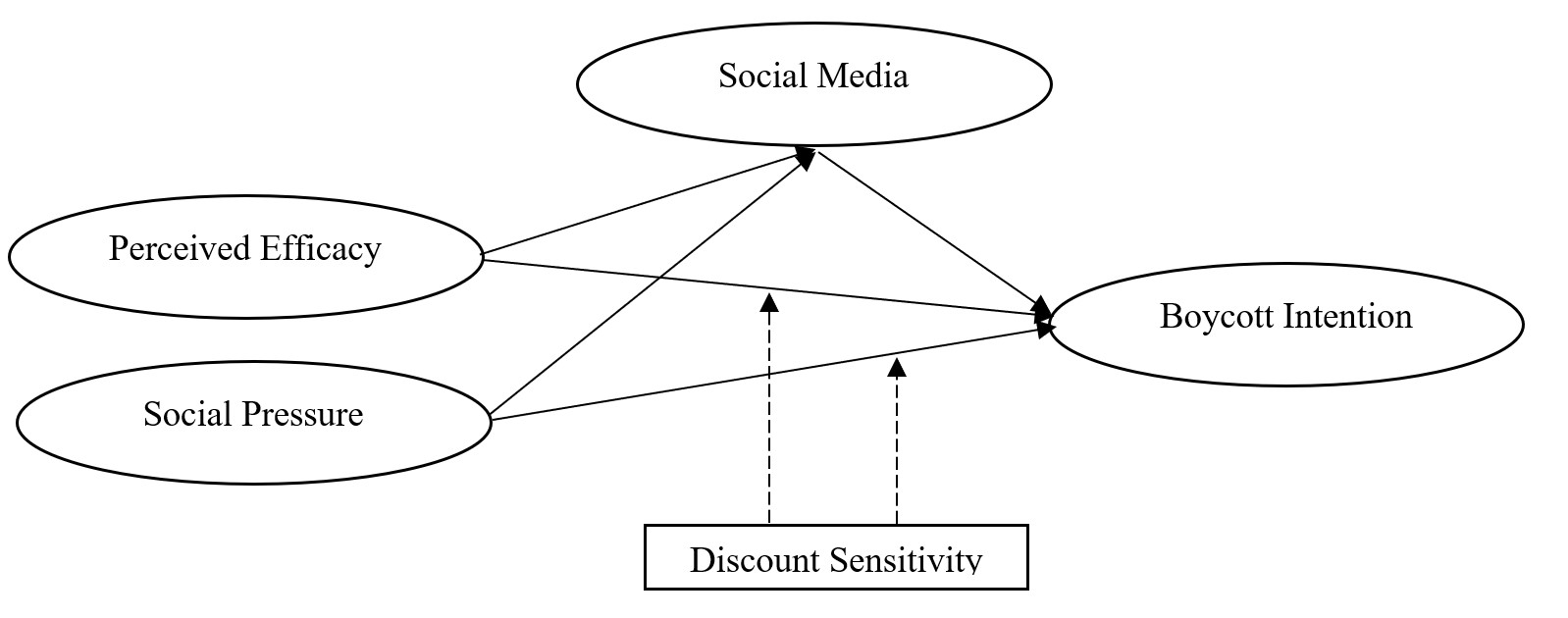
Consumers may also choose not to engage in the boycott movement, or those who do may later abandon and reduce their boycott. Klein et al. (2004) argued that as the cost of assisting a person increases, the willingness to assist may decrease. Consumers may face a dilemma if they view their participation in a boycott as futile, unproductive, and/or insufficient to effect significant change (John & Klein, 2003). While those with strong personal convictions about the target of a boycott participate in it, most people prioritize their own interests, and some boycotts are undertaken to reduce product prices (Sen et al., 2001). One of the measures typically used by boycotted businesses is to lower the price of their products. The goal is to reduce or discourage boycotting activities among consumers (Pandey et al., 2021). For example, Hendel et al. (2017) examined the market impact of a boycott on cottage cheese in Israel and found that it resulted in a sharp drop in prices. As a result of the boycott of Israeli items in Turkey, several stores put the boycotted products on the shelves and ran discount promotions for them (Hoşgör & Sezgin, 2024). In fact, the discounts offered by the boycotted brands on their products indicate that the boycott was effective. Therefore, it is important to determine how these discounts offerred by the brands affect the relationship between boycott effectiveness and boycott intention. In addition, Sen et al. (2001) argued that consumers consider their own interests. Therefore, since consumers consider their own economic interests, they may have the intention not to miss the price discounts made by the brands. Therefore, the social pressure they see in their environment may lose its importance and they may give up their intention to boycott. The research contends that consumers with high discount sensitivity will have low boycott intentions, regardless of perceived efficacy or social pressure (Figure 1). In this context, the following moderation hypotheses were proposed for the research.
-
H8. Discount sensitivity has a negative moderating role in the effect of perceived boycott efficacy on boycott intention.
-
H9. Discount sensitivity has a negative moderating role in the effect of social pressure to participate in a boycott on boycott intention.
3 Methodology
3.1 Participants and procedure
Consumers in Turkey, as in many other countries around the world, have recently protested against Israel's policies in the Israel-Palestine war and, in response, consumers have launched a boycott campaign against Israeli-made products and brands, as well as brands that support Israel. Since the goal of the research is to determine consumers' intentions to boycott certain businesses, the sample size is 417 individuals in Turkey who participated in the survey (Supplementary Data 1 – Questionnaire in English/Turkish). The convenience sampling method was employed to reach the consumers and the data were collected via an online survey. Convenience sampling is a non-random sampling approach in which the researcher's judgment determines which sample to select from the main population. Convenience sampling collects data from the general population in the most convenient, efficient, and cost-effective manner. Before the designed survey form was administered to consumers, its face validity was determined with the assistance of two experts and it was used as a pretest on 20 consumers. Following the pretest, a few formal modifications were made to the final survey form. The survey used in the research is a clear, unbiased and accurate survey. The survey form was converted into an online survey using Google Forms, and the survey link was shared via messaging apps (Whatsapp, Telegram, etc.) and social media platforms (Facebook, Instagram, etc.). It was found that 417 consumers took part in the survey between December 22, 2023 and January 22, 2024 (data collection dates), which was the data collection period. Table 1 provides descriptive information about the sample demographics.
Participants were also asked, “Are you aware of the brands that have been boycotted recently?” 84.7% of the participants answered “yes” to this question, while 15.3% answered “partially.”
3.2 Measures
The survey form used for data collection is divided into three parts. The first part of the survey form contains descriptive questions to determine the participants' boycott behavior; the second part contains questions to determine the participants' demographic information, such as gender, marital status, age, education level, and monthly income; and the third part contains scale questions about the variables included in the research model. Information was included in the introduction to the survey to encourage participants to complete the survey, taking into account the brands that have recently been boycotted in Turkey. The research included a five-item perceived efficacy variable (Salma & Aji, 2023), a three-item social pressure variable (Muhamad et al., 2018), a three-item social media variable (Arafat et al., 2021), and a three-item boycott intention variable (Muhamad et al., 2018). Additionally, to assess consumers' discount sensitivity, the question “Does the price reduction of a boycotted brand due to the boycott affect your purchasing decision?” was also asked. All of the scales used in the research were of the five-point Likert type (1: Strongly Disagree – 5: Strongly Agree) (Supplementary Data 2 – Database).
3.3 Data analysis
SPSS 25, AMOS 24, and JAMOVI statistical package applications were used to analyze the collected data. First, frequency analysis was used to identify the descriptive features of the individuals. Cronbach's alpha was then determined to establish the reliability of the research scales. Next, confirmatory factor analysis (CFA) was used to verify the factor structures of the research scales, and composite reliability (CR) and average variance extracted (AVE) values were calculated using the factor loadings obtained from the CFA. Within the framework of the research model, mediation analysis was performed using structural equation modeling (SEM) to reveal the mediating effect of social media, and moderation analysis was performed to determine the moderating effect of sensitivity to discounts offered by boycotted brands.
4 Findings
4.1 Reliability and validity of measures
First, normality analysis was used to determine if the data were normally distributed. Kurtosis and skewness scores must be between +2 and -2 to be considered normally distributed (George & Mallery, 2010). The normality analysis revealed that the values obtained ranged from -1.926 to +1.861. Next, CFA was performed using the maximum likelihood estimation (MLE) approach to validate the measurement model and determine the factor loadings. The goodness-of-fit values determine whether or not the measurement model is structurally valid. The most preferred goodness-of-fit values in the literature ((X2/df<5, GFI>0.90, AGFI>0.85, CFI>0.90, RMSEA<0.08, NFI>0.90, IFI>0.90, TLI>0.90) were used (Joreskog & Sorbom, 1984; Bagozzi & Yi, 1988) and the model fit values were determined as X2/df: 3.531, GFI: 0.921, AGFI: 0.883, CFI: 0.968, NFI: 0.956, IFI: 0.968, TLI: 0.959, RMSEA: 0.078.
The goodness-of-fit values generated as a result of the CFA show that the measurement model fits the data quite well. The structural validity of the model was then ensured using a four-stage approach (convergent, discriminant, nomological, and face validity) (Hair et al., 2010). The basic values considered in this stage are factor loadings, AVE, and CR values. While the factor loadings should be greater than 0.50, the AVE value should be greater than 0.50 and the CR value should be greater than 0.70 (Fornell & Larcker, 1981; Hair et al., 2010). Table 2 shows the standardized factor loadings, α, AVE, and CR values.
When analyzing Table 2, it is clear that the factor loading, α, AVE, and CR values are above the base levels, indicating structural validity. For discriminant validity, the square root of each construct's AVE value must be higher than its correlation coefficient values with other constructs (Chin, 1998). Although two experts performed face validity tests before data collection, the positive correlation between both structures indicates nomological validity (Table 3). Given all of these findings, the structural model was found to be valid.
The correlation matrix procedure was evaluated to see if there was a common method bias (CMB) in the data set. The fact that the correlation coefficient between the two variables is less than 0.90 suggests that there is no CMB in the data (Pavlou & El Sawy, 2010). When the table is analyzed, it is found that the correlation coefficient between the two variables is less than.90, indicating that there is no CMB problem.
4.2 Mediation analysis
In the research, a mediation analysis was performed on AMOS to assess the impact of social media in mediating the effects of perceived efficacy and social pressure on boycott intention. To discuss a mediation relationship in a model, the independent variable must first affect both the dependent and mediator variables; the mediator variable must also have a significant effect on the dependent variable (Baron & Kenny, 1986). Adding a mediator variable to a research model can result in a non-significant relationship between the independent and dependent variables, indicating full mediation, or a decrease in the relationship, indicating partial mediation (Gürbüz, 2019). Bootstrap confidence interval values are used to evaluate mediation results. The mediation relationship is considered significant or not based on whether the confidence interval values generated from the mediation analysis include the zero value. In other words, bootstrap confidence interval values must be greater than or less than zero to indicate a mediation relationship (Preacher & Hayes, 2008; Figure 2).

Table 4 shows the results of the research hypotheses developed within the scope of the model, as well as the values for direct and indirect effects used in the hypotheses evaluation and the bootstrap values.
Table 4 shows that all hypotheses regarding direct and indirect effects in the research are supported at the p<0.01 level. According to the hypothesis results, perceived efficacy and social pressure have a positive and significant effect on boycott intention (β = 0.512, β = 0.208), as does social media (β = 0.354, β = 0.443). Similarly, social media also has a positive and significant effect on boycott intention (β = 0.216). When testing the hypotheses about the mediation effect, it is found that social media has a partial mediating function in the relationships between perceived efficacy, social pressure, and boycott intention. The SEM mediation test analysis for partial mediation requires a bootstrap confidence interval that is either greater than or less than zero (Yavuz & Sağlam, 2018). The bootstrap results in Table 4 show that H6 (lower limit 0.035; upper limit 0.153) and H7 (lower limit 0.049; upper limit 0.162) are greater than zero.
4.3 Moderation analysis
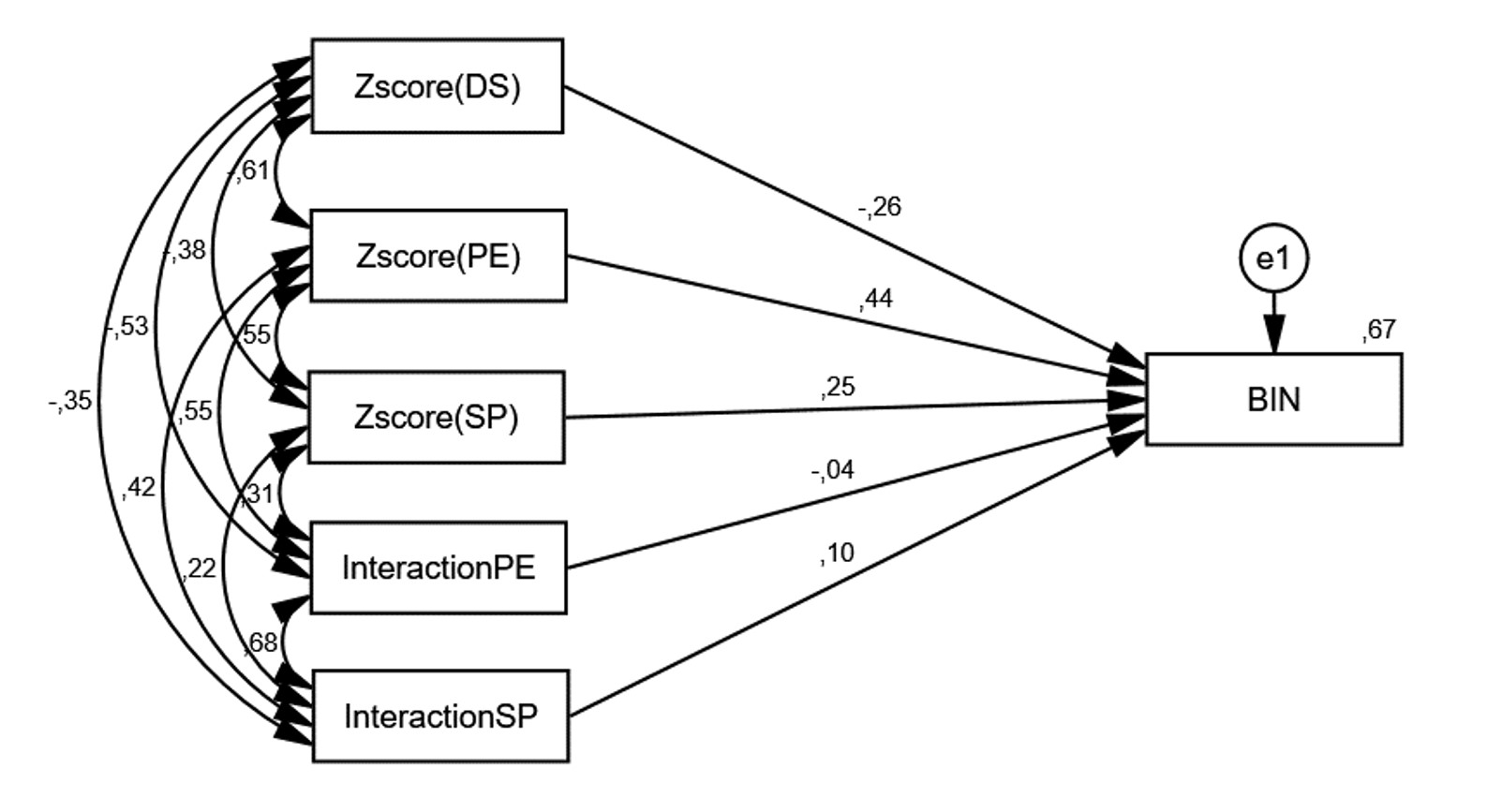
The moderator variable influences the direction and strength of the relationship between the independent and dependent variables. Therefore, in the current research, the moderating influence of discount sensitivity of boycotted brands in the relationships between perceived efficacy, social pressure, and boycott intention was investigated. The research included a moderation analysis of AMOS to determine moderation effects (see Figure 3).

To minimize numerous correlation concerns, all variables used in the analysis were translated into a standardized form (Z score) and then interaction terms were developed (Gürbüz, 2019). Table 5 shows the hypothesis results produced from the moderation analysis of the AMOS program.
Reviewing the results in Table 5, discount sensitivity does not play a moderating role in the relationship between perceived efficacy and boycott intention, but it does play a moderating role in the relationship between social pressure and boycott intention. Discount sensitivity significantly moderates the relationship between social pressure and boycott intention (β = 0.101, p = 0.009, p < 0.05). Discount sensitivity does not significantly moderate the relationship between perceived efficacy and boycott intention (β = -0.043, p = 0.324, p < 0.05). These results for moderating relationships found no significant relationships for and did not support hypothesis H8, but did find significant relationships for and supported hypothesis H9. Graph 1 shows the results for the moderating effect of discount sensitivity.

Graph of the moderating effect of discount sensitivity on the relationship between social pressure and boycott intention
As shown in Graph 1, social pressure to boycott has a stronger effect on boycott intention among consumers with low discount sensitivity than among consumers with high discount sensitivity. In other words, social pressure to boycott has a smaller effect on boycott intention among consumers with high discount sensitivity than among consumers with low discount sensitivity. In short, consumers who are discount sensitive are influenced by boycotted firms discounting their items in response to the boycott, and ignoring social pressure due to discounting may reduce consumers' boycott intentions. As consumers' discount sensitivity increases, the impact of boycott pressure on their boycott intentions decreases. In other words, the discounts offered by boycotted brands have a significant impact on the levels of the factors that influence consumers' boycott intentions. A consumer may intend to boycott a brand based solely on social media posts, with no other factors influencing their decision. However, if the brand in question significantly reduces its prices, the consumer will be less determined to boycott. As a result, consumers' discount sensitivity moderates the relationship between social pressure to boycott and boycott intention.
5 Conclusions and discussion
This study identified the perceived effectiveness of boycotts and the effects of social pressure to participate in a boycott on boycott intentions. In addition, the mediating role of social media in these effects and the moderating role of discount sensitivity were also revealed. According to the research findings obtained within the context of the boycotts carried out in Turkey against Israeli-origin brands and brands supporting Israel, it was found that first and foremost the perceived efficacy of the boycotts and social pressure had positive effects on boycott intentions. This finding is consistent with earlier research on boycotts (Klein et al., 2004; Muhamad et al., 2018). Consumers intend to boycott because they believe boycotts are effective, and there is social pressure in their area to participate in and support the boycott. As a result, perceived efficacy and social pressure are equally successful in motivating consumers to boycott. Mrad et al. (2013) found a positive relationship between boycott efficacy and boycott intention. According to Shin and Yoon (2018), consumers are more inclined to participate in a boycott if they believe that boycotting will improve the wrong behavior of a country, business, or brand. Keser and Söğütlü (2023) found that social pressure influences consumer' boycott intentions. Sari et al. (2017) found that social pressure plays a significant role in persuading consumers to boycott foreign goods. As a result, the findings on perceived efficacy and social pressure are consistent with previous research.
One of the findings that distinguishes the research from other studies is related to social media. It was found that consumers' active use of social media platforms has a positive effect on their boycott intentions. In other words, consumers who use social media and come across boycott posts are more likely to intend to boycott. Lee (2020) showed that social media plays a crucial role in announcing and disseminating boycott efforts. Grzegorz (2019) argued that social media has a positive impact on consumers' decisions to boycott. Other significant findings on social media indicate that the perceived efficacy and social pressure variables have a significant effect on social media. Furthermore, social media has a partial mediating role in the relationship between perceived efficacy and social pressure on boycott intention. As a result, some of the effects of perceived efficacy and social pressure on boycott intention are mediated through social media. If consumers believe a boycott is effective, they are more likely to participate in it and spread their support on social media to make it happen. Since current information about a boycott is shared on social media, it is clear whether the boycott is effective or not, and thus an inclination to engage in the boycott is obtained. If the same situation is analyzed in terms of social pressure, the social pressure created at the place of boycott participation is also created via social media, thus increasing boycott participation. When a consumer using social media sees boycott-related posts on these sites, he or she is bound to feel pressure and, as a result, intend to boycott. While the literature does not showa direct relationship between social pressure and social media use, specifically for boycotts, it has been found that there is a positive relationship between social pressure and purchasing products through social networks (Okazaki et al., 2012, cited in Gutierrez Florez et al., 2017). These findings indicate that social pressure may influence social media use. Zhang (2020) argued that because a boycott is a collective action, people may feel social pressure from social media to participate in the boycott. According to research on perceived efficacy, the higher the perceived efficacy, the higher the probability of engagement in action via social media (Fujita et al., 2018; Buran et al. 2021). Balıkçıoğlu et al. (2007) found that social media helped to increase perceived efficacy and involvement in a boycott. Although no research has been conducted to determine whether social media mediates the relationship between perceived efficacy, social pressure, and boycott intention, the findings on social media support the results of studies demonstrating the role of social media in boycott efforts.
Another key finding of the research is the moderating effect of discount sensitivity on boycott intention. The moderating role of consumers' discount sensitivity to boycotted brand discounts was investigated in the effects of perceived boycott effectiveness and social pressure on boycott intention. While discount sensitivity could not be used to moderate the relationship between perceived efficacy and boycott intention, it was found to be a moderator of the relationship between social pressure and boycott intention. The fact that boycotted firms offer discounts on their products indicates that the boycott is effective and that these discounts are intended to increase brand sales and retain customers. Since the perception that a boycott is effective shows that the boycott campaign was not in vain, this result encourages consumers to continue boycotting, and discounts and promotions do not deter consumers from their aims. Previous studies (Klein et al., 2004; Özer et al., 2022) show that consumers are more likely to continue boycotting when they see its effectiveness. As a result, the research is supported by the finding that discounts do not have a moderating effect on perceived effectiveness and boycott intention.
Consumers with a high level of discount sensitivity are less likely to join a boycott when social pressure is applied. Consumers who are sensitive to discounts are affected when boycotted firms discount their products as a result of the boycott, and their boycott intentions may decrease if they ignore the social pressure caused by discounting. Since these consumers have already joined the boycott due to social pressure, they may secretly consume products boycotted by pressure groups. As a result, brand discounts may encourage these customers to purchase more boycotted products or cause them to defy social pressure. In other words, discounts by boycotted firms have a significant impact on the levels of the factors that influence consumers' boycott intentions. According to Sen et al. (2001), consumers often behave in their own best interest during the boycott process and the goal of such boycotts is to lower product prices. Hoşgör and Sezgin (2024) found that as a result of the boycott imposed on Israeli brands in Turkey, certain markets created discount promotions for these brands. As a result, the findings on the moderating role of discount sensitivity seem to be consistent with previous research.
5.1 Theoretical contributions
The key contribution of the research is that it provides both a mediator and a moderator model that can explain boycott behavior in real-world settings. First, the research validates the impacts of perceived efficacy and social pressure on boycott intention and reaffirms their importance. Previous studies have found that perceived boycott effectiveness and social pressure positively finfluence boycott intention. Therefore, the results obtained provide theoretical contributions to the literature on perceived effectiveness and social pressure. The second theoretical contribution relates to social media influencing boycott intentions. There is no research in the literature that investigates the direct and indirect effects of social media on boycott intentions. As a result, it is critical to broaden the issue within the framework of social media by adding social media in the context of boycotts, and this research bridges the gap between social media and boycott intention. Another contribution is that it confirms the regulating role of consumers' discount sensitivity to discounts provided by boycotted brands. It is conceptually important to research how discount sensitivity influences the success or failure of boycotts.
5.2 Practical contributions
The quick spread of boycotts on social media hurts firms' marketing efforts. As a result, managers of boycotted brands should devise effective marketing methods to mitigate the impact. Brands, particularly those in foreign markets, should consider consumer sensitivities and focus on customer, product and brand values rather than taking sides on difficult issues. The higher the value of the product and brand, the less likely it is that consumers will disengage from the brand altogether. Furthermore, given the moderating influence of discount sensitivity, several techniques can be used for consumers with low discount sensitivity. Brands should not ignore boycotts and do nothing negative. To mitigate the boycott, the groups coordinating it should be contacted and a solution developed. If there is an agreement between the boycotted country and the brand, this agreement can be suspended or canceled. The brand should act institutionally and prioritize humanitarian concerns over commercial concerns. First and foremost, steps must be taken to reduce consumer reactions to the boycott movement. Given the importance of social media in boycotts, it is essential that brands actively use social media as a communication channel. During boycotts, when social pressure is high, business managers should not remain silent, but instead provide useful messages to consumers through easily accessable platforms such as social media. In addition, social marketing strategies can be used to improve the brand image negatively affected by the boycott by supporting social responsibility projects.
5.3 Limitations and future research
First and foremost, because the data were collected using the convenience sampling approach, the research findings cannot be generalized, and they involve the consumers who participated in the research. The second limitation is that the research was conducted exclusively in Turkey, a Muslim country. In future research, cross-country comparisons can be made by examining the boycott intentions of non-Muslim consumers. Another limitation of the research is that the participants were not asked about their nationality and religious preferences. It is recommended that future studies focus on this issue as well. Furthermore, since only the impacts of perceived efficacy and social pressure factors on boycott intentions were investigated, future research can incorporate additional variables such as religiosity, ethnocentrism, and brand loyalty. Also, because the research only includes Israeli-origin or Israel-supporting brands that have recently been boycotted due to the Israeli-Palestinian war, future research can analyze the issue from a broader boycott perspective. Finally, while only discount sensitivity was considered a moderating variable in the research, future research can examine the moderating effects of demographic characteristics such as gender, income, and age.
Supplementary Material
Supplementary material accompanies this paper:
Supplementary Data 1 – Questionnaire in English
Supplementary Data 1– Questionnaire in Turkish
Supplementary Data 2 – Database
Supplementary material for this article can be found at https://doi.org/10.7910/DVN/79MJUJ
-
Evaluation process:
Double Blind Review
-
This article is open data
-
How to cite:
Avci, I. (2024). Factors influencing the boycott intentions of Turkish consumers amid the Israel-Palestine conflict. Revista Brasileira de Gestão de Negócios, 26(4), e20240035. https://doi.org/10.7819/rbgn.v26i4.4282
-
Financial support:
There are no funding agencies to report.
-
Open Science:
İbrahim Avci, 2024, “Supplementary Data - Factors Influencing Boycott Intentions of Turkish Consumers amid the Israel-Palestine Conflict”, https://doi.org/10.7910/DVN/79MJUJ, Harvard Dataverse, V1, UNF:6:Ux5SsoEcKT3Y4d2eXRIzGQ== [fileUNF]
-
Plagiarism analysis:
RBGN performs plagiarism analysis on all its articles at the time of submission and after approval of the manuscript using the iThenticate tool.
References
-
Abosag, I. (2010). Dancing with macro-boycotters: The case of Arla food. Marketing Intelligence & Planning, 28(3), 365-373. http://doi.org/10.1108/02634501011041471
» http://doi.org/10.1108/02634501011041471 -
Ajzen, I. (1991). The theory of planned behavior. Organizational Behavior and Human Decision Processes, 50(2), 179-211. http://doi.org/10.1016/0749-5978(91)90020-T
» http://doi.org/10.1016/0749-5978(91)90020-T -
Arafat, S. M., Ahmad, A. R., Murad, H. R., & Kakashekh, H. M. (2021). Perceived impact of social media on panic buying: An online cross-sectional survey in Iraqi Kurdistan. Frontiers in Public Health, 9, 668153. http://doi.org/10.3389/fpubh.2021.668153 PMid:34041218.
» http://doi.org/10.3389/fpubh.2021.668153 - Asnawi, N., Nina, D., & Muhammad, D. (2019). Predicting muslim consumer intention to boycott a product: A test of the theory of planned behaviour. International Journal of Innovation, Creativity and Change., 5(2), 1534-1550.
-
Aydin, G. (2021). Consumer cynicism, skepticism, brand boycotts and social media. In U. Bingöl (Ed.), #Trending topics on social media researches (pp. 61-90). Berlin: Peter Lang Verlag. http://doi.org/10.3726/b18979
» http://doi.org/10.3726/b18979 -
Bagozzi, R., & Yi, Y. (1988). On the evaluation of structural equation models. Journal of the Academy of Marketing Science, 16(1), 74-94. http://doi.org/10.1007/BF02723327
» http://doi.org/10.1007/BF02723327 -
Balıkçıoğlu, B., Koçak, A., & Özer, A. (2007). Şiddet içermeyen bir eylem olarak dolaylı tüketici boykotlarının oluşum süreci ve türkiye için değerlendirme. Ankara Üniversitesi SBF Dergisi, 62(03), 79-100. http://doi.org/10.1501/SBFder_0000002034
» http://doi.org/10.1501/SBFder_0000002034 -
Baron, R. M., & Kenny, D. A. (1986). The moderator–mediator variable distinction in social psychological research: Conceptual, strategic, and statistical considerations. Journal of Personality and Social Psychology, 51(6), 1173-1182. http://doi.org/10.1037/0022-3514.51.6.1173 PMid:3806354.
» http://doi.org/10.1037/0022-3514.51.6.1173 -
Brady, S. A., Young, J. A., & McLeod, D. A. (2015). Utilizing digital advocacy in community organizing: Lessons learned from organizing in virtual spaces to promote worker rights and economic justice. Journal of Community Practice, 23(2), 255-273. http://doi.org/10.1080/10705422.2015.1027803
» http://doi.org/10.1080/10705422.2015.1027803 -
Braunsberger, K., & Buckler, B. (2011). What motivates consumers to participate in boycotts: Lessons from the ongoing Canadian seafood boycott. Journal of Business Research, 64(1), 96-102. http://doi.org/10.1016/j.jbusres.2009.12.008
» http://doi.org/10.1016/j.jbusres.2009.12.008 - Buran, İ., Sabah Çelik, Ş., & Koçak, A. (2021). Kadın kadındır, çiçek babandır: Feminist kolektif eylem ve sosyal medya katılımı ilişkisi. In PPAD 25. Pazarlama Kongresi. Ankara, Turkey.
- Chin, W. W. (1998). The partial least squares approach for structural equation modeling. In G. A. Marcoulides (Ed.), Modern methods for business research (pp. 295-336). Mahwah, NJ: Lawrence Erlbaum Associates Publishers.
- Chiu, H. K. (2016). Exploring the factors affecting consumer boycott behaviour in Taiwan: Food oil incidents and the resulting crisis of Brand Trust. International Journal of Business and Information, 11(1), 49.
-
Cruz, B. P. A., Pires Jr., R. J. M., & Ross, S. D. (2013). Gender difference in the perception of guilt in consumer boycott. Revista Brasileira de Gestão de Negócios, 15(49), 504-523. http://doi.org/10.7819/rbgn.v15i49.1357
» http://doi.org/10.7819/rbgn.v15i49.1357 -
Dalakas, V., Melancon, J. P., & Szczytynski, I. (2023). Brands in the eye of the storm: Navigating political consumerism and boycott calls on social media. Qualitative Market Research, 26(1), 1-18. http://doi.org/10.1108/QMR-07-2021-0089
» http://doi.org/10.1108/QMR-07-2021-0089 -
Delistavrou, A., Krystallis, A., & Tilikidou, I. (2020). Consumer’s decision to boycott ‘unethical’ products: The role of materialism/post materialism. International Journal of Retail & Distribution Management, 48(10), 1121-1138. http://doi.org/10.1108/IJRDM-04-2019-0126
» http://doi.org/10.1108/IJRDM-04-2019-0126 -
Edrington, C. L., & Lee, N. (2018). Tweeting a social movement: Black Lives Matter and its use of Twitter to share information, build community, and promote action. The Journal of Public Interest Communications, 2(2), 289. http://doi.org/10.32473/jpic.v2.i2.p289
» http://doi.org/10.32473/jpic.v2.i2.p289 -
Ettenson, R., & Klein, J. (2005). The fallout from French nuclear testing in the South Pacific: A longitudinal study of consumer boycotts. International Marketing Review, 22(2), 199-224. http://doi.org/10.1108/02651330510593278
» http://doi.org/10.1108/02651330510593278 -
Farah, M. F., & Newman, A. J. (2010). Exploring consumer boycott ıntelligence using a socio-cognitive approach. Journal of Business Research, 63(4), 347-355. http://doi.org/10.1016/j.jbusres.2009.03.019
» http://doi.org/10.1016/j.jbusres.2009.03.019 -
Fornell, C., & Larcker, D. F. (1981). Evaluating structural equation models with unobservable variables and measurement error. Journal of Marketing Research, 18(1), 39-50. http://doi.org/10.1177/002224378101800104
» http://doi.org/10.1177/002224378101800104 - Friedman, M. (1999). Consumer boycotts New York: Routledge.
-
Fujita, M., Harrigan, P., & Soutar, G. N. (2018). Capturing and co-creating student experiences in social media: A social ıdentity theory perspective. Journal of Marketing Theory and Practice, 26(1-2), 55-71. http://doi.org/10.1080/10696679.2017.1389245
» http://doi.org/10.1080/10696679.2017.1389245 -
Garrett, D. E. (1987). The effectiveness of marketing policy boycotts: Environmental opposition to marketing. Journal of Marketing, 51(2), 46-57. http://doi.org/10.1177/002224298705100204
» http://doi.org/10.1177/002224298705100204 - George, D., & Mallery, P. (2010). SPSS for Windows step by step: A simple guide and reference 17.0 update (10th ed.). Boston: Pearson.
-
Grzegorz, Z. (2019). The role of ındividual- and contextual-level social capital in product boycotting: A multilevel analysis. Sustainability, 11(4), 949. http://doi.org/10.3390/su11040949
» http://doi.org/10.3390/su11040949 - Gürbüz, S. (2019). AMOS ile yapısal eşitlik modellemesi temel ilkeler ve uygulamalı analizler (IBM AMOS uygulamalı, örnek veri setleri) Ankara: Seçkin Yayıncılık.
-
Gutierrez Florez, L. E., Correa Escobar, M. I., Henao Restrepo, A., Arango Botero, D., & Valencia Arias, A. (2017). Influence of social networks on the purchase decisions of university students. Cuadernos de Gestión, 18(1), 61-84. http://doi.org/10.5295/cdg.150577lj
» http://doi.org/10.5295/cdg.150577lj - Hair, J. F., Black, W. C., Babin, B. J., & Anderson, R. E. (2010). Multivariate data analysis (7th ed.). New York: Pearson.
-
Hendel, I., Lach, S., & Spiegel, Y. (2017). Consumer’s activism: The cottage cheese boycott. The RAND Journal of Economics, 48(4), 972-1003. http://doi.org/10.1111/1756-2171.12212
» http://doi.org/10.1111/1756-2171.12212 -
Hoşgör, H. K., & Sezgin, M. (2024). İsrail menşeli ürün ve hizmetlere yönelik e-boykot söylemlerinin çevrimiçi bir şikâyet portalı üzerinden incelenmesi. Research Studies Anatolia Journal, 7(11), 97-122. http://doi.org/10.33723/rs.1411345
» http://doi.org/10.33723/rs.1411345 -
Jensen, H. R. (2008). The Mohammed cartoons controversy and the boycott of Danish products in the Middle East. European Business Review, 20(3), 275-289. http://doi.org/10.1108/09555340810871455
» http://doi.org/10.1108/09555340810871455 -
John, A., & Klein, J. (2003). The boycott puzzle: Consumer motivations for purchase sacrifice. Management Science, 49(9), 1196-1209. http://doi.org/10.1287/mnsc.49.9.1196.16569
» http://doi.org/10.1287/mnsc.49.9.1196.16569 - Joreskog, K. G., & Sorbom, D. (1984). Advances in factor analysis and structural equation models. Lanham: Rowman & Littlefield Publishers.
-
Kam, C. D., & Deichert, M. (2019). Boycotting, buycotting, and the psychology of political consumerism. The Journal of Politics, 82(1), 72-88. http://doi.org/10.1086/705922
» http://doi.org/10.1086/705922 - Kang, T. (2019). A study on factors affecting attitudes and intention to participate in the boycott of Japanese brands. Journal of Modern Japanese Studies, 66, 195-212.
-
Kanol, D., & Nat, M. (2017). Interest groups and social media: An examination of cause and sectional groups’ social media strategies in the EU. Journal of Public Affairs, 17(3), e1649. http://doi.org/10.1002/pa.1649
» http://doi.org/10.1002/pa.1649 -
Keser, E., & Söğütlü, R. (2023). Investigation of the mediating role of consumer boycott participation motives in the effect of consumer cynicism on consumer boycott behavior. Curr Res Soc Sci, 9(1), 69-91. http://doi.org/10.30613/curesosc.1261916
» http://doi.org/10.30613/curesosc.1261916 -
Klein, J., Ettenson, R., & Morris, M. (1998). The animosity model of foreign product purchase: An empirical test in the people’s republic of China. Journal of Marketing, 62(1), 89-100. http://doi.org/10.1177/002224299806200108
» http://doi.org/10.1177/002224299806200108 -
Klein, J. G., Smith, N. C., & John, A. (2004). Why we boycott: Consumer motivations for boycott participation. Journal of Marketing, 68(3), 92-109. http://doi.org/10.1509/jmkg.68.3.92.34770
» http://doi.org/10.1509/jmkg.68.3.92.34770 - Lee, J. (2020). Boycotting in the age of social media: The case of #NoJapan movement in South Korea [Unpublished master’s thesis]. Uppsala University.
-
Makarem, S. C., & Jae, H. (2016). Consumer boycott behavior: An exploratory analysis of twitter feeds. The Journal of Consumer Affairs, 50(1), 193-223. http://doi.org/10.1111/joca.12080
» http://doi.org/10.1111/joca.12080 - Mrad, S. B., Sheng, S. Y., & Hart, L. K. (2013). Do rumblings lead to real action? A case of animosity and boycott in China. International Journal of China Marketing, 3(2), 35-48.
-
Muhamad, N., Khamarudin, M., & Fauzi, W. I. M. (2018). The role of religious motivation in an international consumer boycott. British Food Journal, 121(1), 199-217. http://doi.org/10.1108/BFJ-02-2018-0118
» http://doi.org/10.1108/BFJ-02-2018-0118 -
Özer, M., Özer, A., & Koçak, A. (2022). Comparing the antecedents of boycotts and buycotts: Mediating role of self-esteem on subjective well-being and the moderating effects of materialism. Journal of Marketing Management, 38(17-18), 1873-1906. http://doi.org/10.1080/0267257X.2022.2065334
» http://doi.org/10.1080/0267257X.2022.2065334 -
Öztürk, A., & Nart, S. (2021). Tüketici boykot davranışının belirleyicileri üzerine bir araştırma: Ağızdan ağıza iletişimin aracılık rolü. Elektronik Sosyal Bilimler Dergisi, 20(78), 660-687. http://doi.org/10.17755/esosder.784595
» http://doi.org/10.17755/esosder.784595 - Pandey, S. P., Ahmad, Y., & Gautam, A. (2021). Consumer motivations for boycott. Pacific Business Review, 14(6), 51-63.
-
Park, E. A., & Park, M. (2018). Who participate in a boycott?: A research of antecedents about boycott participation intention. The Korean Journal of Consumer and Advertising Psychology, 19(1), 121-138. http://doi.org/10.21074/kjlcap.2018.19.1.121
» http://doi.org/10.21074/kjlcap.2018.19.1.121 -
Pavlou, P. A., & El Sawy, O. A. (2010). The “third hand”: IT-enabled competitive advantage in turbulence through improvisational capabilities. Information Systems Research, 21(3), 443-471. http://doi.org/10.1287/isre.1100.0280
» http://doi.org/10.1287/isre.1100.0280 -
Pekkala, K., & Van Zoonen, W. (2022). Work-related social media use: The mediating role of social media communication self-efficacy. European Management Journal, 40(1), 67-76. http://doi.org/10.1016/j.emj.2021.03.004
» http://doi.org/10.1016/j.emj.2021.03.004 -
Preacher, K. J., & Hayes, A. F. (2008). Asymptotic and resampling strategies for assessing and comparing indirect effects in multiple mediator models. Behavior Research Methods, 40(3), 879-891. http://doi.org/10.3758/BRM.40.3.879 PMid:18697684.
» http://doi.org/10.3758/BRM.40.3.879 -
Salma, S. Y., & Aji, H. M. (2023). What drives Muslims to boycott French brands? The moderating role of brand judgement and counterargument. Journal of Islamic Marketing, 14(5), 1346-1368. http://doi.org/10.1108/JIMA-04-2021-0128
» http://doi.org/10.1108/JIMA-04-2021-0128 -
Sari, D. K., Mizerski, D., & Liu, F. (2017). Boycotting foreign products: A research of Indonesian Muslim consumers. Journal of Islamic Marketing, 8(1), 16-34. http://doi.org/10.1108/JIMA-12-2014-0078
» http://doi.org/10.1108/JIMA-12-2014-0078 -
Sen, S., Gurhan-Canli, Z., & Morwitz, V. (2001). Withholding consumption: A social dilemma perspective on consumer boycotts. The Journal of Consumer Research, 28(4), 399-417. http://doi.org/10.1086/323729
» http://doi.org/10.1086/323729 - Sezgin, M., & Altay, I. (2021). Üniversite tercihinde sosyal medyanın aracı rolü. Uluslararası Sosyal Bilimler Ve Eğitim Dergisi, 3(4), 87-104.
-
Shin, S., & Yoon, S. W. (2018). Consumer motivation for the decision to boycott: The social dilemma. International Journal of Consumer Studies, 42(4), 439-447. http://doi.org/10.1111/ijcs.12444
» http://doi.org/10.1111/ijcs.12444 -
Stieger, S., & Lewetz, D. (2018). A week without using social media: Results from an ecological momentary intervention research using smartphones. Cyberpsychology, Behavior, and Social Networking, 21(10), 618-624. http://doi.org/10.1089/cyber.2018.0070 PMid:30334650.
» http://doi.org/10.1089/cyber.2018.0070 -
Xie, J., Choo, H. J., & Lee, H. K. (2023). Effects of consumer animosity on boycotts: The role of cognitive-affective evaluations and xenocentrism. Journal of Fashion Marketing and Management, 28(1), 45-60. http://doi.org/10.1108/JFMM-11-2022-0235
» http://doi.org/10.1108/JFMM-11-2022-0235 - Yavuz, N., & Sağlam, M. (2018). İşkoliklik ve işten ayrılma niyeti arasındaki ilişkide iş yaşam dengesinin aracılık rolü. İşletme Araştırmaları Dergisi, 10(4), 922-952.
-
Zhai, X., & Luo, Q. (2023). Rational or emotional? A research on Chinese tourism boycotts on social media during international crisis situations. Tourism Management Perspectives, 45, 101069. http://doi.org/10.1016/j.tmp.2022.101069
» http://doi.org/10.1016/j.tmp.2022.101069 - Zhang, X. (2020). An exploratory study: Understanding consumerism of consumer boycott and consumer buycott [Unpublished master’s thesis]. The University of Guelph, Ontario, Canada.
-
Responsible editor:
Prof. Dr. Sebastian Molinillo
-
Reviewers:
Rafael Curras-Perez; Hamid Alizadeh
İbrahim Avci, 2024, “Supplementary Data - Factors Influencing Boycott Intentions of Turkish Consumers amid the Israel-Palestine Conflict”, https://doi.org/10.7910/DVN/79MJUJ, Harvard Dataverse, V1, UNF:6:Ux5SsoEcKT3Y4d2eXRIzGQ== [fileUNF]