 Progressive resistance training and muscle strength in older men with prostate cancer undergoing androgen deprivation therapy: systematic review
Objective To synthesize the evidence on the effects of progressive resistance training on muscle strength in older men with prostate cancer undergoing androgen deprivation therapy.
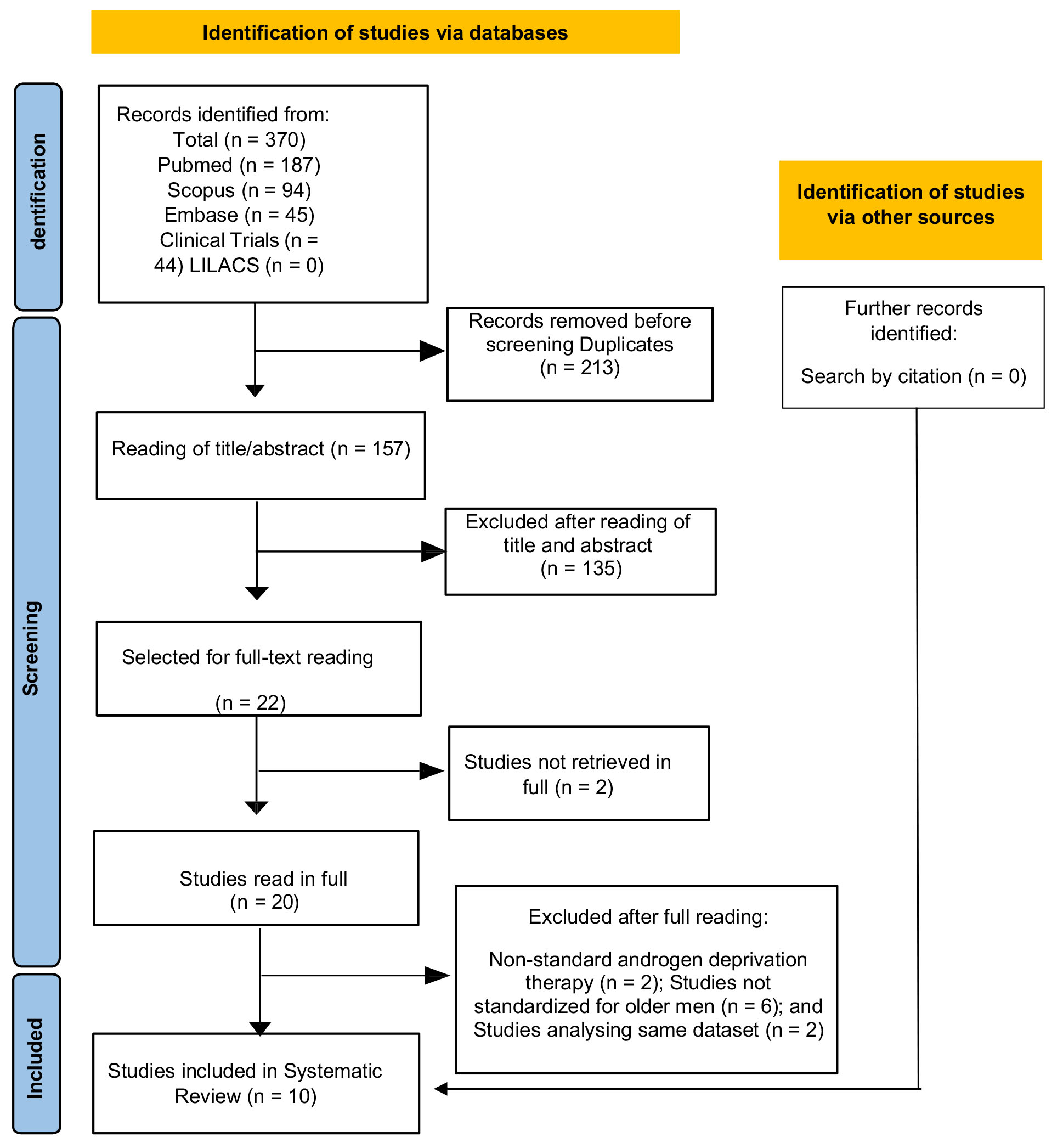
Methods A systematic review of randomized clinical trials was carried out in the PubMed, Scopus, Embase, LILACS and ClinicalTrials databases. Studies of older men aged 60 years or older with prostate cancer undergoing androgen deprivation therapy comparing progressive resistance training to an active control group were included. Risk of bias and quality of evidence were assessed using the RoB 2.0 and GRADE tools, respectively.
Results Ten randomized clinical trials were included, with a total of N=481 participants. Progressive resistance training promoted significant gains in muscle strength, ranging from 7,0% to 23,0%. Supervised protocols, with structured load progression, high adherence and a minimum duration of 12 weeks, showed the most consistent gains. In contrast, home-based or unsupervised interventions showed inconsistent or non-significant results. The one-repetition maximum test was the most sensitive method for detecting changes in dynamic muscle strength. None of the interventions resulted in serious adverse events.
Conclusion Progressive resistance training is a safe and effective therapeutic strategy for increasing muscle strength in older men with prostate cancer undergoing androgen deprivation therapy. Supervised and structured protocols are superior and should be integrated as a standard component in oncology rehabilitation programs for this population.
Keywords
Prostate Cancer; Androgen Antagonists; Resistance Training; Muscle Strength; Aged.
 Thumbnail