 Delayed winter pruning in ‘Chardonnay’ and ‘Pinot Noir’ (Vitis vinifera L.) in Serra Gaúcha – an alternative for late frost?
Abstract:
The use of early budding varieties in regions prone to late frosts may limit production in certain cycles. Since budburst begins in the apical buds, delaying winter pruning can be a management strategy to minimize frost risk. This study aimed to evaluate the effects of different pruning dates during the winter/spring transition in ‘Chardonnay’ and ‘Pinot Noir’ (Vitis vinifera L.) on yield components. Plants were trained using the I-trellis system, and pruned at 15-day intervals from July to October, using cordon spur pruning (two-bud spurs). Pruning conducted after the beginning of September, when apical shoots had more than three expanded leaves, significantly reduced (90%) the yield per plant. This reduction was directly associated with necrosis of primary buds in the base of canes, which stimulated sprouting of secondary or tertiary buds, which do not bear clusters. Delaying winter pruning could be an option for ‘Chardonnay’ and ‘Pinot Noir’, but apical shoot development should be limited to 2-3 expanded leaves, in order to avoid production losses.
Index terms
Viticultural management; grapevine development; grape production; sustainability
Resumo:
A utilização de variedades de brotação precoce em regiões com ocorrência de geadas tardias pode restringir a produção em alguns ciclos. Como a brotação tem início nas gemas apicais, o atraso da poda hibernal pode ser uma estratégia de manejo para minimizar-se este risco. Este trabalho teve como objetivos avaliar os efeitos de diferentes datas de poda durante a transição inverno/primavera, em ‘Chardonnay’ e ‘Pinot Noir’ (Vitis vinifera L.) sobre os componentes de rendimento. A condução das plantas foi em espaldeira, com podas em cordão esporonado (esporão com duas gemas), realizadas de julho a outubro, em intervalos de 15 dias. As podas efetuadas após o início de setembro, quando as brotações apicais já apresentavam mais de três folhas expandidas,promoveram uma redução expressiva (90%) na produção por planta. Essa redução foi diretamente associada à necrose dos cones primários nas gemas da base dossarmentos, o que estimulou a brotação de gemas secundárias ou terciárias, que nãoapresentam cachos. O atraso da poda hibernal pode ser uma opção para ‘Chardonnay’ e ‘Pinot Noir’, mas o desenvolvimento das brotações apicais deve ser limitado a 2-3 folhas expandidas, para evitar perdas na produção.
Termos para indexação
Manejo vitivinícola; desenvolvimento das videiras; produção de uva; sustentabilidade
Introduction
Sparkling wines are considered excellent products of Brazilian viticulture, being awarded numerous prizes in international competitions (GABBARDO et al., 2016). This recognition has been accompanied by a significant increase in trade and consumption, driving a 102% growth in the production of this beverage in Brazil between 2007 and 2017 (PEREIRA et al., 2020). Throughout 2021, the increase in Brazilian sparkling wine consumption was even more significant, with a 38% rise in national sales and a 21% increase in exports compared to 2020 (UVIBRA, 2022). Brazil possesses competitive advantages for sparkling wine production, with the Serra Gaúcha region standing out prominently in viticulture and in production volume of this type of wine (PEREIRA et al., 2020). Most vineyards are located in medium-altitude areas (400 to 700 m), with a humid temperate climate (Cfb, Köppen methodology), which favors grape acidity and varietal aromas, essential characteristics for this type of beverage (KELLER, 2020).
Despite these qualitative advantages, grape production for sparkling wine in the Serra Gaúcha region presents some fragilities.
‘Chardonnay’ and ‘Pinot Noir’ stand out as the main genotypes used in the production of sparkling wines in this region (PEREIRA et al., 2020). Both are classified as early varieties, with average budburst dates recorded in the second half of August (MANDELLI et al., 2003). August and September mark the transition from winter to spring in southern Brazil, making the region vulnerable to the arrival of South American cold fronts, increasing early cultivar vineyards late frost damage risk.
Higher incidence of late frosts in the Serra Gaúcha has been reported in years influenced by the ‘La Niña’ phenomenon, due to rainfall restrictions and greater thermal amplitudes (BERLATO; CORDEIRO, 2018), increasing the possibilities of freezing damage to the vines. Late frosts have an even greater impact when preceded by days of high temperatures in August, due to accelerated budburst date and initial growth of these early cultivars, caused by increased thermal accumulation (MANDELLI et al., 2003). The damage tends to be more significant in regions and years with greater thermal oscillations in the winter/spring transition, such as in southern Brazil, than under winters of constant and prolonged cold.
The main determining factor for freezing damage extent is the moment in which frost occurs. Generally, the lignified parts of the grapevine, such as trunk, arms, and dormant buds, are those that most tolerate extreme cold, ranging from -15 to -35°C (CENTINARI et al., 2016). After budburst, all growing tissues (leaves, green shoots, and inflorescences) become susceptible to freezing due to the higher amount of free water in the cells. All passive actions that prevent the coincidence of freezing temperatures with the most susceptible stages, such as the choice of vineyard location and cultivar, tend to be the most effective strategies in dealing with late frost damage (SNYDER; MELO-ABREU, 2005). Given Serra Gaúcha's viticultural tradition and the importance of certain genotypes for sparkling wine production, passive actions are not straightforward to implement, emphasizing the importance of adjustments in vine management or cultural practice adaptations.
Delaying winter pruning dates has been a common practice in some risk-prone viticultural regions in New Zealand and Australia (TROUGHT et al., 2011; MORAN et al., 2017).
This avoids sprouting of basal buds, preventing freezing damage to the final shoots/ clusters. Late frost damage of apical shoots, which naturally emerge earlier, may be ignored, because these tissues are discarded during pruning. This delay in basal budburst imposed by pruning date has also been tested as a vine-management strategy to adjust the ripening period of early grapevines to climatic conditions more favorable for enological quality (VERCESI et al., 2023).
The delay or absence of basal budbreak occurs due to the dominance exerted by apical shoots over basal buds (KELLER, 2020). In other words, as temperatures rise at the end of winter, cane terminal buds initiate sprouting earlier, suppressing budbreak metabolism in basal buds. This is coordinated by a complex metabolism, initially associated only with auxin concentration and basipetal flow, although recent studies suggest a joint action of sucrose, strigolactones, cytokinins, and gibberellic acid (CAO et al., 2023).
Despite late pruning having prevented frost damage in some winegrowing regions, such as Australia and New Zealand (TROUGHT et al., 2011; MORAN et al., 2017), not all areas have reported benefits from this vine-management practice. In Italy, for example, Frioni et al. (2016) reported a 55% reduction in ‘Sangiovese’ yield with late pruning (in May) and no production with very late pruning (in June). Gatti et al. (2016) and Palliotti et al. (2017) also reported a significant reduction in plant yield with late pruning of using the same variety, while Vercesi et al. (2023) found similar results on ‘Chardonnay’. In the winegrowing region of La Rioja, Spain, Zheng et al. (2017) recorded a 41% reduction in ‘Maturana’ grapes yield with the use of late pruning.
The outcomes of delaying winter pruning may vary depending on genotype, vineyard location, or timing of implementation of this management technique. Thus, the aim of this study was to assess the impacts of different dates of late pruning on yield components and grape ripening in ‘Chardonnay’ and ‘Pinot Noir’, cultivated in Serra Gaúcha, a traditional grape and wine-producing region of Brazil.
Material and methods
The study was conducted in the vineyards of Vinícola Geisse, a traditional sparkling wine producer located in the municipality of Pinto Bandeira. These vineyards are situated in the upper slopes of the Serra do Nordeste, in the state of Rio Grande do Sul (RS), also known as Serra Gaúcha, which is the main wine-producing region of Brazil. The region’s climate is Cfb (humid temperate), according to the Köppen climate classification. Characterized by rugged terrain, the region features shallow and rocky soils, with decomposing basalt, predominantly classified in Brazil as Gray-Brown Argisol.
The experiments were carried out over three consecutive production cycles: 2015/2016, 2016/2017, and 2017/2018, employing the ‘Chardonnay’ and ‘Pinot Noir’, grafted onto Paulsen 1103 and trained using the I-trellis system. ‘Pinot Noir’ vineyards were located in two different sites: area 1 (PN-low), planted in 2007, spaced 2.60 m x 1.00 m, at 660 m altitude and frequent late frost damage (29°08’39.2” S and 51°25’30.6” W), and area 2 (PN-high), planted in 2009, spaced 2.20 m x 1.00 m, at 738 m altitude (29°09’01.6” S and 51°25’39.2” W). ‘Chardonnay’ vineyard was located in area 3 (CH), planted in 2009, spaced 2.20 m x 1.00 m, adjacent to area 2 (738 m). Automatic weather stations (Davis, Pro2 6152) were installed near the three areas to monitor maximum, mean, and minimum temperatures, as well as precipitation during the evaluation cycles.
In the first two cycles (2015/2016 and 2016/2017), the treatments consisted of seven pruning dates (P), with approximately 15 days apart: P1 (2015-07-10 and 2016-07-13); P2 (2015-08-03 and 2016-08-03); P3 (2015- 08-17 and 2016-08-16); P4 (2015-08-31 and 2016-08-31); P5 (2015-09-14 and 2016-09- 14); P6 (2015-09-28 and 2016-09-28); and P7 (2015-10-14 and 2016-10-11). On each date, vines were pruned using the cordon spur pruning method, with two visible buds per spur (average of 12 spurs per plant).
Treatments were replicated identically in the three areas (PN-low, PN-high, and CH). Seven rows per area were selected, with a different treatment (pruning date) applied randomly to each row. The experimental area of each vineyard was divided into five blocks along the rows, with seven plants per treatment in each block, totaling 35 plants per row. Due to the constraint of maintaining the same management in each row, it was not possible to randomize the treatments within the blocks.
In the last cycle (2017/2018), modifications were introduced on the treatments by incorporating pre-pruning management as a variation factor in the August, September, and October prunings. On plants subjected to pre-pruning (PP, on 2017-07-20), the dormant canes from the previous cycle were cut to approximately 30 cm, leaving an average of eight buds per cane. At this time, canes were arranged to remain in the vertical position. Final pruning treatments, in a two-bud cordon spur, combined or not with pre-pruning, were carried out maintaining compatible identification with the previous cycles: P1 (2017-07-20), PP+P3 (2017-08- 15), P3 (2017-08-15), PP+P5 (2017-09-13), P5 (2017-09-13), PP+P7 (2017-10-11), and P7 (2017-10-11). The same plants from the same three areas (PN-low, PN-high, and CH) were used, but treatments were changed accordingly.
In areas 2 and 3 (PN-high and CH), the experiment was conducted normally, but in area 1 (PN-low) an unintentional pruning conducted by the grower on one specific line led to discarding P1 on the last cycle.
Bud load (total number of buds left after pruning), number of sprouted buds, and number of fertile shoots (with clusters) per plant were measured during flowering and early maturation in each cycle, in the two central plants per treatment of each block.
Budburst rate (% of sprouted buds relative to the total) and fertility rate (% of fertile shoots relative to the sprouted buds) were calculated using these values. At harvest, number of clusters and total cluster weight (g) was measured in the same plants, calculating mean weight of clusters on each plant. Three clusters from each of these plants were sampled for physical and chemical evaluations. During transportation to the lab, clusters were stored in polyethylene bags and in thermal boxes with eutectic ice.
Initially, the number of berries in each cluster was counted, and the weight of 30 randomly sampled berries from the three clusters was measured to calculate mean weight per berry.
For the anatomical analysis of dormant buds, in the 2017/2018 cycle, two strategies were employed. First, buds along the canes were analyzed to define the position of the fertile bud, randomly collecting 45 shoots, each with nine buds, from 15 plants in each evaluation area (CH, PN-high, and PN-low) on three dates: 2017-07-14, 2017- 07-25, and 2017-08-15. Using a stereomicroscope (Opton NTB-3A), with an average focal magnification of 50 times, the presence or absence of inflorescence primordia was verified, and the average numbers of fertile buds at each position of the cane, from the 1st (base) to the 9th bud, were calculated. Images were captured through a digital camera (Sony Cyber-shot DSC-W210) attached to the stereomicroscope.
Second, bud viability over time was determined by randomly collecting 105 shoots, each with 2 buds, from 30 plants in each evaluation area (CN, PN-high, and PN-low), on six dates: 2017-07-14, 2017-07-25, 2017- 08-15, 2017-09-05, 2017-09-18, and 2017- 10-03. Buds were excised with a flush cut to the cane, and then longitudinally cut with a scalpel, opened with tweezers, and analyzed under a stereomicroscope (Opton NTB-3A).
In this analysis, buds were classified as: (1) fertile bud, (2) non-fertile bud, (3) necrotic bud, or (4) necrotic primary bud and viable secondary bud. Observations were averaged for each bud classification and collection date. Images were also captured through a digital camera (Sony Cyber-shot DSC-W210) attached to the stereomicroscope.
Statistical analyses of all variables were conducted using the R CORE TEAM (2024) software, through analysis of variance considering the effects of treatment and blocks nested within areas. Means associated with different pruning dates were compared within each cultivated area using Tukey’s HSD test at a 5% significance level.
Results and discussion
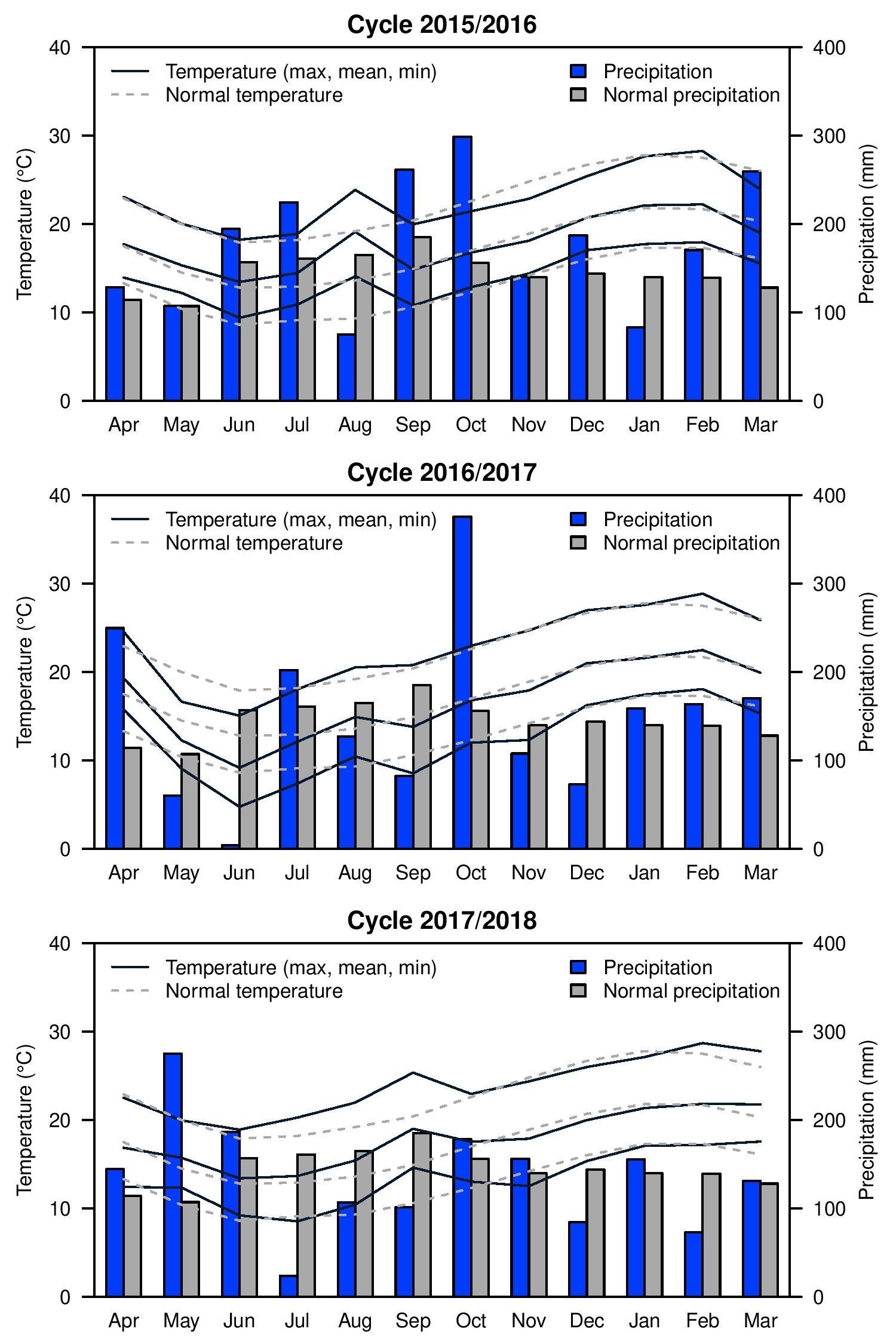
Meteorological conditions varied between the cycles, both in terms of precipitation and thermal conditions. During the focus period (winter and spring), the first cycle (2015/2016) was rainier than usual, except for August (Figure 1). In the following cycle (2016/2017), winter was dry, with rainfall generally below normal, but with a very rainy period in October. The 2017/2018 cycle began rainy until June, followed by a drier period from July to September, returning to normal as of October. From April to September 2015, 150 chilling hours were accumulated (CH = hours with air temperature ≤ 7.2°C), much lower than the climatological normal for the region (409 CH). Furthermore, in August 2015, only 8 CH were recorded, with average minimum temperature at 14.1°C, well above the normal of 9.3°C (Figure 1).
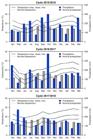
Monthly averages of maximum, mean, and minimum temperatures (°C), and rainfall (mm) for the 2015/2016, 2016/2017, and 2017/2018 cycles. Data recorded by the Davis Automatic Station. Climatological normals for the 1961-1990 period. Pinto Bandeira - RS.
In September, 41 CH were accumulated, which was associated with a severe late frost on 2015-09-13 and 2015-09-14, causing freezing damage to ‘Pinot Noir’ (Figure 2), which was located at the lower altitude (PN-low, 660 m). The PN-high and CH areas, located at a higher altitude (738 m) and with greater air circulation, were not affected, as cold air is denser and tends to accumulate in the lower parts of the terrain (SABBATINI; HOWELL, 2013). In 2016, minimum temperatures were more constant, accumulating 591 CH from April to September, a value higher than the climatological normal and adequate for the vines to completely overcome dormancy. In the 2017/2018 cycle, thermal conditions approached those of the first cycle, with 251 CH accumulated from April to September, but with cold days concentrated mainly in July and no records of late frosts.
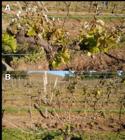
Damage caused by late frost (2015-09-13) on ‘Pinot Noir’ (Vitis vinifera L.) shoots, located at the lowest altitude of the terrain (660 m). A) Plant pruned on 2015-08-03, and B) unpruned plant. Images captured on 2015-09-15, two days after the frost. Pinto Bandeira - RS, 2015/2016 cycle.
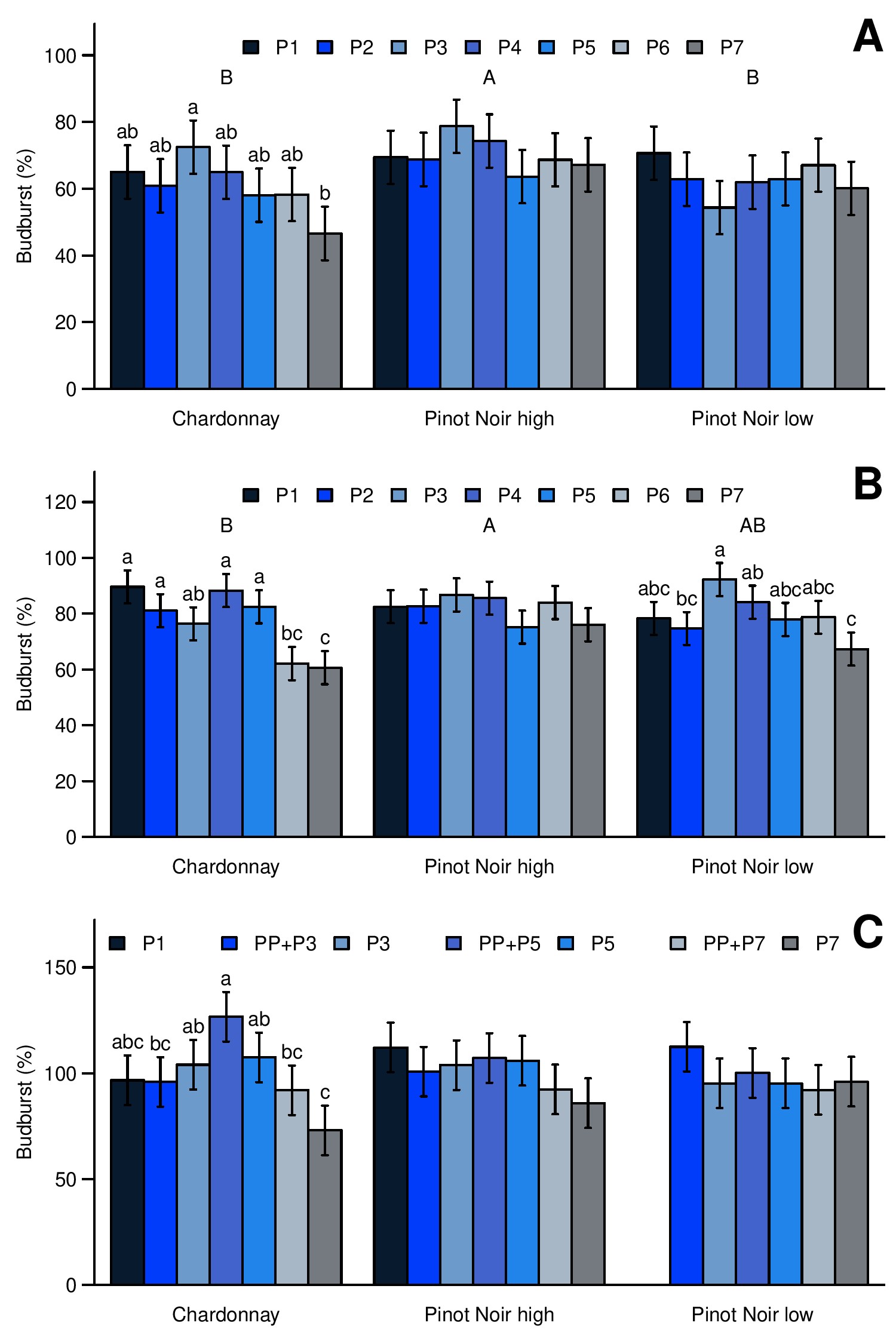
Considering the impact of environmental factors on vegetative and productive behavior of each cycle, budburst percentage was directly associated with winter chill availability. This becomes evident when comparing different pruning times in the 2015/2016 and 2016/2017 cycles (Figure 3A and 3B). Delaying the pruning date caused relatively little effect on budburst rate. In the 2015/2016 cycle (Figure 3A), a reduction in the budburst rate of ‘Chardonnay’ pruned last (2015-10-14, 47%) was observed compared to pruning 3 (2015-08-17, 72%).
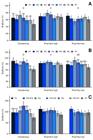
Budburst rate (% of buds sprouted) in grapevines (Vitis vinifera L.) with different pruning strategies, in the 2015/2016 (A), 2016/2017 (B), and 2017/2018 (C) cycles, in three areas: ‘Chardonnay’ (CH), ‘Pinot Noir’ high (PN high), and ‘Pinot Noir’ low (PN-low). In the last cycle, the combination of late pruning with pre-pruning management (PP, performed on 2017-07-20) was tested. P1 = pruning on Jul 10-20; P2 = pruning on Aug 3; PP+P3 = pre-pruning + pruning on Aug 15; P3 = pruning on Aug 15-17; P4 = pruning on Aug 31; PP+P5 = pre-pruning + pruning on Sep 13; P5 = pruning on Sep 13-14; P6 = pruning on Sep 28; PP+P7 = pre-pruning + pruning on Oct 11; P7 = pruning on Oct 11-14. Means marked with the same lowercase letter or unmarked, within the same cycle and area, do not differ from each other by Tukey’s HSD test at 5% probability, as do areas under the same uppercase letter or unmarked, within each year. Vertical lines indicate the 95% confidence interval for the respective mean. Pinto Bandeira - RS, 2016.
However, no significant effects of pruning date on budburst rate were observed in the other treatments, nor in the two ‘Pinot Noir’ areas in the cycle. Average budburst rate in PN-high (70%) was higher than the average rates of PN-low (63%) and Chardonnay (60%). Interestingly, the date with the highest budburst rate in CH and PN-high (P3) was the date with the lowest value in PNlow, which is explained by the occurrence of late frost in that location, causing damage to buds that were already swollen and close to sprouting (Figure 2). When buds swell due to hydration and metabolic activation at the end of dormancy, these tissues become susceptible to freezing damage (SABBATINI; HOWELL, 2013).
In the 2016/2017 cycle, which had more chill availability, higher budburst rates were observed compared to the previous cycle, with averages of 82%, 79%, and 77% for PN-high, PN-low, and CH, respectively. Under these conditions, delaying the pruning date had a significant impact on budburst, with more pronounced effects on ‘Chardonnay’ (Figure 3B), which underwent a significant reduction (P <0.05) from 90% at the beginning (P1) to 62% and 61% on the two final dates (P6 and P7). For ‘Pinot Noir’, in general, there was a milder effect of pruning dates on budburst compared to ‘Chardonnay’, with the main effect being a reduction in buds sprouted in PN-low on the last pruning date (P7, 67%), compared to the previous ones (P3, 92%, and P4, 84%), with no significant effect on the sprouting rates in PN-high.
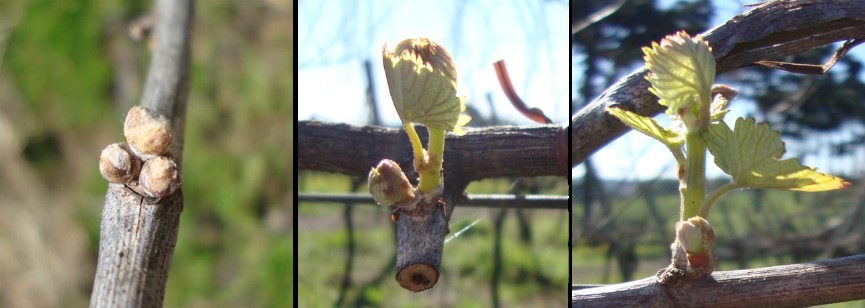
When analyzing the last cycle (2017/2018), maximum budburst exceeded the previous cycles, with average values of 101%, 99%, and 99% for PN-high, PN-low, and CH, respectively (Figure 3C). This greater stimulus in budburst, with values that exceed 100%, was associated with the uniform accumulation of chill during winter and the higher proportion of double or triple sprouting (Figure 4), mainly recorded in treatments combined with pre-pruning management.

Shoots from double and triple buds occurred in the Chardonnay and Pinot Noir varieties (Vitis vinifera L.), mainly in the pruning treatments that were preceded by pre-pruning management, in the 2017/2018 cycle. Pinto Bandeira - RS.
In this cycle, the percentage of budburst in ‘Chardonnay’ was also lower in the October prunings (Figure 3C), with milder impact on plants subjected to pre-pruning. There was no significant effect of pruning on budburst in the two ‘Pinot Noir’ areas.
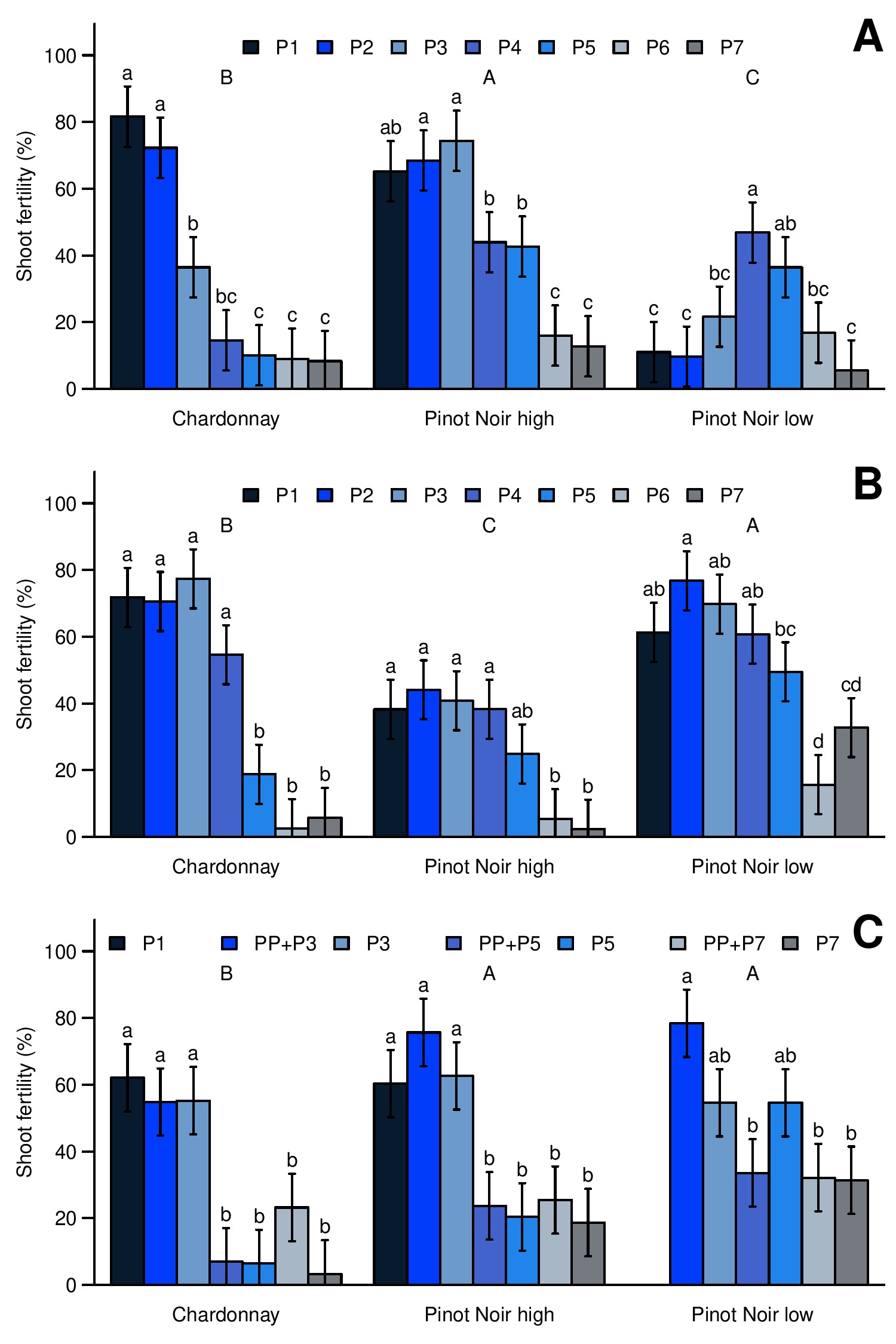
The impact of pruning date on shoot fertility (presence of clusters) was much more pronounced than on budburst rate. In the 2015/2016 cycle, there was a significant reduction in the fertility of new shoots with delayed pruning date, especially in PN-high and CH (Figure 5A). In the ‘Chardonnay’ area, on dates P1 and P2 (July 10, 2015, and August 03, 2015), the plants reached, respectively, a rate of 82% and 72% of shoots with clusters, while on P3, they reached 36% of total fertility.
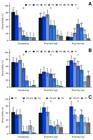
Total fertility rate (% of shoots with clusters) in grapevines (Vitis vinifera L.) with different pruning strategies, in the 2015/2016 (A), 2016/2017 (B), and 2017/2018 (C) cycles, in three areas: ‘Chardonnay’ (CH), ‘Pinot Noir’ high (PN-high), and ‘Pinot Noir’ low (PN-low). In the last cycle, the combination of late pruning with pre-pruning management (PP, performed on July 20, 2017) was tested. P1 = pruning on Jul 10-20; P2 = pruning on Aug 3; PP+P3 = pre-pruning + pruning on Aug 15; P3 = pruning on Aug 15-17; P4 = pruning on Aug 31; PP+P5 = pre-pruning + pruning on Sep 13; P5 = pruning on Sep 13-14; P6 = pruning on Sep 28; PP+P7 = pre-pruning + pruning on Oct 11; P7 = pruning on Oct 11-14. Means marked with the same lowercase letter or unmarked, within the same cycle and area, do not differ from each other by Tukey’s HSD test at 5% probability, as do areas under the same uppercase letter or unmarked, within each year. Vertical lines indicate the 95% confidence interval for the respective mean. Pinto Bandeira - RS.
The most drastic effect was recorded in prunings P4, P5, P6, and P7, with only 8% fertility on the last pruning date (P7, October 14, 2015). A similar reduction in fertility was observed in ‘Pinot Noir’ at the highest altitude (PN-high), where prunings P1, P2, and P3 had the highest shoot fertility, averaging between 65% and 74%, while P4 and P5 had medium fertility (close to 43%), with a drastic reduction in P6 and P7, reaching 16% and 13%, respectively.
In PN-low, there was also significant variation between pruning dates, but with a different response to early pruning (Figure 5A). The reduction in fertility in prunings P1, P2, and P3 is explained by the occurrence of frosts in this cycle (on 2015-09-13 and 2015-09-14), when the plants from these early prunings had already begun sprouting. Intense frost occurred on the PN-low, but not on PN-high, resulting in the death of shoots from primary buds and, consequently, reduced fertility in the lower area. From P4 onward, results were similar to those of PN-high, indicating a similar impact of pruning date in both locations.
In the second cycle (2016/2017), shoot fertility was also reduced with delayed pruning in all areas (Figure 5B). In ‘Chardonnay’, shoot fertility dropped from 54-77% in the first four pruning dates to 2-19% in the last three, similar to the previous cycle. In the two ‘Pinot Noir’ areas, responses to pruning treatments were similar to that of ‘Chardonnay’, but PNlow showed a higher proportion of fertile shoots than PN-high (Figure 5B). While in PN-high, prunings P1, P2, P3, and P4, with an average fertility of 40%, were superior to prunings P6 and P7, with an average of 4%, the same occurred in PN-low, but with average fertilities of 67% in the first group and 24% in the second. This contrast between ‘Pinot Noir’ areas is possibly associated with the fact that production in PN-low was compromised by frost in the previous cycle (2015/2016), favoring the accumulation of reserves and bud fertility for the following cycle, compared to PN-high which did not suffer frost damage and had a full harvest.
In the 2017/2018 harvest (Figure 5C), shoot fertility (%) was also reduced with delayed pruning, especially in the ‘Chardonnay’ and ‘Pinot Noir’ areas in the highest altitude. Fertility rates were higher with prunings P1, P3 and PP+P3, with averages of 57% for CH and 66% for PN-high, while the average fertility of prunings P5, PP+P5, P7 and PP+P7 was 10% for CH and 22% for PN-high. In PNlow, there was also a significant, although less intense, impact of late pruning.
Production and yield components were directly impacted by year, cultivar, and location in the three areas (Tables 1 and 2). Delayed pruning impact is also evident, regardless of other factors. Production per plant (g) was the lowest in the first cycle (2015/2016), well below what is expected for these Vitis vinifera varieties, due to the combination of low chilling hours accumulation, excessive heat in August and late frosts. This effect was observed not only in the experiment, but also throughout the Serra Gaúcha region (ALVES; TONIETTO, 2016). A significant reduction in production was observed in late pruning dates. ‘Chardonnay’ was always the most impacted by delayed pruning, with the least impact occurring on PN-low. It is worth noting that the reduction effect imposed by late pruning was more severe in cycles with better production conditions.
Pruning date impact on production and yield components is primarily explained by the variation in shoot fertility (Figure 5) and, consequently, by the number of clusters per plant, despite some significant differences in the number of berries per cluster and average berry weight (Tables 1 and 2). In all years, when comparing pruning dates with maximum and minimum production, ‘Chardonnay’ showed an average reduction of 99.2% in production (g/plant), 96.3% in the number of clusters per plant, 71.8% in the number of berries per cluster, and 25.7% in the average berry weight. In ‘Pinot Noir’, a similar assessment results in an average reduction between the two areas of 92.2% in production, 77.9% in the number of clusters per plant, 61.3% in the number of berries per cluster, and 7.5% in the average berry weight. The greatest variation among yield components occurred in the number of clusters per plant, followed by the number of berries per cluster, with average berry weight having relatively little influence on the reduction of total production.
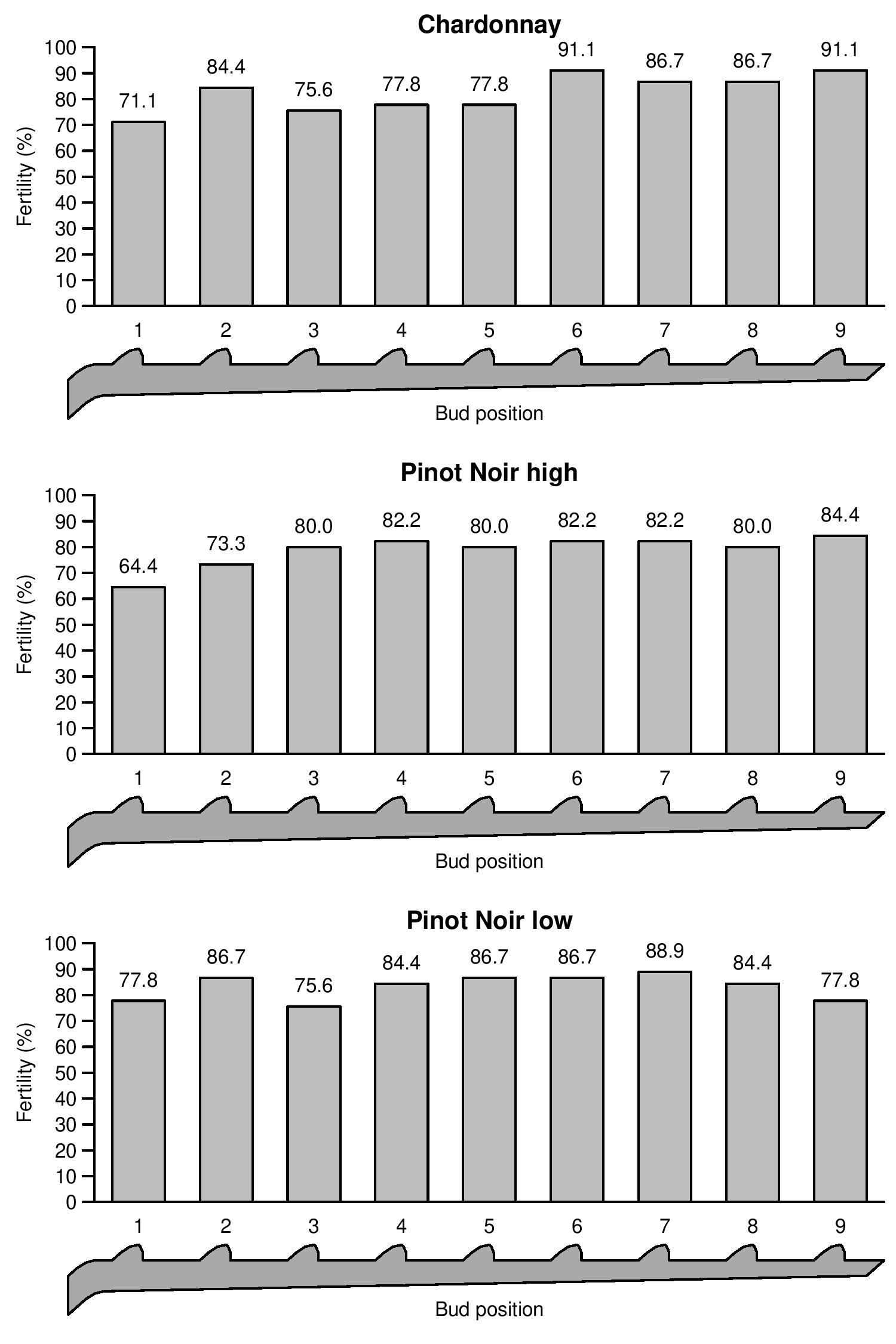
In order to explain the form in which delayed pruning affects yield components, potential fertility and viability of ‘Chardonnay’ and ‘Pinot Noir’ buds were assessed on the three areas in the last cycle (2017/2018). No significant differences (P>0.10) were observed in bud fertility between areas or between different bud positions on the shoot (Figure 6).
This is an indication that potential bud fertility (before budburst) was very similar with respect to position, cultivar, and location.
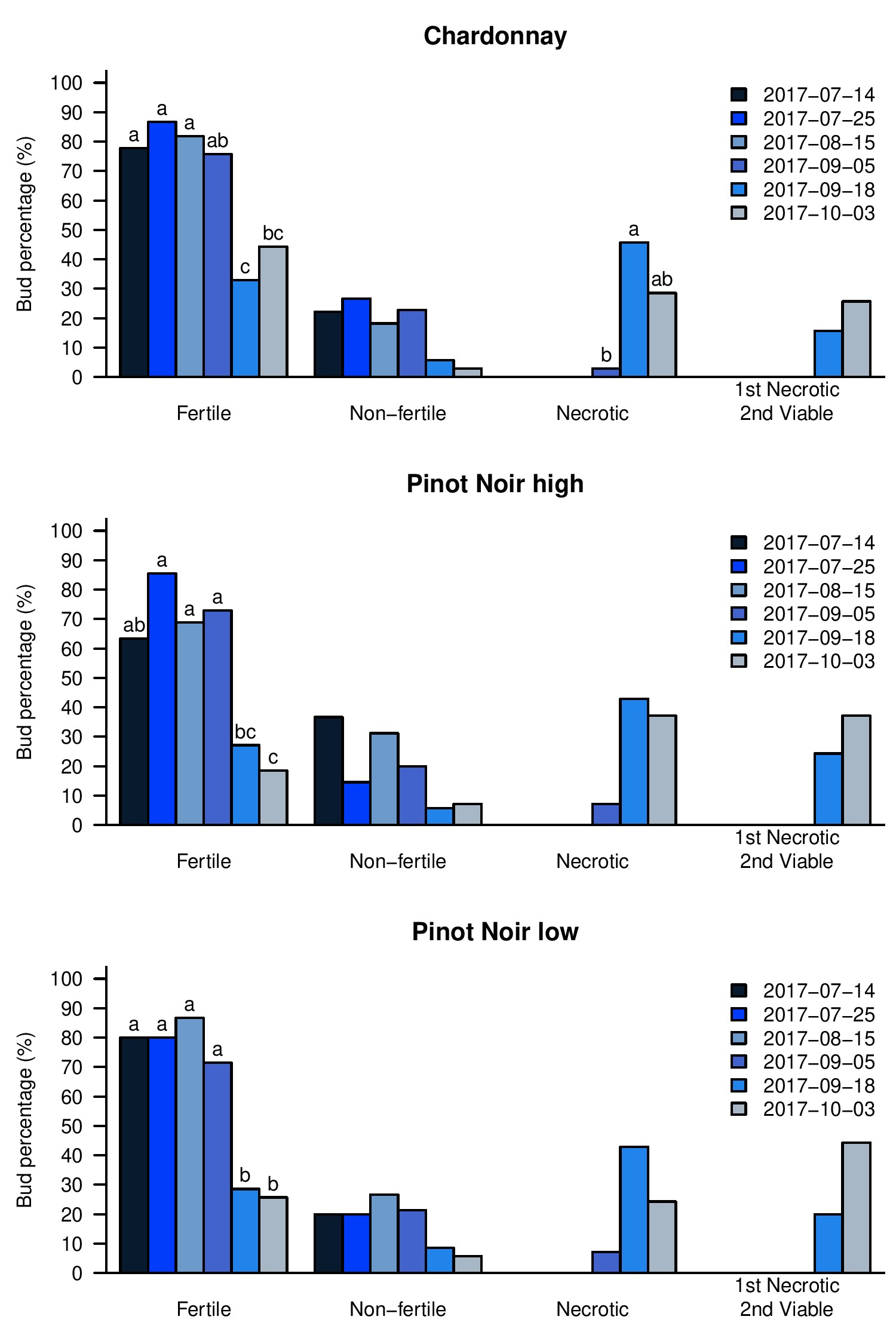
As time progressed, bud fertility decreased (Figure 7).

Proportion (%) of fertile buds (with presence of visible and developed inflorescence primordia) at different positions on the cane, in the varieties ‘Chardonnay’ (CH) and ‘Pinot Noir’ (PN-high and PN-low), evaluated before apical budburst in the 2017/2018 cycle. Pinto Bandeira - RS.
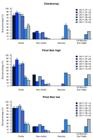
Proportion (%) of vine basal buds (Vitis vinifera L.) classified as: (1) fertile bud, (2) non-fertile bud, (3) necrotic bud, and (4) primary necrotic bud and viable secondary bud, on different pruning dates and in the varieties ‘Chardonnay’ (CH) and ‘Pinot Noir’ (PN-high and PN-low), during the 2017/2018 cycle. Pinot Noir was sampled at high (738 m) and low (660 m) altitudes. Means marked with the same letter or not marked, within the same bud type, do not differ from each other by Tukey’s HSD test at a 5% probability level. Pinto Bandeira - RS.
In the first four sampling dates (up until the first half of September), evaluated buds had an average fertility of over 70% fertile buds.
However, in the two subsequent samples (2017-09-18 and 2017-10-03), the proportion of fertile buds (Figure 8C-8D) was reduced to 39% (CH), 23% (PN-high), and 27% (PN-low). This variation is not explained by the proportion of “non-fertile buds”, which were viable at the time of the assessments and did not show inflorescence primordia (Figure 8B), as the proportion of these buds also decreased in the three areas. However, there is a significant increase in “necrotic buds” (Figure 8E) and “necrotic primary buds with a viable secondary bud” (Figure 8F) in the last two sampling dates (Figure 7).
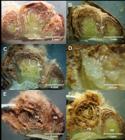
Anatomy of basal buds on canes of the ‘Chardonnay’ variety (Vitis vinifera L.), observed in longitudinal section, in the 2017/2018 cycle. A) Compound bud showing the primary, secondary, and tertiary buds; B) Viable but non-fertile bud; C) Fertile bud; D) Highlighted inflorescence primordium in fertile bud; E) Necrotic bud; and F) Dead primary bud and viable secondary bud. PB - primary bud; SB - secondary bud; TB - tertiary bud; LP - leaf primordium; IP - inflorescence primordium. Pinto Bandeira - RS.
Under southern Brazilian growing conditions, delaying the pruning date led to a significant reduction in yield components, particularly in the number of clusters per plant. The effects were more pronounced in the October pruning for ‘Pinot Noir’ and ‘Chardonnay’. These findings diverge from the favorable outcomes of late pruning found in ‘Merlot’, ‘Chardonnay’, and ‘Sauvignon Blanc’ (Vitis vinifera) in New Zealand and Australia (FRIEND; TROUGHT, 2007; FRIEND et al., 2011; TROUGHT et al., 2011; MORAN et al., 2017). Similar, but less impactful, results were reported by Frioni et al. (2016), who highlighted a 55% reduction in yield with late pruning, with 44% fewer clusters per plant, 26% decrease in cluster weight, and 17% fewer berries per cluster, compared to traditional pruning with ‘Sangiovese’ in Italy. The negative outcomes of late pruning, as highlighted by these Italian authors, are especially associated with limited reserves or competition between the vegetative growth of apical shoots and the concurrent reproductive development of basal buds.
Reproductive organs are developed in three main phases, spanning two consecutive growth cycles: the first season, preceding budburst, is devoted to the formation of undifferentiated primordia (anlagen) and their differentiation into inflorescence primordia; in the second season, flower formation and flowering occur post-budburst (VASCONCELOS et al., 2009). These stages depend on hormonal balance in the buds, considering the relationship between cytokinins and gibberellins. Gibberellins promote the initiation of lateral meristems but inhibit inflorescence development, while cytokinins promote inflorescence formation (CARMONA et al., 2008). This hormonal balance can be influenced directly and indirectly by other factors, such as bud load and production from the previous cycle, nutritional status, water availability, and rootstock vigor.
One cause of production loss due to late pruning could be the occurrence of “shatter” during the flowering period. Shatter is a physiological disorder resulting from the lack of fertilization of flowers and subsequent abortion, preventing the complete formation of berries, leading to clusters with a smaller number of berries. This can happen during cold and rainy periods or during high temperatures at flowering (KELLER, 2020).
This factor may have been partially present, as clusters from late pruning had a lower number of berries. However, when considering all cycles together (with contrasting meteorological conditions), the number of berries per cluster does not fully explain the variation that occurred in production between the initial and final pruning dates.
Additionally, in the initial analysis of basal bud sprouting, in the phenology records, the absence of clusters had already been observed.
Therefore, in this study, shatter cannot be considered a relevant cause of fertility loss in late pruning.
Fertility of basal buds is defined in the previous cycle (VASCONCELOS et al., 2009) and, in this study, was characterized by the maximum values obtained in the first pruning dates (except in the PN-low area, which suffered damage from late frost in 2015, Figure 5A). Considering the small variation in budburst, influenced mainly by the conditions of each winter, it is possible to infer that shoot fertility results were clearly reduced by the delay in pruning dates, reaching values close to zero on the last date (mid-October). Fertility of basal buds was apparently lost with this delay, due to oxidation and death of bud tissues, mainly of the primary bud (Figures 7 and 8). Some buds also showed the same effects of necrosis on the secondary bud, further affecting their production potential. This fertility loss in plants was directly associated with increased growth (vigor) of apical shoots.
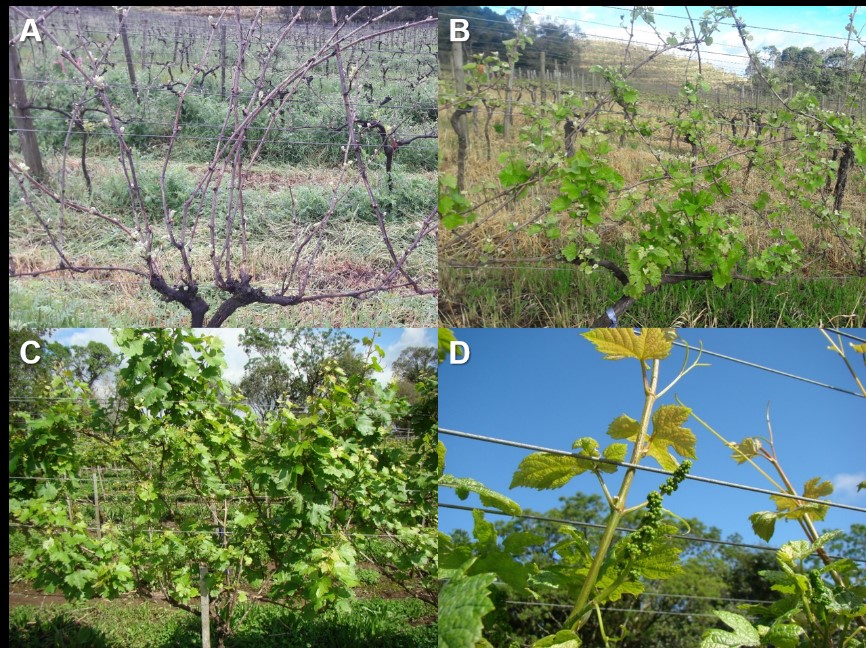
Longer delays in pruning date, with consequently greater vegetative growth of apical shoots (Figure 9), increased the negative effect on buds.

Monthly vegetative growth of ‘Chardonnay’ (Vitis vinifera L.) before late pruning treatments, in the 2015/2016 cycle. (A) 2015-08-15; (B) 2015-09-14; (C) 2015-10-15; and (D) Visible inflorescence in non-pruned plant, 2015-10-15. Pinto Bandeira - RS.
Fertility reduction of basal bud shoots after late pruning has been associated with drain on carbon reserves exerted by apical shoots.
This theory is defined by studies with late pruning in Italy (GATTI et al., 2016; FRIONI et al., 2016), considering that apical shoots act as strong drains on the cane’s reserves until leaves reach their full size and maximum photosynthetic potential, restricting the production potential of basal buds. Apical shoots can also act as source tissues of hormones, directly influencing fertility of basal buds. Yahyaoui et al. (1998) conducted an in vitro study with excised inflorescence primordia from ‘Pinot Noir’ and ‘Chardonnay’ buds cultured in different hormone media.
They obtained the reversion of the inflorescence primordium into a shoot with three leaves and a tendril when cultured in a medium with gibberellin or with gibberellin associated with auxin. This indicates that reversion or dedifferentiation may be possible in grapevine buds, changing reproductive structures defined in the previous cycle to vegetative ones.
Plant hormones influence inflorescence formation and development, especially auxins, cytokinins, gibberellins, and their associated biochemical pathways (CARMONA et al., 2008). According to May (2004), flower formation in the basal and middle portions of the shoots may be inhibited by auxin from earlier growing apical shoots, until the time of each pruning date. During the second season of the inflorescence differentiation cycle, gibberellins produced in the vegetative tissues of the aerial part cause floral inhibition in Vitis vinifera. Therefore, another possible explanation for the negative influence of delayed pruning is that apical shoots act as hormonal source on the lower portions of the cane, inducing reversion of inflorescence primordia in basal buds.
Among plant hormones, indole-3-acetic acid (IAA), the most common auxin, is the best candidate for causing necrosis in basal buds.
Young developing shoots produce auxin, transported basipetally and accumulated in basal buds (NANDA; MELNYK, 2018). There is no report that endogenous concentrations of auxin cause phytotoxicity or tissue death; however, the effect of exogenous applications of auxins varies depending on dosage. At low concentrations, auxins promote growth, whereas at high concentrations, they can cause over-accumulation of reactive oxygen species (ROS) leading to tissue oxidation and cell death (GROSSMANN, 1996; PARVEEN et al., 2022), as observed in this study (Figure 8E and 8F).
High concentrations of auxin stimulates ethylene production by induction of 1-aminocyclopropane- 1-carboxylic acid (ACC) synthase few minutes after treatment. The resulting ethylene burst causes growth abnormalities and senescence, akin to herbicidal effect (GROSSMANN, 2007). The increased apical vegetative growth observed in late pruned plants may have favored greater synthesis and translocation of auxin to basal buds, leading to necrosis of these tissues. Observed bud death in this study is also similar to symptoms of the disorder called primary bud necrosis (PBN), which has causes not yet completely understood (KAVOOSI et al., 2013; VASCONCELOS et al., 2009).
The influence of apical shoot vigor and, consequently, the modulation of its effect on the results of delayed pruning becomes clearer when considering the contrast of climatic conditions between viticultural regions worldwide. While in central New Zealand and in Barossa Valley, Australia, fertility remained unchanged or even favored by late pruning (FRIEND; TROUGHT, 2007; FRIEND et al., 2011; TROUGHT et al., 2011; MORAN et al., 2017), in Italy (GATTI et al., 2016; FRIONI et al., 2016; VERCESI et al., 2023), Spain (ZHENG et al., 2017), and Brazil (Serra Gaúcha), fertility was drastically reduced with delayed pruning.
Average temperatures in Wellington, NZ, Westport, NZ, and Barossa Valley, AU, at the beginning of spring are 12.8, 11.8°C, and 12.3°C, respectively. This thermal condition is much lower than the averages observed in Brazil, Italy, and Spain, and slightly above the grapevine’s base temperature (10°C), favoring slow vegetative growth after budburst. In contrast, in La Rioja (Spain) and Perugia (Italy), average temperatures during the spring months are 16.0 and 15.3°C, respectively, a more favorable thermal condition for rapid vegetative growth.
In Southern Brazil (Serra Gaúcha), average spring temperatures are even higher (16.9°C), compared to other regions, accompanied by high precipitation (160 mm monthly). This climatic condition is even more favorable for vegetative growth than Italy and Spain, and especially New Zealand and Australia. This is evident in the images of the two cultivars before the last pruning dates (Figure 9).
In New Zealand, very late pruning (October, in Southern Hemisphere conditions) occurred when apical shoots were approximately 5 cm long, resulting in an average increase of 79% in yield of ‘Merlot’ over three consecutive cycles (FRIEND; TROUGHT, 2007). In Australia, very late pruning occurred when apical shoots had only two to three separate leaves, with no resulting impact on yield (MORAN et al., 2017). Low apical growth vigor in these two regions is associated with climatic conditions. In Italy (FRIONI et al., 2016) and Spain (ZHENG et al., 2017), very late pruning (May and June in the Northern Hemisphere) occurred when the apical shoots already had developed inflorescences, reducing yield in over 40%. In Serra Gaúcha, where very late pruning occurred on plants with dense vegetative growth and presence of inflorescences (Figure 9D), even stronger impacts were observed. In the three cycles evaluated, on average, there was a reduction of 97% in yield of ‘Chardonnay’ and 89% in ‘Pinot Noir’ (PN-high), between regular (July and August) and late (October) pruning. This significant reduction in yield due to delayed pruning in Serra Gaúcha was directly related to climatic conditions that favored vigorous apical growth.
According to Gatti et al. (2016), late pruning when canes have apical shoots with more than four developed leaves limits yield.
Palliotti et al. (2017) demonstrated that final pruning with apical shoots having no more than two or three developed leaves results in minimal yield limitation and adequate maturation, but delayed pruning with apical shoots of over four leaves drastically reduced productivity. In Serra Gaúcha, under these experimental conditions, delayed pruning up until the phenological stage of two or three separate leaves (end of August/ early September) did not affect yield.
Conclusion
The practice of delaying winter pruning in early varieties such as ‘Chardonnay’ and ‘Pinot Noir’ can lead to a significant reduction in yield per plant in the climatic conditions of Serra Gaúcha. This reduction in production is directly associated with necrosis of the primary bud in the base buds of the cane (remaining after pruning, in spur cordon), stimulating the sprouting of secondary or tertiary buds that do not bear clusters.
This negative effect of late pruning on production only manifests when the apical shoots surpass the phenological stage of two to three expanded leaves, which in the evaluated cycles occurred after the beginning of September. It is important to restrict delayed pruning to this maximum limit, in order to ensure sustainable production.
References
- ALVES, M.E.B.; TONIETTO, J. Condições meteorológicas e sua influência na safra vitícola de 2016 em regiões produtoras de vinhos finos no Sul do Brasil Bento Gonçalves: Embrapa Uva e Vinho, 2016. (Comunicado Técnico, 187). Disponível em: https://ainfo.cnptia.embrapa.br/digital/bitstream/item/148475/1/Comunicado-Tecnico-187.pdf. Acesso em: 10 dec. 2023.
-
BERLATO, M. A.; CORDEIRO, A. P. A. Sinais de mudanças climáticas globais e regionais, projeções para o século XXI e as tendências observadas no Rio Grande do Sul: uma revisão. Agrometeoros, Passo Fundo, v.25, n.2, 2018. http://dx.doi.org/10.31062/agrom.v25i2.25884
» http://dx.doi.org/10.31062/agrom.v25i2.25884 -
CAO, D.; CHABIKWA, T.; BARBIER, F.; DUN, E.A.; FICHTNER, F.; DONG, L.; KERR, S.C.; BEVERIDGE, C.A. Auxin-independent effects of apical dominance induce changes in phytohormones correlated with bud outgrowth. Plant Physiology, Lancaster, v.192, n.2, p.1420-34, 2023. https://doi.org/10.1093/plphys/kiad034
» https://doi.org/10.1093/plphys/kiad034 -
CARMONA, M. J.; CHAÏB, J.; MARTÍNEZ-ZAPATER, J. M.; THOMAS, M. R. A molecular genetic perspective of reproductive development in grapevine. Journal of Experimental Botany, Elmsford, v.59, n.10, p.2579-96, 2008. https://doi.org/10.1093/jxb/ern326
» https://doi.org/10.1093/jxb/ern326 -
CENTINARI, M.; SMITH, M.S.; LONDO, J.P. Assessment of freeze injury of grapevine green tissues in response to cultivars and a cryoprotectant product. Hort Science, Alexandria, v.51, n.7, p.856-60, 2016. https://doi.org/10.21273/HORTSCI.51.7.856
» https://doi.org/10.21273/HORTSCI.51.7.856 -
FRIEND, A.P.; TROUGHT, M.C.T. Delayed winter spur-pruning in New Zealand can alter yield components of Merlot grapevines. Australian Journal of Grape and Wine Research, Adelaide, v.13, p.157-64, 2007. https://doi.org/10.1111/j.1755-0238.2007.tb00246.x
» https://doi.org/10.1111/j.1755-0238.2007.tb00246.x -
FRIEND, A. P.; TROUGHT, M. C. T.; STUSHNOFF, C.; WELLS, G. H. Effect of delaying budburst on shoot development and yield of Vitis vinifera L. Chardonnay ‘Mendoza’ after a spring freeze event. Australian Journal of Grape and Wine Research, Adelaide, v.17, p.378-382, 2011. https://doi.org/10.1111/j.1755-0238.2011.00162.x
» https://doi.org/10.1111/j.1755-0238.2011.00162.x -
FRIONI, T.; TOMBESI, S.; SILVESTRONI, O.; LANARI, V.; BELLINCONTRO, A.; SABBATINI, P.; GATTI, M.; PONI, S.; PALLIOTTI, A. Postbudburst spur pruning reduces yield and delays fruit sugar accumulation in Sangiovese in Central Italy. American Journal of Enology and Viticulture, Davis, v.67, n.4, p.419-25, 2016. https://doi.org/10.5344/ajev.2016.15120
» https://doi.org/10.5344/ajev.2016.15120 -
GABBARDO, M.; BATTISTUTTA, F.; GABBARDO, E. T.; TAT, L.; CELOTTI, E. Aromatic characterization of Brazilian sparkling wines using olfactometry and a sensory panel. BIO Web Conferences, Les Ulis, v.7, 2005, p.1-5, 2016. https://doi.org/10.1051/bioconf/20160702005
» https://doi.org/10.1051/bioconf/20160702005 -
GATTI, M.; PIREZ, F. J.; CHIARI, G.; TOMBESI, S.; PALLIOTTI, A.; MERLI, M. C.; PONI, S. Phenology, canopy aging and seasonal carbon balance as related to delayed winter pruning of Vitis vinifera L. cv. Sangiovese grapevines. Frontiers in Plant Science, Lausanne, v.7, n.659, p.1-14, 2016. https://doi.org/10.3389/fpls.2016.00659
» https://doi.org/10.3389/fpls.2016.00659 -
GROSSMANN, K. A role for cyanide, derived from ethylene biosynthesis, in the development of stress symptoms. Physiologia Plantarum, Copenhagen, v.97, n.4, p.772-5, 1996.https://doi.org/10.1111/j.1399-3054.1996.tb00543.x
» https://doi.org/10.1111/j.1399-3054.1996.tb00543.x -
GROSSMANN, K. Auxin herbicide action: lifting the veil step by step. Plant Signaling and Behavior, Austin, v.2, n.5, p.421-3, 2007. https://doi.org/10.4161/psb.2.5.4417
» https://doi.org/10.4161/psb.2.5.4417 - KAVOOSI, B.; ESHGHI, S.; TAFAZOLI, E.; RAHEMI, M.; EMAM, Y. Anatomical study of primary bud necrosis in Vitis vinifera L. cv. Askari in winter dormant bud. Journal of Ornamental Plants, Rasht, v.3, n.2, p.81-6, 2013.
- KELLER, M. The science of grapevines 3.ed. London: Elsevier Academic Press, 2020. 1647 p.
- MANDELLI, F.; BERLATO, M.A.; TONIETTO, J.; BERGAMASCHI, H. Fenologia da videira na Serra Gaúcha. Pesquisa Agropecuária Gaúcha, Porto Alegre, v.9, n.1-2, p.129-44, 2003.
-
MAY, P. From bud to berry, with special reference to inflorescence and bunch morphology in Vitis vinifera L. Australian Journal of Grape and Wine Research, Adelaide, v.6, p.82-98, 2004. https://doi.org/10.1111/j.1755-0238.2000.tb00166.x
» https://doi.org/10.1111/j.1755-0238.2000.tb00166.x -
MORAN, M.A.; SADRAS, V.O.; PETRIE, P.R. Late pruning and carry-over effects on phenology, yield components and berry traits in Shiraz. Australian Journal of Grape and Wine Research, Adelaide, v.23, p.390-8, 2017. https://doi.org/10.1111/ajgw.12298
» https://doi.org/10.1111/ajgw.12298 -
NANDA, A. K.; MELNYK, C. W. The role of plant hormones during grafting. Journal of Plant Research, Tohoku, v.131, n.1, p.49-58, 2018. https://doi.org/10.1007/s10265-017-0994-5
» https://doi.org/10.1007/s10265-017-0994-5 -
PALLIOTTI, A.; FRIONI, T.; TOMBESI, S.; SABBATINI, P.; CRUZ-CASTILLO, J. G.; LANARI, V.; SILVESTRONI, O.; GATTI, M.; PONI, S. Double pruning grapevines as a management tool to delay berry ripening and control yield. American Journal of Enology and Viticulture, Davis, v.68, p.412-21, 2017. https://doi.org/10.5344/ajev.2017.17011
» https://doi.org/10.5344/ajev.2017.17011 -
PARVEEN, N.; KANDHOL, N.; SHARMA, S.; SINGH, V.P.; CHAUHAN, D.K.; LUDWIG-MÜLLER, J.; CORPAS, F.J.; TRIPATHI, D.K. Auxin Crosstalk with Reactive Oxygen and Nitrogen Species in Plant Development and Abiotic Stress. Plant and Cell Physiology, Oxford, v.63, p.1814-25, 2022. https://doi.org/10.1093/pcp/pcac138
» https://doi.org/10.1093/pcp/pcac138 - PEREIRA, G.E.; ZANUS, M.C.; MELLO, L.M.R.; LIMA, M.S.; PEREGRINO, I. Panorama da produção nacional de vinhos espumantes. Informe Agropecuário, Belo Horizonte, v.41, n.310, p.7-18, 2020. (
-
R CORE TEAM. R: a language and environment for statistical computing. Vienna: R Foundation for Statistical Computing, 2024. Disponível em: https://www.r-project.org/ Acesso em: 10 fev 2024.
» https://www.r-project.org/ -
SABBATINI, P.; HOWELL, G.S. Rootstock scion interaction and effects on vine vigor, phenology, and cold hardiness of interspecific hybrid grape cultivars (Vitis spp.). International Journal of Fruit Science, Philadelphia, v.13, n.4, p.466-77, 2013.https://doi.org/10.1080/15538362.2013.789277
» https://doi.org/10.1080/15538362.2013.789277 -
SNYDER, R.L.; MELO-ABREU, J.P. Frost protection: fundamentals, practice, and economics. Rome: FAO Environment and Natural Resources, 2005. Disponível em:http://www.fao.org/docrep/008/y7223e/y7223e00.htm#Content Acesso em: 10 fev. 2022.
» http://www.fao.org/docrep/008/y7223e/y7223e00.htm#Content -
TROUGHT, M. C. T.; BENNETT, J. S.; BOLDINGH, H. L. Influence of retained cane number and pruning time on grapevine yield components, fruit composition and vine phenology of Sauvignon Blanc vines. Australian Journal of Grape and Wine Research, Adelaide, v.17, p.258-62, 2011. https://doi.org/10.1111/j.1755-0238.2011.00141.x
» https://doi.org/10.1111/j.1755-0238.2011.00141.x -
UVIBRA- União Brasileira de Vitivinicultura. Mercado Interno – 2021 foi o ano do espumante Bento Gonçalves, 2022. Disponível em: http://www.uvibra.com.br/noticias/10-02-2022-mercado-interno-2021-foi-o-ano-do-espumante Acesso em: 10 fev. 2024.
» http://www.uvibra.com.br/noticias/10-02-2022-mercado-interno-2021-foi-o-ano-do-espumante -
VASCONCELOS, M.C.; GREVEN, M.; WINEFIELD, C.S.; TROUGHT, M.C.T.; RAW, V. The flowering process of Vitis vinifera: A review. American Journal of Enology and Viticulture, Davis, v.60, n.4, p.411-34, 2009. https://doi.org/10.5344/ajev.2009.60.4.411
» https://doi.org/10.5344/ajev.2009.60.4.411 -
VERCESI, A.; GARAVANI, A.; PARISI, M.G.; GATTI, M.; PONI, S. Vine performance and phenology postponement in cane-pruned Chardonnay vines grown in a temperate climate: the effects of a delayed winter pruning. Australian Journal of Grape and Wine Research, Adelaide, v.406, p.1-16, 2023. https://doi.org/10.1155/2023/1329802
» https://doi.org/10.1155/2023/1329802 -
YAHYAOUI, T.; BARBIER, M.; BESSIS, R. In vitro morphogenesis of grapevine (Vitis vinifera L.) inflorescence primordia, cvs Pinot Noir and Chardonnay. Australian Journal of Grape and Wine Research, Adelaide, v.4, n.3, p.111-20, 1998. https://doi.org/10.1111/j.1755-0238.1998.tb00139.x
» https://doi.org/10.1111/j.1755-0238.1998.tb00139.x -
ZHENG, W.; GARCÍA, J.; BALDA, P.; TODA, F. M. Effects of late winter pruning at different phenological stages on vine yield components and berry composition in La Rioja, north-central Spain. OENO One, Villenave d'Ornon, v.51, n.4, p.363-72, 2017. https://doi.org/10.20870/oeno-one.2017.51.4.1863
» https://doi.org/10.20870/oeno-one.2017.51.4.1863
Edited by
-
Luis Eduardo Correa Antunes