 Compatibility of Alphabaculovirus spofrugiperdae (Lefavirales: Baculoviridae) with Fungicides
ABSTRACT
Agriculture in Brazil stands out globally due to favorable environmental conditions that support high productivity; however, pest infestations remain a major challenge, increasing production costs and reducing crop efficiency. In Espírito Santo state, tomato cultivation is especially important in regions characterized by intensive pesticide use. Although Spodoptera frugiperda is considered a secondary pest in tomato crops, its management often requires chemical control, and the entomopathogenic virus Alphabaculovirus spofrugiperdae has emerged as a promising agent of biological control alternative. This study aimed to evaluate the compatibility of A. spofrugiperdae with fungicides commonly used in tomato disease management. The experiment was conducted under controlled laboratory conditions at the Insect Microbial Control Laboratory of NUDEMAFI, Federal University of Espírito Santo. A commercial bioinsecticide (Buick®) based on A. spofrugiperdae was evaluated alone and in combination with fungicides formulated with azoxystrobin + difenoconazole + chlorothalonil, acibenzolar-S-methyl, captan, difenoconazole, difenoconazole + pydiflumetofen, mancozeb, and chlorothalonil. Larval mortality of S. frugiperda was assessed in bioassays to determine product compatibility. Compatibility was observed between A. spofrugiperdae and all tested fungicides. Mancozeb resulted in the highest larval mortality in all assays, and this effect was attributed to the fungicide when applied alone; however, when mancozeb was applied together with the baculovirus, mortality reflected the combined action of both agents. Although no pH adjustment was performed, measurements showed that the mixtures remained acidic, a condition that does not inactivate baculoviruses, suggesting that pH did not interfere with viral activity. These findings indicate that A. spofrugiperdae can be used in combination with fungicides in tomato disease management, potentially reducing production costs and supporting sustainable pest control strategies.
Keywords:
IPM; Biological control; Biological inputs; Spodoptera frugiperda
1. Introduction
Due to favorable soil and climatic conditions and its vast territorial expanse, Brazil stands out both as an agricultural producer and the world’s largest consumer of pesticides (Albuquerque et al., 2016; FAO, 2023). Pesticides are used in production, storage, agricultural processing, forest protection, and other ecosystems. These products are intended to modify the composition of flora or fauna to protect from organisms considered harmful (Brasil, 2023).
Tomato is among the crops that require the most intensive pesticide application due to the high incidence of pests (Chung and Chen, 2011). In the state of Espírito Santo, the southwestern and central mountainous microregions exhibit more intensive use of these products in tomato cultivation (Cassal et al., 2014). This situation is of great concern, as it can adversely affect the health of farmers and consumers and lead to environmental problems (INCAPER, 2010).
Integrated Pest Management (IPM) is of utmost importance, as it enables the use of a diverse set of approaches that act in a complementary manner within a cohesive strategy for management of insects, diseases, and weeds. Furthermore, it is essential to prioritize management strategies that are environmentally safe (Bueno et al., 2011; Torres and Bueno, 2018).
In tomato cultivation, insecticides and fungicides are widely used. Notably, products for the control of fungal diseases are typically applied on a weekly basis and rarely include biological agents, whereas insecticides can be replaced by entomopathogenic fungi or viruses. The combined use of these products can be beneficial to farmers (INCAPER, 2010). Therefore, biological control is a key component of IPM and can be employed in the management of the fall armyworm, Spodoptera frugiperda (J. E. Smith, 1797) (Lepidoptera: Noctuidae) (Meagher Junior et al., 2016; Perier et al., 2022).
This species causes considerable damage to tomato plants. It has six larval instars and can complete its development in about 56 days, depending on temperature and diet (He et al., 2019). It may exhibit cannibalistic habits, beginning at 2 to 4 days of age, with higher cannibalism rates observed in larvae at 10 to 12 days of age (Chapman et al., 1999; Pepi et al., 2016). The most severe damage to the host plant occurs during the fifth and sixth larval instars, which should be the primary targets of pest management strategies (He et al., 2019; Liang et al., 2020; Ren et al., 2020).
Microbial bio-inputs formulated with fungi, viruses, bacteria, and/or nematodes are effective tools for the biological control of numerous insect pests in diverse agroecosystems (Lacey, 2017; Souza et al., 2019). Among the viruses used in insect biological control is Alphabaculovirus spofrugiperdae (Lefavirales: Baculoviridae), known as SfMNPV [registered with the Brazilian Ministry of Agriculture, Livestock and Food Supply (MAPA)], which is commercially available. However, studies on application technology (Dorneles Junior, 2020) and compatibility of this virus with other products are required to improve its efficacy under field conditions.
Determining the compatibility between synthetic chemical products and biological inputs is critical for pest and disease management, ensuring that the efficacy of the adopted control methods is not compromised (Torres and Bueno, 2018; Santos et al., 2021). Synthetic chemical products, even when considered selective, can exert lethal (Roubos et al., 2014; Hill et al., 2017) or sublethal effects on natural enemies (Stark et al., 2007; Banks and Stark, 2011; Amarasekare et al., 2016; Banks et al., 2017) and may even inactivate the microorganisms used in biological control. Such effects can result in outbreaks or infestations of pests that were previously maintained at low population levels (Bueno et al., 2022).
In small-scale agricultural systems, particularly in family agriculture, producers may only have a single sprayer. The ability to tank-mix compatible products optimizes field operations, providing both economic and logistical benefits. However, the simultaneous application of biological and chemical products can compromise the efficacy of one or both agents. Although entomopathogenic viruses such as A. spofrugiperdae (SfMNPV) have gained increasing adoption in IPM programs, their combined use with chemical molecules remains limited due to insufficient data on their stability and virulence in mixtures (Dorneles Junior, 2020).
Compatibility studies have been conducted with insecticides (Zamora-Avilés et al., 2013; Figueroa et al., 2015; Bentivenha et al., 2019), herbicides and adjuvants (Maciel et al., 2024). However, evaluations involving fungicides remain scarce. This research gap limits the safe and efficient integration of bioinsecticides into IPM strategies, where chemical and biological agents are frequently applied together. Furthermore, tank-mixing microbiological bio-inputs with synthetic fungicides is justified when simultaneous outbreaks of insect pests and fungal diseases occur in the same crop (Greene et al., 1976).
Here, we evaluated the compatibility of a commercial formulation of A. spofrugiperdae (Buick®) and fungicides commonly used in disease management under controlled laboratory conditions. The results are expected to provide practical guidance for the safe integration of these combinations into IPM programs, thereby contributing to more sustainable and economically viable pest management practices.
2. Materials and methods
The study was conducted at the Insect Microbial Control Laboratory, Entomology Department of the NUDEMAFI (Nucleus of Scientific and Technological Development in Phytosanitary Management of Pests and Diseases), located at the Center for Agricultural Sciences and Engineering of the Federal University of Espírito Santo (CCAE/UFES), Alegre, ES, Brazil. All bioassays were conducted under controlled laboratory conditions to ensure environmental stability throughout the experiments.
Spodoptera frugiperdarearing. Larvae of S. frugiperda from a laboratory colony maintained at the Entomology Laboratory of the Department of Agronomy were used for bioassays. Rearing was maintained in a climate-controlled room at 25 ± 2 °C, 60% relative humidity, and a 12h:12h photoperiod. Adults were held in PVC cages and provided with cotton soaked in a 10% sucrose solution. White paper sheets were placed in the cages to facilitate oviposition and exchanged every two days to collect egg masses. Egg masses were placed in transparent plastic containers until neonate emergence. Neonate larvae were carefully transferred to 100 mL plastic containers with an artificial diet following the formulation described by Greene et al. (1976). At approximately 10 days of age, larvae were individually transferred to a 3-cm diameter Gerbox® acrylic container with ad libitum access to artificial diet until pupation.
Origin ofAlphabaculovirus spofrugiperdaebioinoculum and fungicides. The commercial bioinoculum Buick® (Koppert®), formulated with A. spofrugiperdae, was used as the bioinoculum source. Fungicides containing the following active ingredients were tested: (1) Azoxystrobin + Difenoconazole + Chlorothalonil; (2) Acibenzolar-S-Methyl; (3) Captan; (4) Difenoconazole; (5) Difenoconazole + Pidiflumetofen; (6) Mancozeb; and (7) Chlorothalonil. These fungicides, characterized by chemical group and mode of action in Table 1 (FRAC, 2020), are registered for controlling fungal diseases in tomato crops that may coincide with S. frugiperda.
Compatibility of Alphabaculovirus spofrugiperdae with fungicides against three-day-old Spodoptera frugiperda larvae. The compatibility bioassay followed the methodology adapted from Méndez et al. (2002). Each treatment included a three-day-old S. frugiperda larvae, the commercial bioinoculum Buick® (A. spofrugiperdae), and/or and seven fungicides commonly used in tomato disease management were included in all treatments. Mixture pH was adjusted and maintained at acidic levels (Table 2) to prevent virus deactivation. The formulation closest to neutrality was Manzate® (pH 6.22), followed by its mixture with baculovirus (pH 6.5). The most acidic solutions were Captan® alone (pH 3.8) and its mixture with the virus (p H3.7). The control treatments (water alone, pH 5.7; virus alone, pH 5.49) did not interfere with viral activity.
Hydrogen ion potential (pH) of the bioinoculum and individual fungicides, their combinations with bioinoculum, and the control.
The experiment consisted of four stages. In the first two stages, 3-day-old S. frugiperda larvae were treated with bioinoculum (Buick®) at a concentration of 2.0 mL/L, and fungicides at manufacturer-recommended concentrations (Table 1). In all stages, 1 cm3 pieces of the artificial diet (used for S. frugiperda rearing, without formaldehyde) were treated. Bioinoculum suspensions were prepared at the specified concentrations, with viral titers ≥ 7.5 x 10⁹ occlusion bodies/mL as indicated on the product label. Fungicide solutions were prepared at the concentrations shown in Table 1.
For each stage, artificial diet pieces (1 cm3) were immersed for 1 minute in the following treatments: (1) Control (Sterile distilled water); (2) Azoxystrobin + Difenoconazole + Chlorothalonil (Across®); (3) Difenoconazole + Pidiflumetofen (Miravis Duo®); (4) Captan (Captan® SC); (5) Mancozeb (Manzate® WG); (6) Acibenzolar-S-Methyl (Bion® 500 WG); (7) Difenoconazole (Difcor® 250 EC); (8) Chlorothalonil (Isatalonil® 500 SC); (9) Buick® + Across®; (10) Buick® + Miravis Duo®; (11) Buick® + Captan®; (12) Buick® + Manzate®; (13) Buick® + Bion®; (14) Buick® + Difcor®; (15) Buick® + Isatalonil®; (16) A. spofrugiperdae (Buick®). Treated diet pieces were placed in 50 mL plastic cups, and larvae (3 or 5 days old, corresponding to bioinoculum concentration of 2.0 and 0.5 mL/L, respectively) were added. Bioassays were maintained at 25 ± 2 °C, 60 ± 10% relative humidity, and 12:12 photoperiod.
Each treatment included 60 larvae (n = 60, one larva per replicate). Larval mortality (%) and survival probability (%) were assessed daily until pupation by gently touching the cephalic capsule with a fine brush; larvae responding with movement were scored as alive, while non-responders were recorded as dead. Evaluations continued until all larvae in each treatment had died.
Larval mortality and pupation percentages were subjected to the Scott Knott test at 5% probability. Survival analysis was performed using the Kaplan-Meier estimator. The "Log-rank" test was also conducted to verify differences between the adjusted curves. All statistical analyses were conducted using R software (version 4.3.2) (R Core Team, 2024).
Compatibility of Alphabaculovirus spofrugiperdae with fungicides against five-day old Spodoptera frugiperda larvae. This bioassay utilized five-day-old S. frugiperda larvae and bioinoculum (Buick®) at 0.5 mL/L, following the same methodology and statistical analyses as described for the three-day-old larvae bioassay.
3. Results
Compatibility of Alphabaculovirus spofrugiperdae with fungicides against three-day-old Spodoptera frugiperda larvae
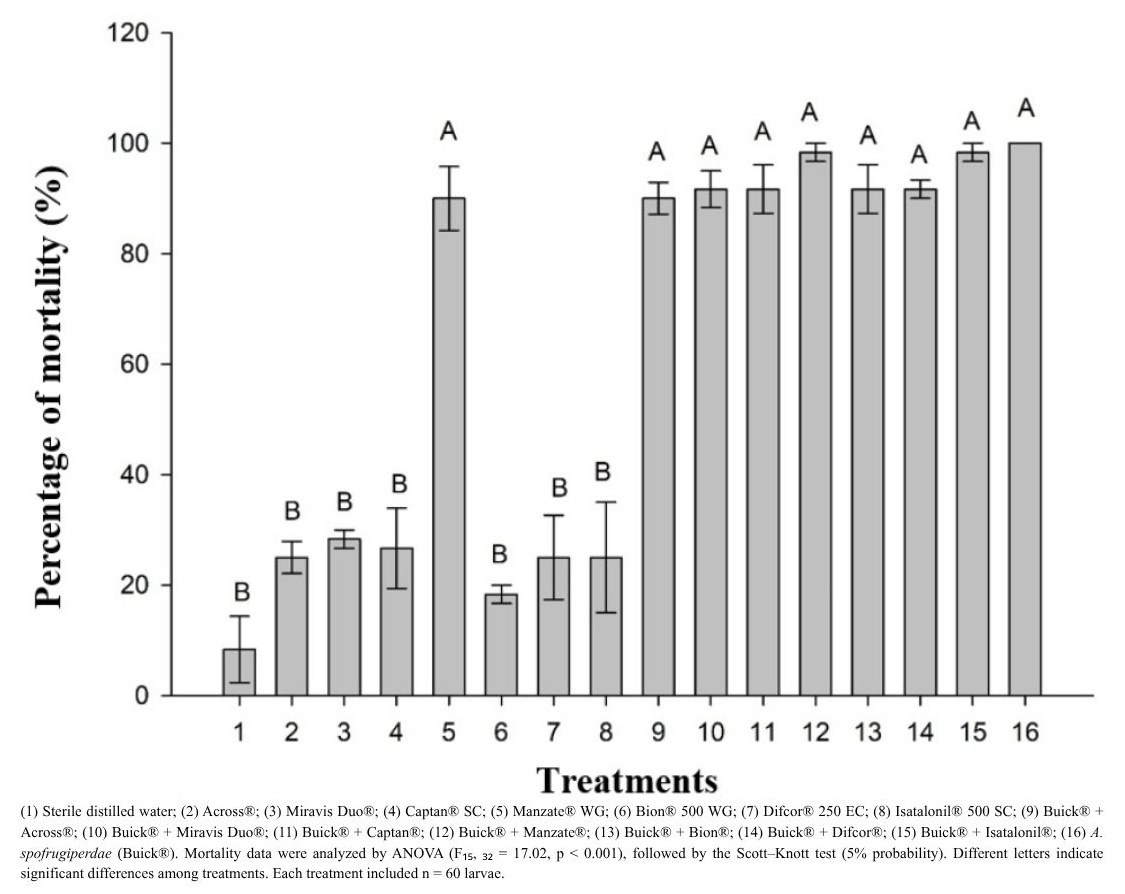
In the first round of assay using three-day-old larvae and 2 mL/L of A. spofrugiperdae, two mortality groups were observed (Fig. 1). The high mortality group included: baculovirus alone (100%); Manzate® WG alone (90%), and mixtures of fungicides Across®, Miravis Duo®, Captan®, Manzate®, Bion®, Difcor®, and Isatalonil® with virus (90%, 91.67%, 91.67%, 98.3%, 91.67%, 91.67%, and 98.3%, respectively). The low mortality groups comprised the water control (8.3%) and fungicides treatments (excluding Manzate®): Across®, Miravis Duo®, Captan®, Bion®, Difcor®, and Isatalonil® (i.e., 25%, 28.3%, 26.67%, 18.3%, 25%, and 25%, respectively).
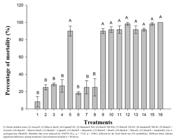
Mortality (%) of 3-day-old Spodoptera frugiperda larvae subjected to A. spofrugiperdae bioinsecticide (Buick®) and association with fungicides.
In the second round of bioassay (Fig. 2), using the same larval age and virus dose (as in the first trial), three distinct mortality groups were observed. The high mortality group included Manzate® + baculovirus (98.3%), baculovirus alone (95%), Manzate® alone (91.67%), and baculovirus + Across® (90%). Moderate mortality was observed in baculovirus mixtures with Miravis Duo® (85%), Captan® (78.3%), Bion® (86.67%), Difcor® (78.3%), and Isatalonil® (83.3%). The low mortality group comprised the individual fungicides Across®, Miravis Duo®, Captan® SC, Bion® 500 WG, Difcor® 250 EC, and Isatalonil® 500 SC (i.e.,3.3%, 0.0%, 1.67%, 6.67%, 1.67% and 1.67%, respectively), and in distilled water control (0%).
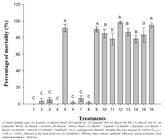
Mortality (%) of 3-day-old Spodoptera frugiperda larvae subjected to A. spofrugiperdae bioinsecticide (Buick®) and association with fungicides.
In trials 1 and 2 (Fig. 3 A and B), with increased baculovirus dose, the response was more rapid, with a lifecycle duration of up to 23 days. Manzate® again demonstrated low survival probability (<10%, consistent with previous bioassays), though with an extended lifecycle of 32 days. Treatments containing Bion®, Across®, and Difcor®, as well as distilled water control, showed survival probability above 50%, with a lifecycle duration of 30 days (Bion®, Across®), and 34 days (Difcor®) and 21 days (water control).
Compatibility of Alphabaculovirus spofrugiperdae with fungicides against five-day old Spodoptera frugiperda larvae
In the first trial, mortality percentages formed three distinct statistical groups (Fig. 4). The highest mortality rates were observed with Manzate® WG alone (71.7%) and its mixture with the virus (60%). Moderate mortality occurred in virus mixtures with Across®, Miravis Duo®, Bion® 500 WG, Captan® SC, Difcor® 250 EC, and Isatalonil® 500 SC (i.e., 15%, 18.3%, 18.3%, 20%, 16.67%, and 23.3%, respectively). The lowest mortality rates were recorded in the water control (1.67%) and individual fungicide treatments (excluding Manzate WG®): Across®, Miravis Duo®, Captan® SC, Bion® 500 WG, Difcor® 250 EC, and Isatalonil® 500 SC (i.e., 8.3%, 1.67%, 3.3%, 8.3%, 6.67%, and 3.3%, respectively).
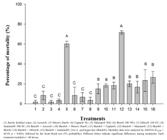
Mortality (%) of Spodoptera frugiperda larvae aged 5 days subjected to the bioinsecticide of A. spofrugiperdae (Buick®) and association with fungicides.

A and B Survival probability of Spodoptera frugiperda from the bioassay with 3-day-old larvae subjected to A. spofrugiperdae bioinoculum (Buick®) and association with fungicides.
In the second trial (Fig. 5), mortality percentages formed four distinct groups. The highest mortality occurred in Manzate® WG + baculovirus mixture (58.3%), followed by A. spofrugiperdae mixtures with fungicides Across® and Miravis Duo®, (43.3% and 40%, respectively). The third group included Manzate® WG used alone (35%) and virus mixtures with Captan® SC, Bion® 500 WG, Difcor® 250 EC, and Isatalonil® 500 SC, 35%, 30%, 25%, and 25%, respectively. The lowest mortality rates were observed in individual fungicide treatments (excluding Manzate® WG): Across®, Miravis Duo®, Captan® SC, Bion® 500 WG, Difcor® 250 EC, Isatalonil® 500 SC (i.e., 1.67%, 11.67%, 10%, 10%, 6.67%, and 3.3%, respectively), and the water control (3.3%).
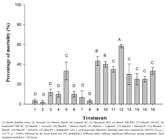
Mortality (%) of Spodoptera frugiperda larvae aged 5 days subjected to the bioinsecticide of A. spofrugiperdae (Buick®) and association with fungicides.
Survival probability decreased over time across all treatments (Fig. 6A and B). The Buick® + Manzate® mixture exhibited the lowest survival probability (<25%) and extended the lifecycle of surviving larvae to 26 days. Manzate® alone also showed low survival probability (<25%) with a lifecycle duration of 23 days. Across® treatment prolonged larval development to 28 days, though survival probability remained high (>80%).
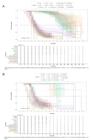
A and B Survival probability of Spodoptera frugiperda from the bioassay with 5-day-old larvae subjected to A. spofrugiperdae bioinoculum (Buick®) and association with fungicides.
From day 5 onwards, survival probability declined for baculovirus + fungicide mixtures, as well as for baculovirus alone and Manzate® alone (Figs. 3 and 6A and B). The consistent replication of the bioassays enhanced the results reliability and reinforced conclusions regarding treatment efficacy. Buick® alone consistently demonstrated high mortality rates, highlighting its efficacy for S. frugiperda larval biological control irrespective of bioassay variations. These findings have implications for sustainable agriculture, suggesting that the identified compatible combinations can be considered for practical applications in biological control programs. This comprehensive bioassay data provides a robust foundation for advancing discussions on synthetic chemical compatibility with biological control agents.
4. Discussion
Here we showed that A. spofrugiperdae effectively induced mortality in S. frugiperda larvae, particularly in three-day-old individuals. Furthermore, baculovirus-fungicide mixtures were compatible in larvae of this age, enabling tank mixing for tomato growers. This approach facilitates simultaneous pest and disease control while reducing labor costs, machinery wear, and application time.
The fungicide Manzate® consistently induced high mortality in both three- and five-day-old S. frugiperda larvae, with comparable efficacy when used in combination with baculovirus. Using another baculovirus (SpltNPV), Sachithanandam et al. (1988) observed that its infectivity remained unchanged when combined with the same fungicide.
This behavior may be attributed to several factors. Firstly, although registered as a fungicide, mancozeb also acts as an acaricide, potentially disrupting key physiological processes in insect larvae and causing high mortalities. Further, mancozeb may exert a repellent action that reduces artificial diet consumption, resulting in starvation mortality, as diet intake plays a critical role in development (Awmack and Leather, 2002; Saeed et al., 2009). Further research is needed to elucidate larval behavior and physiological responses to this product.
Analysis of mortality rates and pupation success across treatments underscores the importance of selecting appropriate fungicides for tank-mixing with baculovirus, particularly against more advanced larval stages. It is important to note that the mortality in Mancozeb-only treatments was attributed to the fungicide itself. However, in the mixtures containing A. spofrugiperdae and Mancozeb, mortality resulted from the combination action of both products, indicating each contributed to larval death. This pattern was consistent across bioassays, regardless of larval age.
In our study, S. frugiperda larvae exposed to mancozeb showed a prolonged larval development, indicating interference with normal development processes. Similar effects have been documented in other Spodoptera species by Singh and Bhattacharya (2004), who reported that mancozeb significantly extended the duration of the larval stages while reducing pupation and adult emergence in S. litura. Similarly, Adamski and Ziemnicki (2004) observed reduced survival, developmental malformations, and altered enzymatic activity in S. exigua. These consistent findings across species suggest that Mancozeb disrupts developmental and metabolic processes in Spodoptera, potentially through cellular imbalance and damage to tissues such as the fat body (Mehlhorn et al., 1999; Adamski et al., 2009).
In five-day-old larvae treated individually with A. spofrugiperdae, mortality was considerably lower (26.67%), whereas mancozeb was the only fungicide that enhanced mortality in mixtures (71.67%). Using a different isolate of the same baculovirus (SfMNPV-19), Dorneles Junior (2020) achieved 62.5% mortality alone and 43.5% when mixed with copper oxychloride. These findings highlight both inter-isolate variation in efficacy against different larval ages and differential fungicide compatibility. Gradish et al. (2010) and Laznik and Trdan (2017) highlight the complex interactions among fungicides, herbicides, and entomopathogenic nematodes, with some products providing compatibility while others are incompatible. Jones et al. (2009) and Amarasekare and Shearer (2013a, 2013b) emphasize the variable effects of fungicides on natural enemies, noting that certain fungicides can enhance beneficial microorganisms’ activity, as observed here with baculovirus + mancozeb mixtures across all bioassays, while others can cause adverse effects. This underscores the need for context-specific compatibility evaluations to optimize IPM programs.
In three-day-old larvae, all baculovirus-fungicide mixtures demonstrated compatibility, effectively reducing S. frugiperda population while enabling fungal diseases control simultaneously. These findings highlight the importance of field monitoring for early pest detection, as younger larvae are more susceptible to control measures. Other pesticides, including herbicides and insecticides, can also be tank-mixed with the baculovirus. Suárez-López et al. (2022) demonstrated compatibility between varying concentrations of SlNPV (Spodoptera littoralis nucleopolyhedrovirus) (Lefavirales: Baculoviridae) and the insecticide lufenuron and tebufenozide, compared to their individual applications. As these products are registered for corn earworm and other tomato crop pests, compatibility testing with A. spofrugiperdae is also warranted.
The SfMNPV + azoxystrobin mixture achieved high mortality (90%) in three-day-old larvae, comparable to the highest-performing treatments. Maciel et al. (2021) similarly reported compatibility of baculovirus ChinNPV (Chrysodeixis includens nucleopolyhedrovirus; Lefavirales: Baculoviridae), with azoxystrobin in two fungicide formulations, Elatus® WG and Priori Xtra® SC (causing 80.08% and 85.99% mortality, respectively), against Chrysodeixis includens larvae. These findings suggest azoxystrobin compatibility with multiple baculoviruses, supporting tank mixing. As emphasized by Laznik and Trdan (2017) and Fiedler and Sosnowska (2017), agent-specific compatibility testing is needed.
Baculovirus stability is known to be affected by pH (Beas-Catena et al., 2014; Bueno et al., 2022), as alkaline conditions may dissolve viral occlusion bodies, which are protective structures that should ideally only dissolve within the larval midgut. Dissolution outside this environment leads to viral inactivation, rendering the product ineffective. In this experiment, all pH values remained acidic, preserving the biological product’s viability.
This comprehensive analysis highlights the complexity of integrated pest and disease management. Manzate®, Isatalonil®, Across®, Bion®, Miravis Duo® and Difcor® did not compromise SfMNPV efficacy against S. frugiperda in three-day-old larvae assays, enabling their safe tank-mixing for simultaneous fungal and pest control in tomato crops.
Acknowledgments
The authors thank the Universidade Federal do Espírito Santo (UFES), Alegre Campus, for the institutional support and facilities made available during the development of this study. Financial assistance was provided by the Coordenação de Aperfeiçoamento de Pessoal de Nível Superior (CAPES) and the Fundação de Amparo à Pesquisa e Inovação do Espírito Santo (FAPES). Manuscript editing and English language review was provided by Christopher J. Fellows, from the LSU AgCenter, USA.
-
Funding
This research was funded by the Fundação de Amparo à Pesquisa e Inovação do Espírito Santo (FAPES).
References
-
Adamski, Z., Błoszyk, J., Piosik, K., Tomczak, K., 2009. Effects of diflubenzuron and mancozeb on soil microarthropods: a long-term study. Biol. Lett. 46 (1), 3-13. https://doi.org/10.2478/v10120-009-0008-y
» https://doi.org/10.2478/v10120-009-0008-y -
Adamski, Z., Ziemnicki, K., 2004. Side‐effects of mancozeb on Spodoptera exigua (Hübn.) larvae. J. Appl. Entomol. 128 (3), 212-217. https://doi.org/10.1111/j.1439-0418.2004.00840.x
» https://doi.org/10.1111/j.1439-0418.2004.00840.x -
Albuquerque, A. F., Ribeiro, J. S., Kummrow, F., Nogueira, A. J. A., Montagner, C. C., Umbuzeiro, G. A., 2016. Pesticides in Brazilian freshwaters: a critical review. Environ. Sci. Process. Impacts 18 (7), 779-787. https://doi.org/10.1039/C6EM00268D
» https://doi.org/10.1039/C6EM00268D -
Amarasekare, K. G., Shearer, P. W., 2013a. Comparing effects of insecticides on two green lacewings species, Chrysoperla johnsoni and Chrysoperla carnea (Neuroptera: chrysopidae). J. Econ. Entomol. 106 (3), 1126-1133. https://doi.org/10.1603/EC12483
» https://doi.org/10.1603/EC12483 -
Amarasekare, K. G., Shearer, P. W., 2013b. Laboratory bioassays to estimate the lethal and sublethal effects of various insecticides and fungicides on Deraeocoris brevis (Hemiptera: miridae). J. Econ. Entomol. 106 (2), 776-785. https://doi.org/10.1603/EC12432
» https://doi.org/10.1603/EC12432 -
Amarasekare, K. G., Shearer, P. W., Mills, N. J., 2016. Testing the selectivity of pesticide effects on natural enemies in laboratory bioassays. Biol. Control, Enhancing biological control in western orchards: a five-year project. Biol. Control 102, 7-16. https://doi.org/10.1016/j.biocontrol.2015.10.015
» https://doi.org/10.1016/j.biocontrol.2015.10.015 -
Awmack, C. S., Leather, S. R., 2002. Host Plant Quality and Fecundity in Herbivorous Insects. Annu. Rev. Entomol. 47 (1), 817-844. https://doi.org/10.1146/annurev.ento.47.091201.145300
» https://doi.org/10.1146/annurev.ento.47.091201.145300 -
Banks, J., Stark, J. D., 2011. Effects of a nicotinic insecticide, Imidacloprid and vegetation diversity on movement of a common predator Coccinella septempunctata. Biopestic. Int. (Jalandhar) 7, 113-122. Available in: https://www.cabidigitallibrary.org/doi/full/10.5555/20123143415 (accessed 22 September 2025).
» https://www.cabidigitallibrary.org/doi/full/10.5555/20123143415 -
Banks, J. E., Vargas, R. I., Ackleh, A. S., Stark, J. D., 2017. Sublethal effects in pest management: a surrogate species perspective on fruit fly control. Insects 8 (3), 78. https://doi.org/10.3390/insects8030078
» https://doi.org/10.3390/insects8030078 -
Beas-Catena, A., Sánchez-Mirón, A., García-Camacho, F., Contreras-Gómez, A., Molina-Grima, E., 2014. Baculovirus biopesticides: an overview. J. Anim. Plant Sci. 24 (2), 362-373. Available in: https://scispace.com/pdf/baculovirus-biopesticides-an-overview-52p977hvua.pdf (accessed 22 September 2025).
» https://scispace.com/pdf/baculovirus-biopesticides-an-overview-52p977hvua.pdf -
Bentivenha, J. P. F., Rodrigues, J. G., Lima, M. F., Marçon, P., Popham, H. J. R., Omoto, C., 2019. Baseline susceptibility of Spodoptera frugiperda (Lepidoptera: Noctuidae) to SfMNPV and evaluation of cross-resistance to major insecticides and Bt proteins. J. Econ. Entomol. 112 (1), 91-98. https://doi.org/10.1093/jee/toy342
» https://doi.org/10.1093/jee/toy342 -
Brasil, 2023. Lei nº 14.785, de 27 dezembro de 2023. Diário Oficial da União, Brasília. Available in: https://www.planalto.gov.br/ccivil_03/_ato2023-2026/2023/lei/L14785.htm (accessed 02 January 2024).
» https://www.planalto.gov.br/ccivil_03/_ato2023-2026/2023/lei/L14785.htm -
Bueno, A. de F., Batistela, M. J., Bueno, R. C. O. de F., França-Neto, J. de B., Naime Nishikawa, M. A., Filho, A. L., 2011. Effects of integrated pest management, biological control and prophylactic use of insecticides on the management and sustainability of soybean. Crop Prot. 30 (7), 937-945. https://doi.org/10.1016/j.cropro.2011.02.021
» https://doi.org/10.1016/j.cropro.2011.02.021 -
Bueno, A. de F., Carvalho, G. A., Nogueira, M. A., Medeiros, F. H. V., Medeiros, F. C. L., Hungria, M., Ardisson-Araujo, D. M., Ribeiro, B. M., Sosa-Gómez, D. M., Hirose, E., 2022. Compatibility in the use of bio-inputs and synthetic inputs in soybean crop management. In: Meyer M.C., Bueno A.F., Mazaro S.M., Silva J.C. (Eds.), Bio-inputs in Soybean Crop. Embrapa, Brasília, pp. 473–492. Available in: https://www.alice.cnptia.embrapa.br/alice/bitstream/doc/1147068/1/cap-27-Bioinsumos-na-cultura-da-soja.pdf (accessed 16 January 2024).
» https://www.alice.cnptia.embrapa.br/alice/bitstream/doc/1147068/1/cap-27-Bioinsumos-na-cultura-da-soja.pdf -
Cassal, V. B., Azevedo, L. F., Ferreira, R. P., Silva, D. G., Simão, R. S., 2014. Agrotóxicos: uma revisão de suas consequências para a saúde pública. Rev. Eletronica Em Gest. Educ. E Tecnol. Ambient. 18 (1), 437-445. https://doi.org/10.5902/2236117012498
» https://doi.org/10.5902/2236117012498 -
Chapman, J. W., Williams, T., Escribano, A., Caballero, P., Cave, R. D., Goulson, D., 1999. Age-related cannibalism and horizontal transmission of a nuclear polyhedrosis virus in larval Spodoptera frugiperda. Ecol. Entomol. 24 (3), 268-275. https://doi.org/10.1046/j.1365-2311.1999.00224.x
» https://doi.org/10.1046/j.1365-2311.1999.00224.x -
Chung, S. W. C., Chen, B. L. S., 2011. Determination of organochlorine pesticide residues in fatty foods: a critical review on the analytical methods and their testing capabilities. J. Chromatogr. A 1218 (33), 5555-5567. https://doi.org/10.1016/j.chroma.2011.06.066
» https://doi.org/10.1016/j.chroma.2011.06.066 -
Dorneles Junior, J., 2020. Características físico-químicas de Baculovírus Spodoptera e a compatibilidade com produtos fitossanitários para o manejo integrado de Spodoptera frugiperda (J. E. Smith, 1797) (Lepidoptera: Noctuidae). PhD thesis, UNESP. Available at: https://repositorio.unesp.br/server/api/core/bitstreams/cbfe63ab-2b2e-405b-a765-9cd417d1f71b/content (accessed 16 January 2024).
» https://repositorio.unesp.br/server/api/core/bitstreams/cbfe63ab-2b2e-405b-a765-9cd417d1f71b/content -
Food and Agriculture Organization – FAO, 2023. Pesticides use. Available at: https://www.fao.org/faostat/en/#data/RP/visualize (accessed 16 January 2024).
» https://www.fao.org/faostat/en/#data/RP/visualize -
Fiedler, Ż., Sosnowska, D., 2017. Side effects of fungicides and insecticides on entomopathogenic fungi in vitro. J. Plant Prot. Res. 57 (4), 355-360. https://doi.org/10.1515/jppr-2017-0048
» https://doi.org/10.1515/jppr-2017-0048 -
Figueroa, J. I., Coronado, R. E., Pineda, S., Chavarrieta, J. M., Martínez-Castillo, A. M., 2015. Mortality and food consumption in Spodoptera frugiperda (Lepidoptera: Noctuidae) larvae treated with spinosad alone or in mixtures with a nucleopolyhedrovirus. Fla. Entomol. 98 (3), 1009-1011. https://doi.org/10.1653/024.098.0340
» https://doi.org/10.1653/024.098.0340 -
Fungicide Resistance Action Committee – FRAC, 2020. Mode of action. Available at: https://www.frac-br.org/modo-de-acao (accessed 20 October 2023).
» https://www.frac-br.org/modo-de-acao -
Gradish, A. E., Scott-Dupree, C. D., Shipp, L., Harris, C. R., Ferguson, G., 2010. Effect of reduced risk pesticides on greenhouse vegetable arthropod biological control agents. Pest Manag. Sci. 67 (1), 82-86. https://doi.org/10.1002/ps.2036
» https://doi.org/10.1002/ps.2036 -
Greene, G. L., Leppla, N. C., Dickerson, W. A., 1976. Velvetbean caterpillar: a rearing procedure and artificial medium. J. Econ. Entomol. 69 (4), 487-488. https://doi.org/10.1093/jee/69.4.487
» https://doi.org/10.1093/jee/69.4.487 - He, L. M., Ge, S. S., Chen, Y. C., Wu, Q. L., Jiang, Y. Y., Wu, K. M., 2019. The developmental threshold temperature, effective accumulated temperature and prediction model of developmental duration of fall armyworm, Spodoptera frugiperda. Plant Prot. 45, 18-26.
-
Hill, M. P., Macfadyen, S., Nash, M. A., 2017. Broad spectrum pesticide application alters natural enemy communities and may facilitate secondary pest outbreaks. PeerJ 5, e4179. https://doi.org/10.7717/peerj.4179
» https://doi.org/10.7717/peerj.4179 - INCAPER, 2010. Tomate, 1st ed. Instituto Capixaba de Pesquisa, Assistência Técnica e Extensão Rural, Vitória, ES, Vol. 1, 430 p.
-
Jones, V. P., Unruh, T. R., Horton, D. R., Mills, N. J., Brunner, J. F., Beers, E. H., Shearer, P. W., 2009. Tree fruit IPM programs in the western United States: the challenge of enhancing biological control through intensive management. Pest Manag. Sci. 65 (12), 1305-1310. https://doi.org/10.1002/ps.1839
» https://doi.org/10.1002/ps.1839 -
Lacey, L. A. 2017. Entomopathogens used as microbial control agents. In: Lacey L.A. (ed.), Microbial Control of Insect and Mite Pests: From Theory to Practice. Academic Press, London, pp. 3–12. https://doi.org/10.1016/B978-0-12-803527-6.00001-9
» https://doi.org/10.1016/B978-0-12-803527-6.00001-9 -
Laznik, Ž., Trdan, S., 2017. The influence of herbicides on the viability of entomopathogenic nematodes (Rhabditida: steinernematidae and Heterorhabditidae). Int. J. Pest Manag. 63 (2), 105-111. https://doi.org/10.1080/09670874.2016.1227882
» https://doi.org/10.1080/09670874.2016.1227882 -
Liang, P., Gu, S. H., Zhang, L., Gao, X. W., 2020. Research status and prospect of Spodoptera frugiperda (Lepidoptera: Noctuidae) in China. Acta Entomol. Sin. 63 (5), 624-638. Available in: https://www.cabidigitallibrary.org/doi/full/10.5555/20203391048 (accessed 22 September 2025).
» https://www.cabidigitallibrary.org/doi/full/10.5555/20203391048 -
Maciel, R. M. A., Amaro, J. T., Colombo, F. C., Neves, P. M. O. J., Bueno, A. de F., 2021. Mixture compatibility of ChinNPV baculovirus with herbicides and fungicides used in soybean. Semin. Cienc. Agrar. 42 (5), 2629-2638. https://doi.org/10.5433/1679-0359.2021v42n5p2629
» https://doi.org/10.5433/1679-0359.2021v42n5p2629 -
Maciel, R. M. A., Luski, P. G. G., Sutil, W. P., Gonçalves, J., Hayashida, R., Paula de Queiroz, A., Neves, P. M. O. J., Bueno, A. F., 2024. The use of baculovirus Spodoptera SfMNPV alone and combined with herbicides and adjuvant to control Spodoptera frugiperda (Smith, 1797) (Lepidoptera: noctuidae). Biol. Control 188, 105408. https://doi.org/10.1016/j.biocontrol.2023.105408
» https://doi.org/10.1016/j.biocontrol.2023.105408 -
Meagher Junior, R. L., Nuessly, G. S., Nagoshi, R. N., Hay-Roe, M. M., 2016. Parasitoids attacking fall armyworm (Lepidoptera: Noctuidae) in sweet corn habitats. Biol. Control 95, 66-72. https://doi.org/10.1016/j.biocontrol.2016.01.006
» https://doi.org/10.1016/j.biocontrol.2016.01.006 -
Mehlhorn, H., Mencke, N., Hansen, O., 1999. Effects of imidacloprid on adult and larval stages of the flea Ctenocephalides felis after in vivo and in vitro application: a light- and electron-microscopy study. Parasitol. Res. 85 (8-9), 625-637. https://doi.org/10.1007/s004360050607
» https://doi.org/10.1007/s004360050607 -
Méndez, W. A., Valle, J., Ibarra, J. E., Cisneros, J., Penagos, D. I., Williams, T., 2002. Spinosad and nucleopolyhedrovirus mixtures for control of Spodoptera frugiperda (Lepidoptera: Noctuidae) in maize. Biol. Control 25 (2), 195-206. https://doi.org/10.1016/S1049-9644(02)00058-0
» https://doi.org/10.1016/S1049-9644(02)00058-0 -
Pepi, A. A., Broadley, H. J., Elkinton, J. S., 2016. Density-dependent effects of larval dispersal mediated by host plant quality on populations of an invasive insect. Oecologia 182 (2), 499-509. https://doi.org/10.1007/s00442-016-3689-z
» https://doi.org/10.1007/s00442-016-3689-z -
Perier, J. D., Haseeb, M., Kanga, L. H. B., Meagher, R. L., Legaspi, J. C., 2022. Intraguild interactions of three biological control agents of the fall armyworm Spodoptera frugiperda (J. E. Smith) in Florida. Insects 13 (9), 815. https://doi.org/10.3390/insects13090815
» https://doi.org/10.3390/insects13090815 -
R Core Team, 2024. R: A language and environment for statistical computing. R Foundation for Statistical Computing, Vienna. Avaliable in: https://www.R-project.org (accessed on 10 June 2024).
» https://www.R-project.org -
Ren, Q., Haseeb, M., Fan, J., Wu, P., Tian, T., Zhang, R., 2020. Functional response and intraspecific competition in the fall armyworm, Spodoptera frugiperda (Lepidoptera: noctuidae). Insects 11 (11), 806. https://doi.org/10.3390/insects11110806
» https://doi.org/10.3390/insects11110806 -
Roubos, C. R., Rodriguez-Saona, C., Isaacs, R., 2014. Mitigating the effects of insecticides on arthropod biological control at field and landscape scales. Biol. Control 75, 28-38. https://doi.org/10.1016/j.biocontrol.2014.01.006
» https://doi.org/10.1016/j.biocontrol.2014.01.006 - Sachithanandam, S., Rabindra, R. J., Jayaraj, S., 1988. Compatibility of NPV of Spodoptera litura (Fabricius) with certain fungicides. J. Biol. Control 2 (2), 137-138.
-
Saeed, S., Sayyed, A., Ahmad, I., 2009. Effect of host plants on life-history traits of Spodoptera exigua (Lepidoptera: noctuidae). J. Pest Sci. 83 (2), 165-172. https://doi.org/10.1007/s10340-009-0283-8
» https://doi.org/10.1007/s10340-009-0283-8 -
Santos, M., Rodrigues, T., Nogueira, M., Hungria, M., 2021. The challenge of combining high yields with environmentally friendly bioproducts: a review on the compatibility of pesticides with microbial inoculants. Agronomy (Basel) 11 (5), 870. https://doi.org/10.3390/agronomy11050870
» https://doi.org/10.3390/agronomy11050870 - Singh, H., Bhattacharya, A. K., 2004. Effect of fungicides on Spodoptera litura. Ann. Plant Prot. Sci. 12 (1), 51-54.
-
Souza, M. L., Sanches, M. M., Souza, D. A., Faria, M., Espinel-Correal, C., Sihler, W., Lopes, R. B., 2019. Within-host interactions of Metarhizium rileyi strains and nucleopolyhedroviruses in Spodoptera frugiperda and Anticarsia gemmatalis (Lepidoptera: noctuidae). J. Invertebr. Pathol. 162, 10-18. https://doi.org/10.1016/j.jip.2019.01.006
» https://doi.org/10.1016/j.jip.2019.01.006 -
Stark, J. D., Vargas, R., Banks, J. E., 2007. Incorporating ecologically relevant measures of pesticide effect for estimating the compatibility of pesticides and biocontrol agents. J. Econ. Entomol. 100 (4), 1027-1032. https://doi.org/10.1093/jee/100.4.1027
» https://doi.org/10.1093/jee/100.4.1027 -
Suárez-Lopez, Y. A., Aldebis, H. K., Hatem, A. E.-S., Vargas-Osuna, E., 2022. Interactions of entomopathogens with insect growth regulators for the control of Spodoptera littoralis (Lepidoptera: noctuidae). Biol. Control 170, 104910. https://doi.org/10.1016/j.biocontrol.2022.104910
» https://doi.org/10.1016/j.biocontrol.2022.104910 -
Torres, J. B., Bueno, A. F., 2018. Conservation biological control using selective insecticides – a valuable tool for IPM. Biol. Control 126, 53-64. https://doi.org/10.1016/j.biocontrol.2018.07.012
» https://doi.org/10.1016/j.biocontrol.2018.07.012 -
Zamora-Avilés, N., Alonso-Vargas, J., Pineda, S., Isaac-Figueroa, J., Lobit, P., Martínez-Castillo, A. M., 2013. Effects of a nucleopolyhedrovirus in mixtures with azadirachtin on Spodoptera frugiperda (J. E. Smith) (Lepidoptera: Noctuidae) larvae and viral occlusion body production. Biocontrol Sci. Technol. 23 (5), 521-534. https://doi.org/10.1080/09583157.2013.788133
» https://doi.org/10.1080/09583157.2013.788133
Edited by
-
Associate Editor:
Marcelo Picanço