 New records of entomogenous galls, inducers, and associated fauna at the Jataí Ecological Station (Luiz Antônio, SP, Brazil)
ABSTRACT
Studies on entomogenous galls in the Brazilian savannah of the State of São Paulo are very scarce, and the diversity of gall-forming insects in these areas is barely known. The Ecological Station of Jataí (ESJataí), located in Luiz Antônio, is the largest protect area of Cerrado in the state of São Paulo, Brazil, covering 9,074 hectares. This study builds on the 2012 survey of entomogenous galls, extending it to new areas and phytophysiognomies within the ESJataí. A total of 103 gall morphotypes were identified on 47 plant species belonging to 22 families in these new samples. The results showed that only ten host plant species and ten morphotypes were present in both surveys. Another difference from the previous study are that Fabaceae (N=33), rather than Annonaceae (N=10), presented the highest richness of gall morphotypes and the super-host plant species is Copaifera langsdorffii Desf. (Fabaceae) (N=15) instead of Byrsonima cf intermedia A. Juss. (Malpighiaceae) (N=6). Duguetia furfuracea (A. St.-Hil.) Saff. (Annonaceae) was found to be a super-host species in both surveys (N=5 in 2012 and N=9 in 2024). The associated fauna is composed of four guilds, inducers (N=17), parasitoids (N=25), inquilines (N=4), and successors (N=17). Most of the gall-inducing insects belonged to the Cecidomyiidae family (Diptera) (N=17), with Clinodiplosis bellum Urso-Guimarães and Carmo-Neto, 2015, Alycaulus hexadentatus Urso-Guimarães, 2018, and Lopesia curupirae Urso-Guimarães, Garcia and Ospina, 2024 reported for the first time to this area.
Keywords:
Inventory; Cerrado; Cecidomyiidae; Conservation Unit; Insect-plant interactions
Introduction
Entomogenous galls are abnormal cell growth in plant tissues or organs induced by insects (Mani, 1964; Rohfritsch and Shorthouse, 1982; Carneiro et al., 2009). Gall-inducer insects are an important component of biodiversity, particularly due to their permanent, species-specific interactions with host plants, and the high richness of species. Six insect orders have gall-forming species: Coleoptera, Diptera, Lepidoptera, Hemiptera, Hymenoptera and Thysanoptera. The most notable of these are the cecidomyiid midges which richness is estimated to be about 1,8 – 2 million of species in the world (Hebert et al., 2016; Srivathsan et al., 2023), but they are relatively unknown and understudied in Brazilian biomes (Araújo et al., 2019; Urso-Guimarães et al., 2024).
Recognized as a hotspot for the diversity of gall-inducing insects, the Cerrado hosts species diversity and insect-plant interactions, where the family Cecidomyiidae (Diptera) is the most diverse family among the gall inducers (Maia and Silva., 2021). In Brazil, just over 300 species of galling cecidomyiids have been described, 70 of which have been recorded in the Cerrado, of which 56 are gall inducers (Urso-Guimarães et al., 2024).
Although there is a long tradition of inventories of entomogenous galls in Brazil (Araújo et al., 2019; Urso-Guimarães et al., 2024), there is an imbalance in terms of accumulated knowledge concerning Brazilian regions and biomes. Few of such inventories have been carried out in the state of São Paulo in the last 35 years, with only three in Cerrado areas in the state (Urso-Guimarães and Scareli-Santos, 2006; Saito and Urso-Guimarães, 2012; Ribeiro et al., 2019).
The savanna biome in Brazil and the second largest in the country and South America, the Cerrado once covered 14% of São Paulo State, but due to human activity, only 0.81% of the original vegetation remains (Kronka et al., 2005; Durigan et al., 2007; Bueno et al., 2018; Le Stradic et al., 2021). The Ecological Station of Jataí (ESJataí) is a State Conservation Unit that represents the largest area of continuous Cerrado vegetation in São Paulo (Durigan et al., 2007; Bueno et al., 2018). Although there is a previous survey at the ESJataí (Saito and Urso-Guimarães, 2012) conducted in Cerradão and regenerating Cerrado areas, a new collection of entomogenous galls was carried out to extend the data, to new phytophysiognomies, including forest, savannah and grassland formations.
This study presents new records of gall morphotypes, host plants, gall inducers, and associated fauna from the ESJataí sampling area. It broadens the distribution of galls and gallers to different phytophysiognomies and updates the list of host plant species, gall inducers and associated fauna in the area. This contributes to our understanding of local biodiversity and provides relevant data on the interactions between galling insects and their host plants in a Cerrado neglected area. The undocumented diversity of these interactions, as well as the new cecidomyid taxa identified in this study — a neglected taxon — highlight the importance of ongoing monitoring of such areas.
Material and methods
Study area
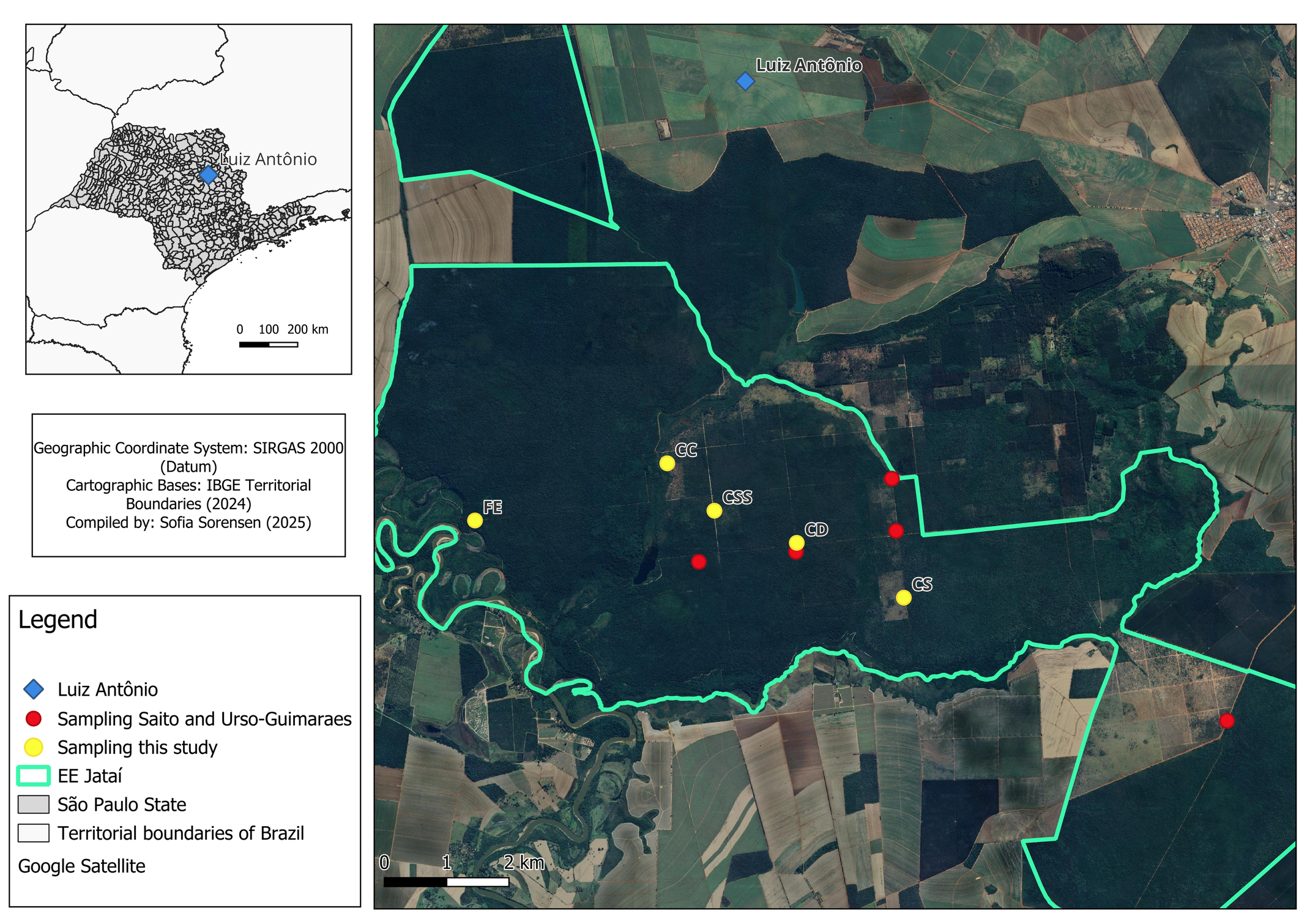
The Ecological Station of Jataí (ESJataí) was established by State Decree No. 37,536 of June 15, 1982, with a total area of 9,074 hectares, representing the largest contiguous area of Cerrado in the State of São Paulo (Fig. 1), a biome characterized as savanna type (Toppa et al., 2005). In the ESJataí, the phytophysiognomies are quite heterogeneous, from grassland formations such as campo sujo; savannah formations such as campo cerrado and cerrado sensu stricto; and forest formations such as cerradão and seasonal semideciduous forest (Toppa et al., 2005, 2006).
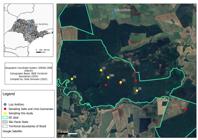
a. Territorial map of Brazil showing the location of Luiz Antônio, State of São Paulo, Brazil. b. Map of the Jataí Ecological Station with the sampling points of this study and those of Saito and Urso-Guimarães (2012) marked.
Data collection and samples treatment
Five areas with different Cerrado phytophysiognomies were sampled (Table 1): campo cerrado, campo sujo, cerradão, cerrado sensu stricto and floresta estacional semidecidual (Fig. 1). The sampling of each of these phytophysiognomies was carried out according to the methodology outlined in Price et al. (1998) and Araújo et al. (2021), which consists in actively collecting branches of plants with galls in random routes of an hour for each trail, over five days, totaling twenty-five hours of total effort.
Distance, altitude and coordinates of the trails in the phytophysiognomies sampled at the Ecological Station of Jataí, SP, Brazil.
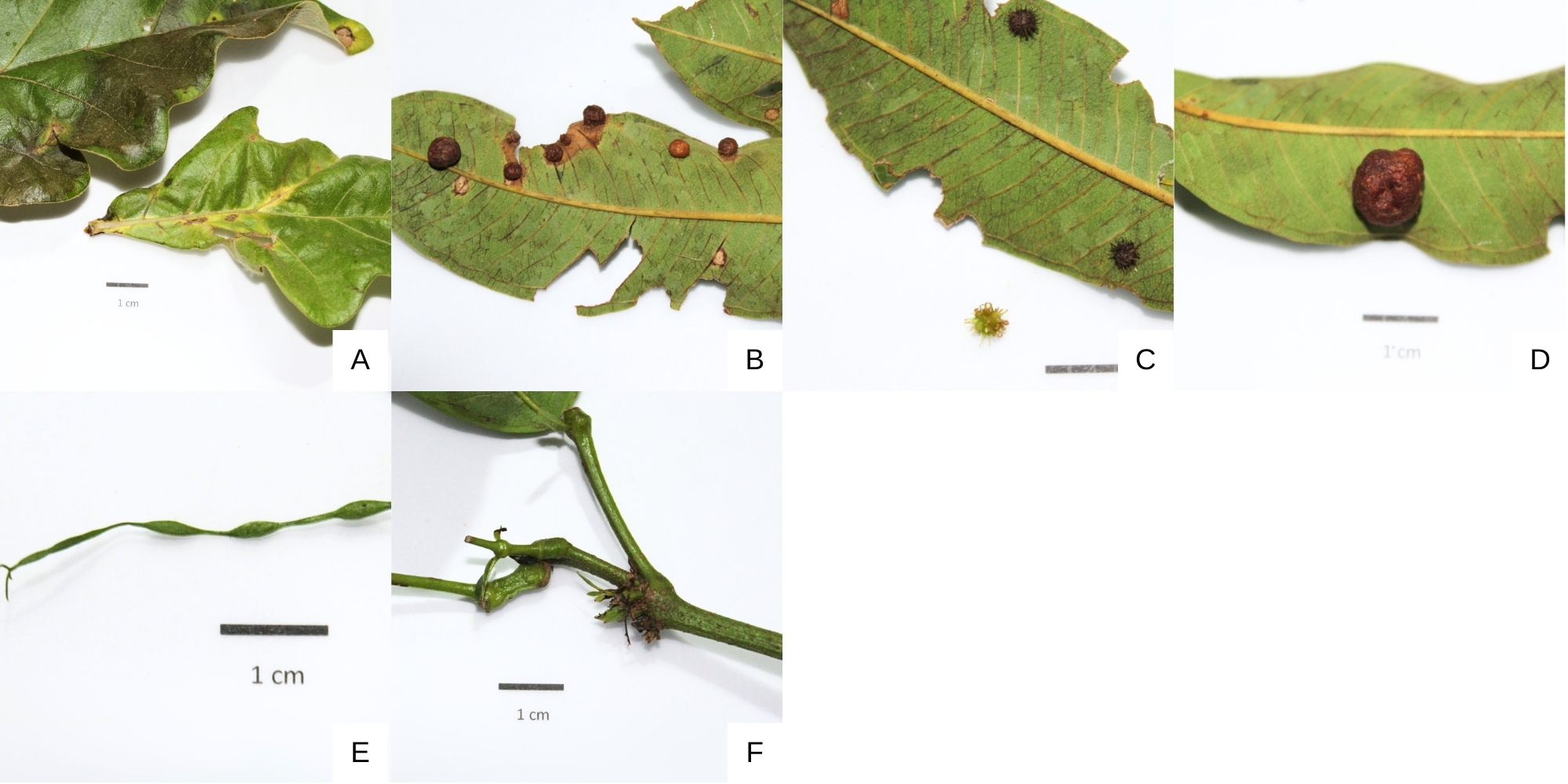
Branches containing galls were labelled and photographed (Figs. 2-7). Branches of all plant species were herborized in exsiccates to identify the host plant. Viable galls were kept in plastic containers for the rearing of inducers. All insects obtained from the rearing were stored in absolute alcohol, sorted and identified taxonomically at least to the family and guild to which they belonged. After identification of the host plants by Dr. Giselda Durigan (IPA/SP), the exsiccates were deposited in the SORO herbarium of the Federal University of São Carlos (UFSCar), Sorocaba campus. Vouchers of inducing insects and associated fauna are deposited in the scientific collection of the Diptera Systematics Laboratory (LSDiptera Collection) of UFSCar, Sorocaba Campus.

Anacardiaceae. a. Anacardiaceae sp. Annonaceae. b-i. Duguetia furfuracea (A.St.-Hil.) Saff, j-m. Xylopia sericea A.St.-Hil. Apocynaceae. n. Forsteronia glabrescens Müll.Arg. o. Chromolaena squalida (D.C) R.M. King and H. Rob Asteraceae. p-r. Moquiniastrum pulchrum (Cabrera) G.Sancho, s. Moquiniastrum sp., t. Adenocalymma peregrinum (Miers) L.G.Lohmann.

Bignoniaceae. a. Adenocalymma peregrinum (Miers) L.G.Lohmann, b. Amphilophium magnoliifolium (Kunth) L.G.Lohmann, c-e. Amphilophium elongatum (Vahl) L.G.Lohmann, f. Handroanthus ochraceus (Cham.) Mattos., g-h. Bignoniaceae sp. 2, i-j. Bignoniaceae sp. 3. Burseraceae. k. Protium heptaphyllum (Aubl.) Marchand. Caryocaraceae. l. Caryocar brasiliense Cambess. Chrysobalanaceae. m. Couepia grandiflora (Mart. and Zucc.) Benth, n. Licania sp. Connaraceae. o. Rourea induta Planch. Erythroxylaceae. p. Erythroxylum suberosum A.St.-Hil. Fabaceae. q-r. Anadenanthera colubrina (Vell.) Brenan, s-t. Andira humilis Mart. ex Benth.
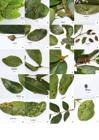
Fabaceae. a. Andira humilis Mart. ex Benth, b-d. Bauhinia holophylla (Bong.) Steud, e. Bauhinia sp., f-t. Copaifera langsdorffii Desf.

Fabaceae. a-g. Diptychandra aurantiaca Tul, h. Hymenaea stigonocarpa Mart. ex Hayne, i. Periandra mediterranea (Vell.) Taub. Malpighiaceae. j-m. Banisteriopsis adenopoda (A.Juss.) B.Gates, n-o. Banisteriopsis sp., p-s. Diplopterys pubipetala (A.Juss.) W.R.Anderson and C.C.Davis. Melastomataceae. t. Miconia albicans (Sw.) Steud.

Myrtaceae. a-c. Campomanesia adamantium (Cambess.) O.Berg, d. Eugenia aurata O.Berg, e. Eugenia bimarginata DC, f-h. Eugenia punicifolia (Kunth) DC. Ochnaceae. i-k. Ouratea spectabilis (Mart.) Engl. Sapindaceae. l. Serjania lethalis A.St.-Hil, m-n. Sapindaceae sp., o. Talisia angustifolia Radlk. Sapotaceae. p. Pouteria ramiflora (Mart.) Radlk, q. Pouteria torta (Mart.) Radlk. Smilacaceae. r-t. Smilax sp.
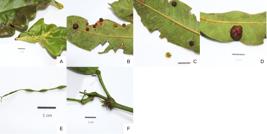
Solanaceae. a. Solanum lycocarpum A.St.-Hil. Vochysiaceae. b-d. Qualea parviflora Mart. e. Unidentified sp1, f. Unidentified sp2.
Results and discussion
In this study, a hundred and three gall morphotypes were recorded on 46 plant species, distributed in 21 families (Table 2, Figs. 2-7). The morphotypes of galls found in ES Jatai in the 2012 and 2024 surveys were compared. This analysis included plant and morphotype data to group the data from both surveys, providing an overview of the total composition of morphotypes and host plants in the sampled area.
Characterization of insect galls recorded in Ecological Station of Jataí, State of São Paulo, Brazil, by host plant. Figures refer to the photos of the gall morphotype.
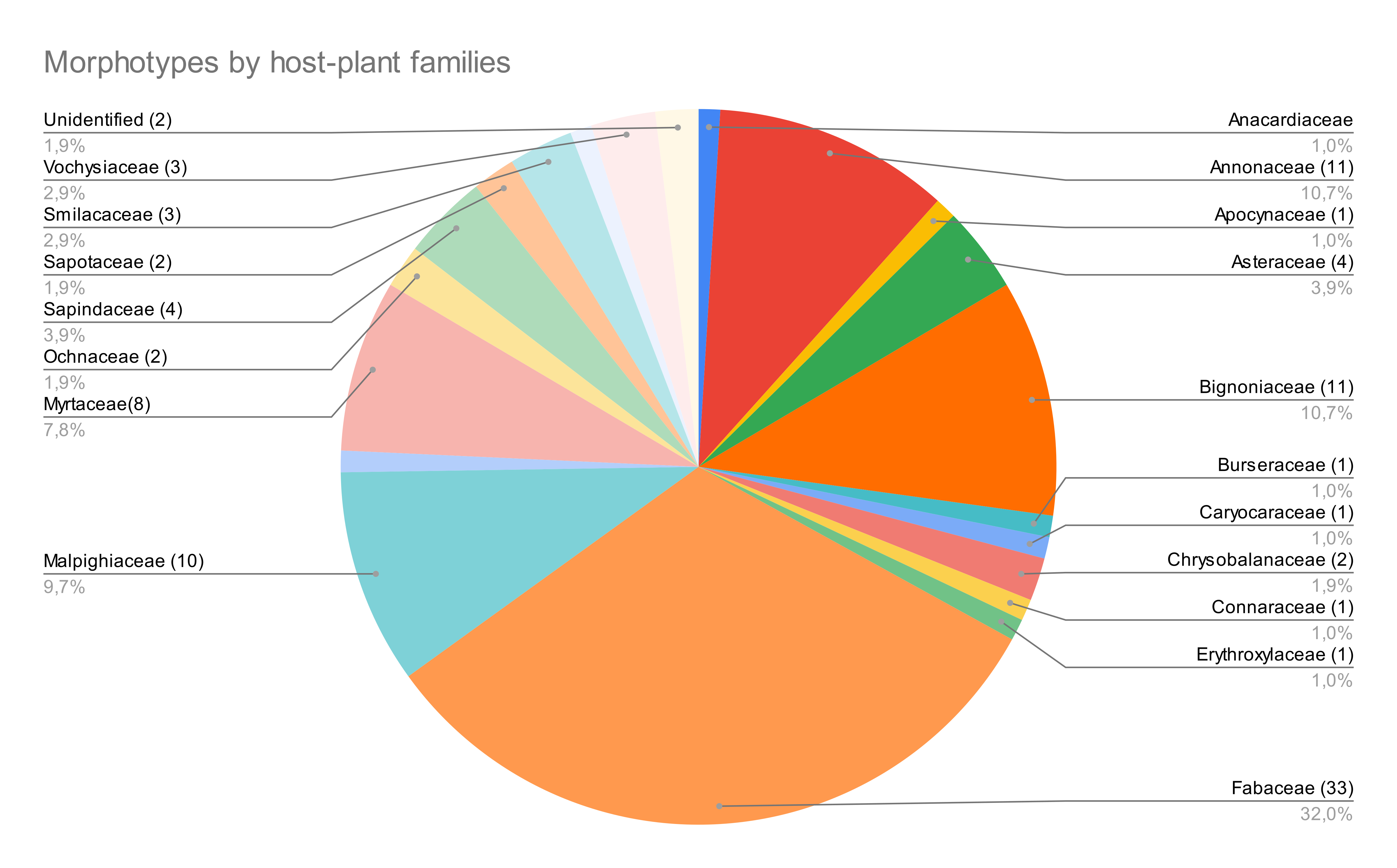
The Fabaceae family is the most species-rich in the Cerrado biome (JBRJ, 2025), the richest host plant species in entomogenous gall morphotypes in all Brazilian biomes (Araújo, 2018; Araújo et al., 2019; Urso-Guimarães et al., 2024) and exhibiting the richest number of species in the woody composition in ESJataí (Toppa et al., 2005). Despite this, in the survey conducted by Saito and Urso-Guimarães (2012) at ESJataí, Fabaceae was revealed to be the fourth richest family of host plants, exhibiting only six morphotypes. In the present study, Fabaceae was recorded as the richest family with 33 gall morphotypes, followed by Annonaceae, and Bignoniaceae (Fig. 8), both with 11 morphotypes. The variation in family richness between studies can be attributed to various factors, such as differences in sampling effort (new areas were sampled), seasonal variations, changes in vegetation composition over time and the presence of super-host. Thus, our data still corroborates Southwood's (1960, 1961) hypothesis that the richer plant families in number of species will predominate as hosts for gall inducers.
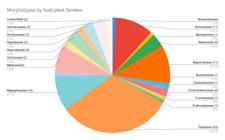
Diagram showing the percentage of richness of gall morphotypes in the host plant families found at the Jataí Ecological Station, Luiz Antonio, State of São Paulo, Brazil.
The species Copaifera langsdorffii Desf. and Diptychandra aurantiaca Tul. were found to have 15 and 6 morphotypes of galls, respectively, in our study, instead of Byrsonima cf intermedia A. Juss. (Malpighiaceae) (N=6) in the previous survey (Saito and Urso-Guimarães, 2012). Duguetia furfuracea (A. St.-Hil.) Saff. (Annonaceae) was found to be a super-host species in both surveys (N=5 in 2012 and N=9 in this survey). Both species are known in the literature as super-host plants, which are the host plant species with two or more gall morphotypes (Veldtman and McGeoch 2003; Santos-Silva and Araújo 2020).
The elevated level of morphotype diversity observed in C. langsdorffii (14) surpasses the total number of morphotypes identified in the second most prevalent family in this study, the Bignoniaceae (11 morphotypes), underscoring the substantial impact of super-host species on the observed diversity patterns. This phenomenon is particularly evident in the case of C. langsdorffii, for which up to 23 gall morphotypes have been documented so far (Fagundes et al., 2020; Carvalho-Sposito et al., 2022).
Although the number of host plant species found in both surveys (2012; 2024) is very similar (41; 46), the number of morphotypes found in each work shows a considerable divergence (69; 103). Consequently, the average number of morphotypes per host plant is 2.24 in this study, compared to 1.68 in the 2012 survey. This difference can be partly attributed to the presence and variation in abundance of super-host species between the studies, such as Copaifera langsdorffii, since superhost species are known to influence gall morphotype richness by including a large number of morphotypes within a single species (Veldtman and McGeoch 2003; Grandez-Rios et al., 2020).
The plant organ most affected by gall formation was the leaf (n=85, 82,5%), the most common shapes were globoid (n= 28, 27%) and fusiform (n=27, 26%); the predominant color was green (n=69, 67%), most of the galls had a glabrous surface (n=82, 80%) and each had gall one chamber. All these aspects corroborate patterns observed in other studies conducted in Brazil (Fernandes and Price, 1988; Saito and Urso-Guimarães 2012; Urso-Guimarães et al., 2024), although for papers published before 2013, there was no consistent pattern for naming gall morphotypes, standardized only in Isaias et al. (2013).
Of the host plant species found in this study, ten are common to those found in Saito and Urso-Guimarães (2012), namely: Duguetia furfuracea (A.St.-Hil.) Saff. (Annonaceae), Moquiniastrum pulchrum (Cabrera) G.Sancho (Asteraceae, [=Gochnatia pulchrum Cabrera]), Couepia grandiflora (Mart. and Zucc.) Benth (Chrysobalanaceae), Erythroxylum suberosum A.St.-Hil. (Erythroxylaceae), Miconia albicans (Sw.) Steud (Melastomataceae), Eugenia aurata O.Berg, E. bimarginata DC., E. punicifolia (Kunth) DC. (Myrtaceae), Ouratea spectabilis (Mart.) Engl. (Ochnaceae), and Pouteria torta (Mart.) Radlk (Sapotaceae). The other 36 host plant species are new records for the study area (Table 2).
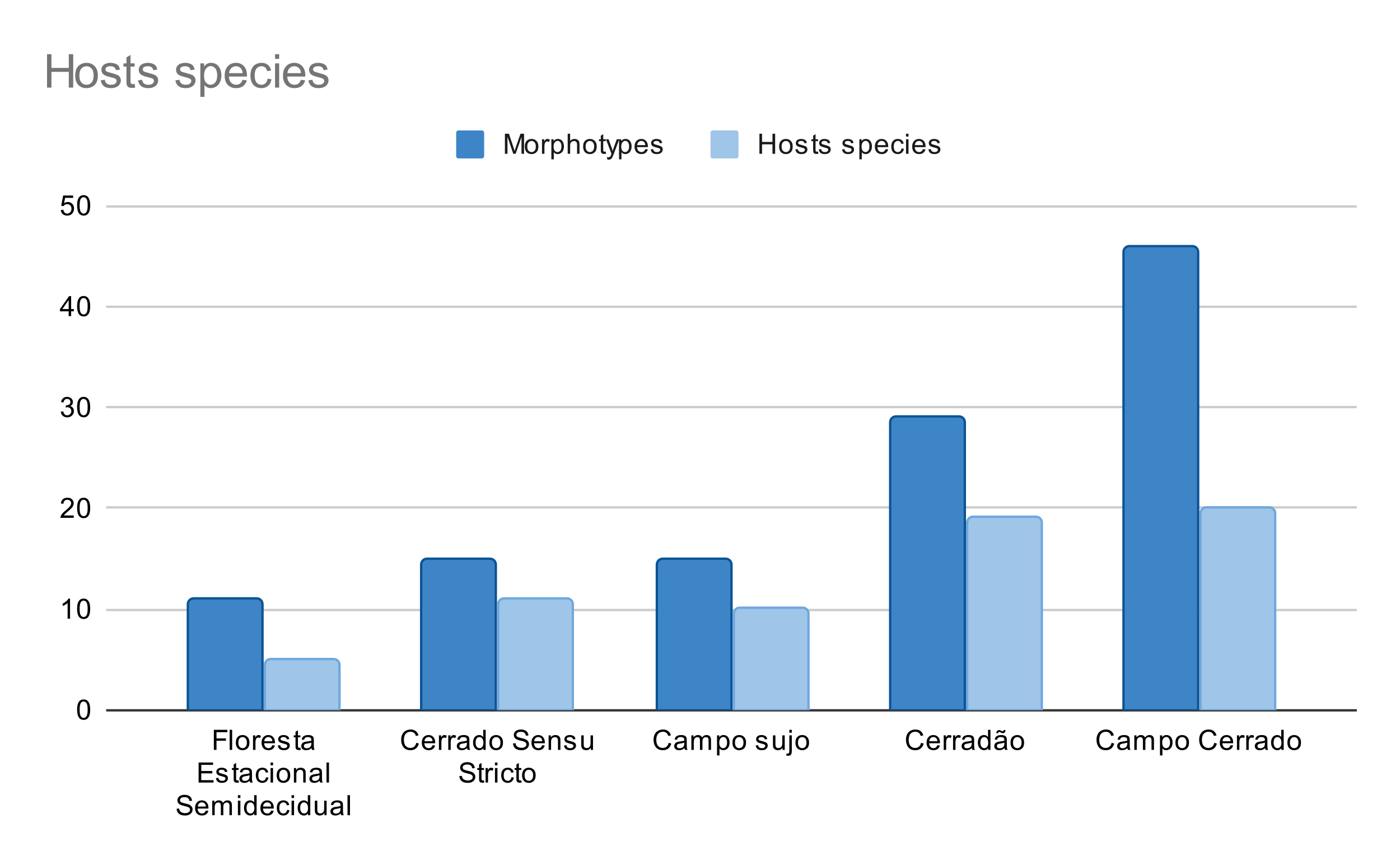
The campo cerrado phytophysiognomy had the highest morphotype richness (n=46), while the seasonal semideciduous forest had the lowest (n=11) (Fig. 9). Both areas were sampled for the first time. The remaining phytophysiognomies had an average of eight families and ten genera each. This difference in gall richness between phytophysiognomies can be attributed to various factors such as floristic composition, vegetation structure, seasonality, microclimatic conditions and availability of resources for gall-forming insects (Araújo et al., 2014b). Galls were recorded on Xylopia sericea A.St.-Hil, Amphilophium magnoliifolium (Kunth) L.G.Lohmann, and Banisteriopsis adenopoda (A. Juss.) representing the first documented occurrence of these plants within the ESJataí and the municipality of Luis Antonio.
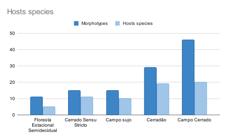
Relationship between the number of host plants and the morphotypes found in each phytophysiognomy.
The comparison among localities (Table 3) indicates that gall morphotype richness is not solely determined by sampling effort. For example, the Altinópolis area, despite a markedly low sampling effort of 7.5 hours, yielded a highly concentrated richness of 1.95 morphotypes per host plant species, a value comparable to the intensively sampled Sorocaba site (48 hours, 2.1 morphotypes per host plant). These disparities suggest that ecological local factors, such as vegetation composition (more species richness equals to more potential host plants) and crucially, the abundance of super-host plants (such as Copaifera langsdorffii), play a more decisive role in determining local diversity patterns than sampling duration, although increased sampling effort remains essential for maximizing the detection of morphotypes (Araújo et al., 2013; Araújo et al., 2014a).
Richness of gall morphotypes from localities with Cerrado phytophysiognomies in São Paulo State.
The associated fauna is composed of four guilds, which were characterized according to Luz and Mendonça-Júnior (2019) as inducers (N=17), parasitoids (N=25), inquilines (N=4), and successors (N=17), according to Luz and Mendonça-Filho, inquilines may or may not stimulate the formation of new tissues in the gall and may or may not cause the death of the inducer. Most of the gall-inducing insects belonged to the Cecidomyiidae family (Diptera) (N=17), with Clinodiplosis bellum Urso-Guimarães and Carmo-Neto, 2015, Alycaulus hexadentatus Urso-Guimarães, 2018, and Lopesia curupirae Urso-Guimarães, Garcia and Ospina, 2024 reported for the first time in this area, confirming the importance of this group as the main inducer of entomogenous galls in all ecosystems (Table 4). As for the fauna associated with galls, the parasitoids mostly belong to the order Hymenoptera, superfamily Chalcidoidea, a group known to parasitize various insects, including the larvae of gall-forming insects (Rizzo and Askew 2008, Gómez and Nieves-Aldrey, 2012). The successional fauna, in turn, was dominated by hemipterans of the superfamily Coccoidea (mealybugs) (N=3) and acari of the Parasitiformes Order (N=12).
Acknowledgements
SMS acknowledges Coordenação de Aperfeiçoamento de Pessoal de Nível Superior (CAPES) - Brazil (Finance Code 001), SMS and MVUG acknowledge Dra Giselda Durigan (IPA/SP) by identifying plant species. Fieldwork was financed by the following FAPESP thematic projects: "Campos Naturais do Estado de São Paulo: Diagnóstico, Manejo e Conservação" (FAPESP #2020/01378-0) and "Desafios para a Conservação de Anfíbios e Répteis Escamados, com ênfase na Fauna Brasileira: de Informações Básicas às Ações de Conservação" (FAPESP #2020/12658-4).
References
-
Ansaloni, L. S., Salmazo, J. R., Guimarães, M. V. U., 2018. Entomogen galls in a Seasonal Semideciduous Forest area in Sorocaba, Southeast of São Paulo State, Brazil. Biota Neotrop. 18 (4), e20180523. https://doi.org/10.1590/1676-0611-bn-2018-0523
» https://doi.org/10.1590/1676-0611-bn-2018-0523 -
Araújo, W.S., Scareli-Santos, C., Guilherme, F.A.G., Cuevas-Reyes, P., 2013. Comparing galling insect richness among Neotropical savannas: effects of plant richness, vegetation structure and super-host presence. Biodivers. Conserv. 22 (4), 1083-1094. https://doi.org/10.1007/s10531-013-0474-8
» https://doi.org/10.1007/s10531-013-0474-8 -
Araújo, W.S., Cuevas-Reyes, P., Guilherme, F.A.G., 2014a. Local and regional determinants of galling-insect richness in Neotropical savanna. J. Trop. Ecol. 30 (3), 269-272. https://doi.org/10.1017/S0266467414000121
» https://doi.org/10.1017/S0266467414000121 -
Araújo, W. S., Santos, B. B., Guilherme, F. A. G., Scareli-Santos, C., 2014b. Galling insects in the Brazilian Cerrado: ecological patterns and perspectives. In: Fernandes, G., Santos, J. (Eds.); Neotropical insect galls. Springer, Dordrecht. https://doi.org/10.1007/978-94-017-8783-3_15
» https://doi.org/10.1007/978-94-017-8783-3_15 -
Araújo, W.S., 2018. 30 years of research on insect galls in Brazil: a scientometric review. Pap. Avulsos Zool. 58, e20185834. https://doi.org/10.11606/1807-0205/2018.58.34
» https://doi.org/10.11606/1807-0205/2018.58.34 -
Araújo, W.S., Fernandes, G.W., Santos, J.C., 2019. An overview of inventories of gall-inducing insects in Brazil: looking for patterns and identifying knowledge gaps. An. Acad. Bras. Cienc. 91 (1), e20180162. https://doi.org/10.1590/0001-3765201920180162
» https://doi.org/10.1590/0001-3765201920180162 -
Araújo, W.S., Urso-Guimarães, M.V., Mendonça, M.S., Santos, J.C., 2021. Sampling Galls and Galling Arthropods. In: Santos, J.C., Fernandes, G.W. (Eds.), Measuring Arthropod Biodiversity. Springer, Cham, pp. 403-437. https://doi.org/10.1007/978-3-030-53226-0_16
» https://doi.org/10.1007/978-3-030-53226-0_16 -
Bueno, M., Dexter, K., Pennington, R., Pontara, V., Neves, D., Ratter, J., Oliveira-Filho, A., 2018. The environmental triangle of the Cerrado domain: ecological controls driving shifts in tree species composition between savannas and forests. J. Ecol. 106 (5), 2109-2120. https://doi.org/10.1111/1365-2745.12969
» https://doi.org/10.1111/1365-2745.12969 -
Carneiro, M. A. A., Borges, R. A. X., Araújo, A. P. A., Fernandes, G. W., 2009. Insetos indutores de galhas da porção sul da Cadeia do Espinhaço, Minas Gerais, Brasil. Rev. Bras. Entomol. 53 (4), 570-592. https://doi.org/10.1590/S0085-56262009000400007
» https://doi.org/10.1590/S0085-56262009000400007 -
Carvalho-Sposito, S.H., Urso-Guimarães, M.V., Silva, F.R., 2022. Temporal resource partitioning and stochastic colonization explain the co-occurrence of gall-inducing insects in the super-hostplant Copaifera langsdorffii Desf. (Fabaceae). Austral Ecol. 47 (6), 1340-1349. https://doi.org/10.1111/aec.13222
» https://doi.org/10.1111/aec.13222 -
Durigan, G., Siqueira, M.F., Franco, G.A.D.C., 2007. Threats to the Cerrado remnants of the state of São Paulo, Brazil. Sci. Agric. 64 (4), 355-363. https://doi.org/10.1590/S0103-90162007000400006
» https://doi.org/10.1590/S0103-90162007000400006 -
Fagundes, M., Santos, E.M.L., Duarte, K.L.R., Santos, L.M., Vieira, J.S., Oliveira, C.H., Silva, P.S., 2020. Diversity of gall-inducing insect associated with a super-host plant species: plant architecture, resource availability and interspecific interactions. Biodiversitas. 21 (3), 1182-1189. https://doi.org/10.13057/biodiv/d210344
» https://doi.org/10.13057/biodiv/d210344 -
Fernandes, G. W., Price, P. W., 1988. Biogeographical gradients in galling species richness. Oecologia 76 (2), 161-167. https://doi.org/10.1007/BF00379948
» https://doi.org/10.1007/BF00379948 -
Gómez, J. F., Nieves-Aldrey, J. L., 2012. Notes on the larval morphology of Pteromalidae (Hymenoptera: Chalcidoidea) species parasitoids of gall wasps (Hymenoptera: Cynipidae) in Europe. Zootaxa 3189 (1), 39-55. https://doi.org/10.11646/zootaxa.3189.1.3
» https://doi.org/10.11646/zootaxa.3189.1.3 -
Grandez-Rios, J., Pizango, C. G. H., Araujo, W. S., 2020. Insights into super-hostplant species of galling insects in the Neotropical region. Open Biol. J. 8 (1), 66-73. https://doi.org/10.2174/1874196702008010066
» https://doi.org/10.2174/1874196702008010066 -
Hebert, P. D. N., Ratnasingham, S., Zakharov, E. V., Telfer, A. C., Levesque-Beaudin, V., Milton, M. A., Pedersen, S., Jannetta, P., deWaard, J. R., 2016. Counting animal species with DNA barcodes: canadian insects. Philos. Trans. R. Soc. Lond. B Biol. Sci. 371 (1702), 20150333. https://doi.org/10.1098/rstb.2015.0333
» https://doi.org/10.1098/rstb.2015.0333 -
Isaias, R. M., Carneiro, R. G., Oliveira, D. C., Santos, J. C., 2013. Illustrated and annotated checklist of Brazilian gall morphotypes. Neotrop. Entomol. 42 (3), 230-239. https://doi.org/10.1007/s13744-013-0115-7
» https://doi.org/10.1007/s13744-013-0115-7 -
Jardim Botânico do Rio de Janeiro – JBRJ, 2025. Flora e Funga do Brasil. Available in: http://floradobrasil.jbrj.gov.br/ (accessed 11 June 2025).
» http://floradobrasil.jbrj.gov.br/ - Kronka, F. J. N., Nalon, M. A., Matsukuma, C. K., Kanashiro, M. M., Shin-Ike, M. S. Y., Pavão, M., Durigan, G., Lima, L. M. P. R., Guillaumon, J. R., Baitello, J. B., Borgo, S. C., Manetti, L. A., Barradas, A. M. F., Fukuda, J. C., Shida, C. N., Barbosa, O., Soares, A. P., 2005. Inventário florestal da vegetação natural do Estado de São Paulo. Secretaria do Meio Ambiente/Instituto Florestal, São Paulo, 200 p
-
Le Stradic, S., Roumet, C., Durigan, G., Cancian, L., Fidelis, A., 2021. Variation in biomass allocation and root functional parameters in response to fire history in Brazilian savannas. J. Ecol. 109 (12), 4143-4157. https://doi.org/10.1111/1365-2745.13786
» https://doi.org/10.1111/1365-2745.13786 -
Luz, F. A., Mendonça-Júnior, M. S., 2019. Guilds in Insect galls: who is who. Fla. Entomol. 102 (1), 207-210. https://doi.org/10.1653/024.102.0133
» https://doi.org/10.1653/024.102.0133 -
Maia, V. C., Silva, B. G., 2021. Insect galls of the Brazilian Cerrado: associated fauna. Biota Neotrop. 21 (3), e20211202. https://doi.org/10.1590/1676-0611-bn-2021-1202
» https://doi.org/10.1590/1676-0611-bn-2021-1202 -
Mani, M. S. 1964. Ecology of plant gall. The Hague, Junk. https://doi.org/10.1007/978-94-017-6230-4
» https://doi.org/10.1007/978-94-017-6230-4 -
Price, P. W., Fernandes, G. W., Lara, A. C. F., Brawn, J., Bairros, H., Wright, M. G., Ribeiro, A., Ribeiro, S. P., Rothcliff, N., 1998. Global patterns in local number of insect galling species. J. Biogeogr. 25 (3), 581-591. https://doi.org/10.1046/j.1365-2699.1998.2530581.x
» https://doi.org/10.1046/j.1365-2699.1998.2530581.x -
Ribeiro, A. N., Balbi, M. I. P. de A., Urso-Guimarães, M. V., 2019. Characterization of insect galls from a vegetation area in Altinópolis, São Paulo State, Brazil. Pap. Avulsos Zool. 59, e20195904. https://doi.org/10.11606/1807-0205/2019.59.04
» https://doi.org/10.11606/1807-0205/2019.59.04 -
Rizzo, M. C., Askew, R. R., 2008. Hymenoptera Chalcidoidea inhabiting galls of Cynipidae in Jordan. Entomol. Fenn. 19 (4), 218-227. https://doi.org/10.33338/ef.84438
» https://doi.org/10.33338/ef.84438 -
Rohfritsch, O., Shorthouse, J. D., 1982. Insect galls. In: Kahls, G., Schell, J.S. (Eds.), Molecular biology of plant tumors. Academic Press, New York, pp. 131–152. https://doi.org/10.1016/B978-0-12-394380-4.50011-6
» https://doi.org/10.1016/B978-0-12-394380-4.50011-6 -
Saito, V. S., Urso-Guimarães, M. V., 2012. Characterization of galls, insect galls and associated fauna of Ecological Station of Jataí (Luiz Antônio, SP). Biota Neotrop. 12 (3), 99-107. https://doi.org/10.1590/S1676-06032012000300011
» https://doi.org/10.1590/S1676-06032012000300011 -
Santos-Silva, J., Araújo, T. J., 2020. Are Fabaceae the principal super-host s of galls in Brazil? An. Acad. Bras. Cienc. 92 (2), e20181115. https://doi.org/10.1590/0001-3765202020181115
» https://doi.org/10.1590/0001-3765202020181115 - Southwood, T. R. E., 1960. The abundance of the Hawaiian trees and the number of their associated insect species. Proc. Hawaii. Entomol. Soc. 17, 299-303.
-
Southwood, T. R. E., 1961. The number of insect associated with various trees. J. Anim. Ecol. 30 (1), 1-8. https://doi.org/10.2307/2109
» https://doi.org/10.2307/2109 -
Srivathsan, A., Ang, Y., Heraty, J. M., Hwang, W. S., Jusoh, W. F. A., Kutty, S. N., Puniamoorthy, J., Darren Yeo, D., Roslin, T., Meier, R., 2023. Convergence of dominance and neglect in flying insect diversity. Nat. Ecol. Evol. 7 (7), 1012-1021. https://doi.org/10.1038/s41559-023-02066-0
» https://doi.org/10.1038/s41559-023-02066-0 - Toppa, R. H., Pires, J. S., Durigan, G., 2005. Flora lenhosa e síndromes de dispersão nas diferentes fisionomias da vegetação da Estação Ecológica de Jataí, Luiz Antônio, São Paulo. Hoehnea 32 (1), 67-76.
- Toppa, R. H., Durigan, G., Pires, J. S. R., Friori, A., 2006. Mapeamento e caracterização das fitofisionomias da Estação Ecológica de Jataí. In: Santos, J. E., Pires, J. S. R., Moschini, L. E. (Eds.), Estudos integrados em ecossistemas, Estação Ecológica de Jataí. EdUFSCar, São Carlos, pp. 21-44.
-
Urso-Guimarães, M. V., Scareli-Santos, C., 2006. Galls and gall makers in plants from the Pé-de-Gigante Cerrado Reserve, Santa Rita do Passa Quatro, SP, Brazil. Braz. J. Biol. 66 (1b), 357-369. https://doi.org/10.1590/S1519-69842006000200018
» https://doi.org/10.1590/S1519-69842006000200018 -
Urso-Guimarães, M. V., Araújo, W. S., Santos, J. C., 2024. Gall-inducing insect inventories in Brazil: update, perspectives, and challenges. Pan-Pac. Entomol. 100 (4), 309-332. https://doi.org/10.3956/2024-100.4.309
» https://doi.org/10.3956/2024-100.4.309 -
Veldtman, R., McGeoch, M. A., 2003. Gall-forming insect species richness along a non-scleromorphic vegetation rainfall gradient in South Africa: the importance of plant community composition. Austral Ecol. 28 (1), 1-13. https://doi.org/10.1046/j.1442-9993.2003.01234.x
» https://doi.org/10.1046/j.1442-9993.2003.01234.x
Edited by
-
Associate Editor:
Lucas Kaminski