 Hybrid and team collaborative test of Medical students: case report
Introduction: Learning assessment is necessary to student learning. Learning should be proactive, continuous, and encompass communication and teamwork skills, while also reflecting the individual learning of each student. We present the experience of hybrid proactive individual and group-based assesment, applied to the first year of medical school, regarding its feasibility, impact on learning, and student acceptance.
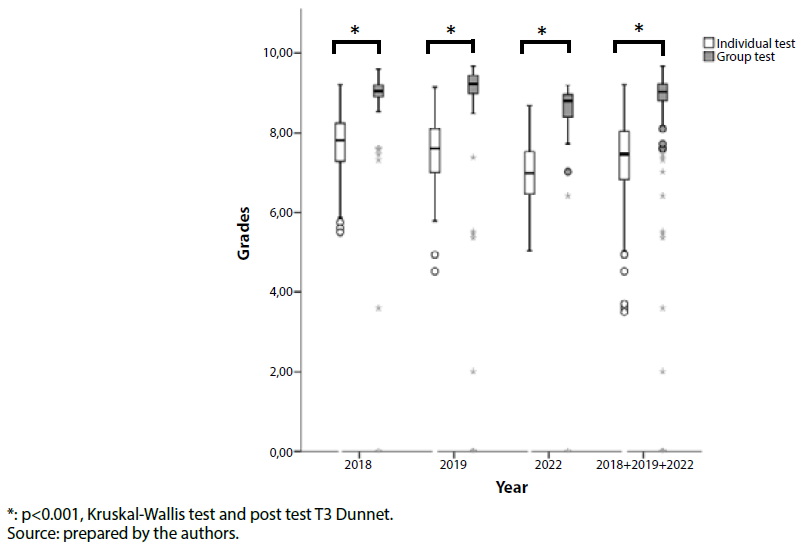
Case report: During 2018, 2019 and 2022, 540 first-year medical students from the Discussão Integrada de Casos I- FMUSP- SP campus, who underwent proactive learning and hybrid assessment individually and in groups. The assessment was based on clinical cases, 25 multiple-choice questions, online, in person at the university, on institutional computers with access only to the tests. The test was first completed individually (2,2 minutes/question) and then in groups (1 minute per question, 7 students/group). Consultation was only allowed among group members during the group test. Immediately after the test, feedback was provided. Scores and a feedback instrument were presented to the students after evaluation tests regarding the learning and evaluation methodologies. Data were analyzed in SPSS23 software. The teamwork test showed engagement among students, with collaborative work and group decision-making skills within the time of the test. Teamwork tests scores were greater and presented more homogeneity than individual tests across all three analyzed years. Regarding satisfaction, students expressed high levels of satisfaction with both individual and group-based tests.
Discussion: The hybrid individual and collaborative group tests methods were feasible, with high levels of satisfaction and advantages in terms of student learning and the development of communications and decision-making skills of clinical true medical cases. Thus, it is a plausible and effective alternative to aid in solidifying the learning process and training to acquire teamwork and leadership skills, respect for peers, empathy, and problem-solving abilities in a short period.
Conclusion: It is, therefore, a method that integrates the undergraduate curriculum, enhancing the individual’s potential for society while meeting the National Curriculum Guidelines.
Keywords:
assessment; medical education; proactive learning; TBL
 Thumbnail
 Thumbnail
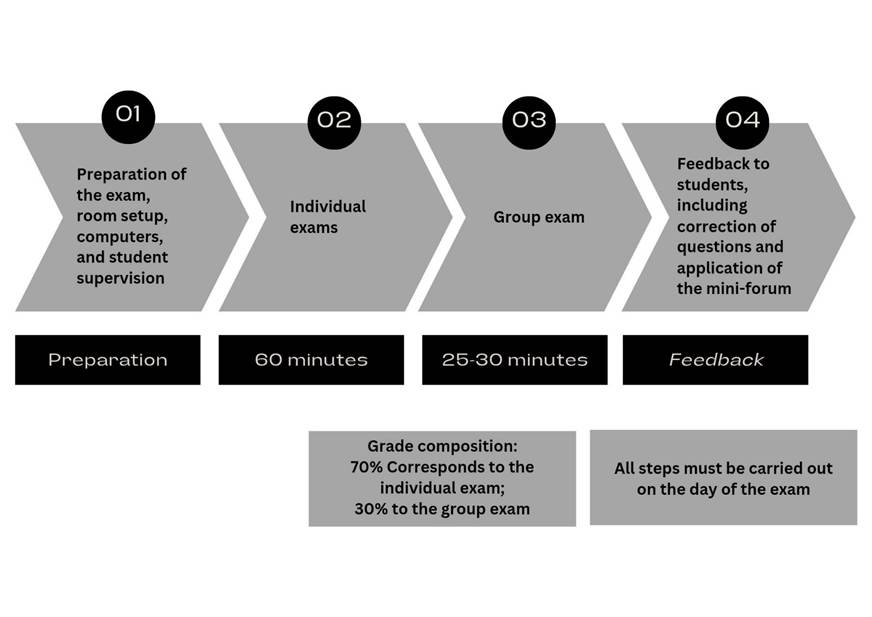 Source: prepared by the authors.