 Remote Objective Structured Clinical Examination (OSCE) to evaluate bad news communication in a university project
Introduction: Historically, medical education institutions have failed to encourage the development of their students’ communication skills, especially in terms of communicating bad news. The ‘’Dying: a Human Thing’’ project, carried out at the Federal University of Rio Grande do Norte (UFRN), complements the teaching of difficult news communication skills with active teaching and assessment methodologies through virtual simulations.
Objective: This study aimed to evaluate the performance of students participating in the ‘’Dying: a Human Thing’’ project in the remote OSCE, as well as to characterize the students’ perception of their performance in virtual simulations.
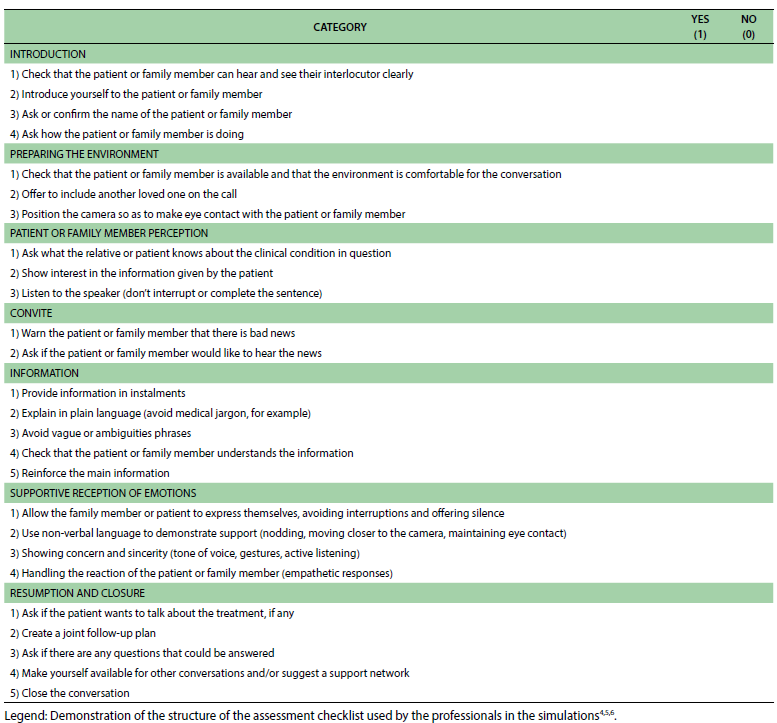
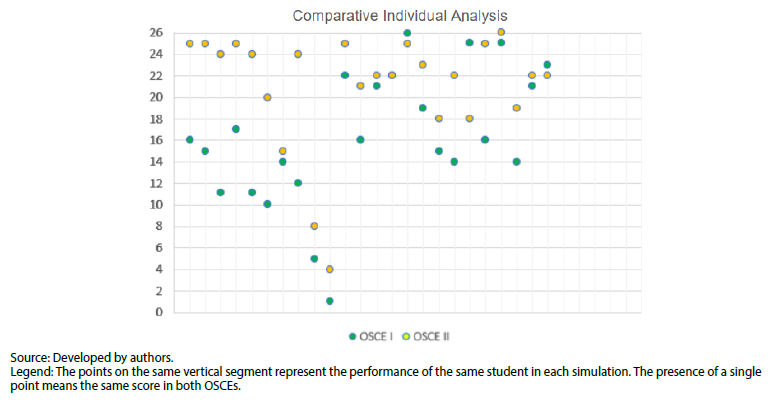
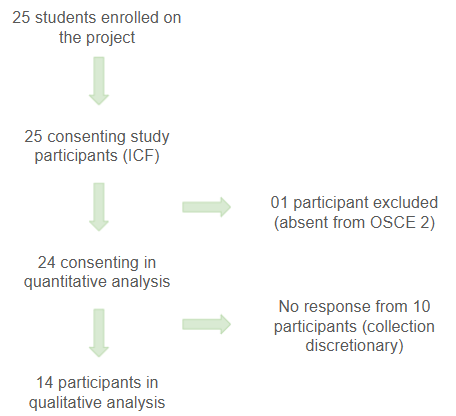
Method: This is a quantitative, qualitative, descriptive and exploratory study. Students participating in the “Dying: a Human Thing” project in the 2021.2 edition were included in the quantitative stage, and their performance in communicating bad news was evaluated by the same checklist, in two different online OSCEs, separated by training on the SPIKES protocol, in order to establish comparative analysis between the simulations. The checklist was completed by teachers trained on the topic. Those students who responded to a semi-structured script to analyze their experience in the simulations were included in the qualitative stage to their discretion. Quantitative analysis was conducted in a non-parametric way, and, for the qualitative content, the students’ descriptions were organized by thematic categories according to Minayo’s method.
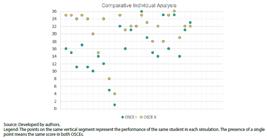
Results: There was an improvement in the students’ scores after virtual training in breaking bad news, with the remote OSCE being an adequate tool to measure the participants’ performance in this project. The main feelings aroused in this context were fear and anguish in the face of this communicative context.
Conclusion: Communicating bad news is still a challenge in medical practice and had to be carried out by virtual means during the SARS-CoV-2 pandemic. Thus, combining the development of communication skills with familiarization with the remote model is essential for the education of future physicians.
Keywords:
Medical education; Communication; Professional-Patient Relations; Telemedicine; Clinical Competence
 Thumbnail
 Thumbnail
 Thumbnail
 Source: Developed by authors.