 Developing competencies in planetary health: integrating systems thinking and interconnection within nature into medical education
Introduction: There is a lack of teaching strategies to explore the Planetary Health (PH) domains of Interconnection Within Nature (IWN) and Systems Thinking/Complexity (ST/C). The Actor-Network Theory provides a pedagogical framework for this approach, as it discusses the inseparability of humanity/nature.
Objective: To assess medical students’ understanding of the PH domains of IWN and ST/C.
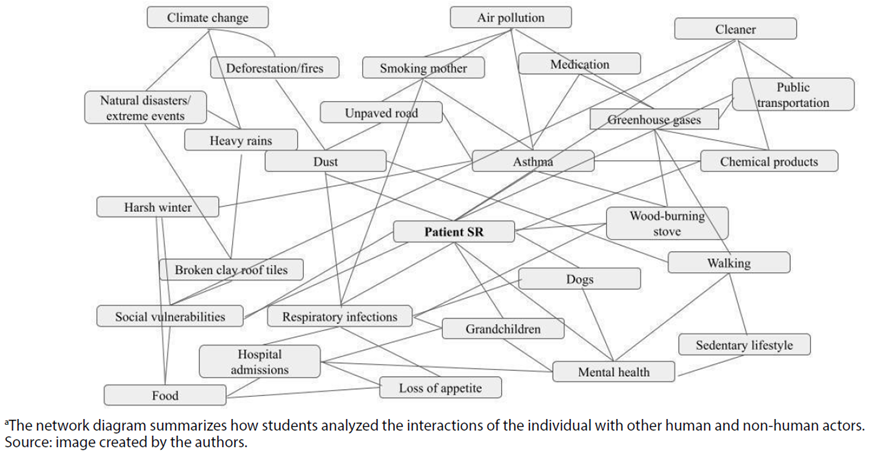
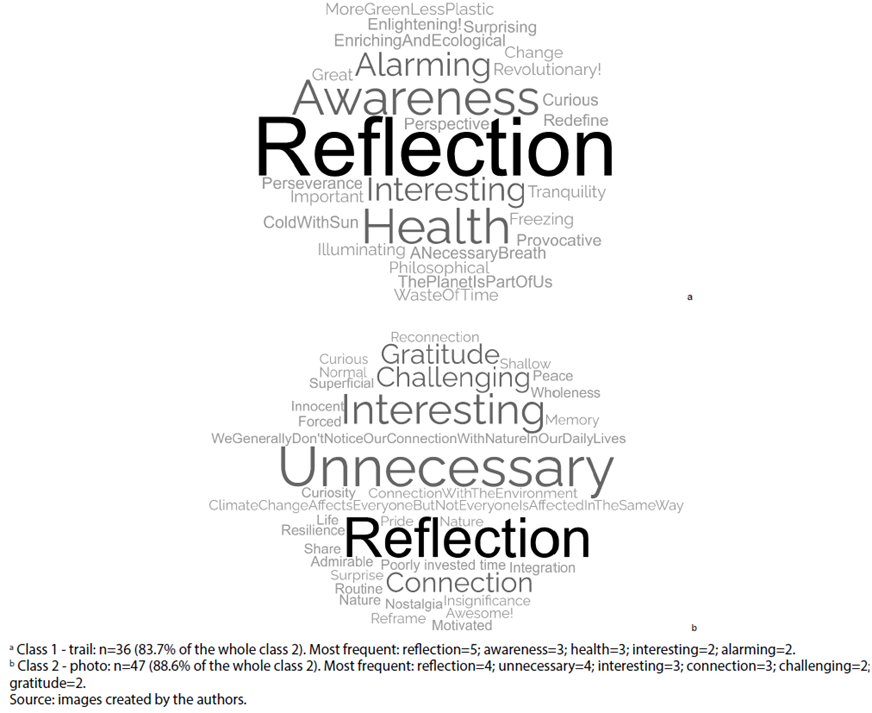
Method: Exploratory case study with sociodemographic questionnaires and open-ended responses spanning 2022 and 2023 involving two cohorts of medical students. Teachers were interviewed, classes were recorded, and assignments submitted by students were analyzed. Small student groups conducted patient interviews, presented PH portfolios, and developed network diagrams. IWN activities included a contemplative trail in the university garden or reflections on moments when students individually felt part of the planet.
Results: Ninety-six students (87% of 110 invited) and 9 teachers (100%) participated. Students demonstrated a comprehensive understanding of patients within their psychosocial and environmental context, describing the interconnections between various human and non-human actors throughout their case studies and network diagrams. The IWN activities were challenging, and a substantial portion achieved the goal of reflecting on the inseparability between nature and humanity, or people’s and the planet’s health.
Conclusion: The methodologies used for training the ST/C and IWN substantially contributed to students’ understanding of patients in a systemic PH perspective and the intrinsic relationship between nature, humanity, and health. This study highlights the importance of incorporating these teaching strategies to broaden students’ perspectives on PH.
Keywords:
Global Health; Environmental Health; Climate Change; Education, Medical, Undergraduate; Health Education
 Thumbnail
 Thumbnail