 Assessment of digital health literacy among undergraduate health students using the eHEALS-Br
Introduction: Digital health literacy has become an essential competency in health professional education due to the rapid digitalization of health information, increased use of technology in clinical practice, and growing exposure to online misinformation. Despite this context, national studies assessing digital health literacy among undergraduate health students and associated factors remain limited.
Objective: To assess the level of digital health literacy among undergraduate health students using the Brazilian version of the eHealth Literacy Scale (eHEALS-Br) and to investigate associated sociodemographic factors.
Methods: A cross-sectional, observational study with a quantitative approach was conducted with 91 undergraduate students from Biomedicine, Nursing, Pharmacy, Medicine, and Psychology programs at a private higher education institution in southern Brazil. Data were collected through an online questionnaire including sociodemographic variables and the eHEALS-Br. Descriptive statistics, univariate analyses, multiple linear regression, and Principal Component Analysis (PCA) were performed.
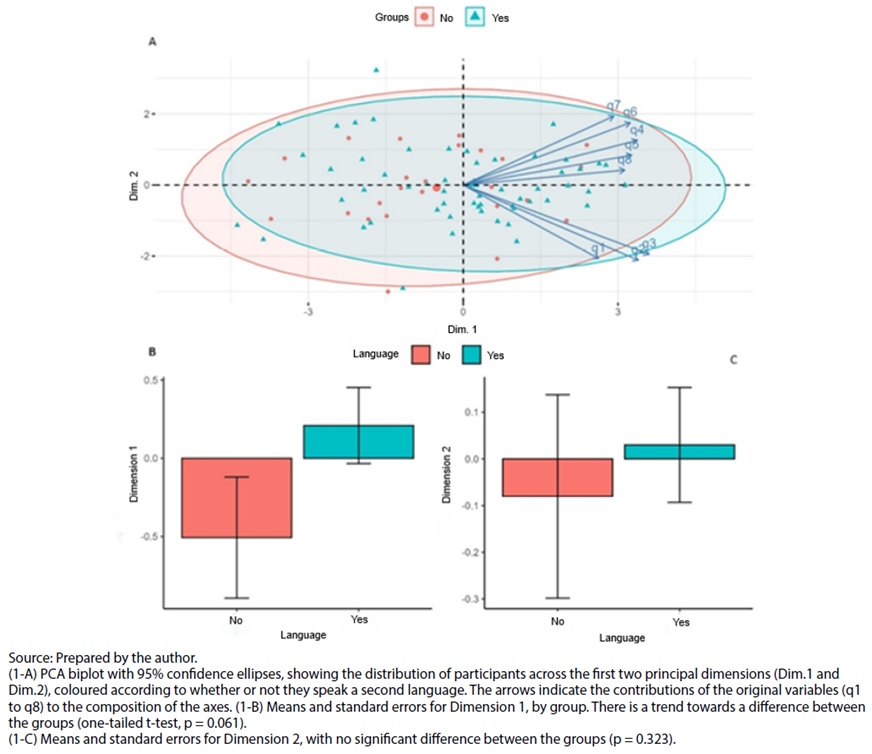
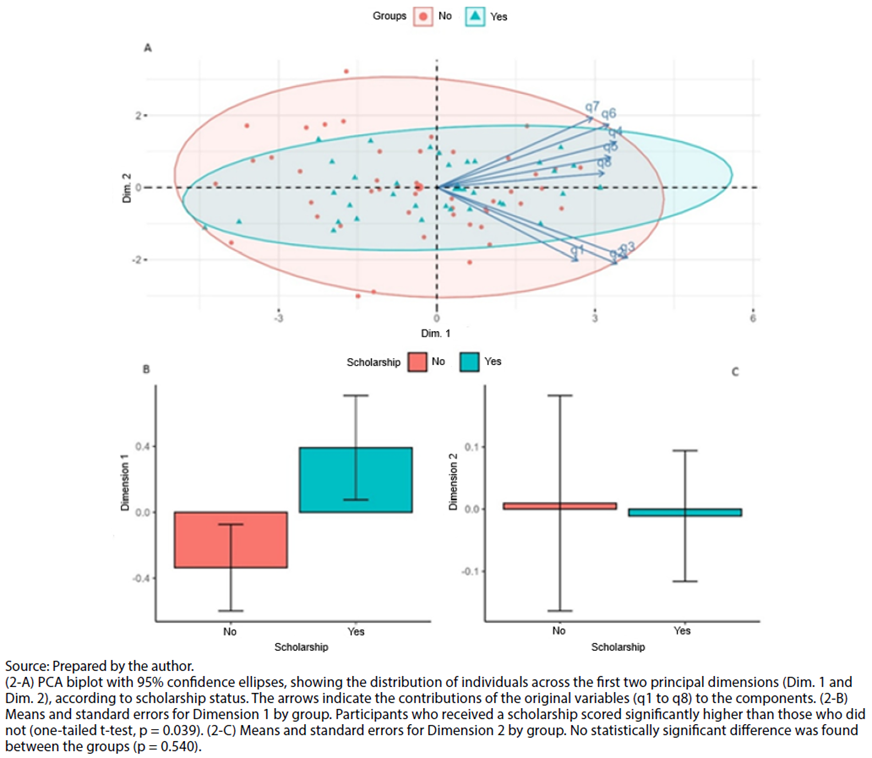
Results: Participants had a mean age of 22 ± 4 years, with a predominance of females (83.5%). The mean overall eHEALS-Br score was 32.66 ± 4.54. According to national cutoff points, 52.7% of students presented a high level of digital health literacy, 42.9% a moderate level, and 4.4% a low level. Multiple linear regression identified proficiency in a second language (β = 2.17; p = 0.043) and receipt of a scholarship (β = 1.81; p = 0.061) as independent predictors of the score. PCA revealed two main dimensions while preserving the scale’s unidimensional structure. The lowest mean scores were observed for confidence in using online health information for decision-making.
Conclusion: Students perceive themselves as having high digital health literacy, particularly in accessing and evaluating online information; however, uncertainty remains regarding its practical application. Second-language proficiency and institutional financial support appear to facilitate digital health competencies, suggesting that curricular internationalization and equity-oriented educational policies may enhance digital health literacy in undergraduate health education.
Keywords:
Health literacy; Computer Literacy; Health education
 Thumbnail
 Thumbnail