 Parameterized Blender Framework for Didactic Visualizations of Scattering in Planetary and Exoplanetary Atmospheres
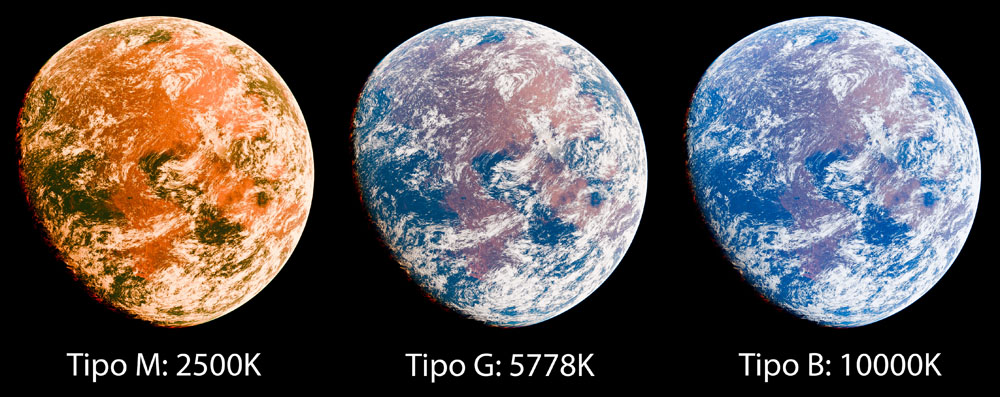
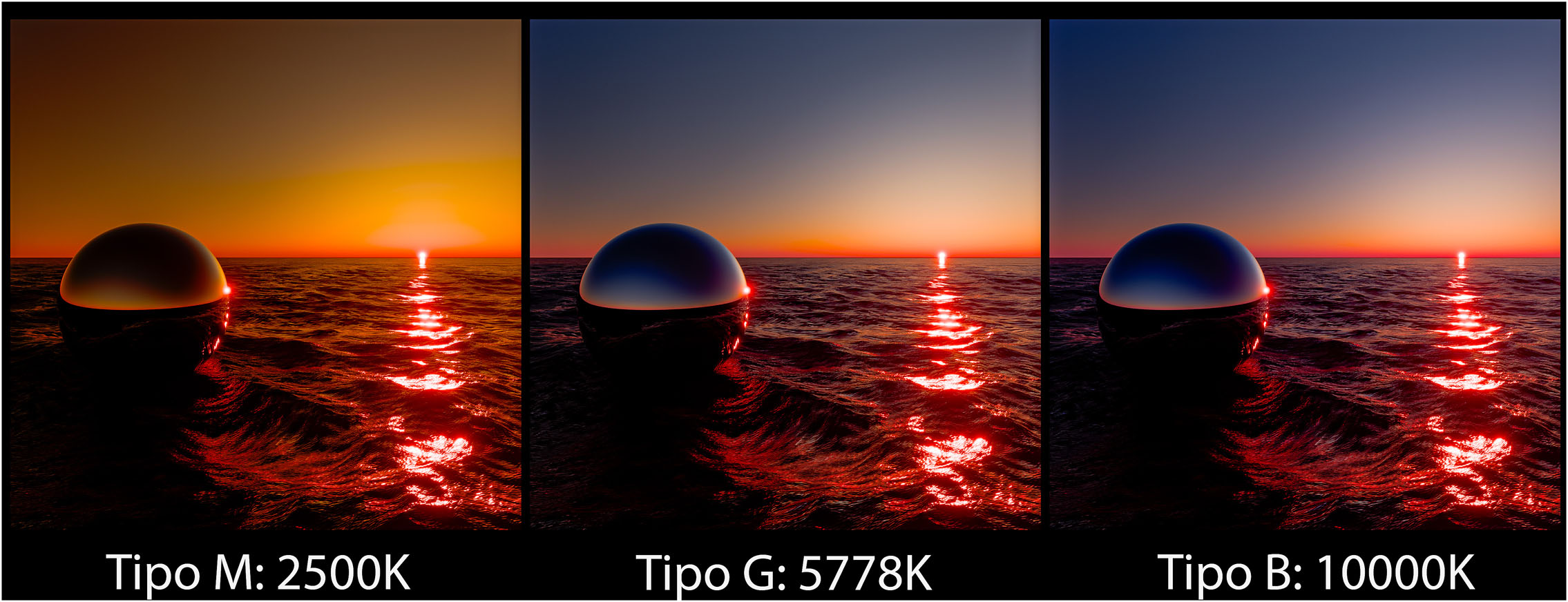
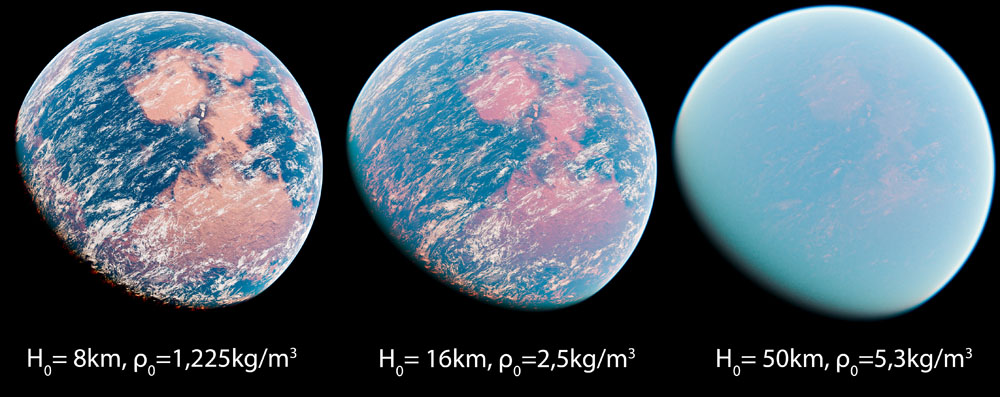
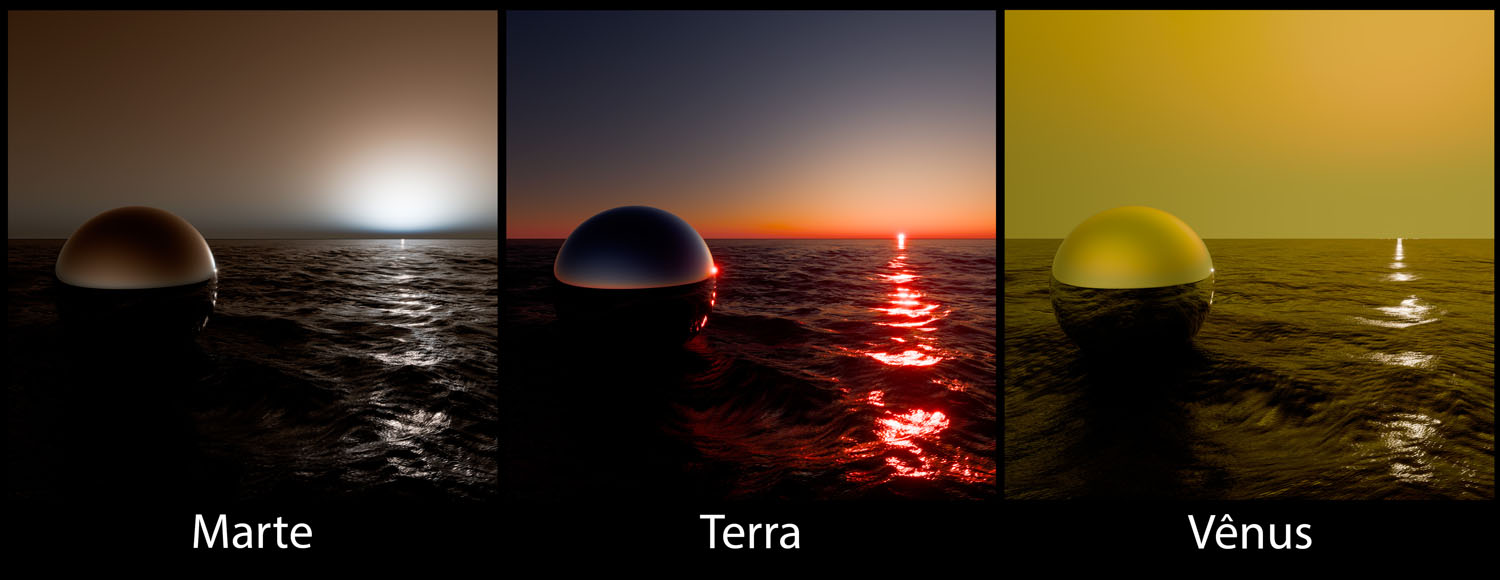
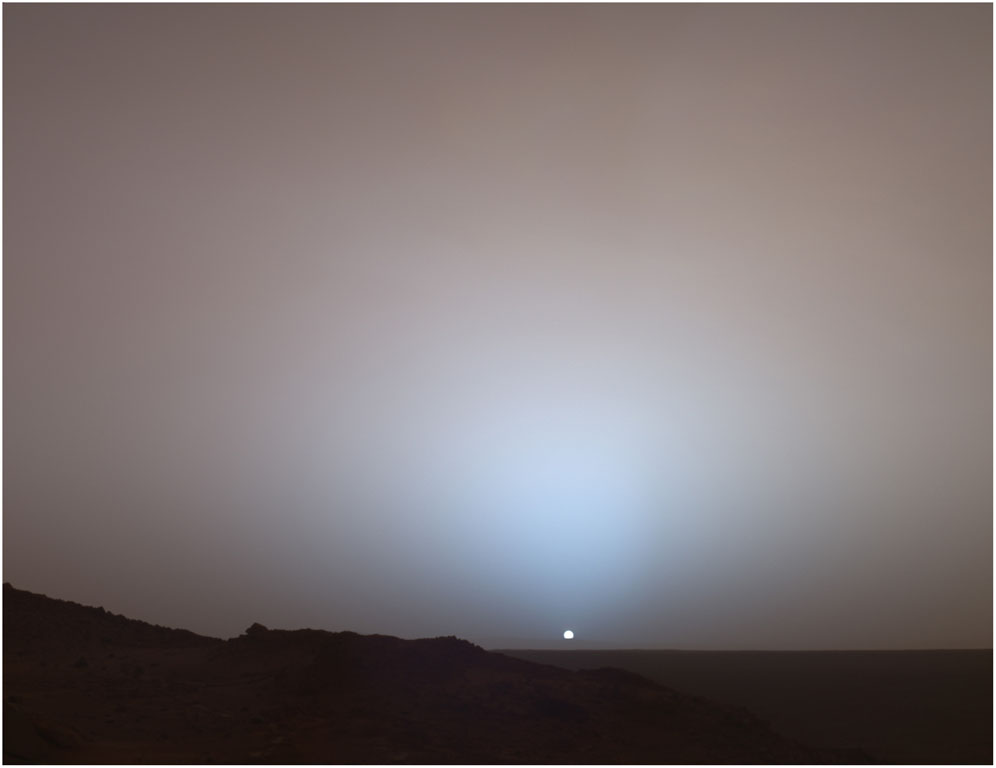
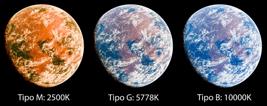
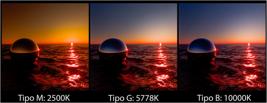
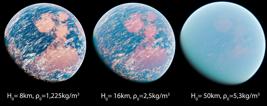
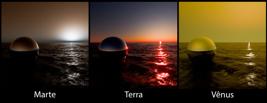
The diversity of exoplanets challenges physics and astronomy education because it requires transforming observational parameters and physical inferences into understandable visual representations. This work aims to develop, describe, and qualitatively evaluate a parameterized framework in Blender 5.0 for visualizing scattering in planetary and exoplanetary atmospheres. The method uses Cycles, the Nishita Sky Texture model, atmospheric volumes, and procedural nodes. Its parameters control stellar spectral type, RGB scattering coefficients, density, scale height, aerosols, and the Mie asymmetry factor. We compared scenarios illuminated by M-, G-, and B-type stars, atmospheres with different optical thicknesses, and compositions inspired by Mars, Earth, and Venus. The results show that the stellar spectrum changes the global illumination and the apparent sky color. They also show that density and scale height modify the limb, terminator, and atmospheric opacity. The sunset simulations qualitatively reproduce expected differences among dust-rich, molecular-scattering, and dense-cloud atmospheres. We conclude that the framework can serve as an accessible virtual laboratory for qualitatively exploring links between physical parameters and atmospheric optical phenomena.
Keywords:
Exoplanets; planetary atmospheres; atmospheric scattering; optics education; virtual laboratory; Blender
 Thumbnail
 Thumbnail
 Thumbnail
 Thumbnail
 Thumbnail
 Thumbnail
 Thumbnail
 Thumbnail
 Thumbnail
 Thumbnail