
 Current status and future trends in mechanized harvesting systems for wolfberry (Lycium barbarum L.)
ABSTRACT
Wolfberry originates from China and is mainly distributed across temperate and subtropical regions. Currently, wolfberry is predominantly harvested manually, which presents significant challenges, such as high labor intensity, low picking efficiency, and high cost. With the advancement of agricultural automation, mechanized wolfberry harvesting has become an inevitable trend and a research hotspot. In recent years, scholars have made numerous innovative attempts to develop wolfberry harvesting machinery, but a systematic review of these technologies and devices is still scarce. Therefore, this review comprehensively examines the cultivation characteristics and harvesting challenges of wolfberries. It categorizes and elaborates on the research status and progress of various mechanized harvesting devices based on their working principles and structural designs. It also discusses the challenges confronting the development of mechanized wolfberry harvesting technology. Finally, it reviews several promising research directions, including vibration-pneumatic hybrid harvesting systems, non-contact harvesting methods utilizing pulsed vortex-ring airflow, and differentiated precision harvesting approaches integrating visual recognition technology. This review aims to provide a crucial reference for the future development of mechanized wolfberry harvesting technology and equipment.
Key words:
mechanical harvesting; vibration systems; pneumatic technology; agricultural automation; selective picking
HIGHLIGHTS
Mechanisms governing fruit-branch interactions were determined in wolfberry tree during harvesting operations.
Vibration-type, comb-and-brush-type, pneumatic, and hybrid wolfberry harvesting systems were categorized. Proposed novel approaches including vibration-air composite systems and others for selective harvesting.
RESUMO
A wolfberry é originária da China e está distribuída principalmente em regiões temperadas e subtropicais. Atualmente, a colheita da wolfberry é predominantemente manual, o que apresenta desafios significativos, como alta intensidade de mão de obra, baixa eficiência de colheita e alto custo. Com o avanço da automação agrícola, a colheita mecanizada da wolfberry tornou-se uma tendência inevitável e um tema de pesquisa muito procurado. Nos últimos anos, os estudiosos fizeram inúmeras tentativas inovadoras para desenvolver máquinas de colheita da wolfberry, mas ainda há poucas revisões sistemáticas dessas tecnologias e dispositivos. Portanto, esta revisão examina de forma abrangente as características de cultivo e os desafios da colheita de wolfberries. Ela categoriza e detalha o estado da pesquisa e o progresso de vários dispositivos de colheita mecanizada com base nos seus princípios de funcionamento e projetos estruturais. Também discute os desafios enfrentados pelo desenvolvimento da tecnologia de colheita mecanizada de wolfberry. Por fim, ela analisa várias direções de pesquisa promissoras, incluindo sistemas híbridos de colheita por vibração-pneumática, métodos de colheita sem contato que utilizam fluxo de ar pulsado em anel de vórtice e abordagens diferenciadas de colheita de precisão que integram tecnologia de reconhecimento visual. Esta revisão tem como objetivo fornecer uma referência crucial para o desenvolvimento futuro da tecnologia e dos equipamentos de colheita mecanizada de wolfberry.
Palavras-chave:
colheita mecânica; sistemas de vibração; tecnologia pneumática; automação agrícola; colheita seletiva
Introduction
Wolfberry (Lycium barbarum L.), a plant of the Solanaceae family, has served as a traditional Chinese medicine for centuries, as it is rich in polysaccharides, amino acids, flavonoids, and minerals (He et al., 2012; Xu et al., 2014; Zhang et al., 2016; Maria, 2022). Its immense health benefits have transitioned it from traditional production areas in China and Asia, such as Ningxia, Qinghai, Gansu, Inner Mongolia, and Xinjiang, to the global stage (Amagase et al., 2011). It has now been widely planted globally, with a total area of about 120,000 hectares.
Economic development and increasing health consciousness have driven the growing demand for wolfberry products. The demand for wolfberry production and quality requirements is continuously increasing, but harvesting is a critical bottleneck in wolfberry production systems.
Wolfberry harvesting season extends from early June to October annually, and the crop can be picked 3-10 times per year (Lu, 2023). However, wolfberry picking still mainly relies on manual harvesting, which has several disadvantages, including extended harvesting periods, high labor intensity, low efficiency, and substantial costs. These issues present significant challenges.
Manual harvesting costs can account for over 50% of total production expenses. Labor shortages during peak harvesting seasons pose severe challenges in terms of difficulty and the high cost of hiring workers, which directly limits the large-scale development and economic efficiency gains of the wolfberry industry (He et al., 2015; Chen et al., 2021).
In addition, wolfberry harvest is also affected by the weather and other factors. If they cannot be picked in time due to the weather, it will cause economic loss and waste grower resources. Therefore, research on mechanized wolfberry picking technologies and equipment is crucial for developing the wolfberry industry, as it directly improves picking efficiency.
Many researchers have carried out continuous research on wolfberry mechanized harvesting. At the fundamental theoretical research level, scholars have focused on obtaining key parameters, such as harvesting mechanisms, plant physicalmechanical properties, and fruit detachment characteristics, to gain a deep understanding of the mechanical and biological behaviors during wolfberry harvesting.
Drawing on the successful application of various mechanized harvesting methods, such as vibration and suction, used for other small berry crops, such as blueberries and raspberries, holds significant importance for advancing wolfberry harvesting technology.
Building upon these theoretical findings, applied technology development has tested multiple harvesting approaches, including vibration, combing, pneumatic, and shearing methods, driving continuous innovation in wolfberry harvesting equipment (Shi et al., 2016; Ma, 2017; Song et al., 2019).
However, due to wolfberry’s growth pattern, which is characterized by infinite inflorescences and continuous flowering and fruiting, existing harvesting technologies and equipment demonstrate suboptimal performance for wolfberry applications.
Compared to manual harvesting, mechanical operations damage the fruit’s skin. After drying, the skin may turn black, affecting its commercial grade and market value. Additionally, mechanical equipment may damage unripe green berries and flowers, affecting the yield. Therefore, the success of mechanized wolfberry harvesting technology hinges on harvesting efficiency and its ability to control fruit damage rates and green berry mis-harvest rates within economically viable thresholds. This represents the primary focus and challenge in this field of research.
This review summarizes the existing research on mechanized harvesting technology and equipment for wolfberry, analyzes current challenges in wolfberry mechanized harvesting, proposes directions for future research, puts forward an outlook for future research directions, and provides a reference for subsequent research on the development of mechanized harvesting technology and equipment for wolfberry.
Basic Situation of Wolfberry and Analysis of Mechanized Harvesting Difficulties
Wolfberry tree is a perennial flower, fruit, leaf, multibranched shrub, with a plant height of 1.5-1.7 m. Cultivation can reach more than 2 m. The crown is umbrella-shaped, and the maximum diameter of the crown is about 1.6 m. Its branches are soft and delicate, naturally vertical, and fruit and leaves are clustered in the branches. The spines, which are the tips of twigs, are 0.5-2 cm long, and the spines of the raw leaves and flowers are longer. The modern standardized wolfberry planting pattern has a row spacing of 3 m and a plant spacing of 1 m, which enables small and medium-sized tractors to pass through and facilitates operations such as fertilization and plant protection (Xu et al., 2017; Liang et al., 2023). Modern standardized planting patterns use a 3-m spacing.
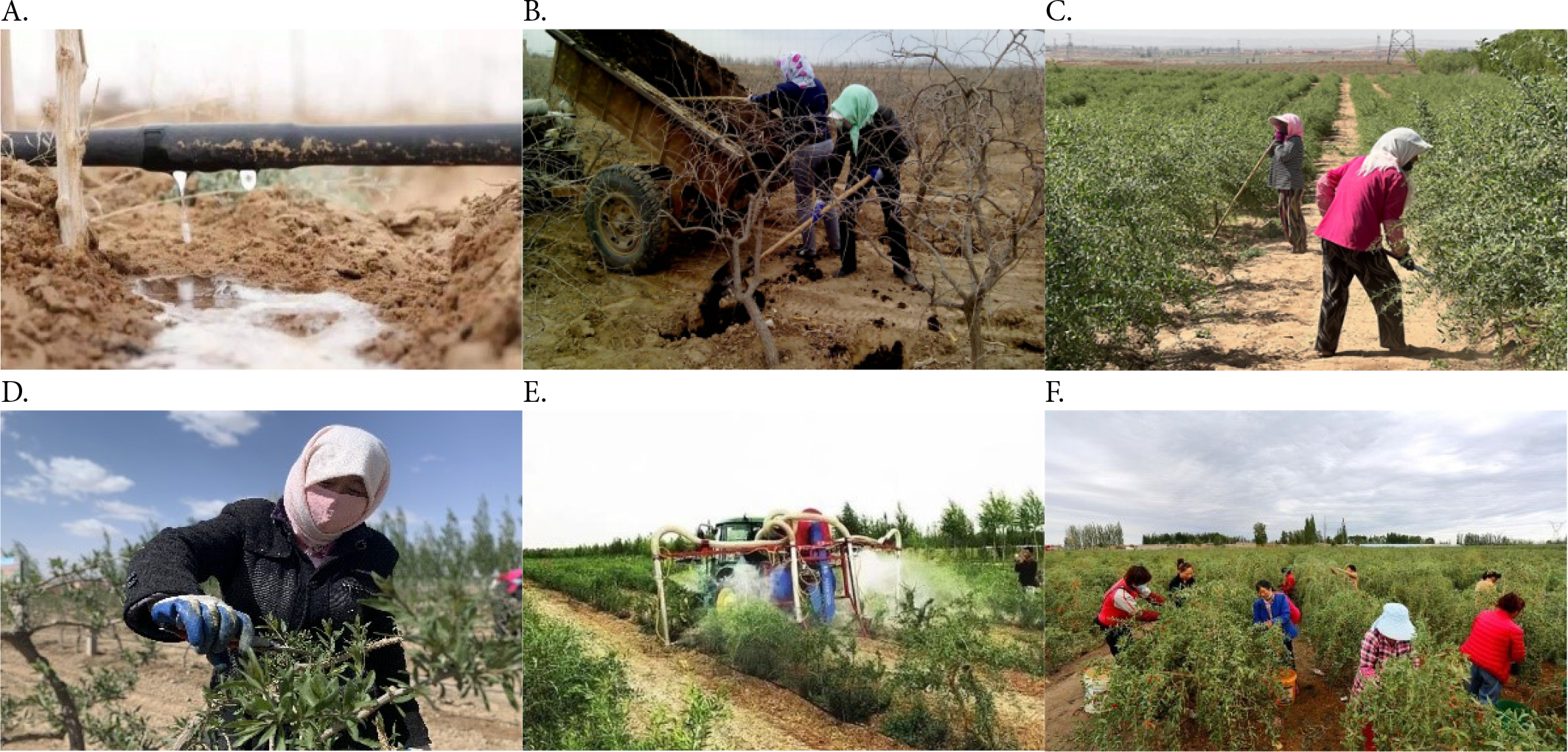
The production cycle of wolfberry spans 7 months (Figure 1) and mainly includes watering (Figure 1A), fertilizing (Figure 1B), weeding (Figure 1C), pruning (Figure 1D), pest control (Figure 1E), picking (Figure 1F), and other steps. Root fertilizer is applied at a depth of approximately 30 cm (Lü et al., 2022). Plant protection spraying is employed for pest control (Zhang et al., 2023).

Main production stages of wolfberry (A: Watering. B: Fertilizing. C: Weeding. D: Pruning. E: Pest control. F: Picking)
The main difficulties of the mechanized picking of wolfberry fruit include the following aspects: first, wolfberry exhibits infinite inflorescence patterns with continuous flowering and fruiting, resulting in the simultaneous presence of flowers, green fruit, and ripe fruit on same individual branches at the same time, with no significant differences in the quantity of the three, resulting in harvest difficulties similar to those for blueberry, raspberry, and other fruit with non-discriminatory picking. Second, compared to citrus fruit and apple, wolfberry is characterized by a small size and high yield, with dense and thick clusters of fruit-bearing branches. To achieve precise harvesting, the equipment requires a large number of precision robotic arms, which presents significant challenges in both design and manufacturing costs. The use of non-discriminatory picking does not ensure that ripe wolfberry fruit are selected, affecting the picking rate and quality, and it is prone to cause damage to green wolfberry fruit and flowers. Finally, ripe wolfberry has a thin and delicate skin that is easily damaged during mechanical harvesting. Such damage causes the fruit to turn black during the drying process. These blackened berries will subsequently be rejected during color sorting, reducing the economic benefits of the wolfberry industry.
Research on the Mechanism of Vibratory Wolfberry Harvesting
The use of vibration for mechanical picking of wolfberry is a current research hotspot. Researchers have investigated various aspects of vibratory harvesting, including resonance frequencies, fruit-stem separation dynamics, and power transmission systems.
Among them, Zhao et al. (2021) tested the shape parameters and physico-mechanical properties of wolfberry branches, on the basis of which a three-dimensional model of a wolfberry tree was established and finite element modal analysis was carried out. The first-order resonance frequency of wolfberry branches was obtained to be 2 Hz by combining the modal test of acceleration sensor and gravity hammer. He et al. (2017) performed a vibration separation test on wolfberry fruit and fruit stalks and showed that when the vibration combination parameters were a frequency of 18.22 Hz, amplitude of 7.87 mm, and velocity of 20.93 mm s-1, the separation rate of mature and immature fruit was 95.03 and 6.61%, respectively, optimizing the vibratory harvesting effect.
Wang et al. (2018) used a mechanical vibration device to evaluate fruit fall from the lateral branches of wolfberry using a high-speed camera to capture the fruit-branch separation process. The results show that the wolfberry fruit in the process of shedding the existence of the side branch vibration with the direction of the linear movement, around the fruit stalk and the lateral branch connection of the pendulum and to the fruit as the center of the axis of the torsion of the fruit, the fruit separation of the largest instantaneous speed of 2.97 m s-1. Ma (2017) compared the four power output structure modes of the vibration and rocking system of the wolfberry picker, namely the crank linkage structure, gear structure, eccentric wheel structure, and cam structure, and found that they resulted in vibration fatigue. From the viewpoint of the comprehensive harvesting efficiency and the service life of the equipment, the wolfberry picker with the eccentric wheel structure had a higher adaptability and picking efficiency, with harvesting efficiency exceeding 10 kg h-1.
Research on Technology Related to Wolfberry Plants and Fruit
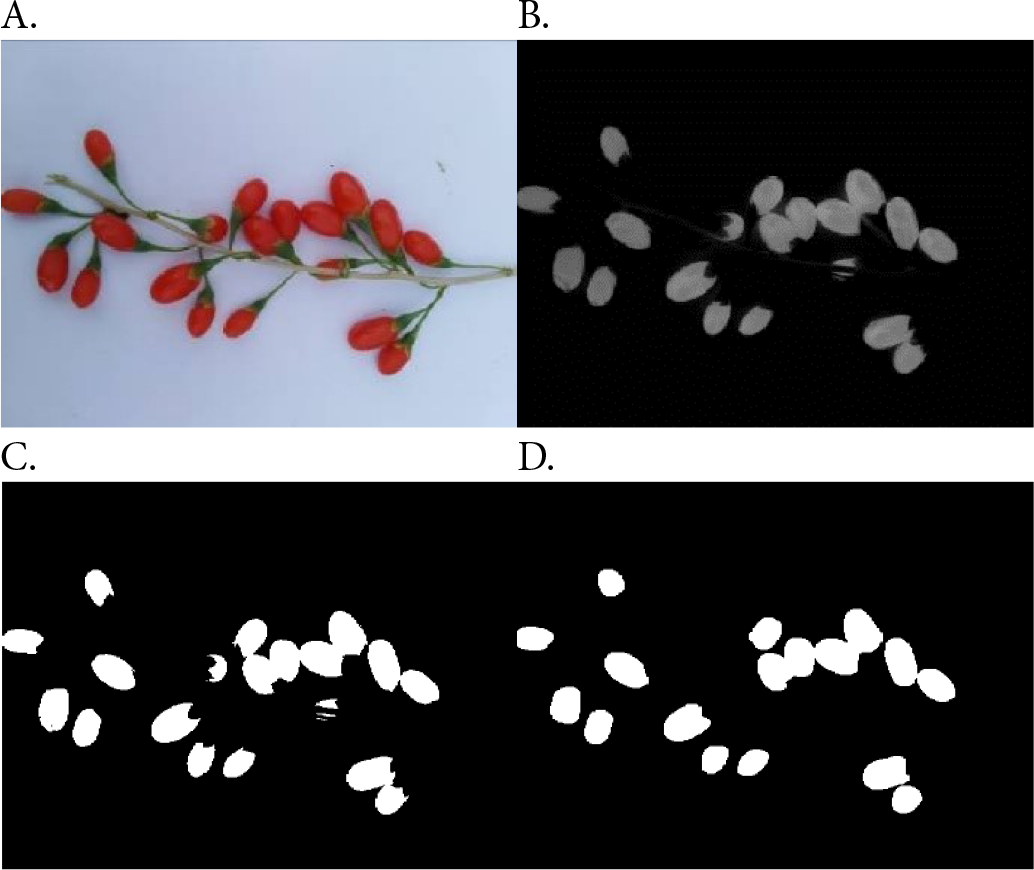
Research on wolfberry fruit itself serves as the theoretical foundation and prerequisite for achieving efficient, lowdamage mechanized harvesting. The design of harvesting machinery systems does not emerge in a vacuum; the design parameters and control logic of its core working components, such as vibrating heads, combing brush fingers, and pneumatic nozzles, directly depend on a precise understanding of the physical, mechanical, and visual characteristics of the harvest target-wolfberry fruit. Existing research includes the image recognition of wolfberry fruit, the maturity determination of wolfberry fruit, and wolfberry fruit shedding characteristics. For wolfberry fruit maturity determination, Zhao et al. (2021) used the Mahalanobis distance method to eliminate abnormal Lycium barbarum fruit samples and then extracted R (Red), G (Green), B (Blue), H (Hue), S (Saturation), V (Value), L (Lightness), a (a-axis), and b (b-axis) components from ripe, semi-ripe, and green wolfberry fruits for image processing to construct a ripeness determination model (Figure 2). They also conducted field experiments to validate the results of the training set and the prediction set to determine the accuracy of a higher rate. Wang et al. (2019) researched the physical characteristics of wolfberry fruit and established a vibration model for wolfberry. They used ADAMS software to simulate and analyze wolfberry fruit shedding and set up a vibration test bench to perform a wolfberry shedding test. Combined with the simulation and analysis results, the vibration test bench determined the best working parameters for the amplitude of excitation vibration (12 mm), excitation frequency (16 Hz), ripe wolfberry shedding time (1.39 s), and maximum acceleration in the direction of excitation (162.81 m s-2).
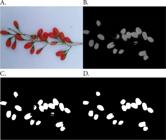
Results of R-G fractions, binary treatments of fruits of wolfberry (A: Original image. B: Component R-G. C: Binary processing. D: Morphology processing)
Zhao et al. (2019) established a three-dimensional model of wolfberry fruit using a three-dimensional scanner, and Abaqus software was used to carry out finite element explicit dynamics simulation to predict wolfberry bruises. Response surface methodology was used to determine the effects of the fall height, impact material, and impact angle of wolfberry fruit on the bruise rate. The experimental results showed that the optimal combination of a fall height of 0.24 m and foam board impact material resulted in an impact angle of 13.11° and bruising rate of 9.8%.
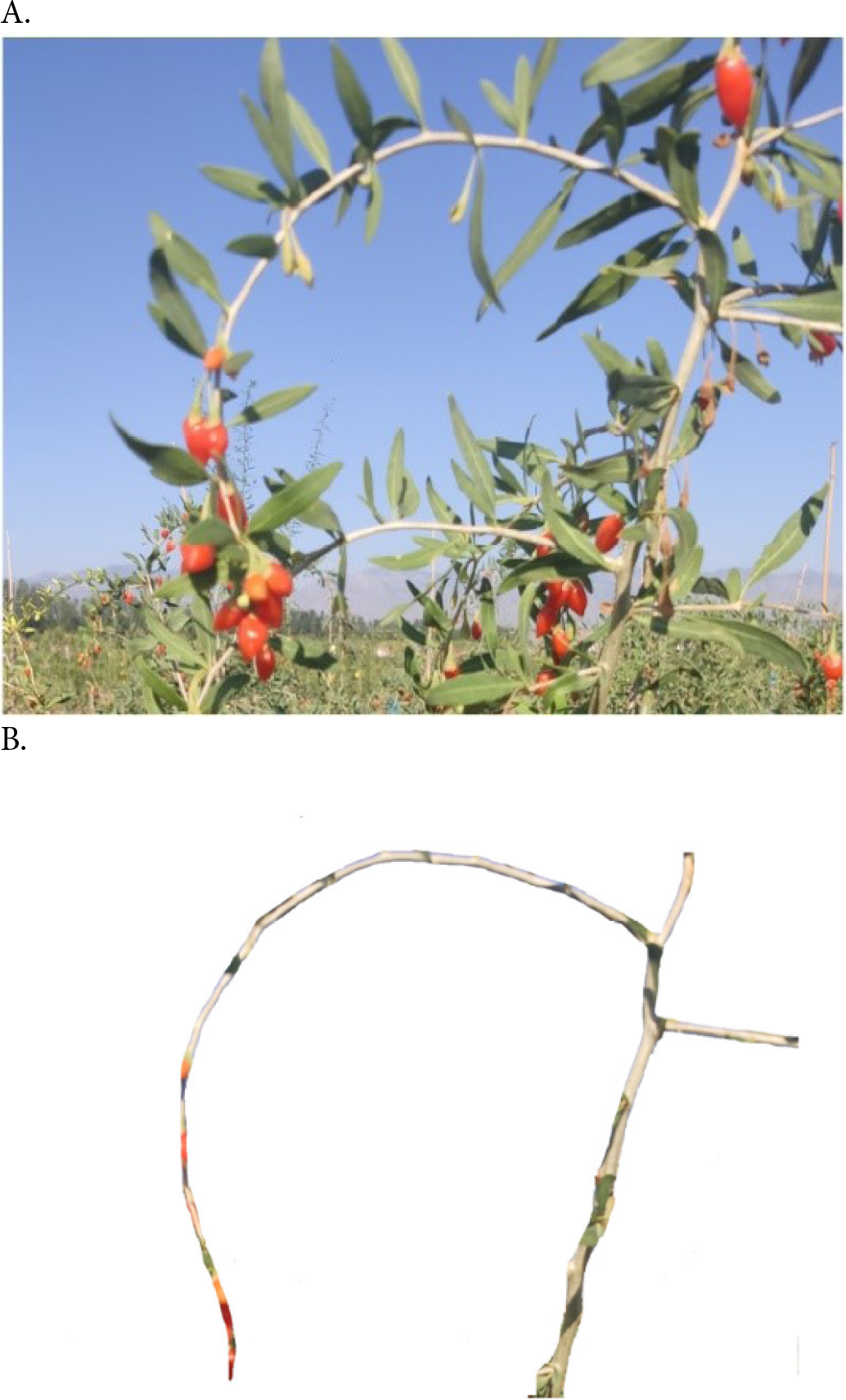
Chen et al. (2021) evaluated the parameters of wolfberry tree branches, branch morphology under gravity, and fruit and branch loads using finite element simulation (Figure 3A) and established a prediction model by determining the relationship between branch morphology, length, growth angle, and growth pattern parameters using an orthogonal rotational combination test. The branch shape of wolfberry was accurately simulated according to this prediction model (Figure 3B). Chen et al. (2018) proposed a wolfberry branch recognition method based on mathematical morphology and convex hull theory; this mathematical morphology removed the background noise by Gaussian smoothing, blurring the background, segmenting the target branch using morphological methods, and removing residual noise using the minimum area method. The segmented branches were discontinuous due to leaf occlusion, and the segmented branches were connected using convex packet theory. The recognition success rate was more than 60% compared to manual recognition.
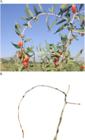
Modeling simulation results based on physical properties of branches (A: Actual photos of branches. B: Manually remove the target area)
He et al. (2018) measured the basic physical parameters, obtained the average value and standard deviation, and used Solid works software to establish a three-dimensional model of wolfberry plants. Subsequently, they used ANSYS software to carry out modal analysis and harmonious response analysis and obtained a model of the dynamic transmission law for unilateral branches in wolfberry plants in different directions of excitation, and the results showed that the best excitation frequency was 23 Hz.
Ma et al. (2020) studied the binding strength and quality characteristics of mature and immature fruit, flowers, and leaves of four varieties of Ningqi No. 1, No. 5, No. 7, and No. 9 and obtained the distribution range of their stalk binding strength and physical appearance characteristics. They also determined the length-to-diameter ratio of mature fruit through image processing and the intrinsic equations for the fracture of the young and mature fruit stalks of the four varieties. The binding strength of the wolfberry berry stalks was not affected by the picking temperature, the quality of the fruit, or the fruit branch position, and the fracture strength of the mature wolfberry fruit stalks was significantly higher than that of immature fruit stalks. So (2001) determined the elastic modulus, rigid modulus, damping ratio, and natural frequency of three wolfberry varieties and showed that the internal damping of wolfberry branches varied greatly, with an overall range of 0.014-0.087. The intrinsic frequency ranged from 89 to 363 rad s-1. There was a good correlation between the natural frequency and the branch diameter of all varieties and branch types, but torsional stiffness and branch diameter showed no correlation, and the elastic modulus had a good correlation with the branch diameter.
Classification of Mechanized Harvesting Methods for Wolfberry
Scholars have carried out innovative design and development of wolfberry mechanization picking equipment for different wolfberry picking principles, mainly vibration type, comb and brush type, pneumatic type, shear type, vibration shaking type, and vibration brush type.
Vibratory Type
Sun et al. (2021) and Wan et al. (2021) designed a tracked self-propelled wolfberry vibration harvester using a tracked walking device, gantry frame, and self-propelled chassis connected to a vibrating rod set arranged on both sides of the body and a double side drive for vibration picking. The fruit collection device is located in the rear of the body, and the conveying device is a fruit box connected to a cleaning device. Using ANSYS software on the self-designed picking frame, finite element static structural analysis and modal analysis showed that when working, the picking machine was not a practical picking test. Modal analysis showed that no resonance phenomenon occurred. In the field test, the machine obtained net picking rate of 86.26-96.21% for mature wolfberry, a wrong picking rate of 0.48-5.80% for green fruit, and a damage rate of 0.84-2.87% for mature wolfberry.
Mei et al. (2019) designed a reciprocating vibration-type wolfberry low-loss harvesting machine, designed with tunneltype left-right and upper-end array reciprocating vibration parts, auxiliary flexible fruit receiving parts, conveying wind selection and homing system, and cross-line self-propelled power platform to complete wolfberry harvesting. The machine had a wolfberry ripe fruit picking rate of about 90%, with an impurity rate of about 15%, fresh fruit damage rate of less than 5%, and dry fruit damage rate of 8%. Zhang et al. (2015) simplified the hanging fruit branches of wolfberry into a cantilever beam model for vibration analysis and used MATLAB on the parameters of optimization and simulation tests. According to the model analysis and simulation results designed for the special node vibration of hanging fruit branches vibrating rod, and ultimately designed to complete the vibration of self-propelled picking machine of wolfberry. At a drive wheel speed of 2870 rpm, the field test showed a net ripe wolfberry picking rate for of 86.7%, unripe wolfberry picking rate of 7.36%, flower picking rate of 7.43%, and mature wolfberry damage rate of 8.62%.
Zhao et al. (2019) designed a portable wolfberry vibration picking device, established a mathematical model using the ripe fruit harvesting rate, green fruit wrong picking rate, ripe fruit damage rate, vibration frequency, vibration time, and vibration rod diameter, determined the influence of each factor on the ripe fruit harvesting rate, green fruit wrong picking rate, and ripe fruit damage rate, and determined that the optimal parameter combination for each influencing factor (vibration frequency of 8Hz, vibration time of 15 s, vibration rod diameter of 8.3 mm). So (2003) developed a wolfberry harvester with a handheld vibrating screen, collection system, and walking system, the handheld vibrating screen can be freely twisted, and the operator can hang it on the branches of wolfberry trees. The vibrating screen end of the V-shaped hooks shakes the branches to separate the wolfberry fruit. The optimal vibration frequency and amplitude were 125.7 Hz and 35 mm, respectively.
Liu et al. (2019) proposed a dual-mechanical arm clamping vibration picking method (Figure 4A) and designed a 4-degreeof-freedom clamping mechanical arm and a 6-degree-offreedom picking mechanical arm. Kinematics analysis was performed, and the working range of the dual-mechanical arm was obtained using MATLAB simulation. Based on the analysis of the dynamics of wolfberry fruit in the vibration process, Peng et al. (2018) and Peng et al. (2019) estimated the fruit impact acceleration during vibration and the lowest vibration frequency and performed other analyses. A multipoint clamping-type wolfberry branch vibration device was designed (Figure 4B). The power of the device comes from a three-phase asynchronous motor, and the vibration of the vibration rod is generated through a crank-slider mechanism. There is a clamping adjusting motor set on the top of the device, and the motor drives the adjusting screw to adjust the distance between the movable frame and the fixed frame to clamp the wolfberry branches. The motor drives the adjusting screw to adjust the distance between the movable frame and the fixed frame to clamp the wolfberry branches for wolfberry picking.

Other vibrational wolfberry harvesting (A: Double robotic arm structure of wolfberry picking robot. B: Multipoint clamping-type wolfberry vibration picking device. C: 4ZGB-30-type portable wolfberry picker. D: 1QC-12 portable picker)
Liu (2014) proposed a picking method that uses clamping vibration with two mechanical arms, and the machine used a shaking rod (95 m-2) to insert branches evenly. The fruit was collected in the fruit collection box by multi-point shaking of the wolfberry branches during insertion and extraction. The processing prototype test found that the efficiency of the machine for picking reached more than 100 kg h-1, and the picking rate was more than 85%, with a rate of damage of less than 8%. The Ningxia Wolfberry Engineering Technology Research Center developed a 4ZGB-30-type portable wolfberry picking machine (Figure 4C). The picking device is held by a person when picking, and the picking rod vibrates the branches of wolfberry to make the mature fruit fall, thus performing mechanical picking. Zhang (2014) developed a 4GQCZ-1-type self-propelled wolfberry picker, in which the use of both sides of the vibrating rod reciprocates the shaking of the wolfberry fruit tree so that the mature fruit fall off into the collection device. The net picking rate reached up to 85%, and the fruit damage rate was small, effectively protecting the green fruit. Li (2016) self-developed a 1QC-12-type portable picker (Figure 4D), which adopts a comb and brush structure, with a picking rod to join the flexible material. The rotation speed of the picking mechanism can be adjusted. With the mass production and popularization of wolfberry, the fruit picking efficiency can be improved to reduce labor costs.
The principle of vibration-type wolfberry picking devices is its simple, stable, and reliable structure. It is the most direct and effective method of wolfberry picking. They have evaluated reciprocating vibration-type, clamping vibration-type, small portable, and multi-point clamping-type vibration-type wolfberry picking devices for their structural design and prototype test. The results have shown that the vibration-type wolfberry picking device achieves a high fruit picking rate but also has a high rate of green fruit and flower picking. The vibration picking method transfers excitation energy to the wolfberry branch, and it is difficult to control the excitation energy, application point, and frequency of the vibrator due to the different detachment forces required for green fruit, flowers, and ripe fruit. Thus, ensuring a higher rate of ripe fruit picking and reducing the rate of damage to the wolfberry branches, ripe fruit, green fruit, and flowers are the main problems that needs to be considered at present.
Brush Type
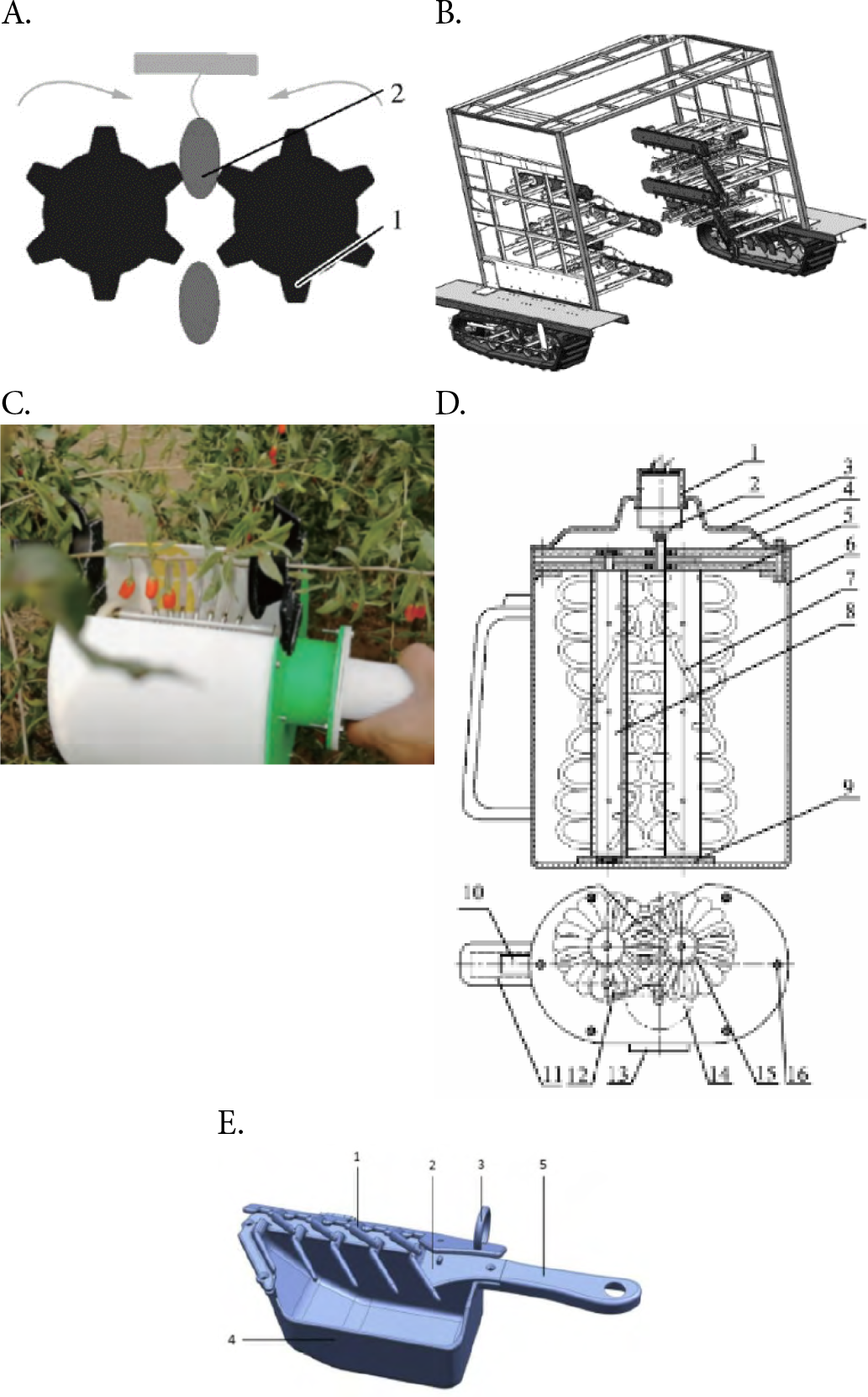
Zhao et al. (2019) proposed a standardized wolfberry planting model orchard for roller brush wolfberry fruit-fruit stalk detachment. Flexible roller brushes are employed as harvesting actuators. After branches are guided into position, the rotating flexible roller brushes first embed their teeth into the fruit clusters to grip the fruit. Subsequently, through continuous rotation, the fruit is torn from the stems, thereby completing the harvesting process. A hand-carried small roller brush fruit removal device and 4GQB-3300 standardized wolfberry harvester (Figures 5A and B) have been designed, and the field test showed a continuous branching rate of 78%, ripe fruit shedding rate of 72.3%, green fruit shedding rate of 8.5%, impurity rate of 7.7%, and ripe wolfberry breakage rate of 33.2%. Zhang et al. (2018) proposed a kind of wolfberry picking program guided by a groove cam, with the pressure plate to make the picking skeleton open and adjust the comb finger spacing (Figure 5C). Through the analysis of natural characteristics of wolfberry and physical parameter measurements, a mathematical model of the comb finger variable spacing control components has been established, and MATLAB has been used to optimize the structural design of its key parts. A finger spacing of 8 mm, spring steel length of 45 mm, and spring steel diameter of 1.1 mm resulted in a wolfberry picking rate of 90% and damage rate of 8.41% in a field test.
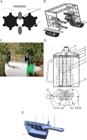
Comb brush-type wolfberry mechanized harvesting method (A: Schematic diagram of roller brush-type wolfberry fruit removal. B: 4GQB-3300 standardized wolfberry harvester. C: Variable pitch brush-type wolfberry picking device. D: Engagement diagram of the rotor body of the picking head of a hand-simulated picker. E: Double comb plate variable spacing comb rake-type wolfberry picker)
Based on the principle of wolfberry brush picking, Zhou et al. (2010) designed a hand analogized wolfberry picking machine (Figure 5D). The hand-held picking head consists of two left and right rotating sub-bodies. The relative rotation of the flexible hose results in the picking of the wolfberry. Wolfberry fruit falls off and is then conveyed through the fruit transport tube to the fruit box body. The quality of the picking head is about 300 g. The rotational speed of the direct current motor is 120 r min-1, and 15-20 kg of ripe wolfberry can be picked every hour. Ma et al. (2018) designed a double comb plate variable spacing comb rake-type wolfberry picking device (Figure 5E). The device consists of two rows of comb plates, with a tilt angle of 30°. When the two rows of comb plates closed, the Chinese wolfberry fruit falls into the collection box below. Zhao (2013) developed a dual-axis dual-motor wolfberry fresh fruit picker, in which two electric motors drive two collection fans for phase rotation to pick wolfberry. The collection fan has a uniform distribution in the collection fan axis of the six comb-like rectangular rubber sheets. The rubber sheet is elastic and flexible and can effectively reduce the ripe fruit damage rate.
Comb brush-type wolfberry picking mainly uses different physical maturity characteristics (fruit diameter) and mechanical properties (fruit and bonding force) of wolfberry fruit for selective picking. Handheld comb brush-type wolfberry picking combines man and machine, as the human eye is needed to identify the majority of ripe wolfberry fruit, thus most of them can be picked at one time.
Pneumatic Type
Chen et al. (2021) developed a pulse-air flow wolfberry picking machine based on the mechanism of pulse-air flow (Figure 6A). The excitation motor and other components were used to form a pulse airflow generator, and the swinging device drove the pulse airflow generator to swing around the articulation point at a certain frequency, thus generating a pulsed airflow. Wang et al. (2019) designed an air-absorptiontype wolfberry picking test device powered by a motor (Figure 6B); the extractor fan and collection barrel produce negative pressure. The infinitely variable speed knob adjusts the motor speed to change the wind speed and wind pressure. The physical and mechanical properties of wolfberry fruit were determined, and Fluent software was used on the air-absorption pipeline for the distribution of pressure and wind speed changes based on the simulation analysis of air-absorption pipelines with different diameters. The results showed that the optimal air suction pipe diameter of the device was 25 mm, with a wind speed of 27.5 m s-1 and air suction angle of 90°.
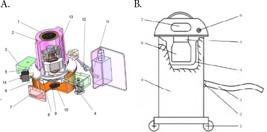
Pneumatic-type wolfberry mechanized harvesting method (A: Pneumatic swing-type wolfberry harvester. B: Pneumatic suction-type wolfberry picking test device)
Yang (2011) invented an air-absorbing vibrating-type wolfberry harvester, which vibrates the picking head to pick wolfberries through the rotation of the eccentric wheel, and the air-absorbing wind-conveyor mechanism transfers the picked fruit to the separating device, which remains in the settling chamber after separation. Li et al. (2018) designed an air suction comb brush-type wolfberry picker. When the mechanical control arm is moved to the designated position, the induced draft fan suction wind will move the wolfberry fruit stalk from a sagging state to a horizontal state, and the wolfberry branches move through the two reverse-rotation, comb brush working heads, clamping wolfberry branches and picking wolfberry fruit. Zhou et al. (2016) invented a highspeed airflow picking wolfberry picking machine. The device is installed on both sides of the nozzle to provide high-speed airflow action to the fruit on the wolfberry branches through the control of the airflow speed and frequency of change to pick ripe fruit and not green fruit or flowers. The nozzle position and height can be adjusted. Zhang et al. (2015) invented an air suction-type wolfberry picker, composed of a collection device, power device, and storage device. The collection device includes a suction head and suction hose. The power device includes an air amplifier, air cylinder, air pump, and safety valve. When working, the suction head is aimed at the wolfberry, and the fruit is suctioned into the collection barrel.
Shear Type
Zhao et al. (2011) designed a hob-type wolfberry selectable picker (Figure 7A), which consists of a picker, gear combination drive, electrical part, and fruit storage box body. The picker consists of the flare, hob, reverse hob, and connector. The hob and reverse hob rotate from top to bottom of the wolfberry fruit and fruit stalk to pick wolfberry. Zeng (2013) designed a wolfberry picker (Figure 7B), with a fruit picking knife that directly picks the wolfberry fruit and leaves from the wolfberry fruit stalk. The fruit picking knife is above a two-stage filter mesh, which filters leaves through the large hole filter mesh and wolfberry fruit through the small hole filter mesh, reducing the picking impurity rate.
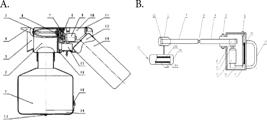
Shear-type wolfberry mechanized harvesting method (A: Hobbing-type wolfberry optional picker. B: New wolfberry picker (fruit picker))
Vibration Shaking Type
Zhang et al. (2018) established a kinetic model for wolfberry harvesting and concluded that the vibration shaking frequency, amplitude, and finger row spacing were the main influencing factors affecting the harvesting effect. Through ADAMS simulation analysis of the simplified model, they designed a vibration shaking-type wolfberry harvesting machine (Figures 8A and B). The device adopts a DC motor to rotate the eccentric shaft, and the connecting rod is connected to the eccentric shaft and the translation plate to form a crank-slider mechanism. The branch is placed into the vibration shaking between the finger rows, shaking the branches. In field tests, a vibration shaking frequency of 12 Hz, amplitude of 40 mm, and finger row spacing of 100 mm resulted in a net picking rate of 93.52%, picking green rate of 5.72%, and damage rate of 2.54%.

Vibrating shaking-type mechanized wolfberry harvesting method (A: Vibration shaking wolfberry machine harvesting principle. B: Vibrating-type wolfberry harvesting machine)
Vibratory Brush Type
Chen et al. (2019) and Zhao et al. (2021) designed a portable hand-held wolfberry vibrating brush harvester and an interrow self-propelled wolfberry vibrating brush harvester by integrating the features of vibrating and brushing harvesting methods (Figures 9A and B). The portable handheld wolfberry vibration brush harvesting machine is driven by two motors, one driving the cam rotation to make the comb and brush mechanism vibrate and the other driving the comb teeth inside the comb and brush unit to realize vibration brush harvesting. The cross-line self-propelled wolfberry vibration brush machine harvesting system uses comb and brush and vibration mechanisms, and the comb system consists of a DC motor driving rubber rollers and flexible comb fingers that comb the wolfberry branches. The other motor drives the rubber rolls and flexible comb fingers. Another motor drives the rubber roller connected below the crank-slider mechanism, resulting in reciprocating linear movement in the comb brush; the vibration of the wolfberry branches enables fruit picking.

Vibrating comb brush composite-type mechanized wolfberry harvesting method (A: Portable handheld wolfberry vibration brush harvester. B: Cross-row self-propelled vibrating brush harvester. C: Comb brush vibration-type harvesting device. D: Vibrating comb-type wolfberry picking device.)
Xu et al. (2018) designed a comb-brush vibration-type wolfberry picking device controlled by dual motors (Figure 9C); the left side motor of the device drove the whole combbrush vibration mechanism for uniform rotational movement with an adjustable speed to comb the wolfberry branches, and the right side motor of the device drove the sliding shell and 4 rows of harvesting rods for reciprocating vibration along the direction of the input axis at a certain frequency and amplitude to vibrate the wolfberry branches, resulting in comb-brush vibration combination-type picking.
Chen et al. (2022) designed a vibrating comb-type wolfberry picking device specifically for the standardized cultivation of wolfberry hedges (Figure 9D), and the device was composed of an execution system, a motion system, and a control system; the vibrating comb brush rod in the execution system was inserted into the wolfberry branches to vibrate the wolfberry fruit off. Two cross-ball screw sliding platforms in the motion system control vertical up and down movement of the vibrating comb rod in the execution system to achieve the combination of the vibration and the combing and brushing picking modes.
Conclusions
-
1. Existing research on the inherent characteristics and mechanical mechanisms of the wolfberry plant itself remains limited. Studies on the mechanical and physical properties of wolfberry branches, leaves, and fruit and their kinematic mechanisms under harvesting forces are still incomplete. Current research has made progress in elucidating the principles of plant-machine interactions, but many studies focus on parameter optimization for specific prototypes. Translating fundamental mechanistic findings into a universal predictive design theory for harvesting equipment represents a key challenge facing current research. Small portable wolfberry picking devices are low cost but may cause injury to wolfberry branches. The quality of operation is high, but the picking efficiency and the degree of intelligence are low. It is still inseparable from manual operation and vulnerable to the weather, environment, and other influences. Large selfpropelled wolfberry harvesters offer high operational efficiency and may be less susceptible to weather conditions compared to small portable wolfberry harvesting devices, but the cost of the machine is high, the quality of picking is low, and wolfberry branches may be damaged.
-
2. A vibration-pneumatic hybrid harvesting technology should be considered. The core research question for this technology lies in achieving synergistic effects between vibration and pneumatic excitation modes, rather than merely superimposing them. Specifically, research must investigate the mechanical coupling mechanism whereby the vibrating mechanism harvests fruit near the main branches while simultaneously using directed airflow to collect fruit on the plant’s periphery. The key lies in experimentally quantifying the force exerted by aerodynamic loads on the fruit skin and ensuring it remains below the biomechanical damage threshold of wolfberry berries, thereby reducing overall damage rates.
-
3. A novel method for harvesting wolfberry using pulsed vortex rings should be explored. As coherent flow structures are capable of long-distance energy transfer, vortex rings offer a new approach to non-destructive harvesting. The core scientific hypothesis is that by precisely controlling the vorticity, energy, and effective range of vortex rings, a transient force pulse can be generated. This force lies in the binding force between mature fruit and their pedicels and between unripe fruit/flowers and their pedicels, thereby enabling selective detachment. Future work requires systematic investigation of the relationship between vortex ring parameters and fruit detachment response to validate this hypothesis and inform equipment design and achieve high-quality wolfberry fruit picking with low loss.
-
4. The adoption of a differentiated harvesting strategy guided by visual recognition should be considered. Research priorities must shift from simple color segmentation to developing highly robust maturity recognition algorithms capable of adapting to complex field lighting conditions, canopy shading, and varietal variations. This may require integrating multimodal sensor data, such as near-infrared spectroscopy and depth information. Concurrently, complementary research is needed on high-speed, multi-degree-of-freedom actuators based on recognition outcomes to ultimately achieve selective precision harvesting. Through the wolfberry branch recognition results, the branches can be clamped, and the push shear-type picking actuators will harvest the wolfberry fruit, achieving selective picking and a lower green fruit picking rate and ripe fruit damage rate.
-
5. Finally, moving toward practical application requires the resolution of the following key commercialization considerations: conducting economic analyses of the system to determine the labor cost threshold at which mechanical harvesting becomes advantageous; evaluating the scalability of technical solutions and their adaptability across different growing regions, varieties, and cultivation practices; and establishing a standardized performance evaluation system to enable fair comparisons between different technical approaches.
Data availability statement:
The original contributions presented in the study are included in the article, and further inquiries can be directed to the corresponding author.
Literature Cited
-
Amagase, H.; Norman, R. F. A review of botanical characteristics, phytochemistry, clinical relevance in efficacy and safety of Lycium barbarum fruit (Goji). Food Research International, v.44, p.1702-1717, 2011. https://doi.org/10.1016/j.foodres.2011.03.027
» https://doi.org/10.1016/j.foodres.2011.03.027 -
Chen, J. F.; Ding, R. M.; He, Z. X.; Wang, M. L.; Tian, D. N.; Yang, H. F. Cross-sectional survey on musculoskeletal disorders and related factors of wolfberry harvesters in Ningxia. Journal of Environmental and Occupational Medicine, v.38, p.266-271, 2021. https://doi.org/10.13213/j.cnki.jeom.2021.20439
» https://doi.org/10.13213/j.cnki.jeom.2021.20439 -
Chen, J.; Zhao, J.; Chen, Y.; Bu, L. X.; Hu, G. R.; Zhang, E. Y. Design and experiment on vibrating and comb brushing harvester for Lycium barbarum Transactions of the Chinese Society for Agricultural Machinery, v.50, p.152-161, 2019. https://doi.org/10.6041/j.issn.1000-1298.2019.01.016
» https://doi.org/10.6041/j.issn.1000-1298.2019.01.016 -
Chen, Q. Y.; Zhang, S. X.; Hu, G. R.; Zhou, J. G.; Zhao, J.; Chen, Y.; Chen, J.; Gao, S.; Chen, Y.; Shi, T. F. Parameter optimization of the harvest method in the standardized hedge cultivation mode of Lycium barbarum using response surface methodology. Horticulturae, v.8, e8040308, 2022. https://doi.org/10.3390/horticulturae8040308
» https://doi.org/10.3390/horticulturae8040308 -
Chen, Y.; Wang, Y. L.; Zhao, J.; Chen, J. Recognition of the position of Chinese wolfberry branches under the artificial background. IFAC-Papers On Line, v.51, p.321-325, 2018. https://doi.org/10.1016/j.ifacol.2018.08.198
» https://doi.org/10.1016/j.ifacol.2018.08.198 -
Chen, Y.; Zhao, J.; Chen, Q. Y.; Chen, J. Simulation for fitting the bending shape of fruit branches of Lycium barbarum based on the finite element method. Horticulturae, v.7, e7110434, 2021. https://doi.org/10.3390/horticulturae7110434
» https://doi.org/10.3390/horticulturae7110434 -
Chen, Y.; Zhao, J.; Hu, G. R.; Chen, J. Design and testing of a pneumatic oscillating Chinese wolfberry harvester. Horticulturae, v.7, e7080214, 2021. https://doi.org/10.3390/horticulturae7080214
» https://doi.org/10.3390/horticulturae7080214 -
He, M.; Kan, Z.; Li, C. S.; Wang, L. H.; Yang, L. T.; Chen, X. H. Study on the dynamic characteristics of Lycium barbarum plant. Journal of Agricultural Mechanization Research, v.40, p.18-23, 2018. http://doi.org/10.3969/j.issn.1003-188X.2018.05.003
» http://doi.org/10.3969/j.issn.1003-188X.2018.05.003 -
He, M.; Kan, Z.; Li, C. S.; Wang, L. H.; Yang, L. T.; Wang, Z. Mechanism analysis and experiment on vibration harvesting of wolfberry. Transactions of the Chinese Society of Agricultural Engineering, v.33, p.47-53, 2017. http://doi.org/10.11975/j.issn.1002-6819.2017.11.006
» http://doi.org/10.11975/j.issn.1002-6819.2017.11.006 -
He, M.; Li, C. S.; Wang, L. H.; Zhang, Y. O.; Yang, L. T.; Wu, S. Research status of the harvesting device of Lycium barbarum L. Journal of Anhui Agricultural Sciences, v.43, p.367-369, 2015. https://doi.org/10.13989/.cnki0517-6611.2015.33.123
» https://doi.org/10.13989/.cnki0517-6611.2015.33.123 -
He, N. W.; Yang, X. B.; Jiao, Y. D.; Tian, L. M.; Zhao, Y. Characterisation of antioxidant and antiproliferative acidic polysaccharides from Chinese wolfberry fruits. Food Chemistry, v.133, p.978-989, 2012. https://doi.org/10.1016/j.foodchem.2012.02.018
» https://doi.org/10.1016/j.foodchem.2012.02.018 - Li, R. D. Portable wolfberry portable wolfberry picking machine development and technical advantages of the development and technical advantages of the picking machine. Development of Machine, v.1, p.49-50, 2016.
- Li, S. S.; Li, Y. Y.; Zhao, Q. T. Structural design of air suction comb brush type wolfberry picker. Science and Technology Innovation and Application, v.19, p.28-29, 2018.
-
Liang, X. J.; He, X. R.; He, J.; Tian, J. W.; Dai, G. L.; Qin, K. Effects of different tree shapes and picking periods on the fruit quality of new strain of Lycium barbarum L. Northern Horticulture, v.2, p.104-111, 2023. https://doi.org/10.11937/bfyy.20221969
» https://doi.org/10.11937/bfyy.20221969 - Liu, W. H. Development and experimental effect of self-propelled large-scale wolfberry picker. Agriculture Machinery Technology Extension, v.1, p.47-48, 2014.
-
Liu, X. K.; Li, B.; Chang, J.; Zhang, G. W.; Wang, C. Structure design and analysis of wolfberry picking robot’ s dual manipulator. Chinese High Technology Letters, v.29, p.175-182, 2019. https://doi.org/10.3772/j.issn.1002-0470.2019.02.008
» https://doi.org/10.3772/j.issn.1002-0470.2019.02.008 -
Lü, L. Y.; Duan, G. Z.; Su, C. F.; Guo, H.; Fan, G. H. Effects of microbial agents on growth and soil properties of Lycium barbarum L. Journal of Shenyang Agricultural University, v.53, p.476-482, 2022. https://doi.org/10.3969/j.issn.1000-1700.2022.04.011
» https://doi.org/10.3969/j.issn.1000-1700.2022.04.011 - Lu, W. L. Gansu Jingyuan wolfberry drip irrigation under the membrane water and fertilizer integration cultivation technology. Specialty economic plants, v.9, p.110-112, 2023.
-
Ma, F. L.; Li, L. K.; Wang, Y. T.; Li, P.; Zhu, C. W. Biomechanical properties of wolfberry Plant Organs. Engenharia Agricola, v.40, p.162-176, 2020. https://doi.org/10.15901809-4430-Eng.Agric.v40n2p162-176/2020
» https://doi.org/10.15901809-4430-Eng.Agric.v40n2p162-176/2020 -
Ma, J. W. Research status and prospect of the mechanized technology of picking wolfberry in China. Mechanical Research & Application, v.30, p.151-153, 2017. https://doi.org/10.16576/j.cnki.1007-4414.2017.04.050
» https://doi.org/10.16576/j.cnki.1007-4414.2017.04.050 -
Ma, X. Y. Large-scale wolfberry picking machine vibration shaking system power input mode selection. Applied Engineering Technology, v.37, p.51-57, 2017. https://doi.org/10.16815/j.cnki.11-5436/s.2017.02.042
» https://doi.org/10.16815/j.cnki.11-5436/s.2017.02.042 -
Ma, Y. L.; Zhao, F. Y. Double comb plate variable pitch comb rake type goji berry picker design. Internal Combustion Engine & Parts, v.1, p.226-227, 2018. https://doi.org/10.3969/j.issn.1674-957X.2018.01.121
» https://doi.org/10.3969/j.issn.1674-957X.2018.01.121 -
Maria, G. M. Chemical and biological properties of three poorly studied species of Lycium genus-short review. Metabolites, v.12, e12121265, 2022. https://10.3390/metabo12121265
» https://10.3390/metabo12121265 -
Mei, S.; Xiao H. R.; Shi, Z. G.; Jiang, Q. H.; Zhao, Y.; Ding, W. Q. Design and test of low-loss Lycium barbarum harvesting technology and equipment based on reciprocating vibration method. Journal of Chinese Agricultural Mechanization, v.40, p.100-105, 2019. https://doi.org/10.13733/j.jcam.issn.2095-5553.2019.11.16
» https://doi.org/10.13733/j.jcam.issn.2095-5553.2019.11.16 -
Peng, Y.; Zhang, Z. Y.; Liu, Y.; Xu, T. S.; Wang, R. J. Design and experiment of accurate clamping vibration wolfberry harvesting machine. Mechanical Research & Application, v.31, p.123-129, 2018. https://doi.org/10.16576/j.cnki.1007-4414.2018.06.039
» https://doi.org/10.16576/j.cnki.1007-4414.2018.06.039 -
Peng, Y.; Zhang, Z. Y.; Liu, Y.; Xu, T. S.; Zhang, L.; Wang, R. J. Kinematics and vibration mode analysis of vibrating harvesting for wolfberry. Mechanical Research & Application, v.32, p.8-13, 2019. https://doi.org/10.16576/i.cnki.1007-4414.2019.02.04
» https://doi.org/10.16576/i.cnki.1007-4414.2019.02.04 -
Shi, Z. G.; Xiao, H. R.; Wan, R.; Zhang, Z.; Wang, Y. J.; Mei, S.; An, W.; Ding, W. Q. Research progress of Chinese wolfberry picking machine. Agricultural Science & Technology and Equipment, v.5, p.53-56, 2016. https://doi.org/10.3969/j.issn.1674-1161.2016.05.022
» https://doi.org/10.3969/j.issn.1674-1161.2016.05.022 - So, J. D. Vibration characteristics of boxthorn (Lycium chinense Mill) branches. Applied Engineering in Agriculture, v.17, p.755-760, 2001.
- So, J. D. Vibratory harvesting machine for boxthorn (Lycium chinense Mill) berries. Transactions of the ASAE, v.46, p.211-221, 2003.
-
Song, Z. Y.; Mei, S.; Xiao, H. R.; Shi, Z. G.; Wang, J. P.; Zhao, Y.; Ding, W. Q. Comparative test and analysis on the harvesting methods of Lycium barbarum fruit. Journal of Chinese Agricultural Mechanization, v.40, p.110-116, 2019. https://doi.org/10.13733/j.jcam.issn.2095-5553.2019.10.19
» https://doi.org/10.13733/j.jcam.issn.2095-5553.2019.10.19 -
Sun, H. B.; Hu, M. M.; Hu, Z. Q.; Li, S. Y.; Zhao, Y. B.; Huang, X. P.; Wan, F. X. Finite element analysis of the frame of a Lycium barbarum picker. Forestry Machinery & Woodworking Equipment, v.49, p.30-35, 2021. https://doi.org/10.3969/j.issn.2095-2953.2021.07.006
» https://doi.org/10.3969/j.issn.2095-2953.2021.07.006 -
Wan, F. X.; Sun, H. B.; Du, X. L.; Li, S. Y.; Zhao, Y. B.; Huang, X. P. Design and test of self-propelled Lycium barbarum vibrating harvester. Agricultural Research in the Arid Areas, v.39, p.231-238, 2021. https://doi.org/10.7606/j.issn.1000-7601.2021.05.30
» https://doi.org/10.7606/j.issn.1000-7601.2021.05.30 -
Wang, R. Y.; Zheng, Z. A.; Xu, L. M.; Wu, G.; Chen, J. W.; Yuan, Q. C.; Ma, S.; Yu, C. C.; Duan, Z. Z.; Xing, J. J. Simulation and experiment on vibration characteristics of Lycium barbarum falling off. Journal of Agricultural Mechanization Research, v.41, p.120-128, 2019. https://doi.org/10.3969/j.issn.1003-188X.2019.10.023
» https://doi.org/10.3969/j.issn.1003-188X.2019.10.023 -
Wang, R. Y.; Zheng, Z. A.; Xu, L. M.; Wu, G.; Chen, J. W.; Yuan, Q. C.; Ma, S.; Yu, C. C.; Duan, Z. Z.; Xing, J. J. Experimental study on air-suction packing parameters of Lycium barbarum Journal of Agricultural Mechanization Research, v.41, p.165-171, 2019. https://doi.org/10.3969/j.issn.1003-188X.2019.11.029
» https://doi.org/10.3969/j.issn.1003-188X.2019.11.029 -
Wang, Y. L.; Chen, Y.; Han, B.; Chen, J. Research on laws of wolfberry dropping based on high-speed camera. Journal of Agricultural Mechanization Research, v.40, p.166-170, 2018. https://doi.org/10.3969/j.issn.1003-188X.2018.11.031
» https://doi.org/10.3969/j.issn.1003-188X.2018.11.031 -
Xu, C. Q.; Liu, S.; Xu, R.; Chen, J.; Qiao, H. L.; Jin, H. Y.; Lin, C.; Guo, K.; Cheng, H. Z. Investigation of production status in major wolf berry producing areas of China and some suggestions. China Journal of Chinese Materia Medica, v.39, p.1979-1984, 2014. https://doi.org/10.4268/cjcmm20141106
» https://doi.org/10.4268/cjcmm20141106 -
Xu, L. M.; Chen, J. W.; Wu, G.; Yuan, Q. C.; Ma, S.; Yu, C. C.; Duan, Z. Z.; Xing, J. J.; Liu, X. D. Design and operating parameter optimization of comb brush vibratory harvesting device for wolfberry. Transactions of the Chinese Society of Agricultural Engineering, v.34, p.75-82, 2018. https://doi.org/10.11975/issn1002-6819.2018.09.009
» https://doi.org/10.11975/issn1002-6819.2018.09.009 -
Xu, L. M.; Zhang, K. L.; Wu, G.; Chen, J. W.; Wang, R. Y.; Xing, J. J.; Liu, X. D.; Yuan, Q. C. Wolfberry mechanized planting mode based on integration between agricultural machinery and agronomic. Xinjiang Agricultural Mechanization, v.1, p.5-8 2017. https://doi.org/10.136206.cnkiissn1007-7782.2017.01.001
» https://doi.org/10.136206.cnkiissn1007-7782.2017.01.001 -
Yang, H. S. Research and design of air-absorption vibration type wolfberry harvesting machine. Mechanization of Rural and Pastoral Areas, v.4, p.44-45, 2011. https://doi.org/10.3969/j.issn.1007-3191.2011.04.023
» https://doi.org/10.3969/j.issn.1007-3191.2011.04.023 - Zeng, X. H.; Zeng, X. H. A new type of wolfberry picker. China patent CN 203194158U. 2013.09.18. China.
-
Zhang, C. Y.; Feng, J. K.; Zhang, H. Y.; Qiao, H. L.; Chen, J. T.; Nie, Z. B.; Liu, S.; Xu, C. Q. Comparison of growth characteristics and resistance among six cultivars of Lycium barbarum under organic cultivation conditions. Modern Chinese Medicine, v.25, p.115-122, 2023. http://doi.org/10.13313/j.issn.1673-4890.20220722002
» http://doi.org/10.13313/j.issn.1673-4890.20220722002 - Zhang, H. G.; Xu, B. H.; Zhou, Y. D.; Li, Q. J.; Yang, Z. Y.; Wu, F. H.; Jia, L. Z., inventors; Hebei University of Technology, assignee. A kind of air suction type wolfberry picker. China patent CN 103141220B. 2015.03.11. China.
-
Zhang, T. B.; Zhan, X. Y.; Kang, Y. H.; Wan, S. Q.; Feng, H. Amelioration of high saline-sodic wasteland of takyric solonetz by cropping Lycium barbarum L. with drip irrigation and shallow sand-filled niches. Transactions of the Chinese Society for Agricultural Machinery, v.47, p.139-149, 2016. http://dx.doi.org/10.6041/j.issn.1000-1298.2016.10.019
» http://dx.doi.org/10.6041/j.issn.1000-1298.2016.10.019 -
Zhang, W. Q.; Li, Z. Z.; Tan, Y. Z.; Li, W. Optimal design and experiment on variable pacing combing brush picking device for Lycium barbarum Transactions of the Chinese Society for Agricultural Machinery, v.49, p.83-90, 2018. http://doi.org/10.6041/j.issn.1000-1298.2018.08.010
» http://doi.org/10.6041/j.issn.1000-1298.2018.08.010 -
Zhang, W. Q.; Zhang, M. M.; Zhang, J. X.; Li, W. Design and experiment of vibrating wolfberry harvester. Transactions of the Chinese Society for Agricultural Machinery, v.49, p.97-102, 2018. http://doi.org/10.6041/j.issn.1000-1298.2018.07.012
» http://doi.org/10.6041/j.issn.1000-1298.2018.07.012 - Zhang, X. H. Development and test of 4GQCZ-1 self-propelled wolfberry picker. Rural Technology, v.1, p.74-75, 2014.
-
Zhang, Z.; Xiao, H. R.; Ding, W. Q.; Mei, S. Mechanism simulation analysis and prototype experiment of Lycium barbarum harvest by vibration mode. Transactions of the Chinese Society of Agricultural Engineering, v.31, p.20-28, 2015. http://doi.org/10.11975/j.issn.1002-6819.2015.10.003
» http://doi.org/10.11975/j.issn.1002-6819.2015.10.003 -
Zhao, F. Y. Development of double-axis double-motor wolfberry fresh fruit picker. Farm Machinery, v.16, e132, 2013. http://doi.org/10.161675.cnki1000-9868.2013.16.008
» http://doi.org/10.161675.cnki1000-9868.2013.16.008 -
Zhao, J.; Chen, J. Detecting maturity in fresh Lycium barbarum L. Fruit Using Color Information. Horticulturae, v.7, e7050108. 2021. https://doi.org/10.3390/horticulturae7050108
» https://doi.org/10.3390/horticulturae7050108 -
Zhao, J.; Chen, Y.; Wang, Y. L.; Chen, J. Experimental research on parameter optimization of portable vibrating and harvesting device of Chinese wolfberry. Journal of Agricultural Mechanization Research, v.41, p.176-182, 2019. http://doi.org/10.3969/j.issn.1003-188X.2019.03.031
» http://doi.org/10.3969/j.issn.1003-188X.2019.03.031 -
Zhao, J.; Ma, T.; Inagaki, T.; Chen, Y.; Hu, G. R; Wang, Z. W.; Chen, Q. Y.; Gao, Z. N.; Zhou, J. G.; Wang, M. H.; Tsuchikawa, S.; Chen, J. Parameter optimization of vibrating and comb-brushing harvesting of Lycium barbarum L. based on FEM and RSM. Horticulturae, v.7, e7090286, 2021. https://doi.org/10.3390/horticulturae7090286
» https://doi.org/10.3390/horticulturae7090286 -
Zhao, J.; Sugirbay, A.; Chen, Y.; Zhang, S.; Liu, F. Y.; Bu, L. X.; Chen, Y.; Wang, Z. W.; Chen, J. FEM explicit dynamics simulation and NIR hyperspectral reflectance imaging for determination of impact bruises of Lycium barbarum L. Postharvest Biology and Technology, v.155, p.102-110, 2019. http://doi.org/10.1016/j.postharvbio.2019.05.024
» http://doi.org/10.1016/j.postharvbio.2019.05.024 -
Zhao, J.; Tsuchikawa, S.; Ma, T.; Hu, G. R.; Chen, Y.; Wang, Z. W.; Chen, Q. Y.; Gao, Z. N.; Chen, J. Modal analysis and experiment of a Lycium barbarum L. shrub for efficient vibration harvesting of fruit. Agriculture, v.11, e11060519, 2021. https://doi.org/10.3390/agriculture11060519
» https://doi.org/10.3390/agriculture11060519 - Zhao, W. K.; Yu, J.; Wang, Y. G., inventors; Zhao, W. K., assignee. A kind of hob type wolfberry selectable picker. China patent CN101874440B. 2011.08.03. China.
-
Zhao, Y.; Xiao, H. R.; Wang, X. J.; Shi, Z. G.; Mei, S.; Ding, W. Q. Design and fruit drop experiment of 4GQB-3300 Lycium barbarum L. harvester based on standardized planting mode. Journal of Chinese Agricultural Mechanization, v.40, p.43-51, 2019. http://doi.org/10.13733/j.jcam.issn.2095-5553.2019.06.10
» http://doi.org/10.13733/j.jcam.issn.2095-5553.2019.06.10 -
Zhou, B.; He, J. Design of simulate hand wolfberry picking machine. Transactions of the Chinese Society of Agricultural Engineering, v.26, p.13-17, 2010. http://doi.org/10.39695/j.issn.1002-6819.2010.z1.004
» http://doi.org/10.39695/j.issn.1002-6819.2010.z1.004 - Zhou, H. P.; Wang, J. P.; Pan, S. P.; Han, J.; Huang, Y. J., inventors; Nanjing Forestry University, assignee. Method of picking wolfberry by utilizing high-speed airflow and wolfberry picking device. China patent CN 103733815B. 2016.01.06. China.
-
Editors:
Geovani Soares de Lima & Carlos Alberto Vieira de Azevedo

 Figures A, B, C, and D - These images are sourced from Northwest A&F University
 Figures A and B: These images are sourced from Northwest A&F University
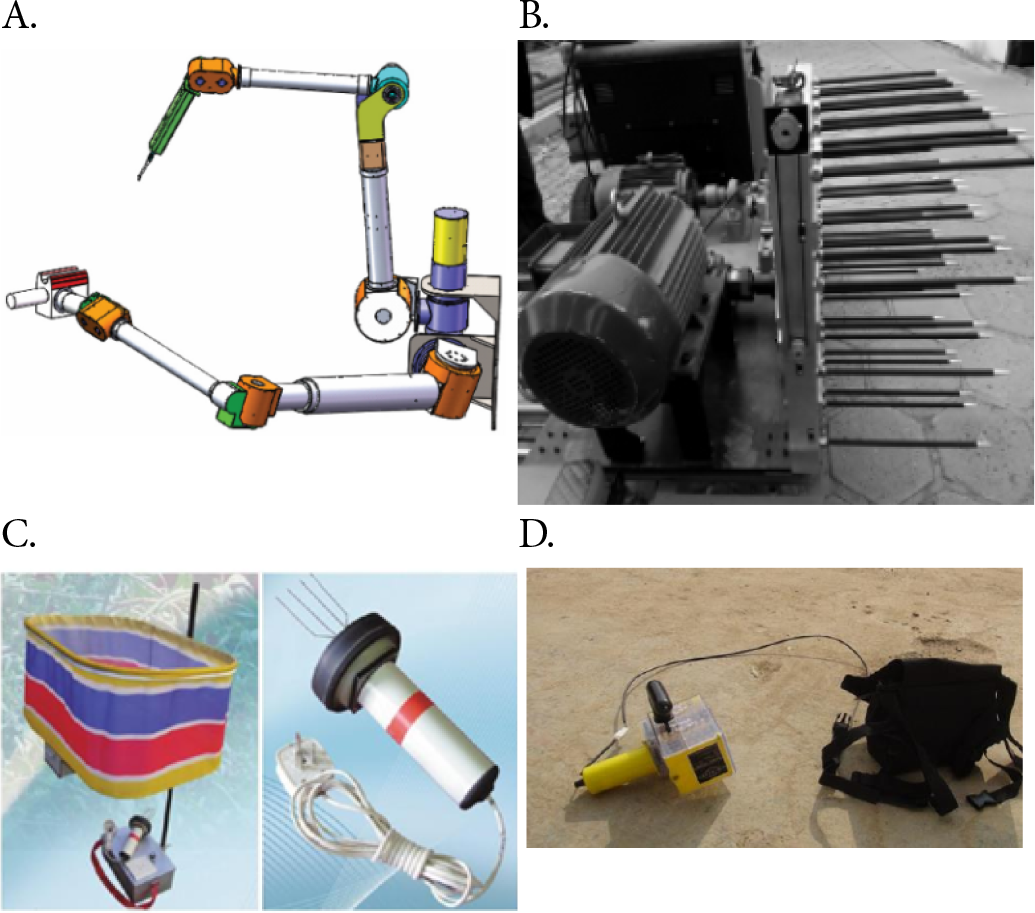 Figure A - Is sourced from the University of Chinese Academy of Sciences; Figure B - Is sourced from the Institute of Intelligent Machines, Chinese Academy of Sciences; Figure C - Is sourced from the Ningxia Wolfberry Engineering Technology Research Center; Figure D - Is sourced from the Agricultural and Animal Husbandry Machinery Extension Station in Haixi Mongol and Tibetan Autonomous Prefecture Qinghai Province
 Figures A and B are sourced from the Nanjing Institute of Agricultural Mechanization, Ministry of Agriculture and Rural Affairs of China; Figure C is sourced from China Agricultural University; Figure D is sourced from Liaoning Institute of Mechanical and Electrical Technology; Figure E is sourced from the Ningxia Zhongbang Tiandi Technology and Cultural Innovation Co., Ltd.
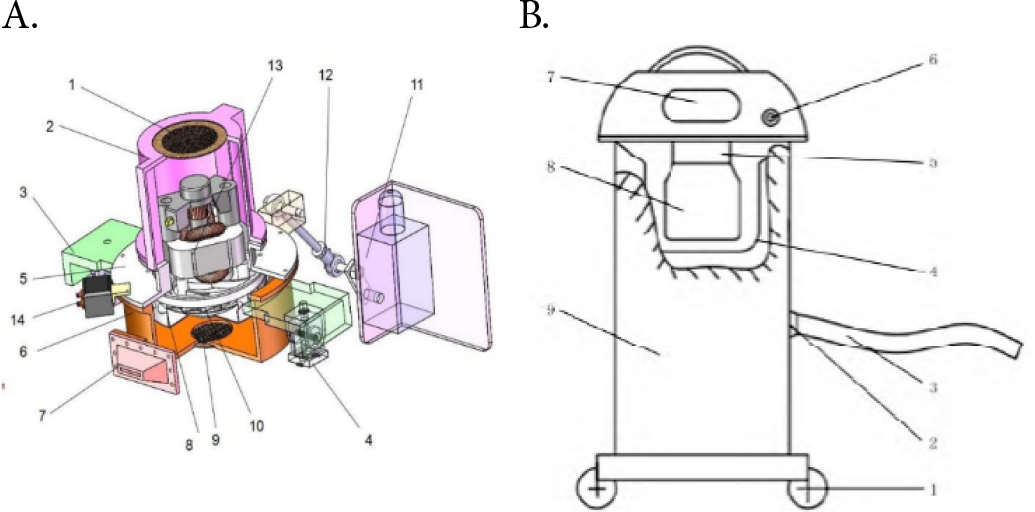 Figure A - Is sourced from Northwest A&F University; Figure B - Is sourced from China Agricultural University
 Figure A - It is sourced from Yinchuan City, Ningxia Hui Autonomous Region; Figure B - It is sourced from Wuwei City, Gansu Province
 Figures A and B - It is sourced from China Agricultural University
 Figures A, B, and D - Are sourced from Northwest A&F University; Figure C - It is sourced from China Agricultural University