 Environmental impact of climatic conditions on seed fields of Urochloa spp.: physiological and sanitary quality1
ABSTRACT
Climatic variability significantly affects seed quality in tropical forage systems; however, comprehensive studies on Urochloa spp. seed production fields remain scarce. This study aimed to evaluate the impact of environmental conditions on Urochloa spp. production fields by analyzing their physical, physiological, and sanitary attributes. Climatic variables and seed quality were monitored in U. brizantha cv. Marandú and Piatã, U. humidicola cv. Humidicola, and U. ruziziensis cv. Ruziziensis. Seeds were collected by sweeping from 16 production fields in Mato Grosso do Sul, Brazil. Physiological quality was assessed through purity analysis, thousand-seed weight, viability using the tetrazolium test, germination tests, and sanitary evaluation using the blotter method. After confirming normality (Shapiro-Wilk test) and homogeneity of variances (Bartlett test), data were analyzed using ANOVA, Tukey’s test, and principal component analysis (PCA). Seed physical quality showed partial variation, as seed purity differed among fields within cultivars, while thousand-seed weight remained unchanged. However, a high incidence of fungal contamination was observed. Fusarium sp. and Rhizoctonia solani were more prevalent in fields with lower precipitation, negatively affecting physiological quality. In contrast, elevated temperatures combined with intense rainfall during maturation and harvesting favored a higher occurrence of phytopathogens. These findings indicate that regional climatic patterns in Mato Grosso do Sul necessitate adjustments in management practices to ensure the maintenance of seed viability standards.
Key words:
syn; Brachiaria; seed viability; tropical climate; fungal pathogenesis; production fields
HIGHLIGHTS:
Climate variability directly influences the physiological and sanitary quality of Urochloa spp. seeds.
Seed fields in Mato Grosso do Sul exhibited Fusarium sp. contamination rates up to 40% higher than those in wetter regions.
Climatic variability across seed fields was associated with differences in seed vigor and fungal incidence.
RESUMO
A variabilidade climática afeta significativamente a qualidade das sementes em sistemas forrageiros tropicais; no entanto, estudos abrangentes sobre campos de produção de sementes de Urochloa spp. ainda são escassos. Este estudo teve como objetivo avaliar o impacto das condições ambientais em campos de produção de Urochloa spp., por meio da análise de seus atributos físicos, fisiológicos e sanitários. Variáveis climáticas e a qualidade das sementes foram monitoradas em U. brizantha cv. Marandú e Piatã, U. humidicola cv. Humidicola e U. ruziziensis cv. Ruziziensis. As sementes foram coletadas por varredura em 16 campos de produção em Mato Grosso do Sul, Brasil. A qualidade fisiológica foi avaliada por meio de análise de pureza, peso de mil sementes, viabilidade pelo teste de tetrazólio, testes de germinação e avaliação sanitária pelo método do papel de filtro. Após a confirmação da normalidade (teste de Shapiro-Wilk) e da homogeneidade das variâncias (teste de Bartlett), os dados foram analisados por ANOVA, teste de Tukey e análise de componentes principais (ACP). A qualidade física das sementes apresentou variação parcial, uma vez que a pureza das sementes diferiu entre campos dentro das cultivares, enquanto o peso de mil sementes permaneceu inalterado. Entretanto, foi observada alta incidência de contaminação fúngica. Fusarium sp. e Rhizoctonia solani foram mais prevalentes em campos com menor precipitação, afetando negativamente a qualidade fisiológica. Em contraste, temperaturas elevadas combinadas com chuvas intensas durante a maturação e a colheita favoreceram maior ocorrência de fitopatógenos. Esses achados indicam que os padrões climáticos regionais em Mato Grosso do Sul exigem ajustes nas práticas de manejo para assegurar a manutenção dos padrões de viabilidade das sementes.
Palavras-chave:
syn; Brachiaria; viabilidade de sementes; clima tropical; patogênese fúngica; campos de produção
INTRODUCTION
Pastures across much of Brazil are predominantly composed of species from the genus Urochloa spp. (syn. Brachiaria), which are of African origin and were introduced during the colonial period. Such species are widely distributed across the country due to their adaptability to diverse soil and climatic conditions (Bretas et al., 2021; Jayme et al., 2022). Seeds ensure the continuity and propagation of each species; however, their quality is influenced by multiple factors, including genetic, physiological, and environmental conditions (Brachtvoge & Savaris, 2022; Ribeiro et al., 2024). Environmental variables such as precipitation, temperature, water stress, and relative humidity play a central role in the development of plant diseases (Mallmann et al., 2013).
Ensuring pasture quality begins with proper crop management. However, using high-vigor seeds with high germination rates is essential to achieve optimal productivity. In recent years, studies have sought to characterize the sanitary and physiological quality of forage seeds and to develop techniques aimed at ensuring high seed vigor (Seraguzi et al., 2018).
Using seeds with low germination capacity results in poor crop establishment and reduced productivity. Seed quality assessment is therefore essential, as it provides critical information on the physiological performance of seeds (BRASIL, 2009; Carvalho & Nakagawa, 2012). Nevertheless, the use of forage seeds with low or undefined sanitary standards remains common in Brazil. Moreover, the importance of seed sanitary quality is still underestimated by both production and commercial sectors (Marchi et al., 2010; Silva et al., 2019a).
The sweeping harvest method, although widely adopted, enables the recovery of a greater quantity of seeds, including those that have undergone degradation, thereby increasing apparent yield compared with other methods. However, this approach also collects inert materials such as soil particles, grains, and plant debris. These materials may act as reservoirs and vectors for fungal contamination in both seeds and production areas (Machado et al., 2019; Silva et al., 2019b; Cruz et al., 2022).
Several studies have evaluated the quality of tropical forage seeds across different regions. Silva et al. (2019b) analyzed the physical quality and viability of Urochloa decumbens cv. Basilisk seeds and reported substantial variability, with the highest-quality seeds originating from the city of Cássia dos Coqueiros, state of São Paulo. In another study, Silva et al. (2019a) demonstrated that unfavorable weather conditions, particularly high temperature and humidity during maturation and harvesting, promote fungal proliferation and impair the quality of Urochloa brizantha cv. BRS Piatã seeds. These findings highlight interspecific variability and underscore the need for further research across different regions and cultivars.
The aim of this study was to evaluate the influence of climatic variables (precipitation, temperature, and relative humidity) on the physical, physiological, and sanitary quality of four Urochloa spp. cultivars during the maturation and harvesting phases in Mato Grosso do Sul, Brazil.
MATERIAL AND METHODS
In this study, samples of bare seeds from Urochloa brizantha cv. Marandú and Piatã, U. humidicola cv. Humidicola, and U. ruziziensis cv. Ruziziensis were collected from 16 seed production fields during the 2021-2022 harvest season in the state of Mato Grosso do Sul, Brazil. After collection, the samples were sent to Seminal Análise de Sementes LTDA - ME located in the city of Campo Grande, state of Mato Grosso do Sul, for physical and physiological analyses. Seed sanitary evaluations were conducted at the Laboratory of Plant Production and Health Research of the Master’s Program in Sustainable Agribusiness at Universidade Anhanguera - Uniderp, also in Campo Grande, Mato Grosso do Sul, Brazil.
Data on mean, maximum, and minimum temperatures (°C), as well as biweekly precipitation (mm), were obtained from the databases of Centro de Monitoramento do Tempo e do Clima (CEMTEC, 2021-2022) and Instituto Nacional de Meteorologia (INMET, 2021-2022) (Table 1).
Species and cultivars, locations, geographic coordinates (latitude, longitude, and altitude), climatic classification, maturation (MP) and harvest (HP) periods, and climatic variables - minimum temperature at maturation (MinT-MP), minimum temperature at harvest (MinT-HP), mean temperature at maturation (MeanT-MP), mean temperature at harvest (MeanT-HP), maximum temperature at maturation (MaxT-MP), maximum temperature at harvest (MaxT-HP), and accumulated precipitation at maturation (Prec-MP) and harvest (Prec-HP)-for seed production fields of Urochloa brizantha cv. Marandú and Piatã, U. humidicola cv. Humidicola, and U. ruziziensis cv. Ruziziensis
Seeds were harvested, processed, and sampled, and then immediately transported to the laboratory, where they were packaged in brown Kraft paper bags. Storage was carried out in a temperature-controlled room (18 ± 2 to 20 ± 2 °C), with relative humidity maintained between 55 ± 2 and 60 ± 2%. All analyses were conducted within the first week after arrival, and the samples remained under these conditions throughout the study.
Samples were manually homogenized and analyzed according to standard procedures described in the Rules for Seed Analysis (RAS) (BRASIL, 2009). From the pure seed fraction, eight replicates of 100 seeds were randomly counted manually for each sample. Seeds were individually weighed using a precision balance, and results were expressed in grams. These values were used to calculate thousand-seed weight according to established procedures (BRASIL, 2009).
The tetrazolium test was conducted using 400 seeds (four replicates of 100 seeds) randomly obtained from the pure seed fraction. Seeds were preconditioned in transparent acrylic boxes (11 × 11 × 3.5 cm) using the between-paper method. Paper substrate was moistened with distilled water, and the seeds were incubated at 30 ± 2 °C for 16 hours. Subsequently, seeds were longitudinally sectioned and placed in containers protected from light. Seeds were then immersed in a 2,3,5-triphenyl tetrazolium chloride solution until fully covered and incubated at 37 ± 2 °C in the dark for 4 hours. After staining, seeds were washed under running water and kept submerged in distilled water (pH 6-7) until evaluation to prevent tissue dehydration (BRASIL, 2009). Viability was determined based on embryo staining patterns, observed under a stereomicroscope.
Germination was assessed using four subsamples of 100 seeds. Seeds were sown on two sheets of blotting paper moistened with distilled water and placed in transparent acrylic boxes (11.0 × 11.0 × 3.5 cm). Boxes were maintained in a germination chamber at 20-35 ± 2 °C, with a photoperiod of 8 hours of light and 16 hours of darkness. Evaluations were performed at 7, 14, and 21 days after sowing. Distilled water was added as needed after each evaluation to maintain substrate moisture (BRASIL, 2009).
Sanitary analysis was conducted using four subsamples of 100 seeds. Seeds were distributed on a triple layer of filter paper moistened with distilled water and placed in transparent acrylic boxes (11.0 × 11.0 × 3.5 cm). Boxes were incubated in a chamber at 25 ± 2 °C with a 12-hour photoperiod for 7 days (BRASIL, 2009).
Seeds were individually examined under a stereomicroscope for the presence of conidiophores, conidia, and fruiting bodies. When necessary, microscope slides were prepared using adhesive tape and Amann’s lactophenol with cotton blue to allow observation of reproductive and vegetative fungal structures under a light microscope, following Barnett & Hunter (1999). Identification was performed at the species level when morphological characteristics allowed reliable diagnosis; otherwise, fungi were identified at the genus level (e.g., Fusarium spp.), as recommended in the Manual of Seed Health Analysis (BRASIL, 2009).
Sanitary results were expressed as the percentage incidence of phytopathogenic fungal genera and/or species in seeds of U. brizantha cv. Marandú and Piatã, U. humidicola cv. Humidicola, and U. ruziziensis cv. Ruziziensis.
Data were analyzed using analysis of variance (ANOVA) under a completely randomized design with fixed effects. The F-test was applied at a significance level of p < 0.05 to determine whether observed differences among groups were statistically significant. When significant differences were detected (p ≤ 0.05), Tukey’s test was used for mean comparison. Assumptions of normality and homogeneity of variances were verified using the Shapiro-Wilk and Bartlett tests, respectively.
Additionally, multivariate analysis was performed using principal component analysis (PCA) in R software (version 4.4.2; R Core Team, 2024). Climatic variables and seed quality parameters (physiological and sanitary) that showed significant differences among production fields were included in the analysis. Prior to PCA, all variables were standardized (mean = 0; standard deviation = 1) to minimize scale effects and ensure equal weighting across variables measured in different units.
PCA was used as an exploratory approach to identify patterns of association among variables and to assess their contributions to the principal components. Interpretation was based on eigenvalues, explained variance, and factor loadings. Components were interpreted considering variables with the highest absolute loadings, enabling a clearer understanding of the relationships between climatic conditions and seed quality attributes.
RESULTS AND DISCUSSION
The evaluation of the physical purity components of Urochloa spp. (Table 2) showed that thousand-seed weight did not differ among production fields for any of the evaluated species and cultivars.
Mean values of physical purity (P), thousand-seed weight (TSW), viability by tetrazolium test (TZ), and germination (G) in different seed production fields of Urochloa brizantha cv. Marandú and Piatã, U. humidicola cv. Humidicola, and U. ruziziensis cv. Ruziziensis
The purity analysis of Urochloa humidicola revealed significant differences among production fields. Anaurilândia showed the highest purity (74.3%), whereas São Gabriel do Oeste presented the lowest value (60.5%). The remaining fields exhibited intermediate values. For U. brizantha cv. Marandú, seeds from Cassilândia had the highest purity (98.8%), while Chapadão do Sul showed the lowest (73.9%). In U. brizantha cv. Piatã, there was also marked variation, with Água Clara presenting the highest purity (89.2%) and Chapadão do Sul the lowest (74.6%). For U. ruziziensis, Cassilândia had the highest purity (97.8%), whereas Chapadão do Sul had the lowest (92.3%). Overall, seed physical purity across Urochloa spp. production fields ranged from 60.5 to 98.8%. All fields produced seed lots exceeding the minimum commercial standard of 60% established by the Ministry of Agriculture (BRASIL, 2008).
Variability in seed purity may be attributed to differences in production practices among operators, even when similar harvesting systems are employed. Operational decisions play a key role, as field management and initial cleaning procedures directly affect seed purity. The quality of newly harvested forage seeds is influenced by field conditions, soil contamination during harvest, and pre-cleaning processes (Silva et al., 2019a,b; Cruz et al., 2022; Vieira et al., 2022). As highlighted by Silva et al. (2019b) and Cruz et al. (2022), physical quality is more strongly associated with field practices, such as management, pre-cleaning, and machine adjustment during harvesting, than with the climatic conditions of the production site.
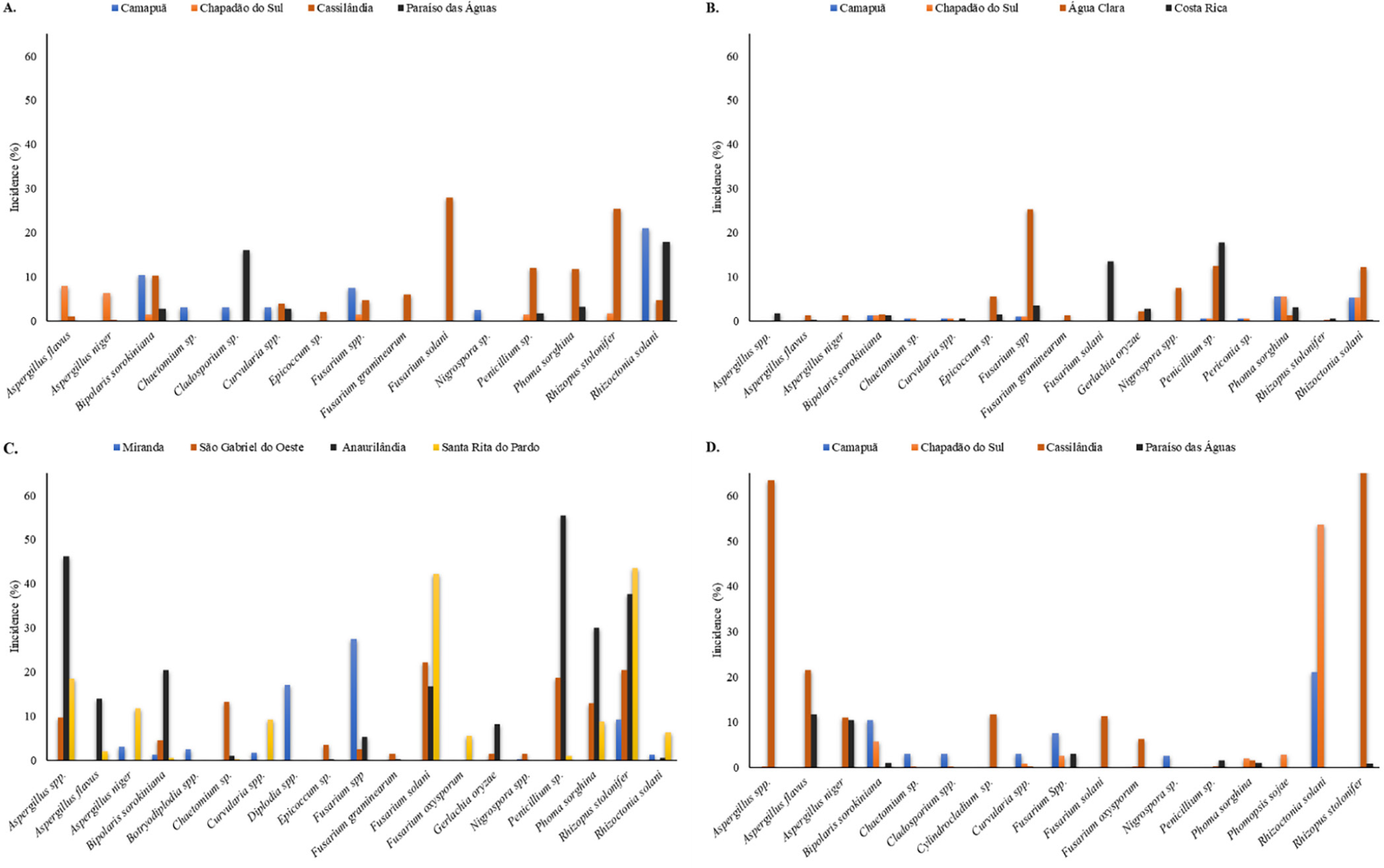
Sanitary quality was assessed based on the presence of fungi in seeds from the 16 production fields (Figure 1). For U. brizantha cv. Marandú, Chapadão do Sul exhibited the best sanitary quality (Figure 1A), which was associated with lower precipitation (692.97 mm) and lower temperatures during maturation and harvest (Table 1). In contrast, Cassilândia showed the highest fungal incidence (215), despite presenting high physiological quality (93% viability and 89% germination), similar to Paraíso das Águas (91 and 87%, respectively) (Table 2). The elevated fungal incidence in Cassilândia may be related to higher precipitation (813.31 mm). Camapuã presented lower germination and higher incidence of Rhizoctonia solani and Bipolaris sorokiniana.
Total incidence of fungus transmissible through seeds detected during the health test of the different sites of seed production of Urochloa brizantha cv. Marandú (A) and Piatã (B), U. humidicola cv. Humidicola (C), and U. ruziziensis cv. Ruziziensis (D)
In U. brizantha cv. Piatã (Figure 1B), the Água Clara field showed the highest incidence of Fusarium spp. and R. solani, along with higher precipitation (965.31 mm) and elevated temperatures during maturation (mean of 26.9 °C and maximum of 35.5 °C; Table 1), indicating lower sanitary quality. The Costa Rica field also exhibited a high incidence of Fusarium spp., which may have contributed to reduced germination (69%), despite lower precipitation (544.0 mm) (Tables 1 and 2).
For U. humidicola, Fusarium spp. were present in 100% of the samples across all production fields (Figure 1C). The Miranda field showed the highest total incidence. In São Gabriel do Oeste and Santa Rita do Pardo, Fusarium solani and F. oxysporum were more prevalent. The Anaurilândia field exhibited a broader diversity of pathogens, including B. sorokiniana, Fusarium spp., F. graminearum, F. solani, Gerlachia oryzae, and R. solani. This diversity may explain the lower germination (42%) and viability (55% by tetrazolium) observed in this field compared to others (Table 2). Climatic conditions, characterized by temperatures ranging from 20.2 to 34.9 °C and relatively low precipitation (178.93 mm), may also have contributed to these results (Table 1). Santa Rita do Pardo showed the lowest sanitary quality, with a total fungal incidence of 218 cases (Figure 1C).
In U. ruziziensis, Chapadão do Sul exhibited the highest incidence of R. solani (Figure 1D), associated with lower precipitation (498.7 mm; Table 1). Camapuã showed higher incidence of B. sorokiniana, Fusarium spp., and R. solani, which may have contributed to reduced germination (71%) (Table 2). Cassilândia presented the best physiological performance, with 97% viability and 85% germination, along with higher precipitation (787.25 mm; Table 1). Chapadão do Sul, in contrast, combined lower precipitation with higher pathogen incidence, resulting in poorer sanitary quality.
In the present study, all species were harvested using the sweeping method, which exposes seeds to environmental conditions such as high temperatures and precipitation, increasing susceptibility to fungal colonization (Quadros et al., 2012; Santos et al., 2014; Silva et al., 2019a).
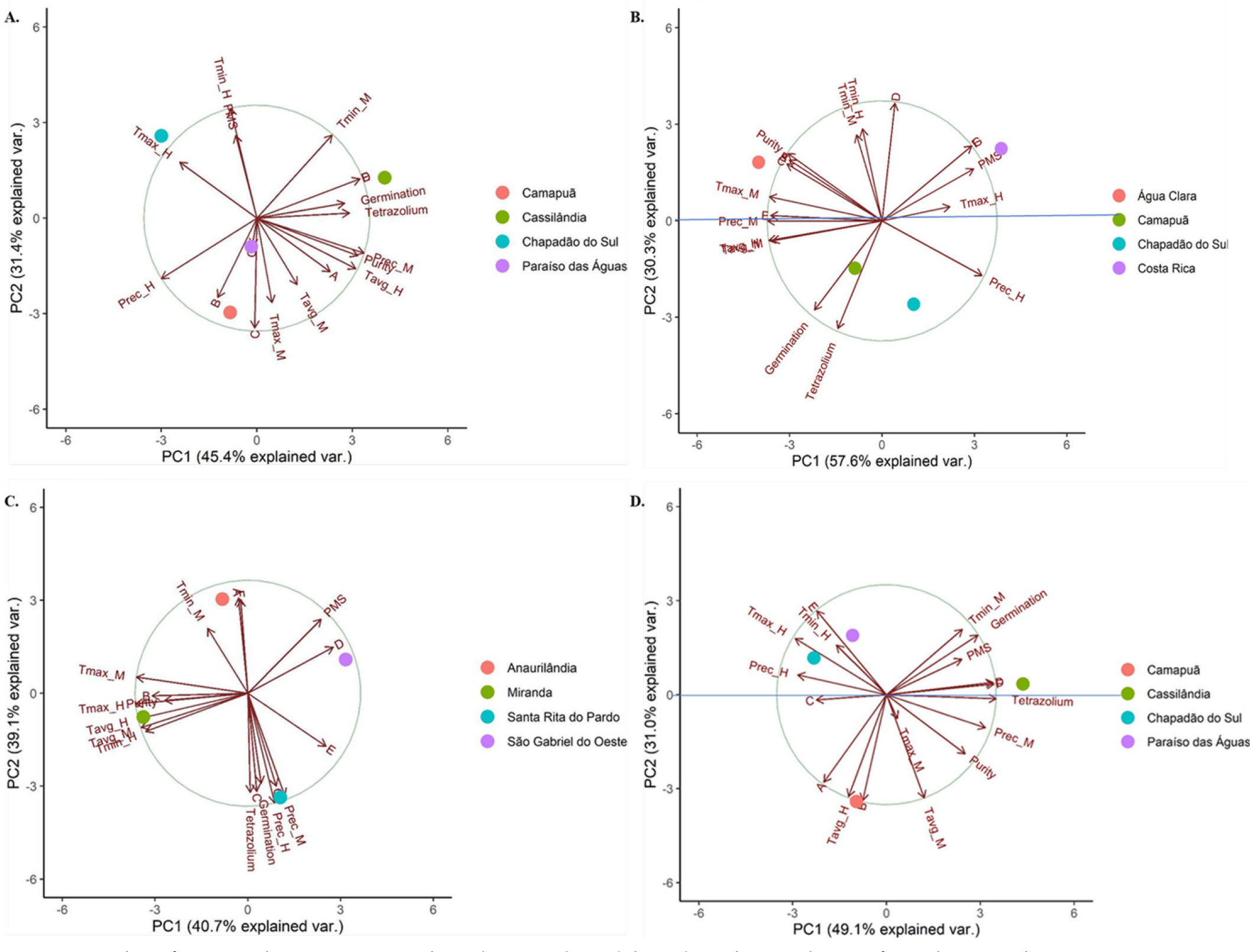
PCA (Figure 2) identified two main components (PC1 and PC2), which together explained more than 70% of the total variance for U. brizantha cv. Marandú (Figure 2A), U. brizantha cv. Piatã (Figure 2B), U. humidicola cv. Humidicola (Figure 2C), and U. ruziziensis cv. Ruziziensis (Figure 2D).
Biplot of principal component analysis (PC1 and PC2) based on the incidence of Bipolaris sorokiniana, Fusarium spp., Rhizoctonia solani, Fusarium graminearum, Fusarium solani, Gerlachia oryzae, and Fusarium oxysporum (represented as A, B, C, D, E, F, and G, respectively), as well as seed purity, thousand-seed weight (TSW), tetrazolium viability, germination, and climatic variables, including accumulated precipitation (Prec_), maximum temperature (Tmax_), minimum temperature (Tmin_), and average temperature (Tavg_) during maturation (MP) and harvest (HP), across the different seed production fields of U. brizantha cv. Marandú (2A) and Piatã (2B), U. humidicola cv. Humidicola (2C), and U. ruziziensis cv. Ruziziensis (2D)
Analysis of the vectors for the Camapuã and Paraíso das Águas fields (Figure 2A) indicated that maximum temperature, mean temperature during maturation, and precipitation during harvest were associated with the presence of Fusarium spp. and Rhizoctonia solani in these fields. In addition, the Paraíso das Águas field showed a strong association with Gerlachia oryzae and a weaker relationship with climatic variables. Precipitation during maturation was associated with seed quality and purity along PC1, as supported by the values presented in Table 1, where precipitation ranged from 692.97 to 813.31 mm. The occurrence of Bipolaris sorokiniana was associated with mean temperature during both maturation and harvest, as well as with precipitation during maturation.
In PC2, the proximity of the vectors for purity, precipitation, and mean temperature to those for tetrazolium and germination suggests a relationship among these variables. These findings indicate that seed purity, precipitation, and mean temperature may influence tetrazolium viability and germination performance. The Cassilândia field was positioned near these vectors, suggesting a potential interaction between viability and germination in this location. However, because it lies outside the vector circle, this association appears weaker compared with other variables or fields.
In the Camapuã fields, maximum temperature, mean temperature during maturation, and precipitation during harvest were again associated with the presence of Fusarium spp. and R. solani (Figure 2A). Precipitation during maturation was linked to seed quality and purity along principal component 1 (Table 1). The presence of B. sorokiniana was associated with mean temperature during both maturation and harvest, as well as with precipitation during maturation. Fusarium spp. are soilborne fungi capable of forming resistant structures, and, when combined with inadequate management practices, have been associated with pasture degradation in U. brizantha cv. Marandú in parts of the Amazon region (Verzignassi et al., 2012).
The proximity of the vectors for purity, precipitation, and mean temperature to those for tetrazolium and germination in PC2 (Figure 2A) further supports the association among these variables. The Cassilândia field was located near these vectors, reinforcing the potential relationship between tetrazolium viability and germination in this production area.
The highest sanitary and physical quality (TSW) values were observed in seeds from Chapadão do Sul. The proximity of this field to the maximum temperature vector during harvest suggests that temperature conditions at harvest may play a relevant role. In addition, the positioning of minimum temperature vectors for both maturation and harvest relative to the TSW vector indicates that these variables may be associated and influence seed quality. The Paraíso das Águas field showed a strong association with G. oryzae and a weaker association with climatic variables, as it is located near the origin of the axes.
In Figure 2B, PC1 indicates an association between precipitation during maturation and variables measured during harvest, including mean temperature and precipitation. The proximity of the germination vector suggests a possible relationship with these variables. The Camapuã field was located near the tetrazolium vector, indicating a potential association between field conditions and viability. In contrast, Chapadão do Sul was positioned farther from the tetrazolium vector, suggesting differences in seed quality between these fields. In Chapadão do Sul, the proximity between precipitation and maximum temperature during harvest suggests a possible interaction between these variables.
In PC2, the vector for maximum temperature during harvest suggests a potential influence on seed quality, although its effect appears less pronounced. The proximity of the TSW vector to the Costa Rica field indicates a possible association between seed weight and this production area. The vectors for R. solani and Fusarium spp. are closely aligned, suggesting that these fungi may be associated with maximum temperature during harvest and TSW, indicating complex interactions between climatic conditions and fungal incidence.
The spatial arrangement of these vectors highlights potential relationships among harvest temperature, TSW, and fungal incidence in U. brizantha cv. Piatã seeds, indicating areas for further investigation regarding factors affecting seed quality. The proximity of the G. oryzae vector to the Chapadão do Sul field suggests an association with local environmental conditions. In addition, the close positioning of minimum temperature vectors during maturation and harvest indicates a relationship between these climatic variables and the occurrence of G. oryzae.
Analysis of the purity vector showed proximity to Fusarium graminearum and Fusarium spp., suggesting an interaction between seed quality and fungal incidence. The Água Clara field was located near these vectors, indicating a possible association between field conditions and fungal occurrence. The position of the Chapadão do Sul field suggests that maximum temperature during maturation may influence seed quality. The vector for R. solani, located near the axis of PC1, indicates a weaker but still relevant association with other variables in the analysis of seed quality.
In Figure 2C, PC1 shows that the presence of Fusarium spp. in seeds from the Miranda field is associated with maximum and minimum temperatures during harvest, as well as mean temperature during both maturation and harvest in U. humidicola. The proximity of the purity vector to accumulated precipitation vectors suggests that variations in seed purity may be influenced by climatic conditions during these periods.
Precipitation during both maturation and harvest was associated with the occurrence of other fungi, including Fusarium solani, F. oxysporum, and Rhizoctonia solani, as well as with germination and tetrazolium test results. These findings indicate that rainfall during these stages may influence both fungal incidence and seed physiological performance.
The positioning of vectors near the Santa Rita do Pardo field indicates associations with precipitation during maturation and harvest, in addition to germination, tetrazolium results, and the presence of F. solani, F. oxysporum, and R. solani. This pattern suggests an interaction between climatic conditions and seed quality outcomes in this field.
In PC2, minimum temperature during maturation was associated with the occurrence of Bipolaris sorokiniana and Gerlachia oryzae, suggesting that lower temperatures during this phase may favor the development of these fungi. The proximity of the Anaurilândia field to these vectors indicates that local climatic conditions may have promoted fungal occurrence. The presence of F. solani was associated with the São Gabriel do Oeste field, which suggests that conditions in this area may favor its development.
These findings are consistent with those reported by Mallmann et al. (2013), who observed that favorable climatic conditions in seed production areas, combined with continuous cultivation in infested fields, increase inoculum potential and pathogen incidence in Urochloa spp. and Megathyrsus maximum.
In Figure 2D, PC1 shows that the vectors for R. solani and tetrazolium are positioned in opposite directions, which suggests an inverse relationship between fungal presence and seed viability. Thus, higher incidence of R. solani may be associated with reduced seed viability. The proximity between B. sorokiniana and mean temperature during harvest indicates that this climatic variable may favor the development of this pathogen.
The opposite positioning of B. sorokiniana and Fusarium spp. vectors relative to the Camapuã field suggests that these fungi may be influenced by different environmental factors, particularly mean temperatures during maturation and harvest. Previous studies have shown that Bipolaris spp. can be transmitted to seedlings at high rates and act as important pathogens in forage grasses (Marchi et al., 2010; Santos et al., 2014).
The Cassilândia field was positioned outside the main vector circle, indicating a weaker association with climatic variables and a stronger relationship with seed quality attributes, particularly tetrazolium and germination. The proximity of F. graminearum and F. solani vectors to the tetrazolium axis suggests a possible association with seed viability.
The proximity between purity and precipitation during maturation suggests that rainfall during this phase may influence seed purity. Similarly, the closeness of the precipitation vector during maturation to the tetrazolium vector indicates a potential association with seed viability. TSW was positioned near germination and minimum temperature during maturation, suggesting a relationship among seed weight, germination, and temperature conditions during this phase. The Paraíso das Águas field was located near the Fusarium spp. vector, indicating a possible association between fungal presence and field conditions.
The Chapadão do Sul field was positioned near the maximum temperature vector during harvest, which suggests that harvest temperature may influence seed quality. The proximity of precipitation during harvest to the Fusarium spp. vector in this field indicates that rainfall during this period may contribute to fungal incidence.
The position of the R. solani vector opposite to the tetrazolium vector reinforces the negative association between this pathogen and seed viability. According to Carvalho & Nakagawa (2012), Fusarium spp. and R. solani exhibit rapid growth, which facilitates infection of seeds, particularly under sweeping harvest conditions.
High humidity and temperature favor the development of Fusarium spp. across production fields. Fungal dissemination is enhanced when seeds come into contact with soil, as many species are saprophytic (Santos et al., 2014). In addition, Urochloa seeds often remain in contact with crop residues and soil before harvest, which may further promote pathogen development (Silva Júnior et al., 2016).
Mallmann et al. (2013) emphasized that Fusarium spp. are particularly aggressive pathogens, capable of rapidly colonizing and killing seeds prior to germination. Bipolaris spp. can also be transmitted from seeds to seedlings. Both genera exhibit saprophytic behavior under favorable conditions (Quadros et al., 2012; Santos et al., 2014).
Silva et al. (2019a) reported that Bipolaris spp. develop optimally at temperatures between 19 and 20 °C during seed maturation, with precipitation between 167 and 181 mm. In contrast, the present study observed wider temperature ranges (11.5-36.9 °C) and higher precipitation levels (Table 1). Tavanti et al. (2016) also reported that Bipolaris spp. can infect seeds externally, internally, or via plant residues, with high transmission potential.
R. solani is a saprophytic fungus capable of producing sclerotia, which are resistant structures that persist in the soil for extended periods. Its presence negatively affects seed vigor and germination (Dias et al., 2013; Poloni et al., 2016; Cruz et al., 2022). The absence of resistant cultivars and effective fungicides further complicates disease management under favorable environmental conditions, particularly high humidity, highlighting the importance of proper agronomic practices (Wallon et al., 2020).
The presence of G. oryzae may reduce seed yield and weight, thereby affecting viability and germination, as observed in the Anaurilândia, Água Clara, and Costa Rica fields (Moura et al., 2014).
All evaluated seed production fields exhibited the presence of seed-transmitted fungi, including Bipolaris sorokiniana, Gerlachia oryzae, Fusarium graminearum, F. solani, F. oxysporum, Fusarium spp., and R. solani. Pathogen development is influenced by multiple factors, including soil conditions, humidity, temperature, mineral availability, organic matter, inoculum potential, soil and seed microbiota, and germination methods (Carvalho & Nakagawa, 2012; Mallmann et al., 2013; Alves et al., 2021; Brachtvogel & Savaris, 2022; Weisany et al., 2023). These findings reinforce previous reports indicating that plant diseases are strongly influenced by climatic variability, including temperature, precipitation, air humidity, and water stress (Mallmann et al., 2013). The high fungal incidence observed in this study appears to be closely associated with environmental conditions.
CONCLUSIONS
-
1. Lower cumulative precipitation during the crop cycle was associated with higher incidences of Fusarium spp. and Rhizoctonia solani, possibly due to plant stress conditions that favor pathogen establishment and negatively affect seed physiological quality.
-
2. Conversely, excessive precipitation during the maturation and harvest periods (> 750 mm) also increased fungal incidence, indicating that distinct climatic patterns at different developmental stages can influence pathogen dynamics.
-
3. High temperatures combined with elevated precipitation during maturation and harvest favored the occurrence of a greater diversity of phytopathogens in seed production fields.
Acknowledgments:
The authors acknowledge Fundação de Apoio ao Desenvolvimento do Ensino, Ciência e Tecnologia do Estado de Mato Grosso do Sul (FUNDECT) for its valuable support of the project Fortalecimento do Mestrado Profissional em Produção Agropecuária Sustentável e Agronegócio, under Call for Proposals FUNDECT No. 18/2022.
Data Availability Statement:
No datasets were generated or analyzed in this study.
LITERATURE CITED
-
Alves, C. P. et al. Respostas morfofisiológicas das plantas forrageiras sob manejo de cultivo e pastejo: Uma revisão. Research, Society and Development, v.10, e10610615405, 2021. https://doi.org/10.33448/rsd-v10i6.15405
» https://doi.org/10.33448/rsd-v10i6.15405 - Barnett, H. L.; Hunter, B. B. Illustrated genera of imperfect fungi. 3.ed. Minnesota: Burgess Publishing Company, 1999. 218p.
-
Brachtvogel, E. L.; Savaris, I. Qualidade fisiológica de sementes de Brachiaria brizantha cv. Marandu em função do período de contato com fertilizantes. PesquisAgro, v.5, p.24-40, 2022. https://doi.org/10.33912/pagro.v5i01.1323
» https://doi.org/10.33912/pagro.v5i01.1323 - BRASIL - Ministério da Agricultura, Pecuária e Abastecimento (MAPA). Secretaria de Defesa Agropecuária. Manual de Análise Sanitária de Sementes. Brasília: Mapa/ACS, 2009. 200p.
- BRASIL - Ministério da Agricultura, Pecuária e do Abastecimento (MAPA). Instrução Normativa nº 30, de 21 de maio de 2008. Brasília: Diário Oficial da União, 2008. 45p. Seção 1.
-
Bretas, I. L. et al. Prediction of aboveground biomass and dry-matter content in Brachiaria pastures by combining meteorological data and satellite imagery. Grass and Forage Science, v.76, p.340-352, 2021. https://doi.org/10.1111/gfs.12517
» https://doi.org/10.1111/gfs.12517 - Carvalho, N. M.; Nakagawa, J. Sementes: ciência, tecnologia e produção. Jaboticabal: FUNEP, 2012. 590p.
-
CEMTEC - CENTRO DE MONITORAMENTO DO TEMPO E DO CLIMA DE MATO GROSSO DO SUL. Dados meteorológicos da safra 2021/2022. Campo Grande: SEMAGRO/CEMTEC, 2022. Disponível em: https://www.cemtec.ms.gov.br/bancodedados/
» https://www.cemtec.ms.gov.br/bancodedados/ -
Cruz, J. de O. et al. Provenance, viability, and physical quality in seeds of Panicum maximum - Mombasa. Revista Ciência Agronômica, v.53, e20207128, 2022. https://doi.org/10.5935/1806-6690.20220042
» https://doi.org/10.5935/1806-6690.20220042 -
Dias, P. P. et al. Rhizoctonia solani and Fusarium oxysporum f. sp. Phaseoli control by biopreparation with Trichoderma spp. isolates. Summa Phytopathologica, v.39, p.258-262, 2013. https://doi.org/10.1590/S0100-54052013000400005
» https://doi.org/10.1590/S0100-54052013000400005 - Geiger, R. Klassifikation der Klimate nach W. Köppen. In: KÖPPEN, W.; GEIGER, R. Handbuch der Klimatologie. Berlin: Gebrüder Borntraeger, 1928.
-
INMET - Instituto Nacional de Meteorologia. Dados meteorológicos. Available on: <https://portal.inmet.gov.br/dadoshistoricos/> Accessed on: Jul. de 2022
» https://portal.inmet.gov.br/dadoshistoricos/ - Jayme, D. G. et al. Gramíneas forrageiras tropicais. 1.ed. Belo Horizonte: FEPE, 2022. 327p.
-
Machado, C. G. et al. Harvesting methods on physical and physiological quality of Panicum maximum seeds. Revista Brasileira de Engenharia Agricola e Ambiental, v.23, p.309 313, 2019.https://doi.org/10.1590/1807-1929/agriambi.v23n4p309-313
» https://doi.org/10.1590/1807-1929/agriambi.v23n4p309-313 - Mallmann. G. et al. Fungos e nematoides associados a sementes de forrageiras tropicais. Summa Phytopathologica, v.39, p.201-203, 2013.
- Marchi, C. et al. Fungos veiculados por sementes comerciais de Braquiária. Arquivo do Instituto Biológico, v.77, p.65-73, 2010.
-
Moura, A. B. et al. Biocontrol and seed transmission of Bipolaris oryzae and Gerlachia oryzae to rice seedlings. Journal of Seed Science, v.36, p.407-412, 2014. https://doi.org/10.1590/2317-1545v36n41009
» https://doi.org/10.1590/2317-1545v36n41009 -
Poloni, N. M. et al. Evidência de que o fungo Rhizoctonia solani AG-1 IA adaptado à Urochloa na Colômbia mantém ampla gama de hospedeiros incluindo o milho. Summa Phytopathologica, v.42, p.228-232, 2016. https://doi.org/10.1590/0100-5405/2176
» https://doi.org/10.1590/0100-5405/2176 -
Quadros, D. G. de. et al. Componentes da produção e qualidade de sementes dos cultivares marandú e xaraés de Brachiaria brizantha (Hochst. ex A. Rich.) Stapf colhidas por varredura manual ou mecanizada. Semina: Ciências Agrárias, v.33, p.2019-2027, 2012. DOI: 10.5433/1679-0359.2012v33n5p2019
» https://doi.org/10.5433/1679-0359.2012v33n5p2019 -
R Core Team. R: A language environment for statistical computing. R foundation for statistical computing, Vienna, 2024. Available on: <https://www.R-project.org>. Accessed on: Nov. 2024.
» https://www.R-project.org -
Ribeiro, D. O. et al. Recovery of degraded pasture under Urochloa decumbens by different management methods using mineral fertilizers and biochar. Revista Brasileira de Engenharia Agrícola e Ambiental, v.28, e275538, 2024. https://doi.org/10.1590/1807-1929/agriambi.v28n8e275538
» https://doi.org/10.1590/1807-1929/agriambi.v28n8e275538 - Santos, F. C. et al. Tratamento químico, revestimento e armazenamento de sementes de Brachiaria brizantha cv. Marandu. Revista Brasileira de Sementes, v.32, e69, 2014.
-
Seraguzi, E. F. et al. Physiological quality of Brachiaria brizantha seeds treated with fungicide and insecticide. Revista Caatinga, v.31, p.651-656, 2018. https://doi.org/10.1590/1983-21252018v31n313rc
» https://doi.org/10.1590/1983-21252018v31n313rc -
Silva, G. Z. da. et al. Phytosanitary quality of Brachiaria brizantha ‘BRS Piatã’ seeds in function of climate conditions. Revista Brasileira de Engenharia Agrícola e Ambiental, v.23, p.237-243, 2019a. http://dx.doi.org/10.1590/1807-1929/agriambi.v23n4p237-243
» http://dx.doi.org/10.1590/1807-1929/agriambi.v23n4p237-243 -
Silva, G. Z. da. et al. Production regions and physical quality of Urochloa decumbens cv. Basilisk seeds. Bioscience Journal, v.35, p.236-243, 2019b.: http://dx.doi.org/10.14393/BJ-v35n1a2019-41749
» http://dx.doi.org/10.14393/BJ-v35n1a2019-41749 -
Silva Júnior, A. C. da. et al. Effects of sugar cane strawon Grass weeds emergence under field conditions. Bioscience Journal, v.32, p.863-872, 2016. https://doi.org/10.14393/BJ-v32n4a2016-32782
» https://doi.org/10.14393/BJ-v32n4a2016-32782 -
Tavanti, T. R. et al. Ocorrência de mancha foliar de Bipolaris maydis em capim tanzânia na região Norte do Mato Grosso. Revista de Ciências Agroambientais, v.14, e82, 2016. https://doi.org/10.5327/rcaa.v14i1.1414
» https://doi.org/10.5327/rcaa.v14i1.1414 - Verzignassi, J. R. et al. Pyricularia grisea: novo patógeno em Brachiaria brizantha cv. Marandu no Pará. Summa Phytopathologica, v.38, e254, 2012.
-
Vieira, L. C. et al. Radiographic imaging as a quality index proxy for Brachiaria brizantha seeds. Plants, v.11, e1014, 2022. https://doi.org/10.3390/plants11081014
» https://doi.org/10.3390/plants11081014 -
Wallon, T. et al. Detection and quantification of Rhizoctonia solani and Rhizoctonia solani AG1-IB causing the bottom rot of lettuce in tissues and soils by Multiplex qPCR. Plants, v.10, e3390, 2020. https://doi.org/10.3390/plants10010057
» https://doi.org/10.3390/plants10010057 -
Weisany, W. et al. Improving seed germination and physiological characteristics of maize seedlings under osmotic stress through potassium nano-silicate treatment. Frontiers in Plant Science, v.14, e3389, 2023. https://doi.org/10.3389/fpls.2023.1274396
» https://doi.org/10.3389/fpls.2023.1274396
Edited by
-
Editors:
Toshik Iarley da Silva & Walter Esfrain Pereira