
 Viability of bionutrition on organic carbon and microbial metabolism in soil cultivated with ‘Palmer’ mango
ABSTRACT
Mango (Mangifera indica) cultivation holds economic importance and needs efficient nutrient management practices. Due to high costs of chemical fertilizers, sustainable alternatives, such as remineralizers and biofertilizers, are crucial for ensuring nutrition and maintaining soil quality. This study aimed to evaluate the effectiveness of remineralizers and biofertilizers, applied either alone or in combination with chemical fertilizers, on the content of organic carbon, humic substances, and microbial activity in the soil cultivated with ‘Palmer’ mango trees in the São Francisco Valley. Conducted from 2022 to 2024 in Petrolina, Pernambuco state, Brazil, the experiment employed a randomized block design with four treatments and five replicates. The treatments included: T1 (control), T2 (conventional management), T3 (remineralizers + biofertilizer), and T4 (50% chemical fertilizers + 50% remineralizers + biofertilizer), where T1 received no fertilizer application and T2 consisted of chemical fertilizers only. The evaluation encompassed the content of total organic carbon, humic substances, basal respiration, and microbial biomass. The collected data were subjected to analysis of variance to assess significant effects using the F test, with treatment comparisons conducted via Tukey’s test (p ≤ 0.05). Results indicated that all treatments enhanced contents of organic carbon and humic and fulvic acids in soil. Notably, microbial biomass showed efficiency degrading organic compounds when chemical fertilizers were applied. The combination of 50% chemical fertilizers with 50% remineralizers and biofertilizer (T4) yielded optimal results in terms of basal respiration and microbial biomass, establishing it an effective strategy to increase soil carbon, promote mango development, and reduce costs.
Key words:
Mangifera indica L.; fertilization strategies; soil remineralizers; biofertilizer; microbial biomass
HIGHLIGHTS
The integration of soil remineralizers and biofertilizers significantly reduces the humic matter content in the soil.
The combination of biofertilizers and soil remineralizers boosts soil microbial activity.
While synthetic fertilizers diminish microbial activity, remineralizers facilitate improved carbon utilization.
RESUMO
O cultivo de mangueira (Mangifera indica) possui uma importância econômica e requer práticas eficientes de manejo de nutrientes. Devido aos altos custos dos fertilizantes químicos, alternativas sustentáveis, como remineralizadores e biofertilizantes, são cruciais para garantir a nutrição e manter a qualidade do solo. Este estudo avaliou eficácia de remineralizadores e biofertilizantes, isolados ou combinados com fertilizantes químicos, sobre carbono orgânico, substâncias húmicas e atividade microbiana em solo com mangueiras ‘Palmer’ no Vale do São Francisco. Realizado de 2022 a 2024 em Petrolina, Pernambuco, Brasil, o experimento utilizou um delineamento experimental em blocos casualizados com quatro tratamentos e cinco repetições. Os tratamentos incluíram: T1 (controle), T2 (manejo convencional), T3 (remineralizadores + biofertilizante) e T4 (50% de fertilizantes químicos + 50% de remineralizadores + biofertilizante); sendo que o T1 não recebeu aplicação de fertilizantes e o T2 consistiu apenas de fertilizantes químicos). Foram avaliados o teor de carbono orgânico total, substâncias húmicas, respiração basal e biomassa microbiana. Os dados obtidos foram submetidos à análise de variância para avaliação dos efeitos significativos pelo teste F, e a comparação entre os tratamentos foi realizada mediante o teste de Tukey (p ≤ 0,05). Os resultados indicaram que os tratamentos aumentaram carbono orgânico e ácidos húmicos e fúlvicos no solo. A biomassa microbiana mostrou eficiência degradando compostos orgânicos com fertilizantes químicos. Notavelmente, a combinação de 50% fertilizantes químicos e 50% remineralizadores e biofertilizante (T4) aumentou a respiração basal e biomassa microbiana, estabelecendo como estratégia eficaz para aumentar carbono no solo, promover desenvolvimento da mangueira e reduzir custos.
Palavras-chave:
Mangifera indica L.; estratégias de fertilização; remineralizadores de solo; biofertilizante; biomassa microbiana
Introduction
The use of soil remineralizers and biofertilizers plays a crucial role in promoting soil health and sustainability, standing out as viable alternatives to chemical fertilizers. These inputs support soil microbiota, which is essential for nutrient cycling, reduce production costs, improve soil quality, and increase the efficiency of chemical fertilizers (Wagg et al., 2019).
Brazil’s remarkable fruit production ranks it as the thirdlargest producer globally, reaching approximately 43.03 million tons in 2023 (ABRAFRUTAS, 2024). Furthermore, mangoes (Mangifera indica) were the most exported fruit in 2023, with approximately 266.09 thousand tons exported, generating the highest export revenue of US$ 312.00 million (Kist, 2024).
However, the sector still faces challenges related to the high demand for chemical fertilizers, which, over time, can degrade soil quality and raise production costs. In this context, sustainable strategies such as the use of soil remineralizers, which replenish essential nutrients, and biofertilizers, which introduce beneficial microorganisms and humic substances, have gained attention. These inputs not only reduce dependence on synthetic fertilizers but also enhance soil health, stimulate microbial metabolism, and promote more balanced nutrient cycling (Mącik et al., 2023). As a result, they contribute to improved crop performance and fruit quality, supporting both environmental and economic sustainability (Leme Filho et al., 2020).
This approach not only nourishes plants but also preserves soil health, establishing a sustainable and economically advantageous agricultural practice. In the São Francisco Valley, the use of biofertilizers through fertigation and soil remineralizers has shown promising results, reinforcing their application in mango production systems (Dalvi et al., 2021).
Given the social and economic importance of fruit cultivation for the development of the São Francisco Valley, this study aimed to contribute to the sustainability of fruit farming by evaluating the effectiveness of soil remineralizers and biofertilizers, applied either alone or in combination with chemical fertilizers, on the content of organic carbon, humic substances, and microbial activity in soils cultivated with ‘Palmer’ mango trees in the São Francisco Valley.
Material and Methods
The study was conducted at the experimental orchard of ‘Palmer’ mango trees located at the Federal University of the São Francisco Valley, in Petrolina, Pernambuco state, Brazil (latitude 9° 09’ S and longitude 40° 22’ W), at an elevation of 365.5 m a.s.l. The orchard soil is classified as a Ultisol (Soil Survey Staff, 2022), and the climate is classified as Bswh - semi-arid (Alvares et al., 2013). The study was conducted from January 2022 to February 2024. The climate data is shown in Figure 1.

Air temperature (T), relative humidity (Rh), precipitation, and global solar radiation (Gr) recorded during the experiment in 2022 (A) and 2023 (B), Petrolina, Pernambuco, Brazil
At the beginning of the experiment, the plants were four years old, spaced 5.0 m between rows and 2.0 m between plants, and irrigated by micro-sprinklers with emitters delivering 23.3 L h⁻1 at 2 bar per plant. Irrigation management was based on water depths calculated from crop evapotranspiration (ETc), as described in Eq. 1, which was obtained using the Eto Penman-Monteith method (Allen et al., 1998) and the specific Kc value for each phenological stage, as outlined by Teixeira et al. (2008). Cumulative water depths were adjusted to account for rainfall and irrigation.
where:
ETc - crop evapotranspiration;
ETo - reference evapotranspiration; and,
Kc - crop coefficient.
Canopy management practices, such as pruning, weed, pest, and disease control, application of plant growth regulators, branch maturation, and floral induction, followed the guidelines detailed by Genú & Pinto (2002), Lopes et al. (2003), Silva (2008), and Cavalcante et al. (2018). Nutritional management was conducted via fertigation, except for the broadcast application of hydrated lime and reactive natural phosphate beneath the canopy. Fertilization was based on soil chemical analysis (Table 1) and the crop’s requirements during each phenological stage, as described by Silva et al. (2002). Soil chemical and physical analyses were conducted using the methods described by Tedesco et al. (1995).
The treatments were arranged in a randomized block design with five replicates and five plants per plot. The treatments were applied weekly, starting after production pruning, following the nutritional demands and physiological changes occurring throughout the mango production cycle, as described by Silva et al. (2002), Genú & Pinto (2002), Ramírez & Davenport (2010), Cavalcante et al. (2018), and Lobo et al. (2019). Production pruning for the first productive cycle (2022 season) was performed in January 2022, and for the second cycle (2023 season) in March 2023.
The treatments consisted of the following fertilization strategies for the crop: T1 (control): No fertilizer application; T2 (conventional management): Application of chemical fertilizers only; T3: Nutritional management with remineralizers + biofertilizer via fertigation; T4: Nutritional management supplying 50% of nutrients through chemical fertilizers and 50% through remineralizers combined with biofertilizer via fertigation.
The chemical fertilizer sources used in the experiment included: urea (45% N), single superphosphate (18% P₂O₅), potassium sulfate (48% K₂O), Lithothamnium calcareum (32% Ca and 2% Mg), zinc sulfate (35% Zn and 9% S), boric acid (17% B), manganese sulfate (26% Mn), and iron sulfate (23% Fe). The natural fertilizer sources (remineralizers) used were: reactive rock phosphate (23% P₂O₅), rock dust (10.8% K₂O), and hydrated lime (37.9% Ca and 1.4% Mg).
The remineralizer sources used in the experiment comply with Normative Instruction No. 17, Article 103 (MAPA, 2014), and are classified as remineralizers. Fertigation was performed using a venturi injector (55 mm), totaling 39 applications during each phenological cycle, with a solution volume of 100 L ha⁻1 per application. Based on the recommendations of Silva (2002), the distribution of each nutrient followed the schedule of demands for each phenological phase.
The biofertilizer was prepared by activating beneficial microorganisms (EM) with water and molasses for 48 hours, followed by the addition of molasses (40 kg), bokashi (20 kg), and water to a total volume of 1000 L. Revitta Solo® was used as the bokashi (Lew et al., 2021), which consists of microorganisms, fulvic acids, humic acids, and humins. The solution was homogenized and stirred daily, and was ready after 15 days. Table 2 presents the nutritional composition and the organic matter fractionation of the biofertilizer.
Table 3 presents the microbiological characterization of the main bacteria present in the biofertilizer (Galkiewicz & Kellogg, 2008).
Microbiological attributes of the main bacteria present in the biofertilizer used in the experiment
To determine the effects of the treatments during the cycle, the following variables were evaluated:
I. The levels of humic substances, humic acids (HA), fulvic acids (FA), and humins (HU) in the soil were determined according to the method described by Swift (1996), both before treatment application (Table 4) and during the mango pre-flowering phase. Soil samples were collected beneath the canopy projection using a Dutch auger (0-30 cm) in four quadrants, with simple samples from each quadrant homogenized to form a composite sample.
Initial attributes of soil organic matter fractionation, fulvic acids (FA), humic acids (HA), humins (HU), and estimation of total organic carbon (TOC), microbial biomass carbon (MBC), and basal respiration (BR), in the experimental area cultivated with ‘Palmer’ mango before the application of treatments
II. Soil microbiological characterization was performed by analyzing the following attributes: microbial biomass carbon (MBC), assessed using the irradiation-extraction method as described by Vance et al. (1987) and Islam & Weil (2000); soil basal respiration (BR), according to Jenkinson & Powlson (1976); and total organic carbon (TOC), based on the method adapted from Yeomans & Bremner (1988). Soil samples were taken before treatment application (Table 4) and during the pre-flowering stage of each cycle. The metabolic quotient (qCO₂) was calculated as the ratio between soil basal respiration and MBC, while the microbial quotient (qMIC) was determined as the ratio between MBC and TOC.
The data were subjected to analysis of variance (p ≤ 0.05), considering Year (harvest) as a fixed factor in the statistical model. Treatments were compared using Tukey’s test at p ≤ 0.05. All statistical analyses were performed using the R software (R Core Team, 2022). Figures were created using the SigmaPlot® software, version 12.5 (SYSTAT Software, 2011).
Results and Discussion
As shown in Figure 2, the total organic carbon (TOC) content in the soil showed significant differences only for the 2022 harvest (p ≤ 0.05).

Content of total organic carbon (A), and content of fulvic acids (B), humic acids (C), and humins (D) in soils cultivated with ‘Palmer’ mango trees as a function of chemical fertilizers, remineralizers, and bionutrition in the 2022 and 2023 harvests
This indicates the superiority of the treatment 50% chemical + 50% remineralizers + biofertilizer (T4) when compared to the no fertilization and 100% chemical (T2) treatments. Furthermore, no significant difference was found between the 100% chemical treatment and the 100% remineralizers + biofertilizer (T3) treatment. No significant difference was observed between the harvests.
Between the 2022 and 2023 harvests, TOC increased in the T3 (100% remineralizers + biofertilizer) and T4 (50% chemical + 50% remineralizers + biofertilizer) treatments, with increases of 1.05 and 11.66%, respectively. In contrast, the control (T1) showed a decrease in both harvests. Before the treatment application (11.4 g kg⁻1, Table 4), TOC decreased for treatments T1 and T2 (100% chemical) in 2022. In contrast, T3 and T4 showed increases of 23.08 and 23.4%, respectively.
The use of biofertilizers can increase total organic carbon (TOC) in the surface layers of the soil. Still, the rate of increase depends on the composition, frequency, and quantity applied (Xu et al., 2020). Alencar et al. (2015) did not observe differences in TOC when using bovine manure biofertilizer, due to the low carbon concentration in the material. In the present experiment, the biofertilizer used has a higher carbon content (Table 2), which may have contributed to the accumulation of CO in the soil.
TOC values vary in the literature. Lima et al. (2016) found values between 17 and 18 g kg⁻1 in Red Latosol cultivated with vegetables, while Lopes et al. (2016) observed variations from 11 to 40 g kg⁻1 in coffee plantations, with higher values associated with the use of the “Supermagro” biofertilizer.
In addition to the carbon in biofertilizers, microbial activity also affects TOC. Cellulose, which accounts for approximately 60% of agricultural residues, is one of the primary compounds in the decomposition of organic matter, driving hydrolytic processes mediated by cellulolytic bacterial enzymes (Findlay, 2021).
The biofertilizer, when in contact with leaf litter and pruning residues from mango, likely accelerated bacterial decomposition, increasing TOC content in the soil. The use of bovine manure after pruning also contributed to this increase, with the effect being more pronounced in areas where biofertilizer was used, which accelerates the degradation of organic matter.
For fulvic acids (FA), no differences were observed between treatments in 2022. However, in 2023, T4 stood out, surpassing T2 and T3 by 65.26 and 41.63%, respectively (Figure 2B). Initially, the FA content was 0.088% (Table 4). In 2022, T2 and T3 increased FA levels by 2.27 and 27.27%, respectively, while T4 and T1 decreased by 19.31 and 38.64%, respectively. In 2023, all treatments except T1 showed substantial increases compared to the initial value in the soil. The substantial increase in fulvic acids in the soil in the treatment of 50% chemical + 50% remineralizers + biofertilizer (T4) in the second harvest (2023) indicates that the biofertilizer promoted the growing accumulation of this fraction over time, favoring microbial activity. Bacteria, fungi, and archaea utilize carbon from the fulvic fraction more efficiently due to its mobility and lower recalcitrance (Wang et al., 2020). Fulvic acids, components of the labile fraction of soil organic matter, are formed by the decomposition of organic matter mediated by microorganisms (Zhang et al., 2020). Thus, the biofertilizer used may have intensified the movement of labile carbon, promoting greater metabolism by this biota.
The use of mineral fulvic acids (K-Fulvate dry®) in the treatment of 100% remineralizers + biofertilizer (T3) contributed to the storage of this fraction in the soil, reinforcing the effect of T4. Remineralizing fertilizers improved the mineral composition of the soil, promoting fertility, nutrient cycling, and microbial development (Ramos et al., 2021). Additionally, fulvic acids benefit mango tree development, and their combination with potassium sulfate improves the fruit quality of ‘Kensington Pride’ mango and maintains foliar potassium levels (Ibell et al., 2017).
Humic acids (HA) were influenced by the treatments (Figure 2C), with the lowest performance in T2 (100% chemical) in 2022. In 2023, T2, T3 (100% chemical, 100% remineralizers + biofertilizer), and T4 (50% chemical + 50% remineralizers + biofertilizer) outperformed the control (T1). A significant increase in HA content was observed between 2022 and 2023 for all treatments except T1. Compared to the initial soil data (0.031%, Table 4), HA levels in 2023 reached a superiority of 0.328 and 0.423% in treatments T3 and T4, respectively (Figure 2C).
The results for humic acids (HA) showed a behavior similar to that of fulvic acids. In the first cycle, the treatment (T4), consisting of 50% chemical, 50% remineralizers, and biofertilizer, outperformed the 100% chemical treatment (T2), highlighting that the biofertilizer, combined with remineralizers, can increase HA levels in the soil.
Climatic conditions such as high temperatures and precipitation, combined with eutrophic and well-drained soils, favor the accumulation of stable organic matter (Haddix et al., 2020). These characteristics, present in the edaphoclimatic conditions of the study, with high temperatures and concentrated rainfall in January and November (Figure 1), may have contributed to the increase in HA in the soil.
The significant increase in HA levels between harvests (Figure 2C) reflects the interaction between biofertilizer microorganisms (Table 3), such as Clostridium sp., Lactobacillus perolens, and Sporolactobacillus nakayamae, and the organic matter in the soil (Table 1). These microorganisms promote the decomposition of organic residues into stable substances that store carbon (Gunina & Kuzvakov, 2022). Additionally, the deposition of plant residues from pruning at the beginning of each production cycle contributed to the observed results.
Humin (HU) levels did not differ statistically from each other in 2022 (Figure 2D). Still, in 2023, T4 showed superiority over T3. Between the harvests, there were substantial increases in HU content, corresponding to 80.31% in T4 and 67% in T2. The other treatments also increased, reaching a superiority of 74.1% in T1 and 63% in T3.
The humin levels followed the behavior of the humic and fulvic fractions, increasing with the application of treatments (Figure 2D). The combined use of remineralizers and biofertilizer favored the stabilization of carbon in the soil, reflected in the increase of the humin fraction (Amoakwah et al., 2020). Despite its low reactivity, humin plays a crucial role in particle aggregation and represents a significant fraction of humified carbon in tropical soils (Piccolo et al., 2019).
The humin values obtained were lower than those reported by Barreto et al. (2008) in agroforestry systems with cocoa, but higher than those of Mottin et al. (2022) in soils with maize intercropped with cover crops. This indicates that humin accumulation depends on the cultivation time and the quality of the organic matter (Gautam et al., 2021), corroborating with Melo et al. (2016), who observed better results in no-tillage, though still lower than those of this study. The increase in humin levels favors characteristics of the colloidal fraction of organic matter, such as higher moisture retention, better soil aggregation, and increased cation retention capacity, contributing to the sustainability of production systems (Yan et al., 2022).
Soil basal respiration was affected by the treatments in both evaluated harvests but the cycles did not differ statistically from each other (Figure 3A), with superior results in the 100% remineralizers + biofertilizer (T3) and 50% chemical + 50% remineralizers + biofertilizer (T4) treatments compared to the control, for the 2022 harvest (p ≤ 0.05). For the 2023 harvest, the 100% remineralizers + biofertilizer (T3) treatment yielded the highest value compared to the no fertilization (T1) and 100% chemical (T2) treatments.
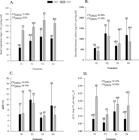
Basal respiration levels (A), microbial biomass carbon (B), microbial quotient (C), metabolic quotient (D), in soil cultivated with ‘Palmer’ mango trees as a function of chemical fertilizers, remineralizers, and bionutrition in the 2022 and 2023 harvests
Figure 3A shows a significant increase in basal respiration across the cycles, with T3 (100% remineralizers + biofertilizer) standing out, reaching 50% higher than the previous harvest. Compared to the initial characterization (Table 4), basal respiration also increased, with T3 being 88.42% higher.
Treatments that included remineralizers and biofertilizer showed higher basal respiration rates in the soil (Figure 3A), indicating greater microbial activity in soils cultivated in the tropical semi-arid region (Yang et al., 2023). This parameter reflects the emission of C-CO2 during microbial respiration, which is essential in the biogeochemical carbon cycle, in response to organic matter decomposition, particularly in the treatment of 100% remineralizers + biofertilizer (T3) (Song et al., 2022).
Basal respiration is widely recognized as an indicator of soil health and its capacity to decompose organic matter, although factors such as temperature, humidity, nutrients, and vegetation can cause variations (Pennington et al., 2020). In the present study, treatment T3 reached values of 82 mg C-CO2 kg⁻1 soil (2022) and 137 mg C-CO2 kg⁻1 soil (2023), higher than the 27.59 mg C-CO2 kg⁻1 soil reported by Pereira et al. (2020) with the ‘Vairo’ biofertilizer. These results reflect greater incorporation of organic matter with high available carbon, as in the AF fractions (Tang et al., 2021).
Elevated basal respiration rates can indicate greater shortterm nutrient release, but also a higher long-term carbon loss to the atmosphere. It is crucial to align the intensity of this process with the physiological demands of plants, reducing carbon losses in the soil (Dove et al., 2020).
As shown in Figure 3B, microbial biomass carbon (MBC) levels differed among treatments (p ≤ 0.05) in both harvests, while the cycles did not differ statistically from each other. In 2022, T2 (100% chemical) and T4 (50% chemical + 50% remineralizers + biofertilizer) outperformed T1 (control), with increases of 75% and 70%, respectively. In the 2023 harvest, T2 maintained superiority, reaching 90% higher than T1, while T3 and T4 did not differ statistically from each other. Comparing the initial characterization with the 2022 value, MBC increased substantially for T3 and T4 by approximately 100% and 96%, respectively.
The treatments 100% chemical (T2) and those containing remineralizers and biofertilizer (T3 and T4) showed positive effects on microbial biomass carbon (MBC) (Figure 3B), a result that may be associated with greater organic substrate availability in these systems. According to Soares & Rousk (2019), the quantity and quality of available substrates directly influence microbial biomass, as greater organic matter availability tends to promote microbial growth.
Microbial biomass, comprising bacteria, fungi, and protozoa, plays a crucial role in the decomposition of organic matter and the cycling of nutrients (Xu et al., 2021). Microbial biomass carbon (MBC), the fraction of carbon immobilized in microbial tissues, contributes to temporary carbon storage and nutrient release (Mason-Jones et al., 2022). Its development intensifies microbial respiration and CO₂ emissions, which are essential for organic matter decomposition and ecosystem productivity (Albright et al., 2019).
The analysis of basal respiration and MBC showed that soil microorganisms convert organic matter and nutrients from treatments, such as T4 (50% chemical + 50% remineralizers + biofertilizer), into CO₂ emissions (Figure 3B). The availability of nitrogen, phosphorus, and potassium has a direct influence on microbial growth (Hu et al., 2023). The equivalence between T4 and T2 (100% chemical) underscores the effectiveness of combining chemical and remineralizer fertilization in promoting microbial activity in the soil.
Figure 3C shows no differences in the microbial quotient (qMIC) between treatments in both harvests; however, the metabolic quotient (qCO2) varied significantly (Figure 3D). In 2022, T3 surpassed T2 by 78%, while T1 and T4 did not differ statistically from each other. In 2023, T1 showed a significant increase in qCO2, reaching the highest value and surpassing T2 by 75%, while T3 and T4 did not differ statistically from each other.
The microbial quotient (qMIC) reflects the fraction of soil organic carbon that is immobilized in microbial biomass (Clayton et al., 2021). High qMIC values may indicate greater carbon accumulation in the soil, while reduced values suggest possible carbon losses, associated with lower microbial efficiency in degrading less recalcitrant organic matter compounds (Amorim et al., 2020).
According to the results (Figure 3C), no treatment had a significant influence on qMIC in 2022. However, as Gallo et al. (2019) state, qMIC values below 1% indicate limitations to microbial activity. The values observed in this study, ranging from 11.85% (T2) to 5.08% (T3) in 2022 and from 10.59% (T2) to 5.85% (T3) in 2023, suggest greater assimilation of organic carbon by microbial biomass. These microorganisms immobilized greater amounts of carbon, which, after their death, return to the soil as released compounds (Xiao et al., 2024).
Regarding the metabolic quotient (qCO₂) (Figure 3D), the highest values in 2022 were recorded in the 100% chemical with biofertilizer treatment (T2). In contrast, in 2023, the treatment without fertilization (T1) showed the best results. High qCO₂ values may reflect oxidative stress in the microbial biomass, indicating greater CO₂ production relative to active carbon, which compromises the viability and efficiency of the microbial community (Fasnacht & Polacek, 2021).
However, the observed values were lower than those reported for perennial crops, except in the T1 treatment in 2023, which reached 0.4 mg CO₂ mg-1 Cmic h⁻1 (Guimarães et al., 2017). A low qCO₂ suggests greater metabolic efficiency, while high values indicate lower efficiency and increased respiration, with the metabolic quotient serving as an indicator of the balance between respiratory activity and microbial biomass (Vasilchenko et al., 2023).
In light of this scenario, the results from the 2023 harvest indicate that the microbial community in the treatment without fertilization was affected, producing less biomass and releasing more CO₂. This suggests that fertilization with chemical fertilizers is essential for this variable, as it achieved the lowest qCO₂ values in both harvests, improving its efficiency.
Thus, the effectiveness of organic compound degradation is enhanced by microbial biomass when synthetic fertilizer is used.
Conclusions
-
1. The combined use of biofertilizer and remineralizers increases humic substances and total organic carbon in the soil, contributing to carbon stabilization and improved soil structure.
-
2. The integration of biofertilizer, remineralizers, and chemical fertilizers increases soil basal respiration and C-CO₂ emissions by 88.42%, indicating enhanced microbial activity and greater carbon incorporation into microbial biomass-key processes for the carbon cycle and soil health.
Acknowledgments:
The authors express their sincere gratitude to the Foundation for Support of Science and Technology of the State of Pernambuco (FACEPE) for granting the scholarship, which was essential for the execution of this study. They also acknowledge the FRUTVASF research group for their valuable technical and scientific support throughout all stages of the experiment.
Data availability statement:
The authors declare that there are no data underlying the text.
Literature Cited
-
ABRAFRUTAS. Statistical data. Brazilian Association of Fruit and Derivatives Exporters, 2024. Available on: <https://abrafrutas.org/>. Accessed on: June 2025.
» https://abrafrutas.org/ -
Albright, M.; Runde, A.; Lopez, D.; Gans, J.; Sevanto, S.; Woolf, D.; Dunbar, J. Effects of initial microbial biomass abundance on respiration during pine litter decomposition. PLoS ONE, v.15, e0224641, 2019. https://doi.org/10.1371/journal.pone.0224641
» https://doi.org/10.1371/journal.pone.0224641 - Allen, R. G.; Pereira L. S.; Raes D.; Smith M. Crop evapotranspiration: Guidelines for computing crop water requirements. 1.ed. Rome: FAO, 1998. 147p.
-
Alvares, C. A.; Stape J. L.; Sentelhas P. C.; Gonçalves J. L. de M.; Sparovek G. Köppen’s climate classification map for Brazil. Meteorologische Zeitschrift, v.22, p.711-728, 2013. https://doi.org/10.1127/0941-2948/2013/0507
» https://doi.org/10.1127/0941-2948/2013/0507 -
Amoakwah, E.; Arthur, E.; Frimpong, K.; Parikh, S.; Islam, R. Soil organic carbon storage and quality are impacted by corn cob biochar application on a tropical sandy loam. Journal of Soils and Sediments, v.20, p.1960-1969, 2020. https://doi.org/10.1007/s11368-019-02547-5
» https://doi.org/10.1007/s11368-019-02547-5 -
Amorim, S. P. do N.; Boechat, C. L.; Duarte, L. de S. L.; Oliveira, D. F. de; Medeiros, J. C.; Arauco, A. M. de S. Microbial responses to doses of cover plant straw in cerrado piauiense oxisol. Bioscience Journal, v.36, p.1146-1155, 2020. http://dx.doi.org/10.14393/BJv36n4a2020-47963
» http://dx.doi.org/10.14393/BJv36n4a2020-47963 -
Barreto, A. C.; Freire, M. B. G. dos S.; Nacif, P. G. S.; Araújo, Q. R.; Freire, F. J.; Inácio, E. D. S. B. Fracionamento químico e físico do carbono orgânico total em um solo de mata submetido a diferentes usos. Revista Brasileira de Ciência do Solo, v.32, p.1471-1478, 2008. https://doi.org/10.1590/S0100-06832008000400011
» https://doi.org/10.1590/S0100-06832008000400011 -
Blanco-Vargas, A.; Rodríguez-Gacha, L.; Sánchez-Castro, N.; GarzónJaramillo, R.; Pedroza-Camacho, L.; Poutou-Piñales, R.; RiveraHoyos, C.; Díaz-Ariza, L.; Pedroza-Rodríguez, A. Phosphatesolubilizing Pseudomonas sp., and Serratia sp., co-culture for Allium cepa L. growth promotion. Heliyon, v.6, e05218, 2020. https://doi.org/10.1016/j.heliyon.2020.e05218
» https://doi.org/10.1016/j.heliyon.2020.e05218 -
Carrión, V.; Perez-Jaramillo, J.; Cordovez, V.; Tracanna, V.; Hollander, M.; Ruiz-Buck, D.; Mendes, L.; Ijcken, W.; Gomez-Exposito, R.; Elsayed, S.; Mohanraju, P.; AriHAF, A.; Oost, J.; Paulson, J.; Mendes, R.; Wezel, G.; Medema, M.; Raaijmakers, J. Pathogeninduced activation of disease-suppressive functions in the endophytic root microbiome. Science, v.366, p.606-612, 2019. https://doi.org/10.1126/science.aaw9285
» https://doi.org/10.1126/science.aaw9285 -
Cavalcante, Í. H. L.; Santos, G. N. F. dos; Silva, M. A. da; Martins, R. S.; Lima, A. M. N.; Modesto, P. I. R.; Alcobia, A. M.; Silva, T. R. de S.; Amariz, R. A.; Beckmann-Cavalcante, M. Z. A new approach to induce mango shoot maturation in Brazilian semi-arid environment. Journal of Applied Botany and Food Quality, v.91, p.281-286, 2018. https://doi.org/10.5073/JABFQ.2018.091.036
» https://doi.org/10.5073/JABFQ.2018.091.036 - Chen, J. S. Nitrogen fixation in the clostridia. In: Genetics and regulation of nitrogen fixation in free-living bacteria, p.53-64, Dordrecht: Springer Netherlands, 2004.
-
Clayton, J.; Lemański, K.; Bonkowski, M. Shifts in soil microbial stoichiometry and metabolic quotient provide evidence for a critical tipping point at 1% soil organic carbon in an agricultural post-mining chronosequence. Biology and Fertility of Soils, v.57, p.435-446, 2021. https://doi.org/10.1007/s00374-020-01532-2
» https://doi.org/10.1007/s00374-020-01532-2 -
Dalvi, M. B.; Patil, P. D.; Pawar, H. D.; Raut, R. A.; Bhure, S. S.; Desai, V. S. Efficacy of different bio-organics for the management of important diseases of mango (Mangifera indica L.). Crop Research, v. 56, p.308-312, 2021. https://doi.org/10.31830/24541761.2021.049
» https://doi.org/10.31830/24541761.2021.049 -
Dove, N.; Safford, H.; Bohlman, G.; Estes, B.; Hart, S. High-severity wildfire leads to multi-decadal impacts on soil biogeochemistry in mixed-conifer forests. Ecological applications: a publication of the Ecological Society of America, v.30, e02072, 2020. https://doi.org/10.1002/eap.2072
» https://doi.org/10.1002/eap.2072 -
Fasnacht, M.; Polacek, N. Oxidative stress in bacteria and the central dogma of molecular biology. Frontiers in Molecular Biosciences, v.8, e671037, 2021. https://doi.org/10.3389/fmolb.2021.671037
» https://doi.org/10.3389/fmolb.2021.671037 -
Findlay, S. Organic matter decomposition. Fundamentals of Ecosystem Science, v.1, p.81-102, 2021. https://doi.org/10.1016/b978-0-12-812762-9.00004-6
» https://doi.org/10.1016/b978-0-12-812762-9.00004-6 -
Galkiewicz, J. P.; Kellogg, C. A. Cross-kingdom amplification using bacteria-specific primers: complications for studies of coral microbial ecology. Applied and Environmental Microbiology, v.74, p.7828-7831, 2008. https://doi.org/10.1128/AEM.01303-08
» https://doi.org/10.1128/AEM.01303-08 -
Gallo, A. de S; Araujo, T. dos S.; Araujo, F. dos S.; Santos, L. C. dos; Guimarães, N. de F; Silva, R. F. da. Biomassa e atividade microbiana em solo cultivado com milho consorciado com leguminosas de cobertura. Revista de Ciências Agrárias, v.42, p.347-357, 2019. https://doi.org/10.19084/rca.15433
» https://doi.org/10.19084/rca.15433 - Gautam, R.; Navaratna, D.; Muthukumaran, S.; Singh, A.; More, N. Humic substances: Its toxicology, chemistry and biology associated with soil, plants and environment. In: Makan, A. Humic Substance. United Kingdom: IntechOpen London. 2021. Cap.6, p.97-110.
- Genú, P. J. de C.; Pinto, A. C. de A. A cultura da mangueira. Brasília: Embrapa Informação Tecnológica, p.452, 2002.
-
Guimarães, N. D. F.; Gallo, A. de S.; Fontanetti, A.; Meneghin, S. P.; Souza, M. D. de; Morinigo, K. P.; Silva, R. F. da. Biomassa e atividade microbiana do solo em diferentes sistemas de cultivo do cafeeiro. Revista de Ciências Agrárias, v.40, p.34-44, 2017. https://doi.org/10.19084/RCA16041
» https://doi.org/10.19084/RCA16041 -
Gunina, A.; Kuzyakov, Y. From energy to (soil organic) matter. Global Change Biology, v.28, p.2169-2182, 2022. https://doi.org/10.1111/gcb.16071
» https://doi.org/10.1111/gcb.16071 -
Haddix, M.; Gregorich, E.; Helgason, B.; Janzen, H.; Ellert, B.; Cotrufo, F. Climate, carbon content, and soil texture control the independent formation and persistence of particulate and mineral-associated organic matter in soil. Geoderma, v.363, e114160, 2020. https://doi.org/10.1016/j.geoderma.2019.114160
» https://doi.org/10.1016/j.geoderma.2019.114160 -
Hu, J.; Du, M.; Chen, J.; Tie, L.; Zhou, S.; Buckeridge, K.; Cornelissen, J.; Huang, C.; Kuzyakov, Y. Microbial necromass under global change and implications for soil organic matter. Global Change Biology, v.29, p.3503-3515, 2023. https://doi.org/10.1111/gcb.16676
» https://doi.org/10.1111/gcb.16676 -
Ibell, P.; Bally, I.; Wright, C.; Maddox, C. Does soil applications of fulvic acid applied with potassium sulphate influence mango fruit quality?. Acta Horticulturae, v.1183, p.195-198, 2017. https://doi.org/10.17660/ActaHortic.2017.1183.27
» https://doi.org/10.17660/ActaHortic.2017.1183.27 -
Islam, K. R.; Weil, R. R. Land use effects on soil quality in a tropical forest ecosystem of Bangladesh. Agriculture, Ecosystems and Environment, v.79, p.9-16, 2000. https://doi.org/10.1016/S0167-8809(99)00145-0
» https://doi.org/10.1016/S0167-8809(99)00145-0 -
Jansson, J.; Hofmockel, K. The soil microbiome-from metagenomics to metaphenomics. Current Opinion in Microbiology, v.43, p.162-168, 2018. https://doi.org/10.1016/j.mib.2018.01.013
» https://doi.org/10.1016/j.mib.2018.01.013 -
Javed, Z.; Tripathi, G.; Mishra, M.; Dashora, K. Actinomicetos - A maquinaria microbiana para a ciclagem orgânica, o crescimento das plantas e a saúde sustentável do solo. Biocatalysis and Agricultural Biotechnology, v.31, e101893, 2020. https://doi.org/10.1016/j.bcab.2020.101893
» https://doi.org/10.1016/j.bcab.2020.101893 -
Jenkinson, D. S.; Powlson, D. S. The effect of biocidal treatment on metabolism in soil. V. A method of measuring soil biomass. Soil Biology and Biochemistry, v.8, e1976, 1976. https://doi.org/10.1016/0038-0717(76)90005-5
» https://doi.org/10.1016/0038-0717(76)90005-5 - Kist, B. B. Anuário brasileiro de horti&fruti 2024. Santa Cruz do Sul: Editora Gazeta Santa Cruz, 2024. 94p.
-
Koo, T.; Lee, J.; Hwang, S. Development of an interspecies interaction model: An experiment on Clostridium cadaveris and Clostridium sporogenes under anaerobic condition. Journal of Environmental Management, v.237, p.247-254, 2019. https://doi.org/10.1016/j.jenvman
» https://doi.org/10.1016/j.jenvman -
Leme Filho, J. F da C.; Thomason, W.; Evanylo, G.; Zhang, X.; Strickland, M.; Chim, B.; Diatta, A. The synergistic effects of humic substances and biofertilizers on plant development and microbial activity: a review. International Journal of Plant and Soil Science, v.32, p.56-75, 2020. https://doi.org/10.9734/ijpss/2020/v32i730306
» https://doi.org/10.9734/ijpss/2020/v32i730306 -
Lew, P. S.; Nik Ibrahim, N. N. L.; Kamarudin, S.; Thamrin, N. M.; Misnan, M. F. Optimization of bokashi-composting process using effective microorganisms-1 in smart composting bin. Sensors, v.21, e2847, 2021. https://doi.org/10.3390/s21082847
» https://doi.org/10.3390/s21082847 -
Lima, C. E. P.; Fontenelle, M. R.; Madeira, N. R.; Silva, J. D. da; Guedes, Í. M. R.; Silva, L. R. B.; Soares, D. C. Compartimentos de carbono orgânico em Latossolo cultivado com hortaliças sob diferentes manejos. Pesquisa Agropecuária Brasileira, v.51, p.378-387, 2016. https://doi.org/10.1590/S0100-204X2016000400011
» https://doi.org/10.1590/S0100-204X2016000400011 -
Lobo, J. T.; Cavalcante, Í. H. L.; Lima, A. M. N.; Vieira, Y. A. C.; Modesto, P. I. R.; Cunha, J. G. da. Biostimulants on Nutritional Status and Fruit Production of Mango ‘Kent’ in the Brazilian Semiarid Region. HortScience, v.54, p.1501-1508, 2019. https://doi.org/10.21273/HORTSCI13753-18
» https://doi.org/10.21273/HORTSCI13753-18 - Lopes, P. R. C.; Haji, F. N. P.; Moreira, A. N.; Mattos, M. A. A. Normas técnicas e documentos de acompanhamento da Produção Integrada de Manga. Petrolina: Embrapa SemiÁrido, 2003. 72p.
-
Lopes, V. S.; Cardoso, I. M.; Gomes, L.de C.; Moura, W. de M.; Fernandes, R. B. A.; Mendonça, E. de S. Carbono orgânico total em solos de lavouras de café em sistemas agroflorestais e a pleno sol. Cadernos de Agroecologia, v.10, p.1-5, 2016. https://revista.aba-agroecologia.org.br/cad/article/view/19065/13222
» https://revista.aba-agroecologia.org.br/cad/article/view/19065/13222 -
Mącik, M.; Gryta, A.; Sas-Paszt, L.; Frąc, M. New insight into the soil bacterial and fungal microbiome after phosphorus biofertilizer application as an important driver of regenerative agriculture including biodiversity loss reversal and soil health restoration. Applied Soil Ecology, v.189, e 104941, 2023. https://doi.org/10.1016/j.apsoil.2023.104941
» https://doi.org/10.1016/j.apsoil.2023.104941 -
MAPA. Ministério da Agricultura, Pecuária e Abastecimento. Brasília: MAPA, 2014. Available on: <https://www.gov.br/agricultura/pt-br/assuntos/sustentabilidade/organicos/legislacao/portugues/instrucao-normativa-no-17-de-18-dejunho-de-2014.pdf/view>. Accessed on: Mar. 2022.
» https://www.gov.br/agricultura/pt-br/assuntos/sustentabilidade/organicos/legislacao/portugues/instrucao-normativa-no-17-de-18-dejunho-de-2014.pdf/view -
MAPA. Ministério da Agricultura, Pecuária e Abastecimento. Manual de métodos analíticos oficiais para fertilizantes. Brasília: MAPA, 2017. Available on: < https://www.gov.br/agricultura/pt-br/assuntos/insumos-agropecuarios/insumos-agricolas/fertilizantes/legislacao/manual-de-metodos_2017_isbn-97885-7991-109-5.pdf>. Accessed on: Jan. 2022.
» https://www.gov.br/agricultura/pt-br/assuntos/insumos-agropecuarios/insumos-agricolas/fertilizantes/legislacao/manual-de-metodos_2017_isbn-97885-7991-109-5.pdf -
Mason-Jones, K.; Breidenbach, A.; Dyckmans, J.; Banfield, C.; Dippold, M. Intracellular carbon storage by microorganisms is an overlooked pathway of biomass growth. BioRxiv, v.14, e2240, 2022. https://doi.org/10.1038/s41467-023-37713-4
» https://doi.org/10.1038/s41467-023-37713-4 -
Melo, G. B.; Pereira, M. G.; Perin, A.; Guareschi, R. F.; Soares, P. F. C. Estoques e frações da matéria orgânica do solo sob os sistemas plantio direto e convencional de repolho. Pesquisa Agropecuária Brasileira, v.51, p.1511-1519, 2016. https://doi.org/10.1590/S0100-204X2016000900050
» https://doi.org/10.1590/S0100-204X2016000900050 -
Mottin, M. C.; Seidel, E. P.; Ribeiro, L. L. O.; Fey, E.; Rosset, J. S. Frações químicas do carbono orgânico do solo em função do cultivo de milho consorciado com plantas de cobertura do solo. CIS - Conjecturas Inter Studies, v.22, p.326-339, 2022. https://doi.org/10.1590/S0100-06831999000200015
» https://doi.org/10.1590/S0100-06831999000200015 -
Pennington, S.; McDowell, N.; Megonigal, J.; Stegen, J.; BondLamberty, B. Localized basal area affects soil respiration temperature sensitivity in a coastal deciduous forest. Biogeosciences, v.17, p.771-780, 2020. https://doi.org/10.5194/bg-17-771-2020
» https://doi.org/10.5194/bg-17-771-2020 -
Pereira, M. M.; Coelho, E. F.; Gondim Filho, H.; Oliveira, F. É. R. de. Influência de doses de biofertilizante nos atributos biológicos do solo no cultivo da bananeira ‘BRS Platina’. International Journal Semiarid, v.3, p.54-64, 2020. https://doi.org/10.56346/ijsa.v3i3.75
» https://doi.org/10.56346/ijsa.v3i3.75 - Piccolo, A.; Spaccini, R.; Savy, D.; Drosos, M.; Cozzolino, V. The Soil Humeome: Chemical Structure, Functions and Technological Perspectives. In: Vaz Jr, S. Sustainable Agrochemistry. Springer: Cham. 2019. Cap.7, p.183-222.
-
Quattrini, M.; Bernardi, C.; Stuknytė, M.; Masotti, F.; Passera, A.; Ricci, G.; Vallone, L.; Noni, I.; Brasca, M.; Fortina, M. Functional characterization of Lactobacillus plantarum ITEM 17215: A potential biocontrol agent of fungi with plant growth promoting traits, able to enhance the nutritional value of cereal products. Food Research International, v.106, p.936-944, 2018. https://doi.org/10.1016/j.foodres.2018.01.074
» https://doi.org/10.1016/j.foodres.2018.01.074 -
R Core Team. R: A language and environment for statistical computing. Vienna: R Foundation for Statistical Computing, 2022. Available on: < https://www.r-project.org/>. Accessed on: Feb. 2022.
» https://www.r-project.org/ -
Ramírez, F.; Davenport, T. L. Mango (Mangifera indica L.) flowering physiology. Scientia Horticulturae, v.126, p.65-72, 2010. https://doi.org/10.1016/j.scienta.2010.06.024
» https://doi.org/10.1016/j.scienta.2010.06.024 -
Ramos, C.; Hower, J.; Blanco, E.; Oliveira, M.; Theodoro, S. Possibilities of using silicate rock powder: An overview. Geoscience Frontiers, v.13, e101185, 2021. https://doi.org/10.1016/j.gsf.2021.101185
» https://doi.org/10.1016/j.gsf.2021.101185 -
Robledo-Mahón, T.; Calvo, C.; Aranda, E. Enzymatic potential of bacteria and fungi isolates from the sewage sludge composting process. Applied Sciences, v.10, e7763, 2020. https://doi.org/10.3390/app10217763
» https://doi.org/10.3390/app10217763 -
Ross, D. Biological studies of some tussock-grassland soils. New Zealand Journal of Agricultural Research, v.1, p.958-967, 1958. https://doi.org/10.1080/00288233.1958.10422398
» https://doi.org/10.1080/00288233.1958.10422398 -
Shamshitov, A.; Decorosi, F.; Viti, C.; Fornasier, F.; Kadžienė, G.; Supronienė, S. Characterisation of cellulolytic bacteria isolated from agricultural soil in Central Lithuania. Sustainability, v.15, e598, 2022. https://doi.org/10.3390/su15010598
» https://doi.org/10.3390/su15010598 - Silva, D. J. Nutrição e adubação da mangueira em sistema de produção integrada. 1.ed. Petrolina: Embrapa Semiárido, 2008. 11p.
- Silva, D. J.; Quaggio, J. A.; Pinto, P. A. C.; Pinto, A. C. Q.; Magalhães, A. F. J. Nutrição e Adubação. In: Genú, P. J. C.; Pinto, C. A. Q. A cultura da mangueira. Brasília: Embrapa Informação Tecnológica. 2002. Cap.2, p.191-222.
-
Soares, M.; Rousk, J. Microbial growth and carbon use efficiency in soil: links to fungal-bacterial dominance, SOC-quality and stoichiometry. Soil Biology and Biochemistry, v.131, p.195-205, 2019. https://doi.org/10.1016/j.soilbio.2019.01.010
» https://doi.org/10.1016/j.soilbio.2019.01.010 -
Song, L.; Wang, Y. Zhang, R.; Yang, S. Microbial mediation of carbon, nitrogen, and sulfur cycles during solid waste decomposition. Microbial Ecology, v.86, p.311-324, 2022. https://doi.org/10.1007/s00248-022-02056-y
» https://doi.org/10.1007/s00248-022-02056-y -
Soil Survey Staff. Keys to Soil Taxonomy. 13.ed. USDA - Natural Resources Conservation Service, 2022. 401p. Available at: < https://www.nrcs.usda.gov/resources/guides-and-instructions/keys-to-soil-taxonomy>. Accessed on: Jan 14, 2025.
» https://www.nrcs.usda.gov/resources/guides-and-instructions/keys-to-soil-taxonomy - Swift, R. S. Organic matter characterization. In: Sparks, D. L.; Page, A. L.; Helmke, P. A.; Loepert, R. H.; Soltanpour, P. N.; Tabatabai, M. A.; Johnston, C. T.; Sumner, M. E. Methods of soil analysis: chemical methods. Wiley Online Library. 1996. Cap.3, p.59-79.
- SYSTAT Software, Inc. SigmaPlot for Windows. version 12.5. San Jose, CA, USA: Systat Software, Inc., 2011.
-
Tang, C.; Li, Y.; Song, J.; Antonietti, M.; Yang, F. Artificial humic substances improve microbial activity for binding CO2 iScience, v.24, e102647, 2021. https://doi.org/10.1016/j.isci.2021.102647
» https://doi.org/10.1016/j.isci.2021.102647 - Tedesco, M. J.; Gianello, C.; Bissani, C. A.; Bohnen, H.; Volkweiss, S. J. Análises de solo, plantas e outros materiais. 2.ed. Porto Alegre: Universidade Federal do Rio Grande do Sul, 1995. 174p.
-
Teixeira, A. H. C.; Bastiaanssen, W. G. M.; Moura, M. S. B.; Soares, J. M.; Ahmad, M. D.; Bos, M. G. Energy and water balance measurements for water productivity analysis in irrigated mango trees, Northeast Brazil. Agricultural and Forest Meteorology, v.148, p.1524-1537, 2008. https://doi.org/10.1016/j.agrformet.2008.05.004
» https://doi.org/10.1016/j.agrformet.2008.05.004 -
Ueki, A.; Takehara, T.; Ishioka, G.; Kaku, N.; Ueki, K. Degradation of the fungal cell wall by clostridial strains isolated from soil subjected to biological soil disinfestation and biocontrol of Fusarium wilt disease of spinach. Applied Microbiology and Biotechnology, v.101, p.8267-8277, 2017. https://doi.org/10.1007/s00253-017-8543-7
» https://doi.org/10.1007/s00253-017-8543-7 -
Ueki, A.; Takehara, T.; Ishioka, G.; Kaku, N.; Ueki, K. Production of β-1,3-glucanase and chitosanase from clostridial strains isolated from soil subjected to biological disinfestation. AMB Express, v.9, p.1-14, 2019. https://doi.org/10.1186/s13568-019-0842-1
» https://doi.org/10.1186/s13568-019-0842-1 -
Vance, E. D.; Brookes, P. C.; Jenkinson, D. S. An extraction method for measuring soil microbial biomass C. Soil Biology and Biochemistry, v.19, p.703-707, 1987. https://doi.org/10.1016/0038-0717(87)90052-6
» https://doi.org/10.1016/0038-0717(87)90052-6 -
Vasilchenko, A.; Galaktionova, L.; Tretyakov, N.; Dyachkov, S.; Vasilchenko, A. Impact of agricultural land use on distribution of microbial biomass and activity within soil aggregates. Soil Use and Management, v.39, p.618-633, 2023. https://doi.org/10.1111/sum.12844
» https://doi.org/10.1111/sum.12844 -
Wagg, C.; Schlaeppi, K.; Banerjee, S.; Kuramae, E.; Heijden, M. Fungalbacterial diversity and microbiome complexity predict ecosystem functioning. Nature Communications, v.10, p.4841, 2019. https://doi.org/10.1038/s41467-019-12798-y
» https://doi.org/10.1038/s41467-019-12798-y -
Wang, Z.; Wang, Y.; Zhang, W.; Liu, Y.; Gao, T. Potential complementary functions among bacteria, fungi, and archaea involved in carbon cycle during reversal of desertification. Land Degradation & Development, v.32, p.1581-1587, 2020. https://doi.org/10.1002/ldr.3804
» https://doi.org/10.1002/ldr.3804 -
Xiao, H.; Wei, Y.; Sun, X.; Song, X.; Liu, J.; Bai, Z.; Hu, G.; Qin, L. Metagenomics study of soil microorganisms involved in the carbon cycle in a saline-alkaline meadow steppe in the Songnen Plain in Northeast China. Frontiers in Microbiology, v.15, e1335488, 2024. https://doi.org/10.3389/fmicb.2024.1335488
» https://doi.org/10.3389/fmicb.2024.1335488 -
Xu, M.; Wang, J.; Zhu, Y.; Han, X.; Ren, C.; Yang, G. Plant biomass and soil nutrients mainly explain the variation of soil microbial communities during secondary succession on the Loess Plateau. Microbial Ecology, v.83, p.114-126, 2021. https://doi.org/10.1007/s00248-021-01740-9
» https://doi.org/10.1007/s00248-021-01740-9 -
Xu, P.; Liu, Y.; Zhu, J.; Shi, L.; Fu, Q.; Chen, J.; Hu, H.; Huang, Q. Influence mechanisms of long-term fertilizations on the mineralization of organic matter in Ultisol. Soil & Tillage Research, v.201, p.104594, 2020. https://doi.org/10.1016/j.still.2020.104594
» https://doi.org/10.1016/j.still.2020.104594 -
Yan, C.; Li, Y.; Sharma, P.; Chen, Q.; Li, B.; Shang, J. Influence of dissolved organic matter, kaolinite, and iron oxides on aggregation and transport of biochar colloids in aqueous and soil environments. Chemosphere, p.135-555, 2022. https://doi.org/10.1016/j.chemosphere.2022.135555
» https://doi.org/10.1016/j.chemosphere.2022.135555 -
Yang, L.; Pan, J.; Wang, J.; Tian, D.; Zhang, C.; Zhao, X.; Hu, J.; Yang, W.; Yan, Y.; Chen, W.; Quan, Q.; Wang, P.; Niu, S. Soil microbial respiration adapts to higher and longer warming experiments at the global scale. Environmental Research Letters, v.18, e034044, 2023. https://doi.org/10.1088/1748-9326/acbecb
» https://doi.org/10.1088/1748-9326/acbecb -
Yeomans, J. C.; Bremner, J. M. A rapid and precise method for routine determination of organic carbon in soil. Communications in Soil Science and Plant Analysis, v.19, p.1467-1476, 1988. https://doi.org/10.1080/00103628809368027
» https://doi.org/10.1080/00103628809368027 -
Zhang, X.; Zhao, Y.; Meng, H.; Li, L.; Cui, H.; Wei, Z.; Yang, T.; Dang, Q. Revealing the inner dynamics of fulvic acid from different composts-amended soils through microbial and chemical analyses. Journal of Agricultural and Food Chemistry, v.68, p.3722-3728, 2020. https://doi.org/10.1021/acs.jafc.0c00658
» https://doi.org/10.1021/acs.jafc.0c00658
-
Editors:
Toshik Iarley da Silva & Carlos Alberto Vieira de Azevedo


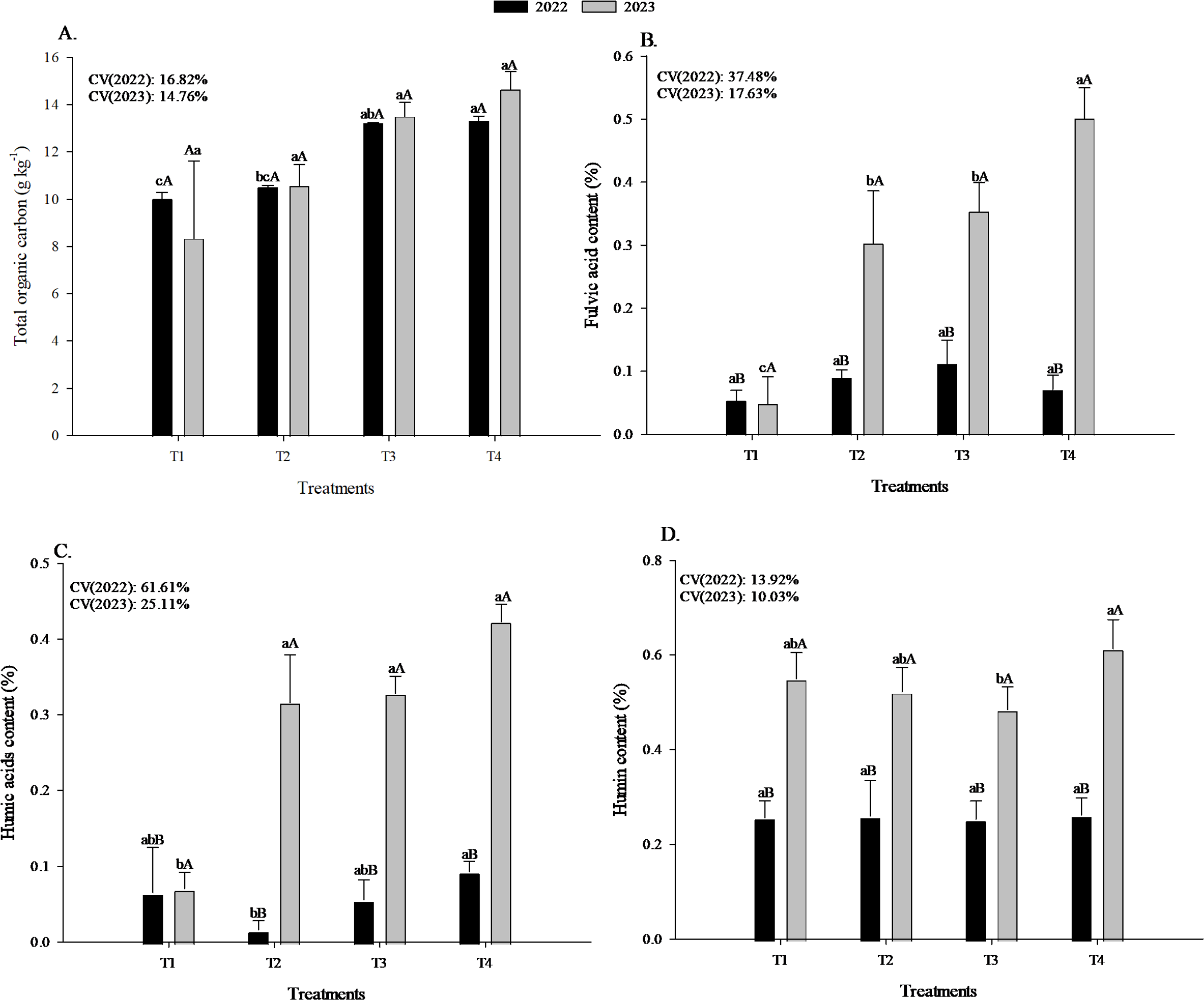 Bars with lowercase letters compare treatments; bars with uppercase letters compare harvests. Bars with the same letters do not differ statistically for harvests and fertilization managements according to Tukey’s test at p ≤ 0.05. Error bars represent the Standard Deviation. CV - Coefficient of variation. T1 - Control; T2 - 100% chemical; T3 - 100% remineralizers + biofertilizer; T4) 50% chemical + 50% remineralizers + biofertilizer
 Bars with lowercase letters compare treatments; bars with uppercase letters compare harvests. Bars with the same letters do not differ statistically for harvests and fertilization managements according to Tukey’s test at p ≤ 0.05. Error bars represent the Standard Deviation. CV - Coefficient of variation. T1 - Control; T2 - 100% chemical; T3 - 100% remineralizers + biofertilizer; T4) 50% chemical + 50% remineralizers + biofertilizer