
 Photosynthetic and productive comparison in tomato plants: Dwarf, wild, and domesticated plants1
ABSTRACT
Climate change affects the productive performance of tomato plants. Limited information is available on the use of dwarfing genes in tomato breeding to address these challenges. This study evaluated the photosynthetic efficiency and agronomic performance of tomato plants with different genetic backgrounds (dwarf, wild, and domesticated). The study was conducted using 25 genotypes arranged in a randomized block design, with three replicates and six plants per plot. Hybrids showed higher acylsugar content compared to the cultivar Santa Clara, except for hybrids 1, 2, 6, and 8. According to the dendrogram, Group III comprised hybrids 1, 2, 3, 5, 6, 7, 8, 9, 10, 13, 14, and 15, which exerted a strong influence on yield and fruit number per plant. Meanwhile, according to the Kohonen Self-Organizing Map, Group V included hybrids 11 and 12, which showed genetic similarity, highlighting their close relationship in agronomic characteristics. Hybrid 12 stood out for variables related to yield, average fruit weight, and number of fruits per plant demonstrating photosynthetic efficiency and agronomic potential. The dwarf donor parent, UFU MC TOM 1, showed photosynthetic efficiency similar to that of the wild accession, Solanum pennellii. Therefore, it can be concluded that the use of dwarf male parents to develop hybrids with standard architecture provides advances in tomato cultivation.
Key words:
Solanum lycopersicum L.; Solanum pennellii, hybrids; dwarf tomato
HIGHLIGHTS:
Dwarf male parents hold promise for developing hybrids.
The hybrids stand out for their remarkable photosynthetic efficiency and agronomic potential.
This manuscript will guide future research on productive and photosynthetically efficient genotypes.
RESUMO
As mudanças climáticas afetam o desempenho produtivo das plantas de tomate. Há informações limitadas disponíveis sobre o uso de genes de nanismo no melhoramento de tomate para enfrentar esses desafios. Este estudo avaliou a eficiência fotossintética e o desempenho agronômico de plantas de tomate com diferentes origens genéticas (anãs, selvagens e domesticadas). O estudo foi conduzido utilizando 25 genótipos dispostos em blocos casualizados, com três repetições e seis plantas por parcela. Os híbridos apresentaram maior teor de acilaçúcares em comparação com a cultivar Santa Clara, exceto os híbridos 1, 2, 6 e 8. De acordo com o dendrograma, o Grupo III foi composto pelos híbridos 1, 2, 3, 5, 6, 7, 8, 9, 10, 13, 14 e 15, os quais demonstraram forte influência sobre a produtividade e o número de frutos por planta. Por outro lado, segundo o Mapa Auto-Organizável de Kohonen, o Grupo V incluiu os híbridos 11 e 12, que apresentaram similaridade genética evidenciando sua estreita relação em características agronômicas. O híbrido 12 destacou-se para variáveis relacionadas à produtividade, peso médio de frutos e número de frutos por planta demonstrando eficiência fotossintética e potencial agronômico. O genitor doador anão, UFU MC TOM 1, mostrou eficiência fotossintética e resistência a pragas semelhantes ao acesso selvagem Solanum pennellii. Assim sendo, pode-se concluir que o uso de progenitores masculinos anões para o desenvolvimento de híbridos com arquitetura padrão proporciona avanços para o cultivo do tomateiro.
Palavras-chave:
Solanum lycopersicum L.; Solanum pennellii; híbridos; tomateiro-anão
INTRODUCTION
The cultivation of tomato (Solanum lycopersicum L.) is of significant economic importance in the global food sector. (FAOSTAT, 2026). Despite its socioeconomic importance in Brazil, tomato cultivation faces significant challenges, including biotic and abiotic stresses due to climate change (IPCC, 2023). In addition, tomatoes are a water-demanding crop which is sensitive to water fluctuations, which directly affect yield (Medyouni et al., 2021; Santos et al., 2024). In many regions worldwide, water scarcity has become increasingly severe (Ingrao et al., 2023). These challenges underscore the urgent need for developing new cultivars with enhanced resilience to improve the economic viability and sustainability of tomato cultivation.
Recent studies have investigated the use of the wild accession Solanum pennellii to introgress drought-resistant alleles into tomato commercial cultivars (Dariva et al., 2020; Flores-Saavedra et al., 2023). However, S. pennellii exhibits small fruits and a plant morphology that does not meet commercial standards (Semel et al., 2007). Hybridization between S. pennellii and S. lycopersicum L. may result in plants with increased drought resilience, but these hybrids often retain small, commercially undesirable fruits (Semel et al., 2007).
The use of dwarfing genes in tomato, characterized by monogenic inheritance (Maciel et al., 2015), has enabled the development of hybrids with standard architecture and high yield (Pereira et al., 2024a). Hybrids resulting from crosses between a female parent with indeterminate growth habit (SPSP) and standard architecture (DD) and a male parent with indeterminate growth habit (SPSP) and dwarf architecture (dd) exhibit shorter internodes, leading to an increased number of fruit clusters per linear meter of stem (Finzi et al., 2017; Pereira et al., 2024b). Moreover, dwarf tomato lines possess secondary metabolites that enhance resilience to various biotic and abiotic stresses, such as resistance to water deficit and saline stress, and tolerance to arthropod pest attacks (Maciel et al., 2024; Ribeiro et al., 2024). An important secondary metabolite present in dwarf plants is acylsugar, an allelochemical that confers antixenosis in tomato plants (Maciel et al., 2018; Mutschler, 2021). The use of dwarf plants is a promising alternative for reducing damage caused by major insect pests in tomatoes.
Despite the direct potential of dwarf plants in hybrid development, gaps remain in understanding their photosynthetic efficiency, particularly concerning physiological responses such as stomatal regulation and water-use efficiency, and how these factors impact overall yield. A comprehensive understanding of how environmental conditions influence photosynthesis is crucial for developing new cultivars and improving agricultural management practices (Calzadilla et al., 2022).
Despite the observed potential of dwarf tomato germplasm, these plants are expected to exhibit high photosynthetic efficiency and agronomic potential. In this context, the objective of the study was to evaluate the photosynthetic efficiency and yield of tomato plants with different genetic backgrounds (dwarf, wild, and domesticated).
MATERIAL AND METHODS
The experiment was conducted from March to September 2023 at the Vegetable Experimental Station of the Federal University of Uberlândia (UFU), Monte Carmelo Campus, Minas Gerais, Brazil (18º 42’ 43.19” S, 47º 29’ 55.8” W, at an altitude of 873 m above sea level). According to the Köppen climate classification, the climate in Monte Carmelo is tropical (Aw) (Alvares et al., 2013). The data for maximum, mean, and minimum air temperature during the experiment are shown in Figure 1.

Air temperature during the experimental period under greenhouse cultivation conditions. Source: SISMET (2025)
The genetic material used in this study was sourced from the Vegetable Germplasm Bank at the Federal University of Uberlândia. In 2018, a hybridization was performed between UFU-TOM-Mother-2♀ and UFU MC TOM 1♂. UFU-TOM-Mother-2 was used as the maternal line (recurrent parent). It is a homozygous, pre-commercial line with standard architecture (dwarf gene, DD), indeterminate growth habit (SPSP), and favorable agronomic traits characteristic of the Santa Cruz type. UFU MC TOM 1 served as the male parent (donor parent). This line exhibits dwarf architecture (dwarf gene, dd), an indeterminate growth habit (SPSP), and produces mini-tomato fruits (Maciel et al., 2015; Finzi et al., 2017).
After obtaining the F1 generation, three successive backcrosses followed by three self-pollinations were performed between 2019 and 2022, as follows: the first backcross (F1BC1) was followed by self-pollination, resulting in the F2BC1 generation (BC1). Dwarf plants were selected visually at the seedling stage in the F2BC1 generation, as recommended by Pereira et al. (2024a), followed by the second backcross (F1BC2) and self-pollination, resulting in the F2BC2 (BC2) generation. Dwarf plants were again selected at the seedling stage in the F2BC2 generation, followed by the third backcross (F1BC3) and self-pollination, yielding the F2BC3 (BC3) generation. In the F2BC3 generation, only dwarf plants were selected at the seedling stage, and three successive self-pollinations were conducted to obtain F5BC3, leading to the development of three male dwarf parental lines: UFU-Sci6_2, UFU-Sci8, and UFU-Sci6_5.
To obtain the hybrids, crosses were performed between the three dwarf male parents with Santa Cruz-type fruits and five pre-commercial tomato lines with Santa Cruz-type fruits and normal architecture. Fifteen pre-commercial hybrids with Santa Cruz-type fruits and standard plant architecture were obtained (Table 1). The commercial cultivar Santa Clara and the donor parent UFU MC TOM1 were used as commercial controls, totaling 25 treatments. The wild accession S. pennellii (LA716) was used as a control for evaluations of pest resistance (acylsugar content) and gas exchange. All treatments evaluated belong to the species S.lycopersicum L. except for the wild accession LA716 Solanum pennellii.
The study employed a randomized block design with 25 treatments and three replicates. Each experimental plot consisted of six plants arranged in single rows, spaced 1.00 × 0.25 m apart, for a total of 450 plants. Cultivation was conducted in a 7 × 21 m arched greenhouse with a ceiling height of 4 m, covered with 150-micron transparent polyethylene film treated with ultraviolet inhibitors and equipped with side curtains of white aphid-proof netting. The soil in the experimental was is classified as a dystrophic Red Latosol (EMBRAPA, 2018) and as an Oxisol (Soil Survey Staff, 2022). Soil sampling and analysis were performed. The analysis of soil inside the greenhouse, performed by Laboratory for Environmental and Agricultural Analysis (LABRAS), showed the following characteristics: pH (CaCl2) = 4.7; OM = 2.6 dag kg-1; Mehlich P = 72.5 mg dm-3; K+ = 0.27 cmolc dm-3; Ca2+ = 3.21 cmolc dm-3; Mg2+ = 0.82 cmolc dm-3; H+ + Al3+ = 2.3 cmolc dm-3; SB = 4.30 cmolc dm-3; CEC = 6.60 cmolc dm-3; and base saturation (V%) = 65.15%. All agronomic practices were performed according to established protocols for tomato cultivation in protected environments (Alvarenga, 2013; Finzi et al., 2020).
Regarding leaf analysis, the following aspects were evaluated: Indirect chlorophyll content (SPAD). A SPAD-502 meter (Konica Minolta Sensing, Osaka, Japan) was used to measure five fully expanded leaves from the upper third of the plants in each plot, with readings expressed as SPAD index values. Acylsugar content was evaluated and expressed in nmol cm-2 of leaf area (ACIL). At 69 days after transplanting (DAT), samples consisting of eight leaf disks (equivalent to 4.2 cm2) were collected from the upper third of each plant, with the average value of the composite sample calculated for each plot. Extraction and quantification followed the methodology proposed by Resende et al. (2002) and adapted by Maciel & Silva (2014).
Gas exchange parameters were evaluated 78 DAT on three leaves from the middle third of two plants per plot, measured in the morning (8:00 AM - 10:00 AM). A portable infrared gas analyzer (LI-6800 XT, Li-Cor Inc., Nebraska, United States) was used for the assessments, at a block temperature of 26 °C and photosynthetic photon flux density of 1,000 μmol m-2 s -1. The following indices were measured: CO2 assimilation rate (A, µmol CO2 m-2 s-1), internal CO2 concentration (Ci, µmol CO2 m-2 s-1), external CO2 concentration (Ca, µmol CO2 m-2 s-1), relationship between Ci and Ca [Ci/Ca, µmol CO2 m-2 s-1 (µmol CO2 m-2 s-1)-1], transpiration rate (E, mmol H2O m-2 s-1), stomatal conductance (gs, mol H2O m-2 s-1), and leaf temperature (T, °C). Instantaneous water use efficiency (WUE) was obtained by the formula WUE = A/E [µmol CO2 m-2 s-1(mmol H2O m-2 s-1)-1], and carboxylation efficiency - A/Ci [μmol CO2 m-2 s-1 (µmol CO2 m-2 s-1)-1].
Chlorophyll a and b contents were analyzed in two leaves from the middle third of the four central plants using a portable chlorophyll meter (ClorofiLOG CFL-1030, Falker, Porto Alegre, Brazil). Leaf water potential (Ψwam) was measured early in the morning (5:00 AM) using a Scholander-type pressure chamber (Soil Moisture model 3000, Goleta, United States), with five leaves from the middle third of the plant used for this purpose. Chlorophyll levels and water potential values were averaged per plot by summing the measurements and dividing by the number of plants.
Chlorophyll a fluorescence was measured using a FluorPen FP 100 portable fluorometer (Photon Systems Instruments, Drásow, Czech Republic). Fully expanded young leaves were dark-adapted for 30 min to allow complete oxidation of the photosynthetic electron transport chain. The minimum fluorescence (Fo) was recorded at 50 μs, followed by the J step at 2 ms, the I step at 30 ms, and the maximum fluorescence (Fm), which indicates when all PSII reaction centers are closed. These fluorescence parameters were used to calculate PSII bioenergetic indices, including the maximum quantum yield of PSII (Fv/Fm). Probability that an electron transferred to QA will be further transferred to QB (Ψ₀, Psi_o), electron transport yield (ΦEO, PhiEO), energy dissipation yield as heat (ΦDO), photosynthetic performance index (PIABS), and various specific energy fluxes (ABS/RC, ETo/RC, and DIo/RC). The fluorescence indices were calculated as proposed by Siquieroli et al. (2025). For evaluating the photosynthetic apparatus, only hybrids with the highest production were selected. Reducing the number of treatments to be evaluated is an important strategy to make readings with the IRGA equipment feasible.
Harvesting began at 80 DAT and continued weekly from April 11 to June 19, 2023, totaling 9 harvests. Fruits from each experimental plot were collected at full ripening. The following agronomic evaluations were performed: Fruit shape (FS): calculated as the ratio between the longitudinal and transverse diameters of ten fruits per plot (DL/DT); number of locules per fruit (NL): determined by horizontally cutting the fruit and counting the number of locules; total soluble solids content (BRIX), in °Brix: assessed as the average value for all fruits collected in the plot using a Portable Digital Refractometer (Atago PAL-1 3810, Tokyo, Japan); yield (YIELD, t ha⁻1): was obtained by multiplying the number of plants per hectare at a spacing of 0.25 × 1.0 m by the production of each plant (40.000 plants ha⁻1). Average fruit weight (AFW, g): determined by dividing the total fruit mass by the number of fruits collected in the plot; number of fruits per plant (NFP): calculated as the ratio between the total number of fruits and the number of plants in the plot.
Agronomic and photosynthetic performance data were subjected to assumption checks, including variance homogeneity (Lilliefors test), normality (Oneill-Mathews test), and additivity (Tukey’s additivity test). Subsequently, the data were analyzed using analysis of variance (ANOVA) with an F-test (p ≤ 0.05). Means were compared using the Scott-Knott test (p ≤ 0.05). A multivariate analysis of genetic dissimilarity among genotypes was performed using Mahalanobis generalized distance (“D” _“ii´” ^“2” ). Genetic divergence was represented in a dendrogram constructed using the hierarchical Unweighted Pair Group Method with Arithmetic Mean (UPGMA). The UPGMA clustering was validated using the cophenetic correlation coefficient (CCC), calculated via the Mantel (1967) test. The relative contribution of quantitative traits was calculated according to Singh (1981) criterion.
An unsupervised classification of the data was performed using a Kohonen self-organizing map (SOM). The learning process involved 2.000 iterations, with a radius of 1, a hexagonal topology, and a 4 × 4 neuron arrangement for the analysis of agronomic performance, and a 2 × 2 topology for the analysis of photosynthetic performance. The analyses were conducted using GENES software v. 1990.2021.131, integrated with Matlab (Cruz, 2016) and R software v. 4.2.1 (R Core Team, 2024).
RESULTS AND DISCUSSION
Notably, the maximum, minimum, and mean air temperature observed inside the greenhouse during the experiment were higher (> 37, 29, and 24 °C, respectively) than that recommended for tomato cultivation (29 °C) (Alvarenga, 2013) (Figure 1). It is possible to state that the high mean air temperature observed in the environment exceeded the optimal temperature levels for tomato cultivation.
Analysis of variance (F-test ≤ 0.05) revealed significant differences among tomato genotypes for all evaluated traits. Coefficients of variation ranged from 5.53 to 14.22%, indicating the dataset’s accuracy and reliability (Table 2).
Means values of agronomic traits, fruit quality attributes, and acylsugar content in leaves of different genotypes of tomatoes
Hybrids 3, 4, 5, 7, 9, 10, 11, 12, 13, 14, and 15 exhibited higher ACYL compared to the commercial control (cv. Santa Clara) and differed significantly (Scott-Knott, p ≤ 0.05) (Table 2). Hybrid 4 stood out, showing 63.42% higher acylsugar content in leaflets than the commercial cv. Santa Clara (8.83 nmol per cm-2 of leaf area). The wild accession S. pennellii and the dwarf donor genotype presented the highest acylsugar contents, differing significantly from the other genotypes (40.37 and 30.37 nmol·cm-2 of leaf area, respectively). The three male parents (dwarf architecture, dd) displayed higher acylsugar levels than the normal architecture lines (DD), including the female parents 1, 3, and 4, and the differences were significant.
Tomato is a crop highly susceptible to diseases and pests, resulting in significant losses in both quality and yield (Li et al., 2023a). Acylsugar production has emerged as an effective mechanism of natural pest resistance in Solanum spp., particularly in genotypes with elevated levels of these compounds (Mutschler, 2021). These secondary metabolites, synthesized in glandular trichomes, protect against pests such as the two-spotted spider mite (Tetranychus urticae), whitefly (Bemisia tabaci), leaf miner (Liriomyza spp.), and tomato leafminer (Tuta absoluta) (Rakha et al., 2017; Maciel et al., 2018; Peixoto et al., 2019; Maciel et al., 2024).
Acylsugars reduce insect mobility and exhibit toxic effects, making it difficult for pests to access the leaf epidermis for feeding and oviposition (Planelló et al., 2022). In this study, the high acylsugar levels observed in dwarf genotypes indicate that, in addition to S. pennellii (a well-known source of genetic resistance), dwarf genotypes have significant potential for use in breeding programs for commercial varieties, expanding the pool of resistance sources.
This resistance phenomenon has been corroborated by recent studies linking glandular trichomes and acylsugar biosynthesis to effective pest defense (Rakha et al., 2017; Peixoto et al., 2019). The results of this study highlight the potential of dwarf genotypes in breeding programs, considering that the presence of acylsugars does not compromise the agronomic quality of the plants. This observation aligns with the literature, which discusses introducing resistance genes into commercial plants without compromising agronomic value (Gruber, 2017; Maciel et al., 2018).
The genetic similarity observed among the donor parent, male parents, and the wild accession (S. pennellii) (Table 2) further corroborates the high acylsugar levels obtained, consistent with previous findings (Oliveira et al., 2021; Maciel et al., 2024). Moreover, the results suggest that the dwarf plants evaluated in this study have significant potential to inspire new research focused on pest resistance, strengthening their application in genetic improvement programs.
These findings reinforce the viability of introgression resistance genes, such as those derived from the wild accession S. pennellii, through crosses to enhance plant resilience without compromising the development of desirable agronomic traits (Dariva et al., 2020; Flores-Saavedra et al., 2023).
Regarding SPAD, male parents 2 and 3 stood out with values of 62 and 61.60, respectively, showing relative superiority of 17.18 and 16.42% compared to the commercial cultivar Santa Clara. Hybrids 10, 11, and 12 were similar to the commercial cultivar Santa Clara, with no significant differences (Scott-Knott, p > 0.05) (Table 2).
Chlorophyll, an essential component of photosynthesis, is a key indicator of photosynthetic capacity and plant physiological status. Non-destructive measurements, such as SPAD values, effectively reflect chlorophyll content, assisting in monitoring plant development and selecting varieties adapted to different environmental conditions and management practices (Jiang et al., 2017; Yuan et al., 2022). The elevated SPAD indices observed in dwarf genotypes corroborate the findings of Nemeskéri et al. (2019), who demonstrated that SPAD indices are sensitive indicators of water and nutrient stress and are often used to monitor nutrient use efficiency in various crops.
Fruit shape (FS) varied among genotypes (Table 2). Pre-commercial lines with normal plant architecture produced fruits with an average FS value close to the Santa Cruz commercial standard (1.12). Similarly, dwarf tomato lines used as male parents showed an average FS value of 1.21. The highest FS value was observed in the donor parent UFU MC TOM1 (genotype 25) at 1.96, indicating longer fruits.
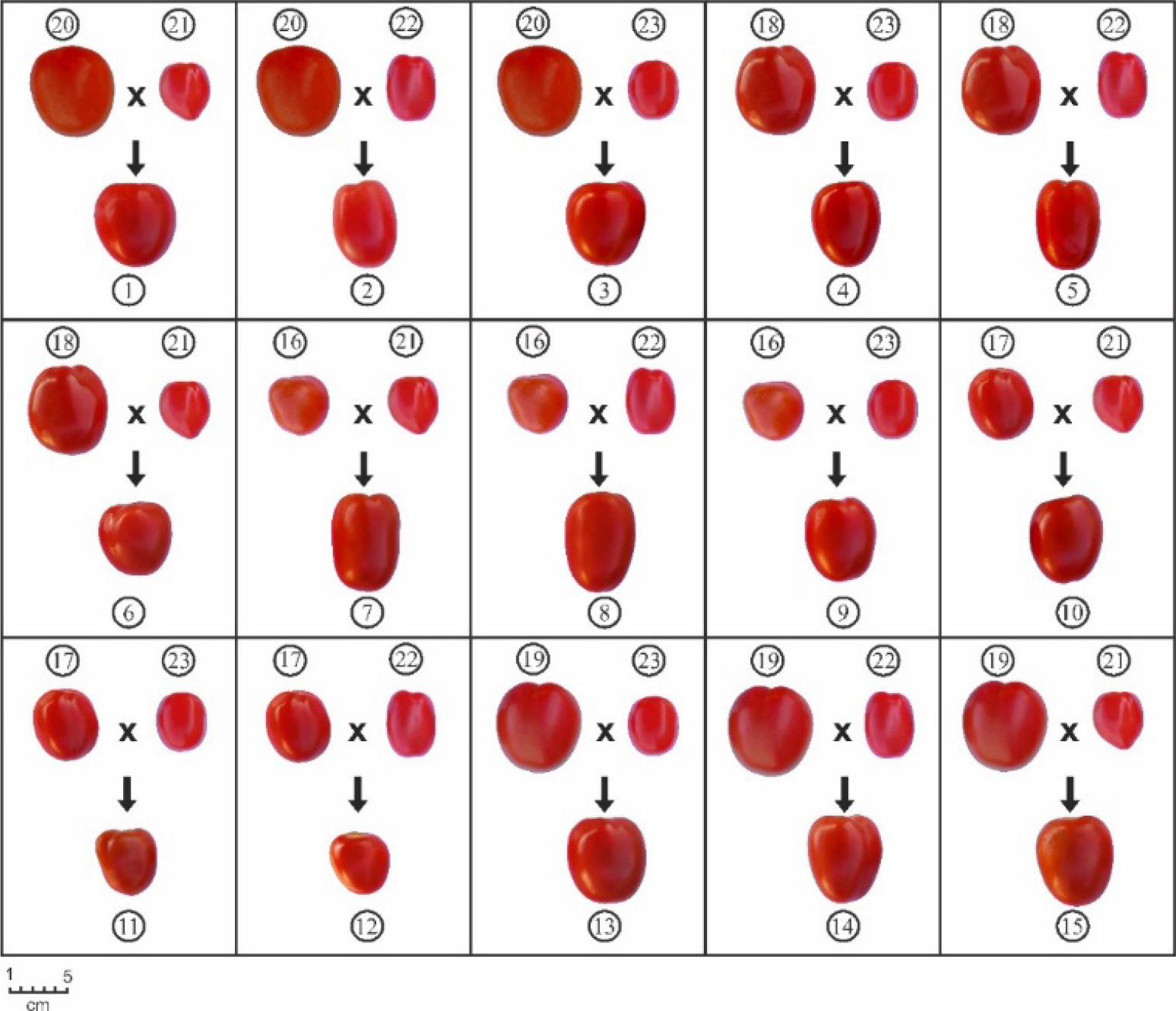
The NL in hybrids 1, 3, and 13 was notably higher than in other hybrids, with an average of 3.65 locules per fruit (Table 2). Male dwarf parents 1 and 3 exhibited NL values of 3.6 and 3.87, respectively, comparable to hybrids 1, 3, and 13, with no significant differences. Results depicted in Figure 2 further highlight the differences in fruit shape among male parents (dwarf plants), female parents (normal architecture plants), and hybrids derived from crosses between dwarf and normal Santa Cruz-type plants.

For each cross, fruit shape varied, with differences in size and form, resulting in fruits that were either more rounded or more elongated, depending on the parental combination, as quantified and presented in Table 2.
Regarding BRIX (Table 2), the donor parent and male parent 1 stood out with values of 6.95 and 7.22 °Brix, respectively. All hybrids surpassed the commercial control, cultivar Santa Clara, in BRIX (4.91 °Brix). Similarly, all male parents exceeded the commercial control Santa Clara, with an average value of 6.65 °Brix.
Tomatoes are among the most widely consumed vegetables globally, serving as a crucial crop for food security due to their high nutritional value (Moreira et al., 2023). The high BRIX concentration in the fruits of dwarf genotypes suggests that these genetic materials can enhance nutritional and sensory quality without relying on complex biotechnological interventions. Recent studies, such as that by Zsögön et al. (2018), have explored using CRISPR-Cas9 to increase sugar content in tomatoes. However, the findings of this study indicate that natural genetic variation, particularly in dwarf lines, is sufficient to produce fruits with high soluble solids content. This reflects an emerging trend in tomato breeding, where the focus is shifting from an exclusive emphasis on yield to prioritizing nutritional quality, addressing both market demands and consumer expectations (Gibon et al., 2025).
This focus on fruit quality, particularly BRIX, is supported by studies that highlight its direct relationship with consumer preferences, both for fresh consumption and for processing (Peixoto et al., 2018; Seabra Junior et al., 2022). Dwarf genotypes that combine high BRIX levels with desirable agronomic traits exhibit significant commercial potential (Mattos et al., 2025). This could translate into greater competitiveness in the premium tomato market, catering to niches that value superior quality and more intense flavors (Brugarolas et al., 2009).
The highest yield (Table 2) was observed in Hybrid 9 (104.04 t ha-1), which was 770.62% higher than the commercial control, cultivar Santa Clara (11.95 t ha-1). Hybrids 3 and 15 also stood out, with yields 497.15 and 573.89% higher than the commercial control, respectively. Notably, the dwarf tomato lines (male parent and donor parent) exhibited the lowest yields and average fruit weight (AFW).
Hybrids 1, 3, 7, 9, 13, and 15 had the highest AFW and were among the most notable. It is worth highlighting that Hybrids 3, 9, and 15 also achieved the highest yields (Table 2). The highest AFW was recorded for Hybrid 1 at 80.16 g, representing a 65.72% increase over the commercial cultivar Santa Clara. Female parent 5, with normal architecture, also stood out, exhibiting an AFW of 76.20 g. Hybrid 9 excelled in fruit production per plant, demonstrating consistency with its higher observed yield and AFW values (Table 2). The dendrogram generated using the Unweighted Pair-Group Method with Arithmetic Averages (UPGMA) clustering method exhibited a cophenetic correlation coefficient (CCC) of 97.64% and a distortion of 3.08% (Figure 3). The dendrogram‘s cutoff point was determined by an abrupt change in clustering levels, resulting in six distinct groups.
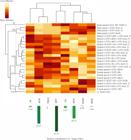
Dendrogram representing genetic divergence among parental lines, controls, and tomato hybrids obtained using the Unweighted Pair-Group Method with Arithmetic Averages (UPGMA) method
Group I consisted of the donor parent (UFU MC TOM 1), which showed a strong influence on ACYL content and BRIX. Group II included the dwarf lines used as male parents 1, 2, and 3, which stood out for their strong influence on ACYL content and SPAD. Group III comprised hybrids 13, 3, 1, 10, 6, 14, 7, 5, 8, 2, 9, and 15, which exerted a strong influence on yield and fruit number per plant. Group IV, which included genotypes 20, 16, 18, 19, 12, and 11, demonstrated moderate influence on average fruit weight and yield. Group V, formed by hybrid 4 and female parent 2, stood out for traits related to fruit shape and number of locules. Group VI, represented by the commercial cultivar Santa Clara, showed the least overall influence, with notable performance only in chlorophyll content (Figure 3). Among the variables analyzed, NFP had the greatest influence on genetic dissimilarity (42.14%), followed by AFW with 29.33%, and ACYL with 20.72%.
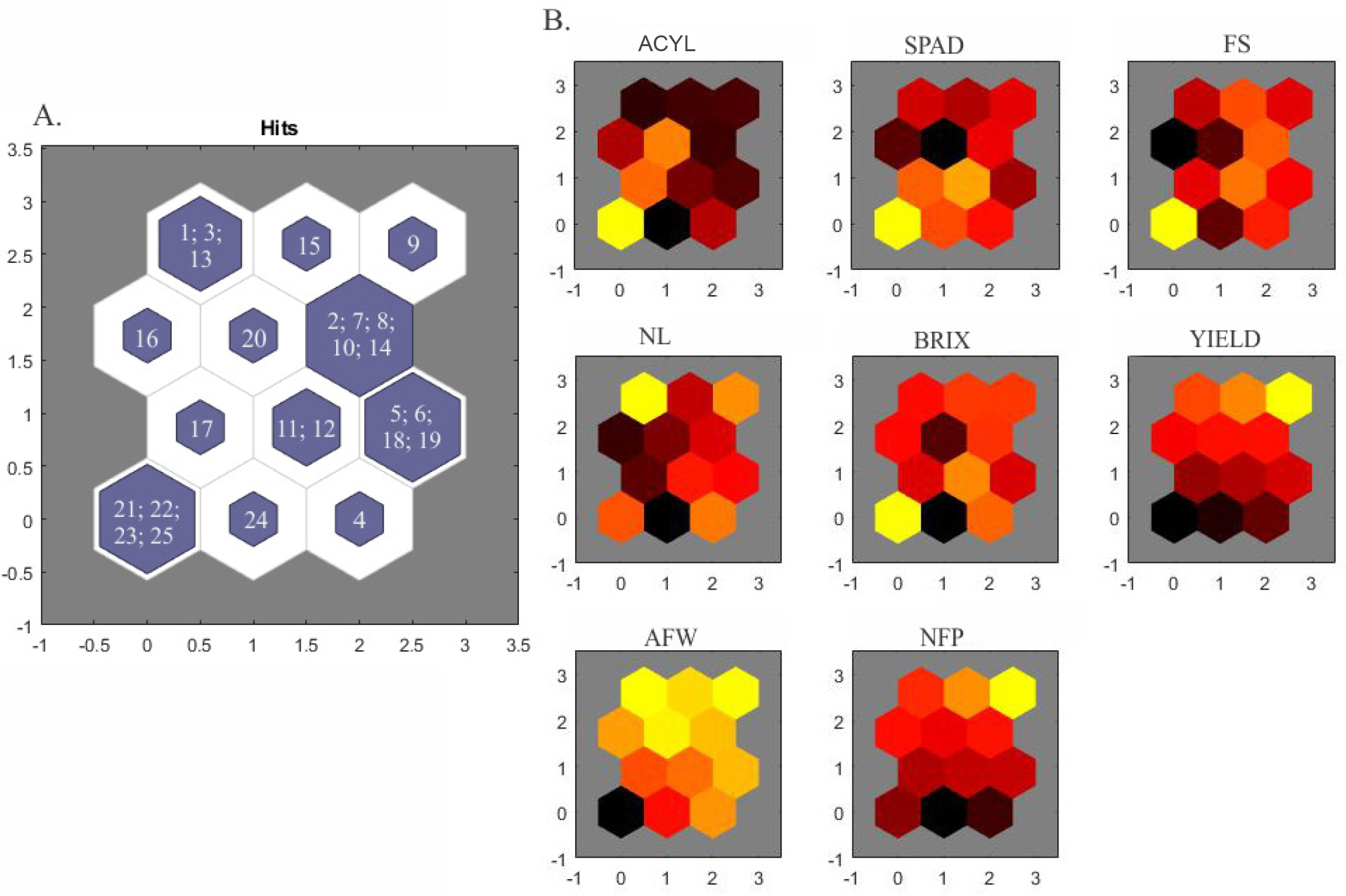
Genetic dissimilarity among the evaluated genotypes was effectively represented by the Kohonen Self-Organizing Map (SOM), which facilitated the identification of distinct genotype clusters (Figure 4). The SOM was generated using an artificial neural network with 12 neurons organized in a 4 × 3 matrix, resulting in well-defined groups.
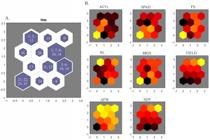
Kohonen Self-Organizing Map (SOM) identifying tomato genotype allocation in each neuron, with clustering (4 × 3 matrix, radius 2, and 3,000 epochs) using an artificial neural network (A) and influence of input variable weights in the artificial neural network for defining clusters (B)
In Group I, the dwarf plant genotypes (21, 22, 23, and 25) were allocated, showing the greatest influence on variables related to ACYL, SPAD, FS, and BRIX. These variables had significant weight for these genotypes, as indicated by the lighter shades on the map. Group II consisted exclusively of the commercial cultivar Santa Clara (genotype 24), which did not stand out in any of the analyzed variables, suggesting a comparatively lower influence than the other groups. Group III included only Hybrid 4, which was allocated individually to a neuron, suggesting a distinct genetic configuration compared to the other genotypes. In Group IV, female parent 2 (genotype 17) was classified in an exclusive cluster, demonstrating specific characteristics that set it apart from the others.
Group V included Hybrids 11 and 12, which exhibited genetic similarity and were grouped, highlighting their close relationship in agronomic traits. Hybrid 12, in particular, stood out for productivity-related variables, AFW, and NFP, indicating its potential for yield and fruit quality. Additionally, Hybrid 12 exhibited an interesting balance between fruit quality and resistance traits, suggesting a promising agronomic profile for commercial use.
Group VI comprised Hybrids 5 and 6, along with female parents 3 and 4, demonstrating genetic affinity among these genotypes, which justifies their classification in the same group. Group VII was formed by female parent 1 (genotype 16), which was also allocated individually to emphasize its unique characteristics. Finally, Group VIII housed female parent 5 (genotype 20), which was also classified individually, reflecting its divergence in characteristics relative to the other genotypes. Finally, groups IX, X, XI, and XII clustered the remaining hybrids, which were distinctly distributed across neurons, reflecting more subtle genetic variations among them.
After evaluating agronomic performance and genetic dissimilarity analysis, Hybrid 12 was selected for photosynthetic performance assessment (Table 2, Figures 3, 4, and 5). Additionally, the analysis included female parent 2 (UFU-102), male parent 2 (UFU-Sci8), S. pennellii, and the donor parent (UFU MC TOM 1).

Boxplot of variables related to the evaluation of the photosynthetic performance of tomato genotypes
Parameters such as SPAD, chlorophyll a fluorescence, and gas exchange showed significant variation (Figure 5), reflecting the photosynthetic responses of the evaluated genotypes. Genotype 4 (female parent) showed the lowest Chl a and Chl b indices compared to the other genotypes (Figures 5A and B). The chlorophyll a/b ratio did not differ among genotypes (Figure 5C). Chl total content differed only in the female parent (genotype 4), which had lower values than that of the other genotypes. Fo was higher in Hybrid 12 and the female parent (Figure 5E). However, greater sensitivity was observed in the female parent, as indicated by a reduction in Fv/Fm (Figure 5F). Normal Fv/Fm values were observed in the male parent, S. pennellii, and Hybrid 12, all of which were close to the optimal value of 0.8 (Bartold & Kluczek, 2024).
It is suggested that Hybrid 12 retained the PSII protein complexes intact (Fv/Fm). However, further evaluations are needed, paving the way for new research. The parameters related to electron transport, such as the probability that an electron transferred to QA is moved to QB (Figure 5G) and the Phi_Eo (Figure 5H), were lower and comparable to those of the female parent. In contrast, S. pennellii exhibited a higher ETo/RC (Figure 5I) compared to the other genotypes. In terms of light absorption, the increase in light energy absorption flux observed in S. pennellii, Hybrid 12, and the female parent negatively influenced Pi_ABS (Figure 5K). To mitigate photooxidative stress, an increase in energy dissipation per reaction center was observed in genotypes 1, 2, 3, and 4 (Figure 5L). However, DIo/RC did not differ significantly among genotypes (Figure 5M).
Regarding gas exchange, Hybrid 12 demonstrated efficiency, exhibiting better control of stomatal conductance (Figures 5N and O) compared to the other evaluated genotypes. Reduced stomatal aperture was crucial for maintaining A/Ci (Figure 5S), similar to the male and female parents, and outperforming S. pennellii, which showed the lowest values. No significant differences were observed in Ci or the Ci/Ca ratio (Figures 5Q and R). Additionally, Hybrid 12 exhibited superior WUE compared to the other genotypes (Figure 5T).
The measurement of Chl a and gas exchange is a non-destructive, simple, rapid, and highly sensitive method for assessing the environmental conditions to which plants are exposed (Force et al., 2003). In this study, the photosynthetic analysis of the genotypes, particularly Hybrid 12, revealed a high Fv/Fm of PSII, indicating efficient potential photochemical activity of PSII due to the integrity of its protein complex (Chen et al., 2022). For example, Poudyal et al. (2018) used Fv/Fm to select tomato lines tolerant to abiotic stresses, identifying sensitive (low Fv/Fm) and tolerant (high Fv/Fm) cultivars. The authors suggested that this parameter could accelerate cultivar improvement by rapidly detecting stress sensitivity. However, the reduction in PSII electron transport chain activity (Psi_O, Phi_Eo, and ETo/RC) observed in this study suggests altered light utilization for electron transport in photosynthesis, without compromising PSII integrity (Chen et al., 2022).
To handle excess excitation energy and prevent PSII damage, Hybrid 12 demonstrated high non-photochemical energy dissipation, a crucial mechanism for managing excess light commonly encountered in tropical and subtropical environments (Zuo, 2025). Photosynthesis, by allocating absorbed light to photochemical processes and regulating energy dissipation, is vital for plants to maintain the structural integrity of their chloroplasts and enhance their photosynthetic potential (Yan et al., 2021). Yan et al. (2024) found that this dissipation, mediated by carotenoid cycling, is essential for protecting plants from photo damage.
A heatmap generated using the UPGMA method based on a genetic dissimilarity dendrogram for five tomato genotypes (male parent, S. pennellii, donor parent, Hybrid 12, and female parent) highlighted the influence of physiological parameters, including chlorophyll content, fluorescence, quantum efficiency, and CO2 assimilation rates (Figure 6).

Dendrogram representing genetic dissimilarity among tomato parents, Hybrid 12, dwarf plants, and the wild accession S. pennellii, obtained using the Unweighted Pair-Group Method with Arithmetic Averages (UPGMA) method
The genotypes were grouped into four main clusters (I, II, III, and IV) based on similarities in their physiological responses. Group I includes the male and donor parents, both of whom stood out for their strong influence on variables such as gs, WUE, A, and Phi_Eo. These genotypes exhibit high photosynthetic efficiency and effective water resource management, suggesting a robust capacity for CO2 assimilation rate, which favors growth under optimal conditions. Group II, which includes Hybrid 12, shows a balanced influence, particularly in variables related to ETo/RC, A, and A/Ci.
In Group III, the donor parent (dwarf plant UFU MC TOM 1) and S. pennellii were similar in photosynthetic efficiency. Notably, these genotypes exerted a strong influence on variables such as energy dissipation. Group IV comprises the female parent, which demonstrated a significant influence on parameters such as ABS/RC and Chl total. While this genotype displayed good light-absorption capacity, it showed lower performance in CO2 assimilation and electron transport than Hybrid 12 and the male parent. ABS/RC had the greatest influence on genetic dissimilarity (57.93%), followed by Chl a (22.07%). The heatmap corroborates these findings, highlighting that darker areas represent a greater influence of the analyzed parameters (Figure 7).
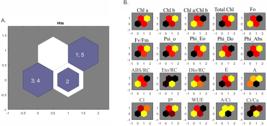
(A) Kohonen Self-Organizing Map (SOM), identifying genotype allocation in each neuron, with clustering (2 × 2 matrix, radius 1, and 2000 epochs) using an artificial neural network; (B) Influence of input variable weights in the artificial neural network for defining the clusters
Hybrid 12 excelled in key variables, including water-use efficiency (A/Ci and A/E), A, and electron transport flux. The Kohonen Self-Organizing Map (SOM) was generated to cluster different tomato genotypes-donor parent, wild accession S. pennellii, Hybrid 12, female parent, and male parent-based on physiological variables. The SOM, trained with these physiological variables, revealed genotype allocation within network neurons and the influence of input variable weights on clustering. The use of the SOM stands out for enhancing data exploration and facilitating the identification of more complex relationships. Consequently, this technique tends to generate more detailed clustering patterns (Antonucci et al., 2025).
In panel A (Figure 7), which illustrates genotype allocation, the donor parent and male parent were grouped in the same neuron. The wild accession S. pennellii was positioned separately, while Hybrid 12 was grouped with the female parent.
The panel B (Figure 7), highlighting the influence of physiological variable weights on clustering, showed that variables such as chlorophyll content (Chl a, Chl b, and Chl a/Chl b ratio), Fo, and quantum efficiency strongly influenced the clustering of the donor and male parents. The wild accession S. pennellii was primarily influenced by energy dissipation-related variables and WUE. Hybrid 12, along with the female parent, was influenced by variables including A, ETo/RC, gs, and A/Ci. It was observed that SOM was efficient in forming the groups. It was also possible to identify which variables contributed most to the allocation of treatments in each group.
Hybrid 12 demonstrated significant agronomic performance potential and a remarkable capacity for adaptation to diverse environmental conditions (Figure 8).

From an agronomic point of view, the hybrid showed significant values for SPAD, BRIX, AFW, and NFP. Higher SPAD values suggest greater chlorophyll content and enhanced light capture, which likely contributed to improved carbon assimilation and photoassimilate allocation to fruits, reflected in both yield and fruit quality. High Fv/Fm values in Hybrid 12 indicate efficient PSII functioning with low photoinhibition, while elevated Phi Do reflects effective use of absorbed light for photochemistry. The combination of high WUE and low gs demonstrates optimized A with reduced water loss. These traits support photosynthesis optimization and highlight the physiological efficiency and stress tolerance of Hybrid 12 (Kruse et al., 2019).
Furthermore, the photoprotective strategy of Hybrid 12 aligns with the theory of photosynthesis optimization, which suggests adjustments in photosynthetic processes to prevent imbalances between energy production (ATP and NADPH) and CO₂ demand (Kruse et al., 2019). This allowed Hybrid 12 to adapt its photosynthetic processes, reducing energy costs, as evidenced by its high photosynthetic rates and carboxylation efficiency, which were comparable to those of its parent lines. Previous studies, such as those by Yousef et al. (2021) and Li et al. (2023b), have demonstrated that genotypes with high photosynthetic efficiency are better adapted to environmental stresses, such as salinity and elevated temperatures. This photosynthetic robustness positions Hybrid 12 as a promising candidate for challenging environments, where efficient light utilization and energy dissipation are critical to avoiding photodamage (Al-Gaadi et al., 2024).
The Hybrid 12 also exhibits improved stomatal regulation and A, resulting in higher photosynthetic rates and better WUE. It is suggested to harvest F2 seeds from Hybrid 12 following self-pollination and to select dwarf plants at the seedling stage (Pereira et al., 2024a). Given that this study used a female parent with normal architecture (DD) and a determinate growth habit (spsp), it is feasible to select dwarf plants with a determinate growth habit (dd/spsp) to develop commercial hybrids with determinate growth using dwarf male parents.
CONCLUSIONS
-
1. Hybrid 12, derived from a dwarf male parent, exhibits significant agronomic potential and notable photosynthetic efficiency.
-
2. The donor parent, dwarf plant UFU MC TOM 1, demonstrated photosynthetic efficiency similar to the wild accession S. pennellii, emerging as a promising option for breeding programs. The use of dwarf male parents to develop hybrids with standard architecture is promising for tomato cultivation.
-
3. The presence of acylsugars observed in this study may guide future research involving pest tolerance.
-
1
Reseach conducted at Vegetable Experimental Station of the Federal University of Uberlândia, Monte Carmelo Campus, MG, Brazil
-
Financing statement:
This research was financially supported by the National Council for Scientific and Technological Development (CNPq) grant number 310083/2021-4, the Minas Gerais Research Foundation (FAPEMIG), the Coordination for the Improvement of Higher Education Personnel (CAPES) finance Code 001, and the Federal University of Uberlândia (UFU).
-
• Ref 301525
Acknowledgments:
National Council for Scientific and Technological Development (CNPq) grant number 310083/2021-4, the Minas Gerais Research Foundation (FAPEMIG), the Coordination for the Improvement of Higher Education Personnel (CAPES) finance Code 001, and the Federal University of Uberlândia (UFU). Authors are grateful to the Instituto Federal de Educação, Ciência e Tecnologia Goiano, Rio Verde and Pro-Rectorate of Research, Postgraduate Studies and Innovation (PROPPI).
Data availability:
Data will be made available on request.
LITERATURE CITED
-
Al-Gaadi, K. A.; Tola, E.; Madugundu, R.; Zeyada, A. M.; Alameen, A. A.; Edrris, M. K.; Edrees, H. F.; Mahjoop, O. Response of leaf photosynthesis, chlorophyll content and yield of hydroponic tomatoes to different water salinity levels. Plos One, v.19, p.1-20, 2024. https://doi.org/10.1371/journal.pone.0293098
» https://doi.org/10.1371/journal.pone.0293098 - Alvarenga, M. A. R. Tomate: produção em campo, em casa-de-vegetação e em hidroponia. Lavras: UFLA, 2013. 455p.
-
Alvares, C. A.; Stape, J. L.; Sentelhas, P. C.; Gonçalves, J. L. de M.; Sparovek, G. Köppen’s climate classification map for Brazil. Meteorologische Zeitschrift, v.22, p.711-728, 2013. https://doi.org/10.1127/0941-2948/2013/0507
» https://doi.org/10.1127/0941-2948/2013/0507 -
Antonucci, F.; Violino, S.; Canfora, L.; Tartanus, M.; Furmanczyk, E. M.; Turci, S.; Tommasini, M. G.; Weber, N. C.; Razinger, J.; Ourry, M.; Bickel, S.; Passey, T. A. J.; Bohr, A.; Maise, H.; Pugliese, M.; Vitali, F.; Mocali, S.; Pallottino, F.; Figorilli, S.; Jungblut, A. D.; van Schalkwyk, H. J.; Costa, C.; Malusa, E. Application of self-organizing maps to explore the interactions of microorganisms with soil properties in fruit crops under different management and pedo-climatic conditions. Soil Systems, v.9, p.1-14. 2025. https://doi.org/10.3390/soilsystems9010010
» https://doi.org/10.3390/soilsystems9010010 -
Bartold, M.; Kluczek, M. Estimating of chlorophyll fluorescence parameter Fv/Fm for plant stress detection at peatlands under Ramsar Convention with Sentinel-2 satellite imagery. Ecological Informatics, v.81, p.1-12, 2024. https://doi.org/10.1016/j.ecoinf.2024.102603
» https://doi.org/10.1016/j.ecoinf.2024.102603 -
Brugarolas, M.; Martínez-Carrasco, L.; Martínez-Poveda, A.; Ruiz-Martínez, J. A competitive strategy for vegetable products: traditional varieties of tomato in the local market. Spanish Journal of Agricultural Research, v.7, p.294-304. 2009. https://doi.org/10.5424/sjar/2009072-420
» https://doi.org/10.5424/sjar/2009072-420 -
Calzadilla, P. I.; Carvalho, F. E. L.; Gomez, R.; Lima Neto, M. C.; Signorelli, S. Assessing photosynthesis in plant systems: A cornerstone to aid in the selection of resistant and productive crops. Environmental and Experimental Botany, v.201, 104950, 2022. https://doi.org/10.1016/j.envexpbot.2022.104950
» https://doi.org/10.1016/j.envexpbot.2022.104950 -
Chen, H.; Lin, J.; Zhu, S.; Zeng, K.; Tu, P.; Jiang, Y. Anti-inflammatory constituents from the stems and leaves of Glycosmis ovoidea Pierre. Phytochemistry, v.203, 113369, 2022. https://doi.org/10.1016/j.phytochem.2022.113369
» https://doi.org/10.1016/j.phytochem.2022.113369 -
Cruz, C. D. Programa Genes - Ampliado e integrado aos aplicativos R, Matlab e Selegen. Acta Scientiarum Agronomy, v.38, p.547-552, 2016. https://doi.org/10.4025/actasciagron.v38i4.32629
» https://doi.org/10.4025/actasciagron.v38i4.32629 -
Dariva, F. D.; Copati, M. G. F.; Pessoa, H. P.; Alves, F. M.; Dias, F. O.; Picoli, E. A. T.; Cunha, F. F.; Nick, C. Evaluation of anatomical and physiological traits of Solanum pennellii Cor. associated with plant yield in tomato plants under water-limited conditions. Scientific Reports, v.10, 16052, 2020. https://doi.org/10.1038/s41598-020-73004-4
» https://doi.org/10.1038/s41598-020-73004-4 - EMBRAPA - Empresa Brasileira de Pesquisa Agropecuária. Sistema brasileiro de classificação de solos. 5.ed. Brasília: Embrapa, 2018. 356p.
-
FAOSTAT. FAO. Available on: <https://www.fao.org/faostat/en/#data/QCL/visualize> Accessed on: Feb. 2026.
» https://www.fao.org/faostat/en/#data/QCL/visualize -
Finzi, R. R.; Maciel, G. M.; Luz, J. M. Q.; Clemente, A. A.; Siquieroli, A. C. S. Growth habit in mini tomato hybrids from a dwarf line. Bioscience Journal, v.33, p.52-56, 2017. https://doi.org/10.14393/BJ-v33n1a2017-35763
» https://doi.org/10.14393/BJ-v33n1a2017-35763 -
Finzi, R. R.; Maciel, G. M.; Peixoto, J. V. M.; Momesso, M. P.; Peres, H. G.; Silva, M. F. E.; Cabral-Neto, L. D.; Gomes, D. A.; Martins, M. P. C. Genetic gain according to different selection criteria for agronomic characters in advanced tomato lines. Genetics Molecular Research, v.19, GMR18462, 2020. https://doi.org/10.4238/gmr18462
» https://doi.org/10.4238/gmr18462 -
Flores-Saavedra, M.; Plazas, M.; Vilanova, S.; Prohens, J.; Gramazio, P. Induction of water stress in major Solanum crops: A review on methodologies and their application for identifying drought tolerant materials. Scientia Horticulturae, v.318, p.1-14, 2023. https://doi.org/10.1016/j.scienta.2023.112105
» https://doi.org/10.1016/j.scienta.2023.112105 -
Force, L.; Critchley, C.; Rensen, J. J. V. New fluorescence parameters for monitoring photosynthesis in plants 1. The effect of illumination on the fluorescence parameters of the JIP-test. Photosynthesis Research, v.78, p.17-33, 2003. https://doi.org/10.1023/A:1026012116709
» https://doi.org/10.1023/A:1026012116709 -
Gibon, Y.; Beckles, D. M.; Osorio, S.; Ezura, H. Tomato. Journal of Experimental Botany, v.76, p.6201-6203, 2025. https://doi.org/10.1093/jxb/eraf395
» https://doi.org/10.1093/jxb/eraf395 -
Gruber, K. The living library: Wild and heirloom plants are giving major crop varieties, and the global food system, a genetic makeover. Nature, v.544, p.8-10, 2017. https://doi.org/10.1038/544S8a
» https://doi.org/10.1038/544S8a -
Ingrao, C.; Strippoli, R.; Lagioia, G.; Huisingh, D. Water scarcity in agriculture: An overview of causes, impacts and approaches for reducing the risks. Heliyon, v.9, p.1-16, 2023. https://doi.org/10.1016/j.heliyon.2023.e18507
» https://doi.org/10.1016/j.heliyon.2023.e18507 -
IPCC - Intergovernmental Panel on Climate Change. Relatório Síntese do Sexto Relatório de Avaliação do IPCC. 2023. Available on: <https://www.gov.br/mcti/pt-br/acompanhe-o-mcti/sirene/publicacoes/relatorios-doipcc/arquivos/pdf/copy_of_IPCC_Longer_Report_2023_Portugues.pdf>. Accessed on: May. 2025.
» https://www.gov.br/mcti/pt-br/acompanhe-o-mcti/sirene/publicacoes/relatorios-doipcc/arquivos/pdf/copy_of_IPCC_Longer_Report_2023_Portugues.pdf -
Jiang, C.; Johkan, M.; Hohjo, M.; Tsukagoshi, S.; Maruo, T. A correlation analysis on chlorophyll content and SPAD value in tomato leaves. Horticulture Research, v.71, p.37-42, 2017. https://doi.org/10.20776/S18808824-71-P37
» https://doi.org/10.20776/S18808824-71-P37 -
Kruse, J.; Adams, M.; Winkler, B.; Ghirardo, A.; Alfarraj, S.; Kreuzwieser, J.; Hedrich, R.; Schnitzler, J.; Rennenberg, H. Optimization of photosynthesis and stomatal conductance in the date palm Phoenix dactylifera during acclimation to heat and drought. New Phytologist, v.223, p.1973-1988, 2019. https://doi.org/10.1111/nph.15923
» https://doi.org/10.1111/nph.15923 -
Li, C.; Yang, Z.; Zhang, C.; Luo, J.; Jiang, N.; Zhang, F.; Zhu, W. Heat stress recovery of chlorophyll fluorescence in tomato (Lycopersicon esculentum Mill.) leaves through nitrogen levels. Agronomy, v.13, p.1-24, 2023b. https://doi.org/10.3390/agronomy13122858
» https://doi.org/10.3390/agronomy13122858 -
Li, Q.; Shen, H.; Yuan, S.; Dai, X; Yang, C. miRNAs and lncRNAs in tomato: Roles in biotic and abiotic stress responses. Frontiers in Plant Science, v.13, p.1-13, 2023a https://doi.org/10.3389/fpls.2022.1094459
» https://doi.org/10.3389/fpls.2022.1094459 -
Maciel, G. M.; Marquez, G. R.; Silva, E. C.; Andaló, V.; Belloti, I. F. Tomato genotypes with determinate growth and high acylsugar content presenting resistance to spider mite. Crop Breeding and Applied Biotechnology, v.18, p.1-8, 2018. https://doi.org/10.1590/1984-70332018v18n1a1
» https://doi.org/10.1590/1984-70332018v18n1a1 -
Maciel, G. M.; Oliveira, C. S. de; Siquieroli, A. C. S.; Pereira, L. M.; Ribeiro, A. L. A.; Pinto, F. G.; Ikehara, B. R. M.; Silva, N. C. Q.; Farias, A. K. S. R. de. New insights into the use of dwarf tomato plants for pest resistance. Bragantia, v.83, e20240066, 2024. https://doi.org/10.1590/1678-4499.20240066
» https://doi.org/10.1590/1678-4499.20240066 -
Maciel, G. M.; Silva, E. C. Proposta metodológica para quantificação de acilaçúcares em folíolos de tomateiro. Horticultura Brasileira, v.32, p.174-177, 2014. https://doi.org/10.1590/S0102-05362014000200009
» https://doi.org/10.1590/S0102-05362014000200009 -
Maciel, G. M.; Silva, E. C.; Fernandes, M. A. R. Dwarfism occurrence in tomato plant type grape. Revista Caatinga, v.28, p.259-264, 2015. https://doi.org/10.1590/1983-21252015v28n429rc
» https://doi.org/10.1590/1983-21252015v28n429rc -
Mantel, N. The detection of disease clustering and a generalized regression approach. Cancer Research, v.27, p.209-220, 1967. https://doi.org/10.1158/0008-5472.CAN-67-209
» https://doi.org/10.1158/0008-5472.CAN-67-209 -
Mattos, T. P.; Maciel, G. M.; Ribeiro, A. L. A.; Oliveira, C. S. de; Siquieroli, A. C. S.; Silva, N. C. Q.; Pinto, F. G.; Ikehara, B. R. M. Enhancing fruit quality and stress resilience: Genetic advancements in dwarf tomato populations. Acta Scientiarum. Agronomy, v.47, p.1-14, 2025. https://doi.org/10.4025/actasciagron.v47i1.72614
» https://doi.org/10.4025/actasciagron.v47i1.72614 -
Medyouni, I.; Zouaoui, R.; Rubio, E.; Serino, S.; Ahmed, H. B.; Bertin, N. Effects of water deficit on leaves and fruit quality during the development period in tomato plant. Food Science & Nutrition, v.9, p.1949-1960, 2021. https://doi.org/10.1002/fsn3.2160
» https://doi.org/10.1002/fsn3.2160 -
Moreira, S. A.; Wanderley, B. M.; Chaves, S. S. de F.; Venturini, A. C.; Yoshida, C. M. P.; Sinnecker, P.; Silva, C. F. da; Neiman, Z. Risk perception and sensory analyses of fresh tomatoes obtained from an open market in São Paulo, Brazil. Horticultura Brasileira, v.41, p.1-6, 2023. https://doi.org/10.1590/s0102-0536-2023-e2527
» https://doi.org/10.1590/s0102-0536-2023-e2527 -
Mutschler, M. A. Breeding for acylsugar-mediated control of insects and insect-transmitted virus in tomato. In: Goldman, I. (ed.). Plant breeding reviews. 2021. p.345-409 https://doi.org/10.1002/9781119828235.ch9
» https://doi.org/10.1002/9781119828235.ch9 -
Nemeskéri, E.; Neményi, A.; Bõcs, A.; Pék, Z.; Heyles, L. Physiological factors and their relationship with the productivity of processing tomato under different water supplies. Water, v.11, 586, 2019. https://doi.org/10.3390/w11030586
» https://doi.org/10.3390/w11030586 -
Oliveira, C. S. de; Maciel, G. M.; Siquieroli, A. C. S.; Gomes, D. A.; Diniz, N. M.; Luz, J. M. Q.; Yada, R. Y. Artificial neurais networks and genetic dissimilarity among saladette type dwarf tomato plant populations. Food Chemistry: Molecular Sciences, v.3, 100056, 2021. https://doi.org/10.1016/j.fochms.2021.100056
» https://doi.org/10.1016/j.fochms.2021.100056 -
Peixoto, J. V. M.; Almeida, R. S. de; Rocha, J. P. R. da; Maciel, G. M.; Santos, N. C.; Pereira, L. M. Hierarchical and optimization methods for the characterization of tomato genotypes. Revista Brasileira de Engenharia Agrícola e Ambiental, v.23, p.27-32, 2019. https://doi.org/10.1590/1807-1929/agriambi.v23n1p27-32
» https://doi.org/10.1590/1807-1929/agriambi.v23n1p27-32 -
Peixoto, J. V. M.; Garcia, L. G. C.; Nascimento, A. dos R.; Moraes, E. R. de; Ferreira, T. A. P. de C.; Fernandes, M. R.; Pereira, V. de A. Post-harvest evaluation of tomato genotypes with dual purpose. Food Science and Technology, v.38, p.255-262, 2018. https://doi.org/10.1590/1678-457x.00217
» https://doi.org/10.1590/1678-457x.00217 -
Pereira, L. M.; Maciel, G. M.; Siquieroli, A. C. S.; Luz, J. M. Q.; Ribeiro, A. L. A.; Oliveira, C. S. de; Pinto, F. G.; Ikehara, B. R. M. Introgression of the self-pruning gene into dwarf tomatoes to obtain salad-type determinate growth lines. Plants, v.13, e1522, 2024b. https://doi.org/10.3390/plants13111522
» https://doi.org/10.3390/plants13111522 -
Pereira, L. M.; Maciel, G. M.; Siquieroli, A. C. S.; Ribeiro, A. L. A.; Pinto, F. G.; Ikehara, B. R. M.; Luz, J. M. Q.; Yada, R. Y.; Oliveira, C. S. de. Additional advantages for agronomic performance and fruit quality in tomato hybrids of the Saladette type derived from a dwarf male parent. Horticulturae, v.10, e1145, 2024a. https://doi.org/10.3390/horticulturae10111145
» https://doi.org/10.3390/horticulturae10111145 -
Planelló, R.; Llorente, L.; Herrero, Ó.; Novo, M.; Blanco-Sánchez, L.; Díaz-Pendón, J.A.; Fernández-Muñoz, R.; Ferrero, V.; de la Peña, E. Transcriptome analysis of aphids exposed to glandular trichomes in tomato reveals stress and starvation related responses. Scientific Reports, v.12, e20154, 2022. https://doi.org/10.1038/s41598-022-24490-1
» https://doi.org/10.1038/s41598-022-24490-1 -
Poudyal, D.; Rosenqvist, E.; Ottosen, C. O. Phenotyping from lab to field - tomato lines screened for heat stress using Fv/Fm maintain high fruit yield during thermal stress in the field. Functional Plant Biology, v.46, p.44-55, 2018. https://doi.org/10.1071/FP17317
» https://doi.org/10.1071/FP17317 -
Rakha, M.; Bouba, N.; Ramasamy, S.; Regnard, J. L.; Hanson, P. Evaluation of wild tomato accessions (Solanum spp.) for resistance to two-spotted spider mite (Tetranychus urticae Koch) based on trichome type and acylsugar concentration. Genetic Resources and Crop Evolution, v.64, p.1011-1022, 2017. https://doi.org/10.1007/s10722-016-0421-0
» https://doi.org/10.1007/s10722-016-0421-0 -
R Core Team. R: A language and environment for statistical computing. Vienna: R Foundation for Statistical Computing, 2024. Available on: < https://www.rproject.org/ >. Accessed on: Feb. 2024.
» https://www.rproject.org/ - Resende, J. T. V.; Cardoso, M. G.; Maluf, W. R.; Santos, C. D.; Gonçalves, L. D.; Resende, L. V.; Naves, F. O. Método colorimétrico para quantificação de acilaçúcar em genótipos de tomateiro. Ciência e Agrotecnologia, v.26, p.1204-1208, 2002.
-
Ribeiro, A. L. A.; Maciel, G. M.; Siquieroli, A. C. S.; Pereira, L. M.; Silva, N. C. Q.; Oliveira, C. S. de; Pinto, F. G. Genetic variation, agronomic potential, and acylsugar content in Santa Cruz dwarf tomato after backcrossings. Crop Breeding and Applied. Biotechnology, v.24, p.1-9, 2024. https://doi.org/10.1590/1984-70332024v24n3a33
» https://doi.org/10.1590/1984-70332024v24n3a33 -
Santos, M. A. dos; Silva, A. J. P. da; Santos, D. B. dos; Alves, M. da S.; Freitas, F. T. O. de. Water use efficiency of grape tomatoes subjected to different types of substrates, methods of conduction and irrigation management strategies. Horticultura Brasileira, v.42, e279426, 2024. https://doi.org/10.1590/s0102-0536-2024-e279426
» https://doi.org/10.1590/s0102-0536-2024-e279426 -
Seabra Junior, S.; Casagrande, J. G.; Toledo, C. A. L.; Ponce, F. S.; Ferreira, F. S.; Zanuzo, M. R.; Lima, G. P. P. Selection of thermotolerant Italian tomato cultivars with high fruit yield and nutritional quality for the consumer taste grown under protected cultivation. Scientia Horticulturae, v.291, 110559, 2022. https://doi.org/10.1016/j.scienta.2021.110559
» https://doi.org/10.1016/j.scienta.2021.110559 -
Semel, Y.; Schauer, N.; Roessner, U.; Zamir, D.; Fernie, A. R. Metabolite analysis for the comparison of irrigated and non-irrigated field grown tomato of varying genotype. Metabolomics, v.3, p.289-295, 2007. https://doi.org/10.1007/s11306-007-0055-5
» https://doi.org/10.1007/s11306-007-0055-5 - Singh, D. The relative importance of characters affecting genetic divergence. Indian Journal of Genetic Plant Breeding, v.41, p.237-245, 1981.
-
Siquieroli, A. C. S.; Maciel, G. M.; Durães, T. M.; Silva, F. B. da; Silva, F. G.; Bento, C. H. P.; Luz, J. M. Q.; Peres, H. G.; Rocha, I. P. S.; Morotti, C. F. Tropicalized lettuce: Photosynthetic efficiency, water use, and agronomic-nutritional potential. BMC Plant Biology, v.25, e1380, 2025. https://doi.org/10.1186/s12870-025-07397-7
» https://doi.org/10.1186/s12870-025-07397-7 -
SISMET - Sistema de monitoramento meteorológico Cooxupé. 2025. Available in: <https://sismet.cooxupe.com.br:9000/>. Accessed on 11: Aug 2025.
» https://sismet.cooxupe.com.br:9000/ -
Soil Survey Staff. Keys to soil taxonomy. 13. ed. Lincoln: USDA - Natural Resources Conservation Service, 2022. 401p. Available at: https://www.nrcs.usda.gov/resources/guides-and-instructions/keys-to-soiltaxonomy Accessed on: Feb 25, 2025.
» https://www.nrcs.usda.gov/resources/guides-and-instructions/keys-to-soiltaxonomy -
Yan, H.; Fu, K.; Li, J.; Li, M.; Li, S.; Dai, Z.; Jin, X. Photosynthesis, chlorophyll fluorescence, and hormone regulation in tomato exposed to mechanical wounding. Plants, v.13, e2594, 2024. https://doi.org/10.3390/plants13182594
» https://doi.org/10.3390/plants13182594 -
Yan, Y.; Hou, P.; Duan, F. Y.; Niu, L.; Dai, T.; Wang, K.; Zhao, M.; Li, S.; Zhou, W. Improving photosynthesis to increase grain yield potential: an analysis of maize hybrids released in different years in China. Photosynthesis Research, v.150, p.295-311, 2021. https://doi.org/10.1007/s11120-021-00847-x
» https://doi.org/10.1007/s11120-021-00847-x -
Yousef, A. F.; Ali, M. M.; Rizwan, H. M.; Tadda, S. A.; Kalaji, H. M.; Yang, H.; Ahmed, M. A. A.; Wróbel, J.; Xu, Y.; Chen, F. Photosynthetic apparatus performance of tomato seedlings grown under various combinations of LED illumination. Plos One, v.16, e249373, 2021. https://doi.org/10.1371/journal.pone.0249373
» https://doi.org/10.1371/journal.pone.0249373 -
Yuan, Y.; Wang, X. F.; Shi, M. M.; Wang, P. Performance comparison of RGB and multispectral vegetation indices based on machine learning for estimating Hopea hainanensis SPAD values under different shade conditions. Frontiers in Plant Science, v.13, p.1-14, 2022. https://doi.org/10.3389/fpls.2022.928953
» https://doi.org/10.3389/fpls.2022.928953 -
Zsögön, A.; Čermák, T.; Naves, E. R.; Notini, M. M.; Edel, K. H.; Weinl, S.; Freschi, L.; Voytas, D. F.; Kudla, J.; Peres, L. E. P. De novo domestication of wild tomato using genome editing. Nature Biotechnology, v.36, p.1211-1216, 2018. https://doi.org/10.1038/nbt.4272
» https://doi.org/10.1038/nbt.4272 -
Zuo, G. Non-photochemical quenching (NPQ) in photoprotection: insights into mechanisms and efficiency. New Phytologist, v.246, p.1967-1974, 2025. https://doi.org/10.1111/nph.70121
» https://doi.org/10.1111/nph.70121
Edited by
-
Editors:
Antônio Gustavo de Luna Souto & Hans Raj Gheyi


 For names of tomato genotypes consult
  ACYL - Acylsugar content; SPAD - Indirect chlorophyll content; FS - Fruit shape; NL - Number of locules; BRIX - Total soluble solids content; YIELD - Yield; AFW - Average fruit weight; NFP - Number of fruits per plant
 For names of tomato genotypes consult
 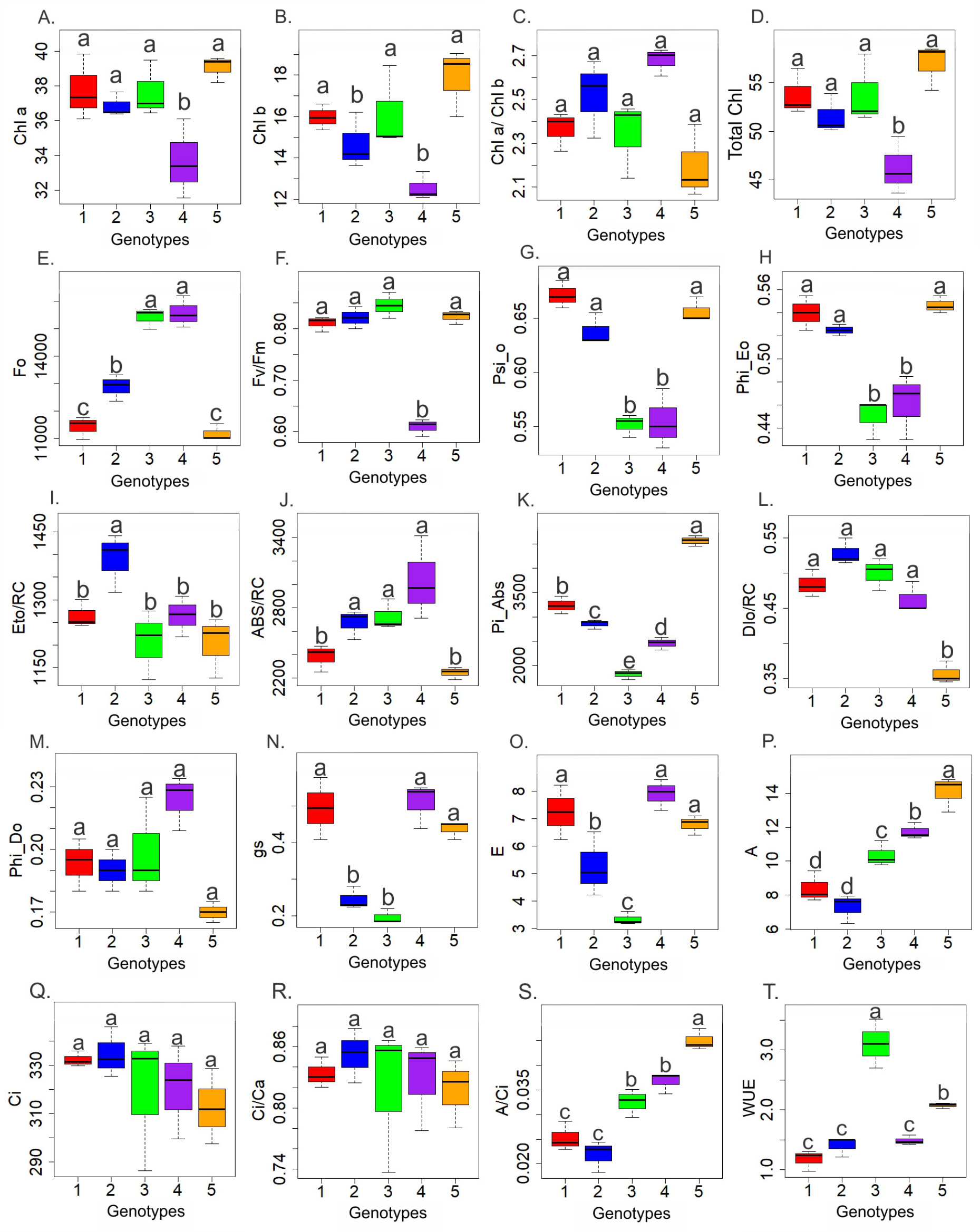 1 - Donor parent (UFU MC TOM 1); 2 - Wild accessions S. pennellii (LA-716) , 3 - Hybrid 12 - UFU-102 × UFU-Sci8; 4 - Female parent 2 (UFU-102); 5 - Male parent 2 (UFU-Sci8). Chlorophyll a (Chl a), chlorophyll b (Chl b), ratio between chlorophyll a and chlorophyll b (Chl a / Chl b), and chlorophyll total (Chl total), initial fluorescence (Fo), maximum quantum yield of PSII (Fv/Fm), quantum yield of initial electron transfer (Psi_o), quantum yield for electron transport (Phi_Eo), quantum yield of energy dissipation in the form of heat (Phi_Do), electron transport flow per reaction center (ETo/RC), light energy absorption flux (ABS/RC), photosynthetic efficiency (Pi_ABS), energy dissipation quantum yield (Phi_Do), and total energy dissipated per reaction center (DIo/RC), stomatal conductance (gs, mol m-2 s-1), CO-2 assimilation rate (µmol CO2 m-2 s-1), (A, μmol CO2 m-2 s-1), transpiration rate (E, mmol H2O m-2 s-1), internal CO2 concentration (Ci , µmol CO2 m-2 s-1), relationship between Ci and Ca - Ci/Ca [µmol CO2 m-2 s-1 (µmol CO2 m-2 s-1)-1], carboxylation efficiency - A/Ci [μmol CO2 m-2 s-1 (µmol CO2 m-2 s-1)-1], and instantaneous water use efficiency - WUE [µmol CO2 m-2 s-1 (mmol H2O m-2 s-1)-1]. Means followed by the same letters do not differ by the Scott-Knott test at a 0.05 significance level
 Chlorophyll a (Chl a), chlorophyll b (Chl b), ratio between chlorophyll a and chlorophyll b (Chl a / Chl b) and chlorophyll total (Chl total), initial fluorescence (Fo), maximum quantum yield of PSII (Fv/Fm quantum yield of initial electron transfer (Psi_o), quantum yield for electron transport (Phi_Eo), quantum yield of energy dissipation in the form of heat (Phi_Do), electron transport flow per reaction center (ETo/RC), light energy absorption flux (ABS/RC), photosynthetic efficiency (Pi_ABS), energy dissipation quantum yield (Phi_Do), and total energy dissipated per reaction center (DIo/RC), stomatal conductance (gs, mol m-2 s-1), CO2 assimilation rate (A, μmol CO2 m-2 s-1) and transpiration rates (E, mmol H2O m-2 s-1), carboxylation efficiency - A/Ci [μmol CO2 m-2 s-1 (µmol CO2 m-2 s-1)-1] and instantaneous water use efficiency - WUE [µmol CO2 m-2 s-1 (mmol H2O m-2 s-1)-1]
 1 - Donor parent; 2 - Wild accessions S. pennellii; 3 - Hybrid 12; 4 - Female parent; 5 - Male parent. Lighter colors indicate that the input variable under analysis had a greater influence on the group assignment. Darker colors indicate less importance in this classification based on the group
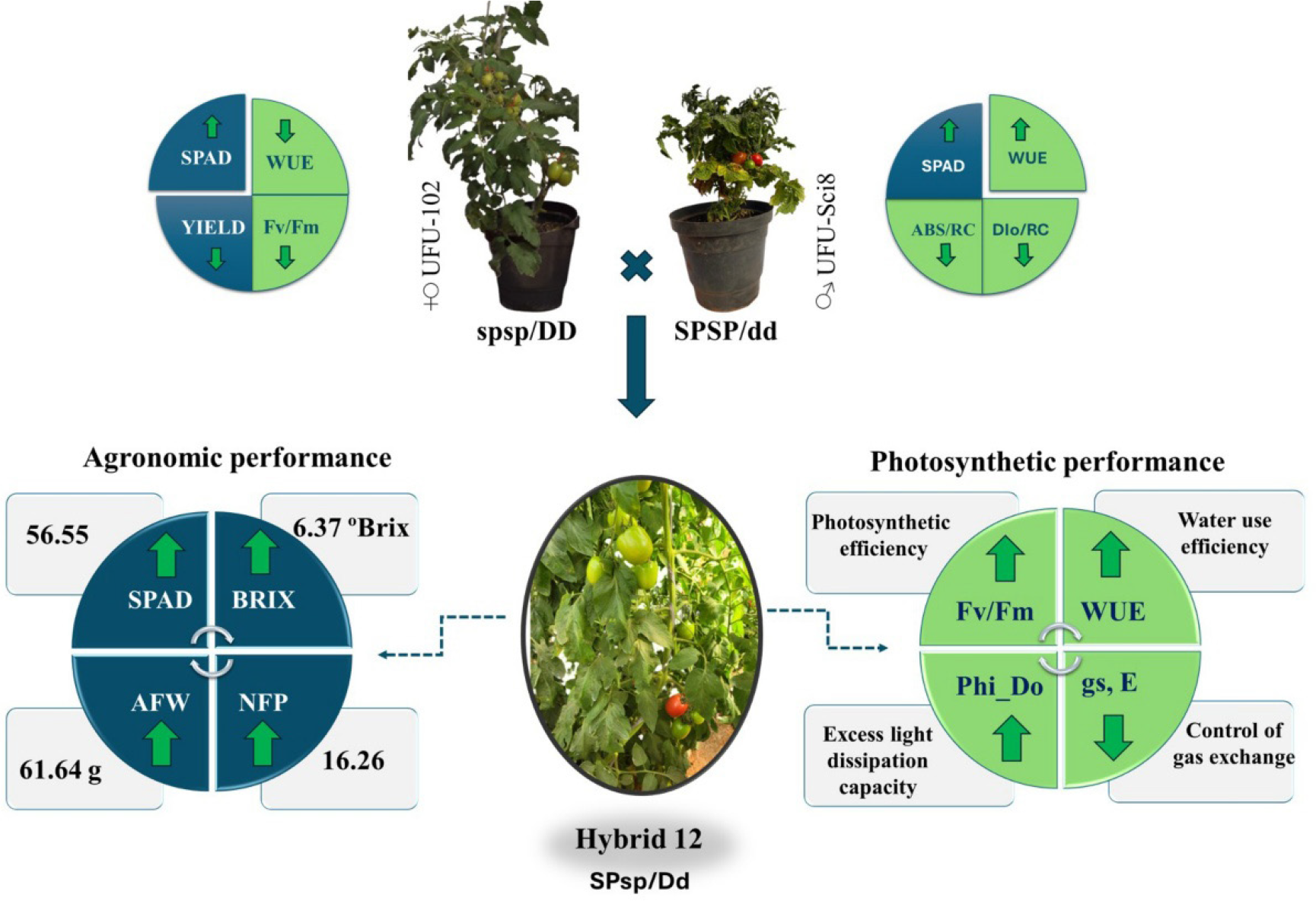 SPAD - Indirect chlorophyll content; YIELD - Yield in tons per hectare; AFW - Average fruit weight in grams; NFP- Number of fruits per plant; BRIX - Total soluble solids content; spsp - determinate growth habit; DD - normal architecture; dd - dwarf plant; Fv/Fm - Maximum quantum yield of PSII; ABS/RC - Light energy absorption flux; DIo/RC - Total energy dissipated per reaction center; Phi_Do - Energy dissipation quantum yield; gs - Stomatal conductance; E - Transpiration rate; WUE - Water use efficiency; Hybrid 12 - UFU-102 × UFU-Sci8