 Drying kinetics and technological properties of corn starch extracted by ultrasonic energy
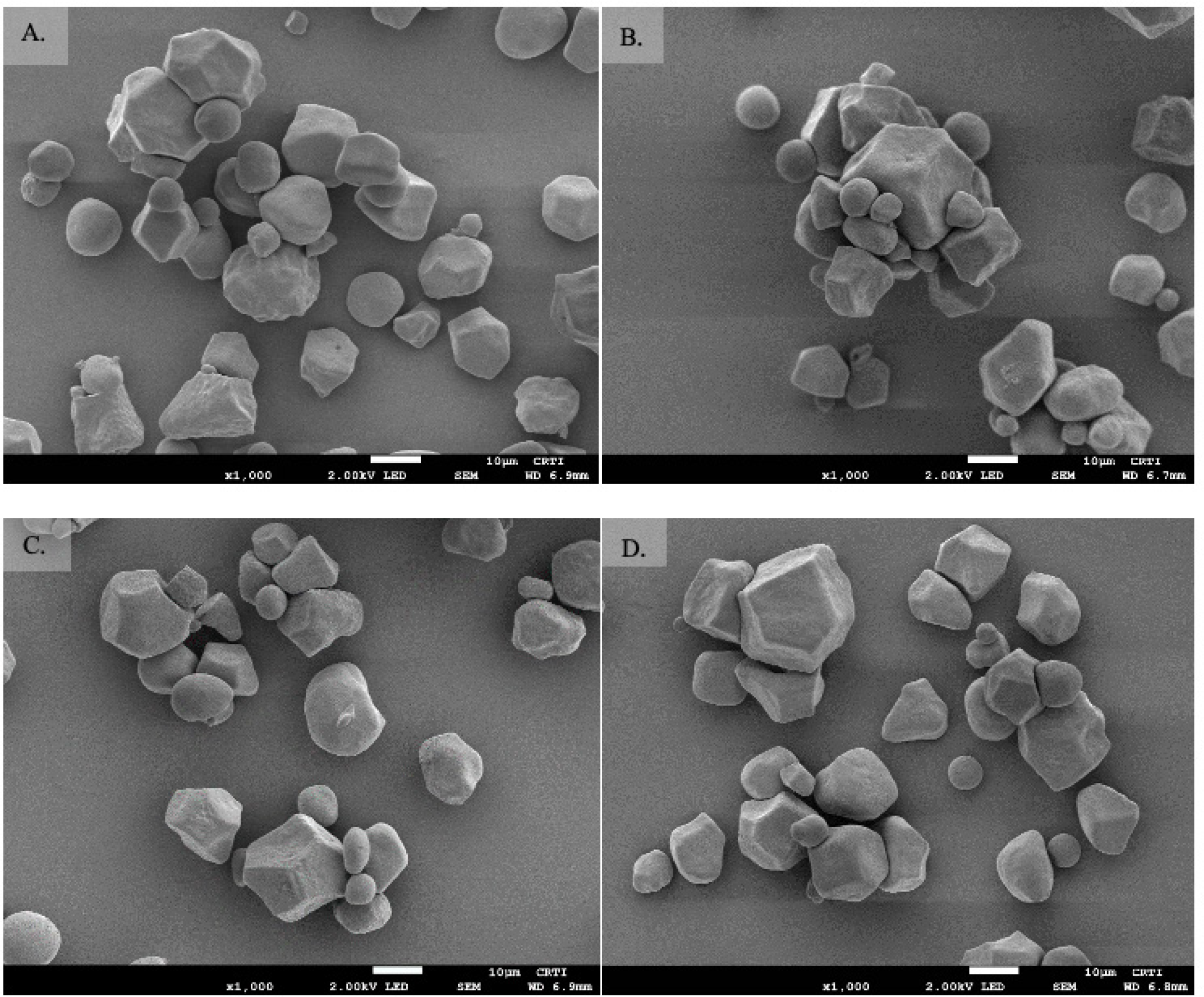
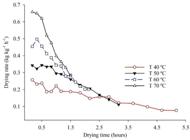
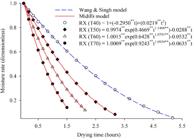
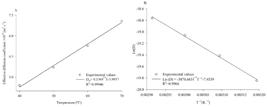
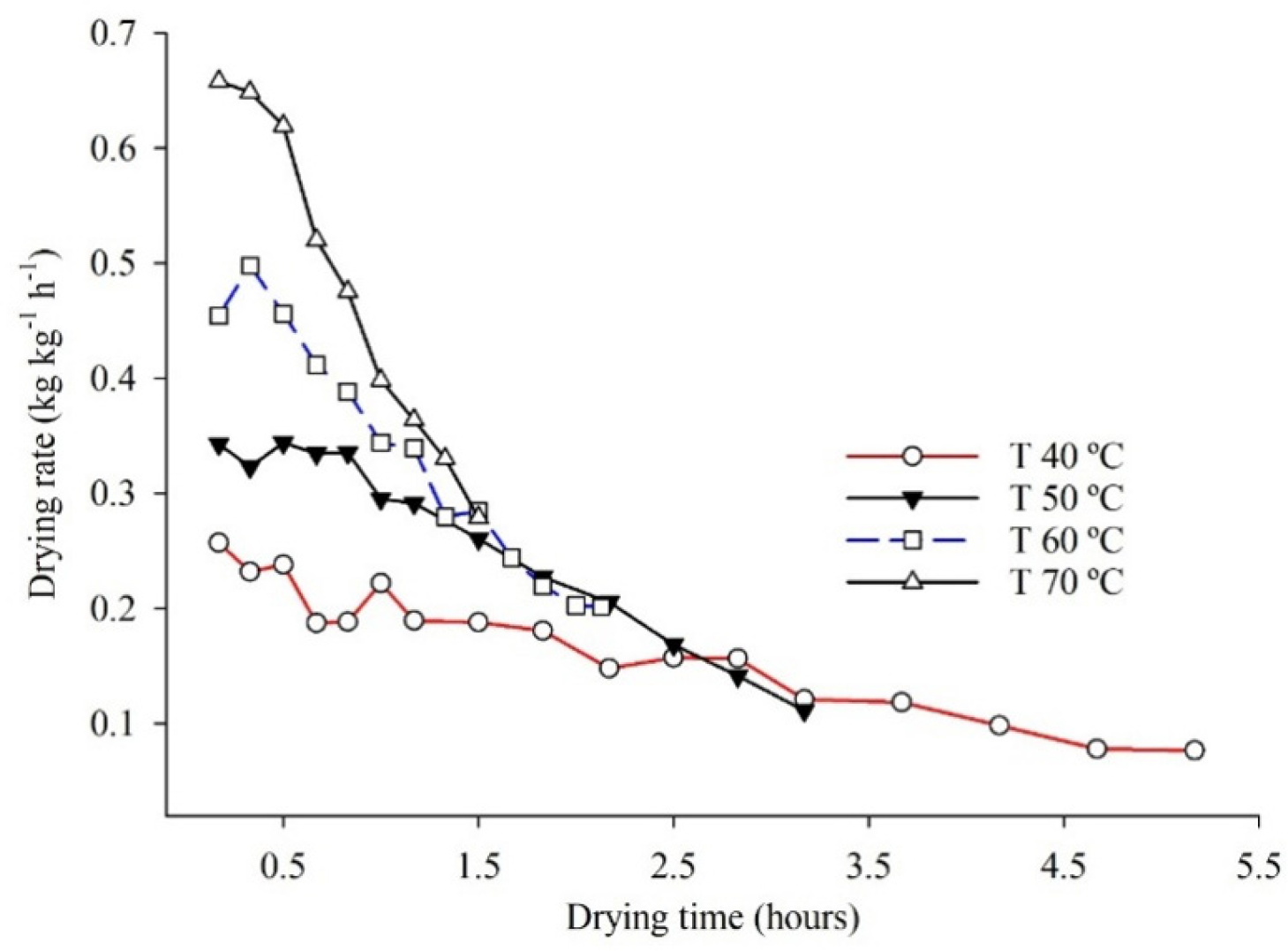
Corn starch is widely used in the food industry but presents limitations in its native form, such as low thermal stability and retrogradation tendency. This study aimed to describe the drying behavior of corn starch extracted by ultrasound and evaluate its structural and technological properties after drying. Drying was carried out in a forced-air oven at 40, 50, 60, and 70 °C, and eleven mathematical models were fitted to the data. Starch was obtained by ultrasound-assisted extraction using 40 kHz, 60% amplitude for 60 min at 25 °C, followed by successive washings with distilled water. The Wang & Singh model best described drying at 40 °C, while the Midilli model was most adequate at higher temperatures. The effective diffusion coefficient (2.41 × 10⁻9 to 7.11 × 10⁻9 m2 s⁻1) increased linearly with temperature. The calculated activation energy was 32.25 kJ mol⁻1. It is concluded that drying above 50 °C is not recommended when the goal is to preserve starch quality.
Key words:
Zea mays; sonication; effective diffusivity; activation energy
Drying temperature affected the size of the starch granules.
Ultrasonic technology promoted changes in the gelatinization peaks.
Ultrasound treatment alters the physicochemical properties of corn starch compared to conventional extraction.
 Thumbnail
 Thumbnail
 Thumbnail
 Thumbnail
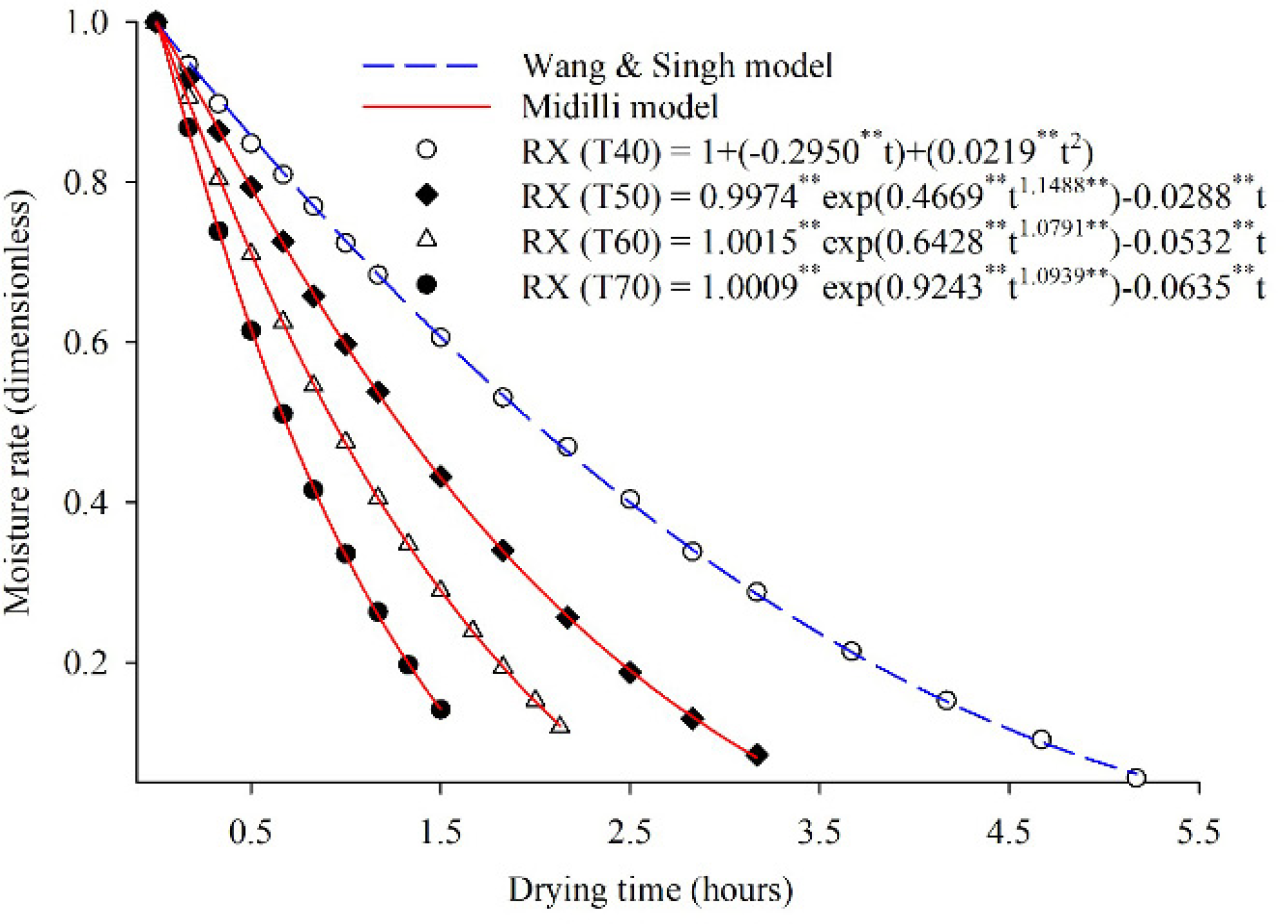 **Significant at p < 0.01
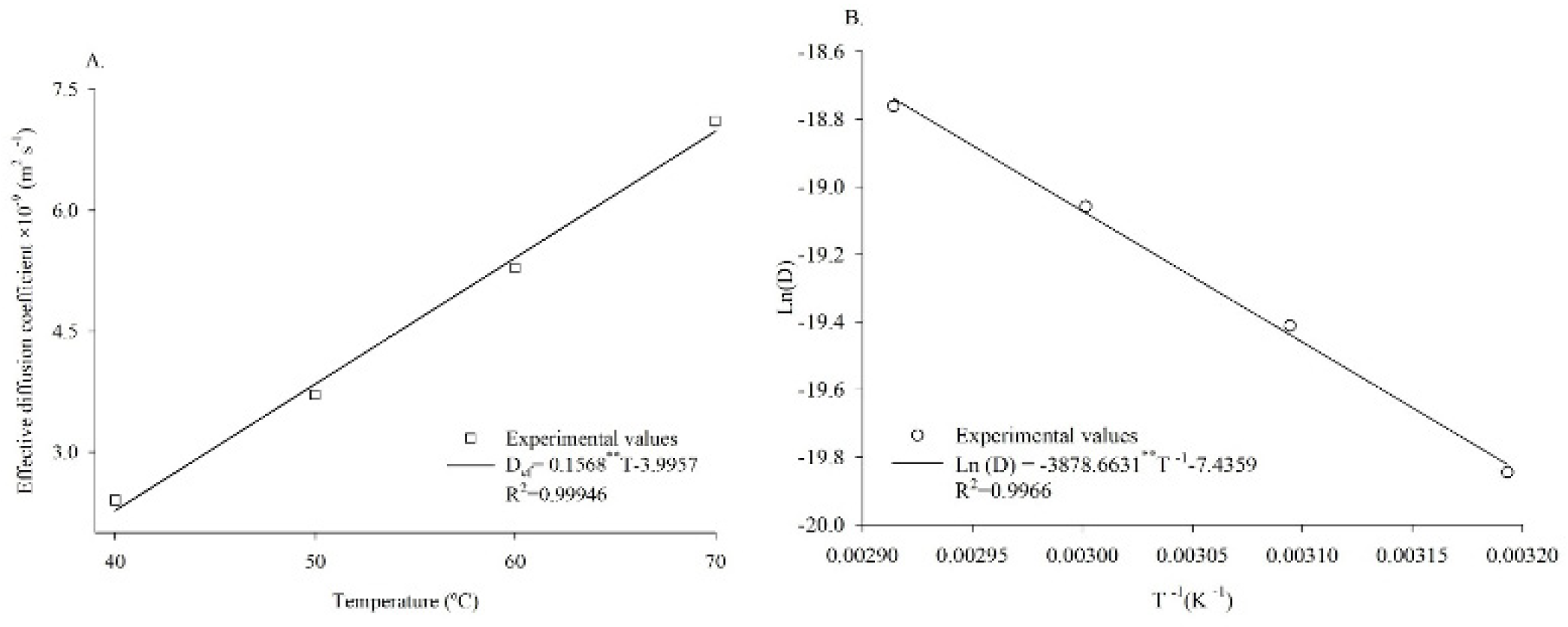 **Significant at p < 0.01