
 Estratégias de irrigação e condicionador de solo no índice térmico e produtividade de tomate cereja
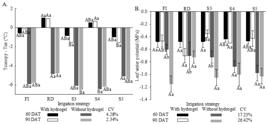
A cultura do tomate cereja é sensível ao déficit hídrico, sendo necessário um adequado manejo da irrigação, principalmente em regiões, cujo regime pluviométrico é irregular. Diante do exposto, o objetivo deste estudo foi analisar a viabilidade do índice térmico para determinação do déficit hídrico em tomate cereja sob diferentes estratégias de irrigação com déficit controlado e uso de condicionador de solo tipo hidrogel. Adotou-se o delineamento experimental em blocos casualizados com arranjo fatorial 5 × 2, em parcelas subdivididas, referentes às cinco estratégias de irrigação (FI - Irrigação plena, RD - Irrigação com déficit hídrico regular, S3 - Irrigação com déficit controlado na fase vegetativa, S4 - Irrigação com déficit controlado na fase de florescimento e frutificação, S5 - Irrigação com déficit controlado na fase de maturação e colheita) com déficit hídrico estabelecido em 50% da evapotranspiração da cultura, e uso do hidrogel (WiH - Com hidrogel, WoH - Sem hidrogel), com quatro repetições, totalizando 40 parcelas experimentais. As variáveis avaliadas foram: número total de flores e frutos, peso total dos frutos e índice térmico do dossel. Aos 60 dias após o transplantio, as estratégias de déficit hídrico regular e déficit hídrico controlado na fase de florescimento e frutificação, sem hidrogel, evidenciaram as maiores médias de índice térmico (0,98; 1,03 e 0,70 °C, respectivamente) e menor potencial hídrico foliar (-0,70; -0,48 e -0,50 MPa, respectivamente). O índice térmico obtido por imagens termográficas é viável para determinação dos efeitos do déficit hídrico no tomate cereja.
Palavras-chave:
Solanum lycopersicum; déficit hídrico; termografia infravermelha; polímero hidrorretentor
 Thumbnail
 Thumbnail
 Thumbnail
 Thumbnail
 Thumbnail
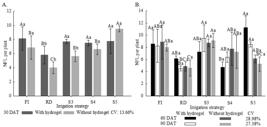 Thumbnail
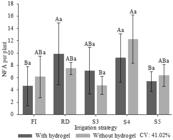 Thumbnail
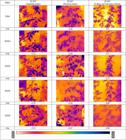
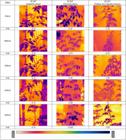
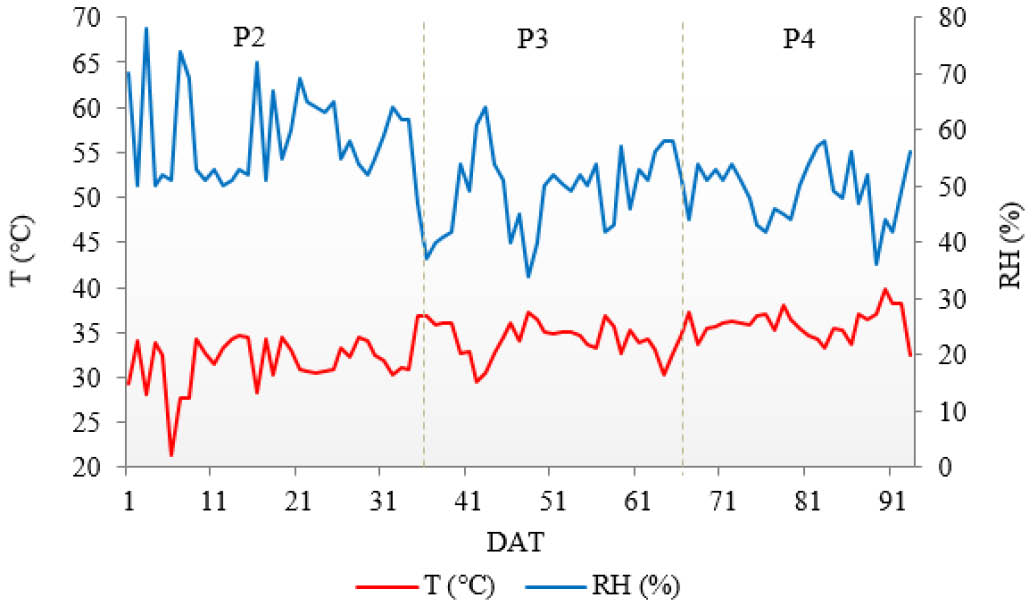 P2 - Vegetative stage, P3 - flowering and fruiting stages, P4 - Maturation and harvest stages
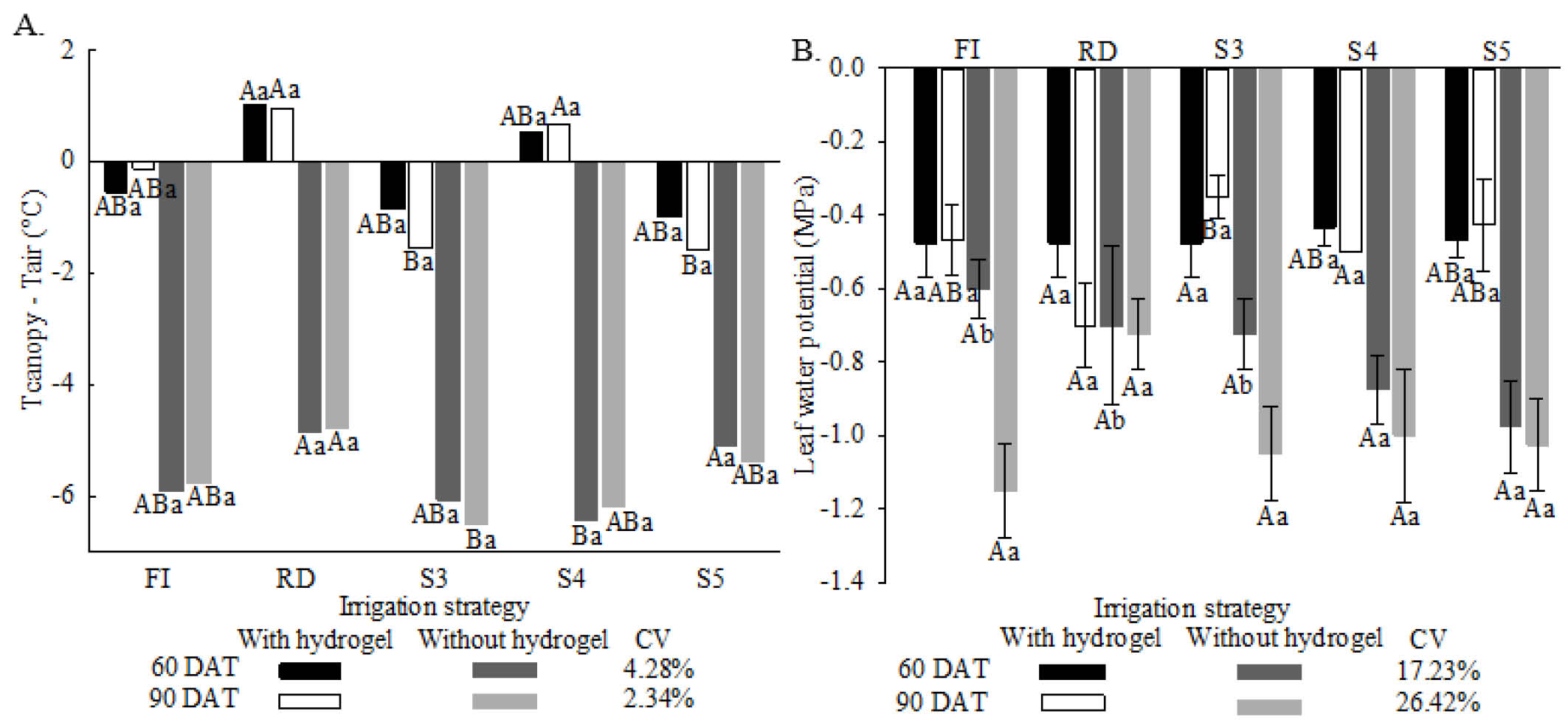 Means followed by the same uppercase letter and by the same lowercase letter do not differ statistically by Tukey test (p ≤ 0.05) between irrigation strategy and hydrogel, respectively; Vertical bars represent the standard error of the mean (n = 4)
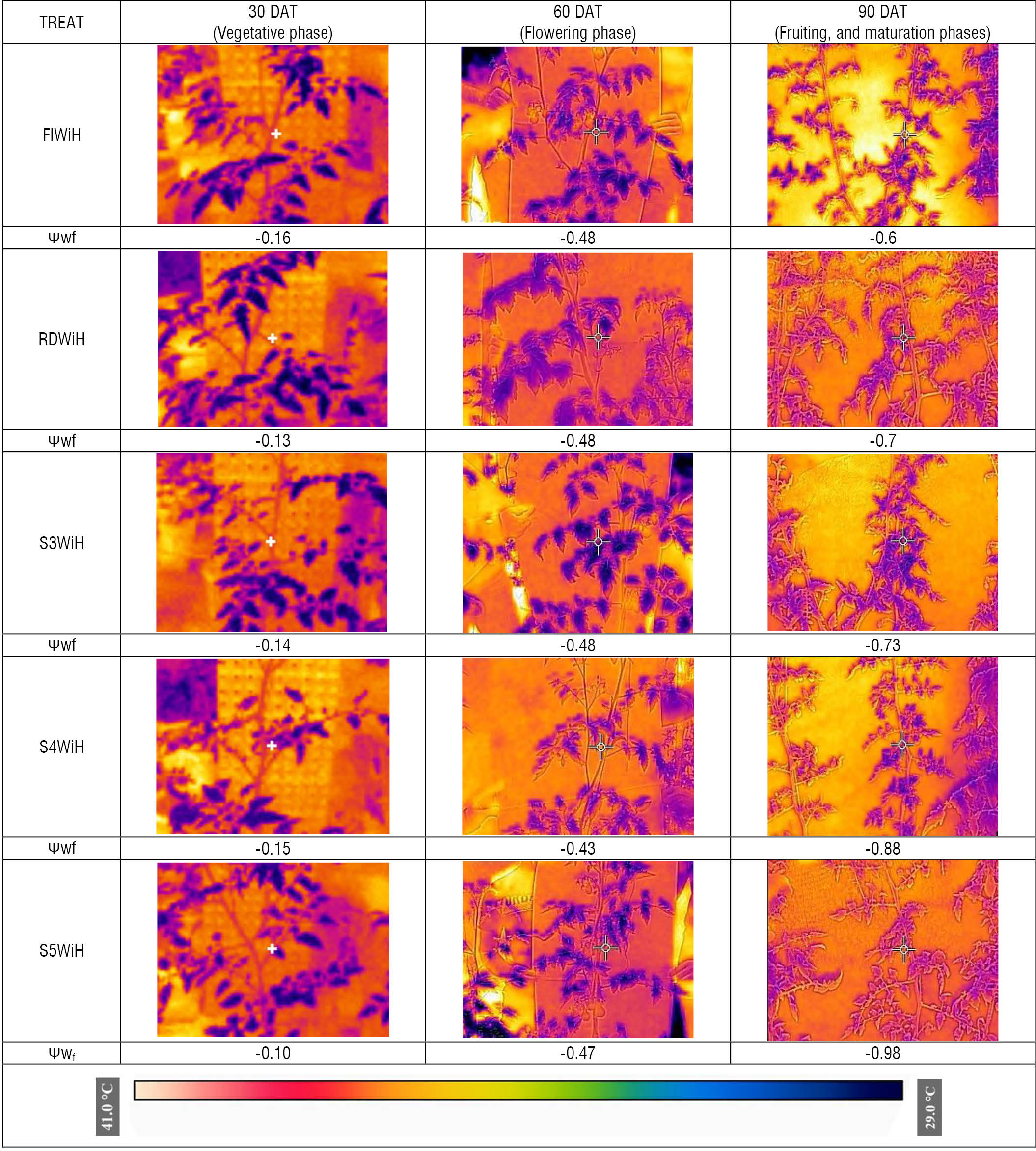 Treatments: FIWiH - Full irrigation with hydrogel; RDWiH - Irrigation with regular water deficit with hydrogel; S3WiH - Irrigation with controlled water deficit in the vegetative stage with hydrogel; S4WiH - Irrigation with controlled water deficit in the flowering and fruiting stages with hydrogel, and S5WiH - Irrigation with controlled water deficit in the maturation and harvesting stages with hydrogel
 Treatments: FIWoH - Full irrigation without hydrogel; RDWoH - Irrigation with regular water deficit without hydrogel; S3WoH - Irrigation with controlled water deficit in the vegetative stage without hydrogel; S4WoH - Irrigation with controlled water deficit in the flowering and fruiting stages without hydrogel, and S5WoH - Irrigation with controlled water deficit in the maturation and harvesting stages without hydrogel.
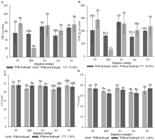
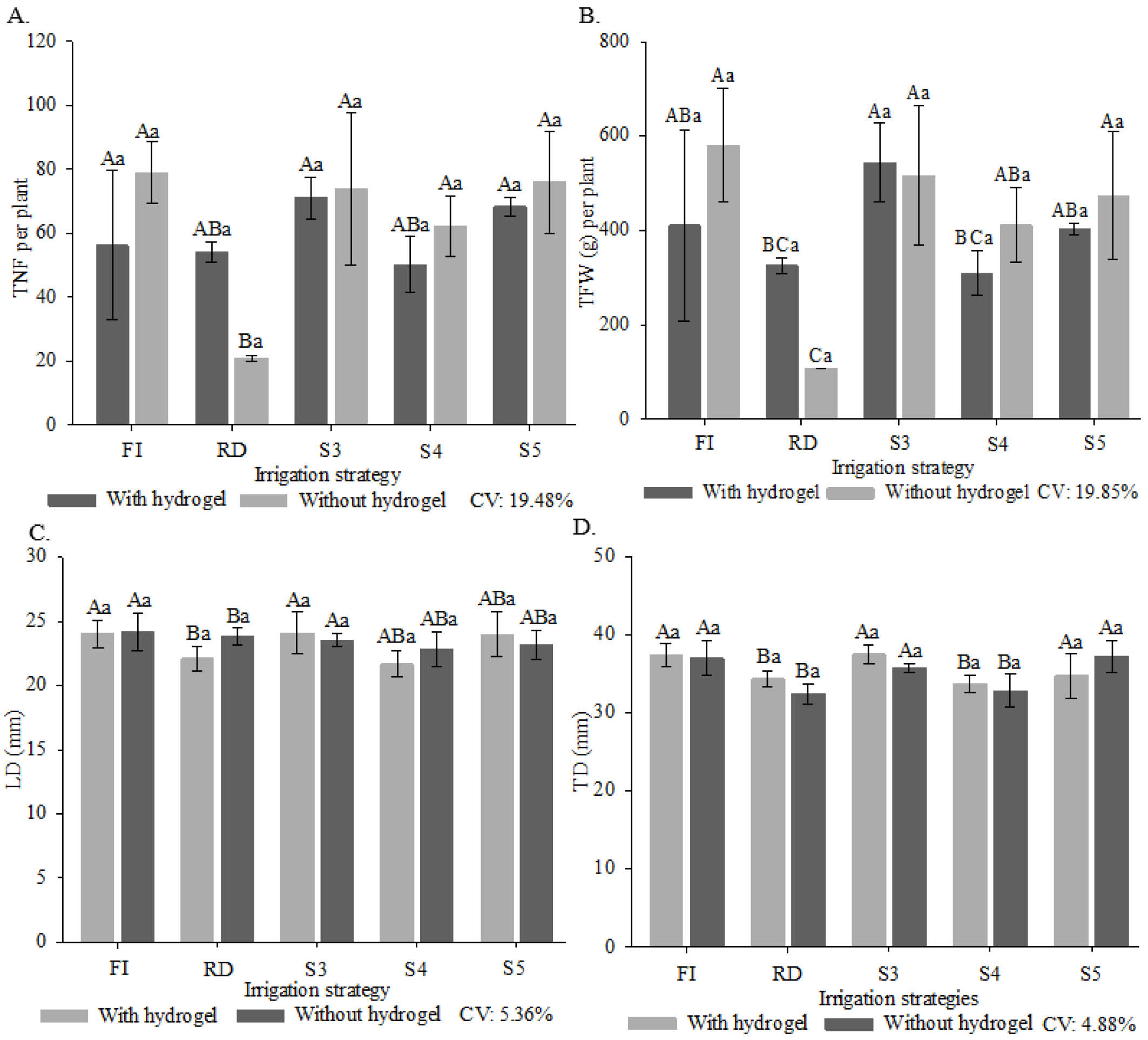 Means followed by the same uppercase letter and by the same lowercase letter do not differ statistically by Tukey test (p ≤ 0.05) between irrigation strategy and hydrogel, respectively; Vertical bars represent the standard error of the mean (n = 4)
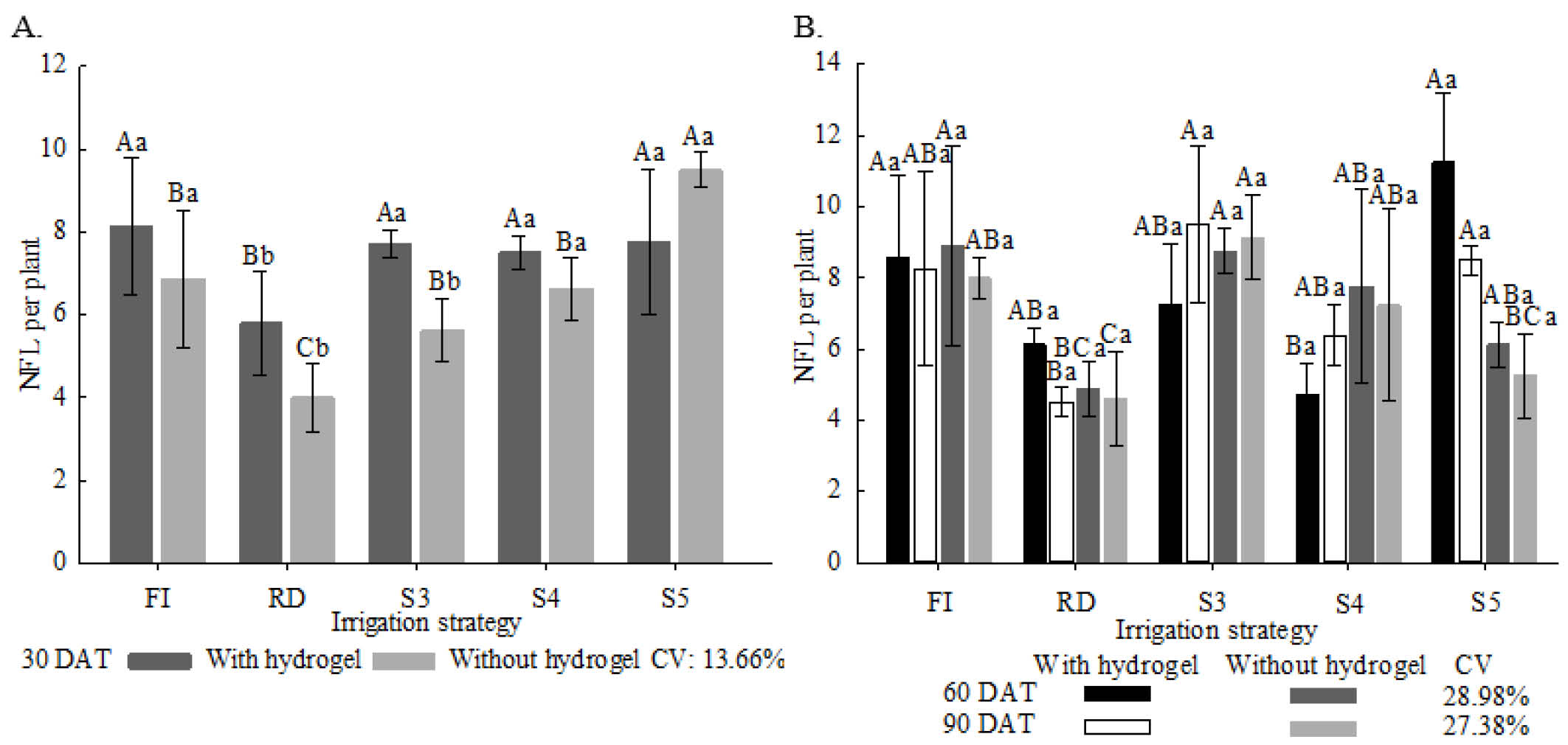 Means followed by the same uppercase letter and by the same lowercase letter do not differ statistically by Tukey test (p ≤ 0.05) between irrigation strategy and hydrogel, respectively; Vertical bars represent the standard error of the mean (n = 4)
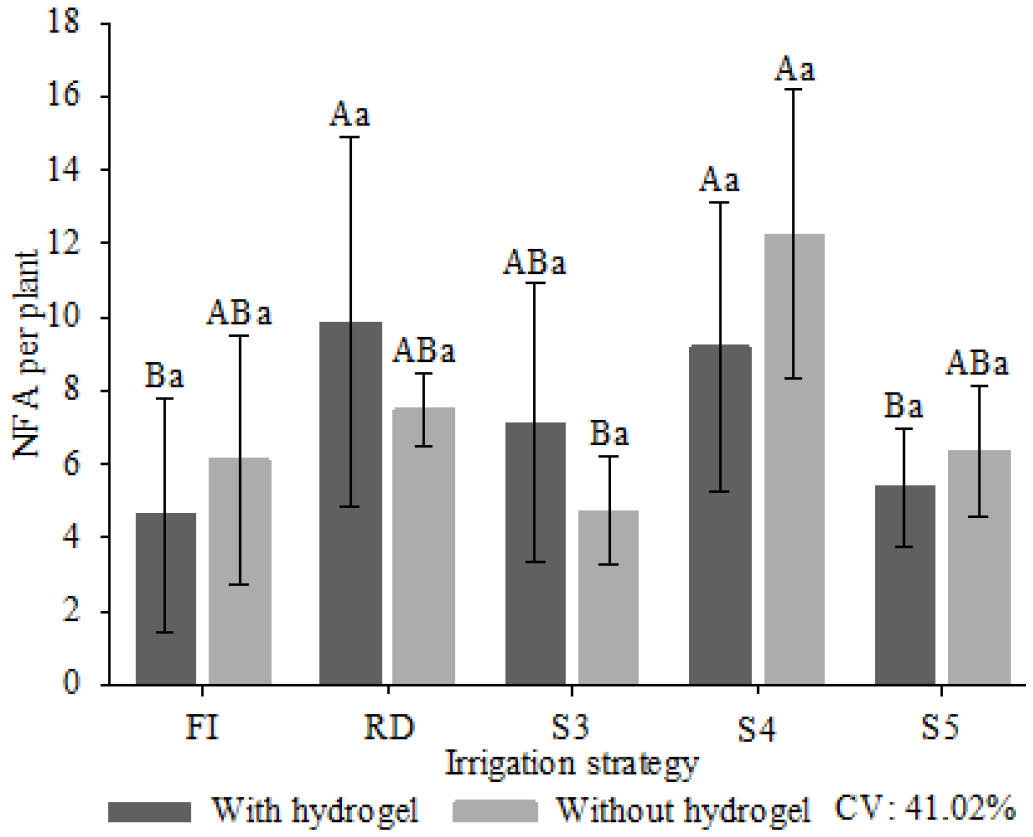 Means followed by the same uppercase letter and by the same lowercase letter do not differ statistically by Tukey test (p ≤ 0.05) between irrigation strategy and hydrogel, respectively; Vertical bars represent the standard error of the mean (n = 4)