
 Irrigation strategies and soil conditioning on thermal index and yield of cherry tomato
ABSTRACT
Tomato cultivation is highly demanding on the supply of water throughout its phenological cycle, especially in regions where rainfall is irregular or scarce. Given the above, the objective of this study was to analyze the viability of thermal index for determining water deficit in cherry tomato under different strategies of controlled deficit irrigation and use of a hydrogel-type soil conditioner. The experimental design adopted was randomized blocks in a 5 × 2 split-plot arrangement, referring to the irrigation strategies (FI - Full irrigation, RD - Regular deficit irrigation, with a continuously applied water deficit, S3 - Irrigation with controlled deficit in the vegetative stage, S4 - Irrigation with controlled deficit in the flowering and fruiting stages and S5 - Irrigation with controlled deficit in the maturation and harvest stages), with water deficit established at 50% of crop evapotranspiration, and use of hydrogel (WiH - With hydrogel, WoH - Without hydrogel), with four replicates, and with three plants per plot. The variables tested were: total number of flowers and fruits, total fruit weight and canopy thermal index. At 60 days after transplanting, the regular deficit irrigation and irrigation with controlled water deficit in the flowering, without hydrogel, showed the highest means of thermal index (0.98, 1.03 and 0.70 °C, respectively) and lowest leaf water potential (-0.70, -0.48 and -0.50 MPa, respectively). The thermal index obtained by thermographic images is viable for determining the effects of water deficit on cherry tomato.
Key words:
Solanum lycopersicum; water deficit; infrared thermography; water-retaining polymer
HIGHLIGHTS:
Deficit irrigation in flowering and fruiting stages for cherry tomatoes has negative impact on fruit production.
In the regular deficit irrigation strategy without hydrogel, thermal index indicated greater sensitivity to temperature.
Thermographic images facilitate the assessment of water deficit in cherry tomatoes through the analysis of thermal indices.
RESUMO
A cultura do tomate cereja é sensível ao déficit hídrico, sendo necessário um adequado manejo da irrigação, principalmente em regiões, cujo regime pluviométrico é irregular. Diante do exposto, o objetivo deste estudo foi analisar a viabilidade do índice térmico para determinação do déficit hídrico em tomate cereja sob diferentes estratégias de irrigação com déficit controlado e uso de condicionador de solo tipo hidrogel. Adotou-se o delineamento experimental em blocos casualizados com arranjo fatorial 5 × 2, em parcelas subdivididas, referentes às cinco estratégias de irrigação (FI - Irrigação plena, RD - Irrigação com déficit hídrico regular, S3 - Irrigação com déficit controlado na fase vegetativa, S4 - Irrigação com déficit controlado na fase de florescimento e frutificação, S5 - Irrigação com déficit controlado na fase de maturação e colheita) com déficit hídrico estabelecido em 50% da evapotranspiração da cultura, e uso do hidrogel (WiH - Com hidrogel, WoH - Sem hidrogel), com quatro repetições, totalizando 40 parcelas experimentais. As variáveis avaliadas foram: número total de flores e frutos, peso total dos frutos e índice térmico do dossel. Aos 60 dias após o transplantio, as estratégias de déficit hídrico regular e déficit hídrico controlado na fase de florescimento e frutificação, sem hidrogel, evidenciaram as maiores médias de índice térmico (0,98; 1,03 e 0,70 °C, respectivamente) e menor potencial hídrico foliar (-0,70; -0,48 e -0,50 MPa, respectivamente). O índice térmico obtido por imagens termográficas é viável para determinação dos efeitos do déficit hídrico no tomate cereja.
Palavras-chave:
Solanum lycopersicum; déficit hídrico; termografia infravermelha; polímero hidrorretentor
Introduction
Water stress is linked to both a diversity of biophysical and physiological changes in plants and the chemical and physical properties of the soil (Alordzinu et al., 2021), with reduced yield being a response to these conditions (Dariva et al., 2021). In commercial crops, the investigation of the effect of water deficit has been the subject of several studies, mainly due to the water scarcity faced in many regions due to climate change (Rosa, 2022), and such an event has had a negative impact on agriculture, threatening food production throughout the world (Lima et al., 2024).
Aimed at increasing food production with less use of water resources, the adoption of the regulated deficit irrigation technique, developed in the mid-eighties, has stimulated researchers to identify in the plant the phenological stages that are most resistant to water stress conditions, making it possible to reduce the amount of water applied without affecting production or reducing it moderately (Valcárcel et al., 2020; Sousa et al., 2022). Despite the positive results obtained with the use of deficit irrigation, soils that have low water retention still show unsatisfactory results, requiring strategies that increase their water storage capacity.
In this regard, the use of soil conditioners such as soil water retention polymers promotes an increase in the potential for water retention capacity of soils, mainly in sandy soils, increasing the amount of water available to plants and ensuring the efficient use of water and sustainability of this resource (Abdallah, 2019). Saha et al. (2020), in a review on the use of hydrogel for drought management, highlight that the application of hydrogel can favor the growth of plants and their survival in drought, due to its ability to reduce losses due to evaporation of water, fertilizer and deep percolation in the soil. However, these authors warn of the need for further studies, mainly for the creation of biodegradable hydrogels and their performance.
However, despite being a promising technology, the application of methodologies with use of these polymers in terms of recommended dose, form of incorporation into the soil and reduction of irrigation volume, is still not exact, requiring more research related to their use in several crops, especially in tomato (Solanum lycopersicum), which leads the ranking as one of the most consumed vegetables in Brazil (Oliveira et al., 2021).
Data from the Food and Agriculture Organization of the United Nations (FAOSTAT, 2023) point out that world tomato production in 2021 reached about 189.13 million tons, with 3.68 million tons estimated in Brazil, and the states of São Paulo, Goiás, Minas Gerais and Paraná account for 73% of the national production (IBGE, 2021). Among the tomato cultivars, the cherry type (Solanum lycopersicum var. cerasiforme) has stood out due to high consumer demand, attractive price for the producer, rusticity, yield and nutritional value, and may surpass conventional varieties (Cantelli, 2018).
For obtaining information on the water status of plants, parameters such as leaf water potential and soil moisture are commonly used (García-Tejera et al., 2021). However, due to the need for quick responses, crop monitoring through remote sensing, especially the use of thermography, is characterized according to Gomes et al. (2021) as an excellent tool in irrigation scheduling, indicating the current level of plant stress. Konings et al. (2019) point out that remote sensing is allowing new investigations into plant hydraulics, expressing relevant information about plant water stress.
In this context, the objective of this study was to analyze the viability of thermal index for determining water deficit in cherry tomato plants under different strategies of controlled deficit irrigation and use of a hydrogel-type soil conditioner.
Material and Methods
The experiment was conducted in the experimental area of the Agrometeorological Station of the Universidade Federal do Ceará, at the Pici Campus, Fortaleza, Ceará, Brazil, from June to October 2022. Fortaleza is located in the coastal zone and, according to Köppen’s classification, has a climate classified as Aw’, characterized as a rainy tropical climate, with predominant rainfall in the summer-autumn and an average temperature in all months above 18 °C (Alvares et al., 2013). The experimental area is located at altitude of 20 m above sea level (a.s.l.), with geographic coordinates of 3° 44’ 45” S latitude and 38° 34’ 55” W longitude.
The experiment was carried out in a single-arch greenhouse, with 50% shade protection screen on the sides and transparent low-density polyethylene film cover. The structure is 12 m long by 6.5 m wide, with a ceiling height of 3.5 m and height of 4.5 m, totaling about 78 m². Figure 1 shows the mean values of air relative humidity (RH) and air temperature (T) inside the protected environment during the tomato cherry cycle obtained with thermohygrometer.

Curves of the means of air relative humidity (RH) and air temperature (T) inside the greenhouse as a function of the means of days after transplanting (DAT) of the seedlings
The experimental design was randomized blocks, with a 5 × 2 split-plot scheme, with plot referring to irrigation strategies (S): FI - full irrigation (100% crop evapotranspiration (ETc) throughout the cycle), RD - irrigation with regular water deficit (50% ETc throughout the cycle), S3 - irrigation with controlled water deficit in the vegetative stage, S4 - irrigation with controlled water deficit in the flowering and fruiting stages, and S5 - irrigation with controlled water deficit in the maturation and harvesting stages, and the water deficit applied was 50% ETc. The subplot referred to the application of hydrogel (H) (WiH - with hydrogel or WoH - without hydrogel), with three plants per experimental plot, with four replicates, totaling 40 experimental plots.
The total period of the experiment was 115 days, corresponding to 32 days in phase I (seedling), 25 days in phase II (vegetative stage), 29 days in phase III (flowering and fruiting stages) and 29 days in phase IV (maturation and harvest stages). The spacing was 0.40 m between plants and 0.80 m between rows. The cultivar used was ‘Red Pear’ cherry tomato.
Polyethylene pots with capacity for 11 L were filled at the base with a 3-cm-thick layer of crushed stone, covered with a Bidim® geotextile to facilitate drainage, and the remainder was filled with 10 L of soil. For the hydrogel treatments, the methodology for incorporating the polymer into the soil was: 1/3 of soil in the lower part of the pot + 1/3 of soil with 9.9 g of hydrogel in the median part + 1/3 of soil in the upper part. The hydrogel was incorporated while still dry in the soil. The amount of hydrogel used was that established by the manufacturer.
The soil used in the experiment came from the experimental area of the Agrometeorological Station of the Universidade Federal do Ceará, with native vegetation. This soil was classified as Argissolo Vermelho-Amarelo Eutrófico (Oxisol) with sandy clay loam texture (Soil Survey Staff, 2014), through analyses carried out by the Laboratório Brasileiro de Análises Ambientais e Agrícolas, Monte Carmelo, MG. The physical-chemical characteristics of the soil were: pH in water (2:1) = 5.1, P-Mehlich = 9.0 mg dm-3, K+ = 42.0 mg dm-3, Ca2+ = 0.92 cmolc dm-3, Mg2+ = 0.55 cmolc dm-3, Al3+ = 0.29 cmolc dm-3, H + Al = 2.20 cmolc dm-3, organic matter = 1.3 dag kg-1, total sand = 755.0 g kg-1, silt = 50 g kg-1, and clay = 195.0 g kg-1.
Mineral fertilization was applied to the soil according to the recommendations of Trani et al. (2015), for basal fertilization with macro and micronutrients (42.10 kg ha-1 of N, 757.58 kg ha-1 of P2O5, 142.15 kg ha-1 of KCl, 70.71 kg ha-1 of Ca, 151.52 kg ha-1 of Mg, 11.11 kg ha-1 of B, 6.75 kg ha-1 of S, 9.09 kg ha-1 of Cu, 7.41 kg ha-1 of Mn and 17.17 kg ha-1 of Zn), top-dressing fertilization with macronutrients (152.10 kg ha-1 of N, 712.12 kg ha-1 of P2O5, 188.55 kg ha-1 of KCl, 323.23 kg ha-1 of Ca and 424.24 kg ha-1 of Mg), and foliar fertilization with calcium and boron from the flower bud development stage. The principal source of fertilization was urea (45% N), MAP (12% N and 61% P2O5), Dripsol NKS (45% K2O, 12% N, 1% Mg, and 1,2% of S), calcium nitrate (12% N and 26% Ca), and sulfates of manganese (31% Mn), copper (25% Cu) zinc (22% Zn) and boric acid (17% B).
The seedlings were irrigated daily until transplanting using a watering can, with application of nutrient solution (Pires et al., 2011) three times a week. At 22 days after sowing (DAS), 120 seedlings were transplanted into pots. The plants were supported with plastic twine tied to wires fixed horizontally between bamboos positioned at the ends of each row of plants.
Irrigation was carried out with water from the Water and Sewage Company of the State of Ceará (Cagece), whose electrical conductivity was 0.4 dS m-1, using a localized system, with a 16-mm-diameter polyethylene drip tape, containing one emitter per plant spaced 0.40 m apart, with flow rate of 1.6 L h-1 and a service pressure of 20 wcm. In the first 10 days after transplanting, all treatments received the same irrigation in order to ensure uniform plant establishment. Subsequently, irrigations were carried out daily, using the Class “A” pan installed inside the greenhouse to determine the reference evapotranspiration (ETo).
ETc was determined by the product between ETo and the crop coefficient (ETc = ETo × Kc). The crop coefficient (Kc) values for cherry tomatoes at different phenological stages followed those obtained by Allen et al. (1998), with values of 0.6, 1.15, 0.9, 0.6, and 0.65 for the initial, vegetative, flowering, fruiting, and maturation phases, respectively. The area of the pot was considered to determine the volume of water to be applied, and the water deficit was established at 50% ETc in the strategies subjected to deficit (S3, S4, S5), with 100% replacement of the depth at the change of phenological stage.
Tomato canopy temperature was measured at 30, 60 and 90 DAT in the morning (8 to 10 am), using a front view infrared camera with infrared resolution of 80 × 60 pixels (4,800 pixels), ± 2% accuracy and emissivity (Ɛ) set at 0.95. For data collection, a distance of 0.50 m from the instrument to the plants was standardized, and the captured images were stored in the instrument’s memory for processing. The images were obtained before performing the irrigation.
After uploading the images, three regions of the plant were marked to determine the minimum, maximum and mean temperature of the selected image. Air temperature inside the greenhouse was monitored by means of a digital thermohygrometer with an external sensor installed at 2-m height from the soil surface, in the center of the greenhouse. Canopy and air temperature data were used to calculate the thermal index (ΔT = T canopy - T air) according to Jackson et al. (1981).
Leaf water potential was always determined in the morning (8 to 10 am), with a Scholander pressure chamber, using a fully expanded leaf from the middle third of one plant per treatment, obtaining the mean expressed in MPa. The determination, inside the protected environment, was carried out immediately after collection of the leaves, under conditions of high atmospheric demand.
In total, 10 harvests were carried out from September to October 2022, using the visual empirical criterion (complete fruit ripeness) as a standard for the fruit harvest point. For the fruit production variables, the following were measured: total number of fruits (TNF); total fruit weight (TFW), in g per plant, determined on a digital scale with accuracy of 10 mg; longitudinal diameter (LD) and transverse diameter (TD), obtained by measurements (mm) performed with a digital caliper. In addition, the number of flowers (NFL) and the number of flower abortions (NFA) were evaluated by manual counting.
Data were analyzed for normality of residuals by the Shapiro-Wilk test and for homogeneity by the Bartlett test, and then subjected to analysis of variance using SAS version 9.4. The mean values were compared by Tukey test at p ≤ 0.05. The figures were created with SigmaPlot 12.5.
Results and Discussion
For the thermal index of the plants (ΔT) at 30, 60 and 90 DAT, only the irrigation strategy (S) caused significant differences (p ≤ 0.05). The highest means of the canopy thermal indices measured were observed at 60 and 90 DAT (WoH: 0.98 °C, WiH: 1.03 °C, at 60 DAT; WoH: -4.79 °C, WiH: -4.87 °C, at 90 DAT) in the RD treatment, with no statistical difference for the hydrogel factor (Figure 2A). These responses were consistent with the yield results of the present study, as the lowest yields were found under the RD treatment. Aragão et al. (2023), when evaluating the water status of melon plants (Cucumis melo L.) using thermal images, also observed a significant reduction in production as the thermal indices increased. Leaf temperature is directly related to the plant’s water status. Under water deficit conditions, there is an increase in leaf temperature due to stomatal closure, which in turn limits the entry of CO2 and, consequently, biomass production.
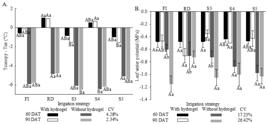
Means of canopy thermal index (A) and leaf water potential (B) of ‘Red Pear’ cherry tomato, under interaction between irrigation strategies and use of hydrogel polymer, evaluated, at 60 and 90 DAT
At 60 DAT (flowering phase), the S4 strategy also led to the lowest means, regardless of the hydrogel factor (WoH: 0.70, WiH: 0.55 °C) for canopy thermal index, as plants were subjected to water deficit during this period (Figure 2A). At 90 DAT (fruiting, and maturation phases), the means found were lower than those at 60 DAT, and it is possible to highlight that this period, in addition to having the highest average temperatures inside the protected environment (35.85 ± 2 °C), also represents the stage in which the crop begins the senescence process. These variations in the canopy thermal index can be caused by several factors, among them climate change, when the image was obtained, growth of each plant and leaf expansion (Ballester et al., 2013), since plants subjected to water stress may have a reduction in the size of their leaves.
Figure 2B shows that at 60 DAT (flowering phase) the RD strategy obtained the lowest mean for leaf water potential (Ψwf), with statistical difference (p ≤ 0.05*) for the hydrogel factor, with values of WoH: -0.70 MPa and WiH: -0.48 MPa. However, for 90 DAT (fruiting phase), no differences were observed for the treatments, so it is assumed that the plant has acclimatized at 90 DAT. According to García-Tejera et al. (2021), the reduction of Ψwf below the limit results in stomatal closure and a reduction in plant transpiration; however, variations in Ψwf are not solely related to changes in soil water content, but also an expression of the interaction between the plant and its environment.
Campos et al. (2021) explain that plants under water limitation can become adaptable through osmotic adjustment, producing smaller leaves, maintaining leaf water supply. Low soil moisture, observed in the WoH treatments, affects plant water relations, with reductions in cell turgor and stomatal conductance, leading to reduction in the transpiration process (Aragão et al., 2023), responsible for plant thermal regulation.
In the present study, in the other treatments, a statistical difference (p ≤ 0.05*) was observed for the hydrogel factor mainly at 90 DAT (fruiting and maturation phases) for the FI and S3 strategies, with lower means of Ψwf for WoH (1.15 and 1.05 MPa, respectively). However, the S4 and S5 strategies showed no statistical difference for the hydrogel factor, with lower means of Ψwf for WoH (-1.0 and -1.03M Pa, respectively). Possibly the deficit applied in S3 may be responsible for the lower means of Ψwf, and the low water retention in the WoH treatments contributed to plant stress.
This indicates in the present study that plants under water deficit, by reducing transpiration as a mechanism of protection against water loss, induce the reduction of stomatal conductance and CO2 fixation by the RuBisCO enzyme, which leads to a lower biomass production by the plant, affecting especially its yield. This situation interferes with the plant’s temperature regulation, and for this reason, according to Gonzalez-Dugo et al. (2014), canopy temperature is used to identify water stress, especially for irrigation management purposes.
The infrared thermal images of the present study can be seen in Figure 3 for irrigation strategies with the use of hydrogel (Figure 3). In the hydrogel treatments, at 90 DAT (fruiting, and maturation phases), the highest Ψwf (WiH: -0.6, -0.7, -0.73, -0.88, -0.98 MPa for FI, RD, S3, S4, S5, respectively) and the lowest leaf temperature (34.4, 34.9, 33.7, 33.7, 34.9 °C for FI, RD, S3, S4, S5, respectively) are attributed to the hydrogel’s ability to retain and release water efficiently in the soil, keeping the plants turgid and hydrated. This promotes adequate transpiration, which contributes to thermal regulation and maintenance of homeostasis.
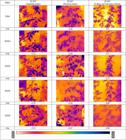
Thermal images of the canopy and leaf water potential (Ψwf, MPa) of ‘Red Pear’ cherry tomato as a function of different irrigation strategies with the use of hydrogel
An increase in temperature can be visually observed in the plants with the differentiation of the developmental stages, indicating a decrease in the cold tone and an increase in warmer tones at 90 DAT (fruiting, and maturation phases), being more significant under the RD strategy. This is due to the decline of the osmotic potential, as a result of the increase in the concentration of solutes in the leaf. Campos et al. (2021) explain that plants can adapt to drought through osmotic adjustment, thus preserving the water supply to the leaves, possibly leading to the production of smaller leaves, which senesce and fall after reaching maturity.
Figure 4 shows the thermal images for the irrigation strategies without the use of hydrogel, and it is also possible to observe an increase in canopy temperature with the differentiation of the development stages, as well as an increase in Ψwf means. The WoH treatments, due to lower water availability, show reduced transpiration, resulting in higher means of leaf temperature, such as FI: 35.2 °C and RD: 35.11 °C, with Ψwf of -1.15 and 0.73 MPa, respectively.
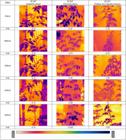
Thermal images of the canopy and leaf water potential (Ψwf, MPa) of ‘Red Pear’ cherry tomato as a function of different irrigation strategies without the use of hydrogel
There was a significant effect (p ≤ 0.01**) of the S factor for the variables TNF, TFW, LD and TD, highlighting the sensitivity of the crop to the water deficit reflected in the yield parameters. For TNF and TFW, a significant effect (p ≤ 0.01**) was observed for the interaction between the factors (irrigation strategies and hydrogel).
For the TNF variable, the RD irrigation strategy led to the lowest values, especially in the WoH treatments, with decrease of about 73.41% when compared to the FI strategy, while in the WiH treatment there was a reduction of only 4% in the TNF values under the RD strategy compared to FI, denoting the adequate water supply for the cherry tomato crop, an indispensable factor (Figure 5A). On the other hand, the highest means for TNF were found under the FI, S3 and S5 strategies, with no statistical difference for the use of hydrogel.
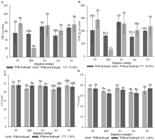
Means and standard deviations obtained for the ‘Red Pear’ cherry tomato yield variables total number of fruits (A), total fruit weight (B), longitudinal diameter (C) and transverse diameter (D) under interaction between irrigation strategies and use of hydrogel polymer
For TFW, the S3 strategy led to the highest means, with no statistical difference for the use of hydrogel, similar to the FIWoH and S5WoH treatments, denoting that the presence of the hydrogel did not promote the best responses of the plant in terms of TNF and TFW (Figure 5B). The RD strategy led to the lowest means for TFW, especially in the WoH treatment, with a reduction of about 73.30% when compared to FI.
This suggests that the use of this polymer has positive effects only on plants under soil water scarcity. Thus, the use of the hydrogel in fact supplies water to plants for a longer time, supporting the statement of Mendonça et al. (2015), according to whom the hydrogel enables a gradual release of water in a way that allows increasing the interval between irrigations.
The highest responses for LD were found under the FI and S3 strategies, with lower values under the RD strategy (Figure 5C). Likewise, for TD the highest responses were obtained in plants subjected to the FI, S3 and S5 strategies, with the worst response found under the RD and S4 strategies (Figure 5D). In general, treatment S3 showed a response similar to that of FI, so strategy S3 can be adopted for the studied crop under the edaphoclimatic conditions imposed.
Sousa et al. (2022) also found that the irrigation strategy applied in the vegetative stage can be recommended for the red cherry tomato crop. In addition, Nangaré et al. (2016), also studying the use of deficit irrigation in tomato, found that the controlled use of the technique during the vegetative stage promoted benefits to production. Studies such as the one conducted by Silva et al. (2019) point to deficit irrigation as being strategic, since the water use efficiency is higher in irrigation management whose application is below 100% ETc.
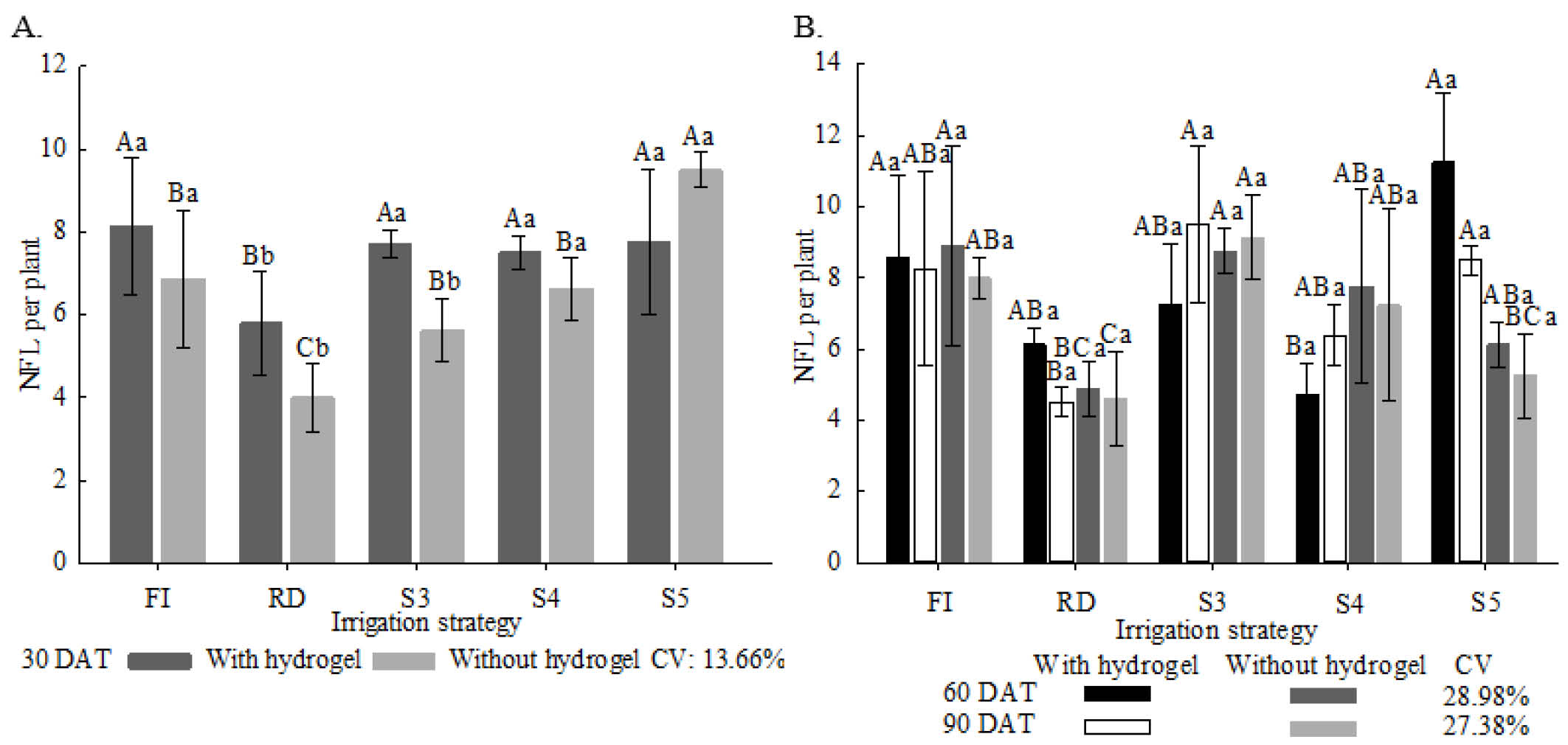
For the number of flowers, the S factor was significant at both evaluation times (p ≤ 0.01**). The H factor showed a statistical difference (p ≤ 0.05*) only at 30 DAT, referring to the period of beginning of crop flowering. There was a significant effect (p ≤ 0.05) for the interaction between factors (irrigation strategies and hydrogel) only at 30 DAT.
The lowest means for NFL were found under the RD strategy, especially WoH, in all crop development stages, followed by the S4 strategy, with an increase in the means at 30 DAT (Figure 6A) and 90 DAT (Figure 6B), in soil with hydrogel (WiH). In general, the period with the highest means was 60 DAT (Figure 6B), except under the strategy S4.
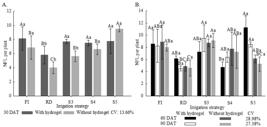
Mean values of number of flowers of ‘Red Pear’ cherry tomato under interaction between irrigation strategies and use of hydrogel polymer, evaluated at 30 (A), 60, and 90 DAT (B)
The results observed in the present study for the S4 strategy coincide with those of several studies, which point to the stage from flowering to fruit set as the period of greatest water demand for tomato plants (Nemeskéri et al., 2019; Sousa et al., 2022). Similarly, Sousa et al. (2022) worked with red and orange cherry tomatoes under water deficit in the Brazilian semi-arid region and concluded that the flowering stage is the most critical period for water deficit in both cultivars.
In addition, it was observed in the present study that only the irrigation strategy factor significantly influenced the response of the NFA variable (p ≤ 0.05*), with the highest means of flower abortion (Figure 7) when plants were subjected to the strategy S4 (WoH), not differing significantly from those under the RD (WoH) strategy.
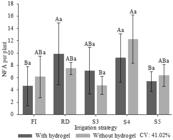
Mean values of number of flower abortions of ‘Red Pear’ cherry tomato, under interaction between irrigation strategies and use of hydrogel polymer
Silva et al. (2013) evaluated ETc replacement levels in tomato crop Caline IPA 6 and observed that both water excess (140% ETc) and water deficit (33% ETc) increased flower abortion, thus influencing the number of fruits and production per plant. It is worth pointing out that, in addition to the water deficit applied, factors such as manual pollination and the occurrence of high temperatures during the flowering period, reaching means above 34 °C, may have culminated in accentuated flower abortion.
Conclusions
-
Under conditions of water scarcity, the deficit irrigation strategy (without hydrogel) in the vegetative phase (S3) is an option for cherry tomato production under the conditions of the present study.
-
The strategies regular deficit irrigation (RD) without the use of hydrogel and S3 with or without hydrogel should not be indicated for cherry tomato cultivation, as they increase flower abortion and consequently reduce fruit production.
-
Plants subjected to the RD strategy without hydrogel showed higher thermal index, thus confirming the relationship between temperature and fruit production.
-
The thermal index obtained by thermographic images is viable for determining water deficit in cherry tomato.
Acknowledgments
Coordenação de Aperfeiçoamento de Pessoal de Nível Superior - Brazil (CAPES), Conselho Nacional de Desenvolvimento Científico e Tecnológico (CNPq) and Postgraduate Program in Agricultural Engineering.
Literature Cited
-
Abdallah, A. M. The effect of hydrogel particle size on water retention properties and availability under water stress. International Soil and Water Conservation Research, v.7, p.275-285, 2019. https://doi.org/10.1016/j.iswcr.2019.05.001
» https://doi.org/10.1016/j.iswcr.2019.05.001 - Allen, R. G.; Pereira, L. S.; Raes, D.; Smith, M. Crop evapotranspiration: guidelines of computing crop water requirements. Rome: Food and Agriculture Organization, 1998. 300p. Drainage and Irrigation Paper, 56
-
Alordzinu, K. E.; Li, J.; Lan, Y.; Appiah, S. A.; Al Aasmi, A.; Wang, H.; Qiao, S. Ground-based hyperspectral remote sensing for estimating water stress in tomato growth in sandy loam and silty loam soils. Sensors, v.21, e5705, 2021. https://doi.org/10.3390/s21175705
» https://doi.org/10.3390/s21175705 -
Alvares, C. A.; Stape, J. L.; Sentelhas, P. C.; Gonçalves, J. L. de M.; Sparovek, G. Köppen’s climate classification map for Brazil. Meteorologische Zeitschrift, v.22, p.711-728, 2013. https://doi.org/10.1127/0941-2948/2013/0507
» https://doi.org/10.1127/0941-2948/2013/0507 -
Aragão, M. F.; Pinheiro Neto, L. G.; Viana, T. V. D. A.; Manzano-Juarez, J.; Lacerda, C. F.; Costa, J. D. N.; Azevedo, B. M. Evaluation of crop water status of melon plants in tropical semi-arid climate using thermal imaging. Revista Brasileira de Engenharia Agrícola e Ambiental, v.27, p.447-456, 2023. https://doi.org/10.1590/1807-1929/agriambi.v27n6p447-456
» https://doi.org/10.1590/1807-1929/agriambi.v27n6p447-456 -
Ballester, C.; Jiménez-Bello, M. A.; Castel, J. R.; Intrigliolo, D. S. Usefulness of thermography for plant water stress detection in citrus and persimmon trees. Agricultural and Forest Meteorology, v.168, p.120-129, 2013. http://dx.doi.org/10.1016/j.agrformet.2012.08.005
» http://dx.doi.org/10.1016/j.agrformet.2012.08.005 -
Campos, A. J. M.; Santos, S. M.; Nacarath, I. R. F. F. Estresse hídrico em plantas: uma revisão. Research, Society and Development, v.10, e311101523155, 2021. https://doi.org/10.31533/pubvet.v13n01a241.1-10
» https://doi.org/10.31533/pubvet.v13n01a241.1-10 - Cantelli, G. Mercado Nacional de Tomate Cereja. 1.ed. Piracicaba, SP: Adeca Agronegócios, 2018. 3p.
-
Dariva, F. D.; Pessoa, H. P.; Copati, M. G. F.; Almeida, G. Q.; Castro Filho, M. N.; Picoli, F. A. T.; Cunha, F. F.; Nick, C. Yield and fruit quality attributes of selected tomato introgression lines subjected to long-term deficit irrigation. Scientia Horticulturae, v.289, e110426, 2021. https://doi.org/10.1016/j.scienta.2021.110426
» https://doi.org/10.1016/j.scienta.2021.110426 -
FAOSTAT - Food and Agriculture Organization, 2023. Culturas e produtos pecuários. Available on: Available on: https://www.fao.org/faostat/en/#data/QCL/visualize Accessed on: Fev. 2023.
» https://www.fao.org/faostat/en/#data/QCL/visualize -
García-Tejera, O.; López-Bernal, Á.; Orgaz, F.; Testi, L.; Villalobos, F. J. The pitfalls of water potential for irrigation scheduling. Agricultural Water Management, v.243, e106522, 2021. https://doi.org/10.1016/j.agwat.2020.106522
» https://doi.org/10.1016/j.agwat.2020.106522 -
Gomes, F. F. L.; Lima, J. S.; Pinheiro Neto, L. G. Aplicações da termografia na agricultura. Agrarian Academy, v.8, p.91-105, 2021. https://doi.org/10.18677/Agrarian-_Academy_2021B9
» https://doi.org/10.18677/Agrarian-_Academy_2021B9 -
Gonzalez-Dugo, V.; Zarco-Tejada, P. J.; Fereres, E. Applicability and limitations of using the crop water stress index as an indicator of water deficits in citrus orchards. Agricultural and Forest Meteorology , v.198, p.94-104, 2014. https://doi.org/10.1016/j.agrformet.2014.08.003
» https://doi.org/10.1016/j.agrformet.2014.08.003 -
IBGE - Instituto Brasileiro de Geografia e Estatística. Levantamento sistemático da produção agrícola - LSPA. 2021. Sistema IBGE de recuperação automática de dados - Sidra IBGE. Available on: Available on: https://sidra.ibge.gov.br/tabela/6588 Accessed on: Set. 2023.
» https://sidra.ibge.gov.br/tabela/6588 -
Jackson, R. D; Idso, S. B; Reginato, R. J; Pinter, P. J. Canopy temperature as a crop water stress indicator. Water Resource Research, v.17, p.1133-1138, 1981. http://dx.doi.org/10.1029/WR017i004p01133
» http://dx.doi.org/10.1029/WR017i004p01133 -
Konings, A. G.; Rao, K.; Steele‐Dunne, S. C. Macro to micro: microwave remote sensing of plant water content for physiology and ecology. New Phytologist, v.223, p.1166-1172, 2019. https://doi.org/10.1111/nph.15808
» https://doi.org/10.1111/nph.15808 -
Lima, A. F. da S.; Barros, V. da S.; Silva, A. O. da; Gondim, R. S.; Figueirêdo, M. C. B. de; Costa, R. N. T.; Lacerda, C. F. de; Sales, J. R. da S.; Silva, Ê. F. F. e. Carbon and water scarcity footprints of banana under current and future climate conditions in the Brazilian semiarid region. Environmental Development, v.51, e101034, 2024. https://doi.org/10.1016/j.envdev.2024.101034
» https://doi.org/10.1016/j.envdev.2024.101034 -
Mendonça, T. G.; Querido, D. C. M.; Souza, C. F. Eficiência do polímero hidroabsorvente na manutenção da umidade do solo no cultivo de alface. Revista Brasileira de Agricultura Irrigada, v.9, p.239-245, 2015. https://doi.org/10.7127/rbai.v9n400312
» https://doi.org/10.7127/rbai.v9n400312 -
Nangaré, D. D.; Singh, Y.; Kumar, P. S.; Minhas, P. S. Growth, fruit yield and quality of tomato (Lycopersicon esculentum Mill.) as affected by deficit irrigation regulated on phenological basis. Agricultural Water Management , v.171, p.73-79, 2016. https://doi.org/10.1016/j.agwat.2016.03.016
» https://doi.org/10.1016/j.agwat.2016.03.016 -
Nemeskéri, E.; Neményi, A.; Bőcs, A.; Pék, Z.; Helyes, L. Physiological Factors and their Relationship with the Productivity of Processing Tomato under Different Water Supplies. Water, v.11, e586, 2019. https://doi.org/10.3390/w11030586
» https://doi.org/10.3390/w11030586 -
Oliveira, N.; Santin, F.; Paraizo, T. R.; Sampaio, J. P.; Moura-Nunes, N.; Canella, D. S. Baixa variedade na disponibilidade domiciliar de frutas e hortaliças no Brasil: dados das POF 2008-2009 e 2017-2018. Ciência & Saúde Coletiva, v.26, p.5805-5816, 2021. https://doi.org/10.1590/1413-812320212611.25862020
» https://doi.org/10.1590/1413-812320212611.25862020 - Pires, R. C. de M.; Furlani, P. R.; Ribeiro, R. V.; Bodine Júnior, D.; Sakai, E.; Lourenção, A. L.; Torre Neto, A. Irrigation frequency and substrate volume effects in the growth and yield of tomato plants under greenhouse conditions. Scientia Agrícola, v.68, p.400-405, 2011.
-
Rosa, L. Adapting agriculture to climate change via sustainable irrigation: biophysical potentials and feedbacks. Environmental Research, v.17, e063008, 2022. https://doi.org/10.1088/1748-9326/ac7408
» https://doi.org/10.1088/1748-9326/ac7408 -
Saha, A.; Sekharan, S.; Manna, U. Superabsorbent hydrogel (SAH) as a soil amendment for drought management: A review. Soil & Tillage Research, v.204, e104736, 2020. https://doi.org/10.1016/j.still.2020.104736
» https://doi.org/10.1016/j.still.2020.104736 -
Silva, C. da J.; Frizzone, J. A.; Silva, C. A. da. Tomato yield as a function of water depths and irrigation suspension periods. Revista Brasileira de Engenharia Agrícola e Ambiental , v.23, p.591-597, 2019. https://doi.org/10.1590/1807-1929/agriambi.v23n8p591597
» https://doi.org/10.1590/1807-1929/agriambi.v23n8p591597 -
Silva, J. M. D. da; Ferreira, R. S.; Melo, A. S. de; Suassuna, J. F.; Dutra, A. F.; Gomes, J. P. Cultivo do tomateiro em ambiente protegido sob diferentes taxas de reposição da evapotranspiração. Revista Brasileira de Engenharia Agrícola e Ambiental , v.17, p.40-46, 2013. https://doi.org/10.1590/S1415-43662013000100006
» https://doi.org/10.1590/S1415-43662013000100006 - Soil Survey Staff. Keys to soil taxonomy. 12ed. USDA-Natural Resources Conservation Service, Washington, DC, USA. 2014.
-
Sousa, K. C. D.; Costa, R. N.; Nunes, K. G.; Silva, A. O. da. Irrigation strategies in production of cherry tomatoes under water scarcity conditions. Revista Brasileira de Engenharia Agrícola e Ambiental , v.26, p.425-432, 2022. https://doi.org/10.1590/1807-1929/agriambi.v26n6p425-432
» https://doi.org/10.1590/1807-1929/agriambi.v26n6p425-432 - Trani, P. E.; Kariya, E. A.; Hanai, S. M.; Anbo, R. H.; Bassetto Júnior, O. B.; Purquerio, L. F. V.; Trani, A. L. Calagem e adubação do tomate de mesa. Boletim Técnico IAC, 2015, 35p.
-
Valcárcel, M.; Lahoz, I.; Campillo, C.; Martí, R.; Leiva-Brondo, M.; Roselló, S.; Cebolla-Cornejo, J. Controlled deficit irrigation as a water-saving strategy for processing tomato. Scientia Horticulturae , v.261, e108972, 2020. https://doi.org/10.1016/j.scienta.2019.108972
» https://doi.org/10.1016/j.scienta.2019.108972
Financing statement
The authors declare that there are no supplementary data.

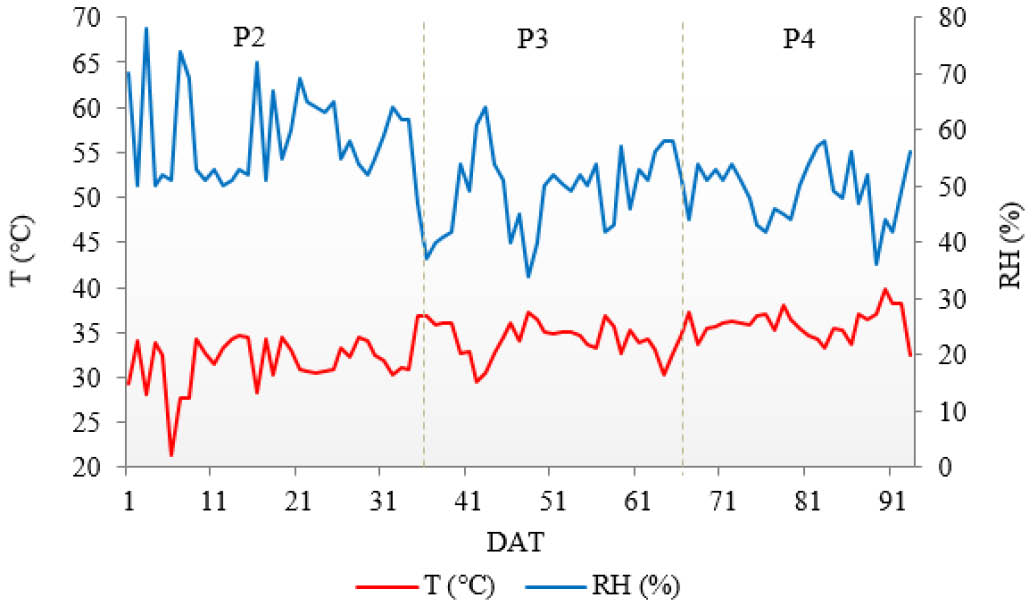 P2 - Vegetative stage, P3 - flowering and fruiting stages, P4 - Maturation and harvest stages
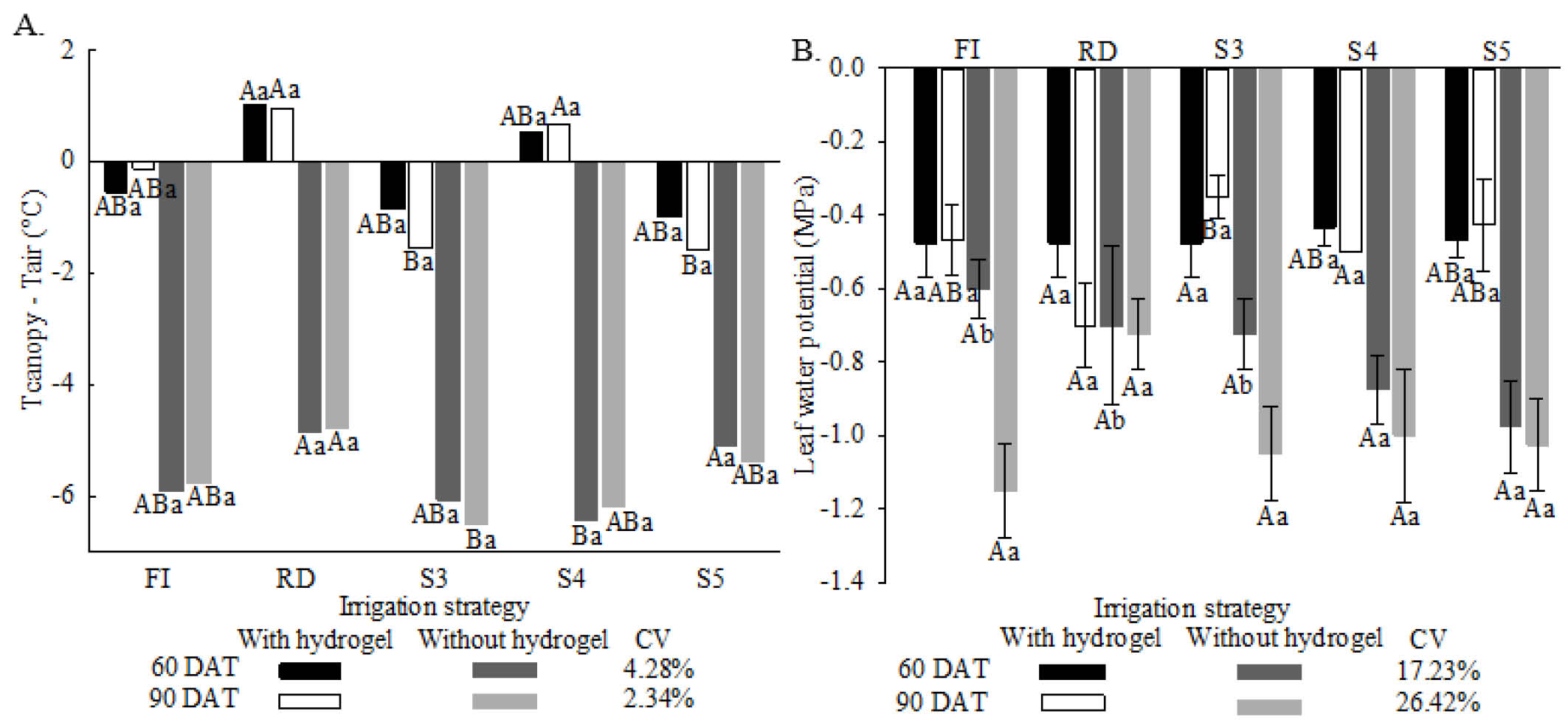 Means followed by the same uppercase letter and by the same lowercase letter do not differ statistically by Tukey test (p ≤ 0.05) between irrigation strategy and hydrogel, respectively; Vertical bars represent the standard error of the mean (n = 4)
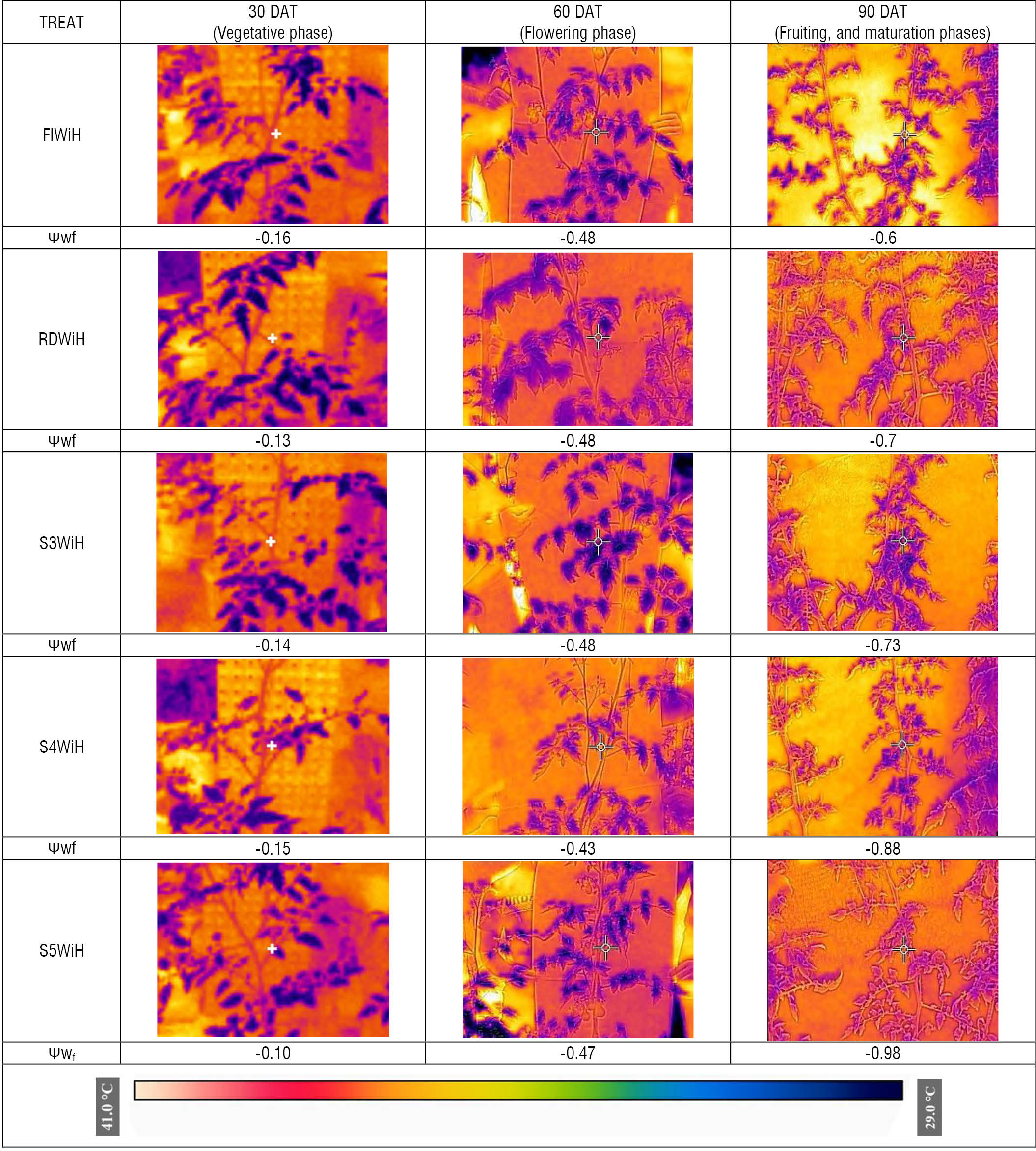 Treatments: FIWiH - Full irrigation with hydrogel; RDWiH - Irrigation with regular water deficit with hydrogel; S3WiH - Irrigation with controlled water deficit in the vegetative stage with hydrogel; S4WiH - Irrigation with controlled water deficit in the flowering and fruiting stages with hydrogel, and S5WiH - Irrigation with controlled water deficit in the maturation and harvesting stages with hydrogel
 Treatments: FIWoH - Full irrigation without hydrogel; RDWoH - Irrigation with regular water deficit without hydrogel; S3WoH - Irrigation with controlled water deficit in the vegetative stage without hydrogel; S4WoH - Irrigation with controlled water deficit in the flowering and fruiting stages without hydrogel, and S5WoH - Irrigation with controlled water deficit in the maturation and harvesting stages without hydrogel.
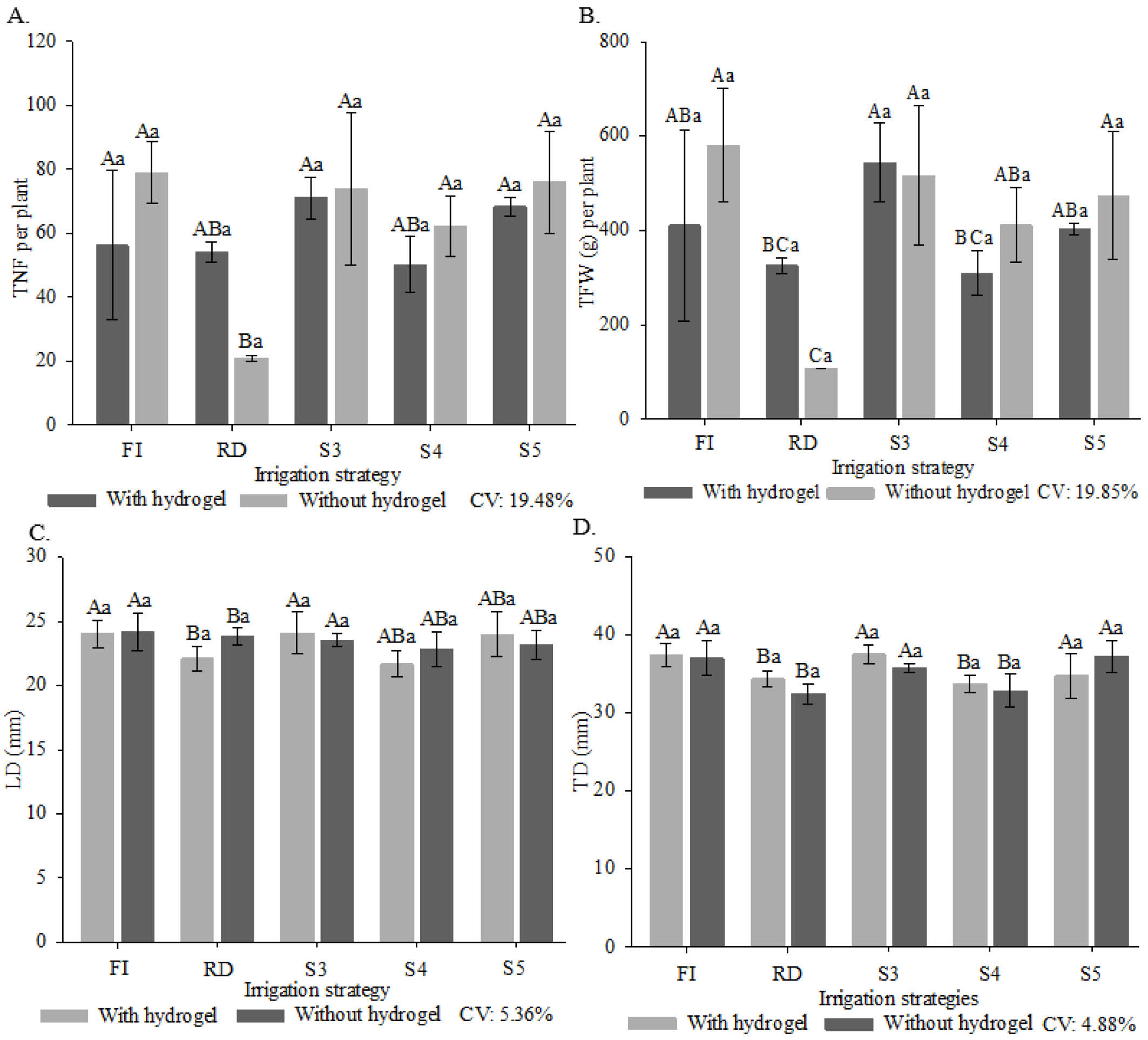 Means followed by the same uppercase letter and by the same lowercase letter do not differ statistically by Tukey test (p ≤ 0.05) between irrigation strategy and hydrogel, respectively; Vertical bars represent the standard error of the mean (n = 4)
 Means followed by the same uppercase letter and by the same lowercase letter do not differ statistically by Tukey test (p ≤ 0.05) between irrigation strategy and hydrogel, respectively; Vertical bars represent the standard error of the mean (n = 4)
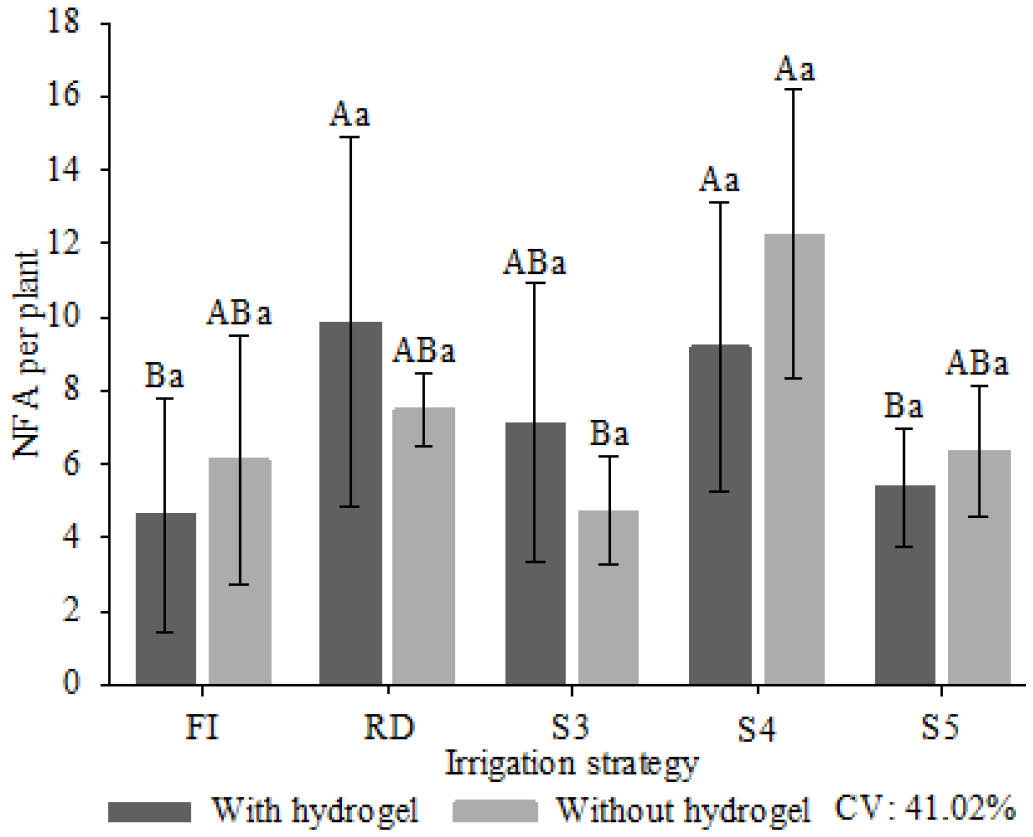 Means followed by the same uppercase letter and by the same lowercase letter do not differ statistically by Tukey test (p ≤ 0.05) between irrigation strategy and hydrogel, respectively; Vertical bars represent the standard error of the mean (n = 4)