 Soil acidity correction and fertilization strategies: Effects on acidity, nutrient availability, and crop yield
ABSTRACT
High soil acidity and low nutrient availability in the deeper soil layers of no-tillage systems (NTS) can restrict crop yield potential. This study aimed to evaluate the impact of different soil acidity correction strategies and P and K application methods on the vertical variation of soil acidity, nutrient availability, and on corn and soybean yields. A randomized block factorial experiment was established in 2020 on a Plinthosol (Plintossolo Argilúvico Distrófico típico) under NTS since 2004. The first factor consisted of soil acidity correction strategies: (i) control, (ii) surface application of dolomitic limestone, (iii) surface application of calcium and magnesium oxide (CaO·MgO), and (iv) incorporation of dolomitic limestone to 0.20 m depth. The second factor corresponded to P and K application methods: (i) control without fertilization, (ii) in-furrow application, and (iii) surface broadcast application. The corrective amendment rates were calculated to raise the soil pH in the 0.00–0.20 m layer to 6.0. Six months after treatment application, soil samples were collected down to a depth of 0.40 m. Application of CaO·MgO increased soil pH, Ca2++Mg2++K+ saturation, and Ca2+ and Mg2+ contents, but these effects were confined to the surface soil layer (0.00–0.10 m). In contrast, limestone incorporation reduced soil pH, and Ca2++Mg2++K+ and Al3+ saturation gradients over a greatest soil depth (0.00–0.15 m), demonstrating greater effectiveness than both surface-applied limestone and CaO·MgO. Improvements in soil acidity resulting from limestone incorporation led to a 66 % increase in corn yield compared to other correction strategies. Soil chemical properties were minimally affected by P and K application methods, with higher available P observed only in the 0.00–0.05 m layer under surface broadcast application. Nevertheless, in-furrow P and K fertilization increased corn yield by 35 % compared to surface application. Soybean yield was not influenced by any of the treatments. In soils with high subsurface acidity, incorporating soil amendments is essential for effective acidity correction and yield improvement, while in-furrow P and K fertilization remains an efficient strategy to sustain high crop yields.
Keywords
calcium and magnesium oxide; dolomitic limestone; no-tillage; corn; soybean
INTRODUCTION
Tropical and subtropical soils in Brazil generally exhibit low natural fertility, which limits the productivity of major crops relative to their genetic potential and favorable climatic conditions (Battisti et al., 2018). Although irregular rainfall contributes to this limitation, the main restriction to water-use efficiency arises from reduced root development, caused by soil acidity and low nutrient availability in the subsurface layers under no-tillage systems (NTS) (Bellinaso et al., 2021; Artuso et al., 2024).
In soils managed under NTS, the surface layer (0.00–0.10 m) usually presents high chemical fertility, with elevated levels of P, K, Ca, and Mg, along with low soil acidity. However, in the subsurface layers this condition is reversed, with high soil acidity and exchangeable aluminum (Al3+), and low nutrient availability (Calegari et al., 2013). Subsurface acidity restricts root growth, impairing water and nutrient uptake, especially in areas that did not receive adequate correction before NTS adoption. Under water-limiting conditions, these constraints are intensified by nutritional deficiencies and physiological stresses. In the context of climate change and potential reduction in water availability in southern Brazil, mitigating these limitations is essential for the sustainability of agricultural systems (Siqueira et al., 2021; Maksic et al., 2022).
Liming aims to increase soil pH, reduce Al3+ levels, enhance cation exchange capacity (CEC), and supply exchangeable calcium (Ca2+) and magnesium (Mg2+). However, under NTS, knowledge gaps remain regarding the most suitable strategies for soil acidity correction, particularly concerning the type of amendment and the method of application, which determine both reactivity and the speed of acidity neutralization down in the soil profile (Rheinheimer et al., 2018a). Limestone, the most widely used amendment, has low solubility and limited mobility when broadcast on the soil surface, which restricts its corrective effect at depth, especially in soils with low amendment mobility (Rheinheimer et al., 2018a). As an alternative, Ca and Mg oxides (CaO·MgO) have finer particle size and greater solubility, favoring the downward movement of the alkalinizing front in the soil profile (Li et al., 2019). Comparatively, their neutralizing power and solubility (1,200 mg L-1) are far superior to those of limestone (14 mg L-1) (Alcarde, 2005), enhancing subsurface acidity correction and the supply of Ca2+ and Mg2+ within a shorter period.
The method of P and K application also influences nutrient availability and crop productivity. Fertilizer placement in-furrow, simultaneously with sowing, promotes nutrient diffusion and absorption, reduces nutrient loss by runoff, and improves plant establishment (Nkebiwea, 2016; Martins et al., 2022). Conversely, surface broadcasting offers operational advantages and lower costs. However, broadcasting tends to concentrate nutrients in the topsoil (0.00-0.05 m), limiting deeper root development and yield potential (Rafain et al., 2020; Artuso et al., 2024).
In this context, the present study was based on the following hypotheses: (i) incorporation of soil acidity amendments is more effective in neutralizing subsurface acidity, regardless of the amendment type; and (ii) applying fertilizers with P and K in-furrow during sowing reduces the vertical gradient of nutrient availability in the soil, thereby enhancing crop yield under NTS. This study aimed to evaluate soil acidity correction strategies and methods of applying P and K fertilizers regarding the vertical distribution of acidity and nutrient availability in the soil, as well as their effects on corn and soybean yields, six months after treatment application, in a Plinthosol under NTS in southern Brazil.
MATERIALS AND METHODS
Experimental site and design
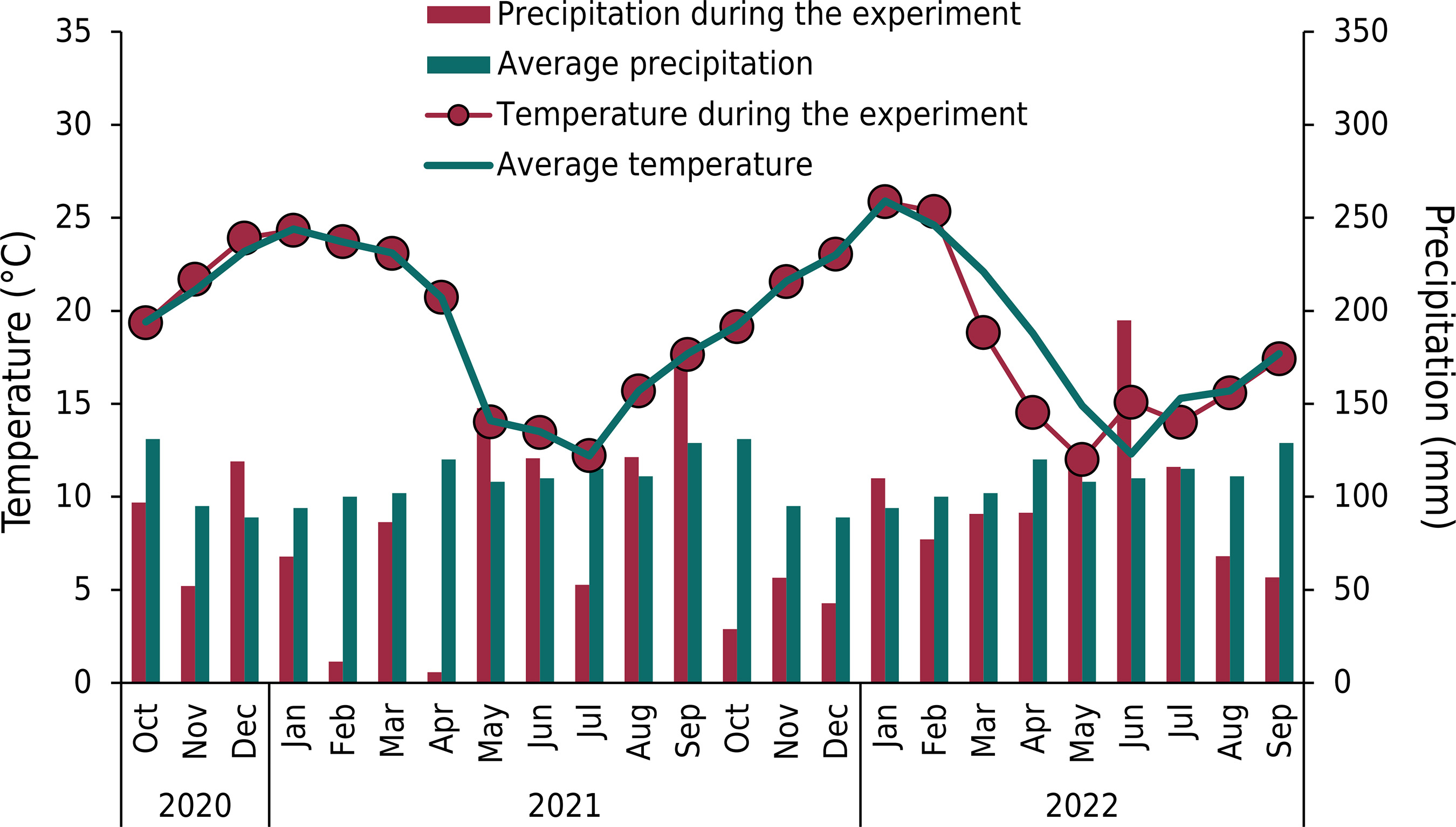
The experiment was established in October 2020 at the Agronomic Experimental Station of the Federal University of Rio Grande do Sul, located in Eldorado do Sul, Rio Grande do Sul, Brazil (latitude 30° 05’ S, longitude 51° 40’ W, altitude 28 m). The regional climate is classified as Cfa (humid subtropical) according to Köppen classification system (Alvares et al., 2013), with an average annual temperature of 20 °C and mean annual rainfall of 1,481 mm (Inmet, 2017). Rainfall and temperature data recorded during the experimental period are presented in figure 1.
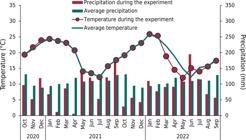
Monthly precipitation and mean temperature during the experimental period (October 2020 to September 2022) and 20-year monthly averages in Eldorado do Sul, Rio Grande do Sul, Brazil.
The soil at the experimental site is classified as a Plintossolo Argilúvico Distrófico típico (Santos et al., 2025), corresponding to a Plinthosol (IUSS Working Group WRB, 2022). In the 0.00–0.40 m layer, the soil contains 177, 251, and 573 g kg-1 of clay, silt, and sand, respectively. Chemical properties of the soil before the beginning of the experiment are shown in table 1.
Soil chemical characterization of the experimental area up to 0.40 m depth in a Plinthosol in southern Brazil
Since 2004, the area had been cultivated with soybean (Glycine max) and corn (Zea mays) as summer crops, alternating between black oat (Avena strigosa) and fallow during winter. In the year prior to the experiment (2019), corn was grown for silage in summer, followed by black oat as a cover crop in winter.
The experiment was arranged in a randomized block design in a factorial scheme with three replications. The first factor consisted of soil acidity correction strategies: (i) control (no amendment), (ii) surface-applied dolomitic limestone, (iii) surface-applied calcium and magnesium oxide (CaO·MgO), and (iv) incorporated dolomitic limestone. The second factor consisted of methods of applying P and K fertilizers: (i) control (no fertilization), (ii) in-furrow application, and (iii) surface broadcasting (Table 2). Each plot measured 6 × 10 m (60 m2), totaling approximately 0.45 ha, including buffer zones, with 3 m spacing between blocks to avoid machinery traffic over the experimental area. Limestone incorporation was performed using a heavy disk harrow to a depth of 0.20 m. In the other treatments, soil structure was left undisturbed prior to the experiment.
Description of the treatments combining soil acidity correction strategies and P and K fertilization
Based on the weighted average of soil properties in the 0.00–0.20 m layer (Table 1), the limestone requirement was estimated to reach a target pH of 6.0, using the SMP index (Shoemaker-McLean-Pratt method). The calculated requirement was 3.2 Mg ha-1 of a limestone source with 100 % effective calcium carbonate equivalent (ECCE). According to the chemical and physical analyses, dolomitic limestone had an ECCE of 75 %, calcium carbonate equivalent (CCE) of 94.95 %, and a total fineness efficiency of 80 %, containing 30 % CaO and 16.4 % MgO. The Ca/Mg oxide (CaO·MgO) amendment had an ECCE of 175 %, with 49.3 % CaO and 31.9 % MgO. Therefore, the applied doses were 5.6 Mg ha-1 for dolomitic limestone and 2.6 Mg ha-1 for CaO·MgO.
Phosphorus and K fertilization rates were defined to maintain soil nutrient levels at the conditions present when the experiment was established, based on expected yields of 4 Mg ha-1 for soybean and 10 Mg ha-1 for corn. Fertilizer requirements were calculated according to CQFS-RS/SC (2016) recommendations, with N, P, and K rates of 135, 61, and 133 kg ha-1 for corn and 35, 79, and 233 kg ha-1 for soybean, respectively. Nitrogen fertilization in corn was determined according to soil organic matter content and the target yield of 10 Mg ha-1. Thus, 35 kg ha-1 N was applied at sowing, followed by two topdressings at stages V4 and V8, using urea as the N source.
Sowing dates were October 31, 2020 (corn), April 23, 2021 (black oat), and November 26, 2021 (soybean). The crop varieties used were corn hybrid Balu 388 VIP3, with a population density of 55,000–60,000 plants ha-1; black oat cv. EMBRAPA 139, with a density of 350,000 plants ha-1; and soybean cv. M 5947 IPRO, with a density of 250,000–300,000 plants ha-1. Black oat received only N fertilization at a rate of 50 kg ha-1.
Soil sampling and analyses
Soil samples were collected in April 2021, six months after treatment application, from the 0.00–0.05, 0.05–0.10, 0.10–0.15, 0.15–0.20, 0.20–0.25, 0.25–0.30, and 0.30–0.40 m soil layers. Samples were taken both from rows and interrows. After collection, soils were air-dried, ground, and sieved through a 2 mm mesh. Soil pH was determined in water using a 1:1 (v/v) soil-to-water suspension, and the SMP index was determined in a 1:1:0.5 ratio of soil, water, and SMP solution (Tedesco et al., 1995). Potential acidity (H+Al) was estimated from the SMP index using the equation proposed by Kaminski et al. (2001) and adopted by the CQFS-RS/SC (2016) (Equation 1):
Soil available P and K were extracted using Mehlich-1, while exchangeable Ca2+, Mg2+, and Al3+ were extracted using 1.0 mol L-1 NH4Cl. Extracts were analyzed by inductively coupled plasma optical emission spectrometry (ICP-OES). From these results, effective CEC, CEC at pH 7.0, saturation by Ca2++Mg2++K+ and by Al3⁺ saturation were calculated.
Since some treatments involved mechanical soil disturbance, soil penetration resistance was measured on June 21, 2021, from 0 to 0.40 m using a digital penetrometer (Falker PLG 1020). Measurements were taken at 1 cm intervals and grouped into soil layers (0.00–0.05, 0.05–0.10, 0.10–0.15, 0.15–0.20, 0.20–0.25, 0.25–0.30, and 0.30–0.40 m). On the same date, soil samples were also collected to determine gravimetric water content, following Donagemma (2011). Samples were taken from each layer in the disturbed structure, stored in sealed plastic containers to prevent moisture loss, dried at 105 °C, and weighed to obtain fresh and dry mass.
Statistical analysis
Data normality was verified using the Shapiro–Wilk test, and variance homogeneity was assessed by Levene test, both at a 5 % significance level. When assumptions were met, data were subjected to analysis of variance (ANOVA), considering acidity correction strategies, fertilization methods, and soil layers as fixed effects, and blocks as a random effect. When ANOVA was significant (p<0.05), treatment means were compared by Tukey test (p<0.05). Statistical analyses were performed using Sisvar software (Ferreira, 2011).
RESULTS AND DISCUSSION
Effect of acidity correction strategies on soil chemical properties
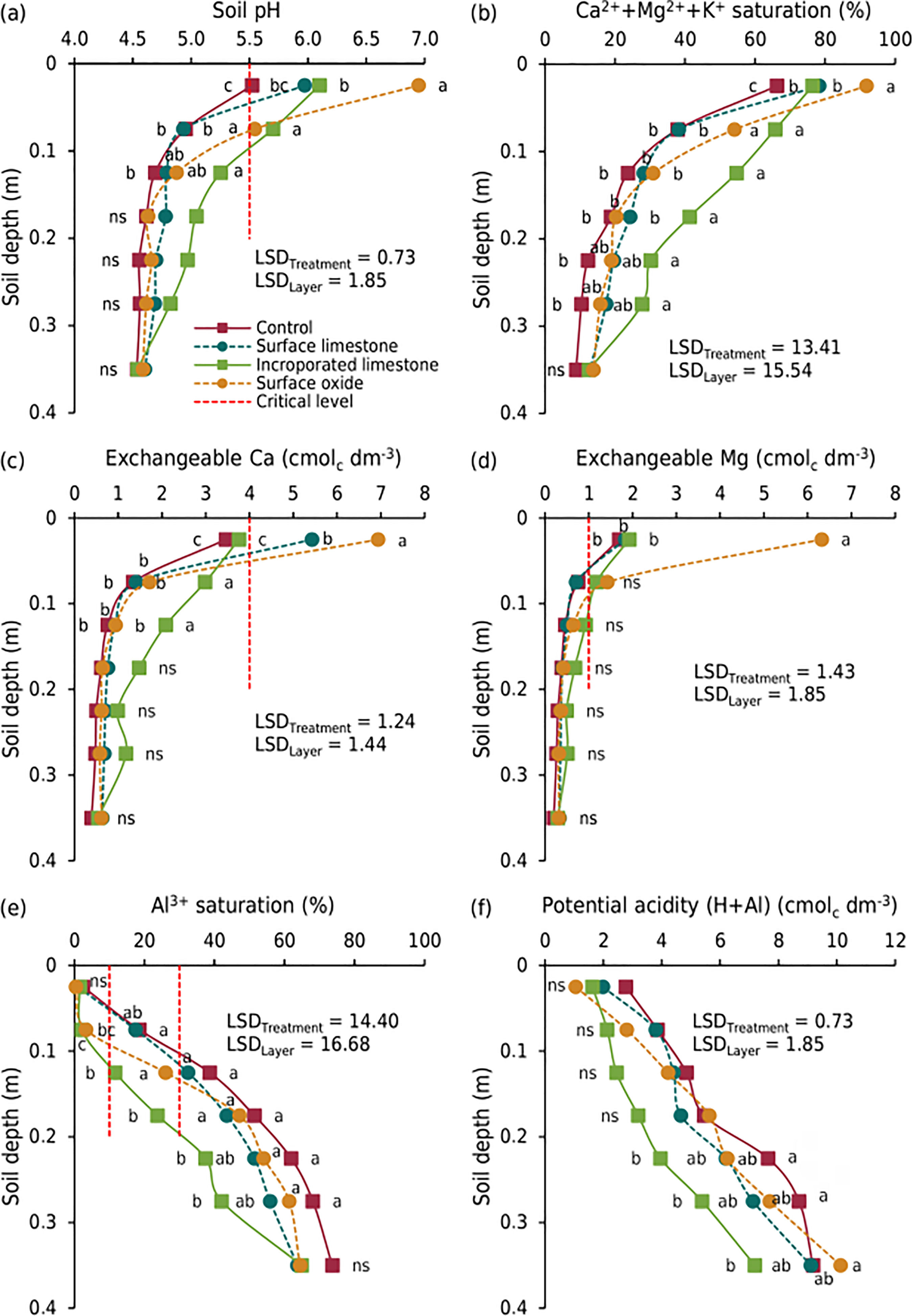
Six months after application, surface liming increased soil pH only in the 0.00–0.05 m soil layer, reaching values >5.5 (Figure 2a), and also increased the exchangeable Ca content at the same soil layer (Figure 2c). No significant changes were observed in the saturation by Ca2++Mg2++K+, in exchanheable Mg, or in Al3+ saturation compared with the control (Figure 2). These findings reinforce the limited effectiveness of surface-applied liming, which primarily affects only the uppermost soil layers, as reported by Rheinheimer et al. (2018a). Therefore, surface application of limestone is more suitable only when subsurface acidity has already been corrected during the establishment of the NTS (Bortoluzzi et al., 2014). In this sense, recent studies have shown that adequate acidity correction through incorporation has a residual effect of up to 42-year, and that after this deep correction, soil reacidification can be managed with surface-applied liming (Alves et al., 2025), thereby ensuring greater use efficiency of P (Tiecher et al., 2023a) and K (Pesini et al., 2025).
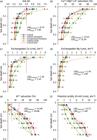
Mean values of soil pH (a), Ca2++Mg2++K+ saturation (b), exchangeable Ca (c) and Mg (d), Al3+ saturation (e), and potential acidity (H+Al) (f) at different soil layers, as affected by soil acidity correction strategies, six months after treatment application in a Plinthosol in southern Brazil. Means followed by different letters indicate significant differences among acidity correction strategies within each soil layer according to Tukey test (p<0.05); ns: not significant by Tukey test (p>0.05); LSD: least significant difference.
The formation of an alkaline front restricted to the surface-applied limestone has also been observed by Bellinaso et al. (2021). The dissolution of dolomitic limestone depends on the diffusion of H+ from the soil solution to the diffuse double layer, a process limited to the contact zone between the limestone particle and the soil solution. Thus, there is no excess of anions (CO32- and OH-) that would enable H+ neutralization in deeper soil layers, and the downward movement of the amendment depends on turbulent water transport through macropores in the soil profile (Petrere et al., 2001; Borges et al., 2023). Therefore, even if fine limestone particles accumulate at the soil surface, their migration into deeper layers is slow and limited, generally occurring only after several years of application (Rheinheimer et al., 2018a,b).
Limestone incorporation through plowing to a depth of 0.20 m, followed by disking, increased soil pH above 5.5 down to 0.10 m depth (Figure 2a). However, part of the tilled layer still showed high acidity, possibly due to low rainfall during the evaluation period, 29.4 % below the historical average (Figure 1), which may have limited the amendment reaction (Tiritan et al., 2016). As a consequence, Al3+ saturation decreased to <30 % down to 0.20 m and remained lower than the control up to 0.30 m depth (Figure 2e). This indicates that only incorporated liming was able to reduce Al3+ saturation to levels considered adequate, consistent with results from a long-term study (34 years; Rheinheimer et al., 2024b), where the critical Al3+ saturation in the 0.10–0.15 m layer was 44, 24, and 20 % for soybean, wheat, and cover crops, respectively.
Limestone incorporation also increased Ca2++Mg2++K+ saturation between 0.05–0.30 m and exchangeable Ca contents down to 0.15 m depth, compared with surface-applied limestone (Figure 2b). These results are consistent with the findings of Bellinaso et al. (2021) and Bortoluzzi et al. (2014). Incorporation enhances the solubilization of limestone products, unblocking functional groups of soil organic matter and promoting the deprotonation of sorption sites, which allows the formation of surface complexes with Ca2+ and Mg2+. Thus, the greater depth of the alkaline front observed with incorporated limestone agrees with Rheinheimer et al. (2018b). Direct contact between the amendment and soil particles in the tilled layer promotes more efficient and faster acidity correction (Bossolani et al., 2021). In this context, limestone incorporation at the establishment of NTS is essential for creating an initial soil environment free of Al3+ toxicity and with fertility levels closer to optimal, especially within the zone of greatest root activity (i.e., 0.00-0.20 m).
When subsurface soil constraints are only related to acidity, CaO·MgO application is an interesting alternative to accelerate Al3+ neutralization in deeper soil layers without tillage. This amendment is obtained from limestone, which is heated until the metamorphic rock structure breaks, forming oxides and releasing CO2 into the atmosphere. The solubilization of CaO·MgO does not depend on H+ diffusion to the diffuse double layer; instead, it occurs through simple dissolution into the soil solution, reaching an equilibrium pH close to 12.8. Only six months after surface application of CaO·MgO onto crop residues, all exchangeable Al3+ was neutralized, and increases in exchangeable Ca and Mg, as well as Ca2++Mg2++K+, were observed down to a depth of 0.10 m (Figure 2). These marked changes result from the faster and more intense reaction of the soluble products of CaO·MgO. Soil pH and Ca2++Mg2++K+ saturation values in the 0.05–0.10 m layer indicate higher short-term efficiency of CaO·MgO than surface-applied limestone. This also suggests that the finer particle size of CaO·MgO is an important factor for its movement into deeper soil layers. CaO·MgO proved effective, similar to incorporated limestone, in correcting Al3+ saturation in the 0.05–0.10 m layer compared with the control. Therefore, CaO·MgO application can be an alternative to increase soil pH and reduce Al3+ saturation, providing a favorable environment for root growth, improving fertilizer efficiency, and reducing susceptibility to water stress.
Effect of P and K fertilization method on their availability in the soil
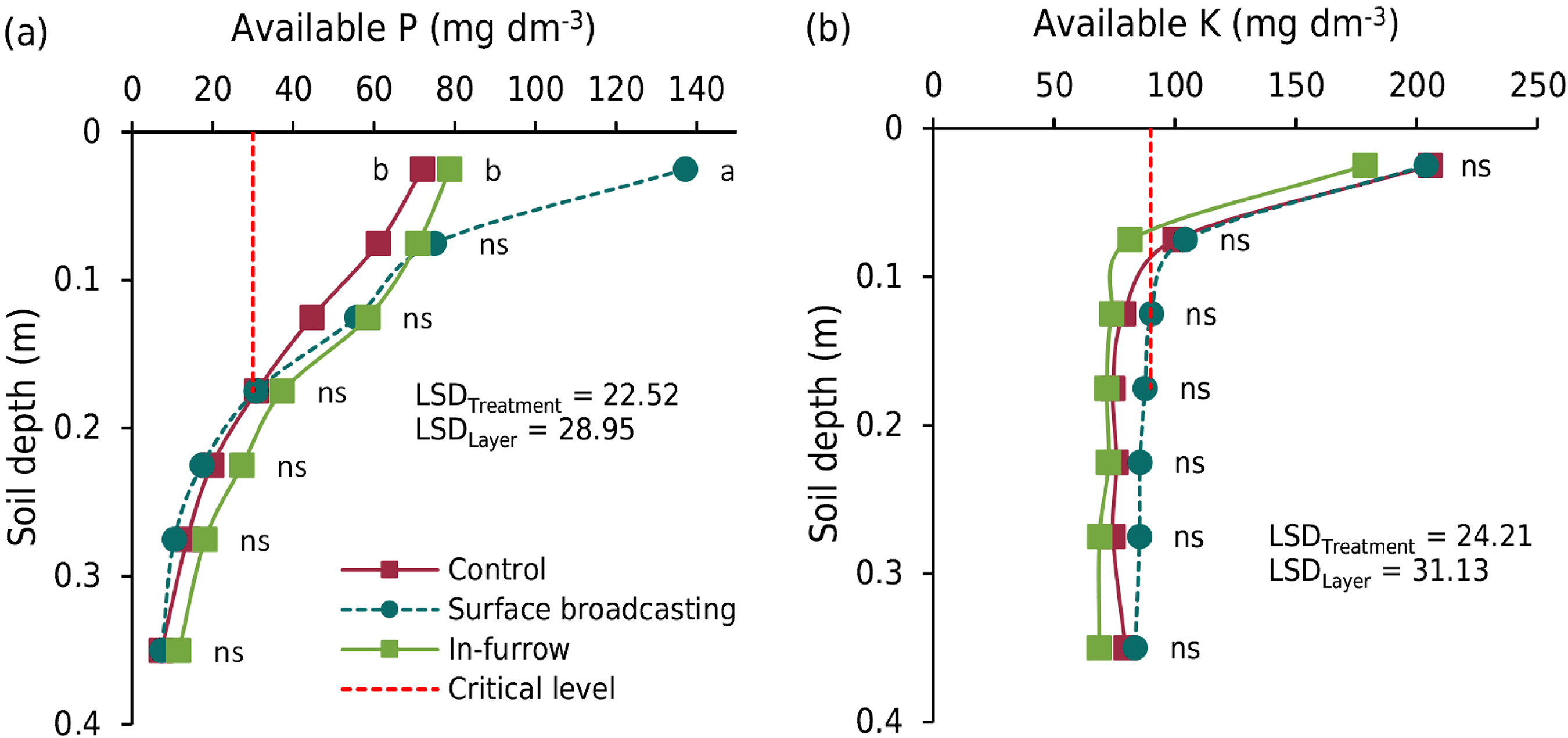
In the control treatment, without P, the 0.00–0.20 m soil layer already had P levels above the critical threshold for corn and soybean (CQFS-RS/SC, 2016). A clear excess of Mehlich-1 extractable P was observed in the surface layer (0.00–0.05 m), consistent with long-term experiments (37 and 66 years) under P fertilization in conservation grain production systems (Tiecher et al., 2023b). When exposed to surface runoff, this surplus of P poses a risk of being transported to water bodies, potentially contributing to eutrophication (Grando et al., 2021). This issue is particularly concerning in the southern half of Rio Grande do Sul, where soil erosion processes are becoming increasingly severe (Ramon et al., 2024). According to Gatiboni et al. (2020), the critical environmental P threshold (Mehlich-1) for the soil clay content in this study ranges from 48 to 83 mg dm-3. Surface-applied P increased P concentration in the 0.00–0.05 m soil layer to 137 mg dm-3 (Figure 3a). In contrast, in-row P application and the control did not differ, showing an average of 76 mg dm-3 of P in the same soil layer. At depths below 0.05 m, the P fertilization method had no significant effect. It is worth noting that the soil has low clay content (Table 1), suggesting that part of the P adsorption sites was already saturated. Therefore, both the mean concentration in the 0.00–0.05 m layer and the weighted average up to 0.10 m depth (106 mg dm-3) in the surface application treatment were well above this critical limit, indicating that additional P fertilization is not recommended for this area.
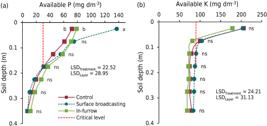
Mean values of available P (a) and K (b) extracted with Mehlich-1 as affected by fertilizer placement at different soil layers, six months after treatment application in a Plinthosol in southern Brazil. Means followed by different letters indicate significant differences among fertilization strategies within each soil layer according to Tukey test (p<0.05); ns: not significant by Tukey test (p>0.05); LSD: least significant difference.
Likely due to the already high P levels in the 0.00–0.20 m soil layer (mean of 75 mg dm-3), reapplication of P fertilizer in the sowing row (in-furrow) had little impact on nutrient desorption, resulting in P increases of 9.4, 15.5, and 30.9 % in the 0.00–0.05, 0.05–0.10, and 0.10–0.15 m soil layers, respectively, compared to the control (Figure 3a). From an agronomic standpoint, these results may influence fertilizer application decisions, since the CQFS-RS/SC (2016) guidelines consider a variation of 9.9 mg dm-3 sufficient to change the availability class for recommending P application in soils with clay content below 200 g kg-1.
Across all treatments, a P availability gradient was evident, with higher concentrations in the surface layer and a sharp decline with depth, which is characteristic of NTS (Tiecher et al., 2017). This gradient can hinder P diffusion to plant roots, especially under water deficit conditions (Silva et al., 2020), as observed in the first year of evaluation. Phosphorus uptake is more efficient when the nutrient is located closer to the rhizosphere (Degryse et al., 2017). Thus, the P placement in-furrow (closer to the roots) may have enhanced nutrient uptake, resulting in higher yields and, consequently, greater nutrient export. It is noteworthy that, even with the application of 61 and 133 kg ha-1 of P and K, respectively, nutrient availability did not differ from the control, except for P in the 0.00–0.05 m layer. This may be related to the greater adsorption capacity of soil functional groups in deeper soil layers, which are less saturated with P and K.
Similar to P, Mehlich-1 extractable K levels remained above the critical level throughout the soil profile. In the 0.00–0.05 m soil layer, excessive K was detected, and therefore, reapplication of 134 kg ha-1, either broadcast or in-furrow, did not alter values obtained by the single mild extraction method (Mehlich-1 solution: 0.05 mol L-1 HCl + 0.0125 mol L-1 H2SO4). Consequently, K migration through downward water movement in the profile is negligible and may even be less than the amount absorbed by roots in deeper soil layers and returned to the surface via residue decomposition. The binding energy of surface complexes with this cation is high enough to greatly reduce free K concentrations in the soil solution, while still weak enough to be extractable by Mehlich-1 when rhizosphere concentrations are depleted. The gradient of K availability was also evident, with an abrupt decrease below 0.05 m depth (Figure 4b). As with P, this is due to surface fertilizer application and plant residue deposition on the soil surface (Martins et al., 2014; Joris et al., 2016). However, in-furrow K application produced results similar to surface application. Compared with the control, this indicates that K may have migrated into the interlayers of 2:1 clay minerals, as previously reported in another study with the same soil type (Alves et al., 2019). A similar result was reported by Pesini et al. (2024a) in a Planosol containing these minerals, showing that Mehlich-1 extraction was not sensitive enough to detect annual K applications ranging from 0 to 168 kg ha-1. Conversely, in more weathered soils (Oxisols) lacking 2:1 clay minerals, in-furrow K application reduced the K gradient and increased soybean and wheat yields when available K levels were below 64 mg dm-3 in the 0.10–0.20 m soil layer (Pesini et al., 2024b).
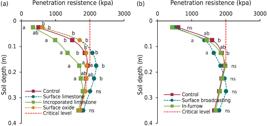
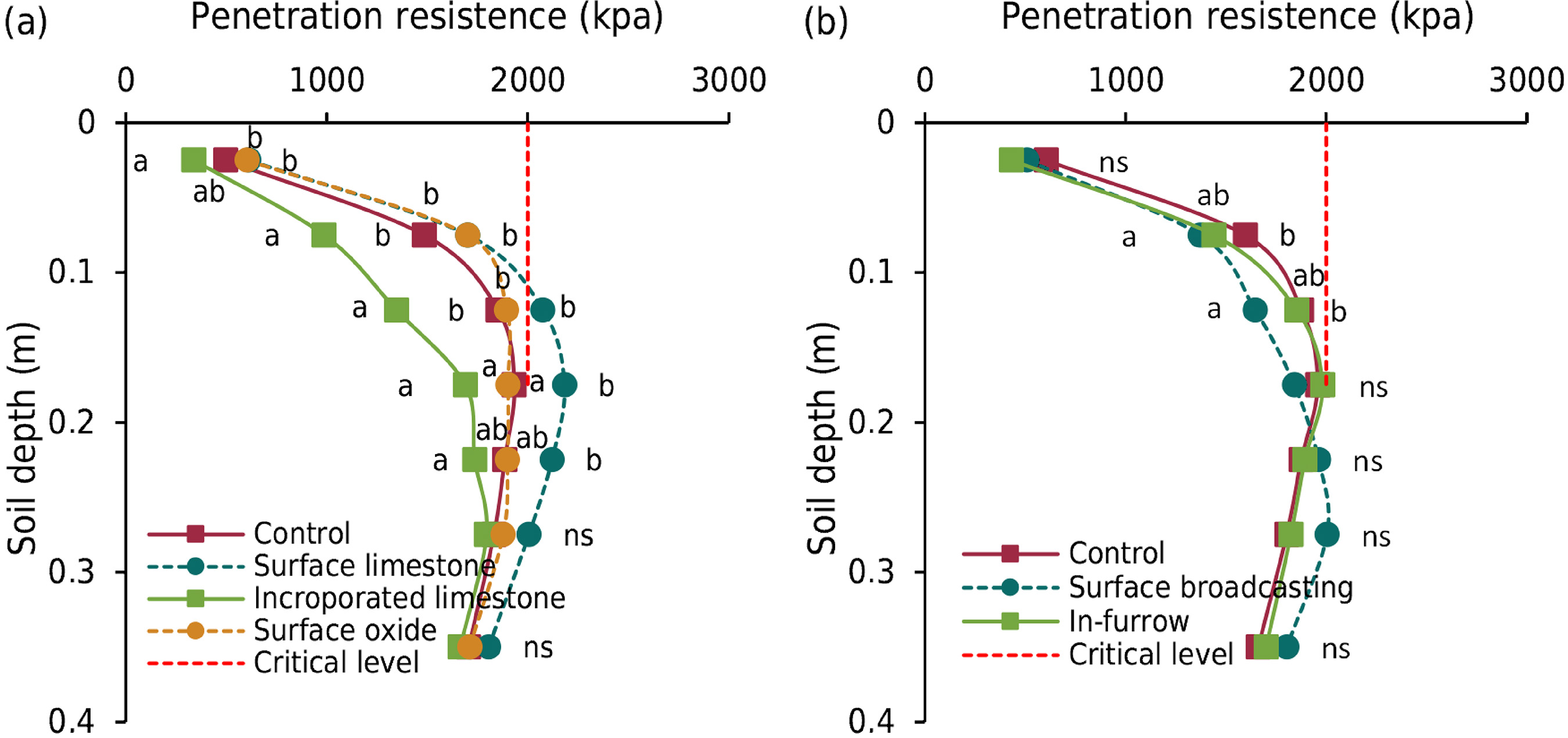
Mean values of soil penetration resistance as affected by soil acidity correction strategies (a) and by fertilizer placement (b) at different soil layers in a Plinthosol in southern Brazil. Means followed by different letters indicate significant differences among treatments within each soil layer according to Tukey test (p<0.05); ns: not significant by Tukey test (p>0.05); critical threshold according to Tormena et al. (1998).
Effect of acidity correction strategy on soil penetration resistance
Soil penetration resistance was used as a parameter to evaluate the effect of soil incorporation and tillage operations performed in the experiment. In the limestone incorporation treatment, values remained below the limits considered restrictive to root growth, whereas in the other treatments, results approached these thresholds, especially in the 0.05–0.15 m soil layer (Figure 4b). This behavior is associated with the greater soil mobilization caused by plowing and disking, which act down to approximately 0.20 m depth.
In general, tillage operations immediately reduce soil penetration resistance, as also reported by Zhao et al. (2022). Thus, the lower soil penetration resistance is initially due to the physical effect of soil disruption and loosening, which decreases resistance. In the present study, the values obtained with limestone incorporation fell within the range considered adequate for root growth in the evaluated layers. Critical values range from 1,500 to 4,000 kPa (Rosolem et al., 1999), with more evident restrictions occurring above 2,000 kPa (Tormena et al., 1998).
Surface application of CaO·MgO did not result in soil penetration resistance values that differed from those of the no-liming control. Although values tended to approach the critical threshold from 0.05 m depth onward, they did not reach restrictive levels (Figure 4a). Among the no-tillage strategies (surface-applied lime, surface-applied CaO·MgO, and control), no differences were observed up to 0.15 m depth (Figure 4b). However, between 0.10 and 0.25 m, values may be considered restrictive (Figure 4b). This result, however, cannot be directly attributed to the acidity correction strategy, since surface application was identical in both treatments.
Nevertheless, the effect of incorporation compared with surface application was evident down to 0.25 m, indicating greater improvement in soil physical conditions under this system. It is worth noting that Ca supplied through the dissolution of soil amendments contributes to aggregate formation (Machado et al., 2017). Thus, the lower the movement of corrective particles in the soil profile, the greater the physical restrictions to root development.
It is important to emphasize, however, that a full understanding of these effects requires additional assessments of soil physical properties, particularly in the long term. Although the results suggest a relationship with reduced root growth and depth, this study did not directly evaluate root development. This lack of data limits the ability to associate the observed differences with root system dynamics confidently.
Effects of fertilization method and soil acidity correction strategies on soybean and corn yield
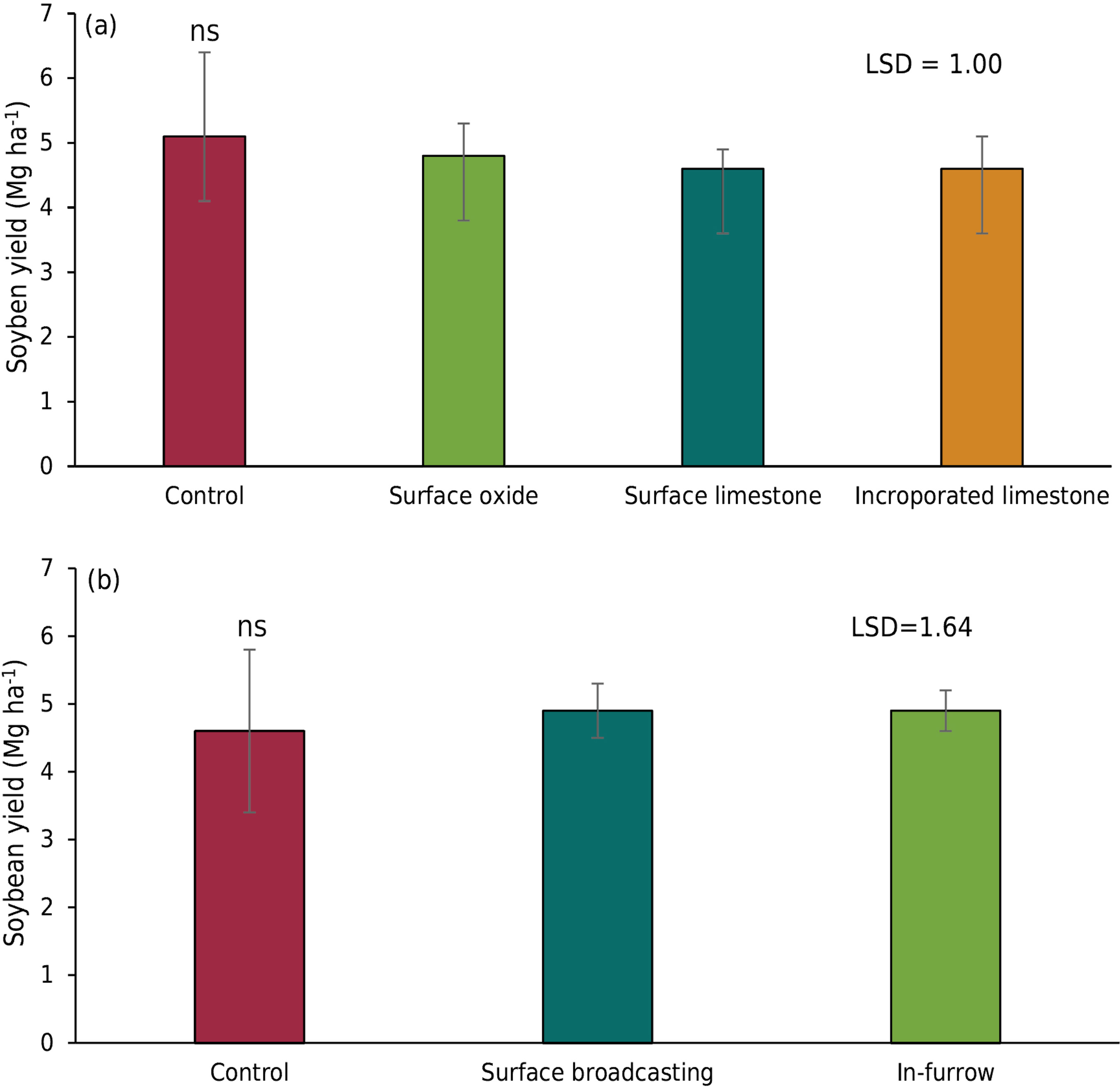
Lime application strategies and fertilization methods did not affect soybean yield (Figure 5). Soybean yield averaged 4.78 Mg ha-1, well above the Rio Grande do Sul State average of 1.53 Mg ha-1 in the 2020/21 growing season (CONAB, 2021). The high yield in this study is likely related to the greater rainfall recorded at the experimental site compared with the regional average, particularly in January (Figure 1). Under water deficit conditions, soybean is more susceptible to yield reduction due to high acidity and the presence of toxic Al. It can also be inferred that the lack of response to fertilization methods is explained by the already high levels of available P and K in the soil, which prevented nutritional deficiencies and allowed the crop to maintain its physiological functions even without fertilization, whether in-furrow or surface applied.
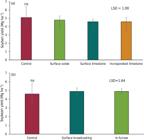
Mean soybean yield as affected by soil acidity correction strategies (a) and by fertilizer placement (b), six months after treatment application in a Plinthosol in southern Brazil. ns: not significant at p<0.05. LSD: least significant difference.
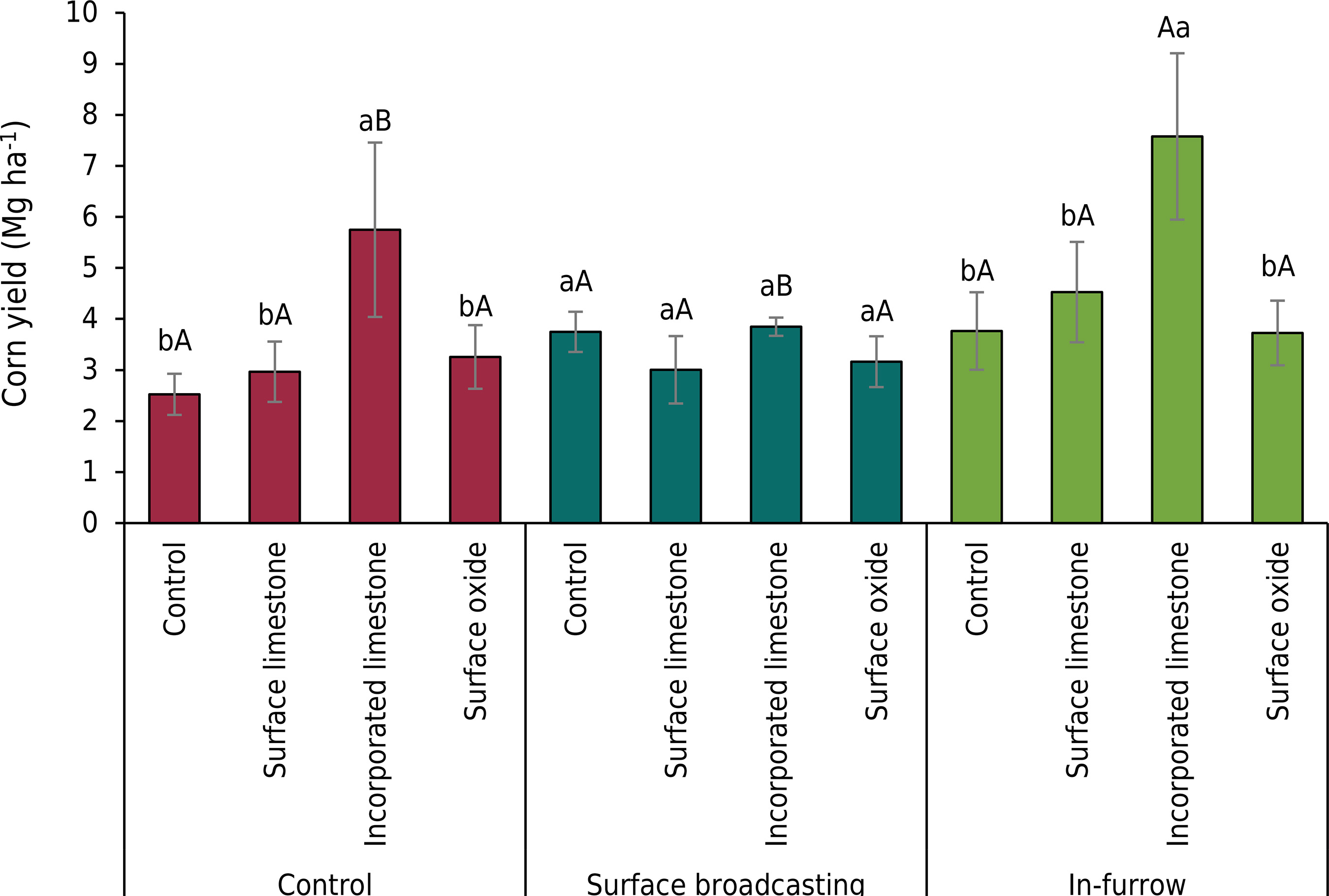
The immediate establishment of a favorable chemical profile for root growth through the incorporation of limestone resulted in a more than 100 % increase in corn grain yield, regardless of P and K addition or their replacement in-furrow (Figure 6). In this model of lime reapplication in soil with high Al3+ saturation, combined with in-furrow P and K fertilization, corn yield increased by almost 2 Mg ha-1.
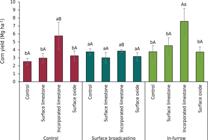
Mean corn yield as affected by soil acidity correction strategies and fertilizer placement in a Plinthosol in southern Brazil. Different lowercase letters indicate significant differences among soil acidity correction strategies within each fertilizer placement, and different uppercase letters indicate significant differences among fertilizer placements within each soil acidity correction strategy, according to Tukey test.
Results reported by Pagani and Mallarino (2015) indicated that corn is more responsive to liming than soybean. Similarly, in the meta-analysis conducted by Li et al. (2019), which included 175 studies, corn (n = 71) showed greater yield responses due to acidity correction than soybean (n = 23). According to the authors, this is likely related to the symbiosis between soybean roots and N2-fixing bacteria. Comparable results were reported by Pias et al. (2020), who showed that under adequate water conditions, soybean tolerates up to 40 % Al3+ saturation in the 0.20–0.40 m layer, while corn production is limited at Al3+ saturation levels greater than 5 % in the same layer, since it depends on deeper root development to enhance the efficiency of N uptake from fertilization. Rheinheimer et al. (2024b) also observed that soybean was little affected by soil acidity, tolerating up to 31 and 44 % Al3+ saturation in the 0.00–0.15 and 0.10–0.15 m soil layers, respectively. In another long-term experiment, Rheinheimer et al. (2025) found that the critical Al3+ saturation value for soybean increases with depth, ranging from 15, 24, 37, and 46 % in the 0.00–0.05, 0.05–0.10, 0.10–0.15, and 0.15–0.20 m soil layers, respectively.
The highest corn yields in this experiment were obtained in treatments combining acidity correction with soil tillage (incorporated limestone) and in-furrow P and K fertilization. This is probably related to the better distribution of nutrients in the deeper soil layers, together with subsurface acidity correction, which enabled the roots to explore a larger soil volume. Furthermore, in treatments with limestone incorporation and in-furrow fertilization, lower penetration resistance values were observed, indicating reduced soil compaction and more favorable conditions for root development and nutrient uptake.
It was also observed that when no fertilizer was added (since soil P and K levels were already adequate), limestone incorporation yielded the highest. However, when fertilizer was surface-applied, acidity correction strategies did not affect grain yield.
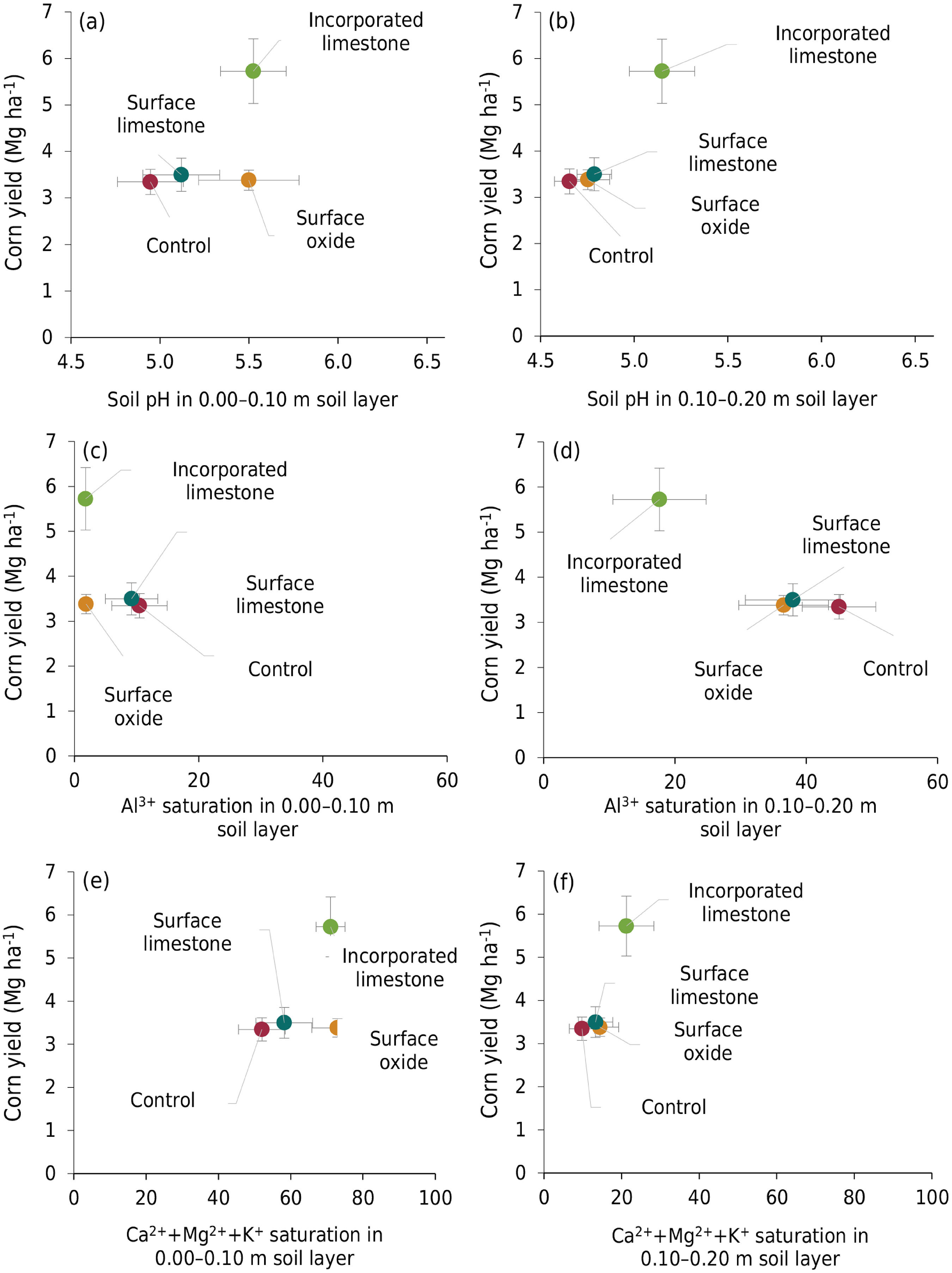
In the 0.00–0.10 m soil layer, CaO·MgO increased soil pH by 0.3 units and Ca2++ Mg2++K+ saturation by 1.86 %, with similar Al3+ saturation values compared with incorporated limestone. In the 0.10–0.20 m soil layer, however, the most favorable conditions for crop development were observed with incorporated limestone, which explained a 66 % higher yield compared with surface treatments (Figure 7). The higher pH and base saturation values in areas with incorporated amendments may account for the greater crop yields, enhancing fertilization efficiency even above adequate levels. The CQFS-RS/SC (2016) recommends using the 0.00–0.10 m soil layer to assess soil fertility under NTS, with occasional analysis of the 0.10–0.20 m layer. However, the relationship between corn yield and soil chemical properties in different layers indicates that 0.00–0.10 m analysis is ineffective for diagnosing fertility and yield potential under NTS. Similar results were reported by Condon et al. (2021) and Bellinaso et al. (2021). In this context, stratified analysis of the 0.10–0.20 m layer is necessary to provide more accurate liming recommendations.
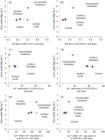
Relationship between corn yield and soil pH at 0.00–0.10 m (a) and 0.10–0.20 m (b), with Al3+ saturation at 0.00–0.10 m (c) and 0.10–0.20 m (d), and with Ca2++Mg2++K+ saturation at 0.00–0.10 m (e) and 0.10–0.20 m (f) in a Plinthosol in southern Brazil. Error bars represent the standard error of treatment means.
CONCLUSIONS
Limestone incorporation was the most effective strategy for correcting acidity in the plow layer, showing significant effects down to 0.15 m depth after six months. This practice created a more favorable physical and chemical environment for the development of cash crops. The improvements resulting from limestone incorporation led to increased corn yield already in the first growing season. Surface application of CaO·MgO without incorporation was effective only in correcting acidity in the soil surface layer (0.00–0.10 m), despite being a more soluble source.
Although different P and K fertilization strategies did not significantly affect nutrient availability in the soil, corn yield was higher when fertilizers were applied in-furrow compared with broadcast application. Soybean yield, however, was not influenced by either acidity correction strategies or fertilization methods.
Therefore, in soils with high subsurface acidity, incorporation of soil amendments is essential for effective correction and yield improvement. In addition, in-furrow application of P and K proved to be the most efficient strategy to secure high yields. Finally, we highlight the importance of this type of study for generating practical recommendations applicable to farmers. Further research under different soil and crop conditions is needed to expand these findings and refine technical recommendations on this subject.
-
How to cite:
Brum LN, Flores JPM, Alves LA, Filippi D, Eckert DJ, Pesini G, Tiecher TL, Fink JR, Schmitt DE, Martins AP, Santos DR, Tiecher T. Soil acidity correction and fertilization strategies: Effects on acidity, nutrient availability, and crop yield. Rev Bras Cienc Solo. 2026;50:e0250058. https://doi.org/10.36783/18069657rbcs20250058
-
FUNDING
The authors thank the Coordenação de Aperfeiçoamento de Pessoal de Nível Superior (CAPES) for the scholarship awarded to the first author, and the Fundação Agrisus (Sustainable Agriculture) for financial support (Project No. 3.256/22).
DATA AVAILABILITY
The data supporting the findings of this study are available from the corresponding author upon reasonable request.
REFERENCES
-
Alcarde JC. Corretivos da acidez dos solos: Características e interpretações técnicas. São Paulo: ANDA; 2005. (Boletim técnico, 6). Available from: https://anda.org.br/wp-content/uploads/2024/09/BT-6-–-Corretivos-da-Acidez-dos-Solos-Caracteristicas-e-Interpretacoes-Tecnicas-2o-Edicao-1992.pdf
» https://anda.org.br/wp-content/uploads/2024/09/BT-6-–-Corretivos-da-Acidez-dos-Solos-Caracteristicas-e-Interpretacoes-Tecnicas-2o-Edicao-1992.pdf -
Alvares CA, Stape JL, Sentelhas PC, Gonçalves JLM, Sparovek G. Köppen's climate classification map for Brazil. Meteorol Z. 2013;22:711-28. https://doi.org/10.1127/0941-2948/2013/0507
» https://doi.org/10.1127/0941-2948/2013/0507 -
Alves LA, Denardin LG, Martins AP, Anghinoni I, Carvalho PCF, Tiecher T. Soil acidification and P, K, Ca and Mg budget as affected by sheep grazing and crop rotation in a long-term integrated crop-livestock system in southern Brazil. Geoderma. 2019;351:197-208. https://doi.org/10.1016/j.geoderma.2019.04.036
» https://doi.org/10.1016/j.geoderma.2019.04.036 -
Alves LA, Fontoura SMV, Ambrosini VG, Pesini G, Flores JPM, Bayer C, Tiecher T. Impacts of tillage and liming on crop yields and soil acidity correction: Insights from a 32-year experiment in Southern Brazil. Plant Soil. 2025;511:1621-40. https://doi.org/10.1007/s11104-024-07076-w
» https://doi.org/10.1007/s11104-024-07076-w -
Artuso DR, Moterle DF, Santos DR, Tiecher T. Potassium distribution in soil profiles under no-tillage system. Rev Bras Cienc Solo. 2024;48:e0230125. https://doi.org/10.36783/18069657rbcs20230125.
» https://doi.org/10.36783/18069657rbcs20230125 -
Battisti R, Sentelhas PC, Pascoalino JAL, Sako H, Dantas JPS, Moraes MF. Soybean yield gap in the areas of yield contest in Brazil. Int J Plant Prod. 2018;12:159-68. https://doi.org/10.1007/s42106-018-0016-0
» https://doi.org/10.1007/s42106-018-0016-0 -
Bellinaso RJS, Tiecher T, Vargas JPR, Rheinheimer DS, Bruun S. Crop yields in no-tillage are severely limited by low availability of P and high acidity of the soil in depth. Soil Res. 2021;60:33-49. https://doi.org/10.1071/SR21021
» https://doi.org/10.1071/SR21021 -
Borges WLB, Hipólito JL, Juliano PHG, Souza IMD, Freitas RS, Andreotti M. Surface application of hydrated lime in different crop systems. Commun Soil Sci Plant Anal. 2023;54:258-86. https://doi.org/10.1080/00103624.2022.2112215
» https://doi.org/10.1080/00103624.2022.2112215 -
Bortoluzzi EC, Parize GL, Korchagin J, Silva VRD, Rheinheimer DDS, Kaminski J. Soybean root growth and crop yield in response to liming at the beginning of a no-tillage system. Rev Bras Cienc Solo. 2014;38:262-71. https://doi.org/10.1590/S0100-06832014000100026
» https://doi.org/10.1590/S0100-06832014000100026 -
Bossolani JW, Crusiol CAC, Portugal JR, Moretti LG, Garcia A, Rodrigues VA, Fonseca MC, Bernart L, Vilela RG, Mendonça LP, Reis AR. Long-term liming improves soil fertility and soybean root growth, reflecting improvements in leaf gas exchange and grain yield. Eur J Agron. 2021;128:126308. https://doi.org/10.1016/j.eja.2021.126308
» https://doi.org/10.1016/j.eja.2021.126308 -
Calegari A, Tiecher T, Hargrove WL, Ralisch R, Tessier D, Tourdonnet S, Guimarães MF, Rheinheimer DS. Long-term effect of different soil management systems and winter crops on soil acidity and vertical distribution of nutrients in a Brazilian Oxisol. Soil Till Res. 2013;133:32-9. https://doi.org/10.1016/j.still.2013.05.009
» https://doi.org/10.1016/j.still.2013.05.009 - Comissão de Química e Fertilidade do Solo - CQFS-RS/SC. Manual de calagem e adubação para os Estados do Rio Grande do Sul e de Santa Catarina. 11. ed. Porto Alegre: Sociedade Brasileira de Ciência do Solo - Núcleo Regional Sul; 2016.
-
Companhia Nacional de Abastecimento - CONAB. Perspectivas para a Agropecuária - Volume 9 - Safra 2021/2022: Edição Grãos. Brasília, DF: Ministério do Desenvolvimento Agrário e Agricultura Familiar; 2021. Available from: https://www.conab.gov.br/perspectivas-para-a-agropecuaria
» https://www.conab.gov.br/perspectivas-para-a-agropecuaria -
Condon J, Burns H, Li G. The extent, significance and amelioration of subsurface acidity in southern New South Wales, Australia. Soil Res. 2021;59:1-11. https://doi.org/10.1071/SR20079
» https://doi.org/10.1071/SR20079 -
Degryse F, Baird R, Silva RC, McLaughlin MJ. Dissolution rate and agronomic effectiveness of struvite fertilizers–effect of soil pH, granulation and base excess. Plant Soil. 2017;410:139-52. https://doi.org/10.1007/s11104-016-3031-1
» https://doi.org/10.1007/s11104-016-3031-1 - Donagema GK, Campos DVB, Calderano SB, Teixeira WG, Viana JHM. Manual de métodos de análise do solo. 2. ed. rev. Rio de Janeiro: Embrapa Solos; 2011.
-
Ferreira DF. Sisvar: A computer statistical analysis system. Cienc Agrotec. 2011;35:1039-42. https://doi.org/10.1590/S1413-70542011000600001
» https://doi.org/10.1590/S1413-70542011000600001 -
Gatiboni LC, Nicoloso RS, Mumbach GL, Júnior AAS, Dall'Orsoletta DJ, Schmitt DE, Smyth TJ. Establishing environmental soil phosphorus thresholds to decrease the risk of losses to water in soils from Rio Grande do Sul, Brazil. Rev Bras Cienc Solo. 2020;44:e0190140. https://doi.org/10.36783/18069657rbcs20200140
» https://doi.org/10.36783/18069657rbcs20200140 -
Grando DL, Gatiboni LC, Mumbach GL, Dall'Orsoletta DJ, Souza Junior AA, Schmitt DE. Phosphorus in the runoff of soils with contrasting textures influenced by soil slope and pig slurry application. Agric Water Manag. 2021;258:107155. https://doi.org/10.1016/j.agwat.2021.107155
» https://doi.org/10.1016/j.agwat.2021.107155 - Instituto Nacional de Meteorologia - Inmet. Normais climatológicas do Brasil. Brasília, DF: Inmet; 2017.
-
IUSS Working Group WRB. World reference base for soil resources. International soil classification system for naming soils and creating legends for soil maps. 4th. ed. Vienna, Austria: International Union of Soil Sciences (IUSS); 2022. Available from: https://www.isric.org/sites/default/files/WRB_fourth_edition_2022-12-18.pdf
» https://www.isric.org/sites/default/files/WRB_fourth_edition_2022-12-18.pdf -
Joris HAW, Caires EF, Scharr DA, Bini AR, Haliski A. Liming in the conversion from degraded pastureland to a no-till cropping system in Southern Brazil. Soil Till Res. 2016;162:162-77. https://doi.org/10.1016/j.still.2016.04.002
» https://doi.org/10.1016/j.still.2016.04.002 - Kaminski J, Rheinheimer DS, Bartz HR. Proposta de nova equação para determinação do valor de H+Al pelo uso do índice SMP em solos do RS e SC. In: Anais da 33a Reunião anual da rede oficial de laboratórios de análise de solo e de tecido vegetal dos estados do Rio Grande do Sul e de Santa Catarina. Frederico Westphalen: Sociedade Brasileira de Ciência do Solo - Núcleo Regional Sul – ROLAS; 2001. p. 21-6.
-
Li Y, Cui S, Chang SX, Zhang Q, Li Y. Liming effects on soil pH and crop yield depend on lime material type, application method and rate, and crop species: a global meta-analysis. J Soils Sediments. 2019;19:1393-406. https://doi.org/10.1007/s11368-019-02365-9
» https://doi.org/10.1007/s11368-019-02365-9 -
Machado W, Melo TR, Tavares Filho J. Clay dispersion and loss in Oxisol treated with different concentrations of limestone. Semin: Cienc Agrar. 2017;38:3907-13. https://doi.org/10.5433/1679-0359.2017v38n6p3907
» https://doi.org/10.5433/1679-0359.2017v38n6p3907 -
Maksic J, Venancio IM, Shimizu MH, Chiessi CM, Piacsek P, Sampaio G, Cruz FW, Alexandre FF. Brazilian biomes distribution: Past and future. Palaeogeogr Palaeoclimatol Palaeoecol. 2022;585:110717. https://doi.org/10.1016/j.palaeo.2021.110717
» https://doi.org/10.1016/j.palaeo.2021.110717 -
Martins AP, Anghinoni I, Costa SEVG, Carlos FS, Nichel GH, Silva RAP, Carvalho PCF. Amelioration of soil acidity and soybean yield after surface lime reapplication to a long-term no-till integrated crop-livestock system under varying grazing intensities. Soil Till Res. 2014;144:141-9. https://doi.org/10.1016/j.still.2014.06.010
» https://doi.org/10.1016/j.still.2014.06.010 -
Martins VL, Moraes LM, Costa SDA, Filho NML, Silva GB, Domingues DN, Faturi C, Rêgo AC, Silva TC. Effects of sowing depth and inoculation with Pseudomonas fluorescens on the initial growth of Urochloa brizantha (syn Brachiaria brizantha) cv. Marandú. Rev Bras Saude Prod Anim. 2022;23:e0240059. https://doi.org/10.1590/S1519-9940202100112022
» https://doi.org/10.1590/S1519-9940202100112022 -
Nkebiwe PM, Weinmann M, Bar-Tal A, Müller T. Fertilizer placement to improve crop nutrient acquisition and yield: A review and meta-analysis. Field Crops Res. 2016;196:389-401. https://doi.org/10.1016/j.fcr.2016.06.011
» https://doi.org/10.1016/j.fcr.2016.06.011 -
Pagani A, Mallarino AP. On-farm evaluation of corn and soybean grain yield and soil pH responses to liming. Agron J. 2015;107:71-82. https://doi.org/10.2134/agronj14.0314
» https://doi.org/10.2134/agronj14.0314 -
Pesini G, Flores JPM, Alves LA, Filippi D, Martins AP, Carmona FC, Tiecher TL, Inda AV, Gatiboni LC, Santos DR, Tiecher T. Potassium rates and application methods: Effects on soil K availability and crop response in Planosols and Ferralsols. Commun Soil Sci Plant Anal. 2024a;55:1675-89. https://doi.org/10.1080/00103624.2024.0000000
» https://doi.org/10.1080/00103624.2024.0000000 -
Pesini G, Eckert DJ, Menegat MF, Frosi G, Flores JPM, Alves LA, Filippi D, Tiecher TL, Santos DR, Tiecher T. Effect of potassium rates and application methods in no-till on soil K availability and crop yield. Rev Bras Cienc Solo. 2024b;48:e0240067. https://doi.org/10.36783/18069657rbcs20240067
» https://doi.org/10.36783/18069657rbcs20240067 -
Pesini G, Fontoura SMV, Ambrosini VG, Alves LA, Flores JPM, Bayer C, Tiecher T. Long-term impact of tillage systems and liming on grain yield and soil potassium dynamics in a crop rotation system. J Soil Sci Plant Nutr. 2025;25:2451-64. https://doi.org/10.1007/s42729-025-02277-3
» https://doi.org/10.1007/s42729-025-02277-3 -
Petrere C, Anghinoni I. Alteração de atributos químicos no perfil do solo pela calagem superficial em campo nativo. Rev Bras Cienc Solo. 2001;25:885-95. https://doi.org/10.1590/S0100-06832001000400002
» https://doi.org/10.1590/S0100-06832001000400002 -
Pias OHC, Tiecher T, Cherubin MR, Silva AGB, Bayer C. Does gypsum increase crop grain yield on no-tilled acid soils? A meta-analysis. Agron J. 2020;112:675-92. https://doi.org/10.1002/agj2.20125
» https://doi.org/10.1002/agj2.20125 -
Rafain EF, Gubian JE, Rosa DP, Nunes AL. Correlation between sowing and fertilizer application systems and weeds in soybean crops. Rev Caatinga. 2020;33:281-6. https://doi.org/10.1590/1983-21252020v33n201rc
» https://doi.org/10.1590/1983-21252020v33n201rc -
Ramon R, Evrard O, Feitosa CEL, Batista AAM, Minella JPG, Huon S, Bernardi F, Tiecher TL, Barros CAP, Tiecher T. Conversion of native grasslands into croplands in the Pampa biome and its effects on source contributions to suspended sediment of the Ibirapuitã River, Brazil. Land Degrad Dev. 2024;35:4024-41. https://doi.org/10.1002/ldr.5201
» https://doi.org/10.1002/ldr.5201 -
Rheinheimer DS, Tiecher T, Gonzatto R, Zafar M, Brunetto G. Residual effect of surface-applied lime on soil acidity properties in a long-term experiment under no-till in a Southern Brazilian sandy Ultisol. Geoderma. 2018a;313:7-16. https://doi.org/10.1016/j.geoderma.2017.09.020
» https://doi.org/10.1016/j.geoderma.2017.09.020 -
Rheinheimer DS, Tiecher T, Gonzatto R, Santana MA, Brunetto G, Silva LS. Long-term effect of surface and incorporated liming in the conversion of natural grassland to no-till system for grain production in a highly acidic sandy-loam Ultisol from south Brazilian Campos. Soil Till Res. 2018b;180:222-31. https://doi.org/10.1016/j.still.2018.03.014
» https://doi.org/10.1016/j.still.2018.03.014 -
Rheinheimer DS, Bortoluzzi EC, Moterle DF, Le Guet T, Bastos MC, Coelho LL, Meotti BL, Santana AS, Tiecher T. Kinetics of soil re-acidification under no-tillage system. Soil Till Res. 2024a;242:106137. https://doi.org/10.1016/j.still.2024.106137
» https://doi.org/10.1016/j.still.2024.106137 -
Rheinheimer DS, Troian A, Bastos MC, Pesini G, Tiecher T. Soil aluminum saturation threshold for subtropical crops in no-tillage system. Soil Res. 2024b;62:eSR23174. https://doi.org/10.1071/SR23174
» https://doi.org/10.1071/SR23174 -
Rheinheimer DS, Miotto A, Meotti BL, Santana AS, Coelho LL, Pesini G, Silva LS, Tiecher T. Yield and productivity of grain and cover crops are not affected by Ca/Mg ratio in a subtropical Brazilian Ultisol. J Soil Sci Plant Nutr. 2025;25:1578-96. https://doi.org/10.1007/s42729-025-02225-1
» https://doi.org/10.1007/s42729-025-02225-1 -
Rosolem CA, Fernandez EM, Andreotti M, Crusiol CAC. Crescimento radicular de plântulas de milho afetado pela resistência do solo à penetração. Pesq Agropec Bras. 1999;34:821-8. https://doi.org/10.1590/S0100-204X1999000400007
» https://doi.org/10.1590/S0100-204X1999000400007 - Santos HG, Jacomine PKT, Anjos LHC, Oliveira VA, Lumbreras JF, Coelho MR, Almeida JA, Araújo Filho JC, Lima HN, Marques FA, Oliveira JB, Cunha TJF. Sistema brasileiro de classificação de solos. 6. ed. rev. ampl. Brasília, DF: Embrapa; 2025.
-
Silva RCD, Lana RMQ, Silva JGM, Oliveira GN, Magela MLM. Phosphate organomineral fertilizer usage compared to mineral phosphate in corn cultivation. J Agric Sci. 2020;12:92-104. https://doi.org/10.5539/jas.v12n7p92
» https://doi.org/10.5539/jas.v12n7p92 -
Siqueira PP, Oliveira PTS, Bressiani D, Meira Neto AA, Rodrigues DBB. Effects of climate and land cover changes on water availability in a Brazilian Cerrado basin. J Hydrol Reg Stud. 2021;37:100931. https://doi.org/10.1016/j.ejrh.2021.100931
» https://doi.org/10.1016/j.ejrh.2021.100931 - Tedesco MJ, Gianello C, Bissani CA, Bohnen H, Volkweiss SJ. Análises de solo, plantas e outrosmateriais. 2. ed. Porto Alegre: Universidade Federal do Rio Grande do Sul; 1995. (Boletim técnico, 5).
-
Tiecher T, Calegari A, Caner L, Rheinheimer DS. Soil fertility and nutrient budget after 23-years of different soil tillage systems and winter cover crops in a subtropical Oxisol. Geoderma. 2017;308:78-85. https://doi.org/10.1016/j.geoderma.2017.08.028
» https://doi.org/10.1016/j.geoderma.2017.08.028 -
Tiecher T, Fontoura SMV, Ambrosini VG, Araújo EA, Alves LA, Bayer C, Gatiboni LC. Soil phosphorus forms and fertilizer use efficiency are affected by tillage and soil acidity management. Geoderma. 2023a;435:116495. https://doi.org/10.1016/j.geoderma.2023.116495
» https://doi.org/10.1016/j.geoderma.2023.116495 -
Tiecher T, Gatiboni L, Osmond D, Hardy D. Soil sampling depth effect on critical soil test values of phosphorus for conservation agriculture. Crop Forage Turfgrass Manag. 2023b;9:e20251. https://doi.org/10.1002/cft2.20251
» https://doi.org/10.1002/cft2.20251 -
Tiritan CS, Büll LT, Crusciol CAC, Carmeis Filho ACA, Fernandes DM, Nascente AS. Tillage system and lime application in a tropical region: soil chemical fertility and corn yield in succession to degraded pastures. Soil Till Res. 2016;155:437-47. https://doi.org/10.1016/j.still.2015.06.012
» https://doi.org/10.1016/j.still.2015.06.012 -
Tormena CA, Silva AP, Libardi PL. Caracterização do intervalo hídrico ótimo de um Latossolo Roxo sob plantio direto. Rev Bras Cienc Solo. 1998;22:573-81. https://doi.org/10.1590/S0100-06831998000400002
» https://doi.org/10.1590/S0100-06831998000400002 -
Zhao H, Qin J, Gao T, Zhang M, Sun H, Zhu S, Xu C, Ning T. Immediate and long-term effects of tillage practices with crop residue on soil water and organic carbon storage changes under a wheat-maize cropping system. Soil Till Res. 2022;218:105309. https://doi.org/10.1016/j.still.2021.105309
» https://doi.org/10.1016/j.still.2021.105309
Edited by
-
Editor:
José Miguel Reichert https://orcid.org/0000-0001-9943-2898 and Edicarlos Damacena Souza https://orcid.org/0000-0003-3719-8615