 EVALUATION OF PHOSPHORUS REQUIREMENT BY THE SORPTION ISOTHERM TECHNIQUE IN SOILS AMENDED WITH ORGANIC MATERIALS
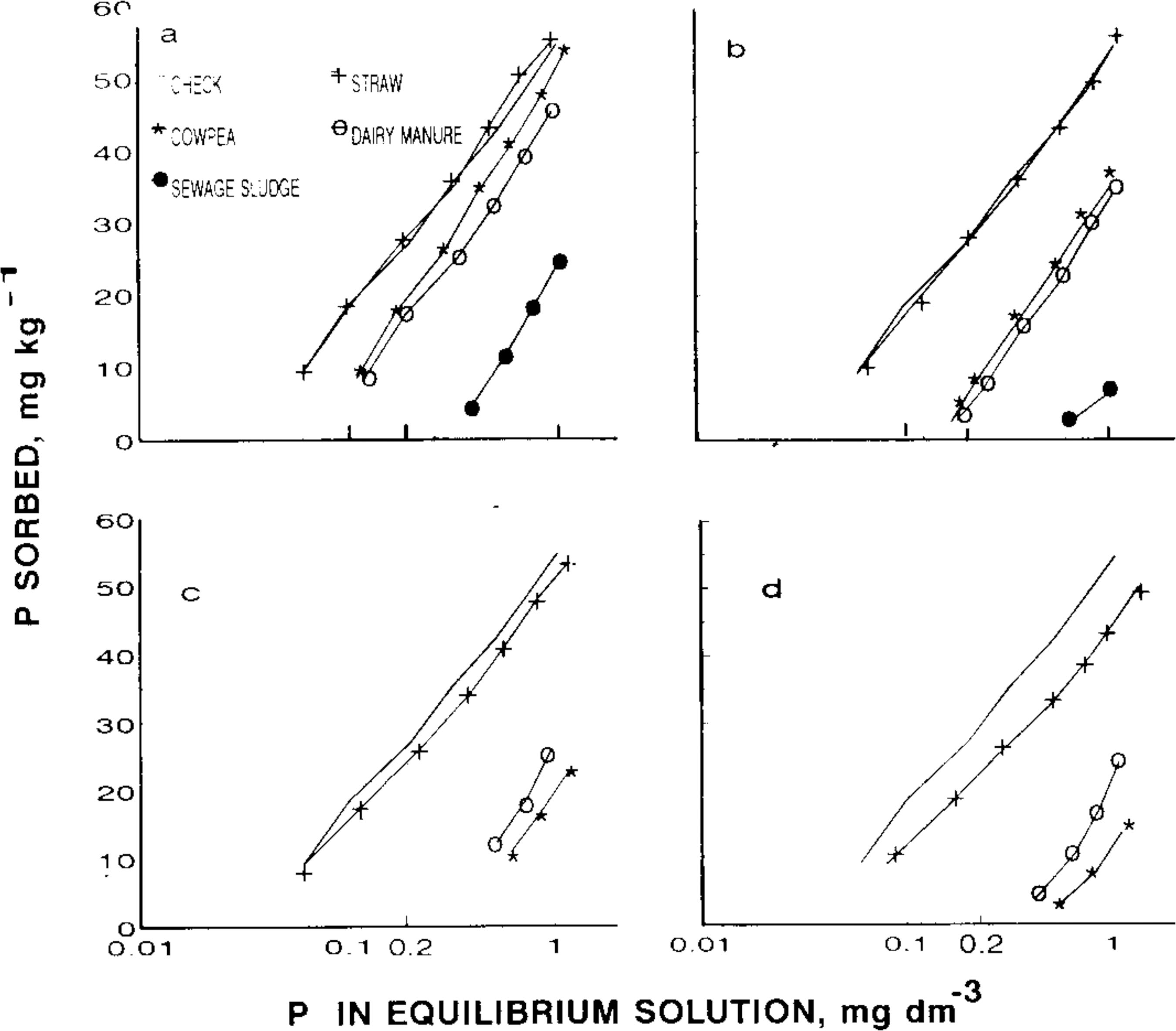
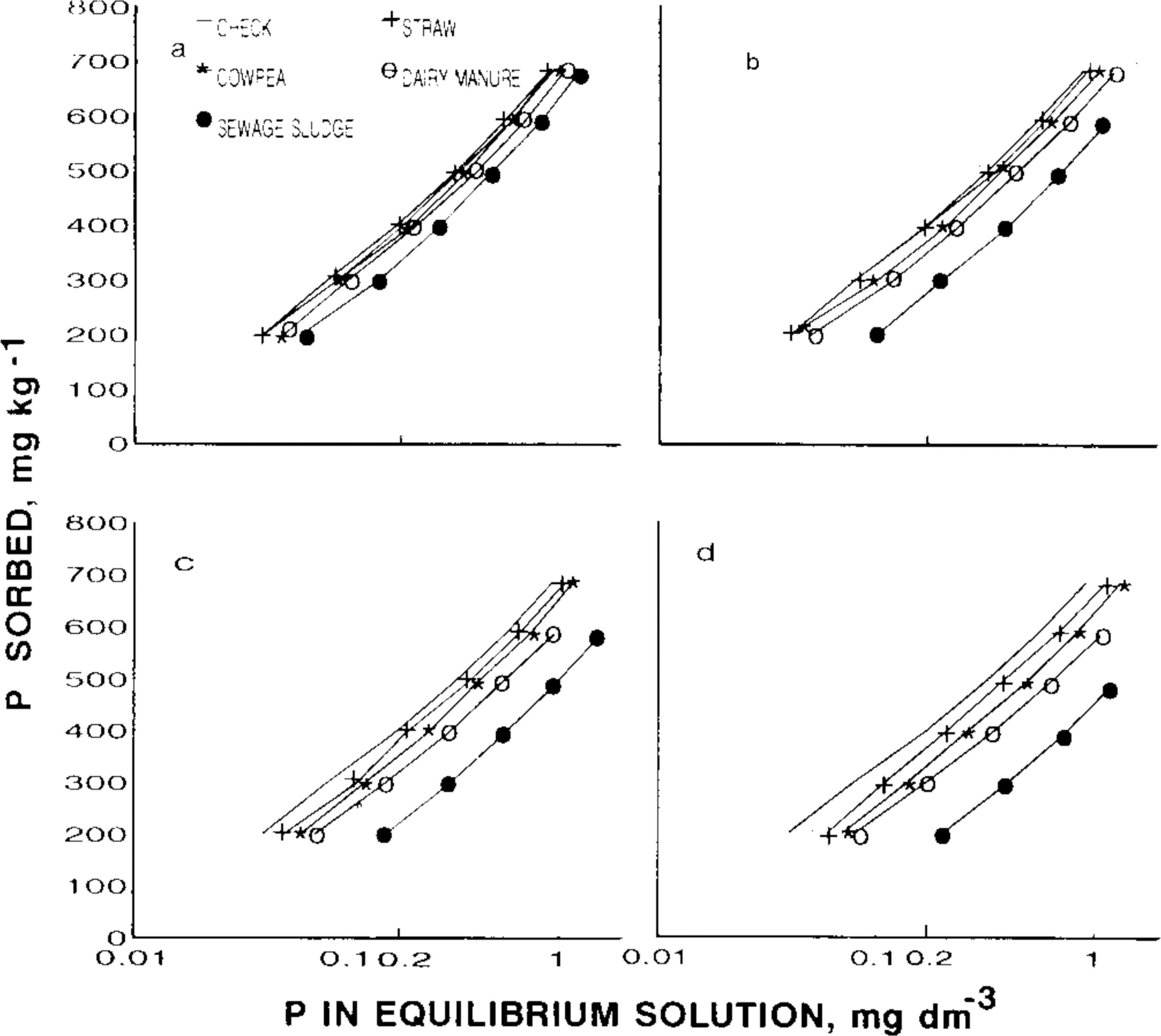
Phosphorus requirement was evaluated by the sorption isotherm technique by means of laboratory and greenhouse experiments which were carried out at the Department of Soils and Environmental Sciences of the University of California, Riverside (CA), USA, from January to November of 1985. Two soils with different sorption capacities received increasing amounts of barley straw, cowpea plant tops, dairy manure and sewage sludge. The addition of the organic materials studied decreased P sorption capacity of the soils, except when the two lowest doses of barley straw were applied to the Aquatibia soil (Typic xerofluvent). The decreases were proportional to the P concentration in the organic materials and to the amount applied. Dairy manure was more efficient in preventing P sorption by the Hoda soil (Ultic haploxeralf) than the cowpea plant tops. The sorption isotherm technique gave better results in soil with high P sorption capacity because it supplied similar amounts of P to the crop, even with the addition of several organic residues varying in composition and P content. Phosphorus mineralization from the soil organic pool should be taken into account when the sorption isotherm technique is applied to soils with low buffer capacity and that were fertilized with organic materials.
Index terms
soil phosphorus; sorption isotherm; organic fertilizers
 Thumbnail
 Thumbnail