 Carbon patterns and soil quality in fragile soils under sustainable soil management in organic systems of Southeastern Brazil: Short-term assessment
ABSTRACT
Adopting conservationist soil use and management practices, such as the no-tillage system and cover crops associated with organic agriculture, can improve the quality of fragile soils. This study aimed to evaluate changes in soil fertility and the accumulation of soil organic matter and its fractions in sandy-textured soils under a 3-year no-tillage system in Seropédica, Rio de Janeiro. The experimental design was in randomized blocks, with three replications, in a 2 × 6 split plot scheme, with two planting systems distributed in the plots (no-tillage and conventional-tillage) and six cover plants distributed in isolated and intercropped subplots (Millet - Pennisetum glaucum; Crotalaria - Crotalaria juncea and Jack beans - Canavalia ensiformis; cocktailsformed by mixing 100 % of the seeds of the recommended cover crops; consortium formed by combining 50 % of the plant seeds recommended coverage and spontaneous plants maintained in the fallow area). The contents and stocks of total soil organic carbon, particulate organic carbon, mineral-associated organic carbon, soil organic carbon free light fraction, and soil fertility properties were measured in layers 0.00-0.05, 0.05-0.10, and 0.10-0.20 m in 2019 and 2022. Our findings suggest that cover crop incorporation in the conventional-tillage favored greater nutrient availability compared to the no-tillage. Conversely, the no-tillage system demonstrated promising potential for soil carbon sequestration, especially within the more stable fractions (mineral-associated organic carbon), in organic vegetable production. The three-year period was insufficient to promote an increase in labile soil organic carbon, particularly particulate organic carbon (POC) and the free light fraction (FLL). Notably, POC decreased in the 0.05-0.10 and 0.10-0.20 m layers under both no-tillage (-37 % and -48 %) and conventional tillage (-5 % and -38 %) systems.
Keywords
particulate organic carbon; mineral-associated organic carbon; soil carbon sequestration; organic agriculture
INTRODUCTION
The extensive use of inadequate agricultural practices in Brazil has significantly contributed to gradual soil degradation (Silva et al., 2023). This is especially evident in vegetable production, characterized by intensive cultivation with high inputs, extensive fertilization, and frequent soil tillage operations such as plowing, harrowing, and rotary hoeing (Alcantara and Madeira, 2008). The misapplication of such practices compromises the integrity of the soil structure by enhancing aggregate disruption and organic matter mineralization. This fosters the development of compacted horizons that limit water infiltration and root expansion, thereby elevating erosion susceptibility (Reichert et al., 2003).
Sustainable soil management, such as organic farming combined with cover crops and no-tillage, is a promising approach to improve the sustainability of vegetable production, particularly in fragile sandy soils (Oliveira et al., 2010; Adetunji et al., 2020). Organic systems emphasize soil fertility quality and balance, promoting biological activity, nutrient cycling, and organic matter preservation, which are crucial for the productivity and quality of organic products (Friedrich et al., 2022).
Organic agriculture in Brazil accounts for approximately 0.3 % of the country's arable land, encompassing 15,836 certified farms (Vilela et al., 2019). Since 2013, the number of rural establishments engaged in organic production in Brazil has increased by approximately 150%, reaching 25,178 certified properties as of May 2025. In this context, the Southeast region ranks third in the number of organic establishments, with 618 certified organic properties in the state of Rio de Janeiro (MAPA, 2026; CI Orgânicos, 2025). These production systems are regulated by national legislation, which plays a key role in shaping the development of the sector (MAPA, 2021). Government investment and research are vital to expand organic agriculture, especially organic no-till systems (NTO) and vegetable-oriented organic no-till systems, which lack sufficient producer information. Such efforts will foster sustainability across economic, social, and environmental dimensions.
Implementing no-tillage with diversified cash and cover crops, either in rotation or mixtures, helps prevent land degradation, stabilizes yields, and promotes soil carbon accumulation, particularly when combined with green manuring (Machado and Silva, 2001; Boddey et al., 2010; Conceição et al., 2013). Nonetheless, no-tillage alone does not guarantee sustainability; permanent soil cover and crop diversification are necessary components that require effective technology transfer and adoption by farmers (Fuentes-Llanillo et al., 2021).
Cover crops in conservation systems enhance soil quality. Grasses, with their high C/N ratios, slow decomposition, and protect soil from erosion, while legumes, with low C/N ratios, accelerate nutrient cycling by promoting rapid residue breakdown. Combining grasses and legumes provides complementary benefits that improve soil fertility by increasing soil organic matter (SOM) (Hunter et al., 2019; Koudahe et al., 2022).
Soil organic matter is critical for cultivation, especially in sandy soils, which typically have low levels (Fontana et al., 2021). The Baixada Fluminense region in Rio de Janeiro exemplifies such conditions, with sandy soils having low cation exchange capacity and base saturation, thus reduced fertility. Increasing SOM enhances soil fertility, structure, and water infiltration (Karchegani et al., 2012; Shahriari et al., 2012; Havaee et al., 2014).
Agricultural management significantly affects the supply and storage of SOM (Dortzbach et al., 2017). Physical fractionation methods help elucidate the dynamics of soil organic carbon (SOC) (Cotrufo et al., 2019; Lavelle et al., 2020). Commonly, SOM is separated by particle size into particulate organic carbon (POC), organic matter associated with sand-sized particles, and mineral-associated organic carbon (MAOC), associated with silt- and clay-sized particles (Cambardella and Elliott, 1992). Densimetric fractionation isolates labile SOM compartments as light fractions; the free light fraction (FLF) consists of rapidly decomposing materials and is used to study soil management impacts (Pinheiro et al., 2004). Carbon content in these fractions provides insights into soil quality and land-use effects (Nanzer et al., 2019).
Our study hypothesizes that conservation management systems associated with different cover crops modify soil organic matter fractions and soil chemical properties over three years. Based on this hypothesis, the present study aims to identify the potential of management systems, along with the most efficient cover crops, to maintain and accumulate carbon content and its respective organic fractions in the short term (three years of adoption).
MATERIALS AND METHODS
Study area and experimental design
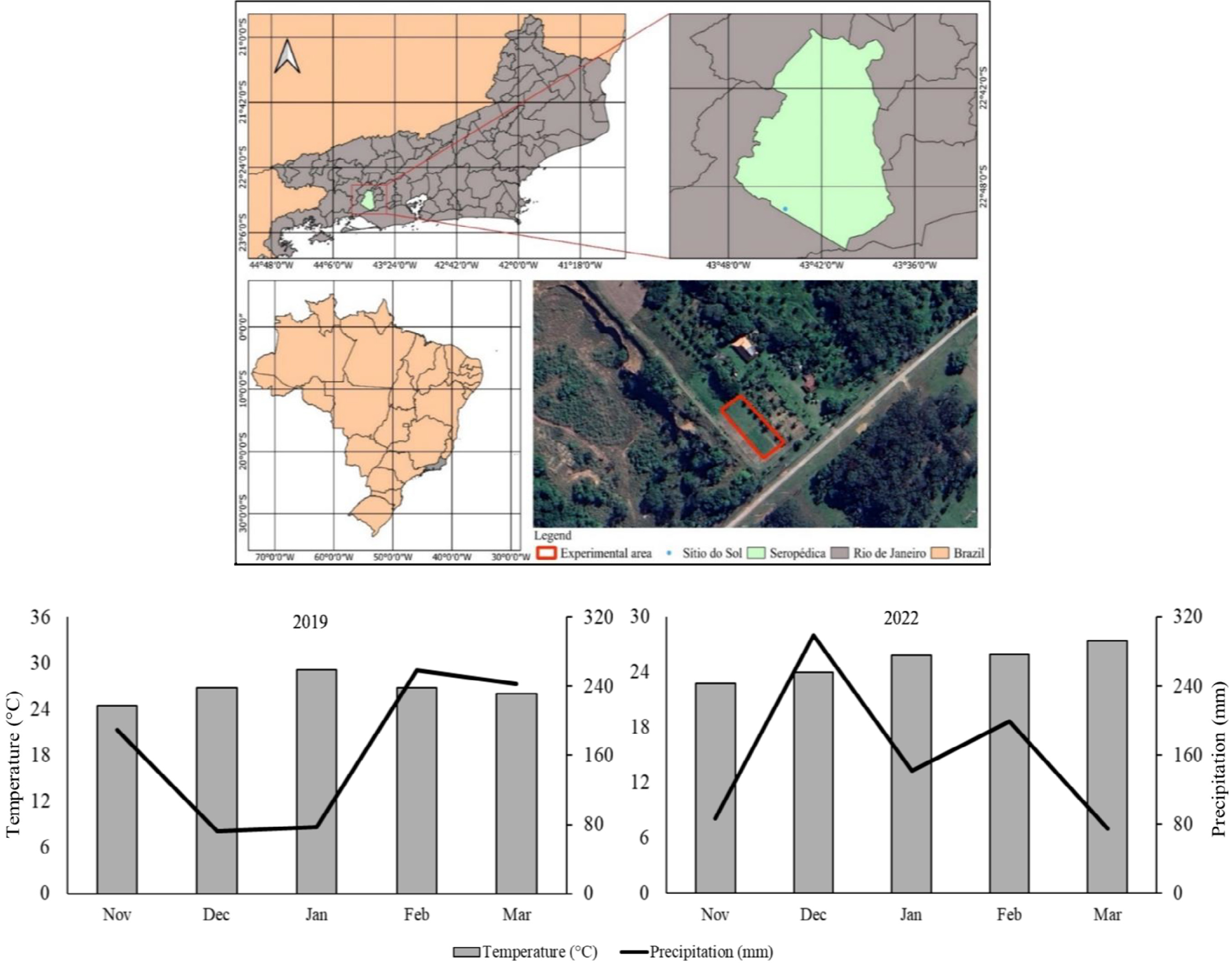
The research was carried out at Sítio do Sol Farm, an agroecological and organic experimental station located near Seropédica, in the southeastern region of Brazil (22° 49’ 20.3” S, 43° 44’ 19.4” W), Rio de Janeiro. The area experiences a tropical climate with distinct dry winters and wet summers, classified as Aw according to the Köppen climate classification system. In the evaluated months, the average monthly temperature reached approximately 26.66 °C in 2019, accompanied by 168 mm of rainfall, and 25.15 °C in 2022, with an average of 160.24 mm of rainfall (Figure 1). The predominant soils in the region are classified as Ultisols (Argissolo Amarelo), with a sandy loam texture, determined through sand, silt, and clay quantification using the pipette method (Teixeira et al., 2017; Santos et al., 2018; Soil Survey Staff, 2022) (Table 1). The original vegetation corresponds to the Atlantic Forest biome, particularly a tropical semi-deciduous forest formation (Loss et al., 2011).
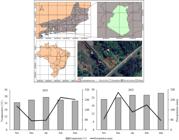
Map showing the Sítio do Sol organic property's location and the delineation of the experimental area, as well as the climatic conditions in 2019 and 2022 in Seropédica, Rio de Janeiro, Brazil. Datum: Sirgas 2000; Base date: IBGE.
Mean values for soil texture in a 0.00-0.20 m layer sampled at an experimental farm in the county of Seropédica, Rio de Janeiro, Brazil
The experiment began in 2018 with the preparation of the area and the implementation of the management systems. The total area covered is approximately 1,400 m². After soil preparation, black oats were sown in July 2018 to homogenize the entire experimental area. Subsequently, from November 2018 to February 2019, corn was cultivated. In February 2019, the experimental design was structured as a randomized complete block design (RCBD) with three replications, arranged in a 2 × 6 factorial scheme, consisting of two tillage systems and six cover crop treatments: consortium1 (C1), consortium 2 (C2), spontaneous plants (SP), Mill (M - Pennisetum glaucum), Crotalaria (CJ- Crotalaria juncea), Jack beans (JB - Canavalia ensiformis). The plots measure 24 × 6 m, and the subplots 6 × 4 m.
The cover crop consortium was established using different proportions of the recommended seeding rates for each species when cultivated individually. Consortium 1 (C1) consisted of 100 % of the recommended rates: Crotalaria juncea (CJ) – 20 kg ha-1, jack bean (JB – Canavalia ensiformis) – 150 kg ha-1, and millet (M – Pennisetum glaucum) – 60 kg ha-1. Consortium 2 (C2) used 50 % of those rates: CJ – 10 kg ha-1, JB – 75 kg ha-1, and M – 30 kg ha-1. In addition to the mixtures, single-species plantings of CJ (20 kg ha-1), JB (150 kg ha-1), M (30 kg ha-1), and an area with spontaneous vegetation (SP) were also evaluated.
The experiment maintained a continuous rotation, without fallow periods, between cover crops and cash crops cabbage (Brassica oleracea) in 2019 and okra (Abelmoschus esculentus) in 2022 with cycles lasting 4 to 6 months. During the cash crop cycles, fertilization was carried out using 100 kg ha-1 of thermophosphate, 60 kg ha-1 of potassium sulfate, and 60 kg ha-1 of castor bean cake, in accordance with the Rio de Janeiro State Liming and Fertilization Manual (Freire et al., 2013) and Normative Instruction No. 61/2020 for organic production. Cover crops were cultivated for approximately three months under both no-tillage (NT) and conventional tillage (CT) systems. Desiccation was performed mechanically using a mower at 50 % flowering, without the use of chemical herbicides. After the cycle, the cut biomass was left on the soil surface to maintain straw cover in the NT system, whereas in the CT system, it was incorporated into the soil using a rotary hoe.
Soil samples were collected following the cultivation of economically important crops, specifically in 2019 after cabbage (Brassica oleracea) and in 2022 after okra (Abelmoschus esculentus), at the layers of 0.00–0.05, 0.05–0.10, and 0.10–0.20 m. The crop rotation system was continuously maintained within the subplots, using the same cover crops throughout the experimental period. Moreover, a fragment of secondary forest, predominantly featuring semi-deciduous species, served as our reference area and was about 30 years old since the previous deforestation. All plots considered in this study were located on the same soil type and textural class and had similar slopes of roughly 30°.
Soil analyses
For each plot, soil samples were collected from the 0.00–0.05, 0.05–0.10, and 0.10–0.20 m layers. Undisturbed samples were obtained using a Kopeck ring (volumetric ring method) to assess physical properties, and additional disturbed samples were taken for complementary analyses. Within each subplot, three samples were combined to create a composite sample. This composite sample was then air-dried, crumbled, and sieved through a 2 mm sieve to obtain the fine air-dried soil fraction (FASF) for soil fertility and organic matter analyses. Samples were analyzed for pH(H2O) at a 1:2.5 ratio (soil:water); Ca2+, Mg2+, and Al3+ contents were extracted with 1 mol L-1 KCl, analyzed by titulometry; P, Na+, and K+ extracted by the Mehlich-1 method and analyzed by colorimetry (P) and flame photometry (K+ and Na+) and H+Al extracted with 1 mol L-1 KCl, analyzed by titration (Teixeira et al., 2017). Soil organic carbon (SOC) content was analyzed using the method described by Yeomans and Bremner (1988).
To perform the physical fractionation of soil organic carbon (SOC), 10 g of air-dried soil, previously sieved through a 2 mm mesh, were treated with 30 mL of sodium hexametaphosphate solution (5 g L-1). The mixture was agitated for 15 h using a horizontal shaker, based on the procedure established by Cambardella and Elliott (1992). Following dispersion, the suspension was wet sieved using a 53 µm mesh under running water. The coarse fraction (>53 µm), retained on the sieve, was identified as particulate organic carbon (POC). The fine fraction, which passed through the sieve, was considered mineral-associated organic carbon (MAOC), comprising organic matter bound to silt and clay; its amount was estimated by subtracting the POC from total SOC.
For density-based separation, the protocol described by Sohi et al. (2001) was used. Five grams of soil were transferred to Falcon tubes containing 35 mL of sodium iodide (NaI) solution adjusted to a density of 1.80 ± 0.02 g cm-3. After centrifugation at 3000 rpm for five minutes, the supernatant representing the free light fraction (FLFC) was removed using a vacuum system and filtered. The recovered material on the filters was oven-dried at 50 °C for 48 h, finely ground, and analyzed for carbon content according to the method of Yeomans and Bremner (1988). The determination of the particulate organic carbon (POC) and FLF fractions of SOM was also carried out according to Yeomans and Bremner (1988).
The SOC stock in each soil layer was estimated by multiplying the SOC concentration and the corresponding soil bulk density (previously obtained from undisturbed core samples collected via the volumetric ring technique; Table 2) by the layer thickness. The equivalent soil mass method was used to correct SOC stocks, accounting for mass differences between soil layers (Ellert and Bettany, 1995; Carvalho et al., 2009). The calculation of SOC stock of each layer sampled was calculated from equation 1.
Soil bulk density in 2019 and 2022 under different management systems and cover crops, Seropédica, Rio de Janeiro, Brazil
The soil organic carbon stock (SOCStock; in Mg ha-1) was calculated using the organic carbon concentration (SOC; g kg-1) at the sampled layer, the corresponding soil bulk density (Ds; Mg m-3) (Table 2), the bulk density in the reference area (Dref; Mg m-3), and the thickness of the soil layer (e; cm). The 2019/2022 percentage change in the carbon stock of the MOS fractions was calculated at each depth using equation 2, with the final value attributed to the stock of the fraction in 2022 and the initial value to the stock in 2019 for each management system. The graph of the percentage change (2019/2022) was made using the software R version 4.2.2 (R Core Team, 2022) with the package "Ggplot2”.
\% = \left( \frac{final\ value - initial\ value}{initial\ value\ } \right) \times 100
Statistical analyses
A linear mixed-effects model approach was employed to assess significant variations in soil fertility parameters and organic matter fractions across different management systems (NT and CT), cover crop types, and temporal points. The analysis used the lme4 (version 1.1.23) and lmerTest (version 3.1-2) packages in R. Fixed factors included tillage systems, cover crops, and sampling times, whereas sampling blocks were treated as random effects to account for spatial variability. Statistical significance of model parameters was evaluated using Wald chi-square tests (type II), followed by post hoc pairwise comparisons with least-squares means adjusted via false discovery rate correction to address multiple testing, implemented with the emmeans package (version 3.0-10). Additionally, principal component analysis (PCA) based on Pearson correlation coefficients was conducted to explore relationships among measured variables. All statistical procedures were performed in R (version 4.2.2; R Core Team, 2022) using packages including openxlsx, ExpDes.pt, and ggplot2 for data management and visualization.
RESULTS
Chemical properties associated with soil fertility
The evaluated factors, management systems (NT, CT), cover crops, and year significantly influenced soil chemical properties across the analyzed layers. In the 0.00–0.05 m layer, an interaction between the management system and year was observed specifically for calcium (Ca), base sum (SB), and cation exchange capacity (CEC). The influence of cover crops was detected only for phosphorus (P). In 2019, higher P values were observed for SP under NT and C1 under CT. In 2022, however, the highest phosphorus values were recorded for CJ in both management systems (Table 3). In the 0.05–0.10 m soil layer, an interaction between management system and year was observed only for pH, base sum (BS), and phosphorus (P), with no significant influence of cover crops on the chemical properties. In the subsurface layer (0.10–0.20 m), no interaction between the management system and year was detected for any chemical property. However, individual effects of management system, year, and cover crops were observed, with cover crops significantly influencing only phosphorus (P) and potassium (K). Regarding the duration of system adoption and the effect of cover crops, the time since adoption was insufficient to induce significant changes in chemical properties, particularly base sum (BS) and cation exchange capacity (CEC) (Table 3).
Soil chemical properties in different soil layers (m) sampled at an experimental farm in the county of Seropédica, Rio de Janeiro, Brazil
Soil organic carbon contents, stocks and fractions
Regarding the contents of soil organic matter (SOM) fractions, only the tillage system and year had a significant influence. An interaction effect was observed exclusively in the 0.00–0.05 m layer for all fractions, and in the 0.05–0.10 m layer only for the particulate organic carbon (POC) fraction (Table 4). Across all layers, a general increase in SOC, MAOC, and FLFC fractions was observed over the three years, with consistently higher values under no-tillage (NT) compared to conventional tillage (CT). In the subsurface layers, a general reduction in the POC fraction was noted over time, although NT plots still showed higher values than CT plots. No significant effects of cover crops were observed on any of the organic matter fractions (Table 4).
Soil Organic Carbon (SOC), Particulate Organic Carbon (POC), Organic Carbon Fraction with Silt and Clay Minerals (MAOC) and the SOC's Free Light Fraction (FLFC) contents across various soil layers (m) sampled at an experimental farm in Seropédica, Rio de Janeiro, Brazil
The results for SOC and MAOC stocks exhibited a similar pattern after three years of management system adoption (Table 4). Across all soil layers, both time andtillage system significantly influenced carbon stocks in these compartments, which represent more recalcitrant organic matter fractions. An increase in carbon stocks in the more stable fractions was observed over the three years, particularly under no-tillage (NT) compared to conventional tillage (CT). A significant effect of cover crops was detected only for the FLFC fraction in the 0.05–0.10 m layer, where an increase over time was noted, with higher values under NT in most comparisons. For the recalcitrant POC fraction, a distinct pattern was observed: carbon stocks decreased over time, though higher values were consistently found under NT in subsurface layers (Table 5). Organic matter fractions and carbon stocks in both management systems (Tables 4 and 5) were comparable to those measured in the reference area (forest) (Table 6).
Soil Organic Carbon (SOC), Particulate Organic Carbon (POC), associated Organic Carbon Fraction with Silt and Clay Minerals (MAOC) and the SOC's Free Light Fraction (FLFC) stocks across different soil layers (m) sampled from an experimental farm in Seropédica, Rio de Janeiro, Brazil
Fractions in the Reference Forest Area from an experimental farm in Seropédica, Rio de Janeiro, Brazil.
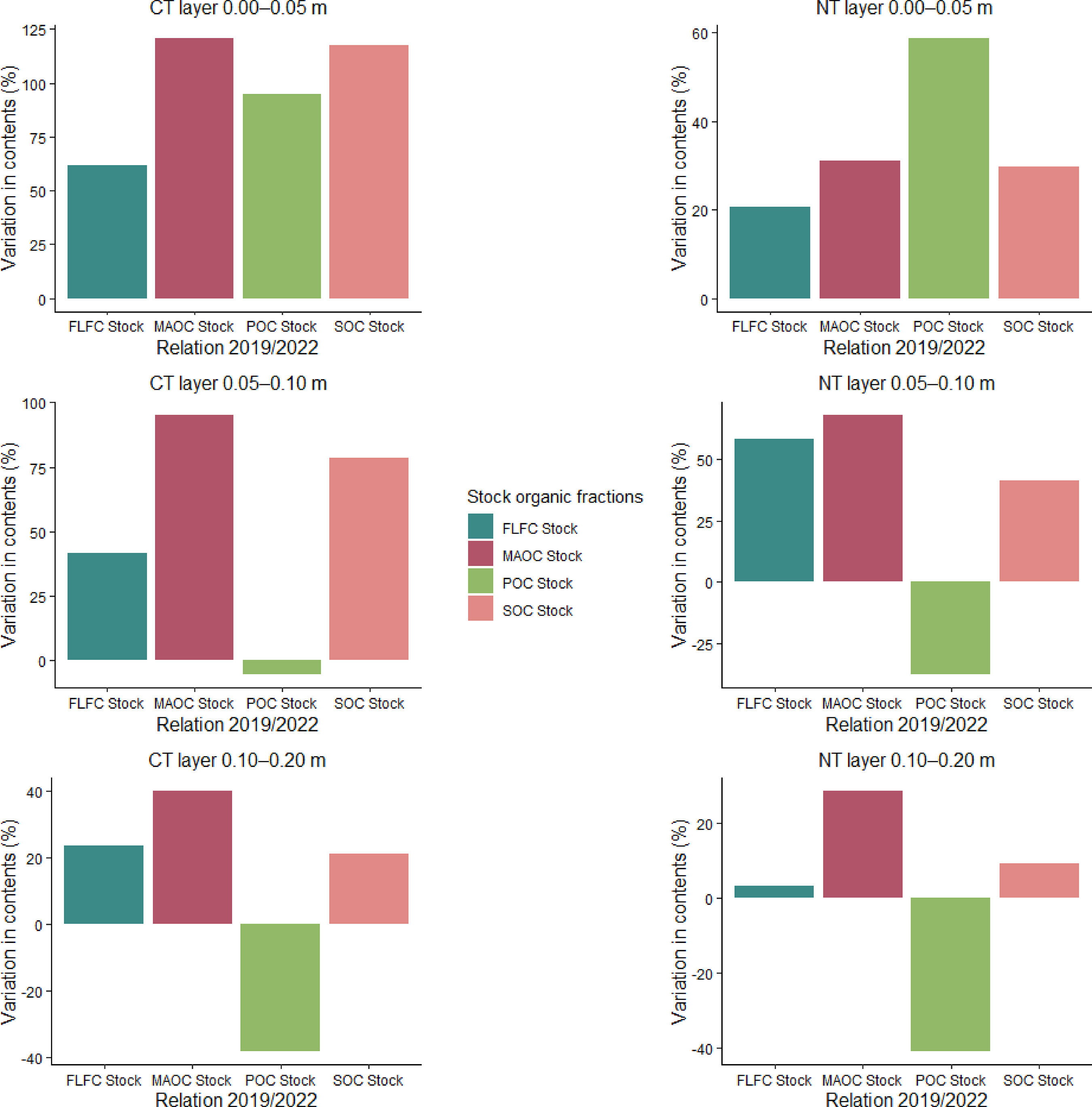
Carbon stocks in the different SOM fractions showed a percentage increase in the 0.00–0.05 m layer and a decrease in the subsurface layers for the POC fraction under both NT (58 %, -37 %, and -41 %) and CT (94 %, -5 %, and -38 %), respectively. In the 0.00–0.05 m layer, the greatest percentage change was observed in the MAOC fraction (31 % for NT and 120 % for CT), followed by total SOC stocks (29 % for NT and 117 % for CT), and FLFC stocks (20 % for NT and 61 % for CT), with generally lower values under NT compared to CT (Figure 2). A similar pattern was observed in the 0.05–0.10 m layer, with the highest percentage increases in MAOC stocks (68 % for NT and 95 % for CT). For SOC stocks, the percentage increases were lower under NT (41 %) compared to CT (78 %). The FLFC stock also increased under both management systems, with a greater increase observed under NT (58 %) than under CT (41 %). In the subsurface layer (0.10–0.20 m), percentage increases were observed for MAOC (28 % for NT and 39 % for CT), SOC (9 % for NT and 21 % for CT), and FLFC (3 % for NT and 23 % for CT), while only the POC stock showed a decrease in both systems (-41 % for NT and -38 % for CT) (Figure 2).
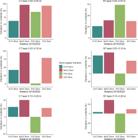
Percentage variation of carbon stocks in soil organic matter fractions in different management systems, Seropédica, Rio de Janeiro, Brazil. SOC: Soil Organic Carbon; POC: Particulate Organic Carbon; MAOC: associated Organic Carbon Fraction with Silt and Clay Minerals; FLFC: SOC and Free Light Fraction.
Principal component analysis
The Principal Component Analysis (PCA) showed that the variables contributed differently to the axes (Figures 3, 4 and 5). Table 5 shows the correlation values of each variable with the principal component (PC) axes. Correlation values within the -0.50 to 0.50 range (moderate correlation) were selected to make up the PCAs. The PCAs showed a cumulative variance for the first two principal components of approximately 62.8, 68.1 and 67.4 % for the 0.00-0.05, 0.05-0.10 and 0.10-0.20 m layers, respectively (Figures 3, 4 and 5). Through PCA analysis of the cover plant factor, no separation of areas or distinct groups was observed, and it was found that the cover plants contributed to all chemical properties and organic matter fractions (Figure 3).
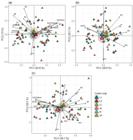
Principal Component Analysis (PCA) of cover crops influence on soil chemical properties and organic carbon fractions across different soil layers (m) sampled from an experimental farm in Seropédica, Rio de Janeiro, Brazil. (a) 0.00–0.05 m layer; (b) 0.05–0.10 m layer; and (c) 0.10–0.20 m layer. pH: hydrogen potential; Ca: calcium; Mg: magnesium; Al: aluminum; H+Al: potential acidity; SB: sum of bases; CEC: cation exchange capacity; BS: base saturation; SOC: soil organic carbon; POC: particulated organic carbon; MAOC: mineral-associated organic carbon; SOCSt: SOC stock; POCSt: POC stock; MAOCSt: MAOC stock. NT: No-Tillage; CT: Conventional-Tillage; C1: 100 % consortium of recommended cover crop seeds; C2: 50 % consortium of recommended cover crop seeds; CJ: Crotalária juncea; JB: jack bean; M: millet; SP: spontaneous plants.
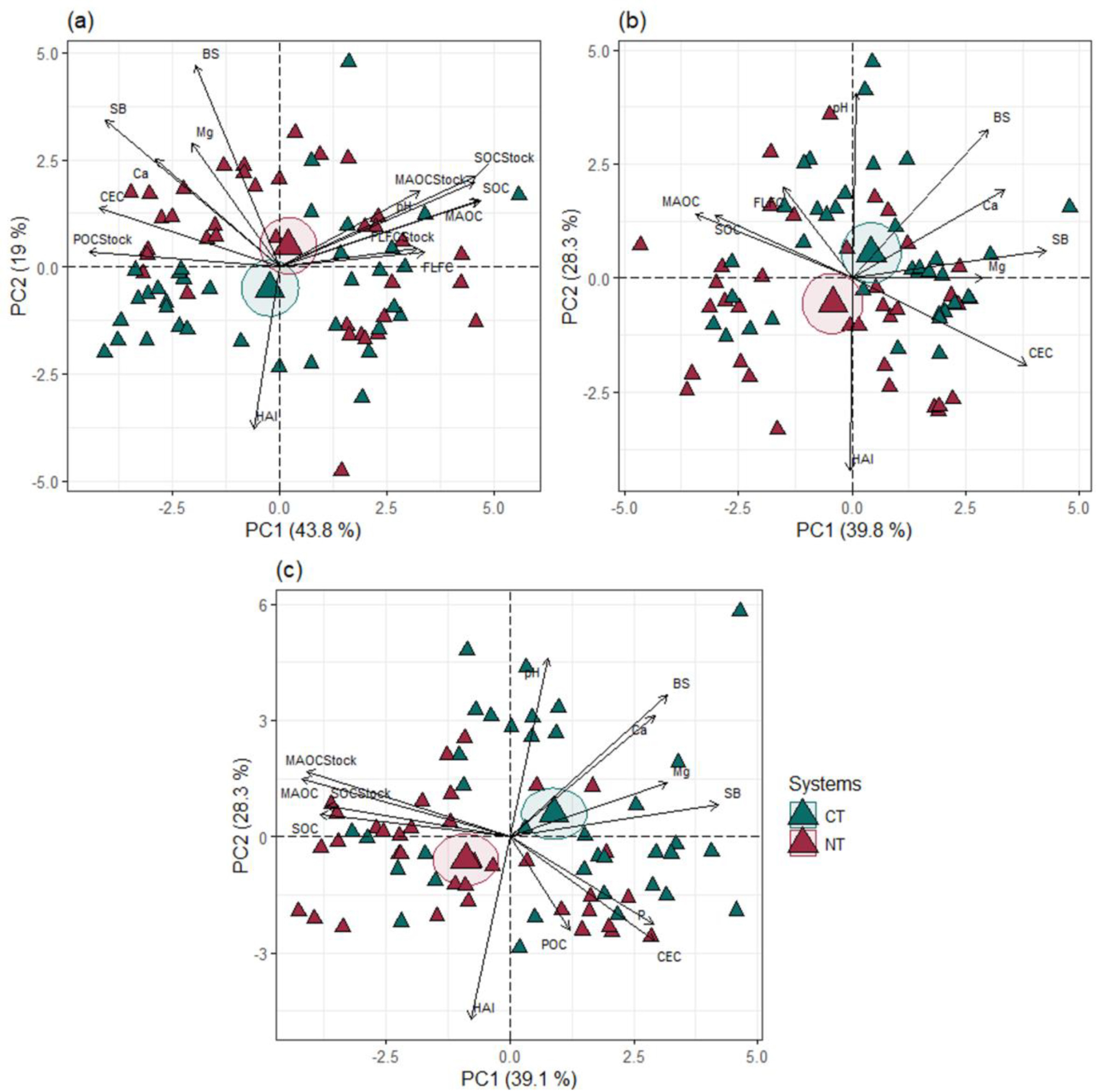
Regarding the influence of the systems, the PCA analysis showed that the separation between the NT and CT areas was similar across all soil layers, especially at 0.00-0.05 m and 0.05-0.10 m (Figure 4). The NT system had a greater influence on variables related to soil organic matter, whereas the CT system was associated with soil fertility. In the topsoil layer (0.00-0.05 m), the NT system was more associated with chemical properties and organic matter fractions than the CT system, whereas in the 0.05-0.10 m layer, CT was associated with chemical properties, while NT did not show a clear association with soil chemical properties. In the 0.10-0.20 m layer, the NT system is more associated with variables related to SOM (SOC, MAOC, SOC Stock, MAOC Stock), and CT with chemical properties (pH, BS, SB, Mg, Ca) (Figures 4b and 4c). There was no clear association of the variables POC, CEC, H+Al and P with the systems in the most subsurface layer (0.10-0.20 m).
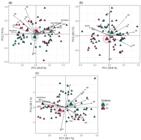
Principal Component Analysis (PCA) of management systems influence on soil chemical properties and organic carbon fractions across different soil layers (m) sampled from an experimental farm in Seropédica, Rio de Janeiro, Brazil. (a) 0.00–0.05 m layer; (b) 0.05–0.10 m layer; and (c) 0.10–0.20 m layer. pH: hydrogen potential; Ca: calcium; Mg: magnesium; Al: aluminum; H+Al: potential acidity; SB: sum of bases; CEC: cation exchange capacity; BS: base saturation; SOC: soil organic carbon; POC: particulated organic carbon; MAOC: mineral-associated organic carbon; SOCSt: SOC stock; POCSt: POC stock; MAOCSt: MAOC stock; NT: No-Tillage; CT: Conventional-Tillage; C1: 100 % consortium of recommended cover crop seeds; C2: 50 % consortium of recommended cover crop seeds; CJ: Crotalária juncea; JB: jack bean; M: millet; SP: spontaneous plants.
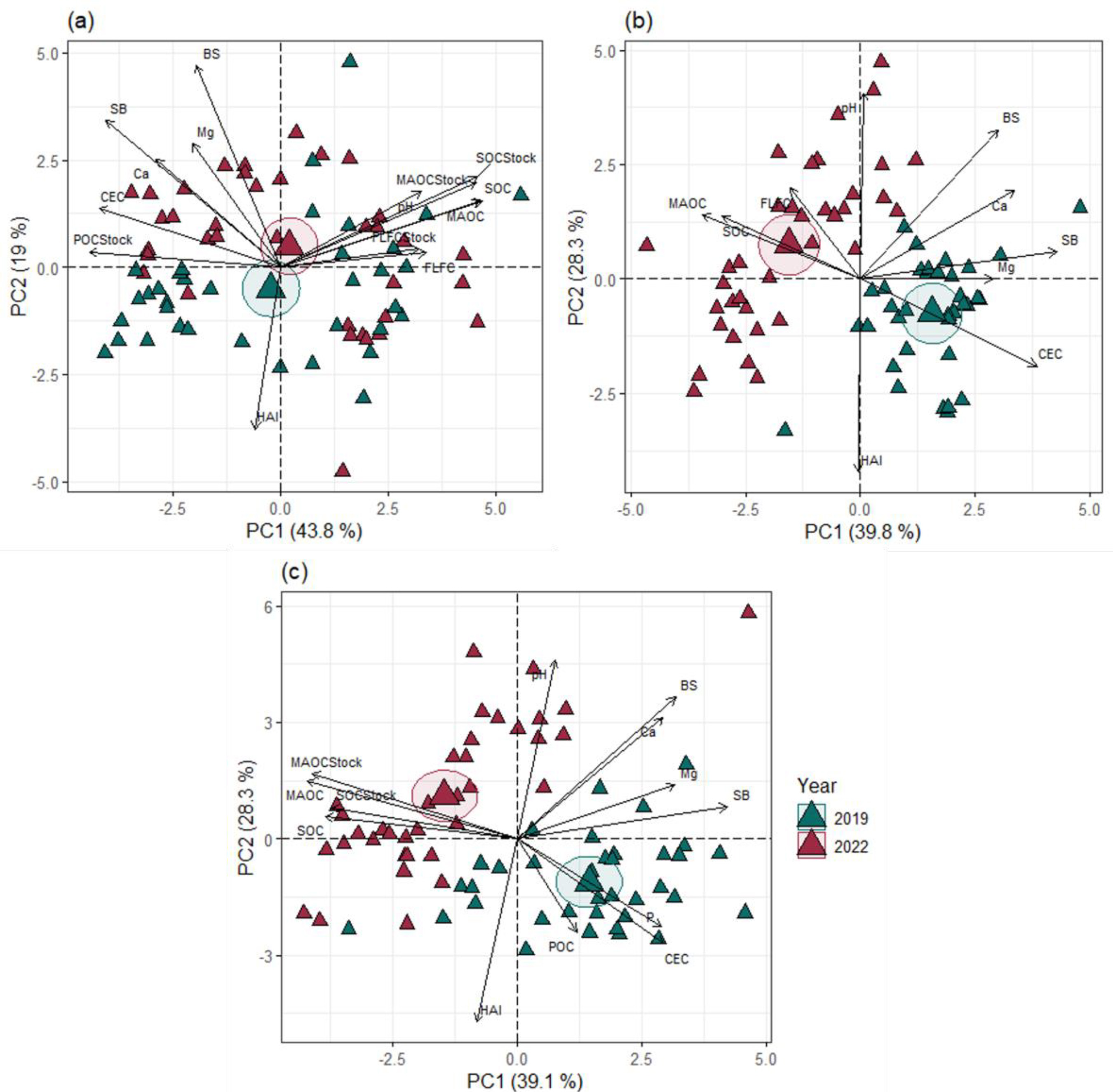
The PCA analysis for the year factor shows a clear separation in all the layers evaluated. In the 0.00-0.05 m layer, the properties BS, SB, Ca, Mg, CEC and POCStock were associated with the year 2019, while pH and the organic matter fractions (MAOCStock, SOCStock, SOC, MAOC, FLFC, FLFCStock) were more associated with the year 2022. The same pattern was observed for the 0.05-0.10 m and 0.10-0.20 m layers, with the fractions being associated with 2022 and the chemical properties with 2019. Across all layers, H+Al did not show a clear association with any of the evaluated years (Figure 5).
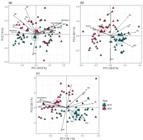
Principal Component Analysis (PCA) of year influence on soil chemical properties and organic carbon fractions across different soil layers (m) sampled from an experimental farm in Seropédica, Rio de Janeiro, Brazil. (a) 0.00–0.05 m layer; (b) 0.05–0.10 m layer; and (c) 0.10–0.20 m layer. pH: hydrogen potential; Ca: calcium; Mg: magnesium; Al: aluminum; H+Al: potential acidity; SB: sum of bases; CEC: cation exchange capacity; BS: base saturation; SOC: soil organic carbon; POC: particulated organic carbon; MAOC: mineral-associated organic carbon; SOCSt: SOC stock; POCSt: POC stock; MAOCSt: MAOC stock. NT: No-Tillage; CT: Conventional-Tillage; C1: 100 % consortium of recommended cover crop seeds; C2: 50 % consortium of recommended cover crop seeds; CJ: Crotalária juncea; JB: jack bean; M: millet; SP: spontaneous plants.
DISCUSSION
After 3 years of implementing the management systems, the CT system showed significantly higher soil fertility levels than NT, likely due to the incorporation of cover crops. This result may be associated with the fact that the CT system generally promotes faster decomposition of cover crops and nutrient release related to NT due to soil disturbance. Additionally, this disturbance may favor aggregate breakdown, leading to the exposure of SOM, accelerating its decomposition and nutrient release (Somasundaram et al., 2020; Silva et al., 2023).
Another possible explanation for the limited increase in soil fertility under NT is the time required for the system to produce noticeable effects. The assessment in the current study was conducted during the early phase (0–3 years) of NT adoption, a period characterized by soil restructuring and the release of organic acids by cover crop roots. These compounds support microbial communities that immobilize nutrients, particularly nitrogen—an essential nutrient for soil microorganisms (Vanolli et al., 2024). Costa et al. (2006) suggested that the soil quality benefits from implementing no-tillage become apparent after 10 years of system implementation. Another study emphasized the time factor as crucial for enhancing soil fertility under cover crop cultivation, whether in no-tillage or conventional tillage systems (Haruna and Nkongolo, 2019). Initially, organic matter levels are low due to the limited quantity of added residues. Over time, the system's benefits become more pronounced, transitioning into the intermediate phase (5-10 years), marked by an increase in organic matter content. As the system progresses into the consolidation phase (10-15 years), organic matter continues to accumulate, further enhancing the CEC. The final maintenance phase reflects a balanced state of no-tillage, characterized by a continuous flow of organic matter (Alvarenga et al., 2001; Freixial and Carvalho, 2013). This pattern highlights the importance of conducting long-term studies on no-tillage combined with cover crops in sandy-textured soils.
Additionally, another factor influencing the response to modifications in soil chemical properties is texture. In this study, the sandy texture across all evaluated layers (Table 1) may have influenced the low CEC, a characteristic feature of sandy soils known for their low CEC and organic matter content (Huang et al., 2020). The soil CEC values were higher in the CT in the 0.05-0.10 and 0.10-0.20 m layers, which, coupled with Soil Base Saturation (SB), resulted in higher base saturation in the CT area. The NT system's lack of soil disturbance and cover crop incorporation leads to slower decomposition of cover crops and gradual nutrient release. For this reason, studies emphasize that time is a crucial factor in assessing soil fertility development in no-till systems (Valadares et al., 2012; Passos et al., 2018).
In the NT system, the highest average values of H+Al were observed, reflecting enhanced soil buffering capacity and suggesting greater resistance to pH fluctuations. This outcome is correlated with higher SOC levels in the NT, thereby increasing buffering capacity, especially in sandy-textured soils, reaffirming the need for cover crops and the adoption of NT (Centeno et al., 2017). A soil with lower buffering capacity affects nutrient availability to plants by causing pH variations that can increase acidity and decrease nutrient availability.
Agricultural management practices influence variations in SOC content and may not always be apparent over short-term periods (Xavier et al., 2013). In this study, NT presented a higher SOC than CT, showing that in the long term, NT in vegetable production may be viable for maintaining and increasing soil organic matter. In tropical climates such as those in Brazil, it is essential to implement technologies to conserve SOC, as high temperatures and constant precipitation favor the rapid decomposition of soil organic matter (Golui et al., 2016).
The SOC results were comparable to or even higher than those in the reference area (Secondary Forest), indicating substantial carbon input into the soil. This outcome may be partially attributed to the presence of grasses from the Poaceae family in the cultivated areas. These species typically promote greater carbon accumulation, particularly in the subsoil, due to their fibrous root systems, which increase root biomass and enhance distribution throughout the soil profile, thereby improving nutrient recycling (Vanolli et al., 2024). In contrast, forested areas benefit primarily from the continuous deposition of litter, which contributes to SOC through decomposition processes (Mayer et al., 2020). However, much of the organic carbon derived from plant inputs in these systems is rapidly mineralized and incorporated into the soil mineral fraction, limiting its long-term contribution to stable carbon pools. This explains why the labile fractions did not show a significant increase and, in fact, decreased over the three-year period, especially for the POC. The POC fraction is more sensitive to management practices because its protection relies on biochemical recalcitrance, which does not shield it from long-term decomposition. It serves as an indicator of soil quality and is reflected in the POC Stock (Rossi et al., 2012; Lugato et al., 2021).
Moreover, the accelerated decomposition of labile organic matter observed in this study, as indicated by the lower proportion of labile carbon stocks across all evaluated soil layers in both management systems (Figure 2), may be associated with the sandy texture of the soil and the prevailing tropical climate, which favors the stabilization of recalcitrant organic matter fractions within the soil matrix. The percentage of carbon stored in the recalcitrant MAOC fraction was higher at all layers in both the CT system (123, 95, and 40 %) and the NT system (120, 55, and 27 %) throughout the soil profile (Figure 2). This aspect is crucial for carbon storage, as the recalcitrant fraction plays a key role in this function due to its slower decomposition compared to labile fractions, serving as a carbon reservoir in the soil that helps reduce carbon emissions. However, a balance between these fractions is necessary since the availability of carbon through labile fractions, easily decomposable, is essential to maintain the carbon flow in the soil for plants and biological activity (Carmo et al., 2012; Matos et al., 2023).
In general, the consortium contributed to organic matter fractions in the evaluated layers. Integrating grasses (with a high C/N ratio) and legumes (with a low C/N ratio) in a tropical climate characterized by high temperatures and precipitation promotes a balanced decomposition process (Delazeri et al., 2020; Dorissant et al., 2022). Studies indicate that millet, with a half-life (T½) of approximately 70 days, decomposes at a slower rate than legumes like jack beans. This ensures prolonged soil protection by keeping the straw beneath the surface, leading to greater organic matter accumulation (Teixeira et al., 2012). It is particularly important in no-till vegetable farming, where straw decomposition is significantly faster than in other crops due to their shorter growth cycles. We suggest using a consortium to supply both organic matter inputs and nutrient cycling via the release of cover crops, particularly in sandy-textured soils characterized by low water and nutrient retention capacity due to low clay content (Wang et al., 2020; Wulanningtyas et al., 2021).
The PCA analysis revealed an association between variables linked to the SOM and NT systems, indicating substantial potential for these systems to sequester carbon in the soil over the long term. This highlights the pivotal role of NT in preserving soil carbon by minimizing soil disturbance and maintaining surface straw coverage. No-tillage systems facilitate slower decomposition of organic matter than CT. In contrast, CT, characterized by soil disturbance, accelerates SOM decomposition, microbial biomass renewal, and organic carbon oxidation (Wulanningtyas et al., 2021). Ogle et al. (2019) reported similar findings regarding carbon stocks in the no-till system, particularly in surface layers. Conversely, the conventional system showed a greater carbon stock at depths greater than 0.20 m. The authors emphasized the significance of adopting NT practices to enhance climate change policies through greenhouse gas mitigation.
Cover crops significantly enhance soil quality, with specific species facilitating nutrient cycling and increasing nutrient availability for subsequent crops (Lima, 2014). The observed linkages between cover crops and distinct variables across varying soil layers highlight the diverse contributions of these to soil fertility enhancement and erosion mitigation. Particularly in sandy soils prone to degradation due to their permeability, low water retention, deficient organic matter content, and limited ion adsorption capacity (Donagemma et al., 2016; Centeno et al., 2017; Bogiani et al., 2020; Silva et al., 2021), the utilization of a consortium emerges as a promising strategy. Investing in conservation systems that prioritize cover crops becomes imperative to counter the inherent challenges of sandy soils and NTO, as evidenced by this study.
CONCLUSION
In this short-term evaluation, no significant improvement in soil fertility was observed in the NT (no-tillage) system compared with CT (conventional tillage). The NT system resulted in higher carbon levels in the stable soil organic matter fractions mineral-associated organic carbon (MAOC) and mineral-associated organic carbon stock (MAOC stock), indicating its contribution to carbon stabilization. However, after three years, there was a reduction in subsurface carbon in the labile fraction (POC stock), with decreases of -37 % and -48 % under NT, and -5 % and -35 % under CT. These results suggest that a longer timeframe may be necessary to detect improvements in labile carbon pools. Continued long-term monitoring is needed to more accurately assess the effects of management systems and cover crops on soil quality and carbon sequestration.
-
How to cite:
Alves TC, Matos PS, Pinto LASR, Silva TP, Abreu EAG, Silva MB, Pereira MG, Schultz N, Zonta E. Carbon patterns and soil quality in fragile soils under sustainable soil management in organic systems of Southeastern Brazil: Short-term assessment. Rev Bras Cienc Solo. 2026;50:e0250084. https://doi.org/10.36783/18069657rbcs20250084
DATA AVAILABILITY
The data will be provided upon request.
REFERENCES
-
Adetunji AT, Ncube B, Mulidzi R, Lewu FB. Management impact and benefit of cover crops on soil quality: A review. Soil Till Res. 2020;204:104717. https://doi.org/10.1016/j.still.2020.104717
» https://doi.org/10.1016/j.still.2020.104717 - Alcantara AF, Madeira NR. Manejo do solo no sistema de produção orgânico de hortaliças. Brasília, DF: Embrapa Hortaliças; 2008. (Circular técnica, 64).
- Alvarenga RC, Cabezas WAL, Cruz JC, Santana DP. Plantas de cobertura de solo para sistema plantio direto. Informe Agropec. 2001;22:25-36.
-
Boddey RM, Jantalia CP, Conceição PC, Zanatta JA, Bayer C, Mielniczuk J, Dieckow J, Santos HP, Denardin JE, Aita C, Giacomini SJ, Alves JR, Urquiaga S. Carbon accumulation at depth in Ferralsols under zero-till subtropical agriculture. Glob Chang Biol. 2010;16:784-95. https://doi.org/10.1111/j.1365-2486.2009.02020.x
» https://doi.org/10.1111/j.1365-2486.2009.02020.x - Bogiani JC, Ferreira ACB, Borin ALD, Sofiatti V, Perina FJ. Sequestro de carbono em sistemas de produção de grãos e fibras em solo arenoso do Cerrado da Bahia. Campinas: Embrapa Territorial; 2020.
-
Cambardella CA, Elliott ET. Methods for physical separation and characterization of soil organic matter fractions. Geoderma. 1993;56:449-57. https://doi.org/10.1016/0016-7061(93)90126-6
» https://doi.org/10.1016/0016-7061(93)90126-6 - Carmo FF, Figureueiredo CC, Ramos MLG, Vivaldi LJ, Araújo LG. Frações granulométricas da matéria orgânica em Latossolo sob plantio direto com gramíneas. Biosci J. 2012;28:420-31.
-
Carvalho JLN, Cerri CEP, Feigel BJ, Piccolo MC, Godinho VP, Cerri CC. Carbon sequestration in agricultural soils in the Cerrado region of the Brazil Amazon. Soil Till Res. 2009;103:342-9. https://doi.org/10.1016/j.still.2008.10.022
» https://doi.org/10.1016/j.still.2008.10.022 - Centeno LN, Guevara MDF, Cecconello ST, Sousa ROD, Timm LC. Textura do solo: Conceitos e aplicações em solos arenosos. Rev Bras Eng Sustent. 2017;4:31-7.
-
Centro de Inteligência em Orgânicos – CI Orgânicos. Número de propriedades com produção orgânica cresceu 150 % em 12 anos no Brasil. Available from:< https://ciorganicos.com.br/noticia/numero-de-propriedades-com-producao-organica-cresceu-150-em-12-anos-nobrasil/#:~:text=Metade%20est%C3%A1%20no%20Sul%20do,em%202025%E2%80%9D%2C%20afirma%20Dias.&text=Clique%20na%20imagem%20abaixo%20e,da%20Sociedade%20Nacional%20de%20Agricultura:>. Acesso em: 12 jun 2025.
» https://ciorganicos.com.br/noticia/numero-de-propriedades-com-producao-organica-cresceu-150-em-12-anos-nobrasil/#:~:text=Metade%20est%C3%A1%20no%20Sul%20do,em%202025%E2%80%9D%2C%20afirma%20Dias.&text=Clique%20na%20imagem%20abaixo%20e,da%20Sociedade%20Nacional%20de%20Agricultura -
Conceição PC, Dieckow J, Bayer C. Combined role of no-tillage and cropping systems in soil carbon stocks and stabilization. Soil Till Res. 2013;129:40-7. https://doi.org/10.1016/j.still.2013.01.006.
» https://doi.org/10.1016/j.still.2013.01.006 -
Costa EA, Goedert WJ, Sousa DMG. Qualidade de solo submetido a sistemas de cultivo com preparo convencional e plantio direto. Pesq Agropec Bras. 2006;41:1185-91. https://doi.org/10.1590/S0100-204X2006000700016
» https://doi.org/10.1590/S0100-204X2006000700016 -
Cotrufo MF, Ranalli MG, Haddix ML, Six J, Lugatto E. Soil carbon storage informed by particulate and mineral-associated organic matter. Nat Geosci. 2019;12:989-94. https://doi.org/10.1038/s41561-019-0484-6
» https://doi.org/10.1038/s41561-019-0484-6 - Delazeri JVS, Valadão FCA, Valadão Junior DD, Herklotz B, Bertoncello LR, Silva JL, Vieira AO. Desempenho agronômico de milheto e crotalária cultivados em sistemas solteiro e consorciado. Cienc Suelo. 2020;38:212-23.
-
Donagemma GK, Freitas PL, Balieiro FC, Fontana A, Spera ST, Lumbreras JF, Viana JHM, Araújo Filho JC, Santos FC, Albuquerque MR, Macedo MCM, Teixeira PC, Amaral AJ, Bortolon E, Bortolon L. Caracterização, potencial agrícola e perspectivas de manejo de solos leves no Brasil. Pesq Agropec Bras. 2016;51:1003-20. https://doi.org/10.1590/S0100-204X2016000900001
» https://doi.org/10.1590/S0100-204X2016000900001 -
Dorissant L, Brym ZT, Swartz S. Residue decomposition dynamics in mixed ratios of two warm‐season cover crops. Agrosyst Geosci Environ. 2022;5:e20311. https://doi.org/10.1002/agg2.20311
» https://doi.org/10.1002/agg2.20311 -
Dortzbach D, Pereira MG, Loss A, Santos OAQ. Fractions of soil organic matter in the vineyards of altitude regions in Santa Catarina. Semina: Cienc Agrar. 2017;38:1799-812. https://doi.org/10.5433/1679-0359.2017v38n4p1799
» https://doi.org/10.5433/1679-0359.2017v38n4p1799 -
Ellert BH, Bettany JR. Calculation of organic matter and nutrients stored in soils under contrasting management regimes. Can J Soil Sci. 1995;75:529-38. https://doi.org/10.4141/cjss95-075
» https://doi.org/10.4141/cjss95-075 -
Fontana A, Pereira MG, Santos JJS, Donagemma GK, Santos OAQ. Capacidade de adsorção de fósforo em solos de textura arenosa com fertilidade construída. Rev Agrogeoamb. 2021;13:606-14. https://doi.org/10.18406/2316-1817v13n320211639
» https://doi.org/10.18406/2316-1817v13n320211639 - Freire LR, Balieiro FC, Zonta E, Anjos LHC, Pereira MG, Lima E, Guerra JGM, Ferreira MBC, Leal MAA, Campos DVB, Polidoro JC. Manual de calagem e adubação do Estado do Rio de Janeiro. Brasília, DF: Embrapa; Seropédica: Universidade Rural; 2013.
- Freixial R, Carvalho M. As fases de transição e consolidação da agricultura de conservação e da sementeira directa (AC/SD) em culturas anuais nas condições mediterrâneas. Vida Rural. 2013:36-40.
-
Friedrich JCC, Feiden A, Fulber VM. Agricultura orgânica–Uma discussão sobre mercado de orgânicos na perspectiva local e internacional. Res Soc Dev. 2022;11:e417111234745. https://doi.org/10.33448/rsd-v11i12.34745
» https://doi.org/10.33448/rsd-v11i12.34745 -
Fuentes-Llanillo R, Telles TS, Soares Junior D, Melo TR, Friedrich T, Kassam A. Expansion of no-tillage practice in conservation agriculture in Brazil. Soil Till Res. 2021;208:104877. https://doi.org/10.1016/j.still.2020.104877
» https://doi.org/10.1016/j.still.2020.104877 -
Golui D, Datta SP, Rattan RK, Dwivedi BS, Meena MC, Bandyopadhayay KK. Release of metals from sludge amended acid and alkaline soils under different levels of moisture and temperature. Proc Natl Acad Sci India Sect B Biol Sci. 2016;86:1037-47. https://doi.org/10.1007/s40011-015-0560-7
» https://doi.org/10.1007/s40011-015-0560-7 -
Haruna SI, Nkongolo NV. Tillage, cover crop and crop rotation effects on selected soil chemical properties. Sustainability. 2019;11:2770. https://doi.org/10.3390/su11102770
» https://doi.org/10.3390/su11102770 -
Havaee S, Ayoubi S, Mosaddeghi MR, Keller T. Impacts of land use on soil organic matter and degree of compactness in calcareous soils of central Iran. Soil Use Manage. 2014;30:2-9. https://doi.org/10.1111/sum.12092
» https://doi.org/10.1111/sum.12092 -
Huang J, Hartemink AE. Soil and environmental issues in sandy soils. Earth-Sci Rev. 2020;208:103295. https://doi.org/10.1016/j.earscirev.2020.103295
» https://doi.org/10.1016/j.earscirev.2020.103295 -
Hunter MC, Schipanski ME, Burgess M, Lachance JC, Bradley BA, Barbercheck ME, Kaye JP, Mortensen DA. Cover crop mixture effects on maize, soybean, and wheat yield rotation. Agric Environ Lett. 2019;4:180051. https://doi.org/10.2134/ael2018.10.0051
» https://doi.org/10.2134/ael2018.10.0051 -
Karchegani PM, Ayoubi S, Mosaddeghi MR, Honarjoo N. Soil organic carbon pools in particle-size fractions as affected by slope gradient and land use change in hilly regions, western Iran. J Mt Sci. 2012;9:87-95. https://doi.org/10.1007/s11629-012-2211-2
» https://doi.org/10.1007/s11629-012-2211-2 -
Koudahe K, Allen SC, Djaman K. Critical review of the impact of cover crops on soil properties. Int Soil Water Conserv Res. 2022;10:343-54. https://doi.org/10.1016/j.iswcr.2022.03.003
» https://doi.org/10.1016/j.iswcr.2022.03.003 -
Lavelle P, Spain A, Fonte S, Bedano JC, Blanchart E, Galindo V, Grimaldi M, Jimenez JJ, Velasquez E, Zangerlé A. Soil aggregation, ecosystem engineers and the C cycle. Acta Oecol. 2020;105:103561. https://doi.org/10.1016/j.actao.2020.103561
» https://doi.org/10.1016/j.actao.2020.103561 - Lima LB. Efeito das plantas de cobertura em sistema de plantio direto. Encic Biosfera. 2014;10:18.
-
Loss A, Pereira MG, Schultz N, Anjos LHC, Silva EMR. Frações orgânicas e índice de manejo de carbono do solo em diferentes sistemas de produção orgânica. Idesia. 2011;29:11-9. https://doi.org/10.4067/S0718-34292011000200002
» https://doi.org/10.4067/S0718-34292011000200002 -
Lugato E, Lavallee JM, Haddix ML, Panagos P, Cotrufo MF. Different climate sensitivity of particulate and mineral-associated soil organic matter. Nat Geosci. 2021;14:295-300. https://doi.org/10.1038/s41561-021-00744-x
» https://doi.org/10.1038/s41561-021-00744-x -
Machado PLOA, Silva CA. Soil management under no-tillage systems in the tropics with special reference to Brazil. Nutr Cycl Agroecosys. 2001;61:119-30. https://doi.org/10.1023/A:1013331805519
» https://doi.org/10.1023/A:1013331805519 -
Ministério de Agricultura, Pecuária e Abastecimento - MAPA. Mapa atualiza regulamento para produção de orgânicos no Brasil; 2021 [cited 2021 Dez 29]. Available from: < https://www.gov.br/agricultura/pt-br/assuntos/noticias/2022/mapa-atualiza-regulamento-para-producao-de-organicos-no-brasil>.
» https://www.gov.br/agricultura/pt-br/assuntos/noticias/2022/mapa-atualiza-regulamento-para-producao-de-organicos-no-brasil -
Ministério de Agricultura, Pecuária e Abastecimento - MAPA. Cadastro Nacional de Produtores Orgânicos (CNPO); 2026 [cited 2026 Jan 09]. Available from:<https://www.gov.br/agricultura/pt-br/assuntos/sustentabilidade/organicos/cadastro-nacional-de-produtores-organicos-cnpo>.
» https://www.gov.br/agricultura/pt-br/assuntos/sustentabilidade/organicos/cadastro-nacional-de-produtores-organicos-cnpo -
Matos PS, Pinto LASR, Lima SS, Alves TC, Cerri EP, Pereira MG, Zonta E. Soil organic carbon fractions in agroforestry system in Brazil: seasonality and short-term dynamic assessment. Rev Bras Cienc Solo. 2023;47nspe:e0220095. https://doi.org/10.36783/18069657rbcs20220095
» https://doi.org/10.36783/18069657rbcs20220095 -
Mayer M, Prescott CE, Abaker WEA, Augusto L, Cécillon L, Ferreira GWD, James J, Jandl R, Katzensteiner K, Laclau JP, Laganiere J, Nouvellon Y, Paré D, Stanturf JA, Vanguelova EI, Vesterdal L. Tamm Review: Influence of forest management activities on soil organic carbon stocks: A knowledge synthesis. For Ecol Manag. 2020;466:118127. https://doi.org/10.1016/j.foreco.2020.118127
» https://doi.org/10.1016/j.foreco.2020.118127 -
Nanzer MC, Ensinas SC, Barbosa GF, Barreta PGV, Oliveira TP, Silva JRM, Paulino LA. Total organic carbon stock and granulometric fractioning of organic matter in soil use systems in Cerrado. Rev Ciencs Agrovet. 2019;18:136-45. https://doi.org/10.5965/223811711812019136
» https://doi.org/10.5965/223811711812019136 -
Ogle SM, Alsaker C, Baldock J, Bernoux M, Breidt FJ, Mcconkey B, Regina K, Vazquez-Amabile GG. Climate and soil characteristics determine where no-till management can store carbon in soils and mitigate greenhouse gas emissions. Sci Rep. 2019;9:11665. https://doi.org/10.1038/s41598-019-47861-7
» https://doi.org/10.1038/s41598-019-47861-7 -
Oliveira AP, Santos JF, Cavalcante LF, Pereira WE, Santos MCCA, Oliveira ANP, Silva NV. Yield of sweet potato fertilized with cattle manure and biofertilizer. Hortic Bras. 2010;28:277-81. https://doi.org/10.1590/S0102-05362010000300006
» https://doi.org/10.1590/S0102-05362010000300006 - Passos AMA, Alvarenga RC, Santos FC. Sistema de plantio direto. In: Nobre MM, Oliveira IR, editors. Agricultura de baixo carbono: Tecnologias e estratégias de implantação. Brasília, DF: Embrapa; 2018. p. 61-104.
-
Pinheiro EFM, Pereira MG, Anjos JHC, Machado PLOA. Fracionamento densimétrico da matéria orgânica do solo sob diferentes sistemas de manejo e cobertura vegetal em Paty do Alferes (RJ). Rev Bras Cienc Solo. 2004;28:731-7. https://doi.org/10.1590/S0100-06832004000400013
» https://doi.org/10.1590/S0100-06832004000400013 - Reichert JM, Reinert DJ, Braida JA. Qualidade dos solos e sustentabilidade de sistemas agrícolas. Ci Amb. 2003;27:29-48.
-
Rossi CQ, Pereira MG, Giácomo SG, Betta M, Polidoro JC. Frações orgânicas e índice de manejo de carbono do solo em Latossolo Vermelho sob plantio de soja no cerrado goiano. Rev Bras Cienc Agrar. 2012;7:233-41. https://doi.org/10.5039/agraria.v7i2a1387
» https://doi.org/10.5039/agraria.v7i2a1387 - Santos HG, Jacomine PKT, Anjos LHC, Oliveira VA, Lumbreras JF, Coelho MR, Almeida JA, Araújo Filho JC, Oliveira JB, Cunha TJF. Sistema brasileiro de classificação de solos. 5. ed. rev. ampl. Brasília, DF: Embrapa; 2018.
- Shahriari A, Khormali F, Kehl M, Ayoubi S, Welp G. Effect of a long-term cultivation and crop rotations on organic carbon in loess derived soils of Golestan Province, Northern Iran. Int J Plant Prod. 2011;5:147-52.
-
Silva AM, Araújo VL, Cardoso EJ. Revisiting the past to understand the present and future of soil health in Brazil. Front Soil Sci. 2023;3:1172436. https://doi.org/10.3389/fsoil.2023.1172436
» https://doi.org/10.3389/fsoil.2023.1172436 -
Silva MO, Santos MP, Souza ACP, Silva RLV, Moura IAA, Silva RS, Costa KDS. Qualidade do solo: indicadores biológicos para um manejo sustentável. Braz J Dev. 2021;7:6853-75. https://doi.org/10.34117/bjdv7n1-463
» https://doi.org/10.34117/bjdv7n1-463 -
Sohi SP, Mahieu N, Arah JRM, Powlson DS, Madari B, Gaunt JL. A procedure for isolating soil organic matter fractions suitable for modeling. Soil Sci Soc Am J. 2001;65:1121-8. https://doi.org/10.2136/sssaj2001.6541121x
» https://doi.org/10.2136/sssaj2001.6541121x - Soil Survey Staff. Keys to soil taxonomy. 13th ed. Washington, DC: United States Department of Agriculture, Natural Resources Conservation Service; 2022.
-
Somasundaram J, Sinha NK, Dalal RC, Lal R, Mohanty M, Naorem AK, Hati KM, Chaudhary RS, Biswas AK, Patra AK, Chaudhari SK. No-till farming and conservation agriculture in South Asia–issues, challenges, prospects and benefits. Crit Rev Plant Sci. 2020;39:236-79. https://doi.org/10.1080/07352689.2020.1782069
» https://doi.org/10.1080/07352689.2020.1782069 -
Teixeira MB, Loss A, Pereira MG, Pimentel C. Decomposição e ciclagem de nutrientes dos resíduos de quatro plantas de cobertura do solo. Idesia. 2012;30:55-64. https://doi.org/10.4067/S0718-34292012000100007
» https://doi.org/10.4067/S0718-34292012000100007 - Teixeira PC, Donagemma GK, Fontana A, Teixeira WG. Manual de métodos de análise de solo. 3. ed. rev e ampl. Brasília, DF: Embrapa; 2017.
-
Valadares RV, Duarte RF, Menezes JBC, Fernandes LA, Santos LDT, Sampaio RA, Mota TC, Almeida RM. Fertilidade do solo e produtividade de milho em sistemas de adubação verde no norte de Minas Gerais. Planta Daninha. 2012;30:505-16. https://doi.org/10.1590/S0100-83582012000300006
» https://doi.org/10.1590/S0100-83582012000300006 -
Vanolli BS, Andrade N, Canisares LP, Franco ALC, Pereira APA, Cherubin MR. Edaphic mesofauna responses to land use change for sugarcane cultivation: insights from contrasting soil textures. Front Ecol Evol. 2024;11:1305115. https://doi.org/10.3389/fevo.2023.1305115
» https://doi.org/10.3389/fevo.2023.1305115 - Vilela G, Mangabeira JDC, Magalhães L, Tosto S. Agricultura orgânica no Brasil: Um estudo sobre o Cadastro Nacional de Produtores Orgânicos. Campinas: Embrapa Territorial; 2019. (Documentos 127).
-
Wang Y, Liu Y. New material for transforming degraded sandy land into productive farmland. Land Use Policy. 2020;92:104477. https://doi.org/10.1016/j.landusepol.2020.104477
» https://doi.org/10.1016/j.landusepol.2020.104477 -
Wulanningtyas HS, Gong Y, Li P, Sakagami N, Nishiwaki J, Komatsuzaki M. A cover crop and no-tillage system for enhancing soil health by increasing soil organic matter in soybean cultivation. Soil Till Res. 2021;205:104749. https://doi.org/10.1016/j.still.2020.104749
» https://doi.org/10.1016/j.still.2020.104749 -
Xavier FAS, Maia SMF, Ribeiro KA, Mendonça ES, Oliveira TS. Effect of cover plants on soil C and N dynamics in different soil management systems in dwarf cashew culture. Agr Ecosyst Environ. 2013;165:173-83. https://doi.org/10.1016/j.agee.2012.12.003
» https://doi.org/10.1016/j.agee.2012.12.003 -
Yeomans JC, Bremner JM. A rapid and precise method for routine determination of organic carbon in soil. Commun Soil Sci Plant Anal. 1998;19:1467-76. https://doi.org/10.1080/00103628809368027
» https://doi.org/10.1080/00103628809368027
Edited by
-
Editor:
José Miguel Reichert https://orcid.org/0000-0001-9943-2898 and Jeferson Dieckow https://orcid.org/0000-0002-3025-4402