 Effects of a self-paced cycling time trial on muscle function and cell-free DNA in master athletes
Abstract
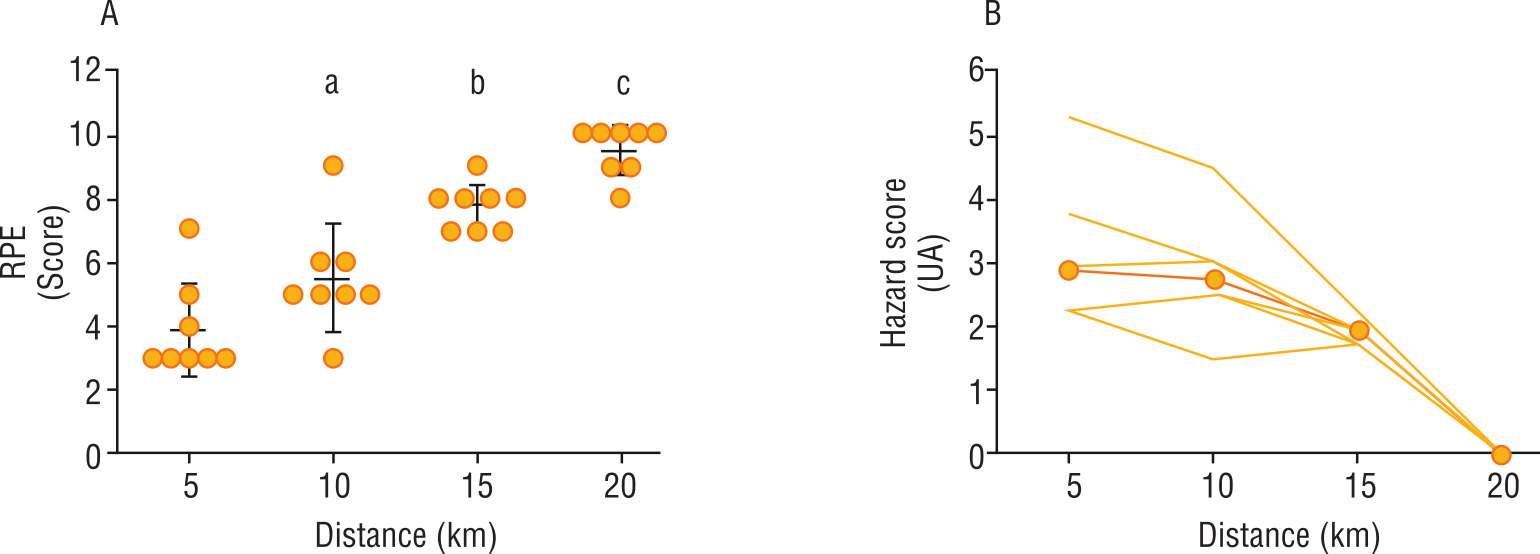
Abstract The objective of the present study is to characterize the self-selected Pacing Strategy (PS) of master cyclists during a simulated 20 km cycling time trial and to assess the muscle function along with the cell-free DNA response. Eight cyclists (age: 42.00 ± 5.35 years) participated in this study. Initially, Heart Rate (HR), Cell-Free DNA (cfDNA), anthropometric measurements and muscle function markers (vertical jump, muscle soreness, thigh circumference and range of motion) were collected at rest. The 20 km cycling Time Trial (20TT) session proceeded as follows: first, each participant completed an individual warm-up with a self-selected pace for 10 minutes. After this, participants were instructed to perform the 20TT in the shortest time possible using their preferred PS. HR, Rating of Perceived Exertion (RPE), time, speed, cadence and power output were measured during all tests. Venous blood samples were collected both immediately and 30 minutes after the 20TT to analyze the cfDNA. Additionally, Muscle Function (MF) markers were reassessed 30 minutes after the end of the exercise. The results indicated that the power output-duration curve exhibited a self-selected parabolic PS (U-shape) with preference for pedaling at high cadences (> 90 rpm). Furthermore, the RPE and the HR increased linearly, reaching peak values at the end of the test. Regarding the cfDNA, vertical jump and thigh circumference, no differences were observed 30 minutes after exercise (P > 0.05). In conclusion, these findings suggest that this parabolic pacing profile with high cadences can be an optimal strategy for performance in the 20TT, as it did not impair muscle function.
Key words:
Cell-free nucleic acids; Bicycling; Physical functional performance; Athletic performance
 Thumbnail
 Thumbnail
 Thumbnail
 Thumbnail