 Metabolic equivalent and intensity of physical activity in public school adolescents
Abstract
Abstract The aim of this study was to identify Metabolic Equivalents of Task (METs) and physical activity intensity, and to examine their associations with sociodemographic, occupational, and behavioral factors among adolescents in public schools in Montes Claros, Minas Gerais, Brazil. This cross-sectional study, part of the ELCAS project, was conducted between 2022 and 2023 with 1,616 first-year high school students. Physical activity was assessed using the short version of the International Physical Activity Questionnaire (IPAQ), converted into MET·min/week and categorized as low (<600), moderate (≥600), or high (≥3,000). Independent variables included gender, school shift, occupation, active transportation, and parental physical activity. Chi-square, Student’s t-tests, ANOVA, and multinomial logistic regression were used, with a 5% significance level. The mean physical activity was 3,401.1 (±3,242.0) MET·min/week. Higher activity levels were observed in boys, daytime students, employed adolescents, those using active transport, and those with physically active parents. Conversely, girls, evening-shift students, unemployed adolescents, those not using active transport, and those with inactive parents were more likely to engage in moderate or low activity. Physical activity levels were heterogeneous and associated with individual, family, and school factors. Promotion strategies should prioritize girls and evening-shift students, highlighting the protective roles of active transportation and parental modeling. Longitudinal studies are recommended to clarify the causal relationships observed.
Key words:
Adolescent; Exercise; Metabolic equivalent; Students
Resumo
Resumo O objetivo deste estudo foi identificar os Equivalentes Metabólicos da Tarefa (METs) e a intensidade da atividade física, bem como analisar suas associações com fatores sociodemográficos, ocupacionais e comportamentais em adolescentes de escolas públicas de Montes Claros, Minas Gerais. Trata-se de um estudo transversal e analítico, integrante do projeto ELCAS, realizado entre 2022 e 2023 com 1.616 estudantes do 1º ano do ensino médio da rede pública estadual. A prática de atividade física foi avaliada pelo International Physical Activity Questionnaire (IPAQ, versão curta), convertida em MET·min/semana e categorizada como baixa (< 600), moderada (≥ 600) ou alta (≥ 3.000). As variáveis independentes incluíram sexo, turno escolar, ocupação, transporte ativo e prática de atividade física parental. Foram aplicados qui-quadrado, t de Student, ANOVA e regressão logística multinomial, considerando p < 0,05. A média geral de atividade física foi de 3.401,1 (± 3.242,0) MET·min/semana. Meninos, estudantes do turno diurno, trabalhadores, usuários de transporte ativo e com pais fisicamente ativos apresentaram níveis mais elevados de atividade física. Por outro lado, meninas, alunos do turno noturno, que não trabalhavam, não utilizavam transporte ativo e tinham pais inativos tiveram maior probabilidade de prática moderada ou baixa. Os níveis de atividade física mostraram heterogeneidade e associação com fatores individuais, familiares e escolares. Estratégias de promoção devem priorizar meninas e estudantes do turno noturno, valorizando transporte ativo e modelagem parental. Estudos longitudinais são recomendados para esclarecer relações causais.
Palavras-chave:
Adolescente; Equivalente metabólico; Estudantes; Exercício físico
INTRODUCTION
Physical activity is understood as any voluntary bodily movement produced by skeletal muscles that results in energy expenditure above the basal metabolic rate1. The daily accumulation of activities with higher energy demands is a protective factor for health, promoting physical fitness, cardiometabolic capacity, and reducing adiposity and depressive symptoms2. Due to its relevance, the assessment and monitoring of energy expenditure are central strategies in health surveillance actions3.
Energy expenditure related to physical activity ranges from everyday activities, such as walking or climbing stairs, to more intense exercises, such as running or resistance training4. Among the measurement methods, the use of validated, low-cost self-reported questionnaires stands out, widely applied in population studies to estimate weekly energy expenditure and activity intensity5. This estimate is based on the Metabolic Equivalent of Task (MET), where 1 MET equals 3.5 mL of oxygen per kilogram of body weight per minute, representing the basal metabolic rate6.
Low levels of physical activity, as well as the predominance of practices characterized by low energy expenditure, increase the risk of chronic noncommunicable diseases and encourage harmful behaviors that tend to become entrenched in adulthood7. According to the Physical Activity Guide for the Brazilian Population and international guidelines, it is recommended that adolescents engage in at least 60 minutes of moderate to vigorous aerobic activity daily in order to promote health and well-being2,8.
Despite recommendations, global estimates indicate that more than 80% of school-aged adolescents do not achieve adequate levels of physical activity7. Among the barriers, difficulties in reaching the minimum recommended intensity of 600 MET min/week stand out9. Although epidemiological studies have described patterns of physical activity in adolescents8,10,11, there is still a lack of population-based research that comprehensively analyzes intensity and energy expenditure expressed in METs. This approach is essential to characterize physical activity profiles, enable international comparisons, and support public health recommendations that consider not only the duration but also the metabolic effort of activities.
Given this scenario, the present study aimed to identify the Metabolic Equivalents of Task (METs) and the intensity of physical activity, in addition to analyzing their associations with sociodemographic, occupational, and behavioral factors in adolescents from public schools in a major city in northern Minas Gerais, Brazil.
METHODS
This research is part of the ELCAS project: Longitudinal Study on Adolescent Behavior in Physical Activity and Health. It is an epidemiological, cross-sectional, and analytical study conducted with 9th-grade students from public high schools in Montes Claros, Minas Gerais, Brazil. The municipality is a strategic hub in the north of the state, recognized as a regional center for health and education. The study was approved by the Research Ethics Committee of the State University of Montes Claros, under opinion no. 5,287,269 (CAAE 56165122.0.0000.5146).
The sampling was based on a stratified list from the Minas Gerais State Department of Education, which identified 3,765 first-year high school students in 2022 and 2023, distributed across 43 urban and rural public schools in Montes Claros. The sample calculation considered a prevalence of 50%, a confidence level of 95%, an error of 3%, deff=1.5, and a 10% increase for possible losses, resulting in a minimum size of 1,373 adolescents.
Adolescents of both sexes, regularly enrolled in the 1st year of high school in the Montes Claros state public school system in 2022 and 2023, who presented duly signed consent and assent forms, were included. Students who were absent from the randomly selected classroom at the time of data collection or who required specialized educational assistance that would compromise the collection of information on lifestyle habits were excluded from the sample. All data collection procedures were conducted by a team of researchers who had been previously trained to ensure standardization in the approach and application of the questionnaires.
Data collection took place between September 2022 and December 2023, taking into account school holidays and breaks, and was carried out in two stages: in the first stage, using probability proportional to size, 20 schools were randomly selected; in the second stage, classes were selected by simple random sampling, with all students in the selected classes invited to participate.
Initially, the researchers visited the selected classes to present the study objectives and invite students to participate. Next, the multifaceted questionnaire was administered in the classroom under the supervision of three researchers, with each participant responsible for completing it individually. The procedure took place on a date and time previously set by the school administration and lasted an average of 40 minutes, as estimated in the pilot study.
The outcome variable of the study was physical activity among adolescents, assessed using the short version of the International Physical Activity Questionnaire (IPAQ), validated and translated for Brazilian adolescents12. Using the data obtained by the IPAQ, physical activity was converted to MET min/week, considering 3.3 MET for light activities, 4.0 MET for moderate activities, and 8.0 MET for vigorous activities5. The sum of the categories generated the final amount of MET in minutes per week. It was then classified as high intensity (at least 3,000 MET min/week), moderate intensity (at least 600 MET min/week), and low intensity (less than 600 MET min/week)13.
The independent variables of association were gender, school shift, occupation (studying and working), active transportation to school, and parental physical activity. Gender, school shift, and occupation profile were collected using the Brazilian Economic Classification Criterion (CCEB). This instrument establishes the economic classification of the study population, including sociodemographic profile and issues related to work in adolescence.
Active transportation to school was assessed using the following question: “In a normal school week, how many days and how much time per day do you use the following means of transportation (walking, biking, skateboarding, bus, school bus, car)?” All students who mentioned walking, cycling, or skateboarding to and from school were considered to be using active transportation. This question has been used in similar studies and has demonstrated adequate test-retest reliability (95% CI: 0.90-0.95; p < 0.05) in a previous study14.
Parental physical activity was identified through adolescents' perceptions of their parents' involvement in physical activity. To this end, the social modeling of physical activity instrument was used15. Responses were dichotomized into “yes” and ‘no’ based on the question “Do your parents engage in any type of physical activity?”
The collected data were entered in duplicate, checked, and analyzed using the Statistical Package for the Social Sciences (SPSS) version 22.0. Statistics were performed using simple and relative frequencies for categorical variables and measures of central tendency (mean and standard deviation) for numerical variables.
For bivariate analyses, Pearson's chi-square test was used, relating the categorical outcome variable to categorical independent variables; Student's t-test for independent samples, associating the numerical outcome variable with independent variables of only two categories; one-way ANOVA, relating the numerical outcome variable with categorical variables with at least three categories, and Bonferroni's post-hoc test to observe the association between groups.
The association measure was performed using the odds ratio (OR) and 95% confidence interval (95% CI), using multinomial logistic regression, considering high intensity physical activity as the reference category. A significance level of 5% (α ≤ 0.05) was adopted for all analyses.
RESULTS
A total of 1,634 adolescents participated in the study, of whom 18 were excluded because they had left most of the questions blank, resulting in a final sample of 1,616 students from 20 public schools (18 urban and 2 rural). The average age was 15.3 (±0.7) years; 50.4% were female, 59.6% studied in the morning shift, 18.1% worked, 33.4% used inactive transportation, and 52.7% had physically inactive parents.
Physical activity averaged 3,401.1 (±3,242.0) MET·min/week, ranging from 0 to 20,490.0, with a median of 2,520.0. The first quartile was 960.0 and the third was 5,001.75 MET·min/week, with an interquartile range of 4,041.75, indicating a wide dispersion of central values.
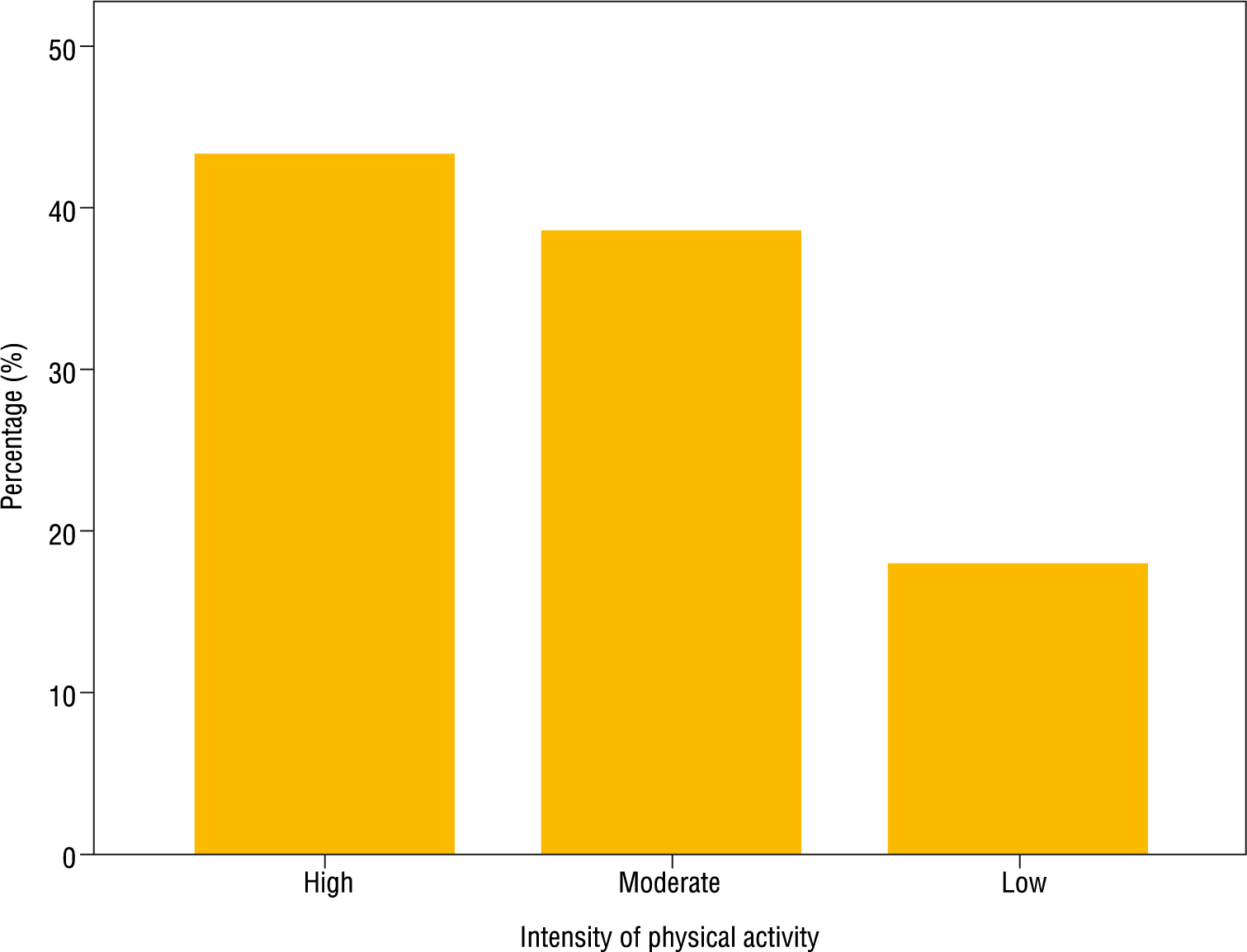
Figure 1 illustrates the distribution of physical activity intensity based on MET-min/week, showing that most participants achieved moderate-to-high intensity.
Prevalence of physical activity intensity among adolescents. Montes Claros, Minas Gerais, 2022/2023 (n=1,536).
Table 1 presents numerical and categorical physical activity variables in association with independent variables, through bivariate analysis (t-test, one-way ANOVA, and chi-square). The data indicate a significant association between the outcome and all independent variables analyzed. With regard to gender, a higher prevalence of low physical activity was identified among girls compared to boys, who had a considerably higher MET min/week.
Bivariate analysis (numerical and categorical) of physical activity in relation to independent variables among adolescents. Montes Claros, MG, 2022/2023 (n=1,616).
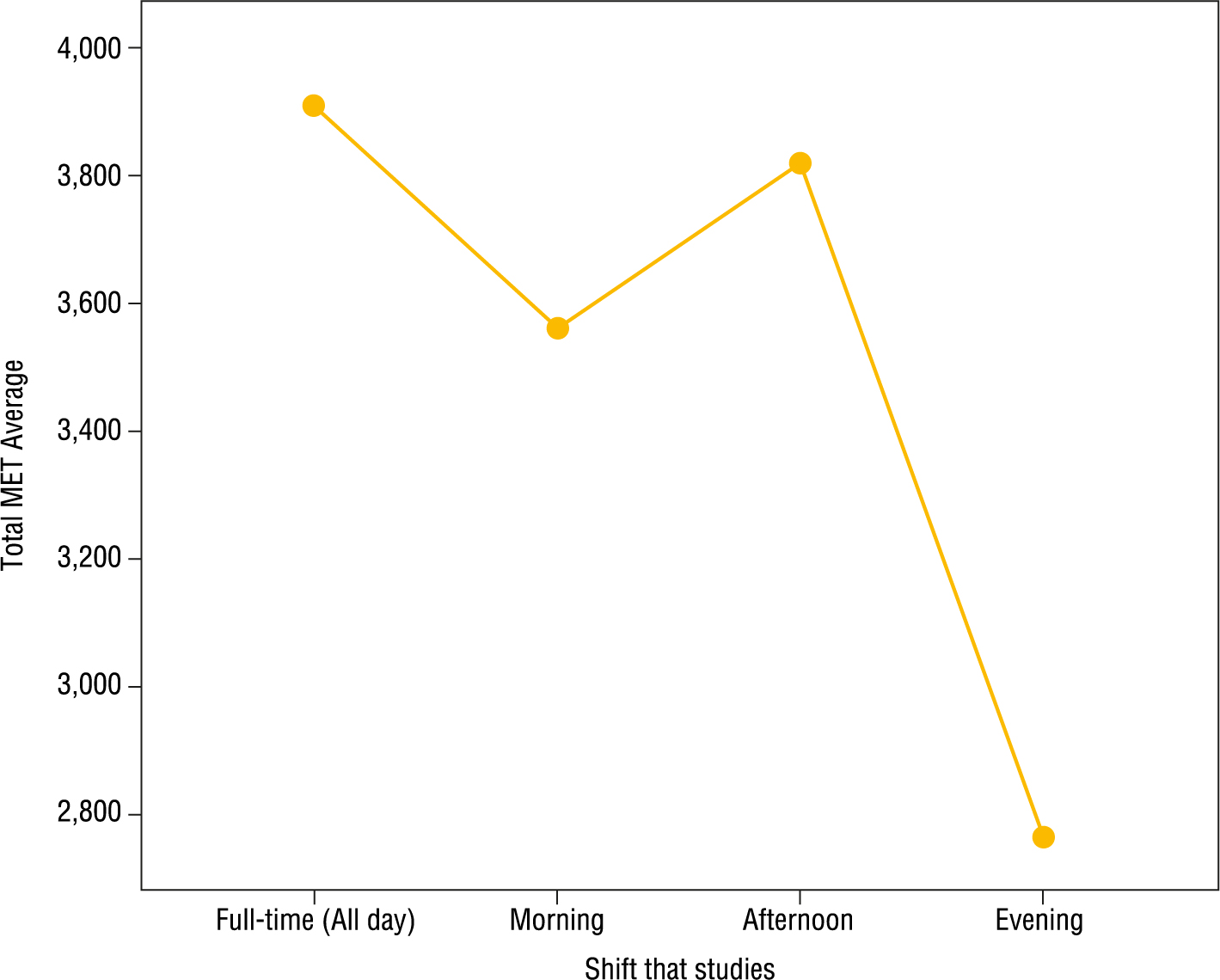
Figure 2 shows the association between MET-min/week and school shift. Bonferroni post-hoc analysis indicated that all categories were statistically different compared to evening shift, with higher METs among adolescents attending full-day, morning, and afternoon shifts.
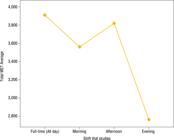
One-way ANOVA test, relating MET min/week to the shift in which the adolescent studies. Montes Claros - MG, 2022/2023 (n=1,536).
Table 2 presents crude ORs for physical activity intensity, considering high intensity as reference, in relation to sociodemographic and behavioral variables. Girls, non-working adolescents, non-users of active commuting, and those with inactive parents were more likely to engage in moderate or low physical activity, while attending morning or afternoon shifts was protective compared to evening shifts.
Crude odds ratio, with high intensity physical activity as the best situation among adolescents. Montes Claros - MG, 2022/2023 (n=1,616).
DISCUSSION
The average of 3,401.1 MET min/week, ranging from 0 to 20,490.0 MET min/week, found in this study reveals wide heterogeneity in the levels of physical activity among adolescents, a pattern also observed in Brazilian studies with different designs8,16. This variation may reflect different lifestyles, differences in access to resources for physical activity, and sociodemographic, behavioral, environmental, and psychocognitive factors, such as motivation and self-efficacy10,17.
Regarding intensity, 81.9% of participants reported moderate to vigorous activities, a result similar to that of other studies with adolescents7,8,15. High-intensity physical activity is associated with greater health benefits and should be encouraged2. A study of 604 Brazilian schoolchildren showed a significant association between any amount of moderate to vigorous physical activity and a lower prevalence of mental health problems, with no association for light intensity18. Similar findings were reported in southern Brazil, showing a relationship between moderate to vigorous activity and various health indicators16,19, especially among adolescents who engage in leisure activities and accumulate more time on weekends.
The differences between the sexes follow the trend of national8,20 and international studies. Girls showed a higher prevalence of low physical activity, a pattern also described in a European cohort of 698 students, in which 63% of those exposed to intensive physical activity were boys, while 80% of those not exposed were girls21. Sociocultural norms and gender expectations may explain some of these differences. Boys tend to receive greater encouragement to engage in physical activity, while girls face barriers such as a greater perception of insecurity and restrictions imposed by parents and guardians22.
Regarding school shifts, adolescents attending night school had lower average MET min/week and lower frequency of moderate to vigorous activities. Although full-time students had the highest average MET (3,908.5 min/week), morning and afternoon shifts had the highest proportions of moderate to high-intensity activities (85.2% and 87.5%, respectively). Another study of 6,264 adolescents found that full-time students are more likely to be sedentary and have low levels of physical activity, regardless of gender and age23. The higher average METs among full-time students can be explained by their prolonged stay at school, with greater exposure to physical education classes, recesses, and extracurricular activities, as well as greater availability of time for extracurricular activities.
Adolescents who combined study and work had an average of 4,546.2 MET min/week, higher than those who only studied (3,165.3 MET min/week), in addition to a higher frequency of moderate to vigorous activities (89.6% vs. 80.2%). This difference may reflect greater physical activity related to work or commuting. In contrast, a study in Campinas (SP) observed a significant reduction in physical activity among working adolescents24, suggesting that the effects of work depend on contextual factors such as socioeconomic conditions, age, and school stage.
The use of active transportation to school was associated with higher mean MET min/week and higher intensities of physical activity, while non-users had greater exposure to light activities. These findings reinforce the importance of active transportation as a strategy to increase daily physical activity. Global data from 277,833 adolescents in 80 countries showed that active transportation more than doubles the chance of meeting physical activity recommendations (OR: 2.06; 95% CI: 2.01–2.12)25. However, methodological heterogeneity between studies and the scarcity of experimental research limit more consistent conclusions26,27.
Parental physical activity was also significantly associated with adolescents' physical activity levels (p = 0.001), reinforcing the influence of the family environment28. Active parents serve as role models and encourage physical activity. A systematic review identified positive relationships between perceived family social support and physical activity in adolescents15. In a Chinese study, positive correlations were observed between social support, self-efficacy, physical activity, and physical fitness, with coefficients ranging from 0.282 to 0.41929. Similarly, a study in Shanghai showed that parental modeling alone - influence, for example - was positively associated with moderate to vigorous physical activity in both sexes (OR = 1.29–2.98 in boys; OR = 1.27–2.64 in girls)30.
The analysis of the crude odds ratio (OR) indicated that being female, not working, not using active transportation, and having physically inactive parents increase the likelihood of engaging in moderate- or low-intensity activities. Studying in the morning or afternoon shifts, in turn, showed a protective effect against low levels of physical activity when compared to the night shift.
Studies on physical activity in adolescents are essential to identify determining factors and inform public health promotion policies, especially among more vulnerable groups, such as girls and night-shift students. However, the lack of standardization in the criteria for classifying and measuring physical activity makes comparisons between studies difficult and limits the overall understanding of the phenomenon.
Some limitations should be acknowledged. The cross-sectional design does not allow causality to be established, and the use of questionnaires depends on self-reporting, which is subject to memory and response biases. Despite this, this study has relevant strengths: a robust sample, which increases external validity; application of the IPAQ (short version), widely used in large national and international studies; and use of multiple statistical tests and multinomial logistic regression, which enabled detailed analyses. The inclusion of categorical and numerical variables, as well as the assessment of different intensities of physical activity, offers a more comprehensive view of adolescent behavior.
CONCLUSION
It can be concluded that levels of physical activity vary widely among adolescents, being higher among boys, students attending daytime classes, those who combine study and work, use active transportation, and have physically active parents. Morning or afternoon shifts showed a protective effect against low-intensity activities. These findings highlight individual, family, and school factors that influence physical activity and may inform public policies and interventions aimed at health promotion. Longitudinal studies are needed to deepen our understanding of the relationships between work, school shifts, and gender inequalities.
ACKNOWLEDGEMENTS
The authors would like to thank FAPEMIG for funding the research (process no.: APQ-02988-22). Scientific initiation programs PIBIC/CNPq, PIBIC-AF/CNPq, PIBIC/FAPEMIG, BIC-UNI. Support from Unimontes, the 22nd Regional Superintendence of Education, and the adolescents who participated in the research.
How to cite this article
Funding
Data Availability Statement
Ethical approval
REFERENCES
- 1 Caspersen CJ, Powell KE, Christenson GM. Physical activity, exercise, and physical fitness: definitions and distinctions for health-related research. Public Health Rep. 1985;100(2):126-31. PMid:3920711.
-
2 WHO: World Health Organization. Physical activity [Internet]. Geneva: World Health Organization; 2024 [cited 2024 Jul 22]. Available from: https://www.who.int/news-room/fact-sheets/detail/physical-activity
» https://www.who.int/news-room/fact-sheets/detail/physical-activity - 3 Crisp AH, Verlengia R, Oliveira MRM. Limitações da utilização do equivalente metabólico (MET) para estimativa do gasto energético em atividades físicas. Rev Bras Cienc Mov. 2014;22(3):148-53.
-
4 Pontzer H, Yamada Y, Sagayama H, Ainslie PN, Andersen LF, Anderson LJ, et al, and the IAEA DLW Database Consortium. Daily energy expenditure through the human life course. Science. 2021;373(6556):808-12. http://doi.org/10.1126/science.abe5017 PMid:34385400.
» http://doi.org/10.1126/science.abe5017 -
5 Craig CL, Marshall AL, Sjöström M, Bauman AE, Booth ML, Ainsworth BE, et al. International physical activity questionnaire: 12-country reliability and validity. Med Sci Sports Exerc. 2003;35(8):1381-95. http://doi.org/10.1249/01.MSS.0000078924.61453.FB PMid:12900694.
» http://doi.org/10.1249/01.MSS.0000078924.61453.FB -
6 Ainsworth BE, Haskell WL, Herrmann SD, Meckes N, Bassett DR Jr, Tudor-Locke C, et al. 2011 compendium of physical activities: a second update of codes and MET values. Med Sci Sports Exerc. 2011;43(8):1575-81. http://doi.org/10.1249/MSS.0b013e31821ece12 PMid:21681120.
» http://doi.org/10.1249/MSS.0b013e31821ece12 -
7 Guthold R, Stevens GA, Riley LM, Bull FC. Global trends in insufficient physical activity among adolescents: a pooled analysis of 298 population-based surveys with 1·6 million participants. Lancet Child Adolesc Health. 2020;4(1):23-35. http://doi.org/10.1016/S2352-4642(19)30323-2 PMid:31761562.
» http://doi.org/10.1016/S2352-4642(19)30323-2 -
8 Soares CAM, Leão OAA, Freitas MP, Hallal PC, Wagner MB. Tendência temporal de atividade física em adolescentes brasileiros: análise da Pesquisa Nacional de Saúde do Escolar de 2009 a 2019. Cad Saude Publica. 2023;39(10):e00063423. http://doi.org/10.1590/0102-311xpt063423 PMid:37971097.
» http://doi.org/10.1590/0102-311xpt063423 -
9 Sallis JF, Cerin E, Conway TL, Adams MA, Frank LD, Pratt M, et al. Physical activity in relation to urban environments in 14 cities worldwide: a cross-sectional study. Lancet. 2016;387(10034):2207-17. http://doi.org/10.1016/S0140-6736(15)01284-2 PMid:27045735.
» http://doi.org/10.1016/S0140-6736(15)01284-2 -
10 Piola TS, Bacil EDA, Pacífico AB, Camargo EM, Campos W. Nível insuficiente de atividade física e elevado tempo de tela em adolescentes: impacto de fatores associados. Cien Saude Colet. 2020;25(7):2803-12. http://doi.org/10.1590/1413-81232020257.24852018 PMid:32667561.
» http://doi.org/10.1590/1413-81232020257.24852018 -
11 Silva JI, Andrade ACS, Muraro AP. Global physical activity, active commuting to school, and sedentary behavior among Latin American adolescents: Global School-Based Student Health Survey and the National School Health Survey. J Phys Act Health. 2024;21(9):879-89. http://doi.org/10.1123/jpah.2022-0645 PMid:39069289.
» http://doi.org/10.1123/jpah.2022-0645 -
12 Guedes DP, Lopes CC, Guedes JERP. Reprodutibilidade e validade do Questionário Internacional de Atividade Física em adolescentes. Rev Bras Med Esporte. 2005;11(2):151-8. http://doi.org/10.1590/S1517-86922005000200011
» http://doi.org/10.1590/S1517-86922005000200011 -
13 Sánchez-Castillo S, Smith L, Díaz-Suárez A, López-Sánchez GF. Physical activity behaviour in people with COPD residing in Spain: a cross-sectional analysis. Lung. 2019;197(6):769-75. http://doi.org/10.1007/s00408-019-00287-4 PMid:31686208.
» http://doi.org/10.1007/s00408-019-00287-4 -
14 Camargo EM, Santos MPM, Ribeiro AGP, Mota J, Campos W. Interação dos fatores sociodemográficos na associação entre fatores psicossociais e transporte ativo para a escola. Cad Saude Publica. 2020;36(5):e00102719. http://doi.org/10.1590/0102-311x00102719 PMid:32490916.
» http://doi.org/10.1590/0102-311x00102719 -
15 Camargo EM, Santos MPM, Ribeiro AGP, Mota J, Campos W. Interação dos fatores sociodemográficos na associação entre fatores psicossociais e transporte ativo para a escola. Cad Saude Publica. 2020;36(5):e00102719. http://doi.org/10.1590/0102-311x00102719 PMid:32490916.
» http://doi.org/10.1590/0102-311x00102719 -
16 Neta ACPA, Steluti J, Ferreira FELL, Farias Junior JC, Marchioni DML, and the Arruda Neta A da CP. Ferreira FEL de L, Steluti J, Farias Júnior JC de, Marchioni DML. Padrões alimentares de adolescentes e fatores associados: Estudo longitudinal sobre comportamento sedentário, atividade física, alimentação e saúde dos adolescentes (LONCAAFS). Cien Saude Colet. 2021;26(suppl. 2):3839-51. http://doi.org/10.1590/1413-81232021269.2.24922019
» http://doi.org/10.1590/1413-81232021269.2.24922019 -
17 Furtado AR, Sá JS, Andrade GKS, Giacon‑Arruda BCG, Bomfim RA, Silva DS, et al. Fatores associados ao nível de atividade física em adolescentes. Texto Contexto Enferm. 2023;32:e20220244. http://doi.org/10.1590/1980-265x-tce-2022-0244pt
» http://doi.org/10.1590/1980-265x-tce-2022-0244pt -
18 Coledam DHC, de Arruda GA, Santos JW, Ré AHN. The role of volume and intensity on the association between physical activity and mental health among adolescents: a cross‑sectional study. Rev Paul Pediatr. 2023;41:e2022010. http://doi.org/10.1590/1984-0462/2023/41/2022010 PMid:37042941.
» http://doi.org/10.1590/1984-0462/2023/41/2022010 -
19 Barbosa SC, Arruda GA, Stabelini Neto A. Tempo de prática de atividade física de intensidade moderada a vigorosa e marcadores de síndrome metabólica em adolescentes. Rev Bras Ativ Fis Saúde. 2020;25:1-7. http://doi.org/10.12820/rbafs.25e0162
» http://doi.org/10.12820/rbafs.25e0162 -
20 Santi NMM, Gomes CS, Silva DRP, Szwarcwald CL, Barros MBA, Malta DC. Prevalence and incidence of insufficient physical activity in Brazilian adolescents during the pandemic: data from ConVid Adolescents. Rev Bras Epidemiol. 2023;26:e230049. http://doi.org/10.1590/1980-549720230049.2 PMid:37909630.
» http://doi.org/10.1590/1980-549720230049.2 -
21 Krtinic G, Duric P. A prospective cohort study on injuries among intensely physically active high school students. J Sch Health. 2019;89(1):31-7. http://doi.org/10.1111/josh.12708 PMid:30506701.
» http://doi.org/10.1111/josh.12708 -
22 Condessa LA, Chaves OC, Silva FM, Malta DC, Caiaffa WT. Sociocultural factors related to physical activity in boys and girls. Rev Saude Publica. 2019;53:25. http://doi.org/10.11606/S1518-8787.2019053000516 PMid:30810662.
» http://doi.org/10.11606/S1518-8787.2019053000516 - 23 Santos TRMF, Pirauá ALT, Farah BQ, Pereira AM, Freitas DB. Qual o impacto das escolas de tempo integral ou semi‑integral sobre o nível de atividade física e comportamento sedentário de adolescentes? Estudo transversal. Humanidades & Inovação. 2020;7(10):297-304.
-
24 Abramo HW, Venturi G, Corrochano MC. Estudar e trabalhar: um olhar qualitativo sobre uma complexa combinação nas trajetórias juvenis. Novos Estud CEBRAP. 2021;39(3):523-42. http://doi.org/10.25091/s01013300202000030004
» http://doi.org/10.25091/s01013300202000030004 -
25 Khan A, Mandic S, Uddin R. Association of active school commuting with physical activity and sedentary behaviour among adolescents: a global perspective from 80 countries. J Sci Med Sport. 2021;24(6):567-72. http://doi.org/10.1016/j.jsams.2020.12.002 PMid:33376077.
» http://doi.org/10.1016/j.jsams.2020.12.002 -
26 Ferrari GLM, Victo ERD, Ferrari TK, Solé D. Active transportation to school for children and adolescents from Brazil: a systematic review. Rev Bras Cineantropom Desempenho Hum. 2018;20(4):406-14. http://doi.org/10.5007/1980-0037.2018v20n4p406
» http://doi.org/10.5007/1980-0037.2018v20n4p406 -
27 Camargo EM, Silva MP, Mota J, Campos W. Prevalence and factors associated with active transportation to school for adolescents. Rev Saude Publica. 2020;54:78. http://doi.org/10.11606/s1518-8787.2020054002078 PMid:32785415.
» http://doi.org/10.11606/s1518-8787.2020054002078 -
28 Christofaro DGD, Andersen LB, Andrade SM, Barros MVG, Saraiva BTC, Fernandes RA, et al. Adolescents’ physical activity is associated with previous and current physical activity practice by their parents. J Pediatr. 2018;94(1):48-55. http://doi.org/10.1016/j.jped.2017.01.007 PMid:28754602.
» http://doi.org/10.1016/j.jped.2017.01.007 -
29 Xu Z, Xu J, Liu T, Gu Z, Hu D. The pathway of social support in enhancing adolescents’ physical fitness: the mediating roles of physical activity and self‑efficacy. PLoS One. 2024;19(9):e0308864. http://doi.org/10.1371/journal.pone.0308864 PMid:39325714.
» http://doi.org/10.1371/journal.pone.0308864 -
30 Hong JT, Chen ST, Tang Y, Cao ZB, Zhuang J, Zhu Z, et al. Associations between various kinds of parental support and physical activity among children and adolescents in Shanghai, China: gender and age differences. BMC Public Health. 2020;20(1):1161. http://doi.org/10.1186/s12889-020-09254-8 PMid:32711483.
» http://doi.org/10.1186/s12889-020-09254-8
Corresponding author
Rosângela Ramos Veloso Silva. Universidade Estadual de Montes Claros – Unimontes. Av. Prof. Rui Braga, s/n, 39401-089, Vila Mauriceia, Montes Claros (MG), Brasil. E-mail: rosangela.veloso@unimontes.brScientific Editor:
Conflict of interest statement