
 Prevalence and factors associated with active commuting among university students in the state of Bahia
Abstract
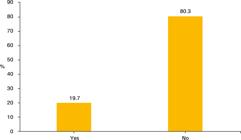
Abstract The objective was to estimate the prevalence, and the behavioral, sociodemographic, and environmental factors associated with active commuting (AC) to/from university in students from the state of Bahia. Methods: a cross-sectional study was conducted in 2019 with 1.506 students from federal universities (UFs) with campuses in the state of Bahia. The outcome of the study was the AC to/from the university. The independent variables were traffic violence, Human Development Index (HDI), sex, social class, work/internship, marital status and age group, university time, study shift, study workload, leisure-time physical activity (LPA), sitting time and sleep time. Association estimates were employed via Odds Ratio (OR), complemented by the 95% confidence interval (CI95%), through multilevel logistic regression for mixed effects. The prevalence of AC was 19.7%. University students of social class D/E were more likely to perform the AC (OR=1.992; CI: 1.273-3.116), on the other hand, university students who worked/interned (OR=0.732; CI: 0.598-0.895) and were inactive in leisure (OR=0.672; CI: 0.488-0.925) were less likely to perform the AC. The higher the HDI of the cities where the UFs are located, the lower the chances of AC (OR=0.669; CI: 0.505-0.886). Concluded that approximately twenty out of every one hundred students performed the AC to the university. It was observed that the socio-environmental context related to the HDI of the cities and individual aspects, such as social class, work/internship, and AFL, were associated with the AC.
Key words:
Cross-sectional studies; Health; Physical activity; Students
 Thumbnail
