
 Prevalence and factors associated with active commuting among university students in the state of Bahia
Abstract
Abstract The objective was to estimate the prevalence, and the behavioral, sociodemographic, and environmental factors associated with active commuting (AC) to/from university in students from the state of Bahia. Methods: a cross-sectional study was conducted in 2019 with 1.506 students from federal universities (UFs) with campuses in the state of Bahia. The outcome of the study was the AC to/from the university. The independent variables were traffic violence, Human Development Index (HDI), sex, social class, work/internship, marital status and age group, university time, study shift, study workload, leisure-time physical activity (LPA), sitting time and sleep time. Association estimates were employed via Odds Ratio (OR), complemented by the 95% confidence interval (CI95%), through multilevel logistic regression for mixed effects. The prevalence of AC was 19.7%. University students of social class D/E were more likely to perform the AC (OR=1.992; CI: 1.273-3.116), on the other hand, university students who worked/interned (OR=0.732; CI: 0.598-0.895) and were inactive in leisure (OR=0.672; CI: 0.488-0.925) were less likely to perform the AC. The higher the HDI of the cities where the UFs are located, the lower the chances of AC (OR=0.669; CI: 0.505-0.886). Concluded that approximately twenty out of every one hundred students performed the AC to the university. It was observed that the socio-environmental context related to the HDI of the cities and individual aspects, such as social class, work/internship, and AFL, were associated with the AC.
Key words:
Cross-sectional studies; Health; Physical activity; Students
Resumo
Resumo O objetivo foi estimar a prevalência e os fatores comportamentais, sociodemográficos e ambientais associados ao deslocamento ativo (DA) para ir/voltar à universidade em estudantes do estado da Bahia. Realizou-se um estudo transversal em 2019 com 1.506 estudantes das universidades federais (UFs) com campus no estado da Bahia. O desfecho do estudo foi o DA para ir/voltar à universidade. As variáveis independentes foram violência no trânsito, Índice de Desenvolvimento Humano (IDH), sexo, classe social, trabalho/estágio, situação conjugal e faixa etária, tempo de universidade, turno de estudo, carga horária de estudo, atividade física no lazer (AFL), tempo sentado e tempo de sono. Foram empregadas as estimativas de associação via Odds Ratio (OR), complementadas pelo intervalo de confiança a 95% (IC95%), por meio da regressão logística multinível para efeitos mistos. A prevalência de DA foi de 19,7%. Universitários da classe social D/E tiveram mais chances de realizar o DA (OR=1,992; IC: 1,273-3,116), por outro lado, universitários que trabalhavam/estagiavam (OR=0,732; IC: 0,598-0,895) e foram inativos no lazer (OR=0,672; IC: 0,488-0,925) tiveram menores chances de realizar o DA. Quanto maior o IDH das cidades de localização das UFs, menores foram as chances de DA (OR=0,669; IC: 0,505-0,886). Concluiu-se que aproximadamente 20 a cada 100 estudantes realizava o DA para a universidade. Observou-se que o contexto socioambiental relacionado ao IDH das cidades e os aspectos individuais, como a classe social, trabalho/estágio e AFL associaram-se com o DA.
Palavras-chave:
Estudos transversais; Saúde; Atividade física; Estudantes
INTRODUCTION
Higher levels of physical activity (PA) through commuting (active displacement: AD) contribute to reduced risk of all-cause mortality, incidence of cardiovascular diseases and diabetes1,2. However, despite the benefits caused by AD, PA levels in this context are decreasing, especially in everyday travel, while passive transport increased3. A lower frequency of using active transport, such as walking or cycling, is observed in university students (US), especially when going to the place of study4.
In US, those male4, of lower socioeconomic status5 and that were physically active6, were associated with AD. No studies are identified characterizing the influence of macro contextual indicators on the AD of US, however, it is possible to infer that environmental factor, such as lack of safety5 and the greatest development of a city, as measured by the Human Development Index (HDI)7,8, can negatively influence the attitude towards AD.
Thus, to better understand this theme in US is essential, due the adoption of unhealthy lifestyles9, as well as the high number of US in Brazil10. These understanding can help in the elaboration of interventions and support to planning of institutional and urban policies, aiming to provide opportunities for AD to acquire health benefits for US2-6. This study conducted with US from the Federal Universities (FUs) of the state of Bahia, aimed to investigate the prevalence and sociodemographic, behavioral, and environmental factors associated with the AD.
METHODS
This cross-sectional study was carried out in 2019. The present study was approved by the research ethics committees of four higher education institutions (HEIs) in the state of Bahia (numbers: 2.767.041; 2.795.177; 2.915.077 and 3.033.773).
The population was US of courses of the FUs located in the state of Bahia: Federal University of Recôncavo da Bahia, Federal University of Bahia, Federal University of Western Bahia, University of International Integration of Afro-Brazilian Lusophony, Federal University of Vale do São Francisco and Federal University of Southern Bahia. As exclusion criteria: link with distance learning courses; under 18 years of age; and who did not inform the institution they belonged. This exclusion procedure was performed after the tabulation of the data.
To estimate the sample: prevalence of 50%, confidence level of 95%, and acceptable sampling error of three percentage points, and target population of 35805 US. The sample was increased in 40% for losses and 15% for association studies. The estimated sample was 1668 US. Due the convenience participation process, the sample was adjusted by sample weights11, being considered the information from the census conducted in Brazilian FUs12.
The data collection was carried out in the first academic semester of 2019 of all FUs. The research instrument was sent to the e-mail of the US, through electronic correspondence sent by the members of the student council or sectors that send electronic information. The US were also sought in the classrooms of the HEIs, for the purpose of inviting them to participate in the research.
The questionnaire was available on the Google Forms platform, and before self-filling the questionnaire, the US accessed the consent form on the first electronic page and if they agreed to participate, they would have access to the questionnaire. If they reported not accepting to participate, they were directed to finalize the form.
The information was collected through a questionnaire with sixty-eight objective questions, composed of questions from previously validated instruments for US13 and Brazilian adults14,15. Sociodemographic questions and those related to the student's tie to the University were also included.
The dependent variable of this study was elaborated for Section 2 (sociodemographic indicators) of the questionnaire of Indicators of Health and Quality of Life in Academics (ISAQ-A)13, referring to the mode of travel to and/or return from the university, being the following questions: "What is the main means of transport you use to go to the University?" and “What is the main type of transport you use to get back from University? As answer options there were: bus, motorcycle, car, school transport, on foot, bicycle, and others. It was considered as AD, the report of going and/or returning on foot and/or by bicycle. The other response options were grouped into the passive category, as in previous studies16,17. The levels of reproducibility of these measures were not presented in the previous publication of the questionnaire13, but it was asked to the authors for these results, which showed satisfactory agreement (kappa test, transport to go: 0.832, p<0.001; transport to return: 0.945, p<0.001).
The quality of these measures, obtained online, were analyzed in survey was carried out in 2023, in a subsample (39 US) not included in the main research. The levels of agreement between the questionnaire digital form (without supervision during application) and printed (applied under the supervision of evaluators) versions were satisfactory, with AD measurement via kappa test of 0.879 (transport to go) and 0.731 (transport to return).
The environmental variables (macro contextual) comprised the information on traffic violence, measured by the annual number of deaths in transport accidents in 201918, referring to each city that is located each campus of the universities (dichotomized in less than median [up to 154 deaths/year] and greater than and equal to median [155 deaths/year]), and the information on the HDI19, it was used to determine the development of the cities where the campuses of the universities are located, dichotomized into less than median (up to 0.758) and greater than and equal to median (0.759 or more).
As individual characteristics (micro contextual) were considered the sociodemographic, link to the University, and health-related behaviors variables. The sociodemographic variables were: gender (male and female); age group in years (18 to 24 and 25 or more); marital status (with partner and without partner); social class (Classes A/B/C and Classes D/E)20; and work internship situation (no work/no internship and work/internship). The variables regarding the ties to the University were: time in the university, based on the year of entry into the institution, in up to two years (2019 and 2018) and three years or more (2017, 2016 and previous years); study period (day and night), and study hours in disciplines categorized in the median (up to 339 hours/class; 340 hours/class or more).
The behaviors variables were: leisure-time PA (LPA), referring the practice in relation to the places, therefore, US were considered as active, those who reported practicing PA in leisure, such as physical exercises (gymnastics, walking, running and bodybuilding), sports, dances or martial arts in the university facilities, trails, squares, clubs, streets, gyms, parks or beaches and were classified as inactive in leisure US who said they did not perform LPA in these environments; sitting time15, the weighted average was calculated by multiplying by 5 the time of the week, and multiplied by 2 the time of the weekend, with the result divided by 7 (excess time: ≥6 hours per/day; low to moderate time: <6 hours per/day)21; sleep time13, the weighted average of the hours of sleep on a weekday multiplied by 5 and the hours of sleep on a weekend day multiplied by 2, then divided by 7 (appropriate sleep: 7 to 9 hours per/day; not appropriate: <7 hours per/day and >9 hours per/day)22.
The analyzes carried out in Stata, version 17.0. Descriptive analyses of absolute and relative frequencies were performed. The collinearity of the independent variables was evaluated using the tetrachoric correlation (T) and the values of the correlations, significant (p<0.05), up to 0.70 were considered satisfactory. The crude analysis was performed by Odds Ratio (OR), complemented by the 95% confidence interval (95%CI), via binary logistic regression. The independent variables that presented values of p<0.20 in these analyses were followed for the multilevel logistic regression for mixed effects (MLRME) to estimate the OR and 95%CI.
In the MLRME, micro contextual (individual variables) variables were considered as Level 1 and macro contextual variables (environmental variables) were considered as Level 2. From the relationship between the variables of Level 1 and 2, the correlation coefficient of the residuals was presented, through the intraclass correlation coefficient (ICC), to estimate the magnitude of explanation of the variables of Level 2 in the total variance. The significance level adopted was 5%.
RESULTS
Participated 1.552 US, however, 21 were excluded for reporting age under 18 years (20 distance learning and a special registration), in addition, 4 US who did not report which institution they belonged to were also excluded. The sample reached was 1.506 US (response rate of 90.29%). The contextual micro and macro characteristics are presented in Table 1. The prevalence of AD among US was 19.7% (Figure 1).
Description of the sociodemographic, study, behavioral and perceptual characteristics of university students from federal institutions. Bahia. 2019.
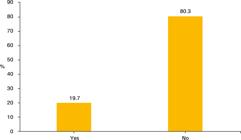
Table 2 shows the results of the T correlations. Higher values were observed between work/internship situation and age, work/internship situation and year of university entry, and study hours and year of university entry. The traffic violence variable showed a high correlation with the HDI variable. In view of the collinearity between the environmental variables (traffic violence and HDI), it was decided to perform separate analyses for each of them. Table 3 presents the crude analysis between exploratory characteristics and AD. It was observed that US aged 25 years or older had lower OR of AD. On the other hand, US from social classes D/E were more active in commuting.
Tetrachoric correlations (T) and significance values (p) between sociodemographic, university-related, and behavioral variables. Bahia. 2019.
Association between environmental, sociodemographic, University ties and behavioral variables with AD. Bahia 2019. Estimates via binary logistic regression.
Table 4 shows the multilevel analyses. In the null model, there was a lower chance of the occurrence of AD among US in each institution (OR: 0.293; 95%CI: 0.147-0.581; p: <0.001). In the analysis, considering the traffic violence of each city in the multilevel model, there was higher chances of AD among US of social class D/E, in addition, US who worked or did an internship were less active in commuting, as well as those inactive in leisure. There was no association between traffic violence and AD.
Association between environmental, sociodemographic, university ties and behavioral variables with AD. Bahia 2019. Estimates via multilevel logistic regression for mixed effects.
In the analyses using the HDI in the multilevel model, the same patterns of association between exploratory characteristics were observed, when traffic violence was considered. On the other hand, it was noted that HDI was associated with AD, so the higher the HDI of the city, the lower the chances of AD. The HDI determined the occurrence of AD in 10.6%.
DISCUSSION
AD was prevalent among two out of every ten US in the FUs of Bahia. US of the campuses located in cities with high HDI showed less involvement with AD. On the individual aspects, US of lower social class presented higher chances of AD. US who worked or did an internship, and those who reported not performing LPA were less likely to perform the AD.
The prevalence of AD in US to go/return of the University in this study was 19.7%. This result was similar in Chilean US (17.8%)23, however, Colombian US were more prone to AD (65.3%)16, as were US from Coimbra, Portugal (55.1%)24. Potential differences may be related to the instruments for measuring commuting, especially due to the need to consider the environmental context around human mobility and the distances between the campuses in relation to the area of educational coverage, which involves not only the main city, but its surroundings. Thus, it is necessary to consider that a greater distance from home to university may decrease the prevalence of AD4,24.
US living in cities with higher HDI were less active in commuting. In this context, the HDI determined the variation of AD, approximately, in 10%. Research conducted in different populations supports this result7,8. People living in localities with lower HDI may accumulate more PA in commuting when compared with the developed locations7. It should be noted that the HDI represents a measure that evaluates the human development of a region, since it considers life expectancy, education, and per capita income. Places with lower HDI, may present expressiveness in terms of lower per capita income and thus favor AD, as it is the viable alternative, without the possibility to choose between vehicles or public transport7. Moreover, the cities with the highest HDI in this study have a higher built environment and demographic density, being more urbanized, which possibly increases the distance and time spent between home and university, thus favoring a decrease in the AD4,5,24.
The findings of this study demonstrated that US in classes D/E were more likely to AD. This result corroborates with other studies with US5,25. It is noteworthy that access to PA in different domains is associated with the process of social inequality in Brazil, since people with lower income or worse professional qualifications are generally subject to higher PA traveling, and the social group with higher income and professional qualifications presents more opportunities in LPA25. It is possible that US with greater purchasing power may have more access to motorized vehicles and possibilities of paying various expenses26, while for the lower income population, the AD is the only form of transport available.
It is interesting to note that US who worked or did an internship were less likely to perform the AD to university. One study noted that working condition has an influence on commuting to university, so workers, unlike students, move more often by motorized modes27. Also, female students and workers were more stressed and rushed when actively moving and demonstrated unfavorable attitudes towards walking and cycling, which was associated with lower choice of AD option28. Having less time can negatively influence the choice of AD28,29.
The results showed a significant association between reporting the practice of LPA in different places away from home with AD. One study observed that young adults who performed five or more PA sessions per/week at leisure used active means of transportation to get to work and school29 and the AD was significantly higher for students who met the PA recommendations6. In addition, students with lowers levels of PA are less active in commuting than those with medium or higher levels of PA4. AD may encourage more PA, thus, it seems interesting to adopt regular LPA practices, to favor the perception of self-efficacy for the choice of AD by US30.
It is essential to consider some limitations, such as the use of self-reported measures, because memory bias, however, the instrument present a satisfactory level of agreement19. Considering the collection of data online, it is understood as a potential factor of restriction of participation, therefore we sought to minimize this problem with active search of participants and a larger number of invitations. In addition, the response of the instrument in digital format may favor filling errors, however, the analysis on a subsample showed satisfactory levels of agreement. As a strong point, it is highlighted the performance of this research with a representative sample of US from the federal universities of Bahia.
It was concluded that approximately twenty out of every one hundred US practiced AD to go/return of the University. Students with lower social classes, who practiced LPA, and those who did not work/did not an internship were more likely to perform AD. Cities with higher HDI contributed with lower chances of AD. New research are needed, which includes variables such as the distance between the residence and the University and other means of active transport.
-
How to cite this article
Silva ES, Sousa TF, Fonseca SA. Prevalence and factors associated with active commuting among university students in the state of Bahia. Rev Bras Cineantropom Desempenho Hum 2025, 27:e99762. DOI: https://doi.org/10.1590/1980-0037.2025v27e99762
-
Funding
This research did not receive any specific grant from funding agencies in the public, commercial, or not-for-profit sectors. This study was financed in part by the Coordenação de Aperfeiçoamento de Pessoal de Nível Superior – Brasil (CAPES) – Finance Code 001.
REFERENCES
-
1 Dinu M, Pagliai G, Macchi C, Sofi F. Active commuting and multiple health outcomes: a systematic review and meta-analysis. Sports Med. 2019;49(3):437-52. http://doi.org/10.1007/s40279-018-1023-0 PMid:30446905.
» http://doi.org/10.1007/s40279-018-1023-0 -
2 Bernabe-Ortiz A, Carrillo-Larco RM, Gilman RH, Smeeth L, Checkley W, Miranda JJ. Leisure-time and transport-related physical activity and the risk of mortality: the CRONICAS Cohort Study. J Phys Act Health. 2022;19(2):118-24. http://doi.org/10.1123/jpah.2021-0672 PMid:35051901.
» http://doi.org/10.1123/jpah.2021-0672 -
3 Gong W, Yuan F, Feng G, Ma Y, Zhang Y, Ding C, et al. Trends in Transportation Modes and Time among Chinese Population from 2002 to 2012. Int J Environ Res Public Health. 2020;17(3):945. http://doi.org/10.3390/ijerph17030945 PMid:32033007.
» http://doi.org/10.3390/ijerph17030945 -
4 Barranco-Ruiz Y, Cruz León C, Villa-González E, Palma Leal X, Chillón P, Rodríguez-Rodríguez F. Active commuting to university and its association with sociodemographic factors and physical activity levels in chilean students. Medicina (Kaunas). 2019;55(5):152. http://doi.org/10.3390/medicina55050152 PMid:31108867.
» http://doi.org/10.3390/medicina55050152 -
5 Palma-Leal X, Rodríguez-Rodríguez F, Campos-Garzón P, Castillo-Paredes A, Chillón P. New self-report measures of commuting behaviors to university and t+heir association with sociodemographic characteristics. Int J Environ Res Public Health. 2021;18(23):12557. http://doi.org/10.3390/ijerph182312557 PMid:34886286.
» http://doi.org/10.3390/ijerph182312557 -
6 Bopp M, Wilson O, Elliott L, Papalia Z, Duffey M. Association between active transport habits and physical activity levels in a diverse sample of college students in the United States. J Public Health (Berl). 2022;30(6):1577-81. http://doi.org/10.1007/s10389-020-01424-7
» http://doi.org/10.1007/s10389-020-01424-7 -
7 Lima DF, Luiz OC. Análise da suficiência da AF associado ao índice de desenvolvimento humano municipal nas capitais brasileiras. CEFE [Internet]. 2013 [cited 2022 Jan 28];11(2):19-26. Available from: https://paper.researchbib.com/view/paper/176027
» https://paper.researchbib.com/view/paper/176027 -
8 Silva DAS, Aubert S, Ng K, Morrison SA, Cagas JY, Tesler R, et al. Association Between Physical Activity Indicators and Human Development Index at a National Level: Information From Global Matrix 4.0 Physical Activity Report Cards for Children and Adolescents. J Phys Act Health. 2022;22(11):737-44. http://doi.org/10.1123/jpah.2022-0321 PMid:36280230.
» http://doi.org/10.1123/jpah.2022-0321 -
9 Whatnall MC, Patterson AJ, Brookman S, Convery P, Swan C, Pease S, et al. Lifestyle behaviors and related health risk factors in a sample of Australian university students. J Am Coll Health. 2020;68(7):734-41. http://doi.org/10.1080/07448481.2019.1611580 PMid:31140957.
» http://doi.org/10.1080/07448481.2019.1611580 -
10 INEP: Instituto Nacional de Estudos e Pesquisas Educacionais Anísio Teixeira. Censo da Educação Superior [Internet]. Brasília: INEP; 2020 [cited 2022 Jun 7]. Available from: https://www.gov.br/inep/pt-br/areas-de-atuacao/pesquisas-estatisticas-e-indicadores/censo-da-educacao-superior
» https://www.gov.br/inep/pt-br/areas-de-atuacao/pesquisas-estatisticas-e-indicadores/censo-da-educacao-superior -
11 Elliott MR, Valliant R. Inference for nonprobability samples. Stat Sci. 2017;32(2):249-64. http://doi.org/10.1214/16-STS598
» http://doi.org/10.1214/16-STS598 -
12 ANDIFES: Associação Nacional dos Dirigentes das Instituições Federais de Ensino. V Pesquisa Nacional de Perfil Socioeconômico e Cultural dos (as) Graduandos (as) das IFES - 2018 [Internet]. Brasília: ANDIFES; 2019 [cited 2022 Jun 22]. Available from: https://www.andifes.org.br/?p=79639
» https://www.andifes.org.br/?p=79639 -
13 de Sousa TF, Fonseca SA, José HPM, Nahas MV. Validade e reprodutibilidade do questionário Indicadores de Saúde e Qualidade de Vida de Acadêmicos (Isaq-A). Arq Cien Esp [Internet]. 2013 [cited 2022 Jan 28];1(1):21-30. Available from: https://seer.uftm.edu.br/revistaeletronica/index.php/aces/article/view/254
» https://seer.uftm.edu.br/revistaeletronica/index.php/aces/article/view/254 -
14 Mendes LL, Campos SF, Malta DC, Bernal RTI, Sá NNB, Velásquez-Meléndez G. Validade e reprodutibilidade de marcadores do consumo de alimentos e bebidas de um inquérito telefônico realizado na cidade de Belo Horizonte (MG), Brasil. Rev Bras Epidemiol. 2011;14(suppl 1):80-9. http://doi.org/10.1590/S1415-790X2011000500009 PMid:22002145.
» http://doi.org/10.1590/S1415-790X2011000500009 -
15 Matsudo S, Araújo T, Matsudo V, Andrade D, Andrade E, Oliveira LC, Braggion G. Questionário internacional de AF (Ipaq): estudo de validade e reprodutibilidade no Brasil. Rev Bras Ativ Fís Saúde. 2001;6(2):5-18. https://doi.org/10.12820/rbafs.v.6n2p5-18.
» https://doi.org/10.12820/rbafs.v.6n2p5-18. -
16 García-Hermoso A, Quintero AP, Hernández E, Correa-Bautista JE, Izquierdo M, Tordecilla-Sanders A, et al. Active commuting to and from university, obesity and metabolic syndrome among Colombian university students. BMC Public Health. 2018;18(1):523. http://doi.org/10.1186/s12889-018-5450-5 PMid:29673340.
» http://doi.org/10.1186/s12889-018-5450-5 -
17 Bosch LSMM, Wells JCK, Lum S, Reid AM. Associations of the objective built environment along the route to school with children’s modes of commuting: a multilevel modelling analysis (the SLIC study). PLoS One. 2020;15(4):e0231478. http://doi.org/10.1371/journal.pone.0231478 PMid:32271830.
» http://doi.org/10.1371/journal.pone.0231478 -
18 IPEA: Instituto de Pesquisa Econômica Aplicada. Atlas da Violência 2019 [Internet]. Rio de Janeiro: IPEA; 2019 [cited 2022 Jan 28]. Available from: https://www.ipea.gov.br/atlasviolencia/publicacoes/50/atlas-da-violencia-2019
» https://www.ipea.gov.br/atlasviolencia/publicacoes/50/atlas-da-violencia-2019 -
19 IBGE: Instituto Brasileiro de Geografia e Estatística. Cidades e estados [Internet]. Rio de Janeiro: IBGE; 2021 [cited 2022 Jan 29]. Available from: https://www.ibge.gov.br/cidades-e-estados/ba/
» https://www.ibge.gov.br/cidades-e-estados/ba/ -
20 ABEP: Associação Brasileira de Empresas de Pesquisa. Critério de Classificação Econômica Brasil [Internet]. São Paulo: ABEP; 2019 [cited 2022 Jun 17]. Available from: https://www.abep.org/criterio-brasil
» https://www.abep.org/criterio-brasil -
21 Oyeyemi AL, Muhammed S, Oyeyemi AY, Adegoke BOA. Patterns of objectively assessed physical activity and sedentary time: are Nigerian health professional students complying with public health guidelines? PLoS One. 2017;12(12):e0190124. http://doi.org/10.1371/journal.pone.0190124 PMid:29281683.
» http://doi.org/10.1371/journal.pone.0190124 -
22 Hirshkowitz M, Whiton K, Albert SM, Alessi C, Bruni O, DonCarlos L, et al. National Sleep Foundation’s sleep time duration recommendations: methodology and results summary. Sleep Health. 2015;1(1):40-3. http://doi.org/10.1016/j.sleh.2014.12.010 PMid:29073412.
» http://doi.org/10.1016/j.sleh.2014.12.010 -
23 Castillo-Paredes A, Jiménez IN, Parra-Saldías M, Palma-Leal X, Felipe JL, Aldazabal PI, et al. Environmental and psychosocial barriers affect the active commuting to university in chilean students. Int J Environ Res Public Health. 2021;18(4):1818. http://doi.org/10.3390/ijerph18041818 PMid:33668427.
» http://doi.org/10.3390/ijerph18041818 -
24 Silva P, Vaz V, Silva M. Nível de AFL e deslocamento e fatores associados em alunos de Educação Física em Coimbra - Portugal. Rev Bras Ativ Fís Saúde. 2016;20:559. http://doi.org/10.12820/rbafs.v.20n6p559
» http://doi.org/10.12820/rbafs.v.20n6p559 -
25 Molina-García J, Sallis JF, Castillo I. Active commuting and sociodemographic factors among university students in Spain. J Phys Act Health. 2014;11(2):359-63. http://doi.org/10.1123/jpah.2012-0004 PMid:23359296.
» http://doi.org/10.1123/jpah.2012-0004 -
26 Higuera-Mendieta D, Uriza PA, Cabrales SA, Medaglia AL, Guzman LA, Sarmiento OL. Is the built-environment at origin, on route, and at destination associated with bicycle commuting? A gender-informed approach. J Transp Geogr. 2021;94:103120. http://doi.org/10.1016/j.jtrangeo.2021.103120 PMid:34305337.
» http://doi.org/10.1016/j.jtrangeo.2021.103120 -
27 Knuth AG, Antunes PC. Práticas corporais/atividades físicas demarcadas como privilégio e não escolha: análise à luz das desigualdades brasileiras. Saude Soc. 2021;30(2):200363. http://doi.org/10.1590/s0104-12902021200363
» http://doi.org/10.1590/s0104-12902021200363 -
28 Vahedi J, Shams Z, Mehdizadeh M. Direct and indirect effects of background variables on active commuting: Mediating roles of satisfaction and attitudes. J Transp Health. 2021;21:101054. http://doi.org/10.1016/j.jth.2021.101054
» http://doi.org/10.1016/j.jth.2021.101054 -
29 Gordon-Larsen P, Nelson MC, Beam K. Associations among active transportation, physical activity, and weight status in young adults. Obes Res. 2005;13(5):868-75. http://doi.org/10.1038/oby.2005.100 PMid:15919840.
» http://doi.org/10.1038/oby.2005.100 -
30 Teuber M, Sudeck G. Why do students walk or cycle for transportation? Perceived study environment and psychological determinants as predictors of active transportation by university students. Int J Environ Res Public Health. 2021;18(4):1390. http://doi.org/10.3390/ijerph18041390 PMid:33546223.
» http://doi.org/10.3390/ijerph18041390

