 Physical activity level of Chilean preschool children during each segment of the school day: comparison by the presence of physical education class and school schedule
Abstract
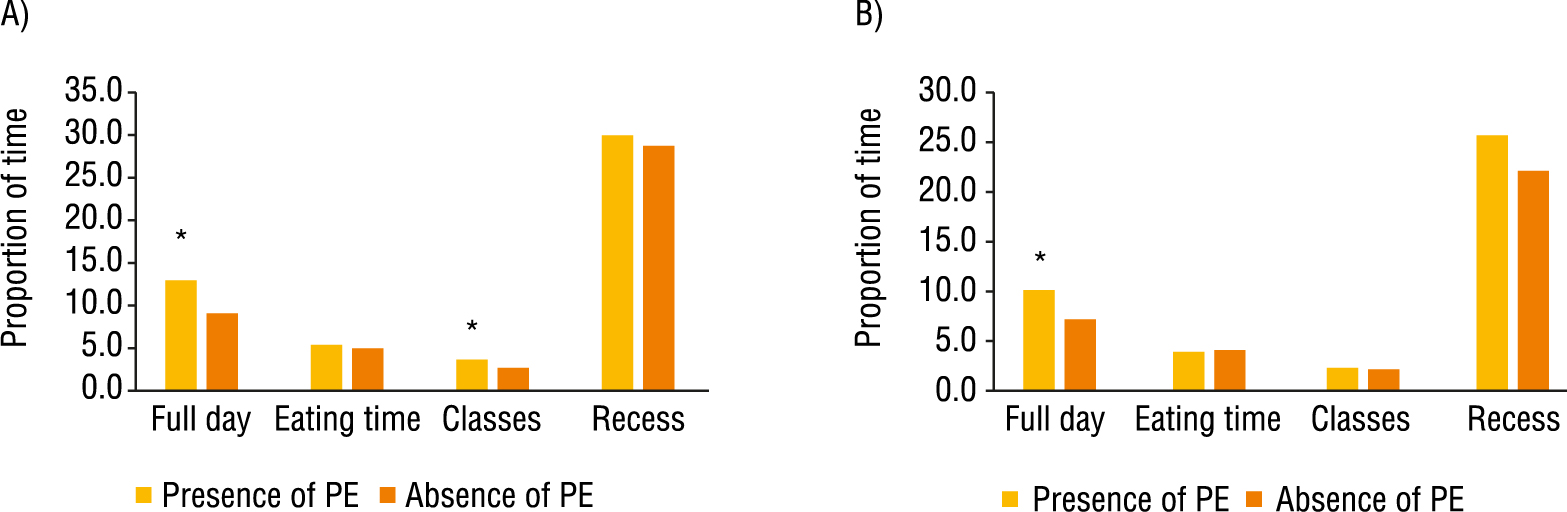
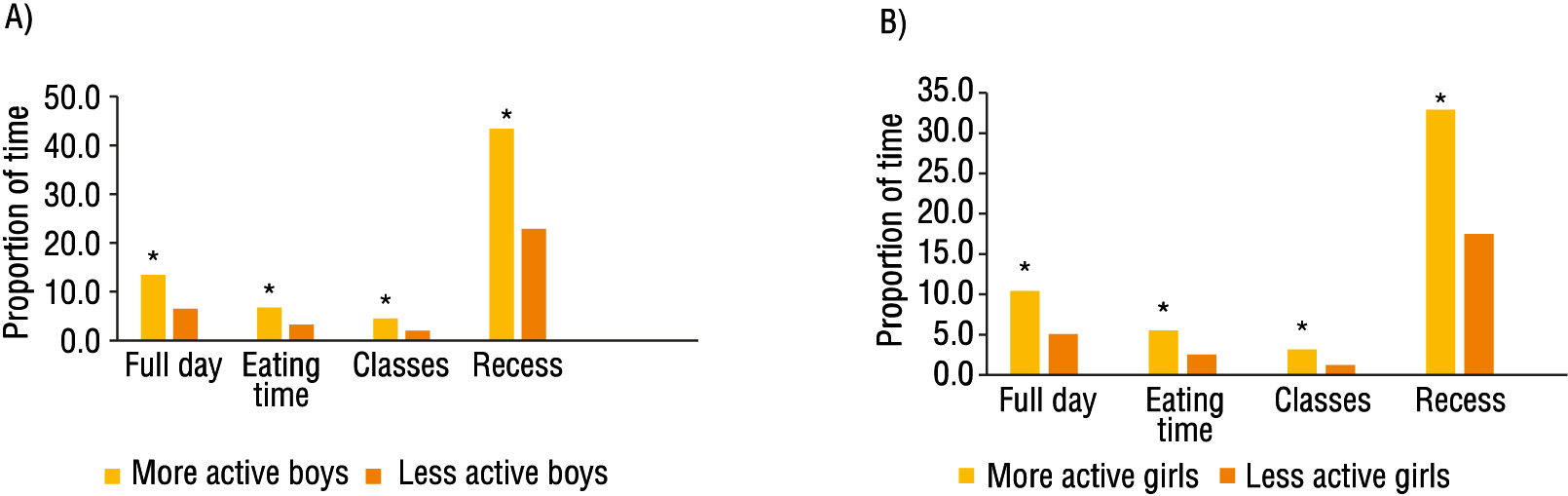
Abstract This study aimed to evaluate Chilean preschoolers’ PAL during each segment and the whole school day, according to sex, presence of PE, and duration of school schedule. This is an observational, cross-sectional study including 630 preschoolers, 50% girls (5.2 years ± 0.3), who wore accelerometers during the school day. We compared days with and without PE, the time in sedentary behavior (SB), moderate-vigorous physical activity (MVPA), and PAL during each segment and whole school day, according to sex and school schedule (half or full day) as well as MVPA between more and less active children. Mann-Whitney and Wilcoxon tests for dependent samples were used. On days with no PE, 60% of the time, preschoolers engaged in SB, mainly during curricular classes (60.8% and 53.8% in half and full days, respectively), and 8% in MVPA, mainly during recess (56.9% and 49.5% during half and full days, respectively). On days with PE, boys and girls engaged in significantly higher MVPA (9.3% no PE and 13.4% with PE; girls: 7.4% no PE and 10.2% with PE). Boys spent significantly more time in MVPA than girls (9.4% boys and 7.3% girls). Active preschoolers engaged in more MVPA not only during the whole school day but also during each segment. To increase PAL in preschoolers, especially girls, at least two aspects should be considered: providing more active curricular classes and increasing activity on days without PE.
Key words:
Chile; Physical activity; Physical education; Preschool children
 Thumbnail
 Thumbnail
 Thumbnail