 Effects of Cycle Ergometer Exercise on Functional Capacity and Hospitalization Time of Patients After Open-Heart Surgery: A Systematic Review and Meta-Analysis
ABSTRACT
Introduction: Cycle ergometer in the postoperative period of open-heart surgery is a safe and economical exercise option. However, its specific effects, whether or not associated with conventional physiotherapy, are not well established in current literature. The objective of this study was to evaluate the effects of cycle ergometer exercise associated or not with conventional physical therapy, compared with only conventional physical therapy, on functional capacity, hospitalization time, peripheral muscle strength, and pulmonary complications of patients after open-heart surgery.
Methods: MEDLINE, Cumulative Index to Nursing & Allied Health Literature, Latin American and Caribbean Health Sciences Literature, Web of Science, Scopus, Embase, Physiotherapy Evidence Database, and Cochrane Library were searched; manual searches were also conducted in the references of the included studies. Randomized controlled trials that analyzed the effects of cycle ergometer exercise associated or not with conventional physical therapy compared with only conventional physical therapy in adult patients after an open-heart surgery were included. Methodological quality was assessed by Cochrane risk-of-bias tool, and the meta-analysis was undertaken using RevMan 5.3.
Results: Mean difference in the six-minute walk test (31 meters, 95% confidence interval [CI]: 1.59 to 60.3 meters, P = 0.04) was higher and in intensive care unit stay was lower (-0.5 days, 95% CI: -0.86 to -0.14 days, P = 0.007) in the intervention group. The total hospitalization time (-0.18 days, 95% CI: -0.73 to 0.38 days, P = 0.53) didn’t change between groups.
Conclusion: Cycle ergometer exercises improved functional capacity but with no clinically relevant effects on hospitalization time after open-heart surgeries.
Keywords:
Cardiac Rehabilitation; Hospitalization; Thoracic Surgery; Exercise.
INTRODUCTION
Cardiovascular diseases are the leading cause of death worldwide[1]. Surgery (e.g., myocardial revascularization surgery [MRS] and valve replacement surgery [VRS]) may be indicated when hemodynamic changes or severe symptoms (or both) occur[2,3]. Despite technological advances, postoperative (PO) complications (e.g., immobilism[4-6], pain, cardiopulmonary bypass[7], and prolonged mechanical ventilation[8]) are common and increase surgical morbidity and mortality[9]. These conditions also reduce functional capacity, which may be recovered by a four-phase cardiac rehabilitation (CR)[10-12].
Phase I of CR begins after the patient achieves clinical stability and comprises low-intensity exercises[13] seeking early mobilization[14]. These exercises include postural changes (i.e., sitting at the bedside or rolling on the bed), active training of upper and lower limbs, ambulation, and ascent and descent of steps performed progressively[15,16]. However, the protocol prescription (exercise type, intensity, duration, and progression) is not standardized, possibly impacting the absence of clinically relevant results. The difficulty in monitoring vital signs and exercise intensity[17], especially during ambulation, may contribute to this issue. In addition, few intensive care units (ICU) have room for ambulation. Thus, the cycle ergometer can provide passive, active, and resistance training[17,18]. This intervention is a viable aerobic exercise in phase I of CR since it simplifies prescription and intensity monitoring.
Previous studies showed that cycle ergometer is a safe, low-intensity exercise for patients hospitalized after open-heart surgeries[17,19]. However, an adequate protocol for cycle ergometers is still being determined, and it is unclear whether its inclusion in the conventional physical therapy protocol would be effective.
Thus, this systematic review aimed to evaluate the effects of cycle ergometer exercise associated or not with conventional physical therapy, compared with only conventional physical therapy, on functional capacity and hospitalization time of patients after open-heart surgery.
METHODS
This systematic review was conducted according to the Preferred Reporting Items of Systematic Reviews and Meta-Analyses statement[20] and registered in the International Prospective Register of Systematic Reviews database (CRD42021265997).
Literature Search and Screening
Searches were conducted in September 2022 in the following electronic databases: MEDLINE, Cumulative Index to Nursing & Allied Health Literature (or CINAHL), Latin American and Caribbean Health Sciences Literature (or LILACS - BIREME), Web of Science, Scopus, Embase, Physiotherapy Evidence Database (or PEDro), and Cochrane Library; manual searches were also conducted in the references of the included studies. The search strategy encompassed the keywords "cardiac surgery" and ("cycle ergometer", "early mobilization", "exercise," or "physiotherapy”) and the Boolean operators (AND and OR); no language or year restrictions were applied. The detailed strategy is described in Table 1. Two independent evaluators selected the studies. The order of evaluation was the title, abstract, and full text. Any disagreements in these steps were solved by consensus, and a third evaluator decided the eligibility when needed. The initial screening of titles, abstracts, and full texts was performed using the Rayyan® software.
Inclusion and Exclusion Criteria
Only randomized controlled trials were included.
Patients
Patients over 18 years in the PO period of open-heart surgery were included.
Interventions
The patients from the intervention group performed lower limb exercises in the ICU or wards using a portable cycle ergometer while sitting on the bed (supine position with elevated headboard), at the bedside, or in an armchair. This intervention was associated or not with conventional physical therapy.
The control group performed conventional physical therapy, defined as any active upper or lower limb exercises (e.g., walking and exercises [resistance, free active, or isometric]), except the cycle ergometer. Studies that applied just breathing exercises, stretching, neuromuscular electrical stimulation, or passive mobilization were excluded.
Outcomes
The primary outcomes were the hospitalization time in days (i.e., total and ICU stay), functional capacity measured by the distance walked (in meters or % of predicted) in the six-minute walk test (6MWT), and score on functional scales.
The secondary outcomes were pulmonary complications (i.e., atelectasis, pleural effusion, lung infections, respiratory failure, reintubation), peripheral muscle strength measured by the Medical Research Council score, quadriceps cross-sectional diameter, dynamometry, or handgrip strength.
Data Extraction
Two independent evaluators extracted and plotted data in a spreadsheet (Microsoft Excel®). The extracted data encompassed the type of exercise, intensity, time or repetitions, daily and weekly frequency, and form of progression of intervention and control groups. In addition, the 6MWT data were used to analyze the functional capacity. Hospitalization time (days) corresponded to the total time and ICU stay.
Risk of Bias Assessment
Two independent reviewers assessed the risk of bias using the Cochrane risk of bias tool. This tool comprises seven items that classify the risk of the study as low, high, or uncertain[21]. Any disagreements were solved by consensus, and a third evaluator was recruited when needed.
Data Analysis
Meta-analyses were performed in the Review Manager (version 5.2). The random effect model was used due to the heterogeneity of exercise prescription between studies. Heterogeneity was assessed using The Chi-square test (α = 0.10) and (I2). Two studies reported data (6MWT[22] and hospitalization time[19]) as median and interquartile range; authors were contacted and provided these data in mean and standard deviation for inclusion in the meta-analysis.
RESULTS
Literature Search and Screening
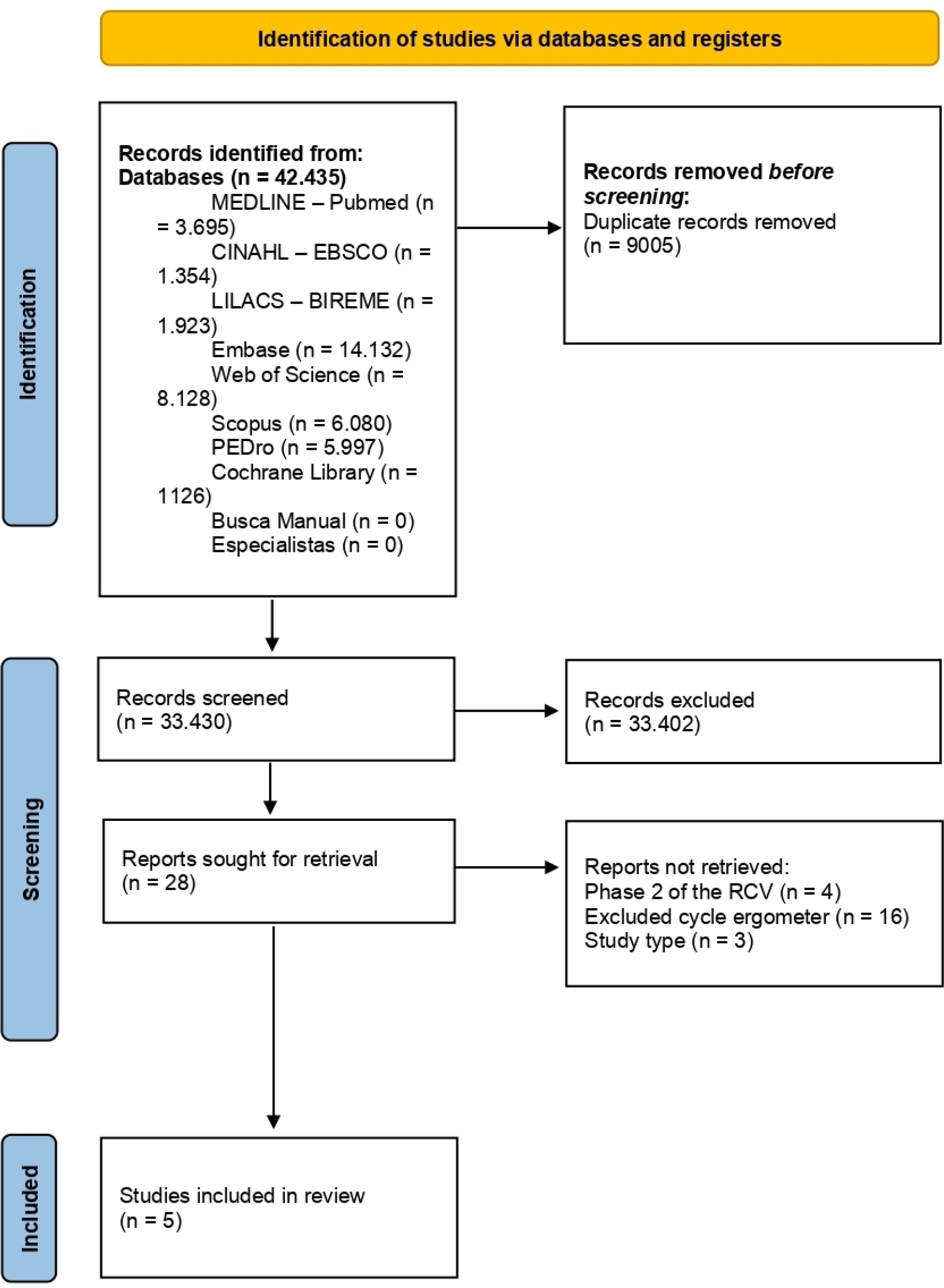
A total of 42,435 studies were found in the initial screening; 9,005 duplicates were removed, and 28 studies were eligible for full evaluation. Then, 23 studies were excluded, and five were included in this review (Figure 1).
Flow diagram of studies assessed for eligibility. CINAHL=Cumulative Index to Nursing & Allied Health Literature; CR=cardiac rehabilitation; LILACS=Latin American and Caribbean Health Sciences Literature; PEDro=Physiotherapy Evidence Database.
Basic Information about the Included Trials
Data on patients, intervention, control group, outcomes, and intervention effects compared with the control group are reported in Table 2. Of the five studies included, four are Brazilian[17,19,22,23] and one is Australian[24].
The number of patients varied between 24 and 228, totaling 381 (190 in the control group and 191 in the intervention group). Four studies[17,22-24] included only patients who underwent MRS and one[19] who underwent MRS, VRS, or both combined. Patients included were aged over 50 years[17], between 40 and 75 years[23], and over 18 years[19]; two studies[22,24] did not consider age as an inclusion criterion. Four studies[17,19,22,24] excluded patients with orthopedic, neurological, and vascular limitations; one[23] excluded only those with PO complications. Trevisan et al.[17] also excluded patients who had complications (preoperative and PO) and were reintubated. Borges et al.[22] excluded patients who underwent surgery and stayed more than ten days in the hospital. Gama Lordello et al.[19] excluded patients who had difficulty understanding the study activities and those who discontinued the protocol in the ward to return to the ICU. Lastly, Hirschhorn et al.[24] excluded planned concomitant surgery, emergency MRS, and non-English speakers.
Intervention and Control Groups
Considering the interventions, one study[19] performed cycle ergometer exercises associated with ambulation progression, and four[17,22-24] added the cycle ergometer to the conventional physical therapy. In Windmöller et al.[23], the intervention group used continuous positive airway pressure during cycle ergometer exercises; the control group used it only if needed. One study[24] used a stationary bicycle[24], while the others[17,19,22,23] used a portable cycle ergometer. One study[23] started the exercise on a cycle ergometer from the second PO day, two[17,24] from the third, and two[19,22] within 24 hours. Borges et al.[22] started cycle ergometer exercises in the ICU, and Gama Lordello et al.[19] performed them only in the ICU; three studies[17,23,24] did not specify where the protocol started. The cycle ergometer exercises, in general, ranged between 10[19,24] and 30 minutes[17]. Borges et al.[22] prescribed exercises for five minutes in the ICU, and the time progressively increased to 20 minutes. All studies performed the exercises twice a day, except for Windmöller et al.[23], who conducted the exercise on a cycle ergometer once a day.
The safety criteria, when reported, were the same for both groups. Trevisan et al.[17] used a tolerated heart rate (HR) of 30 bpm above resting HR and signs of exercise intolerance. Hirschhorn et al.[24] interrupted the exercise when HR was over 90% of the predicted maximum or if it fell 40 bpm in less than one minute. Gama Lordello et al.[19] reported control and monitoring of vital signs but did not provide details on the considered parameters. Windmöller et al.[23] interrupted the intervention if the patient presented fatigue, chest pain, dyspnea, cyanosis, pallor, tachycardia (> 120 bpm), bradycardia, complex arrhythmias, or hypotension. Borges et al.[22] did not report an interruption criterion; however, regarding intensity control and exercise progression, they instructed patients to pedal as fast as possible, maintaining the pace during the intervention period and progressing over time. Gama Lordello et al.[19] instructed the patients to pedal continuously. Hirschhorn et al.[24] instructed pedaling in a rate of perceived exertion (RPE) of 3 to 4 on the Borg scale (i.e., moderate to somewhat strong) without progression. Windmöller et al.[23] used as a criterion an increase of up to 30 bpm above resting HR, RPE of 2 to 3, and minimum peripheral oxygen saturation of 90% without oxygen supplementation. No study reported adding load to cycle ergometer exercise.
Outcomes
Two studies[22,24] assessed the outcomes before surgery and at discharge; one study[19] in the PO period (second, third, and fourth day); one study[23] before surgery and four days after, and one study[17] one and three days after surgery, with a reassessment on the sixth day or at discharge. Three meta-analyses are conducted for the outcomes: functional capacity, ICU stay, and hospital stay. Sensitivity analysis was not performed because all meta-analyses were homogeneous (P ≥.1 and I2 ≤ 25%). Peripheral muscle strength and pulmonary complications were not assessed in the included studies. The results of each study are reported in Table 2.
Functional Capacity
Four studies[17,22-24] assessed the functional capacity using the 6MWT (Figure 2). The mean difference in 6MWT (final 6MWT - initial 6MWT) was higher in the intervention group than in the control group (31 meters, 95% confidence interval [CI]: 1.59 to 60.30 meters, P = 0.040; I2 = 6%, P = 0.360).

Forest plot of comparison: mean difference of 6-minute walk test (m). CI=confidence interval; IV=inverse variance; SD=standard deviation.
Hospitalization Time
Three studies[19,22,23] reported the ICU stay (Figure 3); the mean difference was lower in the intervention group than in the control group (-0.5 days, 95% CI: -0.86 to -0.14 days, P = 0.007; I2 = 0%, P = 0.970). Four studies[17,22-24] evaluated the total hospitalization time (Figure 4), which was not significantly different between groups (-0.18 days, 95% CI: -0.73 to 0.38 days, P = 0.53; I2 = 0%, P = 0.600).

Forest plot of comparison: length of intensive care unit stay (days). CI=confidence interval; IV=inverse variance; SD=standard deviation.

Forest plot of comparison: length of hospital stay (days). CI=confidence interval; IV=inverse variance; SD=standard deviation.
Risk of Bias
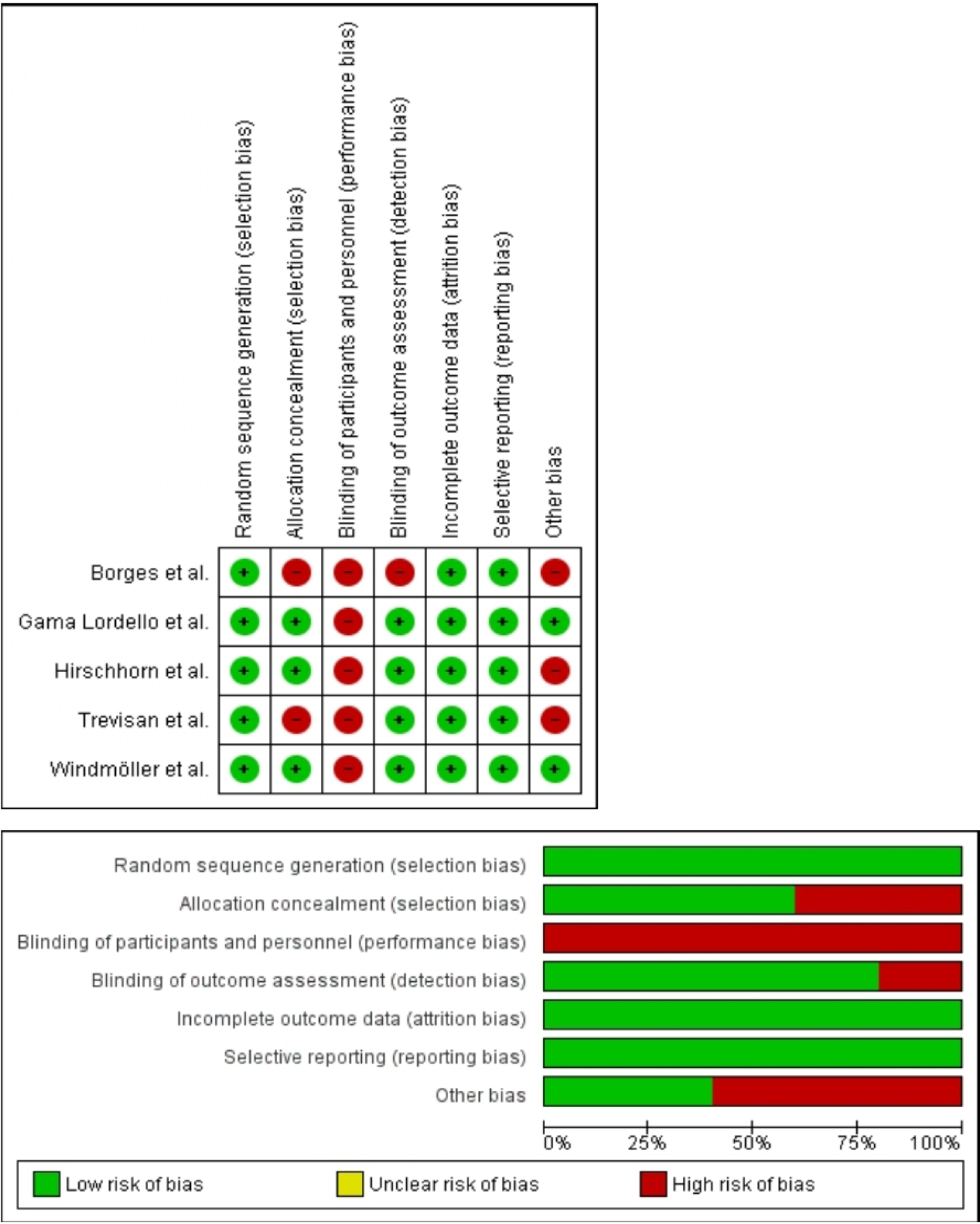
All studies[17,19,22,24] showed a low risk of bias regarding random sequence generation, incomplete outcome data, and selective reporting; however, they showed a high risk regarding blinding patients and personnel. Two studies[17,22] presented a high risk of bias for allocation concealment, and one of these[22] also had a high risk for blinding of outcome assessment. Moreover, only two studies[19,23] demonstrated a low risk for other biases. Two studies had as bias the lack of sample calculation[22,24], a sample calculation not fulfilled[17], and the age difference between the groups in one of the studies[17]. The risk of bias of the included studies is shown in Figure 5.
DISCUSSION
The present study suggests that adding cycle ergometer exercise to conventional physical therapy improve functional capacity and ICU stay in patients hospitalized after open-heart surgery.
Patients with cardiovascular diseases with an indication for surgery often have previous impairment of functional capacity[25], which may worsen in the PO period[26] due to bed immobilization, pulmonary complications[27], pain[28], and fatigue[29]. Kanejima et al.[15] demonstrated in a meta-analysis that patients who received early mobilization after an open-heart surgery performed better in the 6MWT at discharge than the control group (mean difference = 54 meters; 95% CI: 31.1 to 76.9 meters), suggesting that exercises during hospitalization time improve functional capacity. The present study found that the mean difference of functional capacity was greater than the minimal clinically important difference observed in patients with chronic heart failure and coronary artery disease (14.0 to 30.5 meters)[30,31], and almost reached the minimal detectable change of patients in the PO period of coronary artery bypass graft surgery (36.1 meters)[32]. This finding suggests that the cycle ergometer exercise added to a conventional physical therapy protocol may significantly improve the 6MWT performance and that this improvement is clinically relevant.
Functional capacity assessed by 6MWT was associated with important outcomes in the PO period of cardiac surgeries. Patients who walk < 300 meters in the 6MWT have lower survival, greater PO complications[25,33], and the inability to perform it indicates clinical severity and worse outcomes[34]. Therefore, interventions for improving functional capacity are crucial for this population. Although early mobilization improves functional capacity, this intervention did not influence the hospitalization time[35]. In the present study, adding cycle ergometer exercise to conventional physical therapy reduced the ICU stay, but the total hospitalization time did not change. The reduced ICU stay is important because the ICU is costly for hospitals[36]. However, the present study found a mean difference of 0.5 days, which was not clinically relevant. It is important to highlight that ICU stay can be affected by other factors unrelated to the functional status of the patient, such as PO complications, associated comorbidities, and infections[37].
According to the American College of Sports Medicine (ACSM)[38], proper exercise prescription should individually define the type of exercise, intensity, frequency, duration, form of progression, and volume. Intensity prescription should be based on parameters (e.g., HR, oxygen consumption, or metabolic equivalents)[38]. In the present review, only four studies[19,22-24] described intensity control parameters and all were subjective (Borg scale[23,24] and verbal orientations[19,22]). Hirschhorn et al.[24] and Windmöller et al.[23] used the RPE (modified Borg scale) of 3 to 4 and 2 to 3, respectively. The HR was mentioned only as a safety threshold in two studies[17,23], which tolerated a 30 bpm increase considering resting HR. The exercise lasted from 10 to 20 minutes per session. All studies described a frequency of one to two sessions per day. Also, only one study[22] reported fixed time progression for all patients. Noteworthy, the ACSM[38] recommendations are for healthy individuals, and the guidelines on prescribing exercises for critically ill patients are uncertain. Nevertheless, few studies use more appropriate prescriptions, such as HR intensity control, a continuously monitored parameter in the ICU.
The phase II of CR presents an adequate exercise prescription[14], whereas phase I does not have parameters well described in the literature. If exercise prescription items were well established and individualized in phase I, the benefits could be greater than those described in this review. The cycle ergometer exercises simplify intensity monitoring (e.g., HR), which may be useful for prescribing exercise more individually. In addition, the portable cycle ergometer is low-cost, allowing an earlier mobilization at bedside[39] and better results.
This study was the first systematic review and meta-analysis evaluating the effects of adding the cycle ergometer to the conventional physical therapy protocol after an open-heart surgery. The results showed that cycle ergometer exercise may improve functional capacity in a clinically relevant way and potentially reduce ICU stay. Future studies must include cycle ergometer exercise in the conventional physical therapy of this population, with better methodological quality, less risk of bias, and better control of exercise intensity, duration, and progression.
Limitations
This review presents some limitations. Most studies had a high risk of bias for at least two items of the Cochrane tool. None of the studies blinded the patients; one[22] did not blind evaluators. It is possible for this type of intervention to blind the evaluators; however, it is difficult to blind patients as they can perceive the exercise performed. The external validity of our results may also be compromised since only five studies were included, comprising a small sample, and most patients were men. In addition, Trevisan et al.[17] had perioperative or PO complications as exclusion criteria, and Borges et al.[22] excluded prolonged hospitalization time, limiting the extrapolation of the results for these patients. This may also have compromised the meta-analyses of ICU stay and total hospitalization time. Although the I2 values were low, the heterogeneity of the interventions and the evaluation period may have compromised the results of the meta-analyses. Lastly, the studies did not evaluate peripheral muscle strength and pulmonary complications, limiting further conclusions.
CONCLUSION
In conclusion, cycle ergometer exercises added to a conventional physical therapy protocol improved the functional capacity of patients after open-heart surgery with no relevant effects on hospitalization time.
-
This study was carried out at the Universidade do Estado de Santa Catarina, Florianópolis, Santa Catarina, Brazil.
Artificial Intelligence Usage
The authors declare that no artificial intelligence tools were used in the preparation of this article.
-
Sources of Funding
The authors declare no external funding to this study.
Data Availability
The authors declare that data sharing is not applicable to this article as no new data were created or analyzed.
REFERENCES
-
1 World Health Organization. Cardiovascular Diseases. Published 2021. Accessed June 17, 2021. https://www.who.int/news-room/fact-sheets/detail/cardiovascular-diseases-(cvds).
» https://www.who.int/news-room/fact-sheets/detail/cardiovascular-diseases-(cvds -
2 Neumann FJ, Sousa-Uva M, Ahlsson A, Alfonso F, Banning AP, Benedetto U, et.al. 2018 ESC/EACTS Guidelines on myocardial revascularization. Eur Heart J. 2019;40(2):87-165. doi:10.1093/eurheartj/ehy394. Erratum in: Eur Heart J. 2019;40(37):3096. doi:10.1093/eurheartj/ehz507.
» https://doi.org/10.1093/eurheartj/ehy394. -
3 Vahanian A, Baumgartner H, Bax J, Butchart E, Dion R, Filippatos G, et al. Guidelines on the management of valvular heart disease: the task force on the management of valvular heart disease of the European Society of Cardiology. Eur Heart J. 2007;28(2):230-68. doi:10.1093/eurheartj/ehl428.
» https://doi.org/10.1093/eurheartj/ehl428. -
4 DOCK W. The evil sequelae of complete bed rest. J Am Med Assoc. 1944;125(16):1083. doi:10.1001/jama.1944.02850340009004.
» https://doi.org/10.1001/jama.1944.02850340009004. -
5 English KL, Paddon-Jones D. Protecting muscle mass and function in older adults during bed rest. Curr Opin Clin Nutr Metab Care. 2010;13(1):34-9. doi:10.1097/MCO.0b013e328333aa66.
» https://doi.org/10.1097/MCO.0b013e328333aa66. -
6 Baumgarten MC dos S, Garcia GK, Frantzeski MH, et al. Comportamento da dor e da função pulmonar em pacientes submetidos à cirurgia cardíaca via esternotomia. Rev Bras Cir Cardiovasc. 2009;24(4):497-505. doi:10.1590/s0102-76382009000500011.
» https://doi.org/10.1590/s0102-76382009000500011. -
7 Lannemyr L, Bragadottir G, Krumbholz V, Redfors B, Sellgren J, Ricksten S-E. Effects of cardiopulmonary bypass on renal perfusion, filtration, and oxygenation in patients undergoing cardiac surgery. Anesthesiology. 2017;126(2):205-213. doi:10.1097/ALN.0000000000001461.
» https://doi.org/10.1097/ALN.0000000000001461. -
8 Cordeiro AL, Melo TA de, Santos AM, Lopes GF. Time influence of mechanical ventilation on functional independence in patients submitted to cardiac surgery: literature review. Fisioter em Mov. 2015;28(4):859-864. doi:10.1590/0103-5150.028.004.ar04.
» https://doi.org/10.1590/0103-5150.028.004.ar04. -
9 Montrief T, Koyfman A, Long B. Coronary artery bypass graft surgery complications: A review for emergency clinicians. Am J Emerg Med. 2018;36(12):2289-2297. doi:10.1016/j.ajem.2018.09.014.
» https://doi.org/10.1016/j.ajem.2018.09.014. -
10 Corrêa B, Cardoso DM. Functional capacity and mental state of patients undergoing cardiac surgery. Fisioter em Mov. 2017;30(4):805-811. doi:10.1590/1980-5918.030.004.ao16.
» https://doi.org/10.1590/1980-5918.030.004.ao16. -
11 Gonçalves F, Marinho P, Maciel M, Galindo Filho V, Dornelas de AA. Avaliação da qualidade de vida pós-cirurgia cardíaca na fase I da reabilitação através do questionário MOS SF-36. Rev Bras Fisioter. 2006;10(1):121-126. doi:10.1590/s1413-35552006000100016.
» https://doi.org/10.1590/s1413-35552006000100016. -
12 Orvin K, Dvir D, Weiss A, et al. Comprehensive prospective cognitive and physical function assessment in elderly patients undergoing transcatheter aortic valve implantation. Cardiol. 2014;127(4):227-235. doi:10.1159/000356696.
» https://doi.org/10.1159/000356696. -
13 Carvalho T de, Milani M, Ferraz AS, et al. Diretriz Brasileira de Reabilitação Cardiovascular - 2020. Arq Bras Cardiol. 2020;114(5):943-987. doi:10.36660/abc.20200407. Erratum in: Arq Bras Cardiol. 2021;117(2):423. doi:10.36660/abc.20210642.
» https://doi.org/10.36660/abc.20200407. -
14 Herdy A, López-Jiménez F, Terzic C, et al. Brazilian Guidelines for cardiovascular prevention and rehabilitation. Arq Bras Cardiol. 2014;103(2). doi:10.5935/abc.2014s003.
» https://doi.org/10.5935/abc.2014s003. -
15 Kanejima Y, Shimogai T, Kitamura M, Ishihara K. Effect of early mobilization on physical function in patients after cardiac surgery: a systematic review and meta-analysis. Int J Environ Res Public Health. 2020;1-11. doi:10.3390/ijerph17197091.
» https://doi.org/10.3390/ijerph17197091. -
16 Stiller K. Physiotherapy in intensive care: an updated systematic review. Chest. 2013;144(3):825-847. doi:10.1378/chest.12-2930.
» https://doi.org/10.1378/chest.12-2930. -
17 Trevisan MD, Lopes DGC, de Mello RGB, Macagnan FE, Kessler A. Alternative physical therapy protocol using a cycle ergometer during hospital rehabilitation of coronary artery bypass grafting: a clinical trial. Brazilian J Cardiovasc Surg. 2015;30(6):615-619. doi:10.5935/1678-9741.20150085.
» https://doi.org/10.5935/1678-9741.20150085. -
18 Machado ADS, Pires-Neto RC, Carvalho MTX, Soares JC, Cardoso DM, Albuquerque IM. Effects that passive cycling exercise have on muscle strength, duration of mechanical ventilation, and length of hospital stay in critically ill patients: a randomized clinical trial. J Bras Pneumol. 2017 Mar-Apr;43(2):134-139. doi: 10.1590/S1806-37562016000000170.
» https://doi.org/10.1590/S1806-37562016000000170. -
19 Gama Lordello GG, Gonçalves Gama GG, Lago Rosier G, Viana PAD de C, Correia LC, Fonteles Ritt LE. Effects of cycle ergometer use in early mobilization following cardiac surgery: a randomized controlled trial. Clin Rehabil. 2020;34(4):450-459. doi:10.1177/0269215520901763.
» https://doi.org/10.1177/0269215520901763. -
20 Page MJ, McKenzie JE, Bossuyt PM, et al. The PRISMA 2020 statement: an updated guideline for reporting systematic reviews. BMJ. 2021;372. doi:10.1136/bmj.n71.
» https://doi.org/10.1136/bmj.n71. -
21 Higgins JPT, Altman DG, Gotzsche PC, et al. The Cochrane Collaboration’s tool for assessing risk of bias in randomised trials. BMJ. 2011;343:d5928-d5928. doi:10.1136/bmj.d5928.
» https://doi.org/10.1136/bmj.d5928. -
22 Borges DL, Silva MG, Silva LN, et al. Effects of aerobic exercise applied early after coronary artery bypass grafting on pulmonary function, respiratory muscle strength, and functional capacity: a randomized controlled trial. J Phys Act Heal. 2016;13(9):946-951. doi:10.1123/jpah.2015-0614.
» https://doi.org/10.1123/jpah.2015-0614. -
23 Windmöller P, Bodnar ET, Casagrande J, et al. Physical exercise combined with CPAP in subjects who underwent surgical myocardial revascularization: a randomized clinical trial. Respir Care. 2020;65(2):150-157. doi:10.4187/respcare.06919.
» https://doi.org/10.4187/respcare.06919. -
24 Hirschhorn AD, Richards DAB, Mungovan SF, Morris NR, Adams L. Does the mode of exercise influence recovery of functional capacity in the early postoperative period after coronary artery bypass graft surgery? A randomized controlled trial. Interact Cardiovasc Thorac Surg. 2012;15(6):995-1003. doi:10.1093/icvts/ivs403.
» https://doi.org/10.1093/icvts/ivs403. -
25 De Arenaza DP, Pepper J, Lees B, et al. Preoperative 6-minute walk test adds prognostic information to EuroSCORE in patients undergoing aortic valve replacement. Heart. 2010;96(2):113-117. doi:10.1136/hrt.2008.161174.
» https://doi.org/10.1136/hrt.2008.161174. -
26 Chen YC, Chen KC, Lu LH, Wu YL, Lai TJ, Wang CH. Validating the 6-minute walk test as an indicator of recovery in patients undergoing cardiac surgery A prospective cohort study. Medicine (Baltimore). 2018;97(42). doi:10.1097/MD.0000000000012925.
» https://doi.org/10.1097/MD.0000000000012925. -
27 Mali S, Haghaninejad H. Pulmonary complications following cardiac surgery. Arch Med Sci Atheroscler Dis. 2019;4(1):280-285. doi:10.5114/amsad.2019.91432.
» https://doi.org/10.5114/amsad.2019.91432. -
28 Guimarães-Pereira L, Farinha F, Azevedo L, Abelha F, Castro-Lopes J. Persistent postoperative pain after cardiac surgery: incidence, characterization, associated factors and its impact in quality of life. Eur J Pain (United Kingdom). 2016;20(9):1433-1442. doi:10.1002/ejp.866.
» https://doi.org/10.1002/ejp.866. -
29 Barnason S, Zimmerman L, Nieveen J, et al. Relationships between fatigue and early postoperative recovery outcomes over time in elderly patients undergoing coronary artery bypass graft surgery. Hear Lung J Acute Crit Care. 2008;37(4):245-256. doi:10.1016/j.hrtlng.2007.09.003.
» https://doi.org/10.1016/j.hrtlng.2007.09.003. -
30 Gremeaux V, Troisgros O, Benaïm S, et al. Determining the minimal clinically important difference for the six-minute walk test and the 200-meter fast-walk test during cardiac rehabilitation program in coronary artery disease patients after acute coronary syndrome. Arch Phys Med Rehabil. 2011;92(4):611-619. doi:10.1016/j.apmr.2010.11.023.
» https://doi.org/10.1016/j.apmr.2010.11.023. -
31 Du H, Wonggom P, Tongpeth J, Clark RA. Six-Minute walk test for assessing physical functional capacity in chronic heart failure. Curr Heart Fail Rep. 2017;14(3):158-166. doi:10.1007/s11897-017-0330-3.
» https://doi.org/10.1007/s11897-017-0330-3. -
32 Sheraz S, Ayub H, Ferraro F V., Razzaq A, Malik AN. Clinically meaningful change in 6 Minute Walking test and the incremental shuttle walking test following coronary artery bypass graft surgery. Int J Environ Res Public Health. 2022;19(21). doi:10.3390/ijerph192114270
» https://doi.org/10.3390/ijerph192114270 -
33 Cacciatore F, Abete P, Mazzella F, et al. Six-minute walking test but not ejection fraction predicts mortality in elderly patients undergoing cardiac rehabilitation following coronary artery bypass grafting. Eur J Prev Cardiol. 2012;19(6):1401-1409. doi:10.1177/1741826711422991.
» https://doi.org/10.1177/1741826711422991. -
34 De Feo S, Tramarin R, Faggiano P, et al. The inability to perform a 6 minute walking test after cardio-thoracic surgery is a marker of clinical severity and poor outcome. Data from the ISYDE-2008 Italian survey. Int J Cardiol. 2011;151(1):115-116. doi:10.1016/j.ijcard.2011.06.024.
» https://doi.org/10.1016/j.ijcard.2011.06.024. -
35 Chen B, Xie G, Lin Y, et al. A systematic review and meta-analysis of the effects of early mobilization therapy in patients after cardiac surgery. Medicine (Baltimore). 2021;100(15):e25314. doi:10.1097/MD.0000000000025314.
» https://doi.org/10.1097/MD.0000000000025314. -
36 Moerer O, Plock E, Mgbor U, et al. A German national prevalence study on the cost of intensive care: an evaluation from 51 intensive care units. Crit Care. 2007;11(3):R69. doi:10.1186/cc5952.
» https://doi.org/10.1186/cc5952. -
37 Laizo A, Delgado FE da F, Rocha GM. Complicações que aumentam o tempo de permanência na unidade de terapia intensiva na cirurgia cardíaca. Rev Bras Cir Cardiovasc. 2010;25(2):166-171. doi:10.1590/S0102-76382010000200007.
» https://doi.org/10.1590/S0102-76382010000200007. - 38 Riebe D, Ehrman JK, Liguori G, Magal M, American College of Sports Medicine. ACSM’s Guidelines for exercise testing and prescription . 10th ed. (Kluwer W, ed.).; 2018.
-
39 Nickels MR, Aitken LM, Barnett AG, Walsham J, McPhail SM. Acceptability, safety, and feasibility of in-bed cycling with critically ill patients. Aust Crit Care. 2020;33(3):236-243. doi:10.1016/j.aucc.2020.02.007.
» https://doi.org/10.1016/j.aucc.2020.02.007.
Edited by
-
Editor-in-chief:
Henrique Murad https://orcid.org/0000-0002-9543-7832