 Effect of Antimicrobial Peptide Q4-15-2A7P on Growth Performance, Gut Morphology, Intestinal Gene Expression, and Ileal Microbiota in Broilers Challenged with Clostridium perfringens Toxin
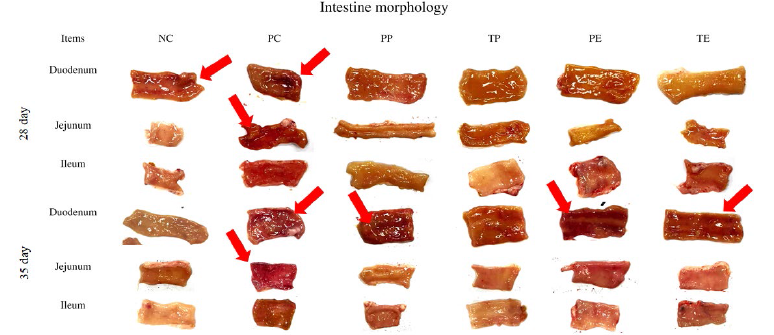
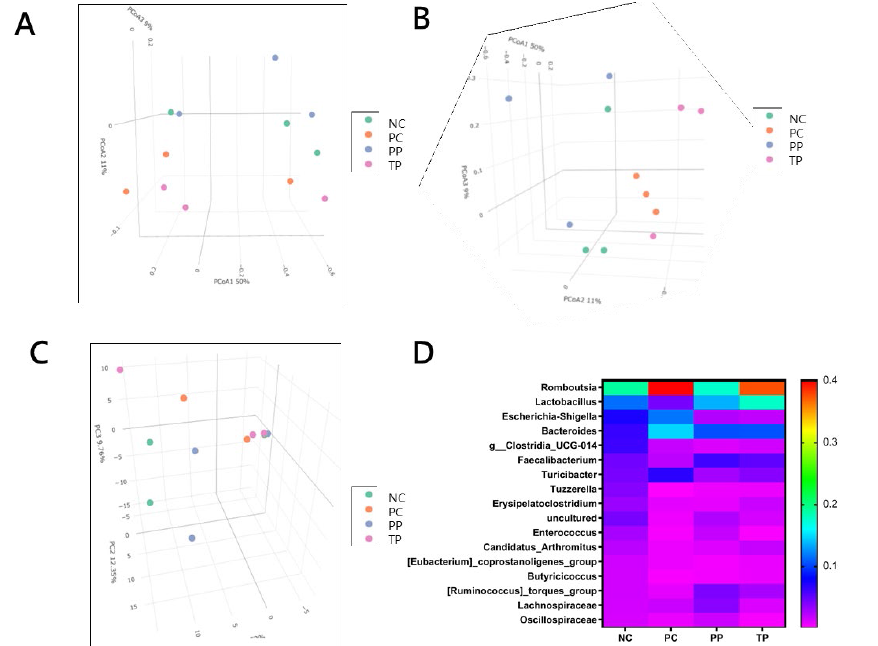
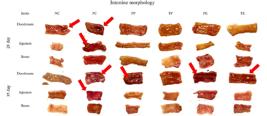
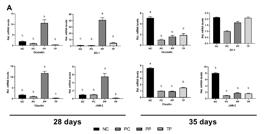
This study investigated the effects of antimicrobial peptide Q4-15-2A7P on the growth performance and gut health of broilers under Clostridium perfringens toxin challenge. A total of 144 one-day-old broiler chicks (Ross 308) were assigned to four groups: negative control (NC), positive control (PC; phospholipase C [PLC, C. perfringens toxin] challenge), prevention peptide group (PP; PLC challenge + 20 mg/kg Q4-15-2A7P from days 1-35), and therapy peptide group (TP; PLC challenge + 20 mg/kg Q4-15-2A7P from days 23-35). PLC (150 U/mL) was orally administered from days 19 to 21. Results showed that feed intake in the PP group from days 1 to 27 recovered to NC levels, whereas the PC group exhibited severe intestinal lesions. At 35 days, ileal lesion scores in the PP and TP groups were comparable to those of healthy birds. At 28 days, PP and TP groups had lower expression of inflammation-associated genes in the ileum, and the PP group showed increased expression of tight junction genes. The expression of tight junction-associated genes in the ileum were not induced in the TP group at 28 days, as opposed to the PP group. The microbiota in the PP and TP groups closely resembled that of the NC group. In conclusion, both preventive and therapeutic peptide strategies effectively mitigated PLC-induced pathology, with the PP group showing the most pronounced gut health improvement.
Keywords:
Antimicrobial peptide; broiler; Clostridium perfringens; growth; phospholipase C
 Thumbnail
 Thumbnail
 Thumbnail
 Thumbnail
 Thumbnail
 Thumbnail
 Thumbnail