 Effects of Dietary Poppy Seed (Papaver somniferum) on Growth Metrics, Internal Organs, Gut Health, and Economic Efficiency in Japanese Quail (Coturnix coturnix japonica)
ABSTRACT
This study examined the impact of poppy seed (PS, Papaver somniferum) supplementation on the growth performance, organ weight, intestinal histomorphology, and economics of Japanese quail (Coturnix coturnix japonica) production. A total of 240-day-old unsexed Japanese quails obtained from a local market were divided into four groups: C, PS10, PS15, and PS20 in a completely randomized design (CRD). Each group was further divided into 6 replicates, with 10 quails per replicate. Group C was designated as the control group, while groups PS10, PS15, and PS20 were supplemented with PS at respectively 10, 15, and 20 g/kg in their feed for 35 days. The results showed significantly increased feed intake (449.4 g), weight gain (125.0 g), and better feed conversion ratio (3.50) in the PS20 diet group compared with the C. Similarly, significantly higher organ weight, villus height (0.990 mm) and ratio of villus height to crypt depth (VH: CD) (6.08), and the lowest crypt depth (0.164 mm) were observed in the PS20 diet group. Similarly, PS20 showed the highest gross return, net return, and cost-benefit ratio (CBR), and the lowest mortality rate as compared with all other groups. The results of this study suggest that adding PS to quails’ feed can improve growth performance, reduce mortality, and enhance intestinal morphology, making it a promising approach to enhancing quail productivity.
Keywords:
Feed intake; feed conversion ratio; organ weight; poppy seed; quails
INTRODUCTION
The most popular sources of animal protein in Pakistan are beef, milk, sheep, and poultry (Ali et al., 2024; Business Recorder, 2024). As demand for animal-based protein continues to rise, scientists and researchers are actively working to enhance growth rate, feed efficiency, and meat production performance across various poultry species (Kleyn & Ciacciariello 2021). These efforts aim to maximize output while ensuring sustainability and food security. A common method is the use of various feed additives with medicinal properties (Elamin et al., 2020; Hafeez et al., 2020; Shuaib et al., 2021; Adil et al., 2023; Ullah et al., 2024).
Poppy seed (PS) (Papaver somniferum), also known as opium poppy, postbeej, khaskhas, mohansaat, postdana, and khashkhashsafed, belongs to the Papaveraceae family. It is high in thiamin, iron, magnesium, calcium, manganese, phosphorus, potassium, sodium, zinc, vitamin C, and vitamin E (USDA, 2019). Although poppy seeds are obtained from the dry capsules (pods) of the opium poppy (Papaver somniferum), the seeds themselves do not naturally contain opium alkaloids; however, contamination with morphine or codeine may occur during harvesting and processing. (Knutsen et al., 2018). The seeds are either white or black, and the oil content ranges from 40 to 60% (Salunkhe & Deshpande 2012). PS contains varying levels of crude protein, crude fiber, and crude energy, as well as considerable amounts of essential minerals (Pushpangadan et al., 2012). In India, PS is produced at 50-60 kg per hectare, and legal poppy cultivation is mainly practiced in the state of Uttar Pradesh (Mishra & Pathak, 2021).
The incorporation of alternative plant-based feed additives in poultry nutrition has gained considerable attention due to rising feed costs and the need for sustainable production systems (Adil et al., 2023). PS is rich in essential fatty acids, proteins, dietary fiber, and minerals such as calcium, magnesium, and zinc, which may contribute to improved nutrient utilization and growth performance in poultry (Pushpangadan et al., 2012; Muhammad et al., 2021). Additionally, PS contain bioactive compounds and antioxidants that may enhance gut health and immune function (De, 2020; Nevara et al., 2023). From an economic perspective, the use of locally available plant-derived feed ingredients such as PS could reduce dependence on conventional protein sources and improve production efficiency in poultry enterprises (Muhizi & Kim, 2021; Khan et al., 2024a).
The literature shows that PS is a rich source of various nutrients, yet very little research has been conducted on its inclusion in diets and its impact on various aspects of quails. Therefore, the current study evaluated the effect of PS supplementation on growth performance, gut morphology, and economics of Japanese quail (Coturnix coturnix japonica) production.
MATERIALS AND METHODS
Ethical Approval of the Study
Approval for this study was obtained from the Ethical Committee of the Faculty of Animal Husbandry and Veterinary Sciences at the University of Agricultural Peshawar, Pakistan (No: 478/PS/UAP, dated March 04, 2023).
Study Location and Bird Husbandry
This experiment was conducted at the Poultry Complex, Department of Poultry Science, University of Agriculture, Peshawar, Pakistan. For the experiment, unsexed 240-day-old Japanese quails (Coturnix coturnix japonica), a strain primarily utilized for egg production, were obtained from a nearby market and reared on a deep litter system in metallic cages (80 × 60 × 45 cm), which were equipped with feeders and water drinkers for ease of access. Quails were supplied with ad libitum access to feed and clean water in wire cages, ensuring consistent management, sanitary conditions, and a stable environment. Incandescent bulbs were used for both heating and lighting. The house had a temperature of 35°C for the first five days, which gradually decreased.The temperature was maintained at 35°C for the first five days and was gradually decreased. Starting from day 10, an ambient temperature of 23 to 25 °C and a 17-hour light period were maintained until the end of the experiment (35 days). To protect the quails against viral infections, an appropriate vaccination regimen (Newcastle disease and infectious bursal disease) was administered on designated days during the study.
Experimental Diets and Layout
Layer feed was used for the experimental quails, as shown in Table 1. Poppy seeds (PS) were obtained from the local market and used as a feed supplement after the brooding period (first 7 days), from day 8 until the birds reached market weight on day 35. The nutritional value of raw PS is indicated in Table 2. In a completely randomized design (CRD), quails were divided into four groups (C, PS10, PS15, and PS20), and each was further divided into six replicates with 10 birds each. Group C was designated the control group, while the remaining groups were supplemented with PS at 10 g/kg, 15 g/kg, or 20 g/kg. Figure 1 shows the experimental design.

Production Performance Metrics
Production performance metrics, such as feed intake (FI), weight gain (WG), and feed conversion ratio (FCR), were calculated weekly from days 8 to 35. The amount of FI was determined by subtracting the amount of feed rejected from the total feed supplied each day. The WG was calculated by subtracting the initial weight from the final weight. The FCR was determined by dividing FI by the WG (Shahzad et al., 2024).
Feed intake = Feed offer- feed rejected
Weight gain = Final weight-initial weight
Feed conversion ratio = Feed intake/weight gain
Mortality was recorded throughout the experiment, and post-mortem examinations were conducted on the deceased birds to determine the cause of death.
Organ Weights and Carcass Traits
At the end of the trial, a sample of three quail was randomly selected from each replicate to determine their live body weight. The quails were humanely euthanized, and their feathers removed. Their carcasses were eviscerated. The dressed carcasses were allowed to air-dry for one hour to remove any residual moisture before being weighed. Subsequently, the carcasses were divided into individual cuts, including the breast, thigh, wings, and neck, and weighed again to determine the weight of each segment. To measure the effect of PS, lymphoid organs were weighed and quantified after collection. The following formulas were used to calculate the ratios of the thymus, bursa, and spleen (Meher et al., 2021):
Thymus, bursa, and spleen weight ratio = Relative organ weight (g)/Live body weight (g) ×100
Gut Morphology
At the end of the trial, two quails per replicate were selected randomly and subjected to terminal sampling to evaluate gut morphology (Mushtaq et al., 2024). The harvested jejunum samples were fixed in 10% formalin. Using the embedding technique in the microtome (Model: SRM 200 CW, Accu-Cut, SRM 200, Netherlands), four cross-sections were prepared for each sample. The histological sections were stained using hematoxylin and eosin. The height and width of the villi were measured using a Nikon Eclipse 50 microscope (Nikon Corporation, Japan), with two villi randomly selected from each slide within a single microscopic field. The measurements were taken using a graded eyepiece with a 10X objective lens, and two fields were used to quantify the villus widths (VW), villus height (VH), and crypt depth (CD) under the microscope. The VH was calculated as the distance from its tip to the point of intersection with the crypt. At the same time, the VW was defined as the distance between the outer edges of the epithelial layer, measured horizontally from a line bisecting the villus’s vertical midline.
Economics Parameters
Economic calculations were based on the combination of feed costs and the cost of supplementing ingredients (Ullah et al., 2024). Total expenses, including feed, chicks, labor, electricity, and medicine incurred per chick during the experiment were used in the calculations. The gross return was determined using the market price of quails. The following equations were used to calculate the economic parameters.
Total cost = Feed cost, chick cost, electricity, and medicine costs
Gross return = Number of quails × Price per quail
Net return/Profit = Gross return-Total expenses
Cost-benefit ratio = Gross return ÷ Total expenses
Statistical Analysis
A completely randomized design (CRD) was used to analyze the experimental data. Analysis of variance (ANOVA) was performed using the software SPSS 2.0 (IBM Corp., USA). GraphPad Prism 8 (San Diego, CA, USA) was used to create histograms. The LSD test was used to compare the means at a 5% significance level (p<0.05).
RESULTS
Production Performance Metrics
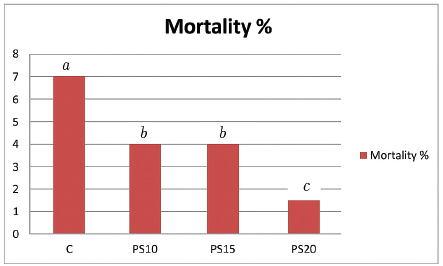
The results of the impact of poppy seed (PS) supplementation on production performance metrics in quail are presented in Table 3. The data showed that adding PS to the diet significantly affected feed intake (FI) throughout the trial. Groups PS20 and PS15 showed significantly higher FI than the control (C). The data showed that adding PS to the PS20 diet resulted in higher weight gain (WG) (p<0.05) in comparison to the C, PS10, and PS15 groups during the third and fourth weeks. Overall, the highest WG values were observed in the PS20 group, while the C group had the lowest. There were no significant differences among the C, PS10, and PS15 groups. The data indicate that PS had a significant effect on the total and weekly feed conversion ratio (FCR), except for the second week. The PS20 group exhibited a significantly better FCR (p<0.05) than the PS10 and the control. Figure 2 shows the relationship between PS supplementation and quail mortality rate. The results indicate that the control group experienced the highest mortality rate at a rate greater than 5%. Group PS10 exhibited a mortality rate of approximately 4%, which was not statistically distinct from that of the PS15 group. In contrast, the PS20 group, with the highest level of PS supplementation, had the lowest mortality throughout the trial.
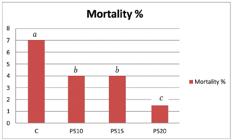
Effect of poppy seed supplementation on quail mortality. The different superscript on bars shows a significant difference (p<0.05). C = Control group with standard diet, PS10 = Basal diet with 10 g/kg PS supplementation, PS15 = Basal diet with 15 g/kg PS supplementation, and PS20 = Basal diet with 20 g/kg PS supplementation.
Organ Weights and Carcass Traits
The results of the effect of PS supplementation on organ weight (OW) are presented in Table 4. PS supplementation significantly affected all organ weight parameters, including live body weight (LBW), breast weight (BW), thigh weight (TW), wing weight (WW), and neck weight (NW). Among these parameters, the highest values were observed for LBW, BW, TW, WW, and NW in the PS20 group as compared to the control. The data show that PS supplementation significantly increased thymus, spleen, and bursa weight, with the PS20 group exhibiting the highest values. The thymus, spleen, and bursa weights of PS20 were significantly higher than those of the control (p<0.05).
Gut Morphology
Table 5 shows the impact of supplementing quail’s feed with PS on intestinal morphology. The results indicate a substantial effect on the height of the villi and the ratio of villi height to crypt depth in the quail’s intestine. Among the groups, the greatest villus height (VH) was recorded in the PS20 group (p<0.05) compared with the rest. However, the control group (C) and the PS10 groups did not differ significantly.
Crypt depth (CD) was significantly lower in PS20 compared with the other treatments (p<0.05). The highest VH/CD ratio was observed in the PS20 group, which was significantly higher than in all the other treatments (p<0.05).
Economics Parameters
Table 6 shows the influence of PS supplementation on economic parameters per quail. The PS20 group had the highest (p< 0.05) total cost (TC), gross return (GR), net return (NR), and cost-benefit ratio (CBR) among all groups (PS15, PS10, and C). Group C resulted in the lowest value for these parameters.
DISCUSSION
In recent decades, poppy seeds (PS) have been increasingly used as feed additives in animal nutrition, attracting growing attention. The use of feed additives often improves animals’ overall development, health, and well-being (Shuaib et al., 2022; Khan et al., 2024a; Ul Saqib et al., 2025). In this study, the PS20 group exhibited the highest growth performance metrics. Enhanced feed consumption was observed in the PS20 group, while this parameter was the lowest in the control group. The increased FI in the PS20 group might be attributed to the high levels of essential fatty acids (omega-3 and 6) in PS, which increased appetite and stimulated digestive enzymes (Simopoulos, 2016). Enhanced FI in the PS20 group may be due to improved diet quality. Similar results have been obtained in laying hens (Küçükersan, 2009). The findings of this study are also in line with those of Bayram et al. (2006), who concluded that supplementation of 25% poppy seed meal (PSM) in broiler diets significantly increased FI. Similarly, a significantly higher FI was observed in broilers fed a diet supplemented with 20% PSM compared with the control group (Khan et al., 2024b).
The addition of PS significantly influenced the weight gain (WG) of quails. Overall, maximum body WG was recorded for the PS20 group, while the lowest WG was recorded for the control group. The improved WG in this group may be due to the higher FI and the essential nutrients in PS (Bayram et al., 2006). Our outcomes agree with the findings that pigs fed PS showed a significant increase in body weight gain throughout the trial (Muhammad et al., 2021). Additionally, broilers showed a significant increase in WG when fed a diet supplemented with 20% PSM compared with the control group (Khan et al., 2024b). Similarly, in another study, PS was found to have a positive effect on WG compared with the control group in broilers (Bayram et al., 2006). PS is rich in essential fatty acids (omega-3 and omega-6), high-quality proteins, and minerals such as calcium, magnesium, zinc, and phosphorus, making it a nutrient-dense feed ingredient (USDA, 2023). These nutrients play important roles in metabolic processes, enzyme activation, and protein synthesis, which may enhance nutrient utilization and growth performance in poultry (Alagawany et al., 2019). Additionally, the presence of dietary fiber and bioactive compounds may promote digestive efficiency, modulate gut microflora, and improve nutrient absorption (Jha & Mishra, 2021).
An overall better feed conversion ratio (FCR) was recorded in the PS20 group, which is consistent with the work of Muhammad et al. (2021), who found that supplementation of PSM in the quail diet had a significant effect on FCR compared with the control group. Similarly, a significantly improved feed efficiency was reported in broilers fed a diet with 20% PSM compared with the control group (Khan et al., 2024). The present study reveals the significant effect of PS incorporation in the quail diet, which is similar to the report of a significant impact of PS on the quail FCR (Bayram et al., 2008).
PS supplementation in quail feeds significantly affected their mortality rate. The control group experienced the highest mortality rate, exceeding 5%, while the PS20 group had the lowest mortality throughout the trial. PS supplementation may cause this effect by providing a source of essential fatty acids and antioxidants. These nutrients possess anti-inflammatory and immune-boosting properties (De, 2020), which may help protect the birds from diseases and enhance their overall health. Additionally, the high levels of protein and fiber in PS may aid in digestion and nutrient absorption, further promoting the overall health and well-being of the birds (Nevara et al., 2023). The higher mortality rate observed in the control group had no specific identified cause. However, it is suggested that environmental factors or the absence of PS supplementation may have contributed to this outcome, and further studies are required to confirm this hypothesis.
The results of the present trial show a significant increase in live body weight, breast weight, thigh weight, wing weight, neck weight, thymus weight, spleen weight, and bursa weight in the PS20 group, whereas the control group recorded the minimum values. Similarly, significantly higher live BW was observed in broilers fed 20% PSM in the diet compared with other groups in the experiment (Khan et al., 2024b). Increase in the live BW and organ weight in the present study might be attributed to the nutrient value of PS (zinc, lysine, fiber, calcium, iodine, magnesium, and copper), which promotes stronger immunity, improved metabolism, secretion of digestive enzymes, and a healthy gut by supporting intestinal health (Muhammad et al., 2021; Khan et al., 2024ab).
Intestinal morphometry of quails was significantly affected by PS supplementation, with the results showing significant increases in VH, CD, VW, and VH: CD in the PS20 group and the lowest values in the control group. This effect may be attributed to specific nutrients or chemicals in the PS that influence the growth and development of intestinal tissue (Muhammad et al., 2021). Additionally, the second reason is improved digestion, which increases the surface area for nutrient absorption. The enhancement in intestinal morphology observed in the PS20 group may be associated with the presence of bioactive compounds, dietary fiber, and essential fatty acids in PS (USDA, 2023). These components may stimulate intestinal epithelial cell proliferation, improve gut microbial balance, and increase digestive enzyme activity, thereby enhancing nutrient absorption efficiency (Alagawany et al., 2019; Jha & Mishra, 2021).
Economically, the PS20 group had the highest gross return and net return among all groups. Since PS contains phenolic compounds, adding them to the diet of quails may have increased the FCR and WG by raising the body’s metabolic rate. On the other hand, PS are high in protein and energy, which help increase the weight of birds’ bodies and organs (Muhizi & Kim, 2021). Greater economic value mainly depends on the market value of the feed, available ingredients, and the price of birds and meat at that specific time. The practical implications of our work for quail production include identifying ideal PS inclusion levels, balancing nutrient profiles for growth and carcass quality, assessing economic viability, and analyzing industry adoption.
CONCLUSION
Overall, supplementation with PS at 20 g/kg feed has significantly improved production performance metrics, intestinal histomorphology, and economic parameters, while also reducing mortality in quails. The results suggest that PS could be a viable alternative feed ingredient for poultry species. Further research is needed to determine the optimal dose of PS supplementation in other poultry species and to explore the potential health benefits of this plant for various food and medicinal applications.
ACKNOWLEDGEMENTS
The author would like to extend their sincere appreciation to the staff of the Department of Poultry Science, University of Agriculture, Peshawar, Pakistan, for providing technical and laboratory facilities. The authors extend their appreciation to the Ongoing Research Funding Program (ORF-2026-971), King Saud University, Riyadh, Saudi Arabia, for funding this research.
REFERENCES
-
Adil AR, Kalsoom M, Rehman ZU, et al. Application of botanical products as nutraceutical feed additives for improving poultry health and production. Frontiers in Veterinary Science 2023;10:1145767. Avialable from: https://pubmed.ncbi.nlm.nih.gov/37041996/
» https://pubmed.ncbi.nlm.nih.gov/37041996 -
Alagawany M, Farag MR, Dhama K, et al. Omega-3 and omega-6 fatty acids in poultry nutrition:effects on production performance and health. Animals (Basel) 2019;9:964. https://doi.org/10.3390/ani9080573
» https://doi.org/10.3390/ani9080573 -
Ali S, Shahid A, Qureshi MS,et al. Challenges and future prospects of Pakistan's animal industry. Economic potential, food security, and sustainability perspectives. Animals (Basel) 2024;14(8):733. https://doi.org/10.3390/vetsci12080733
» https://doi.org/10.3390/vetsci12080733 -
Bayram I, Çetingül IS, Yardimci EHM, et al. Effects of poppy seed oil supplementation in diets on egg production, egg quality and some blood parameters in laying hens. Kocatepe Veterinary Journal 2008;1(1):37-42. Available from: https://dergipark.org.tr/en/download/article-file/108759
» https://dergipark.org.tr/en/download/article-file/108759 -
Bayram I, Midilli M, Bozkurt AZ, et al. Effect of Poppy seed meal in broiler diets. The Indian Veterinary Journal 83(11):1186-9. Available from: https://www.cabidigitallibrary.org/doi/full/10.5555/20073087717
» https://www.cabidigitallibrary.org/doi/full/10.5555/20073087717 -
Business Recorder. Livestock sector registers 3.9pc growth. Business Recorder/ 2024. Available from: https://www.brecorder.com/news/40307991
» https://www.brecorder.com/news/40307991 -
De L. Edible seeds and nuts in human diet for immunity development. International Journal of Recent Scientific Research 2020;6(11):38877-81. https://doi.org/10.24327/ijrsr.2020.1106.5395
» https://doi.org/10.24327/ijrsr.2020.1106.5395 -
Elamin HM, Abbas TE, Algam TA, et al. Effect of supplementation of fenugreek seeds to the broiler chicks diet on the growth performance and carcass characteristics. Pakistan Journal of Nutrition 2020;19(10):485-90. https://doi.org/10.3923/pjn.2020.485.490
» https://doi.org/10.3923/pjn.2020.485.490 -
Hafeez A, Sohail M, Ahmad A, et al. Selected herbal plants showing enhanced growth performance, ileal digestibility, bone strength and blood metabolites in broilers. Journal of Applied Animal Research 2020;48(1):448-53. https://doi.org/10.1080/09712119.2020.1818569
» https://doi.org/10.1080/09712119.2020.1818569 -
Jha R, Mishra P. Dietary fiber in poultry nutrition and its effect on nutrient utilization and gut health. Journal of Animal Science and Biotechnology 2021;12:64. https://doi.org/10.1186/s40104-021-00576-0
» https://doi.org/10.1186/s40104-021-00576-0 -
Khan FU, Ullah R, Kinkpe L,et al. Substitution of Soybean meal with Azolla pinnata meal improves gut histomorphology and growth performance in commercial broilers. Brazilian Journal of Poultry Science 2024a;26(4):001-012-26. https://doi.org/10.1590/1806-9061-2024-1954
» https://doi.org/10.1590/1806-9061-2024-1954 -
Khan R, Tahir M, Naz S, et al. Integrating dietary supplementation with poppy (Papaversomniferum L.) seed meal:effects on growth performance, nutrient digestibility, and faecal microbiota in broilers.Archives of Animal Breeding 2024b:67;73-80. https://doi.org/10.5194/aab-67-73-2024
» https://doi.org/10.5194/aab-67-73-2024 -
Kleyn FJ, Ciacciariello, MJ. Future demands of the poultry industry:will we meet our commitments sustainably in developed and developing economies?. World's Poultry Science Journal 2021;77(2):267-78. https://doi.org/10.1080/00439339.2021.1904314
» https://doi.org/10.1080/00439339.2021.1904314 -
Knutsen HK, Alexander J, Barregård L, et al. Update of the scientific opinion on opium alkaloids in poppy seeds. EFSA Journal 2018;16(5):e05243. https://doi.org/10.2903/j.efsa.2018.5243
» https://doi.org/10.2903/j.efsa.2018.5243 -
Küçükersan S, and Küçükersan K. Using of poppy seed meal and yeast culture (Saccharomyces cerevisiae) as an alternative protein source for layer hens. Kafkas Üniversitesi Veteriner Fakültesi Dergisi 2009;15(6):971-4. Available from: https://vetdergikafkas.org/uploads/pdf/pdf_KVFD_588.pdf
» https://vetdergikafkas.org/uploads/pdf/pdf_KVFD_588.pdf -
Meher MM, Jahan NM, Afrin M. Assessment of antibody titer and lymphoid organs weight following Newcastle disease vaccination and feed-supplementation of vitamin-c, probiotics and antibiotic-growth-promoters in Japanese quails. Macedonian Veterinary Review 2021;44(2):129-37. https://doi.org/10.2478/macvetrev-2021-0016
» https://doi.org/10.2478/macvetrev-2021-0016 -
Mishra S,and Pathak V. Phytochemical study and antimicrobial activity of Khus-Khus (Papaver somniferum seeds). World Journal of Pharmaceutical Research 2021;10(11):1663-81. Available from: https://wjpr.s3.ap-south-1.amazonaws.com/article_issue/01b048af0e66f38d906a94d776f55dc8.pdf
» https://wjpr.s3.ap-south-1.amazonaws.com/article_issue/01b048af0e66f38d906a94d776f55dc8.pdf -
Muhammad A, Akhtar A, Aslam S, et al. Review on physicochemical, medicinal and nutraceutical properties of poppy seeds:a potential functional food ingredient. Functional Foods in Health and Disease 202111(10):522-47. https://doi.org/10.31989/ffhd.v11i10.836
» https://doi.org/10.31989/ffhd.v11i10.836 -
Muhizi S, Kim I. Effect of dietary poppy (Papaversomniferum L.) seed meal supplementation on growth performance, nutrient digestibility, faecal microbiota and blood profile in growing-finishing pigs. Journal of Animal and Feed Science 2021;30(1):58-63. https://doi.org/10.22358/jafs/133958/2021
» https://doi.org/10.22358/jafs/133958/2021 - Mushtaq M, Khan IU, Shuaib M, et al. Effect of probiotic bacillus clausii on production parameters and intestinal histomorphology of meat-type chicken. Pakistan Journal of Zoology 2024;57(1):11-1. Error! Hyperlink reference not valid.
-
Nevara GA, Giwa Ibrahim SA, Syed Muhammad SK, et al. Oilseed meals into foods: an approach for the valorization of oilseed by-products. Critical Reviews in Food Science and Nutrition 2023;63(23):6330-43.https://doi.org/10.1080/10408398.2022.2031092
» https://doi.org/10.1080/10408398.2022.2031092 -
Pushpangadan P, George V, Singh SP. Poppy. In: Peter KV, editor. Handbook of herbs and spices. Sawston: Woodhead Publishing; 2012. p.437-48. https://doi.org/10.1533/9780857095688.437
» https://doi.org/10.1533/9780857095688.437 - Salunkhe DK, Deshpande SS. Foods of plant origin: production, technology and human nutrition. Dordrecht: Springer Science & Business Media; 2012. ISBN: 978-0442239176
-
Shahzad F, Tahir M, Hafeez A, et al. Effects of dietary protein levels enriched with subtilisin protease on the performance and nutrients utilization of broiler chicks. . Pakistan Journal of Zoology 2024;56(3):1101-7. https://doi.org/10.17582/journal.pjz/20220315140341
» https://doi.org/10.17582/journal.pjz/20220315140341 -
Shuaib M, Ullah N, Hafeez A, et al. Dietary fortification of crushed seeds of Bonium persicum on growth performance, apparent ileal digestibility and blood metabolites in broiler chicks during the starter phase. Italian Journal of Animal Science 2021;20(1):1-5. https://doi.org/10.1080/1828051X.2020.1861555
» https://doi.org/10.1080/1828051X.2020.1861555 -
Shuaib M, Ullah N, Hafeez A, et al. Effect of dietary supplementation of wild Cumin (Bunium persicum) seeds on performance, nutrient digestibility and circulating metabolites in broiler chicks during the finisher phase. Animal Biotechnology 2022;33(5):871-5. https://doi.org/10.1080/10495398.2020.1844222
» https://doi.org/10.1080/10495398.2020.1844222 -
Simopoulos AP. An increase in the omega-6/omega-3 fatty acid ratio increases the risk for obesity. Nutrients 2016;8:128. https://doi.org/10.3390/nu8030128
» https://doi.org/10.3390/nu8030128 -
Ul Saqib N, Islam Z, Sultan A, et al. Effect of dried orange (Citrus sinensis) pulp on growth performance, serum biochemical parameters, and nutrient digestibility in broiler chickens. Pakistan Journal of Zoology 2025;57(1):123-32. https://doi.org/10.17582/journal.pjz/20230803122156
» https://doi.org/10.17582/journal.pjz/20230803122156 -
Ullah A, Khan S, Shuaib M, et al. Effect of liquorice (glycyrrhiza glabra) on growth performance, gut morphometry and economics of broilers production. Pakistan Journal of Zoology 2023;2023:1/8. https://doi.org/10.17582/journal.pjz/20221227071205
» https://doi.org/10.17582/journal.pjz/20221227071205 -
Ullah I, Ullah R, Shuaib M,et al. Effect of Supplementation of Papaya Seed (Carica papaya) on Growth Performance, Carcass Traits, and Histomorphology of Japanese Quails. Pakistan Journal of Zoology 2024;57(4):1999-2002; https://doi.org/10.17582/journal.pjz/20230824082655
» https://doi.org/10.17582/journal.pjz/20230824082655 -
USDA. Food data central. Poppy seeds, whole. Washington: U.S. Department of Agriculture; 2023. Available from: https://fdc.nal.usda.gov/
» https://fdc.nal.usda.gov -
USDA. Food data central. Poppy seeds, whole. Washington: Agricultural Research Service; 2019. Available from: https://fdc.nal.usda.gov/
» https://fdc.nal.usda.gov
-
ETHICS STATEMENT
The author would like to extend their sincere appreciation to the staff of the Department of Poultry Science, University of Agriculture, Peshawar, Pakistan, for providing technical and laboratory facilities. The authors extend their appreciation to the Ongoing Research Funding Program (ORF-2026-971), King Saud University, Riyadh, Saudi Arabia, for funding this research.
-
FUNDING
The authors extend their appreciation to the Ongoing Research Funding Program (ORF-2026-971), King Saud University, Riyadh, Saudi Arabia, for funding this research.
-
DATA AVAILABILITY STATEMENT
Data are available from the corresponding author upon reasonable request.
-
DISCLAIMER/PUBLISHER’S NOTE
The published papers’ statements, opinions, and data are those of the individual author(s) and contributor(s). The editor(s) disclaim responsibility for any injury to people or property resulting from any ideas, methods, instructions, or products referred to in the content.
Data are available from the corresponding author upon reasonable request.