 Elevated serum Raftlin levels in non-muscle invasive bladder cancer: diagnostic implications and rs690037 genotype analysis
OBJECTIVE: Non-muscle invasive bladder cancer is a common urological malignancy characterized by high recurrence and progression rates. There is a critical need for non-invasive biomarkers to support early detection and disease monitoring. Raftlin, a lipid raft-associated scaffold protein involved in immune regulation and signal transduction, has recently gained attention in cancer biology. The aim of this study was to investigate serum Raftlin levels and the rs690037 polymorphism of the Raftlin gene in non-muscle invasive bladder cancer patients.
METHODS: A case-control study was conducted, including 30 patients diagnosed with non-muscle invasive bladder cancer and 50 healthy controls. Serum Raftlin levels were measured using enzyme-linked immunosorbent assay, and the rs690037 polymorphism was analyzed using real-time polymerase chain reaction. Gender-stratified analysis and receiver operating characteristic curve analysis were performed. Clinical and pathological characteristics including tumor stage, grade, and European Organisation for Research and Treatment of Cancer risk groups, were analyzed.
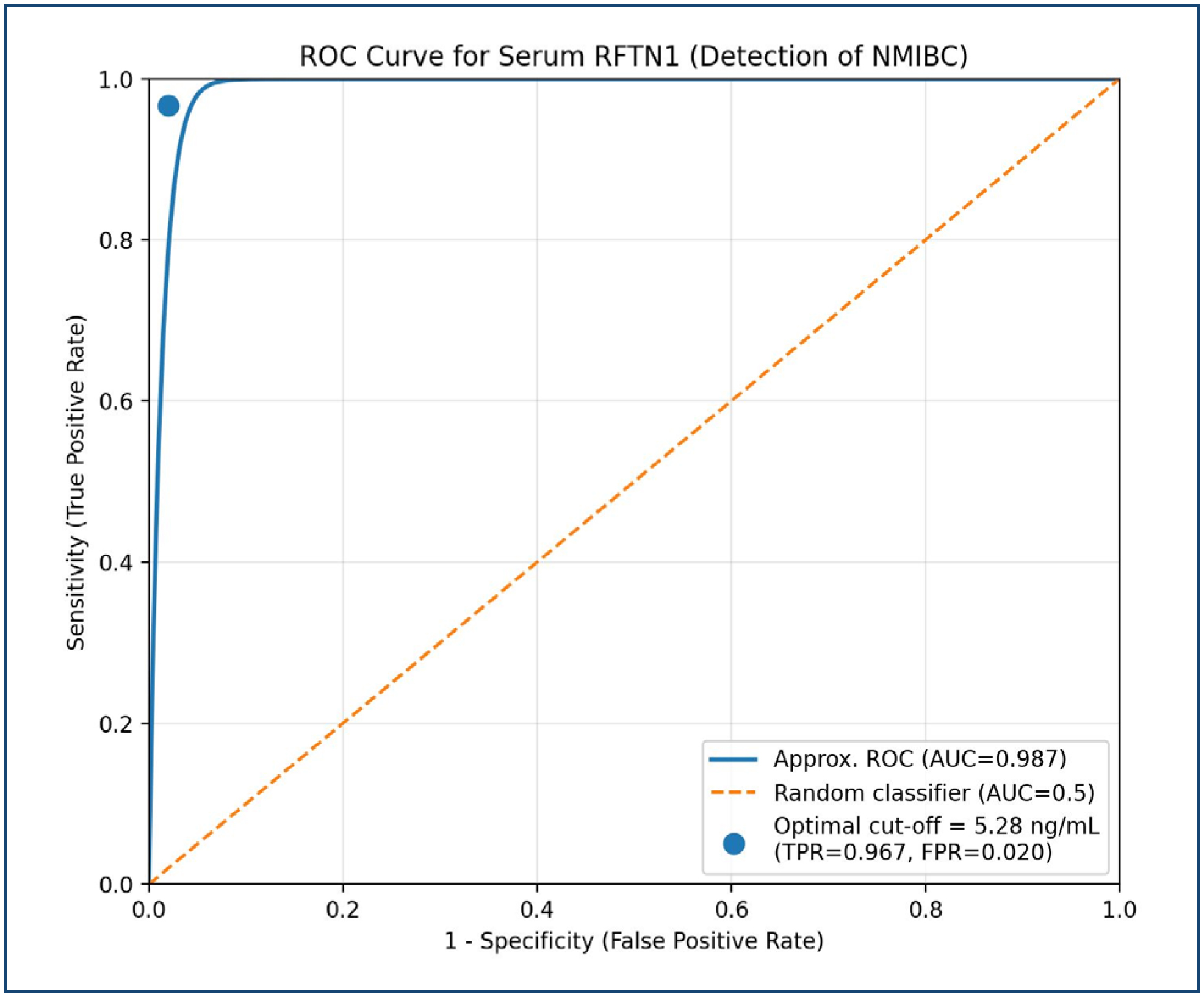
RESULTS: Serum Raftlin levels were significantly elevated in non-muscle invasive bladder cancer patients compared to healthy controls (p<0.001). Gender-stratified analysis confirmed this association was independent of gender (males: p<0.001; females: p<0.001). Receiver operating characteristic curve analysis demonstrated an area under the curve of 0.987 (95%CI 0.966–1.000), with an optimal cut-off of 5.28 ng/mL providing 96.7% sensitivity and 98.0% specificity. Trends toward higher Raftlin levels were observed in more aggressive disease features. No significant association was found between the rs690037 polymorphism and disease presence.
CONCLUSION: This pilot study suggests that serum Raftlin levels are significantly elevated in non-muscle invasive bladder cancer and show high discriminatory ability. While preliminary findings suggest potential as a non-invasive biomarker, validation in larger, independent cohorts is required before clinical implementation.
KEYWORDS:
Raftlin; Non-muscle invasive bladder cancer; Biomarker; RFTN1; Polymorphism
 Thumbnail