 Retrograde gastric decompression and anterograde enteral nutrition feeding in retrosternal esophagectomy for esophageal cancer
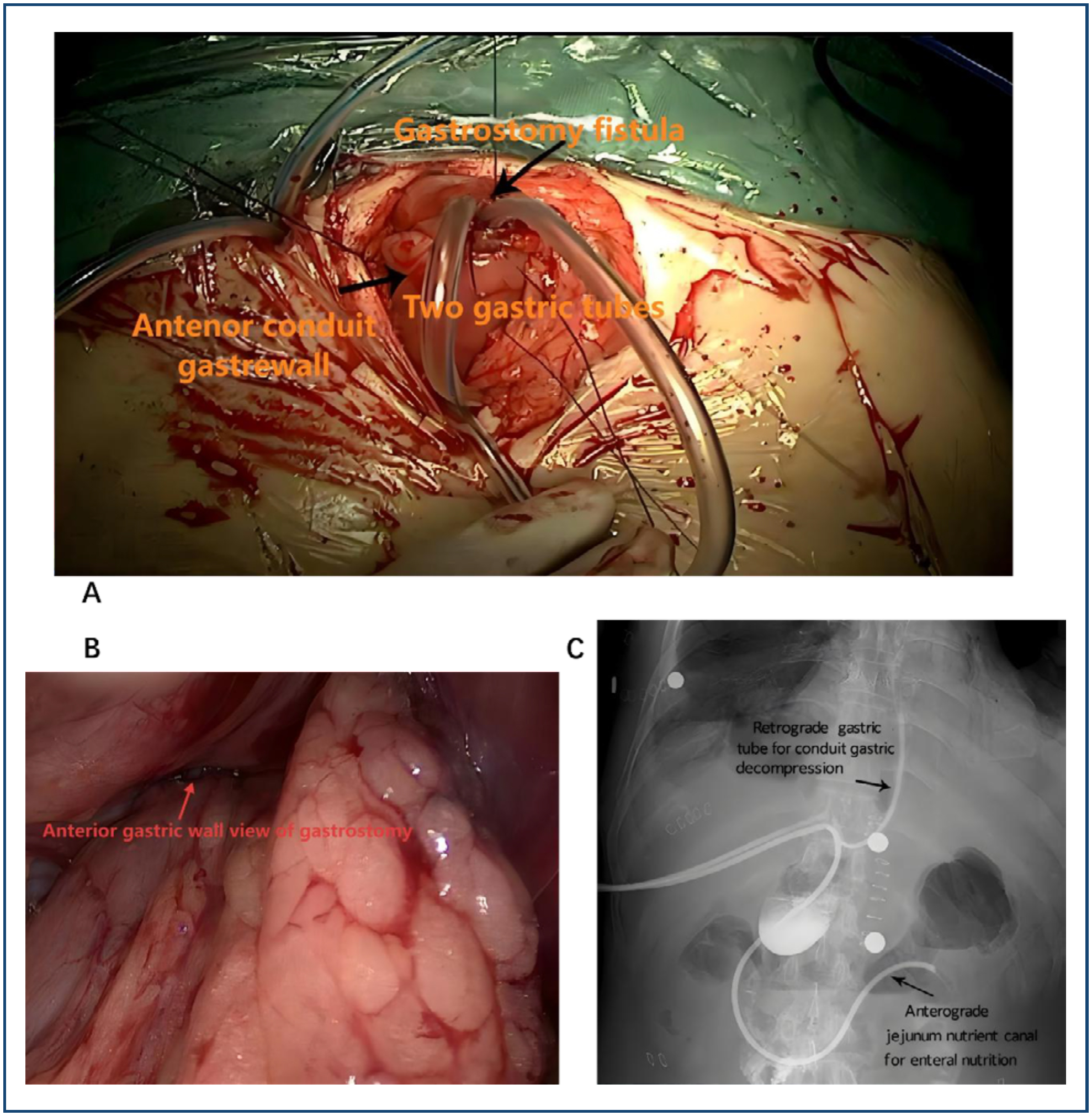
BACKGROUND: Postoperative care after McKeown esophagectomy remains challenging. The aim of this study was to evaluate retrograde gastric decompression and feeding as an alternative to nasogastric decompression and nasogastric-jejunal feeding.
METHODS: This retrospective study analyzed 142 esophageal cancer patients undergoing McKeown esophagectomy (between June 2020 and August 2022): retrograde gastric decompression and feeding (n=74) vs. nasogastric-jejunal (n=68). Outcomes included operative parameters, complications, and recovery metrics.
RESULTS: Retrograde gastric decompression and feeding required longer operative time (183.0±41.7 vs. 169.4±32.6 min, p=0.031) but showed comparable blood loss, R0 resection rates (95.9 vs. 97.1%), and lymph node yield. Gastric tube retention was shorter with retrograde gastric decompression and feeding (3.2±1.6 vs. 3.6±1.4 days). Complication rates (anastomotic leak: 10.8 vs. 10.3%; respiratory: 16.2 vs. 16.2%) and in-hospital mortality (1.4 vs. 1.5%) were similar. Tube-related complications trended lower with retrograde gastric decompression and feeding (5.4 vs. 10.3%, p=0.276).
CONCLUSION: Retrograde gastric decompression and feeding is a safe, effective method for enteral nutrition and decompression post-esophagectomy.
KEYWORDS:
Esophageal cancer; Esophagectomy; Enteral nutrition; Decompression; Postoperative care
 Thumbnail