 Sustainable business models in Brazil: Evidence and conceptual expansion focused on diversity and inclusion
Abstract
Purpose: This study examines the application of sustainable business model archetypes in Brazilian companies, focusing on how these organizations communicate their sustainability practices through sustainability reports.
Originality/value: The article is original in proposing a new archetype for sustainable business models: “Promoting Diversity and Inclusion”.
Design/methodology/approach: The research adopts a qualitative approach, with documentary analysis of reports from Brazilian companies listed in S&P Global’s Sustainability Yearbook 2024. MAXQDA software was used to code and analyze textual excerpts related to existing archetypes, allowing the identification of emerging patterns.
Findings: The results reveal an emphasis on practices aimed at optimizing resources, reducing environmental impacts, and transitioning to a circular economy, while strategies based on access and functionality, rather than ownership, remain underexplored.
Contribution/Implication: As the main theoretical contribution, we propose a new archetype, “Promoting Diversity and Inclusion,” based on empirical evidence of issues such as gender diversity, inclusion of people with disabilities, ethnic integration, and combating discrimination. This proposal extends the existing conceptual framework by incorporating critical social dimensions to facilitate the evolution of more integrated, sustainable business models.
Keywords:
sustainability; sustainability archetypes; corporate sustainability; corporate reporting; social inclusion
Palavras-chave:
sustentabilidade; arquétipos de sustentabilidade; sustentabilidade corporativa; relatos corporativos; inclusão social
Resumo
Objetivo: Este estudo investiga a aplicação dos arquétipos de modelos de negócios sustentáveis em empresas brasileiras, com foco em como essas organizações comunicam suas práticas por meio de relatórios de sustentabilidade.
Originalidade/valor: O artigo é original ao propor um novo arquétipo para modelos de negócios sustentáveis: “Promover a Diversidade e Inclusão”.
Design/metodologia/abordagem: A pesquisa adota uma abordagem qualitativa, com análise documental de relatórios de empresas brasileiras listadas no Sustainability Yearbook 2024 da S&P Global. Utilizou-se o software MAXQDA para codificação e análise de trechos textuais relacionados aos arquétipos existentes, permitindo a identificação de padrões emergentes. Resultados: Os resultados revelam ênfase em práticas voltadas à otimização de recursos, redução de impactos ambientais e transição para a economia circular, enquanto estratégias baseadas em acesso e funcionalidade em detrimento da propriedade permanecem subexploradas.
Contribuição/implicação: Como principal contribuição teórica, propusemos um novo arquétipo – “Promover a Diversidade e Inclusão” – fundamentado em evidências empíricas de temas como diversidade de gênero, inclusão de pessoas com deficiência, integração étnica e combate à discriminação. Essa proposta amplia o framework conceitual existente ao incorporar dimensões sociais críticas para a evolução de modelos de negócios sustentáveis mais integrados.
INTRODUCTION
Although large companies are driven by maximizing profits for shareholders (Ritala et al., 2018), there is a growing shift in the strategic alignment between economic performance and sustainable practice (Allal-Chérif et al., 2023; Goni et al., 2021). This transformation is driven by increasing pressures to embed the principles of sustainable development in all operational areas of the company, to meet the expectations of multiple stakeholders (Upward & Davies, 2019). Despite occasional advances, the transition towards sustainability remains slow and uneven (Baumgartner & Rauter, 2017; Oftedal et al., 2021), underscoring the need for more precise and strategic guidelines to inform business performance in this field (Ritala et al., 2018). In this context, academic and practical interest in the development of sustainability-oriented business models is growing (Boons & Lüdeke-Freund, 2013), especially concerning its classification and conceptual systematization (Schaltegger et al., 2016). Among the most relevant proposals, the contribution of Bocken et al. (2014), who proposed a taxonomy based on the creation of archetypes of sustainable business models, stands out.
These archetypes have been consolidated as analytical and normative tools that offer replicable strategic models, capable of integrating economic, social, and environmental objectives (Agwu & Bessant, 2021; Ciulli et al., 2022; Ritala et al., 2018). The archetypes theorized by Bocken et al. (2014) provide examples of mechanisms and solutions that guide the construction of business models focused on sustainability. They represent common standards that companies can adopt to generate and capture value, considering social and environmental impacts.
In this study, we examine how Brazilian companies adopt and communicate the archetypes of sustainable business models through their sustainability reports. The research employs a qualitative approach, utilizing documentary analysis of the reports from 27 companies listed in the Sustainability Yearbook 2024 by S&P Global (S&P Global, 2024). The objective of the study was to answer the following question: How are archetypes being effectively applied by Brazilian companies?
The results indicate an emphasis on practices aimed at optimizing resources, mitigating environmental impacts, and transitioning to circular economy models. On the other hand, archetypes related to prioritizing functionality over ownership remain underexplored in both implementation and communication. The main theoretical contribution of this study consists of the proposition of a new archetype, called “Promoting Diversity and Inclusion,” based on empirical evidence extracted from the analyzed reports. This new archetype encompasses actions aimed at gender diversity, inclusion of people with disabilities, ethnic integration, and combating discrimination, expanding the original framework proposed by Bocken et al. (2014).
The relevance of the research lies in its ability to address a significant gap in the literature on the depth and quality of corporate communication in Sustainability (Lüdeke-Freund et al., 2024), particularly for companies recognized for their sustainable practices by inclusion in the Sustainability Yearbook. As for the proposition of a new archetype, even though sustainable business models have evolved (Hernández-Chea et al., 2021; Konietzko et al., 2023), the incorporation of social elements essential for sustainable development is not yet fully captured by existing archetypes, limiting the understanding of how organizations balance economic, environmental, and social value and their creation of value for all involved (Freudenreich et al., 2020).
In this context, the results of this study make a relevant theoretical contribution to the field of sustainable business models by proposing a new archetype that emerges from the observed business practices. This proposition expands the existing framework by incorporating social aspects that have been little explored until now, addressing gaps identified in the literature. In addition to deepening the understanding of corporate strategies aimed at sustainability, this contribution strengthens the analytical capacity of theoretical models. It offers practical subsidies for managers who seek to integrate social value into their business approaches.
SUSTAINABLE BUSINESS MODELS (SBMs)
The concept of Sustainable Business Model (SBM) was introduced by Stubbs and Cocklin (2008), inspired by works on ‘generic’ or ‘conventional’ business models in their structure (Ciulli et al., 2022). Despite its broad definition, the field of sustainable business model studies is relatively recent, having consolidated in recent decades (Goni et al., 2021; Yuan & Mähönen, 2024), gaining prominence in the academic literature, driven by the need to integrate environmental, social, and economic dimensions into business practice (Goni et al., 2021; Lüdeke-Freund et al., 2024).
The literature presents different approaches to what constitutes an SBM, highlighting aspects such as value creation for stakeholders (Bocken et al., 2013; Broman & Robèrt, 2017), reducing environmental impact, and promoting social justice (Freudenreich et al., 2020; Goni et al., 2021). In general, an SBM is based on three main elements: the value proposition, creation, capture, and delivery of value (Bocken et al., 2014), which modifies the traditional business model that exclusively prioritizes financial profit by integrating sustainability into operations and value chains (Geissdoerfer et al., 2018). In this sense, a sustainable business model is defined as one that creates competitive advantage while contributing to the sustainable development of the company and society (Lüdeke-Freund & Dembek, 2017).
Several studies demonstrate the growing importance of sustainable business models as strategic tools to align business goals with the demand for environmental, social, and economic sustainability (Lee et al., 2019; Lüdeke-Freund et al., 2024). Studies show that organizations that incorporate sustainable practices into their operations not only mitigate negative impacts but also generate lasting value for their stakeholders (Boons & Lüdeke-Freund, 2013; Upward & Davies, 2019), as well as drive corporate innovation for sustainability (Bocken et al., 2014; Morais-da-Silva et al., 2017; Nosratabadi et al., 2019).
The literature, however, still seeks a more comprehensive understanding of the actual extent of companies’ commitment to activities that extend beyond the economic sphere, encompassing social and environmental aspects that impact society as a whole (Lüdeke-Freund & Dembek, 2017). Using the sustainability archetypes proposed by Bocken et al. (2014) helps describe and represent sustainability in businesses (Ritala et al., 2018).
ARCHETYPES FOR SUSTAINABLE BUSINESS MODELS
Business model archetypes aim to provide examples of mechanisms and solutions that can contribute to the development of sustainable business models (Bocken et al., 2014). They are recurring patterns of how companies can create and capture value while considering the social and environmental impacts of their operations (Yip & Bocken, 2018). Sustainable business model archetypes have gained prominence in both the academic literature and business practice, serving as guides for companies seeking to integrate sustainability into their strategies (Agwu & Bessant, 2021; Lee et al., 2019; Ritala et al., 2018).
The research by Bocken et al. (2014) identified eight main archetypes that illustrate different approaches to sustainability in business. The original structure of archetypes and their examples is presented in Figure 1.

The archetypes are categorized under a generic and high-level classification (technological, social, organizational), based on the main types of innovation discussed by Boons and Lüdeke-Freund (2013). Its structure aims to consolidate the various examples reported in the literature and reflect on emerging sustainability practices, organizing them into a structured and functional categorization within the context of business model innovation (Yip & Bocken, 2018). Table 1 presents each archetype and its basic structural definition.
It is important to note that the application of these archetypes is not restrictive or exclusive (Bocken et al., 2014). Companies can combine different archetypes and their examples to create innovative and sustainable business models, adapted to their specific needs and sector challenges (Ritala et al., 2018; Yip & Bocken, 2018).
METHODS
To achieve the study’s objective, we adopted a methodological procedure based on a descriptive qualitative approach, using the documentary research technique. We adopted a strategy that focused on understanding the content of the reports within previously defined categories, ensuring systematicity, coherence, analytical depth, and contextual richness (Creswell, 2007). A summary of the methodological procedures and research steps is presented in Figure 2.

Data collection began with the identification of Brazilian companies listed in the S&P Global Sustainability Yearbook 2024 (S&P Global, 2024). The Sustainability Yearbook is a highly regarded and internationally recognized publication that evaluates the sustainability performance of thousands of companies worldwide. This relevance justifies its choice for our research, as it provides reliable and comprehensive data on corporate sustainability practices.
The 2024 edition of the Sustainability Yearbook evaluated more than 9,400 companies from 62 different sectors, using the criteria of the Corporate Sustainability Assessment (CSA), developed by S&P Global. As a result, 759 companies were included in the publication, of which 27 are Brazilian: Klabin SA; Banco do Brasil SA; Lojas Renner SA; Boticário; Fleury S.A; Telefônica Brasil SA; Itaú Unibanco Holding SA; Banco Bradesco SA; Suzano SA; Rumo S.A; CEMIG; Engie Brasil Energia SA; Itaúsa SA; Neoenergia SA; TIM SA; Eletrobrás; Natura & Co Holding SA; Cielo SA; Cosan SA; Movida Participações; SIMPAR SA; Petrobrás; Vamos Locação; Hipera SA; Vibra Energia SA; Rede D’Or São Luiz and Cogna Educação S.A.
Data collection proceeded with the search and download of sustainability reports from the electronic addresses of each of the 27 identified companies. The inclusion criteria for the documents were: 1. being annual sustainability reports with a base year of 2023, and 2. being publicly available on the companies’ institutional websites. No company was excluded due to data unavailability, ensuring full representation of the universe of interest. This set of documents constituted the research corpus. All consulted sources are public and accessible at the respective companies’ electronic addresses.
Data analysis was conducted using the MAXQDA Analytics Pro 2020 software. Eight main codes were defined, corresponding to the sustainable business model archetypes proposed by Bocken et al. (2014), along with 53 subcodes based on the examples associated with these archetypes, as detailed in Figure 1. For example, the archetype “Maximise material and energy efficiency” was structured as a main code and broken down into the subcodes “lean manufacturing,” “dematerialization,” “low-carbon solutions,” and “energy efficiency.” This same principle was applied to the other archetypes. The decision to use the examples presented by Bocken et al. (2014) as a basis for the subcodes is justified because, although not exhaustive (Ritala et al., 2018), they offer a relevant and validated reference for identifying text segments related to the archetypes.
After creating the codes and subcodes, we coded the text segments using MAXQDA’s native textual exploration functionality, known as “Keyword-in-Context” (KWIC). To ensure broader and more sensitive coverage of the language used in the reports, we adopted a strategy that combined compound terms and their reduced or lemmatized forms. For example, in addition to searching for the complete expression “Reverse logistics” (subcode of the “Create value from waste” archetype), we also performed searches with the isolated terms “Logistics” and “Reverse,” to capture variations in the textual presentation of the concepts.
This approach aimed to increase the sensitivity of the search without compromising precision, allowing the identification of relevant excerpts even when the terms did not appear precisely as defined in the subcodes. Thus, we sought to capture different forms of semantic expression associated with the examples of sustainable practices described in the literature. Subsequently, each located segment was subjected to detailed reading, enabling careful analysis of its content.
The coding was performed considering the thematic correspondence and interpretive context of each segment in relation to the subcodes associated with the archetypes. All excerpts that mentioned examples of archetypes were considered for analysis, without assigning weight or relevance to the segments, regardless of the frequency of occurrence. However, segments presented in titles, subtitles, tables, and charts of the reports were excluded from the research corpus, as they did not explicitly reference the application practices of the archetypes and their examples in the companies. This decision aims to ensure that the analysis is based on more contextual and informative textual excerpts.
The interpretation of the data sought to identify emerging patterns of archetype application among the analyzed companies, as well as any gaps or innovations not contemplated in the original model. This process culminated in the proposal of a new archetype, empirically based on the thematic recurrence identified in the reports.
QUALITATIVE EVIDENCE
The following text presents all the research findings from the exploration of the reports that comprise the corpus in question. For a deeper understanding, the discussions were conducted based on the literature and evidence for each exposition.
The application of sustainable business model archetypes
A total of 2.481 text segments related to eight sustainability archetypes were coded. Figure 3 illustrates the distribution of the quantity of these segments related to each archetype.

A clear predominance of certain archetypes over others is noted, such as “Encourage sufficiency” and “Maximise material and energy efficiency” compared to less represented ones, like “Deliver functionality rather than ownership.” This variation highlights different levels of application and communication of the archetypes in the companies’ sustainability reports.
Analyzing each archetype in greater detail reveals that “Encourage sufficiency” has the highest number of coded segments, with 490 segments. This archetype is related to the actions and engagement of companies in practices that promote conscious consumption, moderation, and the reduction of excesses (Bocken et al., 2014). The research findings suggest that companies are making an effort to align their corporate operations with more sustainable behaviors, in line with the principles described by Yip and Bocken (2018).
Figure 4 details the “Encourage sufficiency” archetype as the central code and its connections with the subcodes, such as “Responsible Product Distribution/Promotion,” “Consumer Education: Communication and Awareness,” “Product Longevity,” and “Demand Management.” The thickness of the lines represents the frequency of the coded text segments, proportional to the number of segments.
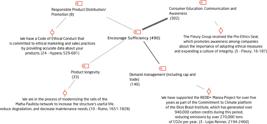
Examples of this archetype’s application by companies include the Code of Ethical Conduct at Hypera, which reinforces transparent actions; the Pro-Ethics Seal of the Fleury Group, promoting awareness of ethics and a culture of integrity; Rumo’s modernization initiatives to increase infrastructure durability; and the REDD+ Manoa Project of Lojas Renner, which combines emission reduction actions with economic and environmental impacts. The high frequency of connections with subcodes like “Consumer Education: Communication and Awareness” suggests that companies are investing in educational campaigns to modify consumer behaviors, promoting more sustainable practices.
The archetype “Maximise material and energy efficiency,” with 453 coded segments, is the second most frequent and reflects practices that not only minimize environmental impacts but also generate substantial economic benefits, aligning sustainability with financial forecasts (Ritala et al., 2018). According to Bocken et al.(2014), this archetype is particularly interesting due to its immediate impact, making it a crucial starting point for companies seeking to integrate sustainable principles into their operations.
As shown in Figure 5, the archetype is connected to subcodes such as “Lean Manufacturing,” “Dematerialization,” and “Low-Carbon Manufacturing/Solutions.” Examples of the archetypes’ application include initiatives promoted by companies such as Movida and Eletrobrás, which have taken actions to improve operational and financial efficiency. The Boticário Group also encourages recycling and the improvement of the recycling chain. Additionally, Vibra has innovated in energy solutions to advance the low-carbon economy. The application of this archetype by companies highlights the focus on resource efficiency not only as a sustainable movement but also as a competitive strategy, in line with what is presented by Lüdeke-Freund and Dembek (2017).
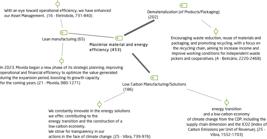
Figure 6 illustrates the archetype “Create value from waste,” with 430 coded segments, divided into the subcodes “Industrial Symbiosis,” “Take-Back Management,” “Circular Economy,” and “Reuse, Recycle, and Remanufacture.” Among the practices identified in this archetype, reverse logistics stands out, with examples such as the “Boti Recicla” program from Boticário, with actions for collecting cosmetic waste, and circular economy initiatives, such as that of Movida, which aims to reduce the sending of waste to landfills by 50% by 2030. Hypera, in turn, provides examples of large-scale recycling practices, with actions for recycling packaging and food produced by the group.

Overall, the initiatives demonstrate the commitment of Brazilian companies to sustainability, showing advances in waste management and the transition to a more circular economy in this archetype.
This archetype emphasizes the potential to transform waste into new products or sources of value, thereby advancing the organizational sustainability cycle (Bocken et al., 2014). In the analysis, although recycling is widely used, collaborative strategies for transforming waste into raw materials, such as industrial symbiosis, are little explored. This represents a significant potential to increase efficiency and expand the positive environmental impact, especially in intensive production sectors (Chertow, 2000).
Another archetype coded with significant relevance is “Substitute with renewables and natural processes,” which includes 421 segments distributed among the subcodes “Blue economy,” “Innovation in solar and wind energy,” and “Transition to renewable energy sources.” As illustrated in Figure 7, the results indicate a predominance of corporate efforts focused on adopting renewable energy sources, promoting a strategic transition to more sustainable practices.

Examples include Cemig’s investment in solar plants in Minas Gerais and Hypera’s adoption of renewable energy certificates (RECs), which mitigate scope 2 and 3 emissions. Vibra stands out for its leadership in the energy transition in Brazil, integrating traditional fuels with renewable solutions. Furthermore, Petrobras is notable for its investments in marine environmental protection and monitoring programs, reinforcing its commitment to sustainability.
This archetype reflects innovations in business models geared towards clean energies, aligning directly with the business strategies described by Yip & Bocken (2018). However, more integrated practices, such as the blue economy—aimed at the sustainable use of marine resources—are still little explored by companies.
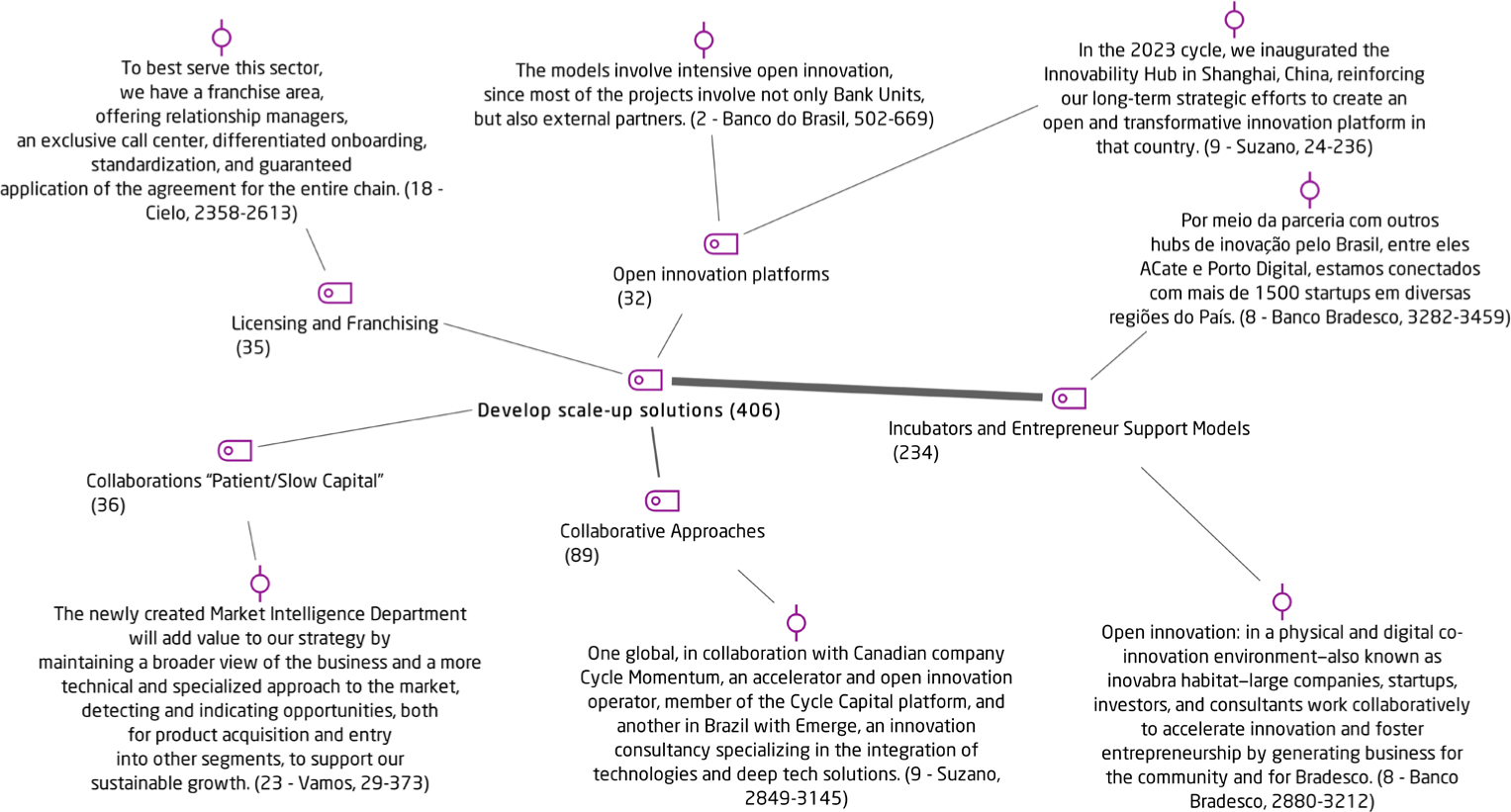
Highlighting the companies’ focus on scalable and accessible innovation, the archetype “Develop scale-up solutions” with 406 coded segments, presented in Figure 8, reflects strategic efforts to expand the reach of collaborative and sustainable practice (Bocken et al., 2014; Boons & Lüdeke-Freund, 2013). Initiatives such as the creation of open innovation platforms, exemplified by Banco do Brasil, which integrates internal units and external partners to promote innovative solutions, and the implementation of entrepreneurship Hubs, such as Suzano’s Innosustainability Hub in Shanghai, are observed. In addition, licensing and franchise models, such as those adopted by Cielo, ensure standardization and support throughout the business chain. Meanwhile, strategic partnerships, like that of Banco Bradesco with Startups and innovation Hubs, accelerate the inclusion of innovative solutions in the market.

These practices, aligned with the ideas of Boons and Lüdeke-Freund (2013), demonstrate how collaboration and investment in innovation are fundamental to scaling sustainable initiatives. By integrating open innovation, entrepreneurship Hubs, and partnership models, companies expand their capacity to generate positive impact, reaching a broader consumer base and promoting social and environmental benefits on a large scale (Bocken et al., 2014; Ritala et al., 2018).
The archetype “Adopt a stewardship role,” with 137 codifications, as presented in Figure 9, indicates a moderate effort to incorporate ethical governance and social responsibility practices into the business models of some companies. The lower representation of this archetype compared to others, such as “Maximise Material and Energy Efficiency” or “Create Value from Waste,” suggests cultural and structural barriers that hinder the prioritization of responsible management practices, as discussed by Lüdeke-Freund et al (2024). These barriers may be related to the emphasis on maximizing shareholder value at the expense of a more holistic view of integrating social and environmental values into business models (Bocken & Geradts, 2020).

The protection of biodiversity, a central aspect of this archetype, exemplifies how some companies integrate environmental responsibilities into their operations in an effective and comprehensive manner. Natura, for example, collaborates with regenerative and biome protection programs, while Petrobras invests in studies and initiatives that expand knowledge and protection of biodiversity. In the social sphere, consumer service and clear communication about safety and ethical practices demonstrate the companies’ commitment to promoting health and well-being. Other initiatives, such as the commitment to resource management and Movida’s efforts to transition to a low-carbon economy, illustrate how responsible management is also connected to this archetype.
Figure 10, relating to the archetype “Repurpose for society/environment,” with 106 codifications, indicates that the transformation of business objectives into actions aimed at social and environmental benefits is still in the development stage for many companies. This finding is consistent with previous studies by Lüdeke-Freund et al. (2024), which also highlighted the challenges and opportunities involved in integrating social and environmental values into corporate business models. The low frequency of this archetype suggests that integrating social impact initiatives into business models is in its initial phase.

This archetype prioritizes social and environmental benefits by integrating the company, local communities, and other stakeholders, which can challenge the traditional business model that places the conssumer as the primary beneficiary (Geissdoerfer et al., 2018). His paradigm shift requires a deep integration between the company, local communities, and other stakeholders, transforming how companies operate and create value (Bocken et al., 2014; Broman & Robèrt, 2017).
Some actions are exemplified as sustainable and socially corporate initiatives in this archetype. In the subcode “Home-based flexible working,” for example, Banco do Brasil implemented remote work in 2022, promoting operational efficiency and emission reduction. Other initiatives, for example, are carried out by Suzano, with the creation of ecological corridors aimed at regenerating biodiversity. The subcodes “Hybrid businesses/social enterprises” show the integration of economic and social objectives, exemplified by Cogna, which offers professional development experiences to students in needy communities. The “Base of the Pyramid Solutions” address projects aimed at the low-income population, such as Cemig’s social energy tariff and the Minas LED program, which promote inclusion and energy efficiency in vulnerable areas. These initiatives show how companies can repurpose their businesses to promote social and environmental benefits, aligning with responsible and sustainable practices (Upward & Jones, 2016; Yip & Bocken, 2018).
Finally, the archetype “Deliver functionality rather than ownership” is presented in Figure 11. The nature of this archetype involves providing functionalities or results to customers, rather than products, thereby making companies responsible for addressing economic, environmental, and social issues during and after the product’s use phase (Evans et al., 2017). With only 10 coded segments, the results suggest that companies’ sustainability reports often lack effective implementation or communication, particularly in actions that prioritize access to services over product ownership. This limited representation indicates the presence of significant barriers that hinder the widespread adoption of functionality-based models, such as resistance to change in the consumer’s mindset and inadequate infrastructure, as noted by Tukker (2015).

The difficulty in implementing the “Deliver functionality rather than ownership” archetype has also been identified in other studies. The study by Ritala et al. (2018), for example, analyzed press releases from large companies between 2005 and 2014 and found that the “Deliver functionality” archetype had the lowest number of mentions, indicating low adherence to this model. The authors argue that this low adherence is partly due to the strong consumer preference for owning material goods, which offers a sense of control and freedom. This mentality, rooted in social norms and consumption habits, hinders the transition to service models that require giving up ownership (Lüdeke-Freund & Dembek, 2017).
Similarity map of archetypes
Figure 12 presents a similarity map that illustrates the distribution of sustainability archetypes among companies. Each point represents a company, grouped separately based on its approach to incorporating the archetypes into its sustainable business model.

The proximity between the points reflects the degree of similarity in the archetypes used, showing groupings that suggest common approaches within sectors or specific sustainability strategies. The size of the points is directly related to the number of archetype approaches.
This mapping enables the identification of specific patterns, such as the concentration of companies that prioritize particular archetypes, resulting in the formation of clusters that highlight dominant trends across different sectors. For example, Natura and Boticário have high adherence to the “Create value from waste” archetype. In addition, visualization facilitates comparative analysis, highlighting sectors or organizations that lead specific initiatives, such as energy efficiency, material recycling, or the adoption of renewable energies. This distribution provides a clear perspective on emerging trends and the diversity of approaches in the context of companies applying sustainability archetypes.
Overlap of archetypes
Figure 13 illustrates the overlap of the codes identified for the sustainability archetypes, confirming a characteristic highlighted in the literature: the interdependence among sustainable practices (Ritala et al., 2018; Schaltegger et al., 2016). As pointed out by Bocken et al. (2014), sustainable business model archetypes can coexist in different protocols to meet the demands of economic, social, and environmental sustainability. They can be combined in various ways to meet the specific needs of each company and context.

The strong connection between “Maximise material and energy efficiency,” “Create value from waste,” and “Substitute with renewables and natural processes” is aligned with the trends of practices described by Yip and Bocken (2018), which emphasize the importance of strategies based on the circular economy as pillars of organizational sustainability. These archetypes, together, contribute to the optimization of resource use, waste reduction, and the transition to renewable energy sources (Bocken et al., 2014). Similarly, “Encourage sufficiency” also stands out as a relevant archetype, demonstrating several connections. This reflects the growing attention of companies in promoting conscious consumption behaviors and aligning their organizational strategies with social demands for lower environmental impact, focusing on consumption reduction and changing consumer behavior (Bocken et al., 2014).
The distribution of the data supports the notion that organizations often combine different archetypes to achieve optimal results, as described by Breuer et al. (2018), and highlights the importance of integrating multiple archetypes in sustainable and innovative business models, as discussed by Ritala et al. (2018).
A NEW ARCHETYPE PROPOSAL
In our detailed analysis of the reports, with a focus on identifying the eight archetypes, we identified recurring patterns of actions with a clear direction towards initiatives promoting diversity and inclusion. This perception suggests that we recognize companies are implementing sustainable practices that extend beyond the archetypes originally proposed by Bocken et al. (2014).
To deepen our investigation and validate our initial perception, we conducted a systematic search for keywords in the sustainability reports. We intentionally defined words that we consider representative of the concepts related to the proposed archetype, such as: “Diversity,” “Gender,” “Inclusion,” “Person with Disability,” “Accessibility,” “Equity,” “Equality,” “Discrimination,” and “Access.” To perform this keyword search, we utilized the word frequency count functionality of the MAXQDA software, specifically “MaxDictio/Word Frequency.” This functionality allowed us to quantitatively map the presence of these words in the analyzed texts. Thus, we were able to gain a more precise understanding of the emphasis each company places on topics related to inclusion and diversity in its reports.
Table 2 presents the frequency with which these keywords appear in the companies’ reports, allowing the identification of patterns and thematic recurrences. It is observed that most keywords are present in practically all reports, indicating a consistent pattern in the use of these terminologies, which may reflect the organization’s commitment to practices related to diversity and inclusion.
Based on the review of the text fragments related to the keywords, we proposed the formulation of a new archetype called “Promote Diversity and Inclusion.” This proposal builds upon existing theoretical models, aiming to capture practices that extend beyond the archetypes previously defined by Bocken et al. (2014).
To substantiate this initiative, we created the code “Promote Diversity and Inclusion” and its subcodes: “Gender Diversity,” “Inclusion of People with Disabilities,” “Integration of Different Ethnicities,” and “Mechanisms to Combat Discrimination,” developed based on the purposeful grouping of some of the keywords from Table 2. We consider this approach valid because, as in the original archetype, the subcodes serve as representative examples of practices, rather than exhaustive categories.
The total number of segments coded in this new archetype considerably surpassed the segments of the other archetypes. In total, 912 text segments were coded and distributed among the four proposed subcodes, which reinforces our perception of the topic’s relevance. These results indicate that “Promote Diversity and Inclusion” represents an essential component of the sustainable practices reported by the organizations. This finding suggests the need to consider the inclusion of this archetype in the existing theoretical model, as initiatives related to diversity and inclusion have gained centrality in corporate sustainability efforts, as presented by Bocken et al. (2014) and Lüdeke-Freund et al. (2017).
We understand that the practical implementation of the “Promote Diversity and Inclusion” archetype necessitates the adoption of policies and practices that ensure the participation and respect of diverse social, cultural, ethnic, gender, and ability groups within organizations (Freudenreich et al., 2020). The creation of a genuinely inclusive environment goes beyond the mere presence of different groups; it is essential to ensure that all people, regardless of their differences, feel welcomed, respected, and have equal opportunities to contribute to the success of the organization (Breuer et al., 2018; Shore et al., 2011). In this sense, to make the concept of the “Promote Diversity and Inclusion” archetype more tangible, and to align it with the dimensions of value proposition, value creation and delivery, and value capture, as structured by Bocken et al. (2014), we present in Figure 14 the fundamental concepts of this archetype.

The proposed archetype is aligned with the approach of Lüdeke-Freund et al. (2017) and Boons & Lüdeke-Freund (2013), who argue that sustainable business models should incorporate social values to generate transformative impacts. In addition, the adoption of this archetype aligns with the concept of the triple bottom line, which emphasizes the integration of social, environmental, and economic impacts into the business model (Elkington, 1997). Actions aimed at promoting diversity, social inclusion, and combating discrimination are seen not only as an ethical imperative but also as a strategy that drives innovation and organizational performance, especially in a global competitiveness scenario (Bocken et al., 2014; Boons & Lüdeke-Freund, 2013).
As presented in the analyses of the previous archetypes, Figure 15 illustrates the new archetype “Promote Diversity and Inclusion,” with 912 coded text segments, distributed in four subcodes: Gender Diversity, Inclusion of People with Disabilities, Integration of Different Ethnicities, and Mechanisms to Combat Discrimination. Each subcode contains examples of practices adopted by companies, illustrating how they address issues of diversity and inclusion.

The “Gender Diversity” subcode, with 522 segments, stands out as the one with the highest number of initiatives applied by companies, showing a significant commitment to promoting gender equality. Examples include structured policies, such as those of the company CEMIG, which adopt concrete measures to expand female participation in strategic positions, including administrative councils and business decision-making processes.
The “Integration of Different Ethnicities” subcode, with 307 coded segments, highlights significant actions taken to increase ethnic representation in companies. These initiatives include the formation of culturally diverse teams and the creation of an inclusive environment, demonstrating the organization’s commitment to racial and cultural equity. Such practices reflect companies’ efforts to develop organizational environments that are more representative of social plurality (Bocken & Geradts, 2020).
On the other hand, the “Inclusion of People with Disabilities” subcode presents a more modest number of segments, indicating less practical attention compared to different topics. Even so, some initiatives stand out, such as those of Banco Bradesco, which implements employability programs, including the creation of specific vacancies and the offer of training to promote their integration into the corporate environment.
Finally, the “Mechanisms to Combat Discrimination” subcode has the lowest number of segments, only 28 segments. This data suggests that companies are paying less attention to this topic, despite its importance. Natura is mentioned as a positive example, with policies that address the fight against racism and promote LGBTQIA+ inclusion. However, the reduced number of initiatives highlights the need for more comprehensive and detailed actions to strengthen the fight against discrimination in the corporate environment.
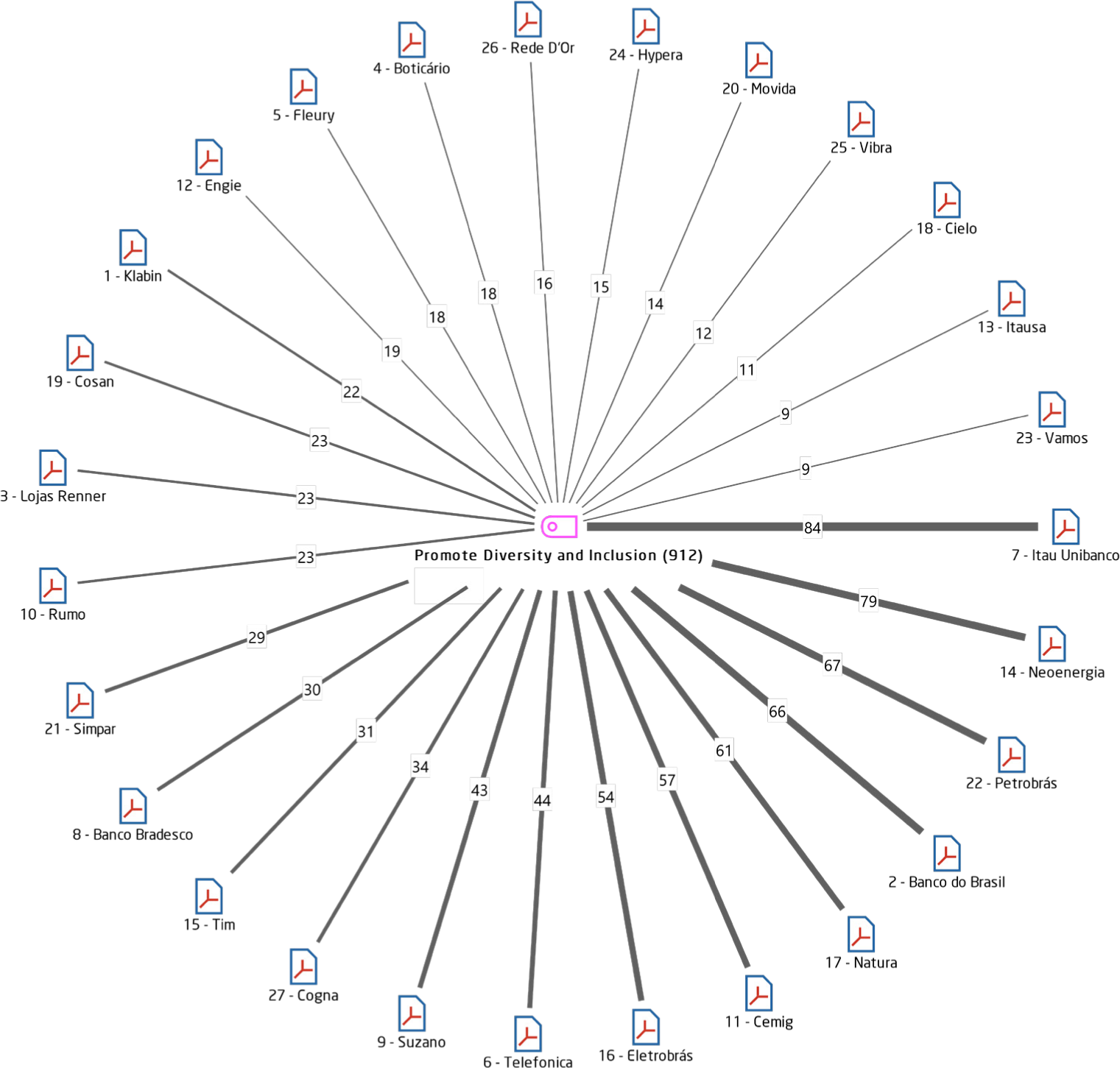
Complementing the analysis, Figure 16 presents the distribution of codes related to the theme “Promote Diversity and Inclusion” among different companies. Each line connects the archetype to a company and indicates the number of codifications identified in its practices and policies aimed at diversity and inclusion.

It is observed that companies such as Itaú Unibanco, Neoenergia, Petrobras, and Banco do Brasil appear with an expressive number of codes, suggesting greater commitment or detail of their initiatives related to this theme.
This distribution reveals an interesting pattern: large financial institutions and companies in the energy sector are among the most prominent, reflecting a growing emphasis on highly regulated industries or those that directly address social and environmental issues. The diversity of represented sectors, ranging from technology to retail, indicates that the commitment to diversity and inclusion is consolidating as a growing and universal trend. However, the variations in the number of codifications suggest that not all companies attribute the same priority to these values, highlighting potential gaps that can be addressed and deepened in their corporate policies and diversity programs.
FRAMEWORK UPDATE
The introduction of the new archetype “Promote Diversity and Inclusion” represents a significant evolution in the theoretical model of Bocken et al. (2014), expanding its capacity to capture contemporary and sustainable business practices. The results emerging from the analysis demonstrate that initiatives related to diversity and inclusion are consolidating as fundamental elements in corporate sustainability efforts, surpassing the initial proposed archetypes, which prioritize environmental, economic, and, to a lesser extent, social dimensions.
The decision to propose the new archetype was supported by evidence that many companies have incorporated, in a prominent way, practices of inclusion of historically marginalized groups, the promotion of equity in the work environment, and the valorization of cultural and social diversity as strategic bases of their operations. Such practices suggest not only a response to the growing social demands for greater justice and inclusion but also demonstrate a positive impact on organizational innovation, employee engagement, and financial performance.
The inclusion of this new archetype in the framework of sustainable business models is essential to encompass practices that extend beyond the traditional environmental and economic dimensions, reflecting the growing importance of social issues. We therefore propose reformulating the archetype framework to incorporate “Promote Diversity and Inclusion” as a crucial component, which provides a more robust theoretical structure and guides companies in transitioning to more inclusive and sustainable business models. Figure 17 presents the revised framework, incorporating the new archetype and providing a more robust and comprehensive theoretical structure to guide companies in transitioning to more inclusive and sustainable business models.

This revised framework maintains the existing archetypes as a basis. Still, it is enriched with the inclusion of broader social dimensions, such as the promotion of diversity, inclusion, and equity, to address the gaps identified during the study. By aligning the expanded structure with the observed practices, resulting from the research findings, we aim to provide a more comprehensive theoretical tool for managers and researchers.
CONCLUSIONS
His study aimed to analyze the application of the sustainable business model archetypes proposed by Bocken et al. (2014) in Brazilian companies, with a focus on the communication of sustainable practices through corporate reports. The results demonstrate a consistent commitment to sustainability, as reflected in the adoption of actions aligned with various sustainable business archetypes.
A predominance of practices related to the archetypes “Encourage sufficiency,” “Maximise material and energy efficiency,” “Create value from waste,” “Substitute with renewables and natural processes,” and “Develop scale-up solutions” was observed. This emphasis reveals a strategic orientation towards resource use efficiency, mitigation of environmental impacts, and promotion of the circular economy, in line with global sustainability trends (Bocken et al., 2014; Yip & Bocken, 2018). In contrast, the archetypes that prioritize access and functionality over ownership still show low incidence in the analyzed cases.
This study’s principal contribution is the proposal of a new archetype titled “Promote Diversity and Inclusion”. This theoretical expansion of the framework by Bocken et al. (2014) acknowledges the increasing importance of diversity and inclusion as crucial dimensions of organizational sustainability, complementing the creation of economic and environmental value with a more comprehensive focus on social justice (Breuer et al., 2018; Lüdeke-Freund & Dembek, 2017).
Despite its contributions, the study has limitations. The primary limitation lies in the exclusive reliance on sustainability reports as a data source. Although these documents provide relevant information on companies’ practices, it is important to recognize that the companies themselves produce them and may present biases, with a focus on highlighting positive aspects and minimizing negative ones. Additionally, the research focuses on Brazilian companies listed in the Sustainability Yearbook 2024, which limits the generalization of the results to other companies or contexts.
As a suggestion for future studies, it is proposed to compare the application of the archetypes in Brazilian and foreign companies, considering different economic and social contexts, to evaluate regional patterns and the influence of cultural, political, and economic factors. Furthermore, it is suggested to investigate the evolution of the use of the archetypes over time, with a focus on the new archetype “Promote Diversity and Inclusion,” expanding the understanding of the factors that influence the implementation of sustainable business models and strengthening practical strategies in various scenarios.
-
RAM does not have information about open data regarding this manuscript.
-
RAM does not have permission from the authors or evaluators to publish this article’s review.
REFERENCES
-
Agwu, U. J., & Bessant, J. (2021). Sustainable business models: A systematic review of approaches and challenges in manufacturing. Revista de Administracao Contemporanea, 25(3 Special Issue). https://doi.org/10.1590/1982-7849rac2021200202.en
» https://doi.org/10.1590/1982-7849rac2021200202.en -
Allal-Chérif, O., Costa Climent, J., & Ulrich Berenguer, K. J. (2023). Born to be sustainable: How to combine strategic disruption, open innovation, and process digitization to create a sustainable business. Journal of Business Research, 154 https://doi.org/10.1016/j.jbusres.2022.113379
» https://doi.org/10.1016/j.jbusres.2022.113379 -
Baumgartner, R. J., & Rauter, R. (2017). Strategic perspectives of corporate sustainability management to develop a sustainable organization. Journal of Cleaner Production, 140 https://doi.org/10.1016/j.jclepro.2016.04.146
» https://doi.org/10.1016/j.jclepro.2016.04.146 -
Bocken, N., & Geradts, T. H. J. (2020). Barriers and drivers to sustainable business model innovation: Organization design and dynamic capabilities. Long Range Planning, 53(4). https://doi.org/10.1016/j.lrp.2019.101950
» https://doi.org/10.1016/j.lrp.2019.101950 -
Bocken, N., Short, S., Rana, P., & Evans, S. (2013). A value mapping tool for sustainable business modelling. Corporate Governance (Bingley), 13(5), 482–497. https://doi.org/10.1108/CG-06-2013-0078/FULL/PDF
» https://doi.org/10.1108/CG-06-2013-0078/FULL/PDF -
Bocken, Short, S. W., Rana, P., & Evans, S. (2014). A literature and practice review to develop sustainable business model archetypes. Journal of Cleaner Production, 65, 42–56. https://doi.org/10.1016/j.jclepro.2013.11.039
» https://doi.org/10.1016/j.jclepro.2013.11.039 -
Boons, F., & Lüdeke-Freund, F. (2013). Business models for sustainable innovation: State-of-the-art and steps towards a research agenda. Journal of Cleaner Production https://doi.org/10.1016/j.jclepro.2012.07.007
» https://doi.org/10.1016/j.jclepro.2012.07.007 -
Breuer, H., Fichter, K., Lüdeke-Freund, F., & Tiemann, I. (2018). Sustainability-oriented business model development: Principles, criteria and tools. International Journal of Entrepreneurial Venturing, 10(2), 256–286. https://doi.org/10.1504/IJEV.2018.092715
» https://doi.org/10.1504/IJEV.2018.092715 -
Broman, G. I., & Robèrt, K. H. (2017). A framework for strategic sustainable development. Journal of Cleaner Production, 140, 17–31. https://doi.org/10.1016/j.jclepro.2015.10.121
» https://doi.org/10.1016/j.jclepro.2015.10.121 -
Chertow, M. R. (2000). Industrial symbiosis: Literature and taxonomy. Annual Review of Energy and the Environment, 25, 313–337. https://doi.org/10.1146/ANNUREV.ENERGY.25.1.313
» https://doi.org/10.1146/ANNUREV.ENERGY.25.1.313 -
Ciulli, F., Kolk, A., Bidmon, C. M., Sprong, N., & Hekkert, M. P. (2022). Sustainable business model innovation and scaling through collaboration. Environmental Innovation and Societal Transitions, 45(November), 289–301. https://doi.org/10.1016/j.eist.2022.11.003
» https://doi.org/10.1016/j.eist.2022.11.003 -
Creswell, J. W. (2007). Research design: Qualitative, quantitative and mixed method approaches. SAGE Publications https://doi.org/10.4135/9781849208956
» https://doi.org/10.4135/9781849208956 -
Elkington, J. (1997). The triple bottom line of 21st century business Cannibals with forks. Environmental Quality Management, 8(April), 424. http://doi.wiley.com/10.1002/tqem.3310080106
» http://doi.wiley.com/10.1002/tqem.3310080106 -
Evans, S., Vladimirova, D., Holgado, M., Van Fossen, K., Yang, M., Silva, E. A., & Barlow, C. Y. (2017). Business model innovation for sustainability: Towards a unified perspective for creation of sustainable business models. Business Strategy and the Environment, 26(5), 597–608. https://doi.org/10.1002/BSE.1939
» https://doi.org/10.1002/BSE.1939 -
Freudenreich, B., Lüdeke-Freund, F., & Schaltegger, S. (2020). A stakeholder theory perspective on business models: Value creation for sustainability. Journal of Business Ethics, 166(1), 3–18. https://doi.org/10.1007/S10551-019-04112-Z/FIGURES/2
» https://doi.org/10.1007/S10551-019-04112-Z/FIGURES/2 -
Geissdoerfer, M., Vladimirova, D., & Evans, S. (2018). Sustainable business model innovation: A review. Journal of Cleaner Production, 198 https://doi.org/10.1016/j.jclepro.2018.06.240
» https://doi.org/10.1016/j.jclepro.2018.06.240 -
Goni, F. A., Gholamzadeh Chofreh, A., Estaki Orakani, Z., Klemeš, J. J., Davoudi, M., & Mardani, A. (2021). Sustainable business model: A review and framework development. Clean Technologies and Environmental Policy, 23(3), 889–897. https://doi.org/10.1007/s10098-020-01886-z
» https://doi.org/10.1007/s10098-020-01886-z -
Hernández-Chea, R., Jain, A., Bocken, N. M. P., & Gurtoo, A. (2021). The business model in sustainability transitions: A conceptualization. Sustainability 2021, Vol. 13, Page 5763, 13(11), 5763. https://doi.org/10.3390/SU13115763
» https://doi.org/10.3390/SU13115763 -
Konietzko, J., Das, A., & Bocken, N. (2023). Towards regenerative business models: A necessary shift? Sustainable Production and Consumption, 38, 372–388. https://doi.org/10.1016/J.SPC.2023.04.014
» https://doi.org/10.1016/J.SPC.2023.04.014 -
Lee, J., Kim, R., Koh, Y., & Kang, J. (2019). Global stock market prediction based on stock chart images using deep Q-network. IEEE Access, 7, 167260–167277. https://doi.org/10.1109/ACCESS.2019.2953542
» https://doi.org/10.1109/ACCESS.2019.2953542 -
Lüdeke-Freund, F., & Dembek, K. (2017). Sustainable business model research and practice: Emerging field or passing fancy? Journal of Cleaner Production, 168, 1668–1678. https://doi.org/10.1016/j.jclepro.2017.08.093
» https://doi.org/10.1016/j.jclepro.2017.08.093 -
Lüdeke-freund, F., Freudenreich, B., Saviuc, I., Schaltegger, S., & Stock, M. (2017). Analytics, innovation, and excellence-driven enterprise sustainability. Analytics, Innovation, and Excellence-Driven Enterprise Sustainability, 169–206. https://doi.org/10.1057/978-1-137-37879-8
» https://doi.org/10.1057/978-1-137-37879-8 -
Lüdeke-Freund, F., Froese, T., Dembek, K., Rosati, F., & Massa, L. (2024). What makes a business model sustainable? Activities, design themes, and value functions. Organization and Environment https://doi.org/10.1177/10860266241235212
» https://doi.org/10.1177/10860266241235212 -
Massa, L., Tucci, C., & Afuah, A. (2016). A Critical Assessment of Business Model Research 11 https://doi.org/https://doi.org/10.5465/annals.2014.0072
» https://doi.org/https://doi.org/10.5465/annals.2014.0072 -
Morais-da-Silva, R. L., Takahashi, A. R. W., & Segatto, A. P. (2017). Scaling up social innovation: A meta-synthesis. Revista de Administração Mackenzie (Mackenzie Management Review), 17(6). https://editorarevistas.mackenzie.br/index.php/RAM/article/view/9057
» https://editorarevistas.mackenzie.br/index.php/RAM/article/view/9057 -
Nosratabadi, S., Mosavi, A., Shamshirband, S., Zavadskas, E. K., Rakotonirainy, A., & Chau, K. W. (2019). Sustainable business models: A review. Sustainability (Switzerland), 11(6), 1–30. https://doi.org/10.3390/su11061663
» https://doi.org/10.3390/su11061663 -
Oftedal, E. M., Bertella, G., Lanka, S., Grzegorczyk, M., & Molthan-Hill, P. (2021). Perspectives of sustainability. Revista de Administração Contemporânea https://doi.org/10.1590/1982-7849rac2021200413.en
» https://doi.org/10.1590/1982-7849rac2021200413.en -
Ritala, P., Huotari, P., Bocken, N., Albareda, L., & Puumalainen, K. (2018). Sustainable business model adoption among S&P 500 firms: A longitudinal content analysis study. Journal of Cleaner Production, 170, 216–226. https://doi.org/10.1016/J.JCLEPRO.2017.09.159
» https://doi.org/10.1016/J.JCLEPRO.2017.09.159 -
S&P Global (2024). S&P Global (Site). https://www.spglobal.com/esg/csa/yearbook/2024/ranking/index
» https://www.spglobal.com/esg/csa/yearbook/2024/ranking/index -
Schaltegger, S., Lüdeke-Freund, F., & Hansen, E. G. (2016). Business Models for sustainability: A co-evolutionary analysis of sustainable entrepreneurship, innovation, and transformation. Organization and Environment, 29(3), 264–289. https://doi.org/10.1177/1086026616633272/ASSET/063EF43C-3A5A-4A33-B2FB-1EFFF1CDD2FA/ASSETS/IMAGES/LARGE/10.1177_1086026616633272-FIG3.JPG
» https://doi.org/10.1177/1086026616633272/ASSET/063EF43C-3A5A-4A33-B2FB-1EFFF1CDD2FA/ASSETS/IMAGES/LARGE/10.1177_1086026616633272-FIG3.JPG -
Shore, L. M., Randel, A. E., Chung, B. G., Dean, M. A., Ehrhart, K. H., & Singh, G. (2011). Inclusion and diversity in work groups: A review and model for future research. Journal of Management, 37(4), 1262–1289. https://doi.org/10.1177/0149206310385943
» https://doi.org/10.1177/0149206310385943 -
Stubbs, W., & Cocklin, C. (2008). Conceptualizing a “sustainability business model.” Organization and Environment, 21(2), 103–127. https://doi.org/10.1177/1086026608318042
» https://doi.org/10.1177/1086026608318042 -
Tukker, A. (2015). Product services for a resource-efficient and circular economy – A review. In Journal of Cleaner Production (Vol. 97). https://doi.org/10.1016/j.jclepro.2013.11.049
» https://doi.org/10.1016/j.jclepro.2013.11.049 -
Upward, A., & Davies, S. N. (2019). Strategy Design for Flourishing: A Robust Method 149–175. https://doi.org/10.1007/978-3-030-06014-5_8
» https://doi.org/10.1007/978-3-030-06014-5_8 -
Upward, A., & Jones, P. (2016). An ontology for strongly sustainable business models: Defining an enterprise framework compatible with natural and social science. Organization and Environment, 29(1), 97–123. https://doi.org/10.1177/1086026615592933
» https://doi.org/10.1177/1086026615592933 -
Yip, A. W. H., & Bocken, N. M. P. (2018). Sustainable business model archetypes for the banking industry. Journal of Cleaner Production, 174, 150–169. https://doi.org/10.1016/J.JCLEPRO.2017.10.190
» https://doi.org/10.1016/J.JCLEPRO.2017.10.190 -
Yuan, L., & Mähönen, J. (2024). Can integrate a sustainable business model and global value chains revive the value chain‘s sustainable growth? Circular Economy and Sustainability, 0123456789 https://doi.org/10.1007/s43615-024-00352-y
» https://doi.org/10.1007/s43615-024-00352-y
Edited by
-
EDITORIAL BOARDEditor-in-chiefAlmir Martins VieiraAssociated editorGilberto PerezTechnical supportGabriel Henrique Carille
-
EDITORIAL PRODUCTIONPublishing coordinationAndreia CominettiEditorial internBruna Silva de AngelisLanguage editorBardo EditorialLayout designerEmapGraphic designerEmap
RAM does not have information about open data regarding this manuscript.

 Source: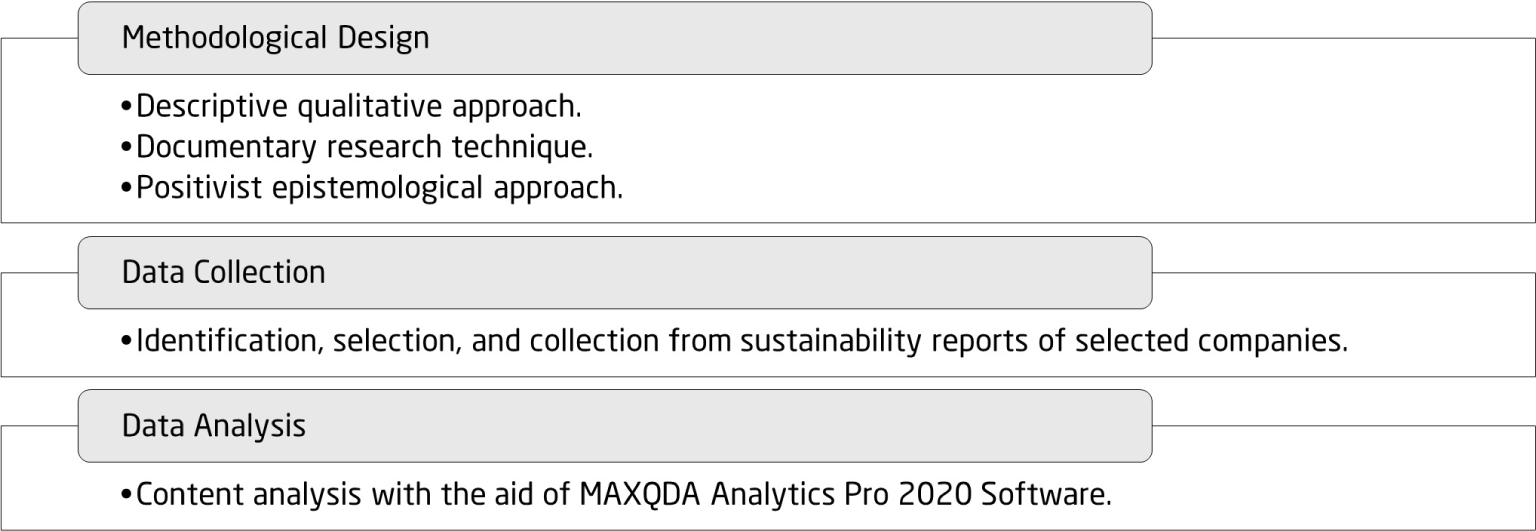




 Source: Adapted from