
 Public service: organizational, social, and personal factors that affect employee motivation
Purpose: This study analyzes the influence of prosocial behavior, organizational commitment, life satisfaction, and self-determination on public service motivation, and the moderating role of self-determination in these relationships.
Originality/value: This article contributes to the advancement of the literature by examining self-determination not only as a direct indicator of public service motivation but also as a moderator of the relationships among social, organizational, and individual motivational factors.
Design/methodology/approach: The study uses a quantitative, crosssectional approach, based on survey data collected from Brazilian civil servants. The hypotheses were tested using Partial Least Squares - Structural Equation Modeling.
Results: The results indicate that prosocial behavior, organizational commitment, and self-determination positively affect public service motivation. However, self-determination negatively moderates the relationship between prosocial behavior and public service motivation, whereas life satisfaction was not statistically significant.
Contribution/implications: The study contributes theoretically by increasing the understanding of the interaction between autonomy and public service motivation and provides practical implications for public managers seeking to balance autonomy, collective engagement, and organizational commitment.
Keywords:
public service motivation; prosocial behavior; organizational commitment; life satisfaction; self-determination
 Thumbnail
 Thumbnail
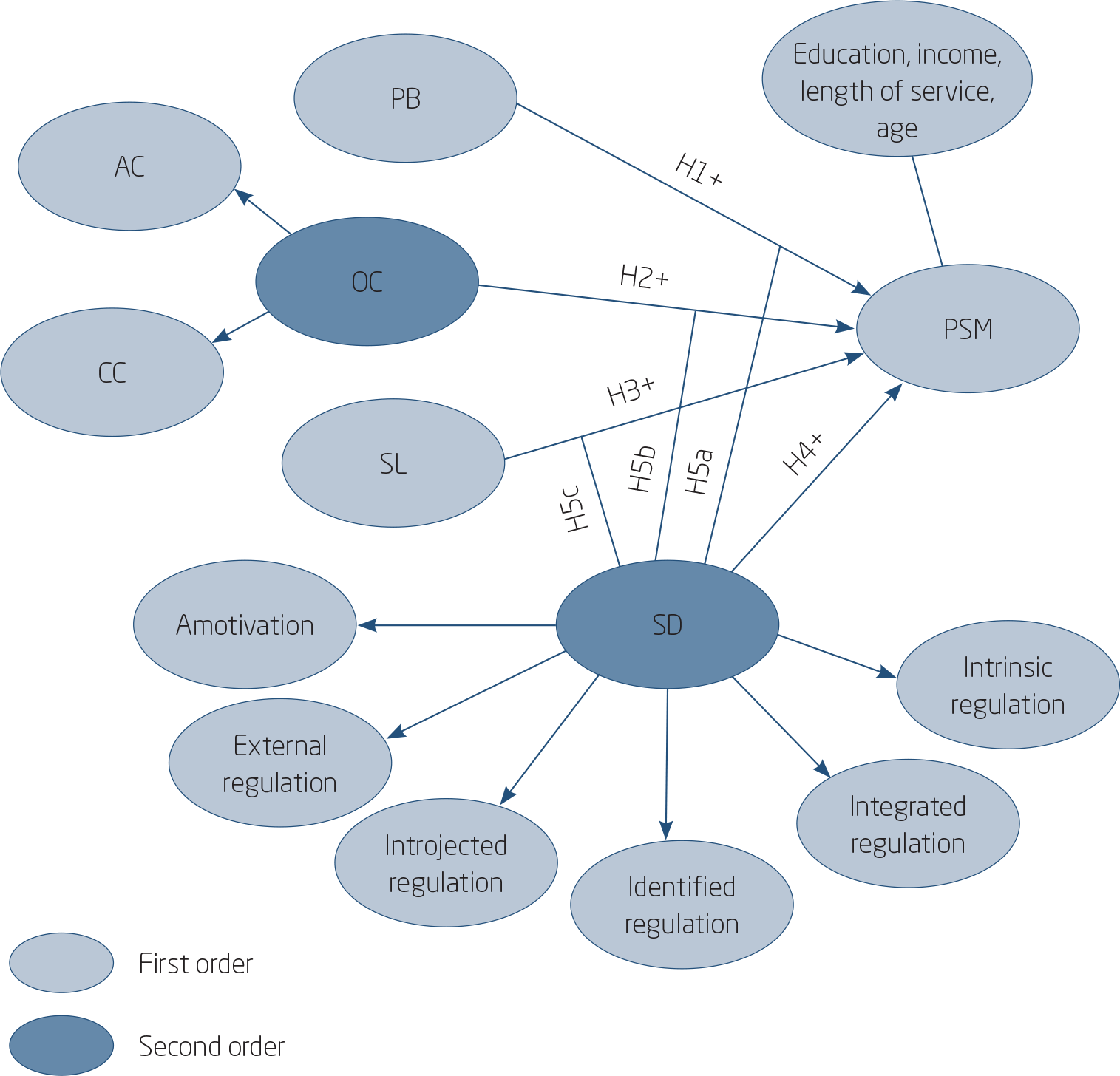 Note. PSM - Public Service Motivation, PB - Prosocial Behavior, OC - Organizational Commitment, AC - Affective Commitment, CC - Calculative Commitment, SL - Satisfaction with Life, SD - Self-determination
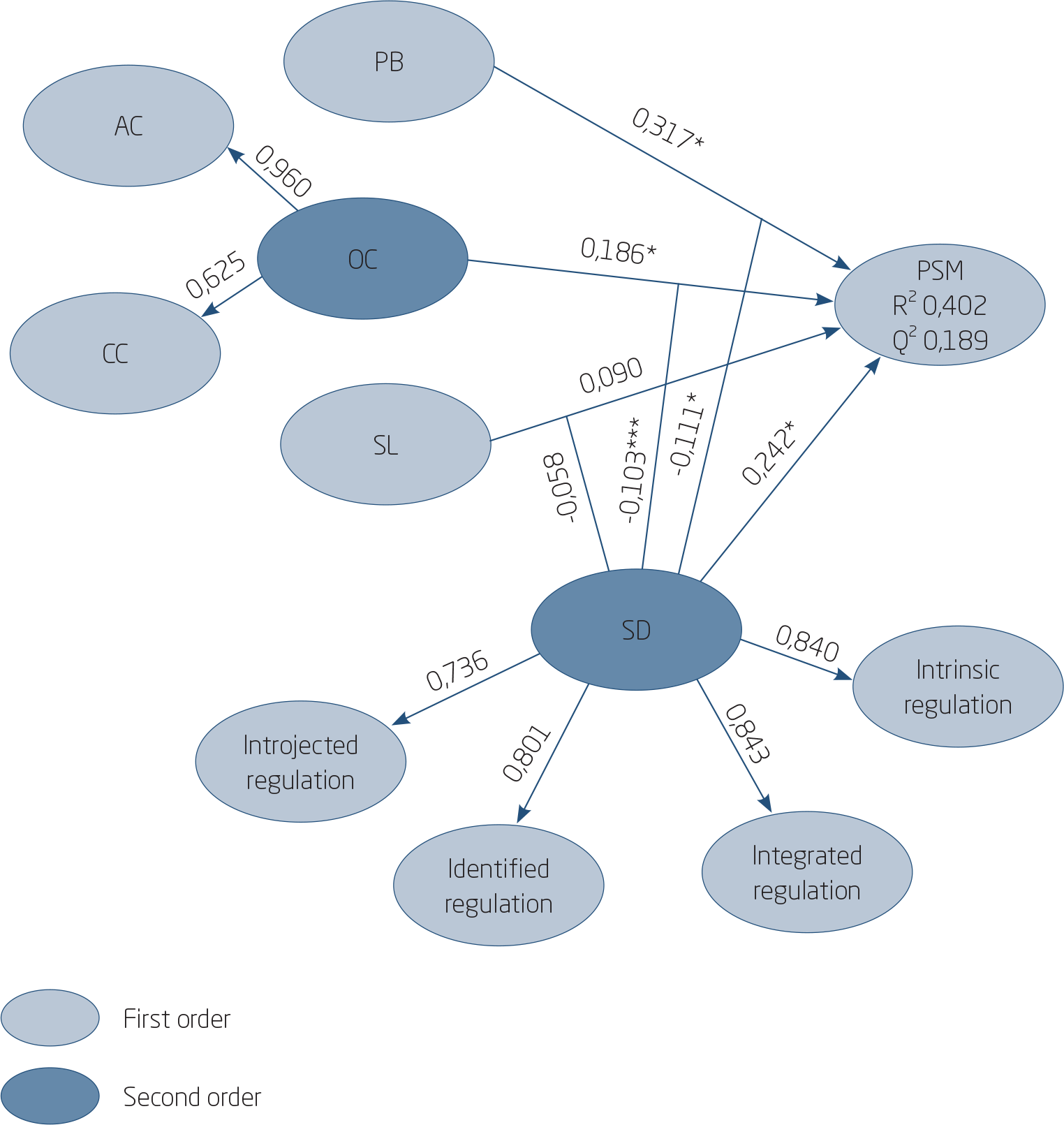 Note. PSM - Public Service Motivation, PB - Prosocial Behavior, OC -Organizational Commitment, AC - Affective Commitment, CC - Calculative Commitment, SL - Satisfaction with Life, SD - Self-determination. Significance Level: * ≤ 0.001%, ** ≤ 0.01%, *** ≤0.05%.