 Dynamic Managerial Capabilities and cluster governance: The case of Porto Digital
ABSTRACT
Purpose: This article aims to understand how Dynamic Managerial Capability mobilization affects Porto Digital’s governance and the relationship between companies, the government, and universities.
Originality/value: This research has a singular attribute: it has a characteristic potential in advanced strategic perspectives, Dynamic Managerial Capabilities, and cluster governance. It contributes to understanding the role of governance in clusters in promoting social, economic, and educational development and stimulating public policies through partnerships with the State and universities.
Design/methodology/approach: The study is exploratory and qualitative and is characterized as a unique case. Data were obtained through interviews and document analysis, and content analysis techniques were adopted.
Findings: Mobilizing Dynamic Managerial Capabilities enhances the governance of the internal and external relationships cluster. The governance structure is aligned with the Triple Helix model. Porto Digital Core Management dynamically combines and integrates internal and external resources to adapt to market needs and foster Porto Digital’s innovation and growth strategies.
Research, practical, and social implications: Understanding the role of governance in clusters facilitates the advancement of social, economic, and educational domains. Its interconnectedness with the Triple Helix model fosters the promotion of public policies through collaborative partnerships involving the government and universities.
KEYWORDS:
Dynamic Managerial Capabilities; cluster governance; technological cluster; triple helix; Porto Digital
RESUMO
Objetivo: Este artigo tem como objetivo compreender como a mobilização das Capacidades Gerenciais Dinâmicas atua na governança do Porto Digital e na relação entre empresas, governo e universidades.
Originalidade/valor: Esta pesquisa possui um atributo singular, uma vez que possui um potencial característico no avanço de estudos voltados às perspectivas estratégicas avançadas, nas Capacidades Gerenciais Dinâmicas e na governança em clusters, pois contribui para a compreensão do papel da governança em clusters na promoção do desenvolvimento social, econômico e educacional, assim como no estímulo a políticas públicas por meio do estabelecimento de parcerias com o Estado e as universidades.
Design/metodologia/abordagem: O estudo é exploratório, qualitativo e caracterizado como um estudo de caso único. Os dados foram obtidos por meio de entrevistas e de análise de documentos. Foram adotadas técnicas de análise de conteúdo.
Resultados: Foi observado que a mobilização das Capacidades Gerenciais Dinâmicas aprimora a governança do cluster nas relações internas e externas. A estrutura de governança está alinhada com o modelo da Tríplice Hélice. O Núcleo de Gestão do Porto Digital atua dinamicamente na combinação e na integração de recursos internos e externos para se adaptar às necessidades de mercado e promover estratégias de inovação e crescimento no Porto Digital.
Implicações de pesquisa, práticas e sociais: Compreender o papel da governança em clusters facilita o avanço dos domínios sociais, econômicos e educacionais, bem como a sua interconexão com o modelo da Tríplice Hélice, suscitando a promoção de políticas públicas por meio do estabelecimento de parcerias colaborativas envolvendo o governo e as universidades.
PALAVRAS-CHAVE:
Capacidades Gerenciais Dinâmicas; governança em cluster; cluster tecnológico; tríplice hélice; Porto Digital
INTRODUCTION
Cluster governance is a mode of coordinating interdependent activities and, more specifically, a self-organizing system that includes interpersonal networks and coordinated negotiation between organizations and government (Jessop, 1998), with the purpose of mediating relationships between companies and assisting in the integration of interorganizational cooperation activities (Lis & Rozkwitalska, 2020; Bocquet & Mothe, 2010), which can also foster learning (Wei et al., 2016).
Organizational decisions in governance are based on assumptions, values, and precedents (Nijhof et al., 2019) related to professional expertise and the educational background of managers (Augusto Felício et al., 2014; Åberg & Torchia, 2020), reflecting the maintenance of relational networks and their influences (Adler & Kwon, 2002; Corrêa Bueno et al., 2019), which allows a better alignment, reconfiguration, or generation of internal and external resources dynamically (Adner & Helfat, 2003; Helfat & Martin, 2015) through the mobilization of Dynamic Managerial Capabilities (DMC). In this study, DMC is understood as the manager’s dynamic alignment, reconfiguration, mobilization, or generation of internal and external resources (Adner & Helfat, 2003; Helfat & Martin, 2015).
The construct of DMC can drive the revitalization of dynamic capability through governance, influencing management and the company’s strategic decisions (Helfat & Martin, 2015; Åberg & Shen, 2020). These elements, associated with cooperation, contribute to making companies competitive in the market by combining the efforts of various firms (Cassanego Júnior et al., 2019), as can be observed in cluster environments, benefiting from proximity and the sharing of resources, technologies, and information (Chen et al., 2014).
Considering the importance of governance in clusters and DMC, it is necessary to deepen the knowledge related to these constructs, particularly in the Brazilian context, given the diverse formations in various sectors of the economy. Throughout the literature review and readings, a theoretical gap has been identified regarding the role of governance in this type of cluster environment (Mostafiz et al., 2019) and in understanding the links between governance and DMC (Åberg & Torchia, 2020), thus presenting a theoretical gap to be explored, additionally, in the conclusions obtained through the research developed by Gerke et al. (2023) about the actors participating in the governance process, deeper explanations of the limitations are needed, and it is suggested to carry out qualitative research that allows a deeper and more explanatory understanding of the governance context in clusters.
In Brazil, there are several clusters, and one of them, linked to the technology field, is Porto Digital (PD), located in the city of Recife (PE), which, in 2023, had over 350 companies in the technology and creative economy sectors. Its governance is carried out by the Porto Digital Core Management (PDCM).
PD holds significance in the Brazilian technology landscape, evidenced by the number of companies established there and its 20-year history. Reflecting on its management dynamics motivated a study to understand how DMC mobilization acts in the governance of the PD in the relationship between companies, government, and universities.
This study’s main contribution is understanding the role of governance in clusters in fostering social, economic, and educational development and promoting public policies through partnerships with the government and universities. Furthermore, the article contributes to filling an existing theoretical gap regarding the discussion between the constructs of DMC, governance, and technological clusters, as there is a scarcity of empirical studies that integrate these themes in these environments.
This paper is structured in six sections. Following this introduction, the literature review discusses the governance constructs in clusters and the relationship between cluster governance, the triple helix, and Dynamic Managerial Capabilities. The third section outlines the methodological procedures adopted in the research. The fourth and fifth sections present the results and discuss the findings. Finally, the conclusions obtained through the research are presented.
LITERATURE REVIEW
A cluster is the concentration of companies in a geographical area that operate in a specific sector. It promotes learning between organizations and cooperation (Mueller & Jungwirth, 2016), which has implications for levels of social interaction, the exchange of commercial information, and even support for innovative processes. These companies are interconnected and operate in a similar market (Porter, 2000).
Sharing knowledge and social capital improves innovation processes, and the higher the external competition and intensity of innovations faced by the company, the more these elements will be shared, given the integration and alliances within the cluster (Chen et al., 2014). This contributes to fostering interorganizational interactions that generate opportunities for knowledge acquisition in cluster environments (Lis & Rozkwitalska, 2020).
These aspects make the cluster environment promising for the organizational development of startups and established companies, as they contribute to professional maturity, organizational learning, and other strategic aspects (Belso-Martínez et al., 2016; Liu et al., 2022). An organizational management structure, such as governance, can enhance these elements.
From a cluster perspective, governance mechanisms go beyond formal aspects and encompass informal factors that seek to protect trust and reputation (Jones et al., 1997). Adopting a governance perspective stems from values and agreements arising from social relationships, which can minimize formal transaction costs (Zaheer & Venkatraman, 1995; Poppo & Zenger, 2002; Brand et al., 2014). These relationships can be enhanced in environments of intense social interaction.
Governance in clusters
Governance involves mechanisms of control and risk management (Carmona et al., 2016). It represents a positive strategy not only for individual companies but also for a collective group of companies, such as cluster formations, which can foster innovative learning (Wei et al., 2016) and the development of corporate social responsibility in small and medium-sized enterprises (Puppim de Oliveira & Jabbour, 2017). Internal coordination ensures cooperation, conduct, and increased collective efficiency and effectiveness (Bocquet & Mothe, 2010; Cassanego Júnior et al., 2019) to acquire and maintain competitive advantages.
In relational governance, the utilization of information and technical knowledge available in the environment depends on strategic interactions between actors (companies, managers, and governance) (Liu et al., 2022) that foster the development of knowledge absorption capabilities because, in clusters, sharing among local actors through informal conversations is constant (Belso-Martínez et al., 2016).
According to Mueller and Jungwirth (2016), governance is influenced by context, structure, and process. The context encompasses security in political and financial terms and trust and relationships among companies. The structure involves formalizing and structuring the management team, while processes encompass the management and alignment of strategic, operational, temporal, priority-setting, and conflict-resolution work.
In the theory of governance in networks, which has characteristics that are similar to clusters, governance encompasses the use of institutions and structures of authority and collaboration to allocate resources, coordinate, and control joint actions within the network as a whole (Provan & Kenis, 2008; Gerke et al., 2023).
Governance in networks can take three forms. The simplest form is where members/participants compose a single governance committee. Another occurs through organized leadership, with representative members coordinating decisions. Lastly, there are administrative organizations, which, in simplified terms, refer to a specially formed governing entity for the network of companies (Provan & Kenis, 2008; Gerke et al., 2023).
This last form is similar to the model adopted by various technology parks across Brazil, which have adopted a legal configuration as Social Organizations (SO) (Teixeira et al., 2018). Bresser Pereira (1998) and Pessôa et al. (2012) highlight that SO results from contextual factors that lead to a managerial reform of public services aimed at making them more efficient, effective, and of higher quality, legally adopting a governance system.
An intermediary between shareholders (financiers) and those responsible for managing the company (directors and managers) is necessary for effective governance, known as the Board of Directors. This board aims to ensure the safety and legal protection of invested capital by monitoring contracts and aligning the parties’ interests (Ihlenffeldt & Colauto, 2020). The chairmanship of the board, the independence, and expertise of its members (Al-Janadi et al., 2012; Al-Maghzom et al., 2016), the number of meetings (Ettredge et al., 2011), among other factors, can strongly influence the exchange of information between management and shareholders (Carmona et al., 2016).
Four aspects determine the quality of the Board of Directors: structure, composition, characteristics, and formal processes. The structure reflects how the board is organized and how committees are formed. Composition involves the size, types of directors, and representation—characteristics related to experience, academic background, and job independence. Formal processes are associated with procedures and monitoring the relationships between management and shareholders (Ihlenffeldt & Colauto, 2020).
The Board of Directors protects stakeholders; in the case of non-profit organizations, the government is one of those stakeholders. Universities can also be considered stakeholders in the survival of SO and technology parks, as they are essential allies in the context of education and professional development for the job market. The proper alignment between the knowledge imparted to students in these institutions and its utility in the job market promotes the formation of highly qualified professionals, making them attractive to companies and encouraging the interest of universities and other higher education institutions (Coletti, 2019).
There is a convergence of theories in the governance context, as internal collaboration between companies (Bocquet & Mothe, 2010; Cassanego Júnior et al., 2019) and their relationship with universities (Coletti, 2019), government, and the market promote gains in efficiency and effectiveness.
Governance in clusters and the triple helix
The relationship between the government and the university expands the level of cooperation predicted by Bocquet and Mothe (2010) and Cassanego Júnior et al. (2019), as the boundaries of the cluster are strategically permeated, using external resources to gain knowledge and information from academia and government entities. It is understood that knowledge is not confined to the company. However, there are agents and potential drivers of the innovation and business renewal process, such as customers, suppliers, universities, and research groups (Severo et al., 2020).
The Triple Helix model represents an approach focused on this perspective. It aims to foster innovation through a relationship between government, university, and industry. The model articulates the interaction and intersection of knowledge from these spheres, conceiving that this relationship enhances innovation (Abd Razak et al., 2016).
The proposal of the Triple Helix model was introduced by Etzkowitz and Leydesdorff (1995) and posits that such interaction enables the exchange of knowledge, is responsible for the growth and development of these agents (Etzkowitz & Zhou, 2017), and generates innovation (Etzkowitz & Leydesdorff, 1995; Luengo-Valderrey et al., 2020). Thus, public policies and fiscal incentives stimulate innovation and entrepreneurship (Severo et al., 2020), as they can also promote the alignment of courses and curricula to provide professional education that meets market needs (Coletti, 2019).
Dynamic Managerial Capabilities and cluster governance
Analyzing the theories, it is possible to perceive the links between attributes of the DMC construct (Adner & Helfat, 2003; Helfat & Martin, 2015) and governance (Wei et al., 2016). Fostering cooperation and interaction among companies (Bocquet & Mothe, 2010; Cassanego Júnior et al., 2019) stimulates social relationships, expanding Managerial Social Capital, which is a significant antecedent to managerial cognition, according to Heubeck & Meckl (2022). When the Board of Directors structure requires its members to have experience and expertise (Ihlenffeldt & Colauto, 2020), there is a precise alignment with Cognitive and Human Capital.
It is possible to identify constitutive elements of DMC’s attributes in governance theories, such as formal education of board members, professional experience, relationships, and social interactions. Despite this theoretical convergence and the probable function of governance as a strategic element for the cluster, it continues to be a means of control and direction for the company or cluster of companies. Cooperative arrangements of companies in the same industry mutually benefit because they develop learning mechanisms within the group context (Anand et al., 2020).
METHODOLOGY
The present research employed a qualitative and exploratory approach, focusing on a single case (Sampieri et al., 2006). Its purpose was to understand how the mobilization of DMC operates in the governance of PD and the relationship between companies, government, and universities. The case chosen for this study is PD, which utilizes governance mechanisms within a network of companies and is part of a technological cluster.
PD is a cluster of technology companies considered role models in Brazil’s national scenario. It was founded in 2001 and has experienced significant growth since then. The PD is an environment that involves more than 10,000 professionals working in over 350 companies within its structure, and the governance is conducted through the PDCM, which consists of 19 council members, three directors, three superintendents, and nine managers, all of whom were invited to participate in the research.
Based on accessibility criteria, the study included 11 professionals involved in PD governance: 5 council members, two directors, two managers, and two supervisors. The group comprises seven men and four women with backgrounds in Marketing, Administration, Engineering, Architecture, and Social Work. On average, these managers have been working in the PD for 8 years.
The selection of PD as the case for this research allows for an in-depth exploration of the dynamics between DMC and governance in the context of the Triple Helix relationship. The chosen professionals provide valuable insights into the governance processes and practices within the PD, shedding light on the role of DMC in shaping these relationships.
Data collection
The data collection happened via individual interviews (Bauer & Gaskell, 2002), using a semi-structured script with topics associated with categories described in Table 1 and based on the literature used in the theoretical background of this research. Interview questions were formulated based on these topics during the interview process.
The semi-structured interview script was formulated based on the previously established dimensions. However, during the data collection process, the Triple Helix category (Luengo-Valderrey et al., 2020; Etzkowitz & Zhou, 2017; Etzkowitz & Leydesdorff, 1995) emerged as a surprise in the initial interviews and became recurrent in the conversation with the interviewees. Due to the flexibility of the data collection instrument, this theme was further explored during subsequent interviews with the research subjects.
Data collection took place in May 2020 via videoconferencing. Following a pre-established protocol, the interviews lasted 7 hours and 16 minutes and were conducted using Zoom and Skype software. The protocol included initial greetings, seeking permission for recording, addressing the interview script and/or additional questions, expressing gratitude, and bidding farewell.
The interviews were conducted until information saturation was reached, at which point repetitive information from the interviewees became evident. After data collection, the interviews were transcribed and sent to the participants to gather feedback or additional information.
In addition to the interviews, the 2001–2002 Biennial Plan, the Tenth Reform of the PD’s Social Statute, and the PD’s Social Statute were analyzed. These documents provided additional information and allowed for cross-referencing with the information identified in the interviews.
The collected documents allowed for a better understanding of the PD’s conception and the developments implemented through reforms in its statute. This provided a broader understanding of the governance structure adopted by the PDCM and allowed for aligning this information with the statements provided by the interviewees.
Data analysis and methodological rigor
Data analysis was conducted using content analysis, following the procedures and methods proposed by Bauer and Gaskell (2002). The material was read and reread to identify excerpts related to DMC and cluster governance. Subsequently, the excerpts were grouped to facilitate the inference process, aiming to identify and analyze the main findings of the research in light of the theory.
The need for greater depth in the theoretical framework was recognized at the beginning of the analysis, leading to a literature review. The analysis process facilitated the identification of meanings that helped explain DMC’s mobilization in governing the PD.
Validity and reliability criteria, such as data saturation, multiple sources of data collection (interviews and documents), constant contact with interviewees including feedback, establishment of units of analysis, and case selection based on the potential for knowledge about the studied phenomenon, were adopted, referring to Paiva Junior et al. (2011) and Larrinaga (2017).
RESULTS
The PD was founded on December 19, 2000, and qualified as a nonprofit SO by State Decree No. 23,212 of April 20, 2001 (Pernambuco, 2001). It is classified as an institution in the field of Science and Technology, specifically in the Information Technology industry, aimed at promoting nonexclusive public activities. The Biennial Plan 2001–2002 states its mission as follows:
The structuring and sustainable management of a business environment capable of creating and consolidating world-class information and communication technology enterprises through interaction and cooperation between universities, non-governmental and governmental organizations, and companies in the state of Pernambuco (Porto Digital, 2001).
The PD results from a public policy aimed at fostering the technological development of the state of Pernambuco (PE) in Brazil and strengthening entrepreneurship in the industry. It operates through a public-private partnership, as Pessôa et al. (2012) addressed about developing technology parks and partnerships.
The implementation of the SO arises to provide sustainability to a project, enabling the management of the technological cluster, in this case, the PD, as well as establishing a relationship between different stakeholders (political, social, and business) and ensuring the efficient and effective utilization of resources (Bresser Pereira, 1998; Pessôa et al., 2012). As emphasized by one of the advisors, “the condition of being an SO and being very inclusive in its council of diverse segments or stakeholders [...] allows, through diversity, to establish a much more mature relationship with various segments, be they political, administrative, social, or business” (Advisor 3).
To promote innovation and technological development in the state of Pernambuco, the conceptualization of the PD required managerial stability and capital. With the support of Federal Law No. 9,637/98 and State Law (PE) No. 11,743/00, the creation of an SO made these aspects possible, as stated by the Director:
[...] it is necessary to legally establish a private organization that will have such characteristics to make this project happen, with the level of innovation it requires, with the speed it requires, with the level of adaptability of a project with such audacity, this decision of a private organization would have to be qualified as an SO (Director 2).
The decision by the founders to create an SO represents a trend identified by Teixeira et al. (2018), in addition to having legal support. The studies by Bresser Pereira (1998) and Pessôa et al. (2012) reinforce that creating this type of company allows the state to provide greater efficiency and quality public services.
The PD’s target audience is technology companies in Recife that need an organization to support their activities. In addition to attracting new companies and driving significant investments in skilled workforce development, the PD’s creation contributed to the emergence of the Center for Informatics and the establishment of undergraduate, master’s, and doctoral programs in Computer Science at the Federal University of Pernambuco.
The sustainability and maintenance of the PD are ensured through the Corporate Governance practices of the Social Organization, which is subject to legal requirements. These include the obligation to publish annual reports (financial and managerial) and the need to form a Board of Directors composed of members from the government, civil society, or elected associates who possess notable professional capacity and moral integrity, as well as appointed members. This plurality provides access to diverse experiences as independent members contribute to governance structuring, as Al-Janadi et al. (2012) and Al-Maghzom et al. (2016) state.
The Tenth Amendment to the PD’s Bylaws (Porto Digital, 2018) establishes the General Assembly, the Board of Directors, and the Directorate as governing bodies of the organization. The General Assembly consists of all members with secured social rights, who are convened and installed according to statutory provisions. The Board of Directors is composed of the President, chosen by the Board, and the Executive and Innovation and Competitiveness Directors, appointed by the President, who must be selected based on their proven professional skills in technology and management.
PD management is the responsibility of the PDCM, as highlighted by Provan and Kenis (2008) and Gerke et al. (2023). They emphasize that the governance format in networks involves an administrative organization responsible for managing the cluster, with the participation of the Board of Directors.
The PD’s Board of Directors is composed of four representatives from the government of the state of Pernambuco, two representatives from the City of Recife, one representative from Endeavor, one representative from the Center for Advanced Studies and Systems of Recife (CESAR), one entrepreneur from the Information Technology and Communication sector appointed by SOFTEX Recife, and one entrepreneur from the Information Technology and Communication sector appointed by Assespro-PE. According to Article 16 of the Tenth Amendment to the Bylaws:
The Board of Directors has the deliberative and oversight function regarding the establishment of objectives, goals, and fundamental guidelines for the operation of the PD, as well as the control and evaluation of the results of its activities in relation to these objectives and goals (Porto Digital, 2018).
The PD’s Board of Directors supports the decisions of the Directorates and oversees management’s actions. According to Ettredge et al. (2011), meetings are used for deliberations, which influence the cluster’s strategies. The Tenth Amendment to the Bylaws stipulates that meetings occur every four months or when called extraordinarily by the President of the Board or five members.
The profile of the Board of Directors members and the experience gained at this organizational level represent an accumulation of Managerial and Cognitive Human Capital, which, according to Augusto Felício et al. (2014) and Åberg and Torchia (2020), allows for the analysis of opportunities and strategic changes. Their role goes beyond the approval or rejection of demands. It stimulates the dissemination of new ideas or topics for discussion and implementation within the PD’s strategy, as revealed in interviews with the Board members:
[...] we have systematic meetings, but the PDCM initiates the meetings, sets the agenda, and we end up meeting, receiving the pre-meeting material, as any board needs, to make decisions in the interest of the NGPD and obviously serving the interests of the institutions that make up the board. Particularly, this governance brings much more external input, meaning that these council members representing these institutions set interesting items for these PD board meetings (Councilor 5).
[...] basically, there are three annual meetings. The agenda is formulated by the Porto’s executives, addressing the needs associated with the strategy, whether to drive things that are going well, redirect actions, or overcome problems. Sometimes there are problems that arise and impact the strategy, so the PD President has to report to the board, and the agenda is created. [...] The tradition of Porto is that the agenda is formulated by the executives, although nothing prevents a council member from bringing up a topic that they believe is not well covered in the strategy [...] (Councilor 2).
Regarding the board members’ knowledge, it is understood that individuals with notable knowledge and experience are considered to possess high Human Capital. This characteristic allows them to contribute knowledge and strategically guide PD decisions, as Augusto Felício et al. (2014) and Åberg and Torchia (2020) pointed out. Another element that contributes to the knowledge and strategic decision was identified in the analysis of the PD’s Bylaws, which confirms its alignment with the Triple Helix model, as was also identified in the discourse of some interviewees:
[...] there was a need for a PDCM that could take care of the interaction between these companies [...] with other IT companies in the market; [...] with the government; [...] with academia, which was called, conceptually at the time – and this concept has undergone some revisions – the concept of the Triple Helix. So, it would be the responsibility of the PDCM to ensure that these three axes communicated with each other [...] (Manager 1).
[...] PD is remarkable because it moves smoothly among government, university, and business. It communicates with these three axes of the Triple Helix very well, which is not trivial (Manager 2).
[...] there was more or less a balance proposed by Etzkowitz’s Triple Helix, where the university, government, and private companies have more or less the same weight, a distributed amount of seats on the board. However, no segment of this triple helix dominates the others (Councilor 2).
[...] the government decided to create something called PD and understood that it would be steered by a governance called PDCM. So, one does not exist without the other; the two are practically intertwined, connected. Therefore, the importance lies in the construction of strategies for what could eventually be dismantled if we talk about the concept of the Triple Helix [...] (Director 2).
The interviewees’ statements reveal that the Triple Helix model is a reality in the governance structure of PD, and this relationship among social agents positively influences the organization’s management. It is possible to identify that Social Capital, as mentioned by Manager 2, enhances communication between the axes, using governance mechanisms that enhance strategic management. This is due to the balanced participation of companies, government, and universities, as Councilor 2 and Director 2 stated.
The management of relationships between the public sector and companies brings them closer. It creates a relationship of service consumption, as exemplified by the development of VOXIA to meet the demands of the State Judiciary.
The mediation of PDCM in the relationship between the university and companies contributes to education and professional development. Thus, as Coletti (2019) points out, there is an alignment between market demands and knowledge obtained in the educational sphere. The excerpts from the interviews confirm this alignment.
[...] the people axis, which is the one I lead, aims to form and attract human capital for the PD, [...] within this axis, we divide it into three categories. [...] One is the training category, where we establish relationships with higher education institutions to create courses in the technology field linked to the market, courses that are designed based on market demands. (Manager 1)
Currently, we have almost two thousand specific positions, but we lack qualified individuals. We now sit down with universities because we know the market’s deficiencies and propose new courses. It’s a fantastic exchange. [...] I am very happy when we succeed, so much so that we recently partnered with the Federal University, UPE [University of Pernambuco], Catholic University, UNINTER [International University Center], among several other universities, FGV [Getulio Vargas Foundation], to develop curricula that truly meet the needs and requirements [...]. (Advisor 4)
These pieces of evidence indicate that PD values collaboration between universities and companies. PD aims to educate qualified professionals and adapt courses to market demands, strengthening the connection between the Triple Helix axes and contributing to developing its innovation ecosystem.
This relationship between PD management and universities minimizes a skilled labor shortage in the market. As Coletti (2019) pointed out, the relationship is oriented toward market needs, assisting in the shift from a scenario characterized by job vacancies without suitable candidates. This positive relationship between universities and PDCM management strategically benefits both parties (Etzkowitz & Zhou, 2017).
Belso-Martínez et al. (2016) and Liu et al. (2022) reinforce that the cluster represents an environment where companies come together, which encourages people to exchange information in any space, such as casual encounters (serendipity). Such encounters can result in knowledge sharing, transfer, and catalysis, as stated by the Advisors:
The existence of PD itself, with the concept around which it operates, is a great knowledge catalyst. Therefore, knowledge circulates and is consumed, and it is generated and returned, shared, and shared within the daily dynamics of the port, in incubators, accelerators, events, coworking spaces, elevators, sidewalks, cafes, restaurants. (Advisor 2)
[...] the most important thing is knowledge transfer in the interaction between companies in this innovative environment that is PD. It is serendipity, the casual encounter, the speed at which we come together physically and digitally, let’s say, for the same reasons mentioned before, because we have established this community or ecosystem that generates relationships of trust [...]. (Advisor 3)
These findings reveal that companies in the PD strategically benefit from being part of the cluster (Chen et al., 2014). Due to professional concentration and potential collaboration between companies in project development and innovation, there is easier access to skilled labor. This indicates that the PD is an environment where mutual learning occurs within a community that fosters relationships of trust.
The governance structure of the PD as an SO minimizes political interference and enables the attraction of financial resources through government policies. The relationship with the government brings clear benefits to the companies located in the PD, as observed in Compilation of Municipal Laws No. 17,244/2006, Article 1, available on the PD website (Recife, 2006), and in the excerpt from an interview with a Superintendent:
[...] information technology and communication companies located within the designated area of the technology park, managed by the PD management, receive a 60% exemption from ISS (Service Tax), meaning that service companies, such as those in the information technology sector [...], that would normally pay a 5% ISS tax based on their gross income, automatically pay 2% if they are registered and authorized to do so and are within the limits of the technology park. (Superintendent 2)
Severo et al. (2020) confirm the possibility of achieving tax benefits as a public policy to incentivize the development of this area. As a result, the PD provides a return to public coffers through a high volume of tax contributions. As Advisor 2 states, “The PD today is the fourth, almost the third-largest contributor of ISS [...]. It must address two things: employment and income. So, you measure a public policy’s effectiveness in generating jobs and wealth.”
Despite the reduction in the tax percentage, there is a clear financial return to public coffers, given that over 300 active and operational companies are “on board” in the PD. Jobs and income are also generated for individuals, who gain purchasing power and contribute to the state’s economy.
DISCUSSION
The formation of the PD has created a conducive environment for developing new companies and promoting cooperation with the market and the university, as predicted by authors such as Bocquet and Mothe (2010) and Cassanego Júnior et al. (2019). It has also facilitated the retention of Human Capital, innovation, economic gains, and the accumulation of knowledge resources (Nguyen, 2018).
A Core Management responsible for cluster management allows for the control of the environment in functional and operational terms, as well as the promotion of integration and communication among companies, developing relationships among actors, and executing relational governance, as Brand et al. (2014) suggested.
The functional aspects of the management structure, its departments, and professionals enable the cluster to carry out strategic planning that is aligned with the market and its demands and operational functioning that is oriented towards growth. This confirms the positions of Zaheer and Venkatraman (1995) and Poppo and Zenger (2002), which state that resources are necessary to generate trust and reputation.
The accumulation of managerial human capital and cognitive capital is not limited to the board members; it also encompasses the members of the PDCM. This enables a level of discussion based on strategies and projects aimed at increasing collective efficiency and effectiveness (Bocquet & Mothe, 2010; Cassanego et al., 2019). It also allows managers to take direct actions to reconfigure internal and external resources, an action aligned with the assumptions of DMC theory by Adner and Helfat (2003) and Helfat and Martin (2015).
At the board level, there is notable technical competence, experience related to the PD area of operations and recognized moral integrity. The technical competence of the PD’s board members is also related to experience and Cognitive Capital, which, according to Adner and Helfat (2003), Helfat and Peteraf (2015), and Nijhof et al. (2019), underpin decisions based on professional expertise and knowledge accumulated over years of work in public and/or private companies.
The formation of the board represents an expansion of the PDCM’s Social Capital. The presence of members from various spheres (public, academic, and business) expands the network of existing relationships maintained by the board, which, according to Adler and Kwon (2002) and Corrêa et al. (2019), enhances Social Capital. The board’s dynamic role and influence contribute to information gathering through individuals connected to various areas, assisting in evaluating market trends and public policies.
The governance structure of the PD’s Board of Directors allows board members to make decisions based on their experiences and competencies, influencing the planning and strategic management processes involved in developing the cluster’s Dynamic Capabilities (Del Mar Alonso-Almeida et al., 2017).
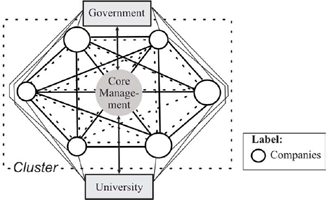
The PDCM is a mediator in developing integration and collaboration projects among companies, governments, and universities. It also mobilizes, reconfigures, and manages internal and external resources to meet market demands. Figure 1 illustrates the PDCM’s relationships with the agents that integrate the PD’s governance structure.
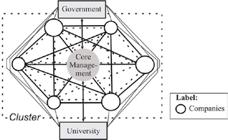
Figure 1 ratifies the role of PDCM as a central agent in the cluster, exercising governance of the environment, promoting formal and informal mechanisms of integration (solid and dashed lines, respectively) and sharing among companies, and mediating relationships between external agents to the cluster, such as the government and the university, aligning with the Triple Helix model, which predicts a win-win relationship. As highlighted by Coletti (2019) and Severo et al. (2020), the interaction between companies, universities, and the government generates mutual benefits, observed both in the document analysis and the interviews conducted in the research.
Government members, companies, and universities represents a governance structure aligned with the Triple Helix model of Etzkowitz and Leydesdorff (1995). These three agents enable the exchange of information, knowledge, and more assertive decision-making, as pointed out by Etzkowitz and Zhou (2017).
PDCM fosters professional development by positioning itself as an articulating agent between the actors of the Triple Helix (Etzkowitz & Leydesdorff, 1995). It promotes the development of Human Capital in the region, which the companies absorb. This dynamism modifies external resources (professionals) to use them internally (within the cluster).
The Triple Helix model relates to Cognitive Capital by connecting with the third helix, which represents companies. In this context, knowledge, information, experience, and mutual collaboration are exchanged. As Advisor 2 states, “These are cooperation links between business companies, meaning that these daily coalitions promote the flow of knowledge and opportunities for cooperation between businesses.”
By strategically adopting the Triple Helix model in the governance structure of PD, the SO generates direct and tacit benefits and develops and mobilizes the attributes of DMC (Human, Social, and Cognitive Managerial Capital). This confirms its contribution to professional development (Coletti, 2019), the creation and maintenance of a network of relationships (Corrêa et al., 2019), and communication, knowledge management, and expertise (Helfat & Peteraf, 2015) among the various agents that make up the cluster.
This research confirms Luengo-Valderrey et al.’s (2020) proposition that the relationship between government, university, and industry fosters innovation. They also suggest that aligning the cluster with the Triple Helix model proposed by Etzkowitz and Leydesdorff (1995) is positive for the cluster, especially in the technology sector, as innovation is closely related to this industry.
In the case of PD, the cluster environment favors companies operating in the national technology market, as the concentration of knowledge and other benefits is evident. Another differentiating factor in the cluster’s governance structure is the PDCM, which dynamically interacts with the market strategically to maintain the cluster’s innovation capacity and competitiveness. The constitutive elements of the DMC attributes are present in cluster management, enabling the agents’ personal, professional, and organizational development through the mobilization, reconfiguration, and management of internal and external resources.
CONCLUSIONS
This article aimed to understand how DMC mobilization operates in PD governance and the relationships between companies, governments, and universities. The results revealed that DMC mobilization enhances cluster governance and internal and external relationships and that its governance structure aligns with the Triple Helix model. The PDCM manages this process, dynamically combining and integrating internal and external resources to adapt to market needs and foster innovation and growth strategies for the PD.
One of the research’s main findings was aligning the cluster’s governance structure with the Triple Helix model. This demonstrates that cooperation within the PD occurs internally among companies and involves active participation from the government and universities. By mobilizing DMC and embracing the Triple Helix model, the PD can leverage the collective resources and capabilities, facilitating collaboration, knowledge exchange, and innovation. This strengthens the cluster’s competitive advantage and contributes to its development.
This relationship among the agents enhances a network of relationships between internal and external professionals in the cluster. Through relational governance, efforts are made to strengthen social aspects, thus expanding Social Capital. Similarly, interaction with educational institutions allows access to formally trained individuals whose education aligns with market needs, meaning they possess high levels of Human Capital. The sharing of experiences occurs through the knowledge and expertise of managers, fostering Cognitive Capital.
Regarding corporate governance practices and tools, forming the Board of Directors allows for recruiting professionals with technical expertise and competencies that add value to the cluster. The governance structure promotes a wealth of managerial, human, and cognitive capital, which is crucial in knowledge management and the strategic planning and direction of the PDCM. The potential and capacity for interaction and establishment of social relationships by the Board of Directors, with members from various economic and governmental sectors, confirm their contribution to the formation of Social Capital.
This article reveals how DMC operates in the governance of the PD, contributing to social, economic, and educational development. It highlights the importance of DMC and the Triple Helix model in cluster governance. It emphasizes the significance of cooperation between companies, governments, and universities in driving regional economic growth and innovation.
This discovery is significant considering the impact on theoretical, managerial, and social aspects. First, it fills a theoretical gap by identifying the role of DMC in governance and the dynamic relationship between companies, governments, and universities in cluster management. Second, the manager’s dynamic actuation is important, granting the bather the use of resources and relation with other actors (government and educational institutions), staying close to them, and maintaining permanent communication. Finally, the social aspect involves the growth of the clusters and the creation of jobs and economic development.
A limitation of the study was the difficulty of accessing the research environment, which prevented the daily observation of the professionals working in the PD due to the COVID-19 pandemic. Other limitations include that it is a single case study and only PD participants were interviewed, not government entities and universities, reducing the number of interviews.
Future studies could analyze the implementation of governance models in other clusters to compare management models and practices. Another relevant theme involves analyzing the impact of each actor (private, government, and universities) of the Triple Helix on the development of DMC in the cluster. Through shadowing techniques, the role of the board and governance in strategic planning and developing innovative capabilities in the PD could be further explored. Another research study could investigate how governance members learn with others if there is an exchange of experiences and how these experiences occur.
-
RAM does not have information about open data regarding this manuscript.
-
RAM does not have permission from the authors or evaluators to publish this article’s review.
REFERENCES
-
Abd Razak, A., Rowling, M., White, G., & Mason-Jones, R. (2016). Public sector supply chain management: A triple helix approach to aligning innovative environmental initiatives. Foresight and STI Governance, 10(1), 43–52. http://doi.org/10.17323/1995-459x.2016.1.43.52
» https://doi.org/10.17323/1995-459x.2016.1.43.52 -
Åberg, C., & Shen, W. (2020). Can board leadership contribute to board dynamic managerial capabilities? An empirical exploration among Norwegian firms. Journal of Management and Governance, 24(1), 169–197. http://doi.org/10.1007/s10997-019-09460-6
» https://doi.org/10.1007/s10997-019-09460-6 -
Åberg, C., & Torchia, M. (2020). Do boards of directors foster strategic change? A dynamic managerial capabilities perspective. Journal of Management and Governance, 24(3), 655–685. http://doi.org/10.1007/s10997-019-09462-4
» https://doi.org/10.1007/s10997-019-09462-4 - Adler, P. S., & Kwon, S. (2002). Social capital: Prospects for a new concept. Academy of Management Review, 27(1), 17–40.
-
Adner, R., & Helfat, C. E. (2003). Corporate effects and dynamic managerial capabilities. Strategic Management Journal, 24(10), 1011–1025. http://doi.org/10.1002/smj.331
» https://doi.org/10.1002/smj.331 -
Al-Janadi, Y., Rahman, R. A., & Omar, N. H. (2012). The level of voluntary disclosure practices among public listed companies in Saudi Arabia and the UAE: Using a modified voluntary disclosure index. International Journal of Disclosure and Governance, 9(2), 181–201. http://doi.org/10.1057/jdg.2011.19
» https://doi.org/10.1057/jdg.2011.19 -
Al-Maghzom, A., Hussainey, K., & Aly, D. A. (2016). Corporate governance and risk disclosure: Evidence from Saudi Arabia. Corporate Ownership and Control Journal, 13(2), 145–166. http://doi.org/10.22495/cocv13i2p14
» https://doi.org/10.22495/cocv13i2p14 -
Anand, A., Kringelum, L. B., Madsen, C. Ø., & Selivanovskikh, L. (2020). Interorganizational learning: A bibliometric review and research agenda. The learning organization, 28(2), 111–136. http://doi.org/10.1108/TLO-02-2020-0023
» https://doi.org/10.1108/TLO-02-2020-0023 -
Augusto Felício, J., Couto, E., & Caiado, J. (2014). Human capital, social capital and organizational performance. Management Decision, 52(2), 350–364. https://doi.org/10.1108/MD-04-2013-0260
» https://doi.org/10.1108/MD-04-2013-0260 - Bauer, M. W. (2002). Análise de conteúdo clássica: Uma revisão. In M. W. Bauer, & G. Gaskell (Eds.), Pesquisa qualitativa com texto, imagem e som: Um manual prático (Trans. P. A. Guareschi, pp. 189–217). Vozes.
- Bauer, M. W., & Aarts, B. A. (2002). Construção do corpus: Um princípio para coleta de dados qualitativos”. In M. W. Bauer, & G. Gaskell (Eds.), Pesquisa qualitativa com texto, imagem e som: Um manual prático (Trans. P. A. Guareschi, pp. 39–63). Vozes.
-
Belso-Martínez, J., Expósito-Langa, M., & Tomás-Miquel, J. (2016). Knowledge network dynamics in clusters: Past performance and absorptive capacity. Baltic Journal of Management, 11(3), 310–327. http://doi.org/10.1108/BJM-02-2015-0044
» https://doi.org/10.1108/BJM-02-2015-0044 -
Bocquet, R., & Mothe, C. (2010). Knowledge governance within clusters: The case of small firms. Knowledge Management Research & Practice, 8(3), 229–239. http://doi.org/10.1057/kmrp.2010.14
» https://doi.org/10.1057/kmrp.2010.14 - Brand, F. C., Rigoni, E. H., & Verschoore, J. R (2014). Governança interorganizacional: Um estudo do relacionamento entre agentes econômicos do setor de flores. Desenvolve Revista de Gestão do Unilasalle, 3(1), 99–111.
- Bresser Pereira, L. C. (1998). Reforma do Estado para a cidadania: A reforma gerencial brasileira na perspectiva internacional Editora 34.
-
Carmona, P., Fuentes, C. de, & Ruiz, C. (2016). Risk disclosure analysis in the corporate governance annual report using fuzzy-set qualitative comparative analysis. Revista de Administração de Empresas, 56(3), 342–352. http://doi.org/10.1590/S0034-759020160307
» https://doi.org/10.1590/S0034-759020160307 -
Cassanego Júnior, P. V., Boaventura, J. M. G., Azevedo, A. C., & Telles, R. (2019). Governance in business clusters: proposal for an application of an analytical model. Entrepreneurship & Regional Development, 31(9/10), 984–1010. http://doi.org/10.1080/08985626.2019.1652351
» https://doi.org/10.1080/08985626.2019.1652351 - Chen, M. H., Wang, H. Y., Chang, Y. Y., & Hung, A. (2014). Knowledge sharing, social capital and firm performance in technological clusters of Taiwan Science Parks: An innovation strategy perspective Proceedings of PICMET’14 Conference, Portland International Center for Management of Engineering and Technology; Infrastructure and Service Integration, IEEE (pp. 1040–1054).
-
Coletti, M. (2019). Why Triple Helix governance is useful to dual apprenticeship systems. Industry and Higher Education, 33(6), 381–390. http://doi.org/10.1177/0950422219876864
» https://doi.org/10.1177/0950422219876864 -
Corrêa, R. O., Bueno, E. V., Kato, H. T., & Silva, L. M. D. O. (2019). Dynamic managerial capabilities: Scale development and validation. Managerial and Decision Economics, 40(1), 3–15. http://doi.org/10.1002/mde.2974
» https://doi.org/10.1002/mde.2974 -
Del Mar Alonso-Almeida, M., Buil-Fabregà, M., Bagur-Femenías, L., & Aznar-Alarcón, J. P. (2017). Shedding light on sustainable development and stakeholder engagement: The role of individual dynamic capabilities. Sustainable Development, 25(6), 625–638. http://doi.org/10.1002/sd.1682
» https://doi.org/10.1002/sd.1682 -
Ettredge, M., Johnstone, K., Stone, M., & Wang, Q. (2011). The effects of firm size, corporate governance quality, and bad news on disclosure compliance. Review of Accounting Studies, 16(4), 866–889. http://doi.org/10.1007/s11142-011-9153-8
» https://doi.org/10.1007/s11142-011-9153-8 - Etzkowitz, H., & Leydesdorff, L. (1995). The triple helix-university-industry-government relations: A laboratory for knowledge-based economic development. European Association Study Science and Technology Review, 14(1), 14–19.
-
Etzkowitz, H., & Zhou, C. (2017). Hélice tríplice: Inovação e empreendedorismo universidade-indústria-governo. Estudos Avançados, 31(90), 23–48. http://doi.org/10.1590/s0103-40142017.3190003
» https://doi.org/10.1590/s0103-40142017.3190003 -
Gerke, A., Dickson, G., & Wäsche, H. (2023). Network structure and governance in sport clusters: A mixed methods analysis. European Sport Management Quarterly, 23(4), 1269–1289. https://doi.org/10.1080/16184742.2021.1976243
» https://doi.org/10.1080/16184742.2021.1976243 -
Helfat, C. E., & Martin, J. A. (2015). Dynamic managerial capabilities: Review and assessment of managerial impact on strategic change. Journal of Management, 41(5), 1281–1312. http://doi.org/10.1177/0149206314561301
» https://doi.org/10.1177/0149206314561301 -
Helfat, C. E., & Peteraf, M. A. (2015). Managerial cognitive capabilities and the microfoundations of dynamic capabilities. Strategic Management Journal, 36(6), 831–850. http://doi.org/10.1002/smj.2247
» https://doi.org/10.1002/smj.2247 -
Heubeck, T., Meckl, R. (2022). Antecedents to cognitive business model evaluation: A dynamic managerial capabilities perspective. Review of Managerial Science, 16, 2441–2466. https://doi.org/10.1007/s11846-021-00503-7
» https://doi.org/10.1007/s11846-021-00503-7 -
Ihlenffeldt, E. L., & Colauto, R. D (2020). Qualidade do conselho de administração em companhias brasileiras de capital aberto. Enfoque: Reflexão Contábil, 39(3), 37–53. http://doi.org/10.4025/enfoque.v39i3.44625
» https://doi.org/10.4025/enfoque.v39i3.44625 -
Jessop, B. (1998). The rise of governance and the risks of failure: The case of economic development. International Social Science Journal, 50(155), 29–45. http://doi.org/10.1111/1468-2451.00107
» https://doi.org/10.1111/1468-2451.00107 -
Jones, C., Hesterly, W. S., & Borgatti, S. P. (1997). A general theory of network governance: Exchange conditions and social mechanisms. Academy of Management Review, 22(4), 911–945. http://doi.org/10.5465/amr.1997.9711022109
» https://doi.org/10.5465/amr.1997.9711022109 - Larrinaga, O. V. (2017). Is it desirable, necessary, and possible to perform research using case studies? Cuadernos de Gestión, 17(1), 147–171.
-
Lis, A. M., & Rozkwitalska, M. (2020). Technological capability dynamics through cluster organizations. Baltic Journal of Management, 15(4), 587–606. http://doi.org/10.1108/BJM-02-2020-0046
» https://doi.org/10.1108/BJM-02-2020-0046 -
Liu, B., Shao, Y.-F., Liu, G., & Ni, D. (2022). An evolutionary analysis of relational governance in an innovation ecosystem. SAGE Open, 12(2), 1–29. https://doi.org/10.1177/21582440221093044
» https://doi.org/10.1177/21582440221093044 -
Luengo-Valderrey, M. J., Pando-Garcia, J., Perianez-Canadillas, I., & Cervera-Taulet, A. (2020). Analysis of the impact of the triple helix on sustainable innovation targets in Spanish technology companies. Sustainability, 12(8), 3274–3294. http://doi.org/10.3390/su12083274
» https://doi.org/10.3390/su12083274 -
Mostafiz, M. I., Sambasivan, M., & Goh, S. K. (2019). Impacts of dynamic managerial capability and international opportunity identification on firm performance. Multinational Business Review, 27(4), 339–363. http://doi.org/10.1108/MBR-09-2018-0061
» https://doi.org/10.1108/MBR-09-2018-0061 -
Mueller, E. F., & Jungwirth, C. (2016). What drives the effectiveness of industrial clusters? Exploring the impact of contextual, structural, and functioning determinants. Entrepreneurship & Regional Development, 28(5/6), 424–447. http://doi.org/10.1080/08985626.2016.1186748
» https://doi.org/10.1080/08985626.2016.1186748 -
Nguyen, D. Q. (2018). The impact of intellectual capital and knowledge flows on incremental and radical innovation. Asia-Pacific Journal of Business Administration, 10(2/3), 149–170. http://doi.org/10.1108/APJBA-03-2018-0044
» https://doi.org/10.1108/APJBA-03-2018-0044 -
Nijhof, A., Schaveling, J., & Zalesky, N. (2019). Business, society, and the need for stewardship orientation. Journal of Organizational Change Management, 32(1), 145–163. http://doi.org/10.1108/JOCM-09-2017-0348
» https://doi.org/10.1108/JOCM-09-2017-0348 -
Paiva Júnior, F. G., Leão, A. L. M. S., & Mello, S. C. B. (2011). Validade e confiabilidade na pesquisa qualitativa em Administração. Revista de Ciências da Administração, 13(31), 190–209. http://doi.org/10.5007/2175-8077.2011v13n31p190
» https://doi.org/10.5007/2175-8077.2011v13n31p190 -
Pernambuco. Decreto Estadual no. 23.212 de 20 de abril de 2001 https://portodigital.org/arqSite/Decreto_23.212__Decreto_de_Qualificacao_NGPD_OS_2001.pdf
» https://portodigital.org/arqSite/Decreto_23.212__Decreto_de_Qualificacao_NGPD_OS_2001.pdf -
Pessôa, L. C., Cirani, C. B. S., Silva, M. M., & de Souza Rangel, A. (2012). Parques tecnológicos brasileiros: Uma análise comparativa de modelos de gestão. Revista de Administração e Inovação, 9(2), 253–273. https://doi.org/10.5773/rai.v9i2.940
» https://doi.org/10.5773/rai.v9i2.940 -
Poppo, L., & Zenger, T. (2002). Do formal contracts and relational governance function as substitutes or complements? Strategic Management Journal, 23(8), 707–725. http://doi.org/10.1002/smj.249
» https://doi.org/10.1002/smj.249 -
Porter, M. E. (2000). Location, competition, and economic development: Local clusters in a global economy. Economic Development Quarterly, 14(1), 15–34. http://doi.org/10.1177/089124240001400105
» https://doi.org/10.1177/089124240001400105 -
Porto Digital. (2018, May). Décima reforma do estatuto social https://portodigital.org/arqSite/Decima_Reforma_do_Estatuto_Social.pdf
» https://portodigital.org/arqSite/Decima_Reforma_do_Estatuto_Social.pdf -
Porto Digital. Plano Bianual 2001-2002 https://portodigital.org/arqSite/Plano_bianual_20012002__aditivo20061006.pdf
» https://portodigital.org/arqSite/Plano_bianual_20012002__aditivo20061006.pdf -
Provan, K. G., & Kenis, P. (2008). Modes of network governance: Structure, management, and effectiveness. Journal of Public Administration Research & Theory, 18(2), 229–252. http://doi.org/10.1093/jopart/mum015
» https://doi.org/10.1093/jopart/mum015 -
Puppim de Oliveira, J. A., & Jabbour, C. J. C. (2017). Environmental management, climate change, CSR, and governance in clusters of small firms in developing countries: Toward an integrated analytical framework. Business & Society, 56(1), 130–151. https://doi.org/10.1177/0007650315575470
» https://doi.org/10.1177/0007650315575470 -
Recife. Lei no. 17.244/2006. https://portodigital.org/arqSite/Lei_Ordinaria_17244_2006_de_Re_cife_PE__Versao_Compilada.pdf
» https://portodigital.org/arqSite/Lei_Ordinaria_17244_2006_de_Re_cife_PE__Versao_Compilada.pdf - Sampieri, R. H., Collado, C. F., & Lucio, P. B. (2006). Metodologia de pesquisa (3rd ed.). McGraw-Hill.
-
Severo, E. A., Sampaio, R. R. F., Linhares, J. D. S. O., & Dorion, E. C. H. (2020). A relação entre Tríplice Hélice e ecoinovação. Gestão & Planejamento, 21, 332–352. http://doi.org/10.21714/2178-8030gep.v.21.5906
» https://doi.org/10.21714/2178-8030gep.v.21.5906 -
Teixeira, C. S., Santos, G. S. P., & Moré, R. P. O. (2018). Legal model of Brazilian science and technology parks. International Journal of Innovation, 6(1), 54–67. http://doi.org/10.5585/iji.v6i1.64
» https://doi.org/10.5585/iji.v6i1.64 -
Wei, J., Zhou, M., Greeven, M., & Qu, H. (2016). Economic governance, dual networks and innovative learning in five Chinese industrial clusters. Asia Pacific Journal of Management, 33(4), 1037–1074. http://doi.org/10.1007/s10490-016-9470-3
» https://doi.org/10.1007/s10490-016-9470-3 -
Zaheer, A., & Venkatraman, N. (1995). Relational governance as an interorganizational strategy: An empirical test of the role of trust in economic exchange. Strategic Management Journal, 16(5), 373–392. http://doi.org/10.1002/smj.4250160504
» https://doi.org/10.1002/smj.4250160504
RAM does not have information about open data regarding this manuscript.