
 The (lack of) ethics at generative AI in Business Management education and research
Abstract
Purpose: This study aims to discuss the impacts of using generative artificial intelligence (GenAI) in education and research in the business and management field, using a virtue ethics lens to reflect on technology’s effects on people.
Originality/value: Our analysis considers the potential risks and opportunities of using GenAI, particularly ChatGPT. We categorized the effects of generative AI on education and research into groups by mapping agent-centered or action-centered articles and sorting them by the ethical perspective they come from (deontology, utilitarianism, or virtue ethics), keeping in mind that AI ethics addresses mainly utilitarian rules and principles. Our analysis emphasizes the human element to avoid oversimplifying the effects on people’s formation.
Design/methodology/approach: We conducted a semi-systematic review of recent literature on GenAI in management education and research. We used the PRISMA method to collect and select articles from three academic databases: Scopus, Science Direct, and Web of Science, in addition to Google Scholar. From 45 articles, we mapped three main issues: analysis level, ethical perspective, and GenAI impacts.
Findings: We point out that using GenIA for student learning and researcher training in virtues or character is incipient, while ethical issues are mentioned implicitly or superficially. GenAI can enhance or reduce human development and research, depending on its appropriate use in learning and research processes. A solid grounding in virtue ethics is essential to deeply understanding the impact of human-AI relationships.
Keywords:
ChatGPT; generative AI; education and research; virtue ethics; human-centered AI
Resumo
Objetivo: Discutir os impactos do uso da inteligência artificial generativa (GenAI) no ensino e pesquisa em Administração com a lente de investigação da ética das virtudes para a reflexão dos impactos da tecnologia sobre as pessoas.
Originalidade/valor: Consideramos os riscos e as possibilidades concernentes ao emprego da GenAI, especialmente o ChatGPT. Categorizamos os impactos da GenAI no ensino e pesquisa, mapeando artigos centrados no agente ou em ações e classificando suas perspectivas éticas subjacentes (deontologia, utilitarismo, ética das virtudes), reconhecendo que a ética da inteligência artificial se concentra em princípios utilitários e regulações. Destacamos o aspecto humano na análise, para superar a superficialidade no tratamento dos impactos na formação das pessoas.
Design/metodologia/abordagem: Conduzimos uma revisão semi-sistemática da literatura recente sobre GenAI no ensino e pesquisa em Administração. Utilizamos o método PRISMA para coleta e seleção de artigos em três bases de dados acadêmicas, Scopus, Science Direct e Web of Science, além do Google Scholar. Desde 45 artigos, mapeamos três questões principais: nível de análise, perspectiva ética e impactos da GenAI.
Resultados: Destacamos que o uso da GenIA para a aprendizagem do estudante e a formação do investigador em termos de virtudes ou caráter são incipientes, enquanto as questões éticas são mencionadas implícita ou superficialmente. A GenAI pode contribuir tanto para o aumento quanto para a redução do desenvolvimento humano e da pesquisa, a depender de seu uso apropriado em processos de aprendizagem e investigação. Uma sólida fundamentação na ética das virtudes é essencial para entendermos profundamente a relação homem-IA.
Palavras-chave:
ChatGPT; IA generativa; ensino e pesquisa; ética das virtudes; IA centrada no humano
INTRODUCTION
ChatGPT and other generative AI (GenAI) have transformed researchers’ work and research processes (Liu et al., 2023). The widespread use of these and other forms of AI has also transformed education (Dwivedi et al., 2023), changing the ways of teaching, learning, and research in the business management field (Korzynski et al., 2023). The ability to automate tasks and offer fast and complex responses has attracted attention. Still, discussions about the use of this technology and its ethical implications are in the early stages (Cooper, 2023).
The acknowledgment that the dissemination and ongoing enhancement of GenAI technologies will revolutionize the methods of education and research (E&R) is fundamental to monitor and investigate them to understand better the possibilities and risks that GenAI tool’s diffusion and continuous improvement will bring to the area (Ratten & Jones, 2023). The results of these technologies are expected to meet society’s ethical, practical, and legal expectations (Bertoncini & Serafim, 2023). Although GenAI tools have broad applicability in both education and research, there are indications that they do not perform sufficiently in several activities, which raises many uncertainties about their ethical implications and effects on society (Coeckelberg, 2020).
It is necessary to consider the possibilities and consequences of GenAI in academia (Barros et al., 2023). AI can perform repetitive and genuinely human tasks, such as content curation, course planning, and even student work assessment (Barros et al., 2023). Undeniably, digital skills will be essential for countless activities and professions, but acting ethically and virtuously will be even more critical (Sison, 2023). However, most studies addressing the impacts of GenAI on E&R point to changes in results and action, such as changes in methods and materials and study and research processes, with few studies (e.g., Polizzi & Harrison, 2022) focusing on the learning (or unlearning) of virtues and human character.
Sison et al. (2023, p. 182) suggest examining how “human-centered AI” and the moral standards of the virtue ethics approach to human-computer interaction could help people develop virtues in the digital workplace. We explore this point in the E&R context in business management. Several studies indicate that practical wisdom, or phronesis (Aristotle, 1985), is fundamental for thoughtful consideration and appropriate use of AI and other technologies (Ferrero et al., 2020; Hagendorff, 2022). Furthermore, we would emphasize that AI may improve phronesis (Eisikovits & Feldman, 2022; Vallor, 2016).
Despite the need for human centrality and a perspective that aims to raise awareness among GenAI users in E&R (Kooli, 2023), as done by the virtue ethics approach, what is observed in AI ethics is the predominance of deontological and utilitarian ethical perspectives, making the discussion much more focused on norms, rules, and utility than on the person itself (Giarmoleo et al., 2024). Deontology evaluates the morality of an action by its inherent rules or duties. In contrast, utilitarian ethics asserts that an action’s morality is based on its outcome, considering correct the action that generates the most significant happiness for the largest number of individuals (Mulgan, 2012; Hill Jr., 2009).
While ethics has become a top priority in AI ethics, there is still much to elucidate regarding the extent to which ethical considerations are contemplated in the academic literature regarding using GenAI in E&R, even as to discern the theoretical foundations underlying these discussions. We emphasize that excessive GenAI use in E&R could replace essential human flourishing experiences and threaten ethical and social development. Based on this context, this study aims to discuss the impacts of generative artificial intelligence use in education and research in business management, using the virtue ethics approach as a foundation for reflection on the effects of technology on people.
Due to its widespread use (Dwivedi et al., 2023), we will focus primarily on ChatGPT. We developed a semi-systematic review with three interrogative axes. The first aims to identify the level of analysis of the articles, seeking to understand whether the focus is on the action, person, or result; this establishes the foundation for the subsequent axis, which aims to comprehend the related ethical perspective. In the final axis, we raise academic literature highpoints on the impacts of using GenAI in education and research in the business administration field.
Our discussion aims to explore ethical issues involving the use of GenAI by analyzing the main focus of ethical arguments and perspectives mentioned or implicit in its impacts or solutions. To this end, we begin the article by mapping the aspects of education and research that elucidate the risks and opportunities of using GenAI. Next, we develop a semi-systematic review, presenting the design and methodology, followed by the results. In the discussion section, we consider the ethical aspects related to GenAI use in E&R based on the centrality of action, person, or result identified from the analysis level of the articles in the sample.
EDUCATION & RESEARCH (E&R) AND GENAI: VIRTUES OR VICES?
GenAI has attracted attention because it is a unique category of AI whose capabilities have gained wide recognition with the introduction of ChatGPT (Lim et al., 2023). This large language model has revolutionized the use of chatbots, allowing the development and testing of software, poems, essays, letters, contracts, and other texts, almost indistinguishable from those of human beings (Dwivedi et al., 2023). Its advancement over previous versions is due to its robust programming. Despite its benefits, ethical questions have arisen regarding its use by academics (Lund, et al., 2023) such as those of the Committee on Publication Ethics (COPE, 2023).
In the educational context, GenAI provides interaction and represents a change in the relationship between the field’s purpose and broader socioeconomic interests (Bearman et al., 2023). It influences two main facets: (1) preparation for professional work and (2) developing cognitive skills for a fulfilled life. As AI evolves to perform complex information-based activities, there is a need to improve the purposes and methods of education (Aoun, 2017).
In the research field, there are persistent concerns: the focus on quantitative publication output and the pursuit of only prestigious journals, which can negatively affect the advancement of creativity and innovation (Bedeian, 2004). The emphasis on publishing can disconnect academic research from practice, and there is a risk that researchers will begin to prioritize their status among peers rather than contribute with practical solutions to real problems (Miller et al., 2011). Furthermore, the stagnation of creativity and innovation can result in a lack of meaning and relevance to the knowledge produced, hindering scientific progress (Bedeian, 2004). ChatGPT can aggravate such limitations in knowledge development and production of science, which increases concerns among researchers and academics (Dalalah & Dalalah, 2023; Chavez et al., 2023).
Furthermore, the fact that AI-generated texts are virtually indistinguishable from those written by humans means that educators and researchers find themselves in a problematic position, knowing what is, in fact, the result of human creation (Dalalah & Dalalah, 2023). Such issues have arisen about acquiring knowledge and regarding ethical dimensions in applying technology (Chavez et al., 2023), such as honesty and reliability. Thus, the use of GenAI has revealed both benefits and concerns. For stakeholders in the education sector, there are some advantages to data analysis and the measurement of school management results. Still, from the students’, teachers’, and researchers’ perspectives, the effects of AI are most perceptive.
Although the most visible impacts of GenAI on education and research are perceived and, to some extent, already considered (Barros et al., 2023), a significant discussion about its implications on people’s learning and ethical formation still needs to be deepened. Society and systems’ ability to address these issues will largely determine the level of trust and, ultimately, the impact of AI and its coexistence in society (Dignum, 2018). Based on these concerns, AI Ethics is a recent interdisciplinary area of applied ethics that aims to understand ethical issues involved in AI processes, from its construction or design to its use and social, human, or environmental impacts (Kazim & Koshiyama, 2021).
Dignum (2018) suggests that there are three ways to look at AI ethics: (1) Ethics by design refers to the incorporation of ethical reasoning into the autonomous AI system behavior; (2) Ethics in AI design employs engineering and regulatory tools to support the analysis and evaluation of the ethical implications of AI systems; and (3) Ethics for Design encompasses behaviors, patterns, and procedures to ensure the integrity of developers and users. In other words, ethical issues can arise from AI technology and its effects on living beings. Even so, AI’s ethical and responsible use is more than fulfilling some systemic requirements; it must address human responsibility for developing intelligent systems that follow fundamental human principles and values to ensure human flourishing and well-being in a sustainable world (Dignum, 2018).
RESEARCH DESIGN AND METHODOLOGY
We undertook a semi-systematic academic literature review to elucidate the impact of GenAI use on business management’s education and research. We chose this review approach to evaluate the topic’s development and reception across various scientific traditions and perspectives. Using metanarrative as the main instrument, we used thematic analysis to identify and analyze patterns.
The semi-systematic review approach is designed for topics conceptualized in different ways and studied by several researchers within different disciplines, making a complete systematic review difficult (Wong et al., 2013). This approach, used in business journals (McColl-Kennedy et al., 2017), recognizes the difficulty of reviewing each possible relevant article in the research analysis. It presents a reasonable strategy for mapping theoretical approaches or themes and identifying knowledge gaps in the literature. This type of review seeks to obtain an overview of the research area and monitor its development over time. It has a broader approach to the research question and aims to understand the state of knowledge, the themes found in literature, and its historical overview, as well as recognize the theoretical models used and help develop the research agenda (Snyder, 2019).
We did not use GenAI tools in writing or research for this work. The authors acknowledge that this tool, among other instrumental tasks, can be helpful for spelling revision, adjusting the text’s coherence and agreement, and adjusting references. However, its use was not necessary for this project.
The following research questions were defined to guide the study:
-
Q1: How does the academic literature evaluate the use of GenAI in E&R in the business management field?
-
Q2: How has ethics been addressed in the academic literature about using GenAI in E&R in business management?
-
Q3: What are the impacts indicated by the academic literature regarding using GenAI in E&R in the business management field?
The semi-systematic search adopted the Preferred Reporting Items for Systematic Reviews and Meta-Analyses (PRISMA) method (Moher et al., 2015). In February 2024, we searched across three academic databases, namely Scopus, Science Direct, and Web of Science; additionally, we included a search on Google Scholar. In the academic databases, the terms “(“generative artificial intelligence” OR ChatGPT) AND research AND education” were searched in the titles, abstracts, and keywords. We refined the search to articles published on business management and written in English. In Google Scholar, we used the question: “How has generative artificial intelligence, especially ChatGPT, been used in administration education and research, focusing on impacts and ethical implications?”. We tested and adjusted the terms and the search question until we had achieved the best fit for the proposed questions.
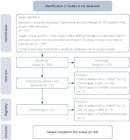
The selection criteria included studies on ChatGPT or GenIA applied to E&R in business management. Despite being published in business management databases and journals, we noticed that many articles addressed the use of GenIA in a generic way. Since we consider that research in the area is still in its initial and exploratory stages, without more concrete results from applied studies, we kept these works and classified them as “generic.” We included conference papers, editorials, and preprints. After excluding those not meeting the eligibility criteria, we analyzed 53 works out of the 176 articles.
After the complete reading and exclusion of 8 articles that did not correspond to the scope of the investigation because they did not address GenIA (2), did not apply to E&R (5), or were from another area and could not be classified as generic (1), the final sample consisted of 45 articles.
Figure 1 illustrates the summary of the identification, selection, and inclusion steps according to the PRISMA protocol:
We imported the sample articles into AtlasTI for qualitative thematic analysis. One author conducted the reading, and another validated it to increase reliability.
Three axes structured the scope of the investigation: 1) identifying the level of analysis; 2) distinguishing the ethical perspective; and 3) compiling the impacts of GenAI use. Each dimension could receive multiple codes, while different studies could categorize related themes differently. The research’s conduct was also considered, rather than a classification based solely on specific terminology or expressions. Giarmoleo et al. (2024) and Daza & Ilozumba (2022) inspired axes 1 and 2. The third axis of analysis in this work emerged from our exploratory reading of articles on generative artificial intelligence in education and research in the business management field. These readings guided our analyses, enabling us to contribute to the ongoing discussion and offer a unique perspective on the challenges and opportunities of using GenAI in business management’s E&R.
To elucidate Q1, we focused on understanding the ethical influence of the articles’ analysis. Giarmoleo et al. (2024) indicate that action ethics considers decisions from an external perspective, exemplified by Utilitarianism and Deontology, applicable in studies on policies and standards in AI. Personcentered ethics prioritizes moral character, emphasizing virtue in using AI, while ethical practices focus on user conduct. We added the category “resultcentered,” which addresses the instrumental effects and consequences of using AI.
Next, we focused on identifying the ethical perspective that best addresses Q2. As part of our exploratory research, we realized that incorporating ethics into the search terms could potentially include works by scholars in the field, which could lead to bias on a more realistic view of the ethical discussion in the context of E&R in business management. Therefore, this axis aimed to investigate the instances and manners in which ethics surfaced. The ethical guidelines were evaluated, even when not explicitly stated, by analyzing the theoretical basis and the analytical prism adopted in the studies.
The analysis regarding Q2 used the following categories: deontology, utilitarianism, virtue ethics, multiple (more than one perspective), implicit ethical perspective, and no indication. Articles that explicitly mentioned an ethical theory were classified according to these names. We used the implicit perspective combined with the approach code to identify studies that did not explicitly mention the theory but had adjacent elements in their discussion. We applied the “multiple” code to articles identifying multiple ethical theories, highlighting the respective perceived approaches. We classified articles that failed to identify an approach as “no indication.” This taxonomy draws from the research conducted by Daza & Ilozumba (2022), who evaluated AI ethics in the Business Ethics literature according to the following criteria: (a) deontological analysis, which questions whether solutions to ethical dilemmas derive from moral obligations or norms; (b) evaluation of consequentialist (utilitarian) approaches, through arguments based on results, effectiveness, and cost-benefit analysis; and (c) analysis focused on virtue ethics, emphasizing well-being and human development through the mention of virtues and exemplary behaviors. Like these authors, we also sought to identify the adoption of one or multiple ethical perspectives or the lack of alignment with predefined ethical models.
Finally, to answer Q3, we gathered the impacts of using GenIA identified in the sample surveys. We created the following categories of impacts: ethical, instrumental, knowledge production, cognitive, and on the person. These impacts could be harmful—like threats and challenges—or optimistic, such as improvements, changes, and solutions.
RESULTS: THEMATIC ANALYSIS
The results may offer some insights into the structure of knowledge. The articles were published between 2023 (82%) and 2024 (18%). Given the public launch of ChatGPT in November 2022 (https://openai.com), this result was expected. Despite including the business management field in the search strategy, 31 (69%) articles generically discussed the tool’s use, while 14 (31%) articles specifically addressed the area. We noticed, however, that the discussions were similar, with some particularities in the articles aimed at specific segments; for example, the notes by Alshurafat et al. (2023) focused on accounting students or the impacts raised by Salah et al. (2023) on the use of GenAI in street-level bureaucracy.
Most articles, totaling 60%, addressed the use of GenAI in education (27), 20% focused on research (9), and another 20% on education and research (9). These numbers highlight the trend of segmented evaluation in education and research. On the other hand, some impacts were consistently observed in various fields, such as plagiarism, as highlighted in the studies on education by Crawford et al. (2023) and Hicks (2023), as well as in the research article by Dalalah and Dalalah (2023), among others. We understand that education and research are distinct areas, but they have several stakeholders in common, such as educational institutions, teachers, and students who are simultaneously researchers. Therefore, we suggest an interconnected discussion concerning instrumental impacts such as plagiarism.
Regarding the distribution of publications per journal, 29 journals presented a single publication; four journals recorded two publications each, one journal recorded three, and another accumulated five publications. Figure 2 summarizes the bibliometric results of the articles.

Next, we examine each axis in detail to address the research questions.
Q1: How does academic literature evaluate the use of GenAI in the business management field’s E&R?
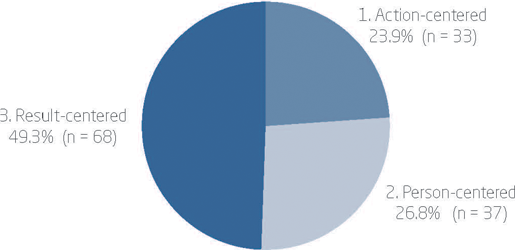
Regarding Q1, we evaluated three analysis categories: “action-centered,” “person-centered” (similar to that mapped by Giarmoleo et al., 2024), and “result-centered.” Out of the 45 articles, 24 concentrate on one of these categories, with ten falling under the “action-centered” category. These articles discuss practical recommendations, use, and risk mitigation of GenAI tools (Song, 2024; Vecchiarini & Somià, 2023). Six articles are personcentered, focusing on aspects such as autonomy and impacts on human well-being (Dwivedi et al., 2023; Hicks, 2023). Eight results-focused articles analyze the effectiveness and adverse effects of GenAI use, such as plagiarism, the spread of misinformation, and bias and prejudice (Liu et al., 2023; Bin-Nashwan et al., 2023).
The remaining 21 articles present multiple analyses: six incorporate all three categories, showing the interconnection between actions, results, and impacts on people. Another six articles combine “action” and “results”; six focus on “person” and “results,” and three analyze from “action” and “person.” This variety reflects the complexity of GenAI implications debates on E&R, focusing on the correlation between GenAI influences.
Figure 3 illustrates the classification percentages by article, reflecting the predominance of GenAI and E&R outcomes. Taken together, these data highlight a lack of depth in exploring the complexities of AI, with few proposed solutions to ethical, practical, and bias challenges. This points to a more detailed investigation and an approach that ethically addresses these complex issues (Dwivedi et al., 2023).

Q2: How has ethics been addressed in the academic literature on the GenAI use in the business management field’s E&R?
In this analysis, we investigated the ethical dimensions concerning GenAI use in E&R, classifying the references as implicit or explicit. We have found that 44 studies incorporate at least an implicit ethical perspective. From these, ten studies adopt a deontological approach, highlighting the need to establish regulations for the appropriate use of GenAI (Hicks, 2023). Five studies adopt the perspective of virtue ethics, emphasizing the role of the individual in character development (Crawford et al., 2023). One article presents a utilitarian approach, highlighting the need to consider global objectives when formulating ethical principles (Rane, 2024). Eleven articles integrate Deontology and Virtue Ethics elements, proposing the creation of norms while emphasizing the centrality of the individual in the ethical GenAI use (Lim et al., 2023). A single study implicitly combines utilitarian and virtue perspectives, while three investigations jointly explore the utilitarian and deontological approaches. Finally, seven works implicitly refer to the three ethical perspectives without significant depth.
Five studies do not explicitly align with any specific ethical perspective; however, all raise pertinent questions about ethical aspects. Only two articles explicitly mention ethical theories: Dwivedi et al. (2023) directly address utilitarianism while implicitly discussing other perspectives; Schlagwein and Willcocks (2023) conduct a comparative analysis between utilitarianism and deontology.
The study shows that ethical discussions about GenAI are still in their early stages, characterized by superficial approaches and frequently lacking concrete proposals to address the identified dilemmas. This scenario indicates a limited comprehension of GenAI’s potentialities and limitations in human development, exposing several ethical challenges but failing to present substantial solutions. The homogeneity observed in the articles contributes insufficiently to the deepening of the ethical debate concerning the GenAI application of business management’s E&R.
Table 1 displays the frequency of each ethical perspective mentioned in the studies. We counted all mentions, which is why each article could find the same perspective more than once. Of the 122 ethical perspectives mentioned—Deontology (70), Utilitarianism (19), and Virtue Ethics (33) — 119 are implicit. The influx of implicit perspectives may be evidence of superficiality in ethical discussions and a lack of theoretical foundations specific to this field of study. Like Song (2024), there is a plethora of studies that focus on creating rules and policies as a solution, while the mentions of Virtue Ethics reflect the works that indicated some concern with the formation of the person (e.g., Crawford et al., 2023), but without adequate theoretical depth. Only five articles did not mention anything related to ethical perspectives.
Q3: What are the impacts indicated by the academic literature regarding using GenAI in the business management field’s E&R?
Finally, we evaluated the impacts of using GenIA in E&R in the 45 articles analyzed. Of this set, 18 studies address ethical, instrumental, cognitive, knowledge production (KP), and on the person (OTP). Nine articles focus on ethical, instrumental, KP, and OTP impacts; four contemplate ethical, instrumental, cognitive, and OTP aspects; two investigate ethical, instrumental, and cognitive dimensions; two examine ethical, instrumental, and OTP impacts; two discuss instrumental, KP and OTP impacts; and two analyze ethical, instrumental and KP impacts. Additionally, we observed studies with more specific focuses: one article addresses the impacts on KP and OTP; another explores KP, cognitive aspects, and OTP; a third investigates ethical, OTP, and cognitive impacts; a fourth examines ethical and instrumental effects; a fifth analyzes KP, instrumental and cognitive; and, finally, one study is exclusively dedicated to the impacts on KP.
The ethical impacts identified include dishonesty, integrity, misconduct, and conflict of values. Instrumental impacts detail the use and potential applications of GenAI in E&R, emphasizing technological effectiveness. Impacts on KP discuss the effect of GenAI in developing or suppressing knowledge, with GenAI tools potentially fostering innovative theoretical discourses in management or negatively affecting critical thinking and originality (Ratten & Jones, 2023). Cognitive impacts are related to decreased critical capacity and dependence on GenAI. OTP impacts include effects on human well-being, such as insecurity, anxiety, and emotional reliance (Crawford et al., 2023; Lund et al., 2023; Sweeney, 2023).
Figure 4 highlights the amount of each impact type per publication. It is also possible to see the concentration in instrumental aspects (219) and knowledge production (131), representing the predominance of technicalinstrumental aspects. Although ethical elements were identified in 129 impacts, when correlating these data with Question 2 (Q2) results, it becomes clear that ethical issues are often addressed superficially and not always focused on human beings. On the person (108) and cognitive (79) impacts follow the results logic of Q1 and Q2, appearing with less intensity and representing the mentions of the need to develop critical thinking and skills for GenAI use (Halaweh, 2023).

DISCUSSION: ETHICAL pERSpECTIVES ON GENAI REGARDING UTILITY, NORMS, AND VIRTUES.
Integrating GenAI into education and research prompts reflections on the objectives, impacts, necessary teaching skills, and educational methodologies (Dwivedi et al., 2023). Not only does this research contribute to knowledge and theoretical development, but it also raises questions about GenAI’s role in training people. Given that GenAI may neglect the virtues inherent in research practices, it may not support the researcher’s learning or personal development. Critical research processes, such as application, validation, reporting, and justification of methods, may lose transparency and explainability when delegated to GenAI, challenging the essence of academic and personal growth.
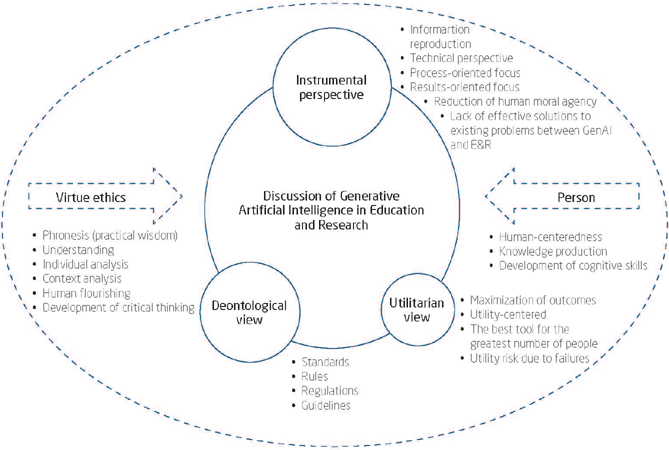
Our semi-systematic review found that the academic literature analyzes GenAI in business management’s E&R (Q1) from a predominantly reductionist, instrumental, and technocratic perspective. The focus is on processes, applications, and technical potential, with warnings regarding risks, biases, discrimination, sexism, ageism, and use of data. These issues, although frequently mentioned, are addressed superficially, being cited as existing issues but without proposing solutions that transcend the mere creation of norms, rules, and conduct guidelines. The studies analyzed show a tendency to seek results’ maximization through implementing GenAI in business management’s E&R, in addition to demonstrating an excessive focus on the utility of the technology.
Focusing on norms and guidelines to solve impasses and problems resulting from these technologies in E&R denotes a deontological ethical position, while focusing on results and utility brings a utilitarian bias. Both ethical approaches are instrumental, and the lack of theoretical depth in the field may end up directing discussions toward such perspectives, even in a way that is unintentional by the authors. In debates where a person’s integral evaluation is fundamental, the predominance of an instrumental viewpoint leads to a reductionist conception. Only a more comprehensive and profound understanding of human nature can offer solutions to dilemmas that transcend norms and quantifiable results. For a careful analysis of the interaction between a person and technology and its impacts on society, virtue ethics appears to be the most appropriate and promising approach.
Therefore, we can infer that ethics is fundamental not because it promotes abstract values unrelated to human well-being but because it constitutes a theory of social relations whose principles are essentially norms aimed at people’s growth (Goodin, 1990). We suggest connecting traditional ideas like utilitarianism, deontology, and virtue ethics with more modern ideas (e.g., Serafim & Ames, 2023) to understand ethics in GenAI better. Such an approach can serve as a starting point for a more robust understanding of the relevance and urgency of the ethical debate when applying GenAI in business management’s E&R.
In virtue ethics, philosopher Alasdair MacIntyre is among today’s most relevant authors. In Business Ethics, in addition to MacIntyre, there are several different perspectives on virtue ethics, initiated more than 40 years ago by Solomon, and in which perspectives, such as those of Alejo Sison and Ignacio Ferrero, stand out (Sison et al., 2017). We highlight Krist Kristjánsson’s name in character education and virtue development.
The central idea of utilitarianism lies in the principle that organizations’ and institutions’ actions should increase the overall amount of happiness, understood as the increase in pleasure and decrease in pain (Crisp, 2013). A theory such as classical utilitarianism states that the only relevant property is the extent to which people experience and maximize happiness (Pettit, 1997). According to utilitarian theory, something can only be considered good if it helps increase pleasure and decrease pain in some way for someone. Some critics argue that this perspective is too limited since it correlates ‘good’ with usefulness, reducing everything to a question of consumer demand (Singer, 1977; Williams, 1993).
The deontological ethics perspective is a normative theory that deals with what choices are morally required, prohibited, or permitted. Kant is the leading developer and creator of deontology, a domain of moral theories that guides and evaluates people’s choices based on what ought to be done. Kant wanted to create and support a moral law based on reason and not on facts, free from any empirical influence and capable of producing a respectful feeling that induces action with moral value, whether through goodwill or imposed by duty (Hill Jr., 2009; Darwall, 2003).
In the context of GenAI, it is inevitable to consider ethical and moral aspects since this technological tool directly influences human life, promoting facilities and incurring errors from its programming to even considerable consequences due to user misutilization (Anshari et al., 2023). Therefore, we aimed to comprehend how the academic literature on GenAI use in business management’s E&R (Q1 and Q2) addresses ethics. Our analysis reveals that articles addressing ethical issues often consider ‘ethics’ as an existing dilemma without basing their discussions on robust ethical theories, resulting in a lack of depth and proposals for effective solutions. Still, the fact that 40 studies contemplate ethical aspects highlights the inextricable relationship between moral considerations and the application of GenAI in Education and Research (E&R) in business management, emphasizing the urgency of a more in-depth ethical discussion in this area.
Many of the articles in the sample are centered on a deontological view. The defenders of this ethical viewpoint in GenAI assert that the rigorous development of deontological ethics can prevent the uncertainties of intuition-based ethics. Since actions are based on reasons, they take on a conditional form: if these reasons are valid, one proceeds with the action. Programming such conditional rules into a machine is a natural fit (Hooker & Kim, 2019).
The utilitarian view also appears in the articles, aiming to maximize results and expand the usefulness of GenAI in business management’s E&R to benefit the most significant number of people. The theory of utilitarianism is one of the most common approaches to making ethical decisions, especially those with consequences that affect large groups of people (Singer, 1977; Scarre, 1996; Goodin, 1990; Brandt, 1992). Creating codes that aim to protect data and guarantee their rights is one of the ways to understand this ethical aspect in the GenAI reality. Defining the ethical and unethical uses of GenAI from the utilitarian perspective means making it a tool capable of regulating good consequences for society on the ethical side and harmful consequences on the unethical side (Anshari et al., 2023).
Our analysis shows that, although some studies present elements aligned with the perspective of virtue ethics, addressing the impacts of GenAI technologies on the person and highlighting the need for a humancentered reflection, such considerations remain superficial and embryonic in academic discussions. The approach to virtue ethics, when present, lacks a more robust development and a more systematic application in the context of GenAI in business management’s E&R. It is possible to perceive that a lack of understanding centered on virtue ethics, along with a deeper understanding of the role and relevance of individuals in this context, hinders the development of more assertive debates, effective solutions, and an understanding that instrumental approaches are limited in solving such problems. Despite the knowledge of the need to raise people’s awareness, there is still no delve into how this can be effectively done. The virtues perspective can fill this gap.
While utilitarian and deontological ethics are critical in the context of GenAI, they fall short in understanding human actions and motivations, not only when using technologies but also in everyday life, thereby hindering a deeper exploration of the ethical debate. Virtue ethics emerges as an alternative to understanding the most profound aspects of human motivation and how their social interactions—with technological artifacts—can help them develop virtues or vices (Vallor, 2016).
The virtue ethics perspective postulates that the effects of virtuous actions manifest themselves in the social fabric. Aristotelian ethics is fundamentally first-person ethics, focusing on individual character, personal actions, and the performance of genuinely good acts by a person. This moral agent is endowed with reason, reflective capacity, and virtues appropriate to the action context. This ethical approach aims to promote a fulfilled life. Although it does not focus primarily on the observance of principles, these play a crucial role in the Aristotelian ethical framework (Hartman, 2017).
A central dimension of virtue ethics in the context of GenAI is techné, that is, the excellence of human activity regarding craftsmanship, art, or technique. This ability represents the exercise of instrumental rationality through deliberation. Applied to specific tasks, it creates in the agent the ability to perform similar activities with versatility (Melé & Cantón, 2014). Thus, like science or productive knowledge, which aims to create or modify objects and explain how the act or object arises (Aristotle, 1985), the development of GenAI is a fruit of techné.
The use of GenAI accentuates ethical concerns about human improvement and respect for dignity. This occurs, for example, when people are exposed to the risks of addiction or dependence on technologies (Bhargava & Velasquez, 2021), loss of privacy, and the possibility of developing habits that are contrary to ethical growth, such as dishonesty, lack of self-control, or even the reduction of wisdom, decision-making or phronesis (Eisikovits & Feldman, 2022). In this scenario, humans must prepare to interact and use technology wisely (Vallor, 2016).
Currently, technology in its most varied forms is a support resource in decision-making, development of creative processes, and data analysis (Bartneck et al., 2021; Stahl, 2021). As previously mentioned, we can situate the use of GenAI technologies within the scope of techné. However, from the use perspective, we argue that other human activity areas should also be considered. Aristotle (1985) called the other two areas or forms of excellence in human activities phronesis, practical wisdom or prudence, which is the science or knowledge that aims to deliberate between different options and is accomplished when knowledge is translated into action – this action being endowed with values and ethical premises; and episteme, science or theoretical knowledge, which promotes scientific skills aimed at explaining something, being the investigative activity of the world par excellence (Kavanagh, 2013).
In Aristotelian ethics, an essential characteristic of virtue is to seek balance between extremes. This will lead to a virtuous, well-lived, and fulfilled life. The balance of virtue is the path to moral excellence and a life of meaning (Zagzebski, 2023). One way someone may not achieve virtues or be unable to be virtuous is through a lack of phronesis – moral wisdom or practical wisdom (Hursthouse & Pettigrove, 2023). For Aristotle, being noble is also a necessary condition for being virtuous. Only those who act virtuously are virtuous, or those who act justly are just. The philosopher also makes the reasoning for this proposition clear. The agent must know the truth about what is just (dikaion), what is noble (kalon), and what is good or beneficial (sumpheron) (Kraut, 2009).
As technology becomes increasingly central to people’s lives, there is a notable risk of a decline in phronesis and episteme, while its unconscious use can also limit the development of techné. Through phronesis, a person becomes thoughtful, learns to deliberate correctly, and acquires the ability to think and act in specific situations. In addition, it allows one to analyze values, good and evil, as a starting point for action (Aristotle, 1985). This characteristic may deteriorate when an artifact dictates what is best for an individual. If GenAI outputs are assumed to be accurate, they can limit the person’s critical thinking, as their veracity, relevance, and application to the factual context are not considered (Mhlanga, 2024).
Finally, the main impacts indicated by the analysis of the articles lead to positive and negative perspectives. Among the positive impacts, we discovered that GenAI tools assist researchers in solving complex problems and can aid learning content, including tools for text translation. However, the main message concerns the challenges of using these technologies. Problems related to plagiarism, bias, violation of property rights, dependence on technology, impacts on the development of critical and cognitive capacities, lack of ethical use by users, and lack of innovation since GenAI only reproduces information and does not generate knowledge. Evidence suggests that the impacts of using GenAI in E&R are ethical, as they affect individuals and often result from their actions. In this sense, virtues are preconditions for putting ethical principles into practice and, therefore, can help to access the use of AI’s ethical implications, considering the human-machine relationship (Hagendorff, 2022). Adopting a textual output from AI as a work of one’s authorship impacts human character, implying a lack of honesty on the author’s part.
As we have punctuated, phronesis allows us to understand the actual context of action, something significant for considering the actual applicability of information and technology outputs (Hagendorff, 2022). However, in the context of GenAI, virtue ethics, deontology, and utilitarianism approaches are little-explored perspectives; that is, research is not very well-founded in ethical perspectives (Daza & Llozumba, 2022). Our results also pointed in this direction, indicating the predominance of instrumental perspective and focus on results. To underscore these findings, we present in Figure 4 a summary of the discussion on GenAI in business management’s E&R, emphasizing the importance of considering the person and virtue ethics in this discussion. Below, we present a synoptic table with the results of the three axes explored in this review. In this sense, we reinforce that virtue ethics differs from the others because it emphasizes the human being and contains the teleological premise, which seeks eudaimonia, the ultimate goal of life.


CONCLUSIONS
ChatGPT is a milestone in the development of GenAI, bringing exciting possibilities and ethical challenges to education and research in business management. This article sought to discuss the use of this technology in light of ethics by conducting a semi-systematic review.
The articles’ reading showed three primary levels of analysis: personcentered, action-centered, and results-centered. We can see that although many authors do not consider an explicit ethical position, the predominant ethical perspective in the discussion is deontological. While some researchers acknowledge the humans’ role in using and impacting these technologies, this context lacks in-depth analysis and needs further exploration and understanding. Five main impacts were found: 1. ethical; 2. instrumental; 3. on knowledge production; 4. cognitive impacts; and 5. on the person.
It was also observed that the discussion on the use of GenIA in business management’s E&R is centered on process results and has a predominantly technical perspective, which leads to a lack of effective solutions to existing problems and a decrease in human agency.
Considering the discussions and reflections in this work, one aspect that must be considered from practical wisdom is that, even though several scholars intend to point out the possible impacts and future developments with GenIA use in E&R, it is paramount to admit that there is no way to foresee all the potential consequences regarding research and education’s future for tomorrow’s generations.
Although we encourage a discussion based on virtue ethics, especially considering its teleology aimed at human flourishing, other aspects must be considered to achieve the common good in society. We do not rule out the possibility that regulating the use of such technologies, monitoring consequences, and evaluating their use results are also fundamental aspects of education, research, and other application sectors.
-
RAM does not have permission from the authors or evaluators to publish this article’s review.
-
Layout designerEmap
-
Graphic designerLibro
-
This paper may be copied, distributed, displayed, transmitted or adapted for any purpose, even commercially, if provided, in a clear and explicit way, the name of the journal, the edition, the year and the pages on which the paper was originally published, but not suggesting that RAM endorses paper reuse. This licensing term should be made explicit in cases of reuse or distribution to third parties.
REFERENCES
-
Alshurafat, H., Al Shbail, M. O., Hamdan, A., Al-Dmour, A., & Ensour W. (2023). Factors affecting accounting students’ misuse of ChatGPT: An application of the fraud triangle theory. Journal of Financial Reporting and Accounting, 22(2), 274–288. https://doi.org/10.1108/JFRA-04-2023-0182
» https://doi.org/10.1108/JFRA-04-2023-0182 -
Anshari, M., Hamdan, M., Ahmad, N., Ali, E., & Haidi, H. (2023). COVID-19, artificial intelligence, ethical challenges, and policy implications. AI & Society, 38(2), 707–720. https://doi.org/10.1007/s00146-022-01471-6
» https://doi.org/10.1007/s00146-022-01471-6 -
Aoun, J. E. (2017). Robot-proof: Higher education in the age of artificial intelligence MIT Press. https://doi.org/10.7551/mitpress/11456.001.0001
» https://doi.org/10.7551/mitpress/11456.001.0001 - Aristotle. (1985). Nicomachean Ethics (Irwin, Trans.). Hackett Publishing Company.
-
Barros, A., Prasad, A., & Sliwa, M. (2023). Generative artificial intelligence and academia: Implication for research, teaching and service. Management Learning, 54(5), 597–604. https://.doi.org/10.1177/13505076231201445
» https://doi.org/10.1177/13505076231201445 -
Bartneck, C., Lütge, C., Wagner, A., & Welsh, S. (2021). An introduction to ethics in robotics and AI Springer. https://doi.org/10.1007/978-3-03051110-4
» https://doi.org/10.1007/978-3-03051110-4 -
Bearman, M., Ryan, J., & Ajjawi, R. (2023). Discourses of artificial intelligence in higher education: A critical literature review. Higher Education, 86, 369–385. https://doi.org/10.1007/s10734-022-00937-2
» https://doi.org/10.1007/s10734-022-00937-2 -
Bedeian, A. G., (2004). Peer review and the social construction of knowledge in the management discipline. Academy of Management Learning & Education, 3(2), 198–216. https://www.jstor.org/stable/40214251
» https://www.jstor.org/stable/40214251 -
Bertoncini, A. L. C., & Serafim, M. C. (2023). Ethical content in artificial intelligence systems: A demand explained in three critical points. Frontiers in Psychology, 14(1074787), 1–10. https://doi.org/10.3389/fpsyg.2023.1074787
» https://doi.org/10.3389/fpsyg.2023.1074787 -
Bhargava, V. R., & Velasqures, M. (2021). Ethics of the attention economy: The problem of social media addiction. Business Ethics Quarterly, 31(3), 321–359. https://doi.org/:10.1017/beq.2020.32
» https://doi.org/:10.1017/beq.2020.32 -
Bin-Nashwan, S. A., Sadallah, M., & Bouteraa, M. (2023). Use of ChatGPT in academia: Academic integrity hangs in the balance. Technology in Society, 75, 102370. https://doi.org/10.1016/j.techsoc.2023.102370
» https://doi.org/10.1016/j.techsoc.2023.102370 - Brandt, R. B. (1992). Morality, utilitarianism, and rights Cambridge University Press.
-
Chavez, M. R., Butler, T., S., Rekawek, P., Heo, H., & Kinzler, W. L. (2023). Chat generative pre-trained transformer: Why we should embrace this technology. American Journal of Obstetrics and Gynecology, 228(6), 706–711. https://doi.org/10.1016/j.ajog.2023.03.010
» https://doi.org/10.1016/j.ajog.2023.03.010 - Coeckelberg, M. (2020). AI Ethics The MIT Press.
-
COPE. (2023). Authorship and AI tools [Statement]. COPE Position Statement. https://publicationethics.org/cope-position-statements/aiauthor
» https://publicationethics.org/cope-position-statements/aiauthor -
Cooper, G. (2023). Examining science education in ChatGPT: An exploratory study of generative artificial intelligence. Journal of Science Education and Technology, 32, 444–452. https://doi.org/10.1007/s10956-023-10039-y
» https://doi.org/10.1007/s10956-023-10039-y -
Crawford, J., Cowling, M., & Allen, K. A. (2023). Leadership is needed for ethical ChatGPT: Character, assessment, and learning using artificial intelligence (AI). Journal of University Teaching and Learning Practice, 20(3). https://doi.org/10.53761/1.20.3.02
» https://doi.org/10.53761/1.20.3.02 - Crisp, R. (Ed.), (2013). The Oxford handbook of the history of ethics. Oxford: Oxford University Press.
-
Dalalah, D., & Dalalah, O. M. A. (2023). The false positives and false negatives of generative AI detection tools in education and academic research: The case of ChatGPT. The International Journal of Management Education, 21(2), 100822. https://doi.org/10.1016/j.ijme.2023.10082
» https://doi.org/10.1016/j.ijme.2023.10082 - Darwall, S. L. (Ed.), (2003). Deontology. Malden, MA: Wiley-Blackwell, pp. 11–20.
-
Daza, M. T., & Ilozumba, U. J. (2022). A survey of AI ethics in business literature: Maps and trends between 2000 and 2021. Frontiers in Psychology, 13, 1042661. https://doi.org/10.3389/fpsyg.2022.1042661
» https://doi.org/10.3389/fpsyg.2022.1042661 -
Dignum, V. (2018). Ethics in artificial intelligence: Introduction to the special issue. Ethics and Information Technology, 20(1), 1–3. https://doi.org/10.1007/s10676-018-9450-z
» https://doi.org/10.1007/s10676-018-9450-z -
Dwivedi, Y. K., Kshetri, N., Hughes, L., Slade, E. L., Jeyaraj, A., Kar, A. K., Baabdulah, A. M., Koohang, A., Raghavan, V., Ahuja, M., Albanna, H., Albashrawi, M. A., Al-Busaidi, A. S., Balakrishnan, J., Barlette, Y., Basu, S., Bose, I., Brooks, L., Buhalis, D. et al. (2023). “So what if ChatGPT wrote it?” Multidisciplinary perspectives on opportunities, challenges, and implications of generative conversational AI for research, practice, and policy. International Journal of Information Management, 71, 102642. https://doi.org/10.1016/j.ijinfomgt.2023.102642
» https://doi.org/10.1016/j.ijinfomgt.2023.102642 -
Eisikovits, N., & Feldman, D. (2022). AI and phronesis. Moral Philosophy and Politics, 9(2), 181–199. https://doi.org/10.1515/mopp-2021-0026
» https://doi.org/10.1515/mopp-2021-0026 -
Ferrero, I., Rocchi, M., Pellegrini, M. M., & Reichert, E. (2020). Practical wisdom: A virtue for leaders. Bringing together aquinas and authentic leadership. Business Ethics: A European Review, 29(S1), 84–98. https://doi.org/10.1111/beer.12298
» https://doi.org/10.1111/beer.12298 -
Giarmoleo, F. V., Ferrero, I., Rocchi, M., & Pellegrini, M. (2024). What ethics can say on artificial intelligence: Insights from a systematic literature review. Business and Society Review, 129(2), 258–292. https://doi.org/10.1111/basr.12336
» https://doi.org/10.1111/basr.12336 - Goodin, R. E. (1990). Government House utilitarianism. In Allison, L. (Ed.), The utilitarian response: The contemporary viability of utilitarian political philosophy (pp. 60–80). Sage Publications.
-
Hagendorff, T. (2022). A virtue-based framework to support putting AI ethics into practice. Philosophy & Technology, 35(55), 2–24. https://doi.org/10.1007/s13347-022-00553-z
» https://doi.org/10. 1007/s13347-022-00553-z -
Halaweh, M. (2023). ChatGPT in education: Strategies for responsible implementation. Contemporary Educational Technology, 31(7l), 32S–43S. https://doi.org/10.1177/1010539519860730
» https://doi.org/10.1177/1010539519860730 - Hartman, E. (2017). Aristotle’s virtue ethics and virtuous business. In Sison, A. J. G., Beabout, G., & Ferrero, I. (Eds.), Handbook on Virtue Ethics in Business and Management (pp. 3–12). Springer.
- Hicks, S. K. (2023). Bracing for the future: Student usage of generative artificial intelligence. Journal of Policy Science, 31, 51–60.
- Hill Jr., T. E. (Ed.), (2009). The Blackwell Guide to Kant’s Ethics Wiley-Blackwell.
-
Hooker, J., & Kim, T. W. (2019). Ethical implications of the fourth industrial revolution for business and society. Business Ethics, 3, 35–63. https://doi.org/10.1108/s2514-175920190000003002
» https://doi.org/10.1108/s2514-175920190000003002 -
Hursthouse, R., & Pettigrove, G. (2023). Virtue ethics, the stanford encyclopedia of Philosophy. In Zalta, E. N., & Nodelman, U. (Eds.), Retrieved from https://plato.stanford.edu/archives/fall2023/entries/ethics-virtue/ Accessed on Oct. 10th, 2024.
» https://plato.stanford.edu/archives/fall2023/entries/ethics-virtue/ -
Kavanagh, D. (2013). Problematizing practice: MacIntyre and management. Organization, 20(1), 103–115. https://doi.org/10.1177/1350508412460994
» https://doi.org/10.1177/1350508412460994 -
Kazim, E., & Koshiyama, A. (2021). The interrelation between data and AI ethics in the context of impact assessments. AI Ethics, 1, 219–225. https://doi.org/10.1007/s43681-020-00029-w
» https://doi.org/10.1007/s43681-020-00029-w -
Kooli, C. (2023). Chatbots in education and research: A critical examination of ethical implications and solutions. Sustainability, 15(7), 5614. https://doi.org/10.3390/su15075614
» https://doi.org/10.3390/su15075614 -
Korzynski, P., Mazurek, G., Altmann, A., Ejdys, J., Kazlauskaite, R., Paliszkiewicz, J., Wach, K., & Ziemba, E. (2023). Generative artificial intelligence as a new context for management theories: Analysis of ChatGPT. Central European Management Journal, vol. 31, no. 1, pp. 3–13. https://doi.org/10.1108/CEMJ-02-2023-0091
» https://doi.org/10. 1108/CEMJ-02-2023-0091 - Kraut, R. (2009). Aristóteles: A ética a nicômaco. (1st ed.). (A. Storck, Trans.). Artmed.
-
Liu, M., Ren, Y., Nyagoga, L. M., Stonier, F., Wu, Z., & Yu, L. (2023). Future of education in the era of generative artificial intelligence: Consensus among Chinese scholars on applications of ChatGPT in schools. Future in Educational Research, 1(1), 72–101. https://doi.org/10.1002/fer3.10
» https://doi.org/10.1002/fer3.10 -
Lim, W. M., Gunasekara, A., Pallant, J. L., Pallant, J. I., & Pechenkina, E. (2023). Generative AI and the future of education: Ragnarok or reformation? A paradoxical perspective from management educators. The International Journal of Management in Education, 21(2), 100790. https://doi.org/10.1016/j.ijme.2023.100790
» https://doi.org/10.1016/j.ijme.2023.100790 -
Lund, B. D., Wang, T., Mannuru, N. R., Nie, B., Shimray, S., & Wang, Z. (2023). ChatGPT and a new academic reality: AI-written research papers and the ethics of the large language models in scholarly publishing. Journal of the Association for Information Science and Technology, 74(5), 570–581. https://doi.org/10.1002/asi.24750
» https://doi.org/10.1002/asi.24750 -
Mhlanga, D. (2024). Generative AI for emerging researchers: The promises, ethics, and risks. SSRN. http://dx.doi.org/10.2139/ssrn.4737492
» https://doi.org/10.2139/ssrn.4737492 -
McColl-Kennedy, J. R., Snyder, H., Elg, M., Witell, L., Helkkula, A., Hogan, S. J., & Anderson, L. (2017). The changing role of the health care customer: Review, synthesis and research agenda. Journal of Service Management, 28(1), 2–33. https://doi.org/10.1108/JOSM-01-2016-0018
» https://doi.org/10.1108/JOSM-01-2016-0018 - Melé, D., & Cantón, C. G. (2014). Human foundations of management: Understanding the Homo Humanus Palgrave Macmillan.
-
Miller, A. N., Taylor, S. G., & Bedeian, A. G. (2011). Publish or perish: Academic life as management faculty live it. Career Development International, 16(5), 422–445. https://doi.org/10.1108/13620431111167751
» https://doi.org/10.1108/13620431111167751 -
Moher, D., Liberati, A., Tetzlaff, J., & Altman, D. G. (2015). Principais itens para relatar revisões e meta-análises: A recomendação PRISMA. Epidemiologia e Serviços de Saúde, 24(2), 335–342. https://doi.org/10.5123/s167949742015000200017
» https://doi.org/10.5123/s167949742015000200017 - Mulgan, T. (2012). Utilitarismo (F. Creder, Trans.). Editora Vozes.
- Pettit, P. (1997). The Consequentialist Perspective. In Baron, M., Pettit, P., & Slote, M. (Eds.), Three Methods of Ethics Oxford: Blackwell, pp. 92–174.
-
Polizzi, G., & Harrison, T. (2022). Wisdom in the digital age: A conceptual and practical framework for understanding and cultivating cyber wisdom. Ethics and Information Technology, 24(16), 1–16. https://doi.org/10.1007/s10676-022-09640-3
» https://doi.org/10.1007/ s10676-022-09640-3 -
Rane, N. (2024). Enhancing the quality of teaching and learning through ChatGPT and similar large language models: Challenges, future prospects, and ethical considerations in education. SSRN Electronic Journal, 5(1), 1–6. https://doi.org/10.2139/ssrn.4599104
» https://doi.org/10.2139/ssrn.4599104 -
Ratten, V., & Jones, P. (2023). Generative artificial intelligence (ChatGPT): Implications for management educators. International Journal of Management Education, 21(3), 100857. https://doi.org/10.1016/j.ijme.2023.100857
» https://doi.org/10.1016/j.ijme.2023.100857 -
Salah, M., Abdelfattah, F., & Al Halbusi, H. (2023). Generative artificial intelligence (ChatGPT & Bard) in public administration research: A doubleedged sword for street-level bureaucracy studies. International Journal of Public Administration, 1–7. https://doi.org/10.1080/01900692.2023.2274801
» https://doi.org/10.1080/01900692.2023.2274801 -
Scarre, G. (1996). Utilitarianism Routledge. https://doi.org/10.4324/9781003070962
» https://doi.org/10.4324/978 1003070962 -
Schlagwein, D., & Willcocks, L. (2023). “ChatGPT et al.”: The ethics of using (generative) artificial intelligence in research and science. Journal of Information Technology, 38(3), 232–238. https://doi.org/10.1177/02683962231200411
» https://doi.org/10.1177/02683962231200411 -
Serafim, M. C., & Ames, M. C. F. D. C. (2023). Aportaciones de la antropología trascendental de Leonardo Polo a la ética de las virtudes neo-aristotélica en la ética empresarial. Revista de Estudios Filosóficos Polianos, 2, 99–117. https://revistaestudiosfilosoficospolianos.wordpress.com/2024/01/18/numero-12-de-la-revista-estudios-filosoficos-polianos/
» https://revistaestudiosfilosoficospolianos.wordpress.com/2024/01/18/numero-12-de-la-revista-estudios-filosoficos-polianos/ -
Singer, M. G. (1977). Actual consequence utilitarianism. Mind, 86(341), 67–77. https://doi-org.ezproxy.unav.es/10.1093/mind/LXXXVI.341.67
» https://doi-org.ezproxy.unav.es/10.1093/mind/LXXXVI.341.67 -
Sison, A. J. G. (2023). Can digitally transformed work be virtuous? Business Ethics Quarterly, 34(1), 163–191. https://doi.org/10.1017/beq.2023.33
» https://doi.org/10.1017/beq.2023.33 - Sison, A. J. G., Daza, M. T., Gozalo-Brizuela, R., & Garrido-Merchán, E. C. (2023). ChatGPT: More than a weapon of mass deception. Ethical challenges and responses from the human-centered artificial intelligence (HCAI) perspective. SSRN Electronic Journal, 1–31.
- Sison, A. J. G., Beabout, G. R., & Ferrero, I. (Eds.), (2017). Handbook of Virtue Ethics in Business and Management Springer.
-
Song, N. Y. (2024). Higher education crisis: Academic misconduct with generative AI. Journal of Contingencies and Crisis Management, 32(1), 3–5. https://doi.org/10.1111/1468-5973.12532
» https://doi.org/10.1111/1468-5973.12532 -
Snyder, H. (2019). Literature review as a research methodology: An overview and guidelines. Journal of Business Research, 104, 333–339. https://doi.org/10.1016/j.jbusres.2019.07.039
» https://doi.org/10.1016/j.jbusres.2019.07.039 - Stahl, B. C. (2021). Artificial intelligence for a better future: An ecosystem perspective on the ethics of AI and emerging digital technologies Springer.
-
Sweeney, S. (2023). Who wrote this? Essay mills and assessment – Considerations regarding contract cheating and AI in higher education. The International Journal of Management Education, 21(2), 100818. https://doi.org/10.1016/j.ijme.2023.100818
» https://doi.org/10. 1016/j.ijme.2023.100818 - Vallor, S. (2016). Technology and the virtues: A philosophical guide to a future worth wanting Oxford University Press.
-
Vecchiarini, M., & Somià, T. (2023). Redefining entrepreneurship education in the age of artificial intelligence: An explorative analysis. International Journal of Management Education, 21(3), 100879. https://doi.org/10.1016/j.ijme.2023.100879
» https://doi.org/10.1016/j. ijme.2023.100879 - Williams, B. (1993). Morality: An introduction to ethics New York: Harper & Row, pp. 48-54.
-
Wong, G., Greenhalgh, T., & Westhorp, G. et al (2013). RAMESES publication standards: Meta-narrative reviews. BMC Medicine, 11, 20. https://doi.org/10.1186/1741-7015-11-20
» https://doi.org/10.1186/1741-7015-11-20 -
Zagzebski, L. (2023). Virtue Ethics. Think, 22(63), 15–21. https://doi.org/10.1017/S1477175622000252
» https://doi.org/10.1017/S1477175622000252
Edited by
-
EDITORIAL BOARDEditor-in-chiefFellipe Silva MartinsAssociated editorLuis Hernan Contreras PinochetTechnical supportVitória Batista Santos Silva
-
EDITORIAL PRODUCTIONPublishing coordinationJéssica Dametta and Andreia CominettiEditorial internBruna Silva de AngelisCopy editorJulia Moura Æ Irina Migliari (Bardo Editorial)
RAM does not have information about open data regarding this manuscript.



 * The same article may present each category more than once, therefore, the total is greater than number of articles in the sample (45).