 Who sets the boundaries in remote work? Investigating the influence of LMX relationships on work-nonwork dynamics
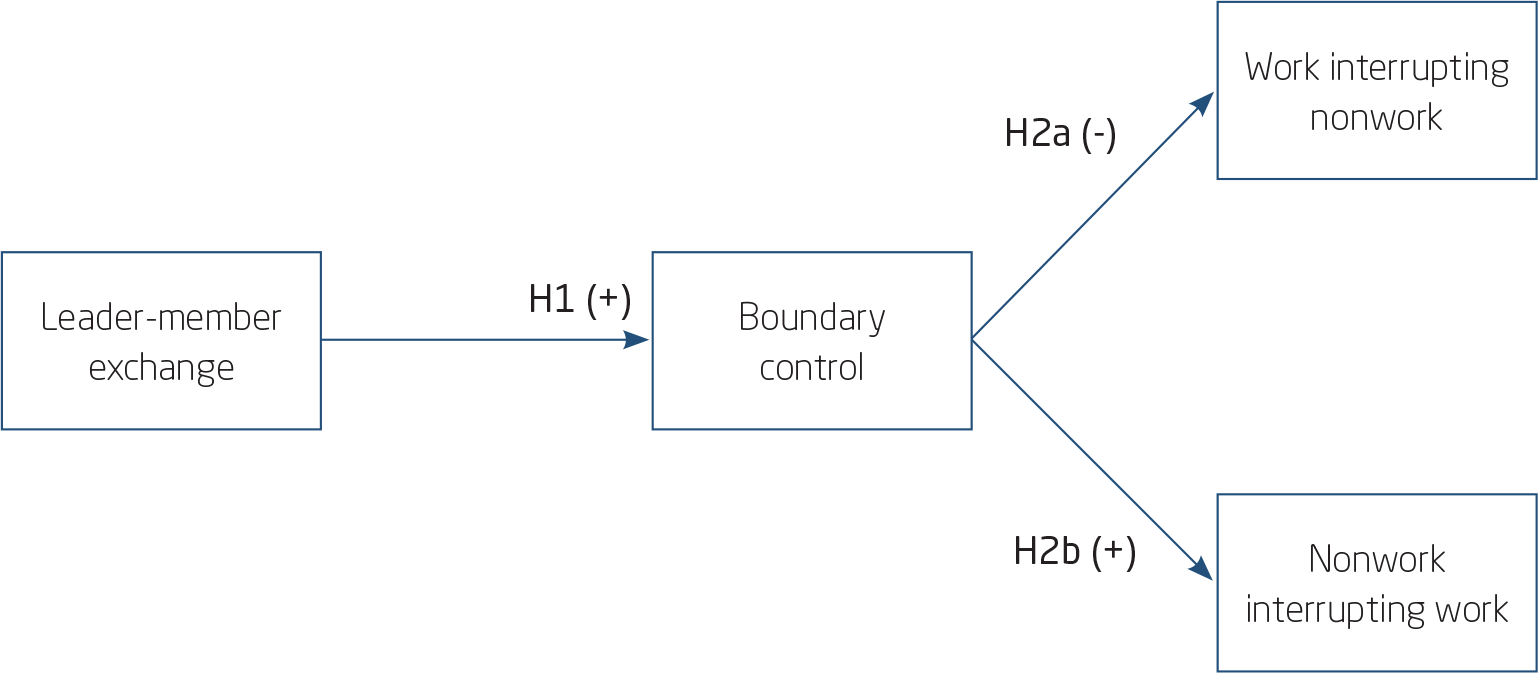
Purpose: The widespread adoption of remote work seen during the coro-navirus disease 2019 (COVID-19) pandemic raises attention to the dynamics of employees’ work-nonwork boundaries. This study investigates the influence of the leader-member exchange (LMX) relationships on leaders’ perceptions of employees’ work-nonwork boundary dynamics in the remote work context.
Originality/value: This study integrates leadership, work-nonwork boundaries, and remote work literature at work. The contributions are threefold: 1. strengthen LMX theory as a framework for understanding leaders’ perceptions regarding employees’ work-nonwork boundaries; 2. explore the linkage between LMX and work-nonwork literature adopting the leaders’ standpoint; 3. contribute to the promoting discussion over remote work.
Design/methodology/approach: An experimental study, with a between-subjects design, in which 217 Brazilian professionals were randomly assigned to one of the two vignette experiments in the study: high LMX versus low LMX.
Findings: The results reveal a direct effect of LMX on leaders’ expectations of employees’ boundary control. Furthermore, the results indicate the mediating role of boundary control in the association between LMX and leaders’ expectations regarding interruptions of employees’ work in the nonwork domain. Overall, our findings suggest that, in a remote work context, the quality of the LMX relationship does play a role in leaders’ perceptions of employees’ work-nonwork boundaries dynamics.
Keywords:
leadership; LMX; work-nonwork boundaries; remote work; boundary control
 Thumbnail