 Who sets the boundaries in remote work? Investigating the influence of LMX relationships on work-nonwork dynamics
Abstract
Purpose: The widespread adoption of remote work seen during the coro-navirus disease 2019 (COVID-19) pandemic raises attention to the dynamics of employees’ work-nonwork boundaries. This study investigates the influence of the leader-member exchange (LMX) relationships on leaders’ perceptions of employees’ work-nonwork boundary dynamics in the remote work context.
Originality/value: This study integrates leadership, work-nonwork boundaries, and remote work literature at work. The contributions are threefold: 1. strengthen LMX theory as a framework for understanding leaders’ perceptions regarding employees’ work-nonwork boundaries; 2. explore the linkage between LMX and work-nonwork literature adopting the leaders’ standpoint; 3. contribute to the promoting discussion over remote work.
Design/methodology/approach: An experimental study, with a between-subjects design, in which 217 Brazilian professionals were randomly assigned to one of the two vignette experiments in the study: high LMX versus low LMX.
Findings: The results reveal a direct effect of LMX on leaders’ expectations of employees’ boundary control. Furthermore, the results indicate the mediating role of boundary control in the association between LMX and leaders’ expectations regarding interruptions of employees’ work in the nonwork domain. Overall, our findings suggest that, in a remote work context, the quality of the LMX relationship does play a role in leaders’ perceptions of employees’ work-nonwork boundaries dynamics.
Keywords:
leadership; LMX; work-nonwork boundaries; remote work; boundary control
Resumo
Objetivo: A adoção massiva do trabalho remoto vista durante o período da pandemia da doença por coronavírus 2019 (COVID-19) acentua a relevância de investigar as dinâmicas de limites trabalho-não trabalho dos profissionais. Este estudo investiga a influência da relação de troca líder-liderado (leader-member exchange [LMX]) nas percepções dos líderes em relação às dinâmicas estabelecidas pelos funcionários nos limites entre trabalho e família, no contexto do trabalho remoto. Originalidade/valor: Este estudo integra as literaturas de liderança, limites trabalho-não trabalho e trabalho remoto. As contribuições são divididas em três partes: 1. enfatizar a teoria LMX como um modelo para entender as percepções dos líderes em relação aos limites trabalho-não trabalho dos funcionários; 2. explorar a conexão entre LMX e a literatura de limites trabalho-não trabalho sob o ponto de vista do líder; 3. contribuir para a crescente discussão sobre trabalho remoto. Design/metodologia/abordagem: Foi realizado um estudo experimental com a participação de 217 profissionais brasileiros, randomicamente direcionados para uma das vinhetas do experimento: alta LMX versus baixa LMX.
Resultados: Os resultados revelam o efeito direto da LMX nas expectativas dos líderes do controle dos limites trabalho-não trabalho por parte dos funcionários. Os resultados também indicam o papel de mediação desse controle dos limites na associação entre LMX e as expectativas dos líderes em interrupções do trabalho na esfera familiar dos funcionários. Em linhas gerais, os achados sugerem que, no contexto de trabalho remoto, as relações de LMX interferem nas percepções dos líderes sobre as dinâmicas dos limites trabalho-não trabalho dos funcionários.
Palavras-chave:
liderança; LMX; limites trabalho-não trabalho; trabalho remoto; controle dos limites
INTRODUCTION
Among the many changes generated by the coronavirus disease 2019 (COVID-19) pandemic on the labor world, the massive adoption of remote work was undeniably one of the biggest (Wang et al., 2021). While it was a mandatory work arrangement for many employees during the crisis period, remote work1 models turned into the norm for many workers in the current post-pandemic context (Eurofound, 2022). Indeed, and not surprisingly, given the potential flexibility that it offers, “working from home in pajamas has become commonplace, and meeting virtually is increasingly mainstream” (Vyasm, 2022, p. 157).
The potential flexibility tied to remote work is directly related to the notion of boundary control. Indeed, extant research into flexible work arrangements and work-nonwork literature theorizes that remote work affords employees greater perceptions of control over work-nonwork boundaries (Kossek & Lautsch, 2012; Kossek et al., 2022). By having control over when, where, and how work is done, employees can manage the frequency and direction of work-nonwork boundary crossings and interruptions according to their needs and identities. This control is a crucial factor for achieving a work-nonwork balance and reaping the associated benefits (Casper et al., 2018). Considering this, scholars have emphasized the significance of individuals’ boundary control (Allen et al., 2021; Kossek et al., 2022; Straub et al., 2019), which has led to an increased research interest on the topic, particularly in remote work environments.
Typically, boundary control has been studied from an employee viewpoint. Conversely, there is a notable absence of research on the leader’s viewpoint, specifically exploring the extent to which leaders expect or believe employees to be in control of their work-nonwork boundaries. As leaders are organizational representatives as well as role models by virtue of their position, their expectations are anticipated to influence followers’ perceptions and behaviors (Gächter & Renner, 2018). Moreover, it is worth noting that managerial decisions on flexible work practices are not solely determined by organizational policies and procedures, they also involve the discretion of supervisors (Lautsch et al., 2009; Poelmans & Beham, 2008), which may, in turn, depend on their personal beliefs. Therefore, research attention should also be devoted to understanding leaders’ expectations regarding followers’ boundary control and cross-role interruptions.
In this study, we integrate leadership and work-nonwork boundary lite-rature to propose that leaders’ expectations and permissions regarding employees’ control over work and nonwork boundaries (boundary control) and the interruptions of work and family domains (cross-role interruptions) are shaped by the quality of the relationship between leaders and followers. Specifically, drawing on the leader-member exchange (LMX) theory (Graen & Uhl-Bien, 1995), we investigate how LMX influences leaders’ expectations regarding employees’ control over their boundaries between work and nonwork activities. Additionally, we explore the role of boundary control as a mechanism for leaders’ expectations regarding employees’ work inter-rupting nonwork demands and for leaders’ permissions regarding employees’ nonwork interrupting work demands. To test our hypotheses, we conducted an experimental, vignette-based study depicting the relationship between the leader and a team member in a remote work context.
This study seeks to contribute to the literature in several ways. Firstly, by integrating leadership and work-nonwork boundary fields, we reveal that LMX relationships can play a role in setting leaders’ expectations associated with followers’ work-nonwork boundary control and cross-domain interruptions. Although the leadership and work-nonwork boundary literatures are traditional areas of management inquiry, they remain largely separated from each other (Kossek et al., 2023; Li et al., 2017; Powell et al., 2019). Besides that, our research explores the linkage between LMX and work-nonwork literature from the perspective of leaders themselves. Prior LMX research has primarily focused on the potential impact of LMX on followers (Martin et al., 2015). Similarly, work-nonwork research to date has been predominantly one-sided, mainly focused on followers’ perceptions (Walsh et al., 2019). Therefore, the current research addresses the call for more leaders’ perspective studies in leadership and work-nonwork interface research (McClean et al., 2019; Walsh et al., 2019). Finally, our findings are expected to contribute to promoting the discussion on remote work. Although remote work has been researched for a long time in connection with both leadership and boundary management topics, theoretical and practical discussions on the theme were intensified after the COVID-19 pandemic.
THEORETICAL BACKGROUND AND HYPOTHESES
The remote work context
At the beginning of 2020, the World Health Organization (WHO) declared an international Public Health emergency due to the COVID-19 pandemic, which profoundly affected the labor world. There was a huge increase in companies enabling remote work to avoid employees gathering together in the same place. At that moment, the practice of remote work expanded drastically. The International Labour Organization (ILO) estimates that during the second quarter of 2020, 17.4% of the world’s workforce worked from home, compared to 7.9% before the COVID-19 pandemic (ILO, 2021). Scholars also indicate that some level of remote work will remain for certain jobs (Aksoy et al., 2022).
Telework represents the work performed outside the conventional workplace using information and communication technologies (Bailey & Kurland, 2002). The literature on telework dates back many decades ago, when Nilles (1975) studied the aspects of telecommunications and organizational decentralization, coining the term “telecommuting”. Since then, scholarly debate has focused on uncovering both the negative and positive impacts for remote workers, as well as the implications for managers and organizations (Bailey & Kurland, 2002; Charalampous et al., 2019).
For example, studies have highlighted certain psychological costs associated with remote work, including psychological distress (Van Zoonen & Sivunen, 2022), role ambiguity (Sardeshmukh et al., 2012), and loneliness and technostress (Taser et al., 2022). Conversely, other studies have linked remote work to positive outcomes, such as job satisfaction (Gajendran & Harrison, 2007; Golden, 2006), productivity/performance (Gajendran & Harrison, 2007) and engagement (Sardeshmukh et al., 2012). The literature also highlights autonomy as a benefit of remote work (Gajendran & Harrison, 2007; Gajendran et al., 2015; Sardeshmukh et al., 2012). Perceived autonomy, often referred to as psychological control, involves employees’ assessments of their ability to define and control where, when, and how they perform job tasks (Gajendran & Harrison, 2007). From the perspective of boundary theory (Ashforth et al., 2000; Clark, 2000), autonomy is inherently linked to the concept of boundary control. In the following discussion, we focus on that concept.
Work-nonwork boundaries and boundary control
The high autonomy and flexibility associated with working from any place other than the office shed light on the intersection of work and nonwork spheres, bringing attention to the dynamics of work-nonwork boundaries in the work-family2 literature (Allen et al., 2014). Work-nonwork boundaries involve the socially constructed lines of demarcation between work and nonwork roles (Allen et al., 2014). According to Ashforth et al. (2000), the concept of boundaries has been used in several disciplines to denote the physical, temporal, emotional, cognitive, and/or relational limits that define entities as separate from one another.
According to the boundary management literature, employees navigate a spectrum from high integration to high segmentation between work and nonwork domains, with individual preferences varying (Koch & Binnewies, 2015). However, it may not always be possible for employees to enact their preferred boundary management strategy. Actually, employees may face challenges in enacting their preferred boundary management strategy. Prior research indicates that behavioral strategies for integrating or segmenting life domains depend not only on individual preferences but also on the degree of control individuals have over the boundaries between their work and nonwork domains, referred to as boundary control (Koch & Binnewies, 2015; Kossek & Lautsch, 2012).
Boundary control is a crucial factor in shaping employees’ worknonwork dynamics. While formal flexible work arrangements such as remote work may influence perceptions of boundary control, organizational factors also play a role in enhancing or diminishing these perceptions. Capitano et al. (2019) highlighted how organizational processes, such as human resources (HR) practices linking promotion to task completion rather than hours worked, can influence individuals’ perceived settlement over their boundaries. Similarly, Thomas and Ganster (1995) found that flexible scheduling positively correlated with perceptions of boundary control.
The role of leaders in the boundary control perspective is equally important but less explored. Leaders, an integral part of employees’ social context, exert social influence, shaping behavior based on expectations and their behaviors (Liden & Antonakis, 2009). According to social influence theories, our social environment motivates us to change our behavior to match the expectations and behaviors of others, including attempts to act according to perceptions of what is seen as the “correct behavior” in a given situa--- tion (Barber & Santuzzi, 2015). As such, leaders’ expectations regarding employees’ boundary control can take a deep-rooted form of social influence in terms of employees’ perceptions of boundary control. Moreover, past research has indicated that leaders are influential border-keepers at work (Allen et al., 2014; Park et al., 2020).
Similarly, as organizational representatives, supervisors may establish informal organizational norms and behavioral expectations that may result - consciously or not - in lower perceptions of boundary control (Piszczek, 2017) - for instance, restricting family-related tasks during work hours (for example, personal phone calls) at work (Allen et al., 2014). Research also indicates that supervisors serve as role models in boundary management (Koch & Binnewies, 2015). All this leads us to contend that scholarly inquiry should explore how leaders shape their expectations regarding employees’ boundary control, which potentially may influence employees’ perceptions.
Our study aims to explore LMX relationships as a factor influencing leaders’ perceptions of employees’ boundary control. Specifically, we posit that trust dynamics in high LMX relationships make leaders have greater confidence in employees’ boundary control. We review the LMX literature below and develop hypotheses accordingly.
The role of LMX’s relationship on leaders’ perceptions
Within the leadership literature, the LMX theory introduces the central concept that effective leadership processes occur when leaders and followers develop mature leadership relationships, enabling benefits such as material transactions, social exchanges, and psychological favors (Graen & Uhl-Bien, 1995). These relationships are categorized as low or high LMX, with low LMX lacking mutual trust, loyalty, respect, and liking, while high LMX involves better relationships in which employees receive more resources than other employees, such as information, influence, and attention (Matta & Van Dyne, 2020).
LMX literature shows that relationships influence followers’ autonomy (Liao et al., 2016) and can impact work experiences, including the management of work and nonwork boundaries (Toscano et al., 2022). However, the consequences of LMX on leaders’ perceptions of work-nonwork dynamics in remote work contexts are less explored.
In the context of remote work, the literature suggests that managers may fear losing control over subordinates, hindering support for remote work practices (Golden, 2006). This fear stems from concerns about not being able to observe work processes, leading to doubts about employees’ autonomy and flexibility (Kurland & Cooper, 2002). Similarly, the reluctance to adopt remote work before COVID-19 was tied to a perceived lack of control over employees out of sight (Kniffin et al., 2021).
Qualitative analysis by Lembrechts et al. (2016) suggests that supervisors’ support for remote work depends on trust in their team. Therefore, we propose that the quality of the LMX relationship influences leaders’ expectations of employees’ control of work-nonwork boundaries. A trusting relationship (high LMX) may alleviate leaders’ fears and uncertainties, fostering greater expectations of employees’ boundary control and causing leaders to believe that employees can manage their work responsibly, supporting greater boundary control (Brower et al., 2000). Thus, we propose Hypothesis 1:
-
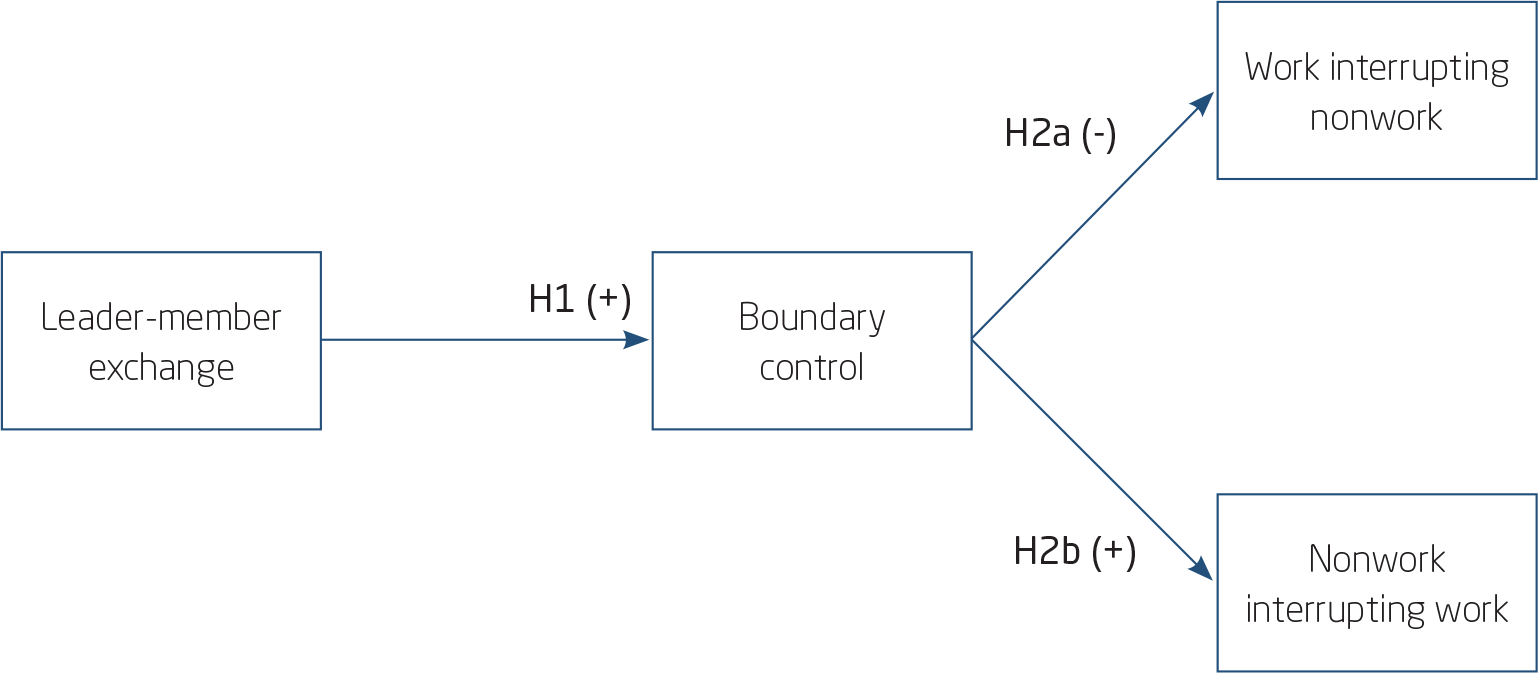
H1: In a high (versus low) LMX, leaders expect higher (versus lower) boundary control by employees.
We further delve into the above-mentioned rationale regarding leaders’ expectations by investigating expectations and permissions concerning employees’ cross-role interruptions. In the work-nonwork literature, cross-role interruptions refer to the degree to which individuals permit interruptions from one role to another (Kossek et al., 2012), involving interruptions from work to nonwork and vice versa.
Existing research has shown that individuals in high-LMX relationships are more likely to receive various forms of leadership support and socioemotional resources (Cropanzano & Mitchell, 2005). LMX theory suggests that leaders decide the amount and type of support they provide to each team member, and high-LMX relationships involve the proactive provision of resources to enhance employee well-being. Support for employees’ work-nonwork issues is one possible form of support that leaders can choose to offer (Tummers & Bronkhorst, 2014).
In this context, we argue that leaders in high-LMX relationships are more inclined to offer family support by granting permissions for cross-role interruptions between work and nonwork domains. Specifically, we posit that in high-quality LMX relationships, leaders expect fewer interruptions from work into the nonwork domain and are more permissive of nonwork demands interrupting the work domain. This theoretical reasoning aligns with prior research showing the influence of high-quality LMX on the interface between work and nonwork life (Major & Morganson, 2011).
The literature on remote work suggests that this arrangement may gene-rate conflict, with family role expectations encroaching on work due to increased accessibility (Aryee et al., 2005). Therefore, we argue that leaders’ allowance for nonwork interruptions at work to address family issues provides employees with valuable resources, helping alleviate tensions and anxiety resulting from the heightened overlap between home issues and work in remote settings (Perry et al., 2022; Rofcanin et al., 2017). Similarly, remote work may lead to difficulties in disengaging from work during off-work times (Jo & Lee, 2022). Therefore, leaders’ expectations for reduced interruptions of employees’ work in nonwork domains are also valuable resources that leaders may provide to employees in high-LMX relationships.
However, we contend that these leaders’ expectations and permissions are contingent on leaders’ beliefs about employees’ boundary control. In other words, the process by which high-LMX relationships shape leaders’ expectations concerning employees’ cross-role interruptions can be explained by leaders’ beliefs in employees’ control over how, when, and where they work. Allowing greater interruptions from nonwork issues at work presupposes that followers have the freedom to decide on such interruptions. Likewise, leaders’ expectations of few interruptions from work in nonwork domains presuppose beliefs that employees have the autonomy to establish strong and impermeable boundaries in the nonwork domain to shield it from work intrusions.
Based on this idea, it can be hypothesized that employees’ boundary control serves as a mechanism for leaders’ reduced expectations of work interrupting the nonwork domain and leaders’ permissions for nonwork to interrupt the work domain. Therefore, we propose a mediating role of boundary control as indicated in Hypotheses 2a and 2b.
-
H2a: Boundary control mediates the negative association between high LMX and leaders’ expectation of interruptions of employees’ work in the nonwork domain.
-
H2b: Boundary control mediates the positive association between high LMX and leaders’ permissions of interruptions of the employees’ nonwork in the work domain.
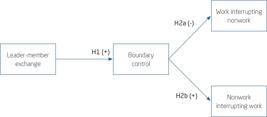
Figure 1 presents the study’s conceptual model.
RESEARCH METHOD
Participants and procedure
Participants were recruited through web-based channels using a snowball technique. The sample comprised Brazilian professionals3. Respondents were randomly assigned to one of two conditions: high LMX versus low LMX. The vignette covered a situation in which the respondents should position themselves as managers of teams composed of four members who were working remotely, and they should analyze the working model aspects of one of the team members. In line with previous experimental studies that have addressed the LMX relationship (Liang et al., 2022), we manipulated attributes of the leader-member relationship between the leader and the specific professional (Appendix A).
After reading the vignette, participants completed the questionnaire, which comprised the dependent and control variables. The final sample of the study consisted of 217 respondents who finalized and fully answered the questionnaire.
Overall, 59% of respondents were female, and the average age was 44.01 years (Standard Error [SE] = 0.80). Among the participants, 55% were married, and 53% had at least one child. Regarding educational level and working status, 75% had completed a postgraduate degree, 84% were working at the moment of the survey, 82% reported having had management position experience, and 93% did have remote work experience. A randomization check was performed between manipulation conditions, in which an adequate balance of demographic variables across the conditions was observed (Appendix B).
Measures
LMX: Based on previous studies (Bhal & Dadhich, 2011; Liang et al., 2022; Pelletier, 2012), a vignette was developed for manipulating high/low LMX relationships (Appendix A).
Boundary control: The measure was adapted from the scale proposed by Kossek et al. (2012). The questionnaire comprised three items evaluated on a Likert-type scale ranging from 1 (strongly disagree) to 5 (strongly agree). Sample items include “I have the expectation that Leonardo has clear bounda-ries between personal and professional life”, for example.
Cross-role interruption - Work interrupting nonwork: The measure was adapted from the scale proposed by Kossek et al. (2012). The questionnaire comprised five items evaluated on a Likert-type scale ranging from 1 (strongly disagree) to 5 (strongly agree). Sample items include “I have the expectation that Leonardo responds to work communication (e.g.: emails, text messages, and phone calls) during personal time off work”, for example.
Cross-role interruption - Nonwork interrupting work: The measure was adapted from the scale proposed by Kossek et al. (2012). The questionnaire comprised five items evaluated on a Likert-type scale ranging from 1 (strongly disagree) to 5 (strongly agree). Sample items include “Leonardo would be allowed to take care of personal or family demands during working hours”, for example.
Control variables: The assessed variables were gender, parental status, working status, experience in remote work, and management position experience.
Confirmatory factor analysis
In order to assess the reliability and discriminant validity of the constructs, we conducted a confirmatory factor analysis (CFA). We estimate a three-factor measurement model with each of the 13 items representing the three main latent variables. CFA indices indicated a good fit for the three- -factor measurement model, providing evidence for both reliability and discriminant validity.
The composite reliability was 0.80 for boundary control’’, 0.85 for work interrupting nonwork, and 0.73 for nonwork interrupting work above the minimum threshold of 0.60 (Bagozzi & Yi, 1988), supporting the reliability of the constructs. The model, including covariances among the variables, demonstrated an overall adequate fit with the data - χ2(78) = 1003.065, p < 0.01, standardized root mean square residual (SRMR) = 0.06, comparative fit index (CFI) = 0.92, Tucker-Lewis index (TLI) = 0.90, root mean square error of approximation (RMSEA) = 0.07.
The factor loadings of the questions within the constructs were statistically significant at the 0.01 level and were reasonably adequate. Loadings range from 0.54 to 0.91, except for the fourth reverse-coded indicator of the construct, nonwork interrupting work, which displays a factor loading of 0.30. For the sake of the face validity of the scale, we kept the reverse-coded question in the analysis.
RESULTS
Means, standard deviations, and correlations among studied variables are reported in Table 1.
Hypotheses test
A hierarchical regression analysis was conducted using Stata Software to test the hypotheses (Table 2). The control variables were examined as a baseline model, and the direct effect of LMX was assessed in the subsequent steps (Model 1 presented in Table 2). Following this, the mediation effect of boundary control was assessed using the estimate causal mediation effect analysis (MedEff command), as shown in Model 2 in Table 2.
Direct effect of LMX: The test of the first hypothesis provided evidence of a positive and significant effect of LMX on leaders’ expectation of employees’ boundary control (β = 0.42, p < 0.01), confirming H1. Although not hypothe-sized, we further examined the direct effect of LMX on the cross-role interruptions variables observing evidence for a positive and significant effect of LMX on leaders’ permission of nonwork interrupting work (β = 0.16, p < 0.05). However, the effect of LMX on leaders’ expectation of work inter-rupting nonwork was not significant (β = 0.02, p > 0.50).
Mediation effect of boundary control: The mediation test revealed a significant effect of boundary control in the association between LMX and leaders’ expectation of work interrupting nonwork (β = -0.19, p < 0.01, average causal mediated effect [ACME] 4 = -0.08, confidence interval -0.15 to -0.02), providing evidence for H2a. Regarding the effect of boundary control media-ting the association between LMX and leaders’ permission of nonwork interrupting work, the results showed a non-significant effect (β = -0.01, p > 0.50; ACME = -0.00 confidence interval -0.05 to 0.04). Therefore, H2b was not supported.
Moreover, statistically significant results were observed in the control variables related to gender, children, working status, and remote work experience. As an additional note, to validate potential response bias, social desirability bias was analyzed as a control variable, and there was no significant difference in the results.
DISCUSSION
The increased and widespread adoption of remote work in the wake of the COVID-19 crisis has brought work-nonwork dynamics back to the spotlight (Hughes & Donnelly, 2024). While remote work may afford employees greater autonomy and flexibility to organize their work and nonwork domains, it may also create opportunities for blurring the boundaries between those domains, which is directly associated with inter-role (work-nonwork) interruptions and conflict (Bulger et al., 2007). In light of these opportunities and challenges related to the process of navigating boundaries between work and nonwork spheres, considerable research attention has been specifically dedicated to the study of individuals’ perceptions of boundary control. However, few studies have explored leaders’ expectations regarding employees’ boundary control. The aim of the present study was to address this research gap.
Specifically, we investigated the impact of the quality of the relationship between leaders and followers on leaders’ expectations and permissions towards employees’ work-nonwork boundaries dynamics in a remote work context. We found evidence to support the notion that, in a remote work context, the quality of the LMX relationship between a leader and a subordinate does affect expectations and permissions demonstrated by leaders. First, the results support the prediction that in high LMX relationships, leaders expect higher boundary control on the part of the employees. Therefore, our findings support the prediction of LMX as an antecedent for work-nonwork expe-riences, in line with some existing but sparse studies (Litano et al., 2016; Morganson et al., 2017). However, while these previous studies mainly explore work-nonwork from a follower’s perspective, we reveal the influence of LMX on work-nonwork outcomes from a leader’s perspective.
Our findings further showed that leaders’ expectations of employees’ boundary control act as a mediating mechanism linking LMX relationships to work-to-nonwork interruptions. Accordingly, in high LMX relationships, leaders develop higher expectations regarding employees’ autonomy and ability to manage their boundaries between work and nonwork domains, which, in turn, unfolds in leaders also displaying lower expectations for work-related interruptions in the nonwork domain. This result supports our reasoning that high LMX relationships, as mature partnerships, characteri-zed by mutual respect, support, and trust, give leaders the confidence to grant employees autonomy to manage their own boundaries, which, ultimately, leads them to expect that work-related thoughts and tasks are kept at work. In sum, employees who have a high LMX quality not only benefit directly from such good relationship, as their leaders expect them to have greater autonomy in terms of boundary control, but also indirectly, to the extent that those expectations of greater boundary control reduce leaders’ expectations of employees’ allowance for intrusions from work into nonwork domain.
Taken together, these results point to the role of LMX in calibrating leaders’ expectations in relation to employees’ autonomy over work and nonwork boundaries. Although this could be assumed to be a matter of free choice (Nippert-Eng, 1996), scholars indicate that organizational factors and culture (practices, norms, and social expectations) may constrain employees to enact their own boundary management preferences (Bogaerts et al., 2018). Our findings suggest that, regarding leaders, employees who have a high-LMX can “take the reins” of their work-nonwork boundaries, particularly in relation to work-related intrusions into the nonwork domain. This positive influence of LMX on to work-nonwork interface is in line with some previous studies (Hill et al., 2016; Tummers & Bronkhorst, 2014).
Interestingly, our findings showed a non-significant indirect effect of LMX on leaders’ permissions for nonwork interruptions into the work domain (i.e., through perceptions of boundary control). We had argued that these permissions could be a form of supervisory support, which is one important resource provided in high-LMX relationships (Liden et al., 1997). By looking at this result together with the former, they apparently point out that, in high-LMX relationships, leaders’ expectations might be formed in such a way as to keep work-nonwork domains protected from cross-domain interruptions (i.e., higher segmentation between work and nonwork), since we did not find empirical evidence regarding leaders’ permissions for nonwork interruptions at the work domain. Further investigation could explore and validate this argument. Although intriguing, the above-mentioned findings seem to connect to Leclercq-Vandelannoitte’s (2021) case study, which provides insights into the ambivalent tension between care and control logic, in ways that guarantee employees’ autonomy and empowerment but also impose some forms of responsibility. Moreover, another possible explanation is related to the perspective that, in the remote-work decision process, leaders worry about nonwork issues distracting remote workers from work.
Theoretical and practical implications
This study contributes to the extant literature in several ways. Firstly, it adds to an emerging body of studies linking leadership theory to work- -nonwork outcomes (Litano et al., 2016; Morganson et al., 2017). Our results generally support LMX theory as a framework for understanding leaders’ perceptions of followers’ work-nonwork boundaries. Despite being traditional areas of management inquiry, the leadership and work-nonwork boundary literature have remained largely separate (Kossek et al., 2023; Li et al., 2017).
Secondly, our research explores the linkage between LMX and work- -nonwork literature from the leaders’ standpoint. The literature review revealed a lack of empirical studies investigating work-nonwork boundaries from the leaders’ perspective. Therefore, this research responds to the need for more leaders’ perspective studies in LMX and work-nonwork studies (McClean et al., 2019; Walsh et al., 2019).
Finally, we draw attention to the influence of leader-member relationships on work-nonwork boundaries in a remote work environment, contribu-ting to the ongoing discussion on remote work. Although remote work has been researched for a long time in connection with either leadership or boundary management topics, theoretical and practical discussions intensified after the COVID-19 pandemic (Carnevale & Hatak, 2020; Kniffin et al., 2021; Vaziri et al., 2020).
In addition to the theoretical contributions discussed above, this study has several practical implications. Firstly, it provides practitioners with information to support decisions on the work model to be adopted. For remote work, organizations should establish programs and practices to support employees and leaders in adapting to this scenario. Specifically for leaders, organizations could provide support in building and leveraging posi-tive relationships in a remote work context. Despite the acknowledged occurrence of LMX differentiation (Yu et al., 2018), promoting positive relationships within the team is vital. Leaders ought to be educated on 1. the potential benefits of the remote work model; 2. awareness of stigmas, prejudices, and unconscious bias towards remote workers; 3. the construction and preservation of positive relationships within the team; and 4. organizational practices of developing, managing, and evaluating remote workers. Furthermore, for practitioners in public policy, it stresses the relevance of determining policies and legislation to protect the rights, privacy, and health of employees.
Limitations and future research
As a limitation, a concern of common method bias might occur since the boundary control mediator variable was captured as a self-report at the same time as the predictor variables. Future work could address this aspect by adapting the experiment. Additionally, one could claim that the vignette elaborated for this study does not thoroughly reproduce the LMX concept. Future studies could enhance the vignette to address this concern.
Moreover, as per the literature, individuals vary in their preferences and abilities to segment work and family and to detach from work (Kossek et al., 2011). Following this rationale, it might be contended that leaders differ in the way they perceive the boundaries of employees based on their own work and non-work role identities. This study, however, did not capture the respondents’ assessment of their role identity.
Employees’ gender might also influence how leaders perceive employees’ management of boundaries. Li et al. (2017) indicate that the subordinate’s gender is a variable that has received vast attention in the literature. In this study, it was decided not to vary the gender of the assessed employee. The vignette referred to a male employee (Leonardo). A gender manipulation strategy can be applied in subsequent studies.
Furthermore, it is relevant to mention that leaders’ perceptions might differ depending on the occupation and nature of the work performed by the employees, as well as on the organizational culture.
Despite these limitations, this study can contribute to the literature and to the practice since it tackles important aspects of leadership and employees’ work-family boundaries, supported by data raised after a major disruption in the work model due to the COVID-19 pandemic. It also stimulates further investigations, as indicated in this section.
Future empirical studies could also evaluate the impact of leaders’ expectations and permissions on employees’ perceptions and behaviors. In this study, we assume that it would be important to investigate leaders’ expectations as they are argued to exert considerable influence on employees’ perceptions and ability to act on their boundary management preferences (Foucreault et al., 2018). This assumption, although in line with the social information theory (Salancik & Pfeffer, 1978) - which postulates that employee attitudes and behaviors are shaped by the social context - and corroborated by past studies (Lau & Liden, 2008), should be better investigated in future research.
Besides that, it can be suggested an investigation of the boundary control of employees and the workload in the remote work context. Specifically, it can be explored whether the perceived boundary control of employees brings along a psychological need (or pressure) to work overtime.
Lastly, antecedents of LMX and potential stigmas (or prejudgements) of leaders on remote work could be investigated. For instance: 1. whether being online or offline influences the leaders’ perception of employee engagement; and 2. the extent to which having cues of the working environment, which, in remote work, could be the employee’s home, influences the employee’s performance evaluation.
-
RAM does not have permission from the authors or evaluators to publish this article’s review.
-
RAM does not have information about open data regarding this manuscript.
-
1
We acknowledge scholars indicating differences in the concepts of remote work, teleworking, working at home, and home-based work. In this study, we adopted the terms “remote work” and “telework” interchangeably. Remote work and telework represent arrangements in which workers perform their tasks and duties from an alternative location of their own choice (International Labour Organization [ILO], 2020).
-
2
Following the rationale of scholars (Kossek et al., 2011; Poelmans & Beham, 2008), the term “family” does not simply refer to traditional nuclear families but to the nonwork and personal roles of all employees. In this study, we use the terms “work-family”, “work-life”, and “work-nonwork” (and their derivates) interchangeably.
-
3
The study was approved by the Institution’s Ethical Committee (report number 078/2022). Participants have provided appropriate consent.
-
4
Average causal mediation effect (ACME) represents the indirect effect. ACME is significant when the confidence interval does not include zero.
APPENDIX A Experiment vignette
APPENDIX B Randomization check across manipulation conditions
REFERENCES
- Aksoy, C. G., Barrero, J. M., Bloom, N., Davis, S. J., Dolls, M., & Zarate, P. (2022). Working from home around the world. Brookings Papers on Economic Activity, 23(06), 38-41.
-
Allen, T. D., Cho, E., & Meier, L. L. (2014). Work-family boundary dynamics. Annual Review of Organizational Psychology and Organizational Behavior, 1, 99-121. https://doi.org/10.1146/annurev-orgpsych-031413-091330
» https://doi.org/10.1146/annurev-orgpsych-031413-091330 -
Allen, T. D., Merlo, K., Lawrence, R. C., Slutsky, J., & Gray, C.E. (2021). Boundary management and work-nonwork balance while working from home. Applied Psychology, 70, 60-84. https://doi.org/10.1111/apps.12300
» https://doi.org/10.1111/apps.12300 -
Aryee, S., Srinivas, E. S., & Tan, H. H. (2005). Rhythms of life: Antecedents and outcomes of work-family balance in employed parents. The Journal of Applied Psychology, 90(1), 132-146. https://doi.org/10.1037/0021-9010.90.1.132
» https://doi.org/10.1037/0021-9010.90.1.132 -
Ashforth, B. E., Kreiner, G. E., & Fugate, M. (2000). All in a day’s work: Boundaries and micro role transitions. Academy of Management Review, 25(3), 472-491. https://doi.org/10.5465/AMR.2000.3363315
» https://doi.org/10.5465/AMR.2000.3363315 -
Bagozzi, R. P., & Yi, Y. (1988). On the evaluation of structural equation models. Journal of the Academy of Marketing Science, 16(1), 74-94. https://doi.org/10.1007/BF02723327
» https://doi.org/10.1007/BF02723327 -
Bailey, D. E., & Kurland, N. B. (2002). A review of telework research: Findings, new directions and lessons for the study of modern work. Journal of Organi-zational Behavior, 23(4), 383-400. https://doi.org/10.1002/job.144
» https://doi.org/10.1002/job.144 -
Barber, L. K., & Santuzzi, A. M. (2015). Please respond ASAP: Workplace telepressure and employee recovery. Journal of Occupational Health Psychology, 20(2), 172-189. https://doi.org/10.1037/a0038278
» https://doi.org/10.1037/a0038278 -
Bhal, K. T., & Dadhich, A. (2011). Impact of ethical leadership and leader-member exchange on whistle blowing: The moderating impact of the moral intensity of the issue. Journal of Business Ethics, 103(3), 485-496. https://doi.org/10.1007/s10551-011-0876-z
» https://doi.org/10.1007/s10551-011-0876-z -
Bogaerts, Y., De Cooman, R., & De Gieter, S. (2018). Getting the work-nonwork interface you are looking for: The relevance of work-nonwork boundary management fit. Frontiers in Psychology, 9, 1158. https://doi.org/10.3389/fpsyg.2018.01158
» https://doi.org/10.3389/fpsyg.2018.01158 - Brower, H. H., Schoorman, F. D., & Tan, H. H. (2000). A model of relational leadership: The integration of trust and leader-member exchange. The Leadership Quarterly, 11(2), 227-250.
-
Bulger, C. A., Matthews, R. A., & Hoffman, M. E. (2007). Work and personal life boundary management: Boundary strength, work/personal life balance and the segmentation-integration continuum. Journal of Occupational Health Psychology, 12(4), 365-375. https://doi.org/10.1037/1076-8998.12.4.365
» https://doi.org/10.1037/1076-8998.12.4.365 -
Capitano, J., McAlpine, K. L., & Greenhaus, J. H. (2019). Organizational influences on work-home boundary permeability: A multidimensional perspective. In A. R. Wheeler, M. R. Buckley, J. Halbesleben & J. E. Baur (Eds.), Research in personnel and human resources management (Vol. 37, pp. 133-172). Emerald. https://doi.org/10.1108/S0742-730120190000037005
» https://doi.org/10.1108/S0742-730120190000037005 -
Carnevale, J. B., & Hatak, I. (2020). Employee adjustment and well-being in the era of COVID-19: Implications for human resource management. Journal of Business Research, 116, 183-187. https://doi.org/10.1016/j.jbusres.2020.05.037
» https://doi.org/10.1016/j.jbusres.2020.05.037 - Casper, W. J., Vaziri, H., Wayne, J. H., DeHauw, S., & Greenhaus, J. (2018). The jingle-jangle of work-nonwork balance: A comprehensive and meta-analytic review of its meaning and measurement. Journal of Applied Psy-chology, 103,182-214
-
Charalampous, M., Grant, C. A., Tramontano, C., & Michailidis, E. (2019). Systematically reviewing remote e-workers’ well-being at work: a multidimensional approach. European Journal of Work and Organizational Psychology, 28(1) 51-73. https://doi.org/10.1080/1359432X.2018.1541886
» https://doi.org/10.1080/1359432X.2018.1541886 -
Clark, S. C. (2000). Work/family border theory: A new theory of work/family balance. Human Relations, 53(6), 747-770. https://doi.org/10.1177/0018726700536001
» https://doi.org/10.1177/0018726700536001 -
Cropanzano, R., & Mitchell, M. S. (2005). Social exchange theory: An interdisciplinary review. Journal of Management, 31(6), 874-900. http://dx.doi.org/10.1177/0149206305279602
» http://dx.doi.org/10.1177/0149206305279602 - Eurofound. (2022). The rise in telework: Impact on working conditions and regulations Publications Office of the European Union.
-
Foucreault, A., Ollier-Malaterre, A., & Ménard, J. (2018). Organizational culture and work-life integration: A barrier to employees’ respite? The International Journal of Human Resource Management, 29(16), 2378-2398. https://doi.org/10.1080/09585192.2016.1262890
» https://doi.org/10.1080/09585192.2016.1262890 -
Gächter, S., & Renner, E. (2018). Leaders as role models and ‘belief managers’ in social dilemmas. Journal of Economic Behavior & Organization, 154, 321-334. https://doi.org/10.1016/j.jebo.2018.08.001
» https://doi.org/10.1016/j.jebo.2018.08.001 -
Gajendran, R. S., & Harrison, D. A. (2007). The good, the bad, and the unknown about telecommuting: Meta-analysis of psychological mediators and individual consequences. Journal of Applied Psychology, 92(6), 1524-1541. https://doi.org/10.1037/0021-9010.92.6.1524
» https://doi.org/10.1037/0021-9010.92.6.1524 -
Gajendran, R. S., Harrison, D. A., & Delaney-Klinger, K. (2015). Are telecommuters remotely good citizens? Unpacking telecommuting’s effects on performance via i-Deals and job resources. Personnel Psychology, 68(2), 353-393. https://doi.org/10.1111/peps.12082
» https://doi.org/10.1111/peps.12082 -
Golden, T. D. (2006). The role of relationships in understanding telecommuter satisfaction. Journal of Organizational Behavior, 27(3), 319-340. https://doi.org/10.1002/job.369
» https://doi.org/10.1002/job.369 -
Graen, G. B., & Uhl-Bien, M. (1995). Relationship-based approach to leader-ship: Development of leader-member exchange (LMX) theory of leadership over 25 years: Applying a multi-level multi-domain perspective. The Leadership Quarterly, 6(2), 219-247. https://doi.org/10.1016/1048-9843(95)90036-5
» https://doi.org/10.1016/1048-9843(95)90036-5 -
Hill, R. T., Morganson, V. J., Matthews, R. A., & Atkinson, T. P. (2016). LMX, breach perceptions, work-family conflict, and well-being: A mediational model. The Journal of Psychology, 150(1), 132-149. https://doi.org/10.1080/00223980.2015.1014307
» https://doi.org/10.1080/00223980.2015.1014307 -
Hughes, E., & Donnelly, R. (2024). Theorising the impact of macroturbulence on work and HRM: COVID-19 and the abrupt shift to enforced homeworking. Human Resource Management Journal, 34(2), 386-402. https://doi.org/10.1111/1748-8583.12465
» https://doi.org/10.1111/1748-8583.12465 -
International Labour Organization (ILO). (2020, June). COVID-19: Guidance for labour statistics data collection https://ilo.org/wcmsp5/groups/public/---dgreports/---stat/documents/publication/wcms_747075.pdf
» https://ilo.org/wcmsp5/groups/public/---dgreports/---stat/documents/publication/wcms_747075.pdf -
International Labour Organization (ILO). (2021, March). Policy brief https://www.ilo.org/wcmsp5/groups/public/---ed_protect/---protrav/---travail/documents/briefingnote/wcms_777896.pdf
» https://www.ilo.org/wcmsp5/groups/public/---ed_protect/---protrav/---travail/documents/briefingnote/wcms_777896.pdf -
Jo, Y., & Lee, D. (2022). Activated at home but deactivated at work: How daily mobile work leads to next-day psychological withdrawal behavior. Journal of Organizational Behavior, 43, 1-16. https://doi.org/10.1002/job.2563
» https://doi.org/10.1002/job.2563 -
Kniffin, K. M., Narayanan, J., Anseel, F., Antonakis, J., Ashford, S. P., Bakker, A. B., Bamberger, P., Bapuji, H., Bhave, D. P., Choi, V. K., Creary, S. J., Demerouti, E., Flynn, F. J., Gelfand, M. J., Greer, L. L., Johns, G., Kesebir, S., Klein, P. G., Lee, S. Y., … Vugt, M. van. (2021). COVID-19 and the workplace: Implications, issues, and insights for future research and action. American Psychologist, 76(1), 63-77. https://doi.org/10.1037/amp0000716
» https://doi.org/10.1037/amp0000716 -
Koch, A. R., & Binnewies, C. (2015). Setting a good example: Supervisors as work-life-friendly role models within the context of boundary management. Journal of Occupational Health Psychology, 20(1), 82-92. https://doi.org/10.1037/a0037890
» https://doi.org/10.1037/a0037890 -
Kossek, E. E., Baltes, B. B., & Matthews, R. A. (2011). How work-family research can finally have an impact in organizations. Industrial and Organizational Psychology, 4(3), 352-369. https://doi.org/10.1111/j.1754-9434.2011.01353.x
» https://doi.org/10.1111/j.1754-9434.2011.01353.x -
Kossek, E. E., & Lautsch, B. A. (2012). Work-family boundary management styles in organizations. Organizational Psychology Review, 2(2), 152-171. https://doi.org/10.1177/2041386611436264
» https://doi.org/10.1177/2041386611436264 -
Kossek, E. E., Perrigino, M. B., & Lautsch, B. A. (2022). Work-life flexibility policies from a boundary control and implementation perspective: A review and research framework. Journal of Management, 46(6), 2062-2108. https://doi.org/10.1177/01492063221140354
» https://doi.org/10.1177/01492063221140354 -
Kossek, E. E., Perrigino, M., Russo, M., & Morandin, G. (2023). Missed connections between the leadership and work-life fields: Work-life supportive leadership for a dual agenda. Academy of Management Annals, 17(1), 181-217. https://doi.org/10.5465/annals.2021.0085
» https://doi.org/10.5465/annals.2021.0085 -
Kossek, E. E., Ruderman, M. N., Braddy, P. W., & Hannum, K. M. (2012). Work-nonwork boundary management profiles: A person-centered approach. Journal of Vocational Behavior, 81(1), 112-128. https://doi.org/10.1016/j.jvb.2012.04.003
» https://doi.org/10.1016/j.jvb.2012.04.003 -
Kurland, N. B., & Cooper, C. D. (2002). Manager control and employee isolation in telecommuting environments. Journal of High Technology Management Research, 13(1), 107-126. https://doi.org/10.1016/S1047-8310(01)00051-7
» https://doi.org/10.1016/S1047-8310(01)00051-7 -
Lau, D. C., & Liden, R. C. (2008). Antecedents of coworker trust: Leaders’ blessings. Journal of Applied Psychology, 93(5), 1130-1138. https://doi.org/10.1037/0021-9010.93.5.1130
» https://doi.org/10.1037/0021-9010.93.5.1130 -
Lautsch, B. A., Kossek, E. E., & Eaton, S. C. (2009). Supervisory approaches and paradoxes in managing telecommuting implementation. Human Relations, 62(6), 795-827. https://doi.org/10.1177/0018726709104543
» https://doi.org/10.1177/0018726709104543 -
Leclercq-Vandelannoitte, A. (2021). The new paternalism? The workplace as a place to work-and to live. Organization, 28(6), 949-975. https://doi.org/10.1177/13505084211015374
» https://doi.org/10.1177/13505084211015374 -
Lembrechts, L., Zanoni, P., & Verbruggen, M. (2016). The impact of team characteristics on the supervisor’s attitude towards telework: A mixed-method study. International Journal of Human Resource Management, 29(21), 3118-3146. https://doi.org/10.1080/09585192.2016.1255984
» https://doi.org/10.1080/09585192.2016.1255984 -
Li, A., McCauley, K. D., & Shaffer, J. A. (2017). The influence of leadership behavior on employee work-family outcomes: A review and research agenda. Human Resource Management Review, 27(3), 458-472. https://doi.org/10.1016/j.hrmr.2017.02.003
» https://doi.org/10.1016/j.hrmr.2017.02.003 -
Liang, Y., Liu, Y., Park, Y., & Wang, L. (2022). Treat me better, but is it really better? Applying a resource perspective to understanding leader-member exchange (LMX), LMX differentiation, and work stress. Journal of Occupational Health Psychology, 27(2), 223-239. https://doi.org/10.1037/ocp0000303
» https://doi.org/10.1037/ocp0000303 -
Liao, Y., Yang, Z., Wang, M., & Kwan, H. K. (2016). Work-family effects of LMX: The moderating role of work-home segmentation preferences. Leader-ship Quarterly, 27(4), 671-683. https://doi.org/10.1016/j.leaqua.2016.03.003
» https://doi.org/10.1016/j.leaqua.2016.03.003 -
Liden, R. C., & Antonakis, J. (2009). Considering context in psychological leadership research. Human Relations, 62(11), 1587-1605. https://doi.org/10.1177/0018726709346374
» https://doi.org/10.1177/0018726709346374 - Liden, R. C., Sparrowe, R. T., & Wayne, S. J. (1997). Leader-member exchange theory: The past and potential for the future. In G. R. Ferris (Ed.), Research in personnel and human resources management (Vol. 15, pp. 47-119). Elsevier Science/JAI Press.
-
Litano, M. L., Major, D. A., Landers, R. N., Streets, V. N., & Bass, B. I. (2016). A meta-analytic investigation of the relationship between leader-member exchange and work-family experiences. Leadership Quarterly, 27(5), 802-817. https://doi.org/10.1016/j.leaqua.2016.06.003
» https://doi.org/10.1016/j.leaqua.2016.06.003 - Major, D. A., & Morganson, V. J. (2011). Coping with work-family conflict: A leader-member exchange perspective. Journal of Occupational Health Psychology, 16(1), 126-138.
- Martin, R., Guillaume, Y., Thomas, G., Lee, A., & Epitropaki, O. (2015). Leader-member exchange (LMX) and performance: A meta-analytic review. Personnel Psychology, 69(1), 67-121.
-
Matta, F. K., & Van Dyne, L. (2020). Understanding the disparate behavioral consequences of LMX differentiation: The role of social comparison emotions. Academy of Management Review, 45(1), 154-180. https://doi.org/10.5465/amr.2016.0264
» https://doi.org/10.5465/amr.2016.0264 -
McClean, S. T., Barnes, C. M., Courtright, S. H., & Johnson, R. E. (2019). Resetting the clock on dynamic leader behaviors: A conceptual integration and agenda for future research. Academy of Management Annals, 13(2), 479-508. https://doi.org/10.5465/annals.2017.0081
» https://doi.org/10.5465/annals.2017.0081 -
Morganson, V. J., Major, D. A., & Litano, M. L. (2017). A multilevel examination of the relationship between leader-member exchange and work-family outcomes. Journal of Business and Psychology, 32, 379-393. https://doi.org/10.1007/s10869-016-9447-8
» https://doi.org/10.1007/s10869-016-9447-8 -
Nilles, J. M. (1975). Telecommunications and prganizational decentralization. IEEE Transactions on Communications, 23(10), 1142-1147. https://doi.org/10.1109/TCOM.1975.1092687
» https://doi.org/10.1109/TCOM.1975.1092687 - Nippert-Eng, C. (1996). Home and work: Negotiating boundaries through everyday life University of Chicago Press.
- Park, Y., Liu, Y., & Headrick, L. (2020). When work is wanted after hours: Testing weekly stress of information communication technology demands using boundary theory. Journal of Organizational Behavior, 41(6), 518-534.
-
Pelletier, K. L. (2012). Perceptions of and reactions to leader toxicity: Do leader-follower relationships and identification with victim matter? The Leadership Quarterly, 23(3), 412-424. https://doi.org/10.1016/j.leaqua.2011.09.011
» https://doi.org/10.1016/j.leaqua.2011.09.011 -
Perry, S. J., Carlson, D. S., Kacmar, K. M., Wan, M. M., & Thompson, M. J. (2022). Interruptions in remote work: A resource-based model of work and family stress. Journal of Business and Psychology, 38, 1023-1041. https://doi.org/10.1007/s10869-022-09842-y
» https://doi.org/10.1007/s10869-022-09842-y -
Piszczek, M. M. (2017). Boundary control and controlled boundaries: Organizational expectations for technology use at the work-family interface. Journal of Organizational Behavior, 38(4), 592-611. https://doi.org/10.1002/job.2153
» https://doi.org/10.1002/job.2153 -
Poelmans, S., & Beham, B. (2008). The moment of truth: Conceptualizing managerial work-life policy allowance decisions. Journal of Occupational and Organizational Psychology, 81(3), 393-410. https://doi.org/10.1348/096317908X314865
» https://doi.org/10.1348/096317908X314865 -
Powell, G. N., Greenhaus, J. H., Allen, T. D., & Johnson, R. E. (2019). Introduction to special topic forum: Advancing and expanding work-life theory from multiple perspectives. The Academy of Management Review, 44(1), 54-71. https://doi.org/10.5465/amr.2018.0310
» https://doi.org/10.5465/amr.2018.0310 -
Rofcanin, Y., Las Heras, M., & Bakker, A. B. (2017). Family supportive supervisor behaviors and organizational culture: Effects on work engagement and performance. Journal of Occupational Health Psychology, 22(2), 207-217. https://doi.org/10.1037/ocp0000036
» https://doi.org/10.1037/ocp0000036 -
Salancik, G. R., & Pfeffer, J. (1978). A social information processing approach to job attitudes and task design. Administrative Science Quarterly, 23(2), 224-253. https://doi.org/10.2307/2392563
» https://doi.org/10.2307/2392563 -
Sardeshmukh, S. R., Sharma, D., & Golden, T. D. (2012). Impact of telework on exhaustion and job engagement: A job demands and job resources model. New Technology, Work and Employment, 27(3), 193-207. https://doi.org/10.1111/j.1468-005X.2012.00284.x
» https://doi.org/10.1111/j.1468-005X.2012.00284.x - Straub, C., Beham, B., & Islam, G. (2019). Crossing boundaries: Integrative effects of supervision, gender and boundary control on work engagement and work-to-family positive spillover. The International Journal of Human Resource Management, 30(20), 2831-2854.
-
Taser, D., Aydin, E., Torgaloz, A. O., & Rofcanin, Y. (2022). An examination of remote e-working and flow experience: The role of technostress and loneliness. Computers in Human Behavior, 127, 107020. https://doi.org/10.1016/j.chb.2021.107020
» https://doi.org/10.1016/j.chb.2021.107020 -
Thomas, L. T., & Ganster, D. C. (1995). Impact of family-supportive work variables on work-family conflict and strain: A control perspective. Journal of Applied Psychology, 80(1), 6-15. https://doi.org/10.1037/0021-9010.80.1.6
» https://doi.org/10.1037/0021-9010.80.1.6 -
Toscano, F., Salvatore, Z., & Galanti, T. (2022). Is a good boss always a plus? LMX, Family-work conflict, and remote working satisfaction during the COVID-19 pandemic. Social Sciences, 11(6), 248. https://doi.org/10.3390/socsci11060248
» https://doi.org/10.3390/socsci11060248 - Tummers, L. G., & Bronkhorst, B. A. C. (2014). The impact of leader-member exchange (LMX) on work-family interference and work-family facilitation. Personnel Review, 43(4), 573-591.
-
Van Zoonen, W., & Sivunen, A. E. (2022). The impact of remote work and mediated communication frequency on isolation and psychological distress. European Journal of Work and Organizational Psychology, 31(4), 610-621. https://doi.org/10.1080/1359432X.2021.2002299
» https://doi.org/10.1080/1359432X.2021.2002299 -
Vaziri, H., Casper, W. J., Wayne, J. H., & Matthews, R. A. (2020). Changes to the work-family interface during the COVID-19 pandemic: Examining predictors and implications using latent transition analysis. The Journal of Applied Psychology, 105(10), 1073-1087. https://doi.org/10.1037/apl0000819
» https://doi.org/10.1037/apl0000819 -
Vyasm, L. (2022). “New normal” at work in a post-COVID world: Work-life balance and labor markets. Policy and Society, 41(1), 155-167. https://doi.org/10.1093/polsoc/puab011
» https://doi.org/10.1093/polsoc/puab011 -
Walsh, B. M., Matthews, R. A., Toumbeva, T. H., Kabat-Farr, D., Philbrick, J., & Pavisic, I. (2019). Failing to be family-supportive: Implications for supervisors. Journal of Management, 45(7), 2952-2977. https://doi.org/10.1177/0149206318774621
» https://doi.org/10.1177/0149206318774621 -
Wang, B., Liu, Y., Qian, J., & Parker, S. K. (2021). Achieving effective remote working during the COVID-19 pandemic: A work design perspective. Applied Psychology, 70(1) 16-59. https://doi.org/10.1111/apps.12290
» https://doi.org/10.1111/apps.12290 -
Yu, A., Matta, F. K., & Cornfield, B. (2018). Is leader-member exchange differentiation beneficial or detrimental for group effectiveness? A metaanalytic investigation and theoretical integration. Academy of Management Journal, 61(3), 1158-1188. https://doi.org/10.5465/amj.2016.1212
» https://doi.org/10.5465/amj.2016.1212
Edited by
-
EDITORIAL PRODUCTION
Publishing coordinationAndreia Cominetti
-
Editorial intern
Bruna Silva de Angelis and Isabelle Callegari Lopes
-
Language editor
Paula Di Sessa Vavlis
-
Layout designer
Emap
-
Graphic designer
Emap
-
EDITORIAL BOARD
Editor-in-chiefAlmir Martins Vieira
-
Associated editor
Amalia Pérez-Nebra
-
Technical support
Gabriel Henrique Carille
RAM does not have information about open data regarding this manuscript.