
 Does negotiating dreams open doors? How structural constraints moderate the mixed effects of career inflexibility on an individual’s perceived employability
Abstract
Objectives: This study aimed to analyze the moderating role of structural constraint on the direct and indirect effects—via effort perseverance and consistency of interests—of career inflexibility on employability.
Originality/value: This study contributes to the literature by demonstrating how career inflexibility can negatively impact employability, considering both individual-level factors (perseverance of effort and consistency of interests) and contextual-level factors (structural constraints).
Design/methodology/approach: The research used a descriptive, quantitative, cross-sectional design. The final sample consisted of 545 responses, selected using convenience sampling and the snowball method. The data analysis technique used was structural equation modeling with partial least squares (PLS) estimation.
Findings: The results verified a negative direct effect between career inflexibility and perseverance of effort and an indirect adverse impact of career inflexibility on employability via perseverance of effort. Additionally, a moderating effect was identified for perceived structural constraints on the mediating relationship of perseverance of effort, and no significant results were found for the impact via consistency of interests.
Keywords:
career inflexibility; employability; perseverance of effort; structural constraint
Keywords:
inflexibilidade de carreira; empregabilidade; perseverança no esforço; restrição estrutural
Resumo
Objetivos: Este estudo teve como objetivo analisar o papel moderador das restrições estruturais nos efeitos diretos e indiretos – via perseverança no esforço e consistência de interesses – da inflexibilidade de carreira sobre a empregabilidade.
Originalidade/valor: O estudo contribui para a literatura ao demonstrar como a inflexibilidade de carreira pode impactar negativamente a empregabilidade, considerando tanto fatores em nível individual (perseverança no esforço e consistência de interesses) quanto fatores em nível contextual (restrições estruturais).
Design/metodologia/abordagem: A pesquisa utilizou um delineamento descritivo, quantitativo e transversal. A amostra final foi composta por 545 respostas, selecionadas por conveniência e pelo método bola de neve. A técnica de análise de dados empregada foi a modelagem de equações estruturais com estimação por mínimos quadrados parciais (PLS).
Resultados: Os resultados evidenciaram um efeito direto negativo entre inflexibilidade de carreira e perseverança no esforço, bem como um impacto indireto negativo da inflexibilidade de carreira sobre a empre-gabilidade por meio da perseverança no esforço. Adicionalmente, identificou-se um efeito moderador das restrições estruturais percebidas na relação mediadora da perseverança no esforço, enquanto nenhum resultado significativo foi encontrado para o impacto via consistência de interesses.
INTRODUCTION
Career studies have explored the influence of contextual and environ-mental factors on individuals’ professional development (Callanan et al., 2017; Rodrigues et al., 2019). Although dominant theories emphasize the role of individuals in constructing their career paths, research indicates that environmental changes can significantly impact contemporary careers (Blokker et al., 2019; Jackson & Tomlinson, 2020). In this scenario, flexibility and adaptability emerge as crucial attributes for fostering employability, defined not only as the ability to secure a job but also to effectively adapt to ever-changing demands and identify new opportunities in the dynamic labor market (Fugate et al., 2004; Jackson & Tomlinson, 2020; Trevor, 2001; Fugate et al., 2021).
However, career inflexibility presents a notable dilemma. While, at first glance, it may seem like an obstacle to employability, a deeper analysis reveals an ambiguous spectrum of influences, oscillating between positive and negative implications for employability (Cardador & Caza, 2012; Porfeli et al., 2011; Wrosch et al., 2003). Within this context, previous studies have described career inflexibility as a predefined path, marked by resistance to considering alternative trajectories (Crocetti et al., 2008; Cardador & Caza, 2012; Porfeli et al., 2011). However, this deep commitment may be fundamental for sustaining the consistency of long-term goals. Individuals with this characteristic tend to be less inclined to career changes, demonstrate remarkable perseverance in the face of challenges, resist the temptation to explore alternatives, and may be driven toward developing professional expertise—desirable attributes for employability (Duckworth & Quinn, 2009; Van den Broeck et al., 2014; Wrosch et al., 2013).
On the other hand, career inflexibility also entails substantial challenges. Resistance to change in career plans, inherent in this phenomenon, emerges as a significant barrier, influencing an individual’s ability to explore and capitalize on new opportunities and skills in a labor market characterized by volatility and constant evolution (Cardador & Caza, 2012; Ngo et al., 2017; Obodaru, 2017). Inflexibility is exacerbated by an individual’s inability to reassess and adapt their career goals and strategies in the face of dynamic and unpredictable challenges throughout their professional trajectory (Cardador & Caza, 2012; Heckhausen et al., 2010). Rather than fostering perseverance, this rigidity can paradoxically lead to frustration and dissatisfaction (Bailly et al., 2012; Heckhausen et al., 2010). The direct consequence is a progressive decline in effort directed toward career goals, significantly undermining employability (Bailly et al., 2012; Lucas et al., 2015; Houston et al., 2020).
Moreover, it is crucial to consider the influence of structural constraints on the relationship between career inflexibility and employability (Duffy et al., 2012a). Structural constraint refers to external and structural factors that limit an individual’s career choices and opportunities (Duffy et al., 2012b). The perception of these constraints can influence how career inflexibility affects employability, either amplifying or mitigating its negative or positive effects.
However, despite these studies’ contributions, two crucial research gaps remain. First, it is necessary to reconcile the contradictory arguments regarding the relationship between career inflexibility and employability, simultaneously exploring its positive and negative effects. Instead of a theoretical approach that positions these effects in conflict, it is important to investigate whether the relationship between career inflexibility and employability can be characterized as a “double-edged sword,” with simultaneous positive and negative impacts (Cardador & Caza, 2012; Ngo et al., 2017; Obodaru, 2017). Second, most career and employability studies have been conducted in developed countries, where access to education and career choice opportunities is greater (McMahon & Watson, 2020). However, it is essential to examine how individual variations may influence the relationship between career inflexibility and employability in the degree of freedom individuals have to make professional choices, especially in developing countries such as Brazil (Barlow et al., 2020; Blustein et al., 2019; Kwon, 2019; Wrosch et al., 2007).
To fill these gaps, this study aims to analyze the moderating role of structural constraints on the positive and negative effects of career inflexibility on employability. We argue that, although career inflexibility may be negatively related to employability, this effect coexists with a positive impact, mediated by the consistency of individual interests, and an adverse effect, related to decreased effort perseverance, thereby impairing employability.
Furthermore, we propose that for individuals who perceive greater structural constraints in their career choices, the positive effect of career inflexibility on employability, via the consistency of interests, is weakened. At the same time, the adverse impact, related to reduced effort perseverance, is intensified. Our research contributes to the employability literature by examining the relationship between career inflexibility and perceived employability. We adopt a mixed perspective, considering both the positive and negative effects of inflexibility on employability. Traditionally, inflexibility has been viewed as a negative trait that limits adaptability and change in the workplace (Fugate et al., 2004; Fugate et al., 2021; Lysova et al., 2018). However, we argue that inflexibility can also be interpreted as a positive characteristic for a linear career path.
By exploring this duality, we aim to gain a broader understanding of the impacts of inflexibility on employability. Additionally, we emphasize the importance of structural constraints in the relationship between career inflexibility and employability. Considering these constraints and understanding this interaction are crucial for a more comprehensive view of the contextual challenges individuals face in both their job search and career development (Duffy et al., 2012a; Kovalenko & Mortelmans, 2016). Our research provides an in-depth understanding that can inform strategies and interventions in career guidance and development. By considering inflexibility and structural constraints, professionals can help individuals build sustainable, fulfilling career paths. In this way, we advance knowledge of the factors that influence individuals’ ability to obtain and maintain jobs in the labor market.
THEORETICAL FRAMEWORK
Career inflexibility and its impact on perceived employability
Career inflexibility emerges as a central theme in organizational psychology literature, reflecting its complexity and significant impact on professional development. This inflexibility is characterized by an individual’s reluctance to explore or transition to alternative career paths, marked by a narrow and restrictive view of available career opportunities (Porfeli et al., 2011). This phenomenon is further accentuated by a strict adherence to a predefined career path (Cardador & Caza, 2012). Individuals prone to this tendency may demonstrate deep commitment to their chosen path, resulting in a unidirectional journey enriched by accumulated experiences (Crocetti et al., 2008).
However, this rigidity, while it may indicate linear consistency, can be a double-edged sword. The reluctance to adapt or reconfigure career goals, even in a constantly evolving work environment, may lead to professional stagnation (Wrosch et al., 2013). This results in missed opportunities, unrealized innovations, and untapped potential—critical factors in a labor market where adaptability is key to employability (Callanan et al., 2017; Santos et al., 2020).
Employability, in turn, is conceptualized as an individual’s ability to respond to situational demands for securing and maintaining a position within an organization, either in their current job or in a new one (Vanhercke et al., 2014). Historically, employability has been addressed through two dominant theoretical lenses: the competency-based perspective (Lysova et al., 2018; Van der Heijden & Van der Heijden, 2006) and the self-perception-based perspective, also referred to as perceived employability (Blokker et al., 2019; Lysova et al., 2018; Ngo et al., 2017). This study adopts the perceived employability perspective.
Perceived employability refers to an individual’s belief in their own skills, knowledge, and capabilities to remain employable and secure future employment. This employability can be evaluated both internally and externally (Rothwell & Arnold, 2007). Internally perceived employability refers to the belief that an individual possesses the necessary skills to perform their current job tasks. In contrast, external perceived employability pertains to the belief that an individual has the required skills to find a new job or change jobs in the future (Fugate et al., 2021; Santos et al., 2020).
However, perceived employability is not solely an individual matter; it is also influenced by the broader context in which an individual is situated. This context includes factors such as the economy, labor market conditions, employment opportunities, government policies, and technological advancements (Kovalenko & Mortelmans, 2016). Thus, perceived employability is shaped by the availability of employment opportunities within a given context and by the resources and opportunities accessible to an individual in the labor market (McQuaid & Lindsay, 2005).
Lysova et al. (2018) highlight that career inflexibility can negatively impact an individual’s perceived employability, meaning their ability to remain employed or find new job opportunities. This can be particularly problematic in rapidly and constantly changing labor market contexts, as currently observed. Fugate et al. (2021) found that career inflexibility can limit learning and professional development opportunities, affecting an individual’s adaptability to labor market changes. Furthermore, career inflexibility can lead to professional stagnation and a lack of diverse experiences, hindering perceived employability.
Kovalenko and Mortelmans (2016) also argue that career inflexibility may result in a lack of essential skills and competencies for employability. This can occur when an individual becomes highly specialized in a field but fails to develop complementary skills, thereby limiting their employability in other areas. Santos et al. (2020) emphasize that career inflexibility can be exacerbated during economic crises and political instability, when the demand for specific skill sets may change rapidly. In these contexts, inflexible individuals may struggle to adapt to changes and find new job opportunities. Therefore, it is suggested that:
-
H1: Career inflexibility is negatively associated with employability.
The mediating role of perseverance of effort and consistency of interest
The Goal Setting Theory (GST), proposed by Locke et al. (1981), high-lights the importance of goal setting as a driving mechanism for achieving individual objectives. According to this theory, defining clear and challenging goals positively influences an individual’s motivation, encouraging them to persevere for extended periods in pursuit of these goals. Within GST, it is emphasized that highly complex goals significantly impact an individual’s commitment. This effect results from various factors, such as the prospect of rewards, feedback received throughout the process, and active engagement in goal pursuit. The convergence of these elements motivates individuals to commit and persist in their actions, even when faced with challenges and obstacles (Locke et al., 1981).
In general, there is a strong belief that persistence in pursuing objectives is an essential factor in achieving personal goals (Wrosch et al., 2003). In this context, this study proposes adopting the two dimensions of the construct “grit”—perseverance of effort and consistency of interests—introduced initially by Duckworth et al. (2007). This construct is conceptualized as the degree of persistence and passion that individuals devote to pursuing their long-term goals and consists of the dimensions of perseverance of effort and consistency of interests (Duckworth et al., 2007; Duckworth & Quinn, 2009).
Thus, Goal Setting Theory (GST) and the dimensions of the grit construct provide a comprehensive theoretical framework for understanding the importance of goal setting and career aspirations, as well as the relevance of persistence in achieving objectives. It is important to emphasize that there is an ongoing debate about the predictive capacity of grit as a higher-order construct. Duckworth et al. (2007) initially proposed grit as a second-order construct composed of consistency of interests and perseverance of effort. However, recent studies argue that both constructs, when analyzed separately, may have distinct relationships with other variables, making their independent analysis more precise and assertive (Credé, 2018; Disabato et al., 2019; Salisu et al., 2020; Van Doren et al., 2019). Based on this understanding, this paper opts to treat perseverance of effort and consistency of interests as independent variables rather than components of the grit construct.
In this sense, the grit dimension “perseverance of effort” is defined as an unwavering, persistent commitment to overcoming challenges and barriers to achieving objectives (Credé, 2018; Datu et al., 2016). The literature suggests that perseverance of effort allows for flexibility in career trajectories toward goal achievement (Duckworth & Gross, 2014). In this context, it is conceivable that career inflexibility may compromise the ability to reassess goals, which is essential for overcoming challenges throughout one’s professional journey, thereby hindering the development of long-term perseverance (Cardador & Caza, 2012). This perception can lead individuals to frustration and dissatisfaction, factors that tend to reduce the effort exerted toward goal attainment (Bailly et al., 2012; Heckhausen et al., 2010).
Furthermore, it is proposed that when individuals do not negotiate alternative paths to achieve a goal (career inflexibility), they compromise their motivation and effort in the face of persistent adversity, which may negatively impact their employability (Datu et al., 2016; Duckworth et al., 2007). On the other hand, Houston et al., (2020) suggest that a high degree of perseverance in certain situations may lead to the pursuit of unattainable goals. Based on these considerations, it is hypothesized that perseverance of effort may negatively mediate the relationship between career inflexibility and employability. Therefore, the following hypotheses are proposed:
-
H2: Career inflexibility is negatively associated with perseverance of effort.
-
H3: Perseverance of effort mediates the relationship between career inflexibility and employability.
In turn, the grit dimension “consistency of interests” is conceptualized as the ability to pursue a stable set of skills over the long term (Duckworth et al., 2007; Duckworth & Quinn, 2009). Houston et al. (2020) and Lucas et al., (2015) agree that the ability to pursue goals over a long period persistently may lead individuals to disregard practical alternatives, resulting in rigidity in career paths. This finding reinforces the idea that individuals with career inflexibility often adopt a narrow perspective and remain invested in career paths they have identified as the most promising for their career development (Cardador & Caza, 2012).
Moreover, the increased consistency of interests resulting from career inflexibility may also lead to greater dedication to performing tasks and acquiring the necessary knowledge for career progression (Lucas et al., 2015). In this scenario, it is proposed that career inflexibility, by making individuals’ interests more stable, would have a positive, indirect effect on employability. This hypothesis is based on Goal Setting Theory (GST) (Locke et al., 1981) and is counterintuitive, given that the predominant view in the literature is that career inflexibility, in the long run, may hinder access to opportunities and reduce employability (Cardador & Caza, 2012). Given this, the following hypotheses are proposed:
-
H4: Career inflexibility is positively associated with consistency of interests.
-
H5: Consistency of interests mediates the relationship between Career Inflexibility and employability
The moderating role of perceived structural constraint
In emerging countries, career barriers are commonly observed, as the interpretation of opportunities is closely tied to financial, social, and structural conditions that tend to limit individuals’ professional inclinations (Duffy et al., 2012a). Structural constraints are the limitations imposed by the social context that surrounds individuals and shapes their perceptions of career opportunities (Duffy et al., 2012b).
Structural constraint, along with financial constraint and volition, comprises the dimensions of the higher-order construct of work volition. Work volition can be defined as the ability to make career decisions despite environmental, financial, and structural constraints (Duffy et al., 2012b). This perspective acknowledges that career choices are not entirely autonomous but rather influenced by structural barriers experienced by less privileged groups (Duffy et al., 2016).
Duffy et al. (2015) noted that career barriers and self-efficacy in career decision-making are correlated with structural constraints. These findings provide insights into understanding how individuals’ perceptions of their contextual environment affect their career choices. Kwon (2019) demonstrated that the greater an individual’s ability to make career choices despite existing barriers, the more positive the effect on their perceived employability. On the other hand, if individuals perceive greater structural constraints that prevent them from identifying opportunities, their perception of employability may decrease.
It is therefore expected that the perception of structural constraints may intensify the negative indirect effects of perseverance of effort on the relationship between career inflexibility and employability, further reinforcing the influence of the environment on an individual’s career preferences (Kwon, 2019). This hypothesis can be understood through the following mechanism: for individuals who are inflexible in their careers—even if they possess perseverance to achieve their goals—the rigidity caused by this inflexibility weakens their efforts and reduces their employability. Under these circumstances, structural constraints experienced by individuals further reinforce a perception of limited opportunities and increased barriers, amplifying the suggested adverse mediation effect.
Furthermore, we propose that the positive indirect effect of career inflexibility on employability, via consistency of interests, will be weakened by the inclusion of structural constraints as a variable strongly linked to the career decision-making environment (Duffy et al., 2013; Kwon, 2019). In this sense, even in the hypothetically suggested positive path, where career inflexibility strengthens individuals’ consistency of interests and enhances employability, the perception of structural constraints reveals a restricted outlook on professional opportunities, which would attenuate this relationship. Thus, the following hypotheses are proposed:
-
H6: Structural Constraint moderates the mediating effect between career inflexibility and perseverance of effort, such that the higher the structural constraint, the stronger the negative relationship between career inflexibility and perseverance of effort.
-
H7: Structural Constraint moderates the mediating effect between career inflexibility and consistency of interests, such that the higher the structural constraint, the weaker the positive relationship between career inflexibility and consistency of interests.

METHODOLOGY
The objective of this study was to analyze the moderating role of structural constraint in the mixed effects of career inflexibility on employability. To achieve this objective, a quantitative cross-sectional research design was employed to test the hypotheses of the proposed theoretical model. The study population consisted of a convenience sample comprised of individuals with professional experience in the labor market. This approach was adopted to capture a wide range of perspectives and professional experiences, allowing for a comprehensive analysis of the phenomena under study. Data collection was conducted through an online questionnaire using the snowball technique and non-probability convenience sampling.
To ensure the questionnaire’s validity, a pre-test was conducted with 18 initial respondents to identify potential ambiguities or errors in the questions and to improve the data collection instrument. Adjustments were made to enhance the clarity of the questions. Data collection was conducted between July and August 2020 via an online platform (Google Forms). The survey instrument was disseminated via social media (Facebook, Twitter, and Instagram), and links were shared within friends’ WhatsApp circles.
The final sample consisted of 555 respondents; however, after analyzing the dataset, 10 duplicate responses were excluded, leaving 545 valid observations. The demographic characteristics of the sample were as follows: 54.1% of the participants were female, while 46.69% were male. In terms of age group, the highest proportion of respondents (47.9%) fell within the 30 to 45-year range, followed by 20.5% aged 25 to 30 years, and 16.6% aged 18 to 24 years. Regarding educational attainment, a significant proportion held a higher education degree (38.4%), followed by postgraduates (34.8%), and those with a high school diploma (24.1%).
Regarding social class, 46.1% of respondents were classified as lower middle class (income between 2 and 6 minimum wages), while 26.8% were classified as lower class (income between 1 and 2 minimum wages). The middle class accounted for 24%, and only 0.5% declared themselves as upper class (income above 29 minimum wages). In terms of professional experience, 21.6% of respondents had more than 10 years, followed by 20% with 5 to 10 years, 18.2% with 2 to 3 years, and 15.5% with 3 to 6 years.
The study included the following control variables: gender, income, age, education level, and years of work experience. The constructs used in the model to be tested consisted of the following measures: career inflexibility, employability, perseverance of effort, consistency of interests, and structural constraint, detailed as follows:
-
a) Career inflexibility: A 4-item scale was used (Cronbach’s alpha = 0.74), developed by Porfeli et al. (2011). Responses were measured using a 7-point Likert scale.
-
b) Employability: Perceived employability was measured using a 3-item scale (Cronbach’s alpha = 0.80) by Janssens et al. (2003). Responses were provided on a 7-point Likert scale.
-
c) Perseverance of effort: A 4-item scale (Cronbach’s alpha = 0.78) was employed, as proposed by Duckworth et al. (2007). Responses were rated on a 7-point Likert scale.
-
d) Consistency of interests: A 4-item scale (Cronbach’s alpha = 0.84), proposed by Duckworth et al. (2007), was used. Responses were rated on a 7-point Likert scale.
-
e) Structural constraint: Structural constraint was measured using a 4-item scale (Cronbach’s alpha = 0.74) by Duffy et al. (2012b). Responses were rated on a 7-point Likert scale.
Data analysis was conducted using structural equation modeling (SEM) with partial least squares (PLS) estimation to test the relationships between exogenous and endogenous variables. The use of SEM was justified by the model’s complexity, thereby mitigating potential issues of data normality (Bido & Silva, 2019). To conduct this investigation, the measurement model was evaluated using indicators of convergent and discriminant validity.
Convergent validity was assessed by examining factor loadings, average variance extracted (AVE), composite reliability (CR), Cronbach’s alpha (α), and Spearman’s correlation. To evaluate discriminant validity, two measurement criteria were employed: Fornell and Larcker’s (1981) criterion and the Heterotrait-Monotrait (HTMT) ratio proposed by Henseler et al. (2015).
Additionally, the presence of control variables was examined to determine whether they affected the relationships being tested. In this study, the control variables included income, gender, age, and education level. The selection of these variables was based on prior research findings indicating their influence (Duckworth et al., 2007; Duckworth & Quinn, 2009; Duffy et al., 2015).
Following these analyses, the study proceeded to hypothesis testing using the structural model. The model’s quality of fit was assessed by analyzing R² (coefficient of determination), Q² (predictive relevance), effect size (f2), and p-values to verify the statistical significance of the tested hypotheses. Moreover, multicollinearity was assessed using variance inflation factors (VIFs).
DATA ANALYSIS
Analysis of the Measurement Model and Reliability Measures
The results were analyzed according to the criteria of Hair et al. (2019). First, confirmatory factor analysis (CFA) was used, a statistical technique that aims to validate the components of the structural model. It thus proceeded to assess convergent validity, estimating the factor loadings of the latent variables (Hair et al., 2019). In the first round, the indicators INF 03, INF 04, and RE 04 were excluded for demonstrating factor loadings lower than 0.708.
Table 1 Factorial Loadings Matrix| Code | Factorial Load | Items | Fonte | |
|---|---|---|---|---|
| Inflexibility | INF01 | 0.925 | My work interests are susceptible to change in the future.® | (Porfeli et al., 2011) |
| INF02 | 0.855 | What I look for in a job will change in the future.® | ||
| INF03 | REMOVED | I will probably change my career goals.® | ||
| INF04 | REMOVED | My career choice will be different from what was expected.® | ||
| Employability | EMP01 | 0.836 | I am confident that I would find another job if I started looking. | (Janssens et al., 2003) |
| EMP02 | 0.815 | It would be difficult for me to find a new job if I left my current job. | ||
| EMP03 | 0.882 | Should I be fired, I would immediately find a job of equal value. | ||
| Consistency of Interests | CI01 | 0.714 | I usually set a goal, but then choose to pursue another. | (Duckworth & amp; Quinn, 2009) |
| CI02 | 0 813 | I became obsessed with a specific idea or project for a short period of time, but then lost interest. | ||
| CI03 | 0.833 | I have trouble maintaining focus on projects that take more than a few months to complete. | ||
| Consistency of Interests | CI04 | 0.811 | New ideas and projects sometimes distract me from previous ones. | (Duckworth & amp; Quinn, 2009) |
| Perseverance of Effort | PE01 | 0.759 | I finish everything I start. | |
| PE02 | 0.710 | Setbacks do not discourage me. | ||
| PE03 | 0.735 | I am diligent. | ||
| PE04 | 0.753 | I am hardworking. | ||
| Structura Restriction | RE01 | 0.845 | I feel that external forces have really limited my work and career options. | (Duffy et al., 2012b) |
| RE02 | 0.794 | The current state of the economy prevents me from working the job I want. | ||
| RE03 | 0.823 | Negative factors outside of my persona control had a major impact on my current career choice. | ||
| RE04 | REMOVED | The jobs I would like to pursue do not exist in my area. |
Additionally, the indicators of average variance extracted (AVE) were verified, with all constructs in the model exceeding 0.5, indicating the presence of this property (Hair et al., 2019). Composite reliability was found in the constructs, as all values found were above 0.70 and below 0.95 (Hair et al., 2019).
In addition, the indicators’ internal consistency was assessed using Cronbach’s Alpha, with results indicating good internal consistency (Hair et al., 2019). Discriminant validity was verified through the square roots of the average variance extracted, represented by the diagonal values, which are higher than the off-diagonal values, indicating discriminant validity, as evidenced in Table 2, in accordance with the criterion recommended by Fornell and Larcker (1981).
Continuing the analyses, the presence of discriminant validity was also assessed using the criterion proposed by Henseler et al. (2015), namely the Heterotrait-Monotrait Ratio (HTMT). This indicator calculates the geometric mean of the correlations among items measuring the same constructs. Henseler et al. (2015) proposed that a setting above 0.85 indicates the absence of discriminant validity. The results found met this requirement as shown in Table 3.
Furthermore, it was concluded that the presented results satisfy all the validity criteria of the measurement model.
Analysis of the Measurement Model
The hypotheses of this study were tested with and without control variables using the structural equation modeling technique with Partial Least Squares (PLS) estimation, and the results are presented in Figure 2.

Tables 4 and 5 show that the significance results of the relationships tested were not altered by the presence of significant control variables in the model. It should also be explained that only the control variables, gender, and age influenced the construct of effort perseverance. The other constructs were not significant in any of the significant relationships with the endogenous constructs. Considering this and the results shown in Table 5, the hypotheses H1, H2, H3, and H6 were supported. Hypotheses H4, H5, and H7 were not significant in the tested model.
In these perspectives, it is mentioned that, for these results, the quality of the model fit was assessed using the R² indicator and the predictive relevance Q² as a guide, and the size of the effects was assessed using Cohen’s (1988) classification of f2. The R², given values of 0.02 (small), 0.15 (medium), and 0.26 (large), is acceptable (Cohen, 1988). Regarding Q², it is considered adequate when it is greater than zero. To verify the f2, Cohen (1988) classifies the effects as 0.02 (weak), 0.15 (moderate), and 0.35 (large). In this research, the construct perseverance of effort showed R² 0.11 and Q² 0.05; employability showed R² 0.07 and Q² 0.04; and consistency of interests showed R² 0.17 and Q² 0.10.
For the moderating effects, the f2 was evaluated following Hair et al. (2019): f2 = 0.005 as small, f2 = 0.010 as medium, and f2 = 0.025 as large. The f2 values for the moderating effects ranged from 0.014 to 0.013, indicating average effects. It was also verified that the Variance Inflation Factor (VIF), which suggests the presence of multicollinearity in the model, was less than 3 for all model indicators, ranging from 1.00 to 1.887, consistent with the literature recommendations. (Hair et al., 2019).
RESULT DISCUSSION
The study validated Hypothesis 1, demonstrating a negative association between career inflexibility and employability (Γ = −0.10; f2 = 0.01; p < 0.01) (Lysova et al., 2018). This result is particularly relevant in environments marked by intense economic and social constraints, such as in Brazil. In this scenario, economic survival and financial sustainability are intrinsically linked to an individual’s ability to remain active and engaged in the labor market (Jackson & Tomlinson, 2020). Labor market instability and social adversities increase the need for career flexibility (Callanan et al., 2017; Kovalenko & Mortelmans, 2016).
Hypothesis 2, which proposed a negative relationship between career inflexibility and perseverance of effort, was also confirmed (Γ = −0.19; f2 = 0.04; p < 0.00). These findings highlight that, in a volatile and unpredictable professional environment, the ability to reorient, adapt, and, when necessary, transform career trajectories becomes central to resilience and professional fulfillment (Duckworth & Gross, 2014). In this regard, individuals who rigidly adhere to their career paths often find themselves trapped in cycles of negative emotions, exacerbated by a perceived lack of options and flexibility to redirect their efforts in response to evolving circumstances (Wrosch et al., 2007). Lam and Zhou (2020) offer a valuable perspective, suggesting that high levels of perceived distress not only permeate but also compromise perseverance of effort. This observation is essential to understanding that flexibility also serves as an emotional antidote, mitigating the corrosive impact of negative emotions and promoting psychological well-being and professional achievement (Bailly et al., 2012; Brandtstädter, 2009; Wrosch et al., 2007).
Additionally, Hypothesis 3 demonstrated that perseverance of effort negatively mediates the relationship between career inflexibility and employability (Γ = −0.04; p < 0.00). To explain these results, it is necessary to understand that unattainable goals, often rooted in career inflexibility, generate frustration, which in turn erodes the intensity and quality of effort expended, ultimately compromising an individual’s employability (Wrosch et al., 2007). The Goal Choice Theory (GCT) emerges as an illuminating framework for understanding this dynamic. It helps to visualize the psychological and behavioral impact of unattainable goals and the subsequent dissipation of motivation to pursue professional objectives with vigor and determination (Bailly et al., 2012; Brandtstädter, 2009; Wrosch et al., 2007). The inverse relationship between career inflexibility and employability, exacerbated by decreased perseverance of effort, signals the need to reassess traditional approaches to career planning and development.
Hypotheses 4 and 5, which focused on the relationship between career inflexibility and the consistency of interests, as well as the latter’s mediation of employability, did not receive empirical confirmation. At first glance, this result seems surprising, but it gains clarity and context when examined through the lens of global transformations and the current economic turmoil (Callanan et al., 2017). We are on the frontier of an era defined by the Fourth Industrial Revolution, where technology, innovation, and globalization are converging to reshape the work environment. In this evolving scenario, career inflexibility and consistency of interests are subject to unprecedented pressures and influences, redefining traditional professional norms (Jackson & Tomlinson, 2020).
The lack of statistical significance in the proposed hypotheses may be attributed to this fluid and dynamic global context. The acceleration of technological innovation, economic fluctuations, and rising unemployment, especially in developing countries, has eroded the traditional boundaries of careers and challenged the notion of career consistency (Maree, 2017). Furthermore, professionals today are immersed in a work ecosystem characterized by its multiplicity. In this regard, versatility, rather than consistency, has become the foundation for successfully navigating this ever-changing landscape, emerging as a necessity for capitalizing on the transient and diverse opportunities that arise in the labor market (Callanan et al., 2017).
Hypothesis 6 supports an intricate relationship among career inflexibility, perseverance of effort, and employability, which is intensified by structural constraints (Danner et al., 2020). The underlying mechanism for understanding this phenomenon suggests that when individuals characterized by rigid adherence to pre-determined career plans and an inability to reconsider alternative paths (career inflexibility) face a constantly evolving professional environment, their rigidity may limit their ability to respond effectively to emerging opportunities and unforeseen obstacles (Kovalenko & Mortelmans, 2016; Santos et al., 2020).
Here, structural constraints, such as adverse economic conditions or institutional barriers, intensify the impact of inflexibility (Duffy et al., 2017; Smith et al., 2020). These constraints limit individuals’ options, further restricting their ability to maneuver and adapt their career paths in response to unexpected challenges (Crocetti et al., 2008). Perseverance of effort emerges as a critical mediator in this context. The ability to maintain effort and dedication, despite challenges, is a key component of employability (Fugate et al., 2021). However, when professionals are trapped in inflexible career patterns and face aggravating structural constraints, perseverance may be compromised (Cardador & Caza, 2012; Porfeli et al., 2011). Effort becomes unsustainable when career goals are perceived as unattainable or when insurmountable barriers obstruct the pathways to achieving them (Wrosch et al., 2007).
On the other hand, Hypothesis 7, anchored in Goal Choice Theory (GCT), proposed a positive mediation of consistency of interests in the relationship between career inflexibility and employability. However, the lack of statistical significance (Γ = 0.013, n.s.) contradicts this premise, suggesting a more nuanced picture of the interaction between these variables. The emerging panorama from these findings illustrates the inherent complexity in the intersection between career and employability in the modern era. The concept of linear, predictable, and stable careers, often preferred by individuals with inflexible career approaches, is in direct conflict with the fluid, uncertain reality of today’s labor market (Rothwell, 2007). This complexity is further exacerbated by persistent economic and social challenges, which test traditional norms of career planning and progression (Fugate et al., 2021; Dafou, 2018).
In this context, the ability to reshape career goals and strategies is no longer a luxury but a necessity to ensure long-term relevance and employability sustainability. Employability, from this perspective, is not a static state but a dynamic and multifaceted phenomenon (Callanan et al., 2017). It is shaped and refined by the ongoing interaction between individual ambitions and constantly evolving contextual forces. Professionals are thus called upon not only to develop and refine their skills and competencies but also to cultivate robust flexibility and resilience to navigate an unstable and unpredictable professional landscape successfully (Fugate et al., 2021).
CONCLUSIONS
The central idea of this study was to analyze the moderating role of structural constraints in the complex effects of career inflexibility on employability. The findings from this work provided evidence that career inflexibility, through perseverance of effort, had a negative impact, reducing employment opportunities. These results supported the hypotheses proposed in this study. On the other hand, the hypotheses that considered consistency of interest as a positive factor leading individuals with career inflexibility to employability were not statistically confirmed.
Moreover, it is important to highlight that, when examining individuals’ perception of structural constraints in career decision-making, perseverance of effort intensified the magnitude of the negative relationship with employability. This finding underscores the importance of the context in which these individuals are embedded.
The theoretical contributions of this study go beyond the individual factors generally considered in career research. By incorporating structural constraints, this study provides a broader understanding of the complex interaction between individual agency and contextual factors in shaping career outcomes. This theoretical framework helps bridge the gap between individual-level theories and the broader socioeconomic context, highlighting the limitations and challenges individuals face when making inflexible career decisions.
Furthermore, our research challenges traditional notions of employability by emphasizing the need to consider broader societal and environmental factors that influence career opportunities. We highlight the importance of addressing systemic issues such as social inequality, discrimination, and economic disparities, which restrict individuals’ career choices. By drawing attention to the impact of structural constraints, the study encourages a critical analysis of the predominant assumptions and ideologies surrounding employability and professional success.
From a practical perspective, the findings of this study have implications for career counseling, human resource management, and policy development. Professionals in these areas can leverage these insights to design interventions and support systems that acknowledge and address the structural barriers individuals with inflexible career trajectories face.
This could involve providing resources, training, and networking opportunities to enhance individuals’ adaptability and resilience in response to the constantly changing demands of the labor market. Additionally, the study calls for a reassessment of career development programs and educational curricula to incorporate a more nuanced understanding of employability.
By recognizing the influence of structural constraints, these initiatives can promote a more inclusive and equitable approach to career planning and development. Such a perspective shift can empower individuals to navigate and negotiate their professional paths effectively, considering both their personal aspirations and the contextual realities in which they operate.
Limitations and future research directions
In summary, the theoretical and practical contributions of this study shed light on the complex interplay between career inflexibility, structural constraints, and employability. By emphasizing the importance of contextual factors, this work offers valuable insights and recommendations to advance theory, practice, and policy in the field of career development. However, it is important to acknowledge some limitations of the research, which also provide valuable opportunities for future studies.
First, the results should be interpreted with caution, as the R² and f2 coefficients presented in the relationships were classified as weak or moderate. Therefore, additional studies with more homogeneous samples are necessary to strengthen the conclusions drawn. Second, it is crucial to compare this study’s results with those from other developing countries to avoid interpretations restricted to the specific context in which the research was conducted. By doing so, a broader and more generalizable understanding of the effects of career inflexibility and structural constraints on employability could be obtained.
It is worth noting that this study analyzed the effects of perseverance of effort and consistency of interest separately, following the recommendation of Disabato et al. (2019). However, future research may validate a higher-order construct, such as perseverance, and compare it with the results discussed in this article. This could provide a more comprehensive and integrated perspective on key elements related to career inflexibility and employability.
Finally, future research is encouraged to consider additional contextual variables that may act as moderators in these relationships. Exploring factors such as workplace characteristics, organizational policies, and sociocultural factors may provide valuable insights into the complexities of the relationship between career inflexibility and employability.
-
RAM does not have information about open data regarding this manuscript.
-
RAM does not have permission from the authors or evaluators to publish this article’s review.
REFERENCES
-
Bailly, N., Joulain, M., Hervé, C., & Alaphilippe, D. (2012). Coping with negative life events in old age: The role of tenacious goal pursuit and flexible goal adjustment. Aging and Mental Health, 16(4), 431–437. https://doi.org/10.1080/13607863.2011.630374
» https://doi.org/10.1080/13607863.2011.630374 -
Barlow, M. A., Wrosch, C., & Mcgrath, J. J. (2020). Goal adjustment capacities and quality of life: A meta – analytic review. Journal of Personality, 88(2), 307–323. https://doi.org/10.1111/jopy.12492
» https://doi.org/10.1111/jopy.12492 -
Bido, D. de S., & Da Silva, D. (2019). SmartPLS 3: especificação, estimação, avaliação e relato. Administração: Ensino e Pesquisa, 20(2), 488–536. https://doi.org/10.13058/raep.2019.v20n2.1545
» https://doi.org/10.13058/raep.2019.v20n2.1545 -
Blokker, R., Akkermans, J., Tims, M., Jansen, P., & Khapova, S. (2019). Building a sustainable start: The role of career competencies, career success, and career shocks in young professionals’ employability. Journal of Vocational Behavior, 112, 172–184. https://doi.org/10.1016/j.jvb.2019.02.013
» https://doi.org/10.1016/j.jvb.2019.02.013 -
Blustein, D. L., Kenny, M. E., Autin, K., & Duffy, R. (2019). The psychology of working in practice: A theory of change for a new era. Career Development Quarterly, 67(3), 236–254. https://doi.org/10.1002/cdq.12193
» https://doi.org/10.1002/cdq.12193 -
Brandtstädter, J. (2009). Goal pursuit and goal adjustment: Self-regulation and intentional self-development in changing developmental contexts. Advances in Life Course Research, 14(1–2), 52–62. https://doi.org/10.1016/j.alcr.2009.03.002
» https://doi.org/10.1016/j.alcr.2009.03.002 -
Callanan, G. A., Perri, D. F., & Tomkowicz, S. M. (2017). Career management in uncertain times: Challenges and opportunities. Career Development Quarterly, 65(4), 353–365. https://doi.org/10.1002/cdq.12113
» https://doi.org/10.1002/cdq.12113 -
Cardador, M. T., & Caza, B. B. (2012). Relational and identity perspectives on healthy versus unhealthy pursuit of callings. Journal of Career Assessment, 20(3), 338–353. https://doi.org/10.1177/1069072711436162
» https://doi.org/10.1177/1069072711436162 - Cohen, J. (1988). Statistical power analysis for the behavioral sciences (2th ed.). New York, New York: Lawrence Erlbaum Associates.
-
Crocetti, E., Rubini, M., & Meeus, W. (2008). Identity formation in early and middle adolescents: From a three-dimensional to a five-status model. Journal of Adolescence, 31(2), 207–222. https://doi.org/10.1007/s10964-007-9222-2
» https://doi.org/10.1007/s10964-007-9222-2 -
Credé, M. (2018). What shall we do about grit? A critical review of what we know and what we don’t know. Educational Researcher, 47(9), 606–611. https://doi.org/10.3102/0013189X18801322
» https://doi.org/10.3102/0013189X18801322 -
Dafou, E. (2018). Career boundaries and boundary-crossing by public sector employees: The case of greek public education. Career development international, 23(2), 197–211. https://doi.org/10.1108/CDI-12-2016-0241
» https://doi.org/10.1108/CDI-12-2016-0241 -
Danner, D., Lechner, C. M., & Rammstedt, B. (2020). A cross-national perspective on the associations of grit with career success. Compare: A Journal of Comparative and International Education, 50(2), 185–201. https://doi.org/10.1080/03057925.2019.1617110
» https://doi.org/10.1080/03057925.2019.1617110 -
Datu, J. A. D., Valdez, J. P. M., & King, R. B. (2016). Perseverance counts but consistency does not! Validating the short grit scale in a collectivist setting. Current Psychology, 35(1), 121–130. https://doi.org/10.1007/s12144-015-9374-2
» https://doi.org/10.1007/s12144-015-9374-2 -
Disabato, D. J., Goodman, F. R., & Kashdan, T. B. (2019). Is grit relevant to well-being and strengths? Evidence across the globe for separating perseverance of effort and consistency of interests. Journal of Personality, 87(2), 194–211. https://doi.org/10.1111/jopy.12382
» https://doi.org/10.1111/jopy.12382 -
Duckworth, A. L., & Gross, J. J. (2014). Self-control and grit: Related but separable determinants of success. Current Directions in Psychological Science, 23(5), 319–325. https://doi.org/10.1177/0963721414541462
» https://doi.org/10.1177/0963721414541462 -
Duckworth, A. L., Peterson, C., Matthews, M. D., & Kelly, D. R. (2007). Grit: Perseverance and passion for long-term goals. Journal of Personality and Social Psychology, 92(6), 1087–1101. https://doi.org/10.1037/0022-3514.92.6.1087
» https://doi.org/10.1037/0022-3514.92.6.1087 -
Duckworth, A. L., & Quinn, P. D. (2009). Development and validation of the short Grit Scale (Grit-S). Journal of Personality Assessment, 91(2), 166–174. https://doi.org/10.1080/00223890802634290
» https://doi.org/10.1080/00223890802634290 -
Duffy, R. D., Autin, K. L., & Bott, E. M. (2015). Work volition and job satisfaction: Examining the role of work meaning and person-environment fit. Career Development Quarterly, 63(2), 126–140. https://doi.org/10.1002/cdq.12009
» https://doi.org/10.1002/cdq.12009 -
Duffy, R. D., Bott, E. M., Torrey, C. L., & Webster, G. W. (2013). Work volition as a critical moderator in the prediction of job satisfaction. Journal of Career Assessment, 21(1), 20–31. https://doi.org/10.1177/1069072712453831
» https://doi.org/10.1177/1069072712453831 -
Duffy, R. D., Diemer, M. A., & Jadidian, A. (2012a). The development and initial validation of the work volition scale–student version. The Counseling Psychologist, 40(2), 291–319. https://doi.org/10.1177/0011000011417147
» https://doi.org/10.1177/0011000011417147 -
Duffy, R. D., Diemer, M. A., Perry, J. C., Laurenzi, C., & Torrey, C. L. (2012b). The construction and initial validation of the Work Volition Scale. Journal of Vocational Behavior, 80(2), 400–411. https://doi.org/10.1016/j.jvb.2011.04.002
» https://doi.org/10.1016/j.jvb.2011.04.002 -
Duffy, R. D., Douglass, R. P., Autin, K. L., & Allan, B. A. (2016). Examining predictors of work volition among undergraduate students. Journal of Career Assessment, 24(3), 441–459. https://doi.org/10.1177/1069072715599377
» https://doi.org/10.1177/1069072715599377 -
Duffy, R. D., England, J. W., Douglass, R. P., Autin, K. L., & Allan, B. A. (2017). Perceiving a calling and well-being: Motivation and access to opportunity as moderators. Journal of Vocational Behavior, 98, 127–137. https://doi.org/10.1016/j.jvb.2016.11.003
» https://doi.org/10.1016/j.jvb.2016.11.003 -
Fornell, C., & Larcker, D. F. (1981). Evaluating structural equation models with unobservable variables and measurement error. Journal of Marketing Research, 18(1), 39–50. https://doi.org/10.2307/3151312
» https://doi.org/10.2307/3151312 -
Fugate, M., Kinicki, A. J., & Ashforth, B. E. (2004). Employability: A psychosocial construct, its dimensions, and applications. Journal of Vocational Behavior, 65(1), 14–38. https://doi.org/10.1016/j.jvb.2003.10.005
» https://doi.org/10.1016/j.jvb.2003.10.005 -
Fugate, M., van der Heijden, B., De Vos, A., Forrier, A., & De Cuyper, N. (2021). Is what’s past prologue? A review and agenda for contemporary employability research. Academy of Management Annals, 15(1), 266–298. https://doi.org/10.5465/annals.2018.0171
» https://doi.org/10.5465/annals.2018.0171 -
Hair, J. F., Risher, J. J., Sarstedt, M., & Ringle, C. M. (2019). When to use and how to report the results of PLS-SEM. European Business Review, 31(1), 2–24. https://doi.org/10.1108/EBR-11-2018-0203
» https://doi.org/10.1108/EBR-11-2018-0203 -
Heckhausen, J., Wrosch, C., & Schulz, R. (2010). A motivational theory of life-span development. Psychological Review, 117(1), 32–60. https://doi.org/10.1037/a0017668
» https://doi.org/10.1037/a0017668 -
Henseler, J., Ringle, C. M., & Sarstedt, M. (2015). A new criterion for assessing discriminant validity in variance-based structural equation modeling. Journal of the Academy of Marketing Science, 43(1), 115–135. https://doi.org/10.1007/s11747-014-0403-8
» https://doi.org/10.1007/s11747-014-0403-8 -
Houston, J. M., Luchner, A., Davidson, A. J., Gonzalez, J., Steigerwald, N., & Leftwich, C. (2020). The bright and dark aspects of grit in the pursuit of success. Psychological Reports https://doi.org/10.1177/0033294120907316
» https://doi.org/10.1177/0033294120907316 -
Jackson, D., & Tomlinson, M. (2020). Investigating the relationship between career planning, proactivity and employability perceptions among higher education students in uncertain labour market conditions. Higher Education, 1–21. https://doi.org/10.1007/s10734-019-00490-5
» https://doi.org/10.1007/s10734-019-00490-5 -
Janssens, M., Sels, L., & Van den Brande, I. (2003). Multiple types of psychological contracts: A six-cluster solution. Human Relations, 56(11), 1349–1378. https://doi.org/10.1177/00187267035611004
» https://doi.org/10.1177/00187267035611004 -
Kovalenko, M., & Mortelmans, D. (2016). Contextualizing employability: Do boundaries of self-directedness vary in different labor market groups? Career Development International, 21(5), 498–517. https://doi.org/10.1108/CDI-03-2016-0047
» https://doi.org/10.1108/CDI-03-2016-0047 -
Kwon, J. E. (2019). Work volition and career adaptability as predictors of employability: Examining a moderated mediating process. Sustainability, 11(24), 7089. https://doi.org/10.3390/su11247089
» https://doi.org/10.3390/su11247089 -
Lam, K. K. L., & Zhou, M. (2020). A serial mediation model testing growth mindset, life satisfaction, and perceived distress as predictors of perseverance of effort. Personality and Individual Differences, 167, 110262. https://doi.org/10.1016/j.paid.2020.110262
» https://doi.org/10.1016/j.paid.2020.110262 -
Locke, E. A., Shaw, K. N., Saari, L. M., & Latham, G. P. (1981). Goal setting and task performance: 1969-1980. Psychological Bulletin, 90(1), 125–152. https://doi.org/10.1037/0033-2909.90.1.125
» https://doi.org/10.1037/0033-2909.90.1.125 -
Lucas, G. M., Gratch, J., Cheng, L., & Marsella, S. (2015). When the going gets tough: Grit predicts costly perseverance. Journal of Research in Personality, 59, 15–22. https://doi.org/10.1016/j.jrp.2015.08.004
» https://doi.org/10.1016/j.jrp.2015.08.004 -
Lysova, E. I., Jansen, P. G. W., Khapova, S. N., Plomp, J., & Tims, M. (2018). Examining calling as a double-edged sword for employability. Journal of Vocational Behavior, 104 (January 2017), 261–272. https://doi.org/10.1016/j.jvb.2017.11.006
» https://doi.org/10.1016/j.jvb.2017.11.006 -
Maree, K. (2017). The psychology of career adaptability, career resilience, and employability: A broad overview. 3–11. https://doi.org/10.1007/978-3-319-66954-0
» https://doi.org/10.1007/978-3-319-66954-0 -
McMahon, M., & Watson, M. (2020). Career counselling and sustainable decent work: Relationships and tensions. South African Journal of Education, 40(1), 1–9. https://doi.org/10.15700/saje.v40ns1a1881
» https://doi.org/10.15700/saje.v40ns1a1881 - McQuaid, R. W., & Lindsay, C. (2005). The concept of employability. In R. W. McQuaid & C. Lindsay (Eds.), Employability and local labour markets (pp. 23–40). Routledge.
-
Ngo, H. Y., Liu, H., & Cheung, F. (2017). Perceived employability of Hong Kong employees: Its antecedents, moderator and outcomes. Personnel Review, 46(1), 17–35. https://doi.org/10.1108/PR-01-2015-0015
» https://doi.org/10.1108/PR-01-2015-0015 -
Obodaru, O. (2017). Forgone, but not forgotten: Toward a theory of forgone professional identities. Academy of Management Journal, 60(2), 523–553. https://doi.org/https://doi.org/10.5465/amj.2013.0432
» https://doi.org/10.5465/amj.2013.0432 -
Porfeli, E. J., Lee, B., Vondracek, F. W., & Weigold, I. K. (2011). A multi-dimensional measure of vocational identity status. Journal of Adolescence, 34(5), 853–871. https://doi.org/10.1016/j.adolescence.2011.02.001
» https://doi.org/10.1016/j.adolescence.2011.02.001 -
Rodrigues, R., Butler, C. L., & Guest, D. (2019). Antecedents of protean and boundaryless career orientations: The role of core self-evaluations, perceived employability and social capital. Journal of Vocational Behavior, 110, 1–11. https://doi.org/10.1016/j.jvb.2018.11.003
» https://doi.org/10.1016/j.jvb.2018.11.003 -
Salisu, I., Hashim, N., Mashi, M. S., & Aliyu, H. G. (2020). Perseverance of effort and consistency of interest for entrepreneurial career success: Does resilience matter? Journal of Entrepreneurship in Emerging Economies, 12(2), 279–304. https://doi.org/10.1108/JEEE-02-2019-0025
» https://doi.org/10.1108/JEEE-02-2019-0025 -
Santos, G. G. (2020). Career boundaries and employability perceptions: An exploratory study with graduates. Studies in Higher Education, 45(3), 538–556. https://doi.org/10.1080/03075079.2019.1620720
» https://doi.org/10.1080/03075079.2019.1620720 -
Smith, R. W., Baranik, L. E., & Duffy, R. D. (2020). Psychological ownership within psychology of working theory: A three-wave study of gender and sexual minority employees. Journal of Vocational Behavior, 118, 103374. https://doi.org/10.1016/j.jvb.2019.103374
» https://doi.org/10.1016/j.jvb.2019.103374 -
Trevor, C. O. (2001). Interactions among actual ease-of-movement determinants and job satisfaction in the prediction of voluntary turnover. Academy of Management Journal, 44(4), 621–638. https://doi.org/10.5465/3069407
» https://doi.org/10.5465/3069407 -
Van den Broeck, A., De Cuyper, N., Baillien, E., Vanbelle, E., Vanhercke, D., & De Witte, H. (2014). Perception of organization’s value support and perceived employability: Insights from self-determination theory. International Journal of Human Resource Management, 25(13),1904–1918. https://doi.org/10.1080/09585192.2013.860385
» https://doi.org/10.1080/09585192.2013.860385 -
Van der Heijden, C. M., & Van der Heijden, B. I. J. M. (2006). A competence-based and multidimensional operationalization and measurement of employability. Human Resource Management, 45(3), 449–476. https://doi.org/10.1002/hrm
» https://doi.org/10.1002/hrm -
Van Doren, N., Tharp, J. A., Johnson, S. L., Staudenmaier, P. J., Anderson, C., & Freeman, M. A. (2019). Perseverance of effort is related to lower depressive symptoms via authentic pride and perceived power. Personality and Individual Differences, 137, 45–49. https://doi.org/10.1016/j.paid.2018.07.044
» https://doi.org/10.1016/j.paid.2018.07.044 -
Vanhercke, D., Cuyper, N. De, Peeters, E., & Witte, H. De. (2014). Defining perceived employability: A psychological approach. Personnel Review, 43(4), 592–605. https://doi.org/10.1108/PR-07-2012-0110
» https://doi.org/10.1108/PR-07-2012-0110 -
Wrosch, C., Miller, G. E., Scheier, M. F., & Pontet, S. B. De. (2007). Giving up on unattainable goals: Benefits for health? Personality an Social Psichology, 33(2), 251–265. https://doi.org/10.1177/0146167206294905
» https://doi.org/10.1177/0146167206294905 -
Wrosch, C., Scheier, M. F., & Miller, G. E. (2013). Goal adjustment capacities, subjective well-being, and physical health. Social and Personality Psiychology Compass, 12, 847–860. https://doi.org/https://doi.org/10.1111/spc3.12074
» https://doi.org/10.1111/spc3.12074 -
Wrosch, C., Scheier, M. F., Miller, G. E., Schulz, R., & Carver, C. S. (2003). Adaptive self-regulation of unattainable goals: Goal disengagement, goal reengagement, and subjective well-being. Personality and Social Psichology, 29(2), 1494–1508. https://doi.org/10.1177/0146167203256921
» https://doi.org/10.1177/0146167203256921
Edited by
-
EDITORIAL BOARD
Editor-in-chiefAlmir Martins Vieira
-
Associated editor
Renata Silva de Carvalho Chinelato
-
Technical support
Gabriel Henrique Carille
-
EDITORIAL PRODUCTION
Publishing coordinationAndreia Ferreira Cominetti
-
Editorial intern
Bruna Silva de Angelis
-
Language editor
Bardo Editorial
-
Layout designer
EmapGraphic designerEmap
RAM does not have information about open data regarding this manuscript.

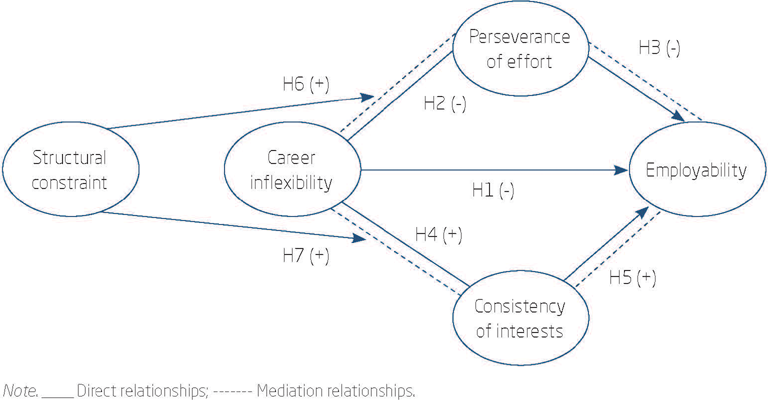 Note. __Direct relationships; ------Mediation relationships.
 Note. Direct relationships; ------- Mediation relationships.** p-value < 0.01; * p-value < 0.05; R² – Coefficient of determination; Q² – Predictive relevance.