 DYNAMICS OF ENTREPRENEURIAL ECOSYSTEMS IN BRAZIL AND THE NETHERLANDS: THE ROLE OF UNIVERSITIES TO FOSTER ECOSYSTEMS AND KNOWLEDGE-INTENSIVE ENTREPRENEURIAL FIRMS IN THE GLOBAL SOUTH
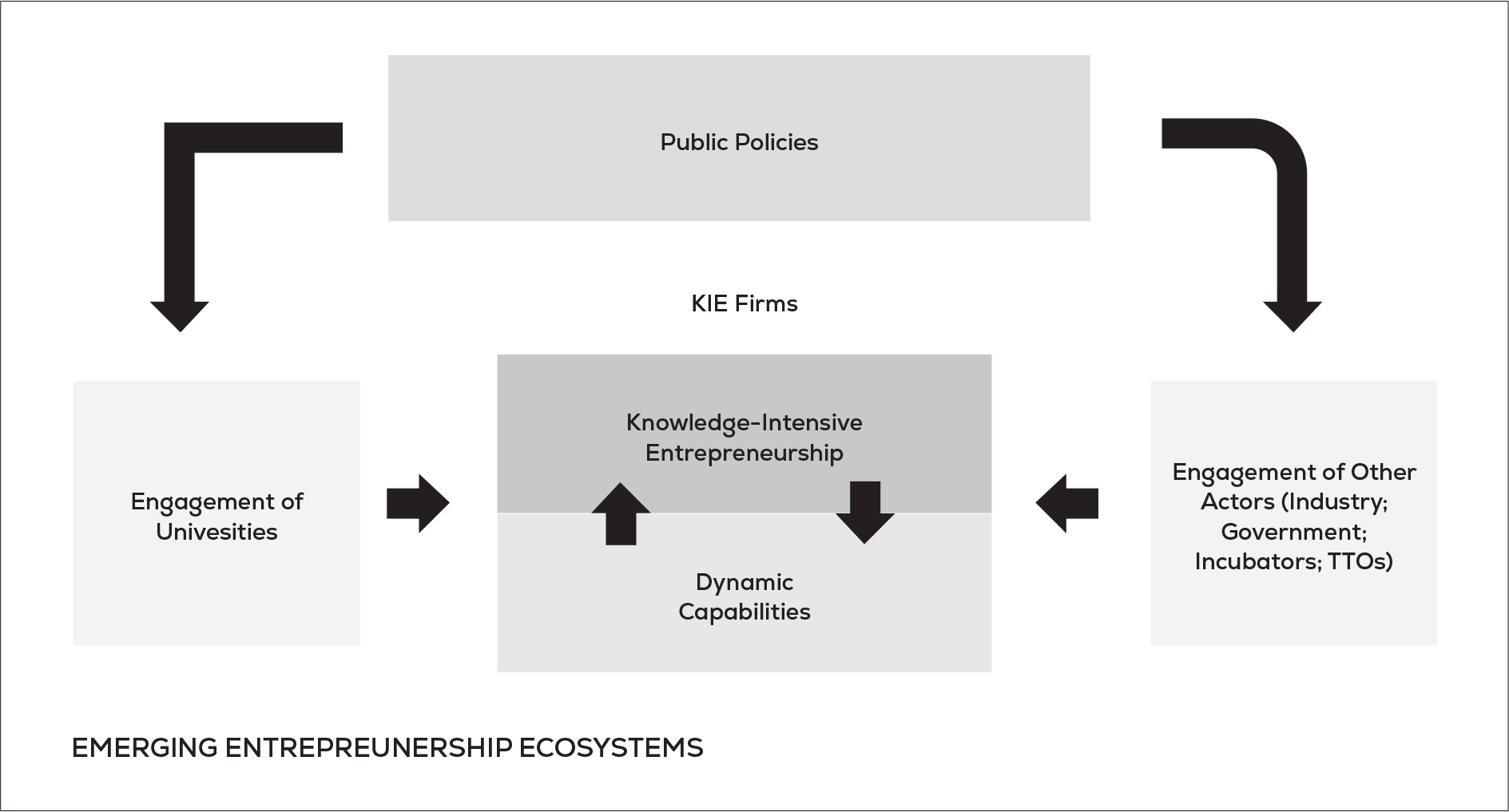
The literature on innovation policies for knowledge-intensive entrepreneurship presents results achieved at the macroeconomic level, discussing results based on indicators to evaluate the effectiveness and efficiency of these policies. There is still a need for research in this area at the micro and meso levels, analyzing and discussing these innovation policies in knowledge-intensive entrepreneurial (KIE) companies and entrepreneurial ecosystems. This study investigated the disparities between regional innovation and entrepreneurship policies in a developing country and a developed country, examining the support offered for entrepreneurial ecosystems and KIE firms. Interviews were carried out with researchers, policymakers, and entrepreneurs in the state of Ceará, Brazil, and in the region of Twente, in the Netherlands. In the Brazilian state, the policy aimed to build an entrepreneurial ecosystem with low maturity, connecting academia, government, and companies. In Twente, universities boosted innovation, attracting companies to technology parks and promoting knowledge flows through projects and businesses. The study offers insights on how universities in the Global South can contribute to develop entrepreneurial ecosystems, contributing to the UN Sustainable Development Goals 8 - Decent work and economic growth and 9 - Industry, innovation, and infrastructure.
Keywords:
knowledge-intensive entrepreneurship; innovation policy; entrepreneurship policy; dynamic capabilities; entrepreneurship ecosystem.
 Thumbnail
 Thumbnail