 Cohesion in metaverse business research
Abstract
Purpose This study examines how business literature addresses the Metaverse, highlights key themes and gaps and sets pathways for future research. This study aims to unify research around the business–Metaverse intersection.
Design/methodology/approach A bibliometric approach based on co-word analysis was used using SciMAT software. A systematic review process, based on PRISMA principles, was applied to peer-reviewed articles indexed in the Web of Science database.
Findings Research on the metaverse in business is expanding rapidly, focusing on virtual reality, digital assets, adoption, customer interaction, trust, sustainability and interoperability. Notably, the field demonstrates stable research themes but remains conceptually fragmented. The analysis reveals that studies lack theoretical integration and do not provide a coherent framework connecting technological, economic, organizational and social aspects of the metaverse in business.
Research limitations/implications This study only uses the Web of Science database and examines a short time frame, which may limit coverage and generalizability. Future research should include more databases and deeper empirical studies.
Practical implications Gradual adoption, investment in digital capabilities, trust-building and collaborative partnerships can boost customer engagement, widen market reach and spark innovation, especially for small and medium-sized enterprises.
Social implications This study underscores the societal importance of the metaverse in transforming social interaction, inclusion and digital governance, while highlighting concerns about privacy, equity and responsible development in virtual environments.
Originality/value This study offers a systematic bibliometric map of metaverse business research and proposes an integrative framework linking its technological, organizational, economic and social aspects.
Metaverse; Virtual worlds; Business; Virtual business; Virtual economy
Introduction
The transition from Web 2.0 to Web 3.0 and the metaverse aims to create holistic experiences that reshape societal and workplace dynamics (Hutson, 2022). This environment enables new forms of communication and collaboration, requiring a paradigm shift in business management and a rethinking of economic processes to balance stakeholder needs during digital transformation (Bond et al., 2022). Early adoption could contribute US$3tn to global gross domestic product by 2031, directly benefiting internet and infrastructure providers and indirectly generating jobs and new products (Christensen and Robinson, 2022). Major metaverse platforms include Horizon Worlds, Microsoft Metaverse, Decentraland, The Sandbox, Cryptovoxels and Roblox (Ledstrup, 2022). Meta highlights interoperability and portability based on Web 3.0 as critical for economic success (Bowles, 2022), while Microsoft applies mixed reality to enhance training, support and industrial simulations in the industrial metaverse (Althoff, 2023). Decentraland provides a decentralized virtual world with land ledgers; The Sandbox enables trading and creation of digital assets via Ethereum; and Cryptovoxels supports user-built experiences on Ethereum land parcels (Weston, 2022a, 2022b, 2022c). Roblox emphasizes immersive virtual worlds within its gaming ecosystem (Howell, 2022). Metaverse-related opportunities include immersive e-commerce, digital asset acquisition, avatar customization, virtual events, education and enhanced business communication (Weston, 2022d). This study examines these trends and their implications for business contexts.
This study seeks to address key gaps in the literature by exploring the following research questions, which focus on understanding how the metaverse is being integrated into business research and practice. The main research question is:
RQ.How has the metaverse been explored in academic literature within the domains of business?
The research contributes by reviewing academic literature on metaverse-business applications, identifying gaps and suggesting future directions. Using SciMAT software, this study maps the field, revealing unexplored areas. Key gaps include a lack of a comprehensive framework linking metaverse technology to business applications and a lack of systematic reviews to address emerging research needs. This study’s methodological approach provides an analytical foundation for future investigations. This research benefits academics by identifying precise gaps and fostering groundbreaking studies. Business leaders gain strategic insights into applying metaverse technologies to drive innovation and development. Moreover, this study advances academic discourse by highlighting uncharted research areas, promoting a coherent research agenda and enabling targeted exploration of metaverse-business intersections.
Research methodology and data collection
In this research, we used SciMAT for its ability to visualize results through strategic diagrams, improving interpretability and engagement. The software supports all stages of science mapping – from data preparation to visualization – and enables longitudinal analysis. It is also free and open-source. Co-word analysis followed SciMAT’s methodology, which aligns with established bibliometric mapping models (Rojas-Lamorena et al., 2022). SciMAT also facilitates thematic evolution analysis through two tools: the overlay article graph, which tracks keyword trends, and the evolution map, which depicts topic-cluster development. The evolution map applies the Inclusion Index to weigh connections between thematic groups across periods, with a value of one indicating complete keyword overlap (Cobo et al., 2012). Together, these tools trace the thematic development of a research field. For a systematic review, specific preparatory steps are recommended (Figure 1).

The selection of keywords in this bibliometric study was based on a comprehensive review of the most recurrent and thematically relevant terms in metaverse-related business literature. Keywords such as “metaverse,” “virtual reality,” “digital transformation,” “blockchain” and “immersive technology” were selected to capture the multidisciplinary and evolving discourse of the metaverse in business contexts. Terms like “extended reality” or “XR,” although relevant, were excluded because of their broader technological scope and lower frequency in business-focused publications, which could have diluted thematic precision. This study relies exclusively on the Web of Science database because of its rigorous indexing standards and multidisciplinary coverage; however, this reliance may narrow the data set and omit studies available in other sources such as Scopus or IEEE Xplore. As a result, the generalizability of findings may be limited, and future research could benefit from comparing multiple databases to achieve a more holistic bibliometric representation.
Inclusion and exclusion criteria were clearly defined to ensure relevance and quality. Only peer-reviewed articles directly related to the research question were included, excluding peripheral works to maintain analytical rigor (Figure 1).
The metaverse acts as a dynamic platform that integrates various economic and organizational theories to explain its functionality, adoption and use. These frameworks offer complementary perspectives: the Technology Acceptance Model (TAM) and the Unified Theory of Acceptance and Use of Technology (UTAUT) address user acceptance; the Diffusion of Innovations Theory explains adoption patterns; and the Resource-Based View (RBV) highlights strategic advantages derived from digital resources. Social Exchange Theory examines trust and reward mechanisms in virtual communities, while Game Theory models competitive strategies within the metaverse ecosystem. Media Richness Theory underscores the effectiveness of immersive technologies such as VR and AR, and Cognitive Theory explains how users perceive metaverse experiences and make decisions (Figure 2).

Although relevant theories such as TAM, RBV and UTAUT are referenced in the analyzed literature, the bibliometric findings reveal a limited degree of theoretical integration and a lack of coherent conceptual development in Metaverse-related research. This underscores the need for a more comprehensive theoretical synthesis that unites existing frameworks into an integrative model tailored to the unique characteristics of virtual environments. Consequently, this study provides a foundation for advancing theoretical models that better explain user behavior, organizational adoption and strategic value creation within the metaverse’s digital ecosystem.
Connecting these theories to the metaverse shows how interdisciplinary approaches can help address challenges such as data protection, user adoption and technology integration, while promoting innovation and economic growth.
Results of the bibliometric analysis
Each period is visually represented by a circle containing the number of keywords (Figure 3), a unique and engaging way to present the data. Arrows between consecutive periods show the typical keywords with the stability index in parentheses. Arrows going up represent the number of new keywords in each period, and arrows going down represent the number of keywords that do not appear in the next period (Gibbin et al., 2023).

The similarity index between the second and third periods is 0.74, indicating increasing stability in the metaverse research vocabulary. Although the absolute number of keywords remains constant over periods, their volume has grown, especially in the last two. Strategic diagrams for each period highlight key educational research topics, with circle sizes representing the number of related publications (Gibbin et al., 2023; Özköse, 2023).
This section examines the thematic evolution of metaverse research over the past five years, as shown in Figure 4. Solid lines indicate shared topic names or keywords, while dashed lines show shared keywords only. Line width reflects the inclusion index, and circle size indicates publication volume (Cobo et al., 2012; Gibbin et al., 2023; Özköse, 2023). The graph reveals dense, complex interconnections, highlighting strong thematic links within the field.

Centrality and density in the metaverse: virtual reality, worlds and digital services in transition (2022).
Metaverse technology has recently received increasing attention as an area with massive potential for innovation and interdisciplinary application. It touches on economic, technological, social and ethical dimensions. The studies reviewed illustrate this digital reality’s far-reaching opportunities and complex challenges.
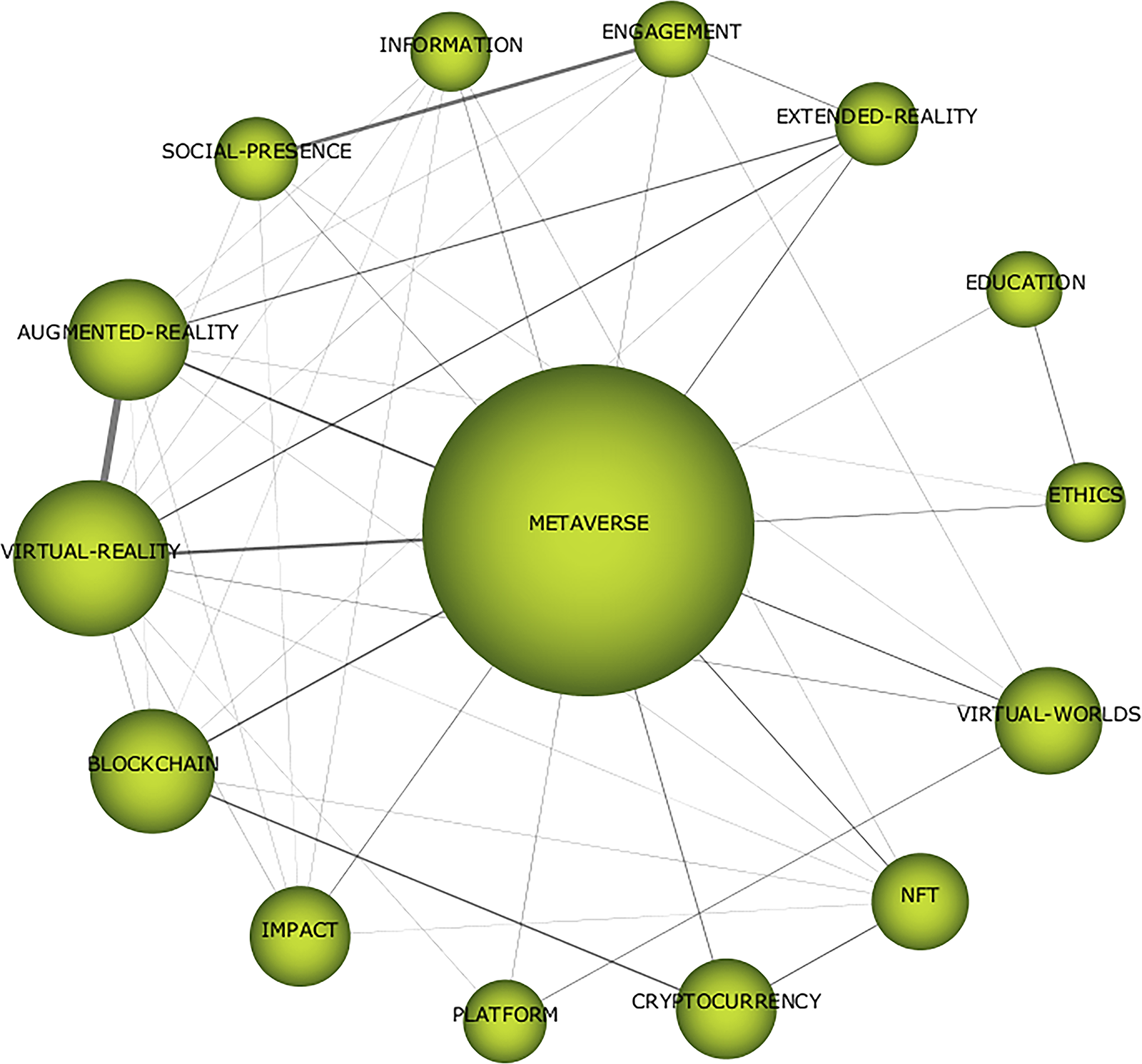
The shift of companies like Facebook to Meta reflects a strategic move toward metaverse technologies, though changes are incremental rather than transformative (Kraus et al., 2022). NFT-based platforms like The Sandbox highlight blockchain’s role in shaping virtual markets (Nakavachara and Saengchote, 2022). Research shows that fractional ownership of digital assets redefines value and ownership (Ahn et al., 2022), stressing the need to integrate virtual goods into evolving business models. Additionally, immersive experiences – like virtual travel and digital nature – can influence user behavior, loyalty and environmental awareness (Golf-Papez et al., 2022; Jaung, 2022; Botoc et al., 2023) (Figure 5).

Other research in the field addresses the ethical dilemmas posed by anthropomorphized digital subjects in the metaverse. These questions include moral projections, responsibility and the impact on interpersonal relationships (Grinbaum and Adomaitis, 2022). Finally, Vidal-Tomás (2022) warns against speculative bubbles related to in-game tokens and metaverse coins. Careful monitoring and regulations are needed to ensure market stability and build confidence. Developing and implementing technologies such as digital twins, which are virtual representations of physical objects or systems, raises data protection and regulatory issues. Korbel et al. (2022) point out that regulatory frameworks often lag in technological development, creating challenges for fairness and security. Simultaneously, Jaung (2022) emphasizes that experiences of a digital nature in the metaverse can foster environmental awareness. However, successful implementation necessitates platforms that prioritize data protection and sustainability. Tan et al. (2022) demonstrate that peer-to-peer platforms in the metaverse have the potential to instill sustainable consumer values. Nevertheless, potential conflicts between economic and environmental objectives should be carefully considered. Lee and Kim (2022) examined the adoption of metaverse platforms and stressed that factors such as social influences and usability are pivotal to their success. This underscores the importance of developing platforms centered on the user, making them feel integral to the process.
Current research not only highlights the metaverse’s transformative potential across industries but also emphasizes pressing ethical, regulatory and sustainability challenges. Interdisciplinary approaches are urgently needed to balance innovation with social and environmental responsibility in future studies.
The metaverse and its consumers: big data, performance and acceptance in virtual environments (2023).
The metaverse is a key research area encompassing technological, economic, social and ethical dimensions. It offers transformative potential across sectors like marketing, education and health care, driven by technologies such as blockchain, AR, and AI. However, it also raises urgent concerns about data protection, sustainability and social responsibility, now central to academic debate (Figure 6).

As Barrera and Shah (2023) highlight, the metaverse offers diverse opportunities for consumers and businesses through hyperconnectivity. Companies like Meta and Microsoft are investing heavily in these technologies to establish the metaverse as a platform for marketing and consumer experiences. Ferrigno et al. (2023) identify four key mechanisms of value creation in the metaverse, including digital resources and reasons for value creation, and underscore the strategic importance of the metaverse for business models. It is clear that to fully harness these opportunities and address the ethical challenges, interdisciplinary approaches are not just beneficial but necessary.
In service marketing, Gursoy et al. (2023) believe the metaverse could represent a revolution through immersive customer experiences and co-creation. Buhalis et al. (2023) show how the metaverse could transform tourism through virtual travel and digital twins. Barta et al. (2023) examine the influence of live streaming and telepresence shopping on customer loyalty. Choi et al. (2023) point out that social interactions in the metaverse can increase well-being and positively influence usage intentions.
In the metaverse trade, Lee et al. (2023) show that branded NFTs can serve as not only an advertising medium but also a driver for long-term customer loyalty. Martín-Martín et al. (2023) identify youth technology users as the primary target group for virtual tourism offers and emphasize the importance of virtual reality and neural networks, especially during pandemic restrictions.
Orekhova and Plakhin (2023) analyze how traditional business models evolve into digital platforms in the metaverse, emphasizing their potential to generate economic and social value. Tan and Salo (2023) highlight blockchain’s role in ensuring transparency and ethical business models, stressing the importance of trust in decentralized markets. Zainurin et al. (2023) introduce “metaverse banking,” which integrates traditional banking with immersive 3D experiences and requires substantial investment in security and privacy.
Ethical challenges in the metaverse include data protection, social tensions, sustainability and regulation. Alashoor et al. (2023) examine the “privacy paradox,” showing that users share personal information despite concerns and identifying cognitive resources and positive mood as key factors. Hashem et al. (2023) emphasize that companies must invest in secure interfaces and transparent data practices to maintain customer trust and satisfaction in metaverse marketing.
Dolata and Schwabe (2023) highlight the political tensions created by competing interest groups and call for a nuanced approach to public perception and the development of the metaverse. Gündüz and Demirel (2023) show that despite positive associations with blockchain and gaming, public perception of the metaverse also includes concerns that must be taken seriously to promote adoption.
Boccia and Covino (2023) argue that the metaverse could create a new economic-environmental paradigm, especially through applications in the food industry that could promote sustainable consumption. Park and Lim (2023) add to this perspective by showing how digital fashion promotes new consumption patterns and offers ecological alternatives.
Mamidala and Kumari (2023) identify NFT market dynamics as a risk to digital asset stability and stress the need for regulation to reduce volatility. Tlili et al. (2023) highlight the metaverse’s role in advancing “Society 5.0” while noting ethical challenges, such as social inequality. Vig (2023) similarly calls for flexible regulatory frameworks addressing data governance, competition law and ethical standards to ensure responsible and sustainable metaverse development.
The metaverse’s social and psychological dimensions provide important insights into designing user experiences. Hennig-Thurau et al. (2023) examine real-time multisensory interactions and propose a framework explaining their psychological mechanisms in social and business contexts. Etienne et al. (2023) emphasize that carefully designed avatars – with appropriate nonverbal behaviors and visual elements – are essential for realistic and engaging experiences. Likewise, Sestino and D’Angelo (2023) argue that avatars in health-care settings can enhance trust and platform usage, underscoring the centrality of emotional and human interaction.
Park et al. (2023b) investigate how flow experiences influence the purchase intention of digital fashion products in metaverse environments. They show that factors such as telepresence and social interaction are crucial to the success of these platforms. Teng et al. (2023) complement this perspective by examining how avatars influence social identification and user loyalty. The perception of social presence is a key component for positive user experiences.
Thomas et al. (2023) present a theoretical framework for gamification in the metaverse that leverages experiences of flow and hedonism to enhance user engagement. They show how gamified approaches can promote effective interactions in fields such as education and business.
Technological and design innovations in the metaverse create substantial opportunities but also introduce specific challenges. Fang et al. (2023) highlight the importance of ergonomic, service-oriented virtual space design, showing that optimized interactions and intuitive interfaces significantly enhance user satisfaction. Hubbard and Aguinis (2023) emphasize VR’s potential for exploring complex phenomena, arguing that VR and the metaverse provide extensive opportunities for empirical and management research through immersive environments.
Park et al. (2023a) identify interoperability as a major challenge, warn that technical and regulatory barriers may undermine user confidence and propose measures to address them. Proelss et al. (2023) analyze GameFi, which integrates blockchain into gaming to create play-to-earn models, noting both its social and economic potential and its regulatory risks. Zhan et al. (2023) present a blockchain-based social media (SocialFi) model that supports decentralized governance and enables innovative business strategies, improving transparency and security in digital ecosystems. Von der Au et al. (2023) examine how physical context affects augmented reality (AR) use, showing that context shapes the perception of virtual objects and is essential for effective AR strategies in the metaverse.
The metaverse offers transformative potential across sectors such as marketing, tourism and finance, driven by innovations like NFTs and GameFi. Yet fully realizing this potential requires addressing ethical, data protection, sustainability and interoperability challenges. Research emphasizes the need for interdisciplinary and integrative approaches (Bruni et al., 2023) and robust trust and security frameworks (Chakraborty et al., 2023). Future studies should ensure that metaverse development aligns with societal values through international collaboration, ethical design and transparent regulation.
The metaverse in focus: perceptions, intentions and customer interaction in virtual systems (2024).
The metaverse, as a multidisciplinary field, integrates AR, VR and blockchain to transform business, social interaction and culture (Ferraro et al., 2024; Gandhi et al., 2024; Gupta et al., 2024; Siminică et al., 2025). However, studies also point to challenges such as data protection, sustainability and technological barriers that must be addressed (Figure 7).

The metaverse is a transformative platform at the intersection of business, technology and society, integrating VR, AR, blockchain and AI. Its applications span commerce, education, tourism and governance, offering major opportunities alongside critical challenges. Aysan et al. (2024) show how blockchain and digital assets enhance transaction security and efficiency in finance, while Pham and Vu (2024) highlight how metaverse-driven business models help small and medium-sized enterprises (SMEs) access international markets. However, these advancements also introduce challenges that must be addressed.
Sustainability and transparency benefits appear in supply chains, as Davies et al. (2024) demonstrate through NFTs that support traceability. Shin et al. (2024) underscore the ecological advantages of virtual travel, which can substantially reduce environmental impact. In retail, Eggenschwiler et al. (2024) outline strategic frameworks for adopting metaverse technologies, and Donvito et al. (2024) show how NFTs and virtual platforms are reshaping the fashion industry.
Immersive experiences are central to metaverse adoption, with Dwivedi et al. (2024) and Mingione et al. (2024) demonstrating how self-expression and user engagement reshape social and commercial interactions. Advertising strategies in the metaverse also benefit from this dynamic. Kim and Lee (2024) explore the differential effects of hedonistic versus utilitarian appeals on user perception.
Challenges around data protection and user trust remain pressing. Liyanaarachchi et al. (2024) identify the “multi-privacy paradox,” highlighting conflicting user expectations and behaviors around data privacy. Alshurafat et al. (2024) integrate the TAM with religious considerations to better understand adoption barriers in Islamic banking contexts.
Various psychological and emotional factors influence consumer behavior in the metaverse. Ahn et al. (2024) discuss the role of self-expansion and hedonic adaptation in driving user engagement and retention. Dang Quan et al. (2024) pinpoint emotional stimuli as critical in impulsive buying behaviors. Similarly, Murtas et al. (2024) highlight the role of exclusivity in luxury fashion, showing how brands are experimenting with NFTs and virtual spaces to enhance customer experiences and loyalty. Prashar and Prashar (2024) add that platform interactivity and visual appeal significantly affect purchase intentions in virtual environments.
Technological innovation is pivotal to the metaverse’s evolution. Kliestik et al. (2024) emphasize the potential of generative AI and digital twins, while Peukert et al. (2024) advocate long-term research into these innovations. Ritala et al. (2024) introduced the “Metaverse Flywheel,” which connects physical and virtual worlds, creating opportunities for value co-creation. Zhong and Zhao (2024) highlight how blockchain and VR promote sustainable consumption and supply chains, though resource intensity and scalability challenges persist.
Gamification and avatars benefit the education and corporate sectors. Thomas et al. (2023) and Park et al. (2024) underscore the importance of flow experiences and social presence in enhancing user engagement and retention. Kumar et al. (2024a) demonstrate how metaverse technologies can improve employee productivity and workplace innovation in organizations.
Cultural considerations are critical for effective metaverse strategies. Klaus and Manthiou (2024) emphasize the need for culturally sensitive retail strategies, while Farah and Ramadan (2024) explore how inclusive metaverse designs cater to diverse user needs. Chen (2024) adds that immersive tourism experiences in the metaverse are sustainable alternatives to physical travel, with the potential for personalization.
Despite these opportunities, regulatory challenges remain significant. Lnenicka et al. (2024) stress the importance of frameworks to ensure ethical and practical digital public services. Yang (2024) raises concerns about authenticity and intellectual property rights in digital goods, while Rochi et al. (2024) warn of the risks associated with technological paternalism, advocating for greater user involvement.
Consumer–brand relationships also evolved within the metaverse. Rauschnabel et al. (2024) show that augmented reality marketing fosters closeness and brand loyalty, while Schultz and Kumar (2024) identify AR-based value dimensions as critical to consumer motivation. Platforms like “Nikeland” on Roblox exemplify active customer engagement, driving purchase intentions through virtual experiences, as highlighted by Payal et al. (2024).
Research highlights the metaverse’s capacity to reshape economic, social and technological paradigms, but addressing challenges related to privacy, interoperability and sustainability requires interdisciplinary collaboration and global cooperation. Ameen et al. (2024) emphasize the role of strategic agility and AI in driving innovation, and Jauhiainen (2024) underscores AI’s transformative impact on metaverse capabilities. Batat (2024) and Bilgihan et al. (2024) show how multisensory technologies such as AR and VR enhance immersion and brand engagement. Balancing innovation with ethical considerations is essential: Ferraro et al. (2024) stress diversity and authenticity in virtual spaces, while Song et al. (2024) propose trust-building strategies through realistic branding. Hajian et al. (2024) call for empirical studies across sectors, and Paul et al. (2024) advocate for strategic approaches to digital transformation. As a cornerstone of future innovation, the metaverse demands research that bridges theory and practice, establishes strong regulatory frameworks and prioritizes sustainable and inclusive development. Technologies like blockchain, AI and VR will be central to shaping its trajectory and advancing interdisciplinary collaboration.
These bibliometric findings do not stand in isolation; rather, they lay the foundation for interpreting key theoretical and practical implications. The identified research clusters and thematic trends offer critical insights into how the metaverse is being conceptualized and applied within business contexts, thus directly informing the discussions that follow. This transition allows us to contextualize empirical patterns within broader theoretical frameworks and real-world applications.
This study provides a bibliometric analysis of metaverse research in the economic domain, highlighting current trends and future directions. Despite methodological rigor, it lacks conceptual integration and a unifying framework. Using PRISMA guidelines, literature was systematically selected from Web of Science for quality and reproducibility. Keywords were iteratively chosen for relevance and coverage. Future studies could improve this process with machine learning for greater semantic precision.
The bibliometric findings highlight a fragmented theoretical landscape in metaverse-related business research, signaling the need for more consistent application of established frameworks such as the TAM, UTAUT and institutional theory. Strengthening theoretical underpinnings will help guide future empirical investigations and build a cohesive research foundation.
This study offers practical guidance for SMEs seeking to engage with the metaverse despite limited resources. A gradual, strategic adoption of affordable immersive tools – such as virtual showrooms and VR-based customer interfaces – can provide competitive advantages. Thematic clusters on digital transformation and blockchain indicate opportunities to deliver secure and interactive customer experiences. Managers should invest in digital skills, encourage innovation and build partnerships to address resource constraints. By approaching the metaverse as a platform for strategic growth rather than solely a marketing tool, SMEs can expand market reach, strengthen brand presence and improve operational efficiency.
Although the bibliometric analysis yields valuable insights into thematic development and research priorities, a theoretical framework is needed to structure the identified concepts and clarify their relationships. An integrative model could link the metaverse’s economic, technological and social dimensions, drawing on the Diffusion of Innovations Theory (Rogers, 2003), the UTAUT to assess user acceptance and the RBV to evaluate strategic advantages. Such a model would strengthen the theoretical basis of the findings and support new research questions, such as identifying the factors influencing metaverse adoption in industries like finance, entertainment and education. Understanding these factors would help firms develop strategic measures that enhance their position in digital environments and potentially transform their business models.
A key limitation of this study is its exclusive reliance on the Web of Science database, which, despite its academic rigor and high-impact indexing, may overlook interdisciplinary or emerging research found in databases such as Scopus, IEEE Xplore or Google Scholar. This reliance may result in partial coverage of the broader metaverse discourse, particularly in underrepresented fields or regions. In addition, the short time frame may not fully capture the rapid evolution of metaverse research. Therefore, the findings should be interpreted cautiously, as they may not reflect long-term developments or wider academic perspectives. These limitations indicate that the generalizability of the results is constrained, and future research should draw on multiple databases to achieve greater representativeness and validity.
This analysis reveals several promising research directions. Future studies could address methodological challenges in co-word analysis, use qualitative approaches to validate quantitative patterns and compare metaverse ecosystems to uncover economic similarities and differences – all of which would contribute to a deeper understanding of the field.
Future studies should broaden their scope by incorporating multiple databases, such as Scopus, IEEE Xplore and non-English sources, to achieve a more comprehensive and globally inclusive perspective. Researchers are also encouraged to conduct in-depth qualitative and empirical work to examine how specific metaverse technologies influence business practices, employee experiences and customer engagement. Further investigation is needed into how immersive technologies shape organizational behavior, employee interactions and consumer trust through mixed methods such as surveys and virtual ethnography. Key questions include: How does avatar identity affect professional dynamics? What drives trust and loyalty in virtual environments? Theoretical work should adapt or integrate models like TAM and UTAUT into metaverse-specific contexts, while empirical studies should explore sectoral applications (e.g. finance and education) and address ethical issues such as data privacy and algorithmic bias. Interdisciplinary approaches – combining business, technology and ethics – are essential to capture the complex dynamics of this evolving landscape. Additionally, the metaverse offers fertile ground for examining broader ethical and social issues, including digital inequality, identity formation and the long-term societal impact of virtual interactions.
This study’s systematic literature review provides valuable insights into the current state of the metaverse and economic research; however, a theoretical framework is needed to better structure the conceptual relationships among topics and guide future inquiry. A stronger theoretical foundation is essential for synthesizing existing knowledge, opening new research avenues and establishing a coherent research agenda. Nevertheless, limitations – including potential selection bias and the inherent complexity of the metaverse phenomenon – must be acknowledged, as they affect the generalizability and applicability of the findings. The proposed extensions strengthen this study’s scientific validity and provide a robust basis for future work.
Discussion
Bibliometric evidence reveals key theoretical and social implications for advancing metaverse research in business contexts. First, adoption models such as TAM and UTAUT require refinement to reflect the immersive, identity-driven and multisensory nature of virtual environments, in which social presence, avatar identity and flow significantly influence user behavior (Lee and Kim, 2022; Teng et al., 2023; Thomas et al., 2023). Second, the Resource-Based View can be extended to conceptualize digital assets – such as NFTs and virtual real estate – as strategic resources that generate sustainable advantage in decentralized ecosystems (Ferrigno et al., 2023; Nakavachara and Saengchote, 2022). Finally, the review highlights the absence of an integrative theoretical framework, underscoring the need to synthesize adoption, strategic management and social exchange perspectives into a unified model of value creation (Bruni et al., 2023; Aiolfi and Luceri, 2024).
Moreover, the findings carry implications for sustainable development. Beyond supporting SDG 4 (Quality Education) and SDG 8 (Decent Work and Economic Growth), the metaverse can foster innovation and infrastructure development (SDG 9), reduce inequalities by broadening access in the Global South (SDG 10) and promote sustainable production and climate-friendly alternatives such as virtual travel and digital assets (SDG 12 and SDG 13). At the same time, achieving these benefits requires establishing strong governance frameworks (SDG 16) to safeguard equity, privacy and ethical use, providing reassurance amid potential challenges.
Beyond theory, the metaverse raises critical social considerations. Immersive platforms are reshaping community-building, trust formation and identity construction, while simultaneously posing challenges related to privacy, digital inequality and ethical governance (Etienne et al., 2023; Dwivedi et al., 2024; Tlili et al., 2023). These dynamics suggest that the evolution of virtual environments must be accompanied by inclusive design principles, which involve designing products and services that are accessible to and usable by as many people as reasonably possible, equitable access and regulatory frameworks that ensure socially responsible development (Grinbaum and Adomaitis, 2022; Vig, 2023; Lnenicka et al., 2024).
To address these gaps, this study proposes an exploratory integrative framework (Figure 8) that links technological affordances, psychosocial mechanisms, organizational capabilities and institutional conditions to adoption and value outcomes. At the input level, affordances such as immersion, avatarization, gamification, tokenization and interoperability trigger mechanisms of perceived usefulness, trust and identity, which shape user adoption. At the organizational level, firms leverage these affordances as strategic resources within the RBV, supported by capabilities in design, AI and community-building. These processes operate within an institutional context defined by regulation, standards and inclusivity requirements.

The framework posits a multilevel pathway: technological affordances → psychosocial mechanisms → organizational capabilities, moderated by institutional conditions, which are the rules, norms and structures that shape the behavior of individuals and organizations → adoption, continuance and outcomes. Outcomes extend beyond firm performance to include co-created value, social well-being and sustainability, highlighting that the metaverse’s transformative potential depends on not only technological innovation but also responsible governance. Future research should test this model using experimental, longitudinal and qualitative methods, while overcoming current bibliometric limitations such as reliance on keyword analysis and single-database coverage.
Conclusions
The conclusions of this study are directly informed by the bibliometric evidence, which reveals current research priorities and thematic gaps in metaverse-related business literature. By aligning these findings with established and emerging theoretical constructs, this study underscores the need for conceptual integration and provides actionable insights for practitioners managing digital transformation in virtual environments.
To identify metaverse research themes, an explosion detection algorithm was used to detect surges in keyword usage, revealing emerging trends. Co-word analysis further clarified the main thematic areas, with business transformation at the core and increasing attention to development. Given the broad analytical scope, the identified themes correspond to major subfields and offer a solid basis for more specialized studies within specific research domains.
In the future, analyses such as those carried out in this paper could also benefit from improved technical possibilities for examining full texts, which no longer need to be limited to a few keywords assigned to the documentation. However, full texts can help analyze topics and their development and provide more detailed investigations of citation contexts. This may result in different types of references in scientific texts, and their meanings could be automatically differentiated. However, the relevant techniques still need to be fully developed, and it remains to be seen to what extent additional information can be obtained compared to the results obtained in this work using relatively simple methods.
The prospects of metaverse research indicate significant potential for transformative change in business, society and technology, driven by interdisciplinary approaches and global collaboration. Emerging technologies – blockchain, VR, AR and generative AI – enable new business models, including sustainable supply chain management, virtual travel and resource-efficient scaling. Social dynamics such as avatar use, play and personalized experiences create opportunities to enhance user engagement and interaction. However, data protection, interoperability and ethical standards must be addressed through clear regulatory frameworks and transparent governance.
Economically, the metaverse offers opportunities across retail, luxury goods and financial services, where immersive environments, NFTs and virtual platforms can strengthen customer loyalty. SMEs can reach international markets, although high implementation costs remain a barrier. Realizing the metaverse’s full potential requires international standards that promote interoperability and sustainability, along with intuitive and user-friendly designs that build trust and acceptance. Ultimately, bridging theory and practice and developing sustainable, inclusive applications will be essential to harness the metaverse’s transformative capacity and deliver societal value.
This study offers several actionable insights for organizations integrating the metaverse into their strategies. First, firms should view digital assets such as NFTs and virtual real estate as strategic resources that strengthen customer loyalty and brand equity, aligning with the Resource-Based View. Second, adoption can be accelerated by designing immersive, gamified and multisensory experiences that promote flow, presence and identity alignment, thereby enhancing user engagement. Third, managers must prioritize trust-building mechanisms – including transparent governance, secure data practices and user-controlled privacy – to address risks associated with the “privacy paradox.” Finally, the challenge of interoperability calls for cross-industry collaboration and phased adoption strategies, particularly for SMEs, to ensure sustainable participation in evolving metaverse ecosystems. By implementing these measures, organizations can transform the metaverse from a marketing experiment into a platform for long-term value creation and competitive advantage.
Data availability statement
The entire dataset supporting the findings of this study is published within the article.
References
-
Ahn, S., Jin, B.E. and Seo, H. (2024), “Why do people interact and buy in the metaverse? Self-expansion perspectives and the impact of hedonic adaptation”, Journal of Business Research, Vol. 175, p. 114557, doi: 10.1016/j.jbusres.2024.114557.
» https://doi.org/10.1016/j.jbusres.2024.114557 -
Ahn, S.J., Kim, J. and Kim, J. (2022), “The bifold triadic relationships framework: a theoretical primer for advertising research in the metaverse”, Journal of Advertising, Vol. 51 No. 5, pp. 592-607, doi: 10.1080/00913367.2022.2111729.
» https://doi.org/10.1080/00913367.2022.2111729 -
Aiolfi, S. and Luceri, B. (2024), “See you on the metaverse: a bibliometric expedition through the metaverse landscape”, Technological Forecasting and Social Change, Vol. 207, p. 123605, doi: 10.1016/j.techfore.2024.123605.
» https://doi.org/10.1016/j.techfore.2024.123605 -
Alashoor, T., Keil, M., Smith, H.J. and McConnell, A.R. (2023), “Too tired and in too good of a mood to worry about privacy: explaining the privacy paradox through the lens of effort level in information processing”, Information Systems Research, Vol. 34 No. 4, pp. 1415-1436, doi: 10.1287/isre.2022.1182.
» https://doi.org/10.1287/isre.2022.1182 -
Alshurafat, H., Arabiat, O. and Shehadeh, M. (2024), “The intention to adopt metaverse in Islamic banks: an integrated theoretical framework of TAM and religiosity intention model”, Journal of Islamic Marketing, Vol. 17 No. 2, pp. 462-485, doi: 10.1108/JIMA-10-2023-0310.
» https://doi.org/10.1108/JIMA-10-2023-0310 -
Althoff, J. (2023), “Imagining more: how organizations are reinventing operations and finding opportunity in the face of volatility”, available at: Link to the cited article.
» Link to the cited article. -
Ameen, N., Tarba, S., Cheah, J.H., Xia, S. and Sharma, G.D. (2024), “Coupling artificial intelligence capability and strategic agility for enhanced product and service creativity”, British Journal of Management, Vol. 35 No. 4, pp. 1916-1934, doi: 10.1111/1467-8551.12797.
» https://doi.org/10.1111/1467-8551.12797 -
Aysan, A.F., Gozgor, G. and Nanaeva, Z. (2024), “Technological perspectives of metaverse for financial service providers”, Technological Forecasting and Social Change, Vol. 202, p. 123323, doi: 10.1016/j.techfore.2024.123323.
» https://doi.org/10.1016/j.techfore.2024.123323 -
Barrera, K.G. and Shah, D. (2023), “Marketing in the metaverse: conceptual understanding, framework, and research agenda”, Journal of Business Research, Vol. 155, p. 113420, doi: 10.1016/j.jbusres.2022.113420.
» https://doi.org/10.1016/j.jbusres.2022.113420 -
Barta, S., Gurrea, R. and Flavián, C. (2023), “Telepresence in live-stream shopping: an experimental study comparing Instagram and the metaverse”, Electronic Markets, Vol. 33 No. 1, p. 29, doi: 10.1007/s12525-023-00643-6.
» https://doi.org/10.1007/s12525-023-00643-6 -
Batat, W. (2024), “Phygital customer experience in the metaverse: a study of consumer sensory perception of sight, touch, sound, scent, and taste”, Journal of Retailing and Consumer Services, Vol. 78, p. 103786, doi: 10.1016/j.jretconser.2024.103786.
» https://doi.org/10.1016/j.jretconser.2024.103786 -
Bilgihan, A., Leong, A.M.W., Okumus, F. and Bai, J. (2024), “Proposing a metaverse engagement model for brand development”, Journal of Retailing and Consumer Services, Vol. 78, p. 103781, doi: 10.1016/j.jretconser.2024.103781.
» https://doi.org/10.1016/j.jretconser.2024.103781 -
Boccia, F. and Covino, D. (2023), “Knowledge and food sustainability: the metaverse as a new Economic-Environmental paradigm”, Journal of the Knowledge Economy, Vol. 15 No. 3, pp. 1-14, doi: 10.1007/s13132-023-01626-w.
» https://doi.org/10.1007/s13132-023-01626-w -
Bond, M., Kim, A. and Riquier, C. (2022), “The importance of human centricity in the metaverse. A marketers guide to surviving the next 2 years”, available at: Link to a PDF of the cited article.
» Link to a PDF of the cited article. -
Botoc, F.C., Khaled, M.D., Milos, L.R. and Bilti, R.S. (2023), “The role of big data in the fintech industry: a bibliometric analysis”, Transformations in Business and Economics, Vol. 22 No. 3A, 60A, pp. 853-868, available at: Link to the cited article.
» Link to the cited article. -
Bowles, E. (2022), “Economic opportunities in the metaverse: a policy approach”, available at: Link to the cited article.
» Link to the cited article. -
Bruni, R., Piccarozzi, M. and Caboni, F. (2023), “Defining the metaverse with challenges and opportunities in the business environment”, Journal of Marketing Theory and Practice, Vol. 33 No. 1, pp. 1-18, doi: 10.1080/10696679.2023.2273555.
» https://doi.org/10.1080/10696679.2023.2273555 -
Buhalis, D., Leung, D. and Lin, M. (2023), “Metaverse as a disruptive technology revolutionising tourism management and marketing”, Tourism Management, Vol. 97, p. 104724, doi: 10.1016/j.tourman.2023.104724.
» https://doi.org/10.1016/j.tourman.2023.104724 -
Chakraborty, D., Patre, S. and Tiwari, D. (2023), “Metaverse mingle: discovering dating intentions in metaverse”, Journal of Retailing and Consumer Services, Vol. 75, p. 103509, doi: 10.1016/j.jretconser.2023.103509.
» https://doi.org/10.1016/j.jretconser.2023.103509 -
Chen, Z. (2024), “Beyond boundaries: exploring the metaverse in tourism”, International Journal of Contemporary Hospitality Management, Vol. 37 No. 4, pp. 1257-1275, doi: 10.1108/IJCHM-06-2023-0900.
» https://doi.org/10.1108/IJCHM-06-2023-0900 -
Choi, D., Lee, H.K. and Kim, D.Y. (2023), “Mood management through metaverse enhancing life satisfaction”, International Journal of Consumer Studies, Vol. 47 No. 4, pp. 1533-1543, doi: 10.1111/ijcs.12934.
» https://doi.org/10.1111/ijcs.12934 -
Christensen, L. and Robinson, A. (2022), “The potential global economic impact of the metaverse”, available at: Link to a PDF of the cited article.
» Link to a PDF of the cited article. -
Cobo, M.J., López‐Herrera, A.G., Herrera‐Viedma, E. and Herrera, F. (2012), “SciMAT: a new science mapping analysis software tool”, Journal of the American Society for Information Science and Technology, Vol. 63 No. 8, pp. 1609-1630, doi: 10.1002/asi.22688.
» https://doi.org/10.1002/asi.22688 -
Dang Quan, T., Wei-Han Tan, G., Aw, E.C.X., Cham, T.H., Basu, S. and Ooi, K.B. (2024), “Can you resist the virtual temptations? Unveiling impulsive buying in metaverse retail”, Asia Pacific Journal of Marketing and Logistics, Vol. 36 No. 10, pp. 2259-2280, doi: 10.1108/APJML-09-2023-0911.
» https://doi.org/10.1108/APJML-09-2023-0911 -
Davies, J., Sharifi, H., Lyons, A., Forster, R. and Elsayed, O.K.S.M. (2024), “Non-fungible tokens: the missing ingredient for sustainable supply chains in the metaverse age?”, Transportation Research Part E: Logistics and Transportation Review, Vol. 182, p. 103412, doi: 10.1016/j.tre.2024.103412.
» https://doi.org/10.1016/j.tre.2024.103412 -
Dolata, M. and Schwabe, G. (2023), “What is the metaverse and who seeks to define it? Mapping the site of social construction”, Journal of Information Technology, Vol. 38 No. 3, pp. 239-266, doi: 10.1177/02683962231159927.
» https://doi.org/10.1177/02683962231159927 -
Donvito, R., Acuti, D. and Song, S. (2024), “Fashion and the metaverse: implications for consumers and firms”, Journal of Global Fashion Marketing, Vol. 15 No. 1, pp. 1-5, doi: 10.1080/20932685.2023.2293290.
» https://doi.org/10.1080/20932685.2023.2293290 -
Dwivedi, Y.K., Balakrishnan, J., Mishra, A., De Bock, K.W. and Al-Busaidi, A.S. (2024), “The role of embodiment, experience, and self-image expression in creating continuance intention in the metaverse”, Technological Forecasting and Social Change, Vol. 203, p. 123402, doi: 10.1016/j.techfore.2024.123402.
» https://doi.org/10.1016/j.techfore.2024.123402 -
Eggenschwiler, M., Linzmajer, M., Roggeveen, A.L. and Rudolph, T. (2024), “Retailing in the metaverse: a framework of managerial considerations for success”, Journal of Retailing and Consumer Services, Vol. 79, p. 103791, doi: 10.1016/j.jretconser.2024.103791.
» https://doi.org/10.1016/j.jretconser.2024.103791 -
Etienne, E., Leclercq, A.L., Remacle, A., Dessart, L. and Schyns, M. (2023), “Perception of avatars nonverbal behaviors in virtual reality”, Psychology and Marketing, Vol. 40 No. 11, pp. 2464-2481, doi: 10.1002/mar.21871.
» https://doi.org/10.1002/mar.21871 -
Fang, L.B., Dong, X., Weng, Z. and Chen, T. (2023), “Designing an attractive metaverse: research on design factors influencing audience satisfaction with a virtual space based on QCA”, Journal of Theoretical and Applied Electronic Commerce Research, Vol. 18 No. 1, pp. 37-54, doi: 10.3390/jtaer18010003.
» https://doi.org/10.3390/jtaer18010003 -
Farah, M.F. and Ramadan, Z. (2024), “Toward an inclusive metaverse: maneuvering between acceptance of disability and need for uniqueness”, Journal of Research in Interactive Marketing, Vol. 18 No. 5, pp. 741-758, doi: 10.1108/JRIM-01-2024-0051.
» https://doi.org/10.1108/JRIM-01-2024-0051 -
Ferraro, C., Sands, S., Demsar, V. and Cohen, J. (2024), “Diversity representation in virtual environments: how brand motives mediate consumer perceptions”, Australasian Marketing Journal, Vol. 32 No. 3, pp. 239-249, doi: 10.1177/14413582241244535.
» https://doi.org/10.1177/14413582241244535 -
Ferrigno, G., Di Paola, N., Oguntegbe, K.F. and Kraus, S. (2023), “Value creation in the metaverse age: a thematic analysis of press releases”, International Journal of Entrepreneurial Behavior and Research, Vol. 29 No. 11, pp. 337-363, doi: 10.1108/IJEBR-01-2023-0039.
» https://doi.org/10.1108/IJEBR-01-2023-0039 -
Gandhi, M., Gaur, A., Kar, A.K. and Dwivedi, Y.K. (2024), “Crafting user experiences in the metaverse: a design science study”, Technological Forecasting and Social Change, Vol. 209, p. 123759, doi: 10.1016/j.techfore.2024.123759.
» https://doi.org/10.1016/j.techfore.2024.123759 -
Gibbin, R.V., Sigahi, T.F., de Souza Pinto, J., Rampasso, I.S. and Anholon, R. (2023), “Thematic evolution and trends linking sustainability and project management: scientific mapping using SciMAT”, Journal of Cleaner Production, Vol. 414, p. 137753, doi: 10.1016/j.jclepro.2023.137753.
» https://doi.org/10.1016/j.jclepro.2023.137753 -
Golf-Papez, M., Heller, J., Hilken, T., Chylinski, M., de Ruyter, K., Keeling, D.I. and Mahr, D. (2022), “Embracing falsity through the metaverse: the case of synthetic customer experiences”, Business Horizons, Vol. 65 No. 6, pp. 739-749, doi: 10.1016/j.bushor.2022.07.007.
» https://doi.org/10.1016/j.bushor.2022.07.007 -
Grinbaum, A. and Adomaitis, L. (2022), “Moral equivalence in the metaverse”, NanoEthics, Vol. 16 No. 3, pp. 257-270, doi: 10.1007/s11569-022-00426-x.
» https://doi.org/10.1007/s11569-022-00426-x -
Gündüz, U. and Demirel, S. (2023), “Metaverse-related perceptions and sentiments on twitter: evidence from text mining and network analysis”, Electronic Commerce Research, Vol. 25 No. 3, pp. 1-31, doi: 10.1007/s10660-023-09745-x.
» https://doi.org/10.1007/s10660-023-09745-x -
Gupta, R., Rathore, B., Biswas, B., Jaiswal, M. and Singh, R.K. (2024), “Are we ready for metaverse adoption in the service industry? Theoretically exploring the barriers to successful adoption”, Journal of Retailing and Consumer Services, Vol. 79, p. 103882, doi: 10.1016/j.jretconser.2024.103882.
» https://doi.org/10.1016/j.jretconser.2024.103882 -
Gursoy, D., Lu, L., Nunkoo, R. and Deng, D. (2023), “Metaverse in services marketing: an overview and future research directions”, The Service Industries Journal, Vol. 43 Nos 15-16, pp. 1140-1172, doi: 10.1080/02642069.2023.2252750.
» https://doi.org/10.1080/02642069.2023.2252750 -
Hajian, A., Daneshgar, S., Sadeghi, K., Ojha, D. and Katiyar, G. (2024), “From theory to practice: empirical perspectives on the metaverse’s potential”, Technological Forecasting and Social Change, Vol. 201, p. 123224, doi: 10.1016/j.techfore.2024.123224.
» https://doi.org/10.1016/j.techfore.2024.123224 -
Hashem, T., Alotoum, F.J., Allan, M. and Ali, N. (2023), “Employing metaverse marketing through gaming and its impact on customer experience: evidence from multiple online gaming platforms”, Calitatea, Vol. 24, pp. 193-206, doi: 10.47750/QAS/24.196.25.
» https://doi.org/10.47750/QAS/24.196.25 -
Hennig-Thurau, T., Aliman, D.N., Herting, A.M., Cziehso, G.P., Linder, M. and Kübler, R.V. (2023), “Social interactions in the metaverse: framework, initial evidence, and research roadmap”, Journal of the Academy of Marketing Science, Vol. 51 No. 4, pp. 889-913, doi: 10.1007/s11747-022-00908-0.
» https://doi.org/10.1007/s11747-022-00908-0 -
Howell, J. (2022), “Everything you need to know about the Roblox metaverse”, available at: Link to the cited article.
» Link to the cited article. -
Hubbard, T.D. and Aguinis, H. (2023), “Conducting phenomenon-driven research using virtual reality and the metaverse”, Academy of Management Discoveries, Vol. 9 No. 3, pp. 408-415, doi: 10.5465/amd.2023.0031.
» https://doi.org/10.5465/amd.2023.0031 -
Hutson, J. (2022), “Social virtual reality: neurodivergence and inclusivity in the metaverse”, Societies, Vol. 12 No. 4, p. 102, doi: 10.3390/soc12040102.
» https://doi.org/10.3390/soc12040102 -
Jauhiainen, J.S. (2024), “The metaverse: innovations and generative AI”, International Journal of Innovation Studies, Vol. 8 No. 3, pp. 262-272, doi: 10.1016/j.ijis.2024.04.004.
» https://doi.org/10.1016/j.ijis.2024.04.004 -
Jaung, W. (2022), “Digital Forest recreation in the metaverse: opportunities and challenges”, Technological Forecasting and Social Change, Vol. 185, p. 122090, doi: 10.1016/j.techfore.2022.122090.
» https://doi.org/10.1016/j.techfore.2022.122090 -
Kim, Y. and Lee, H. (2024), “Consumers’ responses to metaverse ads: the roles of hedonic versus utilitarian appeal and the moderating role of need for touch”, Journal of Business Research, Vol. 179, p. 114677, doi: 10.1016/j.jbusres.2024.114677.
» https://doi.org/10.1016/j.jbusres.2024.114677 -
Klaus, P. and Manthiou, A. (2024), “Metaverse retail: pioneering research avenues for tomorrow’s marketplace”, Journal of Retailing and Consumer Services, Vol. 78, p. 103782, doi: 10.1016/j.jretconser.2024.103782.
» https://doi.org/10.1016/j.jretconser.2024.103782 -
Kliestik, T., Kral, P., Bugaj, M. and Durana, P. (2024), “Generative artificial intelligence of things systems, multisensory immersive extended reality technologies, and algorithmic big data simulation and modelling tools in digital twin industrial metaverse”, Equilibrium. Quarterly Journal of Economics and Economic Policy, Vol. 19 No. 2, pp. 429-461, doi: 10.24136/eq.3108.
» https://doi.org/10.24136/eq.3108 -
Korbel, J.J., Siddiq, U.H. and Zarnekow, R. (2022), “Towards virtual 3D asset price prediction based on machine learning”, Journal of Theoretical and Applied Electronic Commerce Research, Vol. 17 No. 3, pp. 924-948, doi: 10.3390/jtaer17030048.
» https://doi.org/10.3390/jtaer17030048 -
Kraus, S., Durst, S., Ferreira, J., Veiga, P., Kailer, N. and Weinmann, A. (2022), “Digital transformation in business and management research: an overview of the current status quo”, International Journal of Information Management, Vol. 63, p. 102466, doi: 10.1016/j.ijinfomgt.2021.102466.
» https://doi.org/10.1016/j.ijinfomgt.2021.102466 -
Kumar, A., Shankar, A., Agarwal, R., Agarwal, V. and Alzeiby, E.A. (2024a), “With enterprise metaverse comes great possibilities! Understanding metaverse usage intention from an employee perspective”, Journal of Retailing and Consumer Services, Vol. 78, p. 103767, doi: 10.1016/j.jretconser.2024.103767.
» https://doi.org/10.1016/j.jretconser.2024.103767 -
Ledstrup, D. (2022), “5 Ways to use the metaverse in business”, available at: Link to the cited article.
» Link to the cited article. -
Lee, U.K. and Kim, H. (2022), “UTAUT in metaverse: an ‘ifland’ case”, Journal of Theoretical and Applied Electronic Commerce Research, Vol. 17 No. 2, pp. 613-635, doi: 10.3390/jtaer17020032.
» https://doi.org/10.3390/jtaer17020032 -
Lee, C.T., Ho, T.Y. and Xie, H.H. (2023), “Building brand engagement in metaverse commerce: the role of branded non-fungible tokens (BNFTs)”, Electronic Commerce Research and Applications, Vol. 58, doi: 10.1016/j.elerap.2023.101248.
» https://doi.org/10.1016/j.elerap.2023.101248 -
Liyanaarachchi, G., Mifsud, M. and Viglia, G. (2024), “Virtual influencers and data privacy: introducing the multi-privacy paradox”, Journal of Business Research, Vol. 176, doi: 10.1016/j.jbusres.2024.114584.
» https://doi.org/10.1016/j.jbusres.2024.114584 -
Lnenicka, M., Rizun, N., Alexopoulos, C. and Janssen, M. (2024), “Government in the metaverse: requirements and suitability for providing digital public services”, Technological Forecasting and Social Change, Vol. 203, p. 123346, doi: 10.1016/j.techfore.2024.123346.
» https://doi.org/10.1016/j.techfore.2024.123346 -
Mamidala, V. and Kumari, P. (2023), “Investigating herding severity in different NFT categories”, Finance Research Letters, Vol. 58, p. 104428, doi: 10.1016/j.frl.2023.104428.
» https://doi.org/10.1016/j.frl.2023.104428 -
Martín-Martín, J.M., Manuel Guaita-Martínez, J., Ángel Solano-Sánchez, M. and Francisco Prados-Castillo, J. (2023), “Virtual tourism: a new way of travelling and a new traveller profile”, Journal of Competitiveness, Vol. 15 No. 4, doi: 10.7441/joc.2023.04.08.
» https://doi.org/10.7441/joc.2023.04.08 -
Mingione, M., Mattia, G., Materia, M. and Pedeliento, G. (2024), “The metaverse experience: a scale development study”, Journal of Consumer Behaviour, Vol. 23 No. 6, doi: 10.1002/cb.2396.
» https://doi.org/10.1002/cb.2396 -
Murtas, G., Pedeliento, G. and Mangiò, F. (2024), “Luxury fashion brands at the gates of the Web 3.0: an analysis of early experimentations with NFTs and the metaverse”, Journal of Global Fashion Marketing, Vol. 15 No. 1, pp. 90-114, doi: 10.1080/20932685.2023.2249476.
» https://doi.org/10.1080/20932685.2023.2249476 -
Nakavachara, V. and Saengchote, K. (2022), “Does unit of account affect willingness to pay? Evidence from metaverse LAND transactions”, Finance Research Letters, Vol. 49, p. 103089, doi: 10.1016/j.frl.2022.103089.
» https://doi.org/10.1016/j.frl.2022.103089 -
Orekhova, S.V. and Plakhin, A.Y. (2023), “Metaverses: transition to a new business model or the image of the future?”, Upravlenets, Vol. 14 No. 2, pp. 35-46, doi: 10.29141/2218-5003-2023-14-2-3.
» https://doi.org/10.29141/2218-5003-2023-14-2-3 -
Özköse, H. (2023), “Bibliometric analysis and scientific mapping of IoT”, Journal of Computer Information Systems, Vol. 63 No. 6, pp. 1-22, doi: 10.1080/08874417.2023.2167135.
» https://doi.org/10.1080/08874417.2023.2167135 -
Park, H. and Lim, R.E. (2023), “Fashion and the metaverse: clarifying the domain and establishing a research agenda”, Journal of Retailing and Consumer Services, Vol. 74, p. 103413, doi: 10.1016/j.jretconser.2023.103413.
» https://doi.org/10.1016/j.jretconser.2023.103413 -
Park, Y., Ko, E. and Do, B. (2023b), “The perceived value of digital fashion product and purchase intention: the mediating role of the flow experience in metaverse platforms”, Asia Pacific Journal of Marketing and Logistics, Vol. 35 No. 11, pp. 2645-2665, doi: 10.1108/APJML-11-2022-0945.
» https://doi.org/10.1108/APJML-11-2022-0945 -
Park, J., Ahn, H., Kim, D. and Park, E. (2024), “GNN-IR: examining graph neural networks for influencer recommendations in social media marketing”, Journal of Retailing and Consumer Services, Vol. 78, p. 103705, doi: 10.1016/j.jretconser.2024.103705.
» https://doi.org/10.1016/j.jretconser.2024.103705 -
Park, A., Wilson, M., Robson, K., Demetis, D. and Kietzmann, J. (2023a), “Interoperability: our exciting and terrifying Web3 future”, Business Horizons, Vol. 66 No. 4, pp. 529-541, doi: 10.1016/j.bushor.2022.10.005.
» https://doi.org/10.1016/j.bushor.2022.10.005 -
Paul, J., Ueno, A., Dennis, C., Alamanos, E., Curtis, L., Foroudi, P., Kacprzak, A., Kunz, W.H., Liu, J., Marvi, R. and Wirtz, J. (2024), “Digital transformation: a multidisciplinary perspective and future research agenda”, International Journal of Consumer Studies, Vol. 48 No. 2, doi: 10.1111/ijcs.13015.
» https://doi.org/10.1111/ijcs.13015 -
Payal, R., Sharma, N. and Dwivedi, Y.K. (2024), “Unlocking the impact of brand engagement in the metaverse on real-world purchase intentions: analyzing pre-adoption behavior in a futuristic technology platform”, Electronic Commerce Research and Applications, Vol. 65, p. 101381, doi: 10.1016/j.elerap.2024.101381.
» https://doi.org/10.1016/j.elerap.2024.101381 -
Peukert, C., Qahri-Saremi, H., Schultze, U., Thatcher, J.B., Cheung, C.M., Frenzel-Piasentin, A., Greve, M., Matt, C., Trenz, M. and Turel, O. (2024), “Metaverse: a real change or just another research area?”, Electronic Markets, Vol. 34 No. 1, pp. 1-10, doi: 10.1007/s12525-024-00711-5.
» https://doi.org/10.1007/s12525-024-00711-5 -
Pham, Q.H. and Vu, K.P. (2024), “Insight into how digital forensic accounting and metaverse circular business model innovation contribute to accelerated internationalization: evidence from Vietnam-based SMEs”, Cogent Business and Management, Vol. 11 No. 1, doi: 10.1080/23311975.2024.2320203.
» https://doi.org/10.1080/23311975.2024.2320203 -
Prashar, A. and Prashar, A. (2024), “Digital fashion and metaverse platforms: do platform attributes drive shopper’s purchase intention?”, Australian Journal of Management, Vol. 50 No. 4, p. e13015, doi: 10.1177/03128962241246696.
» https://doi.org/10.1177/03128962241246696 -
Proelss, J., Sévigny, S. and Schweizer, D. (2023), “GameFi: the perfect symbiosis of blockchain, tokens, DeFi, and NFTs?”, International Review of Financial Analysis, Vol. 90, p. 102916, doi: 10.1016/j.irfa.2023.102916.
» https://doi.org/10.1016/j.irfa.2023.102916 -
Rauschnabel, P.A., Hüttl‐Maack, V., Ahuvia, A.C. and Schein, K.E. (2024), “Augmented reality marketing and consumer–brand relationships: how closeness drives brand love”, Psychology and Marketing, Vol. 41 No. 4, pp. 819-837, doi: 10.1002/mar.21953.
» https://doi.org/10.1002/mar.21953 -
Ritala, P., Ruokonen, M. and Kostis, A. (2024), “The metaverse flywheel: creating value across physical and virtual worlds”, California Management Review, doi: 10.1177/00081256241252700.
» https://doi.org/10.1177/00081256241252700 -
Rochi, M., Rauschnabel, P.A., Renner, K.H. and Ivens, B.S. (2024), “Technology paternalism: development and validation of a measurement scale”, Psychology and Marketing, Vol. 41 No. 5, pp. 1172-1188, doi: 10.1002/mar.21971.
» https://doi.org/10.1002/mar.21971 - Rogers, E.M. (2003), Diffusion of Innovations, (5th ed.), Free Press, New York.
-
Rojas-Lamorena, Á.J., Del Barrio-García, S. and Alcántara-Pilar, J.M. (2022), “A review of three decades of academic research on brand equity: a bibliometric approach using co-word analysis and bibliographic coupling”, Journal of Business Research, Vol. 139, pp. 1067-1083, doi: 10.1016/j.jbusres.2021.10.025.
» https://doi.org/10.1016/j.jbusres.2021.10.025 -
Schultz, C.D. and Kumar, H. (2024), “ARvolution: decoding consumer motivation and value dimensions in augmented reality”, Journal of Retailing and Consumer Services, Vol. 78, doi: 10.1016/j.jretconser.2023.103701.
» https://doi.org/10.1016/j.jretconser.2023.103701 -
Sestino, A. and D’Angelo, A. (2023), “My doctor is an avatar! The effect of anthropomorphism and emotional receptivity on individuals’ intention to use digital-based healthcare services”, Technological Forecasting and Social Change, Vol. 191, p. 122505, doi: 10.1016/j.techfore.2023.122505.
» https://doi.org/10.1016/j.techfore.2023.122505 -
Shin, S., Koo, C., Kim, J. and Gursoy, D. (2024), “Effects of metaverse experience on behavioral intention of visitors: moderating role of similarity between virtual and real experience”, International Journal of Contemporary Hospitality Management, Vol. 36 No. 12, doi: 10.1108/IJCHM-10-2023-1567.
» https://doi.org/10.1108/IJCHM-10-2023-1567 -
Siminică, M.I., Cîrciumaru, D., Manta, A.G., Cârstina, S., Badareu, G. and Gherțescu, C. (2025), “FinTech, artificial intelligence, and European Union banks: a double-edged sword for performance?”, Oeconomia Copernicana, Vol. 16 No. 3, pp. 1099-1176, doi: 10.24136/oc.3798.
» https://doi.org/10.24136/oc.3798 -
Song, X., Lu, Y. and Yang, Q. (2024), “The negative effect of virtual endorsers on brand authenticity and potential remedies”, Journal of Business Research, Vol. 185, p. 114898, doi: 10.1016/j.jbusres.2024.114898.
» https://doi.org/10.1016/j.jbusres.2024.114898 -
Tan, T.M. and Salo, J. (2023), “Ethical marketing in the blockchain-based sharing economy: theoretical integration and guiding insights”, Journal of Business Ethics, Vol. 183 No. 4, pp. 1113-1140, doi: 10.1007/s10551-021-05015-8.
» https://doi.org/10.1007/s10551-021-05015-8 -
Tan, T.M., Makkonen, H., Kaur, P. and Salo, J. (2022), “How do ethical consumers utilize sharing economy platforms as part of their sustainable resale behavior? The role of consumers’ green consumption values”, Technological Forecasting and Social Change, Vol. 176, p. 121432, doi: 10.1016/j.techfore.2021.121432.
» https://doi.org/10.1016/j.techfore.2021.121432 -
Teng, C.I., Dennis, A.R. and Dennis, A.S. (2023), “Avatar-mediated communication and social identification”, Journal of Management Information Systems, Vol. 40 No. 4, pp. 1171-1201, doi: 10.1080/07421222.2023.2267320.
» https://doi.org/10.1080/07421222.2023.2267320 -
Thomas, N.J., Baral, R., Crocco, O.S. and Mohanan, S. (2023), “A framework for gamification in the metaverse era: how designers envision gameful experience”, Technological Forecasting and Social Change, Vol. 193, p. 122544, doi: 10.1016/j.techfore.2023.122544.
» https://doi.org/10.1016/j.techfore.2023.122544 -
Tlili, A., Huang, R. and Kinshuk, X. (2023), “Metaverse for climbing the ladder toward ‘industry 5.0’and ‘society 5.0’?”, The Service Industries Journal, Vol. 43 Nos 3-4, pp. 260-287, doi: 10.1080/02642069.2023.2178644.
» https://doi.org/10.1080/02642069.2023.2178644 -
Vidal-Tomás, D. (2022), “The new crypto niche: NFTs, play-to-earn, and metaverse tokens”, Finance Research Letters, Vol. 47, p. 102742, doi: 10.1016/j.frl.2022.102742.
» https://doi.org/10.1016/j.frl.2022.102742 -
Vig, S. (2023), “Preparing for the new paradigm of business: the metaverse”, Foresight and STI Governance, Vol. 17 No. 3, pp. 6-18, doi: 10.17323/2500-2597.2023.3.6.18.
» https://doi.org/10.17323/2500-2597.2023.3.6.18 -
von der Au, S., Rauschnabel, P.A., Felix, R. and Hinsch, C. (2023), “Context in augmented reality marketing: does the place of use matter?”, Psychology and Marketing, Vol. 40 No. 11, pp. 2447-2463, doi: 10.1002/mar.21814.
» https://doi.org/10.1002/mar.21814 -
Weston, G. (2022a), “An introduction to decentraland metaverse”, available at: Link to the cited article.
» Link to the cited article. -
Weston, G. (2022b), “Know everything about sandbox metaverse”, available at: Link to the cited article.
» Link to the cited article. -
Weston, G. (2022c), “Cryptovoxels metaverse – everything you need to know”, available at: Link to the cited article.
» Link to the cited article. -
Weston, G. (2022d), “5 Profitable business opportunities in metaverse”, available at: Link to the cited article.
» Link to the cited article. -
Yang, H. (2024), “The genesis effect: digital goods in the metaverse”, Journal of Consumer Research, Vol. 51 No. 1, pp. 129-139, doi: 10.1093/jcr/ucad072.
» https://doi.org/10.1093/jcr/ucad072 -
Zainurin, M.Z.L., Haji Masri, M., Besar, M.H.A. and Anshari, M. (2023), “Towards an understanding of metaverse banking: a conceptual paper”, Journal of Financial Reporting and Accounting, Vol. 21 No. 1, pp. 178-190, doi: 10.1108/JFRA-12-2021-0487.
» https://doi.org/10.1108/JFRA-12-2021-0487 -
Zhan, Y., Xiong, Y. and Xing, X. (2023), “A conceptual model and case study of blockchain-enabled social media platform”, Technovation, Vol. 119, doi: 10.1016/j.technovation.2022.102610.
» https://doi.org/10.1016/j.technovation.2022.102610 -
Zhong, Z.Z. and Zhao, E.Y. (2024), “Collaborative driving mode of sustainable marketing and supply chain management supported by metaverse technology”, IEEE Transactions on Engineering Management, Vol. 71, p. 3337346, doi: 10.1109/TEM.2023.3337346.
» https://doi.org/10.1109/TEM.2023.3337346
Further reading
-
Gómez-Quintero, J., Johnson, S., Borrion, H. and Lundrigan, S. (2023), “A scoping study of crime facilitated by the metaverse”, Futures, Vol. 157, p. 103338, doi: 10.1016/j.futures.2024.103338.
» https://doi.org/10.1016/j.futures.2024.103338 -
Kumar, A. and Shankar, A. (2024), “Will metaverse revolutionize retail banking? Understanding user acceptance towards metaverse banking”, International Journal of Retail and Distribution Management, Vol. 52 No. 6, doi: 10.1108/IJRDM-06-2023-0396.
» https://doi.org/10.1108/IJRDM-06-2023-0396 -
Kumar, H., Rauschnabel, P.A., Agarwal, M.N., Singh, R.K. and Srivastava, R. (2024b), “Towards a theoretical framework for augmented reality marketing: a means-end chain perspective on retailing”, Information and Management, Vol. 61 No. 2, doi: 10.1016/j.im.2023.103910.
» https://doi.org/10.1016/j.im.2023.103910 -
Latino, M.E., De Lorenzi, M.C., Corallo, A. and Petruzzelli, A.M. (2024), “The impact of metaverse for business model innovation: a review, novel insights and research directions”, Technological Forecasting and Social Change, Vol. 206, p. 12357, doi: 10.1016/j.techfore.2024.12357.
» https://doi.org/10.1016/j.techfore.2024.12357 -
Ledesma-Chaves, P., Gil-Cordero, E., Navarro-García, A. and Maldonado-López, B. (2024), “Satisfaction and performance expectations for the adoption of the metaverse in tourism SMEs”, Journal of Innovation and Knowledge, Vol. 9 No. 3, doi: 10.1016/j.jik.2024.100535.
» https://doi.org/10.1016/j.jik.2024.100535 -
Luong, V.H., Tarquini, A., Anadol, Y., Klaus, P. and Manthiou, A. (2024), “Is digital fashion the future of the metaverse? Insights from YouTube comments”, Journal of Retailing and Consumer Services, Vol. 79, p. 103780, doi: 10.1016/j.jretconser.2024.103780.
» https://doi.org/10.1016/j.jretconser.2024.103780 -
Mehrotra, A., Agarwal, R., Khalil, A., Alzeiby, E.A. and Agarwal, V. (2024), “Nitty-gritties of customer experience in metaverse retailing”, Journal of Retailing and Consumer Services, Vol. 79, p. 103876, doi: 10.1016/j.jretconser.2024.103876.
» https://doi.org/10.1016/j.jretconser.2024.103876 -
Petr, C. and Caudan, P. (2024), “Ethical marketing framework for metaverse simulated experiences of tourism (SET): an exploration of consumers’ aspirations and fears”, Journal of Retailing and Consumer Services, Vol. 79, p. 103785, doi: 10.1016/j.jretconser.2024.103785.
» https://doi.org/10.1016/j.jretconser.2024.103785 -
Saeed, A., Ali, A. and Ashfaq, S. (2024), “Employees’ training experience in a metaverse environment? Feedback analysis using structural topic modeling”, Technological Forecasting and Social Change, Vol. 208, p. 123636, doi: 10.1016/j.techfore.2024.123636.
» https://doi.org/10.1016/j.techfore.2024.123636 -
Xi, N., Chen, J., Gama, F., Korkeila, H. and Hamari, J. (2024), “Acceptance of the metaverse: a laboratory experiment on augmented and virtual reality shopping”, Internet Research, Vol. 34 No. 7, pp. 82-117, doi: 10.1108/INTR-05-2022-0334.
» https://doi.org/10.1108/INTR-05-2022-0334 -
Zaman, M., Hasan, P.R., Vo-Thanh, T., Shams, R., Rahman, M. and Jasim, K.M. (2024), “Adopting the metaverse in the luxury hotel business: a cost–benefit perspective”, International Journal of Contemporary Hospitality Management, doi: 10.1108/IJCHM-08-2023-1265.
» https://doi.org/10.1108/IJCHM-08-2023-1265
Edited by
-
ASSOCIATE EDITOR:
Dennys Eduardo Rossetto