 Losing control: the effect of food literacy, emotion regulation and perceived self-control on impulsive food purchases
Abstract
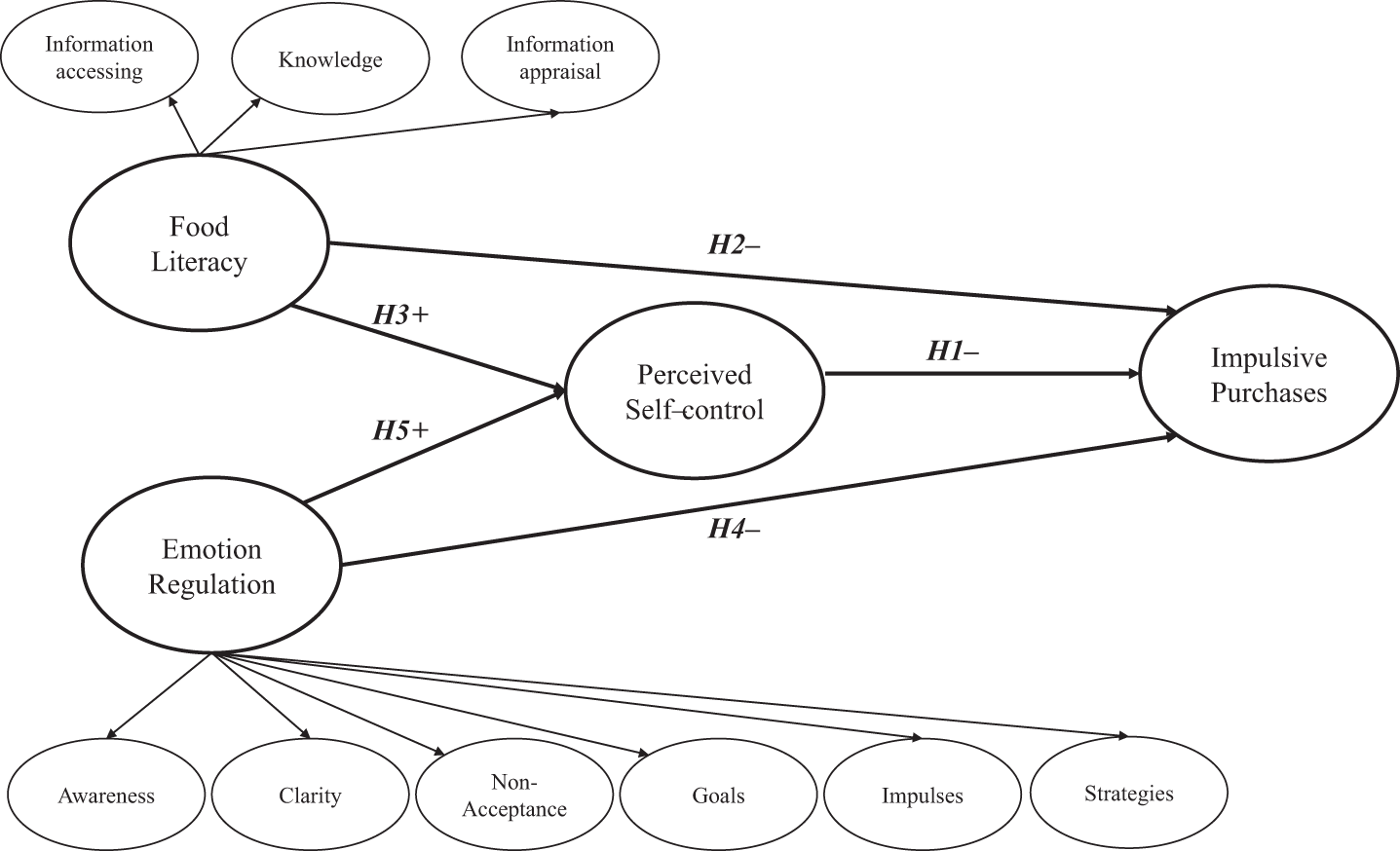
Purpose This study aims to examine the influence of food literacy and emotion regulation on impulsive food purchasing, considering the mediating role of perceived self-control. It addresses a gap in the literature by focusing on internal, developable consumer skills rather than external stimuli or stable personality traits.
Design/methodology/approach A quantitative research design was used with survey data from 211 Brazilian participants. Data were collected through an online questionnaire with validated and culturally adapted scales. The proposed model was tested by covariance-based structural equation modeling.
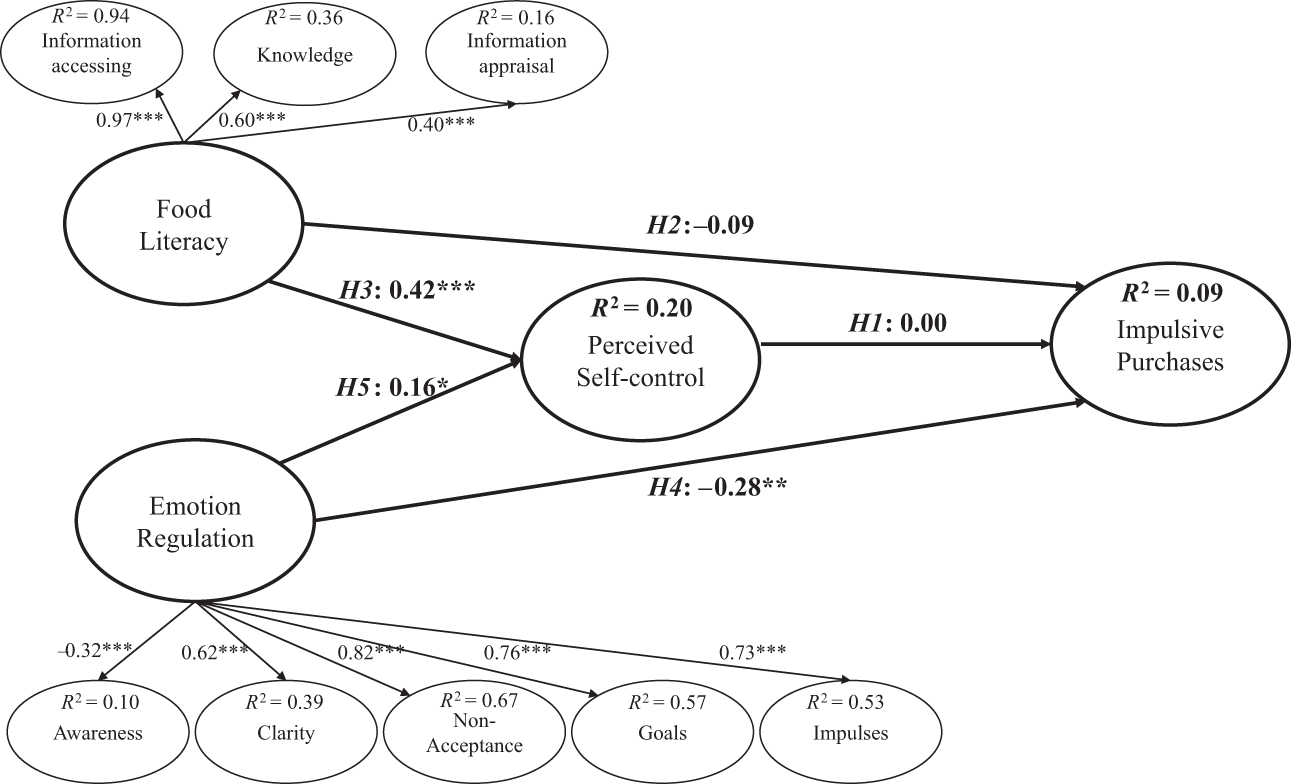
Findings The results indicate that both food literacy and emotion regulation positively influence perceived self-control. However, only emotion regulation has a significant negative effect on impulsive food purchases. These findings suggest that emotion regulation plays a more critical role than cognitive knowledge in impulsive consumption contexts.
Research limitations/implications The use of a non-probabilistic convenience sample and self-reported data limits the generalizability of the findings. Future research should explore additional mediators and moderators, test experimental interventions and further investigate the distinction between impulsive and opportunistic purchasing behaviors.
Practical implications Enhancing consumers’ emotion regulation skills can help mitigate impulsive purchasing, particularly through simple planning tools and emotion-focused strategies.
Social implications The findings suggest pathways to improve dietary behavior and consumer well-being.
Originality/value The study highlights the role of developable skills and identifies emotion regulation as a key predictor of reduced impulsivity. It also advances understanding of the limits of perceived self-control in explaining unplanned consumer behavior.
Impulse buying; Impulsive food purchase; Perceived self-control; Food literacy; Emotion regulation
 Thumbnail
 Thumbnail