 Extending Global Value Chain Governance: Addressing Grand Challenges in Amazonian Rainforest
ABSTRACT
Objective: the rise of grand challenges such as climate change and deforestation raises questions about how Global Value Chains (GVC) respond to such pressures. This study investigates how power dynamics and value creation within value chains address these challenges.
Theoretical approach: GVC theory provides a framework for understanding how geographically dispersed production is coordinated and how firms, institutions, and norms shape power dynamics and value creation and appropriation.
Method: an abductive case study of Amazonian communities supplying andiroba seeds, based on data from 17 stakeholders collected through interviews, focus groups, field observations, and document analysis.
Results: the analysis reveals persistent asymmetries in bargaining power over pricing and value distribution. Inclusive practices emerged in response to socioeconomic vulnerability, while NGOs and cooperatives exercised demonstrative power by mobilizing resources and building capabilities. Institutional power regulated forest resource access, and constitutive power shaped conventions around deforestation. Local communities demonstrated bottom-up agency through adaptive strategies and resilience.
Conclusions: the study advances the literature of power in GVC by incorporating bottom-up agency as a new dimension.
Keywords:
global value chains; governance; community resilience; grand challenges; Amazonian
RESUMO
Objetivo: os grandes desafios, como mudanças climáticas e desmatamento, levantam questões sobre como as Cadeias Globais de Valor (CGV) respondem a essas pressões. Este estudo investiga como as dinâmicas de poder e a criação de valor em cadeias de valor enfrentam esses desafios.
Marco teórico: a teoria das CGV fornece um arcabouço para compreender como a produção geograficamente dispersa é coordenada e como firmas, instituições e normas moldam as dinâmicas de poder e a criação e apropriação de valor.
Método: estudo de caso abdutivo com comunidades amazônicas fornecedoras de sementes de andiroba, com dados coletados de 17 stakeholders por meio de entrevistas, grupos focais, observações e documentos.
Resultados: as análises revelam assimetrias persistentes no poder de barganha sobre preços e distribuição de valor. Práticas inclusivas emergirem em resposta à vulnerabilidade socioeconômica, enquanto ONGs e cooperativas exercem poder demonstrativo ao mobilizar recursos e desenvolver capacidades. O poder institucional regula o acesso aos recursos florestais, e o poder constitutivo molda convenções relacionadas ao desmatamento. As comunidades locais demonstraram bottom-up agency por meio de estratégias adaptativas.
Conclusão: o estudo avança a literatura sobre poder em CGV ao incorporar o bottom-up agency como uma nova dimensão.
Palavras-chave:
cadeias globais de valor; governança; resiliência comunitária; desafios globais; Amazônia
INTRODUCTION
The concept of socio-bioeconomy in the Amazon seeks to integrate biodiversity conservation, promote the knowledge and ways of life of indigenous peoples and local communities (IPLCs), and foster sustainable economic alternatives (Brandão et al., 2024; Garrett et al., 2024). Amazonian territories and communities are facing escalating socio-environmental challenges (grand challenges, hereinafter), including deforestation, climate change, the invasion of indigenous lands, the erosion of territorial and human rights, and precarious urban infrastructure and living conditions, all of which unevenly affect families, businesses, socio-bioeconomy value chains, farmers, ecosystems, and entire regions (Shrivastava et al., 2020; Urzedo et al., 2020). As Amazonian suppliers become included in global value chains, the paradox of sustainable sourcing and international trade addresses the grand challenges.
Since the 1980s, international trade has increasingly shifted toward global value chains (GVCs), as multinational corporations in the Global North have distributed and controlled parts of their production activities among firms across the Global South (World Bank, 2020; United Nations Conference on Trade and Development [UNCTAD], 2013). For more than two decades, scholars have developed analytical GVC frameworks to explain the role of lead firms and their inter-firm governance mechanisms in coordinating globally dispersed suppliers and adding value to the final product (Bair, J., 2009; Coe & Yeung, 2015; Gereffi, 1994; Gereffi et al., 2005; Humphrey & Schmitz, 2002; Ponte & Sturgeon, 2014). In doing so, they highlight the diverse suppliers, workers, or farmers located across different regional and global ‘geographies’ who simultaneously compete and collaborate to secure larger shares of value creation and capture (Gereffi, 2021; Lund-Thomsen, 2024).
Following the emergence of the GVC concept in the mid-2000s, academic production relating to it rapidly converged around Gereffi et al. (2005), their fivefold governance typology, and the notions of social and economic upgrading, and expanded significantly over the next two decades (De Marchi et al., 2020; Fernandez-Stark & Gereffi, 2019; Gereffi & Sturgeon, 2013; Gereffi & Lee, 2016). In the early 2020s, the GVC framework seems to have gained renewed prominence and provoked analytical debates about topics such as multipolar governance in dyadic and collective arenas (Dallas et al., 2019), environmental upgrading (De Marchi & Di Maria, 2019; Krishnan et al., 2023), GVC-oriented public policies (De Marchi & Alford, 2022; Pegoraro et al., 2021; Pietrobelli, 2021), and reconfiguration and reshoring in response to supply shortage challenges during the COVID-19 pandemic (Gereffi et al., 2021; Gereffi et al., 2022; Strange, 2020). More recently, it has moved beyond being examined only for its vulnerabilities and has been mobilized to explore its potential contributions to addressing global crises, most notably the climate emergency (Ateş & Şanlısoy, 2025; De Marchi & Gereffi, 2023). GVC analysis, however, still lacks an adequate explanation of governing GVCs in an era of grand challenges. Therefore, sustainable production, such as the socio-bioeconomy, adds contextual factors that must be incorporated into the GVC framework. Specifically, key concepts in GVCs, such as power asymmetries and value creation, need to be reframed to address grand challenges.
This study aims to answer the question: “How are power dynamics and the value creation of global value chain governance shaped or able to address grand challenges?”
Empirically, this study investigates the four types of power affecting local communities in a specific region of the Amazon rainforest that participate in a cosmetics value chain through the supply of biodiversity-based resources. Drawing on the global value chain (GVC) framework and the types of power proposed by Dallas et al. (2019), the research examines how power dynamics, networked actors, and value-added activities are reshaped in the face of grand environmental and social challenges.
The study provides valuable insights for developing policies and initiatives that advance social and environmental development in Amazonian territories, both proactively (ex ante) and retrospectively (ex post), as well as in other regions or countries that are facing grand challenges. Our findings can support public and private organizations in rethinking their approaches by focusing on establishing policies, launching targeted efforts, such as transferring tacit or explicit knowledge, and, if possible, embedding these initiatives geographically within Amazonian territories aimed at the sustainable development of the region, within the scope of bioeconomic value chains.
The remainder of the paper presents the theoretical background, followed by the research method and the data collection and analysis procedures. It then discusses the main findings and concludes with final considerations and directions for future research.
THEORETICAL BACKGROUND
Global value chain: Governance and power
Global value chain analysis is an essential framework for understanding how the production of goods and services involved in global trade is organized across a wide array of suppliers in developing countries (Gereffi et al., 2005; Ponte & Sturgeon, 2014). Central to the GVC framework is the concept of governance and its intrinsic relationship with the notion of power (Barrientos et al., 2010; Evers et al., 2014; Gereffi et al., 2005; Gereffi, 2019; Gereffi & Lee, 2016; Milberg & Winkler, 2011; Ponte, 2019; Rossi, 2013).
The initial approach to GVC governance relies on exploring the power exercised by lead firms in global industries, which has been called a ‘global commodity chain’ (Gereffi, 1994; Gereffi, 2021; Ponte, 2019). This approach emphasizes the growing importance of global buyers and explicit coordination within disintegrated production networks by understanding the value-added chain. Gereffi (1994) introduced a distinction between two types of lead firms: producer-driven chains, which are typically found in technology-intensive industries such as electronics, aerospace, and automotive; and buyer-driven chains, which are more common in labor-intensive sectors like apparel and consumer goods.
Gereffi et al. (2005) expanded the discussion by proposing governance as inter-firm coordination and providing a generic typology with five different forms of governance - hierarchical, captive, relational, modular, and market (Gereffi, 2021). From this perspective, governance is a mechanism of buyer-supplier coordination across geographic distances, by which each structure varies depending on three key factors: the complexity of the transactions, the extent to which these complexities can be codified, and the capabilities of the suppliers (Gibbon et al., 2008; Gereffi et al., 2005; Gereffi & Lee, 2016; Ponte & Sturgeon, 2014).
Despite much of the GVC literature being concerned with the power asymmetry that exists in the dyadic relations between individual buyers (lead firms) and suppliers according to their size or scope (Gereffi et al., 2005), Dallas et al. (2019) expanded the understanding of power in GVC literature, going beyond direct buyer-supplier relationships and country regulations, and established a robust framework for understanding power in GVCs. To this end, they proposed two central dimensions of analysis: ‘transmission mechanisms’ and the ‘arena of actors’ (Dallas et al., 2019, p. 668).
Transmission mechanisms (direct or diffuse) capture how power is exercised and circulates (intentionally or unintentionally) among actors, while the arena of actors refers to the configuration of these actors and distinguishes between dyadic relationships (two actors) and collective relationships (groups involving more than two participants). The combination of these dimensions generates multipolar governance that captures the main forms of power observed by the authors: bargaining, demonstrative, institutional, and constitutive. To guide our empirical analysis, this study draws on this typology, which is summarized below.
-
(a) Bargaining power (dyadic and direct) typically refers to firm-to-firm relations and is the most common form of power analyzed in the literature (Dallas et al., 2019), reflecting the early focus on lead firms in advanced economies and suppliers in developing countries (Gereffi, 1994; Gereffi et al., 2005).
-
(b) Institutional power (collective and direct) reflects the rules and government regulations that structure the supply chain, considering both the historical context of its establishment and the role of public authorities in defining and monitoring compliance with these norms.
-
(c) Demonstrative power (diffuse and dyadic) relates to practices, learning, and general forms of knowledge transmitted informally or implicitly between actors. It reflects how models and routines diffuse horizontally and shape behavior and coordination, even in the absence of formal authority or explicit regulation.
-
(d) Constitutive power (diffuse and collective) relates to shared norms, discourses, and categories that shape meanings, identities, and possibilities for action but lack a clear institutional locus or formal enforcement mechanism. It often operates through legitimacy, cultural framing, and social imaginaries, and sometimes produces unintended or contradictory effects.
There is growing interest in whether the emergence and consolidation of global value chains have exacerbated inequalities (Lang et al., 2023; Soundararajan, 2023) within and across nations (Lang et al., 2023), and/or how GVCs can be leveraged to mitigate challenges (De Marchi & Gereffi, 2023). Lang et al. (2023) suggested employing power and inequality concepts interchangeably. The authors present a typology of inequality in value chains structured around three main dimensions: (1) inequalities at a single node (within chains), (2) inequalities between different nodes (along chains), and (3) inequalities embedded in the broader economic, social, and ecological systems in which chains are situated (through chains), and how they co-evolve with Dallas et al.’s (2019) typology of power (bargaining, demonstrative, institutional, and constitutive).
These dimensions distinguish three positions in which inequality is generated: within GVCs, through competitive dynamics among actors operating at a single node; along the chain, reflecting asymmetries between interconnected nodes; and beyond the chain, shaped by the broader socio-political and ecological systems in which value chains are embedded. Lang et al. (2023) apply this analytical framework to the study of industrial fisheries in South Africa, focusing on the hake value chain, and demonstrate how dominant actors mobilize multiple forms of power to reproduce existing inequalities.
Participation of suppliers in GVCs: economic, environmental, and social upgrading
The concept of upgrading has been widely adopted to explain economic development trajectories in a variety of settings and scales (company/actor, value chain, sector, country, and/or region). Upgrading research has focused on the economic dimension of changes in products, processes, and functions of supplier activities (Gereffi, 2019).
In the context of GVCs, economic upgrading can be considered an ascendant movement to capture a larger share of benefits from the production and flow of products, understood as the process in which economic actors move from low-value activities to relatively high-value activities in networks of global production (Gereffi & Lee, 2016; Gereffi, 2019). There are numerous ways in which companies or industries can engage in economic upgrading within global value chains, whether through improvements in production methods or product quality; actors at different points in a production network can increase gains by increasing efficiency or total sales (Gereffi & Lee, 2016). An example of this type of upgrading would be a company that produced leather shoes and started to produce leather upholstery for cars and access a new chain. This process is facilitated when there are more buyers in the market looking for new sources of supply, creating multiple opportunities to leverage existing competencies, so lead companies demand greater efficiency and lower costs, and provide technological know-how and other forms of support. Thus, aspects such as relationships with lead companies, value chain governance, particularities of the sector, technological intensity of products, proximity to final markets, and position in the value chain influence the type of upgrading that a company can pursue.
In recent years, environmental concerns have received growing attention in the study of global value chains. However, the absence of a consolidated framework for addressing these issues has led scholars to frame their analyses based on specific research questions and empirical contexts (see De Marchi, Di Maria, & Micelli, 2013, De Marchi, Di Maria, & Ponte, 2013; Havice & Campling, 2017; Khattak et al., 2015; Krishnan, 2018). From a bottom-up perspective, environmental upgrading is often analyzed in terms of the adoption of sustainability practices in production. In manufacturing sectors, suppliers may interpret environmental upgrading as efforts to increase the use of recycled materials and packaging, reduce waste and emissions, or implement circular production models and cleaner technologies (De Marchi, Di Maria, & Micelli, 2013, De Marchi, Di Maria, & Ponte, 2013; Khattak et al., 2015). In agricultural contexts, by contrast, farmers tend to emphasize good agricultural practices, efficient resource use, and the adoption of regenerative techniques as key components of environmental upgrading (Krishnan et al., 2023).
Although these approaches have advanced the analysis of GVC governance by incorporating the environmental dimension, they often adopt a lead firm or country perspective, which is based on power asymmetry (standards and regulations), and epistemologically frame environmental issues as fully controllable through business practices, thereby overlooking the complex, abstract, and multidisciplinary materiality of the environmental dimension (Shrivastava et al., 2020; Tobias & Morrison, 2021). Such reductionism overlooks the systemic and unpredictable impacts of global environmental crises, such as climate change and extreme weather events, which generate profound and unmeasurable impacts on both society and ecosystems worldwide (De Marchi & Gereffi, 2023).
The participation of local producers in GVCs was highly regarded in early studies as a prominent factor in creating jobs, generating income, and reducing poverty in developing countries (Gereffi et al., 2005). This optimism is premised on the expectation that, as companies and countries move up the value chain to high value-added activities through various forms of economic upgrading, workers will benefit from higher wages and better working conditions, and that economic upgrading is expected to deal with improvements in the working conditions of workers in GVCs (Pegler & Knorringa, 2007; Puppim de Oliveira, 2008). However, in recent years there has been an understanding of the divergence between the gains from integration in GVCs for workers and their families (Barrientos et al., 2012; Posthuma & Nathan, 2010), leading GVC scholars to propose the concept of social upgrading (Barrientos et al., 2010)
Social upgrading is defined as the process of improving the rights and entitlements of workers as social actors and improving the quality of their jobs and the conditions offered (Barrientos et al., 2010; Gereffi & Lee, 2016). In short, this type of upgrading in GVCs can be described as the social impact perceived by workers involved in a productive network. Improving workers’ rights and entitlements can be aspects of worker well-being that are more easily observable and quantifiable, including type of employment (regular or irregular), wage level, social protection, and working hours, while others present incommensurability, such as freedom of association, the right to collective bargaining, non-discrimination, voice, and empowerment (Elliott & Freeman, 2003; Barrientos & Smith, 2007). This is a problem that can confuse scholars who seek to explain the processes of social upgrading, limiting social improvements through a generalist analysis.
Scholars have also introduced the concept of social downgrading, when the opposite process occurs, with a deterioration in working conditions (Barrientos et al., 2010; Gereffi & Lee, 2016; Lund‐Thomsen et al., 2012). As such, local communities can benefit from the move toward global chains, but they are also at risk from some of the worst forms of social downgrading. For example, a move toward a GVC can pose substantial risks for women in the workforce, given a possible ‘defeminization’ of the workforce (Barrientos, 2014). Thus, the examples of economic and social upgrading show that outcomes for workers can vary in different contexts (Milberg & Winkler, 2011).
Social upgrading helps to better understand how to promote more equitable and sustainable outcomes in global trade and production networks (Barrientos et al., 2010; Bernhardt & Pollak, 2016; Gereffi & Lee, 2016). The approach recognizes that GVCs often create significant power imbalances between lead firms and suppliers, as well as between different countries and regions (Soundararajan, 2023). As a result, the benefits of trade and investment often disproportionately increase value for lead companies and their home countries, while workers and communities in supplier countries can experience low wages, poor working conditions, and environmental degradation (Anner, 2021). These three concepts of upgrading are aligned with the triple bottom line perspective and provide the previous context of suppliers’ inclusion in GVCs.
RESEARCH METHOD
The main goal of this study is to develop and improve the GVC framework, particularly in complex or uncertain situations where data are limited. We seek to maintain the core logic of the framework, but explore how contextual conditions influence its applicability and analytical explanatory potential (Ketokivi & Choi, 2014). Consequently, we use abductive reasoning and employ an iterative process that is applied to the GVC framework to draw new explanations from other contexts.
To achieve our objective, we carried out a single case study, because it allows the use of theoretical dimensions to uncover underlying causal explanations for theory testing (Ketokivi & Choi, 2014). In order to ensure validity and reliability, a theoretical sampling approach was applied to select an appropriate context of investigation (Miles & Huberman, 1994).
First, we chose an empirical context where the so-called ‘grand challenges’ are both clearly observable and well documented. The Brazilian Amazon rainforest serves this purpose well, given its pronounced environmental impacts from climate change and the persistent social vulnerabilities affecting local communities. Second, we selected a multinational that theoretically acts as a lead firm, which sources inputs from an Amazonian territory. The choice of multinational is theoretically driven, considering its significant power and influence over suppliers through private standards and compliance mechanisms (Gereffi, 2021; Soundararajan, 2023).
One Brazilian cosmetics company was selected due to its emblematic role in sourcing biodiversity-based inputs from the Amazon (B Corp certification), while publicly committing to environmental and social sustainability goals in the forest. Additionally, we intentionally selected a Southern company and suppliers, amplifying the voices of firms and individuals/indigenous people in the Global South while contributing to building a Southern GVC epistemology (Smith, 2021), as too often GVC research is shaped by perspectives from the Global North. Secondly, we focused on identifying a territory within the Amazon where local communities are actively participating in the value chain by supplying natural resources to a cosmetics company.
Description of the case and the context
Studying value chain governance in the context of grand challenges requires a nuanced understanding of how global imperatives are interpreted and translated into local contexts that bear the impacts, from which resilience and adaptation emerge (Gereffi et al., 2022). Therefore, our unit of analysis focuses on local communities residing within the Tapajós National Forest (Flona Tapajós, hereafter), a legally designated conservation unit in the Brazilian Amazon.
This territory is emblematic of the broader tensions facing the Amazon region: while it is recognized for its ecological importance, it is simultaneously exposed to multiple pressures, including deforestation, illegal mining, and increased external interest, all of which present both opportunities and challenges for local populations.
The Flona Tapajós territory has a total annual rainfall of 2,210 mm (Freitas et al., 2023), with a highly seasonal distribution, long rainy periods between December and July and dry periods between August and November. These climatic conditions are key determinants of fire dynamics. Historically, due to its highly humid phytophysiognomy, the territory was considered resistant to fire. However, in recent decades, extreme events such as El Niño, combined with human activities, have increasingly undermined this resilience, making the territory more susceptible to fire.
Within this context, the study centers on a group of community members (hereinafter referred to as ‘local communities’) that engage in the manejo (a local term for ‘collecting’ or ‘harvesting’) of andiroba seeds (Carapa guianensis), which are supplied to a Brazilian multinational cosmetics company. Our analysis focuses specifically on the andiroba value chain, as it represents the sole locally harvested resource integrated into a high value-added supply chain. This case offers a unique lens through which to examine power dynamics and value creation in a conservation-based economic context.
Data collection and analysis
According to Lund-Thomsen (2024), value chain analysis may consolidate data from all relevant stakeholders into a single system of record, enabling a more comprehensive view of how specific top-down or bottom-up actors perform and/or facilitate change where it matters most. Therefore, to collect data, our research involved: (1) 27 documents (lead firm, NGOs, local government website news and social media - Instagram and LinkedIn publications; lead firm sustainability reports; LinkedIn publications from specialists; newspaper news; academic papers and theses; institutional videos and documentary films); (2) two focus groups with local communities who participate in value chain activities.
There were four instances of observing participants in situ and the production of a narrative report, with the researchers’ perceptions being set down as field notes about living conditions and infrastructure, house size, distance from the urban area, road conditions, participants’ interactions and comments about each issue during the interviews, and pictures taken in the field.
Data collection lasted from April to August 2024. We began with value chain mapping (Fernandez-Stark & Gereffi, 2019) using documentary analysis to identify the actors that compose the value chain, as well as information about their activities across the value chain and other relevant aspects. This enabled the identification of NGOs and the cooperative, information about their respective roles within the value chain, and the connections with other actors, including Flona Tapajós communities. As a result, we developed a preliminary understanding of the value chain’s structure, including both vertical and horizontal participants.
Initial value chain mapping enabled us to identify key representatives (such as specialists, managers, and employees of the lead firm) by way of their LinkedIn profiles. We reached out to these individuals via LinkedIn chat, which we used to introduce the research and to invite them to schedule a remote meeting to provide us with more detailed contextual information. Some participants responded and engaged solely via social media messaging, while others agreed to virtual meetings conducted via Google Meet. For those we interviewed remotely, we employed a snowball sampling strategy, asking them to recommend other relevant actors, either within their own organization or connected to the value chain.
In November 2023, we traveled to Santarém, Pará, and visited the administrative headquarters of the cooperative, the headquarters of one NGO, the regulatory body, the general leader of the communities (in urban areas), and communities in Flona Tapajós in the municipality of Belterra, Pará. Through granted authorization from the Brazilian government agency, we were able to access the forest area. During these visits, we conducted the interviews.
The cooperative director acted as a local field access partner (Lund-Thomsen, 2024), facilitating initial contact with members of different communities the day prior to our visit and arranging meetings in three communities where we interviewed participants involved in the most recent andiroba collection. Due to the distance (we were hosted in Santarém, PA), he advised us to visit the communities in one day. Therefore, we rented a car and hired a driver service to reach the communities (Santarém-Belterra/Flona Tapajós, 50 kilometers) (Lund-Thomsen, 2024).
Due to an unforeseen event, we were unable to visit one of the planned communities, so we visited only two. When we arrived at the communities, the members were waiting with chairs arranged in a circle to welcome us. The formation of the communities into groups offered an ideal opportunity for us to conduct focus group discussions. We held two focus groups with different local communities, the first consisting of five participants (one woman and four men, one of whom was the woman’s son), and a second group comprising four women. With their consent, we made audio recordings of both focus groups.
We conducted interviews with managers of the lead firm remotely in 2024. We purposefully chose to engage with the buyer only after attaining a certain level of contextual maturity and embeddedness within the upstream value chain, which reflects our epistemological choice to shift the entry point of our research away from the traditional buyer-centric lens that is commonly employed in governance studies, in order to have a more fruitful dialogue about the field, since the time we were afforded was short.
In all the interviews, we first explored perceptions about the impacts of the grand challenges. Second, we explored the participants’ interpretations of ‘sustainability’ to capture their diverse perspectives on its definition. We then proceeded to examine the operations of the entire value chain by focusing on the role of actors in the value creation process. We then addressed the benefits and persistent losses. After data collection, we transcribed the recorded interviews and triangulated the information obtained from the interviews, documents, and visit notes. Finally, we translated what was said into English.
For data analysis, we employed an abductive coding approach (Miles et al., 2013), aligned with a theory-refining strategy (Ketokivi & Choi, 2014). This approach involved an initial deductive coding process based on the four types of power (bargaining, institutional, demonstrative, and constitutive). We analyzed the data corpus while remaining open to inductive analysis. Therefore, other categories and codes were created in an inductive coding operation. We differentiated ‘power asymmetry’ from ‘bargaining power’ as two different categories to code all top-down imbalances from the lead firm that were mentioned in the corpus. The analysis also indicated a newly emerging category: ‘bottom-up agency,’ used to code different instances in which local communities shaped governance dynamics. Figure 1 illustrates the final dataset structure resulting from this iterative coding process.

RESULTS
In this section, we present our findings, starting with value chain mapping that follows each dimension of global value chain governance (power dynamics, network actors and value-added activities, and bottom-up agency), and we highlight how they align with traditional conceptions or suggest reconfigurations of the framework, considering the contextual factors of this study that are connected to the grand challenges.
Value chain mapping and activities distribution across value chain actors
The andiroba-cosmetics value chain was established in 2019 when a Brazilian cosmetics multinational established a procurement agreement with a cooperative in the municipality of Santarém, in Pará State, because it was interested in purchasing andiroba seeds. This cooperative has been designated a first-tier supplier and also serves as an intermediary for members of the traditional Flona Tapajós communities of São Domingos, Pedreira, and Nazaré, which are located within the Tapajós National Forest conservation unit, and whose residents live in forest areas in the municipality of Belterra and act as lower-tier suppliers in the value chain, actively participating in seed collection activities.
Figure 2 is a simplified representation that identifies the value chain actors and the input-output structure. This figure illustrates the direct and indirect links between local communities, the cooperative, the lead firm, and the non-firm actors that are important agents in the value chain.
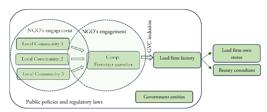
One local NGO initiates the process by mapping out potential forest areas in which there is a possibility of collecting andiroba seeds. This is an essential step toward mobilizing the communities to collect the seeds each year and for establishing contractual agreements with the lead firm. With help from the NGO, community members collect the seeds and use best practices, such as wet weighing them and leaving 30% to support forest regeneration.
Acting as the first-tier supplier, the cooperative purchases the wet seeds and oversees their drying and labeling, tasks that it hires local community members to perform. Finally, the lead firm coordinates key activities throughout the chain, including extracting andiroba oil, acidity testing, manufacturing, branding, and providing access to national and international markets.
In contrast to other Amazonian supply regions that deliver andiroba in a value-added form (oil), because of the existence of local agro-industrial extraction facilities, in its transactional relationship with Flona Tapajós communities the lead firm assumes the oil extraction process itself.
Figure 3 provides a straightforward overview of the fundamental activities that constitute the value chain we analyzed. Red circles highlight those activities that are the responsibility of local communities.

GVC Power and multipolar governance in a context of grand challenges
Power dynamics emerged in our study as a useful dimension to examine how and under what conditions institutions, firms, or countries can establish economic, social, or environmental standards that influence other actors in the context of grand challenges. Do these efforts reinforce their power relative to others, or is their influence diluted by the specific context of the global environmental agenda? Furthermore, when lead firms adopt sustainability solutions, do these efforts effectively address environmental challenges, merely reinforce existing power structures, or make little to no impact at all?
Dynamics of bargaining power in the andiroba value chain and grand challenges
Bargaining power (dyadic and direct) is exercised by the lead firm over price-setting, contractual negotiation decisions, and logistics. The price paid by the lead firm is perceived by local communities as insufficient, considering the physical effort and risks involved in accessing forest areas for seed collection. In 2023, local communities received BRL 1.25/kg for wet seeds, while the cooperative sold the dried seed at BRL 4.85/kg, but still reported that revenues failed to cover the costs related to logistics, transportation (more than 1,200 km), providing food, and paying community workers.
“We’ve worked with [the lead firm] for two or three years, right? The price they pay us is very little. We left our community, moved to the collection area, [where] we spent a week picking up heavy [wet] andiroba [seeds]. When we send them to [the lead firm], the price reduces. It’s [andiroba] already dry when it goes there” (Focus group participant, November 2023).
Another source of asymmetric power is negotiation. Despite the existence of a ‘participative price negotiation’ process, both the local communities and the cooperative reported that the decision regarding the purchase price is unilateral, with the final price for andiroba being effectively set by the lead firm. According to the lead firm, the price of this biodiversity asset is revised annually based on the Broad National Consumer Price Index (IPCA - Índice Nacional de Preços ao Consumidor Amplo), Brazil’s official inflation indicator.
“When we negotiate with them, they already come with a ready-defined price. They don’t negotiate. This is the biggest complaint: the price issue. Everything comes already set out in detail” (Local community member, November 2023).
Power asymmetries are further heightened by logistics, because distribution costs and risks are passed on to the cooperative, which is responsible for transporting the seeds over 1,200 kilometers from the municipality of Belterra (Pará) to the lead firm’s plant in the municipality of Benevides (Pará). In 2023, the cooperative sold dried seeds at BRL 4.85/kg, but according to its director, participation in the value chain has not generated economic value (profit) for them, because the cooperative also bears the costs of supporting local communities when they are collecting wet andiroba seeds, including expenses related to transportation and food.
“The prices they [lead firm] pay don’t cover our costs. We have to pay the people who work, and we have to provide them with food. We pay for their transportation. So, the price they set - their proposal - is low” (Director of the cooperative, November 2023).
Within the scope of the grand challenges in Flona Tapajós, dyadic bargaining power operates not only as an asymmetric form of power that serves the lead firm’s value capture, but also as a stabilizing mechanism in the face of unforeseen and extreme climatic events that can disturb the phenological cycle of andiroba by delaying or reducing flowering, fruit set, and seed yield. During the severe drought of 2023, for example, the andiroba fruit cycle was affected in terms of both its timing and yield. In such cases, the lead firm does not refuse to negotiate supply from its Amazonian sources, but accepts either lower or higher quantities than were initially agreed. Nor does the lead firm impose any type of exclusivity agreement, which allows local actors to sell their andiroba to other potential buyers.
Dynamics of institutional power in the andiroba value chain
Institutional power (collective and direct) in the andiroba value chain is most clearly exercised by the Brazilian biodiversity regulatory agency, which holds the statutory mandate to safeguard the Amazon’s natural resources and is responsible for managing the Flona Tapajós Conservation Unit (Floresta Nacional do Tapajós) and all its communities (Decree no. 73,684, 1974).
“Within the territory [Flona Tapajós], there are 28 communities, including three indigenous villages. In fact, there are 25 communities and three villages. We’re responsible for the overall management of the territory and for regulating the use of its natural resources” (ICMBio, forestry technician, 2023).
ICMBio also assumes an institutional role by promoting and implementing public policies within the territory for local communities. This encompasses both the creation of alternative income-generating opportunities and the provision of essential social services, such as health and public assistance, thereby fostering the socioeconomic development of resident communities. It also grants access and permission to extract biodiversity assets, as in the case of andiroba. An ICMBio forestry technician (2023) emphasized this institutional role, explaining that:
“ICMBio functions as a public policy coordinator, and we won’t necessarily implement it, but [we operate] as a local representative of the federal government. For example, we have many communities that still lack schools or health services. So, we do everything we can to establish these structures in partnership with local authorities ... Another example is forest management, which, since its implementation, has seen the creation of several schools - more than seven schools within the territory - supported by management resources. Once these schools are built, the town council provides teachers to teach in the territory” (ICMBio, forestry technician, 2023).
The institution has reported that it operates in Flona Tapajós in collaboration with both local and international NGOs, as well as with the cooperative, which is currently implementing the sustainable forest management plan within the territory. According to the ICMBio representative we interviewed, the institution does not restrict the introduction of public policies or the entry of partner organizations into the territory. Rather, its role is to oversee whether their activities respect natural resource management. Overall, ICMBio encourages external investments for implementing projects and bioeconomic initiatives within the territory. These arrangements are particularly relevant given the socioeconomic vulnerabilities of local communities, which are highly dependent on seasonal income from non-timber forest products and face increased exposure to climatic risks.
The local governments of the municipalities of Belterra, Placas, Rurópolis, and Aveiro are described as limited and ad hoc, with varying levels of engagement among them, but without sustained leadership when it comes to formulating or implementing policies related to the Flona. Thus, governance combines strong federal centralization and dependency in terms of institutional power that act in partnership with external and horizontal actors.
Dynamics of demonstrative power in the andiroba value chain
Demonstrative power (dyadic and diffuse) is evident because of the intervention of several non-lead firm actors, specifically NGOs and civil society organizations, which are directly engaged in andiroba activities through the technical assistance, collection methods, traceability monitoring, knowledge transfer via training, and guidance on best practices they offer. One local NGO located in the municipality of Santarém (Pará) has long been engaged with local communities in Belterra, where it works as an intermediary in different value chains to improve local sustainable development, while actively contributing to andiroba-related activities.
Considering the long-term expertise of local communities and the cooperative in timber forest management in Flona Tapajós and their recent engagement in managing andiroba, close relationships have enabled interventions that focus on transferring tacit knowledge, often through direct interaction and practical demonstrations. Demonstrative power also operates through strict aesthetic standards for collecting andiroba seeds and the price paid by the lead firm. Interactions with NGOs and accumulated experience have transformed this coded information into recognized ‘best practice’ (internal knowledge) that can be transferred.
For example, when the communities first started collecting seeds, an engineer from the NGO identified that sprouted seeds were unsuitable, and the consequent corrections gradually shaped local behaviors. As a result, collectors now select only ‘good seeds,’ thereby incorporating external expectations into their daily practices without the need for formal regulation, as one interviewee described it:
“Yes, we select [seeds] that fit the standard; we don’t bring in the ones with holes bored in them... If they [seeds] are good, we collect them. We don’t bring in those that come with sprouts either” (Local community member, 2023).
Demonstrative power was also evident during the 2023 drought, which severely affected local communities by reducing the availability of water and prompting NGOs to implement emergency responses to mitigate its socioeconomic impacts. This episode revealed the extent to which socioeconomic vulnerabilities amplify the consequences of climatic shocks, since local livelihoods rely not only on the seasonal andiroba harvest but also on subsistence activities such as fishing and forest gathering. In this episode, a local NGO mobilized resources through targeted fundraising campaigns and facilitated collective action at the community level. The prolonged drought not only reduced the availability of andiroba and made subsistence fishing extremely difficult, but also caused the death of many trees. As one community member explained: “Some of the lakes here are about to dry up too. Everything’s dry; a lot of fish have died.”
During this episode, the NGO directed donations toward the procurement of water filters that use nanotechnology to convert muddy water into potable water. This intervention ensured access to safe and clean drinking water for affected populations and highlighted how NGOs can operate as key enablers of adaptive solutions in times of crisis.
Dynamics of constitutive power in the andiroba value chain
Constitutive power (collective and diffuse) emerges from the conventions and narratives that attribute collective identity and value. For instance, the notion of ‘standing forest’ functions both as a convention that guides practices, such as limiting tree felling to ensure regeneration, and as a narrative that is identified as a collective value attribution in local communities by the lead firm. In the general context of the Amazon, and more specifically of the Flona Tapajós andiroba value chain in the cosmetics sector, agreed conventions legitimize the territory. Constitutive power also operates as a discursive and practical counterforce to deforestation, insofar as the ‘standing forest’ convention frames cutting down trees as socially undesirable and economically less legitimate, while positioning forest conservation as a shared moral and territorial value.
This alignment, however, is contested with regard to the very different views that are held, such as the various understandings of what ‘sustainability’ entails in the broader context of the Amazon. This ‘tension’ is reflected in the narratives of the different stakeholders, as expressed by an NGO representative (November 2023):
“I think that the focus of sustainability here (territory) today would not be so much on profitability (for the local communities), but rather on preserving the standing forest, and not having to cut it down to carry out the activity” (NGO representative, November 2023).
“[Sustainability] is when we use forest products and, at the same time, we help improve the quality of life of the community, while preserving the forest, not harming it, and not destroying it. This combination is a sustainable way of producing that benefits the communities and the producers, and at the same time contributes to the maintenance of standing forests and the environment” (Cooperative director, November 2023).
The above two comments illustrate contested aspects of the understanding of sustainability: the emphasis in the first is on keeping the forest standing as a priority source of value, even if this means reducing the centrality of profitability for local communities; whereas in the second, sustainability is understood as the integration of economic benefits, improved community well-being, and environmental conservation, so that the use of forest resources and preservation of the forest advance together. These divergent perspectives are strongly shaped by the socioeconomic vulnerabilities of local communities, whose dependence on seasonal forest income and limited livelihood alternatives make profitability and well-being inseparable from their interpretation of sustainability. Based on this, constitutive power influences how value chain actors (communities, firms, and supporting organizations) understand their identities and development discourses to reconfigure local practices and expectations, which often results in effects that are unintended or not directly coordinated by any single actor.
Unpacking the dynamics of bottom-up agency
Bottom-up agency emerged as a distinct analytical category in our analysis. This captures the traditional knowledge of local community members, which is fundamental for sustaining socio-bioeconomy production, and resilience, by expressing adaptive responses to the negative impacts of grand challenges, such as drought and climatic variations. Such agency transcends a merely reactive stance, assuming a proactive role that reaffirms territorial practices and actively contributes to shaping alternative pathways of territorial development capable of reconciling livelihoods with forest conservation.
Therefore, we introduce the concept of bottom-up agency to denote the ways in which local communities actively sustain their participation in value chains through traditional and ancestral practices, transmitted across generations and deeply rooted in the lived experience of forest dwelling. While it is mobilized to confront the adverse impacts of grand challenges, it simultaneously embodies a worldview of coexistence with the environment, thereby reinforcing resilience and sustainability as foundational principles of community life.
Within the scope of grand challenges, collective resilience is demonstrated by local communities, rooted in indigenous practices that adapt the use of natural resources and mobilize shared traditions as forms of community-based organization. ‘Indigenous resilience’ is approached here as a sub-dimension of bottom-up agency, not in the ethnic sense, but as resilience that is endogenous to local communities and grounded in their traditional knowledge and practices. Bottom-up agency thus emerges as a pivotal form of power for tackling grand challenges and ensuring the continuity of the value chain.
The experiences of community members illustrate how the challenges posed by drought are not only endured but also actively managed through collective strategies, traditional practices, and adaptive responses that sustain both livelihoods and the value chain.
“We’re feeling it [drought] because some of the trees in the forest are dying due to a lack of water. There are also andiroba trees near my house, some of which are drying out” (Local community member, focus group, November 2023).
This first impression reflects how the impact of environmental pressures is experienced at the local level. This impact directly affects livelihoods and forest resources, which are the valuable assets on which communities depend for their activities. The field visit to the Flona Tapajós revealed the tangible consequences of climate variability and highlighted the visible effects of drought on the rivers, particularly the reduction in water levels in the territory. Bottom-up agency is a necessity, since local communities are marginalized by local government in relation to their basic needs, as highlighted by other community members:
“Support from the government [he was referring to the basic food baskets distributed to tackle the drought in 2023] is very limited. Our [own resources] are currently quite scarce. Right now our only source of income comes from forest management. We try to support the communities in all areas, like health ... Only education is still okay ... The government has worked well in recent years [regarding public education], but when it comes to other issues, especially health, things are quite difficult. We do what’s possible” (Leader of a community organization, November 2023).
Low household incomes lead to socioeconomic vulnerability, which is a grand challenge across the entire Amazon region, a consequence of which, according to the participants, is the prevalence of social inequalities. The average Human Development Index (HDI) of the municipalities in which the value actors live is 0.57, which is significantly below the national average of 0.75 (Atlas Brasil, 2010), and this is reflected in their limited access to basic sanitation and healthcare services, and in low levels of education.
Despite these constraints, local communities exhibit intrinsic capabilities that sustain their resilience and agency. These include local traditional knowledge related to forest management, collective work arrangements, and informal governance systems that regulate access to resources and maintain social cohesion. Hence, bottom-up agency is not merely a reaction to vulnerability, but a manifestation of accumulated experiential knowledge and community learning that allows forest dwellers to reinterpret and reconfigure their productive and social arrangements.
It is through these intrinsic capabilities - (a) traditional forest knowledge, accumulated over generations through practical experience and adaptation; and (b) local perceptions of environmental and climatic change, which guide the collective responses of local populations - that communities anticipate, mitigate, and adapt to environmental disturbances. These two dimensions of traditional knowledge operate as an integral governance tool within the value chain, informing decision-making and enhancing resilience. By mobilizing such context-specific knowledge and collective organization, local actors transform constraints into adaptive strategies, reaffirming their position as active agents within the socio-bioeconomic value chain.
DISCUSSION
Building on existing GVC literature, this paper explored both the potential and the limitations of traditional theoretical principles for addressing grand challenges in the context of the socio-bioeconomy and territories. We shift the entry point of GVC analysis beyond the firm-centric perspective of Gereffi et al. (2005), which emphasizes the bargaining power of lead firms over suppliers (Ponte et al., 2023), by recentering the territory as the unit of analysis. In doing so, this paper aimed to extend the types of governance proposed by Dallas et al. (2019) by considering their potential to address the impacts of grand challenges in global value chains (De Marchi & Gereffi, 2023; Lang et al., 2023).
Our findings indicate that power asymmetries, coupled with the cost reduction orientation of lead firms, prevail in dyadic GVC relationships, even when actors at one node within the chain (Lang et al., 2023) face the negative impacts of grand challenges, as in the case of socioeconomic vulnerabilities. This dynamic often harms local communities’ perceptions of value capture (De Marchi & Gereffi, 2023). These forms of explicit coordination reinforce the imbalance in value creation (Gereffi, 2021; Lund-Thomsen, 2024), even when cloaked in sustainability discourse (Ponte, 2019), also revealing how power asymmetry extends beyond contractual agreements into the very negotiations over prices, volumes, and terms of exchange, where local actors hold limited voice and influence.
As in other studies (Barrientos et al., 2010; Bernhardt & Pollak, 2016; Gereffi & Lee, 2016), we observed that while participation in the value chain offers automatic gains to suppliers, the economic value they capture is still limited. This supports critiques that claim that business sustainability results in asymmetrical relations that marginalize suppliers (Dallas et al., 2019; Riisgaard, 2009). Moreover, our findings suggest that contractual requirements tend to soften their stringency in response to climate-related variations in the value chain, allowing greater flexibility in volumes or delivery.
In the different dimensions of inequality in GVCs from Lang et al. (2023) and mechanisms of power, the authors suggest that ‘silent’ powerful actors, such as regulatory institutions, may reclaim influence to tackle ‘disruptive’ events. Our findings, however, demonstrate that such influence is not limited to episodic disruptions. Instead, these actors exert institutional power on a continuous basis in challenges that require sustained governance efforts, such as ongoing deforestation. In the Brazilian Amazon rainforest, the national government plays a central regulatory role in defining legal rules of biodiversity protection and use, and setting the conditions for value creation in the socio-bioeconomy.
Furthermore, our findings expand the notion of demonstrative power beyond its derivation from institutionalized actors and explicit norms, such as public-private partnerships, governmental agencies, or lead firm compliance (Dallas et al., 2019; Lang et al., 2023). We show that it also emerges through NGOs, whose interventions facilitate knowledge transfer, orchestrate resource articulation to mitigate river losses associated with increasingly warmer and drier climatic conditions in the Amazon, and transmit seed collection practices and narratives grounded in the principle of ‘floresta em pé’ (demonstrative power), normalized as a form of value chain contribution against deforestation.
Finally, the emergence of bottom-up agency as a core dimension demonstrates in a notable way that local communities are not merely passive recipients of governance, but are actively (although often invisibly) responsible for maintaining the value chain, furthering their technical knowledge, since their traditional knowledge and adaptive behaviors in the face of drought and the impacts of deforestation illustrate a form of governance grounded in resilience and local organization. Social and environmental upgrading result from vertical linkages between value chain agents, but bottom-up agency is rooted in the territory and formed by horizontal linkages. This complements recent calls in the literature to recenter agency in the Global South and challenge the North-centric epistemologies that dominate GVC analysis (Smith, 2021; Soundararajan, 2023).
CONCLUSIONS
This paper examined how global value chain governance mechanisms are shaped to address grand environmental and social challenges. To do so, we used a case study of local communities in the Amazon rainforest that are engaged in a biodiversity-based cosmetics value chain, considering ongoing deforestation, socioeconomic vulnerability, and climate events. Using the power dimensions of Dallas et al. (2019), together with the emergent notion of bottom-up agency, this study contributes both empirically and theoretically to extending GVC literature and power analysis.
Drawing on the analysis of the dimensions proposed by Lang et al. (2023), we examined grand challenges at a specific node of the chain, highlighting the importance of moving beyond norms, rules, conventions, or ‘good practices,’ as reinforced by Lang et al. (2023), to analyze GVCs and inequality across the three dimensions.
As we have unpacked the ‘bottom-up agency’ dimension as a GVC mechanism, meaning how local actors actively shape governance, future studies can adopt bottom-up agency as a power mechanism, which can help explain how local actors use their knowledge and capabilities to co-create solutions that restructure the dynamics of global value chains. This emerging concept in GVC differs from upgrading, which derives from vertical buyer-supplier relationships. Comparative studies across regions, sectors, and environmental contexts could further deepen our understanding of how governance can be reimagined to better confront the complex and uneven impacts of global crises.
The paper has its limitations, particularly its lack of detail regarding the extent of the impacts posed by the challenges we identified. While certain insights that emerged help illuminate the perspectives of some communities, the effects on livelihoods and biodiversity loss remain insufficiently explored, which limits a fuller understanding of the underlying realities. The study captures subjectivities, established relationships, and the structure of the value chain. It does not seek to resolve debates about the existence of a singular ‘truth.’ Nonetheless, the narratives of the actors clearly reveal a range of conflicting information and perspectives.
REFERENCES
-
Anner, M. (2021). Three labour governance mechanisms for addressing decent work deficits in global value chains. International Labour Review, 160(4), 611-629. https://doi.org/10.1111/ilr.12209
» https://doi.org/10.1111/ilr.12209 -
Ateş, E., & Şanlısoy, S. (2025). The impact of global value chains on climate change. Journal of Social and Economic Development, 27(1), 167-185. https://doi.org/10.1007/s40847-023-00320-6
» https://doi.org/10.1007/s40847-023-00320-6 -
Atlas Brasil. (2010). Perfil municipal: Belterra (PA) http://www.atlasbrasil.org.br/
» http://www.atlasbrasil.org.br/ - Bair, J. (Ed.). (2009). Frontiers of commodity chain research Stanford University Press.
-
Barrientos, S. (2014). Gendered global production networks. Regional Studies, 48(5), 791-803. https://doi.org/10.1080/00343404.2013.878799
» https://doi.org/10.1080/00343404.2013.878799 -
Barrientos, S., Gereffi, G., & Rossi, A. (2010). Economic and social upgrading in global production networks: Developing a framework for analysis. International Labor Review, 150(3-4), 319-340. https://doi.org/10.1111/j.1564-913X.2011.00119.x
» https://doi.org/10.1111/j.1564-913X.2011.00119.x -
Barrientos, S., Gereffi, G., & Rossi, A. (2012). Economic and Social Upgrading in Global Production Network: Developing a Framew ork for Analysis, aw orking paper: GVC analysis, 2(0), 1. https://doi.org/10.1111/j.1564-913X.2011.00119.x
» https://doi.org/10.1111/j.1564-913X.2011.00119.x -
Bernhardt, T., & Pollak, R. (2016). Economic and social upgrading dynamics in global manufacturing value chains: A comparative analysis. Environment and Planning A: Economy and Space, 48(7), 1220-1243. https://doi.org/10.1177/0308518X15614683
» https://doi.org/10.1177/0308518X15614683 -
Barrientos, S., & Smith, S. (2007). Do workers benefit from ethical trade? Third World Quarterly, 28(4), 713-729. https://doi.org/10.1080/01436590701336580
» https://doi.org/10.1080/01436590701336580 -
Brandão, D. O., Arieira, J., & Nobre, C. A. (2024). Impactos das mudanças climáticas na sociobioeconomia da Amazônia. Estudos Avançados, 38(112), 249-270. https://doi.org/10.1590/s0103-4014.202438112.014
» https://doi.org/10.1590/s0103-4014.202438112.014 - Coe, N. M., & Yeung, H. W. C. (2015). Global production networks: Theorizing economic development in an interconnected world Oxford University Press.
-
Dallas, M. P., Ponte, S., & Sturgeon, T. J. (2019). Power in global value chains. Review of International Political Economy, 26(4), 666-694. https://doi.org/10.1080/09692290.2019.1608284
» https://doi.org/10.1080/09692290.2019.1608284 -
De Marchi, V., & Alford, M. (2022). State policies and upgrading in global value chains: A systematic literature review. Journal of International Business Policy, 5, 88-111. https://doi.org/10.1057/s42214-021-00107-8
» https://doi.org/10.1057/s42214-021-00107-8 -
De Marchi, V., & Di Maria, E. (2019). Environmental upgrading and suppliers’ agency in the leather global value chain. Sustainability, 11(23). https://doi.org/10.3390/su11236530
» https://doi.org/10.3390/su11236530 -
De Marchi, V., Di Maria, E., Golini, R., & Perri, A. (2020). Nurturing international business research through global value chains literature: A review and discussion of future research opportunities. International Business Review, 29(5). https://doi.org/10.1016/j.ibusrev.2020.101708
» https://doi.org/10.1016/j.ibusrev.2020.101708 -
De Marchi, V., Di Maria, & Micelli, S. (2013). Environmental strategies, upgrading and competitive advantage in global value chains. Business strategy and the environment, 22(1), 62-72. https://doi.org/10.1002/bse.1738
» https://doi.org/10.1002/bse.1738 -
De Marchi, V., Di Maria, E., & Ponte, S. (2013). The greening of global value chains: Insights from the furniture industry. Competition & change, 17(4), 299-318. https://doi.org/10.1179/1024529413Z.00000000040
» https://doi.org/10.1179/1024529413Z.00000000040 -
De Marchi, V., & Gereffi, G. (2023). Using the global value chain framework to analyse and tackle global environmental crises. Journal of Industrial and Business Economics, 50, 149-159. https://doi.org/10.1007/s40812-022-00253-x
» https://doi.org/10.1007/s40812-022-00253-x -
Decreto n. 73,684 (1974). Decreto No. 73,684 de 19 de fevereiro de 1974 Cria a Floresta Nacional do Tapajós, e dá outras providências. https://www2.camara.leg.br/legin/fed/decret/1970-1979/decreto-73684-19-fevereiro-1974-421999-publicacaooriginal-1-pe.html
» https://www2.camara.leg.br/legin/fed/decret/1970-1979/decreto-73684-19-fevereiro-1974-421999-publicacaooriginal-1-pe.html - Elliott, K. A., & Freeman, R. B. (2003). Can labor standards improve under globalization? Peterson Institute Press: All Books
-
Evers, B. J., Amoding, F., & Krishnan, A. (2014, June 1). Social and Economic Upgrading in Floriculture Global Value Chains: Flowers and Cuttings GVCs in Uganda. Capturing the Gains Working Paper 42. http://dx.doi.org/10.2139/ssrn.2456600
» http://dx.doi.org/10.2139/ssrn.2456600 - Fernandez-Stark, K., & Gereffi, G. (2019). Global value chain analysis: A primer. Ponte, S. Gereffi, G. Raj-Reichert (Eds), Handbook on global value chains (pp. 54-76). Edward Elgar.
-
Freitas, A., Ferreira, J., Escada, M., Reis, J., Leite, C., Andrade, D., Spínola, J., Soares, M., & Anderson, L. (2023). Fire exposure index as a tool for guiding prevention and management. Frontiers in Physics, 10, 1064162. https://doi.org/10.3389/fphy.2022.1064162
» https://doi.org/10.3389/fphy.2022.1064162 -
Garrett, R., Ferreira, J., Abramovay, R., Brandão, J., Brondizio, E., Euler, A., Pinedo, D., Porro, R., Rocha, E. C., Sampaio, O., Schmink, M., Torres, B., & Varese, M. (2024). Transformative changes are needed to support socio-bioeconomies for people and ecosystems in the Amazon. Nature Ecology & Evolution, 8(10), 1815-1825. https://doi.org/10.1038/s41559-024-02467-9
» https://doi.org/10.1038/s41559-024-02467-9 - Gereffi, G. (1994). The organization of buyer-driven global commodity chains: How US retailers shape overseas. In G. Gereffi & M. Korzeniewicz (Eds), Commodity Chains and Global Capitalism (pp. 95-122). Global Health Institute.
- Gereffi, G. (2019). Economic upgrading in global value chains. In S. Ponte, G. Gerei, & G. Raj-Reichert (Eds.), Handbook on Global Value Chains (pp. 240-254). Edward Elgar.
-
Gereffi, G. (2021). On the road to global value chains: How industry dynamics reshaped development theory. In M. Kipping, T. Kurosawa and D. E Westney (Eds), The Oxford Handbook of industry dynamics. Oxford University Press. https://doi.org/10.1093/oxfordhb/9780190933463.013.40_update_002
» https://doi.org/10.1093/oxfordhb/9780190933463.013.40_update_002 -
Gereffi, G., Bamber, P., & Fernandez-Stark, K. (2022). China’s evolving role in global value chains: Upgrading strategies in an era of disruptions and resilience. In China’s new development strategies (pp. 1-29). Springer. https://doi.org/10.1007/978-981-19-3008-9_1
» https://doi.org/10.1007/978-981-19-3008-9_1 -
Gereffi, G., Humphrey, J., & Sturgeon, T. (2005). The governance of global value chains. Review of International Political Economy, 12(1), 78-104. https://doi.org/10.1080/09692290500049805
» https://doi.org/10.1080/09692290500049805 -
Gereffi, G., & Lee, J. (2016). Economic and social upgrading in global value chains and industrial clusters: Why governance matters. Journal of Business Ethics, 133(1), 25-38. https://doi.org/10.1007/s10551-014-2373-7
» https://doi.org/10.1007/s10551-014-2373-7 -
Gereffi, G., Lim, H. C., & Lee, J. (2021). Trade policies, firm strategies, and adaptive reconfigurations of global value chains. Journal of International Business Policy, 4, 506-522. https://doi.org/10.1057/s42214-021-00102-z
» https://doi.org/10.1057/s42214-021-00102-z -
Gereffi, G., Pananond, P., & Pedersen, T. (2022). Resilience decoded. California Management Review, 64(2), 46-70. https://doi.org/10.1177/00081256211069
» https://doi.org/10.1177/00081256211069 - Gereffi, G., & Sturgeon, T. (2013). Global value chain-oriented industrial policy: the role of emerging economies. In Global value chains in a changing world (pp. 329-360). WTO iLibrary.
-
Gibbon, P., Bair, J., & Ponte, S. (2008). Governing global value chains: an introduction. Economy and Society, 37, 315-338. https://doi.org/10.1080/03085140802172656
» https://doi.org/10.1080/03085140802172656 -
Havice, E., & Campling, L. (2017). Where chain governance and environmental governance meet: Interfirm strategies in the canned tuna global value chain. Economic Geography, 93(3), 292-313. https://doi.org/10.1080/00130095.2017.1292848
» https://doi.org/10.1080/00130095.2017.1292848 -
Humphrey, J., & Schmitz, H. (2002). How does insertion in global value chains affect upgrading in industrial clusters? Regional studies, 36(9), 1017-1027. https://doi.org/10.1080/0034340022000022198
» https://doi.org/10.1080/0034340022000022198 -
Khattak, A., Stringer, C., Benson-Rea, M., & Haworth, N. (2015). Environmental upgrading of apparel firms in global value chains: Evidence from Sri Lanka. Competition & Change, 19(4), 317-335. https://doi.org/10.1177/1024529415581972
» https://doi.org/10.1177/1024529415581972 -
Krishnan, A. (2018). The origin and expansion of regional value chains: The case of Kenyan horticulture. Global Networks, 18(2), 238-263. https://doi.org/10.1111/glob.12162
» https://doi.org/10.1111/glob.12162 -
Krishnan, A., De Marchi, V., & Ponte, S. (2023). Environmental upgrading and downgrading in global value chains: A framework for analysis. Economic Geography, 99(1), 25-50. https://doi.org/10.1080/00130095.2022.2100340
» https://doi.org/10.1080/00130095.2022.2100340 -
Ketokivi, M., & Choi, T. (2014). Renaissance of case research as a scientific method. Journal of Operations Management, 32(5), 232-240. https://doi.org/10.1016/j.jom.2014.03.004
» https://doi.org/10.1016/j.jom.2014.03.004 -
Lang, J., Ponte, S., & Vilakazi, T. (2023). Linking power and inequality in global value chains. Global Networks, 23(4). https://doi.org/10.1111/glob.12411
» https://doi.org/10.1111/glob.12411 -
Lund-Thomsen, P. (2024). The value chain detective: A methods positive intervention. Environment and Planning A, 58(2). https://doi.org/10.1177/0308518X241303821
» https://doi.org/10.1177/0308518X241303821 -
Lund-Thomsen, P., Nadvi, K., Chan, A., Khara, N., & Xue, H. (2012). Labour in global value chains: Work Conditions in Football Manufacturing in China, India and Pakistan. Development and Change, 43(6), 1211-1237. https://doi.org/10.1111/j.1467-7660.2012.01798.x
» https://doi.org/10.1111/j.1467-7660.2012.01798.x -
Milberg, W., & Winkler, D. (2011). Economic and social upgrading in global production networks: Problems of theory and measurement. International Labour Review, 150(3‐4), 341-365. https://doi.org/10.1111/j.1564-913X.2011.00120.x
» https://doi.org/10.1111/j.1564-913X.2011.00120.x - Miles, M. B. & Huberman, A. M. (1994). Qualitative data analysis: An expanded sourcebook Thousand Oaks.
- Miles, M. B., Huberman, A. M., & Saldana, J. (2013) Qualitative data analysis: A methods sourcebook (3rd ed.). SAGE.
- Pegler, L., & Knorringa, P. (2007). Integrating labour issues in global value chain analysis: Exploring implications for labour research and unions. In Trade union responses to globalisation: A review by the Global Unions Research Network (pp. 35-51). ILO
-
Pegoraro, D., De Propris, L., & Chidlow, A. (2021). Regional factors enabling manufacturing reshoring strategies: A case study perspective. Journal of International Business Policy, 5(1), 112-130. https://doi.org/10.1057/s42214-021-00112-x
» https://doi.org/10.1057/s42214-021-00112-x - Pietrobelli, C. (2021). New industrial innovation policies in a world of global value chains. The challenges of technology and economic catch-up in emerging economies (pp. 436-458). Oxford University Press.
- Ponte, S. (2019). Business, power and sustainability in a world of global value chains. Bloomsbury.
-
Ponte, S., Bair, J., & Dallas, M. (2023). Power and inequality in global value chains. Global Networks, 23(4), 679-686. https://doi.org/10.1111/glob.12435
» https://doi.org/10.1111/glob.12435 -
Ponte, S., & Sturgeon, T. (2014). Explaining governance in global value chains: A modular theory building effort. Review of International Political Economy, 21, 195-223. https://doi.org/10.1080/09692290.2013.809596
» https://doi.org/10.1080/09692290.2013.809596 - Posthuma, A., & Nathan, D. (Eds.). (2010). Labour in global production networks in India (pp. 57-80). Oxford University Press
- Puppim de Oliveira, J. A. (Ed.). (2008). Upgrading clusters and small enterprises in developing countries: Environmental, labor, innovation and social issues Ashgate Publishing.
-
Riisgaard, L. (2009). Global value chains, labor organization and private social standards: Lessons from East African cut flower industries. World Development, 37(2), 326-340. https://doi.org/10.1016/j.worlddev.2008.03.003
» https://doi.org/10.1016/j.worlddev.2008.03.003 -
Rossi, A. (2013). Does economic upgrading lead to social upgrading in global production networks? Evidence from Morocco. World Development, 46, 223-233. https://doi.org/10.1016/j.worlddev.2013.02.002
» https://doi.org/10.1016/j.worlddev.2013.02.002 - Smith, L. T. (2021). Decolonizing methodologies: Research and indigenous peoples. Bloomsbury.
-
Shrivastava, P., Stafford Smith, M., O’Brien, K., & Zsolnai, L. (2020). Transforming sustainability science to generate positive social and environmental change globally. One Earth, 2(4), 329-340. https://doi.org/10.1016/j.oneear.2020.04.010
» https://doi.org/10.1016/j.oneear.2020.04.010 -
Soundararajan, V. (2023). The dark side of the cascading compliance model in global value chains. Journal of Industrial and Business Economics, 50(1), 209-218. https://doi.org/10.1007/s40812-022-00250-0
» https://doi.org/10.1007/s40812-022-00250-0 -
Strange, R. (2020). The 2020 COVID-19 pandemic and global value chains. Journal of Industrial and Business Economics, 47(3), 455-465. https://doi.org/10.1007/s40812-020-00162-x
» https://doi.org/10.1007/s40812-020-00162-x -
Tobias, M. C., & Morrison, J. G. (2021). Ecological epistemology. In On the nature of ecological paradox cham (pp. 679-685). Springer. https://doi.org/10.1007/978-3-030-64526-7
» https://doi.org/10.1007/978-3-030-64526-7 -
United Nations Conference on Trade and Development. (2013). World Investment Report 2013: Global value chains: Investment and trade for development UN. https://unctad.org/system/files/official-document/wir2013_en.pdf
» https://unctad.org/system/files/official-document/wir2013_en.pdf -
Urzedo, D. I., Neilson, J., Fisher, R., & Junqueira, R. G. (2020). A global production network for ecosystem services: The emergent governance of landscape restoration in the Brazilian Amazon. Global Environmental Change, 61, 102059. https://doi.org/10.1016/j.gloenvcha.2020.102059
» https://doi.org/10.1016/j.gloenvcha.2020.102059 -
World Bank. (2020). World Development Report 2020: Trading for development in the age of global value chains The World Bank. https://thedocs.worldbank.org/en/doc/124681548175938170-0050022019/original/WorldDevelopmentReport2020DraftReport.pdf
» https://thedocs.worldbank.org/en/doc/124681548175938170-0050022019/original/WorldDevelopmentReport2020DraftReport.pdf
-
Funding
We thank and recognise the support of grant São Paulo Research Foundation (FAPESP) as part of the Amazônia+10 project, “Innovation for Creating Sustainable Value: Understanding Global Value Chains in the Amazon” (grant #2022/12287-1) to data collection. The opinions, analysis, conclusions and recommendations expressed in this material are the responsibility of the authors and do not necessarily reflect the views of FAPESP. Additional support was provided by the Coordination for the Improvement of Higher Education Personnel (CAPES), process number 88887.513433/2021-00.
-
Fast-track
An initial version of this manuscript was presented at the 48th ANPAD Meeting - EnANPAD 2024, under the title “Extending governance in global value chains to address grand challenges: lessons from Amazon Rainforest” (GOL11971). It was awarded as the best work in Operations and Logistics Management, as well as being indicated by the event for fast-track submission at RAC.
-
Plagiarism Check
RAC maintains the practice of submitting all documents approved for publication to the plagiarism check, using specific tools, e.g.: iThenticate.
-
Peer Review Method
This content was evaluated using the double-blind peer review process. The disclosure of the reviewers’ information on the first page, as well as the Peer Review Report, is made only after concluding the evaluation process, and with the voluntary consent of the respective reviewers and authors.
-
Data Availability
The authors claim that all data used in the research have been made publicly available, and can be accessed via the Harvard Dataverse platform:Bezerra Lima, Lucas Gabriel; Vieira, Luciana, 2026, "Replication Data for: Extending Global Value Chain Governance: Addressing Grand Challenges in Amazonian Rainforest published by Revista de Administração Contemporânea", Harvard Dataverse, V1. https://doi.org/10.7910/DVN/01N2WFRAC encourages data sharing but, in compliance with ethical principles, it does not demand the disclosure of any means of identifying research subjects, preserving the privacy of research subjects. The practice of open data is to enable the reproducibility of results, and to ensure the unrestricted transparency of the results of the published research, without requiring the identity of research subjects.
-
Cite as:
Lima, L. G. B., & Vieira, L. M. (2026). Extending global value chain governance: Addressing grand challenges in Amazonian rainforest. Revista de Administração Contemporânea, 30(3), e240367. https://doi.org/10.1590/1982-7849rac2026240367.en
-
JEL Code:
O130, Q2.
-
Peer Review Report:
The disclosure of the Peer Review Report was not authorized by its reviewers.

Edited by
-
Editor-in-chief:
Paula Chimenti (Universidade Federal do Rio de Janeiro, COPPEAD, Brazil) https://orcid.org/0000-0002-6492-4072
-
Associate Editor:
Fernando Viana (Universidade de Fortaleza, Brasil) https://orcid.org/0000-0003-0911-7208
The authors claim that all data used in the research have been made publicly available, and can be accessed via the Harvard Dataverse platform:
Bezerra Lima, Lucas Gabriel; Vieira, Luciana, 2026, "Replication Data for: Extending Global Value Chain Governance: Addressing Grand Challenges in Amazonian Rainforest published by Revista de Administração Contemporânea", Harvard Dataverse, V1. https://doi.org/10.7910/DVN/01N2WF
RAC encourages data sharing but, in compliance with ethical principles, it does not demand the disclosure of any means of identifying research subjects, preserving the privacy of research subjects. The practice of open data is to enable the reproducibility of results, and to ensure the unrestricted transparency of the results of the published research, without requiring the identity of research subjects.

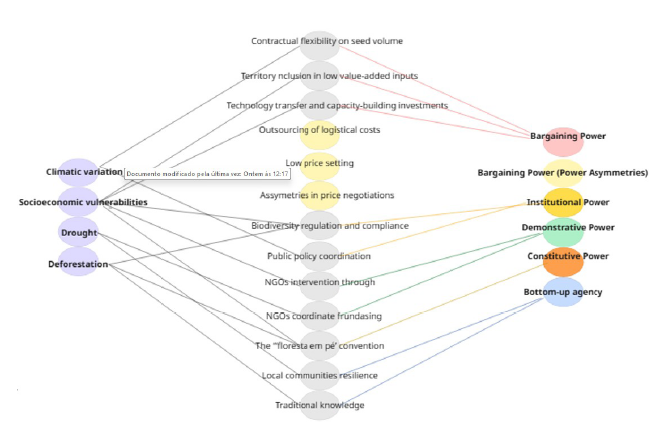 Source: Elaborated by the authors.
 Source: Elaborated by the authors.
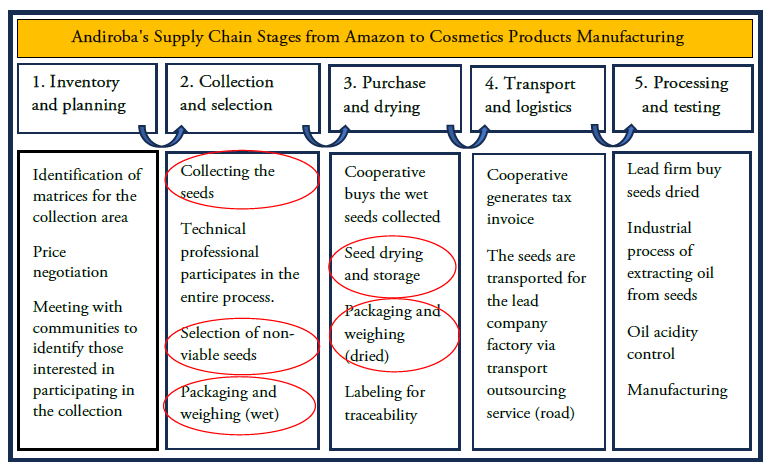 Source: Elaborated by the authors.