 A TELESCOPIC METHOD FOR THE SYNTHESIS OF 3-INDOLYL AZO DERIVATIVE
Abstract
In this study, a mild and facile method for the synthesis of 3-indolyl azo derivatives using indole derivatives, aniline and tert-butyl nitro compounds at room temperature was developed. The optimum conditions of anhydrous ethanol as solvent and tetrabutylammonium iodide (TBAI) as catalyst were determined by systematic screening of the reaction conditions, which gave up to 77% yield. It was also found that the electronic nature of the aniline substituent, the structure of the N-1 substituent of the indole framework and the side chain substituents significantly affected the reaction efficiency. The method has good functional group tolerance, provides a new route for the synthesis of 3-indolyl azo compounds, and demonstrates good synthetic utility in scale-up experiments.
Keywords:
azo compounds; 3-indolyl; reaction optimization; synthetic methods
INTRODUCTION
Azo compounds constitute a class of organic molecules characterized by the presence of an azo functional group (–N=N–), with the general formula R–N=N–R’, where R and R’ represent identical or distinct hydrocarbon substituents (alkyl or aryl groups). The distinctive coloration of these compounds originates from the light-absorbing properties of the azo chromophore, which selectively captures photons in the visible spectrum (400-700 nm) through electronic transitions, thereby imparting vivid coloration.1 Typically exhibiting intense chromaticity ranging from yellow to red hues – a direct consequence of structural variations in the conjugated π-system – azo derivatives dominate industrial dye production, accounting for > 60% of global synthetic colorant output.2,3 This chromatic versatility underpins their widespread technological applications as textile colorants,4 photoconductive organic semiconductors,5 and cosmetic additives.6 The synthesis of azo compounds employs diverse methodologies, including classical azo coupling reactions7 (such as the electrophilic substitution of indoles with diazonium salts, which has been extensively studied for substituent effects),8 Mills condensation processes, and Wallach-type transformations,9 each offering distinct regiochemical control.10,11 Of particular pharmaceutical relevance are indole-azo hybrids, where the integration of indole motifs with azo functionalities has unlocked novel avenues in bioactive molecule development.12 Phenylazoindoles, a key subclass, exhibit unique azo-hydrazone tautomerism in solution and solid states, which significantly influences their chemical properties.13 The indole nucleus, recognized as a privileged scaffold in medicinal chemistry,14 serves as a structural cornerstone in numerous therapeutics due to its inherent bioisosteric properties and favorable pharmacokinetic profiles.15,16 This molecular synergy endows indole-azo conjugates with multifaceted biological activities spanning antimicrobial, anticancer, and enzyme inhibitory effects,17,18 and their photochromic properties (e.g., thermal isomerization tunable from days to nanoseconds) further expand their application potential.19 Drugs containing the azo (–N=N–) structure have diverse applications in the pharmaceutical field, with their pharmacological effects closely linked to the chemical properties of the azo bond. For example, sulfasalazine is used for treating inflammatory bowel diseases (IBD) such as Crohn’s disease.20,21 Olsalazine is indicated for the treatment of acute and chronic ulcerative colitis,22 segmental ileitis,23 and long-term maintenance therapy during remission.24 Prontosil, the first commercial synthetic antibacterial drug of the world,25 and methyl red, which is primarily used as an acid-base indicator, all contain the azo (–N=N–) moiety (Figure 1).

EXPERIMENTAL
General information
All reagents and solvents were obtained from commercial suppliers and used without further purification unless otherwise noted. The reaction progress was monitored by thin-layer chromatography (TLC) on silica gel plates. Column chromatography was performed using silica gel (200-300 mesh) with petroleum ether and ethyl acetate as eluents. Melting points were determined using a WRS digital melting point apparatus and are uncorrected. Nuclear magnetic resonance (NMR) spectra were recorded on a Bruker Avance III 400 MHz spectrometer operating at 400 MHz for 1H NMR and 101 MHz for 13C NMR. Chemical shifts (d) are reported in parts per million (ppm) relative to tetramethylsilane (TMS) as an internal standard, using CDCl3 as the solvent. Coupling constants (J) are expressed in hertz (Hz). High-resolution mass spectra (HRMS) were acquired on an Agilent 6545 Q-TOF mass spectrometer using electrospray ionization (ESI) mode.
General experimental procedure
A reaction was carried out by first adding 4-methoxyaniline (1a, 1.5 mmol), tert-butyl nitrite (2a, 1.5 mmol), and TBAI (tetrabutyl-ammonium iodide, 0.5 mmol) to a flask, followed by 2 mL of anhydrous ethanol. The mixture was stirred at room temperature for 30 min. Then, dimethylindole (3a, 1.0 mmol) was added and the reaction was allowed to proceed for an additional 2 h, with the progress being monitored by TLC. After completion, water was added to the mixture, which was then extracted with dichloromethane (30 mL) and washed with saturated sodium chloride solution (10 mL × 3). The organic layer was dried over anhydrous Na2SO4 and concentrated under vacuum. The crude product was purified by silica gel column chromatography, eluting with a petroleum ether/ethyl acetate mixture, to afford the desired 3-indolyl azo derivatives (4a).
RESULTS AND DISCUSSION
Studies on the introduction of diazo groups at the electronically distinct C3 position play an important role in drug discovery. Therefore, we have engineered a mild and operationally simple protocol employing indole derivatives, anilines, and tert-butyl nitrite under ambient conditions. This methodology enables efficient construction of structurally diverse indole-azo hybrids through sequential diazotization and coupling events, expanding the chemical space for pharmacological exploration. Compared with existing metal-free strategies for synthesizing hindered 3-azoindoles,26 our approach avoids harsh conditions and achieves higher yields for certain substrates.
Through systematic screening of reaction conditions, we identified the optimal conditions for the synthesis of 3-diazoindole derivatives, as shown in Table 1. The reaction involves the synthesis of 1,2-dimethylindole (3a), p-methoxyaniline (1a), and tert-butyl nitrite (2a) in the presence of various additives and solvents. The goal was to determine the conditions that maximize the yield of the target product.
Initially, the reaction was conducted in different solvents, including dichloromethane (DCM), 1,2-dichloroethane (DCE), methanol (MeOH), and anhydrous ethanol (EtOH). The results showed that anhydrous ethanol was the most effective solvent, providing a yield of 29% (Table 1, entry 4). In contrast, reactions in DCM, DCE, and MeOH either yielded trace amounts or no product at all (Table 1, entries 1-3). This suggests that the polarity and protic nature of ethanol play a crucial role in facilitating the reaction, consistent with previous observations27 that protic solvents can promote halogen-atom transfer (XAT) processes in diazonium salt-mediated reactions. Although both methanol and ethanol are polar protic solvents, the reaction in methanol failed to yield any detectable product (Table 1, entry 3) compared to ethanol (Table 1, entry 4). This significant discrepancy is likely attributed to the stronger nucleophilicity of methanol compared to ethanol. Methanol tends to compete with the indole substrate for the highly reactive diazonium intermediate, leading to rapid solvolysis (formation of aryl methyl ethers) rather than the desired azo coupling. Additionally, anhydrous ethanol may offer a more favorable solvation environment that stabilizes the in situ generated diazonium-iodide ion pair, preventing premature decomposition. Next, the effect of reaction time on the yield was investigated. When the reaction time was varied from 10 to 60 min, the highest yield of 35% was achieved at 30 min (Table 1, entry 7). The investigation of reaction time revealed a peak yield at 30 min, followed by a decline with prolonged stirring (Table 1, entries 7-10). This temporal sensitivity is attributed to the inherent thermal instability of the in situ generated diazonium salt intermediate. While the final 3-indole azo product is stable, the diazonium intermediate is prone to dediazotization (loss of nitrogen) or solvolysis if not trapped rapidly by the indole nucleophile. Extended reaction times allow these irreversible decomposition pathways to dominate, thereby reducing the overall yield.
Furthermore, the influence of different catalysts on the reaction was examined. Copper-based catalysts, such as CuBr and CuI, were tested, but they provided only trace amounts or modest yields (Table 1, entries 11-13). Tetraethylammonium bromide (TEAB) and tetrabutylammonium fluoride (TBAF) were also evaluated, with TEAB yielding 42% and TBAF yielding 20% (Table 1, entries 14-15). However, the highest yield of 77% was achieved using tetrabutylammonium iodide (TBAI) as the catalyst (Table 1, entry 17). The superior performance of TBAI (77% yield) compared to TEAB (42%), TBAF (20%), and CuI (26%) underscores the critical role of the iodide anion and its solubility (Table 1). Unlike CuI, which has poor solubility in ethanol, TBAI dissociates completely to provide a high concentration of iodide ions. Mechanistically, the iodide ion likely plays a dual role. First, it acts as a nucleophilic catalyst, reversibly reacting with the diazonium cation to form a transient diazonium-iodide species. This interaction stabilizes the diazonium intermediate against solvolysis by ethanol while maintaining sufficient electrophilicity. Second, the iodide ion acts as a weak base in the final step, facilitating the abstraction of the proton from the intermediate to accelerate re-aromatization. Mechanistically, the nature of the halogen anion plays a pivotal role, which is governed by the solvent effects in anhydrous ethanol. Although halides generally act as nucleophiles, their reactivity in protic solvents follows the order I– > Br– > Cl– > F– due to solvation. Smaller, “harder” ions like fluoride and chloride are heavily solvated by ethanol via hydrogen bwonding, significantly reducing their nucleophilicity.
In summary, the optimal reaction conditions for the synthesis of 3-diazoindole derivatives involve the use of anhydrous ethanol as the solvent, a reaction time of 30 min, and TBAI as the catalyst. These conditions provide the highest yield of 77%, making this method a promising approach for the synthesis of 3-diazoindole derivatives. Based on the experimental results, the optimal reaction conditions were identified as follows: 1a (1.5 equiv.), 2a (1.5 equiv.), and TBAI (0.5 equiv.) were reacted at room temperature for 0.5 h, followed by the addition of 3a and continuation of the reaction for an additional 2 h, ultimately yielding the target compound.
In this study, optimal reaction conditions were established, and the effect of substrate structure on reaction efficiency was thoroughly investigated. The scope of the reaction was explored using various substituted aniline compounds and N-substituted indole frameworks (Figure 2). The reaction showed significant sensitivity to the electronic properties of aniline substituents. When methyl groups were introduced into the benzene ring, the reaction yield decreased compared to 4a. For instance, a yield of 71% was observed for 4b. The position of the methyl group on the benzene ring also affected the yield, following the order: para (4b, 71%) > meta (4c, 68%) > ortho (4d, 64%). This substituent positional effect is consistent with the Hammett plot analysis of indole azo coupling reactions. Moreover, the yield dropped considerably to 46% when the benzene ring had two methyl substituents (4e). Compared to electron-donating groups, the introduction of electron-withdrawing groups (EWGs) reduced the product yield. However, the reaction yield was positively correlated with the electron-withdrawing ability of the substituent, as evidenced by the order: CF3 (4f, 88%) > F (4g, 56%) > Cl (4h, 29%) > Br (4i, 28%). This trend aligns with the Hammett substituent constants (σ) values. It was also found that the number of substituents had a synergistic effect on reaction efficiency, with di-substituted systems (4j, 4k) exhibiting higher reactivity than their mono-substituted counterparts (4g, 4h). Additionally, di-substituted meta-chlorine showed a higher reaction yield than ortho-chlorine. Notably, introducing a strong EWG such as a nitro group on the benzene ring yielded compound 4n in 30%. The electronic nature of the aniline substituents significantly influenced the reaction efficiency. Electron-donating groups (EDGs) such as methoxy and methyl (4a, 4b) facilitated the reaction by increasing the nucleophilicity of the amino group, leading to higher yields. Conversely, strong EWGs like nitro (4f) deactivated the aniline, making the initial diazotization step more difficult and resulting in lower yields. Steric hindrance in ortho-substituted substrates also led to slightly reduced yields compared to their para-substituted counterparts.
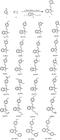
The structure of the N-1 substituent on the indole framework played a crucial role in regulating the reaction. Even 2-methylindole without a substituent on the N-1 position underwent the transformation, affording 4o in 47% yield. Other small molecular substituents (vinyl, hydroxyl, linear structures) on the indole N-1 position also produced the desired products (4p-4t) in 39-88% yields.
Alkyl side-chain substituents resulted in higher yields than benzyl substituents. For example, the yield for 4u was lower than that for 4a. Furthermore, benzyl substituents with EWGs showed higher yields than those with electron-donating groups, such as 4w (45%) versus 4v (33%). Overall, the system demonstrated excellent functional group tolerance, accommodating important pharmacophores like alkyl, halogen, trifluoromethyl, and ester groups. This paves the way for synthesizing indole azo compounds.
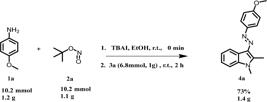
Based on the above reaction, we conducted a scale-up experiment to assess its synthetic utility (Scheme 1). Using 10.2 mmol of para-methoxyaniline (1a), 10.2 mmol of tert-butyl nitrite (2a) and 6.8 mmol of 1,2-dimethylindole (3a) with tetrabutylammonium iodide as the catalyst in anhydrous ethanol, the desired product 4a was obtained in 73% yield. In the scale-up experiment (6.8 mmol scale), the reaction time was prolonged to 2.5 h to ensure complete conversion. While the yield remained robust at 73%, the extended duration led to a slight increase in decomposition by-products, which necessitated careful purification. Nevertheless, the method proved operationally simple and suitable for gram-scale synthesis.
In order to understand the mechanism of the reaction, we carried out free radical scavenging experiments. 2,2,6,6-Tetramethylpiperidinooxy (TEMPO) is a stable nitroso radical, which can quickly combine with other radicals in the system to form a relatively stable adduct. If free radicals are generated in the reaction system, TEMPO will react with them and hinder the smooth progress of the reaction. By detecting these changes, we can determine whether a free radical reaction has occurred. After adding TEMPO, the formation of the reaction product was evident by TLC on silica gel plates. This indicates that the reaction is not proceeding via the free radical pathway (Scheme 2).27

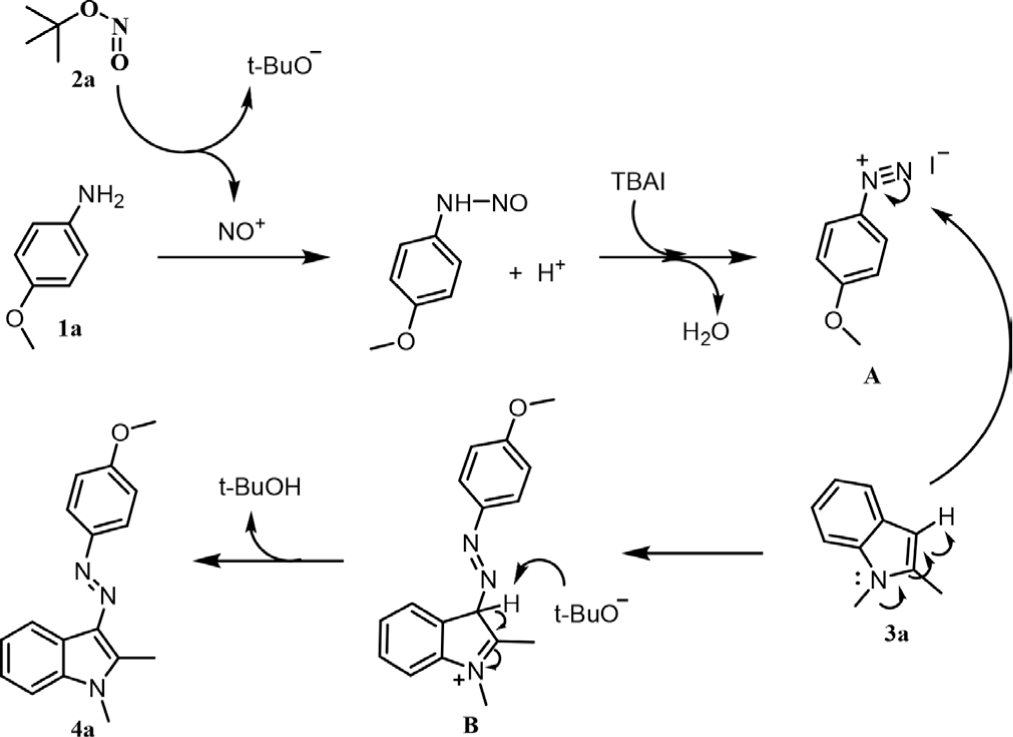
First, tert-butyl nitrite (2a) initiates the reaction by cleaving into a strongly electrophilic nitrosonium ion (NO+) and a tert-butoxide anion (t-BuO–). The amino group of 4-methoxyaniline (1a) undergoes nitrosation to form an N-nitrosoaniline intermediate with the release of a proton (H+). This intermediate subsequently undergoes dehydration in the presence of TBAI to convert in situ into the highly reactive diazonium-iodide ion pair A, where the iodide ion (I–) from the catalyst serves as a stabilizing counter-anion. Next, the electron-rich 1,2-dimethylindole (3a) acts as a nucleophile, attacking the terminal nitrogen of the diazonium cation to form a cationic σ-complex (Wheland intermediate B). Finally, the previously generated tert-butoxide anion (t-BuO–) acts as a base to abstract the proton from the C3 position of intermediate B, facilitating rapid re-aromatization to afford the stable 3-indolyl azo derivative 4a with the release of tert-butanol (t-BuOH) (Scheme 3).28-30

CONCLUSIONS
In this study, an efficient synthesis of 3-indoles azo derivatives was successfully developed. By optimizing the reaction conditions, anhydrous ethanol was identified as the optimal solvent, the reaction time was 2.5 h, and TBAI was the best catalyst. The method was able to efficiently construct structurally diverse indole-azo hybrids with good tolerance to a variety of functional groups. In addition, the electronic nature of the aniline substituent, the structure of the indole N-1 substituent, and the side-chain substituent were found to significantly affect the reaction efficiency by substrate suitability analysis. Amplification experiments showed that the reaction has potential applications in the synthesis of 3-indoles azo derivatives, which provides a new chemical space for drug discovery and development.
SUPPLEMENTARY MATERIAL
The supplementary material for this work is available at http://quimicanova.sbq.org.br/, as a PDF file, with free access.
Supplementary PDF
DATA AVAILABILITY STATEMENT
All data generated or analyzed during this study are included in this published article (and its Supplementary Material).
ACKNOWLEDGMENTS
We are grateful for the supported by the Shandong Provincial Natural Science Foundation (ZR2024QH107), Development Plan for Youth Innovation Team in Higher School of Shandong Province (2022KJ266), Weifang Science and Technology Development Plan Project (2023GX021), Weifang Science and Technology Development Plan Project for Medicine (2023YX035).
REFERENCES
-
1 McCormack, A. T.; Stephens, J. C.; J. Flow Chem. 2024, 14, 377. [Crossref]
» Crossref -
2 Barciela, P.; Perez-Vazquez, A.; Prieto, M. A.; Food Chem. Toxicol. 2023, 178, 113935. [Crossref]
» Crossref -
3 Cui, M.-H.; Liu, W.-Z.; Tang, Z.-E.; Cui, D.; Water Res. 2021, 203, 117512. [Crossref]
» Crossref -
4 Xie, T.; Wang, D.; Zhu, L.; Wang, C.; Li, T.; Zhou, X.; Wang, M.; J. Phys. Chem. B 2000, 104, 8177. [Crossref]
» Crossref -
5 Feng, G.; Zhu, M.; Liu, L.; Li, C.; Green Chem. 2019, 21, 1769. [Crossref]
» Crossref -
6 Guerra, E.; Llompart, M.; Garcia-Jares, C.; Cosmetics 2018, 5, 47. [Crossref]
» Crossref -
7 Wang, W.; Gong, J.; Zhao, J.; Zhang, H.; Wen, W.; Zhao, Z.; Li, Y. J.; Wang, J.; Huang, C. Z.; Gao, P. F.; Adv. Sci. 2024, 11, 2403249. [Crossref]
» Crossref -
8 Albar, H. A.; Shawali, A. S.; Abdaliah, M. A.; Can. J. Chem. 1993, 71, 2144. [Crossref]
» Crossref -
9 Yamaoka, T.; Makita, Y.; Sasatani, H.; Kim, S.-I.; Kimura, Y.; J. Controlled Release 2000, 66, 187. [Crossref]
» Crossref -
10 Sharma, P.; Rane, N.; Gurram, V. K.; Bioorg. Med. Chem. Lett. 2004, 14, 4185. [Crossref]
» Crossref -
11 Reddy, G. R. R.; Rammohan, A.; Reddy, T. V.; Yunfei, L.; Zyryanov, G. V.; Monatsh. Chem. 2020, 151, 1131. [Crossref]
» Crossref -
12 Suzen, S.; Curr. Org. Chem. 2017, 21, 2068. [Crossref]
» Crossref -
13 Babür, B.; Seferoğlu, N.; Aktan, E.; Hökelek, T.; Şahin, E.; Seferoğlu, Z.; J. Mol. Struct. 2015, 1081, 175. [Crossref]
» Crossref -
14 Kaushik, N. K.; Kaushik, N.; Attri, P.; Kumar, N.; Kim, C. H.; Verma, A. K.; Choi, E. H.; Molecules 2013, 18, 6620. [Crossref]
» Crossref -
15 Sharma, V.; Kumar, P.; Pathak, D.; J. Heterocycl. Chem. 2010, 47, 491. [Crossref]
» Crossref -
16 Smith, A. B.; Kanoh, N.; Ishiyama, H.; Minakawa, N.; Rainier, J. D.; Hartz, R. A.; Cho, Y. S.; Cui, H.; Moser, W. H.; J. Am. Chem. Soc. 2003, 125, 8228. [Crossref]
» Crossref -
17 Xiao, S.; Shi, X.-X.; Xing, J.; Yan, J.-J.; Liu, S.-L.; Lu, W.-D.; Tetrahedron: Asymmetry 2009, 20, 2090. [Crossref]
» Crossref -
18 Pizarro, T. T.; Stappenbeck, T. S.; Rieder, F.; Rosen, M. J.; Colombel, J.-F.; Donowitz, M.; Towne, J.; Mazmanian, S. K.; Faith, J. J.; Hodin, R. A.; Garrett, W. S.; Fichera, A.; Poritz, L. S.; Cortes, C. J.; Shtraizent, N.; Honig, G.; Snapper, S. B.; Hurtado-Lorenzo, A.; Salzman, N. H.; Chang, E. B.; Inflammatory Bowel Diseases 2019, 25, S5. [Crossref]
» Crossref -
19 Jacob, N.; Guillemard, L.; Wencel-Delord, J.; Synthesis 2020, 52, 574. [Crossref]
» Crossref -
20 Seishima, R.; Okabayashi, K.; Nagano, O.; Hasegawa, H.; Tsuruta, M.; Shimoda, M.; Kameyama, K.; Saya, H.; Kitagawa, Y.; Clin. Res. Hepatol. Gastroenterol. 2016, 40, 487. [Crossref]
» Crossref -
21 Li, Z.; Ma, S.; Wang, X.; Wang, Y.; Yan, R.; Wang, J.; Xu, Z.; Wang, S.; Feng, Y.; Wang, J.; Mei, Q.; Yang, P.; Liu, L.; Eur. J. Pharm. Sci. 2022, 175, 106235. [Crossref]
» Crossref -
22 Aslam, A. A.; Ahmed, M.; Mughram, M. H. A.; Mahmood, M. H.-ur-R.; Basheer, S.; Hussain, R.; Eiman, E.; Sanaullah, M.; Raza, H.; Saeed, A.; Hassan, M.; Iqbal, D. N.; Chem. Biodiversity 2025, 22, e202403434. [Crossref]
» Crossref -
23 Guo, L.; Wang, S.; Wei, Y.; Zhou, S.; Zhu, X.; Mu, X.; Inorg. Chem. 2017, 56, 6197. [Crossref]
» Crossref -
24 Gemoets, H. P. L.; Kalvet, I.; Nyuchev, A. V.; Erdmann, N.; Hessel, V.; Schoenebeck, F.; Noël, T.; Chem. Sci. 2017, 8, 1046. [Crossref]
» Crossref -
25 Seferoğlu, Z.; Yalçın, E.; Babür, B.; Seferoğlu, N.; Hökelek, T.; Yılmaz, E.; Şahin, E.; Spectrochim. Acta, Part A 2013, 113, 314. [Crossref]
» Crossref -
26 Simeth, N. A.; Crespi, S.; Fagnoni, M.; König, B.; J. Am. Chem. Soc. 2018, 140, 2940. [Crossref]
» Crossref -
27 Zhang, T.-B.; Wang, F.; Ouyang, J.-Y.; Luo, Z.-W.; Qin, J.-H.; Li, J.-H.; Ouyang, X.-H.; Org. Lett. 2024, 26, 461. [Crossref]
» Crossref -
28 Tao, S.; Xiang, Z.; Bai, J.; Wan, X.; Wan, X.; Chin. J. Org. Chem. 2024, 44, 550. [Crossref]
» Crossref -
29 Fischer, O.; Hepp, E.; Ber. Dtsch. Chem. Ges. 1886, 19, 2991. [Crossref]
» Crossref -
30 Liu, Y.; Gu, X.; Zhang, X.; Xu, M.; Zhang, Z.; Liang, T.; Chem. Commun. 2024, 60, 4613. [Crossref]
» Crossref
Edited by
-
Executive Editor handled this article:
Rodrigo O. M. A. de Souza